Tag: nigeria

  • Tinubu Reaffirms Commitment To Nigeria’s Development After Umrah Pilgrimage

    Tinubu Reaffirms Commitment To Nigeria’s Development After Umrah Pilgrimage

    Precious Nwonu, Enugu

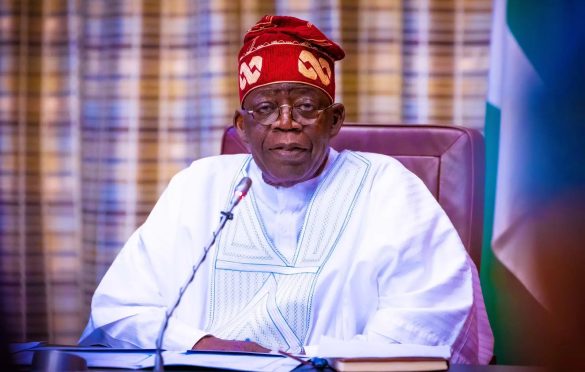
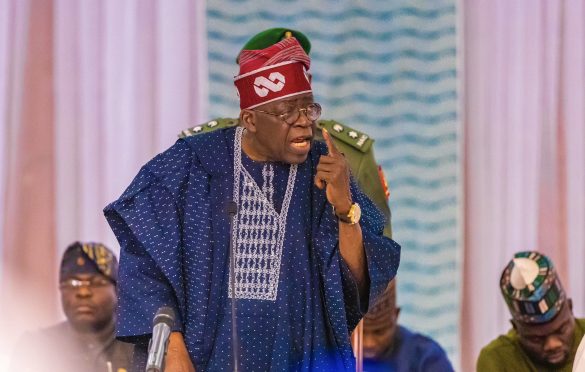
    President Bola Tinubu has declared that his commitment to Nigeria’s development remains stronger than ever, following his recent spiritual visit to Saudi Arabia, where he performed the lesser Hajj, known as Umrah.

    The President made the declaration while reflecting on his pilgrimage and the rare opportunity to enter the Holy Kaaba in Makkah to offer prayers. His spokesman, Bayo Onanuga, disclosed this in a statement on Monday.

    Tinubu expressed appreciation to Saudi Arabia’s King Salman bin Abdulaziz Al Saud and Crown Prince Mohammed bin Salman for granting him and members of his delegation access to the sacred site.

    Describing the experience as a historic spiritual privilege, he said his prayers focused on seeking wisdom and resilience to continue serving Nigerians.

    “I asked for wisdom and resilience to continue to serve the people. I know that prayer has been granted,” he said.

    The President recalled that he had also performed Umrah before the 2023 presidential election, when he prayed for Allah’s blessings and promised to return in gratitude.

    Reflecting on the Qur’anic teaching in Surah Aal-Imran, Verse 26, Tinubu said political power belongs ultimately to Almighty Allah and should be treated as a responsibility that demands humility and service to the people.

    He described his emergence as Nigeria’s President and Commander-in-Chief as a special blessing, adding that the position carries a duty to work for the country’s progress.

    Reaffirming his administration’s development agenda, Tinubu said he remained determined to strengthen the economy, promote prosperity and create opportunities for Nigerians.

    “My commitment to Project Nigeria is higher. I am determined to usher in prosperity and fully develop the country, consistent with the wish of Allah and the support of the people,” he said.

    The President also expressed optimism about the economy, describing the foundation laid by his administration as solid and the progress recorded as encouraging.

    He, however, emphasised the need to invest in young Nigerians, warning that the decisions taken by present leaders would determine how future generations judge their leadership.

    “We need to build a future for our youth. If we don’t invest in their future, how do we want to be remembered as leaders 50 years from now?” he asked.

    Members of the Nigerian delegation who also expressed gratitude for the opportunity included Attorney-General of the Federation and Minister of Justice, Lateef Fagbemi; Coordinating Minister of Health and Social Welfare, Professor Muhammad Ali Pate; and governors of Borno, Sokoto, Jigawa, Kaduna, Yobe and Kwara states.

    Business leaders Abdulsamad Rabiu, Chairman of BUA Group, and Wale Tinubu, Chief Executive Officer of Oando, were also part of the delegation.

  • INEC To Release Revised 2027 Election Candidates’ List

    INEC To Release Revised 2027 Election Candidates’ List

    Precious Nwonu, Enugu

    The Independent National Electoral Commission (INEC) is set to release a revised list of candidates for the 2027 general elections following a review prompted by complaints from stakeholders.

    INEC Chairman, Prof. Joash Amupitan, disclosed this on Tuesday while speaking with journalists in Gombe during an interactive session with commission staff from the North-East zone.

    He said the review was necessary to correct errors in candidates’ details, including misspelt names and cases involving double nominations.

    According to Amupitan, the commission allowed a maximum of 14 days to examine the complaints before publishing the updated list.

    He explained that errors could occur in published candidates’ lists, making it necessary for the commission to address reported discrepancies before releasing the revised version.

    The chairman said the review process had been concluded and the updated list would be made public soon.

    The development comes as INEC intensifies preparations for the 2027 general elections, with the commission seeking to ensure the accuracy of candidates’ information ahead of the polls.

  • Nigeria To Introduce Fuel Taxes When Economy Stabilises – Oyedele

    Nigeria To Introduce Fuel Taxes When Economy Stabilises – Oyedele

    Precious Nwonu, Enugu

    Nigeria will introduce taxes on petroleum products when the economy stabilises and household incomes improve enough to accommodate the additional costs, the Minister of Finance and Coordinating Minister of the Economy, Taiwo Oyedele, has said.

    Oyedele explained that the Federal Government would prioritise the completion of ongoing economic reforms, stabilisation and the restoration of economic growth before implementing the proposed taxes.

    He disclosed this during an interview with ARISE News on the sidelines of the 2026 International Monetary Fund and World Bank Annual Meetings in Bangkok, Thailand.

    The minister said introducing fuel taxes immediately after the removal of petrol subsidies would place an additional burden on Nigerians already grappling with rising living costs.

    According to him, the government must first improve economic conditions and strengthen household purchasing power before considering additional taxes on petroleum products.

    Oyedele noted that several countries around the world impose taxes on fuel, with the tax component accounting for between 20 and 80 per cent of pump prices in some markets. He added that many African countries have between six and 10 different taxes on petroleum products.

    He, however, maintained that Nigeria must consider its current economic realities before adopting similar measures.

    The minister argued that improving citizens’ incomes was more important than attempting to keep prices artificially low, noting that efforts to suppress prices had not proved sustainable.

    He said the government’s priority was to ensure that incomes grew faster than prices, expand the middle class and improve the general standard of living.

    Oyedele added that revenue generated from the proposed fuel taxes would be earmarked for road infrastructure and the development of strategic fuel reserves to help cushion the impact of future price shocks.

    He explained that the reserves could provide a buffer against disruptions in the petroleum market, allowing the government to temporarily reduce or suspend the taxes when necessary to ease pressure on consumers.

    The minister said more than 50 countries had used tax reductions to respond to fuel market disruptions, but Nigeria lacked a similar option because it did not previously have the proposed taxes in place.

    Oyedele also assured Nigerians that the government would not introduce the taxes secretly, stressing that the law requires the relevant order to be published in the Federal Government’s official gazette before it can take effect.

    He said the government would ensure that Nigerians understood the reasons for introducing the taxes and the benefits they were expected to deliver.

    The minister reiterated that the proposed measures would only be implemented when economic conditions improved sufficiently to enable households to bear the additional costs.

  • US Threatens to Restrict Military Aid to Nigeria Over Child Soldier Allegations

    The United States of America has placed Nigeria on its Child Soldiers Prevention Act blacklist, saying the designation could lead to cuts in military training, weapons sales, foreign military financing, and defence cooperation from October 1, 2026, unless President Donald Trump issues a waiver.

    This came after the State Department’s 2026 Trafficking in Persons Report cited the continued recruitment and use of children by Boko Haram and ISIS-West Africa on Nigerian soil.

    The report, published on October 11 and obtained by The PUNCH on Monday, covers April 1, 2025 to March 31, 2026 and is the latest available assessment of Nigeria’s anti-trafficking performance by the US State Department.

    It placed Nigeria on a list of 14 nations, including Russia, Iran, South Sudan, and Somalia, that are accused of recruiting or using child soldiers.

    The report also revealed that the country’s anti-trafficking performance failed to meet minimum standards for the 15th consecutive year.

    “Governments identified on the list are subject to restrictions, in the following fiscal year, on certain security assistance and commercial licensing of military equipment.

    “The CSPA prohibits assistance to governments that are identified in the list under the following authorities: International Military Education and Training, Foreign Military Financing, Excess Defence Articles, and Peacekeeping Operations, with exceptions for some programs undertaken pursuant to the Peacekeeping Operations authority.

    “The CSPA also prohibits the issuance of licenses for direct commercial sales of military equipment to such governments. Beginning October 1, 2026, and effective throughout Fiscal Year 2026, these restrictions will apply to the listed countries, absent a presidential waiver, applicable exception, or reinstatement of assistance pursuant to the terms of the CSPA,” the report read.

    It said the determination to include a government in the CSPA list is “informed by a range of sources, including first-hand observation by U.S. government personnel and research and credible reporting from various UN entities, international organisations, local and international NGOs, and international and domestic media outlets.”

    The blacklisting comes amid an ongoing US-Nigeria security partnership after the Trump administration deployed Navy SEAL Team 6 alongside Nigerian forces for joint counterterrorism operations in the northeast and formalised the bilateral 2026 Defence Cooperation Roadmap.

    According to the report, not a single government official was prosecuted for state complicity in trafficking despite acknowledged corruption, even as the number of trafficking victims who received government assistance collapsed from 2,058 the previous year to just 675.

    The CSPA listing, if not waived by a sitting US president, could restrict International Military Education and Training, Foreign Military Financing, Excess Defence Articles, peacekeeping assistance, and licences for direct commercial sales of military equipment to Nigeria, the document said.

    It stated, “The government did not report any investigations, prosecutions, or convictions of government employees allegedly complicit in trafficking crimes or provide details or other actions taken against complicit officials from previous years,” adding that “corruption and official complicity in trafficking crimes remained significant concerns.”

    The report further noted that “observers reported some law enforcement, military, and other government officials reportedly committed trafficking crimes, accepted bribes to facilitate trafficking, or obstructed justice by interfering with investigations.”

    On law enforcement, it said Nigerian authorities investigated 1,341 trafficking cases, comprising 589 sex trafficking cases, 301 forced labour cases, and 451 unspecified cases, involving 1,367 suspects. Of those, 94 were prosecuted and 97 traffickers convicted.

    The US acknowledged that “the majority of those convicted received prison sentences of at least one year” and that “officials increased collaboration with foreign governments on international trafficking investigations,” resulting in operations across West Africa and Southeast Asia in partnership with INTERPOL.

    It said although 2,004 people were identified as trafficking victims, comprising 893 sex trafficking and 1,111 forced labour, only 675 received government-supported assistance during the year, against 2,058 the prior period.

    The report criticised shelter conditions at the National Agency for the Prohibition of Trafficking in Persons, noting that NAPTIP’s closed-shelter policy meant “residents were not allowed freedom of movement, including children’s access to school,” and that “access to some protection services was tied to victims’ willingness to cooperate with law enforcement proceedings.”

    It noted that adult victims who declined shelter were not provided alternative services, and that “only one dedicated NGO shelter was available for adult male trafficking survivors.”

    On the Child Soldiers Prevention Act listing, the report identified Boko Haram and ISIS-West Africa as the entities responsible for child recruitment.

    “Boko Haram and ISIS-West Africa continue recruiting, abducting, and using—including through force, fraud, and coercion—child soldiers as young as 12 years old as cooks, domestic workers, spies, porters, messengers, bodyguards or guards at checkpoints, “morality police,” armed combatants, and suicide bombers in attacks in Nigeria, Cameroon, Chad, and Niger; these children are subjected to physical and sexual abuse and forced drug use.

    “These non-state armed groups continue to abduct women and girls in the northern regions of Nigeria, many of whom they exploit in forced labour, including in domestic servitude, and in sexual slavery. Boko Haram has kidnapped and subjected thousands of women and girls to forced marriage, including for sexual slavery and forced labour; Boko Haram punishes girls, including for refusing to marry, by forcing them to be suicide bombers.

    “In many cases, the government coerces victims of forced marriage, including trafficking victims, to return to their Boko Haram husbands in Borno State demobilisation centres. Criminal gangs in the south recruit and use children in forced criminality, including kidnappings and robberies, and exploit them in sex trafficking. Criminal gangs in the northwest also exploit victims in forced labour in agriculture and mining,” the report stated.

    It said the CSPA listing, under US law, could restrict International Military Education and Training, Foreign Military Financing, Excess Defence Articles, peacekeeping assistance, and licences for direct commercial sales of military equipment, restrictions effective from October 1, subject to a presidential waiver.

    On labour trafficking, the report said the government “did not prohibit worker-paid recruitment fees…did not report holding labour recruiters liable civilly and criminally for fraudulent recruitment,” and “did not provide specialised training on child labour and human trafficking to labour inspectors.”

    It added that “the government did not provide anti-trafficking training to its diplomatic personnel.”

    The report also cited international criminal networks using Nigeria as an arena, saying “highly organised foreign criminal syndicates fraudulently recruit foreigners to Nigeria with promises of employment, confine them in leased properties and compel them to participate in organised online scams.”

    The TIP report also alleged that “Russian authorities fraudulently recruit and use Nigerians to fight in the Russia-Ukraine war” and that Nigeria’s Ministry of Education “helped promote” Russia’s Alabuga Start programme “despite warning signs.”

    It raised concern that “North Korean nationals working in Nigeria may be operating under exploitative conditions displaying indicators of forced labour.”

    On baby factories, which are criminal enterprises disguised as orphanages, maternity homes, or religious centres where women are held against their will, raped, and forced to deliver children who are subsequently sold, the report described the operations as a documented feature of Nigeria’s trafficking landscape, concentrated predominantly in the south.

    Despite the concerns, the US government acknowledged Nigeria’s increased allocations, including victim service funding, which rose from N128m to N233m, while prevention spending jumped from N58.8m to N245m.

    It also noted that the government coordinated the repatriation of 428 Nigerians exploited abroad, secured restitution for 14 victims as part of criminal sentences, and maintained anti-trafficking task forces in 23 states.

    Nigeria, a source, transit, and destination country for trafficking, last attained the top Tier 1 ranking in 2011.

    Its status has fluctuated between Tier 1, Tier 2, and the lower Tier 2 Watch List over the annual report’s 25-year history.

    Countries in the 2026 CSPA listing include Afghanistan, Myanmar, the Democratic Republic of Congo, Ethiopia, Iran, Russia, Somalia, South Sudan, Sudan, Venezuela, Yemen, and two others in a group the US considers the most consequential offenders in child soldier recruitment globally.

    When contacted for comments, NAPTIP’s Head of Press and Public Relations, Vincent Adekoye, said the agency would make its response to the report public.

    Special Adviser to the President on Information and Strategy, Bayo Onanuga, did not respond to calls to his mobile line and a text message seeking the Presidency’s comments. Punch

  • FG Launches Digital Postcode System, Urges Nigerians to Find Their Codes

    FG Launches Digital Postcode System, Urges Nigerians to Find Their Codes

    Precious Nwonu, Enugu

    The Federal Government has launched a new National Digital Alphanumeric Postcode System designed to improve the identification of locations and make it easier for Nigerians and businesses to access services.

    The Minister of Communications, Innovation and Digital Economy, Bosun Tijani, announced the launch in a post on X on Thursday, urging Nigerians to locate and begin using their new digital postcodes.

    The system, operated by the Nigerian Postal Service, assigns a unique 11-character digital postcode to every addressable building across the country.

    According to the minister, the codes provide a precise, Geographic Information System-enabled reference for identifying locations.

    Tijani said the system would help businesses reach customers outside their immediate areas, enable families to provide accurate locations during emergencies and assist government agencies in delivering essential services to communities.

    “Every Nigerian deserves to be found. Every business deserves the chance to reach its customers. And every community deserves to be within reach of opportunity,” he said.

    The minister added that reliable digital postcodes would provide part of the infrastructure required to support President Bola Tinubu’s target of building a $1tn economy.

    “As we work towards (President Bola Tinubu’s) ambition for a $1 trillion economy, we must build the foundations that allow more Nigerians to participate, trade and prosper. This is one of those foundations,” Tijani said.

    He encouraged Nigerians to search for their postcodes through the official Digital Postcode website and share the information with family members, friends and businesses.

    The system identifies locations through five levels: state, local government area, district, area and building, with each addressable building assigned a unique code.

    NIPOST had earlier explained that the digital postcode system would support deliveries, emergency response, public service delivery and e-commerce by providing a standardised reference for locations.

  • Independence Day: Tinubu Declares Nigeria Has Entered Age Of Prosperity

    Independence Day: Tinubu Declares Nigeria Has Entered Age Of Prosperity

    Precious Nwonu, Enugu

    President Bola Tinubu has declared that Nigeria has moved beyond the period of economic reforms and entered what he described as an “age of prosperity,” following measures implemented by his administration over the past three years.

    Tinubu made the declaration in his Independence Day address to Nigerians on Thursday, marking the 66th anniversary of the country’s independence.

    The President acknowledged the economic difficulties faced by Nigerians, saying the country had endured years of insecurity, economic crises, political upheaval and other challenges since gaining independence.

    He said his administration inherited an economy burdened by what he described as deep structural distortions and difficult choices that could no longer be postponed.

    Using a cancer treatment analogy, Tinubu said previous governments had focused on managing the symptoms of the country’s economic problems rather than confronting their underlying causes.

    He defended the reforms introduced since his administration came into office, saying the measures had been difficult but were necessary to correct the direction of the economy.

    According to the President, Nigeria’s economy has grown by more than four per cent in 2026, with both the oil and non-oil sectors contributing to the growth.

    He also said oil theft had declined, inflation had fallen from its peak, foreign reserves had been rebuilt and the foreign exchange market had stabilised.

    Tinubu further stated that Nigeria recorded more than $6bn in non-oil export revenue in 2025, describing the figure as evidence of growing activity among Nigerian businesses.

    The President said the focus of his administration would now shift from economic stabilisation to achieving widespread prosperity.

    He identified reducing the cost of living as a major priority and said the government would pursue measures aimed at lowering the cost of producing and transporting goods.

    Tinubu said the administration would expand mechanised irrigation and dry-season farming, improve access to seeds and fertiliser, increase agricultural mechanisation and invest in storage and transportation.

    He also said the government was continuing to develop roads, railways and ports to improve connections between farms, factories and markets.

    On employment, the President said job creation, enterprise and industrial growth would remain central to his administration’s policies.

    He said the government planned to use Nigeria’s gas resources to power industries, support the revival of factories, expand digital connectivity and invest in skills needed by employers.

    Tinubu also called for increased production of Nigerian goods for both domestic consumption and export, while encouraging young Nigerians to build businesses and create employment opportunities.

    The President acknowledged that many Nigerians continue to struggle with food, education, healthcare and transportation costs.

    He said the hardship predated his administration and was the result of decades of low productivity, inadequate infrastructure and limited economic opportunities.

    Tinubu said the government was strengthening social interventions to support vulnerable households, while improving the National Social Register to ensure assistance reaches people who need it.

    He also highlighted the Nigerian Education Loan Fund as a means of helping students from low-income families access higher education.

    The President cited the Consumer Credit Corporation as another intervention designed to provide working Nigerians with access to credit for assets such as vehicles, solar systems and digital devices.

    Tinubu said his administration would continue working with state and local governments to strengthen primary healthcare, basic education and other essential public services.

    He added that salaries and pensions had been paid on time and in full since 2023, while reforms had also been introduced in the national pension system.

    According to him, the government’s social programmes were intended to support Nigerians while broader economic growth creates sustainable opportunities.

    Tinubu said defeating poverty would require sustained economic growth, discipline and the creation of millions of productive jobs.

    He maintained that the reforms had corrected the country’s economic direction and laid the foundation for long-term prosperity.

    “The age of reform has done its work. Now begins the age of prosperity,” Tinubu said.

    The President urged Nigerians to remain hopeful and united, saying the country had passed through difficult years and must now focus on building a future of greater opportunity.

    He concluded by calling on Nigerians to move forward together and avoid returning to policies that, in his view, had contributed to the country’s previous economic difficulties.

    “Let us go forward together, with faith in ourselves, faith in our country, and faith that the sacrifices we have made will yield their reward,” he said.

    Tinubu wished Nigerians a happy Independence Day and prayed for the continued progress of the Federal Republic of Nigeria.

  • Atiku Demands Full Disclosure Of Nigeria-US Health MoU

    Atiku Demands Full Disclosure Of Nigeria-US Health MoU

    Precious Nwonu, Enugu

    Former Vice President and African Democratic Congress presidential candidate, Atiku Abubakar, has called on President Bola Tinubu’s administration to publish the full text of Nigeria’s five-year health agreement with the United States.

    Atiku’s demand followed concerns raised by Ghana over a proposed health compact with the US, particularly issues relating to medical records, pathogen information, funding commitments and the regulation of imported medical products.

    In a statement issued by the Director of Strategic Communication of the ADC Presidential Campaign Council, Phrank Shaibu, Atiku said Nigerians should be able to examine the commitments made by the Federal Government under the agreement.

    Nigeria and the United States signed the health Memorandum of Understanding on December 19, 2025. According to the Federal Ministry of Health, the five-year agreement, running from April 2026 to December 2030, covers disease surveillance, outbreak response, laboratory systems, biosafety procedures for pathogen samples, health data systems and access to essential health commodities.

    Under the agreement, the US is expected to provide nearly $2bn in grant funding, while Nigeria has committed to increasing domestic health financing, projected by the government to mobilise nearly $3bn over the five-year period.

    Atiku questioned whether provisions that Ghana reportedly rejected were contained in Nigeria’s agreement with Washington.

    “At this point, Nigerians do not know whether the provisions Ghana rejected are in the agreement Tinubu signed. That is precisely why the government must publish the full text. Nigerians should not have to guess what has been agreed in their name,” he said.

    Ghanaian President John Mahama recently said his government rejected a proposed US health compact after concerns were raised over medical records, pathogen information, counterpart funding and the inspection of imported medicines.

    Atiku also raised concerns about Nigeria’s healthcare challenges, particularly maternal mortality.

    He cited internationally reported estimates that Nigeria recorded about 75,000 maternal deaths in 2023, representing a significant share of global maternal deaths.

    The former vice president argued that the government’s international health commitments should be considered alongside its ability to finance healthcare programmes domestically.

    He specifically questioned the level of funding released for capital projects at the Federal Ministry of Health.

    Atiku cited remarks attributed to the Coordinating Minister of Health and Social Welfare, Prof Muhammad Ali Pate, during the ministry’s 2026 budget defence, that only N36m had been released from the N218bn appropriated for capital projects and programmes at the ministry’s headquarters in 2025.

    “A government that cannot release funds for approved health projects must explain how it intends to honour a multibillion-dollar commitment,” Atiku said.

    He argued that the impact of the agreement should ultimately be measured by improvements in healthcare delivery, including the ability of hospitals to provide services and women to receive safe maternity care.

    Atiku further called for the publication of all documents connected to the agreement, including protocols, annexes, data-sharing arrangements, specimen-sharing agreements and financial commitments.

    He questioned what would happen to Nigerians’ medical information and pathogen samples under the agreement, who would have access to such information and what safeguards would protect patients.

    He also asked whether the National Agency for Food and Drug Administration and Control would retain its full authority to inspect medicines and medical products imported under the arrangement.

    The ADC candidate said Nigeria should continue to participate in international health partnerships but maintained that the government should disclose the terms of agreements entered into on behalf of Nigerians.

    “Nigeria welcomes international cooperation that saves lives, but the government must be accountable for the terms it accepts and the results it delivers,” he said.

    Atiku also called for greater disclosure of the administration’s other international commitments, including its growing partnership with France.

    “Nigeria’s sovereignty is not classified information,” he said.

  • NEMA Deploys Rescue Teams As Floods Ravage Communities Nationwide

    NEMA Deploys Rescue Teams As Floods Ravage Communities Nationwide

    Precious Nwonu, Enugu

    The National Emergency Management Agency has deployed search and rescue teams to flood-affected communities across the country following torrential rainfall that has killed residents, displaced families and destroyed homes, roads, farms and other property.

    The agency said it had activated its operational offices and was coordinating with state emergency management agencies and local responders as flooding continued in several parts of the country.

    NEMA’s Head of Media and Public Relations, Manzo Ezekiel, said the agency would maintain its response efforts for as long as the rainy season lasted, noting that the current situation was not as severe as that recorded during the same period last year.

    “So far, the records are better than incidents of last year. But we are not lowering our guard yet, because the season is still on,” Ezekiel said.

    He explained that the agency’s Director-General, Zubaida Umar, activated NEMA’s operational offices following a flood alert issued the previous week.

    According to him, search and rescue teams had been directed to visit affected communities, work with local responders and sensitise residents on the dangers posed by rising floodwaters.

    Ezekiel said a NEMA team would move to Ebonyi State to assess the situation before proceeding to Port Harcourt, Rivers State, where flooding had also become severe.

    He attributed the flooding to a combination of natural and human factors, including prolonged rainfall, overflowing waterways, poor town planning, construction on waterways and blocked drainage channels.

    He added that the Federal Government would provide technical support and reinforce local response efforts, while relief materials would be provided to affected residents.

    The development followed warnings from the Nigerian Meteorological Agency that heavy rainfall could continue, particularly in central and southern parts of the country, as the rainy season remained active.

    A NiMet official said the agency would continue to issue daily forecasts and urged residents to monitor the alerts and take necessary precautions.

    The latest incidents have affected communities in several states, including Bauchi, Edo, Bayelsa, Imo, Rivers, Osun, Ekiti, Abia, Anambra, Benue and Delta, with emergency officials also reporting impacts in Kano, Yobe, Nasarawa and Zamfara.

    In Bauchi State, six local government areas were identified as the worst affected by disasters during the current rainy season.

    The affected councils are Toro, Bauchi, Ningi, Shira, Gamawa and Kirfi.

    The Director of Disaster Management at the Bauchi State Emergency Management Agency, Adamu Nayola, said while Toro, Bauchi, Ningi, Shira and Gamawa were mainly affected by windstorms and heavy rainfall, Kirfi recorded flooding.

    He said two people had died in Kirfi, while thousands of houses and other properties were damaged across the affected communities.

    Nayola said no formal Internally Displaced Persons camp had been established because most affected residents were staying with relatives.

    In Edo State, residents of Enwan community in Akoko-Edo Local Government Area were thrown into panic after the Ojirami Dam overflowed following heavy rainfall.

    The flooding submerged parts of the Enwan-Igarra-Ososo Expressway, disrupting movement and preventing students from attending school and farmers from accessing their farms.

    A community leader, Agbadua Bamidele, expressed concern that continued rainfall could worsen the situation, recalling that the dam had overflowed in 1980, reportedly submerging more than 500 houses and causing deaths.

    A poultry farmer, Monday John, said he lost 1,400 birds after floodwaters entered his property.

    The Executive Secretary of the Edo State Emergency Management Agency, Jerry Idahosa, however, said the immediate threat from the overflowing dam had been brought under control after repairs were carried out.

    He said the water board had also been advised on measures to release water when the dam level rises, while an IDP camp in Edo Central had been refurbished in preparation for possible emergencies.

    In Bayelsa State, residents of Obogoro community in Yenagoa Local Government Area said more than 200 houses had been submerged or lost to flooding and erosion caused by the advancing Ekoli River.

    Residents said the erosion had destroyed homes, farms and community infrastructure, leaving some families homeless.

    The President of the Epie-Atissa Peoples Congress, Obesi Benjamin, said only a fraction of the original community remained and called for urgent intervention from the state and Federal Governments and the Niger Delta Development Commission.

    The destruction reportedly affected a primary school, football field, NYSC lodge and burial grounds.

    In Imo State, flooding affected several communities across nine local government areas, with roads rendered impassable in parts of Owerri and other areas.

    The Acting Head of NEMA’s Imo State office, Innocent Nweze, said the agency had moved families trapped by floodwaters in Akwakuma to higher ground.

    He said officials were also monitoring areas including Oguta and Ohaji/Egbema, while receiving reports from several flood-prone communities.

    Flooding also affected parts of Rivers State, particularly Port Harcourt City and Obio/Akpor Local Government Areas.

    Residents of Marine Base, also known as Firisaka Polo, said they had battled floodwaters for almost a month and had resorted to hiring pumping machines to remove water from their homes.

    In Iriebe, Obio/Akpor, floodwater submerged the Rivers State Rehabilitation Centre, while corps members at a nearby NYSC transit camp were also affected.

    Other affected areas included Borikiri Sandfield, the NTA/Mgboba axis, Eleme, Oyigbo, Ahoada West and Ahoada East.

    A 17-year-old, Ifeanyichukwu Osuji, reportedly drowned at Umuebereke community in Oyigbo Local Government Area.

    In response, the Obio/Akpor Local Government Council commenced the desilting of canals and drainage channels in flood-prone areas and deployed swamp buggies to strategic locations.

    In Osun State, flooding affected seven local government areas, damaging public infrastructure and private property.

    The affected councils include Atakunmosa West, Ilesa West, Obokun, Osogbo, Olorunda, Iwo and Ifelodun.

    The state Commissioner for Environment, Mayowa Adejoorin, said the government had embarked on measures including dredging waterways, creating public awareness and discouraging indiscriminate dumping of refuse.

    Ekiti State also recorded flooding in several parts of Ado Ekiti and neighbouring communities.

    The affected areas included Ayemi Garage, Adehun, Elemi River, Again Road, Abekoko, Falegan, Adere, Ureje, Iyana Eminrin and the new Airport Road.

    Reports that three people were swept away by floodwaters in Ado Ekiti had not been independently confirmed at the time of the report.

    The Ekiti State Government said it had spent more than N1.18bn between 2023 and 2026 on flood-control measures, including the rehabilitation of waterways and drainage infrastructure.

    In Abia State, several communities were also affected, with flooding disrupting schools, businesses and transportation.

    Areas reportedly affected included Ugwueke Alayi in Bende, Ekenobizi in Umuahia South, Ebem Ohafia, Nkalunta in Ikwuano, Ndume Ibeku in Umuahia and Owerrenta in Isialangwa South, among others.

    A 12-year-old student of Federal Government College, Ohafia, Sopuruchi Ibe, was confirmed dead after being swept away by floodwater.

    Another death was reportedly recorded at Ugwueke in Bende Local Government Area, although broader casualty figures reported in the state had not been independently verified.

    In Anambra State, flooding affected parts of Onitsha, Awka, Nnewi, Ekwulobia and Ogidi, with homes, roads and schools submerged.

    One pupil, Success Ezenwafor, died after floodwaters overturned a vehicle conveying schoolchildren along the Isiagu-Nibo-Awka Link Road.

    Emergency responders rescued seven other children and two adults after floodwaters overturned shuttle buses, a tricycle and a school bus.

    The flooding also affected crops and livestock in riverine communities in Ogbaru and Anambra East.

    Following the incidents, the Anambra State Government issued a flood alert and urged residents in vulnerable areas to take weather forecasts seriously and relocate to safer locations where necessary.

    In Yobe State, the State Emergency Management Agency said 34,533 people had been affected by tropical windstorms, heavy rainfall and flash floods across 15 local government areas since May.

    The agency said 9,845 households had been affected, with 21,363 shelters or rooms damaged or destroyed.

    It also recorded 303 injuries and 11 deaths, while 468 households comprising 1,120 people had been displaced and were in urgent need of emergency shelter and household items.

    In Delta State, heavy rainfall triggered flooding in Udu, Uvwie, Warri South and Ughelli North local government areas.

    Agbarho and Ovwian were among the affected communities, where floodwaters reportedly submerged homes, schools, roads and farmlands.

    Parts of Ovwian were said to have become accessible only by canoe, while the drainage system along Jakpa Road was also reportedly damaged.

    In Benue State, flooding was reported in parts of Makurdi, Buruku and Guma local government areas.

    A report that a 10-year-old girl was swept away by floodwater in Makurdi had not been confirmed by the state emergency management authorities.

    Meanwhile, Nasarawa State authorities said sensitisation campaigns had commenced across the state’s 13 local government areas, alongside preparations for temporary settlements in flood-prone communities.

    NEMA had earlier activated its zonal directorates and operations offices after the Nigeria Hydrological Services Agency identified 15 states at high risk of riverine flooding due to rising water levels. The states include Imo, Cross River, Ebonyi, Benue, Anambra, Akwa Ibom, Lagos, Rivers, Edo, Kogi, Taraba, Delta, Bayelsa, Enugu and Abia.

    The agency has urged residents of floodplains, riverbanks and other vulnerable areas to move to safer and higher ground, while warning Nigerians against attempting to cross flooded roads, bridges or fast-moving water.
  • FG Seeks Fresh $1.5bn World Bank Loans As Public Debt Hits N166.79tn

    FG Seeks Fresh $1.5bn World Bank Loans As Public Debt Hits N166.79tn

    Precious Nwonu, Enugu

    The Federal Government is seeking $1.5bn in fresh financing from the World Bank as Nigeria’s total public debt rose to a record N166.79tn at the end of June 2026.

    Documents from the World Bank indicate that the proposed borrowing consists of three separate $500m facilities targeting climate resilience, social protection and early childhood development.

    The first facility is an additional $500m for the Agro-Climatic Resilience in Semi-Arid Landscapes project, known as ACReSAL.

    The World Bank is expected to consider the facility on October 29, 2026. The Federal Republic of Nigeria is listed as the borrower, while the Federal Ministry of Environment will implement the project.

    If approved, the additional financing will increase ACReSAL’s total funding from $700m to $1.2bn, with the new facility to be provided through the International Development Association, the World Bank’s concessional lending arm.

    According to the World Bank, the additional funds will be used to expand the project’s results and strengthen arrangements for sustainable landscape management.

    The proposed interventions include land restoration, watershed rehabilitation, erosion and flood control, irrigation and drainage, water harvesting and storage, reforestation and other climate adaptation measures.

    Of the $500m, $310m is earmarked for dryland management, $165m for community climate resilience and $25m for institutional strengthening and project management.

    ACReSAL currently operates in 19 northern states and the Federal Capital Territory, focusing on land degradation, water insecurity, climate vulnerability and declining agricultural productivity.

    The World Bank estimates that desertification and land degradation affect about 43 per cent of Nigeria’s land area. It also projects that climate change could reduce the country’s gross domestic product by about 2.6 per cent annually by 2030 and as much as 6.7 per cent by 2050 if not adequately addressed.

    ### $500m Social Protection Loan

    The second proposed facility is a $500m IDA credit for the Household Prosperity and Empowerment-Social Protection Project.

    The project is still under preparation, with a technical design review scheduled for October 30, 2026. The World Bank has tentatively set March 16, 2027, for consideration of the project.

    The Federal Ministry of Finance is listed as the borrower, while the Federal Ministry of Humanitarian Affairs and Poverty Reduction will implement the programme.

    The project comprises a $420m results-based financing component and an $80m investment project financing component.

    It is designed to establish regular social assistance for poor and vulnerable households while gradually increasing the contribution of federal and state governments to social protection financing.

    The proposed programme will include targeted conditional and unconditional cash transfers, an upgrade of the social registry, integration of the National Identification Number into the social protection information system and stronger implementation at federal, state and local government levels.

    The World Bank said Nigeria spent only 0.14 per cent of its GDP on social safety-net programmes in 2021, compared with a global average of 1.5 per cent and 1.2 per cent among lower-middle-income countries.

    The lender also estimated that the proportion of Nigerians living in poverty rose from 40 per cent in 2019 to 56 per cent in 2023 and could reach 62.5 per cent in 2026.

    It attributed the deterioration to factors including the COVID-19 pandemic, inflation, natural disasters and conflict, while noting that the removal of fuel subsidy and foreign exchange reforms increased living costs in the short term.

    ### Third Loan Targets Early Childhood Development

    The third proposed $500m loan is for the Nigeria Early Childhood Development Programme.

    The project is expected to undergo technical design review on October 30, 2026, with tentative approval scheduled for March 15, 2027.

    The Federal Ministry of Finance will serve as the borrower, while the Federal Ministry of Budget and Economic Planning is expected to implement the programme.

    The project will cover all 36 states and the FCT and focus on improving access to healthcare, nutrition, early learning, childcare, water and sanitation and other essential services for children aged zero to five.

    The proposed financing consists of a $400m programme-for-results component and $100m in investment project financing.

    The World Bank said the programme was necessary because 40 per cent of Nigerian children under five are stunted, fewer than half are developmentally on track and only 36 per cent of children aged 36 to 59 months attend organised early learning.

    ### Public Debt Rises By N14.39tn

    The proposed borrowing comes amid a sharp increase in Nigeria’s public debt.

    According to the Debt Management Office, the country’s total public debt rose from N152.40tn in June 2025 to N166.79tn in June 2026.

    The N14.39tn increase represents a 9.44 per cent rise within one year.

    In dollar terms, total public debt increased from $99.66bn to $120.93bn, representing a $21.27bn or 21.35 per cent increase.

    The difference between the naira and dollar growth rates was partly linked to the exchange rate used to value Nigeria’s external debt. The DMO used an exchange rate of N1,379.1842 to the dollar in June 2026, compared with N1,529.2105 in June 2025.

    On a quarterly basis, public debt increased from N159.35tn in March 2026 to N166.79tn in June, representing a rise of N7.44tn or 4.67 per cent.

    Domestic debt accounted for the larger share of the portfolio at N91.59tn, or 54.91 per cent, while external debt stood at N75.20tn, representing 45.09 per cent.

    Domestic debt increased from N80.55tn in June 2025 to N91.59tn in June 2026, while external debt rose from N71.85tn to N75.20tn over the same period.

    ### Treasury Bills Drive Domestic Borrowing

    Federal Government domestic debt increased from N76.59tn in June 2025 to N87tn in June 2026.

    Federal Government bonds remained the largest component at N64.84tn, representing 74.53 per cent of domestic debt.

    However, Treasury bills recorded a significant increase during the period.

    Outstanding Nigerian Treasury Bills rose from N12.76tn in June 2025 to N19.48tn in June 2026, representing a N6.72tn or 52.64 per cent increase.

    Their share of Federal Government domestic debt consequently increased from 16.67 per cent to 22.39 per cent.

    Between March and June 2026, Treasury bills increased by N2.92tn, or 17.60 per cent, from N16.57tn to N19.48tn.

    Meanwhile, the securitised Ways and Means balance declined from N22.72tn in March to N22.11tn in June.

    FGN Savings Bonds increased from N91.53bn to N122.45bn during the year, although they remained a small portion of the government’s domestic debt.

    ### World Bank Exposure Hits $20.73bn

    The DMO figures show that Nigeria’s outstanding debt to the World Bank Group stood at $20.73bn at the end of June 2026.

    The amount comprises $19.12bn owed to the International Development Association and $1.61bn owed to the International Bank for Reconstruction and Development.

    The combined exposure increased by $1.34bn, or 6.93 per cent, from $19.39bn in June 2025.

    World Bank exposure also increased by $907.09m between March and June 2026.

    At $20.73bn, World Bank obligations accounted for about 38 per cent of Nigeria’s $54.52bn external debt at the end of June.

    Nigeria’s total multilateral external debt stood at $24.76bn, representing 45.42 per cent of the country’s external debt.

    The African Development Bank, African Development Fund, Islamic Development Bank and International Fund for Agricultural Development were among Nigeria’s other multilateral creditors.

    Commercial creditors accounted for $23.16bn, or 42.47 per cent of external debt, with Eurobonds alone accounting for $18.55bn.

    Bilateral debt stood at $6.61bn, representing 12.12 per cent of external obligations. China remained Nigeria’s largest bilateral creditor.

    The proposed World Bank facilities would therefore further increase Nigeria’s borrowing from the multilateral institution if approved and subsequently disbursed.

    ### Atiku Demands Debt Reconciliation

    The latest debt figures have also drawn criticism from former Vice-President Atiku Abubakar, who called for a reconciliation of Nigeria’s public debt.

    In a statement issued by his Director of Strategic Communications, Phrank Shaibu, Atiku asked the Federal Government to account for newly recorded debt, changes in the naira value of foreign obligations and loans contracted since the Tinubu administration came into office.

    He also questioned the cost of servicing the country’s growing debt burden and its implications for public spending.

    Meanwhile, economist Adewale Abimbola said borrowing from multilateral institutions such as the World Bank could support development when the financing was concessional and directed towards productive projects.

    He said the key issue was how borrowed funds were utilised rather than borrowing itself.

    According to him, loans tied to viable projects and capable of supporting economic growth could have a positive impact, provided they were properly managed.

  • Google Unveils New AI Advertising Tools For Nigerian Businesses

    Google Unveils New AI Advertising Tools For Nigerian Businesses

    Precious Nwonu, Enugu

    Google has introduced new artificial intelligence-powered advertising features aimed at helping businesses, including those in Nigeria, better understand the performance of their online campaigns and manage their advertising strategies.

    The technology company announced the developments as part of new updates to its AI Max for Search campaigns, including a new reporting feature and an expanded version of its AI Brief tool.

    Google Director for East and West Africa, Olumide Balogun, disclosed the developments in Lagos on Friday.

    The new reporting feature will provide advertisers with a unified view of the customer journey, bringing together information on the search terms that triggered an advert, the creative content displayed to the user and the webpage the user visited after clicking the advert.

    Google said the information, which had previously been available across different sections of Google Ads, will now be presented in a single view, making it easier for advertisers to assess campaign performance and understand how customers interact with their adverts.

    Balogun said the development would give Nigerian businesses greater visibility into how their advertising budgets are being used, particularly as businesses prepare for major shopping periods such as Black Friday and the festive season.

    The reporting feature was unveiled at DMEXCO 2026 in Cologne, Germany, and Google said further details on its availability would be released later in the year.

    Another update is the expansion of AI Brief, a Gemini-powered feature that allows advertisers to provide instructions to AI Max using ordinary language.

    Through the tool, advertisers can give detailed information about their businesses, target audiences and key messages and use those instructions to guide how AI Max develops and manages campaign elements.

    For instance, businesses can provide instructions about the type of searches they want to prioritise, messages they want highlighted or information they do not want included in advertisements.

    Google said advertisers can also preview sample advertisements and searches before campaigns go live, allowing them to adjust their instructions where necessary.

    The closed beta of AI Brief is being expanded to seven additional languages: Dutch, French, German, Italian, Japanese, Portuguese and Spanish.

    Google said the latest changes are part of its broader effort to adapt advertising tools to changing search behaviour as consumers increasingly use more conversational and detailed queries when looking for products and services.

    The company has also expanded AI-powered features across Google Search. AI Overviews are available in more than 200 countries and territories, while AI Mode has also expanded to more than 200 countries and territories.

    Google has been developing AI Max as a broader AI-powered system for Search advertising. The company said AI Max moved out of beta in 2026, with additional controls for targeting, creative content and campaign performance.

    The company also said AI Max campaigns using its full feature set recorded an average of seven per cent more conversions or conversion value at a similar cost per acquisition or return on advertising spend, compared with campaigns using search-term matching alone. Google described the figures as based on its internal 2026 data for non-retail advertisers.

    Google Vice-President of Global Ads, Dan Taylor, said changing consumer behaviour was also influencing the way businesses connect with potential customers through Search.

    According to Taylor, users are increasingly turning to longer and more detailed questions, voice commands and images when searching for information, products and services.

    Google has previously reported that queries made through AI Mode are nearly three times longer than traditional searches, reflecting the growing use of conversational search.

    Google said AI Max, launched in 2025, is now being used by hundreds of thousands of advertisers globally.

    The company has also continued to expand AI-powered advertising formats as Search becomes increasingly conversational, including new advertising experiences being tested in AI Mode.

    Balogun urged Nigerian businesses preparing for the Black Friday period and the end-of-year shopping season to begin planning their campaigns early.

    He said the new tools would enable businesses to better understand their advertising results and make more informed decisions about where to allocate their marketing budgets.

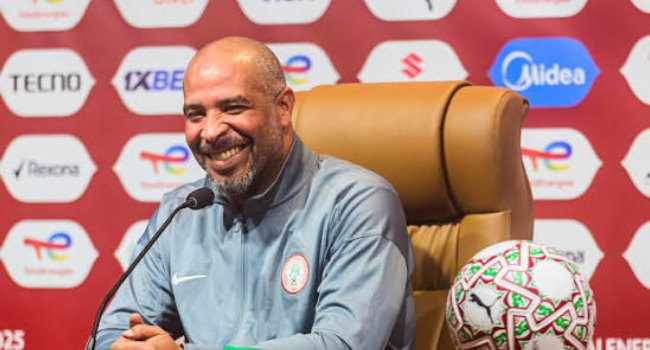
  • AFCON Qualifiers: Chelle Urges Super Eagles To Handle Pressure, Build Strong Start Against Madagascar

    AFCON Qualifiers: Chelle Urges Super Eagles To Handle Pressure, Build Strong Start Against Madagascar

    Precious Nwonu, Enugu

    Super Eagles head coach, Eric Chelle, has urged his players to embrace the pressure of representing Nigeria as they begin their Africa Cup of Nations qualifying campaign against Madagascar.

    Nigeria are expected to open their qualifying campaign at home against Madagascar, with Chelle stressing the importance of securing a strong start and building confidence for the matches ahead.

    Speaking at a pre-match press conference, the coach said pressure was an unavoidable part of managing the national team and that his players must learn to deal with it.

    “We don’t manage the pressure. We try to deal with the pressure. This is our job. The pressure is a part of the job,” Chelle said.

    The coach said the Super Eagles must avoid repeating the poor start that characterised their previous World Cup qualifying campaign.

    “We know the experiences of the last World Cup. We started really, really poor, really bad. It will never happen again because this is a focused team,” he said.

    Chelle described the opening fixture as important to Nigeria’s campaign, saying a positive result would help establish the momentum needed for the subsequent qualifiers.

    “We are planning to set the momentum because the first game is the most important game of every competition. This is qualifiers. The first game sets the momentum. So it gives us the confidence to go for the other games coming,” he added.

    The French coach also expressed confidence in the quality of his squad, describing the Super Eagles as one of Africa’s leading teams.

    “For me, of course, this is the best team in Africa, and maybe this team has a good ranking in the world. So we are motivated,” Chelle said.

    He said his players had the right mentality ahead of the encounter, insisting that their mindset would be crucial to their performance.

    “My players are very good. They have a good state of mind. They understand everything. So, like I said every time, this is not a question of winning or losing. This is a question of state of mind,” he said.

    Chelle, however, warned that Madagascar should not be underestimated, recalling the country’s 2-0 victory over Nigeria at the 2019 Africa Cup of Nations.

    “For sure it will be a difficult game because Madagascar, this is not a tough team. This is a big team. I think they won against Nigeria in 2019. So we have to be ready. It will be a fight,” he said.

    The coach also explained the late arrival of Udinese goalkeeper Maduka Okoye, saying the player had been granted permission to attend an event organised by his club.

    “The club of Udinese asked me to let him make an event for the club. He was supposed to come before, but he’s not here. So I will manage the situation because I have to take some decisions,” Chelle said.

    On injuries within the squad, Chelle acknowledged that several players were unavailable but maintained that Nigeria had sufficient depth to cope with the absences.

    “We have a lot of injuries. So this is not a problem for us. We have a group. Of course, I prefer that these guys are with us. But we have to work on it. So we are ready to play that game,” he said.

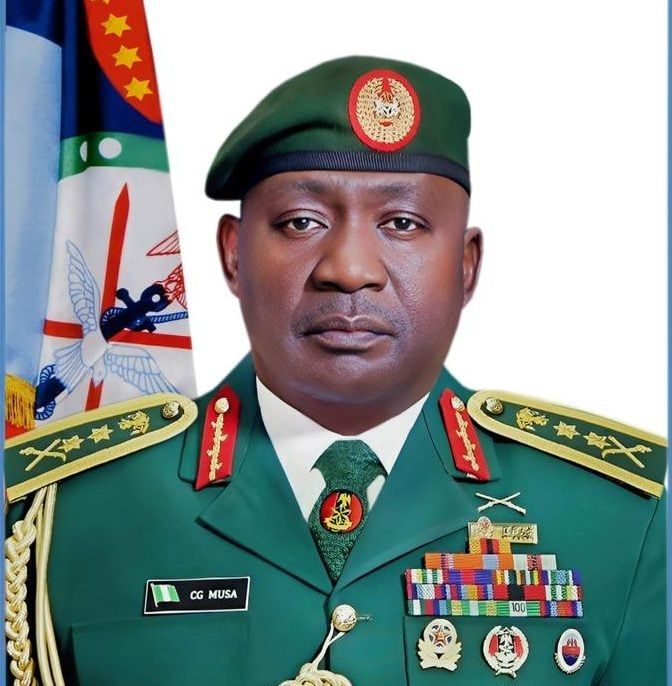
  • Terrorism In Nigeria Has Global Implications, Defence Minister Says

    Terrorism In Nigeria Has Global Implications, Defence Minister Says

    Precious Nwonu, Enugu

    Minister of Defence, Gen. Christopher Musa (retd.), has said terrorism, banditry and other emerging security threats in Nigeria extend beyond the country’s borders, with consequences for the wider region and the international community.

    Musa spoke during a high-level security discussion organised by the Ministry of Defence on the sidelines of the 81st United Nations General Assembly High-Level Week in New York.

    The meeting brought together diplomats, security experts and representatives of the United Nations, African Union and Economic Community of West African States to examine Nigeria’s evolving security challenges and possible responses.

    According to a statement by the minister’s Special Assistant on Media, Leah Katung-Babatunde, Musa called for stronger international cooperation and a whole-of-society approach to tackling insecurity in Nigeria and the wider Sahel.

    He said the complexity of modern security threats made collaboration among governments, security institutions, communities and international partners essential.

    Musa said sustainable security could not be achieved through military action alone, stressing the importance of resilient communities, effective institutions, inclusive development and good governance.

    The minister outlined measures being pursued by the Federal Government to strengthen Nigeria’s security architecture, including the recruitment of an additional 22,000 personnel into the Armed Forces.

    He also cited the expansion and restructuring of the Nigerian Army’s divisional structure, efforts towards establishing state police and dedicated forest guards, particularly for rural and border communities, as well as a unified intelligence and reconnaissance programme approved by President Bola Tinubu.

    According to him, the intelligence programme is intended to improve information sharing among government agencies, eliminate operational gaps and enhance coordination in responding to security threats.

    Musa also highlighted efforts to strengthen Nigeria’s domestic defence industry through increased support for the Defence Industries Corporation of Nigeria.

    He said the initiative was aimed at improving local production of military equipment and reducing the country’s reliance on foreign sources for arms and other defence materials.

    The minister further pointed to the deployment of technology, including drones for surveillance and improvised explosive device detection, as well as the development of a comprehensive national criminal database.

    The discussions also focused on intelligence gathering and border security.

    Major General Adeyinka Famadewa (retd.), Special Adviser on Homeland Security, called for better integration of intelligence and response systems, alongside mechanisms that would protect citizens who provide information about emerging threats.

    Former Force Commander of the Multinational Joint Task Force, Major General A.K. Ibrahim (retd.), advocated stronger community-based approaches to border security and the implementation of the Office of the National Security Adviser’s Border Management Strategy.

    He also called for the revitalisation of the MNJTF and intensified efforts to disrupt terrorist financing networks and systems through which armed groups impose illegal taxes.

    Economic security was another major issue discussed at the meeting.

    Former Deputy Governor of the Central Bank of Nigeria, Dr Kingsley Obiora, argued that economic stability should be treated as a central component of national security.

    He proposed the establishment of designated economic zones in conflict-affected areas to encourage businesses to return and support economic recovery.

    Professor Mvemba Phezo Dizolele of Johns Hopkins University, meanwhile, urged African countries to develop security responses based on their own circumstances rather than relying solely on foreign models.

    Cybersecurity expert Omosigho Ozo-Eso also warned against excessive dependence on foreign artificial intelligence systems, stressing the need to protect Nigeria’s critical national infrastructure and develop indigenous cyber-defence capabilities.

    Musa, in his closing remarks, reaffirmed the Federal Government’s commitment to combating terrorism and banditry and acknowledged the support Nigeria has received from international partners, including the United States and European Union.

    He, however, said African countries must increasingly take ownership of regional security arrangements by providing greater domestic funding for mechanisms such as the MNJTF.

    The minister also highlighted government efforts to strengthen relevant laws, protect health workers operating in high-risk areas and create a more stable environment for investment.

    He urged participants to move beyond identifying security challenges and focus on practical cooperation, clearly defined responsibilities and implementable solutions.

    The meeting, themed **“Confronting Nigeria’s Multidimensional Security Challenges: A Whole-of-Society and Partnership-Based Approach,”** was opened by the Director overseeing the Office of the Permanent Secretary, Mrs Bosede Olaniyi.

    Olaniyi called for constructive engagement among participants, saying discussions should produce concrete outcomes capable of contributing to Nigeria’s national development.