Tag: nigeria

  • Nigeria’s Ruling Class and the Collapse of Decency

    Nigeria’s Ruling Class and the Collapse of Decency

    -By Abdul Mahmud

    In a country starved of dignity, the conduct of members of the political class becomes akin to the conduct of wayward sailors staggering on the deck of a sinking ship. Call it the Titanic. They stagger through public spaces, like the character, Juda Pesa, the self-proclaimed market philosopher in the Kenyan writer, Meja Mwangi’s novel, ‘Striving for the Wind’, who, while heavily inebriated, staggers and lectures his fellow villagers in the market square of Kambi, their tongues loosed by hubris, their minds empty of ideas, and their mouths brimming with insults.

    What ordinarily should be spaces for sober public discourses have become arenas of farce, disrespect, and sheer moral bankruptcy.

    Take, for instance, the appalling behaviour of Clement Jimbo, a member of the House of Representatives from Akwa Ibom State. Last week, he took to the social media and desecrated it. In a misguided attempt to attack the newly proposed coalition party, the African Democratic Congress (ADC), Jimbo likened its fate to that of the ADC airline that crashed into the Lagos lagoon many years ago. In doing so, he not only revealed a stunning lack of emotional intelligence, but also insulted the memory of those who perished in that national tragedy. Such a comparison is not just insensitive; it is utterly inhumane. It reflects the deepening rot within a political class that sees human suffering as a metaphor to win cheap political points. It was neither a slip of tongue nor the exaggeration of a man caught in his own rhetorical flourish. It was deliberate. And it was cruel. Disgraceful. Jimbo’s words betray a disturbing disregard for the solemnity of human life and the rights of association and assembly guaranteed by the Constitution. For what is the ADC coalition but a constitutional expression of political will? In mocking it with the imagery of death, Jimbo abandoned reason, embraced the vulgar and displayed bitter animus. No man, and no less an elected representative, with a sober mind, would write such a nonsense.

    But Jimbo is not alone in this descent.

    Please, welcome the former Governor of Rivers State and current FCT Minister, Nyesom Wike, who, on his own part, has since embarked on a media roadshow of abuse and puffery. Like a man possessed by the ghost of Dionysus, he spares no one. His language, coarse. Elder statesmen who should be honoured are dragged into the portorportor of his invectives. Colleagues are treated as some objects of oddity. Wike’s verbal outbursts are not only unbecoming, they are offensive. They reflect a broader cultural decline where the values of restraint, humility, and honour have been replaced by noise and braggadocio. His public tantrums are not those of a statesman. They are the antics of a man too drunk on power to distinguish office from the theatrical circus. On this point alone, the late French thinker, Guy Debord was right when he described those, intoxicated by their authority, who turn power to a spectacle, mediated by performances that reduce governance to a public circus. Unfortunately, brilliant as Debord was, his life, shaped by heavy drinking, reflected what he critiqued, suggesting a definitive parallel to the self-destructive intoxication of power that was the oeuvre of his scholarship.

    Ours has become the republic of the vulgar. Our rulers have normalised vulgarity and the kind of rulership that promotes staged circuses over substance. Rulers now speak before thinking. Their followers cheer, not for the wisdom in their words, but for the damage done to perceived enemies. There is no decorum. No civility. No depth. Only spectacle. What is worse is that this malaise is not confined to individual outbursts. It has become commonplace. From legislative chambers, social media, to press conferences, from campaign rallies to the marketplace, public communication has been stripped of thoughtfulness and replaced with buffoonery. Public discourses have collapsed under the weights of ego and idiocy. This is no accident. It is the consequence of a country that no longer rewards intellect or insists on virtue in governance. Today, political office is often the reward of wealth without work, noise without nuance, ambition without direction. Men and women who should never be entrusted with the responsibility of representing constituencies find themselves in charge of states. Those who should be in motor parks soliciting passengers for taxi drivers are making laws. Those who should be practitioners of virtue have instead become performers on the stage of vice.

    The result is a tragic comedy. Ours, a country of famed thinkers and scholars, now finds itself led by jesters. A country that once inspired the continent with the intellect of its statesmen is now mocked by the vacuity of its present custodians. Our rulers do not read. They do not listen. They do not reflect. They hurl words the way savages hurl stones. Blindly and destructively. Aristotle, in his reflections on ethics and politics, reminds us of Eudaimonia and the idea of human flourishing through virtue. Leadership, he argued, should strive towards the good life, a life rooted in moral excellence. But our rulers appear to inhabit a different moral universe; one in which the basest instincts are rewarded, and vulgarity is taken as strength.

    But, this is not just a problem with bad manners. Or of rulers or the rest of us behaving badly. It is a problem of ethics. When rulers lose the capacity for shame, the republic suffers. When elected public officials dance naked in the marketplace of ideas, citizens lose faith. When the elites speak like urchins, then what hope remains for street hawkers? Or for children coming after them? Yet, our citizens must ask: How did their country get here? How did men of such hollowness rise to such prominence? The answers lie partly in the decay of our civic institutions, in the ghettoisation of democracy, in the commodification of politics, and in the retreats of citizens from moral engagement. When elections are bought or stolen, not won; when godfathers select, not the voters electing their representatives; when loyalty to power replaces loyalty to principle, this type of rulership emerges.

    All is not lost. No country weeps forever over its losses. It can recover. And it does recover what it loses. But recovery demands courage. It demands that citizens cease to excuse bad behaviour from leaders. It demands that voters look beyond ethnic and party lines. It demands that young people, women, professionals, and thinkers enter the arena, not with the weapons of insult, but with virtue, intellect, service, and vision.

    Today’s rulers may act like drunken sailors, but they do not represent the totality of who the citizens truly are. They are a symptom of our collective complacency. If our country is to correct this course, it must recenter its values and reimagine its politics. It is not enough to pity these men of Brobdingnag. It is not enough to laugh at their tantrums. Citizens must demand better. Citizens must rebuild the moral spine of their national life. They must raise the ethical bar. Leadership is not the theatre of the absurd. It is a responsibility. It requires the mastery of the finesse of governance, empathy, and restraint. A country doesn’t achieve greatness or rise above the pedestrian through the actions of straw men and women; but by the character of those it entrusts with power.

    The time to restore dignity is now.

    As virtuous citizens sound the resonant bugle of conscience, summoning the wayward sailors of state back to the shore of reason and rectitude, our country must steady its helm and chart a new course of moral clarity and purpose across the calm waters of virtue and public decency, while it unyields to the tempests that may come.

    A word is enough for the wise.

  • Tinubu and The Bad Roads Not Taken

    Tinubu and The Bad Roads Not Taken

    -By Abdul Mahmud

    “I couldn’t reach Yelawata in Benue State due to bad roads”, said President Bola Ahmed Tinubu. This sentence captures the spirit of Tinubu’s presidency. Aloof. Detached. Cold. Inconsiderate. Leadership without compassion. Governance without sacrifice. Authority without empathy. How did Mandela once describe compassion? He said, “Our human compassion binds us the one to the other, not in pity or patronisingly, but as human beings who have learnt how to turn our common suffering into hope for the future.” In those words lie the moral clarity of leadership: to feel with others, and to act in ways that dignify their pain. But in the hour when the people of Benue cried out beneath the weight of their grief, when blood soaked their soil and hope withered on parched lips, President Tinubu neither spoke with the tenderness the moment demanded nor did he offer comfort. Instead, he stood, quartered only to the state-organised gyre, where falcons heeded the call of the lying falconer while unburdened by the anguish of the listeners, unmoved by the cries circling beneath his silence.

    I return to the scene of the crime. Yelawata, in Benue State, is soaked in blood. Again. Victims of another attack. Not the first in the state. Sadly, not likely the last. Men butchered. Women slaughtered. Children silenced by bullets and machetes. Bodies burnt. Farmers buried in shallow graves. A people under siege, paying with their lives for living on ancestral land. And the President? He dilly-dallied like Nero until he was forced out of Aso Rock. When he eventually turned up in Benue State, he didn’t go to Yelawata.

    Why? The roads were bad.

    That excuse tells us everything. It tells us Tinubu doesn’t see governance as a sacrifice. It tells us he sees power as comfort, not service. That he is more concerned with personal convenience than national grief. That to him, bad roads are a reason not to visit, not a call to action. The road to Yelwata was too rough for his usual long motorcade. But is the road to governance not paved with sacrifice? A president should go where pain is deepest. He should stand with the broken. Weep with the grieving. Reassure the fearful. But Tinubu stayed away.  He dispatched men like Sunday Dare and Bayo Onanuga; envoys who, upon arrival, shielded their nostrils with cupped palms, as though the stench of death and despair in Yelawata were too profane for their privileged lungs. They came not to mourn, but to manage optics; not to grieve with the grieving, but to distance themselves from the human wreckage their master could not bear to face. He sent words instead of presence. He chose distance over duty.

    What is the worth of a ruler who cannot be troubled by the suffering of his people? Presidents do not have the luxury of comfort. They are servants, not absolute monarchs. They must lead from the front, even through valleys of blood. When George W. Bush visited Ground Zero after 9/11, he climbed the rubble. When Barack Obama went to Newtown after the school shooting, he wept with the parents. When Nelson Mandela walked into the ruins of apartheid violence, he held grieving mothers and swore it would never happen again.

    Tinubu avoided Yelawata. Then insulted the people. He claimed the killings were reprisal attacks. Without evidence. Without tact. Without truth. He invariably blamed the victims. He called them the culprits. He rewrote a genocide into justification. And when he finally arrived Makurdi, it was under pressure. Nigerians had cried. Protested. Shamed him into action. So, he adjusted his diary.

    That adjustment came too late. In Makurdi, school children were drenched by rain, lined up to wave flags at a president who couldn’t be bothered to dry their tears. In front of the Tor Tiv, the King of the Tiv, Tinubu’s lies crumbled. The monarch told him to his face: “These are not reprisals. They are genocidal. They aim to wipe out our people.” It was a moment of truth. The kind only kings and corpses can speak. Tinubu had no answer. After the Royal smack-down, he chose not to make it to Yelawata. He contrived an excuse: the roads were not motorable. A helicopter couldn’t be arranged. A convoy couldn’t roll. A man who uses presidential jets to vacation in France; and who is billed for luxurious holidays in the sunshine of Saint Lucia couldn’t find a way to reach grieving Nigerians at home.

    Now, the question many are eager to ask: What does it cost to show empathy? What does it take to be present in pain? In Tinubu’s case, apparently too much. This presidency has reduced governance to showmanship. It is all optics, no substance. Press releases instead of policies. Travel photographs instead of action. Ceremonies instead of compassion. Tinubu has become a distant figure. A president of Abuja, not of Nigeria. He rules from marble offices, not the muddy fields of the countryside. From Lagos business tables, not farming communities in Benue. He governs through statements, not presence. Through silence, not sympathy. The tragedy of this moment isn’t just the deaths in Yelawata. It is the erosion of leadership. It is about a man who sees the office of president as the crowning of a personal ambition, not a platform for national healing. A man who imagines governance is a reward, not a responsibility. This needs to be put out more plainly: this is not leadership. This is negligence. Tinubu’s refusal to visit the scene of the carnage, his false statements about the cause and his delay in responding to the tragedy that befell our country all points to a leader who doesn’t feel the country’s pain. One who doesn’t carry the emotional weight of his office.

    What happened in Benue is part of a pattern.

    Tinubu’s second year in office has been marked by detachment. Nigerians groan under inflation. Food is unaffordable. Electricity is a myth. Fuel prices break the backs of ordinary citizens. Unlike the back David Diop so powerfully evoked in his acclaimed poem, Africa, unbent, “that never breaks under the weight of humiliation”. The backs of ordinary citizens stoop beneath the burden of betrayal. Yet the president travels. Dines. Celebrates. Appoints cronies. Signs inflated budgets. Adds more burden to weary citizens. There is no compassion in his policies. No empathy in his speeches. No connection in his actions. A caring ruler would reduce his convoys. Tinubu expanded them. A president with empathy would cut down waste. Tinubu has increased waste. A ruler in tune with citizens would share in their sufferings. Tinubu asks them to “tighten belts” while he loosens his.

    To govern a country requires moral courage. Tinubu’s response to national pain is indifference. His answer to cries is silence. His reaction to mass murder is a shrug. Then, where lies the heart of his rulership? Not in Benue. Not in Zamfara. Not in Plateau. Not in the IDP camps. Not in the shanties. Not in the markets. The heart of this government beats only for the rich, the powerful, and his coterie of handlers. For friends in Lagos. For loyalists in government houses. For image-makers. Not for the rest of us.

    The presidency should be the conscience of the nation. Under Tinubu, it has become a billboard. A brand. A throne without soul. It is not just his failure to visit Yelawata that is tragic. It is the symbolism of it. It tells the story of a man who doesn’t understand the weight of grief. Who doesn’t see the power of presence. Who thinks governance is about roads, not relationships. Even if the roads were bad, there were other options. Helicopters. Courage. Love. Anything but absence. But he chose to stay away, which speaks volumes. It says, “You are on your own”, O-YO! “You are not worth the trouble.” It says, “Your pain is inconvenient.” It says, “I’ll mourn you from a distance.” A president who cannot brave bad roads for his people cannot lead them through harder paths. But, here is the deeper tragedy: the road to Yelawata isn’t the only one Tinubu refused to travel. He has refused the road of humility. Of compassion. Of moral leadership. He has chosen another path; the road of entitlement, indulgence, and imperial comfort.

    Our country is ruled by a man who cannot be disturbed. But, our country is disturbing. It cries out from every state. It begs for presence. For proximity. For a ruler who shows up. In person. Not by proxy. Until that happens, we will continue to drift.

    Governance is not about the ease of travel. It is about the urgency of compassion. It is not about what is motorable. It is about what is moral. Tinubu failed this test. In the hour of grief, he was absent. In the moment of truth, he deflected. In the face of pain, he excused. He cannot build our country from behind the presidential walls. He must descend his Olympian height. Step into our blood-soaked earth. Walk with the wounded. Cry with the survivors. Stand with the forgotten.

    Or step aside. Our country deserves more. Being the president shouldn’t be taken as a title, with all the pomp to boot. It is a task. It is not the celebration of personal ambition. It is the surrender of comfort for the sake of others. It is not about dodging bad roads. It is about building better ones and still traveling the worst ones when duty calls. Until Tinubu understands this, he will remain a stranger to his office. A visitor in his own country. A ruler, not a leader.

    While he pretends that the tragedy in Benue is “an internecine clash of neighbours”, to quote my friend, Josephine Akioyamen, the people of Benue must dig in to defend themselves against the rampaging Fulani conquistadors, Yelawata will remember his indifference. Just as our country remembers. The world will not forget.

  • Why Nigeria Is Always Economically Behind

    Why Nigeria Is Always Economically Behind

    By Dr. Samson Abanni

    Let me tell you a story from the long ago—around 1400—when the world’s most advanced technology wasn’t smartphones or artificial intelligence, but something far simpler: turning raw wool into finished cloth. This was the quantum science of its day.

    England was the world’s largest producer of raw wool, but not a single person in all of England had mastered transforming that wool into the fine textiles that commanded premium prices across Europe. Just like modern African countries that export cocoa beans, coffee, and crude oil, England was trapped as a raw material supplier while other nations captured the lion’s share of value.

    The English king decided enough was enough. He crafted an irresistible immigration package: tax breaks, free land, guaranteed markets, and citizenship to any skilled textile worker willing to relocate and teach their craft to English apprentices.

    The strategy worked. Skilled artisans from Flanders, Italy, and other textile centers packed their tools and headed to England. Within a generation, English workshops were humming, local workers had mastered the technology, and the domestic market was flourishing.
    Phase two was even more audacious. Once local production could meet domestic demand, they banned raw wool exports and prohibited imports of finished woolen goods. European competitors, suddenly cut off from their primary raw material source, found themselves forced to import expensive finished products from England—the very country they had previously supplied. This single strategic shift helped launch England toward economic dominance.

    I shared this hoping you would ask, why can’t we copy this playbook ?

    The answer isn’t corruption—though that certainly a good part—but something far more structural and sinister.

    THE TAX COLLECTION TRAP

    Poor countries struggle desperately to collect taxes. Our tax collection system is rudimentary, our property and citizens registration system is poor. Just imagine tax collectors going door-to-door in your neighborhood—we’d have more murders than revenue! This forces African governments to rely on the easiest taxes to collect: tariffs and excise duties at ports and airports. Unless the goods you’re importing are spiritual, you can’t avoid these taxes. Last year, half of our government revenue came from excise duties—that’s too high by global standards. Even if our personal income tax is lower we will get much more revenue from there , if we can just find a way to collect it from the millions in the informal sector.

    A small increase in tariffs could substantially boost government income while encouraging local production. But here’s the catch: one of the key conditions attached to IMF and World Bank loans is that borrowing countries cannot raise tariffs.

    Let’s use the Cocoa industry as a poster child.

    Last year, Nigeria made about N2 trillion from selling raw cocoa beans. But countries that export raw cocoa capture only 10% of the final value. The remaining 90% goes to those who add value — processing, manufacturing, branding, and marketing. If we processed our own cocoa, that N2 trillion could become N20 trillion or more.
    When you export raw cocoa to Europe, it enters duty-free. But if you dare to add even the smallest bit of value—grinding those beans into powder—Europe slaps a 7% tariff on your product. Process it further into chocolate? Forget it. This isn’t accidental; it’s designed to force producer countries to only sell raw materials.

    Meanwhile, Mars chocolate alone earned $50 billion in 2024. That’s more than the GDP of many African nations, built largely on cocoa beans purchased at artificially suppressed prices from African farmers.

    THE INTELLECTUAL PROPERTY PRISON

    Try to make chocolate in Africa for export to Europe and you’ll discover a maze of “health and safety standards” designed more to exclude us, and the intellectual property needed for advanced manufacturing is locked away in Western patents.

    England mastered woolen goods by learning from Flemish artisans. They later “stole” printing technology from India and tea cultivation from China. The United States built its textile industry by stealing spinning tec from England. Taiwan’s semiconductor industry began with technology “acquired” from IBM.

    If we were free to tinker, a firm in Nigeria can try to modify OpeanAi models for example, and sell it here, so that the subscription I pay monthly to the US would stay here in our economy to create jobs. It’s through it that England mastered wollen goods, stole printing of colour tech from India and tea production from China.

    The US stole IP of cotton spinning tech from England. Taiwan stole ICs tech from IBM etc. In their days these were cutting edge tech. This was stopped when the World Trade Organization (WTO) was born. You cannot learn these very advanced stuffs without stealing some part, you just can’t. This is why China is still doing so today. Anybody who is anybody today stole this way, Japan inclusive.

    THE WTO PARADOX

    The WTO was supposedly created to encourage free trade and level the playing field between nations. In reality, its structure systematically favors already-developed economies. The rules only appear neutral on paper.

    Advanced goods that African countries import are priced astronomically high, allowing developed nations to exchange a few manufactured products for vast quantities of our raw materials, which are artificially priced low through market manipulation. Meanwhile, Western governments provide subsidies to their citizens, making these expensive goods affordable domestically while maintaining high export prices.

    When African governments want to borrow money to make the infrastructure investments necessary for development, IMF loans come with caps on the budget deficits countries can operate but the US can borrow as they like. This effectively prevents the kind of massive public investment that every developed nation used during their industrialization phase.

    THE GOLDEN WINDOW THAT CLOSED

    Our best chance was probably between 1960 and 1990 — a period in world history when any country with a well-intentioned government could realistically break free from underdevelopment, regardless of their starting point. Many economists argue this was because the economic competition between the United States and the Soviet Union made both superpowers generous with development aid and technical assistance as they competed for influence.

    Once the USSR collapsed and was dismantled, the world became fundamentally different. The incentive for the West to help other nations develop diminished. Countries that escaped poverty—Singapore, Taiwan, South Korea, Japan—all made their breakthroughs during this golden window.

    Meanwhile, we were exchanging military coups like playing cards, with leaders competing to see who could cart the most wealth abroad. And unfortunately, this mentality hasn’t fundamentally changed.

    THE PATH FORWARD

    The situation is more challenging now. But not impossible. It would require sacrifices and strategic thinking on a scale that we, as a people, have historically been reluctant to make.
    It would require governments willing to risk aid cuts and loan restrictions to protect domestic industries. It would require citizens willing to pay higher prices for locally-made goods during the transition period. It would require leaders who think in decades rather than election cycles.

    Most critically, it would require recognizing that the current global economic system isn’t a natural phenomenon—it’s carefully designed to perpetuate existing hierarchies.

    The question is whether we can find our own path in a much more constrained world, knowing that every step forward will be met with resistance from those who benefit from the current system.

    The technology that could transform Africa exists. The resources certainly exist. What’s missing is the collective will to pay the price of economic sovereignty—a price that, ironically, gets higher with each passing year of inaction.

    Abanni is a Medical Doctor and Member of the Board of Editors of Pacesetter Frontier Magazine.

  • Benue Killings: Tinubu Visits Victims of Yelewata Attack at Teaching Hospital

    Benue Killings: Tinubu Visits Victims of Yelewata Attack at Teaching Hospital

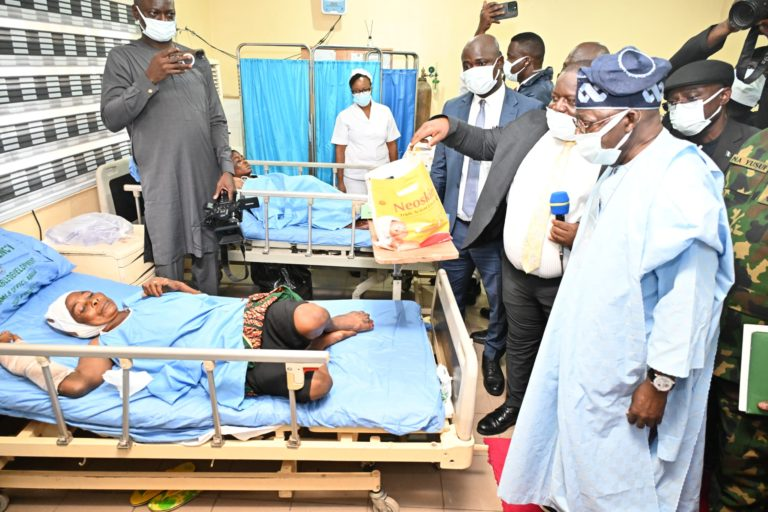
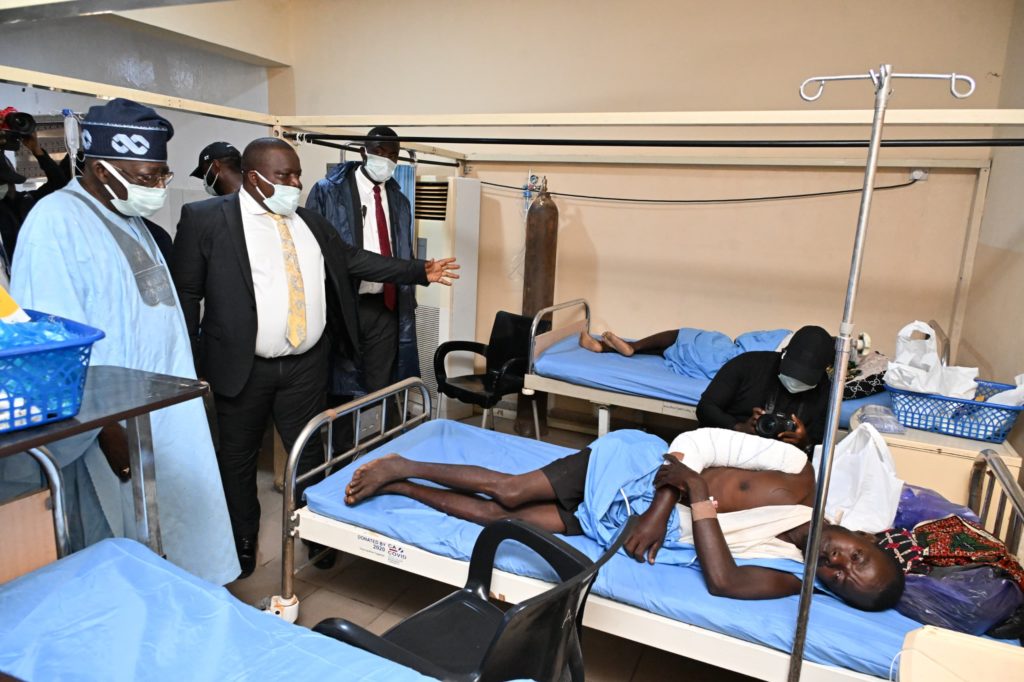
    President Bola Tinubu has visited surviving victims of last Friday’s brutal attack in Yelewata community in the Guma Local Government Area of Benue State.

    Tinubu visited the North-Central state following the attack which left over 59 people dead and several others injured.

    The President went straight to the hospital after arriving at the Tactical Air Command, Nigerian Air Force Base, Makurdi, at about 12:58 pm on Wednesday.

    He later left the hospital for the new Banquet Hall of the Benue State Government House where he is expected to meet with major stakeholders in the state in view of the violent attacks that have led to the loss of lives.

    Tinubu is expected to meet with families of victims, displaced and injured persons, and community leaders directly impacted by the violence.

    The meeting with the stakeholders is part of a broader effort to find a lasting solution to the crisis that has affected parts of the state, especially rural communities.

    Expected at the meeting are key national and state-level figures, including the state governor, Hyacinth Alia; governors from across the country, particularly from the North-Central states; the National Security Adviser (NSA), Nuhu Ribadu, Secretary to the Government of the Federation (SGF), George Akume.

    Also expected to attend are service chiefs, key members of the National Assembly, leaders of the ruling All Progressives Congress (APC), and other prominent individuals, especially those representing affected communities in Benue.

    The state government declared a public holiday for the visit. Channels TV 

    See more photos from the hospital visit below:

  • June 12: Democratic Covenant and the  Resolute Statesmanship of Rep. Nnolim Nnaji

    June 12: Democratic Covenant and the  Resolute Statesmanship of Rep. Nnolim Nnaji

    By Ezefi Mike Udoh

    In the august liturgy of our national memory, there exists a day so solemn, so charged with the undying fervor of the people’s will, that it transcends the realm of calendar and history—it becomes, indeed, a living testament to the irrepressible spirit of liberty. That day is June the Twelfth: Nigeria’s Democracy Day.

    This date, sanctified not by mere proclamation but by the blood and ballots of a defrauded electorate, stands as a moral lodestar in our republican odyssey. It was on that fateful day in 1993 that the Nigerian people, across every creed and clime, rose as one to affirm their inalienable right to self-governance. And yet, the euphoria of that electoral symphony was silenced by the iron hand of tyranny. But from that audacious betrayal sprang forth a deeper, more resolute yearning—a covenant etched not on parchment, but upon the indelible conscience of a nation awakened.

    June 12 is not merely a date; it is a reckoning. A day when the silenced found speech, when courage eclipsed fear, and when the idea of Nigeria—as a democratic commonwealth governed by the rule of law—was reborn in defiance and in dignity.

    It is within this noble continuum of democratic resilience that we behold the distinguished personage of Right Honourable Nnolim Nnaji, Member of the House of Representatives, a true paragon of statesmanly grace and legislative probity. Heir to the enduring virtues of service and sacrifice, Rt. Hon. Nnaji has, through unwavering fidelity to the democratic creed, become a venerable guardian of the people’s trust.

    Representing the renown constituency of Nkanu East and West, the Honourable Member has borne the mantle of public duty not as a privilege, but as a sacred charge. Within the hallowed chambers of Nigeria’s National Assembly, his voice resounds—not with self-serving ambition—but with the measured cadence of wisdom, compassion, and nation-first conviction. His legislative endeavours speak to the soul of June 12: the enthronement of justice, the fortification of institutions, and the elevation of the common man above the machinery of impunity.

    Indeed, Rt. Hon. Nnaji has not merely inhabited the office of a lawmaker; he has redeemed its purpose. His interventions are not perfunctory recitations of political ritual but are imbued with the gravity of one who understands that democracy, in its truest form, is the enthronement of the people’s will, sanctified by relentless service.

    Thus, as the Republic marks another anniversary of this hallowed day, let every heart pause in reverence, and every mind ponder its significance. Let the names of the valiant—known and unknown—be whispered in gratitude. And let us, in unison, lift our voices in celebration not only of the democratic promise that June 12 heralds, but also of the gallant stewards like Rt. Hon. Nnolim Nnaji, who by diligence, integrity, and quiet strength, keep the flame of that promise ever burning.

    For as long as leaders such as he walk the hallways of governance with humility and honour, Nigeria’s democratic experiment shall neither waver nor wither—but shall blossom into the full measure of its sovereign destiny.

    Happy Democracy Day!

    Ezefi Mike Udoh writes from Ihunekwagu, Akpugo.

  • Obi: The Political Change Agent – Book Review By Oseloka Obaze

    Obi: The Political Change Agent – Book Review By Oseloka Obaze

    Obi: The Political Change Agent

    The story of the man who changed the face of electioneering in Nigeria

    ***********

    A Review by Mr Oseloka H. Obaze

    At the NAF Center Kado, Abuja FCT, Monday 10th June, 2025

    [Protocols]

    As conventional wisdom admonish us, “never judge a book by its cover.” But we are also told that “There is no friend as loyal as a book.” My favorite quote on books is the one by Jeanette Winterson, which says “Books and doors are the same thing. You open them, and you go through into another world.”  I sincerely hope that today we will present a book, which will serve as an open door to closed minds.

    By June 2025 – a span of three years from May 2022 – when Peter Obi became the presidential candidate of the Labour Party, no less than fifteen books have been published on his foray into Nigeria’s political space. Many observers consider that three-year span as a redefining era in Nigeria’s electioneering and partisan politics.

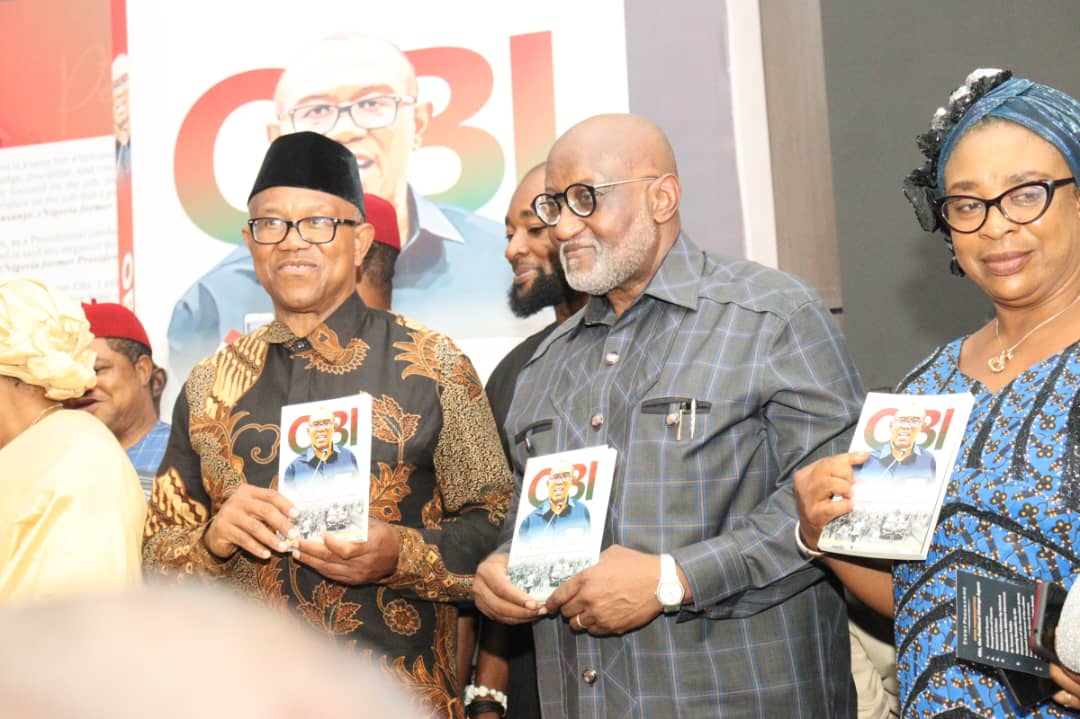
    The book being presented today, Obi: The Political Change Agent -The story of the man, who changed the face of electioneering in Nigeria, is yet another brick in the wall of a fast growing historical record on Peter Obi’s brand of politics.

    As the book’s title suggests, Peter Obi is by every adjectival qualification, a political change agent in Nigerian politics.  He is also an adroit competitor, in a marathon race that is far from over. So this literary work is about Peter Obi; but in the context of Nigeria, it is about the unheralded rise of Obidient Movement phenomenon between 2022 and now.  It is also about an unfinished business of nation-building, and renewal, and ultimately, a preface to the inevitability of a New Nigeria.

    The core value and potency of this book, is that is written from an insider’s perspective. Ike Abonyi, my friend and the author, has done a yeoman’s job. With a keen sense and eyes for details, he has done what adroit researchers and veteran journalists do best; render credible account of seminal events without embellishments.

    If per chance, you do not intend to read this book immediately, I will advise you to read the foreword by my brother, Dele Farotimi, in order to get the gist of this work.  Characteristically, Mr. Farotimi did a positively magisterial job, with some four hundred insightful words. He concluded with his non-hesitant recommendation of the book, “to scholars of Nigerian politics, elections and society.”

    According to Farotimi, “Obi represents an anomaly in Nigeria’s political landscape; a politician who genuinely desires to work for the betterment of society…Peter Obi is a politician unlike any other in Nigeria.  Ike Abonyi’s work looked at the campaign and organic growth of the Obidient Movement and how Peter Obi’s candidacy has rewritten the manual for future aspirants to public office.”  To that very candid summation, I will only add that any book about an enigmatic personality or an icon is worth reading and owing.

    For the sake of brevity and convenience, I am minded to dispense with the formality of the book’s nomenclature, before delving further into its substance and flourish.

    The book, Obi: the Political Change Agent consists of 252-pages, and twenty-six stand-alone compact chapters. Each chapter, adapted from original real-time op-eds and essays, details Peter Obi’s odyssey from the juncture when he ventured into Nigeria’s political setting, through his uncharted trajectory to becoming the Labour Party 2023 presidential candidate on 30th May, 2022 and thereafter.

    I’ve only offered a synopsis of the structure of the book, to get the full gist or chapter-by-chapter narration, please purchase a copy of the book. Now to the historical flourish of the work.


    ***********

    Chapter 1 is essentially a backdrop, and the condensed story of Nigeria’s return to participatory democracy, from 1999 to date.

    Chapter 2, x-rays the man Peter Obi, and captures his essence and bonafides via his abridged official biography.

    Chapter 3 is revelatory. It documents that fortuitous but life-changing encounter that took Obi into politics. It narrates how Peter Obi’s encounter with Professor Donald Jacob, the Dean of the Kellogg School of Management in the USA, altered his views on politics. Ultimately, the unforeseen outcome of that six-week executive course was his decision to go into politics. It’s a thought-provoking story.

    Chapters 4 and 5 encapsulate the Ojukwu and APGA factors; as well the Anambra governance revolution. Obi’s and sojourn in Anambra was not without its vagaries, but would have been utterly impossible without the overwhelming influence of the iconic Igbo leader, Chukwuemeka Odumegwu-Ojukwu, who was the leader of the All Progressives Grand Alliance (APGA).

    Chapter 6 and 7 surveys Obi’s Journey to the center and Obi’s political dalliance with the PDP.  This chapter speaks to Obi’s political movement from the state to the federal level after his successful tenure as Governor of Anambra State. The narration segues into the political leap that made him the running mate to Atiku Abubakar in the 2019 presidential election.

    Chapter 8 and 9 is a periscope of how Obi’s 2023 Presidential Journey begins and landed him in the Labour Party. It chronicles Obi’s encounter with the vicissitudes of Nigeria’s rotational national politics, unkept promises and his eventual divorce from PDP. The factors at play were mot mere imponderables as much as they were a manifestation of human foibles, political machinations and shortsightedness.

    Chapter 10 is about the birthing of the Obidient Movement. The chapter chronicles the emergence of the Obidient Movement in the nation’s political trajectory and how it impacted greatly on the polity during the 2023 electioneering.

    Chapters 11 narrate the already well-documented 2023 election intrigues by the INEC and the ultimate Judiciary ambush. This is one of the longest chapters in the book for obvious reasons; it captured all the election intrigues, the preparations from voter registration to election proper and the post-election drama.

    Chapter 12 is about ‘The Media and the Obi’s Politics.’ This chapter captures media involvement in Obi’s Presidential ambition and how the social and mainstream media played some significant roles in Obi’s politics. Some believed that Obi was a media hype that would fade away with time. They were wrong.

    Chapter 13, narrate the well-known folktale of Peter Obi’s “Madman” friend, affirming ultimately, that ‘all politics is local’. During his Presidential campaigns, Peter Obi frequently recalled how in his quest for adaptive leadership, he opened himself to learning from everybody. In that context, he often recalled how during his tenure as Governor of Anambra State, he got one of the best advices that helped him tackle very naughty security issues from a “madman.” The author corroborates the seemingly bizarre story, by seeking and finding the “madman.”

    Chapter 14 captioned ‘Anatomizing The Peter Obi Character’ offers an insight into varying perceptions of Peter Obi’s persona; Such perceptions are mixed and complex. Some people saw Obi is a stingy and difficult man to deal with, but to others, he is the prudent man, who detests corruption and extravagant living. To some, he was a quiet philanthropist. This chapter looks at his personality from these contrasting and eclectic perspectives.

    Chapter 15 is the author’s published rendition of Obi’s experience during his brief sojourn in PDP. He facetiously asked: “Obi in PDP; was a Celibate in the Whorehouse?” He surmised how Obi’s clean character and credentials meant nothing to some of the PDP leaders who were bent on frustrating him. This narration validates Obi’s frequently uttered contention that any foray into Nigerian politics was an entanglement with “pimps and prostitutes, not priests and nuns.”

    Chapter 16 and 17 titled ‘A Political Phenomenon Called Peter Obi,” is also another published op-ed by the author capturing the enigma in Peter Obi’s politics. The chapter segues to an analysis of ‘LP’s Obi and the Involuntary Campaigners.’ This article talks about how Obi campaigners emerged involuntarily after hearing his disarming messages on how to create a new Nigeria, with his “Go and verify” and “consumption to production” and “a New Nigeria is Possible” Mantras.

    Chapter 18 & 19 are respectively titled “How Obi-phobics Chased the Wind” and “As Campaigns Flag off, it’s Obi…kererenke.”  These chapter mirrors and juxtaposes the twin developments of dislike and, like, hate and love, ignominy and fervor Obi candidacy elicited nationally. It synoptically captures the futility of the quest by Obi’s political traducers, who embarked on a massive search for something negative about him, but failed woefully. On the flip side was the fervent mob like national support during the same period as Obi’s campaign flagged off, to endless chants of ‘Obi…kererenke’. Rather than the unfolding of scandals, that zeal would eventually transform into the electrifying campaign mood that was replete with various campaign songs and slogans that dominated the political space.

    Chapter 20: captioned “OBI’s quest for Justice and Repetition of History,” recalls how Obi has always been treated unjustly since he entered politics and how he has continued to seek Justice undauntedly via legal redress.

    Chapter 21 tackles the very sensitive issue of ethnified politics and the costs and challenges of being Igbo impacted Obi’s and candidacy. It further explores how that negative narrative was used derogatorily to douse Obi’s potentials.

    Chapter 22 highlights the use of political trolling and fake news to demarket Obi. One such instance was the allegation that as governor, “Obi demolished Mosques.” This chapter captures endless calumny, some blatantly religious against Peter Obi during the campaigns. But as it turned out he actually built a mosque and had fantastic relationships with Muslims in his state during and after leaving office.

    Chapter 23 captioned “Peter Obi, the Opposition’s Talking Drum,” documents Obi’s involuntary post-election role after being manipulated out of the presidency in the 2023 polls.  The intention, as the author averred was to frustrate Obi and force him to quit the political stage. Instead, Obi chose to keep playing a proactive role from the opposition desk, becoming as it were the opposition’s vanguard. It was not to be an easy task; but Obi has remained undaunted.

    Chapter 24 is captioned “Can the Labour Party Go Far Without the Obidients?” The chapter grapples with the evidential hesitance of the Labour Party leadership to fully embrace the efforts of the Obidients Movement by bringing its structure in its fold. It wonders what will become of the Labour Party without the Obidient Movement and Peter Obi and his numerous supporters. The answer as the famous song says: ‘Is blowing in the wind.”

    Chapter 25 is titled “In Whose Interest Is Soyinka’s Obidient-Phobia?” Nigeria’s literature icon, Nobel laureate Professor Wole Soyinka, known for his progressive position on issues, has strangely been at the forefront in the campaign against Peter Obi and the Obidients. This chapter examines what may have caused his shocking position and volte face.

    Chapter 26: “Obi on Marble” is a glossary of some of the many quotable quotes of Peter Obi. Most of these became the political refrain for his legion of followers. Their inclusion aligns well with historical records, for which the book is meat to amplify.

    ***********

    If this book offers one unique essence, it is that in politics and governance, we must continue to use history in our decision making. The utility of history remains ever pertinent. As such, any book such as this, which offers a glimpse into history in the making, ultimately adds value to our politics, our history and our decision-making processes.

    In the 25 years of uninterrupted democracy in Nigeria, six consecutive presidential elections were held in 1999, 2003, 2007, 2011, 2015, and 2023. The 2023 elections perhaps, stand out the most. It was a redefining moment. Like most presidential elections –except that of 2015 – the 2023 elections ended up in litigation and was eventually decided; by the Supreme Court.

    In 2023, Nigerian youths, were sufficiently incentivized to play a role in politics. Peter Obi was the catalyst to that foray. It was he who instigated, exhorted and encouraged Nigeria youths to “take back their country”. Even though the outcome of the 2023 election fell far short of expectations in reflecting the desire of Nigeria voters, the unprecedented landmark electoral awareness remains memorable.  This huge change in our electioneering mindset and modalities will forever be attributable to one political character; Mr Peter Obi the former Governor of Anambra State, and the 2023 Presidential flag bearer of the Labour Party.

    Unwittingly, Obi’s unheralded presidential candidacy –in and by itself, an instrument of soft power- gave Nigeria’s electioneering process a new image, impetus and colouration; focusing as it were on issues designed to turn the country away from her dysfunctional economic fixation of “consumption” and channel that inclination to “production.”

    His issues-based campaign had focused on poverty alleviation, economic growth, job creation, educational reform, efficient healthcare delivery, and anti-corruption mode and mindset. His advocacy for broad policy shifts, enjoyed unprecedented support from many discerning minds and gained significant support among young Nigerians, who saw him as a fresh face and an alternative to the traditional selfish and corrupt political elite. Indeed, Obi even made cutting cost of governance sexy and attractive.

    But trying to dislodge the entrenched system was never going to be a walk in the park. Peter Obi was aware of this and so too, were his followers. Thus Obi faced stiff competition from established political parties, candidates, and critics, who initially took him for granted and questioned his ability to win a national election. Indeed, a ranking politician had characterized Peter Obi and the Obidients as largely “effervescent” – a phenomena that would blow away with time. He was wrong. He had since changed his mind and said so publicly.

    Despite the challenges he encountered, Obi’s candidacy generated significant interest and enthusiasm, particularly among Nigerians seeking real change. And despite the fervour and commitment, the eventual outcome of the 2023 presidential elections was not what Nigerians hoped for; but the outcome was also not totality unexpected.  Like most of the prior presidential elections, the Courts would eventually decide who became president, regardless of public opinion and the electoral evidence presented.  This proved the cliché that “the law is an ass.”

    As the author rightly surmised, the political fervour ignited by Obi is still flaming. Nigerian youths appear through Obi’s prompting to have discovered their potential and are not letting go. Consequently, Nigerian youths are now at the center of a struggle to reset Nigeria under the Obidient Movement that has become the platform for the inevitable discovery of a New Nigeria.

    ‘Obi: The Political Change Agent’ the story of the man who changed the face of electioneering in Nigeria, is politically enriching as it captures the historical background of our democratic struggle and offers various insightful perspectives on the different administrations since 1999. This work is a well-researched by an experienced journalist who has been part of Nigeria’s political trajectories. The book captures profusely our contemporary political journey for 25 years with all its vagaries, upheavals and proclivities.

    Written in very easy-to-read prose and elegant language, I find this book very enriching for any inquisitive mind; and for anyone who desires to know more about Nigeria’s uninterrupted two and half decades of the democratic journey. It offers unvarnished insight into how the issues-driven campaign messages by Peter Obi helped to revolutionize and compel Nigerian youths to discover themselves and prepare for the inevitable and proactive role they must play in nation-building. For Nigerian youth’s Peter Obi’s “take back your country” was not just a slogan, it was a clarion call that resonates till this day.

    Political campaign books are usually about train wrecks and triumphs. Most are about introspection and retrospective reconstructing of issues that mattered or played out. Obi: The Political Change Agent is none of these. It is straightforward recording of events as they happened.

    Oftentimes, political campaign books, historical books and memoirs are richer because they include or reveal snippets of undisclosed confidential discussions or events. From my vantage point as a 2023 presidential campaign insider; perhaps two yet undocumented remarks relative to the 2023 elections remain vital.  While visiting Kaduna on 17th October 2022, Sheik Ahmed Abubakar Gumi told Peter Obi, “Even if you don’t win, beyond the 2023 elections don’t let the Movement you have started to end”(p237). I believe Gumi was speaking of the Obidient Movement. He may be clairvoyant.

    The second was what President Muhammadu Buhari told Peter Obi on 22 October 2022: “From what I read in the newspapers, Nigerians, especially the Nigerian media like you. You may not win this particular election, but age is on your side. I tried four times before I finally won.”  I’m certain both messages have stayed with Peter Obi. Both, I believe, will instinctively undergird the inevitability of a New Nigeria that is Possible.

    If this book has any shortcoming, it is not out of dereliction or inattention. Besides the protagonist, the book does not hap on the role of other key campaign dramatis persona. It does not for instance delve deeply into how the choice of Labour Party over the Social Democratic Party was made, or how the Vice-Presidential Candidate was selected over the other possible and probable candidates.

    Finally, I recommend this book for academic work, politics, and leisure reading; and to political party managers. This book will be an integral part of any serious library and an invaluable reference material for anyone sufficiently passionate about political and governance reforms Nigeria.

    I thank you all for your kind attention.

  • Curbing Examination Malpractice in Nigerian Tertiary Institutions: A National Call to Action

    Curbing Examination Malpractice in Nigerian Tertiary Institutions: A National Call to Action

    By Sebastine Chukwuebuka Okafor

    Examination malpractice is a serious threat to the growth of university education across Nigeria.

    It can be defined in many ways. It means any dishonest act that affects the fairness and honesty of the examination process. It includes any illegal or wrong action taken before, during, or after an exam to get higher marks. It also means breaking exam rules to gain an unfair advantage or any kind of cheating or dishonest behaviour by a student during an exam.

    This dishonest act weakens the academic standards that schools are expected to protect. It damages the very foundation of our education system.

    As a lecturer and former Faculty Examination Marshal in one of the best universities in Nigeria, I have seen how examination malpractice affects students and the reputation of the school they come from. This issue must be dealt with quickly before it becomes normal and spreads a habit of dishonesty that will destroy the value of education across the country.

    It is sad that both students and staff in many of our higher institutions do not see how serious this issue is. This is clear from the way people ignore it or delay actions that could stop it. Based on close observation, the causes of examination malpractice in Nigeria’s higher institutions can be grouped into three major areas: student-related reasons, problems within the institutions, and issues from society.

    Student-related reasons include pressure to succeed, fear of failure, poor study habits, and pressure from friends — all these can lead students into cheating.

    Institutional problems include poor teaching, weak monitoring, bad exam seating plans, too much importance placed on exams, and easy access to materials used for cheating. These show that better teaching and exam support are needed.

    Societal issues include corrupt lecturers and staff, the way cheating is accepted in society, and soft punishments for those who cheat. These make students feel they can cheat and get away with it.

    These problems exist in many schools and call for a wide and united effort to stop examination malpractice.

    To fix this problem, university leaders and managers of other higher institutions in Nigeria need to take strong and serious steps. They must put in place a number of plans that deal with the real causes of malpractice — like what is done in some private universities such as Godfrey Okoye University, Enugu.

    Some people think the problem has become normal and cannot be solved. But should we accept that? The answer is no. There are clear solutions, and they can be divided into four groups: prevention, education, punishment, and changes to the system.

    Prevention includes proper monitoring by lecturers from other departments, mixing students from different courses during exams to make cheating harder, and using technology such as internet blockers, AI tools to catch cheating, and fingerprint systems to confirm student identity and stop impersonation.

    Education will focus on teaching students why cheating is bad, training older lecturers on how to detect new cheating methods, and keeping a photo record of students in each exam, like what is used in the Mass Communication Department at Enugu State University of Science and Technology (ESUT). Also, the 75% attendance rule should be fully enforced, and lecturers who follow this rule should be given support. This will help students stay more prepared and disciplined before any exam.

    Punishment should include quick action and fair penalties for those who cheat, with parents also getting involved to encourage better conduct. Students should be punished not just for cheating, but also for helping others to cheat. This will reduce the number of people trying to cheat during exams. When students know that even sitting close to someone who is cheating can lead to trouble, they will be more careful.

    System changes should focus on regular assessments during the semester, not just final exams. Exams should test practical knowledge, not only memory. Lecturers should also be in charge of student attendance and exam quality. Schools should work with security agencies or create strong teams to watch over exams and catch those who break the rules, and make sure their cases are reported to the right authorities.

    These actions will do more than stop cheating. They will help build good values, raise the quality of learning, and make students more responsible in our schools.

    Examination malpractice is a big problem that needs urgent attention from school authorities, lecturers, students, and all who care about education.

    The steps listed here provide a strong way to deal with this challenge. They will help bring honesty back to academics and protect the name of Nigerian universities.

    We must act now to stop examination malpractice and improve the standard of education — for the good of our students, our schools, and our country.

  • The Deadly War on Women and Children 

    The Deadly War on Women and Children 

    -By Abdul Mahmud

    Childbirth is a death sentence in our country. It shouldn’t be. But it is. Our country loses a woman every seven minutes. That’s not a statistic. That is not just a scream in the dark, it is a cry searing the blinding daylight of a country that has grown numb to both the living and the dying. A country where indifference is policy, and silence is the only answer to suffering. A final breath. A mother dying while giving life. The BBC reports that our country is the world’s worst place to beget life. One woman dies every seven minutes. That’s 75,000 maternal deaths in one year. That’s 29% of all maternal deaths worldwide. Almost one in every three. That’s not a crisis. That’s a collapse. That number should shame our country and us as citizens. It doesn’t.

    This tells a story. A tragic, brutal, relentless story. Of women bleeding to death in clinics. On beds without bedsheets. With midwives who have no gloves. Of babies born into silence. Of widowers cradling newborns. Poor fathers. Of children growing up without mothers. Of families shattered by the simple biological act of childbirth. But childbirth here isn’t straightforward. It’s war. It’s women walking kilometres to underfunded hospitals. It’s labour rooms without light. Clinics without water. It’s rusted scissors. Torn gloves. Nurses working with torchlights. And stillbirths that go uncounted. Here? Emergency care is a complete farce. Blood banks? Dry. Anaesthesia? Non-existent. Bandages to hold cannulas in place? Paper stickers. Ambulances?

    Pregnant women in labour hop on keke ride and on a prayer.

    This is our country – the land of our birth.

    A country rich in oil and gas. Rich in resources. But bankrupt in everything else, including leadership.

    The women who die are poor. They are urban and rural. They are the forgotten ones. They are invisible. Their deaths don’t make much of the daily news. Their stories don’t make policy. They die in silence. Buried without outrage.

    But, it doesn’t end with mothers.

    Our children die too. Quietly. Slowly. Around and about. Development Reporting, a specialist media outfit, said it clearly. Our children are failed by the system. Unvaccinated. Malnourished. Out of school. Sick. Abandoned. They are growing up in hunger. In pain. They live without food. Without teachers. Without nurses. Without any chance. They have been left behind. To die. One in ten of our children never reach their fifth birthday. Most deaths are preventable. Malaria. Pneumonia. Diarrhoea. Hunger. Simple diseases that kill fast because our country’s healthcare system habitually kills.

    One in three children is stunted. That means their brains and bodies won’t grow as they should. That means their futures are already stolen. Malnourished children can’t learn. They can’t compete. They can’t lead. Our country has failed them. Repeatedly. Brutally. Little wonder the late, iconic South African-born reggae legend, Lucky Dube, lamented the moral decay of Africa’s governing class. “They won’t build no schools anymore,” he sang, “all they’ll build will be prison, prison.” His words echo like prophecy across our country’s broken landscape. If he had trained his mind on our country’s governing elite, he might well have added: they don’t build hospitals anymore; all they construct are flyovers to nowhere. Perhaps, to Samarkand where fantasy lives and the sick are not their burden.

    And, yet, our country pretends that all is well and good. While 18 million children are out of school, it pretends. While millions live in slums, drink dirty water, and battle diseases, it pretends. While clinics run out of vaccines, it pretends still. While mothers weep over graves, it turns its eyes in the direction of Afghanistan. The governing elite are the worst culprits. Does the holy book not say, “Blessed are those who mourn, for they shall be comforted”? But these ones will not mourn. They do not weep for the dead. They do not grieve with the bereaved. Their hearts are sealed. Their eyes are dry. They soar, detached, above the suffering of ordinary citizens like Achebe’s Eneke the bird, who learned to fly without perching because men had learned to shoot without missing. Our rulers now fly too, sky-high, far above the dust and death they leave behind.

    The president. His wife. The vice president. They spent N23 billion on foreign travel last year. That’s not a typo. N23 billion. For comfort. For luxury. For medical treatment. Paris for medical check-ups; but, masked as working holidays. Dubai for toothaches. Germany for routine tests. London for rest. While back home, women are stitched without anaesthesia. Children die from coughs. While hospitals turn from Buhari’s mere consulting clinics to morgues. Here’s the truth: they flee the country they ruined. They simply cop out to countries that others built. Where they don’t cop out, they hide inside the world of opulence they built for themselves from the stolen commonwealth. They don’t feel citizens’ pains. They don’t know what it means to hear a child convulse and die because there’s no oxygen. They don’t know what it feels like to hold a woman’s hand while she dies from a ruptured womb. They don’t bury children. They bury money. In Swiss accounts. Offshore firms. Dollar vaults. The Panama Papers reveal the truth. While our own currency can’t buy Panadol.

    Our corrupt governing elite have eaten everything. Ours is now a country of locusts. Budgets are padded. Health budgets are looted. Drugs are stolen. Equipment is resold. Nurses and doctors, left unpaid and unappreciated, flee our country’s shores in despair, seeking dignity in foreign lands. In a moment that captured the callous indifference of our governing elite, former Minister of Labour, Chris Ngige, shamelessly declared that the exodus of doctors was of little consequence because, according to him, our country “has more than enough medical personnel… if you have surplus, you export”. It was a boast swaddled in ignorance, and beneath it lay the tragic arithmetic of a ruined country. The World Health Organisation’s data pierces through Ngige’s fiction like light through the dark: as far back as 2013, our country had only 3.8 doctors for every 10,000 citizens; a ratio far below the WHO’s recommended ratio of one doctor to 600 patients. Twelve years on, the ratio hasn’t changed. This is not surplus; it is scarcity masquerading as strength. It is the cruel irony of a ruined country bleeding expertise while its governing elite speak in the hollow cadences of denial.

    Our country has signed all manner of treaties.

    The Sustainable Development Goals. The UN conventions. The AU declarations. Our country pledges. Our country makes promises. But nothing is fulfilled. Nothing reaches the dying woman in the cities and villages. Nothing saves the baby in the overcrowded wards of urban hospitals. Data is manipulated. Numbers are cooked. Reports are buried. Truth is hidden. But graves don’t lie.

    Our mothers are dying. And no one is asking why they are dying. Even if someone is asking, no one is answering. Our governing elite are pursuing policies of indifference and neglect by design. Failure by choice. It is deliberate because they aren’t the victims of their own failure. They are protected from it. They are immune. They are medical tourists. Their wives won’t deliver in local clinics. Their babies won’t sleep on bare floors. Their lives are insured. Citizens’ lives are not. And so, our country stays broken. Because it works for them. Because there are no consequences for enthroning failure. So, they go on commissioning 30 kilometres highway and bus stops, and unveiling white elephant projects. Hosting summits. Garlanding foreign visitors. Taking photos. Saying prayers. Meanwhile, more women keep dying. Children keep vanishing into the abyss. Citizens are told to be patient. To renew hope. But hope is not a hospital. Faith is not healthcare. Prayer doesn’t fix a torn placenta. Or stop post-partum bleeding. Or treat jaundice. Only investment. Only real governance. Only the political will of a responsible governing elite who know what to do: train midwives. Equip hospitals. Provide ambulances. Fund primary healthcare. Pay doctors and nurses. Build systems. Enforce accountability. These are not puzzles wrapped in enigma; they are the fundamental functions of a competent state. Rwanda has done it, with clarity of purpose and political will. Ghana has made earnest strides. Even Sierra Leone, scarred by war and poverty, is learning to rise. But here in our republic, our rulers talk. They convene conferences. They inaugurate committees with fanfare. They rename hospitals as though renaming heals the sick. They switch uniforms as if new fabrics could staunch the bleeding. But they do not save lives. They perform the ritual of governance without its substance.

    And the cost?

    It is written in the silence of empty cradles and the wails of orphaned children. Seventy-five thousand women lost in a single year, not to the Boko Haram war; but to preventable complications. Buried without headlines. Yet, our governing elite have not declared it a war. There are no national mourning days. No flags lowered. No outrage. Just the quiet erasure of women, whose only crime was to give life in a country that does not value life. But it is war. On the poor. On the voiceless. On mothers. On children.

    Every maternal death is a failure of leadership. Every child’s grave is a scandal. Every hospital without drugs is a crime scene. Citizens must speak louder. They must make their votes count. A country that abandons its women and children abandons its soul. This is not fate. This is not nature at work. These are premeditated murders. Matricide enabled. Infanticide engineered. Deaths orchestrated and sustained by our governing elite.

    Silent though it is, our country is waging a war against women and children; and the generals of that war, the very men and women entrusted to protect the citizens, are the ones who pry open wounds, mother after mother, and children upon their first cries. Happily, history offers the lamp to courageous citizens who think of the Parisians who stormed the Bastille with unyielding revolutionary will and seek to enact their own history, not with bloodied pikes; but with their ballots, voices, and unyielding civic will.

    That chapter in history will not be written by fate, but by paragraphs that citizens shall compose by choice.

    Beware.

    May our dead find peace.

  • Special Op-Ed: The Future of Democracy in West Africa

    Special Op-Ed: The Future of Democracy in West Africa

    By Abdul Mahmud

    The democratic experiment in West Africa, once heralded as a beacon of postcolonial hope and civic renewal, is now teetering on the edge of collapse. A sub-region praised for its cautious embrace of multiparty systems, free press, and constitutional governance is increasingly defined by military coups, rampant kleptocracy, eroding civil liberties, and deepening economic despair. These are not the birth pangs of a fledgling democracy but the death throes of a failed experiment. West Africa stands at a historic crossroads, where the question is no longer whether democracy can thrive, but whether it can survive at all.

    Nearly thirty-five years have passed since the Commonwealth’s Harare Declaration lifted its banner of hope over the African continent, proclaiming a vision of democratic renewal and participatory governance. A year earlier, the Arusha Conference,  which adopted the African Charter on Popular Participation, emphasised the fact that it is the absence of democracy that is at the core  of Africa’s development crisis. Yet, today, that vision lies in ruins, abandoned in some places, and in others, so hollowed out that it survives only as a ritual of empty gestures, while states lie prostrate at the lower rungs of underdevelopment. The democratic struggles it once inspired, borne on the backs of ordinary citizens yearning for dignity and voice, have withered under the weight of betrayal. Where democracy has not vanished entirely, it has been vulgarised, reduced to a decorative fiction, stripped of its emancipatory substance. It now serves, in many quarters, not as a bulwark of freedom but as a tool of domination: a revisionist enterprise, co-opted by political elites and the bourgeois establishment, who wield its symbols to sanctify their power. What citizens are witnessing is the appropriation of democratic legitimacy to uphold values, interests, and practices that bear no resemblance to the democratic ideal. A point that the late Nigerian thinker, Claude Ake, gave profound clarity to in his book, ‘The Feasibility of Democracy in Africa’. To Ake, this emptying out of democracy and the conversion of its contents into means that legitimise deeply anti-democratic ends repudiate the very representative essence of the demos by “appropriating democratic legitimacy for political values, interests and practices that are no way democratic”. The vocabulary of this pre-eminent thinker still speaks to the truth today, now that all of democracy but its soul has been exiled by the ‘New West African democrats’ who continue to trivialise the demos. Hear Ake: “It is no wonder that democracy is in crisis today, even as we celebrate what we perceive as the triumphant march of democracy to every part of the world. What looks like thetriumph of democracy is actually the other side of its trivialization, its domestication to the point in which it can be embraced by power elites all over the world because it is too tame to threaten them”.

    A Subregion in Democratic Regress

    The optimism of the 1990s, when multiparty elections and civilian rule swept across West Africa, has given way to widespread disillusionment. Countries such as Nigeria, Ghana, Senegal, and Côte d’Ivoire once held promise as democratic exemplars. Today, even these nations are plagued by election-related violence, judicial manipulation, or the dangers of judicial selectorate as my friend, Professor Chidi Odinkalu, described it in his new book, ‘The Selectorate: When Judges Topple the People’, and the shrinking civic space. More worrying is the recurrence of military coups in Mali, Guinea, Burkina Faso, and Niger between 2020 and 2023. These coups are not isolated events but symptoms of deeper structural decay.

    In Mali, the military seized power in August 2020, citing the failures of President Ibrahim Boubacar Keita to tackle corruption and insecurity. The coup was initially welcomed by citizens fatigued by poor governance. However, the military soon reneged on its promise of a swift civilian transition. A second coup occurred in May 2021, consolidating Colonel Assimi Goita’s control. Rather than restoring order, Mali slipped into deeper instability, with elections repeatedly postponed and the military accepting the support of foreign mercenaries. Guinea followed in September 2021 with Colonel Mamady Doumbouya overthrowing President Alpha Conde, who had controversially amended the constitution to secure a third term. Doumbouya framed the coup as a corrective, promising to restore democracy. Yet, more than two years on, Guinea remains under military rule. The roadmap to civilian transition is murky, while political repression and arbitrary detentions have intensified. Burkina Faso endured two coups in 2022. The first in January ousted President Roch Marc Christian Kabore, blamed for failing to stem jihadist violence. In September, Captain Ibrahim Traore deposed the interim leader, citing the same security concerns. Under Traore, civil liberties have deteriorated further, political parties have been suspended, and there is no clear pathway to elections. The military has offered stability in name only. Niger’s 2023 coup, led by General Abdourahamane Tchiani, shocked observers who viewed the country as a bulwark of democracy. President Mohammed Bazoum had made strides in strengthening institutions. However, internal divisions, elite infighting, and perceptions of foreign interference created fertile ground for military takeover. The junta dissolved the constitution, suspended democratic institutions, and embarked on a campaign of repression. Côte d’Ivoire offers a revealing glimpse into the duplicitous face of West African politics; a coin with two indistinguishable sides, where the democratic mask conceals the autocratic impulse. On one side lies the semblance of civilian rule, dressed in the regalia of constitutionalism; on the other, the creeping shadows of kleptocracy, vanishing liberties, and economic disarray, evoking the atmosphere of a military regime without the fatigue of fatigues. Democracy here is not lived, it is poorly performed. President Alassane Ouattara’s manipulation of the Ivorien Constitution to secure a controversial third term mirrored the hubris of Guinea’s Alpha Conde, revealing a pattern of civilian rulers who clothe their ambitions in legalism while defiling the spirit of constitutional rule. In recent days, the air in Côte d’Ivoire has grown heavy with uncertainty, as news of an attempted coup spread through the virtual world. What remains is not a republic in motion; but a state, caught in the quicksand of its contradictions, teetering between the theatre of democracy and the spectre of military reckoning.

    These coups reflect a broader pattern: failed governance by civilian elites has bred popular disenchantment, creating opportunities for military adventurism. But the return of the military has not yielded better governance. Instead, it has deepened authoritarianism and prolonged instability.

    The Erosion of Human Rights

    Alongside democratic regression is a stark rollback of human rights across the subregion. Freedoms of expression, assembly, and association, indicators of democratic health, are under sustained attacks. In Nigeria, the 2020 #EndSARS protests against police brutality ended in bloodshed when security forces opened fire on peaceful demonstrators at the Lekki Toll Gate. The government denied responsibility, and no meaningful accountability followed. Journalists are regularly harassed, and repressive laws such as the Cybercrime Act are used to silence dissent. In Guinea, both Conde’s administration and the current military regime have used state violence to crush opposition. Civil society actors, journalists, and political leaders face harassment, arrest, and exile. The promised return to constitutional rule remains elusive. Mali’s junta has restricted press freedom, expelled critical journalists, and banned opposition gatherings. In Burkina Faso, military authorities have suspended political parties, limited media access, and detained civil society leaders. Across the subregion, repression has replaced reform.

    Economic Despair and Social Breakdown

    At the core of West Africa’s democratic decline lies deep economic malaise. The postcolonial promise of development and prosperity remains largely unfulfilled. Instead, inequality, unemployment, and poverty have worsened.

    Nigeria, Africa’s largest economy, remains a paradox of wealth and want. Despite vast oil reserves, over 133 million Nigerians live in multidimensional poverty. Corruption, subsidy mismanagement, and weak institutions have undermined development. Inflation and naira devaluation have eroded purchasing power, deepening hardship. Ghana, once seen as a model of economic progress, experienced its worst crisis in 2022. Public debt ballooned, inflation surged beyond 50%, and the cedi collapsed. The government was forced to seek an IMF bailout, sparking public protests and eroding trust in political leadership. In Mali, Burkina Faso, and Niger, economic despair is even more acute. Chronic underdevelopment, youth unemployment, and poor infrastructure have left large swathes of the population vulnerable. Extremist groups exploit these conditions, offering money and security in exchange for allegiance. Where governments fail, armed groups fill the vacuum.

    A demographic explosion compounds the crisis. West Africa’s population is young, with over 60% under the age of 25. These youths face bleak futures, limited opportunities, and systemic neglect. Many migrate through perilous routes or join insurgencies in search of identity and income. Democracy, in their eyes, is a failed promise. No wonder many celebrate the military interregnum in many of these states.

    The Postcolonial Crisis of the State

    The modern West African state is rooted in colonial legacy. Designed for control rather than inclusion, many states have failed to evolve into functional democracies. Centralised authority, exclusionary politics, and ethnic fragmentation continue to define governance. Despite being a federation, Nigeria’s federal government dominates resource allocation and policy direction. This fuels agitation for regional autonomy and ethnic nationalism. In Mali and Burkina Faso, state failure in peripheral regions has facilitated jihadist insurgencies. Legal and constitutional frameworks are routinely subverted to entrench incumbents. Alpha Conde and Alassane Quattara’s respective manipulation of Guinea and Cote d’Ivoire’s constitutions for third terms are cases in point. In Senegal, fears of similar manipulation by President Macky Sall sparked widespread unrest.

    The state is often treated as a personal estate by ruling elites. Public offices are used to distribute patronage and consolidate power, not to serve the people. This distortion of the social contract erodes legitimacy and fosters conflict.

    Irresponsible Elites and the Collapse of Moral Leadership

    The greatest tragedy of West African democracy is the crass irresponsibility of its elites. Rather than serving as custodians of the public good, they have become predators who pillage state resources, rig elections, and undermine institutions. This elite failure has deep roots. The early post-independence years saw idealistic nationalists replaced by authoritarian rulers. In Nigeria, successive military regimes institutionalised corruption. In Togo, the Eyadema dynasty presided over decades of kleptocracy. Even in supposedly democratic Ghana and Senegal, political elites have been implicated in grand corruption.

    Today, political parties function less as vehicles for ideology and more as platforms for personal gain. Elections are marred by vote-buying, violence, and judicial compromise. Civil service appointments are based on loyalty, not merit. Infrastructure contracts are inflated, mismanaged, or abandoned. Citizens increasingly view their leaders with cynicism. The distinction between civilian politicians and military juntas is blurring. Both are seen as looters: one in uniform, the other in traditional garb. This perception delegitimises democracy and fuels instability.

    Military Coups: A False Messiah

    The resurgence of military coups raises a fundamental question: does the future of West Africa lie in military adventurism? For many citizens, coups appear to offer an escape from corrupt civilian rule. But this is a dangerous illusion. Historically, military regimes in Africa have not delivered good governance. From Samuel Doe in Liberia to Ibrahim Babangida in Nigeria, juntas have often been more repressive, corrupt, and incompetent than the civilians they replaced. In today’s West Africa, the pattern is repeating. Mali’s junta has failed to restore security or hold elections. Burkina Faso is sliding deeper into authoritarianism. Guinea’s military rulers are consolidating power rather than transitioning. Niger’s junta has alienated international partners and curtailed civil liberties.

    Military regimes lack legitimacy, institutional competence, and long-term vision. They thrive on coercion, not consensus. Their rise reflects democratic failure, but they are not a solution.

    Reclaiming the Future: Toward Democratic Renewal

    The future of West Africa must be anchored in a rediscovery of democracy, not as a mere slogan mouthed in conference halls or election campaigns, but as a lived ethic, a tapestry of values, norms, and institutions that give dignity to governance and voice to the governed. In my estimation, true democracy must transcend procedural rituals; it must inhabit the daily experience of justice, equity, and accountability. Some scholars have rightly questioned the transplantation of Western liberal democracy onto African soil, arguing that its values often fail to resonate with indigenous political cultures. Yet, the deeper tragedy lies not in the foreignness of these borrowed ideals, but in the corrosive alternatives offered by the subregion’s governing elites. What they seek to elevate in place of liberal democracy is not a grounded African ethos of communal justice or participatory governance; but a toxic blend of patronage, authoritarianism, and impunity, masquerading as cultural authenticity. In truth, it is not foreign values that imperil democracy in West Africa, but the cynical deployment of culture to sanctify corruption and silence dissent.

    All of this demands not just sober reflections, but an urgent reimagining of the kind of reforms that can anchor democratisation in the subregion on solid ground; a terra firma both firm and fertile. These reforms must reach across multiple frontiers, whether political, economic, cultural, or institutional and lay the foundation for a democratic ethos that is not only resilient, but resonant with the lived realities and aspirations of West African peoples. Admittedly, one might argue that democratisation in the subregion has either yet to begin in any substantive sense or, more starkly, that it never truly began at all. What passed for democratic transition was often a facade, an illusion draped in electoral rituals, beneath which old authoritarian impulses and exclusionary politics continued to thrive. As a starter, electoral integrity must be restored through credible, transparent, and inclusive processes. Independent electoral commissions should be protected from political interference, vote counting must be transparent, and peaceful transitions of power must become the norm. Equally, judicial independence must be defended to act as a counterweight to executive overreach and electoral injustice. The rule of law must also be upheld. Anti-corruption agencies should be strengthened and insulated from the whims of political power. Whistleblowers deserve protection, citizens must have access to public information, and civic education should be prioritised to build democratic literacy from the grassroots. There must be a renewed push for economic justice. Inclusive development that prioritises youth employment, equitable resource distribution, and basic service delivery is essential. States must be seen to work. They must deliver education, healthcare, and infrastructure efficiently and with integrity, if faith in democratic systems is to be rebuilt. Civil society must be free to organise, criticise, and innovate. Journalists, activists, and ordinary citizens must be protected in their efforts to hold power to account. A robust, independent media is essential not only as a check on government excesses but also as a forum for public dialogue.

    Finally, the role of regional and international actors remains crucial. The African Union and ECOWAS must go beyond mere rhetoric and enforce clear, consistent standards for democratic governance. Foreign partners, too, must rethink their engagements while prioritising good governance over security partnerships that often entrench authoritarianism.

    Ballots, Not Bullets

    West Africa stands at a critical juncture. The democratic experiment is faltering under the weight of elite irresponsibility, economic despair, and postcolonial contradictions. The military’s return is not a solution, it is a symptom of failure. But the future is not predetermined. Citizens across the region have shown courage and resilience from the streets of Lagos during #EndSARS to the protests in Dakar and Conakry. The desire for dignity, justice, and accountable governance endures. Democracy must be rebuilt from the ground up. It must be anchored in values, sustained by institutions, and defended by citizens. The ballot box, not the barrel of a gun, must shape West Africa’s destiny.

    Let me return to where I began.

    The so-called democratic experiment in West Africa, once celebrated as a beacon of postcolonial hope and civic renewal, is now precariously balanced on the precipice of collapse. The subregion, once lauded for its tentative but promising embrace of multiparty politics, a free press, and constitutional rule, has become increasingly synonymous with military takeovers, unchecked kleptocracy, the erosion of civil liberties, and an ever-deepening economic gloom.

    The questions endure: will West Africa learn from the burdens of its past and reclaim the promise of democracy that has never taken root in the subregion, nor did it ever present itself as a promise in the first place? Where lies the future of democracy in West Africa?

    But, first, before I proffer some an answer, let me provide some clarity and a summary on the falsehood passed off as democracy in the subregion.

    Democracy endures as a luminous ideal and a contested practice. As an idea, it remains unsullied in the subregion: a timeless aspiration towards liberty, justice, and the collective shaping of destiny. It has not failed. Nor has it become dated in the face of modern challenges. Rather, it is the practice of democracy presented as civil rule that has faltered under the weight of elite manipulation and institutional decay. Across the subregion, the promise of democracy is habitually masked by a ruling class deeply threatened and unsettled by its demands. True democracy thrives on transparency, accountability, and popular participation; principles that unsettle those who govern through patronage, impunity, and inherited power. In their hands, civil rule is often emptied of democratic substance and refashioned into a facade: a hollow performance that mimics the rituals of democratic life while evading its responsibilities. This distortion breeds disillusionment. When citizens, long betrayed by civilian governments masquerading as democracies, look to the military as saviours, it is not out of ideological conviction but out of existential despair. The coups in Mali, Guinea, Niger, Chad, and Burkina Faso are not triumphs of military doctrine, but desperate responses to a system so degraded that even jackboots appear preferable to Gucci men’s horsebit leather loafers. In such circumstances, military rule is not embraced as a solution, but tolerated as a pragmatic reprieve, if not a dangerous reaction to the farce of governance presented in democratic clothing. To conflate civil rule with democracy is to mistake the mask for the face in a manner that makes it impossible to escape from the reality that the false mask imposes. And to blame democracy based on the failures of its counterfeit is to indict the innocent for the crimes of the guilty. What the subregion suffers is not the death of democracy, but its betrayal by those who swear oaths to defend it.

    Now, I return to the answer, even if briefly.

    The answer, which appears implicit already, lie not in the silence of the barracks, but in the awakened hearts of citizens.
  • Mahmuda, Lakurawa and the Urgency of Securitisation

    Mahmuda, Lakurawa and the Urgency of Securitisation

    By Abdul Mahmud

    Terrorism is changing in the northern region of our country. The faces are new. Some are old. The methods are familiar. The threat is growing. Two new groups have emerged. One is Mahmuda. The other is Lakurawa. Add the familiar curmudgeons: ISWAP, Boko Haram and Ansaru and you will have a clearer glimpse of the deadly compositions and boundaries of the ill-tempered cauldrons they have established in the north – from Kwara State to the fringes of Zamfara State. Their names are now etched into the long, tragic history of terror in our country.

    One Sunday night last month, suspected members of Mahmuda struck. They attacked Ilesha Baruba and Kemaanji. These are peaceful towns in Kwara State. The attacks stretched across Baruten and Kaiama local governments. Lives were lost. Families were displaced. Silence descended after violence. Mahmuda is a new name. But the pattern is old. Sudden strikes. Coordinated assaults on vulnerable citizens in remote villages. The terrorist group is expanding. It has now entered Niger State. This is dangerous.

    Lakurawa is another new group which operates largely in the northwest. Its ideology is extreme. Its actions are brutal. The terrorists who people the group flog citizens for listening to music. Music. An act of joy. An act of identity.The federal government has declared Lakurawa a terrorist group. This is a step in the right direction. But it came late. Lakurawa has been active for years. It crossed into our country from Niger. Its members settled in border communities. They married local women. They recruited local youths. They became part of the social fabric. Then, they turned it into a web of violence. Lakurawa is not alone. It has ties to jihadist factions in Mali and Niger. The Sahel is burning. The fire is spreading south. Our country’s borders are porous. And terror and terrorists move freely. Our country is now the fertile ground for terrorism. A cradle for a new kind of war. A war without honour. Without fronts. Without rules. It is the war Professor Richard English, one of the world’s foremost scholars on terrorism, calls a distinct form of warfare. One that feeds on fear. Thrives in broken states. Spreads in the cracks of our silence. It is not fought on battlefields, but in markets, mosques, and schools. It creeps into daily life. It redraws the map of safety. This is the war our citizens now face. The war our country allowed to take root.

    The emergence of these new groups poses deep threats to national security. To public order and safety. To our collective peace. These are not isolated criminals. They are ideologically driven. They have military training. They have weapons. They have intent. Their goal is domination. Not just of space, but of minds. They do not only kill. They control. They dictate how people live. What they hear. What they wear. What they believe. This is not just crime. This is terrorism. And terrorism is war. It is a war without fronts. A war without uniforms. A war against the state. Yet, our country is slow. It is uncoordinated. Its responses are reactive, not preventive. It cannot continue like this.

    This is where securitisation becomes relevant.

    Ole Waever and Barry Buzan, two scholars in international relations, introduced this concept. It is simple, yet powerful.

    Securitisation means turning a political issue into a security issue. It means naming it as an existential threat. It means treating it urgently. Like a war. Like a pandemic. I must place a caveat here: not every issue should be securitised. But some must. Terrorism is one of them. Waever argues correctly that securitisation begins with a speech act. A leader says: “This is dangerous.” That speech changes everything. It moves the issue from routine politics to emergency politics. Once securitised, the issue gets priority. Resources flow. Action follows. Our country must securitise Mahmuda and Lakurawa. These are not bandits. These are terrorists. These are ogres. Call them that. Treat them as such- the enemies of the state. But, it goes beyond treating terrorists as enemies, our leaders must act. Not just talk. They must frame the threats in clear, urgent terms. They must explain it to the citizens. They must build support for tough measures. And they must implement those measures.

    Securitisation helps build consensus around emergent threats. It unites security agencies. It gives the military a clear mandate. It galvanises public awareness. But securitisation also comes with responsibility. It must not be abused. It must not target political opponents. It must not trample on rights. It must be precise. It must be justified.

    Mahmuda and Lakurawa justify it.

    There is also the need for intelligence reforms. These terrorist groups did not appear overnight. They grew under the radar. They expanded in plain sight. They took root in the vast forgotten and ungoverned spaces of our country. They fed on religious extremism, raw, rigid, and restless. A pervasive restlessness so often twisted into a cry for blood. The North, long burdened by fragile fault lines, became the staging ground of terrorists. It offered not just land, but history. A history where belief has too often flirted with brutality. Where fervour, when unmoored from reason, spills easily into violence. In this space, ideology became a weapon. And faith, once sacred, was repurposed into fire. If intelligence had worked, Mahmuda would not have expanded. If intelligence had worked, Lakurawa would not have merged into our border towns, establishing its own geography of bloody orgies.

    Our country needs human intelligence. Not just drones. Our country needs locals to trust it. Not fear it. Our country needs early warning systems. Community policing. Local vigilance.

    Securitisation must begin at the community level. Imams. Teachers. Farmers. Traders. They know what happens before Abuja does. They must be part of the solution. Our country must also fix its borders. The Nigeria-Niger border is not a line. It is a zone. A corridor of trade, migration and, now, terror. Lakurawa uses it. So do others. Our country needs joint patrols. Cross-border cooperations. Shared intelligence. A regional counter-terrorism strategy. West Africa must work together. Terror is regional. Our country’s responses must be the same.

    And yet, while we act, let it be remembered: force alone does not end terrorism. Ideas must be fought with better ideas.

    Why do young men join Mahmuda? Why do they flock to Lakurawa? Why is Ansaru establishing terrorists’ cells in Kogi State? It is because they seek power. Because they seek purpose. Because they feel abandoned.

    Our country must not abandon its citizens. Development is prevention. Schools. Jobs. Healthcare. Roads. These are weapons against terror. When citizens have hope, they resist terror. When they feel safe, they report threats. When they trust the state, they defend it.

    Securitisation must go hand in hand with human security. Not just military security. The North is bleeding. But it is not yet lost. Our country can still act. The north can still be saved. Our country must first call things by their names. Mahmuda is a terrorist group. Lakurawa is a terrorist group. Their ideologies are violent. Their actions are evil.

    Our country and its rulers must respond decisively. Today. Not tomorrow. This is not just a northern problem. It is a national one. What starts in Kwara spreads to Abuja. What burns in Niger may soon reach Lagos. The sum of the part is connected to the whole. Not greater.

    National security is not a slogan. It is a duty. Public safety is not a luxury. It is a right. Waever and Buzan teach us to listen to danger. To recognise when politics becomes war. To know when to shift gears. Our country must shift gears. It must treat Mahmuda and Lakurawa as the threats they are. Existential threats. Securitised threats.

    Our country cannot normalise terror. Our citizens cannot live with it. Citizens must end it.

    And to end it, we must first name it.

    That is the beginning.

  • Workers’ Day in Nigeria: A Day for the Unemployed

    Workers’ Day in Nigeria: A Day for the Unemployed

    By Abdul Mahmud

    Exactly a decade, three years, and a day to the eve of a Workers Day, I sat with my comrade and friend, Uche Onyeagocha. We spoke about the fate of Nigerian workers since the return to civil rule. In the middle of our discussion, Uche, lamenting their condition, said: “Mahmud, to talk about workers without talking about joblessness is dishonest. We cannot celebrate labour in a country that has no work. In our peculiar reality, the Workers Day, while highlighting the plight of millions without jobs or hope, should be a day for the unemployed”.

    Our country is once again celebrating another Workers Day, which once had something of meaning, something of pride, of unfurling of banners, raising of fists in the air, now feels like a joke. A cruel joke played on our workers. The screams of “Patria o Muerte, Venceremos”- homeland or death, we will overcome – still rent the air. The sound of brass bands still plays. But, the meaning that the day once lent to itself has since vanished. The stadia and parade grounds are still filled with banners and pious speeches. But the workers’ souls are empty. The parades continue. The workers’ rallies are now little more than symbolic pageantries characterised by dances that do little to alter the conditions of the working class. But the hope is gone.

    Forget the nonsense of Joy is Coming. There is no joy left. Only pain. Only hunger. Only memories of better times. Workers become ghosts. Present, yet invisible. Moving, yet stuck. Breathing, but barely living. What is a worker whose wages buy nothing? What is labour without dignity? In our country, a job does not always mean a living. Employment does not always mean escape from poverty. Work, for many, is simply another name for suffering.

    The officialdom calls May 1st Workers’ Day. The streets know it by another name. Go outside, look around. Who do you see? Those that the officialdom describes as workers. Teachers owed salaries for months. Nurses who buy their own gloves. Streets’ sweepers who live under bridges. Graduates selling Gala and Lacasera in traffic. There are jobs, the officialdom screams. But the jobs are fake. The statistics lie.

    The National Bureau of Statistics claims our unemployment rate is low. It says only 4.3% – a decrease from 5.0% in Q3 of 2023 – are unemployed. But how? On what planet? In what country? By what measure? If a man sells Zobo for one hour a week, he is counted as employed. If a woman fries akara by the roadside every two days, she too is employed. These statistics are based on the warped NBS methodology that considers anyone who works for at least an hour a week as employed. Wow! The numbers hide the truth, and conveniently conceal the mass unemployment that characterises the labour market. Here: the NBS methodology, illogical, defies commonsense. A fixation wrapped in statistical jargon, dressed as logic and facts. It is a trick. A magician’s act.

    Ours is a country of the jobless. Of the hopeless. Of the underpaid and the undervalued. The real unemployment rate? No one knows. But the evidence is everywhere. Young men on every street corner. Women roaming markets without stalls. Graduates writing CVs with no addresses to send them. A country bleeding potentials. Even those with jobs suffer. Salaries delayed. Pensions denied. Promotions frozen. Hospitals without medicine. Schools without teachers. Offices without electricity. Even Aso Rock, the symbol of presidential inaction, is even going solar. The Nigerian worker does not work to live. He works to survive. Sometimes, barely. The government promised to pay federal workers the minimum of ₦70,000. What is the value of ₦70,000 in today’s world? It cannot buy a bag of rice. It cannot pay rent in any city. It cannot fuel a car for a week. Yet that is what Tinubu calls the minimum wage. A shameful number. A national embarrassment. The cost of living rises every day. Prices double. Salaries do not move. Inflation has no respect. It eats without warning.

    Under President Bola Tinubu, things have worsened. The economy is in chaos. The fuel subsidy is gone. The naira floats like Sapele timberlogs on the River Ethiope. Prices of food and transport have exploded. The poor cannot breathe. The middle class is gone. The rich build new fences. Tinubu’s policies follow the gospel of the market. But the market is cruel. The market has no heart. It serves profit, not citizens. It listens to economists in foreign suits. It does not hear the cries in Ojuelegba or Mararaba. It has no time for the woman carrying basket of tomatoes on her head. Or the boy who walks five kilometres to school.

    It is neoliberalism that Tinubu calls it. Deregulate everything. Let the market decide. Cut subsidies. Cut support. Cut life. Build coastal roads that lead only to his pocket and the pocket of his crony, Gilbert Chagoury, not citizens. Build projects, not futures. That is the vision. That is the madness.

    But a country is not a magic show. It is not the magician’s bag. It is people. Human beings with dreams. With bones that ache. With children to feed. With hopes that die quietly in traffic. The workers suffer still. The youths japa. The factories close. The shops shrink. The streets fill themselves with despair. Our country is turning into a marketplace of sorrow.

    Where are the unions? Where is labour? Where is the rage? Where is the roar of yesterday? The Nigerian Labour Congress used to be a lion. Now it is an efulefu. A folded leaflet. A press release at noon. A handshake with politicians. Union leaders now sit with those who crush workers. They smile over tea. They tweet from air-conditioned offices. But the workers sweat. The workers cry. The workers are alone.

    The Workers’ Day has become theatre. A parade of uniforms and speeches. No soul. No fire. No fight. Only routine. Only performance. But the time for silence is over. Workers must speak. Loudly. Clearly. Angrily. They have nothing to lose but their chains. There is nothing to fear. Fear has already stolen everything. Fear has taken food. Taken shelter. Taken the future. What more can it take? How about the youths? Our country’s ticking time bombs. They are everywhere. On bikes. In kiosks. At betting shops. In embassies. Holding passports. Holding dreams. Many flee the country. Japa. That’s the dream now. To leave. To run. They are all running from a country that eats its own. The NYSC which holds the youths to wishful dreams has become a ritual with no reward. One year of service. Then what? Years of waiting. Of joblessness. Of rejections. Of regrets. The certificate means nothing. The future is blank. Our country breaks its youth. Then, it blames them for failing, for falling from non-existent grace to grass.

    A country that cannot provide jobs for its young is doomed. A country that watches its future rot has no future. The time has come to say it plainly: this country has failed its workers. It has failed its youth. It has failed itself.

    On Workers’ Day, there should be mourning. Mourning for the jobs lost. Mourning for the salaries stolen. Mourning for the factories closed. For the dreams buried. For the families torn by poverty. For the parents who cannot pay fees. For the children who go to bed hungry. There must be anger too. Not the kind that burns buses. But the kind that fuels action. That writes petitions. That mobilises. That organises. That doesn’t agonise. That demands. Citizens must ask: what is the value of labour in our country today? What does work mean in a country where working does not bring food? Where efforts do not bring dignity? Where contributions bring no recognition? There is wealth in Nigeria. There is oil. There is gold. There is gas. But the wealth is hoarded. The oil is stolen. The gold is smuggled. The gas is flared. The rich build castles. The poor build shacks. Inequality is the national flag.

    Let the Workers’ Day become a day of protest. Not a day of praise. Let it be a day of truth. A day of reflection. A day when workers stop pretending. When the unemployed stop clapping for suffering. When citizens start shouting. This country is at a crossroads. It cannot continue hurtling down the road of elite greed and mass misery. It must choose a new path. One built on justice. On fairness. On work that pays. On leadership that listens. Workers must be respected again. The unemployed must be seen. The youths must be given a chance. The unions must find their voice. And the government must remember: no country grows when its people are broken.

    Let us not say “Happy Workers’ Day.” There is no happiness here. Only struggle. There is pain. There is no respite. Workers’ Day must speak not only for the employed, but also for the unemployed, the jobless, the forgotten, and for those trapped in silence and idleness. They must be told: You are not invisible. Your struggle is known. Your worth is unquestionable. Until Workers’ Day is truly a celebration of labour, of jobs, of justice, let it remain what it is: a loud cry from the silent mouths of oppressed workers who have nothing but their silence and chains to lose. Today’s not Workers’ Day. It is the Day of the Abandoned. The Day of the Betrayed. The Day of the Unemployed.

  • But Who Said Our Leaders Are Corrupt?

    But Who Said Our Leaders Are Corrupt?

    By Dr. Samson Abanni 

    “Nigerians are good people, it’s our leaders that are bad”. 

    “Nigerians are hardworking and conscientious, but our leaders are heartless”. 

    “Nigeria would not be associated with corruption if not for our leaders”.

    Statements like these give the impression that corruption is a disease that afflicts only the top even though we know many of these leaders were like ordinary Nigerians before leadership came calling. We have to wake up from this self-deception and face reality. Nigerians are corrupt, simple. Except you have not lived in Nigeria, this leadership/followership dichotomy when discussing the corrupt ruination of the country is a comfortable lie, but one may think it holds water if he hasn’t held a position of leadership. When you draw from a population many times and consistently get the same results, it simply means that the characteristics found in the sample is coming from the population.

    We can choose to believe a lie and keep running in cycles. We have to wake up to the reality that the majority who may not have stolen haven’t done so because the opportunity hasn’t come – and when they haven’t done so, they give their full backing to those who do, as long as they are from their part, at least by not being as mad at their own thieves, as they are at the thieves of others. 

    I have held a position of public trust and I know those who come to “teach” you how to steal – the same people who lose the most to the plundering of the system. I know how one is required to pay bribe just to be able to work, to do good, to carry out projects to benefit people. They will tell you “I don’t care if the hospital you are building will save a million lives, if I don’t get my cut, you are not building anything “. Nigerians have a way of thinking or acting the thought that, “Everyone can starve as long as I and mine have more than enough”. That’s the root of our woes. It is not hunger that breeds our corruption, we keep making the case to justify the evil, that they keep us poor so they can bribe us during elections.  Rubbish! It’s either we are ignorant of what actually happens or we don’t take the time to find out. Some say or believe that it is the billions of naira taken by the MDA head that ruins us and not the petty-corruption by the low level clerk. Don’t forget there are thousands of such clerks chipping at the nation’s core, daily. N50,000 taken by 50,000 people monthly is not small. 

    The poor harm themselves more by their little compromises. You can finally build your house from your cut, but you can’t buy an army or own your roads or hospital.  You will send your child to Canada and lose him there because there will be no country to return to, you sold a part of it to train your son. We may all have our reasons for bending the rules, but we cannot afterwards, retain the moral justification to pass on the blame to higher ups. The Minister who accepted a hundred million naira bribe is not guiltier than the messenger who accepted a ten thousand naira bribe to leak confidential information. Each is only stealing according to his capacity. Each was needed for the loop of corruption to be complete. It’s easy to think that your small corruption is not what is holding Nigeria back, but it’s an important part. My opinion is that it’s the smaller corruption that’s more dangerous because if a community stands against an oil company robbing them of billions, it’s the youth leader who will accept one million naira to talk his people out of a protest that is most destructive to his people.

    We cannot afford to continue this lie even if we refuse to do anything about it. Nigerians are corrupt and sometimes I even feel it comes from somewhere deep down. Maybe it’s the effect of forever living in lack but there are other poor countries lacking such wide-spread corruption.  In therapy, healing cannot begin without acceptance. People who pass blame rarely know good success.

    Abanni is a Medical Doctor and Member of the Board of Editors of Pacesetter Frontier Magazine.