Category: Interviews

This is an optional category description

  • [EXCLUSIVE] One-on-One With GEANCO Foundation Programs Director

    [EXCLUSIVE] One-on-One With GEANCO Foundation Programs Director

    “We are not just offering services we are restoring confidence; Confidence in Healthcare, in trained professionals, and in the idea that safe childbirth should be normal, not a privilege.” – An Interview with Nchedo Paschaline Ani.

    Nchedo Paschaline Ani is the Programs Director of GEANCO Foundation Nigeria, a non-governmental organization focused on helping underserved communities access quality healthcare and education. In this exclusive interview with PACESETTER, she spoke about GEANCO, its key interventions, surgical missions carried out, scholarships for girls in conflict-affected areas, the training of local surgeons by its international medical team, and support from international partners.

    Can you briefly tell us what GEANCO is all about, when it was founded, and the areas and states in which it operates? We would also like to know the key interventions GEANCO is involved in.

    GEANCO Foundation is a non-governmental organization founded in 2005 by Dr. Godwin Onyema and his family with a clear purpose: to save lives and restore dignity in communities where access to quality healthcare and education remains a daily struggle. Since our inception, we have worked across Nigeria, with a broader vision for impact across Africa, focusing particularly on women, children, and underserved populations. At our core, GEANCO exists to bridge critical gaps, whether that gap is a woman who cannot afford safe childbirth, a child whose education has been disrupted by conflict, or a patient living with a condition that requires specialist surgery but has remained untreated for years due to cost. Our work is organized around a few key interventions. One is our free surgery missions. Every year, we organize free surgical missions in Nigeria, primarily led by U.S.-based medical professionals who volunteer their time and expertise. Alongside providing free surgeries to indigent patients, we intentionally invest in capacity building, offering hands-on laparoscopic training for local doctors so these life-saving skills remain long after the missions are over. Last year, we pivoted to local surgeons for our surgery missions, most of whom have actively participated in our laparoscopic training. Another major focus is girls’ education and leadership development through the David Oyelowo Leadership Scholarship for Girls. This program supports brilliant girls affected by terrorism, displacement, and gender inequality, providing full academic sponsorship in quality schools, leadership summits, capacity development and leadership training, including structured internship opportunities. The goal is not just to educate girls, but to raise confident, capable leaders who can shape their communities and the continent. We also run an extensive maternal and child health program, operating a network of 6 solar-powered maternal and infant health clinics in Enugu and Anambra State. Through these clinics, vulnerable women are able to access safe, free deliveries under skilled care. We complement this with anemia treatment for women and children, distribution of safe sterile obstetric delivery kits, often referred to as Mama Kits, and periodic training for health workers to strengthen the quality of care at the frontline. Across all these interventions, our approach is deliberately collaborative. We work closely with communities, health facilities, and partners to ensure our programs remain responsive, cost-effective, and sustainable. Ultimately, our work is about building systems at the grassroots that work for people who have been overlooked for far too long, and doing so with excellence, accountability, and compassion.

    How do you select the beneficiaries of all segments of your interventions?

    Beneficiary selection is one of the most careful and community-led aspects of our work. We do not arrive with already made lists. Instead, we work closely with local clinic staff, community leaders, missionaries, and social workers who understand the realities on the ground far better than we ever could from a distance. For maternal health, locations are identified through rural health centers that already serve populations with limited access to skilled birth care. For education, we focus on children whose schooling has been interrupted by terrorism attacks or extreme economic hardship. We also apply clear vulnerability criteria and verify cases through home visits and local references. This approach helps us ensure that support goes to those who truly need it, while preserving dignity and avoiding dependency. Importantly, we continually review and adapt our selection processes as community needs evolve.

    What makes you feel most proud and fulfilled when you reflect on your work with rural clinics, where women give birth free of charge under the care of trained midwives?

    What stays with me are not the numbers although they matter but the moments. A woman arriving at a clinic early in labour instead of waiting until complications set in. A midwife confidently managing a delivery because she has been trained, supported, and equipped. A newborn crying strongly, and a mother who survives to hold her child. Many of the women we serve had already accepted childbirth as something to “endure” rather than something to be safely supported through. Seeing that narrative change, seeing women trust the health system again, is deeply fulfilling. I am most proud that we are not just offering these services, but restoring confidence: confidence in healthcare, in trained professionals, and in the idea that safe childbirth should be normal, not a privilege.

    Your sponsors and supporters include some of the biggest names in Hollywood. How have you been able to gain the confidence of some of the most famous people in the world? What is your “magic formula”?

    There really is no magic formula, what we have is a well-defined structure and a strong sense of trust built over time. Our CEO is based in Los Angeles, and he does much of the heavy lifting when it comes to engaging and building relationships with our supporters there. Being on the ground in that space allows him to have meaningful, face-to-face conversations with people who care deeply about impact but also want to be sure their support is going to work that is credible and effective. Here in Nigeria, our role is to ensure that what we present is real, well-documented, and worthy of that trust. We provide detailed accounts of our programs, the communities we serve, the challenges we face, and the outcomes we are achieving. That clarity allows our CEO to speak confidently about the work, not in theory, but in lived reality. What earns confidence, even with very high-profile supporters, is consistency. We do what we say we will do. We remain transparent about both successes and limitations. And we keep the focus on people, not publicity. Over time, that honesty has resonated with individuals who want their support to lead to tangible, lasting change. In many ways, the trust we receive from well-known supporters reflects the integrity of the work being done on the ground every day by our teams, partners, and communities.

    I hear that you have done so well that Bill & Melinda Gates have decided to support you to do more. Can you tell us about this wonderful partnership and what it means for our women, girls, and children?

    The support from the Bill & Melinda Gates Foundation is both an honour and a responsibility. It is a recognition that our model, community-rooted, evidence-driven, and focused on women and children, works. This partnership allows us to scale what we already know saves lives: strengthening maternal healthcare delivery, improving access, and supporting front-line health workers. For women and girls, it means safer pregnancies, safer births, and better chances of survival. For children, it means mothers who live, families that stay intact, and communities that grow stronger.

    You seem to have achieved so much in providing free education to children affected by conflict. As you aim to do even more, would you say you are receiving sufficient support from the government at home? What challenges are currently holding you back?

    Our work with children affected by conflict has largely been driven by partnerships with private donors, international foundations, and individuals who believe deeply in the power of education as a stabilizing force. At the moment, our programs are not directly supported by government funding. That said, we recognize the complexity of governance and the immense pressure on public systems, particularly in conflict-affected regions. Our approach has never been to work in opposition to government efforts, but rather to complement them by reaching populations that are often hardest to serve. The absence of structured public-sector support does present challenges. It limits the scale at which we can operate and places significant responsibility on nonprofit and private partners to sustain long-term interventions. Insecurity in some regions, infrastructure gaps, and the psycho-social needs of children emerging from conflict further compound these challenges. Despite this, we remain committed to collaboration. We believe that stronger alignment between government institutions, civil society, and development partners would significantly accelerate impact. Our hope is that, over time, our on-the-ground experience and demonstrated outcomes can contribute meaningfully to broader policy conversations and more integrated solutions for vulnerable children.

    What do you wish had been in place that would have made GEANCO’s work easier?

    If a few things had been more firmly in place, our work would have moved faster and reached further. One is stronger, more consistent infrastructure, particularly in healthcare and education systems serving rural and conflict-affected communities. Reliable facilities, staffing, and data systems reduce the need for emergency interventions and allow organizations like ours to focus more on strengthening and scaling impact. Another important factor is flexible, long-term funding. Many of the challenges we address do not fit neatly into short project cycles. Flexible funding allows us to respond to realities on the ground, adapt programs as conditions change, and invest in capacity building rather than only immediate outputs. We also see great value in deeper collaboration with other well-meaning NGOs, private sector partners, and local institutions. No single organization can address these issues alone. When organizations align their strengths, whether in technical expertise, funding, or community reach, the result is often more sustainable and far-reaching impact. Ultimately, the combination of strong systems, adaptable funding, and intentional collaboration would significantly reduce duplication of efforts and help all of us serve communities more effectively.

    Let us in on some of your achievements for the 2025 year.

    This year (2025), we supported at least 2000 women to access safe, free childbirth services through partnered rural clinics. In education, we helped about 11 girls affected by acts of terrorism and hardship return to school, many for the first time in years, by covering tuition, learning materials, and psychosocial support. We also deepened partnerships with local leaders, clinics, and international funders especially the partnership with Bill & Melinda Gates Foundation, laying stronger foundations for scale. We successfully executed 11 mental and menstrual health workshops for teenagers, young adults and mothers, funded by Prince Harry and Meghan through The Archewell Foundation. These sessions went beyond awareness; they created safe spaces for young people to have honest conversations about mental health, menstruation, self-worth, and bodily autonomy, topics that are often silenced but critically important. Within our maternal health network, we invested heavily in capacity building. We conducted Advanced Practice Nursing (APN) training for nurses across our clinic network, strengthening clinical skills and improving the quality of care available to women at the front-line. In addition, we facilitated a neonatal resuscitation training for health workers in collaboration with 4Breath4Life. This training equipped health care providers with practical, life-saving skills to respond effectively during the most critical moments after birth, when timely intervention can mean the difference between life and loss. In addition, we are currently in the process of executing our annual surgery missions, targeted at providing free surgeries for at least 70 underserved individuals. These cases cut across conditions such as hernias, thyroid disorders, fibroids, and other treatable but often neglected surgical needs. For many of these patients, this intervention represents the first realistic opportunity to receive quality surgical care. Beyond numbers, one of our biggest achievements has been trust from communities, partners, and supporters who continue to believe in this work

    Considering all that GEANCO achieved in 2025 , as well as the challenges faced, what are your plans for 2026?

    In 2026, our focus is on scaling responsibly. We plan to expand access to maternal healthcare in more rural clinics while maintaining quality and accountability. We also aim to reach more conflict-affected children with education support, particularly girls who are at the highest risk of dropping out permanently. We will continue strengthening partnerships with governments, funders, and local institutions, because no single organization can solve these challenges alone. Our goal is clear: to deepen impact, extend reach, and ensure that more women and children are not just reached, but truly supported.

  • [INTERVIEW] I’m Undisturbed By LP Leadership Crisis – Anambra Guber Candidate, Moghalu

    [INTERVIEW] I’m Undisturbed By LP Leadership Crisis – Anambra Guber Candidate, Moghalu

    You have just inaugurated your campaign council and what does that portend for your ambition?

    Yes, I have just done that and you can agree with me that my campaign is grassroots based. Some weeks back, we inaugurated the State Campaign Council and today we inaugurated the campaign councils in the 21 local government areas of the state. By the time they get home, they will inaugurate the campaign councils in the 326 Electoral Wards in the state and then the polling units campaign council and what we are doing is to take the campaign to the grassroots so that the people we are talking about will be involved in what we are doing.

    In the time past, most candidates did interface with the grassroots but all of a sudden, the grassroot is being factored in, may we know why?

    It is not all of a sudden. The truth about it is that every election is grassroots based, because every election ends at the polling booths or polling units and even those of us operating at the state must go back to our polling units on the election day.

    For example, I have a polling unit in in Uruagu Ward 1, so on the election day I have to go there and vote so it is about the people and those who designed the electoral structure have the people in mind because if the election have to be held at the state level it means that people at the local level will not participate. So, the election is now taken to them and it is all about the grassroots.

    How sure are you that the members of the campaign council would protect your votes?

    I have implicit confidence in the caliber and quality of the persons in my campaign Council and I am very confident that they will justify the purpose for which they were set up and there is nothing to fear about that.

    Most candidates chose their running mates from Anambra Central Senatorial District, but you chose to go to Anambra North Senatorial District?

    This is due to political exigency and nothing more. People consider voting strength which is also part of it, but then if we are going to choose a running mate, you have to put a lot of factors into consideration. You need to talk about who would add value to your ticket; you also look at experience and also look at gender balancing.

    You also look at political base and voting population and these are the issues and after those considerations I set up a committee to go hunt for a suitable running mate and after that they came up with this consideration and brought somebody that I find very interesting and quite experience and knowledgeable.

    Talking about the zoning arrangements, you are from the South and the incumbent is from the South, are you going to do one term?

    Yes, and the Constitution provided for a four-year term and the second four years is at the liberty of the people and if they decide to elect you; that is if they so wish and it is not a right and it is not an entitlement but s gift from the people in appreciation of the services that you rendered to them.

    I am going for four years and that is it and I know people talk about if I go for four years that I would want to do another four-year there by denying Anambra Central Senatorial District their turn but that is not correct. I will only go four years because I am a beneficiary of the zoning arrangements.

    And what makes me credible is the fact that rather than destroy a process that I was a beneficiary of, I have to encourage and sustain it for posterity. This is because I know that the South is already doing four years and what is left for the South is another four years so that the Central would have their turn. I shall work towards that and do four years and four years is enough for me to achieve what I have in my program and keep to my electoral promises. Let me say it and let it be noted. Anybody who cannot achieve anything in four years, if you give him even twelve years it is not possible that he can achieve anything in that eight or 12 years.

    Are you not worried that the Labour Party has been in crisis and by election the party’s candidates were disqualified?

    I am concerned but not worried because the truth about it is that the Independent National Electoral Commission (INEC), is the umpire and it is the Commission’s responsibility to regulate the electoral process. If they come out and say that the Labour Party has no candidate it is incumbent on us as a political party to either agree with them or disagree with them and if we disagree with them, we challenge their decision at the law court and whatever the court says we abide by this.

    You may have escaped this by whiskers by not getting a nomination from the Abure faction of the party?

    He signed my form and I should think so because at the time that I was elected at the primary election, Abure was still National Chairman.

    If Abure signed your ticket, don’t you think your candidacy is under threat?

    No, it is not a threat at all. The Independent National Electoral Commission (INEC), has come up with a position on that. Don’t forget that one or two people came up to challenge me about the primary election. You see, primary is a process and not an event. It only ends on a particular day but it starts two or three months before. From the process of advertising the sale of forms then screening of candidates with clams and objections before we go into the voting proper. If there are more than one candidate there would be voting and if it is only one candidate we go by affirmation and all the while Abure was the National Chairman of the party.

    How come it only affected those that were contesting for the by election?

    Because from what I heard they have concluded the process before the court judgement and that is mere speculation because I don’t know exactly what the judgement said.

    The on-going coalition appears to have made your presidential candidate Mr Peter Obi to be one leg in the Labour Party and another leg in ADC, how do you look at the coalition?

    Let me start with the first question that you asked about my leader. That is not correct and I’m sure that you were around here on the 11th of last month when we had our flag off and our leader Mr Peter Obi was there and spoke extensively on this issue. He said and I quote ‘I am a member of the Labor Party and I remain a member of the Labor Party and will participate in the process to elect a labor party governor in the person of Chief Dr George Moghalu,’ who he said is his candidate for the November 8 election and it is no longer an issue of joining ADC until it comes into effect. He added that ADC is for the 2027 Presidential election and that is what the coalition is all about. And until such a time in future when he remains a member of the Labour Party.

    About the coalition; one thing that I know is that I am not a native doctor neither am I a suit sayer neither can I predict tomorrow. For now, there are political heavyweights in ADC who have come together to build a political platform which they intend to use for the 2027 general election. What I will say here is just wait and see and to what extent can they make sacrifices and dump their ego to build a formidable coalition. I remember when we formed the APC, the political parties merged to form the APC and the best bet is let us wait and see and watch things emerge.

    Let’s look at the Anambra gubernatorial election and you are a candidate, what gives you this conference that you will win the election?

    I am coming with a very accepted program which I have resented to Anambra people and the fact also is that the incumbent has not done well and because I believe it is God’s time.

    Are you relying on the influence of Mr Peter Obi and the Obidient family?

    Certainly, he is a political leader and was governor of Anambra State loved by the people. The same Peter who midwifed the other two candidates in the last two elections had 85 percent of the votes casted in Anambra State during the presidential election and that is very significant and also scored 600 and something thousand votes at the presidential election. Is that enough evidence to prove to you that his presence as my leader would contribute greatly to my ambition.

  • “Religious leaders should not belong to political parties, but…” – An Interview with Archbishop Christopher Edeh

    “Religious leaders should not belong to political parties, but…” – An Interview with Archbishop Christopher Edeh

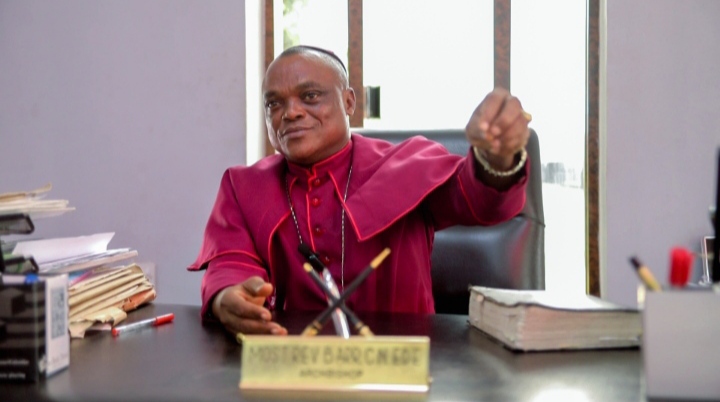
    The Most Revd. Barr. Christopher Edeh is the Archbishop of Enugu Diocese, Methodist Church, Nigeria. In this exclusive interview with PACESETTER, the revered man of God spoke on various issues, from his journey through priesthood, to happenings in the political space. Dateline: April 1, 2025.

    How did the journey to becoming a Methodist priest and then an Archbishop start?

    It’s a long story, I have been in this ministry for the past 44 years. I had my call at a very tender age of sixteen. Due to the nature of the family I was born into, a very poor family, I didn’t have the luxury of a secondary school education and because of that, I was taken to Western Nigeria, Ile Ife particularly, as an apprentice. I got to work with one lecturer at the University of Ife, Professor Fagbaun, as his house boy. The man said to me, “You look intelligent so, why are you not going to school?” I told him my parents had no money and he suggested I stay with them, work in the day and join extra mural classes in the evening. I attended the extra mural classes for two years and then took my exams, passing with five credits including Igbo language in Yoruba land and without a teacher. After that, I came back home to my parents. I was in church one day and the preacher came, one Rev. H. J. E Ironsi was preaching, I felt my heart warm, I felt I could serve God. After the service, I went to him and I told him I wanted to serve God in ministry. He was so happy and took me to my parents, my father was very angry but my mother was happy, reason being that she had promised God that if my brother and I survived, one of us will serve him. I have a twin brother and we were born at a time when twins were still killed in my community. God saved us by miraculously taking us out of our community and by the time we returned, we were already four years old at the time and there was no way people in the community could still kill boys who were four years old. So, when that man preached and I said I wanted to serve God, my mother said “Yes, I promised God that one of them was going to serve him and God has by himself picked somebody to serve him, he must serve God”, but my father strongly objected.

    While my parents were still at loggerheads over my decision, one day while we were praying early in the morning, we heard a knock on the door. We finished praying and opened the door to see a leper sitting by the door. Then, leprosy was seen as infectious and no one wants to come close to a leper. My father angrily asked what she was doing in his house. She explained that she was leper from Presbyterian Joint Hospital, Uburu and that she had just been discharged and lived by begging. She further added that God told her to come to the village and He will show her a place where He has called one boy who will be His minister and that she must bring every coin she got from begging and give to him for him to go to school. My father refused, saying that God can’t confirm the call of his son through a leper. Crying, the woman got to the center of our compound, drew a circle, opened her wrapper and brought out fourteen one naira coins and dropped it at the center of the circle and said “God I leave this dust of my feet, I leave this money, I have done what you asked me to do, please allow me to sleep when I get home”, adding that for the past two weeks she hadn’t been able to sleep due to the pressure from God. When my parents went to farm, I stubbornly took the money, rushed to MTI (Methodist Theological Institute) and took exams into the ministry, passed my exams and that was how I came into ministry at the age of sixteen. At nineteen, I was already a Reverend, I was so young that mothers in church called me “Reverend Nwa’m”.

    Before I could finish from MTI, the woman had died. She had no brother, no sister, no son, and no daughter, nobody that I could link to help for the sake of what she did for me. Her name is Mary Mbagu and I have registered an NGO in her name, I didn’t want to call it “Archbishop Edeh Foundation”, I called it “Mary Mbagu Foundation”. I was kept strong by the testament of that woman and what God showed me.

    What kind of a religious leader will you want to be remembered as?

    Well, I can tell you God has shown me mercy already. One of the things this church is remembering me for is that I have been a model and mentor to so many about what ministry should be. Ministry these days, young people are after money, but I have taught them and I keep teaching them. I want to be remembered as a leader who taught them that being a minister of God is beyond what you get or what is given to you, the cars you drive and whatever that comes with pastoring. I also want to be remembered for my passion for the poor because when I become Bishop of Uzuakoli, Uzuakoli has Methodist leprosy center, I left the Bishop’s house and went to live among the lepers. I lived with them for nine years and became Chairman of the Uzuakoli Leper colony. Within that period I ensured children of the leper got scholarships, we relocated their parents back to their villages and built two bedrooms for them and they were able to reintegrate themselves within the community. This foundation we just opened is to ensure that we help the poor, needy, disabled, ministers like me who have genuine cause and have children but no money to train them or even ministers that are genuine but because of the ministry, they have lost focus because of difficulties. I also want to be remembered as one of the greatest evangelists that lived.

    Let’s step away a bit from your theological journey. Should religious leaders be involved in politics?

    I believe that the church should be involved in politics, it is as straight as that. The church made a mistake of abandoning politics to the world and these are terrible people. Touts take over our destinies, uneducated fellows, keke (tricycle) riders and cultists. They take over your destiny and you sit back in church to pray? What do you expect? And that’s the bane of our country today. When the righteous rule, the people rejoice, when the wicked rule, the people gnash their teeth. The gnashing of teeth we have today is because Christians allowed politics into the hands of evil men and right now the evil people are fighting back, they are not allowing the believers to come in. There was a governor I was talking with about how he should allow righteousness to be part of the foundation for politics and he said to me, “Bishop when it comes to church take that one, now as for this politics, leave it for us”. Which means basically they know that they aren’t leading with righteousness. So, I believe the church should go into politics. Although going into it not as partisan politics, the church cannot be PDP or APC.

    (Cuts in) I was going to ask you that. How can religious leaders offer moral guidance on political issues without being perceived as partisan?

    The members of the church can be partisan, you can’t do politics without belonging to a party. But as a religious leader, I can’t be in any party, you are my member, you are PDP, he’s my member he’s APC. Religious leaders must first be proactive, we have leaders, for instance we are have a Bureau for Good Governance in this office (referring to his office) where we talk with all the church members going into politics to please go and we pray for them. Now, I do not tell them “go and join APC or go and join PDP”, wherever you are, from your ward, be an active participant in politics. If it’s time to contest, go and vote and be voted for. The church is encouraging people in that realm but not in a realm of partisanship but if there’s anybody whose pedigree or integrity is good and whereas we know he will do well, we pray for him and ask God to help him to win, those who are terrible, we know them all and we turn our backs on them.

    Juxtaposing the template you have just set on offering guidance with the recent happenings in Nigeria, do you assume that religious leaders of your class have spoken up?

    They (referring to the politicians) are simply distracting the masses who are suffering. We are now busy talking about Natasha. A woman held the hand of a man and they went into his bedroom with the husband following and the Senate president said to her “when we come back here, we will have a good time”. Your husband was behind you and you didn’t say “Darling did you hear what your friend said to me?”, it’s now that we are hungry that you should give us food to eat, give us good roads, good governance that you are now talking about your friendship with a man. They are distracting us. Look, politicians are terrible, they want a way to bypass the attention of the masses because if not, how can a senator be talking about sexual harassment? Does she understand the level at which she is operating? So, we are speaking up, read the newspapers, read the tabloids, I speak up constantly. It’s our duty to speak for the masses like I personally do.

    What advice will you give to a young Christian considering building his career in politics?

    In politics, there’s what we call political jobbing. Political jobbing is, if I bring you tomorrow and say Peter Mbah should make you a local government chairman. You don’t have a party card, you don’t even know the name of your ward and the number of your ward, it’s impossible. You know why? Political jobbing proposed that you should start from the scratch, learn the trade; vote, follow, go for meetings. Everything has its own trick, but some people just want to come and ask that I take them to the governor for a position, when you know you have never been part of the system. I will say to the person go and start from the scratch, learn the trade and you will make a great politician.

    Let us in on your assessment of the current leadership in all the states of the Southeast?

    If you ask me, I think Southeast states are blessed with good governors. Starting from Enugu State here, we can see what Peter Mbah is doing, he doesn’t talk, his work is speaking for him. Some may be crying over taxation but we see what he’s doing with the money. See what’s happening at conference center, our street roads, presidential hotel that has been abandoned over the years, the dualisation that’s ongoing to join Ebonyi State, the road going from Amagunze, it’s just massive work going on, see also the smart schools everywhere. Obviously, Peter Mbah is doing well.

    The man in Abia, Alex Otti, is also doing very well. He came and changed many things in Abia. People now say, “Aaah, so this kind of money is in Abia” because he started doing awesome things.

    The man in Owerri, Hope Uzodinma, despite the way people are complaining about his closeness with the federal government but I think he’s using it well, because all his projects in Imo are receiving attention. Whether it’s by federal government assistance, I don’t know but he’s doing well. The problem I had with Imo was the insecurity issue which stemmed from the Anambra-Imo axis, Anambra was now used as the forest. That axis from Ihiala down to Orlu were seized by these terrible boys. But can’t you see there’s now peace in Anambra State? The governor, Chukwuma Soludo has taken charge of security. I think all of them are doing well, I don’t want to grade them.

    I am from Ebonyi State, we call Governor Nwifuru, the builder. He’s doing very well. The good thing about Ebonyi is that it has been blessed with good governors from Sam Egwu down to Martin Elechi, Dave Umahi and now Gov. Nwifuru, all of them are very good.

    Sam Egwu was educated, he was a lecturer before he became the governor. He laid so much emphasis on human development. Elechi was a core civil servant, you need to go and see the secretariat of Ebonyi State, I think it’s the biggest in the entire Southeast. Then Mr. Project came – Umahi. Umahi is an Engineer, there’s no community in Ebonyi that is not connected with roads, concrete roads. You can actually close your eyes and drive through Ebonyi State. Now this man came, Nwifuru who was actually a Speaker when Umahi was governor and he learnt the ropes. I think they are doing very well. The East is now blessed, what they need to do is to close ranks and merge together, for instance, creating a rail line that connects the entire Southeast.

    How would you respond to the ban on street evangelism in Anambra?

    I have not heard that Soludo banned street evangelism. The day that Soludo spoke to us, he never talked about street evangelism. Soludo, actually started this war, fighting people who deceptively ruin the lives of our children by telling them that they have imaginary powers that can protect them and that by using these powers they can disappear and appear, they can call people’s money and it comes into their pocket. Things we know obviously are fetish and then in order to make them feel at home there’s something that’s mystic about it, they begin to ask them to bring small children and some parts of human body for sacrifice and they say they are doing tradition. What tradition of Igbo land permits kidnapping? Because when they do these things and don’t get the money, they now kidnap people to be able to raise money to pay the Dibia. They know that these things they are doing is all falsehood. So, they are traditional things our people were doing in the past that are not that fetish. Number one – what’s tradition? If you do something many times it becomes a tradition. So, any tradition that will bring loss of lives, loss of properties, or laziness and lack of work among our children, that tradition is not a good tradition. Igbos believe in working hard, we believe in working together to be able to survive. We don’t sit back, take a laptop and press it to take people’s money, that’s not Igbo blood. What we are fighting now is for complete adoration.

  • EXCLUSIVE: Our democracy is dying in the hands of President Bola Tinubu and his hybrid regime – Prof. Udenta Udenta

    EXCLUSIVE: Our democracy is dying in the hands of President Bola Tinubu and his hybrid regime – Prof. Udenta Udenta

    Prof. Udenta O. Udenta is a man of many parts. He is a Professor of Cultural Studies and Creative Writing in a number of British Universities with affiliations in Africa. Having written his first book at the age of 13, on his 60th birthday, he published 21 books celebrated in one day. He was the founding National Secretary of Alliance for Democracy. He was a Director with the Institute for Peace and Conflict Resolution (IPCR) and is a Director with the Centre for Alternative Policy Perspectives and Strategy (CAPPS). In this exclusive interview with PACESETTER in Abuja, he bemoaned the degradation of democratic institutions in Nigeria, among other national issues. Dateline: April 4, 2025.

    Your early writings and speech reveal a mind that was not only attuned to the beauty of language but also the power of critical thought.  What sparked your interest in Literature, Critical Theory and African Comparative Studies?

    How will I say? How will I know? I know in one of my interviews and write-ups, I said ‘there are moments that are magical and there are moments that are equally inscrutable’. There’s no way you can define something you don’t really know much about. When you’re born, you’re born with manifest destiny, some people search for their destiny until they die, some find it early in life, I found mine early, almost before I learnt to walk, I discovered what I was going to be. So, when you start writing at 13 years, that’s the onset of puberty, that’s teen life. Some struggle to understand the meaning of life at 13 but I had written 3 novels, about 3 or 4 collection of short stories, about 3 collections of poems, a philosophical text – social meanings and social commentaries, before 14. That means there’s something magical and mysterious about that. But I do know that as a child I was enchanted of course by many stories told by my mother particularly. My father told a lot less stories but my mom told more stories, about ancient fables and folk tales and village life in those dim ancient times and they’ve made a lot of impression on me. And the civil war, of course I was born before the civil war, but I wasn’t old enough when the war commenced, but I learnt a little bit of life. My father was in what we called then the Biafra Organization of Freedom Fighters (BOFF). So, some evenings they’ll gather, he and his colleague will gather drinking schnapps or gin, my mother would come through, being a nurse we had better than other people during those dark days, and they’ll be singing songs to Biafra, to Ojukwu and so on, and as a child I listened to the stories they told, these stories made a lot of impressions on me and the journey again out of the world was equally very illuminating. These are the things which I found resonance and inspiration for some of the short stories I wrote that period. So, the civil war and all the stories associated with it, of purism, of challenges, of tragedy impacted upon me, my mother’s stories impacted upon me and possibly God’s own divine gift – something implanted in you as a person, and then most crucially, my father had a library, which was very uncommon in those days in the village. He had a very big library that was destroyed during the war, when we came back to our ancestral home by 1970, we discovered that thousands of books have been torn up and used as tissue paper by the soldiers. Within 2 to 3 years he started rebuilding his library and in 5 to 7 years the library was well stocked again so, I found in reading, many availability of books to devour.

    You transitioned seamlessly from the realm of academia to active political engagement. How did your political journey begin?

    Well in a way, it’s the way I see life in a multi-form complexity, life is not a linear process like when people say “I’m a scholar, I’ m a teacher, I’ m a doctor, I’m a nurse, I don’t know what happens in other sectors”. No, it shouldn’t be like that, there should be some level of inclusion. That’s why one of my books, my first memoir and I tell biography vol. 1 – ‘Democratic Transformation and Change in Nigeria’ but the subtitle is ‘A personal journey from intellectual conscience to practice’. The movement from intellectual life in the average tower to practical life of intervention, going to detention prepared to speak up against injustice and oppression. That’s exactly what I had to do, that’s exactly who I had to be and it started from high school. I remember as a class 5 student, I knew that we came back from school after the holidays and we were tortured with only beans, beans served to the students for about 3 days. I disagreed with it, that’s not the way things should be organized, we paid our fees, and we ought to have variety of food to eat. I mobilized hundreds of students and we poured the entire beans away, we didn’t eat it, we stood our ground, we were punished, I resisted. I was 16 years at the time, I wrote a 16 page letter to the principal that I was prepared to take it to Enugu city and ensure that the school was investigated by a high panel. So, the principal who is like a mentor now, he’s just someone who changed our lives, but then I was contending with him, he said okay because I acted in a play based on South African struggle against apartheid, that I’m seeing the teachers and staff as those who are oppressive. But I didn’t see it that way, I just felt I had to protect the rights of students. Now back in the village, when I enrolled in the university, we felt as though the elders and some of the leaders in the village were constituting themselves as a cog in the wheel of our progress, again we raised a ban of protest and then successfully we defended our position. Being a Marxist from high school, I took it with me to the university and ultimately led the Marxist Movement in the University of Nigeria Nsukka, I’ve led protest upon protest. So, as I read and as I advanced in my scholarship, I was equally advancing in my commitment to social life and practical political struggle. Now till today, I am part of NADECO, Alliance for Democracy, and I’m involved in the conversation about the destiny of Nigeria. This means that as a public intellectual you need to combine both your life as a scholar and your life as a representation of that scholarship in a wider society to improve the life of the people in that society.

    Between when you were National Secretary, Alliance for Democracy and now, what changed in our trajectory of democracy?

    It’s what can be described as a continuous slide, what can be described as democratic backslide or degeneration of our democracy or democracy that is atrophied. Our democracy is dying and in the hands of President Bola Tinubu and his government. Some time ago, I called it a hybrid regime. It’s part of what is described as ‘competitive authoritarianism’, it is neither democratic nor totally authoritarian, there’s a recourse to constitution but the constitution is readily abused, there’s a recourse to rule of law but it is undermined, there’s a recourse to judicial intervention but the judiciary appears already confiscated by the Executive arm, there’s a democratic recourse to parliament as an  arbiter, sometimes between the people and the Executive branch, but parliament seem to have fled – the President of Senate, the speaker and the bunch of characters around them have sold their soul to the President and his people. So, because of these, you’re not going to look at parliament to balance democratic life, you can’t look to the judiciary to find justice for the common people, or those who opposed this government. So, democracy in 1991, was innocent in a way, it wasn’t a hundred percent in what democracy should be but far better than what we have today. Today there’s a much more aggressive push to undermine democratic governance, there’s a much more aggressive push to shut down and dismember the guardrail that uphold democratic practice. The first guardrail is civic liberty and human dignity, which we find constantly under assault, even the unity fountain where they used to have ‘BBOG’ – Bring Back Our Girls (protest), they’ve shut it down, they’ve gated it, and they criminalized the art of protesting there. That was what he (President Tinubu) used to come into power in 2015, only to criminalize that very art of protest. We saw the pictures some months ago, of young people underaged, brought to court, some collapsing there. They’re using the criminal justice system to undermine people’s trust in themselves and ability to protest against the unjust governance structures of the day. You find Labour leaders being accused of terrorism and terror financing, you find media practitioners being hunted from pillar to post, you find political parties fighting for their lives because the government of the day will like to break their pack. So, this government is intentional in its determination to topple almost all those concessions we have been paying to democratic government over the preceding two decades past.

    In a previous interview, you suggested the need for a certain alignment, or what you described as a “linkage of affinity” between the judiciary, legislature, and executive. What advantage do you see in such alignment of power and how do you think it will improve democracy and benefit the public interest without affecting political competition?

    For me, I think the intent of this government is to create or have one single party that is exuberant, robust, cohesive and coherent, then having the other parties limping, virtually half dead, half alive, that’s like a one party state in anything but the name and when that happens, all the pretence to repair are gone, all the pretense to the norms of that democratic system are gone. So, what you now find is full blown, illiberalism, authoritarianism, it becomes authoritarian if care is not taken. So, multi-party democracy affords the elites an avenue to place checks on one another, different factions of the elite manifesting themselves in different political formations, trying to balance the appetite and greed for power with the wide expectations of the public. When they don’t have that balance in act, when they don’t have that sense of consensus being among the elite pursuant to a single party under the leadership of a single individual, it is frightening, the society is not going to cope. A complex country like Nigeria – multi-religious, multi-ethnic, in essence multi-national and very diverse, will not cope with the strain and stress imposed upon it by this kind of capricious dismantling of democratic governance, in a disguise of disrupting the multi-party rule. In essence all hands must be on deck by Labour centers, civic platforms, legal practitioners, political activists to ensure the survival of democracy by the survival of the multi-party system. That is what is going to work for a federal state like Nigeria and not an existence of a single party infrastructure that will manacle human liberties and muscle civil space.

    Beyond issuing advisories, what else would you propose that intellectuals do to salvage the nation and continent?  Do you think they should occupy political positions?

    Intellectuals don’t really always have to advise in terms of government and politics. The question is, are they really Intellectuals or Technocrats? You know there are technocrats who are out there as private individuals that lend support to the government of the day, either directly or indirectly, provide briefing notes and project reports and so on. But a proper intellectual husbands his or her space jealously, they guide that space jealously because Intellectual is disruptive. By nature an intellectual doesn’t acquiesce, they’re iconoclasts, you need to be transgressive, bold and compelling. We need these not just in government but more on the outside essentially. If you find people in government who can do it and survive, well done to them. But essentially, an intellectual is not just a critic, he or she is an innovator of the mind, somebody who guides society on the part of recovery, who calls out evil the way he or she sees it, someone who speaks truth to power, whose learning and the bearing of his thought are clearly manifest in the passion with which he or she speaks, the thoughts he or she evokes and the courage with which these things are delivered. Those in power, what they do is to have their own system people who watch intellectuals, who read them, who study them, who take from them even when they don’t want to concede that they’re taking from them, who therefore define governance, or governance models or governance methods by these intellectuals. Intellectuals could become activists, not just talking, they act, they carry placards to demonstrate, they hold the ban of freedom to push back on anything they see the government doing that is not in the interest of the people.

    The UK parliament has this system of shadow cabinets. This is basically where the opposition leader appoints shadow ministers and senior spokespeople to mirror the cabinet in the government. Each shadow minister is paired with a real ministry and their job is to question, challenge, scrutinize, criticize where necessary, the policies of the main minister. Do you think this is a more effective way to engage in opposition, while the opposition presents itself as an alternative to the government in power?

    You find that in the parliamentary system of government, in the presidential system you don’t usually have that, but it’s something that can work. I tried that in 1999 as a Secretary for Alliance for Democracy. We had a change of guard, we had a new Chairman, elected by the party with me still as National Secretary, I was the founding National Secretary and about 3 or 4 Chairmen worked through my tenure. One of the Chairmen who was elected sat down with me and I said let us give Obasanjo’s PDP a run for their money. Let us have spokespersons, not shadow ministers, but spokespersons on various sectors, spokespersons for the party on economy, finance, governance, democracy, environment, foreign policy. This means if you see the program of the government in any of these sectors, the duty of the spokesperson is to study, scrutinize and propose a counter-policy. This is the way we think it should be done and when our party takes power, this is the way we’re going to govern. So, I think it will work, it’s not like a classic shadow government or shadow cabinet but something near enough, so that every sector, every segment, every sphere of life will have a spokesperson that will supervise it.

    Recently, you had suggested that in the appointment of an INEC Chairman, the President should recuse himself and cede the power to make the appointment. Wouldn’t you think that if the President recuses himself, some other person he may charge with that responsibility could still set out for self-serving interests? What would your exact recommendations be on this?

    I was being idealistic and I said this in that interview, that I know no president, not this president particularly, will recuse himself. Maybe Yar’Adua could have recused himself, maybe Jonathan could have recused himself, because Jonathan said “I didn’t know Prof.  Attahiru Jega, he was recommended to me as a brilliant Professor of Political Science and could manage those situations very well and I appointed him without knowing him”. Like I also said in the interview, some Presidents will like to know or be acquainted with the person who is going to be the INEC Chairman, particularly President Bola Tinubu as a President will like to know who the INEC Chairman is, but If I were to be him, I’ll rise to this moral occasion and say I’ll cede this power not just to anybody but the parliament or maybe to the judiciary but I don’t know the legal implications, it may require act of parliament, it may require a new amendment to the constitution, because it’s already constitutionalized that the President will appoint INEC Chairman and the process is detailed. The President can decide to act  for the sake of reliable election, acceptable election, transparent and credible election, and say I will not appoint the INEC Chairman, and therefore I raise an executive bill to the National Assembly to amend that section giving me the power to do so and give the power to do so to the parliament, judiciary or an independent agency made up of members of the political parties in addition to about 2 or 3 Justices, probably retired, to come together and have a pool of people to look at and then verify them, for neutrality, objectivity, intellectual and moral strength before they can take that position. That’s expecting too much from a government of this nature that is undermining democracy every day, a government that wants to attain and confiscate power in 2027 by all means possible, so they’ll like to have an INEC Chairman that is compliant, maybe more compliant than the current one who will do their bidding. The duty of civil societies and position of political parties and Labour is to watch for whoever is going to come there as a nominee and scrutinize the credentials and identity of that person and then try to ensure that INEC is reasonably positioned to do the job selflessly, objectively and transparently.

    It’s obvious we need a paradigm shift in Africa’s government, leadership system and democracy.  If you were to design a standard or model for governance and to rebuild political legitimacy in Nigeria and Africa, what will it be? 

    It is foundational, this question is a foundational question. Liberal democracy has not only suffered a setback in Nigeria and Africa but has run its muffled course, it virtually have failed miserably, after almost 20 to 30 years reign. Liberal democracy was advertised as almost a ‘cure all’ to African crisis of development and crisis of democracy. Liberal democracy came to cure this and say we now have the system of a representative government in a multi-party framework where there’s a very strong parliament, heavily independent judiciary, vibrant civil society and a very credible media. That hasn’t worked out well for 30 years. Currently there’s a new wave of thought in Africa called de-colonial praxis, which means going back to African traditional knowledge formation system to say colonialism came with these claims of enlightenment and the enlightenment is based on what can be described as colonial modernity, which implies that we were barbaric people when they came, they came to give us clothes to wear, health, education and a tongue to speak, which also implies that we should accept anything they give us, without questioning that mode of epistemologies. How do you form knowledge by what you receive from the people who came to colonize you? Why don’t you go back to the ancient method in which our knowledge systems were formed and then try to drag them into the contemporary stage? That means you can question the very presence of liberal democracy in Africa, find a system that is more Afro-centric or African centered. In 1989, Obasanjo came with Constitution for National Integration and Development, when he formulated the one party state but not the current one-party state that is criticized now, but the one party state that is inclusive like the Chinese communist party model. We need to find a method, it may not just be one party state, but a system that owes more to African logic of civilizational evolution, rather than an imposed western method. The prime problems of western liberal democracy is conflicting legitimacy and legality. Like I said in my last interview, legality means that the elections held, President Bola Tinubu scored 20% of about 93 million people registered to vote with INEC – in essence he has no mandate, but then okay there was an election, more than few people turned out to vote, it was counted and proclaimed and the court ratified him, so it’s legal, but illegitimate in terms of not performing to the expectations of the people. For illiberal democracy, once elections have held, government sworn in, people are coming and going, elections every four years, democracy is assumed to be thriving. What will work will be an African centered method of democratic governance, leveraging on the creative thought of African practitioners in governance, with our scholars, our intellectuals and those in power to begin to think that most of these issues are not settled.

  • INTERVIEW: Why I’m Running for Governor of Anambra State – John Nwosu

    INTERVIEW: Why I’m Running for Governor of Anambra State – John Nwosu

    Excerpts of an Exclusive Interview on an Array of Issues with Labour Party Governorship Aspirant, Mr John Chuma Nwosu

    Who is John Nwosu?

    I’m a citizen of Nigeria in good standing; a humble business man, a husband, father, an indigene of Oduda Nnewichi, Nnewi; an ex- Seminarian and a devoted Catholic. I’m an Economist and Computer Technologist by training. By the grace of God, I am the CEO of Jetlink Ltd, an ICT company, which has been progressively operational for 30 years and have offices in Nigeria, Ghana and Liberia.

    Why are you in the race for Anambra State governorship election 2025?

    An adage says that evil thrives when good men do nothing. I feel blessed in my life and business; but I’m conscious that our communities, State and country are suffering. I’m saddened by it all. Anambra State under the present government is not functioning optimally. Our people live in fear, due to insecurity. The problem is not insurmountable with the aid of information and computer technology, which is my field. So rather than complain, I have decided to help solve the problem. If the present Soludo-led APGA government was doing well, I would stay in my lane and mind my business.

    What are the areas you think that Gov. Soludo is not doing well?

    Security, Security and Security. The insecurity level is simply scary. The maintenance of existing infrastructure is also an issue. Our roads are full of vehicle-damaging potholes. Our people are also being underserved and overtaxed; and the crude method of tax collection is abusive and very pedestrian. I can go on and on. In sum, the government has failed in its primary responsibility to protect Ndi Anambra.

    The issue of insecurity is adversely affecting the economy of Anambra State. How do you intend to fight the insecurity if you are given the mandate?

    Comparatively, on the scale of 10, if the rate if insecurity under the Peter Obi administration was 3 and under Willie Obiano, was 4, insecurity under Soludo it has gone up to 8. It means that the security architecture in Anambra has collapsed or that his security modalities are dysfunctional. We are getting close to the Mbadinuju era of insecurity. This has resulted in human and capital flight from the State. Governance is about best practices. But as you know, you don’t divulge how you intend to tackle insecurity. Suffice it to say that we will do the needful, which is presently not the case.

    Anambra State has been enlisted by the Federal Government of Nigeria as one of the oil states. How do you intend to take advantage of that to develop Anambra State through infrastructural development and creation of employment opportunities?

    There is oil and gas in the Aguleri Otu basin and there is oil and gas in Ogbaru areas of Okpolodum and Ogwu Ikpele. The 13 percent derivation is based on exploration, production and revenue. The oil production value chain is quite immense, if properly harnessed. It provides resources as well as employment and development. Oil companies can assist in development through community reinvestment initiatives (CRIs) and social corporate responsibility (CSR). The state government’s role is administrative, policy and process coordination and facilitating local ordinances that tend to impede exploration. Naturally, our host communities and their environments must be adequately protected.

    Are you in support of full implementation of Local Government autonomy in Anambra State? If yes, how do you intend to go about it?

    I’m totally in support local government autonomy. We have three federating units and that’s how the federal allocations are shared. Let each tier of government function within its allocated resources and internally generated revenues. It is that simple.

    Some citizens of Anambra State are saying that Gov. Soludo is not building people. Do you agree with them?

    I do. And that’s why I’m contesting for the Governorship. Gov. Soludo will have to run on his first term performance record. Set sentiments and partisanship aside, and you’ll attest that his record is dismal. Even the common people on the streets say so.

    How do you intend to build the youths of Anambra State?

    Youth unemployment is a national issue and indeed, a disgrace. We are at 54%. It is a waste of human capital. But part of the challenge is that we have long focused on academic rather than vocational training and skills development. Our focus will be to train youths in various incubation SMEs, where after they will start off as employers of labour instead of employees. We will also provide the youths with single digit capital loan facilities that the government and the organised private sector might have to underwrite or guarantee.

    In the 2023 general elections, people came out in their large numbers to cast their votes but the outcome of the elections did not go down well with the so many Nigerians. What is your advice to the INEC concerning subsequent elections?

    Well, again, we must focus on best practices. Look at the just concluded US elections. There were challenges, but it was seamless and reflected the strength and resilience of their national institutions. INEC and the extant electoral laws are not the problem; it is the malleable people we entrust with such sensitive duties that tend to fail us. The outcome of the 2023 election might disincentivize Nigerians for a long time.

    How do you intend to restore the confidence of people in government?

    When a government is working, and is adaptive and transformative, the people are the first to acknowledge it. There is confidence building measures that can be deployed. Honesty, transparency, equity, and intangible assets like the rule of law and protection of lives and properties, all promote public confidence. Government must be accessible and its presence must be felt. The Peter Obi optimal governance model of ANIDS developed each community and local government area simultaneously. Our seven SHEEEMS governance pillars will replicate ANIDS, and then add some.

    To read John Nwosu’s profile and vision for Anambra, click here.

  • ONE YEAR IN OFFICE OF GOV. PETER MBAH: Xraying Mbah’s Strides in the Agricultural Sector – A Chat with Patrick Ubru, Enugu State Commissioner for Agriculture and Agro-Industrialization

    ONE YEAR IN OFFICE OF GOV. PETER MBAH: Xraying Mbah’s Strides in the Agricultural Sector – A Chat with Patrick Ubru, Enugu State Commissioner for Agriculture and Agro-Industrialization

    Patrick Nwabueze Ubru is the Enugu State Commissioner for Agriculture and Agro-Industrialization. With his professional career as a banker spanning close to 14 years, Ubru was Head of Public Sector at First Bank of Nigeria, coordinating activities for the expansion of Agriculture. He was also the Pioneer Manager of the Nsukka branch of NIRSAL, an agency of the CBN, with interventions in the agricultural sector. He is an agricultural consultant and a fish farmer. In this interview with Pacesetter, Ubru lets us in to the achievements of Gov. Peter Mbah in the agricultural sector in the first year of his administration. Dateline: May 22, 2024.

    Give us a Food Map of Enugu State

    Enugu State is blessed with abundant resources, land, water and climate. Enugu State has the richest soil in Nigeria. Majorly, we grow cassava. We have been adjudged the largest producer of cassava in the country. We grow Maize, Sorghum, Rice, Groundnut, Tomatoes, Ose Nsukka (Yellow pepper), Yam, Cocoa, Oil Palms, Sesame, different fruits too. As a matter of fact, we produce rice in large quantities better than any other state in the Southeast. Little wonder that on December 8, 2023, we unveiled ‘Enugu Rice’ to support our farmers to stop transporting our rice paddy to other states. So, we take pride to say that we’re the largest rice producers in the country. Anyone can challenge us on that. There’s no crop that can’t grow in Enugu. Enugu State is also the highest producer of cashew. Apart from the state owned cashew plantations, there are pockets of cashew plantations owned by individuals and communities in the state.

    Since you assumed office, what interventions have you provided to the agricultural sector?

    We have done quite a lot of interventions in the agricultural sector, most importantly for our smallholder farmers. We understood that for us to scale up our production, we will need to get into dry season farming as is obtainable in the North. So, we introduced dry season farming and in doing that, we decided to train our farmers. We took rice as an example because we found out that within the Owo, Idodo, Amankanu and Ubahu axes, those places are rice belts but our small scale farmers farming there did not have the modern knowledge on how to grow rice and optimize their potentials. So, we instituted a team to teach them this and it’s still ongoing. Besides that, we have also provided solar water pumping machines for them to aid the dry season farming. If you go to Nenwe, Oduma, you will see our smallholder farmers enjoying such facilities. Leveraging on the strengthened relationship we enjoy with the Federal Ministry of Agriculture and Food Security, we have also distributed seedlings, fertilizers to our farmers. Soon, we will be distributing rice seeds to over 1,200 farmers in Adani.

    Let us in on Agricultural programs currently ongoing or in the pipeline.

    There are a lot of programs. I want to emphasize that the state is keen on expanding its agricultural production capacity. Currently, we cultivate on 111,000 hectares of land but the state has made a bold commitment on adding 300,000 hectares to our agricultural space. Why do we want to do that? The state has a policy of encouraging large scale farming. In the month of March, we signed an agreement with a private investor to cultivate 15,000 hectares of land in Ikem, Isiuzo and work has commenced. He will be cultivating cassava, maize, rice, soybeans, etc.

    You asked about initiatives. We have this cassava to bioethanol value chain development where we undertake an end to end approach on cassava development, from the seed multiplication to planting to harvesting to processing to different byproducts of cassava, up to bioethanol refining. The guarantee is that any cassava cultivated in Enugu state must be off taken one hundred percent. Another initiative is the Special Agro-Processing Zones (SAPZ) which the Governor of Enugu State has also assured Ndi Enugu will be established in the three senatorial districts of the state. The pilot SAPZ is already coming up in Owo. We have done the feasibility study and environmental impact analysis for the take-off of the pilot SAPZ, sponsored by Africa Development Bank, other private investors and the state government. It’s a whole lot of thing that the state government is doing. Yet another initiative is the Green Smart School where we’re developing smart farms so that we can teach our children, at a tender age, to embrace agriculture. In 260 Green Smart Schools, we will be having 260 smart farms. There’s still the ‘Food For All’ initiative but it’s still in the pipes. So, there are lots of initiatives by the state government.

    Are the Green Smart Schools different from the Smart Schools the governor is constructing in every ward of the state?

    No, they are not different. I’m trying to tell you that we are incorporating smart farms as a part of the smart school. If you go to Owo, the smart farm is under construction and will be ready by next week. We will be training the school children on Poultry, Piggery, Fish Farming, etc. There will also be a greenhouse and an agro forest. We will be using organic materials to grow crops. It’s going to be an integrated farm where there will be zero waste because the waste of one aspect will be converted for use in another aspect.

    What exactly are the Special Agro-Processing Zones? What difference will they make?

    It is basically bringing a processing cluster close to where the agricultural produce is cultivated in abundance. The agro processing zone will have an industrial aspect where our produce will be processed, packaged and ready for export. SAPZ is a huge employment opportunity for Enugu people. It will employ not just those in the primary production but also those who are engaged in the secondary production, which is the value addition and those in the tertiary production which involves packaging, logistics and the rest. It is a holistic approach to lifting the people of Enugu out of poverty. The pilot processing zone is to be located in Owo. We have carried out the feasibility study and we believe that before the first quarter of 2025, that zone would have started. Apart from the African Development Bank, the state government is also approaching private investors.

    Your Ministry seems pivotal to the governor’s plan of growing the state’s economy from $4.4bn to $30bn, a projection some believe is impossible.

    Agriculture all over the world is the surviving strategy of every nation. It is the mainstay of any economy. Agriculture employs over 70% of the population, maybe basically for subsistence farming. Our governor has promised to cause a rebirth in Agriculture through the introduction of technology to appreciate the yield beyond subsistence farming. In the process of expanding production, more jobs will be created. Beyond this, our governor has said we are going to add value to our crops. This is going to the secondary and tertiary aspects of agriculture which will involve processing, packaging and export of our agricultural products to consumers in other states and countries. So, the governor is visionary, he knows what he is doing and it’s not lost on him that agriculture is the main driver of the economy.

    One of the greatest challenge to farming is insecurity. In practical terms, what is being done to arrest this so that food insecurity doesn’t become a thing in the state?

    Our governor does not joke with security. Let me give you an instance. If you go to Isiuzo, the Ikem-Nkwo axis to Odenigbo, down to the boundary of Enugu and Benue states, suspected Fulani herdsmen had chased the indigenes of the community away but if you get there today, because that is where the Enugu State Produce City, the first of its kind, will be, you will find out that the government has established a military base there. If you also go to Uzo-Uwani where you also hear about issues between communities and herdsmen, the kind of security presence there is incredible. Naval officers are occupying Uzo-Uwani because they are building their naval base, school and hospital in Ogurugu. Intentionally, the governor asked them to move in to Adarice to provide security for the rice farmers. So, the governor is not joking with security at all. Besides these, we are also in talks with the Nigerian Security and Civil Defence Corps, NSCDC, to activate the Agro-Rangers which was established in the Buhari administration. Our farmers are encouraged to go back to their farms.

    Between February 2023 & February 2024, food inflation stood at 30.07% nationally. In Enugu, what’s being done to increase the purchasing power of the people?

    Once money is chasing few goods, there’s always inflation. Food inflation may also have been caused by what is known as cost-push inflation because there are a lot of things that go into production of food. You talk about the transportation of the produce from the farm down to the market. It’s a factor. Come to Enugu state, when you see a government that has gone head on to provide infrastructures like roads, to ease the transportation of food produced to the market, it will more than reduce the cost of food. When you see a governor who’s interested in providing good health facilities to enable even farmers take good care of their health and not lose some days due to sickness, it will help to reduce food inflation. When you see a government that is interested in educating the citizens, inclusive of farmers, to have more knowledge in producing more food, because if we expand our production base, definitely it will knock down the cost of food items. When you see a government encouraging everybody and every household in Enugu state to plant something even behind their compound, it will more than reduce the cost of food. So, a government that has a strategy, supporting its farmers, will reduce the cost of food. Once we produce what we eat here we, becoming self-sufficient, definitely the cost of food items will come down. Once you arrest the price of food items, you arrest the price of other things needed to aid life.

    Are there agricultural taxes presently collected?

    Obviously, there should be agricultural taxes collected for instance, for veterinary services. Veterinary services are not in the primary production line. These taxes are however very friendly, not painful, because agriculture is a sector every government wants to support and subsidize, to be able to extend help to farmers.

    Are there agricultural produce from the state that have hit the markets nationwide?

    Of course. For instance, our rice, our cassava are in the market. As I speak to you, we export cassava chips outside Nigeria. We also get demand from Lagos to buy our cassava chips. We also have El-shaddai Foods producing sorghum flour. These things are in the market. Our honey is one of the best of its kind and it’s in the market. Our cashew, yellow pepper, palm and so many others

  • GOV. PETER MBAH’S FIRST ANNIVERSARY: A Look at the Tax Reforms, Gains and Programs of the Mbah Administration – A Chat with Emmanuel Ekene Nnamani, Executive Chairman, Enugu State Internal Revenue Service

    GOV. PETER MBAH’S FIRST ANNIVERSARY: A Look at the Tax Reforms, Gains and Programs of the Mbah Administration – A Chat with Emmanuel Ekene Nnamani, Executive Chairman, Enugu State Internal Revenue Service

    Emmanuel Ekene Nnamani is the Executive Chairman, Enugu State Internal Revenue Service. Prior to his appointment by the Executive Governor of Enugu State, he was a banker, specifically in the internal control group of First Bank. In this exclusive chat with Pacesetter, he shares all there is to know about the recent tax drives and reforms in Enugu state, as Governor Peter Mbah marks his first year in office. Dateline: May 20, 2024.

    What did you meet as the revenue of the state when you were appointed? Can you give us some statistics?

    Yes, upon assumption of office, the average revenue of the state was hovering around 2.1 billion and 2.3 billion. That was what we met on ground.

    Put a figure to the state’s IGR as at April.

    Yes, not just April. April was marred by a lot of public holidays. Collection was not too easy and a lot of fluctuation in networks. But what we know is that we are now making an average of 5 billion monthly, in terms of revenue of the state. That’s currently where we are.

    What have you been able to achieve since assumption?

    We are nine months in office. Yes, what we have achieved since the resumption are; we have been able to double the revenues of the state and since that time, the state has relied on the revenue to pay salaries of staff, no longer depending on FAAC. We have also achieved streamlining the process for internal revenue service. We’ve engaged in massive training of staff and PWC Nigeria has been supporting us massively in terms of training our staff and improving their skill sets. We’ve also been able to bring the service together. When we came on board, we met a service that was running helter-skelter. There was no unity. There was no process flow. So, we’ve been able to bring the service staff together. We started building a team. We started having a process flow. We have also tried to provide internet in the board. Every aspect of the headquarters of the board is now covered by Wi-Fi internet. We’ve also provided 30 kilowatt solar energy for the headquarters of the service. Why we did that is to ensure that we may not have any excuses why we failed to deliver on the mandate given to us. We started identifying those who are not taxed and again, apart from the staff process that is improving, we’ve been able to build to depend majorly on IT in our collection. When we came on board, the state engaged a new tax management system which is also a central management system for the entire state.

    So, we moved from being a mono-payment gateway state to now multiple payment gateway state. When we came on board, we had only Interswitch collecting revenue for the state in terms of payment gateway. We got approval and expanded it to five payment gateways. Now we have Interswitch, Remita, eTranzact, Unifed Payments and Flutterwave collecting revenue for the state. Now we’re giving the citizens of the state and taxpayers options. So, when there’s down payment or down time in one payment gateway, another payment gateway is up and that has given us a leverage to scale up our revenue collection. Other things we have done are; we have been able to activate new revenue areas or new revenue lines. For instance, when we came on board, there was no purchase tax in the state. We activated purchase tax and capital gain tax because they were actually provided for in our laws but were never activated all these while, and revenue is coming in from there. We have also tried to expand the net of who pays our PAYE -Pay As You Earn and Withholding taxes. Another area that was actually a big win for us is bulldozing into the informal sector where hitherto, no revenue had come into the government in the informal sector simply because some people said they were given waivers, some said they were compensated for voting in the past administration. But in this administration, I don’t think when you vote, the compensation they give you is to waive tax payment. How will government develop or build their projects? That sector is giving the state revenue day in, day out. In the month of May, we have made over 300 million naira from the informal sector where hitherto no fund comes into government purse, and over the past four months, we’ve made an average of 250 million every month. Using technology has been an advantage because in the informal sector, we entered using e-tickets, which is a novel task collection in the informal sector and we also consolidated it so as to avoid too many footfalls into a business premise. That doesn’t mean that we have achieved the target of the state. The target of the state is mammoth and we are facing it squarely.

    Speaking of targets, one of the Governor’s promise, arguably the most popular, is to grow Enugu’s economy from $4.4bn to $30bn over four to eight years. Walk us through an achievable plan.

    It’s very much achievable. When we talk about building the economy from 4.4 billion to 30 billion dollars, it’s not revenue. It’s the GDP of the state and when we talk about the GDP, you can see that the state is actually on the right direction. So, what has the state done to ensure that this projection comes true? You have seen the state constructing massive roads. These roads will bring in economic activities, open up rural areas for massive commercial agriculture, which you have started seeing some massive agricultural entrepreneurs coming into. It will also open up these areas for new estates, property acquisition and property build-up. Then you have also seen the state trying to reactivate some of the dormant assets in the state, talking about Presidential hotel coming on board, United Palm Products Limited coming on board with an investment of about 100 billion naira. We are talking about the state signing a contract to build a five-star hotel within the International Conference Center. You have also seen the state activating the completion of the International Conference Center and you have also seen investments coming into the new transport terminals in Ogui, Gariki and Abakpa axes. You are also looking at the state making frantic efforts to complete the International Airport, getting into cargo terminals. You also have the state trying to activate waterway transportation through the Ogurugu in Uzo uwani, activating all lines of business that will increase that GDP to where we are going. These are massive investments plus a whole lot of investments coming into it, and all these things, when they start, they increase the revenue of the state, because if any of the companies are activated now, they will recruit staff, they will pay PAYE. If they issue contracts, they will pay withholding tax and other taxes that follows within that axis.

    Let’s not shy away from one reality out there on the streets. The people believe that the government has actually increased taxes. The governor has said he didn’t increase taxes but simply widened the tax net. In the budget for the present fiscal year, according to the governor, N300 billion of its N521.5 billion budget is to be raised through IGR. Does this not lend credence to the assumption that taxes were increased?

    No, I think what you should know is that when you look into the budget, journalists should be able to go into details of the budget provision, not actually the summary of the budget. Yes, the state made a provision of about 250 billion naira to come from internally generated revenue but if you look at the IGR, some of the projections or the estimate is not all about taxes. So, there are taxes, there are non-tax revenues, there are realization from sale of dormant assets, which you will see that sale of assets dominated the internally generated revenue, if you go through the budget very well. The tax did not increase beyond levels and if you watch what is being collected, there are actually less what the state can do in terms of increasing tax. They don’t actually have much of the powers to increase taxes, because the personal income tax is a federal law, and you don’t have unilateral powers to increase it. The withholding tax, capital gain tax, stamp duty tax, these are federal laws. What the state has power to do is the Land Use Charge, which the state, instead of increasing it, reduced the rate.

    (Cuts in) Really?

    Yes, we reduced the rate because we are so much interested in covering wider net than restricting it to people and asking them to pay unrealistic amounts. So, we crashed the rate by less than half to ensure that people actually pay. The only thing in our Land Use Charge is that people who are seen to be the rich, who live in areas that are regarded as high-reserved areas, have to pay exactly what is worth the value of the property because Land Use Charge is calibrated on the value of the property. Like somebody who lives at Abakpa or Emene pays around N38,000 a year as Land Use Charge while someone in Emene pays around N28,000 and someone in 9th Mile pays around N15,000. Can’t you see that it’s actually reduced by more than half? But if you live in Zoo estate and it’s residential, you are going to pay N266,000. So, this is actually calibrated in line with the property value, there is no increase of tax anywhere. In the informal sector where you hear all sorts of noise, I think what we did is actually a penetration methodology because we asked the market to pay N21,000 a year and it includes the tax, ESWAMA levy, local government stallage, the business premise. You can imagine that, all of them consolidated to pay N21,000. The truth of the matter is that the amount is totally unrealistic and the state cannot continue with that, reason being that if we go by the presumptive tax model of what the federal government has actually proposed, a shop in Ogbete that has an average turnover of N1,000,000 a year is expected to pay at least 2% of its turnover in a presumptive tax model. If it pays 2%, is that not N20,000 to be paid as tax only? Then let’s go to collect stallage of N5,500, let’s go in again to collect our ESWAMA bill of N6,000 because Ogbete generates a lot of waste. Asking them to pay N21,000, I think that is the lowest you can get anywhere in the country for now because we actually want to penetrate the market. An average tax, a shop that has an average turnover of N1,000,000 should pay N50,000 and that’s our projection.

    From your response, one can say that there is a gap which could be as a result of a lack of sensitization, so to speak. Is there anything your office is doing to sensitize the people, especially with that informal sector you’re talking about?

    I don’t think the challenge is sensitization, it might be part of it, but the challenge is that an average Igbo does not see tax payment as a contribution towards the building of the state. We have had a lot of sentiments analysis about tax. We also had a lot of bad orientation about tax. Some people see tax as payment we give to the government official to go and eat. They are not seeing it as their own contribution to grow their economy. If you remember that even in the 60s, in the coming of the whites into Nigeria, when you ask an Igbo man to pay tax, it’s like you are removing blood from his system and that is actually why the first riot we had in Nigeria was in Igbo land, in Aba, because they were asked to pay tax. Some will even come here and tell me, why not go to the United Nations and ask them to give us money to develop? Why not go to World Bank and ask them to give us money to develop? Why not go to the federal government to collect FAAC and develop the state? What they don’t actually understand is that the development of a state is by the citizens or residents of those states. Everybody has to contribute towards building of the state. Where we should have an issue is where these taxes and levies are being collected and you’re not seeing the evidence of what the government is doing. Now we have got a government that is totally deliberate in providing critical infrastructure to the states and everybody sees what they are doing and they are very committed to achieving those objectives. So, why not support the government? What we ask them to pay is N21,000 a year and you have an opportunity to pay monthly, quarterly, half yearly or yearly. I don’t think anywhere in the world where you asked somebody to pay N21,000 for a whole year to include tax and levies, you have killed them.

    There has been the argument that IGR alone will not grow a state’s economy. Beyond increasing taxes or expanding the tax net, what is the government doing differently to boost the state’s economy?

    Yes. Like I have mentioned part of it, the best thing the state wants to do is to attract investments. Since power has been devolved from exclusive list to the concurrent list and it is one of the critical infrastructure that aids development, the state went to the federal government and sought for authority to regulate electricity in our state and that has been granted. We are going to see massive investments, private sector investment into the power sector to ensure that every home, every business has a sustainable energy to drive economic growth. Apart from that, the state has also said that Enugu as a city is totally congested and does not allow for expansion and the state has gone to the House of Assembly to enact a law that empowers it to develop a new Enugu. In that new Enugu, the state plans to have a city that can rank equal or in resemblance of the city of Dubai and this city will be a smart city, connected in all ends, internet-wise. So, now we’re going to have a city that has number one internet of things embedded in its infrastructure. When you have such a critical investment in property, then the state is opening its doors for critical investment. You know, when Lagos did something like Lekki, Banana Island, you imagine the type of investment that came in there. Enugu wants to do their own, but in a high level. These are ways that increasing the economy or increasing the GDP of the state will come to be. That New Enugu will attract the best of infrastructure. It will also attract the best of corporate entities, so, you’re also going to see some of our big companies relocating their headquarters here in Enugu because they now have an environment that is comparable to where they were before, and with our international airport coming on board, flying to major cities in the world, then I don’t think there’s any reason why anybody cannot site his head office here in Enugu because London, America will be some hours away from you. These are deliberate actions the government is taking. I hope you know that the governor of the state is a top-notch businessman and he wants Enugu to be leading in business.

    Multiple taxation is one of the ugly heads to rear. What are you doing about this because at the end of the day, it creates some sort of financial burden on the people

    It’s just a use of wrong language. There is no multiple taxation. What we have is the incumbents, those agberos that have been collecting this money in the informal sector, whom the government has displaced, to start collecting the tax that originally belonged to the government through the e-ticket. You will now see these incumbent agberos disguising themselves, coming with force to molest some of the citizens who are unaware and who fall victim of their molestation, to extort money. We call it illegal fee collection, not double taxation, because at first instance, it’s not a tax, it’s a forceful collection from citizens. So, we are tackling it by sensitization but you know, in Igbo land, an average Igbo man is so much focused on his business. He cares not listening to radio, he cares not listening to anything you post on social media, because our presence is felt in social media, we are everywhere. However, I think I need to also say that we will continue to do more. Inasmuch as those incumbent agberos are still there, we will continue to do more. We are now collaborating with security agencies. My last outing on radio suggests that even those agberos collaborate with some security agents and that is where we have an issue because if the security agents we are using to stop them from operation, collaborate with them simply because they want to collect part of what they have made, you have an issue there. But don’t get worried. We will follow it in another way and also, you have heard about the increasing demand for state police. That will happen sooner than you may expect and when that happens, that is a done deal.

    Is there a means of verification? Is there something that a businessman should watch out for? Is there a means of identification?

    Yes. For payment, all payments in the informal sector are now done through e-tickets. So, we say that when you have paid any money through the e-tickets, and somebody told you he has actually paid, you dial *8011*042# to confirm that the payment has been made. But we also discovered that our people are not in a hurry to go to this USSD code to confirm it. So, what we have done is to activate SMS. Upon payment, you should receive SMS. Another thing we have also done is to activate and to cut off cash payments. We don’t want anyone to pay cash to any of the e-ticket agents. We have created an account called e-ticket account for each of the agents. It’s a state account, we monitor it. Citizens can now transfer money into that agent account created by the state. Nobody can deny that they did not pay this person, and when you pay, you will receive an alert that you have paid. We have also set up an enforcement and monitoring unit of the Revenue Service who will no longer use our branded vehicles to go out into the field. They will use the same intra-city colored buses and tricycles to go into the field to monitor exactly what is happening. They will go with security agents. Some of the security agents may also disguise themselves. That is some of the measures we are currently doing. In summary, you can detect that one is an illegal tax collector when he asks for cash, because we will not ask for cash payments.

    Have you received resistance from the beneficiaries of the status quo?

    They didn’t resist because they know it’s the power of the state. The only thing they did was to use the citizens to oppose it. Some of the people who come to mount your studios (referring to media houses) opposing taxes are not market men, women or traders. These are the incumbents, those who are on top of their voices crying, to see if the government will stop collecting the taxes so that they can return to the illegal collection of revenues. A trader in Ogbete doesn’t have the time to leave his or her shop, going from one studio to another. They did not resist it openly but they used other ways to try to force the hands of the government. What we also did was to call them, retrain them and make them e-ticket agents. Some are e-ticket enforcers; in the e-ticket ecosystem, we over 1,500 staff working for the state, making money on daily basis, feeding their families, enjoying a new lease of life. Instead of being agberos, they are now official agents of the state.

    What more should be expected from your office and this administration as she marks her one year?

    People should expect continuous partnership and collaboration. We want to appreciate the people of Enugu for accepting us into this position and accepting the journey we have proposed towards making Enugu a revenue independent state. We will also increase our communication strategies to know where the taxes and revenues we are collecting are pinching them and how we can ameliorate things. But the only thing I cannot promise the people is that we will stop collecting revenue, we will continue to collect revenue. One other thing they should expect from us is that the Land Use Charge which every property in the city has to pay will be scaled up and that every citizen has to buy into it. That’s the way to develop our state. This state belongs to us, let us contribute towards its development and it is only when you have contributed that you have the moral justification to hold the state government accountable to fulfill her promises. Through the GIS, the Enugu Property Information System, we now know every property in the state and that is where we are going to navigate from June 1, using it to collect the Land Use Charge.

  • EXCLUSIVE: Gov. Francis Nwifuru’s Administration Is Focused To Get It Right – An Interview With The Ebonyi State Commissioner For Works And Transport

    EXCLUSIVE: Gov. Francis Nwifuru’s Administration Is Focused To Get It Right – An Interview With The Ebonyi State Commissioner For Works And Transport

    Engr. Stanley Lebechi Mbam is the Ebonyi State Commissioner for Works and Transport. Prior to his appointment as Commissioner, he had served in the previous administration as Special Assistant on Projects. In this interview with Pacesetter, he opens up on the projects ongoing in Ebonyi state by Governor Francis Nwifuru’s administration.

    Let’s get to know you. Before you became Commissioner for Works, what have you been engaged with?

    My name is Engr. Stanley Lebechi Mbam. I am a Fellow of the National Association of Technical Engineers otherwise called FNATE in brief. I have been practicing privately as a Civil Engineer since after graduation from the tertiary institution and had been engaged with some private firms. In the administration of the immediate past governor, Engr. David Nweze Umahi, I once served as the general manager of Ebonyi North Construction Company. I served well and was subsequently appointed Special Assistant to the Governor on Projects. These offered me an opportunity to serve. As a Special Assistant to the Governor on Projects, I was actively engaged in almost all construction works of the then governor, from scratch to finish, including the much vaunted flyovers, bridges and roads in Ebonyi State. Of course, you can understand with this, I was part and parcel of the Ministry of Works and Transport earlier than now. From serving as Special Assistant on Projects, I was found worthy to be appointed as Commissioner for Works and Transport by Rt. Hon. Bldr. Dr. Francis Nwifuru, my governor and boss.

    How did you meet the Ministry? What were things like when you took over?

    Like I said, I was already part of the ministry prior to my appointment as the Commissioner. I knew the workers and the works. I knew the departments, the units and their heads. The engineers were my colleagues and friends, some being my senior colleagues. It was just like an internal posting and things were perfectly in order. The ministry was in good shape, although in line with the People’s Charter of Needs of Governor Francis Nwifuru, we had to put new things in place for enhanced service delivery. We made the office more conducive through certain renovations. So, basically, I’m not new to the ministry and I have enjoyed and I’m still enjoying a great working relationship with the ministry’s staff.

    What new achievements can be credited to you within these months of your leadership? Give us a list of the ongoing projects in the state.

    We have achieved a lot within about seven months because the Executive Governor of the State, His Excellency, Rt. Hon. Bldr. Francis Nwifuru, in line with the People’s Charter of Needs is very anxious and desirous to move the state to the next greater level. He is on the fast lane to fulfil his campaign promises. The Governor did not waste time in calling the shots. We began with the renovation of some internal roads within the Abakaliki metropolis. These are verifiable. We moved on to extend and expand into some areas that have never been touched in the past, including newly opened areas within the capital city. We have ongoing projects along the agro market. We also captured rural roads to enable our farmers bring out their produce to where the final consumers can assess them. We have an ongoing 22km road in Ezzagu-Ezillo, internal roads within Oferekpe-Agbaja community, Okposi-Uburu axis, there’s another at Afikpo, yet another at Ogbaga to Nwofe road, the low lift road which leads to our low water facility that the governor is trying to fix so that we can have water in the capital city. The road leading to the Ezillo water scheme is also ongoing. We are also constructing bridges to curb flooding within the capital city. Some bridges like Nkwogu Street Bridge which collapsed as a result of landslide is receiving optimal attention. There’s a two-span bridge within the Agbaja internal community, and so on. I can tell you that as we are talking, over fifteen road projects within the urban and rural areas in the state which were initiated by Governor Francis Nwifuru immediately he assumed office have been 100% completed while many are speedily ongoing. 

    In the transport sector, the Ebonyi Transport Company, EBOTRANS, has been receiving attention. When we came on board, we found out that there was a serious shortage of vehicle for the transport company but we have been able to procure more vehicles for their operation. We are also opening up more parks to maintain better services within the capital city. Equally, we have the CGNC buses which we deploy in conveying our civil servants from their homes to their places of work at no cost to them. Our ministry takes care on the maintenance of the vehicles.

    These are just for my ministry and not the entirety of the projects the governor has begun and completed in the other ministries. 

    What is the expected delivery time of projects in the state?

    Yes, some of the interventions going on within the capital city have a timeline of two to three months for completion while some have already been completed. The bigger projects will be completed in line with the contract agreement. Some will be completed within twelve months and others a little above twelve months.

    How does the government of Rt. Hon. Francis Nwifuru hope to finance most of these projects?

    The governor is a prudent manager of resources and he has started well. We are not afraid whether he will deliver or not. He has always told us that he will not borrow a kobo for all the projects that will be executed under his administration. He doesn’t want to build up debts for the state and our unborn generation. I have great confidence in the governor that all the projects must be in standard specification and no contractor will have any reason to regret for any job well done.

    In the governor’s Budget of Innovation and Progress, your ministry got the highest allocation with the sum of N21.946 billion which is about 10.75 percent of the total budget. What percentage goes to works and what goes to transport?

    Transport is an integral part of works and the state government is so concerned about its “People’s Charter of Needs” mantra which seek to better the lots of the electorates and you can agree with me that transportation is one of the most vital aspect of livelihood without which, the people cannot reasonably coexist. Obviously, the works/infrastructure arm will take a larger chunk. With some of the projects that I have listed, you will find out that the money allocated to us in the budget will not even be enough. On the other hand, if we should procure vehicles and employ personnel to handle without fixing the roads and creating possible linkages to make movements easy for the vehicles and road users, we may not get it right. Therefore, much as the government of Ebonyi is interested in bringing sanity into the transport sector in order to ensure security and safety of the people’s lives and properties, it is difficult to determine in a twinkle of an eye the amount that should be allocated to any department but I want to assure you that any fund made available to us will be used judiciously for the good of the masses. 

    What more should the governor and people of Ebonyi expect from you and your ministry?

    I will continue to serve with diligence and God’s grace. I am also praying to Ndi Ebonyi to be patient with us. Even if we miss it at any point, the good news is that we are focused to get it right. Like my governor will always say, “We will not rest until we get it right”. So, definitely the good people of Ebonyi state are assured that Gov. Nwifuru’s administration is on the right track and the evidence is everywhere.

    Let’s end the interview with the politics of Ebonyi State. Seeing Gov. Nwifuru’s settled victory at the Supreme Court, what are your thoughts? Do you think those of the opposition party that challenged his nomination in court will be willing to work with him?

    The victory from the tribunal to the Supreme Court was a victory for the entire state with no exception. The people of Ebonyi State spoke and the courts have affirmed it. The Governor believes so much in the rule of law. For people to seek redress in courts of competent jurisdiction was normal and the Governor has nothing against them. He had equally extended hands of fellowship to them and invited them to join hands in moving the state forward. Understandably, not all members of the opposition will accept his hands of fellowship but if they can, it will be for the good of Ebonyi State. I want to once again congratulate Governor Francis Ogbonna Nwifuru, the Onwa Oferekpe for the victory and remind him that it was God’s making and not human. He should now put behind him all the stress and keep his focus on the good things he has started doing for the state. He is lucky that greater percentage of Ebonyi people are with him. They love him and they pray for him. Those prayers can never be in vain. We are confident that his administration will put smiles on the faces of the people.

  • [EXCLUSIVE] I am happy with what I have achieved – Chief Sir Nwabueze Nnamani

    [EXCLUSIVE] I am happy with what I have achieved – Chief Sir Nwabueze Nnamani

    Following the 70th birthday of Chief Sir Nwabueze Nnamani, a Retired Deputy Comptroller of the Nigerian Customs Service and Former Executive Chairman of Nkanu West Local Government Area, Enugu State, our correspondents had an interview with him, more like hearing his story, his odyssey so far in life. Here are excerpts:

    Tell us who Chief Sir Nwabueze Nnamani is.

    I was born on 22nd February, 1954 to Late Chief and Mrs. Dennis Okwor Nnamani of Umuatugbuoma, Akegbe Ugwu, Nkanu West LGA. My parents were not so literate but they got by. They were able to see me through school. I attended an Anglican primary school, St. Luke’s Primary School, Ogui. After my standard six in 1966 and I was about to enter secondary school, then the civil war broke out, and the school plan was aborted. I am the only child of my mother, my father had two wives. My mother was the first, and it was due to child issues that my father had to take a second wife to have more children. My mother had other children but they died at early ages.

    As war broke out, we found ourselves leaving our village to Agbogugu, Ogbaku, and then Amurri. It was at Amuri that I had my first near-death encounter, it was a trial that I thought would have taken my life. I was at the market with my mother when the Biafran soldiers came, and conscripted us, threw us into the Land Rover, and drove off. I was about 12 or 13 then. My mother sat on the mud floor and begged them not to take her only child. Of course, she was ignored and pushed away. In the forest, I was given a bowl of soup to carry with nothing in between the bowl and my head, then sent to the war front. When we got to the bunker, we would put it down, the soldiers there would get their rations, and then we move to the next bunker. One midnight at 1 A.M., I went to ease myself and felt I could escape, so I ran through the forest. I think I got to Amurri refugee camp at about 3 A.M., or so. You can imagine the state I met my mother. I knew that if I stayed there many days more, my mother would just die. When I came home, there was joy in the camp. Since I ran away, the soldiers could come looking for me, so, my father took a decision and immediately decided we move. By 5 A.M. we left the camp and moved to Ugbawka. No vehicle, no train, so, we had to trek, my father’s bicycle was only used to carry our load, the much we could take. From Ugbawka we went back to our home and met our home and property intact.

    It was then I started looking for a job to do so that my family could get by. With my First School Leaving Certificate, I went to the Railway and got employed there as a store clerk.

    The war ended, and everywhere was scattered. With the little money I saved, I told my father that I had to go back to school because even at that time, as young as I was, I knew that education would make a big difference in my life. That was how I got back to school, did my secondary at Awkunanaw here (Union Boys) in 1970. The condition then, what we used as tables were blocks. We would arrange four blocks as a table and find old newspapers and spray on them, then two blocks as our seats. That was where I met former Senate President, Sen. Ken Nnamani. He was one of those at the war, he came in as a special student. In 1971 he became the senior perfect, and I was one of the boys serving him.

    In 1974 I took my school cert. SSCE, and got Grade One. My father was doing petty trading then, and I didn’t know whether he could train me at the university. I didn’t know the strength of his purse, or what he was going through. But now as a father, I know that every man, every father is always fighting his own battle that no one else may ever know.

    My father saw me filling out a form, he asked me what it was, and I told him it was a JAMB form. He said nothing. The next morning by 4 A.M., he woke me up, reminded me that the son of his second wife was due for secondary school, and having seen me through secondary school, it was time for my brother to get the same, and he wouldn’t be able to do that and still see me through to the university. He said in our dialect, ‘Nwabu, zowa onwe gi’ – Nwabu (short form of Nwabueze), take care of yourself. All I could say was, ‘Thank you, sir!’ I left and entered my mother’s room and started crying, and she cried, too.

    How did you get into the Nigerian Customs Service?

    As God would have it, I saw on papers that the Nigerian Customs Service wanted to employ people, maritime officers. The Customs had two sides, the revenue section and the enforcement section. The latter was for paramilitary, while the former was purely administrative, dealing with exports and import duties, and the other dealt with the enforcement of customs laws. I applied for the revenue side and was surprised when I got an interview slot. I think the bus I boarded then was called Uhuru, it was about N70 to Lagos, but I couldn’t afford it. It was one of my aunts, a nurse, that I cried to, that took her passbook, withdrew the money, and gave it to me. That was how I was able to get to Lagos.

    I went for the written interview, and I passed. I had another interview and passed. It was time for a 6-month training. I was fending for myself, so, I knew that whatever I made out of the opportunity, success or failure, was for me. I went for the training and came overall third in the country. The person who came first went to Apapa, the second went to Tincan, and I went to the International Airport. At some point, the revenue section and the enforcement section were merged into one.

    While working at the Airport, at some point I was sent to Onne, where they deal with oil bunkering-that was where I had my first encounter with death. My colleague and I went to check some oil tankers. The carriers are so big that they cannot bank on the shores, so what is done is what we call midstream discharge.

    We often got across on a speedboat, I was focused on doing my job as it should be done, and I didn’t know that I was disliked by some compromised and corrupt persons, having had that reputation. I think they were hiding something on the ship and knew I was going to call it out and they likely planned to drown me. The guy was Spanish, I didn’t know what he did on the boat, but we found ourselves in the water. I held on to something like a ladder. The people on the ship were just watching, no efforts to rescue us was made. My colleague kept on screaming, crying, thinking we wouldn’t survive. Luckily for us, the Naval patrol team saw us and rescued us at the point where our hopes had gotten slim. The duty was aborted. As soon as we got back to the office, my colleague said he wasn’t working with Customs anymore (General Laughter). His people sent him to Poland, and later to the US where became a medical doctor. For me, I had no choice but to stay. I was transferred back to the Airport after that.

    We know that you did further your studies, we are curious about how you did it while also working.

    While working at the customs, at the airport I met with a white man, Prof. Wagner. He came for a conference in Nigeria. I was trying to search his bag, and I was smiling; he said he hadn’t seen an officer smiling while doing his duty, and that I spoke so well. He asked why I wasn’t in school. I told him that I had plans to go to school, that I was saving to go to the US. He told me that I could come to Liberia, to an American university called Cuttington University, and explained that the fee I would pay in America for one year could see me through my entire stay at the American university in Liberia. He told me that when next he would visit Nigeria, he would get me the school form.

    That was how I found myself in Liberia, studying. It was another experience for me. From the money I saved, I was able to pay for three years of a four-year programme in Business Administration. I knew where I was coming from and what I was going for, so I knew the kind of life I would live there. I met several Nigerians there, especially Igbo-speaking. In my fourth year, the tuition was increased. I had to come home to look for ways to raise money to pay for it. The exchange rate also affected it. I couldn’t raise the money completely so, I had to take a loan. My late uncle, Chief Odoh Nsude of the blessed memory, took me to Late Igwe V.V Chukwuegbo, the father of Hon. Ofor Chukwuegbo, who loaned me N1,000 with the instruction that I must pay back. I then sourced money for my flight ticket, and that’s how I was able to graduate with First Class Honours.

    They gave me a scholarship to go to the US, I accepted the offer. Before we could finalize everything, war broke out in Liberia. I had to come home, in ’82, to look for a job. I couldn’t find a job readily available. I went for an interview as a trainee accountant. I did so well in the oral and written interviews. One of the organizers of the interview asked if I had someone in the government that could help recommend me for employment, that I did so well and he wouldn’t want me to lose the job. Someone from Cross River asked if I knew Alex Ekwueme, I said no. The firm couldn’t give me a job.

    When I left Customs, I left with a study leave without pay, but I didn’t want to get back to Customs. After six months, I couldn’t still get a job so, I had to move back to Customs. They counted all the years I spent studying, that’s why when I retired, I wasn’t up to 60. I thank God that I came out with my life. It was not difficult for me to get on since I had been there before, but one experience I won’t forget was my near-death experience-I was shot at close range.

    I was on the road, locked in a traffic jam, I didn’t know it was armed robbers that caused the traffic. I had a fancy bag in between my legs, and all I heard was, ‘That bag, bring that bag!’ The next thing I heard was a loud noise and stars in my eyes, they brought me down and shot me again in my knees. I was taken to a nearby hospital, and when they saw me, they insisted that a police report must be provided first. Someone who had a bullet in his head, and at that time, I didn’t know that. I went to the police station close by. Immediately they saw me, they asked no question, they sent a vehicle to follow, blowing siren, as we drove to Marina, a government hospital. When we got to Marina, one Dr. Martins was just coming to work, he asked for no card, no formality, he simply asked that I should be moved to the theatre. That was how I was saved. When I say I am going to celebrate, you can see that so many things happened to me, but God saved me. I came out of it alive.

    I am outspoken, and I like to treat people right. Many at the Customs found that awkward. They used it against me. I remember a case that I was on, I was the one assessing the port documents. We had a meeting with the Comptroller, and they didn’t do some things right. I spoke highly against extortion. The next morning after that, I got a posting to one hinterland, they said I should go there and speak my grammar. I lost about three promotions, and I got bad postings. But I never allowed it to change me. On June 9, 2010, I retired on merit as a Deputy Comptroller of Customs.

    What led to your appointment as a Deputy Comptroller?

    For long they couldn’t let me be promoted. I will give you two instances; a friend of mine in Customs came for an assignment in Lagos from Kastina, I decided to host him at my house as a friend. I gave him a nice treat, and he was happy. He kept looking at my house, and how fine it was; he concluded that I was living comfortably. When he became the man in charge of promotion, he denied me the promotion. I tried to find out why, and I discovered that the man felt that I was already comfortable, what do I need a promotion for? You can imagine. Many things happened.

    Another instance was when I had a promotion interview, after the interview, one of the men in charge said to me, ‘Oga Nnamani, you are always smiling. Does it mean that all these things they do to you don’t get you?’ He told me that I came first in the interview but when the names were out, my name was not there. I wrote a letter complaining that I was being treated unfairly, being marginalized. The Comptroller didn’t take that lightly. President Obasanjo instructed that all those years of study leave should be waived.

    I recall I was working with an Area Comptroller, Comptroller Aneke, Now Igwe Sam Aneke, at Seme. He had something to do in Kaduna, he handed over to me and left. They called me that there was an incident, that some goods were seized and people were detained for not paying customs duty. I was called to Abuja. I went to Abuja, and they cautioned me that I was stubborn. The man asked me to implicate the Comptroller. I told him that I was in charge and that I would take responsibility for whatever happened. I was made to face a panel, but the panel said I didn’t do anything wrong. These are just a few instances.

    Let’s talk about you as a family man. As a father and husband, how would you describe yourself and your home?

    Some things are innate, I think naturally I am a family man. One, I had to marry early because of the pressure from my mother. I married someone from Amechi, my people wanted me to marry from Awkunanaw. I was fortunate to find someone from Awkunanaw. We are lucky, God gave us five children.

    Something happened, my first and second kids are girls, the same as my third child. My father started asking me questions suggesting that maybe I should take a second wife in order to get a male child. I insisted on the fact that if God wanted me to have only daughters, then so be it. My fourth child came out as a boy, and the fifth came as a boy, too. I thanked God. God helped us, we raised them. We saw them through the university. They are all doing well in their fields, some are in the country and some are abroad. I thank God for my children, they try to make up for the brothers and sisters I never had from my mother. They never gave me any cause to worry. You don’t know the joy of having kids that don’t put you in trouble all through school and even now. It makes my retirement sweet.

    You were Vice President, Awkunanaw Welfare Association. Tell us about it.

    I was to be President of Awkunanaw Welfare Association, Lagos, but I declined because of my work. I told them that I would do the work as the Vice President. As a public servant, I didn’t want that. It was from Lagos that we began to form the global and national Awkunanaw Welfare Association, the first president being Chief Chiji Agbo, of blessed memory and Chief Celestine Nnaji serving as secretary. The idea was to unite the four clans and foster development. Awkunanaw is four clans coming together. When they say Awkunanaw! Osagwede, Osawuwa!!, it means ‘ndi na aso nso madu, a so nso maa’ – people who respect both humans and spirits. We try not to do evil to anybody, but that has been bastardized by the present generation. I finished about two tenures as Vice President, Awkunanaw Welfare Association, Lagos. I was also the Chairman of Akegbe Ugwu indigenes in Lagos for about nine or ten years. I had to beg them to relieve me of the position as I was transferred to Kaduna, I had to beg them on my knees in a general meeting.

    So, that was how Sir Chinyeaka Ohaa became the President of Awkunanaw Welfare Association while I served as the Vice President. We worked. Leadership is everything, I don’t think Awkunanaw has been able to get their leadership right, but it is not easy. Chinyeaka being a public servant too, it was not easy for him too, but we were able to sensitize people on the development of the clans.

    The problem we are having now is leadership, a succession problem, we need someone capable in all areas; management, administrative, and otherwise. Awkunanaw is not for any charlatan.

    So, you believe that sorting the leadership part of Awkunanaw Welfare Association will fix a lot in Awkunanaw?

    I want to advise every Awkunanaw person to get involved, you don’t just sit outside and criticize, bring in your wealth of experience. We are in a digital world. I still remember the time I was invited to Awkunanaw Welfare Association, USA. They had a convention and I was invited as the guest speaker. Chinyeaka couldn’t go because he was busy with work. I was retired at the time, so I had to go, and of course, I sponsored myself. In the organization, there are no dues paid. I have to give it to him, at some point, Chinyeaka had to get the money to do some things by himself, he was financing the association to an extent. We must work together not to allow a person to be a sole financier because, whether you like it or not, we are humans, it gives you the feeling that you are in charge and in control. We the Awkunanaw people have moved from being butchers and things like that. We have to move with time. We have to elect leaders who can do us proud at all times and in all situations. We have to follow due process if a leader is to emerge. If we don’t have an election, at least there should be a consensus. During my time with Chinyeaka, there was no election, but there was a consensus for us to lead.

    Let’s get to politics. How did you become a caretaker chairman of Nkanu West Council and later executive chairman?

    Governor Sullivan Chime appointed me the chairman of the Enugu State Rural Education Board. I finished that tenure, and the new governor, Ifeanyi Ugwuanyi extended it. I became active, especially in our local politics. When I retired and came home, I discovered that most of our boys and girls had derailed. I was in the office of a stakeholder in Nkanu when he said that if trouble arose, they knew where to get thugs. Out of curiosity, I asked him where he normally got the thugs, and he told me it was Akegbe Ugwu, I felt bad, more because that’s my community. I felt challenged. I came home and called our youths together and told them that having served the federal government for 35 years, I would devote my remaining years to serving my community, helping the youths discover their destiny, that I wanted them to become unavailable for thuggery. I also called a meeting of all the traditional rulers in Akegbe Ugwu in my house because of that.

    Many other things happened in the state that brought me closer to the then Governor, Ifeanyi Ugwuanyi, and we became friends.

    When the issue of chairmanship came up, having been retired for about 10 years, I couldn’t have seen myself going for an elective position, I thought I had passed that. Everybody wanted to be the chairman of Nkanu West, every ward wanted to produce the chairman. There was a stakeholders meeting of Nkanu West with the governor and Hon. Iloabuchi Aniagu mounted pressure on me to come. I had a personal engagement but I had to find a way to be present. When the meeting commenced, the governor asked the party chairman how far they had gone, it happened that they hadn’t decided yet. The governor then asked them, pointing at my direction, “You people should help me beg Chief to come and do this work”. The late Dons Udeh was seated beside me in a white Kaftan and red cap so I assumed the governor was referring to him and I turned and said “Congratulations” to him. Incidentally it turned out that I was the one the governor was referring to so, I quickly declined. However, he insisted and asked all the stakeholders to stand up and to beg me to do the work. My people all stood up to ask me to do the job. That’s how it happened. I never planned for it, but I knew I would be able to do it.

    One month into my tenure as a caretaker Chairman of Nkanu West, I discovered that Eke Agbani, as old as the market was, had no toilet facility. They passed feces around the field of the primary school there. I said no, I had to build a toilet facility there, dug a borehole to supply water.

    I met Nkanu West as a sleeping local government, which was why I built the solar powered monument that read “Here is Agbani, the Capital of Nkanuland”. I had to fix the roundabout, fixed some road issues; I did all that within one month. I later became the elected Chairman of the council. I had to do it trusting God. I vowed to do the right thing, notwithstanding the wishes of some powerful stakeholders who believed they owned Nkanu West. I had to do the right thing, stepped on some powerful toes due to that. They fought me, but God saw me to the end of my tenure, I survived.

    I almost regretted being the local government Chairman but the consolation was that the experience I got was something no institution would have taught me; the characters of human beings, even those you thought were close to you, you will see people you took bullets for complaining that your blood has stained their clothes. It was an eye-opener; the heart of men can be evil. Inside us, two wolves fight, one is evil, and the other is good. Whichever that winsout of these two is the one you fed the most.

    I did what I could do. I discovered that Nkanu West had no IGR. I remembered that Enugu South and Enugu North made revenues from the markets there, like Ogbete, Kenyatta Market, New Artisan Market, Timber, and others. I wanted to establish a market. Nkanu West was third least local government in terms of allocation in Enugu but with a very high wage bill. After I took over, there was COVID and inflation which affected the allocation of Nkanu West to the extent that when the allocation came, it was over, not enough. People didn’t understand, they attacked me. I had to be on my toes. I had to use my finances at some point to save my face. People didn’t know that. One funny thing in our country is that people value people in retrospect. A frog does not know the value of water until the river dries up.

    I had to engage some investors. I tried to get people from Nkanu West to invest in the building of the market but no one was willing to invest. I approached many but not even one was willing. I don’t want to mention names. Someone from Anambra came to invest in a plumbing material market. We modernized Eke Agbani. Ozalla Four Corners was to be a hub so that people traveling from other states when they get to Four Corners late, there would be a hotel for them to lodge, relax for the night, and continue their journey the next morning. The design is still there.

    I left and everything died, they couldn’t even complete the market and commission it. Maybe some people think it’s a way of getting at me. All I wanted was to establish a strong revenue base for Nkanu West. The one in Agbani was meant to start functioning by the end of 2021. They are still the way I left them, and I left them almost 90% completed. It didn’t cost us kobo, the investors had the money, and it was a private-public partnership, PPP; build, operate, transfer. It should have been generating revenue for Nkanu West by now because COVID and its hard time taught me a lesson that with zero allocation, the local government will close down. It shouldn’t be like that, we shouldn’t rely solely on federal allocation, that was my vision for Nkanu West. They frustrated the project I wanted to build. I wanted to build a local government house in Agbani to house the Chairman, the Deputy, and even the Secretary. If you are elected a chairman, you can move in there with your suitcase, that way you will be at the centre. They agreed to give me a loan on that, to build it, but all didn’t work.

    Now that I have left, I can’t start explaining anything to those who fought me while there because they won’t believe me. Some even mock me that my investments got lower after serving as a council chairman instead of increasing as it’s the norm for others. To people it is now a virtue to loot. It was after I left that I sold my hotel and I built this house. I am focused on human capital development. I told my children that all I could afford them was a good education. God saw my heart, and they are all doing well. Nobody had made any unusual demand of me. Most of these projects were unfulfilled and perhaps if I had gotten a second term, I would have completed them.

    Speaking about second term, we know the law allows one to go for a second term. We will love to know why you didn’t

    People has said several untrue things about this. What happened was that from what I went through in the first tenure, I wasn’t looking forward to a second term. Remember that I didn’t ask for the first one that was given to me, I felt that if I was still wanted, they would tell me to prepare for a second tenure. I didn’t ask. No stakeholder would say I asked about that. I was there to serve, that’s all. People who thought I wanted to go for a second term fought and maligned me, even people from my ward, from Awkunanaw clan.

    As someone who has been a council chairman, what reforms would you advise should be introduced in the local government system to help the people at the local government level get a better dividend of democracy?

    From my experience, I would say that local government should not be left in the hands of inexperienced people. It’s not a place to send people to go and enrich themselves. Contrary to public opinion, you need mature people there, not young people, because there are issues there that require maturity. One of the issues that confronted me was that of chieftaincy tussle. You will be dealing with elderly people with issues like that, and if they see that you are too young and inexperienced, they won’t have time for you. If you go to the West, you discover that it’s mostly retired professors, retired commissioners, or so, elderly people. In the rural populace, you have more elderly people to deal with, most youths are in the city.

    The local government should have some independence. I am happy with the way our present governor, Dr. Peter Mbah is doing things now. He gave them that independence, that leverage, you can see now that they are competing among themselves. Everyone is now doing things, showing what they are doing online, that’s the way it should be. That’s the democratic dividend.

    As an elder that has seen much about life and walked on different paths, what is your word for the young ones still trying to break through life and achieve success in their lives?

    What I can tell young people is to be patient. If God has done what you have asked for, it increases your faith. If He delays what you are asking for, it increases your patience. If He denies you what you are asking for, then there is a better option for you. Don’t let any defeat reduce you. Move on, you can achieve anything. No achievement can be gotten in a hurry, be patient. It takes time to build bridges. These days, young people are in a hurry to make money, they are in a hurry to assume certain positions. They are even ready to kill, to the extent that even when you achieve those goals, you don’t know what to do with it. You become a disappointment. Learn the ropes.

    You know I gave you my life history. My father told me to go fend for myself, I felt a momentary disappointment; I cried. I refused to be stopped by that setback. The little I have achieved; I am happy with it. You can own the whole world, I don’t care. Young people should be content with what they have even while they strive for higher achievements.

    You likely still have plans of things you would want to do or achieve, what would you say that your next move will be?

    I wouldn’t say I have lost the drive, but I will say at this point I am willing to apply the brakes. I have run a good race, the way God wants it to be, and I thank God for that. Like I said, I will not reject any position given to me, but the one I know I will not do is that at this age I don’t think I would want to near any elective position. At 70, what else will I fight for? I believe that we should give the youth the opportunity to grow. But any administrative or advisory role, to mentor others, to mentor young people, I would not hesitate to take it. Why not? I won’t pursue it, but if given to me, I value such roles.
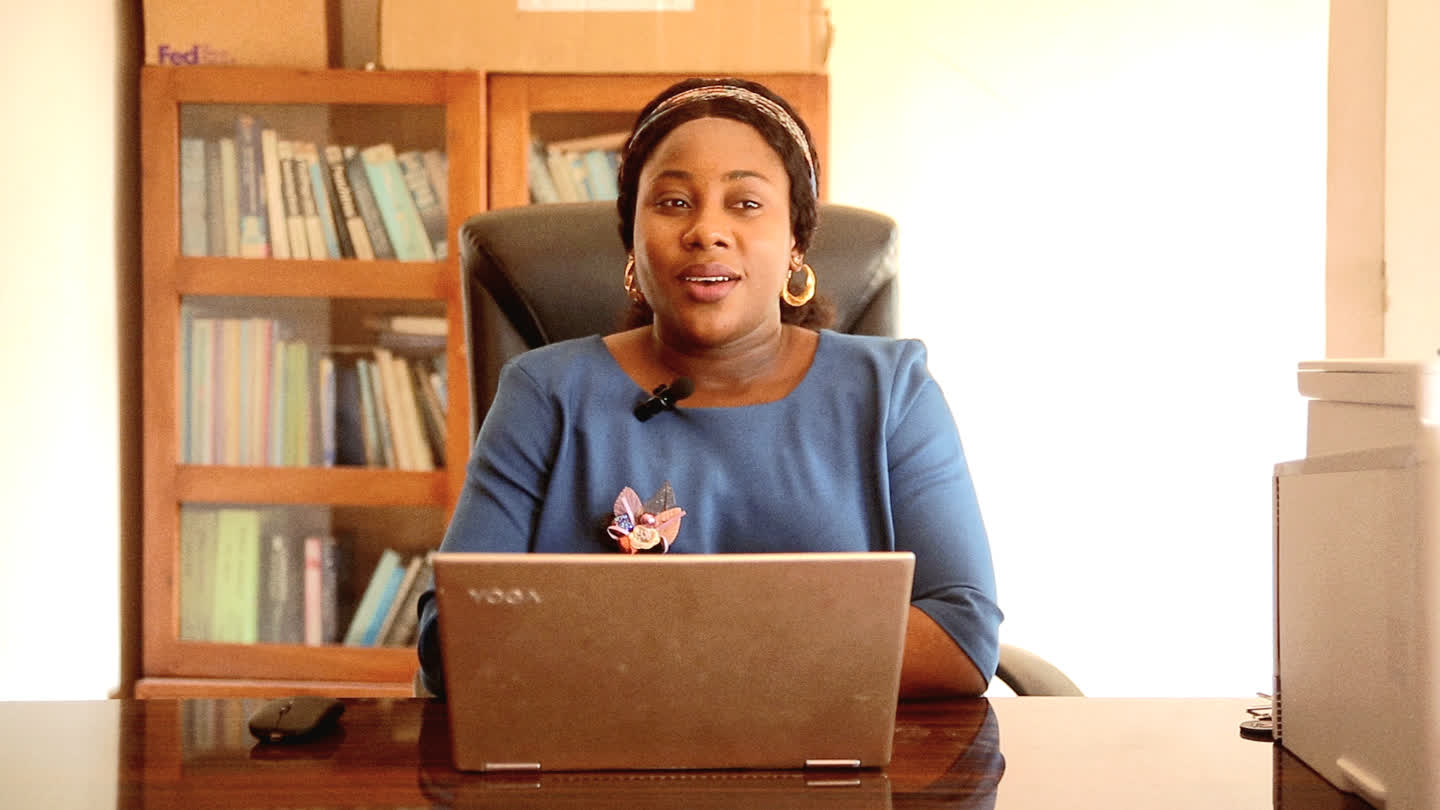
  • Rangers FC is the only club in Nigeria currently with the full compliments of in-house professionals – An interview with Amobi Ezeaku, GM, Rangers

    Rangers FC is the only club in Nigeria currently with the full compliments of in-house professionals – An interview with Amobi Ezeaku, GM, Rangers

    Barr. Amobi Ezeaku, a consummate sports lawyer with the UEFA certificate in Football Management and the FIFA Master is the General Manager and CEO of Rangers International Football Club of Enugu. In this exclusive interview with Pacesetter, he bares his thoughts on his achievements so far, the future of Rangers FC, how to better polish the NPFL and lots more. Dateline: December 18, 2023.

    Tell us about yourself. Before you became the General Manager of Rangers Football Club, what have you been up to?

    Before now, I’ve been in football all my life, I was at the Nigerian Football Federation for one year, at the Legal Department. Then I came to Rangers as the Team Manager, but before then I was the legal advisor to the Nigerian Players Union. I came to Rangers in 2016, we won the league together in 2016 after 32 years and in 2018 we won the Federation Cup, then it was the AITEO Cup after 35 years. In 2021, I resigned and travelled for some courses, the UEFA certificate in Football Management and the FIFA Master. Sometime in August, His Excellency Dr. Peter Mbah invited me back to become the General Manager of Rangers. From childhood I’ve been a lover of the Game, playing football, I’ve been a captain in the University, I played in the NUGA and the West Africa University games, and I was a captain of the NYSC National Team, Abuja. I also played a couple of games against the Super Eagles Home Based Team.

    What were things like in the football club when you took over?

    As the Team Manager, when I came for my first missionary journey, we met a team with a very low mentality. Good players who needed to be encouraged, supported and reminded that they can be the best and win the league. When I came back I saw a team that needed more professionalism and guidance on the business and commercial aspects of football. So, we took it up from there, we went ahead to get jersey sponsorship deals, upgrade our website, improve our social media appearance and other strategic plans we set out. We have been able to get all these with the support of the state government .We hope to continue to push, to send the football club to the greater heights we want it to reach because we’re hoping to really compete among the comity of clubs not just in Africa but around the world. 

    We have made achievements. You can see the renovation going on. Some of the players who were not properly treated in the past we had to call them back for proper medical care. We don’t think it’s time to begin to count all the successes. We think that in humility we will continue to strive to make Rangers FC a club of everyone’s dream. Beyond all these we understand the need for certain professional personnels to render services and be involved in the activities of rangers, the nutritionists, the psychologists, the physiotherapists. Rangers is the only club in Nigeria currently with the full compliments of in-house professionals like these. We approach whatever we do with all sense of leadership and humility from every quarter because we’re here holding this club in trust for the teeming followers of Rangers especially Ndi Igbo. On social media the fans are excited that Rangers FC now has a physical store where they can buy their jerseys and other merchandise, they’re happy that there’s an email where they can send in their opinions, they’re happy they can reach out to this management, they’re happy that we have an Innovation Hub where people who are innovative can present whatever they have invented, for instance, an updated jersey for 2025 or an upgraded app for Rangers to display at the Innovation Hub. There’s the Hall of Fame as well, we want to go back and recount the history of this club in photos not just in this office but also at the camp of the players and on every property owned by Rangers. We want to tell these stories because when you tell these stories, it makes the club. It is these stories that make big clubs, the clubs we love in Europe, Asia, Africa, everywhere in the world

    You just made an audacious claim of Rangers being the only club in Nigeria that has a mixture of these professional personnels. You are sure of this? 

    Yes, Rangers is the only club in Nigeria that has a full-time, in-house nutritionist, a psychologist, physiotherapist that execute their jobs efficiently and conduct research to foster and develop the club and the games. Some of these things are the road map towards true professionalism, these things are not taken for granted. We’ve gone on games where it took the intervention of our team to save the opponent’s player because we travel with our oxygen tank every time. We always invite people to come and verify, see for themselves, find out what is happening and offer their suggestions. We’ve always said that the club belongs to everyone.

    The last time Rangers FC won the Nigeria Premier League was years ago in the 2015/2016 season and AITEO Cup in 2018. With Rangers’ position on the NPFL table, what do you foresee? 

    Well, the NPFL is a marathon, right now as we speak we’re occupying the lead table and we’re just few points away from those up there. I foresee an interesting season, a season that’ll end in a dramatic fashion. I foresee a Rangers that will compete till the end, the second round of the league is always the business round of the league, our players are getting to know themselves, they are getting to understand the playing patterns, the combination, the philosophy, so, we are not meant to be left out in the competition. I’m a believer in the pure philosophy of football, they call us the ‘purist’ and that’s what I believe in. I believe that players and coaches should be allowed to enjoy themselves. I let the coach, Coach Ilechukwu to try whatever he wants, you take risks in Football and sometimes it works, some other times it doesn’t. If it works you celebrate, if it doesn’t work we have to stick together. At times, when we lose, our fans say a lot of negative things but when we win, they begin to celebrate and they forget we see some of the things they write and we’re human beings, this can affect players if they don’t have a strong mentality. They write these things because they love the club but then they should also support in a positive way and not to say negative things about players because they’re also human beings. 

    Are there Rangers FC exports to the national team or in other international clubs?

    Yeah, we’ve had players in the past that went to the National Team. We’ve also had players who currently play abroad a few days ago, two of them visited – Chisom Egbuchula who plays in China and Obinna Nwobodo who plays in Cincinnati in America. We’ve had players like Ibrahim Olawoyin who plays in Turkey now, they were all in the National Team. In May.2016, we had players like Bobby Clement, Chibuzor Madu, they were all there in the National Team. In 2018 and 2019, we had Ugwuoke Kenechukwu, Agụ Kenechukwu and Christian Nnaji, who is now in Europe. Also, Eziekwe Chinonso, they were all in the National Team. So, Rangers is a team known for producing boys who go all out to play in the National Team. It didn’t just start with this current season. I know that soon, our players will get invites to the National Team. 

    Is there an academy? How do you scout for new blood to ensure the longevity of the club?

    Yeah, part of our strategic plan is to have the Under 13 to Under 17 Academy and then the women’s team. We were meant to have announced the establishment of the women’s team for 2023 but then what is delaying it is that the person to oversee this project is not yet in the country. We have a plan, just like what happens in Barcelona, our under-13 will be children who go to school, our under 14, 15, 16 and 17 will be children as well who also go to school so that we can monitor their progress, academic wise and sporting wise. Understand also that these things don’t happen immediately, you have to nurture this, and it’s like a nursery. When you scout a player who is 15, you will know that in three years the player is ripe to sign a professional contract without the guardian and then begin to instil in the player the mentality of the club. So, yes, we believe in the power of having academies for the sake of sustainability. These plans are contained in the strategic plan we announced three months ago.

    How are you looking to foster the “Rangers spirit” in the upcoming generation who do not know what the ‘Never Say Die’ mantra represents?

    Education is key to whatever we want to do. Education is not only within the four walls of the school, Education is on the street, Education is in our churches, Education is in our mosques, everywhere. We’ve had times we went to radio stations, TV channels to talk about the Never Say Die spirit of Rangers. We’ve had one on one conversations with children on the street to talk about Rangers. And now we’re coming back to the cathedral. Soon, the kids’ jerseys will be available, they will wear the jerseys, and they will understand what the badge means. We want an average child on the streets to comfortably say: yes, I know, he or she knows that Rangers was formed in 1970. He or she knows that Rangers won the league last time in 2016, and have won the league seven times, to talk about the history of this club. I’ve spoken about Rangers everywhere I’ve gone to in the world. My first presentation in the UK, in Leicester was about Rangers. Rangers is the truest identity of our race. Because after the war, Rangers came to bring the people together and we started playing football, we started enjoying ourselves. And I really encourage everyone to read about the history of this club, to be happy when you read about how we played in the African Cup in the 70s, to be happy to read about the Madam Rangers saga in the airport in Egypt, where the immigration authorities refused her entry saying she was a woman and she insisted she must go in, that it never mattered. She eventually went in. That’s why when you talk about Rangers, you get emotional, you talk about those who have died; the Ex-Rangers. The people who work for this club, currently they work because of the passion they have for the club. That’s why when you see, we adore Christian Chukwu, Emma Okala, and we literally worship them because we see them as gods. That is Rangers for you, it’s the only club in Nigeria that has never gone on relegation.

    Rangers signed a deal with Afrinvest, how much has that helped, and what else is the management doing to get more and bigger deals like that? 

    Yeah, commercialization is part of what we want to really embrace. Afrinvest, we are grateful they’ve come on-board and we are talking to a lot of other organizations to also make them our partners, because we believe that when we have these partners, when we have these sponsors, we reduce the burden on the state government. We are also able to cater for certain needs of the players of the club, to educate the coaches more, to send our technical officials on more courses with the resources coming from sponsors and in return, we give the sponsors value for their money. Afrinvest for instance, we’ve given them so much visibility within a short time and they can attest to that. And the visibility continues because everywhere Rangers play, they display Afrinvest around Nigeria. We want other corporate entities to come on board, airlines, banks, insurance companies, mining companies, just come. We are open to collaboration, we are open to partnership. We believe that this partnership will foster stronger institutions for us and the FIFA rule approves about six locations where you can advertise on your jersey. These locations are available. We invite these entities to come and talk with us. You go to Europe, you find that the jerseys are like designs, you have companies everywhere; on the shorts, on the socks, on the sleeve, on the back, everywhere. That’s what we want to be and that’s the club we will be.

    Surely you must have enjoyed your Governor’s support. How would Rangers FC add to his vision of growing Enugu’s economy from $4.4bn to $30bn within the next 4-8 years? 

    Football is big business, the transfer market in football is a big market on its own, Rangers is not left out. We are very active on the FIFA transfer matching system and on the transfer market. We are talking with top agents, top clubs in Europe and we believe that whatever activity or action we conduct on the transfer market will positively affect the Governor’s vision of increasing our GDP. We have seen big transfers but also in Rangers we understand the transfer market a lot to think long term. So, if we transfer a player for free, tomorrow with a 30 to 40 percent future sale clause, it means that if this player is transferred subsequently for maybe 90 million pounds, 30 to 40 percent of it comes to the state government and that is a lot. We believe that is why we are doing the things we are doing, trying to make sure we have a proper foundation for the marketing aspect of football. We can’t talk about being a commercially viable club without having a proper structure, proper office, proper male team, proper women team, proper physio, proper gym and all the things that top football clubs enjoy. That’s why we are taking the club licensing seriously. Club licensing entails that the infrastructure, personnel, administrative, financials are well taken care of and yeah, we announced before that at the end of this season we will publish our audited account and have our annual general meeting, the first if its kind in the history of our football. We do these things because we are talking with clubs, potential investors, clubs who would want to come to Africa to seek for transfer of the rights of our players to them. What we are doing will impact positively on the growth of the GDP from 4.4 billion to 30 billion, we truly believe and I know the governor believes in that vision. The sports sector has a lot to do with the growth of any nation’s economy. If you go to Barcelona or Ajax Amsterdam, you will see and understand what sport has done for them. 

    In what ways can we get NPFL to become as enticing to Nigerians as the EPL or other leagues? 

    First, the fans should come to the stadium. 

    (Cuts in) But that’s part of the problem. People complain about fights breaking out in our stadiums 

    No, it’s a narrative, people just cook up these stories and tell. Have we fought in Enugu before? No. So, the fans should come to the stadium and see for themselves. When people say they fight in the league in Nigeria, they fight everywhere. I did the FIFA Masters, I did the history of football. I can tell you they fight everywhere. The big derbies for instance, AC Milan, Inter Milan, Barcelona, Real Madrid, you go to Turkey, they fight everywhere but then we try to push out the negatives from our league. Come to the stadium and watch the game. In 2016 we used to have a stadium filled to the brim and people were enjoying Mexican waves and singing “Holy, Holy, Holy, Enugu Rangers…” How many people spoke about it? So, we have to project the positives from our league. Now, our leagues are on TV. First thing first, come to the stadium and see, some of the stories people are selling never happened. They say you go to the stadium and there’s a fight, there’s no fight, fans shout on top of their voices, they are passionate about this game and they pour water into the pitch. Everywhere in Europe, you see fans throwing balloons, throwing bananas into the pitch, everywhere in Europe, everywhere in Asia, so if it happens in Nigeria, it becomes different or what? I agree that we have a lot of work to do. I also want to tell you that we overblow this negativity, we broaden the concept of how bad our league is. It’s a thing of narrative. In Europe last week a player collapsed and was taken off, if it happens in Nigeria and a player was taken off from the pitch, the narratives will change. I have followed lots of comments on the internet. I can tell you for free, it is as if people pray for negativity. It’s for us to tell the positive from our league, again our league officiating is improving, we can see what the NFF is doing, when a referee is found wanting, the referee is asked to step aside, that’s a step towards making our league perfect, we can also see what most clubs are doing with respect to welfare of players, sanctity of contract, respect for contract, it’s a thing and has to be applauded. I think that the glamour that people seek for in Europe is also here. Some of the players who glamourize European football started here, Ahmed Musa played for Kano Pillars, Obinna Nwobodo marked out Lionel Messi few months ago in America, and he played for Rangers.

    What more should be expected from you? 

    Well, everything we announced in our strategic plan, both the short term goals, medium term and the long term goals should be expected. One thing going for us is that we are enjoying the full support of the state government, in fact particularly the governor of the state, every match that ends he sends a message. It speaks a lot about what lies ahead. Expect that we would try as much as we can to fully commercialise this brand, to professionalise this brand, to make people so eager and to put them in the anticipatory mode to always come to watch the Rangers game. The first thing on our strategic plan is commercial development. After that you have sporting excellence. When we fully commercialise and can sustain ourselves and support what the government is bringing on board then we can compete with the top clubs in Africa. Expect that in the future we will have a viable under 13 to under 17 team. We will have our women football team competing in the top flight in Africa and we will have a very solid supporters club, a supporters club that will be the envy of everyone, a supporters club that will have their flags flying around stadium in Enugu and around all the stadia in Africa, a supporters club that can as well be self sustainable. We want to play night games, Enugu people love night games, and we want to bring night games back to them.

  • EXCLUSIVE: Ebonyi state is fertile for investors – Ebonyi Commissioner for Lands and Survey [WATCH]

    EXCLUSIVE: Ebonyi state is fertile for investors – Ebonyi Commissioner for Lands and Survey [WATCH]

    Dr. Matthew Nwobasi is the Ebonyi State Commissioner for Lands. Prior to his appointment as Commissioner, he had previously served as a Caretaker Chairman of Abakaliki Local Government. In this interview with Pacesetter, he bares his mind on happenings in his Ministry and the political atmosphere in Ebonyi state, engendered by Governor Francis Nwifuru. Dateline: December 21, 2023.


    Let’s get to know you. Before you became Commissioner for Lands, what have you been engaged with? 

    Well, before my appointment I was a Director of Finance and Supply in Ebonyi State Civil Service. I’m still a civil servant. I’m a holder of three degrees; Bachelor of Science Degree, Masters Degree and PhD. Apart from my academic qualifications, I have other professional qualifications, I’m a Chartered Fellow of National Accountants, Chartered Fellow of Nigerian Institute of Bankers. Further, sometime in 2001, I was appointed as a Caretaker Chairman of Abakaliki Local Government Area.

    What were things like in the Ministry when you took over? 

    Well, when I took over the ministry as the Commissioner for Lands, you know this ministry is one of the strong base for revenue, for IGR of the states. So, when I took over, our land automation system was not working. That is to say, we were not printing C of Os for a reasonable period. But when I came on board, I tried to tackle that problem because without that, it’s as good as there is no ministry, because we can’t register power of attorney, deed of assignments. In fact, all land title documents couldn’t be processed because the system collapsed. On my investigation, I discovered that the previous administration had problems with the contractor who set up the system. So, I waded into it and by the grace of God, the matter is now resolved. 

    Apart from the issue of automating the land system, from when you assumed office till date, what new achievements can be credited to you? 

    Yes, there are many achievements. I only took that question as a problem we faced. We have made some reasonable achievements. For example, the present site of the Ebonyi State University of ICT, we successfully acquired that land there, measuring over sixty acres and have completely paid the compensation because the processing of acquisition of land is not completed until adequate compensation has been paid. The University site is being cleared now as we speak. Apart from that, there were some areas, some layouts which were designated for schools to be established. When I came on board, I discovered that those layouts were parcellated and allocated to some people. We discovered that it was against the mantra of the present administration and immediately we canceled all the allocations. However, we did not leave them, we have relocated some and some are yet to get theirs. Again, some zones or lands were allotted but the allottees had no access to those areas, we are providing access to them to encourage development of those areas. As I speak, the Federal Government has requested to acquire land for what the Renewed Hope Agenda for Urban houses. We’re in the process of doing that. On the staff welfare, we’re working in good relationship with the staff that the issue of not coming to work on time has stopped in the ministry since we came on board. So, those are some of the achievements we have made.

    Due to the seeming almighty powers of governors derived from the Land Use Act, citizens appear to lay allegations of land grabbing against state governors. What are your thoughts? Is anything with the similitude of land grabbing obtainable in Ebonyi?

    We don’t believe in land grabbing. I define land grabbing as the excess use of the power of land users by not following the due process. It’s correct to say that all lands belong to the state governor or the state which is true, but for acquisition it must be for overriding public interest and that public interest must be defined. You can’t go and take people’s land for overriding public interest, you state in particular, defining the public interest. If you have followed those processes, for me it’s not land grabbing. Land grabbing can only play when you do not follow the Land Use Act of 1978. Citing an example with the one we have done, the people were happy, jubilating because they saw reasons for the acquisition and they are going to benefit more. So, this administration has nothing to do with land grabbing.

    Are there lists of verifiable compensations to citizens especially looking at some of the massive projects of the previous administration and the bigger ones to be undertaken by this administration? 

    Our administration is about six months old. You can access us within the frame of six months. In the areas I told you we acquired lands, where we are building the ICT University, all the people whose properties, including economic trees, were located in that area have been adequately compensated and they did not complain anywhere. Instead they were very grateful that the government did what they didn’t believe they would do, they took their lands to build school for them yet they are paying them. Other areas we intend to acquire land are going to be the same without hitches. What a wonderful government.

    Let’s get to growing Ebonyi’s GDP through investments. For an investor who wants to come into Ebonyi state, what are the processes approved by the state government for acquiring lands?  

    First of all, we would like to see your proposal. Some people do not have the right investment to propose, in a bid to secure a land, they come up with promises such as creating employment just to have your interest, and in the long run they will not give you what they proposed because their interest is to grab the land. For us here, we will assess you based on your proposal and past experience. Of course the integrity test must be there, what have you done in the past in the areas where you say you are an expert? Ebonyi state is very fertile for investors. The state government is trying to increase the ease of doing business so that investors will not face heavy taxations. The government has relaxed a lot of taxes for investors in Ebonyi since we came onboard. So for me, those are the good windows for investors in the state.

    What more should the governor and people of Ebonyi expect from you and your ministry? 

    Taking the land management system in Ebonyi State to another level. It is our intention that before one year of this administration, the land management system in Ebonyi State will be equal to none in terms of good management. We want to make the issue of land racketeering a thing of the past. Before now, people can sell other people’s land, you can purchase other people’s property without the original owner knowing. But at the end; because of what we are going to put in place, every square inch in Ebonyi State will be in our system, in the sense that whatever you do about land, we will know from our office. That is what we are going to put in place. This thing I’m telling you is only happening currently in Kigali, Rwanda. We are working hard to ensure that we put our management system to that standard.

    Let’s take a leap to the politics of the state. With what’s happening in Rivers state today, we are propelled to ask, what’s Governor Nwifuru’s relationship like with his predecessor?

    It’s an extremely cordial relationship. Since the appointment of the former governor as a Minister, he has visited this state not less than three times and each time he visits, he pays a courtesy call to His Excellency, the Governor of this State. In fact, from what happened today in our ecumenical center (referring to the Christmas party for the elderly ones in Ebonyi), nobody needs to be told that the present Governor is a unifier. If I told you there is no other party in Ebonyi, you will take I’m exaggerating, but that is true. That is the true position. All the elders from other political parties were dancing together courtesy of our Governor. So there’s nothing like political crisis. In fact, his name now is “God given Governor” because the actors in the opposition are now really enjoying the dividend of democracy. So what again are you fighting for? Each time Umahi visits, he will announce to us that Governor Francis Ogbonna Nwifuru is the leader of the party, no other person.

    There seem to be a cohesion between the governor and those described as elders and founding fathers of Ebonyi State. What does this portend?  

    This is the fourth civilian administration. During the time of Dr. Sam Egwu as governor, of course, I was a local government chairman then, we never had anything like elders’ council or founding fathers. It was during the time of Chief Martin Elechi as governor that he formed what they used to call founding fathers. These are the people believed to have fought for the creation of states and they stood as those you can consult, so we had that time during his time as founding fathers. But when Dave came onboard after Elechi, you know what played out. The handover was not smooth one, that is my own belief and because of that, instead of the former Governor continuing with founding fathers, he inaugurated his own and called them elders’ council, those he believed are the elders of the state. Now our God given governor has come, he united and recognized both the elders’ council and the founding fathers. That is the situation now.

    Would you credit this to Gov. Nwifuru’s style of leadership?

    Sure, no other person than Governor Francis Nwifuru. He’s the one who did it. He did it and people are happy. Everybody has his own place or role to play. So, the credit goes to no other person than Governor Nwifuru.

    Do you see the Governor winning at the Supreme Court?

    It’s all over. The Supreme Court is just to complete the wheel of justice. I’m not a lawyer but I have been listening attentively on the matter on why they went to court. They’re not contesting that they won this election, not at the tribunal or the appeal court. Their ground of going to court is that prior to the election, he (Nwifuru) was a member of the PDP, was not properly nominated by the APC and as such should not fly the flag of APC. Gentlemen, is that their headache? It is not your duty to drink Panadol for somebody’s headache. It’s only the APC that can complain who’s their member and who is not their member. So, for me, there is no case. The summary of the answer to your question is that he has won in the Tribunal and Appeal Court and surely he’s going to win in the Supreme Court. The Supreme Court cannot jettison the decision of the other courts. I don’t think it has happened that way and our own will not be the first.

  • Gov. Mbah has done well in 100 days, says USA Igwesi; urges politicians to be patient

    Gov. Mbah has done well in 100 days, says USA Igwesi; urges politicians to be patient

    Former member of House of Representatives and founder of Peter Mbah Grassroots Canvassers, USA Igwesi, in this interview, highlighted some of the achievements of the new administration in Enugu State. Among other issues, he said Governor Peter Mbah has started fulfilling his campaign promises to people of the state.

    Governor Mbah has recently completed 100 days in office, what is your objective assessment of his stewardship so far?

    I would say that so far, so good. You know that the governor is not the typical Nigerian politician that makes promises without bothering about fulfilling them. From his achievements so far, it is obvious that whatever he promised Enugu people during the campaigns, he will surely fulfill and even more. Look at his appointments. He is carefully selecting those to work with and so far, it has been a question of round pegs in round holes. One thing I know about the governor is that he does not make empty promises. The most typical example is his promise that public water would run in Enugu within his 180 days in office. So many people who know the history of Enugu and the challenges of water scarcity were laughing at him saying the governor was making a promise that was impossible to fulfill within the time frame. But just about 100 days, the public water is already coming alive in the Coal city state. The issue of water is one of the most practical examples of where the state is heading to.

    In his inaugural speech, Governor Mbah was emphatic that he would transform Enugu into a beautiful symphony of development. He declared that his governance philosophy would be based on transparency, accountability and fund traceability. See what he did as his first executive task; he signed Executive Order 001 called the Citizens’ Charter. That tells you that his government will be centred on the people.

    But some of his critics say he does not understand the terrain of Enugu very well as he has been operating in Lagos where he has businesses for a very long time? Do you agree?

    I can tell you that he knows Enugu like the back of his hands. He held strategic positions under former Enugu Governor, Chimaroke Nnamani and has businesses also in Enugu even today. This is a man who has done so much in terms of philanthropy in the state. But beyond that, for six months during the campaigns, he traversed the length and breadth of Enugu State visiting the 68 development centres that make up the state. During that time, he listened to the people, saw their challenges and practically felt their pains.

    How far do you think he is following his manifesto which is his social contract with the people of Enugu State in the next four years?

    Governor Peter Mbah’s administration has taken meaningful strides towards building a better Enugu State, reflecting his dedication to transparency, accountability, and social inclusivity. One of his key accomplishments has been the meticulous selection of government officials across different socio-economic sectors, emphasizing competence, gender equality, and representation from all corners of Enugu.

    Grounded in his compelling manifesto for Ndi Enugu and echoing the global Sustainable Development Goals (SDGs), Mbah’s initiatives are more than just promises—they’re a vision for a brighter future.

    But in specific terms, what other areas do you think he has done well?

    The governor is already using his wealth of experience and exposure globally to impact on the state. Can you imagine that within 100 days, he has been able to influence the UK High Commission to set up a Visa Application Centre in Enugu. In my widest imagination, I never thought it was possible considering the complex politics of Nigeria vis-à-vis the Igbo question. The UK High Commissioner, Richard Montgomery was unequivocal that Mbah played a major role in facilitating the setting up of the Visa Application Centre which is a plus for Enugu and the South East socio-economically and otherwise. With the cheery development, it is now more convenient for the people of the South East to apply for the various visas in Enugu instead of flying to Abuja/Lagos/Port Harcourt?

    Also, I can make bold to say that Enugu State is comparatively safer in Mbah’s 100 days in terms of security of lives and property. The administration has been able to significantly arrest the sit-at-home conundrum and substantially tackled the security situation in the state.

    Part of his actions was to launch a pilot scheme of the Distress Response Squad (DRS)? There is ongoing effort to construct the Control and Command Center to complement the DRS to put the entire Enugu State under security surveillance.

    I talked about the governor’s promise on water before. His administration rapidly increased water production from less than 2 million litres to over 25 million litres in 100 days, the highest in over 20 years? The long abandoned reservoirs are being fixed in 100 days and some parts of Enugu have already started seeing the efforts of the state government in water production.

    See what the governor has done on power. Within this short time, the administration has developed the Enugu State Electricity Bill in 100 days to enable the state to domesticate the Electricity Act 2023, create electricity market, boost power generation, transmission, and distribution and attract private sector investment in the power sector? When he used ‘Tomorrow is here’ as the theme of his campaign, people were asking what did he mean and that politicians have come again. But we are all seeing it. He is working round the clock.

    Within the short time, the administration has mapped out 71 urban roads and 10 inter-local government roads in addition to flyovers, etc. for construction, beginning immediately after the rains. It is obvious to everybody that waste/refuse disposal in Enugu has substantially improved in the last 100 days. The compactors are now back to the business of waste disposal in the state and Enugu is coming back to life again. The street and traffic lights are gradually returning.

    One area he is passionate about is in the use of technology to achieve results. Most services in Enugu are being automated or digitalized to achieve maximum results. In Enugu today, you can get your C-of-O in 72 hours, the fastest in Africa. You would agree with me that it would have a direct impact in terms of ease of doing business.

    What I have noticed is that his wealth of experience in the private sector is a blessing to Enugu State. You can imagine that within 100 days, the present administration has held a very successful investment roundtable in Enugu. You know the benefits of such an investment and economic roundtable with the UK Govt, Afreximbank, AfDB, and investors from around the globe.

    Within this period, the Mbah administration has released the counterpart funds for the state’s participation in international development agencies’ agricultural programmes. All these programmes are expected to trigger the inflow of millions of dollars and create wealth and value addition in the state especially the rural areas. The Mbah administration has also shown commitment to take care of the cost of every capital development project undertaken by the 17 LGAs to the tune of 60 percent.
    I would say without any fear of equivocation that the governor is fulfilling his social contract with the people of Enugu state.

    Most roads in Enugu are begging for repair and rehabilitation; how far has the governor addressed the challenges in that area?

    The Enugu State government has embarked on an extensive road construction and rehabilitation project addressing urban and rural areas. This initiative involves constructing 71 roads within Enugu metropolis and 10 major roads connecting different parts of the state. Additionally, the plan includes dualizing key roads and building flyovers to alleviate traffic congestion, notably at Abakpa Junction and Chris Chemist/Old Park Junction. This comprehensive road infrastructure project aims to enhance connectivity, reduce travel times, and stimulate economic growth. In addition, the rehabilitation of the National Youth Service Corps (NYSC) orientation camp represents a significant investment in youth development and well-being. Modernizing facilities, providing clean water access, improving roads, and addressing other amenities in the orientation camp create a conducive environment for youth training and enhances the local community’s infrastructure.

    During the campaigns, the governor talked about the diversification of the state’s economy. How far with that promise?

    The Enugu State government has already started to do something in that direction. The new administration has partnered with Ethiopian Airlines to foster mutual growth and development. The collaboration aims to explore various opportunities, including training Enugu’s youths at the Ethiopian Airlines Aviation University and other areas of interest. This partnership holds significance in economic development and diversification, as it aligns with the Enugu State Government’s efforts to boost the state’s Gross Domestic Product through such collaborations. The partnership also underscores the commitment of both parties to work together for common benefits. This initiative aligns with the United Nations SDG 8 by promoting economic diversification, job creation, and skills development for the youth population in Enugu. Additionally, it contributes to SDG 17 by exemplifying a collaborative effort between a government entity and a private enterprise to achieve sustainable development outcomes.
    I would also like to talk on what he has achieved in sports development. Some of the achievements include the gold medal won at the 2023 Commonwealth Youth Games and the successful hosting of team sports elimination to the National Youth Games and others.
    The greatest achievement was when Enugu State’s Destiny Agbo made history in Port Louis, Trinidad and Tobago, winning a gold medal in the female Discus Para-athletics Discus event. Para-athletics is organized sports meeting for people living with disabilities.
    Agbo’s medal was won at the Commonwealth Youth Games, held from July 30th to August 15th.

    Enugu also hosted the South East Under-15 Youth Games Team Sports zonal elimination where Enugu male football and handball teams qualified for the national event. The elimination took place between August 10 and 13 at the Nnamdi Azikiwe Stadiums with all the South East states in attendance. Recently, the Enugu darling club, Rangers International Football Club also narrowly lost 0-1 to Bendel Insurance of Benin, on June 21 at the Federation cup final in Asaba, Delta. The Ministry of sports in Enugu also, in collaboration with the Potters Wheel Foundation, graduated more than 100 youths in various skills in July. The youths were trained in Confectioneries, Cosmetics, Digital marketing, Tailoring and others.

    There are insinuations that many core politicians in Enugu are not happy with Governor Mbah’s appointments and that they feel alienated from his government. How true is that?

    It is not true. When I started this interview, I told you that Governor Mbah is not the typical, traditional Nigerian politician that you know. He has his style of approaching issues. To him, two issues are involved here. One is first and foremost the collective interest of the entire people of Enugu State. How his action will impact the people of Enugu state is his primary priority. Then, the second is the interest of the politicians as you have said. From inception, the governor had set goals for himself and he had a clear idea of how and who will help him realise his vision. That was what you saw in the appointments so far. Some of those appointees, he didn’t even know them personally but he believes that they have the competence to deliver on their mandates. However, I can assure you that with his level of exposure, he knows the importance of the politicians to the success of his government. The governor was with them in the political jungle during the campaigns and knows the roles various people played. Governor Mbah that I know will not ignore the politicians as some people claim. He has their interests at heart and will carry them along in his government. The governor is just barely 100 days in office, so people should give him time to settle down. There are still so many areas where the new administration will involve many other people including the politicians they are talking about.