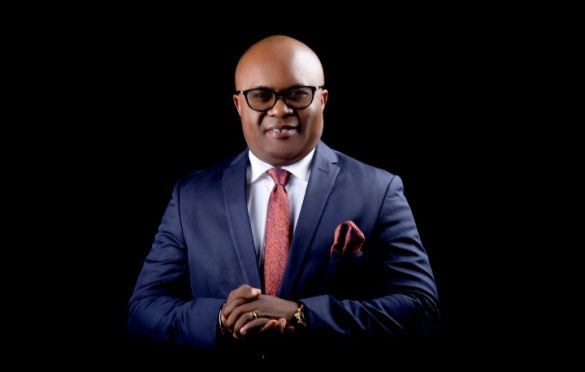
Nwachukwu Emmanuel Chinonso, also known as Daviblue, is an Enugu based up and coming artiste. He spoke to the Pacesetter crew about his musical journey so far, why he chose to remain in Enugu, the inspiration behind some of his lyrics and his new single, “Focus on Me”. Dateline: April 24, 2023.
Let’s take a trip down memory lane – Tell us about your journey in the music industry – When did you discover you wanted to make music? What was your first experience with music?
My musical journey started in secondary school where I studied, College of Immaculate Conception popularly known as CIC. Back in my junior class, JSS 3, I was a fan of Eminem and Lil Wayne, I was singing their songs in form of a karaoke, because I enjoy singing songs naturally. Along the line, I had this passion for music and dancing. I think I was more popular with dancing then than singing. At some point I would be invited in class to sing songs, especially Eminem’s “I’m not afraid”. From there I felt that was where I belonged, then I took it to the university, ESUT (Enugu State University of Science and Technology). That’s how music started in my life.
You’re staying in Enugu to build your music career while others are running to Lagos. What motivated your decision to build in Enugu? Aren’t you encountering challenges?
Well, Enugu is actually where I grew up, so I feel I want to start from where I’m based. It’s not a bad idea if I make it from here to the world. I know musicians like Duncan Mighty who started in Port Harcourt and from there, they’re going to anywhere in the world. I must not go to other cities or countries to make my name. God can bless you from anywhere, that’s what I believe. Enugu is where I come from, Nkanu East to be precise. I want to make my name from here to the world, maybe shows might come from Lagos or any part of the country but I still believe something great can start from here.
So, speaking of the industry here in Enugu, it’s challenging actually, very challenging. Here in Enugu, we have entertainment already. It has been here before I came to limelight as an up and coming artiste and aspiring star. I feel what can be done here in Enugu is to encourage and appreciate every creative artist making good music out there. I feel young and upcoming artists doing well in Enugu need to be appreciated, acknowledged, motivated to do more, when they’re invited for music shows, they need to be treated with respect, equality and regard, whether they’re in a label or not. They need to be treated equally with invited artists. I think if the entertainment industry sees a creative and innovative young artist that’s not in a label or has no high profile mentor to speak for them, they could at least try to acknowledge them, encourage them to come to music shows and display their talents. Let Love lead in the industry. That being said, it’s the challenge that’s making me who I am right now because I still want to prove to anyone including myself, my viewers and listeners that something can grow from very little finance and team. I’m good starting from Enugu.
How many songs have you made? What has been pushing you to keep making music?
I have a lot of songs but officially I have dropped two main tracks – “NOTICE” and the current one is “FOCUS ON ME “. A lot have inspired my music. It could be love, it could be challenges I face, it could be a motivational song, but these are just the two official songs I have right now.
Let’s look at two of your songs, the most recent song “FOCUS ON ME” and “NOTICE”, which has really profound punch lines. It seems like they were conceived from some really significant experiences – can you tell us about them?
I think there’s always an inspiration for every song. I always try to pass the messages that inspired the songs. For instance, if the song is about motivation, that’s me trying to motivate the listeners, if I’m telling a story in a song, that’s me trying to narrate my life ordeals or someone else’s ordeals, if the song is about love or romance, that’s me singing out of the lover boy in me, from my heart. Everything in my songs are inspired by my life, circumstances in my or some other person’s lives.
The inspiration for “NOTICE” came from two songs by Kiss Daniels and DJ Sharpzy (sings lyrics) “Omo na me as I dey here ooh ooh ooooh” – I came across the song when it was raining back then so I fell in love with the rhythm, the melody, the lyrics, the beats. I was a very good fan of that song back then. It was my inspiration for “NOTICE”. In addition, “NOTICE” was also inspired by the way things are going on in my life, like saying people are now seeing the blessings coming to me, the way I’m gradually rising, people noticing my success (sings lyrics) “E be like say na now dem dey notice”.
“FOCUS ON ME” is a love song inspired by one of my lovers back then. As an artiste, if you’re in a relationship and you have a jealous lover, it’s not always easy, you have to give the assurance that you’re always there for them, as long as they focus on you, you’d take them seriously, you won’t play them, you’ll be faithful and loyal to them, kind of an assurance to a lover. Basically it is just a song talking about doubtless feelings and loyalty between two lovers.
How have your songs performed on streaming platforms? Do you think you need improvements in some areas?
Well, so far the songs are doing well, I’m doing well in my own way with my team, but yes, I know I still need a lot of improvements in the streaming platforms. I’m doing good numbers on Spotify and Audio Mack. I still have some setbacks when it comes to Apple music and iTunes, normally because songs are purchased on those platforms. With time I’ll sort everything, I’ll get there, it’s a gradual process, step by step. A lot of the popular and successful artistes started the same way from somewhere, from smaller streams to the bigger streams that fetch them lots of money now. I still believe with time and consistency I’ll get there.
Which artistes are you looking to feature or collaborate with? Are you signed to any record label or are you independent?
I’m an independent artiste, I’m not signed to any record label yet. I’m open to taking on big deals that comes up. I’m looking to feature big artistes if I have the opportunity, like Jaywillz, Davido, Wizkid and Ycee. I’d like to feature M.I, Patoranking, Adekunle Gold, Simi, International artists like Chris Brown, Lil Wayne, etc.
Nigerian music industry is advancing and is becoming very open minded about having someone write songs for artistes, the industry is beginning to be acceptive of the fact that there’s nothing wrong with having someone write songs for an artiste. Do you have any experience with working with song writers? Do you have a team of song writers that add a bit of flavour to your lyrics?
No, I don’t have a team of song writers, all my songs are written by me. For the instrumentals, I work with the composers who try to coach me when I’m making some of these songs. Every lyrics, every melody, I make them myself.
Asides music, what other exciting things do you do? What other things are you passionate about?
Apart from music, I love fashion and modelling. I’d love to model for so many brands, go on runway shows for designer brands like Gucci, Dolce & Gabbanna, Dior, Puma, Cartier and others, I’d like to get endorsements from brands. I’m a lover of fashion and a fashion model for “Dre” brand. It’s just music, fashion and modelling, and I’m very passionate about them.
Are you working on any song presently? Can you tell us what it’s about?
As an artiste, you have to keep working on songs consistently. They say consistency is key right? You can testify to that, I’m consistently making music to put out more songs out there. I’m working on a song currently, it’s an Amapiano vibe – to blend the trend. I’m just trying to do something different, trying a different vibe. Expect more songs with different vibes, it could be rap, afrobeats, hip hop, according to my mood and inspiration. So, I have songs coming up – expect them very soon, you all get ready to dance.
What advice do you have for younger artists that are yet to make the first step, yet to come into the industry, yet to make any single music?
Coming in, it’s not going to be easy, but stay positive, keep doing your thing, stay consistent, don’t sit around waiting for help, help comes when you help yourself. Everybody’s experience is different so don’t give up, there’s always light at the end of the tunnel.
Prof. Frank Ifeanyi Asogwa is a Professor of Law and the current Dean, Faculty of Law, Enugu State University of Science & Technology, ESUT. He was previously the Head, Department of Public and Private Law, Faculty of Law, University of Nigeria Enugu Campus, UNEC. From 2007-2011, he was the Enugu state Commissioner for Local Government under the government of former Governor Sullivan Chime. In this interview with the magazine, he bared his mind on how the local government system functions in Nigeria and the development cum challenges of Nigeria’s legal system. Dateline: December 7, 2022.
What was it like when you served as Commissioner for Local Government?
I think it was fulfilling, in that I was recruited right from the classroom, I was a Technocrat. Governor Sullivan was happy that I joined his cabinet and I was also happy that I was gaining experience outside of the classroom, and because I wasn’t what one would call a core politician, he gave me the latitude to operate. It was quite challenging because I had to supervise seventeen local government areas and their chairmen were mostly core politicians, elected chairmen playing their politics, although we initially had the caretaker committee chairmen but that was for a brief period of four to five months, after which we conducted local government elections. Part of the challenges stemmed from the fact that political language is not the same thing as academic language but I had to learn fast, yet not whittling down the core values of Sullivan Chime’s administration. Due to my insistence on the application of the rules and provisions of law and doing things the right way, I fell out with some chairmen initially but overtime we got on better. Our insistence on probity and accountability accounted for my commissioning of projects in virtually all the seventeen local governments. With all sense of modesty, I will say that after our tenure, the local governments have not witnessed the avalanche of projects executed by local governments like it was during our time. Almost on a daily basis, I was commissioning projects from one local government to the other. You would be surprised that around 2007 to 2011, there were some communities that hadn’t seen electricity but because Sullivan Chime never tampered with local government funds, these local governments were able to witness monumental projects-electricity, hospitals, roads, court halls and what have you.
The local governments are the closest tier of government to the people. Having formerly served as a commissioner, what bottlenecks do you think have stopped their effectiveness?
For some time, we have seen protestations by local governments that they should be autonomous and they are simply referring to financial autonomy. Recently, the President of Nigeria accused our governors of stealing, I’m quoting him, local government funds. If you want to be nice, you can say the governors are tampering with local government funds but the President was as brutal as saying governors were stealing local government funds. I will reiterate that in my tenure as Commissioner for Local Government, Sullivan Chime never tampered with local government funds. We had in the state at that time what was called the Economic Planning Commission, I think it’s still in existence, and it was like a meeting ground between the state executive and the local government officials. What the commission did was to look at projects for local governments, prioritize these projects and while the local government will provide 30% of the funding, the state government provides the remaining 70%. That was how so many projects were constructed. So, what the complaint is now is that local governments do not have sufficient funds for projects. I do not know why that complaint should come because money still flows from the Federal to the local governments. If there is any interference midway, I can’t say since I’m no longer a part of the system. As an academic, I do not believe that the local government is a tier of government. There are two tiers of government-Federal government and state government, and that is so because Section 7 of the constitution talks about the local governments being administered by the states, in other words, a system that ensures democratically elected local government must be ensured by the state. The only little problem is that states can’t create more local governments apart from the 774 in existence and that’s why you discover that many states now create what they call development centers and they don’t operate at the same level with local governments. I would say that under Sullivan Chime, we had the golden era of local government administration and I’m happy I was part of that system. Now, when local government chairmen manage to pay salaries of the local government civil servants, they are done but it shouldn’t be so.
Do you think that local government chairmen residing in their local governments have any direct impact on their efficiency? What was obtainable during your time?
On July 3, 2007, I was sworn in as Commissioner for Local Government and one week after, I gave the same directive that local government chairmen must reside in the respective local governments. It was only obeyed in the breach than in the observance and it impacts negatively on the performance of the local government chairmen. One thing with the local government system which the law wanted to achieve was accessibility. The local government chairmen must be accessible but most of the time, they are not. It is like the Governor of a state living outside his state or the President living outside the country.
How would you advice that local governments be strengthened?
It’s very easy. My advice is that local governments be granted the autonomy not just on paper but by ensuring that they are financially independent. In other words, grants or local government funds should move straight from the Federal Ministry of Finance to the local governments. There’s this committee called JAAC, Joint Account Allocation Committee, I don’t think the committee is necessary. Revenue Mobilisation Allocation and Fiscal Commission should be able to determine how much the Federal, State and 774 Local governments should earn and the money should be paid directly into their accounts. If this is done, local governments should be able to function effectively but the fear of state governors is that it is likely to be abused if local government chairmen are given the free hand to manage millions of naira. One other thing that works against the local government system is this idea of governors having caretaker committees or transition chairmen. It is unconstitutional and can’t be justified under a democratic setting that inspite of Section 7 of the 1999 constitution of the Federal Republic of Nigeria as amended, that says the system of local governments in Nigeria should be democratic and must be guaranteed at all times, governors appoint local government chairmen. So, it is like a conduit pipe through which some state governors tamper with local government funds because when they appoint someone as a caretaker committee chairman, he takes orders from the one who appointed him which is the governor. In an event that he receives 100 million naira as the monthly allocation, once the local government wage bill, of say 20 million is paid, the balance is usually unaccounted for and spent as the governor directs. So, we will begin to get it right when governors stop appointing caretaker committees and RMAFC begins to pay local government funds directly into local government accounts.
Let’s get to your profession as lawyer. There have also been the argument for the independence of the judiciary. How independent can the judiciary ever be when judges are constitutionally appointed by the Commander in Chief?
You have said it all. It is he who pays the piper that dictates the tune. Talking about judicial independence is like talking about local government autonomy. What they mean is that allocations and budgets of the judiciary should be released to them directly and they should be allowed to operate their budgets by themselves. There was this case decided in 1983 where the governor of a state questioned why the judge he appointed should give a judgment against him. One of the things judicial autonomy will achieve is to make sure that the judiciary is independent of the executive. What is obtainable presently is that a Chief Judge cannot approve the purchase of cars for Judges; he only recommends to the executive who decides whether the Judges deserve new cars or not, and the kind of car they deserve. It is like the judiciary going cap in hand to the executive to beg for funding which shouldn’t be. If this is maintained, it means that the executive will be breathing down the neck of the judiciary and it doesn’t make for autonomy. Some judges will be able to resist that but some won’t.
So, would you advocate for an amendment of the constitution?
Precisely. There should be an amendment of the constitution. When you talk about the three arms of government, each should be complimentary, not superior, to each other, although we should take the word “superior” with a pinch of salt. Presently, the executive appoints the judiciary but if we amend the constitution to empower the judiciary to appoint judges and pay judges from its independent finances, then you will see a very vibrant judiciary. The Bar Association and other law professional bodies should be able to have a say in terms of who becomes a judge. What is obtainable now is that for a judge to be appointed in any of the 36 states, he has to go to Abuja to be interviewed by the National Judicial Council. Then, what is the job of the State Judicial Service Commission if a judge must be interviewed and approved at Abuja, then appointed by the state governor? It makes no sense of the Federal system of government we say we are running, and that is why some critics say we are actually running a Unitary, not a Federal system of government.
Recently, during the commissioning of a project by Governor Wike of Rivers State, the Chief Justice of Nigeria made some comments about the PDP’s G-5 and this led to the call for his resignation. You consider the call an overkill?
I consider the call an overkill although judges are supposed to be insulated from the everyday politics. We know the evolution of G-5 and how they came to be. However, that somebody is a judge does not prevent him from exercising his constitutional right of freedom of expression. That is his freedom of expression and he has expressed himself in the way and manner he felt he could express himself. It is when a matter goes before him and he becomes biased because the matter is related to G-5 that you can tackle him for not being independent. The constitution does not say that a judge shouldn’t belong to a political party.
(Cuts in) Really?
Of course yes. It merely says that in the discharge of his functions as a judge, he should be impartial and do that without fear or favour to any person. Of course we know that Judges vote and one can’t vote for more than one political party, which means that they have sympathy for one or two political parties. Also, section 40 the 1999 constitution of the Federal Republic of Nigeria as amended, talks about freedom of assembly including the right to belong to a political party. So, if a judge says he’s a card carrying member of one of the political parties, what is the law to prevent him from being a card carrying member of a political party? Morally, one may say it might be a bit wrong but the law doesn’t say you can’t belong to an assembly. It only says that in the performance of your judicial duties, and in keeping with the judicial oath of impartiality, you must do justice to all manner of people inspite of their political leanings and position in life. The same constitution would have exempted judges if it intended to do so. However in the case of Judges this right must be exercised with utmost caution because of section 36 of the 1999 constitution of the Federal Republic of Nigeria as amended, on fair hearing. If a Judge is likely to be biased in a case before him because of his membership of a political party, then such a judge should disqualify himself from presiding over such a matter. It is a moral question as opposed to the legal issue of strict constitutionalism. In America for instance, you have the Democrats and the Republicans. When President Trump was there, he appointed majority of the Supreme Court and Federal Court Judges from those who are loyal to his own party, the Republican Party.
On December 6, 2022, some new wigs were called to the bar and the President of the NBA was absent, citing alleged misconduct against the Chairman of the body of benchers as his reason. Do you see a crack in the leadership of the largest bar in Africa?
The Bar association should be the conscience of the people and if they must play that role effectively, they must be steadfast, outspoken and ensure not to take sides in any matter but look at the justice of the case and that is why we always crave for the rule of law. If there’s an accusation of any wrongdoing against a principal officer in any arm of government, it behooves that person to step aside and let an independent investigation be carried out and determined one way or the other. Unfortunately, we know that in this part of the world, public officials hardly resign. Having said this, we must also not lose sight of the fact that it is a mere allegation of impropriety which hasn’t been investigated and it is only after investigation and the Chairman of the Body of Benchers is tried by a court of competent jurisdiction that you can assign guilt. So, for now, he’s just being tried by the public.
How would you advise that the melee between the NBA and the Body of Benchers be resolved?
The courts are there. The Body of Benchers is not immune from litigation and if the NBA feels strongly about their position, they can go to court and let there be an independent inquiry into it. Aside from that, the Body of Benchers is operating within the law and the NBA is also a body of lawyers recognized by law. In that case, nothing stops arbitration from taking place. Having said these, as a lawyer, I do not think that it augurs well for the legal profession that the highest body, the Body of Benchers, that is saddled with the responsibility of calling new wigs to the bar and the NBA that is saddled with maintaining decorum and finest practice of the bar, are at loggerheads.
The advancement in digitalization world over has been amazing. We have also seen a lot of digital/internet assisted crimes being committed. How do you think the present Nigeria criminal law can expand to accommodate the cyber-criminal law? Will there be challenges?
Law is dynamic, Criminal Law is also dynamic, and we have a Law on Economic crimes and on Cybercrimes but these laws have not repealed the Criminal Code. So, it is just a matter of making sure that you have a kind of symbiotic relationship among all these legislations. As the society evolves and people think more about technology, we must expect that there should also be advancement in crimes. Criminality has gone higher now compared to when people were naïve. Crime has become sophisticated and you need similar sophistication in legislation to be able to tackle it. We have in place the Administration of Criminal Justice Act, at the federal level, and the Administration of Criminal Justice Law, at the state level. The essence of the Law Reform Commission is for constant review and reform of our laws and if this is done overtime, it should be able to take care of these technological advancements and the associated crimes. We have been able to do that in some areas. Section 419 of the criminal code when obtaining by false pretense was at its lowest ebb. When it developed to cybercrime, that offence was taken away and enacted as Advanced fee fraud. It didn’t repeal the offence provided in section 419 of the criminal code but it is now a special offence that can be tried specially.
Hon. William “Billy” Nwoye has served in the United States government in various capacities. He also contested and was elected Member of the City Council in Altadena, Los Angeles. He has been described as first African or Nigerian to be elected in the US and also first to hold such Executive positions in a Governor’s or Deputy Governor’s office in the US. He is a strong supporter of the PDP Presidential candidate, Alhaji Atiku Abubakar. In this phone interview with The Pacesetter Frontier Magazine’s correspondent, he reiterates his belief that Atiku will win the 2023 elections. Dateline: 22:9:22
Your office in the United States government, what was it about? Was it an elected or appointed office?
My first position in the United States Government was through an appointment in the Executive office of the Lieutenant Governor of California. I served as a Senior Aide in charge of Chambers of Commerce and later managed outreach to the Ecumenical community. I was also privileged to work in the office of the State Governor in California. While in the office of the Governor, I was appointed as Liaison to the Consular Corp. I managed relations between the office of the Governor and over one hundred Consul Generals with offices spread across California.
I contested and was elected as a Member of the City Council in Altadena situated in the County of Los Angeles. I came across a write up that I was the first African or Nigerian to be elected in the US and also first to hold such Executive positions in a Governor or Deputy Governor’s office the US.
The PDP’s presidential primaries have come and gone. How do you rate the exercise? Do you believe Atiku’s emergence has gone down well with a majority of the party hierarchy?
The PDP primary presidential election was the most competitive in recent years. I would say it was intriguing and interesting at the same time. It ended with a victory for Atiku Abubakar and the process that produced Atiku was acceptable to the majority of the leadership of the party hierarchy. Although there are a few exceptions but it is almost common in Nigerian politics to have aggrieved parties in every process. The PDP recognizes this and has necessary mechanisms to address these grievances so that in the end, everyone will be carried along.
How do you react to Atiku picking Okowa as his running mate? It looks like this very act has torn the PDP apart internally
The power to choice a vice presidential candidate lies in the hands of a presidential candidate. A presidential candidate knows who will work with him best. This does not mean that all other options are not outstanding. They are all outstanding but it comes down to the personal choice of the Presidential candidate himself. Governor Okowa is a gentleman governor, he is experienced, loyal and also a presidential material. The choice of Okowa is simply a calculated one. With the change that has happened in our politics these past months, the appropriate thing to do is to use one stone to kill two birds. Okowa is a governor from the state in the south south and he is an Igbo, a tribe that is spoken predominantly by the people of the south east. With his emergence as VP, it would be very easy to appeal to both the people of the south south and the south east at the same time. This is pure political strategy. Aside that, Governor Okowa will make a good Vice President seeing that he is a presidential material himself and have done considerably well in managing Delta State. He also doubles as an experienced legislator. His experience both in the executive and legislature, will be useful to the new government as it seems to navigate the complexities of governance in Nigeria. On whether it has torn the PDP apart, I don’t think so. The PDP is still growing stronger. You can tell by the defections to the party everyday up north and even down south. Yes, there are one or two grievances but I don’t think it has anything to do with the choice of vice presidential candidate anymore.
During the recently held NEC meeting, some reshufflings were made in the party leadership. Obviously, it doesn’t seem like Wike and his camp has been appeased, especially going by their recent decision to pull out of the presidential campaign council and insistence that the National Chairman, Iyorchia Ayu, steps down. Where does this leave the party?
The PDP is one big family. You can see that the party is committed to fairness and carrying everybody along by making efforts to solve all grievances. Conflict resolution is a process. The reshuffling at last Thursday NEC meeting is just a part of the process. The party is still on course to resolving all differences and carrying everyone along and this is what will happen before the elections.
In a big family like PDP guided by strong democratic values, no member is restricted on how they can contribute towards the growth or strengthening of the party. Contributions are not limited to material resources. PDP has the capacity to receive the concerns registered by any member of the family at any point in time. PDP’s current management is not ignorant of one of its guiding principles which states that the management of conflicts is the acid test of maturity. PDP is much matured as a party, stress tested and built to win and built to last. Anyway like I said earlier, the PDP is one big family. The internal mechanisms for peace in the party will ensure that in the end, everyone will be happy. All grievances will be addressed. In the end, the PDP will unite and go to the election ground as one family. Just wait for it.
It would appear that the control of the party has been left in the hands of state governors. Looking at the issue of electronic transmission of votes, can a governor still deliver his state to his party?
This business is a structure business. It is structures that mobilize voters at the grassroots. 90% of the elections are already done before the results will be transmitted. I don’t think the electronic transmission will have much impact on the capacity of governors to deliver their state; in as much as they are still in control of the party’s grassroots structures, they can still deliver their states to their parties.
What are the chances of the PDP winning the next presidential election? What fosters your optimism?
The PDP has the highest chance of winning this election. In fact the PDP will win the election. All the statistics and permutations are in the favor of the party. First is the superiority of the candidate of the party’s vision to all other candidates. Then, it is the fact that Nigerians are tired of the APC and there will be an umbrella wave in many states particularly states in the north. The other party, Labour Party, has no structure anywhere and are not really serious about grassroots politics and the candidate of the Peoples Democratic Party, Atiku Abubakar, has proposed a government of national unity where every group will be carried along. This gives me hope that everyone will indeed fall in line and work directly or indirectly for the success of the party.
Speaking of the Labour Party presidential candidate, in the 2019 elections he was Atiku’s running mate. His followership appears to be increasing since he left the PDP. Do you not consider him a threat, especially with the belief that he represents a different system and that a majority of online presidential polls tip him as the most widely accepted candidate?
The Labour party is not a threat to the PDP. I have said it earlier that this is a structure game. While I expect the party to pull up a couple of votes in some metropolitan cities, it has not made headway in rural areas and this is where elections are really decided in this country. The candidate of the Labour party will be back to the PDP after this 2023 Elections. Statistically, he can’t win anywhere in the north or west or south. The east is his stronghold and trust me, he is going to be sharing the votes there with the PDP. Elections are not magic. It is a science and a process and unfortunately, the Labour party does not tick any of the serious boxes.
A Muslim-Muslim presidential ticket in a time like this in Nigeria, what feeling does it give you as a patriotic citizen?
Religion is a very sensitive issue especially when you look at things that have happened in the last 10-12 years. When you look at the activities of Islamist terrorists, Boko Haram, murderous herdsmen and the nepotistic style of the Buhari regime, you will agree that never has there been religious tensions and divisions and fear of religious domination as we have in Nigeria today. Adopting a Muslim-Muslim ticket is an insult to the sensitivities of Christians in the country both in the north and in the south. This is the more reason why the APC will fail because well-meaning Nigerians will oppose this attempt to completely alienate one of the two largest religions in this country and set this country up for a religious crisis.
Let’s get back to your presidential candidate. What are Atiku’s plans for Nigeria?
Atiku’s plan for Nigeria is well stated in his five point agenda. I dare say this is the most comprehensive plan for this country. Without Unity, there will be no security, without security, there will be no prosperous economy. All his plans are interrelated and connected. Atiku wants to unite Nigerians by giving every group and section a sense of belonging. His experience as VP and head of the national economic council that gave Nigeria its highest GDP growth since 1999, will be useful as he will replicate that feat and even more this time as President. Atiku will unlock the power of the private sector and engineer an economic miracle through that in this country. He will invest in the education sector and he is the only candidate who believes in restructuring. All these put together will get Nigeria working again.
At least, four major presidential candidates have emerged. Who do you think can fix this country?
We still have not got the man who we think will fix Nigeria. What we have on the ground is not good enough.
Even Asiwaju Bola Ahmed Tinubu of the All Progressives Congress, APC, and Alhaji Atiku Abubakar of the Peoples Democratic Party, PDP?
How can you look at Tinubu and Atiku, and say they are the ones who will fix this country? They have been on the ground for the last 25, 30 years and so on. What have they done? What are we looking for? I was the one who encouraged a technocrat to join the consensus. You probably saw Dr Mohammed Hayatu Deen on the group of people going around looking for a consensus arrangement in the PDP. I was one of those who encouraged him. We haven’t got the materials on the ground, unfortunately.
Given what we have who would you ask Nigerians to vote for?
It is still not too late. Within the next seven months we can always fish out some people who will come and fix the country for us. We can.
Were you surprised that Tinubu emerged the candidate of APC?
Nothing should surprise me about Nigeria. It just shows you how bad things are.
So what factors did you think played a role for his emergence?
It is just the politicians who would just want to pick power easily if they have nothing to contribute to the country. It’s purely a connivance of politicians who sat down and said we want power and therefore, we should organise ourselves to see somebody who must get it. That is what they have done in the two cases of Atiku and Tinubu.
We have a younger person in the race now and there is so much frenzy about him. So, what do you think is going to happen to Peter Obi?
Peter Obi, unfortunately, I don’t know him that much. He is a young man. He was a governor of Anambra State and he is a businessman now but this is not the way to approach it. If we were really serious about the problem facing this country, the approach should not have been an issue of where are we going to put a president or who gets what, which section of the country gets what and so on.
The elders are at fault too because I have been talking to my peers, my colleagues. They know my feelings on some of these things that we haven’t done, what we are supposed to do. No matter how painful, the truth must always come out from elders. But the elders have relaxed themselves in the crowd of irresponsible political classes and they are just shouting like all the politicians are shouting during campaigns and so on.
So, there is a difference between the elders now and the politicians on ground as far as I am concerned. But what I thought the elders should do is to agree that this country needs real fixing and therefore, we should sit down and seriously look at all the issues and objectively, honestly, and truthfully agree that these are the issues facing Nigeria; not the issues facing North-East, North-West, North-Central, South-East, South-West or South-South.
What are the issues facing Nigeria? These are the responsibilities that elders should sit down and and agree that these are the problems and what are we going to do to solve them from the various fronts, political and so on.
So, by the time we agree to approach it this way, we won’t be talking of where the presidency should go or who will be the president. We will be talking about who is qualified to take it. There are so many people who will qualify but we have to take a decision as to why this one should do it at this particular point in time. But unfortunately, we got lost in emotions, tribalism, religious sentiments and so on and that is why we are where we are now and I can’t see how we are going to get out of this.
Senator Rabiu Musa Kwankwaso is in the race too…
He is a good young man. He started his politics with us and he is quite smart. No doubt about it. Of course, he had some of these debts that he acquired or he must have picked in other political formations and so on but clearly he is one of the bright ones around. No doubt about that.
Would you advocate Obi-Kwankwaso ticket?
No. I am not going to advocate anything from a distance. Each time, before I make a pronouncement as to whether it is A, B, C or D I get all my information right. So far, I don’t have that kind of information that will make it possible for me to say this is a good pair to deal with the Nigerian crises because Nigeria is in crises.
This is something that we have to accept first: The Nigeria we have and want to keep because I assume that we want to keep Nigeria. We must sit down and say what’s wrong and this is the way to go about it. But the way we have gone about it with the kind of riff-raff politics is wrong. How you can say 750 people, one per local government will decide who will be the president of Nigeria? How? How can you say this is a democracy that is participatory?
That is the delegate system?
This is something that we have tried to avoid. The delegate system produces nothing but godfatherism, irresponsible mentorship and so on and so forth. We did not have participatory democracy. We have tried to say the INEC or National Assembly should introduce option A4 like we had in my days when I contested in the SDP and won in Kaduna. No matter how rich you are, you can’t go out and get N100 million, N20 million or N30 million. You can see the corruption. How can you pick a form for N100 million? For what, is it not outrageous selling nomination forms for N100 million?
I mean this is clear sign of irresponsible corruption because somebody whose total legitimate salary in four years, assuming he is president, will be, I think, N34 million. Why should you pick a form for N100 million and you are not even sure you are going to win the election? So, these are signs that the entire political system is corrupt and unless we go back to the drawing board and do the correct things that will make Nigerians participate in the process, we cannot ensure emergence of good candidates from the grassroots. How can you say it is only one person from my local government who can represent me to elect the president? How?
What do you think made seven aspirants to step down for Tinubu on the day of APC presidential primaries?
It is all corruption. The system is corrupt. That exercise is a reflection of the enormous corruption that is in our system. Corruption is not necessarily exchange of naira and kobo or dollar. Corruption means you are not telling the truth in your mind. You are not really judging things fairly and objectively and so on. If you are looking for a good man, how could you compare X and Y and you know that there is a difference between X and Y but you went to the wrong place? So, it is all part of corruption in the system and until we go back to the drawing board, I cannot see how we are going to get out of this mess.
Who do you think the North will queue behind- Atiku, Tinubu, Kwankwaso or Peter Obi? Will there be block votes from the North?
No, I wouldn’t know because I am not in the process. Block votes for what, and for who? If I had a position in terms of the quality of the party or candidate, I would have thrown my opinion in terms of yes we should vote this way or vote another way, then the issue of block voting or whatever voting perhaps will come to my mind. But as I told you I won’t throw my weight anywhere.
So you are not supporting anybody?
I am not supporting anybody out of what is on ground.
The Academic Staff Union of Universities, ASUU, has been on strike for several months now. You were a VC of ABU at a time. How would you respond to this?
I was at one time the secretary of Nigeria Teachers Union. It wasn’t ASUU at the time but I was in the union activities years ago and I was also involved with ASUU when I was VC of ABU and when I was the chairman of the university council.
It is very sad that the universities are shutdown for a long time. And the fault is that of the government. Nobody says it is this government. This agreement was not signed by this government. It was signed by the previous government and the mistake was done by those who signed those agreements.
As a former VC, and former teacher, I couldn’t have appended my signature on the agreement the way it was.
It is very sad that the universities are closed but the fault should be shared between the government and university lecturers.
Let’s look at the economy. One dollar is exchanging for about N600 at the moment. How do we get out of this?
Let me tell you. It is a true story in which I was involved. In 1985/86, there was a debate in Nigeria about IMF loan and our colleagues in the universities; I remember in particular my friend, Bala Usman and others, argued against Nigeria taking IMF loan with the conditionalities that were attached.
The first demand from those conditions was that Nigeria should devalue its currency. And that particular time, One naira was equivalent to one dollar 40 cents, one naira, 20 kobo was equivalent to one pound sterling. Now when this devaluation started, it started at N5 to $1. I called a dinner in the VC’s lodge and the main people I called were from the social sciences – economists, sociologists, etc.
After the dinner, I jokingly said to them: ‘This food is not free, I wanted to ask you a question and that is why I set up this dinner. What is the meaning of this devaluation and what is the meaning of this structural adjustment programme? As a VC, I am expecting some answers from you. I am an agronomist. I am a farmer and that is why I called you economists to come and explain to me what is all this
One professor of economics, a friend of mine, he is still alive, said, ‘professor, this process that has started, I will not tell you where it will end. I will only be able to tell you the beginning of almost total destruction of the Nigerian economic system starting with its currency.’
You remember I said one naira equalled to one dollar and 40 cents, at that particular time. Today, as we speak, I understand now that one dollar is about N600. Just try and imagine this in your mind. And you don’t produce anything in Nigeria to sell, except your crude oil, much of it which is stolen. You are not selling anything. You are not creating things for which you receive payment from outside but you buy virtually everything. Everything you see shining on the road today, it is imported. So you have to have all the naira that will translate into the dollar and then you go and buy whatever it is that you are buying. So, with this in your mind, if you are going to do the calculation correctly, you can almost reach the conclusion that your economy is down and only God knows when it will ever rise again.
Who will you vote, who are you voting for if I may ask you?
Why do I have to vote if I know that there isn’t a mechanic that will fix my car, my broken down car? Why should I bother myself?
If you are to advise Nigerians, what would you tell them?
What I will tell Nigerians is that we are in trouble and that the way to solve this is for Nigerians to agree that Nigeria is in trouble and that the machinery on ground today is not appropriate and we have to go back to the drawing board to see what we can do to save Nigeria.
I believe the politicians have failed. My belief is that the political class had over the years failed to produce the kind of quality leadership that we require to deal with the problems of Nigeria and which means that we should look for quality materials not necessarily within the mainstream political parties, from outside and there have been a lot of discussions in Nigeria recently about technocrats.
One of the things that I would have preferred is to search from array of technocrats and for Nigerians to agree that one of the technocrats can do it and therefore should be put on one of the political platforms for Nigerians to rally round and elect him. I believe that we have not had a good array of politicians. With due respect to some of them that one saw contesting I am not being selfish here by referring to certain people like Prof. Osinbajo. He is a quality material but the political system will not tolerate him.
On comments that by running against Tinubu, Osinbajo betrayed the trust, loyalty and the friendship of the former Governor of Lagos State
What has it got to do with what Nigeria wants? Is he a slave to the former governor? I don’t understand this kind of analogy. Professor Osinbajo is a human being entirely on his own merit and his accomplishments are entirely his own and people should assess him as such. Those who needed his services asked for his services. When he served as the attorney general of Lagos State, he was invited by the political system of Lagos State. This is the way I look at it and when he became vice president, I understand it was the president/party that identified him as qualified and competent enough to be the vice president in the current dispensation. And why shouldn’t he be because he served under XYZ?.
My running mate should be somebody that can add value to the team —Peter Mbah
Oil and gas magnate, lawyer and former Commissioner for Finance in Enugu State, Mr Peter Sam Mbah, the governorship candidate of the Peoples Democratic Party (PDP), in this interaction with journalists, speaks on reconciliation with other co-contestants for the ticket, potential of the state, among other issues.
What is that vision you have for Enugu?
My vision is clear. I envision an Enugu State that is going to become one of the top three states in the country in terms of Gross Domestic Product (GDP). I also envision an Enugu State that we will achieve a zero per cent rate in our poverty head count index. What that really means is that we currently have a GDP size of $4.4 billion, and if we are going to be one of the top three states in the country, it means we have to grow our GDP at a minimum of $30 billion. I’m sure you would also think it’s crazy.
How do you intend to unlock the huge natural resources in Enugu State that are untapped?
I’m glad you pointed that out. Enugu, unknown to most people has huge mineral resources. We have huge limestone deposit of commercial quantity, we have gladstone, gemstones, alum, we have clean coal. So we have huge resources. We also have oil fields. A lot of people don’t know that. Currently, we have oil fields that are exclusively owned by Enugu and we have the ones that have lateral formation that are owned by Enugu and other states. So our aim will also be to get that part of our economy activated.
Now that you have ventured into politics which you know is different from the private sector, you have to deal with a whole lot: the lawmakers, the vested interests and all of that. To what extent are you prepared to face those vested interests?
I don’t think they are radically different because even as a Chief Executive Officer, I also have to manage my board. I also have to make sure that we practice effective corporate governance and in doing that, it’s also my ability to sell my project to my board to be able to negotiate with them, convince my board members why this is good for the company. So, to that end, I don’t think they are radically different. You will need engaging, getting the people, the other institutions of government that you need to carry along, making sure they understand what your priorities are and ensure that you guys work as a team. So, there will be collaborative effort, reaching out to those other arms of government that you need to work with in order for us to achieve our common goals.
Initially when you joined the race, leaving such a flourishing company like Pinnacle, how did you feel knowing the calibre of opponents up against you like the former Deputy Senate president, Ike Ekweremadu?
When I made my introductory remarks, I talked about what one was driven by. We have different values that drive us in life. Some are driven by extrinsic values; by this I mean things that are materialistic. You could spend a lot of time dwelling on how much output you are able to get from a particular decision you have to make. Some are driven by intrinsic values. That speaks to those decisions you make in life that your drivers are essentially how satisfied you are in it. Assuming you have a job offer somewhere, you may decide to stay put where you are earning less than move to a place where you are getting more. This is because your drive for making that decision is not expensive; it is not the money but the satisfaction you get; the people you work with; people around you. You wake up in the morning and you look forward to going to that office. That is intrinsic. So, if you remain where you are, it is because of the satisfaction you are deriving from the place. And there are people in life that are driven by transcendent values. I think that is where I fall in and that is the feeling that drove my going into this race. Transcendent in the sense that it transcends self; it is no more about how much satisfaction you are getting; how much material things you are exposed to. It transcends you and you are thinking about how your work and decision would impact on the third party. So, it is no longer about the self; it is about others. I think that is what essentially drove me into this race.
The feeling is largely about how can provide solutions with all that is going on in this country; we feel the desire that perhaps the solution may not necessarily come from the centre. It may be strengthening the subunits, making sure that Enugu is doing very well, Lagos is doing very well and that other states are strong. If we are able to get 15 or more other states of the federation well strengthened and doing very well, we are done and fine as a nation. People would find Nigeria attractive to come and live as a nation. So, I am such an advocate that our solution may not necessarily come from the centre. It may well be that if we get the subunits right, then that would rub off on what happens at the centre. It may not be a top-bottom solution but could be a bottom-top solution. That is my strong belief and what got me into this race.
What made Ekweremadu say he was not going on with his ambition and that he would now support you after you emerged?
First of all, I find the position he took very honourable. One of the things that Ekweremadu and I share in common is the passion for the development of our people. I have engaged him privately; we talked about our people and how we can improve the lives of our people and he also noticed that I am passionate about the development of our people. We had always said to ourselves that this is not going to be a bitter contest and that however this pendulum swings, that we would be fine. This is because our interests are largely our people; it is not about what he or I would eat as individuals. So, it did not come to me as a surprise that he gave his support and to have his people support me, and that he said he was no longer pursuing his ambition.
I think that like every other clime where you have parties conducting their primaries, the objective of those people who are involved in that race is that it is obvious to them from the onset that it is just one of them that would emerge as the flag bearer. And what you notice is once someone begins to gain traction or becomes a leading person in the poll, what you notice is that there will be some horse-trading, negotiation going on between the campaign management of the guy leading the poll and the guy who believes his popularity is waning, to say look, I have this beautiful idea, how can you guys incorporate it in your programmes; my support base is interested in this project, can you guys incorporate it, I will lend my support. So, you see all those kinds of negotiations going on. The recent one that happened was in the US between Bernie Sanders and Biden. It took Biden agreeing to implement some of the programmes Bernie has in medicare and students’ loan for him to come out openly and declare open support for Biden. This is where people genuinely want to serve their people and all they are doing is to see how they can integrate things that their support base is passionate about into the winning team programme. That is essentially what you do in primaries and largely what you witness also in what has played out with my other colleagues.
What are the factors that will shape your choice of a running mate?
Again, I think that I am not one of those who subscribe to the idea that your running mate should be like a spare tyre. I think a running mate should be somebody who should bring value to the team and who should also be capable of governing in the event that you are not there. That would really be the factors that I would be considering in the value proposition of my running mate; someone who is capable of fitting into my shoes if anything should happen to me.
You are likely to win; what is the assurance that in future, there will be no predecessor/successor crisis?
I think one of the greatest achievements we have had in Enugu State is that since the beginning of the Fourth republic, since 1999, we have remained a PDP state. In the last 23 years, Enugu State has been governed by the PDP. The state of our union continues to be stronger and stronger. That is what we are experiencing here in this company. It is like a family affair. It is like going into a boardroom to have a dialogue and coming out to say this person should go and represent us in the assignment that we have all agreed should be executed. I do not expect any predecessor/successor crisis.
After you picked the ticket of your party, you immediately reached out to other aspirants; what is the level of response from them?
I think I am humbled by the responses I have received thus far from my colleagues. It has just been so humbling. I cannot think of any exception; all the aspirants that ran the race with me, we have reached out to one another; they have sent their congratulatory messages and declared support. We are intact and the state of our union as a party continues to be stronger. We treated everything that happened as brotherly affairs and we continue to foster the unity as a party. The responses have been great and we continue to forge that alliance.
Why do you want to leave this size of business for politics?
You look at the state of business and the size of business I do and you would truly wonder why on earth anybody would leave this size of business and at this time of growth to do what I am going in to do in an uncharted waters of politics. I earlier talked about the values that drive people. But above all, I don’t know how much you hear or know before today about Pinnacle; we are typically not very loud people but the truth is that we are the industry number one. Any player in any industry that is at the state where Pinnacle is, the CEO of that company would never want to resign. That is because it is the desire of any CEO to play a leadership role in the industry. We play such a leadership role that if anything affects Pinnacle, you would feel it in the market place because of the share volume we control.
In an established market like the downstream, to have a 23 per cent market share is no mean feat. It is major and what that means is that as a CEO, I look forward to coming to the office every day. I know that when I cough, the market will quiver. So, it is a lot of sacrifice and even what we do here in terms of revenue is way beyond what a state like Enugu does. There is no way I could have been driven by extrinsic values to go into where I am going now. We are in good stead. I am not leaving Pinnacle at a point where it is shaking. I am leaving Pinnacle where the ovation is at its loudest; everybody would wish to be in a position that I am right now. That is the real difference and this is almost like a baby I have nurtured in the past 14 years and you can imagine that it is also somewhat emotional for me to even make that decision to leave. But, I think that the driver for me is beyond myself. If you realise that there are certain decisions you take and you go back to your room and you cry, then you wake up and you realise that it is for the betterment of the larger society, you say okay, you have to do it.
Road to 2023: Peter Mbah will consolidate Ugwuanyi’s achievements –USA Igwesi
The pioneer leader of Enugu State House of Assembly and former member of the House of Representatives, Ikemba U.S.A Igwesi has praised Governor Ifeanyi Ugwuanyi for ensuring the emergence of a technocrat, Mr. Peter Mbah, as the Peoples Democratic Party (PDP) standard bearer in Enugu State. Among others in this interview, Igwesi urged the people of the state to support Governor Ugwuanyi in the good work he is doing and pray for Mbah, the incoming governor.
The Enugu gubernatorial primaries are over with Mr. Peter Mbah, a lawyer and an entrepreneur, emerging the standard bearer of PDP, your party. How do you feel?
I feel good and excited, I feel relieved and also that the biblical Daniel has come to judgement. I feel that another messiah has come to rescue Enugu State; if Peter Mbah can replicate what he did and still doing in the private sector with Pinnacle Oil and Gas in Enugu State as governor, then Enugu will be on her way to El-Dorado. Pinnacle Oil and Gas is a leading name and a major player in the downstream sector of oil and gas with a whopping and an expensive revenue base. Pinnacle Oil and Gas plays a leading role in the petroleum product trading, marketing and distribution in Africa. They have continued to innovate and has developed revolutionary concepts and technologies that have optimized operations in the sector. The above feats and achievements were driven by no other person than the man Peter Mbah, a maritime lawyer and seasoned technocrat. So, Mr. Mbah having carved in the wood will also carve better in the ivory.
Barr. Peter Mbah
To be honest with you, his experience in the private sector, vis a-vis some of his political interventions as former Chief of Staff and Commissioner for Finance in Enugu State will no doubt enhance his administration and management of the State. I feel happy because he is going to run an all-inclusive government; his government will be transparent, open and according to him during his acceptance and thank you speech immediately after nomination, will also run a government with moderation.
Despite the tension that preceded the exercise, it was eventually organized peacefully. What does that say of the administration of Governor Ugwuanyi?
I am not surprised because I know unequivocally the political strength of Gov. Ugwuanyi. He has never lost any political contest confronting him. He is a guru in political administration and a magician in political engineering and management. He takes his time analyzing any political trajectory and is constantly in touch with his people. He is a governor that has his ears on the ground, highly professional in this business; his academic training both in business administration and public relations were his magic wands. All the aspirants and politicians alike were overwhelmed with uncertainty, but the governor was calm and at home that he was going to navigate through the process without any hitch and he did.
Governor Ifeanyi Ugwuanyi
This is a man who handed over the state to God on assumption of office and have on different fora told the press and the people of the state that his choice of successor was subject to spiritual determination and revelation. Some of us who know his relationship with God especially in demanding times knew he was going to come out of it in flying colours.
If you are asked to set agenda for the Enugu PDP candidate, what would you suggest?
The agenda is simple; to consolidate on the achievements of Gov. Ifeanyi Ugwuanyi, to build on his legacies. He should as a matter of urgency resuscitate and rehabilitate the revenue base of the state by visibly blocking all loopholes, instilling transparency and ensuring that the Internally Generated Revenue (IGR) are high up and sustainable. As a successful entrepreneur, we expect him to bring to bear his glowing wealth of experience in the private sector to governance by embarking on the rehabilitation and regeneration of ailing industries in the State like PRODA, EMENITE and a host of them. We expect him to embark on poverty alleviation programmes that will put food on the table of people of Enugu State. We expect him to embark on massive construction and reconstruction of both urban and rural roads, that will at the end create wealth for the people of the state because farm products and produce can easily be evacuated to their relevant markets without much hitch. Mbah with his international relations and contacts will definitely make Enugu State an investment destination. Enugu will be like Dubai, China, Singapore etc. In no distant time, he will unveil his programme of action and everybody including the press will be astonished with what he has in mind for the state. He is a man of few words but action packed. He is not just an ordinary politician who will promise heaven on earth and will not do anything at the end. His social contract with the people of the state will be highly respected and will not be taken for granted.
What is the influence of Ebeano political family in Enugu vis-a-vis the emergence of Mr. Peter Mbah?
Ebeano political family is a political structure founded on the basis of equity and justice, with equal founders and joiners; it is a mass movement whose ecumenical political powers in the state are second to none; it is a mass-oriented political system that gave birth to almost all the political gladiators in the state’s political space; the story of Ebeano cuts across party affiliations and domiciled in all the political parties with an appeal for good governance; it is a mass-oriented political structure, spreads like wild fire and highly innocuous in terms of management and administration. This is a political structure that is indeed the umbrella of exemplary and progressive minds across the state with membership of about 95 per cent of all the political gladiators in the state with a massive support base of almost all the artisans, market men and women and youths in all the local governments in the state. It is a well-structured political family with Gov. Ugwuanyi on the driving seat as the leader, Dr. Chimaroke Nnamani as the energizer and progenitor and entire members as co founders and joiners. Having said all these, it is now crystal clear that the choice of Ebeano political family is indeed the choice of the people of the state, because the political engineering and administration of the state are anchored on the Ebeano political family led by the leader, Gov. Ifeanyi Ugwuanyi.
Recently, the State chairman of the APC in Enugu State was quoted in the media to have said that the Ebeano political system cannot be re-enacted or re-introduced in Enugu State under his watch as APC State chairman. How do you respond to his claims?
To start with, the State chairman was a product of Ebeano political family; he was selected among others to play a pivotal role during the period under review. He benefited immensely from the political largesse of the family when he served as DG of the then campaign organization and commissioner for works. So, he fundamentally owes his political growth to the family. Having said this, the state chairman is one person and do not have the needed capacity to vitiate or truncate what the entire population of Enugu State have endorsed. He is talking from a helpless point of view, and cannot in any way actualise his claims. He is my friend and I will like to use this medium to advise politicians no matter your camp and positions to always embrace diction management; we should choose our words properly and avoid utterances that will inflame the polity or embark on personal attacks in a desperate bid to resuscitate or revamp an ailing political enterprise.
The Ebeano political family created, promoted and enhanced almost the political fortunes of all the gladiators in the spaces including the author of that statement. In 1999, when the political family became prominent, Dr. Chimaroke Nnamani as governor empowered almost all the politicians in the political space and has been adjudged as the famous and foremost political personality of our time . Dr. Chimaroke Nnamani concentrated on human capital development, his promotion then did not have any form of discrimination as all strata of human beings irrespective of class were rehabilitated to the extent that most of them became Senators, House of representatives members, members of State Houses of Assembly and even governors. The political structure that superintended or supervised over such a productive political era cannot be wished away or said to have dark days. In 1999, the government of Enugu State led by the Ebeano political family constructed the following roads, and I can vividly attest to this because I led the Enugu State House of assembly during the period under review. Roads like Opi Nsukka road which has now received a face lift by Gov. Ifeanyi Ugwuanyi, Amechi Obeagu road, Nza new heaven road, dualization of Rangers Avenue, Ebeano Housing estate, Golf estate, Enugu State building, Abuja, New judicial headquarters, Enugu, Nigerian Law School, Agbani, ESUT permanent site, Nkwerre, Iyi water scheme, Ozaka Agbani Amaguze Road, etc. An era that is as endowed with such marvelous achievements cannot be said to be an era of dark days. All these are past tense, we are now focusing on a new dawn of an immaculate gentle man, Peter Mbah and I will wish him well on his avowed determination to take Enugu State higher than he met it.
What is his relationship with other aspirants who contested with him, including Sen. Ike Ekweremadu who was said to have aspired against the zoning arrangements?
While the horse-trading and political intrigues were high up during the period under review, Mbah by his training and background was always in touch with his co-aspirants having understood that it is a game that can swing to anybody. While some of the supporters of the aspirants were antagonizing him and calling him all sorts of names, he held his peace and refused to sponsor such attacks on anybody. That was why it was easy for him to immediately reach out to almost all of them for a meeting immediately after the party storm was over and was in his favour. His humble and unassuming nature was the major reason why most of the aspirants called him at the eve of the primary election and indicated their interest to step down for him and that was made manifest during the party primary. And in no distant time, to further buttress his sense of humility and brotherliness, he will soon embark on personal and thank you visit to all the aspirants with the feeling that nobody lost the primary election and that all of them are victors. He reiterated on the day of the primary, that he is going to run an all inclusive government with moderation as a guide. Sen. Ike Ekweremadu has been his personal friend and ally; even while the struggle for the Lion building was going on, Mbah was in constant touch with the Distinguished Senator. That was why Ekweremadu did not waste time congratulating Mr. Mbah and wished him well. Mr. Mbah I know is not always desperate in any contest; he always bows to the decision of God with the belief that all manner of powers come from God.
What makes you feel that PDP will win the 2023 election in Enugu State?
I have been confronted with this question on different fora and I have not hesitated to say that Enugu is a PDP State; PDP as a political party is running in the blood and veins of any electorate in the state. Since the inception of democracy, Enugu has been a PDP State and the choice of an unassuming character like Mr Mbah to come and journey them to el-dorado; remember with the avowed achievements of his predecessor, Gov. Ugwuanyi, you definitely cannot change a winning team, instead you encourage the team. These are facts on the ground because there is no polling booth in the social media.
What advice do you give to the people of Enugu ahead of the next general election?
My advice to Ndi Enugu is to shine their eyes and follow the person who has all it takes to navigate leadership for them. To embrace a man who has conquered the private sector with his ingenuity and managerial acumen for him to be able to replicate same in the governance of the state. Enugu people should support a man with great candour, reverence, humility that is accessible, and most importantly, peace loving and God fearing. Enugu has enjoyed peace for the past seven years of Gov. Ugwuanyi ‘s administration and we need a man like Peter Mbah on board for him to continue to lubricate the peace process. Mr. Mbah will definitely revolutionize all sectors of the state economy and fight poverty to standstill by creating wealth through massive poverty alleviation programmes.
Peter Mbah is an international maritime Lawyer who is the arrow head behind the brand and a business concern called PINNACLE OIL AND GAS. Under his watch, pinnacle oil and gas has conquered and made strides in the downstream sector with integrated bouquet of services which includes but not limited to petroleum product importation, offshore intake, petroleum product storage facilities, petroleum product haulage services, service stations and on demand diesel delivery among others.
David Okelue Ugwunta, Ph.D., is the Enugu State Honorable Commissioner for Budget and Planning. In this interview, he explains the budgeting process, measuring the efficiency of a budget and other budget allied issues. Dateline: March 10, 2022.
There seem to be so much politics around the preparation and presentation of budgets, nationally & at the state level. Why is this so?
Before a budget is prepared, the Medium-Term Expenditure Framework (MTEF) is considered and approved by the State House of Assembly. Safe to say that the MTEF is drawn from the Medium-Term Sector Strategy (MTSS). Also, in preparing the MTEF we take a look at the performances and utilisations of previous allocations to ministries, departments and agencies, as well as projections for revenue. The MTEF gives an idea of what the total budget size will be. Once the Medium-Term Expenditure Framework (MTEF) is considered and approved by the State House of Assembly, we issue call circulars to all Ministries, Departments and Agencies of government. The Call Circulars contain ceilings of a specified capital expenditure allocations, information on revenue projections and recurrent expenditure expected to be provided for in the budget by MDAs. In preparing the budget, there is always a specific allocation. This is because, for instance, MDAs just like when an individual is asked to write down what they want to do, their list might exceed what could be budgeted, but when a specific amount is allocated, MDAs will make provisions for activities based on the allocated amount. This helps in prioritising the items in the budget knowing that there is a ceiling based on a specified amount allocated. It’s now left for the MDAs to stipulate projects they want to embark on and then submit to the Ministry of Budget and Planning for collation and discussion.
We also organise Bilateral Discussions, where Management (Commissioners, Permanent Secretaries, their Directors of Administration, Accounts, Planning Research and Statistics) of MDAs and the State Budget Committee headed by the Hon. Commissioner, Ministry of Budget and Planning and consisting of the heads of Ministry of Finance & Economic Development, the State Economic Planning Commission, the Office of Accountant General and the State Internal Revenue Service come together to discuss MDAs submissions. In the course of the Bilateral Discussions, we find out if they’re providing for all staff of their Ministries and their promotions as at when due, we can take a look at their capital provision and also make sure that pending/ongoing projects come first before the new ones to ensure that ongoing projects are completed. We also look at their revenue projections in the case of revenue earning MDAs. At the end of the Bilateral Discussions, there is an agreement and the MDAs signs off on it. After which the Ministry of Budget and Planning then collates the submissions and the proposed budget is presented to the State Executive Council by the Hon. Commissioner for Budget and Planning where the submissions will be ratified and the Governor then presents to the House of Assembly. At the House of Assembly, Committees of the House will also invite MDAs and ask them relevant questions pertaining to their budgetary provisions. After being contented with the provisions the House can then pass the budget and returned to the Governor for his assent after which it then becomes a law.
So, I have no knowledge of the influence of politics in budget preparation, well unless you are referring to the national budget and on which I can’t talk on. I’m only aware that the Governor is very particular about the development of the state and that he tries to ensure that projects are earmarked for the 3 Senatorial zones in the State depending on priorities and policies. For instance, in the 2022 budget there is a one billion naira provision for interventions in road for each of the 3 Senatorial zones aside from specific projects in the budget. The essence of this provision is in case an emergency comes up, it can be attended to from it.
Do you think that the public fully understand the importance of the budgets and that they participate well enough in its preparation?
In as much we can say that citizens understand the role of budget in governance, however a lot still needs to be done because in most cases, people misconstrue budgeting and they feel that once a budget is prepared, passed and signed into law, it’s as good as implemented, but in most cases, there is a very huge diverse between budget preparation and implementation. For instance, when we provided a budget of 186 billion naira in 2022, it doesn’t mean that the 186 billion naira is sitting in a bank vault waiting to be disbursed.
The question is, what comes in every month from the revenue sources?
Firstly we talk about the internally generated revenue, that is the taxes and other payments the state government generate from the state, the allocation from the Federal Accounts Allocation Committee, and then the capital receipts (debt/grants) aspect of it. So, you can now see that what you get is what you spend on a daily and monthly basis and that’s why we draw a cash management policy to make sure we track how much we’ve realised and how it will be expended around recurrent and capital expenditures. In a month for instance, we pay salaries, we give subventions to subventable agencies because they require it. Once that is done, we provide overheads of MDAs, the remaining funds are usually used to fund the execution of capital projects. Because Enugu state government believes in the welfare of the citizens and in respect to welfare, the workers in the state need to be paid first, and of course the state has maintained continuous payment of salaries in line with the latest minimum wage even when other states are revising their minimum wage. As we speak, the salaries of all civil servants in the state for the month of February have been paid and projects are also ongoing.
This kind of interaction (referring to the interview) is also important so that the public can understand more about budget processes and that not all items provided for in the budget may be implemented at the end of the fiscal period. Budget implementation is also subject to availability of resources / fund and of course the government have good intentions of implementing any item in the budget, but because all the resources are not available, government begins to prioritize the items in the budget and attend to the more pressing ones. I think there is still need for more education so that the people, the citizens can understand. We do our best to carry the people along which is why throughout the budget processes, we engage the citizens. Asides from the daily engagements where people walk into the ministry/budget office with questions regarding budget and the random questions on the social media,
we have provisions for citizens’ engagements in the budget processes. During the budget preparation “citizens’ engagement” we reached out to stakeholders cutting across Traditional rulers, President Generals of town unions, leaders of religious and faith based organisations, youth organisations, civil society organisations and others in a town hall meeting, then we get their inputs into the budget, because there is also what we call the citizens nominated project, where citizens suggest projects they want the Government to handle. For examples the reconstruction of Agbani road going on right now was suggested by citizens that participated in the last citizens’ engagement in Nike Lake Hotel. The construction of the flyover at T-junction Abakpa was a citizens’ nominated project and many more. So, this Government listens to citizens.
The Government of Enugu State led by Rt. Hon. Dr Ifeanyi Ugwuanyi, is committed to carrying his citizens along throughout the budget processes. Due to the bulky nature of the budget document which is about 300 to 400 pages, citizens find it difficult to go through the document page by page, so, we now streamline it to produce a “citizens budget” which is more of a pictorial presentation of where funds are expected to be generated from and what the funds will be used for. There is also the quarterly budget implementation report as well as the citizens accountability report which shows what item have been implemented and achieved at the end of the fiscal period. These are ways in which we carry citizens along and let them participate in budget process. Irrespective of this, I still feel there is need to engage the citizens continuously and more because the population grow every day and it is difficult to cover the entire population that are interested in participating in the budget process at a single or multiple engagements.
Are there issues to be worried about in the 2022 budget, either at the state or national level?
The major challenge in the preparation and implementation of budgets at both the national and state level is the unavailability of needed resources/funding and the 2022 budget may face it. This is the reason for percentage performance in budgeting. For instance, the 2020 budget had 72% performance, meaning that out of the 146 billion earmarked for 2020, only 112 billion was achieved. The Government didn’t achieve100% of the budget because of lack of or lean resources. If the resources were available, we could strive to implement the budget 100%.
Can you summarize the present budget Enugu State is running and how Enugu’s budget has fared so far, especially since you assumed office?
It’s early to assess the 2022 budget, because this is just the 3rd month, almost the end of the first quarter of 2022.
However, we produce quarterly budget implementation report, whereby we sum up and present all inflows into the state and then all outflows in terms of expenditure by the end of each quarter. It’s only when we’re able to do that, we can now attach a percentage to what we call budget performance. We do the budget implementation report every quarter then we do the final wrap up in the fourth quarter which now gives us an idea of how the budget is faring. So far, the state government is implementing the budget. The state government has been paying salaries as at when due in terms of personnel, the State Government has also been providing resources for the day to day running of the offices. Now capital projects are also ongoing. The capital projects that we procured since last year including Agbani road project that’s been reconstructed currently, the flyover at T-junction Abakpa Nike, work is currently ongoing at these sites, the remodelling of old government lodge, the Nsukka Stadium, the cottage hospitals and others. New projects have also been awarded, the State Government is going to build additional type 3 hospitals, at Aninri, Awgu and another at Uzo-uwani LGAs.
How does the Ministry plan on using the 2022 annual budget to implement poverty reduction strategies, employment generation and wealth creation?
Well, this is part of the 8-point Agenda of Governor Ugwuanyi’s Administration and the government is interested in Poverty Reduction. The Government doesn’t deal with the citizens directly, there are agencies of government established for representing the government in these areas. These agencies include the Ministry for Human Capital Development and Poverty Reduction, having their functions and activities in respect to addressing the issue of poverty and achieving its reduction, the Small and Medium Enterprises (SME) Centre, having programmes and policies on poverty reduction, support to emerging SMEs and youth employment, Ministry of Youth and Sports, Ministry of gender and social development, Ministry of Agriculture amongst others. These government agencies are saddled with responsibilities of implementing programmes and projects that will directly affect the youth, the poor and the vulnerable.
Now the NG-CARES which means Nigeria Covid-19 Action Recovery and Economic Stimulus, is running concurrently across the 36 States of the Federation and Enugu State is part of it. The NG-CARES have delivery platforms and result areas which addresses the poor and vulnerable and helps them recover. The 3 delivery platforms of the State include, The FADAMA, The Small and Medium Scale Enterprises Centre and The Community and Social Development Agency. NG-CARES is a World Bank Assisted Program aimed at helping states and citizens recover from the negative consequences of Covid-19 and Enugu State is benefitting, so we’re at the fore front of tackling the issues of poverty reduction to the best ability of the State.
This year’s budget is at least 9.9% higher than last year’s budget. One wonders what the reasons are.
The reason is simple. Of course, you know there is inflation, and the exchange rate and prices of goods in the market are no longer the same. A project that was worth one million last 2 or 3 years may cost 1.2 million naira or more to execute right now. Secondly this government is winding down, the tenure is almost coming to an end, so the government is interested in completing all ongoing projects and making a mark, this is the reason the budget is titled Budget of Sustained Growth and Consolidation. Now government is thinking of sustaining the growth recorded in previous years and then consolidating on what been achieved, hence the 9.9% increase in this year’s budget. Enugu state government also intends to do more programs and projects and that’s why the capital budget is at about 115 billion naira. This is because the government is interested in finishing the construction of ESUT College of Medicine at Igboano, equipping it and ensuring that it’s set up and academic activities commence there this year. The water sector will be getting a lot of boost. The government is at the verge of delivering the 9th Mile crash program, which has 8 boreholes that will be powered by Solar. It is already functional, we’re just at the verge of finishing them and connecting them to the supply into the city. The 3rd National Urban Water Sector Reform Project is also on. These are strategic areas which the government wants to deliver on. Construction of roads both urban and rural. The NG-CARES is also among the list of projects the government is also committed to. These are part of the reasons why there is the increase in the budget. Government also intends to operationalize the Type 3 hospitals built, 7 of them have been completed in seven locations including Udenu, Ezeagu, Awgu is a cottage Hospital with isolation wing, Igbo-etiti, Isiuzo, Nkanu East, and then about two other Locations. In a bid to operationalize them, the government will have to make investments in recruitment of staff and relevant skills that will work there as well as recruitment in other sectors of the state economy. These are part of the things that will increase the need of Government. For instance, the recurrent expenditure of the last budget (2021) was about 68billion but this year, it’s 71billion. Personnel expenditure was about 28billion as of then but this year it’s 31billion.
When the state expenditure and income are placed against each other, what progress would you say the state made the previous year?
We are still waiting for the office of the Accountant General to publish the Audited Financial Statements, which will reflect the revenue and expenditure of the State in 2021. It’s only when the audited financial statement is published that we can know the level of performance and progress in terms of percentage. But for the year of 2020, the budget performance percentage was 72%, in 2019 the performance percentage was 80%.
There are speculations that some projects contained in some past budgets of Enugu State didn’t see the light of the day. Were the budgeted funds returned?
Funds to implement the budgets are not given in advance. Like I said earlier, in 2020, 72% of the budget was achieved, about 28% wasn’t achieved. Funds are not dished out in advance; we implement as we generate funds so, the question of returning funds doesn’t come in here. This is called Cashbacking of expenditure. Any project procured by this administration is paid for. When contracts are given, the government pays as the contractor gains mileage in execution. The government provide funds based on activities, the budget and the spending are activity based. It’s not a situation of excess funds or unutilised funds. If for instance the Ministry of works is ready to start the construction of a particular road and the Executive Council approves 100million, the contractor mobilises to site. The government can give initial advanced payment to the contractor, about 20% of the approved funds to start the project, no other funds are given to the contractor until he has finished utilising the funds that have been given to him and he gains some mileage in implementing the project, after that he will generate certificate based on the activities carried out on the project. The Ministry will supervise it and then the Government will pay. The budget implementation is purely activity based, we monitor activities and implementation and then pay.
Seeing that Governor Ugwuanyi’s administration terminates on May 29, 2023, will he pass another budget for 2023 or will that be the duty of the next administration?
Yes of course, he will pass a budget for 2023, it’s an annual activity. But whatever budget he passes will not be fully implemented by him. Government is a continuum, whoever succeeds him starts with the same budget, perhaps midway into the new administration, his successor can now revise the budget, depending on his own priorities. Whatever budget passed in 2023, the Governor will try to implement as much as he can and time permits before he leaves the office, so whomever comes in will continue with that Budget.
How does the Ministry intend to improve the funding of some sectors?
There are standards, the United Nations have standards when it comes to most of these thematic areas that are in the social sector, like education, health, gender issues, youth and sports development and all that. As a State we try to match those standards in budgetary allocation and funding.
So far have you been successful with matching those standards?
Well, we do our best. Of course, no implementation is 100%. In education, basic, secondary and tertiary education, the government have been doing so much. This government has constructed and reconstructed about 1,355 classroom blocks with instructional and learning materials in various primary and secondary schools across the 17 Local Government Areas of the state that were dilapidated in the past, like the Ekulu Primary School as well as recruitment of thousands of teachers. We support the state-owned tertiary institutions IMT, ESUT College of Education, ESUT, Enugu State Polytechnic Iwollo. This Government is known for making huge investments in critical infrastructures in the social sector, education and health, of course when people are healthy, they can fend for themselves, when people are educated, they can gain employment, become entrepreneurs etc. We take such investments serious.
The mandate of Nkanu East Consultative Forum is to ask our brothers and sisters to support Nkanu East to produce the Governor of Enugu State in 2023- Bart Nnaji
It is difficult to talk about Nigeria’s power sector development and science without mentioning Professor Bart O. Nnaji. Professor Bart O. Nnaji is Chairman/CEO, Geometric Power Limited, the first indigenous private sector power company in Nigeria. He championed the process of power reform and reform in the science and technology ministry, not to mention the recent takeover of power in Aba by his company. Our correspondent had an exclusive chat with him on issues from science, power, to politics. Dateline: March 19, 2022.
You were Nigeria’s Federal Minister of Science & Technology in 1993 and later Minister for Power. What was it like as a Minister in both Ministries?
As the Minister for Science and Technology, I was there for a short time. Before I came on board, the Ministry had been abolished because in the past, the government didn’t know much about what the ministry of science and technology was about. When I came on board there was only a decree to re-set up the Ministry, then I started what is now known as the Ministry for Science and technology from my hotel room, and put together some of the agencies already scattered; some to health, some to education, some to agriculture and the presidency. I gathered them together, and that was it.
I got an office in the Federal Secretariat and set it going. The critical thing was to educate my colleagues and the cabinet about what the ministry was supposed to be. It is supposed to be an institution that does research in science and technology, and the commercial products will become industries. That’s it. There used to miss the connection as it concerns this, but I am happy that since then, this has not been an issue, the Ministry has never been abolished again.
In the Ministry of Power, I came on board, when the government was doing power reform, the Electricity Power Sector Reform Act (ESPRA), but the Act was more on the shelf than in action, except for the regulatory commission, the electricity regulatory commission. It was on our shoulders to implement the Act. In order to implement it, we had to actually have a plan. With the plan, part of the implementation is what we now know as privatization. It means that the private sector would handle the generation and distribution part while the government handles the transmission part of it. This didn’t mean that transmission couldn’t be concessioned and still driven by the government. I felt that before the reforms, we needed to ensure that power continued to improve so that the reforms would make sense to people. So, at that time, we made sure that power improved, that then some parts of the country could attest to two weeks of uninterrupted power.
That was a big improvement for us, and if things continued that way, with a plan to roll power to about 100,000 Megawatts, and to attract investors, things would have been better, But, for now, things are rough for that.
There were issues around your exit, some said you resigned, some said you were sacked. What actually happened?
I resigned. If anybody prefers to call it a sack, it’s up to the person. Few days after my resignation, the President was in Onitsha and he asked “What did our son do?” He said “Prof. Nnaji committed no offense”. You don’t sack somebody that committed no offense. That’s it. President Jonathan knows the truth and I do, but there are people who like to say things they like.
Geometric Power had a long battle. Perhaps you could you give us a hint
There have been too many battles Geometric Power had to fight. Geometric Power is the first private power company in Nigeria. So, you can imagine how it was. The good thing then was that the President, Olusegun Obasanjo, then saw the importance of the private sector. The EPSRA made it possible for private power companies to exist but at the time, there was none. First, there was the NEPA battle before setting up Geometric Power. We had to get a model; to build a power plant or to build a power plant with distribution. We chose the model that would work, which was, acquire an electricity territory, get a power plant embedded in that territory, generate electricity and supply to that territory. That way, the territory won’t rely on the national grid. This way, you remove the sensitivity of the national grid transmission, instead you rely on this distribution infrastructure. But you have to improve on it because the Nigerian distribution infrastructure was dilapidated. We needed to improve on that by investing heavily on that, to make it more stable, more reliable, and improve on the connecting system and the systems to deal with the commercial part of the business. We also had to improve the technical part of the system. You can’t have a system where the response time is so elongated. If someone’s transformer blows, you don’t respond quickly, that’s a problem. We need to be able to respond, to fix power lines fast. You need to use the appropriate cables, so you won’t have issues with the sub-transmission infrastructure. This was the model we designed, but it required that the government should concession or sell a territory to you. If this is done, you can now ask the government to give you what is called Sovereign Guaranty. All the people that would build a power plant would need the sovereign guarantee because of the enormity of the cost of building a power plant. At the rate of $1.3million per megawatt at that time, now it’s probably $1.5million or so. It’s quite expensive as you can see.
As we were doing this, about 90-95% completed, the distribution infrastructure, power plants, power lines, sub stations, gas transmissions pipelines, 27 km; we built all these, when suddenly the territory that was concessioned to us which said we should buy the territory from the government if we had privatization, got sold to someone else after we had invested $500million. So, we went to court and after a lengthy battle, we won in court. The people who bought the territory refused to move, until the new government mediated and we were able to get back the territory, and had to pay back what those who bought the territory paid to the government, plus penalties.
With the progress made by Geometric Powers, what’s the implication as your company takes over electricity provision for Aba? Any plans for the entire southeast?
Well, in terms of distribution, electricity is somewhat territorial. So, a distribution company operates within an electricity district zone. You can’t allow people into your zone and you can’t enter other zones. For now, what we have is Aba, which has 9 out of the 17 local governments in Abia state, about 4,000 square kilometers of land space. We supply electricity like any other disco within that region. We have mandated ourselves to make our supply reliable, to achieve a 24/7 electricity supply. This is what Aba should expect. We are not going outside of the territory unless the people who own the rest of the distribution infrastructure agree to work with us. Our connection with the transmission company is to import power if we need it and to export power if we have an excess. Our district is autonomous.
On the possibility of Geometric Powers distributing energy to the entire southeast, we set up a Special Purpose Vehicle (SPV) called Uma Power. We have a partnership with a US company, General Electric Company, to build bigger power stations and we have completed the development. The development takes years to do and it costs millions of dollars. However, at some point, the government suspended signing power purchase agreements with all companies. The SPV was to build a 1080 megawatts power plant, with the intention to be a national grid power.
Let’s look at Nkanu East Consultative Forum which you lead. What is it about?
First, let me begin with zoning. The zoning arrangement has been good for the state because it has maintained relative peace and what the governor said is that he wants to sustain that. The previous governor did the same. It started from Enugu East zone, went to Enugu West and now in Enugu North zone. It is about returning to the Enugu East senatorial zone. Now, we in Nkanu East believe that since it’s returning to our zone, we should ask our brothers and sisters in other local governments, key stakeholders in Enugu State, to support us. The mandate of Nkanu East Consultative Forum is to ask our brothers and sisters to support Nkanu East to produce the Governor of Enugu State in 2023.
Politics is about consultations, communication and appealing to people who have the capacity to do so and that’s what Nkanu East Consultative Forum is about.
Constitutionally, every other local government in Enugu East Senatorial Zone has the right to field candidates, including Enugu West and Enugu North senatorial zones, but it’s just about fairness. In the course of our consultations, prominent leaders of the local governments making up Enugu East zone are convinced that Nkanu East should be supported. It is believed that Nkanu East, Enugu East and Isiuzo are to be considered more in terms of fairness. So, we from Nkanu East are saying that we should be supported. That’s just it.
Recently, after Sen. Ike Ekweremadu declared his guber ambition, we saw Enugu West zone leaders provide a document (minutes of a meeting) where zoning was said to be endorsed in 2013. Now, Ekweremadu’s group have denied the authenticity of the document and have gone ahead to argue that if zoning is claimed to have started in 2013, what produced the 2 past governors of Enugu State? Do you not think that they have a point?
Well, for me, I prefer to be practical. We have had movement of the position of the Chief Executive of the state from one zone to another. Even if it had not been written, you can now see the practical aspect in the rotation.
Those who have run the state like former Governors Sullivan, Nwodo, Chimaroke, have spoken on this and what they have said can be used to check the facts. I do not want to get into arguments or debate about signing or not signing because I wasn’t part of the signing but what I know is that zoning is very good for the state. At the national level, when it looks like the North has held on to power beyond what it should be, we say it’s not fair, right? So, we are saying that this rotational arrangement works even in towns for production of traditional rulers where there’s no inheritance of the traditional rulership.
In clear terms, are you running for Governor of Enugu State in 2023?
Did I say anything like that? I have not said anything like that to anybody but I have been going around saying “support Nkanu East” and in no place did we mention the name of any candidate. We want somebody from Nkanu East to become the Governor. When it comes to Nkanu East, we will sort it out. Do not try to pin me down to a particular position. My answers are fair.
Interview: When Nnamdi Kanu was first arrested, his release was engineered by Ohaneze -Ohaneze Spokesperson
Hon. Chidozie Alex Ogbonnia is the National Publicity Secretary of Ohaneze Ndigbo Worldwide. He was also a former member of the Enugu House of Assembly. The Pacesetter Frontier Magazine had a chat with him in his residence, few days after President Muhammadu Buhari’s visit to Imo state, on burning issues. Dateline: September 16, 2021.
What are the core objectives of Ohaneze Ndigbo?
Ohaneze Ndi Igbo is the umbrella body for Ndigbo, we have a lot of Igbo organizations, Ohaneze is the umbrella body. Ohaneze Ndi Igbo is the apex, sociocultural body for the interest of the Ndigbo wherever they are. As the name suggests, every Igbo person, man or woman, anywhere in the world is a member of Ohaneze Ndi Igbo. It’s not exclusive to anybody, any Igbo person is welcome to be a member of Ohaneze Ndi Igbo. The objective is basically for the furthering of the Igbo interests, Ohaneze takes an overall view of the social, cultural, economic and political dynamics of the country and influences Ndigbo on how to go about it. But ultimately, for the interests of Ndigbo.
Chief Alex Ogbonnia
President Buhari recently visited Imo state and by implication, the South East. Was that visit necessary? What was the essence?
In all fairness the President, Muhammadu Buhari made a statement in the past that those who supported him in the election would get 95% while those that didn’t would get 5%. He didn’t hide it and so far, it appeared that he had been following that policy in his appointments. His appointments are so lopsided against the people of the South East, Nigeria, which hence propels the agitations against what you may call injustice or marginalization. People in the South East are not happy with what is happening. Therefore, they are not happy with anyone that identifies with the President.
However, in public life one thing that is important is Diplomacy. At some point, you will need to apply diplomacy. When Buhari said he was coming, we had two options; tell him not to come, or use his coming to open an entirely new vista of relationship, embrace him, tell him our problems, and Ohaneze chose the latter. He left with a few things. One, we complained to him about the injustice done against us. It’s there in the address by the National President of Ohaneze Ndigbo, Prof. George Obiozor. Ndigbo are interested in being a part of Nigeria, provided there is the value of justice, equity and fair play. Two, that Igbo youth agitators in various detention centers should be released. We let him know we are prepared to work with him if his attitude to us changes. A lot of other things were discussed. We had the opportunity to discuss things one on one with him.
We have been meeting with him in Abuja. If you look at the security structure of the country, from the IG of Police, to the Army, to Navy, to Customs, you wouldn’t find any person from the South East in the head of these bodies. It aggravates the thought process of the Igbo people. We are not fully represented in the national security architecture of the country. So far, there are certain ministries that are classified as Grade A ministries, like Works, Finance, Agriculture, Education, Power, etc., no Igbo is a minister of any Grade A ministry. And when you look at the allocation of public utilities, Ndigbo are not treated appropriately. The same thing with other political appointments of the kinds. All these propel the agitations we have among our people. Ohaneze has been trying to use her diplomatic dexterity to get something out, but it appeared the President was not listening to us. His visit to Owerri opened a new chapter of relationship we hope to explore. That’s our position on that.
It’s at least about six years since the President has been on the seat, that’s six years of the use of diplomacy to get him lean a bit to the South East in his policies and appointments for better political and structural inclusion, but nothing to show for it yet. What gives you the faith that this time would be different?
We are not saying that his coming to Imo has dramatically changed the relationship, but we have to believe there will be a change. No condition is ever permanent. We will continue to try, the worse is not trying at all. We will keep trying so that when we have exhausted this option, we will be fulfilled that we played our own side of the bargain. Ohaneze philosophy is that Nigeria is for all of us. Ohaneze does not give momentum to leaving Nigeria, that’s the point of divergence we have with IPOB. Our point of convergence is in agitation against marginalization. IPOB is interested in referendum and exiting the country, but Ohaneze is in interested in harnessing the resources and expenditure, and managing the people’s common wealth right. We are also interested in using the Ndigbo’ adventurism to explore the resources in other parts of the country. We realized that the frontier spirit of the Ndigbo is second to none in the entire Africa. I worked in ECOWAS Parliament, I had the opportunity to visit almost all the countries in West Africa, I discovered that Ndigbo are in control of, at least, the electronics market in almost all the West African countries. I went to South Africa, the same thing. The markets are controlled by mostly Ndigbo.
You go to Port Harcourt; in their markets you will be speaking Igbo because Ndigbo control the market. The same thing in Akwa Ibom and Calabar. In fact, in Calabar, they call cell phones Onye na-ekwu. Back then, Ndigbo were the ones that could easily own phones when GSM first came to the country, they would answer to calls on the phone with the phrase, Onye na-ekwu, so the Calabar people easily nicknamed cell phone Onye na-ekwu. That illustrates the magnitude of the Igbo presence in Calabar.
I lived in Kano, at least the Sabon Gari Market in Kano is 90% Igbo. The same thing as Sabon Gari, Sokoto, Zaria, Kaduna, and more. Ndigbo have a high level of properties, when you talk about the people with many properties in every corner of Nigeria. People from other parts of the country are not as willing as the Ndigbo to own properties outside their states or zones.
Ndigbo control the market economy of the country. When you have a budget of N20b in Kano, that budget comes to the market. No budget escapes the market. When it comes to the market, Ndigbo will grab it, in spare parts, in building materials and more. This is how it is. We want to maintain it, for our people to feel safe wherever they are in the country. We will develop our own place at our own pace. Not everyone understands these socioeconomic dynamics. When they gave a quit notice to Ndigbo in the North, we recorded about 14 million Ndigbo living in the North. They pleaded that they didn’t want to come home. They pleaded that they didn’t want to leave Nigeria. We are careful not to hurt the relationship because it will affect the over 14 million Ndigbo living in the North. That’s why we are opposed to hate speech. We are surrounded by other ethnic groups, giving them pejorative names or stereotypes is not to the advantage of Ndigbo scattered in every part of the country. Oje mba enwe ilo is the Igbo philosophy that insists that a traveler should not acquire enmity to himself. Ndigbo are travelers. If you are hurting the Northerners here, there are lots of Ndigbo living in the North that will bear the pain. This is why we should be careful. Ohaneze tries to manage the crisis because we seem to appreciate it more, we understand the diversity of Nigeria more, and that’s why we are careful the way we manage this crisis. If you go through history, you will discover that some countries made up of too many ethnic groups eventually broke up. Nigeria will ultimately break up, but this break up has to be carefully managed so that you don’t create unnecessary enemies, losses, and deaths. We can all do that amicably.
I have a friend in Ghana who is from Abia State. I visited him; he has a large compound in Ghana. I asked him why he built such large asset in another country, he told me he had no interest in coming back to Nigeria, that he wanted to be seen as an Igbo in Ghana. He was ready to be buried there. This is to show you that economy is the osmotic force driving social life, driving everything.
When you have the economic force, you become the osmotic force gravitating everyone to yourself. Ultimately, it is where you find your wellbeing that is your home. Ndigbo in Kano feel at home in Kano, they feel at home in Sokoto, in Kaduna, in Ghana and more. Ndigbo’ frontier spirit, adventurism, and traveling capacity is something we don’t play with. Oje mba enwe ilo should be the guiding philosophy. It is immodest to tell the Yoruba man that he’s not wise, to tell the Hausa man that he’s not wise, it’s not a good way to go. Instead, let them know we are friends, we are in their homes.
Talking about the need to remain in Nigeria as one, lately, there are more talks about Igbo presidency than there are talks about restructuring, why is it so? Perhaps one is more important than the other.
First, we don’t want to make restructuring, as it is, entirely an Igbo agenda. What we did instead was to have what we call Southern and Middle Belt Leadership Forum, led by Chief E. K. Clark. We realized that the South South region is clamoring for restructuring, just like the Middle Belt, the South West, and Ndigbo. All the people clamoring for restructuring, with common interests can put their interest together and put force to the center. Restructuring is no longer an Igbo thing.
When you look at the President, his body language, what he wants to achieve, his direction, then you look at politics to mean the act of the possible, then you will know how to move. Another part of leadership is that this present National Assembly are so complacent with the executive. Sometimes you don’t see the separation of power in action, you don’t see the checks and balances in action. If we had a well separated and working legislature, we would be able to send a bill and they will work on it through the legislative process, but it doesn’t appear to be so with our Senate President.
As regards Igbo Presidency, we are guided by the demand for equity and fairness. In July, 1998, I was a participant in a meeting that was held in NUC event center, Abuja, where the issue of power rotation was a major part of the discussion. Sen. Chuka Okadigbo was the spokesman for the South. It was resolved that there must be power rotation, but first that power must shift to the South. It was agreed that power must shift to the South after Gen. Abdulsalami Abubakar. And after that it should go back to the North, then continue to move that way. After President Obasanjo, it went to the North, President Yar’adua, then to President Jonathan, and now, President Buhari.
It’s now bound for the South again, and the only part of the South that has not got a shot at it yet is the South East. Equity demands that it should come to the South East. Chief Clark has made it clear that it has to be South East Igbo. That’s what equity and fair play means. If this is done, there won’t be any agitation among Ndigbo in Nigeria again, they will feel a sense of belonging.
It appears, according to IPOB and some Igbo masses, that there’s a conspiracy of silence amongst the Igbo elites on Nnamdi Kanu’s detention, except for the meeting of the NASS SE caucus members on September 15. Why’s that?
I am not sure of the elite you are talking about, as far as I am concerned, the highest elite in Igbo land is Ohaneze Ndi Igbo. We have contacted the best of our brains in law, and they are all ready to always appear in court to make sure that due process is followed and Nnamdi Kanu is released. It’s not a mechanical process, to simply say, “release Nnamdi Kanu!” No, there will be a judicial process to the effect of his release. We appointed Dr. Ezeife, a PhD holder in Law from Harvard for Nnamdi Kanu. I don’t know the other elite you are looking for. There’s no conspiracy of silence, we have been talking and working on this.
Since the re-arrest of Nnamdi Kanu, we have witnessed a lot of continued sit at home orders from his fellow ideologues, where do you think this will lead us?
Ohaneze Ndi Igbo is opposed to the sit at home order, it is not helping anyone. If we continue to destroy the things in the South East because of this, we will only attract mockery from the enemies. In the first place, you should never allow your enemies rejoice over you. The fact that others do not bat an eyelid over your sit at home calls for you to re-evaluate your position. And more importantly, you don’t face the barrel of the gun inwardly, you face it outwardly. Some boys masked themselves and destroyed a vehicle loaded with bread, then motorcycles and more. Now, by doing that, how does it hurt Buhari? The properties being destroyed are all owned by Ndigbo. It’s an outrageous paradox, and it doesn’t make sense to me. Maybe there may be a positive outcome, but it doesn’t make sense. Do you know how many adjournments the court will pronounce in this case?
The best thing is what Ohaneze is doing with the National Assembly, we have Sen. Abaribe, Sen. Ekweremadu and others. We work with them. Prof. Obiozor will not do all the things, but he has people to work with. When Nnamdi Kanu was first arrested, his release was engineered by Chief Nnia Nwodo. He called for nzuko umunna to go and see Nnamdi Kanu in detention then, the likes of Ferdinand Agu, Sen. Abaribe, Osita Chidoka, and others, about seven of them went to see him and reported back to Ohaneze. Ohaneze had a meeting with Sen. Ekweremadu and others in Ekweremadu’s house and it was resolved that Sen. Abaribe should take Nnamdi Kanu on bail. That was how he came out in the first place. Shortly after he came out, he came to thank us but in thanking us, he made some weird and strange statements. He said there wasn’t going to be an election in Anambra. Nnia Nwodo pointed out to him that Anambra had recorded tremendous socio-economic development in the Southeast and that anything that would disrupt that election would create problems for Ndigbo. Nwodo told him that there could be a state of emergency declared in Anambra, that could lead to the appointment of a non-igbo as an administrator of Anambra. Nnamdi tried to point out that by the provisions of the constitution, the Speaker of the House of Assembly would hold sway but Nwodo as a Lawyer reminded him of other provisions of the constitution to support his position, and Nnamdi finally understood. Nwodo also told him that since Anambra had, at the time conducted her primaries, he should identify one candidate and ask IPOB to support him. We also told him that he should keep his religion away from his struggle, since the dominant religion in the southeast was Christianity and that most spiritual leaders who played roles in his release might be hurt if he attempted to create a new religion in the southeast.
It is important to approach things in a certain way, so that you bring the maturity of the old and the impetuosity of the youth to blend into one another for a better success. The meeting point of these two would have brought us a better result than what we are seeing now. We need to respect our elders, say, like the Yorubas and the Hausas. Youths are important, but we must get it right. Down here, our youths seem to be attracted to anyone who curses and insults elders; they see that person as being courageous.
Biafra as-was, seemed progressive, the airstrip, ogbunigwe and more innovations that came with it. Do you think Biafra as-was is attainable now?
First, every Igbo person is Biafran. Every Yoruba is Oduduwa. Biafra is now an identity and a nomenclature. But to look at the geography of Biafra as in Akwa Ibom, Cross River and more, is unachievable. You are talking about what happened 50 years ago, what worked for your grandfather is not likely to work for you, the grandchildren. The world is not static, the world is dynamic. Bayelsa and others were willing to work with Biafra 50 years ago, they are not likely willing to work with Biafra 50 years later.
When you talk about Biafra as an entity here, you have to think about some limitations, like boundary protocol in the states around, like when you are crossing from Aba to Port Harcourt, from Obolo Afor to the North, etc. You have to decide which is better. And you must remember that we have over 300 ethnicities in Nigeria, all of them are complaining. Tell me which of them that are not complaining. No ethnic group in Nigeria is happy. Don’t make yourself a scapegoat, like I said, if things continue this way, everyone will eventually find their way. Countries like ours often eventually break up, the call for secession will get to a crescendo, what matters is, how. It has to be in a way that you don’t hurt the wellbeing of people.
When this call for secession gets to that crescendo you talked about, do you think it’s something restructuring can manage?
Yes, restructuring would help. Without restructuring, we will get to that point of no return. It is the most viable solution to this.
What’s Ohaneze’s stand on the Anti-open Grazing bill?
I congratulated the Enugu State Governor for signing the bill into law. I understand that the Governor of Abia State did the same. We encourage other governors to key into this philosophy. What we are saying is that the herder-farmer clash is not helping anybody. It causes chaos and sometimes deaths. Anything you identify as a source of problem is better removed. This is our justification for asking our governors to ban open grazing. We applaud those that have keyed into it, and we will continue to engage others to do the same.
A Senior Advocate of Nigeria, Mr Femi Falana, in this interview with SAMSON FOLARIN, urges media professionals to mobilise public support against the proposed amendments of the National Broadcasting Commission Act and the Nigerian Press Council Act.
How do you perceive the proposed amendments of the NBC Act and NPC Act?
The timing is totally wrong as the atmosphere is currently polluted. The sponsors of the anti-media bills should have awaited the resolution of the ban on Twitter. However, the sponsors have not bothered to familiarise themselves with the struggle for freedom of expression in Nigeria and in neighbouring countries. The colonial regime promulgated the Official Ordinance which prescribed a 14-year jail term for anyone who leaked official documents on the exploitation of the resources of the colonial territory and thereby exposed the atrocities of the British Government. The Public Order Ordinance prohibited public protests against the alien regime. The Criminal Ordinance contained sedition which criminalised the publication, circulation or possession of any statement which exposed the colonial regime to ridicule, odium or embarrassment. Truth was not a defence under the law. The ruling class in the post-colonial regime decided to retain the obnoxious laws. The military junta enacted decrees to jail journalists, proscribe newspapers and close media houses for embarrassing any of the dictators.
The proposed amendments of the two acts made provisions for journalists to be jailed for up to three years or fined up to N10m. How do these amendments compare with Decree 4 of 1984 enacted by Buhari when he was the head of state?
The provisions of Section 24 of the Cybercrimes Act 2015 are more stringent than what is being proposed in the amendments. But the section has been annulled by the ECOWAS Court. To that extent, the provision of the law can no longer be invoked to prosecute any citizen or organisation in the country. The Buhari regime has subjected journalists to trial under the Treason Act, while others have been charged with treasonable felony. Scores of journalists and other critics are standing trial for embarrassing some state governors. The National Broadcasting Commission has been used to close and suspend media houses and impose outrageous fines on them. It is against the background of intolerance that Twitter has been suspended.
In the proposed amendment to the NBC Act, the NBC is given powers to determine public interest and impose sanctions on television stations, including fines and revocation of licences where it feels broadcasters have acted against its perception of public interest. What danger does this portend for our democracy?
The controversial amendment of the NBC Code was not carried out by the NBC Board. The amendment has been challenged in court by an activist, Effiong Enibebe. The government has no defence to the case. That is what informed the proposal to empower the NBC to impose the prohibitive fines.
The amendment to the NPC Act gives the Minister of Information powers to approve the NPC Code. Is this right when we have professional bodies like the NUJ, NGE, NPAN?
The Federal Government cannot control the media to the extent that the Minister of Information will expropriate the powers of the state governments and the relevant professional bodies. Apart from Section 36 of the Constitution which protects the fundamental rights of Nigerians to freedom of expression, Section 22 of the Constitution has specifically tasked the media to promote accountability and transparency in government. Any act of the parliament that is inconsistent with either of the two constitutional provisions will be quashed.
What is the best approach for the media to stop these amendments from going through?
I know that the media succeeded in Ghana in ensuring that all anti-media laws were repealed. It may interest you to know that the Nigerian case of Arthur Nwankwo v. The State, wherein the Court of Appeal declared sedition law illegal, was one of the materials used by the media to make a successful case for the decriminalisation of the media in Ghana. The ECOWAS Court has quashed the anti-media law of 2017 enacted by the brutal Yahya Jammeh dictatorship. A couple of years ago, I addressed judges and journalists on the urgent need to repeal all anti media laws. Happily, The Gambia is currently involved in the decriminalization of the media in that country. Frankly speaking, the Nigerian Union of Journalism, Guild of Editors and Newspapers Proprietors Association of Nigeria ought to have amended their codes to take care of the excesses of social media. With respect to these amendments, the media should mobilise public support and propose alternative amendments for the regulation of social media. It is high time the media in Nigeria began a campaign for the decriminalisation of the freedom of expression.
His Royal Majesty Igwe Kenneth Onyeneke Orizu III is the Obi of Otolo and Igwe of Nnewi. We were at his Nnewi palace some weeks after his 95th birthday and he bared his mind on issues. The excerpts are below.
PFM: You are the 20th Obi of Otolo and Igwe of Nnewi and you have ruled for 58 years. One begins to wonder, how long has Nnewi existed?
Igwe Orizu: (Giggles) Well Nnewi has been in existence since the 13th-14th century. Nnewi was a person who also ruled like I am ruling now. He lived in the wild (Agu) beside Nkwo at a place called Oyo. He had four children named Otolo, Uruagu, Umudim and Nnewichi. He lived for years and died, so his first son, Otolo, replaced him. From Otolo to Enem, to Nnofo and so on, up to Ezechukwu, Ezeukwu, Iwuchukwu, Eze Ugwuonyiamba; he is Orizu I. Orizu I began ruling Nnewi during the advent of the Whiteman. At his transition, Orizu II took over in 1925 and transited in 1962. After the traditional one-year gap, I took over leadership of my people in 1963 when the then Premier of the defunct Eastern region, Dr. M.I Okpara held sway. The exact day I ascended the throne of my Fathers, ndi Nnewi gathered from all parts of the country and presented me to Dr. M.I Okpara. It is important at this point to emphasize that the Kingship of Nnewi is never contested, it is purely hereditary. Upon the transition of a reigning King, his first son takes over after the performance of the necessary traditional rites.
PFM: Your Majesty, you just said that the Kingship of Nnewi is never contested but hereditary. We want to know, are there certain things that would happen and the stool will depart from a particular lineage? Has such thing ever occurred in the history of Nnewi since the 13th century?
Igwe Orizu: Kingship in Nnewi is from Father to Son except where the son misbehaves. Where there is such misbehavior, the stool leaves the first son and goes to his younger brother. Such things that amount to misbehavior include stealing; there was a particular generation in Nnewi where the first son who was to take over from his father had an affair with his father’s wife, that was an abomination so he lost the throne because of that. Anyone who is to take over must conduct himself properly knowing that eventually the stool will become his. Another time such happened was during the time of Enem to Nnofo. Enem was a hunter. There was this festival called ikwu aro. In those days during the festival, it used to be more celebrated than even the Christmas celebration. As part of the preparations, the walls of compounds in Nnewi were always decorated with uli. Before the festival commences properly, we go to Nkwo Edo to worship and consult with our gods about four times and the visit was to be made with the ofo. When the first visit was made, Enem who represented Otolo was absent because he was on his hunting expedition but Nnofo was present. It was agreed that the visit be rescheduled and on the rescheduled day, Enem was still absent so the three sub heads told Nnofo to inform Enem to be present in the next rescheduled day else they would take a decision. Nnofo informed Enem of the decision of Nnewi and Enem handed over the ofo used in communicating with Edo to Nnofo and asked him to represent him. When Nnofo arrived with the ofo, that was how the stool left Enem’s lineage. Another was when Ezeaya was king; he had sons but the problem was that his sons were so aggressive and violent. He couldn’t imagine any of them leading Nnewi and because he didn’t what that, he presented the son of Ezenwa his brother to Nnewi as the person to rule after him.
PFM: Our findings revealed that at a point in your Kingship, you allowed your people choose your title to avert a crisis. Tell us about this crisis.
Igwe Orizu: It was in 1996. Like I earlier said, Nnewi had four children and all the Kings of these four communities begotten by Nnewi were all referred to as “Obi”. At a time, there was an organization formed called Youth League and they fomented the crisis, they wanted the thing to be rotated but it wasn’t possible. My people didn’t want me to answer Obi as the other Kings so they suggested the title Igwe, to make our throne different from others. At that time, the title wasn’t common so it was unique to us, although the government later adopted it as a title for all traditional rulers.
PFM: When you abolished the Osu Caste System, was it just a verbal exercise? What gave you the push and how effective has it been in practice?
Igwe Orizu: I abolished the Caste system because in times past, those called Osu were feared and abhorred. No one dared do anything or relate with them, you couldn’t sleep on the same mat, walk, sit or eat with an Osu. Come to think of it, no one was born as an Osu, it was a creation of circumstance owing to the fact that these persons were maltreated by fellow human beings and when they could no longer endure it, they approached their shrine, took nzu in their mouth and dedicated themselves to the deity of the shrine. From that point, anyone who touched them had the deity to contend with. Now, majority are Christians and when you go to churches, you find out that the freeborn and the osu sits together. Some womanizers pretend to avoid the osu during the day but at night, they go to their chambers. After looking at all these, it didn’t make sense to me to sustain the Caste system so we decided to abolish it. On its effectiveness, it was widely accepted and effective.
PFM: At some point, you began to discourage the waste of resources during funerals and traditional marriages. People believe that is tampering with the age long tradition of the Igbo people.
Igwe Orizu: Well, that law is good and acceptable. If you have made money, there are so many ways to use it to develop your people and community, not to throw it lavishly. There are still so many persons who need to go to school. You can choose to sponsor such persons up to the university level. Ideally, the death of a loved one ought to be a painful occasion, requiring solitude, introspection and self-examination. It shouldn’t be a time to show that you have made money.
PFM: Nnewi is home to the largest number of Billionaires. What exactly is responsible for the business acumen of the average Nnewi man?
Igwe Orizu: I think we have to ask our God who created us that way. People of Nnewi are very enterprising and they have imbibed the apprenticeship style of business wherein an established Nnewi business man takes a younger Nnewi indigene to be his Boi and after some years, he opens up a similar business for that his Boi as settlement. The settled Boi, after a while becomes successful in business and he repeats the cycle again, circulating wealth in such way. We render services and it yields dividends, that’s all, there’s no magic. Our people are also very educated.
PFM: You lived through the time of the Civil War and years after, the Biafran agitation is still raging. Did you ever have the opportunity to speak with the late Dim Chukwuemeka Odumegwu Ojukwu before, during or after war? What was the conversation about?
Igwe Orizu: Emeka Ojukwu was Governor so I wouldn’t want to go into details of whatever I may or may not have discussed with him. As for the continued agitation, what I can say is that the vanguards should follow the appropriate way. Once there is a good case, there’s no reason why it won’t come. Getting Biafra is not the issue, the issue is the crop of those who will lead then. Will they lead like Emeka did? He sacrificed his father’s wealth; all demands of weapons were made to him as if it was easy. Nigeria won because of foreign powers, Biafra had most of the scientists, the ultimatum was 48hours but to the shock of Nigerians, it lasted for more than two years. I was a teacher then so I was privileged to be at the war front.
Prince Lawrence Ezeh is the CEO of Buzuzu Construction Company and the Crown Prince of Mburubu in Nkanu East Local Government Area of Enugu State. In 2019, he ran for Senator to represent Enugu East Senatorial Zone. In this exclusive interview with Pacesetter in his Enugu residence, he bared his mind on the tripod on which his life stands.
Tell us a bit about growing up. What was it like for you?
Well, I will describe my growing up in two parts, the rosy part and the struggling part. The rosy part has to do with the fact that I was born into royalty as you rightly know. As a king, my father was doing well in his business in Port Harcourt. My father had a brand-new bus called Kombi bus; it was more like a private car, for my mum and also for driving us to school. It was fun then because very few families could afford such luxury. But business went bad and we had to relocate to our village Mburubu in Enugu. That was when the second part started. We had to trek some kilometers barefooted from our home to our primary school in the village because they could not afford us sandals then. I always work with my exercise books in a polythene bag, sometimes we use the bag to shade ourselves when it’s raining. That was what growing up was like for me. We continued like that until things got a little fair and my parents could buy us sandals and other things. I came from a large family of 12 children at that time. Three died and we were 9 children left at that time. But one thing my parents did well for us is that he swore we must all go to school. Some business men doing well then came many times to take some of us as their business apprentice, as their boi so that we go and learn trade; my parents would always reject the offer. They insisted we must all go to school, not minding that my mama was almost going on one wrapper. My mum is from Rivers State, leaving the busy and bustling Port Harcourt to my village was a hard decision for her, but she did it; because she loves my father, she stayed with him and they fought through it together to bring us up. After my secondary school in Nara Boys, I sought and got admission in the university to study Marine Engineering.
Let’s get to your business life. You are the owner of Buzuzu Construction Company, how did the company come about?
These days people think life is so rosy; that you just wake up and become something. God in his wisdom made the world to be guided by order. There is a sequence to things and a foundation. Anything that has no foundation will not stand. I am into road construction too; foundation is not only about buildings alone. Before you build the road, you must take off the top soil; it’s called Stripping Away. When you are done stripping the top soil away, you start the layering. If you don’t strip the top soil away and start laying sand, asphalt and cement on it, the road will crack up from the bottom.
Foundation matters a lot. The foundation you acquire in a business is the experience you gather in the practice. That’s why the Igbo culture practice the Boi Boi apprenticeship system. The years the person (boi) stays with an established business owner to learn a trade, the foundation is the experiences the person gathers within the years of apprenticeship. This makes him understand the business better, to be able to manage the business, to know the best commodity to buy and the best customers to sell to. When the ogas say there is no money to settle their apprentice, some of the apprentices opt to be settled that way, with or without money, then the oga will begin to lament that the Boy must have been stealing his money with which he would go and start his own business, but sometimes that is not the case. Most of those boys through experience already has a good understanding with most sellers that trust them enough to sell goods to them on credit, they will sell and pay off. There are also some of the customers from his oga that must have fallen in love with his person that would be happy to do business with him. He grows from there until he stands well; buys a motorcycle, then a car, build a house and then talk of getting a wife. That has been our practice as Igbo People.
For me, I registered my first business in my second year in the university. I called it Buzuzu Organization, it was just an enterprise. Left for me, I wouldn’t have registered it, but circumstances made me to. Coming from a large family, catering for all of us was not easy for my parents. My father paid my school fees once, N200, N80 for hostel accommodation and N120 for school fees; after that, I never asked for a dime from my parents, I had to work to see myself through the university. I did souvenirs for people, then I had a contract to do for a company. I usually would go to Aba to get the souvenirs done and deliver them. After I delivered to the company, they insisted they would only write the cheque in my business name, the same name that my bank account should bear. I had no business name or a bank account then; I had to use the little cash I had on me to register my business and open an account in order to get paid and to avoid losing the contracts. I had no one to support me, to ask for money. My uncle from my mother’s side that I stayed with when I wrote JAMB had his own kids in the university, disturbing him was not in the option. I had to work it out myself. I told myself that it’s either I struggle and fight it or go back to the village. The choice was mine to make, and I made the rough choice. I did the souvenirs, customize brand names on them; people bought into it. I did them for so many persons, some paid me while some owed me till today. But through it, I always made enough money that would last me the next session in school. In fact, at some point I made enough to pay my younger brother’s school fees who was studying law in University of Jos at that time. It was that lucrative for me. At some point some Council Chairmen in Rivers State bought into it. I made souvenirs for some of them. One job led to another. Someone would see the ones I had done before, like it then call on me to do for them.
Someday I was going to meet with my cousin who was working with Shell in Bayelsa, when I had a breakthrough epiphany. By then I had graduated from school and already did my NYSC, bought a car, and was building a house at home. I was already making some good money from the business. The car was rickety, it almost turned me into a mechanic, it would always break down on the road, and I would start trying to fix it, but I did all that happily. On my way to Bayelsa, in a bus, I heard a voice say to me that I was going to meet my breakthrough there and some Bible verses accompanied it. In Bayelsa, I picked up a prayer book at my cousin’s place to pray and the exact verse that came to in the bus was what I opened to. I started making calls to Lagos, sent a company souvenir samples and payment. They later sent the samples to Port Harcourt. I picked them and went to Bayelsa. I got there, lodged in a hotel, then I started meeting people, making connections. Each person I met, the voice would say I hadn’t met the person I should meet until I met a certain man; the voice confirmed that the man was going to lead me to the person that would assist me. I met the man at Radio Bayelsa. I told him I needed to meet with someone that did souvenirs who was an S.A to the Governor of Bayelsa State. He said his friend was the SA to the Governor’s wife, that is Her Excellency Patience Goodluck Jonathan, then His Excellency, Dr. Ebele Goodluck Jonathan was the governor of Bayelsa State. I told him I would like to see the SA, he asked me what I wanted to show him, but I insisted that I would only show it to his friends. He kept postponing the meeting, I kept calling and praying until he accepted and took me to his friend.
His friend, the SA was not settled and was reluctant to meet me, but on seeing the souvenir samples, his mood immediately changed, he was amazed. He asked if I made them myself and if I could make them in large quantity, and I replied yes. We went through many protocols and they eventually gave me a contract to make souvenirs worth thirty million naira. Then, they paid me fifteen million naira as down payment. That was my first big win because at that time I had never been given any contract worth five million; it was a milestone for me. I travelled to Lagos, stayed about three weeks to get the souvenir done. After that, I charted buses that delivered them to Bayelsa. The contract launched me into Bayelsa. It brought me in contact with Patience Jonathan, and I started making all her souvenirs. I started making some good money. It was in Bayelsa that met another of my cousins who worked with an oil and gas company in the hotel where I was lodged. He told me he was there with his superiors that they wanted to mount a gas pipeline. He arranged for me to meet with his boss, to see if I would be getting contracts from the oil and gas companies, too. I met with his boss, we discussed and he gave me a souvenir job of N5,400,000 to do for them. The man used the contract to register me with them. We stepped up from souvenirs and started providing gas to them; from there we went into the mechanical engineering aspects of the job in the oil and gas industry.
It was from there we made money and decided we won’t limit ourselves to the oil and gas industry. We diversified into construction. I was already registered as Buzuzu International Limited, but when we wanted to go into construction, we registered as Buzuzu Construction Company, which forms a conglomerate of businesses. That’s basically how the company was birthed.
You ran for the office of the Senator to represent Enugu East Senatorial Zone in the 2019 general elections. Have you had any political sojourn before then?
Yes, in 2011 I ran for the office of the Local government Chairman of Nkanu East Local Government Area, I was the best man for the job. But at some point, the then Governor of Enugu State, His Excellency Barr. Sullivan Chime and the then Chief of Staff to the Governor Hon. Ifeoma Nwobodo met me and pleaded I step down for Hon. Pst. Iyiogwe. In the end, I stepped down for him and spent money to support him. In the end I got nothing, not even from the state after their promises. When it was over, I shared what was left to my supporters and held a party for them, then left to focus on my business.
What were the intrigues that led to your losing the ticket under PDP?
Well, the intrigues are not much. It’s just the act of blame-shifting even when it’s clear whose fault it is that I don’t like. The leader of the party in the state is the governor. Yes, we have the party excos, but there have little or no influence. Everything is on the table of the governor. What happened was very simple, the Governor had preference for Senator Chimaroke Nnamani and never told me on time. I don’t want go into the nitty gritty of what happened. I believe strongly that as a governor he has every right to support who he wants, but it should be done right. The Party went to members to reconcile matters arising from the election but they never came here. When the governor called me was when I had already moved to APC, and they already gave me the ticket to run. At that point it was too late. We went to APC and did our best, but our best was not enough and we lost the election. I am back, PDP has always been my party, and I have never been able to manage myself in another party; going to another party felt like walking into a strange room built by other people. These things are the bad aspects of politics. All these are in the past, I am back, and we have made peace. We are supporting the Governor and we hope in 2023 the best decision will be made.
One would say you wanted the seat at all cost, seeing that you quickly defected to the APC and now back to the PDP
You know in politics people manufacture all kinds of languages to support whatever agenda they have. I don’t know why anybody will think or say such. I just explained to you that I was in the race and the hottest contender for that office and for things to play out the way it did that the incumbent Senator was in faraway United States of America and things was done the way it was done, the position was ceded to him outside those of us that were frontrunners for the position. They were able to set up a reconciliation committee that went to meet with Gil Nnaji and excluded me; does that give you an impression of a man who was desperate? There was no desperation, that I went to the APC was primarily for a reason between myself and the governor so if anybody feels I was desperate, what’s the desperation? Every contender works hard to get the office he or she vied for, like I initially told you, when I contested for Nkanu East Local Government Chairman, not minding how much I had already spent campaigning, when I was spoken to to step down, I did it wholeheartedly and even went ahead to support the party and the candidate’s aspiration.
People who are desperate in most cases are people seeing politics as the only means to feed themselves but for me, I have a lot of means of survival, I have a lot of things that pay my bills-those who manufacture this language of desperation are those who feed fat from the party without investing anything. Anyone who is my genuine supporter knows this already. APC in Enugu state as it were, I don’t know about now, had no footing, there was no foundation. It was just a room for people who were supposed to be the opposition to sit down and try to negotiate with the state government. How would you explain the fact that on the election day, people who were APC agents negotiated and removed their tags, sat at a corner, drinking while the election was going on? So, the level of sabotage and non-commitment to the party ideals and success of elections that I saw there wasn’t something that encouraged me to stay in the party so I walked away and returned back to the PDP. Even if they were committed, I had lived all my life as a PDP man and had all my friends in the PDP. I am not the first to leave a and return back, I am also not the first that had certain things that drove them out of a party and most of these were as a result of lack of internal democracy. I have said this countless times that parties should have internal democracy.
As long as a governor can sit in his cozy office and decide all those to run for elections from Councillorship up, and his decision flies, Nigeria won’t get it right. In some states like Anambra and Imo, it is different but in others, that is the usual practice. That someone is the leader of the party shouldn’t make him the party, we need to learn how to call what is white, white and what is black, black. The danger of this is that once the governor serves out his term, he is deserted immediately and could even be made irrelevant in party affairs by his successor.
If you had won the election, what would you have done differently?
I would rephrase the question to “What actually propelled you to run?” You know, I have been able to set up a foundation that has given scholarship to over 100 students in rural areas with about 2 persons already in universities. I have been able to use my personal funds to maintain roads for years and embarked on construction of virgin roads totaling 4.5km in rural communities in Nkanu East. I have given electricity to my people but there’s a limit to which one’s personal resources can go. There’s also a limit to which one can keep quiet to things happen wrongly around you. If you come to Nkanu East, it is the most neglected and deprived Local government in Enugu state. Before that election, nobody in Nkanu East thought himself eligible enough to vie for such office. Our interests were just in the House of Reps, House of Assembly, Chairmanship and Councillorship seats. We didn’t deem it fit that running for Senate could attract more infrastructural development to your people and one that would cut across the six local governments of the senatorial zone. These were basically the drives I had to contest. Let me be honest with you, if I was the one representing us today, I am very certain that what we are having now won’t be what we will have. Why have the best you can go for and settle for less? Because of interests? Because some people will always prefer the old order.
People advice one not to say the truth because they believe you need to do such to get political power. My father told me to always stand on the path of the truth and that’s what I believe should be the proper definition of politics.
You just concluded a national assignment for your party. You have also been on air numerous times commenting on state and national issues. People are saying you still have your eyes on the political ball. How true would this be?
The truth is that any politician who tells you he no longer has his eyes on the ball has lost his worth, he is no longer a politician. What makes politicians throw their hat in the ring is that they weigh themselves, their chances and their pockets. To contest an election in Nigeria is expensive, quite expensive, especially when you are not an anointed candidate. When you are an anointed candidate, the election becomes a walkover-people will always chant “ojebego” for you and i je be kwa na eziokwu.
Once you have weighed yourself, chances and pocket, and they are giving you the right results, you will always contest. So, if anyone is saying that I still have my eyes on the ball, I may not want to dispute that, that is the people’s perception so I am neither accepting nor denying it. I wouldn’t want to say beyond that because 2023 is quite far to say anything. In politics, 24 hours is very significant for things to change. Between myself and Chimaroke things changed within one week. So, if you start now, it doesn’t make any sense. I know people are building bridges and making contacts and these things are healthy but in politics, when you start the race first, you will run for so long and get tired, so it is better to take your time and know whether or not your chances are fair enough.
The cliché everywhere is that the basic problem with Nigeria is the lack of good governance. What would you say are the basic attributes of good governance, seeing you seem to have what could be called an unusual view?
We have failed to understand the intricacies and actual meaning of good governance. Good governance to me simply means giving to the people what belongs to the people. It is that simple. Good governance is about having the political will to look truth in the face and tell the truth. I’m sorry to mention names but if you have listened to the Governor of Rivers state, you will see good governance and political will. Political will is that I want to create a road here and I know that you are a senior citizen but your house is obstructing the project, especially because you built it without approval and encroaching into the road, and after I call you to do the needful yet you refuse, I go ahead to bring your house down as Governor. Political will is not just to want to please everyone, not injure anybody’s emotions and wanting to be friends with everybody. You can’t achieve good governance that way, it is not possible, how can you? When governors are sworn in, one of the lines in their oath of office reads “what is right for the state above my personal interests”, it is quite deep, but what happens around here is the reverse case. The personal interests of the governor override the interests of the state, so how do you achieve good governance? Do you why what has been happening in Enugu has continued to be a normal order? It is because there hasn’t been a vibrant opposition party. When there’s a vibrant opposition and you know you can’t easily rig elections, what will happen is that politicians will leave sycophants and look for the right people to help them govern better and make the system work but in the event that we continue to pilot this one party system, the ruling party won’t be on its toes.
With all the lofty projects that Nyesome Wike is doing in Rivers, you still see the opposition firing him up daily and the more he works, the more he gains the people’s confidence. Over here, what you get is a chant of “our leader you are doing well, even though you are not doing anything, we know that you will still do”. Even religious leaders that ought to seek for God’s intervention in the state begin to also sing the leader’s praise. If you make me the governor of this state, I will pray for a very strong and viable opposition because they will help me to give my best. I think the governor is doing his best but this is not what Enugu ought to have gotten from him if there was a vibrant opposition.
The call for the next president of the country to come from the Southeast is high. What do you think the hopes are?
Well for me, any hope that has no expectation is dead. We as Igbos are highly expectant and that is what is keeping our hope alive that by 2023 the president of this country will be of Igbo extraction. I think that if Nigerians are able to give an Igbo man the chance to be president, they are two major things it will help resolve. One, it will help the average Igbo man to put the issues of the civil war behind him completely but as long as this is not done, the issue of Biafra will continue to resonate and if you suppress one group, another will rise so the best way to go is to give an Igbo man a sense of inclusiveness in the Nigerian project. We should have a reason to continue to rust and defend the nation. If you give me the impression that I am not part of a system, why should I mortgage my life in defence of that system? Nobody does that, but if I know I have a stake in the system, I will defend it. Two, I believe that all other sections of the country have done their best in developing the country so give an Igbo man a chance to develop the country. The level an Igbo man will take the development of this country to will be quite different and will come with an unprecedented passion. Why do I say so? I one discussed with a South African in a hotel and when I told him I was from Nigeria, he said “Nigeria is the China of Africa”. When I asked him why he said so, he said Nigerians are everywhere; and you know that the Nigerians all over the world are basically Igbos. The Nigerian sate appears to be limiting the efforts and growth of the Igbos and this has been responsible for having lots of Igbos in diaspora. So, giving an Igbo man the opportunity will make him harness the potentials of the country, put those of the diaspora and things get better. The fact that the Igbos are scattered even in the remotest parts of the country will make him develop the country equally because he knows it would be to the benefit of all. The Igbo man is more Nigerian than any other tribe because he invests heavily in and even marry from other tribes. How many persons from the North and West can build mansions in other states?