Category: Interviews

This is an optional category description

  • For the Girl Child, It Takes About Nine Lives to Survive Womanhood in Nigeria; an Interview with Prof. Joy Ezeilo

    For the Girl Child, It Takes About Nine Lives to Survive Womanhood in Nigeria; an Interview with Prof. Joy Ezeilo

    For the Girl Child, It Takes About Nine Lives to Survive Womanhood in Nigeria; an Interview with Prof. Joy Ezeilo

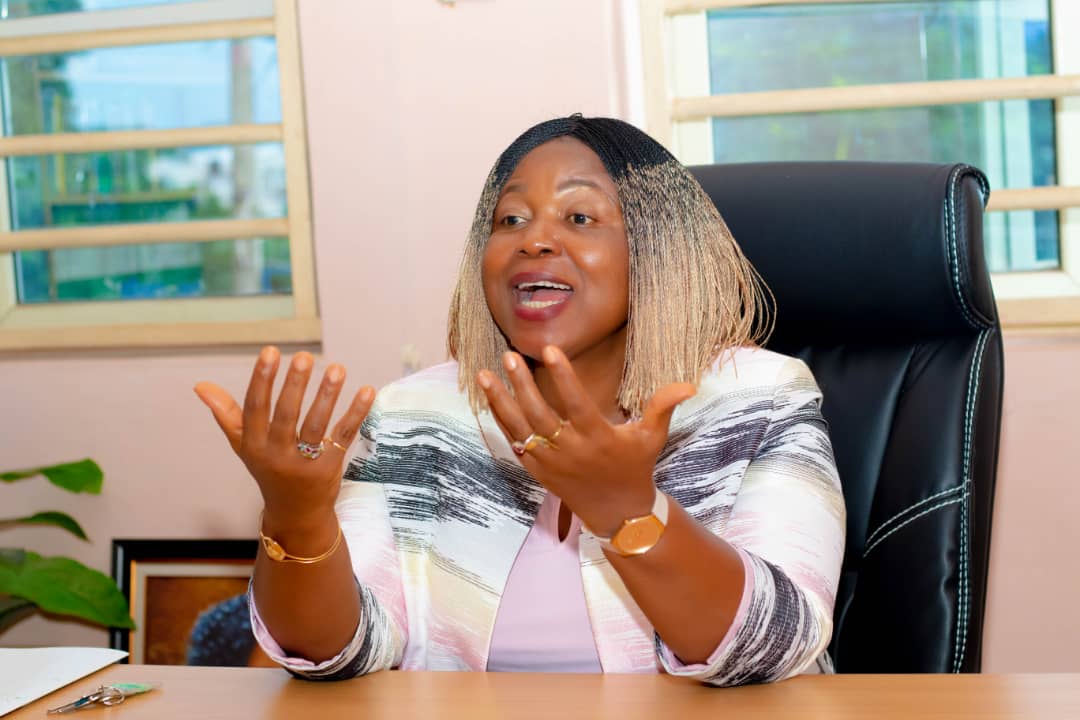
    We had an eye-opening interview with Prof. Joy Ezeilo on issues pertaining her stay at UN, her involvement in the fight against gender inequality, gender-based violence, human trafficking and many more. Here are excerpts:


    PFM: Please let’s get to know you, ma’am.

    Prof. Ezeilo: My name is Professor Joy Ezeilo. I am a Professor of Public Law, and the immediate past Dean of the Faculty of Law, University of Nigeria, and also the Head, Public Law Department. I am the Founder and Director of Women’s Aids Collective, WACOL, and I founded Tamar Sexual Assault Centre, TAMARSAC. I am a former UN rapporteur on Human Trafficking, globally, and I worked in that capacity from 2008 to 2014. I am currently on the UN Secretary General’s Advisory Board for Sexual exploitation and abuse, representing the African continent. I have served in different capacities; I have served as a Commissioner in Enugu State and at Nigerian Institute of International Affairs, and many more.

    PFM: You said you have worked as a UN Special Rapporteur on Trafficking in Persons, what was the job like?

    Prof. Ezeilo: Well, it was a tough job, you have to monitor cases of human trafficking around the globe, but I took it well, having been an activist, scholar for many years, so I had the passion and enthusiasm for it, and that is everything. I had my mandate from the United Nations and I had all the support to do the job.
    Human trafficking is a very ugly thing, a modern day slavery, and a lot of powerful people are among the traffickers themselves, who wanted to continue their trade without being stopped. My job was to ensure that the standard set by the UN for member states is met, and also that victims get succor; that part is very important. The approach we adopt is a human right and victim center approach. So, in accordance with UN protocol, to prevent cases of human trafficking, that traffickers will be punished appropriately. In that mandate I was expected to report to UN, I reported to both the Human Right Council in Geneva, Switzerland and at UN General Assembly, every year in New York. In that capacity, you give them an up-to date report on situation. I usually take different thematic approach. If I deal with prosecution, I will have to deal with prosecution; the status of prosecution and the country involved. If I am dealing with prevention, I have to look at different innovations and the best practice I recommend to others. Then I undertake missions and receive complaints from people who either are victims or survivors of human trafficking, looking for justice or redress; and you get complaints about what’s going on, including people who need to be rescued. I take all these complaints, as well as undertake missions on behalf of UN.
    Missions are the big deals, you will have to wear a lens for this, to examine a particular country, their compliance, not only to criticize them but to make appropriate recommendations on what they should be doing; where they have gotten right, you say so; where their laws are adequate, you say so; you look at their conformity with international and regional legal framework, then you tell them where the gaps are, but most importantly, you meet with the victims.
    I have met thousands of victims around the world and I have undertaken this mission in virtually every part of the world. In my capacity in this work, I travel to over one hundred countries. The pathetic thing as it concerns Nigeria, is that there is no country I visited that I did not find Nigerians in irregular situations. Say Australia to far away Uruguay. You find out that due to travel situations, Nigerians are falling into wrong hands. Human trafficking is like migration gone wrong. People are trying to escape poverty, or even to have basic livelihood and sustainability. Due to this, they fall prey to all kinds of offers that are fake. If you look at the internet, people are offering you some jobs, the victims are not educated, and even the educated also get tricked.
    Traffickers are not strangers, they recruit them from the communities. I am just dealing with a case now. It is disturbing and the person is in danger and we are finding a way we can bring her home from where she has been trafficked to in Burkina Faso. You find that Nigerians are trafficked to virtually every part of the world. Nigeria is a source country; that means a sending country, and she is also a transit country and a receiving country, because people from Togo and other neighboring countries are here, you come to Lagos, and you will discover that people are also trafficked into Nigeria. That of transit, my eye got opened to it when I was a Special rapporteur, I was going to Gabon for a mission and I met Nigerians who were trafficked to Gabon. I looked at West and Central Africa, how did it happen to be? They told me they were in Lagos for days, those from Togo and Nigeria, Lagos was the point, what struck me was that they traveled almost the way the Trans-Atlantic slavery was done. They traveled for almost five days, without even standing up. You cannot get up to do anything, you cannot eat, you may eat bread, but you will defecate there, no standing up till arrival at the destination at night to evade security.
    Human trafficking is a heinous thing still going on underground, and it affects all parts of the world. We know about the favored countries of Europe where most people prefer as their destination point, but most people are still trafficked within the West African sub region, under the pretense that they want to take them abroad. They pass through Kano, Katsina and move to the Sahara, then to Libya. I went to one city in Italy and over three thousand Nigerians were held in slavery kind of situations. They were into forced prostitution, being exploited. Those that put those girls in the road work and take their daily incomes were Nigerians too. Some are into exploitation, even the men are not spared; you go to some Middle East countries, I was at UAE, you see them working at labor camps, from dawn to dusk for almost nothing, just peanuts.
    People are trafficked into sex industry, labor industry, for organ trafficking, for the purposes of adoption, mercenaries for fighting of war, child soldiers, and many other things. It’s appalling that 200 years after the Trans-Atlantic slavery ended, people are still being trafficked; a modern form of slavery going on. That is why the UN and the world is working against it, there is a political will to end it, but some of the countries are not putting their money where their mouths are. If it is a multi-billion dollar business, where traffickers make lots of profit, you don’t fight it with few millions.
    But what I find as the missing link is the lack of enough information on prevention. We have to put in enough on prevention, because a cliché says that prevention is better than cure. If people know well the dangers, they will be able to understand. I have seen even educated people trafficked. I met a lady at UAE, a practicing Pharmacist who was trafficked from Colombia to UAE. Everything was electronically done. She saw an offer online, went for it, an e-ticket and e-visa was sent to her and as soon as she landed in UAE, she was enslaved from there, and found three years later. You can imagine how many people get lost through that.
    It was a work I did not just do to the best of my ability, but exceptionally well, because of the feedback and support I got from other actors, like Switzerland, Germany, USA; at the end I got letters from many countries, commending my work for the six years. It was for a three-year mandate renewable for another three-year mandate and I got my two terms. It was a good one; you have to go on missions, meet Ministers and Presidents of countries, meeting people at the highest echelon of government, the highest echelon of law enforcement agencies and security, then prepare an e-report for UN. After that, I was also on the Trafficking Victims Board, because it was during my time that a day was set out to commemorate the World Day against Human Trafficking. I also served for three years as a member of the Board of Trustees for Trafficking Funds for Victims at Global Level.


    Ezeilo


    PFM: Away from UN, you seem to be very interested and passionate about the affairs that concern Women and the girl child. Why is it so?

    Prof. Ezeilo: My passion for human right and justice led me to even reading law in the first place. I recall my mother being a widow, my eyes were opened to the different treatments given to men and women and the discrimination women face in reality and the patriarchal system inspired me to read law. My father’s death and my mother being a widow and things that happened after that, I made it clear that I was going to be a lawyer, to defend the voiceless, to defend the vulnerable, to defend those who are oppressed. As a law student I was following on other things that was going on, I joined other groups and associations, like Women in Nigeria, and I became the National Publicity Secretary the same way I was for the International Federation of Women Lawyers.
    But with all this, I saw there was still a gap. I did a research in 1998. I got the Mercator Fund for Leadership Development. They give you the fund based on your individual recognition that you are a leader, or that you are a potential leader and that you have proposed a work that is worth investing in. I did a research in Legal Constrains to Adolescent Sexual and Reproductive Right, and I was looking at the issue of school dropouts, unwanted pregnancy, rape, information, sexual exploitation, sexual harassment and others that affect the girl child, including female genital mutilation and early marriage. I found out that the laws are grossly inadequate to deal with it; that we don’t even have a stipulated age of marriage. Young girls are married off early, child bride, and they face some harmful traditional practices, amounting to violence against girls and children in general.
    I started proposing how to deal with this, I found out that we can do prevention, we can create awareness. However, the weakest link was lack of access to justice. What if someone is a victim of violence? What justice can the person be given? I found out that in the aspect of justice they get nothing. There was no free legal aid that work for women and girls; that even women and girls who had conflict with the law, nobody was looking at them. That was why I founded WACOL. Part of the money I got from the research I said I would put it in so that WACOL could start legal aid. By 1998 WACOL was fully into legal aid for women and girls and also doing peer education for girls. I discovered that early education, appropriate information at appropriate age will save the girl from early marriage, sexual mutilation, sexual abuse and many other ills that may make them not to realize their full potential, or impact on them negatively. The peer education was a success, I informed schools, but I didn’t end there, I wanted parents to know what we teach their children, so we normally asked for parental consent to train their wards as peer educators, they obliged to that because these are topics that parents are always shy to talk about, because sexual discussion is seen as a taboo, so some don’t talk about it at all. Some of the children don’t even understand their body parts and don’t know when someone is abusing them until they get to the point that it becomes irreparable.
    For the girl child, it takes like nine lives to survive womanhood in Nigeria. If you are a girl child you could be abandoned to die. You hear women say they were abandoned at the hospital without the bills because the husband wanted a boy instead. You can see, the girl child is already rejected at birth. You survive that, you may not survive child marriage and sexual mutilation. There is just a lot of discrimination. I call it discrimination from cradle to grave. It is something we really have to work on, empower the girl educationally so they don’t suffer educational discrimination. Give then equal opportunity so they can survive. Survival and development of nations are also interlinked to this. We will do the needful in order to ensure we have better humans.

    PFM: There is a whole Ministry at both the Federal and State level dedicated to women, you also have served as a Commissioner, with none for the men. Don’t you think they feel left out?

    Prof. Ezeilo: They won’t feel left out because this is basically based on statistics. It is evidence based. Who are those affected by sexual discrimination or gender-based violence, or human right violation? The women. Mark me, I am not saying men are not victims of sexual violence, men are trafficked too, but women and girls are disproportionately affected. This is because of their already weak position in the society and family. The prevailing social norms, patriarchal structures, the power relations, the dichotomy between public and private space; if you look at all these, you will see they are the ones in worse positions. When you want to help, you start with helping the most oppressed. The idea and the ideal is that nobody should suffer any violence or human right violation, but then you have to start from the ones that are least protected or most vulnerable. That’s how it is. Some may say that some of the Ministries should be closed, because in reality they are not achieving some of the purposes they were created for; because they are seen as women thing, they always don’t get enough budget to function well. If you look at the federal and state allocation, they are always the least. With that how can they engage and carry out their mandate to its satisfaction? They have huge mandates to deal with. Some Ministries of Women Affairs will be given Women Affairs and Social Development at state level, which means a whole lot beyond the issue of women and children. How will they achieve that? If you look at the population of women and men, you will see it’s 50 – 50.
    The Ministry has a purpose, but again it’s been a double-edge sword; it works for women and it is also undermining the advancement of women, especially the advancement of gender equality and women empowerment. If you don’t have the budget, there is no way you can carry out that mandate. If the benefits are so feminized that they are cocooned that they are the only ones dealing with these issues, the ideal will be to mainstream every issue, so that every government policy and programmes are seen from a gender lens. Then when we talk about gender equality, you cut across many aspects. If I look at gender relations, gender roles, I look at gender division of labor, I can look at any policy and see how it affects men and women, and ensure it works for both, equally.
    It is important to examine different policies, so when we look at affirmative action, we wouldn’t see it as a discrimination because it is to redress passed inequalities, to ensure women are placed where they can compete favorably. You say a woman has the right to vote, but you don’t look at the socio-cultural context, where the woman going to vote depends on her husband who may tell her who to vote for. We have to always look at every law and policy to make sure it has women’s interest. When you look at the statistics, women are under-represented in power, in the Senate we have about eight women, in the House of Reps it is about eighteen women, then 49 women for all the House of Assembly, at the end of the day it is just 7%. Why is that? It’s because women don’t have access to means of production; even land which is a capital they don’t have because they are disinherited, even when the Supreme Court says otherwise, to what extent are those implemented at local levels? The problems are huge. There are pockets of progress and miles being recorded, laws enacted, but with regard to implementation, it’s still ineffective.

    PFM: People say you are a Feminist. What is the Feminism movement really about? Is it about disdain and hatred for the male gender, as some on social media has made it appear?

    Prof. Ezeilo: It’s not a war and it shouldn’t be seen as so. It is wrong to see it as a war. Feminism is misconceived. It is about placing equal value on both gender; if you have a girl child, you value the girl child as you value your boy child. You don’t bring in the preference ideology. You give equal opportunities educationally and otherwise; you don’t say you go and cook because she is a girl; you train them equally as humans with equal right. Feminism is misconstrued because people think you are talking about those radicals who want to throw away their bras. No, we’ve gone passed that. We are just talking about basic human rights. That women should have same rights as men, I don’t think it is too much to ask. Some men when you talk of equality get agitated, they will say all fingers are not equal. Even in religious books, like the Bible and Koran they made provisions for such. The only problem is that we interpret them as we want.
    The men who occupy the positions have been the ones there and they are the ones that determine what happens. Feminism is about dignity and right as a woman. Because you are a girl child you are forcefully married off without your consent, because you are a girl child, you are denied school, because you are a girl child, you are seen as worthless, because you are a girl child, you don’t get no inheritance. The discrimination is huge; because you are a woman you can’t accept some jobs, you can’t work and get pregnant if you are working in a bank. Why can’t we see that maternity is a social function; that without that reproduction, society will become extinct? So why discriminate against women because of their social function and say they belong to the domestic works at home and restrain them there, saying that they belong to the kitchen? Look at this Covid-19 era, it was noticed that countries led by women, from Croatia to Germany performed better in the battle against the virus. So, women can raise the quality of leadership as well. It is just about equal rights. It’s not just women, there are men who believe in feminism. We need to support and work with such men. It’s not every man who is so, some men are so traditional that even if their wife is dying, they will still not enter the kitchen. We just have to be flexible as human beings, and should know that others are going through a lot, and that the best way is to support each other in partnership, to stand side by side. Progress for women is also progress for men and in turn, progress for the nation.

    PFM: You said something about some people misinterpreting some parts of the holy book. As a Christian, how do you strike a balance between Feminism and the Bible’s stance so that those misinterpreting it will learn?

    Prof. Ezilo: You know you did not tell me this earlier, I mean, I didn’t prepare any verse, and I am not too good at recollecting bible verses. I know I believe in God and in serving God through my humanitarian works. I read my Bible and draw a lot of lessons from it. For example, the verse that says a woman should listen to her husband, about a woman being a listener and the husband being the head of the family. This is what they always use to show that a woman has a subservient position, but they forget the verse that says husbands should love their wives unconditionally as God loves his church. With unconditional love, you wouldn’t even have any issue in the first place. There are other verses too, there’s this one that says one should not lift his hand even against his own flesh, which is like against Battery. And there are women of valor, like Deborah was a judge and there was no discrimination against her for being a woman. People just interpret one and leave the other; a woman was drawn from the rib of a man, and looking at what it is telling us, isn’t it telling us about duality? That in man there is a woman and, in a woman, there is femininity and masculinity? There is a sense of complement. Like the Igbo believe in duality; na ife kwuru ife akwudobe ya; we forget that part. Was God not able to create a woman without the rib of a man? He chose to because He was telling us something; the infusion, the partnership. It is a symbol that we are together, not that women are inferior. For those who say women are weak, I tell them to try go through child birth. Or is it the resilience that they have, that they can multitask? Most men don’t and can’t multitask.

    PFM: About rape, there are a lot of issues around it, some say it’s a result of indecent dressing, some say it’s the men trying to exercise dominance on the women, the religious side says it’s a sign of the end of time. To you, what do you think?

    Prof. Ezeilo: Rape is part of the violence in the society. It is partly the masculinity and the expression of that masculinity. They begin to normalize it. They feel it’s normal to touch a woman, because they believe that women will never say no, and that even when they say no, they mean ‘maybe”. Because of the way society conditions them, that for a girl to come out straight and say yes, they are seen as promiscuous, so they must start with no, then, you force them. There is no justification for rape, it is what it is, a non-consensual sex. It includes sex by force, by fraud, by threat, and that is punishable by law. It is a Felony that attracts life imprisonment, while attempted rape is 14 years imprisonment, to show that it is a serious Felony.
    What we have as problem is the issue of settling out of court, the police on the stage, the lack of evidence, the stigma and blame on the victim make the victim unable to stand and talk about it; it is still shrouded in secrecy, and open discussion of it is appalled. I am saying this because I am handling such cases in WACOL. Every month we deal with 27 to 30 cases. Looking at the cases we handled this period, you will cringe at the defilement of minors. You ask why, and when they talk of the dressing as the justification, then how about toddlers? I have seen a case of a nine-month-old baby abused. You ask what is it that attracts a man to this toddler, to this minor?
    We have pedophiles, but research has shown that we are always in denial. If you don’t accept that something happens, there is no way you can deal with. We only try to wish it away. We say these are things that happen in other countries of the world, in the West, not here. The evil is here unfortunately. What we had during this lockdown, it got worse. People can say drugs can lead to that, while others say that when one is high on drugs, the last thing he thinks of is sex. But even if it is so, didn’t the person willingly take the drugs? That does not mean you should go and violate other people’s space and right.
    Then talk about sexual abuse and exploitation in our schools, and the part that it has gotten to our secondary schools. We had a case of a teacher using about twenty-five pupils placed under his care. He would go into the restroom with them, until one of the girls couldn’t help it, she cried out. Some parents don’t even want to seek justice, they say their child will become a damage good, that nobody will want to marry her; they keep it hush. We need to break the silence and talk about this in loud voices. People will know and people will be punished. At this time, there is a low level of report, and many that reported the perpetrators are hardly convicted.

    PFM: Does this also contribute to the rise in cases of domestic violence?

    Prof. Ezeilo: Yes. Some believe that it’s their right to beat a woman because she is his wife, right to batter the wife. They believe they are the head of the family and should decide what happens to their wife. You find a man battering a woman, a neighbor tries to interfere, and he will say, “Please leave us alone, she is my wife.” So if she’s your wife you should kill her and bury her? Go the villages, people get children to other homes and abuse them not just sexually but physically too, and subject them to labor exploitation. This is huge in our environment. We need to check these things, or that’s why violence is becoming normalized in our society.
    We have laws for this, some laws are not specific, which is where work is needed, but I know there is Child Rights Act, enacted and already in use in at least 25 states. Then we have the Violence Against Persons Act, which we are asking every state to use, Enugu passed theirs in 2019. Ogun, Osun and Lagos have similar laws.

    PFM: Some people are afraid of powerful women, some feel career women are not family oriented. How do you find time to play your role as a wife and a mother?

    Prof. Ezeilo: I don’t have a problem in that department. I married and I am a grandmother now. I started young, and my husband and children supported me. I told them that they have donated me to charity to fight this fight. I say it always, I have a very supportive family. My husband while the kids were in school, supported me. We understood that it’s a partnership, you support, I support. With that support, we built a family that is bound in love that look out for each other and support each other. Without a supporting husband, there are a lot you can’t achieve. I have taught here for over 27 years, people asked then, “Why is that it’s your husband that is always going to check on the kids in school?” For me, I ask, what’s wrong with that?
    These roles do change. As a Doctor that he is, he taught them sciences and math better than I would, so why not? They could have missed out on that if my husband was traditional, because I couldn’t have taught them better as a lawyer, not to mention my son winning a prize in mathematics. I advise families to support their wives. I have seen husbands stop their wives from taking a job because they feel their wives will earn more than they do. Many marriages are failing because they lack that understanding.
    I married early, had kids while still in school and still came out with a second class upper in law, which was rare then. I never missed a class even for a day. My husband supported me.

    PFM: Are you nursing the ambition to contest for any political position?

    Prof. Ezeilo: Now I will say no, the future will take care of itself. My interest is for us to build a new and better Nigeria, where human rights are respected and a democratic culture towards advancing human rights, gender equality and women empowerment becomes the order of the day. We have a set of selfish politicians in Nigeria who only think of themselves. I wouldn’t like to join such system. I want a system where we learn that political offices should not be your access to money, but your empowerment to service to humanity. Not the one that the people are hungry while you cruise in jets around the world.
    That is why I want to be a professional first, work, get all I need and earn my money through my sweat, then if tomorrow I am going for any political position, it will not be for money, because I would have done well for myself and attained the zenith of my profession. But we need to fix Nigeria first, and ensure we invest in the next generation, create a sustainable and an enabling environment. The inequality gap is too much.

  • Interview with Lady Chidi Onyemelukwe, Anambra 2021 PDP Governorship Aspirant

    Interview with Lady Chidi Onyemelukwe, Anambra 2021 PDP Governorship Aspirant | Awka | May, 3, 2021.


    Lady Onyemelukwe was a running mate to Oseloka Obaze of the Peoples Democratic Party in the 2017 Anambra Gubernatorial Election. In this interview with The Pacesetter Frontier Magazine, she reels out her plans for Anambra.


    What are your plans for the state as Governor? 

    My manifesto says it all. Our dear state needs restoration in all facets because over the past eight years people have experienced leadership, trust, fiscal, economic and infrastructure deficits. My priorities are to restore trust and confidence, in both leadership and government; to get our state infrastructure working again; to sustain and protect existing public infrastructure and public properties; to complete viable abandoned projects and place Anambra state on the path to greatness, God being our helper.

    Simply, to take Anambra from good to great. In the pecking order of states and in all facets – good governance, solvency, economic, political, educations, industry and commerce, housing, welfare, revenue generation, power sufficiency, and infrastructure – I want to see Anambra ranked in the top 5 in Nigeria, and consistently so. That is my plan.

    Many believe Anambra isn’t yet ripe for a woman as governor. What gives you the confidence that you can overcome that perception? Why do you think Anambra needs a female Governor this time?

    Such perception could be misinterpreted as being sexist; but I won’t go that route, since I know there is a cultural angle to it. Anambra needs a female Governor because we need to do things differently. Moreover, today in Nigeria we have had a female Chief Justice, a female Admiral, A female Army General, female senators – indeed Anambra has two presently- and female captains of industry. We have also had a female deputy Governor and Governor in Anambra State. So, where is this ‘not being ripe’ coming from? I think we should leave the perception and deal with the realities. My confidence comes from God and from my God given abilities.

    What moved you to aspire to become Governor of Anambra?  

    It is easy to see that things are not working optimally. The situation could get a lot worse if we fold our hands. I am moved by a strong desire to serve selflessly. To sustain legacy and to get the job done right with the fear of God.  It’s that simple.

    What is your motivation in the race?

    Leadership is about service. I am privileged to have been well travelled. I have been to places where things work and are taken for granted. Even here in Nigeria, in the so-called good old days, potable water was available in most urban areas, the roads were few but well maintained, public properties were well maintained by the Public Works Department (PWD). If we improve the quality of life, give our people hope and better life, that ought to be sufficient motivation. As the saying goes, to whom much is given, much is expected. I want to give back. I want a state that our children are proud to call home. As a child growing up, holidays in the village were always the highlight of my year. These days, the young ones are mostly looking for a way out. A lot has gone wrong. We need to get back on the right track.

    What do you want to do right and perhaps differently?

    Our approach of doing things differently will be dual-tracked: create opportunities and an enabling environment to make governance seamless and reform and strengthen our public institutions. So we will bring experience to the table, follow due process, and accountability anchored on the fear of God. Our governance mantra, ethics and values will be premised on accountability and transparency. We shall offer opportunities for our people to get affordable healthcare, good education, gainful employment and dividends of democracy. We will engage in gender mainstreaming at all levels, bureaucratic and political. Elective and appointive positions will be based on a 60:40 ratio.

    If given the opportunity, my team and I, shall reform and strengthen our governance institutions to serve the public interest and the common cause, guarantee investors’ interest and confidence, restore capital inflow and sustainable development. Our budgetary process shall be transparent and results-based. Our policies will be people-driven. Anambra State will be fiscally secure and solvent under my watch.

    How do you see the influx of Billionaires in the race?

    Money is good as what it can buy for you. It could also be detrimental, if not well deployed. Campaign financing laws took care of that. No candidate can justifiably exceed the N200 million spelled out by the Electoral Act for vying for governorship. Doing so is sufficient grounds for disqualification. So, wealth is just one attribute of the race. Someone mentioned to me that Anambra has the highest concentration of millionaires and billionaires. So it’s only natural that some of them aspire to govern the state. What is key, is what added value each aspirant brings to the table.

    What do you think the state lacks that you will provide?

    Like Nigeria, Anambra State is blessed with human and material resources. Really, we lack nothing in that sense. What we need is focused, transformative, adaptive and purposeful leadership that will deploy its energy and the state’s finances and resources in promoting the common cause, welfare and giving our people a better life. Of course, in doing so, one would strive to provide facilities that would address the unmet needs, in housing, healthcare, education, food sufficiency potable water, power, employment and infrastructure.


    What is your rating of the serving governor and those before him?

    By the mercies of the Almighty, in 2017, I ran on a joint ticket as deputy to Oseloka H. Obaze. Today, I am running for the top job so my ratings stand a great risk of being viewed as biased. Such assessments are the prerogatives of the Anambra people. I will suggest that you direct your question to the everyday citizens of Anambra State. They are in a better position to provide an unbiased answer to those questions. But so you don’t think I’m doing the dodge, I’ll tell you this. As a citizen I have one vote. And I know that in 2017, I did not vote for the incumbent.

    Do you think your party can win the November 6 poll?

    PDP is in the race to win. I am in the race to win. Many believe that the ruling parties, both at the central and state levels have not acquitted themselves creditably and therefore traditional and primordial sentiments alone, cannot return or put them in power in Anambra state. It’s time for a reality check. The outcome of the November 6 election, barring anything untoward, will be in the hands of the Anambra electorate, and of course, in the hands of God.

    What is the influence of former governors like Peter Obi and others in the choosing of the next governor?

    PDP is the longest and presently the only active party amongst those founded at the cusp of the return to democracy in 1999. We have institutional capacity, institutional memory, and sagacious stakeholders and leaders. These leaders, like Peter Obi, are highly respected and wield sufficient influence to advise the party on how to do things right in the interest of the party, and to ensure equity, credibility and transparency. Insofar as their individual and collective influence are germane and in tandem with the aspirations of the party, their respective roles remains critical.


    Do you think you have enough political pedigree to clinch the ticket against several tested personalities?

    With all modesty, if political and social pedigree were the only factors for winning this election, I believe I’m in good stead to be the next Governor of our dear state. Of those you refer to as tested, none became Governor, and just a few have been on the ticket of major parties either as candidate or deputy, so we are all essentially at the same level. What matters most, is what Anambra needs at this juncture to leapfrog from stagnation to eminence and prosperity. I’m offering myself and my services to make that dream a reality.

    Some under aged children are roaming the streets selling different kinds of commodities. How can you help curb such activities?

    Our platform has offered the solution to addressing the scourge of out-of-school children, of which there are over 13 million in Nigeria. Our approach will be simple but efficient and practical: we intend to invest aggressively in primary, secondary, vocational and tertiary education. We will also make Primary and Secondary education mandatory and free up to Junior Secondary level in order to lower out-of-school and dropout rates. We will devote U.N. prescribed budgetary allocation of 26% to education. That ought to do the magic.

  • “If my brother had known that the first military coup would lead to civil war, he’d not have staged it” – Major Nzeogwu’s elder brother, Pa Mark

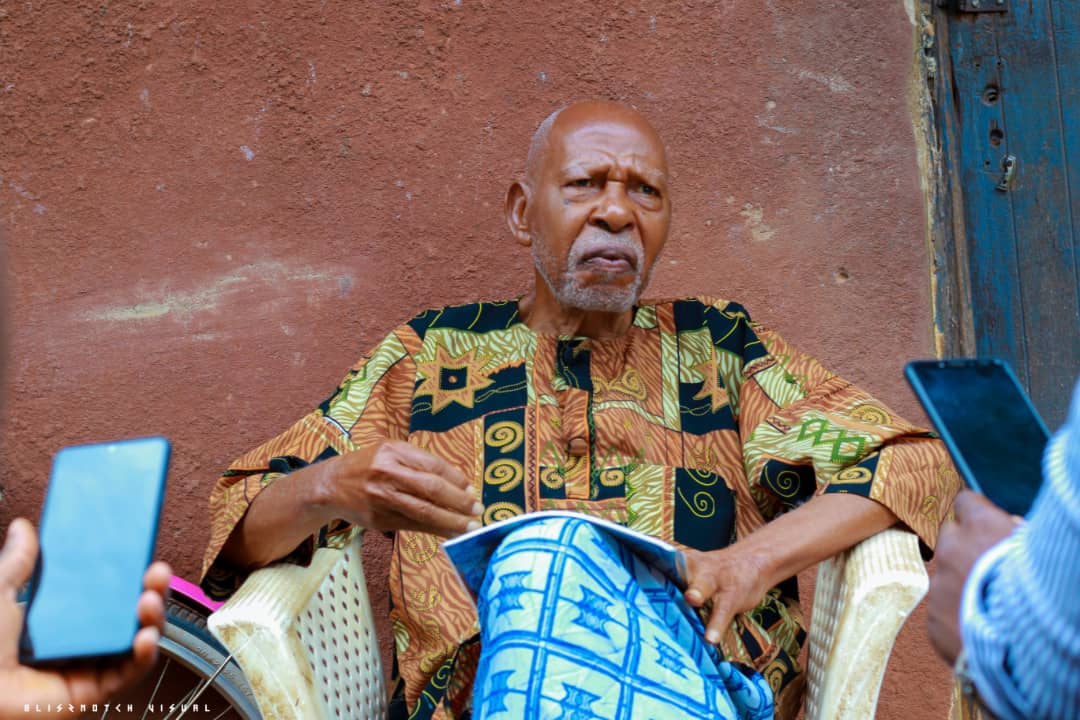
    Pa Mark Idi Nzeogwu, 89, was the elder brother to the late Major Chukwuma Kaduna Nzeogwu, leader of the January 15, 1966 first military coup in Nigeria. At an encounter in Lagos, he stated that if his younger brother had known that the coup would lead to pogroms, and later, a civil war, he would not have participated in the exercise. The octogenarian spoke on this and other national issues in an exclusive interview with DOTUN OLUBI, publisher of The Lagosian’s Voice, in Lagos. Pa Nzeogwu succumbed to death in February this year and was buried on Saturday, March 27 in his hometown, Okpanam, Delta State.

    You were a Christian, then a Muslim. How did that happen?

    I am Idi Mark Nzeogwu, and yes, I used to be a Muslim. I am eighty-something now. I was born in 1932. I have my birth certificate. I worked for Taylor Woodrow as a bricklayer in the North. I was part of those that built the tobacco company in Zaria. I lived among the Muslims and our relationship was very cordial. They loved me so much, and I equally liked their ways. This made me to convert to Islam. It was the same experience when I was transferred to Kano. There was that cordial relationship. I was a brilliant bricklayer. So when I wanted to marry a lady in the North, they encouraged me to pick a young girl. I was about 20 years then. It was usual to marry at such an early age in the North.

    Did you get the blessings of your people on this?

    I had cut them off! I was not talking to them and they were not talking to me. I regionalised the moment I got to the North. My parents were then in Kaduna. We were raised in the North. I love the lifestyle of the Hausa man.

    What is it about their lifestyle?

    They are very simple. If a Hausa man tells you yes, it is yes.

    Are you still a Muslim?

    Oh, no, no. Things changed. I am now a Christian. I married another woman, a Christian. And leaving the North, there was no way I could practise Islam. My new wife is Catholic, so, I went back to Christianity. There was a lengthy conversation with the priest at Kaduna at that time, Rev. Father McCarthy; I doubt if he would still be alive. I was given penance to bring me back to the Christian fold before my wife and I could be allowed to wed. We wedded in the church.

    Who was Major Chukwuma Kaduna Nzeogwu?

    He was my late brother. He was my immediate junior brother. I was older than him by five years.

    What kind of personality was he?

    Chukwuma was a very brilliant person. He was straightforward. He hated double standards. I remember meeting him and former President Olusegun Obasanjo then when they were preparing to travel to Congo on a national assignment. They were young soldiers at the time. I could see they were so excited about their mission there. And when I asked them why they were so excited about military mission that could involve the loss of lives, they said they were looking forward to gather more military experience. After that mission, when they returned to Nigeria, Chukwuma was put in charge of the officer’s welfare. He was the one assigned to ensure that the officers that went on that mission to Congo were paid; and he carried out the task without sentiment – no mago-mago. Later, he showed me the plots of land that were given to him and some of the officers who equally owned land there, which was where he would build his house. It was somewhere in Surulere, near Peter Obe’s house (Obe used to be a popular veteran press photographer with Daily Times newspaper). I think it is located on Ibezim Obiajulu Street. Somewhere at the farther end of the street, was Obasanjo’s. This was in 1964.

    The plots were given to them by the Lagos Town Council. We took measurement of Chukwuma’s plot. He gave me the contract to commence work there. All the building materials were ordered from Leventis. But the land never got fully developed. When rumours of the coup began to spread across the city of Lagos, some of the Hausa people who were working with me went behind to inform some officers that I am a brother to Major Chukwuma Nzeogwu. That night at about 10pm, some soldiers stormed my house. They asked me if I knew Chukwuma, and I told them I am his elder brother. They asked me where he was, and I told them I had no idea. They carried out a search, turning everything upside down. This was on the land which was then under construction; we had iron zinc make-shift structure which served as our accommodation. They combed the entire area but did not find anything incriminating. It was after they left that I knew that Chukwuma was the brain behind the coup; that he was the one that killed Sardauna and others.

    After you told them you were his brother, what else did they do?

    They later came back for another search. This time, they put me into a waiting car and drove to my rented apartment where they carried out another intensive search. They upturned my clothes, pictures and other property on the ground, looking for incriminating material. Then they took me to Dodan Barracks. Once we arrived, they brought out a letter they found at my place and read it aloud. It was a letter over a quarrel I had with Chukwuma. When they asked me about it, I told them they could see for themselves that Chukwuma and I were not all that on talking terms; and that I came to Lagos because he contracted me to develop his land. When they realised that I was a Muslim, they asked me to recite the Quran, which I did. But then, they got angry and said my brother was the one causing trouble.

    They removed my shirt and beat me with a jack knife, inflicting deep cuts on me and using my clothes to clean the blood. They took me to the Lion Building, and at night, they brought in many people. Somehow, the information leaked to the Commissioner of Police; an Igbo man, that a brother of Major Chukwuma Nzeogwu was in the building. The Commissioner came and pleaded with the men to release me. The leader of the squad that held me was one Captain Mallam Garba. He eventually gave orders for my release and instructed that I be charged to court. I was taken from the room where I was held at Lion Building to the Commissioner’s office upstairs. I could barely walk because I had lost so much blood as a result of severe beatings. I was shivering. There in the Commissioner’s office, I was subjected to another round of questioning. The other set of officers told me that they would ferry me to the other side of the sea by boat and put me in prison. They gave me food to eat. I later found out that they were all Igbo officers. I stayed with them for one month and some weeks and I was brought back to Lion Building again. Then they asked me where I would go if they released me. I told them I would go back to my house. So they brought me back to Lion Building. From there, I went to one Alhaji Dabiri. He was one of those who equally owned some plots of land in the same area as Chukwuma. By then he had finished building his own house. I also worked for him. As soon as he and the others saw me, they ran away. They thought I was a ghost because they believed I must have been killed.

    Did you have any contact with Chukwuma before the war?

    Not immediately. But he heard about my arrest and imprisonment. I later found out he got hinted by the Commissioner of Police at Lion Building. The man travelled to the East and got in touch with Chukwuma. He told him all that I went through.

    Were you born in the North?

    No. My parents relocated to the North while I was very young. Chukwuma was the one born there.

    When you heard about his death, how did you react?

    Well, I was not happy, but I knew he would die because he did not run away after the coup failed. He was the leader of the coup. After the coup, he was taken to Aba Prison. From there, he sent a message through someone coming to Asaba that he wanted to see me, Philo (who died a couple of years ago) and Peter (our youngest sibling). He didn’t allow us to see his eyeballs as he wore eyeglasses. He was brought in a car. He only rolled down the glass to talk with us; he never stepped out. Those who brought him would stay in one corner while he talked with us. He knew he was going to die. He gave us money to buy land for Peter as a sort of investment when he grew up, since he would not be getting anything from his inheritance, according to tradition. He did not own anything – no title; nothing! That was his life.

    During the coup, and during the war, where was your family?

    My wife was in the North at that time. My parents were in Asaba. After my release, Alhaji Dabiri got in contact with one Magistrate Savage who took me to the park to board a bus going to Asaba. The fare was two pounds then. When I got into that bus, people were staring at me. They were scared. I was equally scared. When I arrived at my country home, the whole place was deserted. Everyone had gone into hiding. Before I left Lagos for Asaba, I contacted my wife in the North. She too had become aware of the situation. I told her she was free to marry another man. At this time, we already had two children – a male and female.

    What sort of person was your brother?

    Chukwuma was stubborn. He was an independent-minded person. In his school days at St John’s College, he was the leader of the group that caused trouble in the school. That led to his expulsion. Though my father made several attempts to plead with them, the school management refused to take him back.

    Did you like what Chukwuma did then?

    No. I didn’t like it. Why I didn’t was because it is a grave sin to kill. To kill a man that way, that person must suffer. And whoever kills must be judged.

    Why did you think he carried out the coup?

    I have no idea, but I think it had to do with corruption and greed. And till today that very reason is still with us.

    Our parents were not happy when they learnt Chukwuma planned the coup that led to the war. They cried. They knew they were not going to see their son again. The war had nothing to do with tribe, religion, politics or interest group. During the war, we learnt he was alive. He was killed at Ogbulafor. He had his loyalists and they were heading for the North from Ogbulafor axis when they killed him. Meanwhile, at that time he and Ojukwu were not in agreement. They killed him on the battleground. Immediately, they killed him, the Hausas were very happy. They jubilated. The news of his death was carried all over the world.They said they wanted to unite Nigeria. But Nigeria is not united. What happened then is still happening now. The military have tried but they should leave power. Power is still being rotated among the same set of people. When one leaves, another enters. They do not want to leave the corridors of power.

    Do you think your brother and Ojukwu were fighting for the same cause?

    Well, they were fighting for the same cause but, along the line, there was disagreement between them. Chukwuma did not like the method Ojukwu was employing to solve the problem. He did not want the war. While he was in detention, he wrote to Ironsi severally to release him and others in Aba Prison.

    How did he get out of prison eventually?

    I think Ojukwu agreed to release him but their settlement did not go well. He was killed by the Northerners.

    What is your relationship with former President Olusegun Obasanjo?

    I first met him when I went to visit Chukwuma in their barracks. I saw them preparing and packing their things. They told me they were going on a military assignment to Congo. I said that earlier. I still have some of those pictures where women were flocking around him after they went for some battle. The Congo Peace Mission came as a result of the fight that led to the kidnap and death of some Nigerian officers there. Even after Nzeogwu’s death, the relationship continued as Obasanjo was there to give our parents a befitting burial at their demise. He buried our Papa. He buried our mother. He has always been there for us. For me,he is a good man, as he did not forget Chukwuma. He is a brother to me but they fought on opposite sides. Chukwuma had no intention of fighting. If he knew the coup would lead to a civil war, he would have backed out.

    How do you see the current agitation for Biafra?

    The Igbo had the chance to make it work when they had support from some other countries. But what happened? If they couldn’t do it then, I don’t think they can do it now. Well, I do not know but that is what my mind tells me. I don’t want Nigeria to break up, but the situation has not changed. So it is likely that Nigeria might break up.

    What gives you the greatest happiness?

    My marriage from the North. It is my greatest joy. I see my children from my wife doing well, and feel very happy. See this one, Hauwa (pointing to the daughter) and Audu too – even Mairo that married an Hausa man.

    But you later married an Igbo lady…

    The situation changed but I love and cherish my first marriage more.

    What is the thing you will forever regret?

    It is the coup, because I lost my brother. If he knew war would break out, he would not have been part of it.

    Did Chukwuma have a woman in his lifetime?

    He was not into that. He did not keep women and he was never married nor seen with any. He had no woman and no friend. He believed strongly in prayer and usually prayed from morning till night. He was a staunch Catholic.

    What advice do you have for Nigeria and Nigerians?

    Nigeria should allow those clamouring for secession to go, and not allow war to break out. If the governm ent sees that their trouble gets too much, they should be allowed to go and let us see what will happen.

    Source: www.sunnewsonline.com

  • How I defeated UK, US, Chinese pupils, others at global maths competition –15-year-old Nigerian


    How I defeated UK, US, Chinese pupils, others at global maths competition –15-year-old Nigerian

    Faith Odunsi, 15, who recently won the Global Open Mathematics Tournament, an international competition with participants from Europe, Africa, America, Asia and Australia, shares her experience with ALEXANDER OKERE


    What is your name and how old are you?

    I am Faith Odunsi. I am 15 years old.


    What class are you in and what is your state of origin?

    I am in SS3. I am from Ijebu in Ogun State.


    You recently won the Global Open Mathematics Tournament. How does this achievement make you feel?

    It makes me happy and honoured.


    How did you react when you were announced as the winner?

    I was already tense, so I just smiled. I was too anxious to dance. I was tense because it was a tough competition.


    Which other countries fielded contestants in the tournament?

    I saw pupils from the United States (of America), China, Ghana and others.


    At what point were you convinced that you would win?

    It was at the point when we got to the end of the questions and I got the answers correctly. My heart raced but I felt relieved.


    You went through some stages before the international tournament. Can you tell us about them?

    In the first stage, there was a computer-based test and we had to answer many questions in one hour. My score in the test was 66. The second stage took the same format and I also scored 66. The quarter and semi-finals were on Microsoft themes. We were asked questions and we put in our answers; the first to put in the correct answers got 10 points.


    Which of those stages was the toughest for you?

    I think the first was the toughest because I was just getting used to the CBT and timing.


    Were you at any stage scared that you might be defeated by other pupils?

    Yes, I was – at the semi-finals. I entered a tiebreaker with a female pupil named Adrija Panda. I think she was from one of the Asian countries.


    Is it true that you won with a margin of 30 points?

    Yes, in the finals.


    What was your total score?

    Forty points.


    What was the score of the first runner-up?

    The first runner-up scored 10 points. The pupil was from another country.


    This achievement must have come through proper preparation. How did you prepare for the competition; did you read for hours or late at night?

    I didn’t want it (tournament) to affect my academic activities. So, after classes, I had another class with my teacher who coached me. At a point, he had to take me out of the class as (the date for) the competition got closer. So, I had to split my reading time. I am a boarding pupil, so I had to study at night from 11pm to 12am.


    Did you receive any prize for emerging the winner?

    It came with a monetary award of $1,000. The organisers said they would come for the official presentation of the award.


    Is it also true you set a record in Cowbellpedia in 2019 by answering 19 questions in 60 seconds?

    Yes.


    How did you do that?

    At that time, we were through with our school examinations, so it was easy for our teacher to teach us and give us exercises in the form of the ones we did at Cowbellpedia. There was also an audience to help us get used to the environment. So, that reduced the pressure.


    Did you solve all the mathematics problems in your mind before saying the answers?

    Yes, most of them, though we were given some papers. They were all mathematical questions. In my school, we were taught how to practise mentally and avoid errors. The school organises extra classes for students taking part in competitions.


    Have you participated in other competitions?

    Yes. I have been taking part in the national Olympiad since I was in JSS2. I have also taken part in Kangourou Sans Frontieres, South African mathematics Olympiad, American Mathematics Competition and Pan-African mathematics Olympiad. For the national Olympiad, I was made the Queen of Mathematics from JSS3 to SS2. For the South African mathematics Olympiad, I got medals. I got a silver medal in the Pan-African mathematics Olympiad in 2019. I was also made an ambassador of my school.


    How much support did you get from your parents while preparing for and during the Global Open Mathematics Tournament?

    My parents were supportive and they advised me. They also gave me reading tips.


    What are their occupations?

    My dad is a medical doctor while my mum is a businesswoman. I think I got my mathematical skills from my dad.


    Did he tell you how he felt when you won?

    I haven’t gone home since then but he called and said he was very proud of me and happy.


    How did you mum react to it?

    She was very happy. I wasn’t at home when the result was announced but she must have danced.


    You seem to love mathematics. Is it your favourite subject?

    It is one of my favourite subjects. I also like Information and Communications Technology. But I would choose mathematics over ICT.


    What do you like about it?

    I like the fact that once you get the concept, you should be able to know how to solve a problem. It’s basically logical reasoning and using your brain.


    How would you describe your academic performance at school?

    We didn’t have any prize-giving day in SS2. But I have taken the Cambridge examination. I got six A* and one A. I scored 90 per cent in six subjects – Biology, Chemistry, Physics, ICT, Mathematics and Additional Mathematics. I got an A in First Language English.


    Many people find mathematics difficult to learn. Have some of your classmates complained to you?

    Yes, they have. They tell me they don’t understand the questions sometimes.


    So, what do you tell them?

    I try to explain to them and tell them that it is just about knowing the concept and understanding it. I also teach my friends.


    Do you enjoy teaching?

    I enjoy teaching to an extent.


    To what extent?

    I don’t enjoy it when it distracts me or affects my time to study. I have a personal timetable for studying and solving past questions


    What are the other things you avoid because they distract you?

    Sometimes, it could be unnecessary talks. But my academic work doesn’t affect my social life. I still talk when I need to.


    What are your hobbies?

    I like reading books. I like interesting movies. I also play games once in a while. In the last inter-house sports, I won Monopoly for girls.


    With your performance in the sciences, what do you intend to study at the university level?

    I want to study Computer Engineering.


    Do you have a school in mind?

    I would like to study outside Nigeria because the facilities are better abroad and the experience is better. I don’t think I will be limited in Nigeria; I just think the opportunities will be better abroad.

    Source: www.punchng.com

  • …It was Igwe John Igwesi, Dennis Nnaji, Daniel Nnamani, Igwe Edward Nnaji that were at the fore front of the modern Nkanu; Chief Mark Ngene, JP

    …It was Igwe John Igwesi, Dennis Nnaji, Daniel Nnamani, Igwe Edward Nnaji that were at the fore front of the modern Nkanu; Chief Mark Ngene, JP

    I still remember that in Nkanu, it was Igwe John Igwesi, Dennis Nnaji, Daniel Nnamani, Igwe Edward Nnaji that were at the fore front of the modern Nkanu; Chief Mark Ngene, JP

    The Pacesetter Frontier Magazine was with Chief Mark Ngene in his Enugu home to ask him questions on issues of importance to Nkanu and Awkunanaw. He said a lot in this revealing interview. Here are the excerpts.

    Please tell us about yourself, Sir.

    I am Chief Mark A. Ngene, JP. I hail from Attakwu, Akegbe-Ugwu, Awkunanaw in Nkanu-West Local Government Area of Enugu State. I am a retired Civil Servant on grade level 14. I retired as the Head of Personnel Management in Enugu North Local Government. Educationally, I started early from 1934, I made the Standard 6 certificate. I have a Senior Cambridge certificate and a Diploma in Public Administration. Also, I have been a social man, I was the Secretary of Awkunanaw Welfare Association for a very long time. I am a Title Holder in Attakwu, my Title is Egbe a nu-uzu of Attakwu. I am 93 years old.

    In Nkanu, Nike is adjudged the eldest. How did Nkanu as a people come to be before the political delineations?

    Yes, Nkanu as you see it has so many components. We have Nkanu originating from Arochukwu in Abia State. Throughout all parts of Igbo land, you will find Nkanu communities. Nike is the most senior because Nike was the first to settle in this area where Nkanu people occupy at present. Nkanu has a lot of communities and Nike is the traditional home of Nkanu.

    How did they come about this name “Nkanu”?

    Nkanu as a word is derived from “Nka” which means Craft makers or Craft making. We were known for craft making so that was how we got the name Nkanu.

    A lot of records may have been lost especially since our histories, traditions and cultures are orally recanted. Were there people who played major roles in the making of Nkanu’s history? Tell us about one or two of them.

    Ah, those who made Nkanu a modern Nkanu and old Nkanu, those of us who are old still remember them but we are very few now. Fortunately, some of these things have been documented. Let’s begin with Nike; we had people who were prominent in the development of Nike. Some of them were Ugwu ani nw’ene oka. He was a paramount chief of Nike those days, though he had problems before he died such that his compound was abandoned and desolate because of his inhuman treatment of his people. Igwe Edward Nnaji was also one of those who developed Nike, James Agbo and so on. Leaving Nike and coming down to Awkunanaw, we had the paramount chief Ugwunnaji, Agbowo ebiem, Okeke ede, Igwe John Igwesi and so on. Down Nkanu like Akpugo had people like Ogbodo orie abo, Joseph Nwobodo. In Ugbawka, we had someone like Ede nw’ani, in Nara, we had Igwe Nathan Ogbu who, in those days built a house whose cost was One million pounds.

    Could you be specific about the roles some of these names you mentioned played in shaping Nkanu as it is presently?

    I still remember that in Nkanu, it was Dennis Nnaji of Oruku, Daniel Nnamani of Agbani, Igwe John Igwesi, Igwe Edward Nnaji that were at the fore front of the modern Nkanu and their base was at Agbani where we had the headquarters of Nkanu County Council. They first identified Nkanu because we were under Udi District Council. Nkanu said it was not wise for them to go second to Udi area. These men made it possible that Nkanu stood on her own. As at then, Nkanu had just very few schools, the only Standard 6 we had in Nkanu area was at Agbani Methodist Central School because the Methodist church was quite popular in Nkanu then. These names I mentioned were the pioneers that made it possible for each side in Nkanu to build their schools, and have up to Standard 6, which was the maximum then. The highest was Methodist College, Uzuakoli.

    What was leadership and governance like in Nkanu before the coming of the Whiteman? Also, what was the people’s reception of the advent of the westerners?

    Well before the advent of the European administration, our people were very much organized. The only problem we had then was the class, that was the bane we had then. Leadership then was by the class called Ndi Izhi and they were very effective. There were taboos, customs, traditions and norms, they maintained these things strictly. However, their mistake; it was not regarded as a mistake at that time, it was regarded as pride, was the issue of buying and selling slaves, human trafficking. It was prevalent at that time, that those who had the might were kidnapping and selling human beings, those regarded as second-class citizens. Outside this, their administration was so powerful that you don’t go contrary to the norms. There were stringent methods meant to enforce order unlike nowadays where you can commit a crime, rush to the Police and the Police will protect you. They had shrines and they had strong faith in them.

    When the Europeans came around 1908 or thereabout, our people saw them as devils. They were not received, particularly Awkunanaw. Awkunanaw, so strong and organized were united and resisted them. When the Europeans came, they first appeared at Ugwu Akegbe, the hill from Udi side. Our people sounded the Ikoro to inform the people that devils were around. Awkunanaw met at Ani Awkunanaw and decided to fight them. When the white men saw that our people were hostile, they went back, regrouped and brought along Tiv soldiers. At the hill, from Nyama river, Awkunanaw converged with sticks and knives but the Europeans sounded their guns, guns that blew up palm trees, and our people took to their heels. It was later that the Europeans used their tricks, lured our people with things like gunpowder, schnapps, clothes, etc. That was how they won some of our people. When they said they wanted to see us at Ani Awkunanaw, our people saw it as a sacrilege and an act that would pollute Ani Awkunanaw, that was why and how they established Orie Odenigbo and met with the white people there. After they lavished gifts, our people saw that there was something good from them and appointed them Warrant Chiefs.

    Some versions have it that Igede dance “ufere igede” or the larger Igede was wrestled from Ogui Nike by Okunanao (Awkunanaw). Do you mind lending your voice to this?

    It is true. The first Igede we had was from Nike and Ogui is part of Nike. Awkunanaw people went to Ogui Nike, because they were more powerful, drove them away and captured the Igede. Ogui returned back to their settlement after a while. We had what was called Ukpu atu ru afo asaa. It was a land that Awkunanaw said belonged to them. They decided to go to war to get it. The problem was how to face the people of Nike. Awkunanaw introduced ukpu, a long rope which was to be tied to the leaders of the war while those at home would always pull it to feel the weight of the warriors. If at any time, the rope became light, they would send in more warriors. This was how the Ogui Nike people were fought and Awkunanaw took her Igede. So, Nike was the first place to have the Igede dance followed by Awkunanaw. That is why if anything is being shared in Nkanu, Nike takes first, followed by Awkunanaw.

    The Igede dance was a symbol of spiritual superiority and strength of an army of warriors. That was why, previously, a human being must be killed before Igede is established in a place. Because human sacrifice became obnoxious, the life of a cow became a substitute to human life. So, a cow will be killed in the place of a person before Igede can be established. It was regarded as the highest spiritual dance in our land. It extended as far as Enugu-Ukwu in Anambra. Our people say that a people without Igede are not worthy.

    What do you know about the history of Awkunanaw and the formation of Awkunanaw Welfare Association?

    The origin of Awkunanaw started in Mbaise in Imo State. From Enyi ogugu, the founder of Awkunanaw and his brothers that founded Nara, Nomeh, etc migrated as hunters till they reached a place called Ogwugwu. While there, Akegbe gave birth to five children Awgu, Owerri (present day Owelli-court), Ihe, Agbogugu and Akegbe-ogwugwu. Akegbe-ogwugwu eze settled at Awkunanaw and gave birth to Obuoffia, Akegbe (his namesake), Amodu and Umaa (present day Amechi and Obeagu). Akegbe-ogwugwu eze found out that Obuoffia as his first son wasn’t able to lead the war coming from various angles. He then devised a means; he told his children that his dibia told him that any of them who was able to lift the Omu (a stone located in the present day Omuoha in Obuoffia) would lead the others. It was Akegbe that successfully lifted it and that is why today, although Akegbe Ugwu is not the first by birth, they are the traditional head of Awkunanaw.

    On the formation of Awkunanaw Welfare Association, we were in school, I was in Standard 5 when the association started in 1945 through ’46, ’47 or so. It started because in Awkunanaw, there was no Standard 6 and the only mission in Nkanu was the Methodist mission in Agbani. Our people saw it as a backward development so began to think of how to have Standards 5 & 6 in Awkunanaw. Okeke ede from Umaa, Igwe John Igwesi, David Ani nw’ogbo met and decided to take the problem to one Revd. Wood who at that time was in charge of Agbani circuit in the Methodist church. They met with him and they were given conditions. The negotiation spanned from 1945 to 1948. The establishment of the present secondary school in Akpasha was as a result of that. Then it was a Standards 5 & 6 school. The establishment of that school was wonderful for our people. As far as the modern Awkunanaw is concerned, her development started from these three human figures.

    What would be your assessment of the growth and performance of the present Awkunanaw Welfare Association?

    Well, let me come in because I’m involved. Awkunanaw Welfare Association as far as today is concerned is not very vocal because of politics. A committee which I’m heading as the Chairman from within is the Peace and Reconciliation Committee of Awkunanaw Welfare Association. The President of Awkunanaw Welfare Association is Sir Chinyeaka Ohaa who retired as a Federal Perm. Sec, he is seconded by Chief Nwabueze Nnamani who is today the Local Government Chairman of Nkanu-West LG while the Secretary is Celestine Nnaji from Amechi. They are not vocal, that’s the summary. The Peace and Reconciliation Committee is doing everything possible to settle misunderstanding in Nkanu land, particularly in Awkunanaw. We are doing our best but it is not enough without the main body and like I said, the problem of the main body is politics.

    Tell us about the Ozo title, what is unique about it in Nkanu land?

    It is definitely in Nkanu land but historically, there’s nothing like Ozo in Nkanu. What was prevalent in Nkanu for those who had performed the traditional rites for their father and mother was Ogbuzuru, Igwe n’ezere oha, Ori inyinya, and some others. We were not having Ozo. Ozo was obtainable in Agbaenu and Agbaja. The Ozo thing presently in Nkanu is a new design.

    Aside the dialect, are there some particular traits that Nkanu people are known for?

    The most important thing unique about us is our dialect. There are slightly different from community to community but you can always identify it as Nkanu dialect. Akpugo and Agbani have similar dialects while Nara, Ugbawka and Nkerefi’s own are also similar. Outside our dialect, I don’t think there’s any other thing. Previously, we used to have special varieties of Yam particular to us but it is no longer there, those varieties no longer exist.

    Are there some practices in the land you would want the people to stop or abolish?

    Yes. One thing that I would want us to stop is the Ohuu-Amadi issue. That segregation has brought problems. Although it is everywhere but it is obnoxious. I can’t understand why we should continue to uphold such misdeeds of our forefathers. However, it is double edged because there are some people who use that to enrich themselves today, particularly those persons regarded as Ohuu. They continue fanning the embers of hatred. It is always difficult for the Amadis to refer to someone as Ohuu, they are the ones quick to always be conscious of it. If they are present in a place and something is to be shared, you will always see them bring in that disparity and segregation by asking that their share should be given to them differently from that of the others. Also, they are becoming vindictive in the sense that they want to retaliate. Why would you want to retaliate when those existing now didn’t participate or contribute to the establishment or sustenance of the caste system? Let the media like this magazine campaign against that practice. God created us all equally so let this stop.

    Thank you for taking out time to speak on topical issues in Nkanu.

    Thank you.


  • …if we must get this country right, we should look for people like Governor David Nweze Umahi

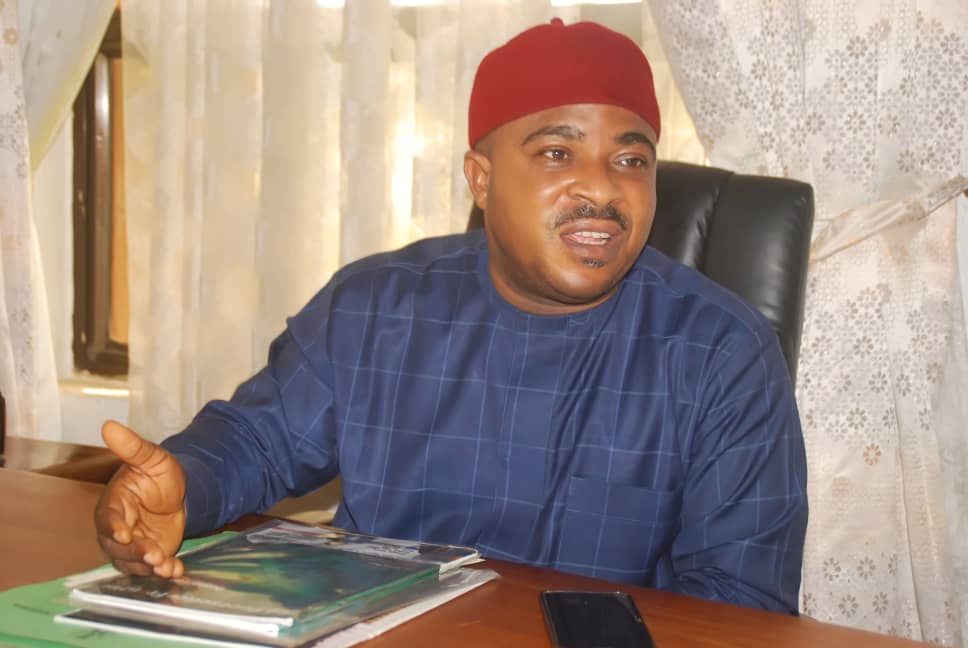
    I say this with tears of joy, that if we must get this country right, we should look for people like Governor David Nweze Umahi—-Hon. Barr. Uchenna Orji

    Hon. Barr. Orji Uchenna Orji is the Honorable Commissioner for Information in Ebonyi State. He had previously served the state in different capacities. In this chat with The Pacesetter Frontier Magazine Team at his office in Abakaliki, Ebonyi state, he bares his mind on issues relating to the state, with emphasis on what is believed to be the developmental strides of the Governor, Chief Engr. Dave Nweze Umahi (Akubaraoha).

    PFM: Tell us about yourself

    Commissioner: My name is Orji Uchenna Orji. I’m from Ivo Local Government Area of Ebonyi State. I’m a graduate of Law. From 2007-2011, I was the Member representing my constituency in the Ebonyi State House of Assembly. I was, at the time, the Chief Whip of the House as well as the Chairman, House Committee on Justice and Judiciary. I also served as the Chairman, House Committee on Finance and Appropriation. As God would have it, I have served in some other capacities. Between 2014-2015, I served as a Board Member, West African Examination Council, Member, Administrative and Finance Committee, West African Examination Council and Council Member, West African Examination Council. Between 2015-2017, I served as the Honorable Commissioner for Agriculture & Natural Resources, Ebonyi State. From 2017-2019, I also served as the Honorable Commissioner for Empowerment & Job Creation in Ebonyi State. The Ministry is now known as the Ministry of Human Capital Development & Monitoring. Presently I am the Honorable Commissioner for Information & State Orientation.

    PFM: Let’s look at Ebonyi State as one of the youngest states in the country. Ebonyi seems to be the new kid in the block, with the news of rapid developments sweeping across the state. Give us an insight into what is actually happening in the State.

    Commissioner: Prior to 2015 when Governor Umahi declared his intention to run for Governor, he was deserted by people. He was called all sorts of names for the reason that he had that ambition, but God came in his fulness and said touch not my anointed and do my prophet no harm. What we saw was a neglected person becoming popular and he emerged the Governor of Ebonyi state. He became governor at a time when we had the worst of economic recession so he began doing things differently. When you take a look at his first inaugural speech and match it with what is happening in the state, you will know that he’s a special creature God gave to us. He’s from Uburu, the community with the highest salt deposit in Nigeria, from where Ebonyi garnered the Salt of the Nation motto, which at a time was corrupted to Dust of the Nation. Today, under his watch, we having Ebonyi as truly the Salt of the Nation. For me, his coming is very symbolic. Do you know that today, with the exception of Lagos and Abuja, Ebonyi has the highest number of flyovers in the country? The type you have in Enugu are not flyovers but pedestrian bridges. Some of these flyovers built by Umahi are 23-25 span, dualized flyovers, that all kinds of trucks and heavy-duty vehicles can ply. The one in Anambra can’t be plied by these heavy vehicles. He’s building thirteen dualized flyovers, of an average of 23 span at all the major junctions of the state. He built a beauty spot in the state- the biggest light tunnel in the whole of Africa and he named it after President Muhammadu Buhari. Cited close to the light tunnel is the biggest ecumenical centre in Africa, built by him. Again, cited close to this ecumenical centre is a mall built by him.

    When Senator Ben Bruce came, he confirmed it to be the biggest in Africa. Still close to this light tunnel, there are three flyovers, apart from each other at a driving time of 3 minutes. One of the flyovers connects the biggest international market in the South East, bigger than what we have in Onitsha, being built by this administration. It was started by the previous administration but he considered what was there to be inferior so he began afresh. Apart from Abuja & Lagos, I can tell you that in the whole federation, Ebonyi has the highest number of good network of roads. He builds these roads using what is called concrete pavements, with a guaranty of 50 years. With this concept, he has built 25km roads in all the LGs in the state, with a plan that all roads in both the rural and urban areas will be pliable. It doesn’t matter to him that a particular road is designated a federal road, so these roads built have improved the economic advantages of the state. As much as Human capital development is important, he believes that the environment should be such that man can thrive in, just like God first created the garden before creating man to dwell in it.

    PFM: But beyond all these infrastructural developments, Ebonyians complain that they have been starved while roads are built. Don’t you think that Human capital development can work simultaneously with infrastructural developments?

    Commissioner: Recall I said I was Commissioner for Human Capital Development for a time so I can tell you authoritatively what this administration has done in that regards. The governor identifies human capital development as a process of mentoring the people mentally, financially, morally, etc. so that you have the capacity and audacity of purpose to be self reliant. He is the first governor in the present crop of governors to create a full Ministry to oversee human capital development. The governor began with a training for women and youths, at the end of which they were asked to come up with a business plan and 3000 persons with interesting plans were given a grant of N250,000 each totaling seven hundred & fifty million naira. He went to Lagos and noticed that most of the hawkers were Ebonyians so he profiled 520 hawkers and trained them. At the end of the training, he gave them a grant of N250,000 each, totaling one hundred & thirty million naira, in a program he called Street to Skill Empowerment Program. Today, the hawkers of Ebonyi origin in Lagos have drastically reduced. Before IPOB had issues with the leadership of South East, the government of Anambra accused Ebonyians of being the bulk of IPOB members and championing their activities. To abate that, the governor procured 450 tricycles and gave out to the youths that were previously barrow pushers. At a time 4,300 widows in Ebonyi were trained and given one hundred thousand naira each; this is in addition to the N5000 he has been paying each of these widows every month for the past 5years. For civil servants, the governor mapped out four billion naira for what he called Second Agro Scheme for civil servants to assess between N300,000-N1,500,000 for use in Agric related activities. For the clergy, irrespective of religion, he mapped out N508,000,000 to be used to for Agric related business. The governor also introduced what was called Wives of Security Officials Empowerment Program, not minding that most of the security officials are from the North and some from the West, and gave 403 wives of security officials a grant of N200,000 each to go into Agric related programs. The list is quite long; even the market women, he gave them about N150,000,000. All of these monies were given as grants, apart from that of the civil servants. We keyed into the CBN’s Anchor Borrowers Program and every other FG intervention program because we enjoy a good relationship with the FG. Our governor respects the President as his Boss. Ebonyi doesn’t engage foreigners in most of the construction jobs done-we use our people- and of course, the governor’s definition of an Ebonyian is anyone who lives or does business in Ebonyi,

    irrespective of your state of origin. As part of the human capital development, the governor also introduced Mentorship programs. Ebonyi has the highest number of State Exco members, about 106 excos, in comparison to other SE states. International Best Practices may tell you this isn’t the best but there’s a reason the governor encouraged that. The idea is for these young men and women to understudy good governance as it is in the state today, through mentorship and participation. There are about 1000 Technical Assistants seriously working for the state by supervising different sectors and learning what service is really about; they are paid over N100,000 monthly as salary. As part of the human capital development, in Education, before this government came onboard, we were classified as being educationally less privileged. Since 2017 till date, an LG in Ebonyi has always had the highest number of matriculants in the 774 LGAs of the country according to a ranking by NUC. In maternal mortality ratio, World Bank has ranked Ebonyi state above average. Those who are saying the governor has abandoned human capital development just want to whip up sentiments. Human capital development can’t be seen but the impact is always felt so they think that because it is abstract, they can convince people against the governor. The impact of this sector has made Ebonyi the state with the lowest insecurity profile in the South East. The development in Ebonyi has boosted the confidence of the average Ebonyian whom hitherto felt inferior because he or she hails from Ebonyi and I think that this is the best achievement in the human capital sector. Governor Umahi creates wealth, he has a midas touch. As a deputy governor, the then governor always entrusted him with hard nuts to crack. As a PDP state chairman, he was the best party chairman in Nigeria and the chairman of the forum of party chairmen in Nigeria and he built the biggest party office in the whole of Africa for PDP. In addition to being the Chairman of the SE Governors Forum, he’s also the Co-Chairman of the Southern Governors Forum.

    PFM: Let’s look at Agriculture. Does Ebonyi state government have plans to engage in all year farming through providing facilities for irrigation?

    Commissioner: When we came onboard, we looked at areas of comparative advantage for Ebonyi and we selected Rice and Cassava as the primary commodities. We wanted to engage in the dry & wet season rice production but we had challenges arising from the issues of irrigation, river basins and all of that. We are working with the Federal Ministry of Agriculture and Federal Ministry of Water Resources to see how to develop our irrigation facilities. We now had to invest heavily in processing facilities. To boost our rice production, we procured 13 bulldozers and 40 tractors to mechanize the process. We now have the highest numbers of rice processing mills in Africa. The state-owned rice mill produces 24 metric tonnes of rice per hour and this is responsible for the over 500,000 metric tonnes of rice we produce, ranking among the 3 highest rice producers in the country. We also have parboiling plants that turn out 32 metric tonnes of rice per hour.

    PFM: Considering the education sector, you previously said that anyone who leaves in Ebonyi is classifies as a citizen but we have reports that the state university has a fee for indigenes, different from that of non-indigenes. How does one reconcile this with your earlier stance?

    Commissioner: I want you to get the facts straight. You must be comprehensive in your assessment. In primary and post primary schools, we have full control but in tertiary institutions we don’t have full control. What we give is intervention so we reduce school fees for indigenes by intervention- they pay a part and we pay the other part. So, when we say indigenes, we mean those resident in Ebonyi and you know that residency is established over a period of time. If you gain admission into Ebonyi State University, and you just come to Ebonyi to school, you are not a resident. Staying for a certain umber of years qualifies you as a resident of Ebonyi. See in Ebonyi, our governor does not discriminate. A native of Anambra is the Commissioner for Youths and Sports in Ebonyi state. We have much persons from other states holding one appointment or the other.

    PFM: There has been this much touted rumor of Governor Umahi wanting to run for President. Now that he has decamped to the All Progressives Congress, what do we expect, especially since he gave his reasons for decamping as being in the interest of the Igbo people?

    Commissioner: When we get to that bridge, we shall cross it but let me tell you one thing. I say this with tears of joy, that if we must get this country right, we should look for people like Governor David Nweze Umahi. This country is very wealthy and if you want the fortunes of this country to be turned around, look for his likes. The President General of Ohaneze Ndi Igbo, Chief Nnia Nwodo said that the kind of character Governor Umahi has is such that what any other state will do with five naira, he will do with one naira. Is it not time we let such persons lead this country? If the governor touches the kind of resources in Nigeria, if he has such resources at his disposal, the situation will change that even U.S will marvel. So, when we get to the bridge, we will cross it but the truth must be said that this man is nationalistic. He is not doing these things in the state because of what he may want at the national level. He’s educationally sound, he has strong negotiation skills and he is so passionate. I remember traveling with him to China and while we were in the train, he was looking at the level of developments there. The next thing I saw was that my governor bowed his head and I heard him speak in tongues. In between the tongues, he said God help me transform Ebonyi state to be like this. In Ebonyi today, we have the highest number of water fountains in any state in the country. The kind of street lights we have in this state works for 12 hours non-stop, yet they are powered with diesel, even Abuja & Lagos doesn’t have them. He supervises projects round the clock and makes such that all projects are delivered professionally and up to standard. People who come to work in Ebonyi don’t come to amass wealth, they come to work and make modest gains. He was the first to procure electronic tricycles under the zero-oil economy. He had delivered a lecture on this at the University of Nigeria, Nsukka. In Ebonyi, we already have a college where we learn how to fabricate tricycles and we have empowered about 50 women with electronic tricycles.

    PFM: Honorable Commissioner, we were informed that since this year, the governor has paid salaries just once. Is the state government using the salaries of civil servants to do all these?

    Commissioner: I’m going to answer your question by calling a civil servant in this Ministry to provide the answer [presses his office bell. A civil servant steps in shortly to answer the bell with the following questions from the Commissioner following suit while the Team watches and listens;
    Commissioner: Accountant, have you received your salary for the month?
    Accountant: Yes
    Commissioner: Ah Ah! How come you didn’t inform me?
    Accountant: Everybody has received theirs too.
    Commissioner: Okay, you can go.
    At the end of this, the conversation continues with the Team.]
    I want to let you know that we used to pay our salaries by the 15th of every month but civil servants complained that receiving the salaries at the middle of the month left them empty by the month’s end. When it got to the governor’s attention, the date was changed to 24th of every month. He also pays the 13th month bonus. The governor is building an airport that is being fashioned after the Abuja and Lagos airports and he plans to complete this before the expiration of his tenure. He is achieving all these quietly without much noise. We are building an executive council that will be the highest in the South East. The governor is building a medical college in Uburu and all these things are done with the little resources the state has, but which are properly allocated.

    PFM: We appreciate the time.

    Commissioner: Thank you for finding time to report the activities of our state.

  • In all modesty, when I left, the Obiano government literary went off the good governance trajectory – Oseloka Obaze

    In all modesty, when I left, the Obiano government literary went off the good governance trajectory – Oseloka Obaze

    Mr. Oseloka H. Obaze is a diplomat, writer, public policy and governance expert and politician. He is the MD/CEO of Selonnes Consult, a policy, governance and management consulting firm. He was the People’s Democratic Party (PDP) candidate in the Anambra State governorship election in 2017. A former United Nations official, he served as Secretary to the Anambra State Government under Governor Peter Obi and Governor Willie Obiano from 2012 to 2015. In this interview, Obaze responds to questions on politics, his personality and pressing national and continental challenges.


    PFM: Good morning sir, please tell us about Selonnes Consult Ltd.


    OHO: Selonnes Consult Ltd. is a Policy, Governance and Management Consulting Firm, which I founded after I separated from the services of Anambra State Government in 2015. Overall, at SCL, we aim to contribute towards creating a better Nigeria through advocacy and rendering well-articulated strategic public policies that meet international best standards and practice.


    PFM: What did it feel like being a Diplomat?

    OHO: Exhilarating! At a very young impressionable age of 7 and 8, I knew the words “Diplomat” and “Ambassador” and knew it was something I would aspire to, thanks to a late uncle who was a career Diplomat. My mother wanted me to be an Engineer, but that was not my calling. Diplomats are by nature positive travelers; or in the jargon of the craft peripatetic mandarins. Being a Diplomat offered me the rare opportunity to travel around the world, but more importantly, it offered me great exposure and an unfettered worldview.


    PFM: As a former Secretary to Anambra State government, what were your major contributions to the administration you served under? Are there facts to attest to these?


    OHO: As the SSG I had a synoptic job description, which was “fostering policy coherence and coordination and problem solving.”  My job and position required of me as a public servant and technocrat to be a professional to the core; and a PRO – persistent, resilient and optimistic. I will not blow my own horn of my accomplishments, but the policy options, undertakings and accomplishments during my tenure are amply documented in my 2015 book, Here To Serve. Of my greatest accomplishments: I helped Governor Peter Obi to finish strong and Governor Willie Obiano to start strong and hit the ground running. In all modesty, when I left, the Obiano government literarily went off the good governance trajectory.

    PFM: -How do you mean “the Obiano government literally went off the good governance trajectory”? At least people hear Ndi Anambra chant “Willie is Working”.

    OHO: I do not wish to court controversy. Obiano arrived to vie for Governor unprepared, without a blueprint or manifesto. It was my campaign blueprint and manifesto that Gov. Peter Obi took and gave to him and it was adapted and reformulated into what eventually became the Obiano Blueprint. Naturally, there were additional inputs, but the core premise was based on my notion of governance. The young man assigned to rewrite that template was a member of my campaign and strategic team. At the outset, I had ample leeway to advise on policy formulation and implementation, with a hard focus on cohesiveness, coordination and due process. When I left, theses three variables derailed, governance became freewheeling and transactional. The difference was that I could look the governor in the face and honestly tell him what was working and what was not. He did not always like it, but he knew I was honest and selfless about governance. Good governance is not about political sloganeering, which works well during campaigns, but is a suspect attribute of justifying governance performance that ought to be self-evident.


    PFM: You ran for Governor of Anambra State twice in 2013 and 2017. Why did you decide to join politics after your years as a Diplomat?


    OHO: If you desire to serve you must do so from within and from a position where you can add value. I was a child of two public servants so I have always believed in public service. I had done so, supporting my principals at the federal, international and state levels. Running for office was aimed at serving by being at the helm to articulate and drive public policies rather than merely implementing policies articulated by others. Above all, I wanted to add value by bringing on board, international best practices related to good governance.


    PFM: One would say you had a better outing in 2017 compared to 2013, seeing the technical issues that knocked you out of the race then.


    OHO: In 2013, I was knocked out of the race deliberately, and on technical grounds. I did not have a voters’ card. Only INEC could issue me one, and they shifted the issuance date. I certainly could not have presented a fake card or lie that I had one. I had a window of opportunity to rectify the situation, but those in APGA who were against my emergence pulled the plug before the fact. In 2017, I followed due process, ran, won the PDP nomination, but some powers that be and indeed some PDP stakeholders, mostly from the South for selfish, personal or sectional interests opted to align with the ruling APGA party. They could not countenance a supposed outsider wining the PDP primaries, even though it was free and fair and nationally televised. I lost an election PDP was all set to win; losing had nothing to do with the power of incumbency, but more with subterfuge, in INEC, within PDP and by the ruling party. The Federal might was squarely deployed against us at the last minute to garner a win for APGA and assign APC the second place. I might have lost the election, but Anambra as history has shown was the biggest loser.


    PFM: If and since you knew the things which led to your loss were “subterfuges” from those you mentioned, why didn’t you choose to head to court?

    OHO: My take is that it’s the people and not the Courts that elect leaders. Unfortunately, by default we have subscribed to judicial supremacy in electoral matters thus making the judiciary at all levels the Electoral College. Going to court was expensive, distractive and always with an indeterminate outcome, not based on facts or reality. So why waste my time and resources, and for that matter Anambra State resources? It did not make any sense. My position has since been validated by court rulings on the 2019 presidential elections, and recent court rulings on the Imo and Kogi State Governorship elections.


    PFM: Would you run for Governor of Anambra State again in 2021?


    OHO: In life, you never ever say never! Doing so may prove precipitate and unrealistic. My options remain on the table and indeed remain open. I’m very sympathetic to the clamour of zoning aimed at allowing the South senatorial zone to produce the next governor. But the South must also admit that in the past, they have never offered other zones the sanctity and unfettered space they now seek. It seems all too convenient. More importantly, what Anambra needs now is a capable leader, not a person elected on partisan, sectional, religious or gender sentiments. If the truth be told, Anambra is in very bad shape than most people know, and it will only worsen unless we get a good administrator, who is fiscally disciplined and understand the inner workings of bureaucratic governance. I feel sorry for anyone who might succeed Obiano, myself included, which is not to say I’m running.


    PFM: The practice of zoning public offices is fast becoming a political tradition at all tiers of government and for even appointed offices. Recently, Traditional rulers in Anambra Central Zone stood against zoning in a public statement. Has this helped our system or is zoning an indirect form of Nepotism or Cronyism?


    OHO: Zoning has its utility in prescribed circumstances. It ought not become a preferential policy and in that sense defeatist. Let me repeat what I have said consistently in the context of zoning in Anambra. The South Senatorial zone is not bereft of competent politicians who can be governors. What PDP needs is to put its best foot forward in order to wrestle power away from the ruling party. As such, to win, PDP must present its best candidate and a united front, notwithstanding the zone from which the candidate emerges. The risk we face, is the possible polarization and fracturing of the party as is happening now, over presumptive zoning arrangements. If I recall correctly, since 1999 PDP aspirants from the three Senatorial zones have always competed for the ticket. It happened in 2013 and 2017 so I don’t think it will be any different in 2021. Yet the inherent danger will manifest, if the South decides to scuttle the chances of a person who emerges as the PDP candidate, but is not from the Southern senatorial zone. Were that to happen, the PDP will remain in the doghouse and in political opposition for another four years and perhaps, longer than that. The corollary is that APC and YPP will continue to wax stronger as opposition elements in the State.  Personally, what I seek is good governance in Anambra. There are capable people in PDP who can govern Anambra well, of which I can humbly count myself as one.


    PFM: Recently, oil mogul Arthur Eze took some Traditional Rulers to pay President Buhari a visit. The outcome of the visit is in public domain. Do you think this has an immediate or remote connection to the 2021 gubernatorial race? Do you also support the measures adopted by Governor Willie Obiano?

    OHO: As a matter of personal policy and principles, I decided after the 2017 governorship election not to comment on the activities of the Anambra State government, for good or bad, despite being in the opposition. I will stand on that premise. However, insofar as it relates to 2021 governorship electioneering, I must say that ‘all politics is local’. Routinely, the rich, mighty and powerful in Anambra State play a very divisive and dangerous type of “helicopter politics.” They pull plugs and punches in Abuja, often to their own advantage but inimical to Anambra State’s collective interests. I don’t see Dangote, Adenuga, Adeleke, Otedola, Elumelu and others doing that in their respective states. If they wished to run the state as their individual fiefdoms, the least they can do is subject themselves to electoral suffrage. Mike Bloomberg, a U.S. billionaire ran and served as Mayor of New York City and eventually ran for the Presidency. We need to imbibe international best practices.


    PFM: The debt profile of most African countries is on the rise. Where does this leave Africa as a continent?


    OHO: Africa must continue to look inwards. Intra-African trade capacity is huge and sufficiently broad to serve Africa. There is an inevitable nexus between Africa’s external trade deficit and its growing indebtedness to Western nations and more troubling, to China. With the African Trade Agreement in place, African nations need to collaborate more closely to avoid being entrapped in a collective debt peonage. As things stand, Africa’s debt overhang is already huge and troubling. The optics are not salutary, so we need to change the narrative quickly.


    PFM: With your experience, what do you think Africa needs to do better to get things right?

    OHO: Africa has shining exemplars in some emerging leaders and nations. Rwandan and Ethiopian leaders and countries are validators. Where you elect good leaders, good governance and sustainability will follow. External interests will not develop Africa for us. Our aspirations, policies and governance methodologies must be unapologetically Afrocentric. Quite unfortunately, we cannot say that of our country Nigeria any longer. Once Africa’s bellwether, Nigeria has lost that credential, and sadly so.


    PFM: Nigeria’s economy is obviously in comatose. It could be said that this has an immediate & remote cause. What indices are responsible for this and how can our economy be rejigged?

    OHO: Leadership indiscipline at all levels is our bane. But we must also begin to look closely at the negative impact fostered by bad followers. It is the bad followers that elect bad leaders; and support and sustain them in office. Fiscal, and economic discipline will be imperative. Federal, State and Local government cannot spend more than they generate. We can start by making zero-based budget mandatory. Then we can focus on public procurement policies and the implementation methodologies. The emolument of public officials, especially the legislative branch is hugely embarrassing. I would suggest that we have a Common Regimentation Emolument Structure Table (CREST) where a Senator is ranked with a General in the Army, a Supreme Court Judge, a Minister, the Inspector General of Police and Heads of Statutory Agencies. They should all earn the same salary and the same prescribed perk and perquisites. We are wasting a lot of resources on recurrent expenditure and far less on infrastructure and capita development. We must scrap the two-tier foreign exchange regime and allow the market forces to drive the economy. Economic and political reforms are imperative and one word for that is restructuring. Power and resource control need to devolve more to the regions and states. We Already have NDDC and NEDC, we must complete the mosaic by setting up SWDC and SEDC, thus replicating the functional regional arrangements of the First Republic which served us well in terms of development. For now, the Centre Government is too powerful. In a democracy, that is a contradiction of subsisting tenets.


    PFM: Considering the position of the South East in Nigerian politics, do you see the possibility of an Igbo man becoming the President of the Federal Republic of Nigeria in 2023? Should the Igbos rather clamour for Restructuring?

    OHO: Unquestionably yes. An Igbo person can become Nigeria’s President. We need a President of Igbo extraction not an Igbo President as some aver. The latter is too frightening for some Nigerians. Yet the Igbo nation must rally to a consensus and speak with one voice. There are sufficiently compelling reasons to believe that the Presidency will devolve to the south in 2023. But there will be high contestations for the slot between the three zones in the South. There will also be “spoilers” who will opt for the Vice-presidency slot, thus confusing matters. The position of the South-East needs to be strategically and tactically managed. We cannot take anything or any support for granted. That said, the South as a collective, has to be strategic in handling this matter. Once you encounter an intra-south jostling and bickering, the default option will kick in, which is to maintain the status quo. That will be utterly unacceptable. Contextually, Nigeria must restructure or risk disintegrating. As I see it restructuring will be incremental rather than a one-off formed event. We already see that manifesting in the security sector reform and governance.


    PFM: In the question before the last one, you talked about Restructuring and in the last question, you also talked about Restructuring as a response. It appears Restructuring mean different things to different people. In the two contexts above, what kind did you mean?

    OHO: Simply, we need to fine tune our governance and power and resource sharing modalities. Call it whatever name you want. Nigeria as presently constituted and governed is largely dysfunctional. That needs to change. Restructuring means different things to different ethnicities and vested interests. It scares the hell out of some Nigerians. I don’t believe Restructuring means the Balkanization of Nigeria, even as that remains a remote possibility. We can either come together and agree on change modalities, or risk that happening by default, which may lead to catastrophic implosion of the country. All said, we are long overdue for a change in our governance and power sharing modalities.


    PFM: Thank you so much for these insights. In closing, what do you do for pastime?


    OHO: Well, the Covid-19 pandemic has made us all very insular. There is limited social interaction. So, I spend my quiet time reading. Routinely, I read one book every month; sometimes more than one. Part of my consultancy involves traveling and writing. The travels are very curtailed since the interaction and engagements are now mostly virtual. But I have more time to write. This year I’ve published two books: Waning Strength of Government, which is on governance, and Africa’s Vision – A Second Anthology. Both were released in July and are available on Amazon.com and on several Nigerian online platforms.