Tag: nigeria

  • President Tinubu and the Antiquity of Hunger

    President Tinubu and the Antiquity of Hunger

    -By Abdul Mahmud

    “There was hunger before I was born,” President Bola Tinubu told the Catholic Bishops. He is right, only to the extent that hunger did not begin with him. Neither did it begin with Muhammadu Buhari, Goodluck Jonathan, Umaru Musa Yar’Adua, Olusegun Obasanjo, Abdulsalami Abubakar, Sani Abacha, Ibrahim Babangida, nor any single occupant of Aso Rock. Hunger has stalked Nigeria through military rule and civilian governments alike, surviving constitutions, economic reforms, structural adjustment programmes, oil booms and democratic transitions. The more important question, however, is not whether hunger existed before he was born, but why it still exists after more than six decades of independence and why every generation of political leaders has found explanations more readily than solutions.

    This is the question he must answer.

    History may explain the origins of a problem, but it cannot excuse its persistence. Every President inherits unfinished business from its predecessor; none inherits the right to treat inherited suffering as an adequate defence of present performance. The legitimacy of political power lies in its capacity to interrupt history’s cruelties rather than recount them. When citizens complain of hunger, they are not asking for a lecture on its antiquity; they are asking what the President is doing to ensure that their children do not inherit the same empty stomachs that haunted their parents and grandparents. In this respect, the President’s remark carries an unintended irony: an admission that the Nigerian state has repeatedly failed to discharge one of its most elementary obligations by creating the economic conditions that force citizens to go to bed hungry daily.


    This, however, is only one way of reading the President’s words. There is another, and perhaps more troubling, interpretation. The statement suggests a President whose understanding of the country is increasingly mediated by the protective layers that invariably surround political power. It is difficult to listen to a remark that treats hunger as a historical inheritance without wondering whether those who stand between the President and the people have succeeded in insulating him from the immediacy of the suffering outside the gates of government. Hunger may have existed before he was born, but the hunger confronting Nigerians today is not an historical abstraction; it is today’s reality, demanding today’s response. Power has always had a peculiar tendency to create its own reality. Every presidential palace in history has always developed mechanisms for protecting presidents from uncomfortable truths. Courtiers once performed that function. Today, it is discharged by image-makers and gatekeepers who often mistake loyalty for the suppression of truths. Their instincts, which rarely convey the voices of the people into the seat of power, convey the preferences of the president’s men back to the people. Between instincts and preferences, truth is frequently the casualty. The separation begins when official briefings are treated as more reliable than the  the lived experiences of ordinary citizens.

    There is, of course, no honest argument that Nigeria’s present economic difficulties were created solely by the present administration. The structural weaknesses of the economy accumulated over decades. Dependence on oil revenues, weak industrial capacity, chronic fiscal indiscipline, insecurity in agricultural communities, persistent currency instability and the failure to build resilient social protection systems long predate President Tinubu. Yet that acknowledgement strengthens rather than weakens the obligation resting upon the present government. Democratic elections do not transfer only power; they transfer responsibility. Every President inherits yesterday’s failures together with the duty to prevent them from becoming tomorrow’s inheritance. The greatest leaders have always understood that the first duty of political power is not merely to govern but to remain teachable. Governments that lose the capacity to hear unpleasant truths soon lose the capacity to correct their mistakes. Democracies survive because citizens possess the freedom to tell those who govern that their experience differs from official optimism. Whenever that conversation becomes obstructed by gatekeepers who regard criticism as disloyalty or by advisers who fear delivering unwelcome news, the President begins governing an imaginary country while citizens continue living in the real one.

    President Tinubu’s statement should therefore be heard as more than an observation about history. It should serve as an invitation to examine the distance between political power and public reality. Hunger existed before he was born. It also existed before he became President. Those are historical facts. The question that history will ask, however, is not whether he correctly identified the antiquity of hunger. It is whether, having acknowledged its long history, he succeeded in shortening it. That is the measure by which every democratic leader is remembered. History explains where suffering begins. Leadership is judged by whether it allows suffering to continue. No President earns distinction by reminding the hungry that hunger is old. Distinction belongs to the leader who ensures that future generations can no longer truthfully say, “There was hunger before I was born.”

  • US-Iran Hostility: The Shockwaves Hitting Nigeria’s Economy In 2026

    US-Iran Hostility: The Shockwaves Hitting Nigeria’s Economy In 2026

    By SNC Nwagu, FIICA, MNIIA

    CORE ARGUMENT

    US-Iran hostility in 2026 is not a distant Middle East problem. It transmits directly to Nigeria through four channels: oil, money, food, and security. Until Nigeria builds refining, food, and currency capacity, we will keep paying for wars we did not start.

    INTRODUCTION

    A war 6,000 miles away can empty a market in Port Harcourt. That is the reality of US-Iran hostility in mid-2026.

    After the April 2025 missile exchanges and the January 2026 tanker seizures in the Strait of Hormuz, the Gulf is on edge again. Sanctions are tighter. Insurance costs are higher. Oil prices are volatile.

    Nigeria does not border Iran. We are not in NATO. Yet, when Tehran and Washington fight, the Nigerian worker pays for it—at the filling station, in the market, and on the electricity bill.

    THE OIL PARADOX: HIGH PRICES, LOW GAINS

    Nigeria is Africa’s largest oil producer. In theory, any crisis in the Gulf should be good news for us.

    Brent crude averaged $104 per barrel in the first half of 2026 on Hormuz risk premiums, up from $81 in the first half of 2025 (Brent ICE, June 2026). Our own production also rose to 1.62 million barrels per day in May 2026 (NUPRC).

    But the trap remains. Dangote Refinery is operating at 75 per cent capacity, and three modular refineries are still ramping up. Consequently, Nigeria still imported 26 million litres of petrol daily in the second quarter of 2026 (NNPCL).

    The result is stark: Nigeria earned $29.8 billion from crude oil exports in the first half of 2026 (CBN) but spent $19.7 billion importing refined petroleum products during the same period. Much of the potential gain was eroded. With fuel subsidy removed, pump prices averaged ₦1,150 per litre in June 2026, while transport and food inflation reached 34.1 per cent (NBS, June 2026).

    A nation that cannot refine its own oil profits from no one’s war.

    THE DOLLAR AND DEBT TRAP

    Iran sanctions and Gulf tensions are pushing investors toward US Treasuries. The US Dollar Index has risen 9 per cent year-to-date in 2026.

    For Nigeria, that means two distinct pains.

    First, our $121.7 billion external debt (DMO, Q1 2026) is 43 per cent dollar-denominated. Debt servicing consumed 38 per cent of federal revenue in the first half of 2026 (CBN). Every 10 per cent rise in the dollar adds ₦2.4 trillion to our debt-servicing bill.

    Second, portfolio outflows. Foreign investors pulled $2.1 billion out of Nigerian equities and bonds in Q1–Q2 2026, moving to safer US assets (NBS/CSCS). The naira traded at ₦1,820/$1 on the I&E window as of July 8, 2026.

    US-Iran hostility does not fire a bullet at us. It fires a monetary one.

    FOOD, FERTILIZER, AND IMPORTED INFLATION

    The Gulf handles 30 per cent of global oil tanker traffic. War-risk insurance for Hormuz transit rose 420 per cent between December 2025 and May 2026 (Lloyd’s List).

    Nigeria imports $7.2 billion worth of wheat and $2.8 billion worth of fertiliser annually (NBS, 2025 full-year figures), and 75 per cent of these imports pass through routes affected by Gulf tensions.

    When freight costs from the Black Sea and the Middle East rise, the impact is felt in the prices of bread in Kano and garri in Enugu. Food inflation reached 40.2 per cent in June 2026 (NBS). At the same time, Nigeria is spending more to combat insecurity, limiting domestic food production and reducing the country’s ability to cushion external shocks. We end up importing inflation along with the wheat.

    THE SECURITY AND DIASPORA COST

    More than 215,000 Nigerians were living in the Gulf as of 2026, while remittances from the Middle East totalled $4.3 billion in 2025 (NiDCOM).

    Any escalation in the conflict risks airspace closures and job losses. In February 2026, Nigeria spent $1.8 million evacuating 600 citizens from parts of Iraq and Lebanon following US strikes.

    More concerning, both the United States and Iran are expanding their influence operations in the Sahel. Security funding to proxy groups in the region increased by 18 per cent in 2025 (ACLED). A more intense US-Iran conflict could translate into more weapons, greater instability, and heightened security risks along Nigeria’s borders.

    A FOUR-POINT DOCTRINE FOR NIGERIA IN 2026

    We cannot stop US-Iran hostility. But we can stop being collateral damage.

    Refine or bleed. Dangote Refinery and the three modular refineries must end petrol imports by the fourth quarter of 2026. Energy sovereignty is national security.

    De-dollarise trade. Push for 45 per cent of AfCFTA trade to be invoiced in naira through the Pan-African Payment and Settlement System (PAPSS) by 2030. China and India now trade with Iran in yuan. ECOWAS must learn to trade with itself using the ECO.

    Grow what we eat. Food is a weapon. Cut wheat and rice imports by 50 per cent within five years. Increase funding for irrigation and mechanisation in the 2026 budget. A hungry nation cannot afford to be neutral.

    Practise neutral diplomacy. Nigeria must not be drawn into taking sides. The country should use its 2026 campaign for African Union and United Nations Security Council reform to advocate de-escalation in the Gulf. Trade with all, fight with none.

    CONCLUSION

    In 1967, the Six-Day War caused an oil shock that disrupted Nigeria’s own war logistics. In 2026, a missile in the Persian Gulf can trigger inflation in Mile 12 Market.

    US-Iran hostility is a reminder that sovereignty in the 21st century is not merely about flags. It is about capacity.

    Can we refine our own oil?

    Can we feed ourselves?

    Can we trade without depending on dollars?

    Can we secure our region?

    Until we can answer “yes,” we will continue paying for wars we did not start.

    The world is not asking whether we are ready. It is asking whether we are sovereign.

  • STATE POLICE: Nigeria Cannot Police a 21st-Century Crisis with a 20th-Century Model

    STATE POLICE: Nigeria Cannot Police a 21st-Century Crisis with a 20th-Century Model

    By SNC Nwagu, Esq

    The centralised Nigeria Police Force was never designed to handle the scale, spread, and complexity of insecurity that defines Nigeria today. A constitutionally grounded, multi-level state policing framework is not a radical idea — it is an overdue necessity.

    Nigeria’s insecurity in 2026 is no longer episodic. It is structural. From Boko Haram and ISWAP’s insurgency in the North-East, to banditry and mass kidnapping in the North-West, to separatist agitation and cultism in the South-East, to farmer-herder bloodshed across the Middle Belt — the country faces a multi-front security emergency that a single, centralised command was never built to manage.

    And yet, that is precisely what the 1999 Constitution demands. Section 214 vests all policing power in the Nigeria Police Force (NPF) — one command, one chain, for 36 states, the Federal Capital Territory, and a population of over 200 million people. The gap between that design and operational reality is not a governance anomaly. It is a catastrophe hiding in plain sight.

    The NPF’s police-to-population ratio remains below 1:500, against the United Nations benchmark of 1:450. Response times in rural communities are routinely measured not in minutes but in hours — if a response comes at all. Trust has collapsed: many Nigerians now prefer vigilante groups, hunters’ associations, or private security arrangements over official state response, which they regard as slow, corrupt, and inaccessible.

    This paper makes a straightforward argument: Nigeria needs a constitutionally grounded, multi-level state policing framework. It draws on comparative lessons from India, Germany, and the United States, adapted for Nigeria’s fiscal constraints, ethnic complexity, and political realities. It proposes design principles, safeguards, and an implementation pathway — not to fragment the country into policing fiefdoms, but to build a federal system in which national capacity and local knowledge reinforce each other.

    THE CASE FOR PROXIMITY POLICING

    Policing theory is largely settled on this point: legitimacy increases when citizens perceive police as accessible, representative, and accountable. Proximity policing improves intelligence collection and reduces response time. When the officer on the ground speaks the local language, knows the terrain, and understands the conflict actors in a community, early warning becomes possible. When that officer is stationed 500 kilometres away in Abuja, it does not.

    What Nigeria currently experiences is what this paper terms “security latency” — the dangerous gap between incident and state response. It is structural, not incidental. And it cannot be resolved by hiring more officers into a centralised system that is already stretched beyond capacity.

    State and community-level policing offers three concrete advantages. First, proximity: officers embedded in their communities possess local intelligence that no centralised database can replicate. Second, specialisation: states can tailor their security architecture to their specific threat profile — anti-kidnap units in the North-West, anti-cultism and border policing in the South-East, agro-security corps in the Middle Belt. Third, accountability: elected state governments are more directly answerable to their residents for visible security outcomes than a distant federal command ever could be.

    WHAT OTHER FEDERATIONS HAVE LEARNED

    India: Insulating Police from Political Capture

    India operates a dual policing system. Each of its 28 states maintains a State Police Force, while Central Armed Police Forces handle specialised national security functions. Crucially, several states — including Kerala and Karnataka — have established State Police Commissions that handle recruitment, discipline, and promotion, insulating the police from direct political interference by the executive.

    The lesson for Nigeria is clear: gubernatorial capture of state police is a real and serious risk, but it is a design problem, not an argument against state policing. Independent commissions provide the structural solution.

    Germany: Decentralisation with National Standards

    Germany’s 16 Länder each maintain their own police forces under their state interior ministries. The Federal Criminal Police Office (BKA) coordinates cross-border and national security matters, and interoperability across Länder forces is enforced by federal law. German policing is decentralised in command but standardised in capability.

    The lesson for Nigeria: a National Policing Standards Act can ensure common training curricula, forensic protocols, criminal databases, and communications systems — even as operational command devolves to states.

    United States: Dispersed Power with Layered Oversight

    The United States has over 18,000 law enforcement agencies at federal, state, county, and municipal levels. What holds the system together is not a single command structure, but layered accountability: civilian oversight boards, federal pattern-or-practice investigations by the Department of Justice, and robust constitutional litigation.

    The lesson for Nigeria: when policing power is dispersed, oversight must be proportionally rigorous. This is a design requirement, not an afterthought.

    THE RISKS — AND HOW TO MITIGATE THEM

    Honesty requires acknowledging the risks. A poorly designed state police system can worsen Nigeria’s problems, not solve them. Four risks demand upfront mitigation.

    Politicisation. The fear that governors will weaponise state police against political opponents or ethnic minorities is legitimate. The historical record of regional police in Nigeria’s First Republic offers a cautionary tale. The answer is not to reject state policing, but to design robust commissions, judicial oversight, and federal audit mechanisms that make political abuse costly and difficult.

    Fragmentation. Incompatible training, equipment, and command protocols across 36 state forces would cripple joint operations. A National Policing Standards Act and a National Oversight Council must enforce minimum standards and interoperability from day one.

    Human rights abuse. Weak state-level oversight has historically enabled abuses by police and vigilante groups alike. Independent state ombudsmen, mandatory human rights training, and clear community reporting mechanisms are essential.

    Fiscal strain. Several Nigerian states struggle to pay civil service salaries, let alone fund a professional police service. A phased rollout, dedicated security funding streams from the Federation Account, and a structured federal support mechanism are necessary prerequisites.

    A FRAMEWORK FOR WHAT MUST BE BUILT

    The following pillars outline a workable policy architecture.

    Constitutional and Legal Architecture

    The NPF should be retained as a national force with responsibility for terrorism, interstate crime, and border security. A new State Police Service should be created as a distinct constitutional tier with defined powers. A concurrent list amendment must specify exclusive, concurrent, and residual policing functions to avoid jurisdictional conflict. A National Policing Standards Act should govern training, vetting, use of force, and shared data systems across all tiers.

    Governance and Oversight

    Each state should establish an Independent State Police Service Commission — modelled on India’s state commissions — with authority over recruitment, promotion, and discipline, independent of the governor’s office. A State Policing Board with representation from civil society, the judiciary, traditional institutions, women, and youth should provide community accountability. At the federal level, a National Oversight Council should audit standards compliance, mediate cross-state disputes, and coordinate joint operations.

    Operational Integration

    A clear unified command protocol must govern joint tasking between the NPF, State Police, Armed Forces, and the Nigeria Security and Civil Defence Corps during insurgency or terrorism. Interoperability — common communications, criminal databases, and forensic standards — must be legally mandated, not left to informal arrangements. A mutual aid mechanism should allow states to support one another during security emergencies.

    Human Rights and Community Legitimacy

    State police officers must undergo mandatory background vetting, human rights modules, and de-escalation training before deployment. Community policing units should be locally recruited and accountable to both the command structure and community boards. Every state must establish an independent police ombudsman with investigatory powers — not merely complaint-receiving functions.

    Funding and Phased Rollout

    A dedicated security funding stream — ring-fenced from the Federation Account, supplemented by state security trust funds — must underpin implementation. The rollout should be phased: pilot programmes in six states across the six geopolitical zones, with independent performance evaluation before national scale-up. Non-state security actors — vigilante groups, hunters’ associations, community guards — must be formally regulated, trained, and integrated under state command with clear rules of engagement.

    Data, Technology, and Intelligence

    A National Crime and Incident Database, shared in real time across all policing tiers, is foundational. Community reporting applications linked to state command centres provide early warning capacity. Performance metrics must go beyond arrest numbers to track response time, case clearance rates, and — critically — public trust.

    A REALISTIC IMPLEMENTATION TIMELINE

    Months 1–6: Secure constitutional amendment enabling State Police Services. Pass a National Policing Standards Act. Establish the National Oversight Council. Launch six pilot states across all geopolitical zones.

    Months 7–18: Establish State Police Service Commissions and Policing Boards. Recruit and train first officer cohorts. Deploy initially in urban centres and border local government areas.

    Months 19–30: Conduct independent evaluation of pilot performance against published benchmarks. Refine legislation, funding structures, and standard operating procedures.

    Months 31–36: Scale to additional states with performance conditionalities and sustained federal support.

    CONCLUSION

    Nigeria cannot police a 21st-century security emergency with a 20th-century institutional design. The centralised model has had seven decades to prove itself. The evidence is in: it cannot close the proximity gap, it cannot build community trust, and it cannot match its capacity to the geographic and operational complexity of Nigeria’s security threats.

    State policing, designed with strong oversight, minimum standards, and genuine intergovernmental cooperation, is not a threat to national unity. It is a precondition for it. A country where communities are unsafe, where kidnapping has become a business model, and where citizens arm themselves because they do not trust the state to protect them — that country is already fracturing.

    The question before Nigeria’s policymakers is not whether to reform policing. It is whether they have the political will to design the reform properly, or whether they will continue to fund a cycle of reactive security spending that leaves communities no safer than before.

    The answer cannot wait another decade.

    SNC Nwagu Esq is a legal practitioner. He writes from Enugu, the Coal City State. Views expressed are his own.

  • [OPINION] The Akara Economy that Nigeria Runs on But Won’t Fund

    By Akinola Morakinyo (Ph.D)

    Nkechi Okonkwo has been awake since 3:45 in the morning. By the time most of Oshodi is still arguing with its alarm clock, she has soaked beans, queued at the neighbourhood mill, lit her coal pot, and begun producing one of the most economically efficient food products in Nigeria.

    An akara ball costs between one hundred and five hundred Naira. It requires no supply chain from Rotterdam or The Strait of Hormuz. It requires beans, palm oil, a frying pan, and a 3:45am discipline that would make most MBA students reconsider their choices. Nkechi does not have an MBA. She has a waiting list.

    On the last Wednesday in late June 2026, First Lady Oluremi Tinubu addressed State House correspondents after the Renewed Hope Initiative’s second-quarter meeting with wives of state governors. She encouraged Nigerians, particularly women, to start selling akara, roasted corn, and kuli-kuli, noting that these businesses require little capital.

    A video surfaced online by Friday. By Saturday, the country had started approximately one million satirical akara businesses on social media. The debate that followed was heated, widespread, and largely missed the actual economics. This article attempts to recover them.

    Nigeria’s informal economy, of which the akara stall is one of the recognisable faces, is not just peripheral to the national economy. It is the national economy. The International Labour Organisation’s 2024 Nigeria policy brief places the informal sector’s share of total employment at 92.3%. Among women specifically, the figure is 96% compared with 88.7% of men. World Economics estimates Nigeria’s informal economy at about 57.2% of GDP, using its own methodology.

    According to SMEDAN, Nigeria has approximately 40 million micro, small, and medium enterprises. The dismissal of the akara economy as beneath serious policy attention is not sophistication. It is innumeracy. The First Lady was not advising Nigerians to embrace poverty. She was describing the sector that employs nine in ten working Nigerians and produces more than half of national output. The satire got ahead of the statistics.

    The economics of a ₦50,000 capital injection into a micro-enterprise are more consequential than the mockery suggested. The switch from charcoal to a 3kg gas cylinder costs below ₦5,000 per refill but yields faster output, lower fuel cost per unit, and a cleaner product over the course of a month’s trading.

    The akara seller who cannot afford the upfront cylinder deposit stays on coal, paying more per unit of heat and producing less per hour. Working capital also unlocks bulk purchasing: the seller with ₦50,000 buys beans wholesale at discounts of up to 20% versus the retail prices she pays on a daily cash cycle. These are not marginal gains. They compound into the difference between subsistence and modest accumulation. Not all fingers are equal, but a hand needs all of them. The akara economy needs its fingers to have working capital, and the formal system has been largely unwilling to provide it.

    The First Lady’s remarks were correct in substance and poorly timed in context, and the honest analysis requires holding both judgements simultaneously. She was right that starting a food micro-enterprise requires little capital and can generate sustainable income. Come to think of it, most Nigerians are already active participants in the country’s largest informal financial institution: the Extended Family.

    Its lending policy is simple with no collateral, no interest, no repayment schedule, and no realistic expectation of ever seeing your money again. The Bank of Mum, Dad, Uncle, Auntie, Brother, and Cousin dispenses perpetual grants with remarkable consistency and rarely asks for repayment. This is a visible thing needing no microscope. She was right that grants are a more appropriate instrument than loans for the lowest-income tier of the MSME base, as an annualised interest rate on loan of up to 60%, aside from other hidden fees, for a seller on a daily cash cycle, transfers income to the bank rather than capitalising the enterprise.

    What the video could not carry was the distinction between akara as an entry point into accumulation and akara as the ceiling of national aspiration. If a child washes his hands clean, he will eat with elders. The graduate mechanical engineer who cannot find work commensurate with her training has washed her hands. The table is not yet set. Telling her the frying pan is available was heard as a dismissal of her preparation rather than a bridge to opportunity. That is not what I think the First Lady meant. It is what the timeline heard. The two things can be true simultaneously.

    The scale problem that the debate missed is the most consequential number in this story. Of Nigeria’s 40 million MSMEs, only 4% have access to formal bank credit, per PwC’s MSME Survey 2024. SMEDAN’s 500,000 active loan beneficiaries represent 1.25% of the MSME base. The World Bank’s FINCLUDE programme, approved in December 2025 with $500 million in capitalisation, targets 250,000 additional MSMEs a combination of commercial banks, microfinance institutions, fintech lenders, and credit guarantee mechanisms, bringing the potential formal reach to roughly 750,000 enterprises out of 40 million, less than 2%.

    The federal government’s N1 billion MSME grant disbursed in April 2026 is correct in instrument and wholly insufficient in size. The Moniepoint Informal Economy Report 2025 found that 51% of informal businesses have never taken a formal loan and do not intend to, up from 30% the year before. The informal economy has not refused capital. It has concluded that capital has refused it, through interest rates, collateral requirements, credit bureau conditions, and processing timelines that have nothing to do with the economics of an akara stall and everything to do with a system designed for a different kind of borrower.

    Unfortunately, an idle hand is the devil’s workshop. Perhaps the greatest tragedy is not the unemployment itself, but where that unemployment leads. An idle labour market has become a waiting room for criminal enterprise. This is why employment policy is also security policy.

    Every new factory, every thriving SME, every apprenticeship, every digital skills programme, and every successful farm enterprise does more than increase GDP by competing directly with criminal organisations for the time, talent, and aspirations of Nigeria’s youth. The safest communities are often those that provide the greatest opportunities for legitimate work.

    Four interventions and a rhetoric question are immediately available. First, the World Bank’s FINCLUDE programme must be implemented at speed and expanded in scope. Its December 2025 approval targets 250,000 MSMEs over several years. The sector’s 57.2% of GDP share warrants a target of 2.5 million over the same period. The difference is between a pilot and a policy.

    Second, SMEDAN’s zero-interest N500 million revolving fund and single-digit loan facility are correctly designed instruments at wholly insufficient scale. N500 million distributed across 40 million enterprises is N12,500 each if all were reached, which they are not. The fund needs to be fifty times larger to be proportionate to the growing sector it is supposed to serve.

    Third, the movable collateral registry under Nigeria’s Secured Transactions in Movable Assets Act must be operationalised at the micro-enterprise level, allowing businesses to borrow against inventory, receivables, and equipment rather than land certificates most informal operators will never hold. Fourth, grants rather than loans are the correct instrument for the smallest enterprises: a N50,000 grant combined with basic business training can move an akara operation from coal pot to gas stove, from retail to wholesale sourcing, from one shift to two, from one employee to three. That is infrastructure investment in the sector that employs 92.3% of the workforce.

    Finally, let’s face it: is it not high time we established a dedicated government ministry fashioned after South Africa’s Department of Small Business Development (DSBD) explicitly focused on the providing funding and business toolkits to informal entrepreneurs and traders?

    The scenario projections in this article show the scale of what is at stake. Scaling formal capital access from 1.25% of MSMEs today to 18% by 2030, through expanded grants, single-digit rate loans, and collateral reform, could move more than 6 million additional micro-enterprises toward the small enterprise tier. The status quo trajectory delivers approximately 1.8% by 2030, a marginal improvement while the coal pots stay on and the wholesale discounts remain uncollected.

    Nkechi Okonkwo does not need a debate. She needs a gas cylinder, at least N50,000 in working capital, a city council that does not confiscate her table every other Thursday, and a government that counts her in the programmes it announces rather than only in the statistics it publishes about sectors it does not fund.

    The First Lady was right that the akara economy is real, accessible, and important. The government’s job now is to match the scale of the advice to the scale of the sector. 92.3% of the workforce cannot be served by programmes that reach 1.25% of enterprises. The akara is frying. The policy is not.

    Akinola Morakinyo (Ph.D) writes on MINT economies from the Department of Economics, Finance & Quantitative Analysis, Kennesaw State University, GA, USA. 

    Originally Published on Nairametrics.com

  • Nigeria and South Africa’s Xenophobia: A Passport Must Be More Than Paper

    Nigeria and South Africa’s Xenophobia: A Passport Must Be More Than Paper

    -By SNC Nwagu

    “Life is sacrosanct. It cannot be regained once lost. Ghana evacuates. Malawi shields. Nigeria reacts — but only after the caskets are counted.”

    Since 2008, South Africa has recorded repeated waves of anti-foreigner violence known as “xenophobia” or “Afrophobia.” Nigerians have paid the price in blood and business every time. As a fresh and more dangerous wave tears through Johannesburg, Pretoria, and Durban in 2026, the pattern is painfully familiar: Nigeria moves, but only in crisis mode — and only after other nations have already moved first.

    THE BLOOD AND DATA

    The record stretches back nearly two decades. In 2008, at least 62 people were killed nationwide in South Africa’s first major xenophobic uprising, the wave that set the template for every one since. Just over a decade later, the 2019 riots in Johannesburg and Pretoria left at least 12 Nigerians confirmed dead and roughly 50 Nigerian-owned businesses destroyed or damaged; Nigeria’s government announced a target of repatriating 640 citizens, and while the first Air Peace flight carried only 187–189 people, the total eventually surpassed 600 across several flights and a private real-estate firm’s donated fares.

    The toll since has only deepened. The Nigerian Union South Africa (NUSA) and the Nigerian Citizens Association South Africa (NICASA) say at least 105 Nigerians have been killed in South Africa over the past seven years — including roughly 8 deaths in 2024, another 8 in 2025, and a sharp spike of more than 20 deaths since January 2026 alone, blamed on shootings, mob violence, and deaths in police custody. That spike traces directly to the latest unrest: between April and June 2026, vigilante movements “Operation Dudula” and “March and March” led mass protests across Johannesburg, Pretoria, and Durban demanding the removal of undocumented foreigners, reportedly setting a June 30 deadline for migrants to leave. The killings of Nigerians Amaramiro Emmanuel and Ekpenyong Andrew triggered Nigeria’s Ministry of Foreign Affairs to summon South Africa’s Acting High Commissioner — a step in the right direction, but one still driven by outrage after the fact rather than a standing protocol.

    To its credit, this time Abuja moved faster than in 2019: President Tinubu approved five Air Peace evacuation flights, more than 1,000 Nigerians registered for voluntary return, and over 600 had been repatriated by early July — with the Acting High Commissioner now also compiling records of abandoned businesses and property to pursue compensation from Pretoria. That is real progress. But it remains improvisation, not institution: chartered when the cameras are rolling, not built into law long before the next mob forms.

    WHAT OTHERS DID WHILE WE WAITED

    Ghana offers the clearest contrast. In 2019, 187 of its citizens were airlifted within 72 hours using a standby evacuation arrangement and coordination with the Ghanaian community union in South Africa; in the 2026 crisis, Ghana was again among the first nations to begin repatriating its citizens, ahead of Nigeria. Malawi partnered with the IOM in 2015 and again in later waves, moving citizens toward the Beitbridge border corridor before looting peaked, drawing on an existing evacuation relationship rather than assembling one from scratch each time. Mozambique, too, repatriated hundreds of its nationals in the opening weeks of the 2026 crisis, moving in step with Ghana and ahead of Nigeria’s own evacuation approval. Zimbabwe, for its part, has run a standing “Harare Desk” in Pretoria in past waves, with SMS alerts and community safe houses feeding early warning back to citizens on the ground.

    Nigeria’s pattern, even now, is to scale up dramatically once a crisis is already underway — five chartered flights, a High Commissioner summoned, a compensation claim opened — rather than to run a permanent early-warning and evacuation system that activates automatically. We have three missions in South Africa, but still no standing crisis protocol and no pre-funded evacuation fund written into law. Bilateral trade between the two countries stood at roughly $2.3 billion in 2024 — Nigeria’s crude exports to South Africa alone worth close to $1.9 billion — yet that leverage is invoked only in the heat of a crisis, never as sustained pressure beforehand.

    THE COST OF FAILURE

    The failure to act early carries a price on both ends. At home, past waves have triggered reprisal attacks on South African-owned businesses in Lagos, Abuja, and Ibadan, and this year’s crisis has again seen Nigerian police publicly warn against reprisals on South African nationals and interests. When citizens see the state respond only after the fact, some take matters into their own hands — and that is how law and order unravels on both ends of the relationship. Abroad, the cost is just as plain: a passport that cannot protect its holder before disaster strikes is just paper. Even a well-funded emergency airlift, however commendable, is an admission that protection came too late for the ones already buried.

    THE REMEDY: NIGERIA’S FIRST PROTOCOL

    The starting point must be law. Nigeria should enact a Nigerians Abroad Protection & Evacuation Act, mandating a fixed share of the Foreign Affairs budget for emergency response, automatically triggered when a defined threshold of attacks on Nigerians is recorded within 30 days — rather than relying on presidential approval assembled flight-by-flight, as happened again in 2026. That law should fund concrete operations on the ground: a 24/7 hotline and USSD app in Pretoria, Johannesburg, and Cape Town linked directly to NiDCOM; pre-identified safe houses in each city, run jointly with the Nigerian Union South Africa; and standing evacuation contracts with Air Peace and other carriers negotiated before a crisis, not five ad hoc flights approved mid-emergency.

    Diplomacy needs teeth to match. The South African High Commissioner should be summoned within a fixed, published window — 24 hours — of any fatal attack, as a standard rather than a reaction to public pressure, and the pattern should be raised at the AU Peace and Security Council. Continued failures to prosecute attackers should be made to carry a cost, affecting the ease of doing business for South African firms operating in Nigeria. None of this works without data: NiDCOM and the NBS should publish a quarterly “Nigerians in South Africa Safety Report” tracking deaths, assaults, extortion, and business losses in one place, rather than leaving the count to community associations like NUSA and NICASA to compile and defend against official denial. And accountability must run through the system itself — the Foreign Missions Act should be amended to sanction heads of mission who fail to act promptly during a crisis. The current compensation claim for abandoned Nigerian businesses is a welcome step; it should be standard practice from the first day of any evacuation, not a follow-up idea raised weeks in.

    CONCLUSION

    Ghana, Malawi, and Mozambique prove that political will, not just budget size, determines how fast a nation can move for its people. Nigeria has shown in 2026 that it, too, can move — five flights, a summoned High Commissioner, a compensation claim — once the crisis is already burning. The unfinished work is turning that emergency improvisation into permanent law, so the next wave of violence meets a system already built, not one assembled in the same week as the funerals. A Nigerian life in Soweto must matter as much as one in Sokoto — and it must be protected before the headlines force our hand, not after.

    SNC Nwagu writes on Foreign Policy, Strategy and Diplomacy. 

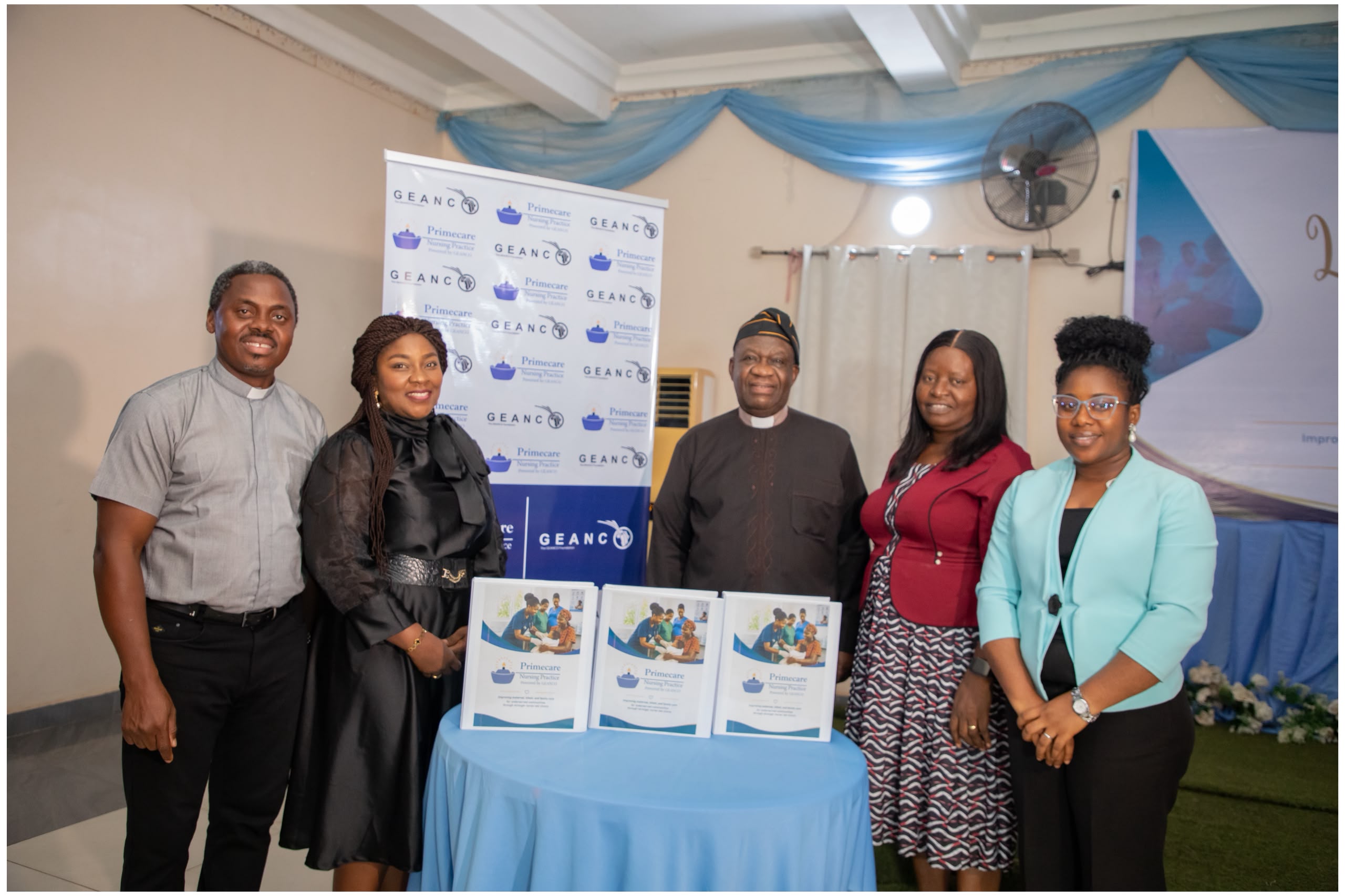
  • GEANCO Launches Primecare Nursing Practice Program to Strengthen Nurse-Led Clinics in Nigeria

    GEANCO Launches Primecare Nursing Practice Program to Strengthen Nurse-Led Clinics in Nigeria

    The GEANCO Foundation has launched the Primecare Nursing Practice Programme, a new initiative designed to strengthen nurse-led clinics and improve access to quality healthcare in underserved communities across Nigeria.

    The programme was unveiled on Saturday, June 27, 2026, in Enugu during a ceremony attended by government officials, healthcare professionals and academic leaders.

    According to the foundation, the initiative builds on the success of its six modular family health centres, which currently serve more than 9,000 families, and seeks to expand affordable healthcare by empowering registered nurses and midwives who operate private clinics.

    Participants will receive training in key areas, including obstetrics, paediatrics, geriatrics, mental health, basic life support, telehealth, organisational management and financial management for healthcare entrepreneurs.

    GEANCO said the programme combines intensive training, clinic support and post-training mentorship to improve clinical standards and strengthen the sustainability of nurse-owned healthcare facilities.

    A major feature of the initiative is the Primecare mobile application, which offers educational resources, AI-powered clinical decision support and a digital platform connecting nurses with medical professionals for continuous learning and collaboration.

    Speaking on behalf of Prof. George Ugwu, the Enugu State Commissioner for Health, Dr. Ifeyinwa Ugwueze said the programme aligns with the state’s commitment to decentralising quality healthcare services.

    The Vice-Chancellor of the University on the Niger, Prof. Nebo Ositadimma, formally unveiled the initiative, describing it as an innovative intervention in primary healthcare delivery.

    Other speakers, including Prof. Kenechukwu Iloh of the University of Nigeria Teaching Hospital (UNTH), Dr. Winnifred Onodu of Maduka University and healthcare entrepreneur Dr. Charity Ibeh, commended the programme for its focus on improving maternal and child healthcare, enhancing nursing practice and promoting entrepreneurship among healthcare providers.

    The foundation said the initiative is expected to strengthen primary healthcare delivery by equipping nurse-entrepreneurs with the skills, technology and support needed to provide affordable and sustainable healthcare services across underserved communities.

    The GEANCO Foundation is dedicated to saving and transforming lives in Africa. Through corporate partnerships, innovative medical missions, and targeted educational programs, GEANCO provides underserved communities with the critical primary healthcare infrastructure and learning tools necessary to thrive.

  • The Illusion of Control

    The Illusion of Control

    -By Abdul Mahmud

    There is a way Nigerians talk about insecurity. They lower their voices, to the point of whispering. They change the subject, no sooner fear kicks in. They say it will pass. They insist that Abuja is safe because it must be safe. A capital city cannot fall. The federal government cannot lose control of its own seat of power. These are comforting assumptions. They are also dangerous. In recent weeks, I have teased friends about the steady tightening of the noose around the Federal Capital Territory. Not because it is amusing. It is not. But because sometimes humour is the only way to force attention to what we would rather not confront. Terrorist groups now operate across swathes of territory in Niger, Kogi, and Kwara States. These are not distant borderlands. They sit in the country’s north-central corridor. They form the outer ring around Abuja. This is not speculation, but it appears so. Communities have been overrun. Villages have emptied. Highways have become corridors of fear. Kidnapping has turned into an industry. In some places, armed groups collect levies. They decide who farms and who does not. They dictate movement. They impose their will. That is not mere criminality. It is territorial control. When non-state actors exercise sustained authority over territory, it must be called what it is. It is a direct challenge to the state. It is an assertion that the monopoly of violence has shifted. It is an invitation to chaos.

    Abuja is not just another city. It is not an illusion, it is a lived city with life and blood. It is the symbolic and administrative heart of the federation. It houses the presidency, the National Assembly, the Supreme Court, the diplomatic corps, and the command structure of the armed forces. If Abuja is threatened by terrorist groups, the message travels far beyond its borders. It signals weakness at the core. Some of these groups openly speak of the caliphate. They speak of power and destiny. They see the capital as a prize. Whether they have the capacity to seize it is another matter. The danger lies in their intent and in the steady erosion of the state’s aura of control, which is increasingly turning into an illusion. A state survives not only on weapons and manpower but on perception. Once citizens begin to believe that the government cannot protect its capital, fear multiplies. Investors withdraw. Diplomats reassess. Citizens retreat into self-help and private security.

    The problem is not only the gun. It is the slow corrosion of confidence.

    It is troubling that those entrusted with securing the capital appear to treat these developments as routine. There is a tendency to downplay. To reassure without action. To blame political opponents for raising alarm. That instinct is fatal. History teaches that capitals fall not only because of superior firepower but because leaders misread warning signs. Look at other countries that once believed their capitals were insulated. In Afghanistan, Kabul fell with shocking speed in 2021 when the Taliban advanced across provinces and the state’s will collapsed. In Iraq, Mosul fell in 2014 when security forces melted away in the face of insurgents’ march. Even the Sahel states of Mali and Burkina Faso have retreated into the shells of their national capitals while terrorists tighten the noose around them. In all of the cases above, the crisis did not begin in the capital. It began in neglected peripheries. It grew in ignored villages. By the time it reached the centre, the damage had already been done.

    Nigeria is not Afghanistan, Iraq, Mali or Burkina Faso. Nigeria’s circumstances differ. The military is larger. The country is more diverse. But the lesson is simple. A state that allows large territories to slip from effective control invites a dicey test at its core.

    There is another layer to this crisis. While insecurity spreads, the ruling party appears consumed with narrowing the political space. There is a belief that if the opposition is weakened, if dissent is muffled, if electoral competition is reduced, stability will follow. That belief is mistaken. A healthy democracy is not a luxury in times of insecurity. It is a necessity. Open political competition allows grievances to be expressed through ballots rather than bullets. It allows criticism to expose weaknesses before enemies exploit them. It creates channels for accountability and correction. When a ruling party behaves as if total dominance is the same as total security, it confuses control with legitimacy. Legitimacy is earned through popular participation in democratic governance. It is sustained by fairness and inclusion. It is not manufactured by closing space. In fact, narrowing the democratic space can deepen insecurity, make marginalised groups feel unheard and citizens to lose faith in institutions while turning inward. When politics becomes winner takes all, governance becomes reactive rather than strategic. Energy that should be directed at reforming the security architecture is spent on silencing opponents. This convergence of insecurity and political indiscipline is dangerous. It suggests a state distracted from its primary duty. The first duty of any state is protection. Protection of lives. Protection of territory. Protection of institutions. Everything else is secondary. If terrorist groups continue to entrench themselves in communities surrounding the capital, several outcomes are possible.

    The first is the normalisation of fear. Abuja could become a city under siege in all but name, ringed by instability. Movement would be restricted. Military checkpoints would multiply. Civil liberties would shrink in the name of safety.

    The second is economic decline. Investors do not commit long term capital to countries whose capitals appear vulnerable. Insurance costs rise. Infrastructure projects stall. Jobs disappear. A struggling economy then feeds further unrest.

    The third is regional contagion. Nigeria is the largest economy and most populous country in Africa. Instability at its core would reverberate across West Africa. Extremist networks thrive on porous borders and weak states. A destabilised Nigeria would embolden similar actors elsewhere.

    The fourth is the erosion of national unity. As fear grows, citizens retreat into ethnic and religious identities. Trust in the federal project weakens. Calls for self defence groups intensify. Fragmentation becomes thinkable.

    These are not predictions. They are warnings. They are trajectories that can be altered if there is urgency and honesty. What then is required? First, a candid acknowledgement of the scale of the threat. No more comforting half truths. Second, a comprehensive security overhaul that integrates intelligence, community engagement and sustained presence in vulnerable areas. Deploying soldiers to communities that have been attacked is not enough. Developing a lasting and strategic national security is essential. Third, political maturity. The ruling party must understand that a strong opposition does not weaken the state. It strengthens it because it compels the government to justify its choices, defend its policies, and constantly measure its actions against credible alternatives. Where opposition parties are viable, organised, and free to operate, they function as early warning systems. They amplify local grievances before they metastasise into rebellion. They interrogate security lapses before they become national disasters. They provide citizens with lawful channels through which anger, frustration and disappointment can be expressed. In this sense, opposition is not sabotage. It is ventilation. When political space is open, discontent circulates within institutions. When it is closed, pressure builds outside them. A state that suffocates dissent often discovers too late that it has also suffocated its own capacity for self-correction.

    Democracy, therefore, is not an inconvenience to be managed through procedural compliance while power is consolidated elsewhere. It is the live wire of restraint and accountability. Extremism thrives where citizens conclude that ballots change nothing and that public institutions merely ratify predetermined outcomes. In such environments, radical actors present themselves as the only authentic challengers of a closed system. By contrast, a competitive democratic order deprives extremists of oxygen. It demonstrates that change is possible without violence and that authority can be contested without bloodshed. If the ruling party narrows the opposition space in pursuit of dominance, it may win temporary tactical advantage, but it risks strategic decay. The weakening of pluralism erodes legitimacy, and legitimacy is the moral force that sustains the state when coercion alone cannot.

    A nation state that appears incapable of securing itself sends signals to its enemies and to its citizens. To its enemies, it signals opportunity. To its citizens, it signals abandonment. Both signals are dangerous. Nigeria stands at a crossroads. The path of denial leads to deeper crisis. The path of reform demands courage. It demands that those in power look beyond electoral calculations and focus on survival of the republic. Abuja must not become the symbol of state fragility. It must remain what it was meant to be. A centre that reflects unity, stability and hope. That outcome is still possible. But only if we act before the circle tightens further.

  • Open Letter To Mr. President: Reassessing Police Deployment To VIPs For Improved National Security

    Open Letter To Mr. President: Reassessing Police Deployment To VIPs For Improved National Security

    By Dr. John Egbo

    Decreasing the number of police officers assigned to VIPs in Nigeria is a more appropriate and timely response than withdrawing the entire police officers assigned to the VIPs in this worsening insecurity across the country. The police force is overstretched, and redeploying some officers from excessive VIP protection duties back to public safety functions is essential for restoring confidence in national security. Decreasing the number of officers assigned to VIPs is a better security measure than total withdrawal of police officers from the VIPs.

    Importantly, the proposed reduction does not eliminate police protection for VIPs but strengthens police manpower for public protection and response to crime in progress incidents. It aims to ensure that assigned officers also serve as patrol personnel wherever VIPs travel to. In many cases, as VIP convoys travel through the country, the police officers accompanying them have deterred criminal elements—bandits and armed robbers, who often withdraw when confronted with an armed police escort. This has occurred repeatedly, even in areas where nearby police stations were unable to respond quickly.

    The fundamental role of the police remains: to protect and serve both the VIPs and general public. VIPs—especially national leaders, ministers, and influential citizens—are often prime targets for criminals, whether due to envy, political motives, or financial gain. As the saying goes, uneasy lies the head that wears the crown. Therefore, completely withdrawing all police officers from VIPs would be counterproductive and would expose them to greater danger than the average citizen.

    What the Inspector General of Police should prioritize is a strategic reduction, not an elimination of officers attached to VIPs and to sensitive establishments such as vulnerable businesses or schools. This approach frees up manpower for public patrols, highway security, and community policing initiatives, without placing VIPs at an unacceptable risk.

    As a retired Deputy Sheriff in the United States and a security consultant, I can affirm that crime control is most effective when resources are deployed based on threat assessment and environmental realities. Many parts of Nigeria are now serious crime hotspots, and policing strategies must adapt accordingly. Withdrawing every officer from VIP protection would only shift vulnerability, not solve the larger problem.

    In addition, elected officials—particularly members of the National Assembly and Ministers—should be directed to spend more time in their home constituencies and communities, accompanied by reduced and more efficient police security teams. Politics, like crime, is fundamentally local. Their presence at home strengthens governance, improves community relations, and supports grassroots policing.

    The President’s directive to recruit additional police officers is timely and long overdue. However, Nigeria must jealously guard the recruitment process. Criminal infiltration—whether by bandits, terrorists, or their sympathizers—poses a major internal threat to police effectiveness. Poorly vetted recruits can undermine operations, leak sensitive information, or sabotage crime-fighting efforts, placing both citizens and officers in danger.

    Nigeria needs a police force that is professional, properly vetted, and optimally deployed. Reducing excessive VIP protection details and strengthening public security roles is not just a policy adjustment—it is a necessary step toward restoring safety and order for all Nigerians.

    VIPs moving with a reduced number of police officers serve as crime deterrent along their routes.

    Dr. John Egbo is a United States retired Deputy Sheriff and Consultant on Security Matters. Jnegbo1@gmail.com

  • Nigeria’s Insecurity and Leadership: The Growing Crisis of Confidence – By Dr. John Egbo

    Nigeria’s Insecurity and Leadership: The Growing Crisis of Confidence – By Dr. John Egbo

    For millions of Nigerians, the fear of being kidnapped on the road, at home, or even in school has become a grim part of daily existence. From the outskirts of Abuja to rural communities in Kaduna, Kwara, Niger, Katsina, Plateau, Benue, Rivers, and Zamfara, the wave of abductions continues to rise, eroding public confidence and raising urgent questions about the priorities of the country’s political leadership.

    Despite repeated promises from successive administrations, Nigerians widely believe that national security is still treated with alarming levity by those at the highest levels of government. From the Presidency to the National Assembly and the state governors, there is a growing public perception that the nation’s leaders are more focused on protecting themselves and their families, with troops of police officers, army personnel and DSS than ensuring the safety of the people they are supposed to serve.

    KIDNAPPINGS: A NATION UNDER SIEGE

    Kidnapping for ransom has evolved into a multi-billion-naira criminal industry. Major highways such as Abuja–Kaduna, Enugu–Abuja, Benin–Lagos, and Birnin Gwari–Funtua have witnessed repeated attacks. Communities in the Middle Belt and North-West live under a constant shadow of terrorists called bandits, militants and herdsmen while southern states once considered safe such as Edo, Delta, Imo, and Anambra, now report near-daily abductions.

    In early 2025 alone, several communities recorded mass kidnappings, including farmers, schoolchildren, church members, and even traditional rulers. For many Nigerians, these incidents underscore what they see as a failure of political will of Nigeria’s style of leadership. They travel overseas for medical treatment but will not hire foreign trained officers to help with their sick security condition.

    A trader in Suleja, who narrowly survived an attack, told our reporter: “We are left to protect ourselves. The leaders are surrounded by dozens of security men, but ordinary people are on their own. It seems we are not part of the security equation.”

    SECURITY FOR THE POWERFUL, INSECURITY FOR THE PEOPLE

    Analysts argue that a major source of public resentment is the disproportionate deployment of security personnel political leadership. Thousands of police officers are attached to politicians, government officials, business moguls, and their families, while rural communities and urban neighborhoods struggle with inadequate policing.

    A retired police superintendent, who requested anonymity, described the situation bluntly:

    “We lack manpower not because officers don’t exist, but because many of them are guarding VIPs. If you withdraw and equip half of those officers and send them back to communities, you will see an immediate improvement in national security.”

    Despite generous annual allocations running into trillions of naira for defense and monthly Security Votes to Governors, internal security, frontline officers often lack basic equipment such as bulletproof vests, patrol vehicles, communication gadgets, and sometimes even fuel. Many work long hours under hazardous conditions with limited insurance or welfare support.

    This mismatch between resources and results has fuelled widespread frustration among service men in uniform.

    POLITICAL INTERFERENCE AND REACTIVE MEASURES

    Critics say part of the problem lies in the politicization of security agencies. Postings, promotions, and procurement decisions have sometimes been influenced by political considerations rather than merit, weakening professionalism within the security sector.

    Moreover, security responses have often been reactive rather than proactive. Government interventions typically occur after tragic incidents as in mass abductions in Kebby school where there was an intelligence before the attack took place and Niger students incidents, attacks on villages, or high-profile kidnappings—rather than through coordinated preventive strategies.

    A security researcher at the University of Ibadan, Dr. Tolu Adebayo, summarized the problem: “We cannot continue waiting for attacks before deploying resources. Kidnapping gangs have saboteurs in the military and they are adapting faster than our institutions. Without intelligence-led policing, improved welfare, and professional autonomy, the cycle will continue unabated”

    CITIZENS LOSING PATIENCE

    For ordinary Nigerians, the consequences of insecurity are devastating. Farmers are abandoning their farmlands for fear of attack. Transporters avoid certain highways. Unity schools have been ordered closed in many states of the North while other Schools in high-risk regions operate under threat. Businesses are closing, and families are selling property to pay ransoms.

    An Enugu resident whose cousin was abducted in 2024 expressed anger at government inaction:

    “Every day we hear politicians talking about billions spent on security. But where is the impact? Bandits are still operating freely. We cannot live like this.”

    A CALL FOR GENUINE COMMITMENT

    The public is demanding a shift from rhetoric to action. Experts recommend:

    -Reducing VIP security escorts and redeploying personnel to communities

    -Ordering all National Assembly members and Ministers back to their respective towns to empower both Neighborhood Watch (Vigilantes) and Forest Guards as a first line protection for their people during the upcoming yuletide.

    -Improving welfare and insurance for police and military officers.

    -Deploying drones, surveillance systems, and intelligence tools for security personnel.

    -Creating  state policing structures as promised by the President to adopting a multi-layered policing model

    -Ensuring transparency in defence spending and procurement.

    -Sign an agreement with a foreign country to help flush out terrorists from the country and secure our porous borders.

    -Improving coordination among the armed forces, police, DSS, and local vigilantes.

    Ultimately, Nigerians want a leadership that demonstrates genuine commitment, not just speeches. A leadership that recognizes that security is not a privilege for the powerful, but a right for every citizen.

    As insecurity grows more brazen and kidnappers become more entrenched, the nation faces a stark choice: continue on the current path of reactive measures, or embrace bold reforms that restore public trust and reclaim Nigeria from the grip of fear. We all know that action speaks louder than words.

    The people have spoken loudly and the country’s leaders can no longer afford to ignore them.

    Dr. John Egbo is a Retired Deputy Sheriff from the United States of America and Security Consultant. Email: jnegbo1@gmail.com 

  • When the State Lies

    When the State Lies

    -By Abdul Mahmud

    Something distinctly unsettling stirred when my young friend and colleague at the Bar, Festus Ogun, quietly reversed course from his initial social media post in which he rightly drew public attention to the plight of the “Yola Six”, the law students abducted en route to resume studies at the Nigerian Law School in Yola after their externship in the south east. His later post, this time applauding the Nigeria Police for the successful rescue of the “Yola Six” struck a discordant note. The facts, as later confirmed by two of the victims, told a different story. Not just different but diametrically opposed to the claim of the police.

    Festus, one must concede, was most likely swept up in the moment, buoyed by what he believed to be credible information from the police. Who could blame him? At the centre of it all were the lives and liberties of six promising students whose futures hung precariously in the balance, held captive by criminals who recognise neither law nor the sanctity of human life. Still, the relief that greeted the eventual release of the students does not wash away the bitter aftertaste of official dishonesty and falsehood that reveals a deeper crisis of integrity within the Nigerian state. When the custodians of public trust lie, when the state manufactures its own myths of heroism in the face of tragedy, one must ask: what else is it willing to fabricate? And why?

    In the realm of public life, a state that lies does more than twist facts. It corrodes trust, fractures the moral contract between citizens and the state, and raises unsettling questions about whose truth matters. Today, in our country, official lies are no longer an aberration. They are the Directive Principles of State Policy. They are the practices of power performed without shame. Two weeks ago, six law students were kidnapped on their journey from the Southeast to Yola, in the Northeast, where they were to resume their Nigerian Law School studies. Young men, driven by the dream of law and justice, were intercepted by gunmen, abducted, tortured, and used as pawns in a ransom trade. The students’ accounts, as narrated by Reverend Ernest Okafor and David Obiora, both victims, revealed a chilling, yet tragically familiar story: departure from Onitsha on the morning of July 26; ambush between Zakibiam and Mukari, Benue State, by nightfall; relocation into the womb of a forest; physical abuse, trauma, and ransom negotiations that dropped from N50m each to N10m each before their eventual release on August 1. The state watched. Then came the lie. The Nigerian Police, in a bid to grab headlines and polish tarnished image, released a statement claiming credit for rescuing all six students. A triumphalist announcement, devoid of detail, dripping with spin. But Rev. Okafor countered it with chilling clarity: “The police played no role in our release”. None. The families paid. The six kidnapped law students were released. But, it raises the question: Why does the state lie?

    It lies because it can. It lies because truth has no constituency in a country where power is unaccountable. It lies because the state has, over time, developed an addiction to orchestrated spectacle. A need to be seen to act, even when it has not lifted a finger, or raised a stone. The lie becomes a sedative for public outrage. A script to manage perception. In this case, the image of a competent police force triumphing over terror is too useful to pass up, especially when the reality is one of chronic failure.

    But this isn’t new.

    Our country’s history is littered with official falsehoods. The Civil War, with all its horrors, was packaged in July, 1967 by the then Head of State, General Yakubu Gowon as a “police action” aimed at “restoring order”. The pogroms, starvation, and genocide were hidden behind the wall of massive state propaganda. The truth bled quietly, off camera. In 1999, the return to civil rule was hailed as the dawn of a “New Nigeria”. But the killings in Odi, Bayelsa State, later that year revealed otherwise. The military razed the town, leaving hundreds dead. The government claimed it was responding to the killing of twelve soldiers. No commission of inquiry was held. No one was punished. When asked years later about the incident, President Obasanjo said, “The people of Odi invited the military”. He lied. The state lied. In 1991, between the end of the civil war and our country’s return to civilian rule, I was abducted by operatives of the State Security Service and held incommunicado at their Ikoyi detention facility. For weeks, the state flatly denied any knowledge of my whereabouts. The then Minister of Information, the late Chief Alex Akinyele, and his cabinet colleague, the late Professor Babs Fafunwa, repeatedly took to press briefings to insist, sometimes with theatrical conviction, that the government had no hand in my “disappearance” as President of the National Association of Nigerian Students (NANS).

    Here’s another lie. But who remembers?

    In October 2020, the youth-led #EndSARS protests were crushed at the Lekki Tollgate in Lagos. Live bullets were fired into a peaceful crowd. Blood stained the road. The Nigerian Army initially denied even being present at the scene. Then, caught by evidence, admitted presence; but claimed they only fired blanks. Government officials spoke in circles, contradicting one another. The state swore no lives were lost. Meanwhile, families mourned in silence. CNN and Amnesty International exposed the state’s lies. The government responded by launching attacks, not on the killers, but on the truth-tellers. Witnesses like Obianuju Catherine Udeh, better known as DJ Switch, and Rinu Oduala, were forced into exile. In this long tradition of denial, what happened to the law students is not an exception. It is a continuation of the familiar pattern of lie-telling. The state’s cover-up. Or what my abductors during my long incarceration in 1991 glibly referred to as “the state’s cover story” – a phrase that still rings with a certain chill. It was as though the state had transformed itself into the editorial boardroom of a propaganda tabloid, where facts were doctored, and headlines manufactured to deflect public inquiry and defang public outrage. A newsroom, yes; but one staffed not by reporters of truth, but by functionaries skilled in the dark art of distortion. In that room, reality was edited, inconvenient truths redacted, and official narratives spun with the finesse of professional deceivers.

    The question must be posed again: Why does the state lie?

    It lies because it fears accountability. And because lies are cheaper than reforms. Easier than truth. The truth demands justice. It demands restitution. Lies cost nothing, except the people’s trust. The state lies because of its own decadence. There are no real consequences for lying. A police officer can announce a fake rescue. A governor can fabricate achievements. A minister can misrepresent statistics. No heads roll. No shame is felt. No apology is issued. In such a system, lying becomes a normalised administrative instinct. It lies because lies are often more palatable than the truth. The truth is messy. It complicates power. It reveals incompetence. It opens the door to scrutiny. The lie is clean like a whistle. Tidy. It reinforces the illusion of control. But the cost is enormous.

    Each lie told by the state chips away at its moral legitimacy. Trust, once broken, is hard to rebuild. Citizens retreat into apathy or rage. Conspiracy thrives. Paranoia deepens. The distance between the ruler and the ruled becomes godo godo. Deep gullies. And when citizens no longer believe their government, even in times of truth, the consequences can be lethal. Imagine being the parent of one of the kidnapped students. You scrape together millions in ransom. You pray through sleepless nights. Then you see on the evening news that the police claim they rescued your child. No mention of your suffering. No mention of your sacrifice. Just a polished press release. A lie told over your lived experience. The spectre of falsehoods, which places the state at the centre of every story, even when it played no part, comes with the erasure of the sufferings of victims. The agency of families. The courage of survival. It is this spectre of falsehoods that turns citizens’ pains into weapons of state propaganda.

    So what must be done?

    First, citizens must learn to expose the lies that the state tells. “Unmask lies wherever they are told” was Amílcar Cabral’s enduring exhortation. A call to truth as resistance and to clarity as a revolutionary act. Refuse to be gaslighted. Insist on fact. Every time a false narrative is offered, it must be met with citizens’ testimonies and documentation. Second, citizens must build a culture of public memory. Our country forgets too quickly. Lies thrive in forgetfulness. The state counts on our fatigue. But we must remember. And remind. And record. Third, institutions must be reformed to uphold transparency. Press releases should not replace accountability. Oversight mechanisms must be strengthened. Internal checks enforced. Citizens must continue to hold power to account. A lying state can only persist when citizens become indifferent. To resist the lie is to defend our republic.

    Some will argue that all states lie. That this is the nature of power. Perhaps. In functional democracies, lies are often exposed. Careers end. Elections are lost. Apologies are issued. In our country, lies are rewarded with promotions. Our citizens must change that. When the state lies, it desecrates its duty to the citizens. It abandons the ideals of public service. And it betrays the very law those kidnapped students set out to study and one day uphold. The future of a country cannot rest solely on the scaffolding of its constitution. It must be anchored in truth. Truth as a moral habit. Truth as a civic duty. Truth as a sacred covenant between the governors and the governed. For without truth, the constitution becomes a hollow text, and governance becomes the theatre of illusion. When the state lies, and lies without shame or consequence, it tells its citizens: your pain is irrelevant, your reality is disposable, and your trust is mine to abuse.

    But truth, however buried, has a stubborn way of returning. Like the voices of David Obiora and Rev. Okafor. Clear. Undeniable. Refusing erasure.


  • When Teachers Help Students Cheat: The Silent Collapse of Exam Integrity in South East Schools

    When Teachers Help Students Cheat: The Silent Collapse of Exam Integrity in South East Schools

    By Okafor Sebastine Chukwuebuka

    Recently, through friends and allies, I acquired some electronic devices designed to help curb examination malpractices across schools—both secondary and tertiary institutions. Ironically, the invention of artificial intelligence, which ought to aid learning, has worsened the situation. Some students now snap their question papers, upload them to AI-enabled platforms, and use the answers to write their exams.

    This problem is not limited to a particular school. It exists in almost every school I have recently visited—especially public institutions. During examinations, some staff members go as far as aiding these illegal acts, sometimes using physical and emotional blackmail. I have visited schools in Ebonyi, Enugu, and Anambra States in recent times, and what I witnessed was deeply troubling. Senior lecturers, Heads of Departments, and even proprietors go out of their way to protect students caught in malpractice. In some places, staff are allowed to collect as little as ₦1,000 per student to “look away” during exams. That is the sad reality.

    From the experiences gathered so far, there seems to be a widespread culture of aiding and abetting examination malpractice in educational institutions – particularly in Secondary and Tertiary institutions.

    Suffice it to state that some of the departments of Tertiary institutions are filled with personnel who seem to have lost touch with what academic integrity means. They shield their students under the excuse of: “Hapụ nụ ụmụaka ka ha dee exam [Allow these students to write their exams]; you cannot save Nigeria.” Some institutions go as far as creating Examination Malpractice Marshals, but instruct them never to penalize students. Imagine catching a student using AI to write an exam, confiscating the phone, and still allowing the student to continue without even issuing a new answer script. Consider the message this sends to other students in the hall.

    To make things worse, during one of our recent visits to a university in the South East, a Head of Department in Political Science was caught on camera instructing students to physically attack any invigilator—internal or external—who attempted to collect their phones during exams. That individual is an Associate Professor, and it is disturbing to imagine what he is teaching beyond the classroom.

    In many schools, principals even pay money to handpick invigilators for external exams. Once these compromised invigilators destroy the moral fibre of the students placed under their care, some university lecturers complete the damage by ignoring ethics entirely.

    Thankfully, not all institutions are the same. Godfrey Okoye University and Coal City University have maintained zero tolerance for malpractice. These schools have functional CCTV cameras in their examination halls, well-trained and adequate invigilators, and network-jamming devices that make cheating with mobile phones nearly impossible. Meanwhile, in many public schools, only two invigilators are assigned to monitor over 280 students in a hall where seven students sit in a single row. This makes the malpractice even easier.

    There are also institutions with good leadership but poorly motivated or compromised staff who make genuine reform impossible. Examples include ESUT, IMT, UNN, and FUNAI. These schools show signs of readiness to fight the problem but are still trapped by internal sabotage and negligence.

    This situation contributes greatly to the quality of graduates produced. Many companies today are hesitant to recruit despite the abundance of graduates with excellent results. The truth is, many of these so-called “first-class” and “second-class upper” graduates cannot meet basic workplace expectations because their grades are not a true reflection of their competence.

    It is time to borrow a leaf from our brothers in the South West, who have shown better commitment to discipline and transparency during examinations. If we are truly interested in raising thinkers, creators and honest citizens, we must rise to protect the credibility of our education system—regardless of whose name is involved.

  • Ashleigh, Identity, and the Diaspora’s Return

    Ashleigh, Identity, and the Diaspora’s Return

    -By Abdul Mahmud

    When Ashleigh Plumptre pulled on the green jersey of the Super Falcons, she was not just representing our country. She was performing a deeper act: an act of cultural reimagination. She was constructing a new identity. One that defies borders, blurs categories, and reclaims ancestral memory. Her decision to play for our country was not simply professional. It was symbolic. And a welcome. The same holds true for Michelle Alozie, though in a different sense. Her identity and cultural belonging are affirmed more directly. Her parents are Nigerians by birth. Their citizenship anchors her connection. Ashleigh’s case is further removed. Her story begins with her grandfather. She is third generation by blood, not by birthplace. Yet, both women, by different paths, have found their way to the homeland.

    In Morocco, during the just concluded Women’s Africa Cup of Nations, WAFCON, Ashleigh wasn’t the only one who showed up. Her white friends turned up too in the final game. In green and white. In song. In spirit. The country folks in the stands showed up for her, screaming: “Oyibo, Oyibo, Oyibo”. It wasn’t performative support. It was a collective ritual. Hers was a public reaffirmation of belonging to a homeland that once felt remote, but now stood close: immediate, intimate, and deliberately embraced. This is the emerging narrative of diasporic identity. It is no longer about return in the old nationalist sense, but about reimagining connection that is chosen and not inherited. It’s about the formation of the new self. A new selfhood. Rooted not in the soil, but in memory. Not imposed by geography, but spawned by cultural will. For many years, the children of African immigrants in the West lived in the liminal. They straddled two worlds. Often, they were forced to choose between assimilation and alienation. Many chose silence. Some chose denial. A few wrestled with duality in the few emerging multicultural European states, where the opposition of far right groups to multiculturalism is growing, for instance. Over the weekend, far-right agitators marched on the major streets of London, Norfolk and Essex, fanning the flames of hate and fears.

    But today, something new is happening.

    This generation is not simply identifying with the homeland. They are reconstructing the homeland within themselves. They are returning, not to a physical homeland; but to an imaginative one. They are engaged in the work of cultural reimagination, taking fragments of ancestral memory, mixing it with lived diaspora experiences, and shaping a composite identity that is both authentic and innovative. Ashleigh Plumptre’s case is instructive. Born in Leicester. Raised in English schools. Trained in English football academies. She could have followed the familiar path: play for the senior women’s team in England, lean into Euro-visibility, ride the institutional comfort. But she didn’t. Instead, she turned towards our country. Not because of nostalgia. Not out of charity. But because she saw herself differently. She reimagined the story of her lineage in a manner that her reimagination and story invariably don’t end up serving as a footnote to her Britishness, but as a foundational part of her identity. Her grandfather’s Nigerian heritage became a map. She traced it backwards, then forward again, into her own body, her own future.

    This re-rooting of identity is an active process. It requires intention. It requires curiosity. It requires the courage to be different. To live differently. And to live across cultural lines. Ashleigh’s identity is not a throwback. It is not mimicry. She does not need to “be more Nigerian than the rest of us” to prove belonging. Her very decision to claim the country of her grandfather’s birth on her terms, through football, is already a profound act of self-definition. Hear her: “I’ve just opened myself up to everything in the culture. I want to be able to encourage young people to do the same thing and identify with being mixed race”. And this is the core of the matter: diasporic identity today is performative, political, and deeply personal. Ashleigh’s decision is performance in the sense that it is enacted before a global audience. She performs belonging on the pitch. Her body moves in ways that express her allegiance, her pride, her conviction. But it is also political because she chooses to represent a country that has long been marginalised on the global stage. A country whose name doesn’t carry the same prestige as England’s, but whose history, culture, and resilience mean something far greater to her personal narrative.

    Her act is not one of rejection, but of reconstitution.

    She hasn’t abandoned England. She is reassembling our country inside herself. She is expanding what it means to be a fellow compatriot within the frontiers of cultural reimagination. Diaspora children are not just “returning” to the homeland. They are remaking the homeland in new forms: through fashion, through music, through sports, through social media discourses, through literature and academic theory. You see it in the rise of Afrobeats in London, Atlanta, and elsewhere. In the Nigerian-infused slang of Toronto teenagers. In the names proudly worn by second-generation Americans. You see it in the TED talks, the Instagram bios, our country’s flags in bios, the poetry slams, the Nollywood TikToks. You see it in how Ashleigh plays. Calm. Composed. Tactical. In the “Never-Say-Die” attitudes, “Dia-Body-Go-Hearam” and “E choke” dispositions of our younger countryfolks. The attitude of the British in training, Nigerian in expression. She doesn’t fit into the old categories. That’s the point. She is rewriting them with clarity.

    For decades, the homeland treated its diasporas as lost. As footnotes to colonial displacement. The story was one of escape, of absence, of loss. But that’s not the story anymore. This generation is reimagining the diaspora not as a departure but as an extension. Not as lost children, but as bridge-builders. They are redefining what it means to belong. Not to one place. But to many. Simultaneously. What Ashleigh represents is this: post-postcolonial identity that is fluid, global, but emotionally anchored in the ancestral. She is not burdened by the nationalism of the first generation. Nor by the silence of the second. She is free to choose and she chooses this: that freedom is power. It allows her to say, “I am British, and I am a Nigerian. Not one before the other. Not one more than the other. Both. Together”.

    And this is perhaps the most radical thing. In a world still obsessed with purity of culture, of blood, of loyalty, Ashleigh and others like her in our national basket teams are dismantling those myths. They are proving that identity is layered, negotiated, and dynamic. They are not confused. They are composed. They are not torn. They are woven. And our country folks must learn to embrace this. Too often, the homeland struggles with diaspora returnees. Questions of authenticity arise. “Do you speak the language?” “Do you eat the food?” “Do you know the history?” But, these are the wrong questions. Ashleigh may not speak the Yoruba tongue of her grandfather. But she understands solidarity. She understands the burden of representing a black country in a white-dominated world. She carries the flag, wears and kisses the badge on her jersey with pride. That should be enough.

    Identity is not measured in jollof rice. It is measured in meaning. Then, what does it mean to claim the homeland? It means carrying its name with dignity. It means choosing it, even when it’s not the easier option. It means amplifying it on the world stage, when others are silent. Ashleigh is doing all of this. So are thousands of young people around the world. They are not waiting to be invited to adopt the identity of the homeland. They are claiming it. Reimagining it. Living it. And they are demanding that we expand the borders of belonging. That we make room for the hybrid selves. That we honour choice as much as bloodlines. That we embrace the return not just of bodies, but of imagination.

    Ashleigh’s return is not simply to the homeland. It is to a narrative that was once broken by colonialism, exile, and dislocation, that is now being fixed by a new generation. A generation that refuses to forget. That refuses to be strangers. That insists on its place in our collective story. Our grand narratives. Her story is just one example. But it speaks volumes. It tells us that return is no longer a physical journey. It is a spiritual reckoning. A political choice. A cultural rebirth. An invitation that we must accept as public intellectuals to rethink the way we frame identity. To shift our gaze from the narrow lens of ethnicity, which has long anchored our scholarship, toward new formations. Toward acts of reimagination that speak to a more fluid and inclusive understanding of who we are. It invites us to craft fresh discourses. To see our country not as a fixed terrain of bloodlines and boundaries; but as an imagined space that is open, evolving, and welcoming to all who choose to belong.

    Finally, and in summary, the homeland stands for more than geography. It is a place of love, of memory, of origin. It belongs to those born within its borders and to those born far away, who carry it faithfully in their hearts. Ashleigh carries it. So does Alozie. And in carrying it, they remind us of something profound: the homeland is not only a place. It is a people. It is a history remembered. It is a choice made. It is the quiet insistence that belonging can stretch across oceans and generations. In this era of evolving identities and cultural reimaginings, the homeland is also a future. One that the children of the diaspora are helping to shape through their voices, their music, their sports, and their return. One match at a time. One song at a time. One return at a time. All in pursuit of life’s many missions. Ashleigh and the girls fulfilled one of such missions. Mission X, accomplished.

    Congratulations are in order, country people!