Tag: nigeria

  • Nigeria India Target $15bn Trade Revival as Modi Pushes for More Crude Imports

    Nigeria India Target $15bn Trade Revival as Modi Pushes for More Crude Imports

    Precious Nwonu, Enugu

    Nigeria and India have agreed to work towards restoring bilateral trade to its previous peak of nearly $15 billion, with Indian Prime Minister Narendra Modi calling for renewed crude oil purchases from Nigeria.

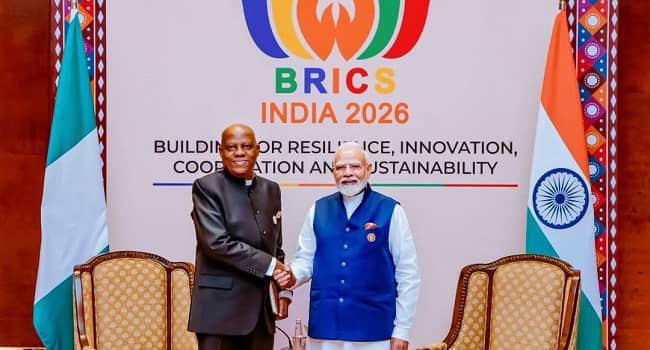
    The agreement was reached during a meeting between Vice President Kashim Shettima and Modi on the sidelines of the BRICS Leaders’ Summit in New Delhi.

    Bilateral trade between the two countries has declined significantly in recent years, falling from $14.95 billion in the 2021–2022 financial year to $7.13 billion in 2024–2025, largely due to a reduction in India’s crude oil purchases from Nigeria.

    Trade later increased to about $9 billion in 2025–2026.

    During the meeting, Modi emphasised the importance of rebuilding energy trade as part of efforts to return commercial relations between both countries to previous levels.

    Shettima assured the Indian Prime Minister that President Bola Tinubu’s administration would consider India’s request for increased crude oil purchases from Nigeria.

    Beyond crude oil, the Vice President stressed the need for both countries to deepen economic cooperation by moving beyond traditional commodity trade.

    He said Nigeria was interested in attracting investments that would support local manufacturing, create employment opportunities and promote technology transfer, particularly for the country’s young population.

    Nigeria and India also identified fintech, digital public infrastructure and the creative industry as areas for stronger collaboration.

    The two countries further agreed to explore partnerships in defence technology, power generation and clean energy, while promoting investment in pharmaceuticals, healthcare and capacity development.

    On the social development front, the Minister of Women Affairs, Hajiya Imaan Sulaiman-Ibrahim, said Nigeria was drawing from India’s women-led self-help group model through the Nigeria for Women Programme Scale-Up.

    She said the initiative uses Women Affinity Groups to promote financial inclusion, grassroots businesses and social protection.

    According to the minister, the programme forms part of Nigeria’s broader efforts to build an economy valued at $1 trillion.

  • Chimamanda Adichie Says Son’s Death Changed Her Feelings About Nigeria

    Chimamanda Adichie Says Son’s Death Changed Her Feelings About Nigeria

    Precious Nwonu, Enugu

    Award-winning Nigerian author Chimamanda Ngozi Adichie has revealed that the death of her 21-month-old son, Nkanu, has profoundly changed her feelings towards Nigeria, saying she no longer wants to return to the country.

    Adichie made the disclosure in an interview with The New York Times, where she spoke about the loss of her son and its impact on her relationship with her home country.

    Asked whether Nigeria still felt close to her heart, the author said her feelings had changed following the tragedy.

    “My feelings toward Nigeria have changed,” she said.

    “I do not want to go back to Nigeria.”

    Nkanu, one of Adichie’s twin sons, died in December 2025 following a medical emergency at Euracare, a private hospital in Nigeria.

    According to the author, her son initially developed a fever and was placed on antibiotics by her husband, Ivara Esege. However, when his condition did not improve, the couple took him to the hospital for further medical assessment.

    Adichie said Nkanu was subsequently sedated with propofol for an MRI examination, after which he suffered cardiac arrest and died the following day.

    Recounting the moments surrounding the incident, she said a doctor later approached her in a visibly distressed state and made a statement about the amount of propofol administered to her son.

    “He was very calm and he said to me, ‘Well, look, they gave him too much Propofol.’ Those were his exact words, which I will never forget until the day I die,” she recalled.

    Adichie had earlier raised allegations of medical negligence concerning the treatment her son received at the hospital.

    The circumstances surrounding Nkanu’s death have also become the subject of a coroner’s inquest, with proceedings reportedly involving disagreements and delays between the family and the hospital.

    The hospital has reportedly disputed aspects of the family’s account and accused Adichie and her husband of destroying evidence by cremating their son’s remains, a matter connected to the ongoing proceedings.

    Adichie and her husband have called for improvements in Nigeria’s healthcare system but, according to the report, have not filed a lawsuit against the hospital.

    Reflecting on the possibility of returning to Nigeria, Adichie said her children could be the only reason she might consider coming back.

    She noted that her daughter still considered Nigeria her “happy place.”

    Before Nkanu’s death, Adichie said Nigeria had remained deeply connected to her identity and literary career. She described the country as the place where she received “everything” that helped shape her into a writer.

    However, she said the loss of her son had fundamentally altered that relationship.

    “I mean, it is so surreal, all of this. I still can’t believe we’re talking about my son who died,” she said.

    “You’re going through something, but you also feel like you’re outside of it.”

  • NDLEA Warns Nigerians Against Accepting Unknown Cargoes From Abroad

    NDLEA Warns Nigerians Against Accepting Unknown Cargoes From Abroad

    Precious Nwonu, Enugu

    The National Drug Law Enforcement Agency has cautioned Nigerians against collecting or receiving consolidated consignments from relatives, friends or associates abroad without knowing exactly what the packages contain.

    The agency warned that some Nigerians overseas are allegedly using consolidated cargoes to send illicit drugs into the country while listing unsuspecting family members and friends as consignees.

    The NDLEA Director of Media and Advocacy, Femi Babafemi, issued the warning in a post on X on Sunday, urging Nigerians to exercise caution before agreeing to receive packages on behalf of people abroad.

    According to Babafemi, substances identified as Colorado and Loud, both strains of cannabis, have been discovered in some of the consignments.

    He said recipients who have no knowledge of the contents could still face arrest and prosecution if illegal drugs are found in packages bearing their names.

    Babafemi wrote, “RED ALERT! The new thing now is that some of our ‘abroad’ people are sending home consolidated cargoes contaminated with illicit drugs especially Colorado and Loud, putting their family members and friends as consignees or recipients.”

    He advised Nigerians who were not involved in drug trafficking to decline requests to receive consignments where the contents were unknown.

    He added, “The warning here is, if you’re not part of the syndicate, don’t accept to receive consignments on behalf of your ‘abroad’ brother or sister or friend particularly if you don’t know the full content of the consignment.”

    Babafemi further warned that several people had already been arrested in similar circumstances, noting that NDLEA operatives continued to uncover such consignments during their operations.

    “Many are already behind bars for this and the number keeps increasing with daily operations by @ndlea_nigeria officers. Please heed this warning and save yourself of the jail experience,” he said.

    The warning was accompanied by video footage showing NDLEA operatives opening large black plastic-wrapped packages on a metal table.

    The footage showed clear plastic bags containing yellowish, lumpy substances suspected to be cannabis products being removed from the consignments.

    The latest warning comes as the NDLEA continues its efforts to disrupt international drug trafficking networks and prevent illicit substances from being brought into Nigeria through various routes.

  • Shettima Leads Nigeria’s BRICS Engagement in India

    Shettima Leads Nigeria’s BRICS Engagement in India

    Precious Nwonu, Enugu

    Vice President Kashim Shettima has arrived in New Delhi, India, to represent President Bola Tinubu at the 18th BRICS Leaders’ Summit as Nigeria seeks to strengthen economic, trade and diplomatic ties with countries within the bloc.

    The summit, which is being held under the theme, “Building Resilience, Innovation, Cooperation and Sustainability,” is expected to provide Nigeria with opportunities to attract investment and expand cooperation in key areas of the economy.

    Shettima is leading a Nigerian delegation that includes the Minister of Foreign Affairs, Bianca Odumegwu-Ojukwu; Minister of Industry, Trade and Investment, Jumoke Oduwole; Minister of Communications, Innovation and Digital Economy, Bosun Tijani; and Minister of Environment, Balarabe Abbas Lawal.

    Ahead of the summit, Odumegwu-Ojukwu said Nigeria would use its participation to pursue new partnerships and investment opportunities in agriculture, technology, artificial intelligence, trade and the digital economy.

    She said Nigeria was particularly interested in learning from India’s experience in using technology and artificial intelligence to create opportunities for its large youth population.

    “India is firm in its expertise in agriculture and, of course, even in the digital economy. In fact, prior to this, we had a session dealing with women in the digital economy and artificial intelligence, and we are leveraging India’s greatest strength, which is in the engagement of its youth population,” she said.

    Oduwole also said the Federal Government was seeking to strengthen Nigeria’s trade relationship with India, which she said had previously reached about $14 billion.

    According to the minister, major Indian investors had expressed interest in meeting with the Nigerian delegation, while Nigeria also maintains significant trade relationships with other BRICS countries.

    “And so, deepening those relationships will further strengthen the Renewed Hope Agenda of President Bola Ahmed Tinubu’s administration. India used to buy Nigerian oil quite a lot, so we are looking at how to expand that with everything going on in the world,” Oduwole said.

    At the summit, Shettima is expected to join leaders of BRICS member and partner countries and representatives of invited international organisations for discussions on global growth, resilience, innovation and sustainable development.

    The Vice President is also expected to hold bilateral meetings aimed at advancing Nigeria’s interests in trade, investment, agriculture, technology and industrial development.

    Nigeria became a BRICS partner country in January 2025, providing the country with an additional platform to strengthen South-South cooperation and deepen engagement with major emerging economies.

    The Nigerian delegation will also participate in the BRICS open session and other activities scheduled alongside the summit.

  • FG Begins Payment of N18bn Severance Benefits to 2,700 Ex-Nigeria Airways Workers

    FG Begins Payment of N18bn Severance Benefits to 2,700 Ex-Nigeria Airways Workers

    Precious Nwonu, Enugu

    The Federal Government has commenced the payment of N18bn in outstanding severance benefits to 2,700 former employees of the defunct Nigeria Airways, more than 20 years after the airline was liquidated.

    The Minister of Finance and Coordinating Minister of the Economy, Taiwo Oyedele, disclosed this on Friday during a press briefing at the Federal Ministry of Finance in Abuja.

    Oyedele said 2,100 former workers covered by batches one to seven had received their payments, while another 600 beneficiaries in batches eight and nine had been cleared for payment.

    He said the payments amounted to N18bn in outstanding benefits owed to the 2,700 former employees.

    “For more than two decades, following the liquidation of Nigeria Airways, many former employees have waited for their outstanding severance benefits. Some have grown old waiting. Some have sadly passed away, leaving their families to pursue what was legitimately due to them,” Oyedele said.

    According to the minister, the payment followed President Bola Tinubu’s directive to resolve the long-standing obligation.

    Oyedele acknowledged that the settlement could not make up for the lengthy delay but said the government had decided to address inherited obligations rather than allow them to remain unresolved.

    “We recognise that no payment today can fully compensate for more than two decades of waiting, but it is important that government confronts these long-standing obligations rather than allowing them to remain unresolved for another generation,” he said.

    The minister explained that the exercise was part of the Federal Government’s broader effort to clear verified inherited liabilities, including outstanding obligations to pensioners and indigenous contractors.

    He said beneficiaries of the Nigeria Airways payments underwent extensive verification, including biometric capture and validation of their personal and banking details, to guard against fraudulent claims.

    Oyedele added that further verification would be conducted in cases involving outdated records, incorrect bank details and deceased beneficiaries whose next of kin or estates still needed to complete the required procedures.

    On concerns over the impact of inflation on the value of the benefits after more than two decades, the minister said the government was paying the amounts contained in the documented and verified claims.

    He acknowledged that inflation had significantly eroded the value of the money but said the settlement did not provide for inflation adjustments.

    Oyedele explained that the payments were being made in batches to ensure that beneficiaries whose claims had been verified did not have to wait while other outstanding cases were being processed.

    He said the benefits covered former employees across different categories and were not limited to either junior or senior staff.

    For beneficiaries who had died before receiving their entitlements, the minister said payments would be made to their documented next of kin or other eligible beneficiaries after the necessary legal procedures were completed.

    Oyedele also disclosed that the Federal Government had settled outstanding debts owed to more than 12,000 indigenous contractors as part of efforts to reduce accumulated obligations.

    He said the government initially prioritised smaller contractors with verified claims of N50m or less before extending the exercise to contractors owed up to N100m.

    Larger claims running into billions of naira, he explained, could be handled separately through negotiations and instruments such as promissory notes.

    According to the minister, the approach was designed to support small businesses that depend on government payments to meet salary obligations and other immediate financial commitments.

    Oyedele warned contractors against paying commissions or offering inducements to government officials to facilitate the settlement of verified claims, describing such demands as illegal.

    He said the government was also taking steps to prevent the accumulation of fresh unpaid obligations by making budgets more realistic and ensuring that capital expenditure commitments had identifiable funding sources.

    “We will do our best to ensure that the accumulated obligations of the past do not repeat themselves,” the minister said.

    Oyedele apologised to the former Nigeria Airways workers for the prolonged delay in settling their entitlements, stressing that the payments were owed benefits and not favours from the government.

  • 49.7kg Heroin: NDLEA Arrest Drug Kingpin After Two Years on the Run 

    49.7kg Heroin: NDLEA Arrest Drug Kingpin After Two Years on the Run 

    The National Drug Law Enforcement Agency (NDLEA) has arrested and repatriated Festus Ibewuike, alias Chidibest Ibewuike, a suspected drug kingpin who had been on the run for more than two years following the seizure of 49.7 kilogrammes of heroin at the Murtala Muhammed International Airport (MMIA), Lagos.

    Ibewuike, 52, was arrested at the airport in Cotonou, Benin Republic, on September 2, 2026, following actionable intelligence and coordinated efforts between the NDLEA and INTERPOL authorities in Nigeria and Benin.

    He was subsequently handed over to NDLEA operatives deployed in Cotonou on September 4 and brought back to Nigeria to face prosecution over his alleged role in the trafficking syndicate behind what the agency described as the largest single heroin consignment ever intercepted at the Lagos airport.

    The suspect had reportedly relocated to Mozambique, where he operated a hotel business allegedly used as a cover, while making efforts to evade Nigerian law enforcement by moving between Mozambique and Nigeria through neighbouring Benin Republic.

    His arrest followed a 12-day operation by operatives of the NDLEA MMIA Strategic Command in February 2024, during which 49.70kg of heroin was intercepted at the airport’s cargo terminal.

    The spokesman of the NDLEA, Femi Babafemi, in a statement on Wednesday, said the drugs were concealed in cartons containing metal-cutting machines and marked with the code ‘ND’.

    Investigations subsequently linked the parcels to Ibewuike, who allegedly operated through members of a wider trafficking network.

    The operation led to the arrest of several members of the syndicate, including his wife, Confidence Ndidiamaka Ibewuike, who investigators said routinely received drug-laden consignments on his behalf.

    He said the agency also secured the freezing of 107 bank accounts and forfeiture of properties allegedly connected to the cartel.

    He revealed that the suspects were charged before Justice Ambrose Lewis-Allagoa of the Federal High Court, Ikoyi, Lagos, in charge number FHC/L/205C/2024.

    He said the suspects — Adinnu Felix Chinedu, Osita Emmanuel Obinna and Uzochukwu Frankline — have so far been convicted and sentenced by the court.

    He further noted others — Chidiebere Peter, Ibewuike Ndidiamaka and Igbokwuputa Onyinye — are still standing trial, while Ibewuike Festus, Osita Chidozie Cyril and another suspect identified as Arinze were charged in absentia.

    Following his repatriation, Ibewuike reportedly confirmed his identity during preliminary interviews and disclosed that he had changed his name from Chidibest Ibewuike to Festus Ibewuike.

    On September 5, he was taken to the NDLEA Central Exhibit Store in Ikoyi, Lagos, where he formally identified the heroin parcels bearing the ‘ND’ code, which the agency said had been established as being linked to him.

    Further investigation also uncovered his alleged connection to an earlier drug case involving the seizure of 40.255kg of methamphetamine.

    The earlier case was prosecuted before the Federal High Court, Lagos, under Justice Hadiza Rabiu Shagari in charge number FHC/L/203C/2013. One Chidi Ihedioha, who was prosecuted in connection with the case, was convicted by the court in 2023.

    Reacting to the latest development, the Chairman and Chief Executive Officer of the NDLEA, Brig. Gen. Buba Marwa (rtd), described Ibewuike’s arrest as a major breakthrough in the agency’s campaign against fleeing drug kingpins.

    Marwa warned drug traffickers who flee the country to escape prosecution that international borders would not shield them from justice.

    “This arrest is a major breakthrough in our resolve to track down and bring to justice every drug baron who thinks that fleeing Nigeria’s shores puts them beyond the reach of the law,” he said.

    He added: “As I have always vowed, the long arm of the NDLEA will catch up with anyone involved in this illicit trade, no matter how long it takes or how far they run.”

    According to him, Ibewuike’s more than two-year flight, including his alleged change of identity and relocation abroad, had not prevented the agency from tracking him down.

    “This should serve as a fresh warning to fleeing suspects still at large: the Agency will not relent until everyone of you is brought to book,” Marwa said.

    The NDLEA chairman commended the multinational cooperation that facilitated the arrest and transfer, particularly the Nigerian and Beninese INTERPOL National Central Bureaus, for their role in ensuring the smooth handover of the suspect.

    The agency said the development further demonstrated its determination to pursue suspected drug traffickers beyond Nigeria’s borders and ensure that fleeing suspects are eventually brought before the law. This Day

  • Alcohol Fuels Banditry, Damages Brain, Kidney, Liver – NAFDAC DG

    Alcohol Fuels Banditry, Damages Brain, Kidney, Liver – NAFDAC DG

    Precious Nwonu, Enugu

    The National Agency for Food and Drug Administration and Control (NAFDAC) has directly linked the rise of banditry and severe internal body organ damage to the unregulated, widespread sale and consumption of sachet alcohol across the country.

    The Director-General of the regulatory agency, Prof. Mojisola Adeyeye, made these revelations during a live interview on Channels Television’s Sunrise Daily program on Wednesday, September 9, 2026. The professor explained that these high-concentration, cheap alcoholic products pose an extreme public health threat, aggressively destroying vital human organs including the brain, lungs, kidneys, and liver.

    Defending NAFDAC’s strict enforcement of the nationwide ban on alcoholic beverages packaged in sachets and PET bottles under 200ml, Adeyeye described the small packages as a “monster” that has become completely uncontrollable since their original approval roughly 30 years ago. She argued that critics and individuals protesting the clampdown fail to grasp the long-term societal and medical devastation being caused.

    “Alcohol encourages banditry, destroys the kidneys and liver. Although the ban on the sale of alcohol in sachets and PET bottles of less than 200ml did not sit well with some people, Nigerians are concerned about the future of their children,” Adeyeye stated.

    She emphasized that while the complete removal of these products from roadside markets has sparked intense pushback from industry stakeholders, the agency remains unmoved because public health, national security, and protecting the next generation of Nigerian children must take priority over short-term commercial profits.

  • WAEC Results Row Escalates as Police Summon Olanrewaju Fadehan

    WAEC Results Row Escalates as Police Summon Olanrewaju Fadehan

    Precious Nwonu, Enugu

    The conflict surrounding the West African Examinations Council (WAEC) results has escalated significantly as the Nigeria Police Force National Cybercrime Centre (NPF-NCCC) has summoned a WAEC official, Olanrewaju Fadehan, to its Abuja office today, Wednesday, September 9, 2026.

    The police invitation, signed by NPF-NCCC Director AIG Akaninyene Ezima, ordered Fadehan to report for an interview at 10:00 AM regarding allegations of cyberstalking and criminal defamation. Concurrently, Justice Yetunde Adesanya of the Lagos State High Court issued a seven-day interim injunction in Suit No. LD/ADR/6656/2026, restraining Fadehan from publishing or circulating any injurious falsehoods damaging the reputation of WAEC, its examinations, certificates, or its Director-General, Dr. Amos Dangut.

    Confirming awareness of both the court order and the police summons, Fadehan stated:

    “They’ve even done that already. At least, they sent me a court paper yesterday (Monday). That one is an interim injunction that I should not post anything any longer.”

    Regarding the cybercrime center invitation, he added:

    “They’re taking me to the cybercrime centre in Abuja. Tomorrow (Wednesday), I’m supposed to appear before them.”

    The legal battle includes an N825 million lawsuit filed by WAEC and Dangut, who are demanding N500 million in general damages for libel, N300 million in aggravated and exemplary damages, and N25m in costs. They are also demanding a public retraction and apology.

    Fadehan, who serves as the Head of Examinations at WAEC’s Anambra office, sparked controversy through viral videos calling for a review of the recently released 2026 West African Senior School Certificate Examination (WASSCE) results, particularly highlighting issues with the computer-based testing format. He alleged that the council failed to distribute appropriate calculators and student ID cards despite charging candidates fees, which he claims caused poor grades in Mathematics and calculation-heavy subjects. He also claimed the council broke tradition by delaying the results past the expected August 3–5 window.

    After petitioning the WAEC Board, the Minister of Education, and the House of Representatives Committee on Basic Education, Fadehan alleges he was targeted with disciplinary actions and placed on interdiction.

    WAEC’s legal representatives, Union Attorneys, sent a cease-and-desist letter on August 24, 2026, citing specific video titles published by Fadehan, such as “Tyranny in WAEC, Nigeria: Dangut must go,” “Anomalies in WAEC – Series 1: I won’t wait,” and a subsequent clip titled “Dangut is a thief”.

    WAEC spokesperson Moyosola Adesina dismissed the assertions as vindictive fabrications, revealing that Fadehan began his smear campaign under the guise of whistleblowing only after serving a four-week suspension for his alleged involvement in the misappropriation and attempted cover-up of hundreds of litres of diesel from an underground tank at the Awka office. The council stated:

    “It is important to also note that Mr Fadehan is still a staff member of the council and his employment has not been determined. He has published that his employment has been determined while continuing to earn salaries from the council. His allegations have been investigated at various levels and found to be false. He has been spreading falsehoods and sensational materials to spite the council.”

    Fadehan, however, explicitly rejected the diesel theft claims, countering that an internal probe cleared the staff:

    “The panel resolved that nobody stole anything.”

    He insisted that the fuel shortage was due to a technical leak and clarified that his current interdiction is entirely tied to the defamation charges rather than the fuel incident. Fadehan explained:

    “So, it was based on the issue of defamation now that I was put on interdiction. It has nothing to do with fuel. The fuel issue is gone. The issue of fuel is being brought up when I raised the issue of a calculator that was not given to the candidate. He now set up a panel for me. The same Dangut set up a panel for me, and the query of that panel reads that I defamed him.”

    Denying allegations that his public actions are fueled by personal bitterness over his suspension, Fadehan concluded:

    “I’m not bitter. I’ve appealed what they did. So I’m not bitter.”


  • CBN Steps Up Bank Checks to Block Terrorism Financing

    CBN Steps Up Bank Checks to Block Terrorism Financing

    Precious Nwonu, Enugu

    The Central Bank of Nigeria (CBN) has rolled out a stronger supervisory framework aimed at deterring the use of Nigerian banks and financial institutions for terrorism financing and other financial abuses.

    In an official statement, the apex bank’s Acting Director of the Corporate Communications and Investor Relations Department, Hakama Sidi-Ali, announced that the CBN has made terrorism financing supervision one of its foremost current priorities. This aggressive focus forms part of the bank’s ongoing commitment to thoroughly protect the Nigerian financial system from abuse by illicit actors.

    Sidi-Ali explained that this newly reinforced push explicitly covers four broad operational areas: how financial institutions manage terrorism financing risk, how they monitor transactions for signs of terrorism financing, how they execute targeted financial sanctions, and how they report suspicious transactions linked to terrorism. Rather than sitting back and waiting for problems to surface on their own, the apex bank plans to implement a strict, risk-based approach, ensuring that banks and institutions seen as more exposed to these risks will attract closer supervisory attention.

    “This supervisory focus also supports Nigeria’s ongoing domestic and international cooperation on counter-terrorism financing, counter-proliferation financing, financial integrity, and the protection of the financial system. Further supervisory engagement will be undertaken as appropriate,” Sidi-Ali stated.

    According to her, the bank will continue to apply a risk-based supervisory approach, utilizing both on-site and off-site engagements.

    This strategy is designed to enforce highly effective Anti-Money Laundering, Combating the Financing of Terrorism, and Countering Proliferation Financing (AML/CFT/CPF) controls across the financial sector, in strict alignment with existing legal and regulatory obligations. She added that further supervisory engagement will be undertaken as appropriate, indicating that additional enforcement steps could follow depending on what the CBN’s checks turn up.

    In tandem with these regulations and in line with the provisions of the Terrorism Prevention and Prohibition Act (TPPA), 2022, the Nigeria Sanctions Committee (NSC) recently designated six individuals and three entities as terrorist financiers, subsequently adding them to the official Nigeria Sanctions List.

  • FG Returns 1m Out-of-School Children to Classrooms in 20 Months

    FG Returns 1m Out-of-School Children to Classrooms in 20 Months

    … UNESCO representative to Nigeria, Prof. Da Rosa pledged UNESCO’s unwavering support for Nigeria’s educational

    Precious Nwonu, Enugu

    The Federal Government has successfully returned more than one million out-of-school children to classrooms over the last 20 months as part of its ongoing strategies to tackle Nigeria’s educational crisis, the Minister of Education, Dr. Tunji Alausa, has revealed.

    The Minister also disclosed that nearly 6.7 million girls have benefited from various government interventions specifically designed to expand access to learning and keep children enrolled in schools.

    Dr. Alausa shared these details in Abuja during a courtesy visit from the newly appointed United Nations Educational, Scientific and Cultural Organisation (UNESCO) Country Representative to Nigeria, Prof. Isaiah Barreto Da Rosa.

    He noted that these metrics reflect the government’s relentless drive to overhaul the education sector by widening access, lifting learning outcomes, and removing the chronic barriers keeping millions of Nigerian children out of the formal school system.

    However, the Minister cautioned against tilting intervention frameworks heavily toward a single gender, explaining that while progress in girl-child education must be aggressively sustained, rising attention must also be paid to boys who face a high risk of dropping out or being entirely excluded from formal education.

    “We must sustain the gains we have made with the girl-child, but we also need to pay attention to the boy-child,” Dr. Alausa stated.

    He maintained that Nigeria’s human capital development goals can only be fully realised when every child, regardless of gender or socio-economic background, has access to quality schooling and opportunities to acquire relevant skills.

    He identified six core priority pillars driving the ministry’s current structural reforms: Technical and Vocational Education and Training (TVET); Science, Technology, Engineering and Mathematics (STEM); the reintegration of out-of-school children; data and digitalisation; girl-child education; and rigorous quality assurance.

    The Minister added that the government is heavily investing in practical skills development, modern technology, and comprehensive teacher training to produce graduates who can successfully compete in a rapidly transforming economy.

    He explained that enhanced, high-fidelity education data is increasingly being utilized to map out areas of high need, target state interventions, and accurately measure long-term impacts, rather than relying on estimates that could severely distort policy planning.

    On the critical front of teacher development, Dr. Alausa welcomed UNESCO’s technical support for the ministry’s Accelerated Teacher Professional Programme (ATPP), which targets the upskilling of one million in-service teachers.

    He also formally acknowledged the agency’s assistance in TVET assessment, digital transformation, education for peace, and media and information literacy.

    The Minister actively called for a deeper operational alliance with UNESCO, pushing the body to align its external interventions directly with the Federal Government’s education reform blueprint to completely avoid a duplication of efforts and guarantee measurable results.

    “We want partnerships that complement what Nigeria is already doing and help us deliver faster and better results,” the Minister emphasized.

    Dr. Alausa assured the visiting delegation that the government will continue to combine its domestic resources with strategic international partnerships to expand schooling access, raise education quality, and equip young Nigerians with the exact skills required for national development.

    Earlier in the meeting, Prof. Da Rosa pledged UNESCO’s unwavering support for Nigeria’s educational transformation agenda, describing the organization as a dedicated technical partner fully prepared to deploy its global expertise to areas where the country requires urgent help. He recalled UNESCO’s deep, long-standing engagement with Nigeria dating back to the 1960s, spanning the critical sectors of education, science, culture, communication, and information.

    Prof. Da Rosa highly commended the Ministry of Education’s progress in digitising education data, stressing that reliable, verified statistics are entirely indispensable to effective planning, policy formulation, and successful execution. He reaffirmed that UNESCO stands ready to deepen its collaboration with Nigeria in TVET, teacher development, and specialised programmes aimed at returning out-of-school children to the classroom.

    According to the Country Representative, UNESCO-supported programmes have already trained more than 28,000 teachers across various states and successfully reached over 1.7 million students.

    Prof. Da Rosa concluded by noting that the organization’s highly specialized institutes remain fully available to provide any further technical expertise necessary to back Nigeria’s education reforms.

  • Atiku Knocks Tinubu Over 24.7tn Borrowing, Says Government Is Choking Businesses of Credit

    Atiku Knocks Tinubu Over 24.7tn Borrowing, Says Government Is Choking Businesses of Credit

    Atiku says government borrowing surged to N24.7tn despite higher oil prices, squeezing private-sector credit and worsening economic hardship.

    Former Vice President, Atiku Abubakar, on Monday described the federal government’s ‘unprecedented’ appetite for domestic borrowing as evidence of dangerous fiscal indiscipline that is starving Nigerian businesses of credit, killing jobs and worsening the cost-of-living crisis.

    In a statement issued by his Senior Special Assistant on Public Communication, Phrank Shaibu, Atiku said it was particularly alarming that the Bola Tinubu administration continues to borrow at such a frightening pace at a time when crude oil prices have risen substantially above the assumptions upon which the 2026 budget was built.

    “At the beginning of this fiscal year, the federal government budgeted on an oil benchmark of $64.85 per barrel. Today, crude oil prices have risen substantially above that benchmark.

    “Yet, instead of this windfall translating into lower borrowing, stronger businesses and relief for Nigerians, the federal government went into the domestic market and borrowed a staggering N24.7 trillion between January and August 2026 — 90.5 per cent more than the N12.98 trillion borrowed in the corresponding period of 2025.

    ‘’This is a government borrowing like drunken sailors in the middle of a revenue windfall. Tinubu removed fuel subsidy and told Nigerians the sacrifice would free up money. He floated the naira and government revenues consequently received a massive nominal boost. Oil prices have risen sharply. Revenues have improved. Yet the borrowing has not gone down — it has exploded,” the former vice president stressed.

    According to him, Nigerians must begin to ask what the money saved fromfuel subsidy has been spent on.

    “What makes this recklessness even more damaging is that the government is now competing directly with Nigerian businesses for money. Credit to the government grew by 43 per cent, while credit to the private sector grew by only 9.6 per cent. Government credit is expanding about 4.5 times faster than credit to businesses.

    “This is yet another troubling signal that the Tinubu economic reforms have failed to produce any meaningful impact on the private sector,’’ Atiku added.

    Atiku said that ordinarily, the outlook and performance of the private sector should serve as one of the clearest yardsticks for measuring the effectiveness of government economic policy.

    He said: ‘’If businesses are expanding, investing, hiring and gaining easier access to capital, then reform can claim some measure of success.

    “But under Tinubu’s economic policy, the exact opposite is happening. The public sector is exerting an increasingly parasitic effect on the private sector — consuming the credit, capital and financial oxygen that productive businesses desperately need. That, at a glance, is one of the clearest indictments of the failure of these so-called reforms.

    “When banks can lend to the government at attractive, risk-free rates, why would they lend cheaply to the manufacturer in Aba, the furniture maker in Kaduna, the agro-processor in Kano or the young entrepreneur in Lagos?

    “The result is obvious: businesses pay more for credit, expansion is postponed, factories struggle, jobs disappear and the cost of producing everything from food to household goods rises. This government is not merely borrowing money; it is borrowing away the future of Nigerian businesses.”

    He stated that Nigeria cannot achieve prosperity by allowing the government to swallow the credit that should finance production, stressing that an economy grows when businesses borrow to build factories, farmers borrow to expand production and entrepreneurs access affordable capital to create jobs.

    “My administration will impose fiscal discipline, cut waste, prioritiseproductive expenditure and progressively reduce the government’s suffocating dependence on the domestic credit market.

    The government must make room for the private sector to breathe, invest, produce and employ.

    “After three years of sacrifice, Nigerians deserve to see what happened to the subsidy savings, the additional revenues and the crude-oil windfall. You cannot collect more, earn more and still borrow more — while asking hungry Nigerians to sacrifice more. Something is fundamentally wrong with that equation,” he argued.

    Meanwhile, the African Democratic Congress (ADC) on Monday alleged that the Auditor-General’s finding that N33.75 billion in cash transfers to 3.29 million households cannot be verified was proof that under Tinubu, social investment had become a racket run for the benefit of officials, not the poor.

    In a statement, ADC’s National Publicity Secretary, Mallam Bolaji Abdullahi, stated: “Let us call this what it is. Not mismanagement. Not an oversight. It is an organised racket, which this government has run under the guise of a social intervention programme. They are stealing from the poor and telling them to continue to endure hardship.

    “This latest report of an unaccounted N33.75 billion intervention fund, buried inside a larger N78 billion fund, and the historical pattern of corruption that has trailed this kind of programme would suggest that this government has found a way to steal from the poor by turning the social intervention programme into a criminal enterprise,” the party stated.

    Abdullahi said instead of the federal government addressing the wanton corruption associated with such interventions in the past, it has announced an even bigger package of $1 billion without demonstrating that it has made any effort to ensure greater transparency and accountability.

    “Barely weeks before this audit blew up in their faces, they wheeled out a new $1 billion so-called ‘Renewed Hope Social Protection Programme’ with the usual State House fanfare. Given the familiar history, we are in no doubt that even in the unlikely event that this latest intervention is ever implemented, it would end up like the others before it: another racket.”

    While demanding a full probe into the scheme, the ADC noted that interventions such as this became necessary because the APC government has made it impossible for people to earn a dignified living.

    “Their twin disastrous policies of fuel subsidy removal and currency devaluation have exploded the population of Nigerians living in extreme poverty and therefore needing cash handouts from the government, which has now become a mere pretext for stealing in the name of the poor.

    “This is a government that manufactured hardship with one hand and pocketed the relief with the other. Fuel prices up. Transport costs up. Food prices up. And the one programme meant to soften the blow turns out to be a black hole. Enough is enough,” it added.

    The party, therefore, demanded the immediate publication of the full beneficiary register, the REMITA payment trail, and the names of every official who obstructed the auditor-general. Arise News


  • NAFDAC DG Demands Life Imprisonment, Death Penalty for Counterfeiters

    Director-General-of-NAFDAC-Mojisola-Adeyeye
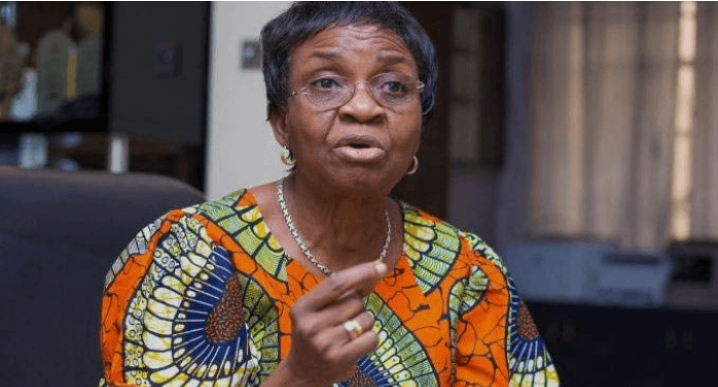
    The Director-General of the National Agency for Food and Drug Administration and Control (NAFDAC), Prof. Mojisola Adeyeye, has called for stiffer penalties for the production and sale of counterfeit regulated products, including life imprisonment or the death penalty for offenders.

    Adeyeye made the call during a press conference in Lagos, where she also disclosed that NAFDAC had cleared debts amounting to about N3.2 billion inherited when she assumed office in 2017.

    According to her, the inherited liabilities included about N1.6 billion in unpaid taxes owed to the government, approximately N700 million owed to staff who travelled for Good Manufacturing Practice (GMP) activities, and about N400 million owed to contractors.

    “We had N3.2 billion debt that I inherited. N1.6 billion was taxes we didn’t pay to the government. My predecessors didn’t pay the government. About N700 million was to staff that travelled for GMP that they didn’t pay and about N400 million for contractors that were not paid,” she said.

    Adeyeye said she took immediate steps to reduce the agency’s expenditure, particularly on official travel, in order to free funds for settling the liabilities.

    She disclosed that NAFDAC recorded about 700 official travels in 2017, a situation she said contributed significantly to the agency’s expenses.

    “I said, no more travel until we pay our debts. We paid N3.11 billion by November 2018. The other money was fictitious. We didn’t pay that,” she said.

    The NAFDAC boss explained that her decision to prioritise debt repayment was based on her personal conviction that the agency should not remain indebted.

    “People asked me, why are you paying debts? We don’t pay debts here. I was brought up not to owe, not to be a slave to the lender,” she added. Daily Trust