Tag: nigeria

  • Nigeria Demands Permanent African Representation On UN Security Council At 81st UNGA

    Nigeria Demands Permanent African Representation On UN Security Council At 81st UNGA

    Precious Nwonu, Enugu

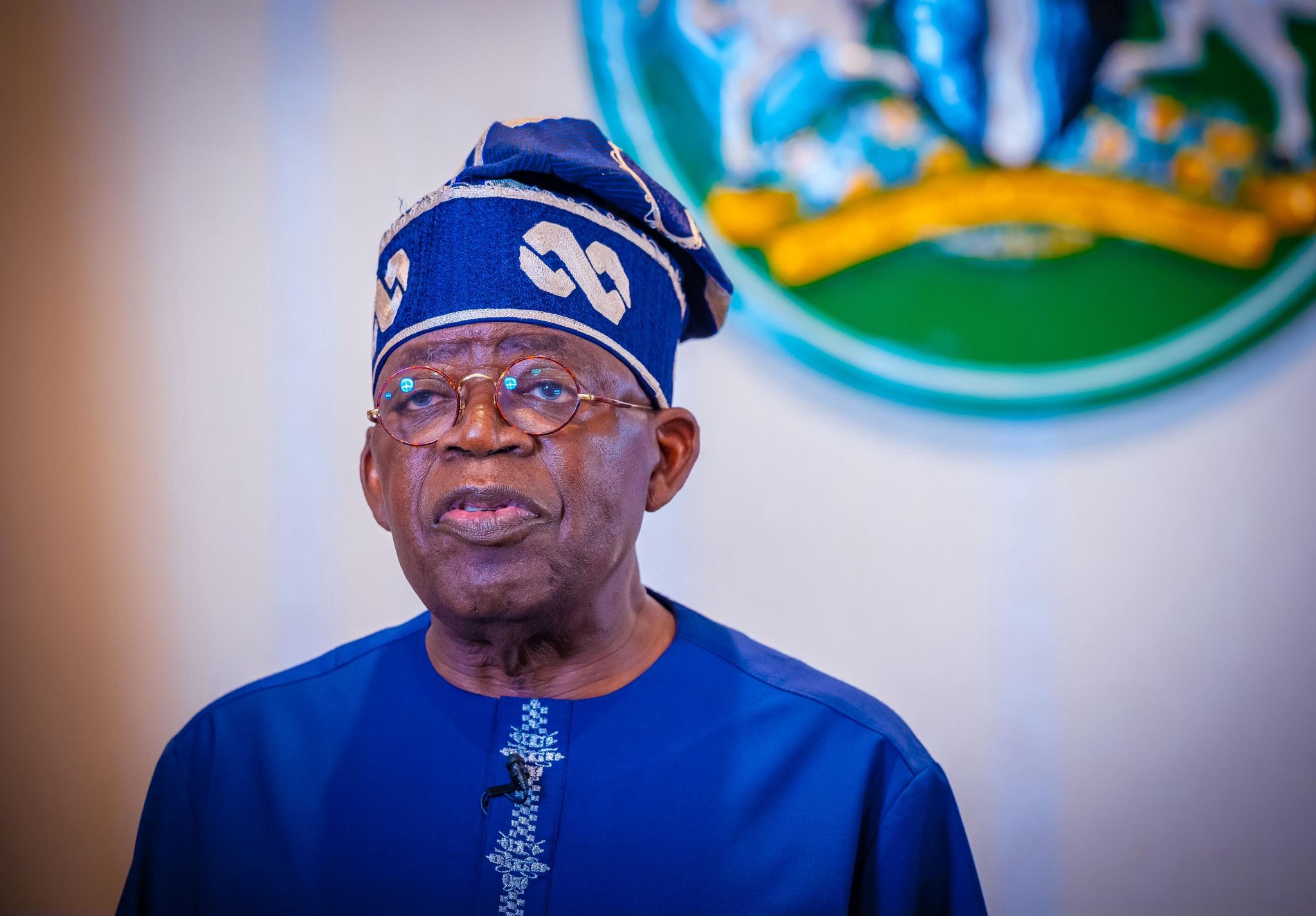
    Nigeria has renewed its demand for permanent representation for Africa on the United Nations Security Council, with Vice President Kashim Shettima calling for a reform of the global body to reflect the realities of the 21st century.

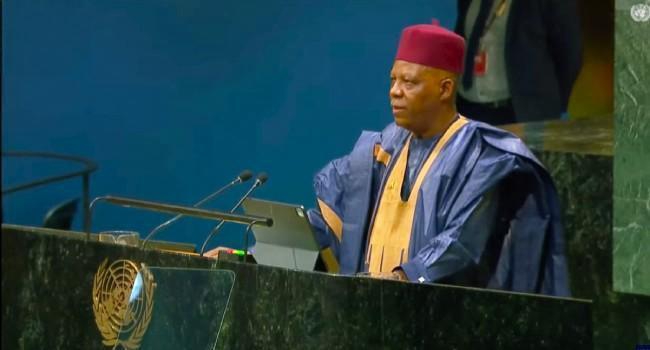
    Shettima made the call on Thursday in New York while delivering Nigeria’s national statement at the 81st United Nations General Assembly on behalf of President Bola Tinubu.

    The Nigerian delegation argued that the existing structure of the Security Council no longer reflects the distribution of global power and influence, noting that Africa remains without a permanent seat despite its significant role in international affairs.

    Nigeria called for at least two permanent seats for Africa, with the same rights and responsibilities enjoyed by existing permanent members, including veto powers for as long as the veto remains in existence.

    It also demanded five non-permanent seats for African countries on the Security Council.

    Shettima said Nigeria was prepared to take on greater responsibilities within the international system, citing the country’s contributions to peacekeeping and regional security efforts in Africa.

    He referenced Nigeria’s involvement in peace and security operations in countries including Liberia, Sierra Leone, Darfur, Mali and The Gambia.

    The Vice President also highlighted the roles of the Economic Community of West African States, the African Union and Gulf of Guinea partnerships in promoting mediation, democratic governance, counter-terrorism and maritime security.

    On development, Shettima identified inadequate financing as one of the major obstacles confronting sustainable development, particularly in developing countries facing significant debt-servicing obligations.

    Nigeria therefore called for reforms to the international financial architecture, greater access to concessional financing and debt sustainability frameworks that take the development needs of poorer countries into account.

    The Vice President also advocated innovative financing mechanisms involving private capital, blended finance, South-South cooperation and strategic partnerships.

    On climate change, Shettima rejected what he described as a false choice between economic development and climate action.

    He said developing countries should be allowed to industrialise, reduce poverty and expand access to energy while pursuing low-carbon development supported by technology transfer, capacity building and climate finance.

    He reiterated Nigeria’s commitment to achieving net-zero emissions by 2060 and outlined the country’s focus on renewable energy, clean cooking, gas as a transitional fuel, climate-smart agriculture and nature-based solutions.

    Shettima also addressed the growing influence of artificial intelligence, calling for technology to be directed towards improving human welfare rather than fuelling conflict.

    He said Nigeria was investing in digital infrastructure, broadband connectivity, innovation, research and technology entrepreneurship while urging international partners to collaborate with the country’s young population.

    The Vice President further called for stronger international cooperation against terrorism, organised crime, cyberattacks and illicit financial flows.

    He said Nigeria’s experience in combating Boko Haram, ISWAP and other armed groups had demonstrated that military responses alone were insufficient without education, economic opportunities, accountable governance and protection of citizens’ rights.

    Turning to conflicts around the world, Shettima called for urgent diplomatic action to address crises including the war in Sudan.

    He urged all parties to respect international humanitarian and human rights law, protect civilians and ensure humanitarian assistance reaches those in need.

    Nigeria also reaffirmed its support for peaceful dispute resolution, dialogue, mediation, peacebuilding and institution-building under the UN Charter.

    Shettima said the African Continental Free Trade Area remained an important opportunity to deepen regional integration, strengthen intra-African trade, promote industrialisation and attract investment.

    He called for greater value addition to Africa’s natural resources, arguing that the continent should move beyond its traditional role as an exporter of raw materials.

    The Vice President concluded by calling for a more inclusive and effective United Nations, saying international cooperation remained essential to addressing conflicts, climate change, technological transformation, development financing and other global challenges.


    Full Text of Nigeria’s Statement At The 81st UN General Assembly

    The Secretary-General of the UN, the Deputy Secretary-General, Excellencies, Heads of State and Government, Distinguished Delegates, Ladies and Gentlemen.

    I extend my warmest congratulations to you, Mr. President, on behalf of President Bola Ahmed Tinubu, on your election as President of the 81st Session of the United Nations General Assembly, and assure you of Nigeria’s full cooperation and support.

    I commend your predecessor’s stewardship of this Assembly. I also salute the Secretary-General, His Excellency Antonio Guterres, and the Deputy Secretary-General, Amina J. Mohammed, for steering the United Nations through storms that have sharpened our awareness of the cause of inaction.

    None of us can pretend that conflicts within our borders or in lands far beyond them do not exact a price from us. Such is the reach of our interdependence. Such is the agency of this Session’s sacred duty to restore trust in the international institutions we establish to reconcile our differences and advance our common interests.

    The persistence of conflicts across the world recalls the purpose for which the United Nations was founded, to spare succeeding generations the devastation of war. We must, therefore, return to the founding principles of dialogue, mutual respect, and collective responsibility.

    Nigeria stands by the Charter and its promise of a world in which diplomacy prevails over coercion, cooperation over isolation, and international law over arbitrary exercise of power.

    Mr. President, the reform of this institution must begin with the reconstitution of the Security Council, for the world of 2026 cannot remain captive to the distribution of power in 1945. Africa cannot continue to fill the council’s agenda while remaining absent from its permanent membership.

    Nigeria demands, in accordance with the Ezulwini Consensus and the CFTA Declaration, at least two permanent seats for Africa, with all the rights and responsibilities of permanent membership, including the veto, for as long as it exists, and five non-permanent seats in total.

    The authority to speak for humanity carries an obligation to represent it. Nigeria stands ready to assume greater responsibility on the strength of obligations honoured and sacrifices made over decades in the service of peace. From Liberia and Sierra Leone to Darfur, Mali, and The Gambia, we have committed personnel and resources when international solidarity required action.

    Through ECOWAS, the African Union, and our Gulf of Guinea partnerships, we continue to advance mediation, democratic governance, counter-terrorism, and maritime security.

    Mr. President, our foreign policy rests on the same conviction that guides our economic reforms. Through sound macroeconomic management, stronger institutions, private sector development, and strategic public investment, we seek to give practical meaning to our sustainable development commitments.

    This purpose binds our national advancement to our continent’s progress and to our responsibility to contribute to a peaceful, equitable, and prosperous world. We understand that governments and multilateral institutions earn trust when their decisions improve lives. Yet, none of these gains will matter if we turn a deaf ear to the trace gathering around our borders and further appeal.

    We inhabit the only planet known to sustain human life, and as long as that scientific path holds, we cannot pretend that we are insulated from conflicts as well. Geography offers no exemption from the consequences of a fractured world.

    Mr. President, we reject the false choice between development and climate action. Developing countries must industrialise, eradicate poverty, and expand energy access through low-carbon pathways supported by technology transfer, capacity building, and climate finance.

    Africa contributes less than four per cent of the greenhouse gas emissions, yet we have disproportionate consequences. Nigeria remains committed to the Paris Agreement and an equitable energy transition that reflects historical responsibility and capacity while protecting people’s right to development.

    Under our energy transition plan, we are working towards net-zero emissions by 2060 while expanding access to affordable, reliable, and sustainable energy. This approach combines renewable energy, clean cooking, and gas as a transitional fuel, with climate-smart agriculture and nature-based solutions.

    Finance must be governed by equity and shared responsibility, rather than charity, with international commitments translated into accessible, predictable, and adequately funded mechanisms that enable developing countries to pursue climate action without compromising development objectives.

    Excellencies, we refuse to surrender our technological future to paranoia. An invention can be destructive or beneficial depending on the purpose it serves and the judgment of those who use it. A knife can take life in the hands of an assailant and can save one in the hands of a surgeon.

    We can deploy artificial intelligence to wage war or use it to transform healthcare, agriculture, governance, and economic productivity. Much of the anxiety surrounding AI reflects the distrust we have allowed to grow amongst us.

    Nigeria is investing in digital public infrastructure, broadband connectivity, innovation systems, research institutions, and technology entrepreneurship. We invite the world to work with our inventive, resourceful, and enterprising young people to direct AI towards humanity’s advancement rather than its destruction.

    Mr. President, one of the greatest obstacles to sustainable development is inadequate financing. Many developing countries devote substantial resources to debt servicing at the expense of education, healthcare, and infrastructure.

    Nigeria therefore calls for reform of the international financial architecture, wider access to concessional financing, and debt sustainability frameworks that recognise developmental needs. We also support innovative financing through private capital, blended finance, South-South cooperation, and strategic partnerships for sustainable development, climate adaptation, and resilient infrastructure.

    Nigeria further recognises the African Continental Free Trade Area as one of the continent’s most transformative opportunities. It can strengthen regional value chains, expand intra-African trade, promote industrialisation, and attract investment.

    Africa must move beyond its historical role as an exporter of raw materials for greater value addition, manufacturing, technological innovation, and knowledge-driven growth. Our abundant natural resources must become engines of shared prosperity rather than sources of perpetual dependency.

    Mr. President, no nation, however formidable its defences, can secure itself completely against dangers sustained beyond its borders. Terrorism, organised crime, cyber attacks, and illicit finance exploit the gaps between our national responses, drawing strength from the divisions that weaken collective action.

    Nigeria’s prolonged struggle against Boko Haram, ISWAP, and other armed groups has taught us that military victories require enduring foundations in education, economic opportunity, accountable governance, and communities whose rights and dignity are protected. Development cannot take root while violence repeatedly uproots livelihoods, and peace cannot endure while injustice and exclusion replenish the ranks of those who threaten it.

    Our common security, therefore, demands cooperation equal to the reach of the trade before us. We must exchange intelligence, strengthen institutional capacity, interrupt the financing of violence, and prevent weapons from crossing borders that our responses too often fail to cross.

    The turmoil in the Sahel illustrates how insecurity in one territory can imperil its neighbours, displace populations, and frustrate commands, regional integration, and democratic governance. As a founding member of ECOWAS, Nigeria upholds regional solidarity and African leadership in resolving these challenges, reinforced by principal international partnerships.

    No country can claim lasting safety while the forces capable of destabilising it retain sanctuary, resources and recruits elsewhere.

    Excellencies, Nigeria remains committed to the peaceful settlement of disputes under the United Nations Charter. The conflicts in Sudan and other war-torn countries demand urgent diplomacy to address their humanitarian, economic, and geopolitical consequences.

    All parties must uphold international humanitarian and human rights law, protect civilians, and facilitate humanitarian access. Negotiated settlements must respect sovereignty and territorial integrity. Within and beyond our continent, no claim of security can justify starving children, denying relief to civilians, or erasing communities from the land they call home.

    We should all be afraid of a world in which we can no longer tell the victim from the aggressor. When our investment in propaganda shields perpetrators from justice to the point that telling the truth becomes a crime, the promise of this institution stands betrayed.

    We place our faith in diplomacy because military victories alone cannot secure lasting peace. Dialogue, reconciliation, and inclusive political processes must give people a stake in ending violence and preserving the agreements that follow.

    The United Nations must therefore strengthen peacekeeping and give greater attention to peacebuilding, mediation, institution building, and sustainable development. Prevention must command greater resources and political attention.

    Mr. President, Africa is ready for the future. Our resilience, our ingenuity, our useful population, our natural wealth, and our expanding markets can make us a major driver of global growth in this century. The African Continental Free Trade Area offers exceptional scope to deepen regional integration, accelerate industrialisation, and strengthen our place in global value chains.

    Developing countries must be recognised as indispensable partners, whose contributions to global solutions and shared prosperity extend far beyond their need for assistance. Such a partnership requires a United Nations that evolves with the aspirations of the present and future generations, institutions that adapt, preserve their relevance, those that resist change imperil it.

    Nigeria remains optimistic because history shows that countries acting with common purpose and determination can overcome obstacles once considered insurmountable. Our generation has the privilege of shaping the future and the responsibility to answer for it.

    Those who follow us will judge our courage in evolving outdated institutions, building cooperation across divisions, protecting the planet, and directing technology responsibly.

    Mr. President, Excellencies, Distinguished Delegates, Nigeria pledges cooperation over confrontation, dialogue over division, hope over fear, and partnership over isolation. These choices must shape institutions that respond to the legitimate aspirations of all. Restoring trust requires us to honor our obligations to one another, and to manage the changes before us with justice, wisdom, and compassion.

    The world looks to this Assembly for leadership, and our debates must lead to action worthy of that expectation. Nigeria believes that the humanity we share is stronger than the divisions we have met, and that cooperation remains wider than conflict.

    A reformed, inclusive, and effective United Nations is indispensable to the peaceful, just, and sustainable world that future generations deserve. Whatever our differences, I repeat, whatever our differences, we must remember that humanity is our oldest citizenship, and peace is the inheritance we owe every child.

    I thank you for your kind attention.

    Thank you.
     

  • FG Reduces Interest Rate On Late Tax Payments From October

    FG Reduces Interest Rate On Late Tax Payments From October

    Precious Nwonu, Enugu

    The Federal Government has introduced a new tax administration order that will reduce the interest charged on late payment of taxes from October 1, 2026.

    The Nigeria Tax Administration Order 2026 was signed by the Minister of Finance and Coordinating Minister of the Economy, Taiwo Oyedele, according to a statement by the Federal Ministry of Finance.

    The order was issued pursuant to Section 65 of the Nigeria Tax Administration Act, 2025, which provides for interest on tax liabilities that remain unpaid after the due date.

    Under the new framework, the interest rate for taxes payable in naira will be linked to the Central Bank of Nigeria’s Monetary Policy Rate, with an additional one percentage point.

    Oyedele explained that the new rate represents a reduction from the previous five-percentage-point spread.

    However, the applicable interest rate will not fall below the yield on 364-day Nigerian Treasury Bills, reflecting the government’s cost of borrowing when tax payments are delayed.

    For tax liabilities denominated in foreign currencies, the order sets the interest rate at the Secured Overnight Financing Rate, a benchmark for US dollar borrowing, plus six percentage points.

    The order further provides that if SOFR is discontinued, its officially recognised successor rate will be used.

    The Nigeria Revenue Service has been directed to publish the applicable interest rates on its website by the third business day of every month.

    The minister said the new system would give taxpayers greater certainty about the financial consequences of delaying tax payments while ensuring that late payment does not become a cheaper source of financing than borrowing from the market.

    Oyedele said the reform was also designed to promote fairness and predictability in tax administration by ensuring that taxpayers know the applicable rates in advance.

    The new rates will apply to interest accruing from October 1, 2026, including interest on tax liabilities that became due before that date.

    However, interest that accrued before October 1 will remain subject to the rules applicable at the time, where specifically provided for under the previous regime.

    The 2026 order replaces the 2017 notice on interest charged on unpaid taxes, as well as other earlier notices dealing with the same subject.

    The reform does not alter the 10 per cent penalty for late payment prescribed under Section 65 of the Nigeria Tax Administration Act.

    Tax authorities will also retain the power under Section 66 of the Act to waive penalties or interest where sufficient grounds are established.

    Oyedele urged taxpayers to file their returns and settle their tax obligations on time, while advising those with outstanding liabilities to make payments promptly or engage the relevant tax authority to address their obligations.

    The minister also encouraged taxpayers to regularly check the Nigeria Revenue Service website for the monthly applicable interest rates.

  • FG Says China Partnership Will Boost Reliable Power Supply, Local Manufacturing

    FG Says China Partnership Will Boost Reliable Power Supply, Local Manufacturing

    Precious Nwonu, Enugu

    The Federal Government has said stronger collaboration with China in the power sector will support efforts to improve electricity supply, expand renewable energy and promote the local production of power equipment in Nigeria.

    The Minister of Power, Joseph Tegbe, stated this in Abuja on Wednesday night during a reception to commemorate the 77th anniversary of the founding of the People’s Republic of China.

    Tegbe said Chinese investment in Nigeria would have a greater and more sustainable impact if it also contributed to the development of local technical expertise and strengthened Nigerian businesses.

    According to him, cooperation between both countries should not only focus on financing and infrastructure but also on equipping Nigerian engineers and technicians with the skills required to operate and maintain power facilities built in the country.

    “As Minister of Power, I see particular promise in deeper cooperation on achieving reliable electricity, renewable energy, and manufacture of power equipment in Nigeria with our cooperation with China,” Tegbe said.

    He said Nigeria-China relations had evolved from diplomatic ties into a broad partnership spanning infrastructure, healthcare, technical exchanges, trade and investment.

    Nigeria and China established diplomatic relations on February 10, 1971, while the relationship was elevated to a comprehensive strategic partnership by President Bola Tinubu and Chinese President Xi Jinping in September 2024.

    Tegbe, who also serves as Director General of the Nigerian-China Strategic Partnership, acknowledged China’s role in financing, engineering and investing in major Nigerian projects, including the Lekki Deep Seaport, railway modernisation projects and the Zungeru Hydropower Station.

    He also praised China’s development in manufacturing, science, high-speed rail and clean energy, describing its transformation as remarkable.

    The minister further highlighted China’s zero-tariff programme for African countries, saying it could create opportunities for Nigerian producers and help increase the country’s exports to the Chinese market.

    He said bilateral trade between Nigeria and China stood at $28bn at the end of 2025, while trade in the first half of 2026 had reached $17bn.

    Tegbe, however, said Nigeria needed to move beyond increasing trade volumes by boosting domestic production and exports to China.

    “Our shared task is to translate that access into stronger Nigerian production and Nigerian exports to China, with benefits that will endure both economies,” he said.

    The minister also reaffirmed Nigeria’s commitment to the One-China principle, stating that the Federal Government recognised the People’s Republic of China as the sole legal government representing China.

    The Chinese Ambassador to Nigeria, Yu Dunhai, said relations between both countries had entered what he described as “the fast lane” under the leadership of Presidents Xi Jinping and Tinubu.

    Dunhai said bilateral economic cooperation had continued to expand, pointing to recent agreements on economic partnership and aquatic exports as measures that could provide further institutional support for trade.

    He said trade between the two countries reached $18bn in the first half of 2026, representing a 35 per cent increase, while Chinese imports from Nigeria rose by 81 per cent.

    The ambassador said China was prepared to align its 15th Five-Year Plan with the Federal Government’s Renewed Hope Agenda, particularly in industrialisation, digital development and the green and blue economies.

    “Our future cooperation holds boundless potential. China stands ready to align its 15th Five-Year Plan with President Tinubu’s ‘Renewed Hope’ Agenda across industrialisation, digital, green, and blue economies,” he said.

    Dunhai also invited Nigeria to join the World Artificial Intelligence Cooperation Organisation, saying participation would give the country an opportunity to contribute to and benefit from developments in global artificial intelligence.

    He noted that China’s zero-tariff policy covering 53 African countries, which commenced on May 1, had contributed to a 24 per cent rise in China’s imports from Africa during May and June.

    According to him, Chinese innovations in artificial intelligence, digital payments and solar energy were also helping African countries address development challenges.

    Dunhai said Nigeria and China, which are marking 55 years of diplomatic relations, should continue to strengthen their partnership through mutual respect, shared development and practical cooperation.

    “Those who walk the same path go far. Let us empower development through innovation, openness, and sincere cooperation to continuously enrich China-Nigeria friendship and write a new chapter in China-Africa relations,” he said.

  • Nigeria, EU Move To Finalise Long-Delayed Readmission Agreement

    Nigeria, EU Move To Finalise Long-Delayed Readmission Agreement

    Precious Nwonu, Enugu

    Nigeria and the European Union have renewed discussions on migration cooperation, with both sides working towards concluding a readmission agreement that has been under negotiation since 2016.

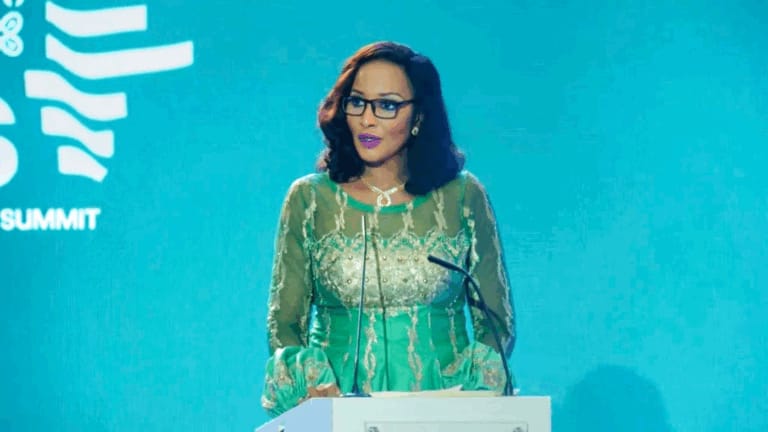
    The issue was discussed on Monday in New York during a meeting between Nigeria’s Minister of Foreign Affairs, Ambassador Bianca Odumegwu-Ojukwu, and the EU Commissioner for Internal Affairs and Migration, Magnus Brunner.

    The meeting was held on the sidelines of the 81st United Nations General Assembly at the UN Headquarters.

    A statement issued by the minister’s Special Assistant on Communication and New Media, Magnus Eze, said Brunner emphasised the need to conclude the EU-Nigeria Readmission Agreement.

    According to the statement, the commissioner said finalising the agreement would provide a framework for broader cooperation between Nigeria and the EU on migration.

    The proposed agreement was also discussed extensively during the eighth Nigeria-EU Ministerial Dialogue held in March 2026.

    Responding, Odumegwu-Ojukwu said Nigeria wanted any migration partnership with the EU to include support for the reintegration of Nigerians returning to the country.

    She also called for assistance with infrastructure development and the expansion of legal routes for Nigerians seeking employment and other opportunities abroad.

    The minister stressed the importance of creating structured and lawful mobility opportunities for Nigerians, particularly the country’s large young population.

    She also maintained that migration cooperation should take Nigeria’s development priorities into consideration.

    The EU delegation said Nigeria’s concerns had been reflected in the proposed framework for cooperation, which is expected to be expanded into a broader Migration and Security Cooperation Contract.

    The proposed framework would cover several areas, including talent partnerships, legal migration pathways, reintegration of returnees and border management.

    It would also involve cooperation with the European Border and Coast Guard Agency, Frontex, to strengthen border management and migration-related operations.

    Nigeria and the EU are also considering an arrangement for information exchange with Europol as part of efforts to strengthen the country’s capacity to tackle transnational organised crime.

    Brunner said the EU was interested in developing legal migration channels through talent partnerships.

    He noted that such arrangements could help address labour and skills shortages in Europe while providing Nigerian professionals with legitimate opportunities abroad.

    The discussions also touched on concerns about irregular migration, with the EU commissioner indicating that progress in tackling irregular migration could help create more opportunities for legal migration.

    The two sides are expected to continue discussions, with Brunner indicating an interest in visiting Abuja in November 2026. The date of the proposed visit is yet to be finalised.

    The latest engagement forms part of efforts by Nigeria and the EU to develop a broader migration partnership covering irregular migration, return and reintegration, legal mobility, border security and opportunities for Nigerian professionals and young people.

  • Ebola: NCDC Steps Up Screening Of Travellers From Affected Countries

    Ebola: NCDC Steps Up Screening Of Travellers From Affected Countries

    Precious Nwonu, Enugu

    The Nigeria Centre for Disease Control and Prevention has introduced enhanced surveillance measures for travellers arriving in Nigeria from countries affected by Ebola Virus Disease.

    The agency said passengers arriving from countries with active or relevant Ebola transmission may be required to complete a health declaration form as part of efforts to prevent the disease from being imported into the country.

    The NCDC disclosed this in an interim public health advisory issued on Tuesday following the ongoing Ebola outbreak in the Democratic Republic of Congo.

    The advisory, signed by the agency’s Director-General, Dr Jide Idris, said the measures were introduced after an assessment of the evolving situation and consultations with public health experts and the Federal Ministry of Health and Social Welfare.

    According to the agency, affected travellers may be required to provide health and travel information through the Health Declaration Form to support surveillance and follow-up.

    However, the NCDC clarified that travellers arriving from countries without active or relevant Ebola transmission are not currently required to complete the form.

    The agency also urged Nigerians and other residents to remain alert to symptoms associated with Ebola and seek medical attention promptly if such symptoms occur.

    It advised individuals with relevant travel or exposure history to disclose such information when seeking medical care.

    The NCDC said Nigeria remained on high alert and that preparedness and response activities were ongoing to protect the country against the possible importation and spread of the disease.

    It added that the measures would be reviewed regularly based on developments in the Ebola outbreak and the outcome of ongoing public health risk assessments.

    The agency reaffirmed its commitment to protecting Nigerians through surveillance, preparedness and evidence-based response to emerging public health threats.

  • Tinubu Extends European Vacation, to Return This Weekend

    Tinubu Extends European Vacation, to Return This Weekend

    Precious Nwonu, Enugu

    President Bola Tinubu has extended his working vacation in Europe by a few days and is expected to return to Nigeria this weekend, the Presidency has announced.

    Tinubu left Nigeria on August 30 for a three-week working vacation, initially travelling to London before moving to Paris, France, where he met French President Emmanuel Macron and businessman Vincent Bolloré.

    The President’s Special Adviser on Information and Strategy, Bayo Onanuga, announced the extension in a statement on Monday.

    According to him, Tinubu has remained in contact with officials at home and continued to direct government affairs while abroad.

    The Presidency said the President had, among other directives, ordered an independent investigation into the deaths of 37 suspected illegal miners who died after being detained by the Nigeria Security and Civil Defence Corps in Minna, Niger State.

    “President Tinubu will return to Nigeria at the weekend, following the extension of his working vacation by a few days,” the statement said.

    During Tinubu’s absence, Vice President Kashim Shettima has represented him at several official engagements.

    Shettima, however, departed Abuja on September 20 for New York to represent Nigeria at the 81st United Nations General Assembly, where he is expected to deliver the country’s national statement.

    The Presidency said Secretary to the Government of the Federation, George Akume, would continue representing the President at official functions while Shettima is in the United States.

    ### Atiku raises constitutional questions

    The extension of Tinubu’s stay abroad has drawn criticism from former Vice President Atiku Abubakar, who questioned the constitutional arrangements for the exercise of presidential powers.

    Atiku, in a statement posted on his verified X account on Monday, asked who was exercising presidential authority with both Tinubu and Shettima currently outside the country.

    He referred to Section 145 of the 1999 Constitution, which provides for the President to transmit a written declaration to the President of the Senate and the Speaker of the House of Representatives when proceeding on vacation or otherwise unable to discharge the functions of his office.

    Atiku said Nigerians had not been shown any such declaration transferring presidential functions to Shettima and called on the Presidency to make the document public if it exists.

    The former vice president also argued that Section 145(2) provides for the National Assembly to mandate the Vice President to perform the functions of President as Acting President if the required declaration is not transmitted within 21 days.

    The constitutional provision and its application to presidential vacations have previously attracted differing interpretations from constitutional lawyers. Premium Times reported earlier this month that Section 145(1) expressly requires a written declaration when the President proceeds on vacation, while Section 145(2) provides a mechanism involving the National Assembly where such a declaration is not transmitted within 21 days.

    Atiku described the matter as one of constitutional procedure rather than political convenience and questioned the continued exercise of presidential functions while Tinubu remains abroad.

    ### Presidency rejects criticism

    The Presidency has maintained that Tinubu remains in charge of government despite his physical absence from Nigeria.

    Presidential adviser Daniel Bwala said the President’s constitutional powers were not restricted by his geographical location and that Tinubu could continue to direct government affairs from abroad.

    The Presidency also dismissed Atiku’s concerns over Tinubu’s absence from the UN General Assembly, describing the criticism as baseless.

    Meanwhile, Shettima is representing Nigeria at the UN General Assembly and is scheduled to present the country’s national statement.

    Tinubu is expected to return to Nigeria at the weekend following the extension of his working vacation.

  • Nigeria Moves to Acquire 12 US-Made Attack Helicopters

    Nigeria Moves to Acquire 12 US-Made Attack Helicopters

    Precious Nwonu, Enugu

    The Federal Government has moved closer to acquiring 12 AH-1Z Viper attack helicopters from the United States following the signing of an agreement between the Nigerian Air Force and Bell Textron.

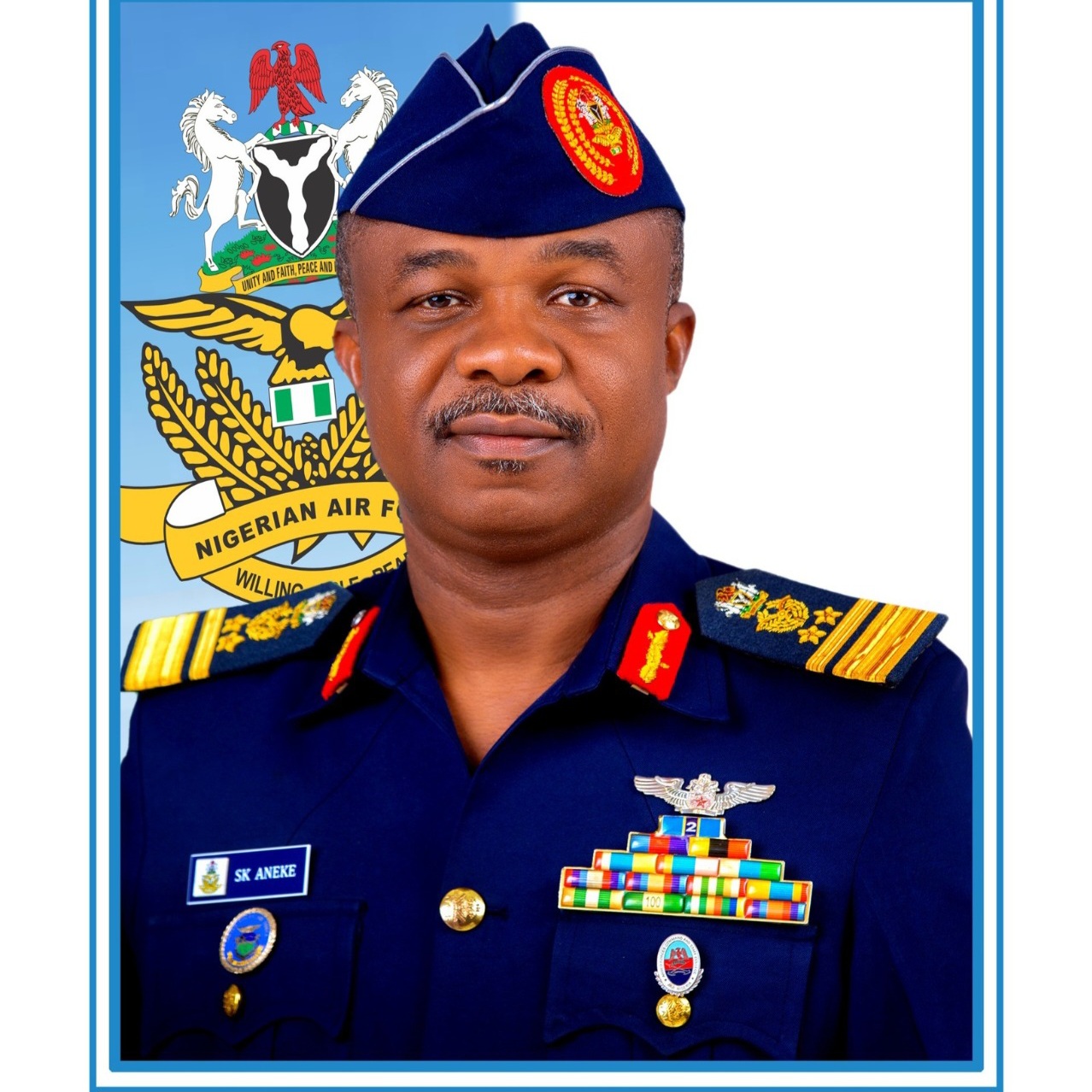
    The agreement was formalised during a ceremony held at Bell Textron’s facility in Amarillo, Texas, where the Chief of the Air Staff, Air Marshal Sunday Aneke, led a delegation from the Nigerian Air Force.

    The development forms part of the ongoing defence cooperation between Nigeria and the United States and is aimed at strengthening the country’s airpower capabilities.

    The Director of Public Relations and Information, NAF Headquarters, Air Commodore Ehimen Ejodame, disclosed the development in a statement on Monday.

    According to the statement, the acquisition is part of the Federal Government’s broader efforts to modernise the Armed Forces and improve Nigeria’s capacity to respond to security threats.

    Speaking at the ceremony, Aneke said the AH-1Z Viper programme would strengthen the operational capabilities of the Nigerian military.

    He described the acquisition as an important step towards building a more capable and mission-ready Air Force.

    “The acquisition of the AH-1Z Viper helicopters represents an important milestone in our continuing efforts to build a more capable, professional and mission-ready Nigerian Air Force,” Aneke said.

    The Chief of the Air Staff said the programme was consistent with his command philosophy of maintaining a highly motivated and professional force capable of delivering airpower in coordination with ground forces.

    He stressed that the new capabilities must translate into improved operational effectiveness and contribute directly to the country’s national security objectives.

    Aneke also commended President Bola Tinubu for what he described as his support for efforts to strengthen Nigeria’s defence architecture.

    He acknowledged the cooperation of the US Government, Bell Textron, Programme Management Air 276 and other stakeholders involved in the helicopter acquisition programme.

    The Air Force chief said continued defence cooperation, technical collaboration and capability development would be essential to the successful implementation of the programme.

    During the visit, the Nigerian delegation also inspected the AH-1Z Viper production line at the Bell Textron facility.

    The development comes less than a week after the Nigerian Air Force received five additional helicopters as part of the Federal Government’s ongoing efforts to expand and modernise the country’s air fleet.

    The five helicopters comprised three AW-109 Trekker B aircraft manufactured by Leonardo Helicopters of Italy and two H-125 helicopters produced by Airbus Helicopters.

    The NAF said the latest acquisitions were aimed at improving the Armed Forces’ ability to conduct operations and respond to security challenges across the country.

  • Tinubu Launches Four-Year Plan to End Child Labour in Nigeria

    Tinubu Launches Four-Year Plan to End Child Labour in Nigeria

    Precious Nwonu, Enugu

    President Bola Tinubu has unveiled a four-year national action plan aimed at eliminating child labour in Nigeria, describing the issue as a major national development concern.

    Tinubu made the declaration on Wednesday in Abuja at the National Dialogue on Advancing the Implementation of Nigeria’s National Child Labour Policy and National Action Plan 2026-2030.

    The President, who was represented at the event by the Secretary to the Government of the Federation, George Akume, also launched the 2024 National Child Labour Survey Report.

    According to a statement by Akume’s media aide, Yomi Odunuga, Tinubu said child labour had implications for several areas of national development, including education, poverty reduction, economic growth, food security and human capital development.

    He said the Federal Government would focus on addressing the factors that push children into labour, while strengthening systems designed to protect them.

    “Every nation is judged by how well it protects its children. A child who is forced into labour instead of attending school loses more than an education. That child loses opportunities, confidence, health and the chance to fully contribute to national development,” the President said.

    Tinubu said his administration would improve labour administration and inspection, strengthen child protection systems and expand interventions addressing poverty, unemployment, poor access to quality education and social exclusion.

    He said the 2026 theme, “Red Card to Child Labour: Fair Play for Children, Decent Work for Adults,” reflected the country’s commitment to tackling child exploitation.

    The President identified education as a key measure for preventing child labour, saying his administration was implementing reforms focused on out-of-school children, education data, teacher development and skills acquisition.

    He added that the Renewed Hope National Home-Grown School Feeding Programme would encourage school attendance while helping to address hunger and malnutrition among children from vulnerable families.

    Tinubu also pointed to social protection programmes, including the NG-CARES Additional Financing Programme and the Human Capital Opportunities for Prosperity and Equity Programme, as measures aimed at strengthening household resilience.

    According to him, expanding economic opportunities for parents and caregivers would help reduce the pressure that forces children to contribute to household income.

    The President also referenced the National Plan of Action on Ending Violence Against Children in Nigeria 2024-2030, launched in 2025, and said efforts were ongoing to strengthen enforcement of the Child Rights Act and other laws protecting children.

    He said the government was also taking steps to improve security in schools, particularly in communities considered vulnerable to threats.

    Tinubu described Nigeria’s status as an Alliance 8.7 Pathfinder Country as both a responsibility and an opportunity to demonstrate progress in combating child labour.

    He said the newly launched National Child Labour Policy and National Action Plan 2026-2030 would provide a framework for turning the country’s commitments into measurable actions.

    The President urged state governments to support the implementation of the plan and called on the Nigeria Governors’ Forum and Nigeria Governors’ Spouses Forum to promote child protection initiatives across the country.

    He also appealed to employers to ensure that their supply chains were free from child labour.

    Workers’ organisations, development partners, traditional and religious leaders, communities, parents and guardians were similarly urged to contribute to efforts to protect children from exploitation.

    Tinubu subsequently launched the 2024 National Child Labour Survey, conducted under the Labour Force Survey, alongside the National Policy and National Action Plan for the Elimination of Child Labour 2026-2030.

    He directed federal ministries, departments and agencies, state governments, employers, workers’ organisations, development partners and civil society organisations to work towards full implementation of the policy and action plan.

    The President commended the Federal Ministry of Labour and Employment, International Labour Organisation, ECOWAS, European Union, Government of the Netherlands, United States Department of Labour, World Bank, National Bureau of Statistics and members of the National Steering Committee on the Elimination of Child Labour for their contributions.

    Tinubu said the country must now move “beyond commitment to action” to ensure that Nigerian children have access to education and protection and are able to grow up free from exploitation.

  • NAF Takes Delivery of Five New Helicopters for Security Operations

    NAF Takes Delivery of Five New Helicopters for Security Operations

    Precious Nwonu, Enugu

    The Nigerian Air Force has taken delivery of five new helicopters as part of efforts to strengthen its air operations and improve support for ground troops tackling extremist groups and other security threats across the country.

    The newly delivered aircraft comprise three AW109 Trekker B helicopters manufactured by Leonardo Helicopters of Italy and two H125 helicopters produced by Airbus Helicopters.

    The Director of Public Relations and Information, NAF, Air Commodore Ehimen Ejodame, disclosed this in a statement on Wednesday.

    Ejodame said the three AW109 Trekker B helicopters arrived in Lagos on September 15, 2026, as part of 10 aircraft recently acquired by the Federal Government.

    He said the remaining seven AW109 Trekker B helicopters were expected to arrive before the end of the year, while the two H125 helicopters had already been delivered.

    The latest acquisition is part of the Federal Government’s ongoing efforts to modernise the country’s airpower and improve the operational capacity of the Armed Forces in responding to evolving security challenges.

    Reacting to the development, the Chief of the Air Staff, Air Marshal Sunday Kelvin Aneke, described the delivery as another milestone in the government’s investment in the re-equipment and modernisation of the Nigerian Air Force.

    Aneke said the helicopters would increase the availability of operational aircraft and improve the service’s ability to respond to security situations across different theatres.

    “The arrival of these five helicopters provides greater flexibility in the employment of airpower in support of ground troops in ongoing operations,” he said.

    The Chief of the Air Staff also expressed appreciation to President Bola Tinubu for what he described as his continued support for the Nigerian Air Force and its modernisation programme.

    He said the government’s investment was helping the service develop the capabilities required to carry out its operational responsibilities and respond to the country’s changing security needs.

    The NAF said the new platforms would further enhance its ability to conduct air operations and provide support to troops deployed across various parts of the country.

  • ADC Raises Alarm as Petrol Price Rises to N1,470

    ADC Raises Alarm as Petrol Price Rises to N1,470

    Precious Nwonu, Enugu

    The African Democratic Congress has raised concerns over the latest increase in petrol prices, warning that the rising cost of Premium Motor Spirit is deepening the economic pressure on Nigerian households and businesses.

    The opposition party’s warning came as petrol prices at some Nigerian National Petroleum Company Limited retail outlets in Abuja rose to as much as N1,430 per litre, while prices in some locations were reported at about N1,470 per litre.

    In a statement issued on Monday by its National Publicity Secretary, Bolaji Abdullahi, the ADC said the increase was already affecting the cost of transportation, food, electricity, education and other essential services.

    The party said the impact of higher fuel prices went beyond motorists, arguing that increased transportation and operating costs were being passed on to consumers and businesses.

    “President Tinubu has turned the petrol pump into an instrument of punishment for Nigerians,” the party said.

    The ADC also expressed concern over reported increases in private school fees, with some schools allegedly raising charges by between 30 and 40 per cent.

    It said the increases were adding to the financial burden on families whose incomes had not increased at the same pace as the cost of living.

    “Parents are not earning 40 per cent more. Their salaries have not risen with the prices of fuel, food, rent, transportation and school fees,” the party said.

    The opposition party, however, acknowledged that school proprietors were also facing higher operating expenses, including electricity bills, fuel costs, taxes, rent and staff salaries.

    The ADC urged President Bola Tinubu’s administration to take urgent measures to ease the pressure on households and businesses, warning against interpreting Nigerians’ ability to cope with the situation as acceptance of government policies.

    Meanwhile, checks at several NNPCL retail outlets in the Federal Capital Territory showed that petrol was being sold at between N1,395 and N1,430 per litre.

    The latest prices represent increases of between N50 and N80 per litre, depending on the location.

    The new pump prices were observed at NNPCL stations around Airport Junction, Gwarinpa, Kubwa Expressway, Wuse Zone 4 and other parts of Abuja and its environs.

    However, Sunday Asefon, National Director of Students Engagement of the City Boy Movement and Senior Special Assistant to the President on Students Engagement, attributed the latest petrol price increase to international market pressures rather than subsidy removal alone.

    In a statement titled, “The Pain Is Not From Subsidy Removal, It’s From Geopolitical Tensions Including the War in the Middle East,” Asefon linked the development to tensions involving the United States, Iran and Israel.

    He argued that the rise in petrol prices from about N800 per litre at the Dangote Petroleum Refinery’s gantry to between N1,300 and N1,400 at filling stations could not be explained solely by the removal of fuel subsidy.

    “The real enemy is the ongoing global geopolitical tension. The missiles being fired by the United States, Iran and Israel are the unseen hands shaping the global oil market,” Asefon said.

    He pointed to instability around the Strait of Hormuz, a major route for global oil shipments, as another factor capable of affecting international crude prices and, consequently, domestic petrol costs.

    According to Asefon, the Bank of England had warned that a complete disruption of the waterway could push global crude prices to between $100 and $130 per barrel.

    The contrasting positions come as Nigerians continue to contend with higher fuel and transportation costs, with the latest pump price adjustments adding to concerns over the cost of living.

  • New UK High Commissioner Arrives Nigeria, Pledges Stronger Bilateral Ties

    Precious Nwonu, Enugu

    The United Kingdom’s High Commissioner-designate to Nigeria, Pete Vowles, has arrived in Abuja to assume his new diplomatic assignment, promising to strengthen cooperation between the two countries.

    Vowles, who succeeds Dr Richard Montgomery CMG, arrived in the Nigerian capital on Monday, according to a statement by the British High Commission.

    Speaking after his arrival, the new envoy said his immediate focus would be on understanding Nigeria, engaging with its people and exploring opportunities to further strengthen the longstanding relationship between both countries.

    “I am hugely excited to be in Nigeria. My first priority is to listen and learn – to travel, meet people and immerse myself in this extraordinary country, its culture and its energy,” he said.

    Vowles said the relationship between Nigeria and the UK was built largely on strong ties between their people, adding that he looked forward to working with stakeholders across the country to expand areas of cooperation.

    “The UK and Nigeria have a deep and enduring partnership, built above all on the connections between our people,” he said.

    The envoy added that he was keen to discover Nigeria and work with partners across the country to determine how both nations could achieve more together.

    Vowles comes into the role with extensive diplomatic and development experience.

    Before his appointment to Nigeria, he served as the British Ambassador to Zimbabwe and held senior positions at the UK Foreign, Commonwealth & Development Office.

    He had also served as the British Ambassador to Myanmar and held diplomatic and development assignments in countries including Bangladesh, India, the Democratic Republic of Congo and Kenya.

    His appointment as the UK’s next High Commissioner to Nigeria was announced on June 16, 2026.

    His arrival comes as Nigeria and the UK continue to maintain extensive relations covering diplomacy, trade, security, development and people-to-people exchanges.

    Both countries have continued to engage on a range of bilateral and international issues of mutual interest.

  • Security Operatives Take Over NFF Secretariat Ahead of FIFA Stakeholders’ Meeting

    Security Operatives Take Over NFF Secretariat Ahead of FIFA Stakeholders’ Meeting

    Precious Nwonu, Enugu

    Security operatives from the Department of State Services and the Nigeria Police Force have taken control of the Nigeria Football Federation secretariat in Abuja ahead of a scheduled stakeholders’ meeting with officials of world football governing body, FIFA.

    The heavily armed operatives were deployed around the NFF headquarters on Monday, with access to the premises restricted as preparations continued for the meeting.

    More than 20 security personnel, who arrived in several official vehicles, were positioned at strategic points around the secretariat and subjected visitors and stakeholders to screening at the entrance.

    Only a limited number of people were reportedly allowed into the complex, while others were denied access.

    Attempts by journalists to enter the secretariat were also blocked by the security operatives, who said a high-level management meeting was taking place inside the premises.

    The operatives reportedly said they had received instructions from above not to allow journalists into the complex or permit them to operate within the secretariat.

    Earlier, a vehicle from the State House arrived at the NFF headquarters and delivered files containing documents ahead of the management meeting.

    Meanwhile, the FIFA delegation expected to participate in the stakeholders’ meeting scheduled for Monday night in Abuja arrived in Nigeria on Sunday.

    The delegation was reportedly received at the Nnamdi Azikiwe International Airport by a combined team of security operatives and taken away from the airport.

    The stakeholders’ meeting is expected to bring FIFA officials together with relevant Nigerian football stakeholders as discussions continue on issues concerning the country’s football administration.