Tag: economy

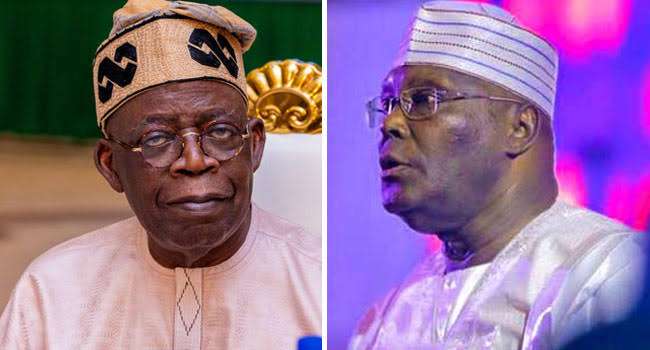
  • Atiku Knocks Tinubu Over 24.7tn Borrowing, Says Government Is Choking Businesses of Credit

    Atiku Knocks Tinubu Over 24.7tn Borrowing, Says Government Is Choking Businesses of Credit

    Atiku says government borrowing surged to N24.7tn despite higher oil prices, squeezing private-sector credit and worsening economic hardship.

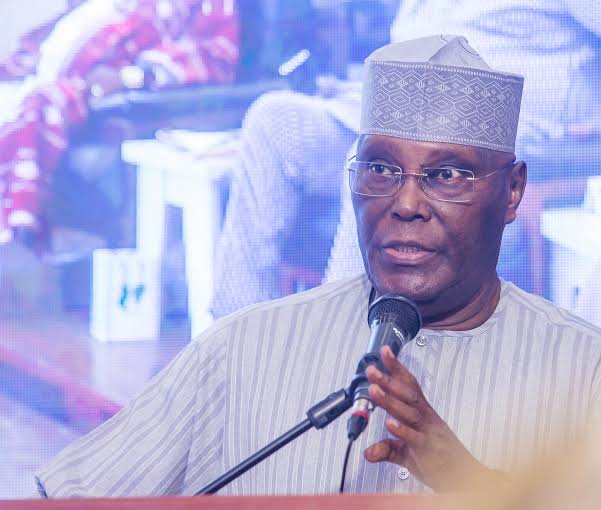
    Former Vice President, Atiku Abubakar, on Monday described the federal government’s ‘unprecedented’ appetite for domestic borrowing as evidence of dangerous fiscal indiscipline that is starving Nigerian businesses of credit, killing jobs and worsening the cost-of-living crisis.

    In a statement issued by his Senior Special Assistant on Public Communication, Phrank Shaibu, Atiku said it was particularly alarming that the Bola Tinubu administration continues to borrow at such a frightening pace at a time when crude oil prices have risen substantially above the assumptions upon which the 2026 budget was built.

    “At the beginning of this fiscal year, the federal government budgeted on an oil benchmark of $64.85 per barrel. Today, crude oil prices have risen substantially above that benchmark.

    “Yet, instead of this windfall translating into lower borrowing, stronger businesses and relief for Nigerians, the federal government went into the domestic market and borrowed a staggering N24.7 trillion between January and August 2026 — 90.5 per cent more than the N12.98 trillion borrowed in the corresponding period of 2025.

    ‘’This is a government borrowing like drunken sailors in the middle of a revenue windfall. Tinubu removed fuel subsidy and told Nigerians the sacrifice would free up money. He floated the naira and government revenues consequently received a massive nominal boost. Oil prices have risen sharply. Revenues have improved. Yet the borrowing has not gone down — it has exploded,” the former vice president stressed.

    According to him, Nigerians must begin to ask what the money saved fromfuel subsidy has been spent on.

    “What makes this recklessness even more damaging is that the government is now competing directly with Nigerian businesses for money. Credit to the government grew by 43 per cent, while credit to the private sector grew by only 9.6 per cent. Government credit is expanding about 4.5 times faster than credit to businesses.

    “This is yet another troubling signal that the Tinubu economic reforms have failed to produce any meaningful impact on the private sector,’’ Atiku added.

    Atiku said that ordinarily, the outlook and performance of the private sector should serve as one of the clearest yardsticks for measuring the effectiveness of government economic policy.

    He said: ‘’If businesses are expanding, investing, hiring and gaining easier access to capital, then reform can claim some measure of success.

    “But under Tinubu’s economic policy, the exact opposite is happening. The public sector is exerting an increasingly parasitic effect on the private sector — consuming the credit, capital and financial oxygen that productive businesses desperately need. That, at a glance, is one of the clearest indictments of the failure of these so-called reforms.

    “When banks can lend to the government at attractive, risk-free rates, why would they lend cheaply to the manufacturer in Aba, the furniture maker in Kaduna, the agro-processor in Kano or the young entrepreneur in Lagos?

    “The result is obvious: businesses pay more for credit, expansion is postponed, factories struggle, jobs disappear and the cost of producing everything from food to household goods rises. This government is not merely borrowing money; it is borrowing away the future of Nigerian businesses.”

    He stated that Nigeria cannot achieve prosperity by allowing the government to swallow the credit that should finance production, stressing that an economy grows when businesses borrow to build factories, farmers borrow to expand production and entrepreneurs access affordable capital to create jobs.

    “My administration will impose fiscal discipline, cut waste, prioritiseproductive expenditure and progressively reduce the government’s suffocating dependence on the domestic credit market.

    The government must make room for the private sector to breathe, invest, produce and employ.

    “After three years of sacrifice, Nigerians deserve to see what happened to the subsidy savings, the additional revenues and the crude-oil windfall. You cannot collect more, earn more and still borrow more — while asking hungry Nigerians to sacrifice more. Something is fundamentally wrong with that equation,” he argued.

    Meanwhile, the African Democratic Congress (ADC) on Monday alleged that the Auditor-General’s finding that N33.75 billion in cash transfers to 3.29 million households cannot be verified was proof that under Tinubu, social investment had become a racket run for the benefit of officials, not the poor.

    In a statement, ADC’s National Publicity Secretary, Mallam Bolaji Abdullahi, stated: “Let us call this what it is. Not mismanagement. Not an oversight. It is an organised racket, which this government has run under the guise of a social intervention programme. They are stealing from the poor and telling them to continue to endure hardship.

    “This latest report of an unaccounted N33.75 billion intervention fund, buried inside a larger N78 billion fund, and the historical pattern of corruption that has trailed this kind of programme would suggest that this government has found a way to steal from the poor by turning the social intervention programme into a criminal enterprise,” the party stated.

    Abdullahi said instead of the federal government addressing the wanton corruption associated with such interventions in the past, it has announced an even bigger package of $1 billion without demonstrating that it has made any effort to ensure greater transparency and accountability.

    “Barely weeks before this audit blew up in their faces, they wheeled out a new $1 billion so-called ‘Renewed Hope Social Protection Programme’ with the usual State House fanfare. Given the familiar history, we are in no doubt that even in the unlikely event that this latest intervention is ever implemented, it would end up like the others before it: another racket.”

    While demanding a full probe into the scheme, the ADC noted that interventions such as this became necessary because the APC government has made it impossible for people to earn a dignified living.

    “Their twin disastrous policies of fuel subsidy removal and currency devaluation have exploded the population of Nigerians living in extreme poverty and therefore needing cash handouts from the government, which has now become a mere pretext for stealing in the name of the poor.

    “This is a government that manufactured hardship with one hand and pocketed the relief with the other. Fuel prices up. Transport costs up. Food prices up. And the one programme meant to soften the blow turns out to be a black hole. Enough is enough,” it added.

    The party, therefore, demanded the immediate publication of the full beneficiary register, the REMITA payment trail, and the names of every official who obstructed the auditor-general. Arise News

     

  • President Tinubu Says Economic Reforms Moving Nigeria’s Economy to $1tn

    President Bola Ahmed Tinubu

    President Bola Tinubu on Tuesday said the economic reforms introduced by his administration have placed Nigeria on the path to achieving a $1tn economy by 2030, despite the hardship and challenges confronting Nigerians.

    Represented by the National Chairman of the All Progressives Congress, Prof. Nentawe Yilwatda, at the second edition of the Asiwaju Scorecard Series and Policy Roundtable in Abuja, Tinubu said the reforms had strengthened the foundation for economic stability, growth and prosperity.

    Tinubu commenced major economic reforms on May 29, 2023, at his inauguration, measures that were met with mixed reactions from Nigerians due to their varying impact on citizens’ livelihoods.

    However, more than three years into the administration, the Presidency has maintained that the reforms are in the best interest of the country and are delivering the desired results.

    Tinubu said the removal of fuel subsidy and reforms in the foreign exchange market, alongside increased revenue mobilisation and investments in critical infrastructure, were necessary to move the country away from years of economic uncertainty and towards sustainable growth.

    He stated, “When President Bola Ahmed Tinubu assumed office on 29 May 2023, Nigeria faced a difficult economic inheritance. We had fuel subsidy distortions, multiple exchange-rate windows, weak revenue mobilisation, foreign-exchange shortages, rising debt-service pressures and years of inadequate investment in critical infrastructure. The President understood that Nigeria could not continue on that trajectory and therefore took difficult decisions, including the removal of the fuel subsidy and the reform of the foreign-exchange market.

    “The evidence increasingly shows that the foundation is strengthening. Nigeria’s gross external reserves has risen to about $52.7 billion by August 2026. Consolidated non-oil revenue increased from approximately ₦13.63 trillion in 2023 to ₦16.4 trillion in the first two quarters of 2026, demonstrating the growing contribution of non-oil sources to government revenue. Our trade position has also improved dramatically: from a merchandise trade surplus of only about ₦44.8 billion for the whole of 2023 to approximately ₦7.54 trillion in the first quarter of 2026 alone.

    “Real GDP grew by 4.43 percent in Q2 2026, while inflation has fallen significantly from its earlier peak to about 15.4 percent. These figures do not mean that our economic challenges have disappeared, but they demonstrate that the direction of travel has changed. And let me emphasise: macroeconomic stability is not the destination; it is the foundation. The ultimate test is when stability translates into cheaper food, more jobs, affordable credit, reliable electricity and greater purchasing power for Nigerians.

    “Most Nigerians have asked, why the ambitious $1 trillion economy by Mr President? The $1 trillion economy is not merely a number, but a national mission: a Nigeria that produces more, exports more, attracts more investment, creates more jobs and gives its young people a greater stake in the future.”

    He said Nigeria’s $1tn economy ambition requires adequate infrastructure, stressing that the Renewed Hope Agenda prioritises roads, rail, ports, energy and digital connectivity.

    The President added, “Nigeria must now take full advantage of its enormous maritime opportunity by developing an integrated five-port maritime and logistics corridor. Our strategic ambition should be to develop and connect five major deep-sea ports at Lagos, Ondo, Ibom, Port Harcourt and Calabar, linking them by modern rail and road infrastructure, with the Lagos-Calabar Coastal Super Highway serving as the principal coastal road spine. But the vision does not stop at the coastline.

    “The Western Corridor will connect the maritime gateways to the interior through the Lagos–Abuja–Kaduna–Kano rail corridor, complemented by the Sokoto–Badagry Super Highway, thereby opening a direct trade route from the Atlantic coast to the markets of the Northwest and the Sahel. The Eastern Corridor will similarly connect the eastern maritime gateways through the Port Harcourt–Abuja–Kaduna–Kano rail corridor, complemented by the proposed Calabar–Maiduguri Trans-Sahara Super Highway, creating a second major east-to-north trade route.

    “In this way, Nigeria can create an integrated national transport system in which our five deep-sea ports are connected to one another, connected to our major cities and production centres, and connected ultimately to the landlocked markets of Niger, Chad, Burkina Faso, Sudan and the Central African Republic.

    “This is how Nigeria can move beyond being simply a coastal trading nation to becoming the maritime gateway and logistics hub of West and Central Africa, capturing a much larger share of the continent’s trade, logistics, manufacturing and distribution value chain.

    “That is more than transportation infrastructure, but a trade architecture. It would generate opportunities in logistics, warehousing, freight forwarding, customs, banking, insurance, manufacturing, distribution and agro-processing. It would create jobs, generate foreign exchange and strengthen Nigeria’s position as a regional commercial hub.”

    Speaking further, Tinubu said Nigeria must develop industrial parks, export-processing zones, logistics hubs, agro-processing clusters and manufacturing centres along major transport corridors.

    The President continued, “Every container through a Nigerian port is an economic opportunity. Every Nigerian agricultural product exported is an opportunity. Every factory established along a transport corridor is an opportunity. Every international company that chooses Nigeria as its African distribution base is an opportunity. That is how we grow GDP, create jobs, earn foreign exchange and build the foundation of a $1 trillion economy.

    “None of this can succeed without energy, and Nigeria has abundant gas, and the Ajaokuta-Kaduna-Kano gas pipeline (AKK Project) is strategically important in connecting gas resources to major population and industrial centres in Northern Nigeria. It is about electricity, fertiliser, manufacturing, transportation, energising homes and industrialisation.

    “We are investing in the future of our young people because they are the greatest asset of the Nigerian economy. Through NELFUND, we are expanding access to higher education so that financial circumstances do not prevent young Nigerians from acquiring the knowledge they need to succeed. We are also supporting young people in technical and vocational education through grants and skills-development opportunities, while programmes to train young Nigerians in digital technologies are equipping a new generation with the skills required for the global digital economy.

    “At the same time, through initiatives such as CREDICORP, we are expanding access to responsible credit so that workers, entrepreneurs and businesses can acquire productive assets, grow their enterprises and create jobs. This is not simply social investment; it is an investment in the productive capacity of Nigeria and in the young Nigerians who will ultimately build and drive our $1 trillion economy.”

    The President said economic growth must translate into improved living standards, stressing that the next phase of the Renewed Hope Agenda will focus on more jobs, affordable credit, lower inflation, reliable power, increased production and stronger purchasing power.

  • [OPINION] The Akara Economy that Nigeria Runs on But Won’t Fund

    By Akinola Morakinyo (Ph.D)

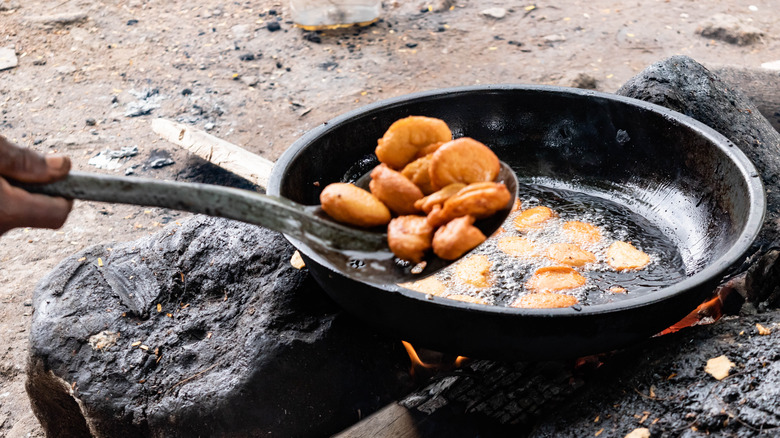
    Nkechi Okonkwo has been awake since 3:45 in the morning. By the time most of Oshodi is still arguing with its alarm clock, she has soaked beans, queued at the neighbourhood mill, lit her coal pot, and begun producing one of the most economically efficient food products in Nigeria.

    An akara ball costs between one hundred and five hundred Naira. It requires no supply chain from Rotterdam or The Strait of Hormuz. It requires beans, palm oil, a frying pan, and a 3:45am discipline that would make most MBA students reconsider their choices. Nkechi does not have an MBA. She has a waiting list.

    On the last Wednesday in late June 2026, First Lady Oluremi Tinubu addressed State House correspondents after the Renewed Hope Initiative’s second-quarter meeting with wives of state governors. She encouraged Nigerians, particularly women, to start selling akara, roasted corn, and kuli-kuli, noting that these businesses require little capital.

    A video surfaced online by Friday. By Saturday, the country had started approximately one million satirical akara businesses on social media. The debate that followed was heated, widespread, and largely missed the actual economics. This article attempts to recover them.

    Nigeria’s informal economy, of which the akara stall is one of the recognisable faces, is not just peripheral to the national economy. It is the national economy. The International Labour Organisation’s 2024 Nigeria policy brief places the informal sector’s share of total employment at 92.3%. Among women specifically, the figure is 96% compared with 88.7% of men. World Economics estimates Nigeria’s informal economy at about 57.2% of GDP, using its own methodology.

    According to SMEDAN, Nigeria has approximately 40 million micro, small, and medium enterprises. The dismissal of the akara economy as beneath serious policy attention is not sophistication. It is innumeracy. The First Lady was not advising Nigerians to embrace poverty. She was describing the sector that employs nine in ten working Nigerians and produces more than half of national output. The satire got ahead of the statistics.

    The economics of a ₦50,000 capital injection into a micro-enterprise are more consequential than the mockery suggested. The switch from charcoal to a 3kg gas cylinder costs below ₦5,000 per refill but yields faster output, lower fuel cost per unit, and a cleaner product over the course of a month’s trading.

    The akara seller who cannot afford the upfront cylinder deposit stays on coal, paying more per unit of heat and producing less per hour. Working capital also unlocks bulk purchasing: the seller with ₦50,000 buys beans wholesale at discounts of up to 20% versus the retail prices she pays on a daily cash cycle. These are not marginal gains. They compound into the difference between subsistence and modest accumulation. Not all fingers are equal, but a hand needs all of them. The akara economy needs its fingers to have working capital, and the formal system has been largely unwilling to provide it.

    The First Lady’s remarks were correct in substance and poorly timed in context, and the honest analysis requires holding both judgements simultaneously. She was right that starting a food micro-enterprise requires little capital and can generate sustainable income. Come to think of it, most Nigerians are already active participants in the country’s largest informal financial institution: the Extended Family.

    Its lending policy is simple with no collateral, no interest, no repayment schedule, and no realistic expectation of ever seeing your money again. The Bank of Mum, Dad, Uncle, Auntie, Brother, and Cousin dispenses perpetual grants with remarkable consistency and rarely asks for repayment. This is a visible thing needing no microscope. She was right that grants are a more appropriate instrument than loans for the lowest-income tier of the MSME base, as an annualised interest rate on loan of up to 60%, aside from other hidden fees, for a seller on a daily cash cycle, transfers income to the bank rather than capitalising the enterprise.

    What the video could not carry was the distinction between akara as an entry point into accumulation and akara as the ceiling of national aspiration. If a child washes his hands clean, he will eat with elders. The graduate mechanical engineer who cannot find work commensurate with her training has washed her hands. The table is not yet set. Telling her the frying pan is available was heard as a dismissal of her preparation rather than a bridge to opportunity. That is not what I think the First Lady meant. It is what the timeline heard. The two things can be true simultaneously.

    The scale problem that the debate missed is the most consequential number in this story. Of Nigeria’s 40 million MSMEs, only 4% have access to formal bank credit, per PwC’s MSME Survey 2024. SMEDAN’s 500,000 active loan beneficiaries represent 1.25% of the MSME base. The World Bank’s FINCLUDE programme, approved in December 2025 with $500 million in capitalisation, targets 250,000 additional MSMEs a combination of commercial banks, microfinance institutions, fintech lenders, and credit guarantee mechanisms, bringing the potential formal reach to roughly 750,000 enterprises out of 40 million, less than 2%.

    The federal government’s N1 billion MSME grant disbursed in April 2026 is correct in instrument and wholly insufficient in size. The Moniepoint Informal Economy Report 2025 found that 51% of informal businesses have never taken a formal loan and do not intend to, up from 30% the year before. The informal economy has not refused capital. It has concluded that capital has refused it, through interest rates, collateral requirements, credit bureau conditions, and processing timelines that have nothing to do with the economics of an akara stall and everything to do with a system designed for a different kind of borrower.

    Unfortunately, an idle hand is the devil’s workshop. Perhaps the greatest tragedy is not the unemployment itself, but where that unemployment leads. An idle labour market has become a waiting room for criminal enterprise. This is why employment policy is also security policy.

    Every new factory, every thriving SME, every apprenticeship, every digital skills programme, and every successful farm enterprise does more than increase GDP by competing directly with criminal organisations for the time, talent, and aspirations of Nigeria’s youth. The safest communities are often those that provide the greatest opportunities for legitimate work.

    Four interventions and a rhetoric question are immediately available. First, the World Bank’s FINCLUDE programme must be implemented at speed and expanded in scope. Its December 2025 approval targets 250,000 MSMEs over several years. The sector’s 57.2% of GDP share warrants a target of 2.5 million over the same period. The difference is between a pilot and a policy.

    Second, SMEDAN’s zero-interest N500 million revolving fund and single-digit loan facility are correctly designed instruments at wholly insufficient scale. N500 million distributed across 40 million enterprises is N12,500 each if all were reached, which they are not. The fund needs to be fifty times larger to be proportionate to the growing sector it is supposed to serve.

    Third, the movable collateral registry under Nigeria’s Secured Transactions in Movable Assets Act must be operationalised at the micro-enterprise level, allowing businesses to borrow against inventory, receivables, and equipment rather than land certificates most informal operators will never hold. Fourth, grants rather than loans are the correct instrument for the smallest enterprises: a N50,000 grant combined with basic business training can move an akara operation from coal pot to gas stove, from retail to wholesale sourcing, from one shift to two, from one employee to three. That is infrastructure investment in the sector that employs 92.3% of the workforce.

    Finally, let’s face it: is it not high time we established a dedicated government ministry fashioned after South Africa’s Department of Small Business Development (DSBD) explicitly focused on the providing funding and business toolkits to informal entrepreneurs and traders?

    The scenario projections in this article show the scale of what is at stake. Scaling formal capital access from 1.25% of MSMEs today to 18% by 2030, through expanded grants, single-digit rate loans, and collateral reform, could move more than 6 million additional micro-enterprises toward the small enterprise tier. The status quo trajectory delivers approximately 1.8% by 2030, a marginal improvement while the coal pots stay on and the wholesale discounts remain uncollected.

    Nkechi Okonkwo does not need a debate. She needs a gas cylinder, at least N50,000 in working capital, a city council that does not confiscate her table every other Thursday, and a government that counts her in the programmes it announces rather than only in the statistics it publishes about sectors it does not fund.

    The First Lady was right that the akara economy is real, accessible, and important. The government’s job now is to match the scale of the advice to the scale of the sector. 92.3% of the workforce cannot be served by programmes that reach 1.25% of enterprises. The akara is frying. The policy is not.

    Akinola Morakinyo (Ph.D) writes on MINT economies from the Department of Economics, Finance & Quantitative Analysis, Kennesaw State University, GA, USA. 

    Originally Published on Nairametrics.com

  • Why Nigeria Is Always Economically Behind

    Why Nigeria Is Always Economically Behind

    By Dr. Samson Abanni

    Let me tell you a story from the long ago—around 1400—when the world’s most advanced technology wasn’t smartphones or artificial intelligence, but something far simpler: turning raw wool into finished cloth. This was the quantum science of its day.

    England was the world’s largest producer of raw wool, but not a single person in all of England had mastered transforming that wool into the fine textiles that commanded premium prices across Europe. Just like modern African countries that export cocoa beans, coffee, and crude oil, England was trapped as a raw material supplier while other nations captured the lion’s share of value.

    The English king decided enough was enough. He crafted an irresistible immigration package: tax breaks, free land, guaranteed markets, and citizenship to any skilled textile worker willing to relocate and teach their craft to English apprentices.

    The strategy worked. Skilled artisans from Flanders, Italy, and other textile centers packed their tools and headed to England. Within a generation, English workshops were humming, local workers had mastered the technology, and the domestic market was flourishing.
    Phase two was even more audacious. Once local production could meet domestic demand, they banned raw wool exports and prohibited imports of finished woolen goods. European competitors, suddenly cut off from their primary raw material source, found themselves forced to import expensive finished products from England—the very country they had previously supplied. This single strategic shift helped launch England toward economic dominance.

    I shared this hoping you would ask, why can’t we copy this playbook ?

    The answer isn’t corruption—though that certainly a good part—but something far more structural and sinister.

    THE TAX COLLECTION TRAP

    Poor countries struggle desperately to collect taxes. Our tax collection system is rudimentary, our property and citizens registration system is poor. Just imagine tax collectors going door-to-door in your neighborhood—we’d have more murders than revenue! This forces African governments to rely on the easiest taxes to collect: tariffs and excise duties at ports and airports. Unless the goods you’re importing are spiritual, you can’t avoid these taxes. Last year, half of our government revenue came from excise duties—that’s too high by global standards. Even if our personal income tax is lower we will get much more revenue from there , if we can just find a way to collect it from the millions in the informal sector.

    A small increase in tariffs could substantially boost government income while encouraging local production. But here’s the catch: one of the key conditions attached to IMF and World Bank loans is that borrowing countries cannot raise tariffs.

    Let’s use the Cocoa industry as a poster child.

    Last year, Nigeria made about N2 trillion from selling raw cocoa beans. But countries that export raw cocoa capture only 10% of the final value. The remaining 90% goes to those who add value — processing, manufacturing, branding, and marketing. If we processed our own cocoa, that N2 trillion could become N20 trillion or more.
    When you export raw cocoa to Europe, it enters duty-free. But if you dare to add even the smallest bit of value—grinding those beans into powder—Europe slaps a 7% tariff on your product. Process it further into chocolate? Forget it. This isn’t accidental; it’s designed to force producer countries to only sell raw materials.

    Meanwhile, Mars chocolate alone earned $50 billion in 2024. That’s more than the GDP of many African nations, built largely on cocoa beans purchased at artificially suppressed prices from African farmers.

    THE INTELLECTUAL PROPERTY PRISON

    Try to make chocolate in Africa for export to Europe and you’ll discover a maze of “health and safety standards” designed more to exclude us, and the intellectual property needed for advanced manufacturing is locked away in Western patents.

    England mastered woolen goods by learning from Flemish artisans. They later “stole” printing technology from India and tea cultivation from China. The United States built its textile industry by stealing spinning tec from England. Taiwan’s semiconductor industry began with technology “acquired” from IBM.

    If we were free to tinker, a firm in Nigeria can try to modify OpeanAi models for example, and sell it here, so that the subscription I pay monthly to the US would stay here in our economy to create jobs. It’s through it that England mastered wollen goods, stole printing of colour tech from India and tea production from China.

    The US stole IP of cotton spinning tech from England. Taiwan stole ICs tech from IBM etc. In their days these were cutting edge tech. This was stopped when the World Trade Organization (WTO) was born. You cannot learn these very advanced stuffs without stealing some part, you just can’t. This is why China is still doing so today. Anybody who is anybody today stole this way, Japan inclusive.

    THE WTO PARADOX

    The WTO was supposedly created to encourage free trade and level the playing field between nations. In reality, its structure systematically favors already-developed economies. The rules only appear neutral on paper.

    Advanced goods that African countries import are priced astronomically high, allowing developed nations to exchange a few manufactured products for vast quantities of our raw materials, which are artificially priced low through market manipulation. Meanwhile, Western governments provide subsidies to their citizens, making these expensive goods affordable domestically while maintaining high export prices.

    When African governments want to borrow money to make the infrastructure investments necessary for development, IMF loans come with caps on the budget deficits countries can operate but the US can borrow as they like. This effectively prevents the kind of massive public investment that every developed nation used during their industrialization phase.

    THE GOLDEN WINDOW THAT CLOSED

    Our best chance was probably between 1960 and 1990 — a period in world history when any country with a well-intentioned government could realistically break free from underdevelopment, regardless of their starting point. Many economists argue this was because the economic competition between the United States and the Soviet Union made both superpowers generous with development aid and technical assistance as they competed for influence.

    Once the USSR collapsed and was dismantled, the world became fundamentally different. The incentive for the West to help other nations develop diminished. Countries that escaped poverty—Singapore, Taiwan, South Korea, Japan—all made their breakthroughs during this golden window.

    Meanwhile, we were exchanging military coups like playing cards, with leaders competing to see who could cart the most wealth abroad. And unfortunately, this mentality hasn’t fundamentally changed.

    THE PATH FORWARD

    The situation is more challenging now. But not impossible. It would require sacrifices and strategic thinking on a scale that we, as a people, have historically been reluctant to make.
    It would require governments willing to risk aid cuts and loan restrictions to protect domestic industries. It would require citizens willing to pay higher prices for locally-made goods during the transition period. It would require leaders who think in decades rather than election cycles.

    Most critically, it would require recognizing that the current global economic system isn’t a natural phenomenon—it’s carefully designed to perpetuate existing hierarchies.

    The question is whether we can find our own path in a much more constrained world, knowing that every step forward will be met with resistance from those who benefit from the current system.

    The technology that could transform Africa exists. The resources certainly exist. What’s missing is the collective will to pay the price of economic sovereignty—a price that, ironically, gets higher with each passing year of inaction.

    Abanni is a Medical Doctor and Member of the Board of Editors of Pacesetter Frontier Magazine.

  • Atiku promises to wipe out B/Haram, jump-start businesses, economy

    Atiku promises to wipe out B/Haram, jump-start businesses, economy

    Presidential candidate of the Peoples Democratic Party, Atiku Abubakar has promised to wipe out Boko Haram and help businessmen revive and expand their business in order jump start the economy if elected President come 2023.

    Atiku made the promise while addressing a crowd of party supporters at the PDP Presidential Campaign in Gombe, Gombe State, on Monday.

    He also promised to assist in putting in place policies to jumpstart businesses and help businessmen expand their business in order to revive the economy which is currently in a terrible state.

    Atiku who spoke mostly in Hausa said, “What I want to pledge here in Gombe is to ensure that we give businesses the support to set-up industries that will give youths both males and females jobs.

    “Recall it was the PDP that built the Dakin-Kowa Dam to provide electricity to the North-east and give farmers the opportunity to farm, I will create wealth and jobs in Gombe State, if you give me the mandate.

    “I promise you that if you elect me what we have started, I will ensure that the electricity that will be provided from Dakin-Kowa Dam will be sufficient to the entire North-east.

    “ I will enhance farming so that our farmers will have the opportunity to farm both during raining and dry seasons.”

    On his other plans for the North East Geo-Political Zone, Atiku said, “Gombe, Bauchi, Adamawa, Borno and Yobe are all interconnected; therefore, I will ensure that we build roads to enable smooth trip within these states with ease and ensure that commercial activities thrive, most especially.

    “I will return peace to the state because without peace all these pledges that I made cannot be actualized, I will wipe out Boko Haram. Book Haram is nothing.

    “We have wiped out Boko Haram in Adamawa, What will stop us from wiping out Boko Haram in Borno or Yobe or anywhere they are in this country. Therefore give us the mandate.

    “When Sir Abubakar Tafawa Balewa was the Prime Minister most of you were not born, dont you want another Tafawa Balewa in the North-east? This can only be actualised by voting PDP and here I am the one that will give you the opportunity to produce another Tafawa Balewa.”

    Speaking in a similar vein, the Chairman, PDP Presidential Campaign Council and Governor of Akwa Ibom State, Udom Emmanuel said, “When PDP was in power, how much was a tin of milk, how much is a tin of milk today? When PDP was in power, how much was a bag of rice, how much is a bag of rice today? When PDP was in power, how much was one orange, how much is an orange sold today?

    “We just want to let the People know that PDP is coming back to make sure that our economy bounces back, to make sure that our naira regain in strength, to make sure you have more milk in your tea.

    “PDP is coming back to bring the economy back, to make sure there is light, to make sure no more darkness, to make you have access to many things you are not having now.“

    Also the Director General of the PDP Campaign Council Tambuwual said, “We know that the Wazirin Adamawa is here at home in Gombe and when the PDP gets to power in 2023 Atiku will ensure security, peace in Gombe and Nigeria at large.

    “We know that Gombe is a commercial center, we shall ensure that wealth is revitalised and bring development, commerce in Gombe and the country at large.

    “Youths both male and female will get jobs in the country, farming will be revitalised and the country as a whole. I know the people of Gombe know this, which is the agenda of his government if elected.“

    National Chairman of the PDP, Sen. Iyiochia Ayu, while addressing the crowd, appealed to the people of the state to vote for the party in all elections because it was the only political party which has the capacity to transform Nigeria. He noted that the party had done it before and was prepared to do it again.

    (Vanguard)

  • Tinubu discusses power, infrastructure, economy, security

    The kingdom of God suffereth violence and the violent shall take it by force. That’s a saying in the Holy Bible and Tinubu’s grabbing of the presidential ticket of the All Progressives Party, APC, could be described as a forceful takeover.

    Or, how else does one interrogate his landslide victory at the June 7/8 primaries of the party and not come to that conclusion? More so, in a field of over 10 aspirants?

    Whereas his co-contestants went after delegates, Tinubu, who also goes by the alias of Alakanbi, and the thunderous title of Jagaban ‘Borgu, went after the aspirants themselves; meaning, once he got the aspirants to his corner, the delegates were harvested for him. Whichever way he did it, he did it. Some strategies. Some sagacity.

    So, for Tinubu, having fought the first part of the battle of his life by taking the presidential ticket, he is bracing for the second part, which is the presidential election proper.

    In this political season, you cannot write anything about Tinubu without mentioning Emi lo Kan, Eleyi or O lu’le…. Or, ‘recruit 50million youths’. Or the story of agbado, cassava and Garri? In fact, it will be a grave injustice and a disservice to Tinubu’s usual romance with theatrics not to mention those. Or, is it about the way he shovels up the flaps of his agbada in a slow-motion-like manner? He is a man of drama.

    However, make no mistake, Tinubu is a serious man, a very serious man.

    Yes, individuals are given to make slips while speaking. And erroneous attributions or statements not apt or correct in all materials particular are not the franchise of one presidential candidate, as Peter Obi and Atiku Abubakar have equally fallen, as all mortals do, into the mire. So, they can all be forgiven.

    But beyond these niceties and packaging, however, there are issues Tinubu must contend with. How does it appear when Tinubu says he will continue with and build on the achievements of President Muhammadu Buhari? Or the choice of his running mate, who is also a Muslim like himself? Or his health?

    Some answers are provided to some of these questions. At least, in 2019, he told President Buhari some uncomfortable truth about the state of the nation and the way to go. You can only counsel. On his same faith choice, he has been telling Nigerians of other faiths to trust him. It is his choice and whatever arises therefrom, the burden remains his.

    To those who discuss his health, it is worth mentioning that one of the greatest American Presidents, Franklin Delano Roosevelt, FDR, was wheeled into the White House in 1932, after defeating the Republican incumbent President, Herbert Hoover, by a landslide electoral votes of 472 to 59. According to TIME, GREAT PEOPLE of the 20th CENTURY, FDR “suffered a chill that was misdiagnosed, then the horrifying paralysis of polio”, ensured that he never walked again unaided – with braces or with the aid of a wheelchair. He went on to lead America for an unprecedented four terms. But that was in 1932.

    This is 2022/2023. The challenges of today are as humongous as those faced during the Great depression, which FDR pulled America and, indeed, the world through. Again, Nigeria is not America. Nigeria is a country that President Buhari has led for seven years that, against expectations, if truth be told, cannot be said to have fared much better in the areas of insecurity, economy, education, corruption and the like. Tinubu says he’s up to the task.

    As usual, we have pieced together his views in recent times regarding what he stands for and what he plans to achieve across some issues, using content in the public domain (in his own words and his speeches) . The opportunity of a fuller interview with the candidate is being explored and would be published later. But we can hold him down to the following statements.

    Working for the people

    Wages stagnate while prices are on a ceaseless march upward…. We must amend our basic ideas about the economy. We must divorce ourselves from our fixation with GDP rates and similar statistics. These things were initially intended to be indicators, suggestive measurements. However, we have misinterpreted these road maps by treating them as if they were the destination itself. This has caused us to distort the organic relationship between the people and the economy. This dominant train of thought has made the people servants to the dictates of abstract economic theories. In a more effective system, the economy would be fashioned to serve the concrete needs and legitimate aspirations of the people.

    Our economy must be redefined to be an efficient yet moral social construct with the primary goal of optimizing the long-term welfare of the people through the sustained, productive and full employment of labour, land, capital and natural resources. To pull the nation from poverty, the government must play a decisive role. It must at times direct and even develop markets and opportunities. This is nothing novel. I am only restating what the established economies did when they were young and assumed their trajectories toward growth. We must do more than simply work for the people. Government must “work for the people in a way that enables them to better work for themselves.

    Power

    Affordable and reliable power will drive the industrialization that shall provide jobs in our cities and produce needed goods for all our people. In a more poetic rendering, it will take our people out of the dark ages and bring the nation into the light of a better day.

    I believe we will work to increase electricity generation, transmission and distribution by more than 50 percent. We require serious and bold reforms to achieve this. What is happening to our gas pipelines? Whatever we have to invest now for our future is a task that must be done boldly. Put experts together for a more constructive reform to improve generation, transmission and distribution by any means necessary. We cannot afford to be too legalistic about this.

    Infrastructure

    We must commit ourselves to a national highway system linking our major cities and towns, our centres of commerce, with each other. This will save lives, spur commerce, cut costs and bring Nigerians closer together. Water catchment and retention systems in strategic locations should also be introduced to end the destructive cycles of flood and drought affecting many areas. In working to transform the face of our economy, the government must also enact policies that encourage industrialization and modern agricultural practices.

    We must applaud President Buhari for the historic innovations made in the agricultural sector. We must further encourage him to do even more. Government funded social security for the aged and government backed affordable housing and mortgage facilities are things we must continue to explore in an aggressive manner. Our goal is nothing less than enabling people to enjoy lives free of penury and lack.

    (Vanguard)

  • The windfall: Reinventing Nigerian Economy


    NIGERIA is an emerging market, middle income and mixed economy, and is ranked the 27th largest economy in the world. It has the largest natural gas economy in Africa and is also the largest oil and gas producer in the continent.


    The country had a good head start with a well-defined First National Development Plan (1962 -1968) and a strong focus on Import Substitution Industrialisation, ISI, policy which promoted and boosted manufacturing. The rate of development rose to over 10 percent of national income or net national product and with substantial development of manufacturing sectors with high rate of growth.

    But the economy contracted the “Dutch disease” which stunted and truncated the trajectory. “Dutch disease” has been defined as “the wind fall of income that leads to damages or destructive consequences in the economy”.


    The wind fall for Nigeria was from oil. The discovery and increase in oil exports led to the loss of interest and decline in other export commodities. As a result the economy became mono-product without a diversified base.


    The importance of economic diversification in the prosperity of nations cannot be over-emphasized. It engenders stability, sustainability and prosperity through favourable trade balances. The prosperity of advanced economies hinges on diversification, exports, manufacturing, innovations and well established financial markets.


    Germany, the fifth largest economy in the world exports vehicles, machinery, chemical goods, electronic products, computers and electrical equipment.


    Others include pharmaceuticals, transport equipment, basic metals, food products, rubber and plastics and many others. The share of industry in gross value added is 22 percent, the highest among G7 countries. According to IMF, Germany contributed 28 percent of the Euro areas economy in 2017.


    USA, the largest economy in the world exports soybean, corn, beef, pork, poultry, gems and precious stone, computers, vehicle parts and integrated circuits. Others include planes, helicopter, aircraft parts, spacecraft, crude and refined petroleum and a vast array of others.


    South Africa, the second largest economy in Africa exports corn, fruits, nuts, sugar, wool, gold, diamond, metal and minerals, gems and precious metals.


    ALSO READ: 96 firms bid for rehabilitation of NNPC downstream infrastructures

    Others include iron, steel, vehicles, machinery including computers, ores, slag, ash, transportation equipment and others. South Africa is a manufacturing hub and technologically advanced with advanced infrastructure and well established financial market. It has the largest stock exchange in Africa which is strategic.


    Nigeria, the largest economy in Africa, exports crude petroleum, refined petroleum, petroleum gas, cocoa beans, vegetable products, tobacco, beverages, processed food, spirits, cashew nut, processed leather and others. It is the fourth leading exporter of cocoa in the world.


    Regardless, oil has continued to be the main stay, representing 90 percent of exports and 86 percent of the total export revenue. The development readily exposes the economy to global shocks and crisis. For stability, sustainability and prosperity, the economy needs to be re-invented through effective diversification and “the big push”. This may be an uphill task going by the extent of damage exerted by the “Dutch disease”, but it is achievable. All hands needs to be on deck.


    Central Bank of Nigeria has been on the forefront in the drive to re-invent the economy through diversification and self-sufficiency. The apex bank has been aggressive in the evolution of policies aimed at releasing growth forces virtually in all section of the economy. It has established several and enormous intervention funds aimed at fast-tracking the development of the manufacturing sector.


    The objectives of the funds are to provide access to credit to manufacturers, diversify the revenue base, increase foreign exchange earnings, provide inputs for the industrial sector on a sustainable basis, increase output and generate employment.


    The importance of manufacturing cannot be overemphasized. It expands trade and commerce and brings in the much needed foreign exchange. Next to agriculture, manufacturing also have the ability to create significant amount of jobs and generate incomes.


    Manufacturing feeds aggregate demand and is linked to the standard of the living of the people. Problems of manufacturing in Nigeria include power, irregular taxes, inadequate funding and structure.


    CBN intervention funds have opened windows of opportunities for manufacturer to access long term loans for acquisition of plants and machinery and working capital. Also to address the infrastructure challenge the apex bank is promoting a world-class infrastructure vehicle known as Infraco, to provide necessary infrastructure required to move agricultural product to processors, raw materials to factories and finished goods to market.


    Source: www.vanguardngr.com

  • Will there be a rescue from this Overwhelming darkness in Nigeria?


    This is because there are equipment from the surplus power market on the ground that can be deployed as fast as possible once a PPA agreement is executed, and the natural gas infrastructure can also be in place within the above stated period.


    Not only that, there are capable human resources to operate and maintain the gas engines and turbines locally without losing forex (in dollars) to technical experts as before.


    The very interesting aspect of this is the fact that no payment upfront is required from the Disco or the community to build the required power plant by the IPP.


    The entire business transaction can be on Build Operate and Transfer or on Build Operate & Own basis.


    The power plant’s electricity upon inauguration would be sold to consumers directly or through the Disco network, this of course will be for a reasonable period of time to re-equip the money spent in building the power plant infrastructure. A win-win affair, you’d say.


    But talking seriously, our problem in Nigeria isn’t really that of generation but its evacuation, which is the transportation and delivery of generated power to consumers through the TCN and the various Discos.


    It may interest you to know that, Nigeria (through Gencos) produces far more electricity now than the capacity which is being transported to electricity consumers.


    The sad aspect of it is that these Gencos don’t get paid for all the electricity generated and delivered to Discos through the TCN and market operators, this bad habit of non-repayment for used electricity has put almost every Generation company (Gencos) in serious debt as of now.


    Debt to who, you’d ask? Debt to the natural gas suppliers to fire the turbine engines, debt to the bankers that funded equipment purchase, debt to experts handling supply of spare parts and equipment maintenance and even debt to the staff on salary payment which is not usually paid as at when due.


    Not forgetting the government agency (NBET), set up to guarantee the Gencos’ power supply vis-a-vis payment, this has been messed up and run aground due to lack of adequate financial instrument to provide continued guarantee.


    Hence, the reason why the current Minister of Power is seriously considering and promoting the willing buyer, willing seller model. A model which is sometimes referred to as embedded generation.


    This model will make communities or estates and clusters of industrial concern to have power on a 24/7 basis without going through middle organisations such as the TCN, MO, NBET and Discos.


    It’s a process whereby power substations within localities are directly supplied with dedicated generated electricity by the IPPs. In this way, electricity consumers won’t be disturbed by the usual network failures or breakdown excuses.


    We’ve been canvassing this type of generation vis-a-vis supply of power since the Goodluck Jonathan era, hoping that those managing the affairs of the nation’s power sector would wake up to reality at this time.


    But be that as it may, Nigerians should be prepared and ready to pay for the 24/7 electricity when it’s eventually received.


    The idea of circumventing power or idea of power is supposed to be given free of charge should be a thing of the past.


    Unfortunately, we usually forget that a lot of money goes into buying of owned generators (be it diesel or petrol), so also do we spend money on a daily basis in procuring fuel (diesel and petrol) to fire or run the same. How about service and maintenance of these owned generators, repair and spare parts procurement when the need arises.


    What about the generator operators or security guards operating the same at home (do you ever think of the salaries paid to them?).


    And if you don’t have operators, have you taught of the inconveniences of waking up at nights to switch on and off generators when normal utility power is available or taken?


    So, when you consider all these little amounts together, coupled with the regular money used in buying electricity credits from the Discos in your domain, you’d have been providing 24/7 power in your home at a rate ranging between N75/kwh and N90/kWh.


    Now, let’s take the lower rate quoted above and calculate as follows:


    We assume you’re using a 15.625kva (12.50kw) diesel generator for a four- bedroom wing of duplex with all necessary appliances like 6-8 x A/Cs, 2 x water pumping machines, deep freezers and fridges, cloth washing and drying machine, microwave oven, morning exercise machine like treadmill etc.


    You’ll spend nothing less than;


    24hrs/day x 12.50kw x N75.00/kwh x 30 days = N675,000.00 per month.


    In case you doubt the above, just wonder the diesel consumption alone if you’re running a 12.50kw (15.625kva) generator on a continuous basis of (24/7) per month, without Disco utility power supply.


    The generator will consume about 2.9 litres of diesel every one hour, this implies, it will take 24 hours x 2.9 litres to run the generator per day, which equates to 69.6litres per day.


    In 30 days therefore, we’ll require 2,088 litres (i.e. 69.6 x 30 days = 2,088) of diesel. Diesel cost in naira per month is therefore, 2,088 x N225.00/litre = N469,800.00/month.


    This amount doesn’t include servicing and maintenance of generators at every 250 hours, neither does it include amortisation cost of purchasing the generating equipment.


    Can you imagine spending this amount on a monthly basis only, to buy diesel to provide power on a 24/7 basis?


    Unimaginable, you’d say? Unfortunately, we don’t ever sit down to analyse the above budget simply because we just dip hands into our pockets to buy and pay for these stated products and services when the need arises.


    Have you also sat down to consider the environmental (exhaust and noise pollution) effects on society at large that we’ve learned to live with as normal?


    The time to wake up to realities in our society is now; if power can be available in other climes, it surely can be available in Nigeria and on a 24/7 basis.


    All that is needed is determination to make it work. Our problem isn’t the diesel generator vendor cartel, neither is it the petroleum products (diesel) importers association selling diesel as Nigerians do claim.


    All of these people equally want 24/7 power at very reasonable cost.  Let’s get our authorities to be serious and committed to this worthy cause just as we did for GSM during the Obasanjo era and see if 24/7 power won’t be realised.


    Source: www.punchng.com

  • Nigeria Economy Exits Recession


    Amidst rising rate of corruption, spike in COVID-19 pandemic, banditry and kidnapping, the Federal Government, yesterday, declared that Nigerian economy has finally exited recession that hit the economy in the first quarter of 2021.

    Minister of State Budget and Economic Planning, Mr Clem Agba, who disclosed this in Imo State while commissioning a 3.5 kilometre Ring road executed by the Federal Ministry of Agriculture and Rural Development at Umucheke, Okwe in Onuimo Local Government Area of Imo State, attributed the recovery to the policies executed by the Federal Government during the period.

    His declararion came as National Bureau of Statistics (NBS) reported that Nigeria’s Gross Domestic Product (GDP) grew by 0.11 per cent (year-on-year) in real terms in the fourth quarter of 2020, even with an average daily oil production of 1.56 million barrels per day (mbpd).

    According to the NBS, the growth represents the first positive quarterly growth in the last three quarters, thus paving way for the country to exit an economic recession it fell into at the end of the first quarter of 2020 following the coronavirus pandemic outbreak.

    But despite the economy’s weak recovery, experts believe the latest positive growth reflects the gradual return of economic activities following the easing of restrictions on local and international commercial activities in the preceding quarters.

    “Growth in the sector was driven by information and communication (telecommunications & broadcasting) with the non-oil sector contributing 94.13 per cent to the nation’s GDP in the fourth quarter of 2020.

    “But crude oil /natural gas was the main contributor to the sector with a weight of 86.79 per cent in Q4 2020, and 93.95 per cent for the annual contribution.”

    Commenting on the latest GDP growth figures, Chief Executive Officer of Financial Derivatives Limited, Mr. Bismark Rewane, agreed with the NBS’s claim saying once a positive growth is recorded, a country can no longer be in recession no matter how marginal the increase.

    He, however, advised the Federal Government to continue to do what it did in various sectors that contributed to the positive growth while supporting others that did not contribute much, and avoid policies that constrain growth.

    Rewane expressed concern over the manufacturing sector’s contraction in the quarter under review while urging the government to make forex available to the real sector to enable them engage in more production of goods and services to help the economy expand.

    He added that but for the #EndSARS protests that affected all facets of the economy negatively in Q4 2020, the GDP gowth of 0.11per cent could have been higher.

    On its part, the Lagos Chamber believes output contraction recorded in year 2020 further highlights the country’s weak macroeconomic fundamentals and the persistent, structural, policy and regulatory issues in the economy. It said apart from declining growth, the economy is still confronted with several challenges, including rising consumer prices (inflation now at 45-month high of 16.47 per cent in January 2021), weak employment level, persisting liquidity concerns in the foreign exchange market, high poverty incidence, weak investor confidence and insecurity, among others.

    These challenges which had been part of the country’s economic narrative prior to the pandemic were amplified by the COVID-19 induced disruptions.

    “We note the central bank’s accommodative policy disposition in year 2020, evidenced by its sustained developmental finance efforts and deliberate interest rate reduction. On the other hand, we also acknowledge the efforts by fiscal authorities in quickening recovery via the Economic Sustainability Plan. However, the stimulus provided by fiscal and monetary authorities (c.3% of GDP) was largely insufficient to achieve desired outcomes even as policy responses failed to address the structural challenges stifling productivity across sectors.Accelerating the pace of economic recovery requires fiscal and monetary authorities to be well coordinated to promote growth-enhancing and confidence-building policies that would encourage more private capital inflows into the economy,” it said.

    Also commenting, the Manufacturer Association of Nigeria (MAN) called for the sustenance of the momentum to finally and convincingly get Nigeria out of recession.

    MAN Director General, Segun Kadiri, said the NBS report that indicated that Nigeria’s Gross Domestic Product (GDP) grew by 0.11 per cent (year-on-year) in real terms in the fourth quarter of 2020 is a welcome departure from the negative growths the nation have witnessed in the past quarters.”


    Source: www.sunnewsonline.com

  • FG pledges its commitment to increase revenue generation and enhance the economy


    The Federal Government has pledged its commitment to improving revenue generation and enhancing economic competitiveness in the country.


    The Minister of Finance, Zainab Ahmed, made the pledge on a virtual platform on Monday during the Executive Roundtable on the Finance Act 2020 and Economic Outlook for 2021 organised by PricewaterhouseCoopers.


    In her opening remarks, she said, “The Federal Government of Nigeria will continue to champion economic policies aimed at improving revenue generation, enhancing economy competitiveness, encouraging domestic investors and enhancing macroeconomic stability despite the significant challenges posed by COVID-19.


    “This administration is committed to stimulating economic growth by fostering economic resilience in our business communities and broader economy in line with the thematic thrust of the 2021 budget.


    “I want to also add that the Federal Government is forging stronger collaboration with the subnational government, state government as well as the local government.”


    PwC Partner and Chief Economist, Dr Andrew Nevin, asked Nigeria to leverage on exporting services to the world.


    He said Nigeria had a populace of intellectuals earning foreign exchange which should be leveraged on.

    ‌

    He said, “Nigeria exports brains and we are earning significantly from it around the world and that is the asset we need to optimise.


    “The interesting thing is that we can export brains from Nigeria without people leaving Nigeria. In fact, if you think about Nigeria’s unique conditions, our ability to export is not manufactured goods.”


    PwC Tax Leader, Mr Taiwo Oyedele, who spoke on the import levy on cars said that the total tariff to be paid on imported cars was 40 per cent as against five per cent that has been in the public domain.


    He said, “This is really important to clarify. For new cars, it is only the levy that has been reduced from 35 to five per cent. The import duty of 35 per cent is still available on new and used cars which means for a new car, the total tariff you pay on import is 40 per cent.”


    Oyedele explained that 40 per cent levy was still high enough to en courage people to buy locally.


    Source: www.punchng. com

  • Insecurity and Food inflation in Nigeria, Finding solutions to poor management

    Insecurity and Food inflation in Nigeria, Finding solutions to poor management

    THE coronavirus pandemic has contributed a lot to the current food inflation ravaging Nigerian families. Coming in February/March, the beginning of the planting season, and forcing a prolonged national lockdown, it prevented many of our farmers from sowing their seeds.


    Food inflation, according to the National Bureau of Statistics, NBS, rose from 16.66 per cent to 17.38 per cent in September this year and getting worse as the year draws to a close.


    General inflation in the economy stands at 14.33 per cent. The prices of staple food items such as yam, garri, pepper, onions, rice, tomatoes and others have gone sky high at a time when the incomes of average families have dwindled or run out altogether due to layoffs and pay cuts.


    It promises to be a very bleak Yuletide festive period.


    The situation we face could have been much more manageable if the President Muhammadu Buhari administration had made good its campaign promise of solving our security problem which is part of the regime’s three-point agenda: economy, security and anti-corruption.


    Indeed, the security situation has worsened under the watch of this regime due mainly to poor management and the kid gloves with which it has treated aspects of our insecurity.


    Though the Federal Government often beat its chest that it has dislodged Boko Haram jihadists from their captured territories, the terrorists have multiplied beyond Boko Haram, with the Islamic State in West Africa Province, ISWAP, now equally formidable.


    The foreign bandits that some evil politicians had brought to fight their turf wars have now turned their guns on residents of states in the North West and North Central, particularly Zamfara, Katsina, Kaduna Niger and parts of Kogi.


    Also, armed Fulani militias from all parts of Africa masquerading as herdsmen have flooded the forests and farmlands of states in the Middle Belt and South, killing and kidnapping for ransom, robbing, destroying farmlands with their cattle and forcibly settling on people’s lands.

    Curiously, the herdsmen militias are the only terrorist groups that government has refused to tag the terrorists that they are. It has also refrained from deploying the army to flush them out of our bushes.

    All these agents of insecurity marauding all over Nigeria have succeeded in displacing farming communities and making farming unsafe.

    Farmers are afraid to engage in their legitimate occupation. With the closure of the borders and restrictions on food importation, it is not surprising that Nigeria is on the verge of famine.

    If the Federal Government is unwilling to get rid of the armed herdsmen, then it should allow each community to deal with them and allow farmers back to work. Without solving our insecurity problems there are simply no ot her ways out of this problem.

    Source: www.vanguardngr.com