Tag: South Africa

  • NASS Suspends South Africa Visits Over Renewed Xenophobic Attacks

    NASS Suspends South Africa Visits Over Renewed Xenophobic Attacks

    Precious Nwonu, Enugu

    The National Assembly has suspended all official legislative visits to South Africa and directed lawmakers to boycott legislative activities hosted or organised by the country over renewed xenophobic attacks targeting Nigerians and other African nationals.

    The decision followed reports of fresh violence, intimidation and anti-immigrant protests in South Africa, with demonstrators demanding that foreign nationals leave the country.

    In a statement issued on Thursday, September 10, the Clerk to the National Assembly, Kamoru Ogunlana, said the joint leadership of the Senate and House of Representatives approved the suspension in response to concerns over the safety of Nigerians in South Africa.

    According to the statement, the measure covers “all official visits” to South Africa as well as “South African-hosted or South African-organised legislative activities and engagements” until further notice.

    The National Assembly said the decision reflected its “grave concern for the safety, dignity and welfare of Nigerian citizens abroad.”

    It urged the South African government to take immediate and concrete steps to protect Nigerians and other African nationals, investigate reported attacks, apprehend suspected perpetrators and prosecute those found responsible.

    The suspension and boycott will remain in place until further notice, with the National Assembly leadership expected to review the decision as developments unfold.

    The latest unrest has also triggered concerns over the safety and welfare of Nigerians living in South Africa. The Nigerian government has repatriated about 1,490 citizens amid the crisis, while reports have emerged of attacks, property losses and difficulties relating to residency status.

    Nigerians have previously been affected by major xenophobic violence in South Africa, including outbreaks in 2008, 2015 and 2019. Nigerian officials have said at least 98 Nigerians have been killed in xenophobic attacks since 2022.

    The Federal Government has condemned the latest attacks and taken steps to evacuate affected Nigerians while engaging South African authorities.

    During bilateral discussions in Abuja in July, Nigeria demanded stronger protection for its citizens in South Africa. The South African government, in response, pledged to prosecute those responsible for the violence while maintaining that the attacks were not state-sponsored.

    The renewed attacks have also drawn condemnation from both chambers of the National Assembly.

    The Senate called for stronger measures to protect Nigerians, including written guarantees of their safety and justice for victims, while the House of Representatives demanded an investigation into the attacks and the losses suffered by Nigerians in South Africa.

  • This Will Not End Well for South Africa

    This Will Not End Well for South Africa

    -By Abdul Mahmud

    The 30 June deadline issued by the Afrophobic marchers in South Africa  to African migrants to leave South Africa has now passed into history. History will remember the infamy of those who turned on their fellow Africans, looted their shops, terrorised entire communities, and forced many to flee South Africa with nothing but their lives and painful stories of a nation that once proudly called itself the Rainbow Nation. Official silence and ritual condemnations have done little to erase the memory of repeated attacks that have scarred countless African migrants, Nigerians included. For Nigerians, these recurring episodes of Afrophobia are no longer isolated outbreaks of mob violence; they have become part of a dangerous historical pattern. Each cycle of attacks, followed by familiar promises of investigations and assurances that the violence does not reflect official government policy, only deepens the conviction that African solidarity has become an empty slogan.

    Across Nigeria, public patience with diplomatic caution is rapidly evaporating. It is against this backdrop that Senator Adams Oshiomhole’s call for retaliatory measures against South African companies operating in Nigeria must be understood. Remarks that might once have been dismissed as political grandstanding now resonate with a broad section of the public because they express accumulated anger rather than momentary outrage. History teaches that when grievances are ignored for too long, they eventually acquire the force to shape political action. South African businesses have flourished in Nigeria for decades. MTN built one of the largest telecommunications operations on the continent and has invested billions of dollars in the Nigerian market. MultiChoice turned DStv and GOtv into household names. Stanbic IBTC became a major player in banking and financial services through its connection to South Africa’s Standard Bank Group. Protea Hotels established some presence in the hospitality sector. South African retail and consumer brands have also operated in Nigeria at different periods. These businesses arrived in Nigeria because they found a large market, substantial profits, and an environment that welcomed foreign investments. They benefited from the openness of a country whose government and citizens played a significant role in supporting the anti-apartheid struggle when South Africa was isolated from much of the world.

    Many Nigerians increasingly ask the simple question: how long can economic hospitality survive repeated images of Nigerians being hunted, beaten, or killed in South African streets?

    Nobody should underestimate the political consequences of that question.

    History offers several warnings. The anti-Asian expulsions in Uganda under Idi-Amin produced economic and diplomatic consequences that damaged Uganda’s international standing for years. The anti-Chinese riots that erupted in Indonesia during the dying days of the Suharto era reshaped social relations and left scars that remain visible decades later. In many parts of the world, violence directed at minority communities eventually provoked commercial boycotts, retaliatory campaigns, diplomatic disputes, and long-term reputational damage. Economic relationships depend on confidence; but confidence disappears when citizens begin to associate foreign-owned businesses with a country perceived as hostile to their compatriots. Nigeria already witnessed a glimpse of what retaliation could look like during previous outbreaks of xenophobic violence. Demonstrators targeted South African-linked businesses, but security agencies had to protect some commercial locations from attacks.

    The anger was real, even if it eventually subsided.

    Future retaliations which may unfold differently will not end well for South Africa.

    The next major Afrophobic episode in South Africa could trigger coordinated consumer boycotts, and even violent attacks on its economic interests everywhere when politicians discover electoral advantages in demanding punitive measures, trade unions pressure governments to review bilateral arrangements, activist groups organise campaigns against prominent South African brands, and social media amplify every incident within minutes. In such a climate, companies like MTN, MultiChoice, Stanbic IBTC, Protea Hotels, and other South African-linked businesses could become symbols in a conflict they did not create. Their offices, retail outlets, infrastructure, and public image would carry the burden of public anger directed at South Africa.

    This possibility should concern business leaders in Johannesburg far more than quarterly earnings reports.

    Corporate investments do not exist in isolation from politics. They rely on goodwill. Once that goodwill evaporates, even profitable businesses become vulnerable. South Africa faces a deeper challenge than the protection of foreign nationals, as is the question of what kind of continental leadership it seeks to exercise in the coming decades. The country possesses considerable economic influence, with its banks, telecommunications firms, retailers, mining companies, media corporations, and investment houses operating across Africa. Such influence carries obligations. A state that aspires to continental leadership cannot repeatedly witness attacks against fellow Africans without suffering reputational consequences.

    The consequences extend beyond Nigeria. Ghanaians, Zimbabweans, Malawians, Ethiopians, Somalis, Mozambicans, Congolese, and many others who are today the victims of the mindless mobs in South Africa are watching and considering the next steps for the future. After all, what once appeared as isolated anger now resembles a growing reservoir of resentment waiting for a catalyst. Public sentiment across the continent is changing. Conversations on social media reveal a level of bitterness that would have been difficult to imagine twenty years ago.

    South African policymakers still have an opportunity to prevent a future rupture through effective law enforcement and sustained political campaigns against Afrophobia. Diplomatic statements alone will not achieve that objective. The government in Pretoria must be told that history teaches that grievances rarely remain confined to the place where they originate. They travel across borders, enter public consciousness, influence political calculations, and reshape economic relationships. No nation repeatedly exports fear and expects to import goodwill forever.

    Surely, this will not end well for South Africa.

  • Nigeria and South Africa’s Xenophobia: A Passport Must Be More Than Paper

    Nigeria and South Africa’s Xenophobia: A Passport Must Be More Than Paper

    -By SNC Nwagu

    “Life is sacrosanct. It cannot be regained once lost. Ghana evacuates. Malawi shields. Nigeria reacts — but only after the caskets are counted.”

    Since 2008, South Africa has recorded repeated waves of anti-foreigner violence known as “xenophobia” or “Afrophobia.” Nigerians have paid the price in blood and business every time. As a fresh and more dangerous wave tears through Johannesburg, Pretoria, and Durban in 2026, the pattern is painfully familiar: Nigeria moves, but only in crisis mode — and only after other nations have already moved first.

    THE BLOOD AND DATA

    The record stretches back nearly two decades. In 2008, at least 62 people were killed nationwide in South Africa’s first major xenophobic uprising, the wave that set the template for every one since. Just over a decade later, the 2019 riots in Johannesburg and Pretoria left at least 12 Nigerians confirmed dead and roughly 50 Nigerian-owned businesses destroyed or damaged; Nigeria’s government announced a target of repatriating 640 citizens, and while the first Air Peace flight carried only 187–189 people, the total eventually surpassed 600 across several flights and a private real-estate firm’s donated fares.

    The toll since has only deepened. The Nigerian Union South Africa (NUSA) and the Nigerian Citizens Association South Africa (NICASA) say at least 105 Nigerians have been killed in South Africa over the past seven years — including roughly 8 deaths in 2024, another 8 in 2025, and a sharp spike of more than 20 deaths since January 2026 alone, blamed on shootings, mob violence, and deaths in police custody. That spike traces directly to the latest unrest: between April and June 2026, vigilante movements “Operation Dudula” and “March and March” led mass protests across Johannesburg, Pretoria, and Durban demanding the removal of undocumented foreigners, reportedly setting a June 30 deadline for migrants to leave. The killings of Nigerians Amaramiro Emmanuel and Ekpenyong Andrew triggered Nigeria’s Ministry of Foreign Affairs to summon South Africa’s Acting High Commissioner — a step in the right direction, but one still driven by outrage after the fact rather than a standing protocol.

    To its credit, this time Abuja moved faster than in 2019: President Tinubu approved five Air Peace evacuation flights, more than 1,000 Nigerians registered for voluntary return, and over 600 had been repatriated by early July — with the Acting High Commissioner now also compiling records of abandoned businesses and property to pursue compensation from Pretoria. That is real progress. But it remains improvisation, not institution: chartered when the cameras are rolling, not built into law long before the next mob forms.

    WHAT OTHERS DID WHILE WE WAITED

    Ghana offers the clearest contrast. In 2019, 187 of its citizens were airlifted within 72 hours using a standby evacuation arrangement and coordination with the Ghanaian community union in South Africa; in the 2026 crisis, Ghana was again among the first nations to begin repatriating its citizens, ahead of Nigeria. Malawi partnered with the IOM in 2015 and again in later waves, moving citizens toward the Beitbridge border corridor before looting peaked, drawing on an existing evacuation relationship rather than assembling one from scratch each time. Mozambique, too, repatriated hundreds of its nationals in the opening weeks of the 2026 crisis, moving in step with Ghana and ahead of Nigeria’s own evacuation approval. Zimbabwe, for its part, has run a standing “Harare Desk” in Pretoria in past waves, with SMS alerts and community safe houses feeding early warning back to citizens on the ground.

    Nigeria’s pattern, even now, is to scale up dramatically once a crisis is already underway — five chartered flights, a High Commissioner summoned, a compensation claim opened — rather than to run a permanent early-warning and evacuation system that activates automatically. We have three missions in South Africa, but still no standing crisis protocol and no pre-funded evacuation fund written into law. Bilateral trade between the two countries stood at roughly $2.3 billion in 2024 — Nigeria’s crude exports to South Africa alone worth close to $1.9 billion — yet that leverage is invoked only in the heat of a crisis, never as sustained pressure beforehand.

    THE COST OF FAILURE

    The failure to act early carries a price on both ends. At home, past waves have triggered reprisal attacks on South African-owned businesses in Lagos, Abuja, and Ibadan, and this year’s crisis has again seen Nigerian police publicly warn against reprisals on South African nationals and interests. When citizens see the state respond only after the fact, some take matters into their own hands — and that is how law and order unravels on both ends of the relationship. Abroad, the cost is just as plain: a passport that cannot protect its holder before disaster strikes is just paper. Even a well-funded emergency airlift, however commendable, is an admission that protection came too late for the ones already buried.

    THE REMEDY: NIGERIA’S FIRST PROTOCOL

    The starting point must be law. Nigeria should enact a Nigerians Abroad Protection & Evacuation Act, mandating a fixed share of the Foreign Affairs budget for emergency response, automatically triggered when a defined threshold of attacks on Nigerians is recorded within 30 days — rather than relying on presidential approval assembled flight-by-flight, as happened again in 2026. That law should fund concrete operations on the ground: a 24/7 hotline and USSD app in Pretoria, Johannesburg, and Cape Town linked directly to NiDCOM; pre-identified safe houses in each city, run jointly with the Nigerian Union South Africa; and standing evacuation contracts with Air Peace and other carriers negotiated before a crisis, not five ad hoc flights approved mid-emergency.

    Diplomacy needs teeth to match. The South African High Commissioner should be summoned within a fixed, published window — 24 hours — of any fatal attack, as a standard rather than a reaction to public pressure, and the pattern should be raised at the AU Peace and Security Council. Continued failures to prosecute attackers should be made to carry a cost, affecting the ease of doing business for South African firms operating in Nigeria. None of this works without data: NiDCOM and the NBS should publish a quarterly “Nigerians in South Africa Safety Report” tracking deaths, assaults, extortion, and business losses in one place, rather than leaving the count to community associations like NUSA and NICASA to compile and defend against official denial. And accountability must run through the system itself — the Foreign Missions Act should be amended to sanction heads of mission who fail to act promptly during a crisis. The current compensation claim for abandoned Nigerian businesses is a welcome step; it should be standard practice from the first day of any evacuation, not a follow-up idea raised weeks in.

    CONCLUSION

    Ghana, Malawi, and Mozambique prove that political will, not just budget size, determines how fast a nation can move for its people. Nigeria has shown in 2026 that it, too, can move — five flights, a summoned High Commissioner, a compensation claim — once the crisis is already burning. The unfinished work is turning that emergency improvisation into permanent law, so the next wave of violence meets a system already built, not one assembled in the same week as the funerals. A Nigerian life in Soweto must matter as much as one in Sokoto — and it must be protected before the headlines force our hand, not after.

    SNC Nwagu writes on Foreign Policy, Strategy and Diplomacy. 
  • Cyril Ramaphosa re-elected South African president

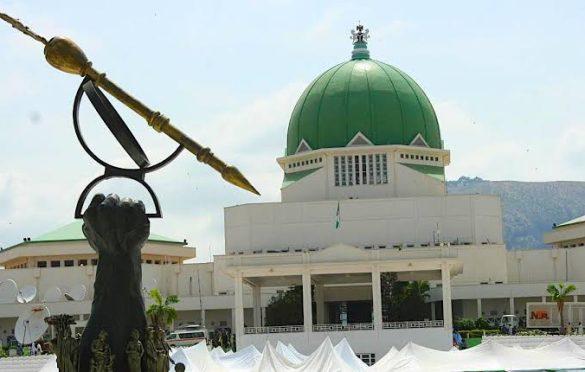
    Reuters South African president Cyril Ramaphosa reacts after being re-elected as president of South Africa during the first sitting of the National Assembly following elections at the Cape Town International Convention Center (CTICC) in Cape Town, South Africa June 14, 2024.
    Cyril Ramaphosa reacts in parliament after being re-elected president

    South Africa’s parliament has re-elected Cyril Ramaphosa as the country’s president following a landmark coalition deal between the governing African National Congress (ANC) and opposition parties.

    The new government of national unity combines Mr Ramaphosa’s ANC, the centre-right Democratic Alliance (DA) and smaller parties.

    In his victory speech, Mr Ramaphosa hailed the new coalition, and said voters expected the leaders to “to act and to work together for the good of everyone in our country”.

    The agreement was hashed out on a day of high political drama, which saw the National Assembly sitting late into the evening for votes to confirm who would hold power in the new administration.

    Earlier, a deal was struck following weeks of speculation about whom the ANC would partner with after losing its parliamentary majority for the first time in 30 years in last month’s elections.

    It got 40% of the vote, while the DA came second with 22%.

    ANC secretary-general Fikile Mbalula called the coalition deal a “remarkable step”.

    It meant Mr Ramaphosa – who replaced Jacob Zuma as both president and ANC leader following a bitter power struggle in 2018 – was able to retain power.

    The next step is for Mr Ramaphosa to allocate cabinet positions, which will include members of the DA.

    The multi-party deal does not involve two ANC breakaway parties, and they will probably benefit if it fails to deliver economic improvements demanding by voters.

    But opinion polls suggest many South Africans want this unprecedented grand coalition to succeed.

    The ANC had always polled above 50% since the country’s first democratic elections in 1994, which saw Nelson Mandela become president.

    However, support for the party has been dropping significantly because of anger over high levels of corruption, unemployment and crime.

    Addressing South Africa’s parliament after his confirmation, Mr Ramaphosa called back to his party’s first presidential victory 30 years ago.

    “We have been here before, we were here in 1994, when we sought to unite our country and to effect reconciliation – and we are here now,” he said.

    An alliance between the centre-right DA and the ANC is unprecedented as the two parties have been rivals for decades.

    Under Nelson Mandela, the ANC led the campaign against the racist system of apartheid and won the country’s first democratic elections.

    The DA’s critics have accused it of trying to protect the economic privileges the country’s white minority built up during apartheid – a charge the party denies.

    Addressing lawmakers late on Friday in Cape Town, John Steenhuisen, the leader of the DA, said: “Today is a historic day for our country, and I think it is the start of a new chapter.”

    The National Assembly also swore in a speaker from the ANC, while the post of deputy speaker went to the DA.

    Among the party leaders speaking after the agreement was reached on Friday was Julius Malema, head of the Economic Freedom Fighters – the party he founded after leaving the ANC in 2013.

    He said while his party accepted “the results and the voice of the people of South Africa”, he criticised the agreement, saying: “We do not agree to this marriage of convenience, to consolidate the white monopoly power over the economy and the means of production in South Africa.”

    BBC