Tag: endsars

  • When the State Lies

    When the State Lies

    -By Abdul Mahmud

    Something distinctly unsettling stirred when my young friend and colleague at the Bar, Festus Ogun, quietly reversed course from his initial social media post in which he rightly drew public attention to the plight of the “Yola Six”, the law students abducted en route to resume studies at the Nigerian Law School in Yola after their externship in the south east. His later post, this time applauding the Nigeria Police for the successful rescue of the “Yola Six” struck a discordant note. The facts, as later confirmed by two of the victims, told a different story. Not just different but diametrically opposed to the claim of the police.

    Festus, one must concede, was most likely swept up in the moment, buoyed by what he believed to be credible information from the police. Who could blame him? At the centre of it all were the lives and liberties of six promising students whose futures hung precariously in the balance, held captive by criminals who recognise neither law nor the sanctity of human life. Still, the relief that greeted the eventual release of the students does not wash away the bitter aftertaste of official dishonesty and falsehood that reveals a deeper crisis of integrity within the Nigerian state. When the custodians of public trust lie, when the state manufactures its own myths of heroism in the face of tragedy, one must ask: what else is it willing to fabricate? And why?

    In the realm of public life, a state that lies does more than twist facts. It corrodes trust, fractures the moral contract between citizens and the state, and raises unsettling questions about whose truth matters. Today, in our country, official lies are no longer an aberration. They are the Directive Principles of State Policy. They are the practices of power performed without shame. Two weeks ago, six law students were kidnapped on their journey from the Southeast to Yola, in the Northeast, where they were to resume their Nigerian Law School studies. Young men, driven by the dream of law and justice, were intercepted by gunmen, abducted, tortured, and used as pawns in a ransom trade. The students’ accounts, as narrated by Reverend Ernest Okafor and David Obiora, both victims, revealed a chilling, yet tragically familiar story: departure from Onitsha on the morning of July 26; ambush between Zakibiam and Mukari, Benue State, by nightfall; relocation into the womb of a forest; physical abuse, trauma, and ransom negotiations that dropped from N50m each to N10m each before their eventual release on August 1. The state watched. Then came the lie. The Nigerian Police, in a bid to grab headlines and polish tarnished image, released a statement claiming credit for rescuing all six students. A triumphalist announcement, devoid of detail, dripping with spin. But Rev. Okafor countered it with chilling clarity: “The police played no role in our release”. None. The families paid. The six kidnapped law students were released. But, it raises the question: Why does the state lie?

    It lies because it can. It lies because truth has no constituency in a country where power is unaccountable. It lies because the state has, over time, developed an addiction to orchestrated spectacle. A need to be seen to act, even when it has not lifted a finger, or raised a stone. The lie becomes a sedative for public outrage. A script to manage perception. In this case, the image of a competent police force triumphing over terror is too useful to pass up, especially when the reality is one of chronic failure.

    But this isn’t new.

    Our country’s history is littered with official falsehoods. The Civil War, with all its horrors, was packaged in July, 1967 by the then Head of State, General Yakubu Gowon as a “police action” aimed at “restoring order”. The pogroms, starvation, and genocide were hidden behind the wall of massive state propaganda. The truth bled quietly, off camera. In 1999, the return to civil rule was hailed as the dawn of a “New Nigeria”. But the killings in Odi, Bayelsa State, later that year revealed otherwise. The military razed the town, leaving hundreds dead. The government claimed it was responding to the killing of twelve soldiers. No commission of inquiry was held. No one was punished. When asked years later about the incident, President Obasanjo said, “The people of Odi invited the military”. He lied. The state lied. In 1991, between the end of the civil war and our country’s return to civilian rule, I was abducted by operatives of the State Security Service and held incommunicado at their Ikoyi detention facility. For weeks, the state flatly denied any knowledge of my whereabouts. The then Minister of Information, the late Chief Alex Akinyele, and his cabinet colleague, the late Professor Babs Fafunwa, repeatedly took to press briefings to insist, sometimes with theatrical conviction, that the government had no hand in my “disappearance” as President of the National Association of Nigerian Students (NANS).

    Here’s another lie. But who remembers?

    In October 2020, the youth-led #EndSARS protests were crushed at the Lekki Tollgate in Lagos. Live bullets were fired into a peaceful crowd. Blood stained the road. The Nigerian Army initially denied even being present at the scene. Then, caught by evidence, admitted presence; but claimed they only fired blanks. Government officials spoke in circles, contradicting one another. The state swore no lives were lost. Meanwhile, families mourned in silence. CNN and Amnesty International exposed the state’s lies. The government responded by launching attacks, not on the killers, but on the truth-tellers. Witnesses like Obianuju Catherine Udeh, better known as DJ Switch, and Rinu Oduala, were forced into exile. In this long tradition of denial, what happened to the law students is not an exception. It is a continuation of the familiar pattern of lie-telling. The state’s cover-up. Or what my abductors during my long incarceration in 1991 glibly referred to as “the state’s cover story” – a phrase that still rings with a certain chill. It was as though the state had transformed itself into the editorial boardroom of a propaganda tabloid, where facts were doctored, and headlines manufactured to deflect public inquiry and defang public outrage. A newsroom, yes; but one staffed not by reporters of truth, but by functionaries skilled in the dark art of distortion. In that room, reality was edited, inconvenient truths redacted, and official narratives spun with the finesse of professional deceivers.

    The question must be posed again: Why does the state lie?

    It lies because it fears accountability. And because lies are cheaper than reforms. Easier than truth. The truth demands justice. It demands restitution. Lies cost nothing, except the people’s trust. The state lies because of its own decadence. There are no real consequences for lying. A police officer can announce a fake rescue. A governor can fabricate achievements. A minister can misrepresent statistics. No heads roll. No shame is felt. No apology is issued. In such a system, lying becomes a normalised administrative instinct. It lies because lies are often more palatable than the truth. The truth is messy. It complicates power. It reveals incompetence. It opens the door to scrutiny. The lie is clean like a whistle. Tidy. It reinforces the illusion of control. But the cost is enormous.

    Each lie told by the state chips away at its moral legitimacy. Trust, once broken, is hard to rebuild. Citizens retreat into apathy or rage. Conspiracy thrives. Paranoia deepens. The distance between the ruler and the ruled becomes godo godo. Deep gullies. And when citizens no longer believe their government, even in times of truth, the consequences can be lethal. Imagine being the parent of one of the kidnapped students. You scrape together millions in ransom. You pray through sleepless nights. Then you see on the evening news that the police claim they rescued your child. No mention of your suffering. No mention of your sacrifice. Just a polished press release. A lie told over your lived experience. The spectre of falsehoods, which places the state at the centre of every story, even when it played no part, comes with the erasure of the sufferings of victims. The agency of families. The courage of survival. It is this spectre of falsehoods that turns citizens’ pains into weapons of state propaganda.

    So what must be done?

    First, citizens must learn to expose the lies that the state tells. “Unmask lies wherever they are told” was Amílcar Cabral’s enduring exhortation. A call to truth as resistance and to clarity as a revolutionary act. Refuse to be gaslighted. Insist on fact. Every time a false narrative is offered, it must be met with citizens’ testimonies and documentation. Second, citizens must build a culture of public memory. Our country forgets too quickly. Lies thrive in forgetfulness. The state counts on our fatigue. But we must remember. And remind. And record. Third, institutions must be reformed to uphold transparency. Press releases should not replace accountability. Oversight mechanisms must be strengthened. Internal checks enforced. Citizens must continue to hold power to account. A lying state can only persist when citizens become indifferent. To resist the lie is to defend our republic.

    Some will argue that all states lie. That this is the nature of power. Perhaps. In functional democracies, lies are often exposed. Careers end. Elections are lost. Apologies are issued. In our country, lies are rewarded with promotions. Our citizens must change that. When the state lies, it desecrates its duty to the citizens. It abandons the ideals of public service. And it betrays the very law those kidnapped students set out to study and one day uphold. The future of a country cannot rest solely on the scaffolding of its constitution. It must be anchored in truth. Truth as a moral habit. Truth as a civic duty. Truth as a sacred covenant between the governors and the governed. For without truth, the constitution becomes a hollow text, and governance becomes the theatre of illusion. When the state lies, and lies without shame or consequence, it tells its citizens: your pain is irrelevant, your reality is disposable, and your trust is mine to abuse.

    But truth, however buried, has a stubborn way of returning. Like the voices of David Obiora and Rev. Okafor. Clear. Undeniable. Refusing erasure.


  • Africa’s Ethnic Diversity and the Search for a Home-Grown Democracy

    Africa’s Ethnic Diversity and the Search for a Home-Grown Democracy

    -By Abdul Mahmud

    I must begin with a confession. I write two columns weekly. One for this magazine and the other for the People’s Gazette. After finishing my piece for the People’s Gazette, I found myself staring into that graveyard of silence familiar to writers: the sudden and barren wasteland of the mind, the dreaded place called writer’s block. My Muse had packed her bags. Without a whisper. Without a rustle of inspiration. Perhaps, as the GenZs say with half a chuckle and half a fear, my village people had finally located me. So, I resolved not to place my fingers on the keyboard this week; and to retreat in quiet surrender to emptiness. But fate, or perhaps the gods of public engagement, had other plans for me.

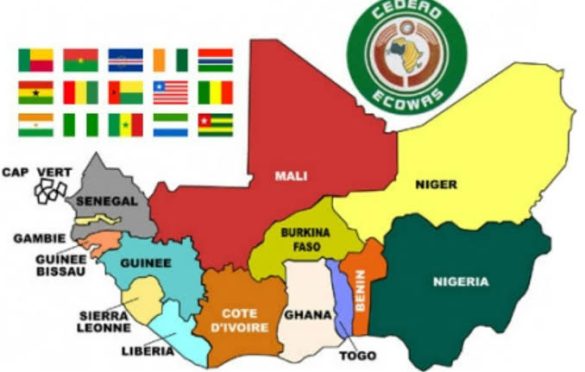
    I posted a short prelude to my other column on Facebook; just a few lines excerpted from my other column. It elicited reactions. But one reaction in particular arrested me. It came from my dear friend and Nigeria’s former Ambassador to Guinea-Bissau, John Usanga. His words were warm, but they carried a troubling question, foregrounded by that kind of humility that makes one pause and think: “I love your write-up, great comrade! But my problem is this: Given that Africa – and I mean no disrespect to us as a people – is tribal in composition, what would be the proper home-grown democratic structure that will accommodate the diversity of ethnic groups in Africa to the satisfaction of all Africans?” His question haunted me. It tugged at my conscience. It lingered, even as I told myself I had nothing more to say this week. So here I am, struggling still with the Muse who has refused to return, but compelled to respond to a question too important to ignore. For at the heart of it lies Africa’s oldest dilemma: how to reconcile her many tongues, her many nations, her many peoples, into a shared political life that is just, inclusive, and truly democratic.

    Before I venture into the heart of the matter, a brief detour is necessary as an interrogation of Ambassador Usanga’s use of the phrase, “tribal in composition.” Though likely used in good faith, the phrase carries a heavy historical burden. It echoes the vocabulary of early sociologists and anthropologists like Levi-Strauss, Durkheim, Malinowski whose positions were tainted by racist prejudices. In their writings, Africa’s ethnic nations were flattened into “tribes”; a term that became the shorthand for the primitive, the pre-political, the undeveloped. These so-called “tribes” were not seen as evolving cultures with histories, institutions, and systems of governance. They were imagined as static relics of humanity’s past that were exotic, chaotic, and in need of external order. The description may have served colonialism, but it does violence to the richness of African identities. To call African nations “tribal” is not simply to misname them; it is to diminish them. It is to cast them outside the realm of the modern. And that, let it be said plainly, is racist.

    Africa’s nations are complex. They are multi-layered. They are diverse. They are dynamic. They are not “tribes” in the sense of the colonial. To continue to describe them as such is to remain trapped in that colonial imagination.

    Now, I return to the main themes of this piece.

    In 1957, as Britain’s colonial project began to collapse, the Colonial Office in London released a troubling Report. Democracy, it stated, would not travel well in the colonies, especially in Nigeria. Its reason? Widespread poverty. Ignorance. And, in more guarded colonial-speak, the “tribal” character of the Nigerian.

    It was a cold dismissal. A quiet warning that democracy, imported wholesale, would break under the weight of ethnic diversity. The Report wasn’t entirely wrong. It was, however, short-sighted. The late Claude Ake, the renowned Nigerian political economist, would later put it more clearly. In his book, The Feasibility of Democracy in Africa, Ake wrote that democratisation must precede democracy. In effect, he meant that democracy cannot exist without it being practised. It cannot take root in an environment where it is not nurtured. It cannot be wished into being. Today, nearly 70 years since that colonial report, Africa still struggles with democracy. The question remains: what form of democracy can truly work for Africa? One that respects the continent’s ethnic, linguistic, and cultural diversity. One that Africans can call their own.

    This isn’t a question plucked from the sheaf of the abstract. It goes to the heart of Africa’s failures and its hopes. Across the continent, post-independence governments inherited the Western liberal model. Parliaments. Presidents. Political parties. Constitutions. They adopted Westphalian and European legal systems and bureaucracies. But they did not dismantle the colonial state, as Professor Chidi Odinkalu argued recently at a webinar. Nor did they adapt these systems to the realities of the continent. In many cases, they simply exchanged white rulers for black elites. Or they simply masked their black skin with white masks- with apologies to Frantz Fanon.

    The result? Electoral violence. Ethnic competitions. Winner-takes-all politics. Fragile institutions. Military coups. The problem isn’t that democracy is foreign. The problem is that African societies are structured differently. Identity is local before it is national. People trust their kin before they trust the state. Allegiance to clan, ethnicity, and religion runs deep. This is not inherently bad. Diversity is not Africa’s curse. It is the character of those who run the state that implicates the operationalisation of democracy in terrible ways. But when the operators ignore the essential character of representation of democracy, it leads to conflict. When states impose uniformity, people resist the imposition in many conflictual ways. When political systems fail to give space to different groups, people feel excluded.

    So, what is to be done?

    First, we must accept that Africa cannot copy and paste democracy. We cannot take the American presidential model or the British Westminster system and expect it to thrive in our societies. We need to build democracy from the ground up. Based on our own histories. Based on our own realities.

    Perhaps, a hark to the past will help provide some clarity.

    Before the advent of European colonialism, African societies governed themselves. Many had systems of consensus. Kings and chiefs ruled, but often in consultation with the people. These governance systems were participatory. They were inclusive. They recognised diversity. Modern democracy must learn from these traditions. It must be rooted in African social structures.

    Second, we need to embrace federalism. True federalism. Not in name, but in substance. Many African countries are artificial states, with colonial borders. The colonialists bundled together dozens, even hundreds, of ethnic groups; and expected them to coexist under a centralised government that has turned out unrealistic. The unitary model has failed in places like Sudan, Ethiopia, and the Democratic Republic of Congo. A genuine federal system allows communities to govern themselves while remaining part of the national framework. It provides autonomy. It reduces ethnic tension. It encourages participation. Take Nigeria, for instance. With close to 600 ethnic groups, its problems are partly structural. The current quasi-federal system concentrates too much power at the centre. It breeds resentment and unhealthy competition. A restructured federation that returns power to the regions may offer better stability.

    Third, Africa needs inclusive institutions that must reflect the plural character of society. Power must be shared. Representation must be guaranteed. This goes beyond ethnic balancing. It means building systems that represent every voice. Minority protections must be enshrined in the basic law.

    My position doesn’t mean that the past must be romanticised. Some traditional systems are patriarchal or discriminatory. But a hybrid of modern state institutions working alongside reformed traditional authorities can enhance legitimacy. Rwanda’s Gacaca courts offer one such example. Though controversial, they blended customary law and community justice to address post-genocide reconciliation and enthroned restorative justice. South Africa’s Truth and Reconciliation Commission is another example. Though not perfect, it reflected Ubuntu.

    Fourth, democracy must be localised. Too often, elections are national rituals, far removed from ordinary people. Controlled by money. Captured by elites. But real democracy starts at the local level. In the ward. The village. The township. When people feel they have a say in their everyday governance, democracy begins to make sense. Democracy is a verb; people learn democracy by doing democracy.

    But we must also go deeper. Political education is key. People must understand that democracy is not just about voting. It is about dialogue. Debate. Compromise. More importantly, democracy cannot thrive on empty stomachs. The Colonial Office was partly right: poverty undermines democracy. So does unemployment. Illiteracy. Disease. People who are desperate do not care for ballots. They care for bread. Building home-grown democracy requires investing in people. Education. Health. Jobs. Infrastructure. These are not luxuries. They are necessities. When people are empowered, they can participate fully in governance. When citizens are informed, they can hold their leaders accountable.

    Across Africa, the civic space and freedoms are under attack. Governments shut down the internet. Arrest critics. Clamp down on protests. But history shows that democracy often comes from below.

    In 2020, Nigerian youths mobilised for #EndSARS. In 2023, Senegalese students led demonstrations for justice. Last week, Kenyans protested new taxes and forced their government to retreat. The Togolese weren’t left out. These are signs of democratic awakening. Young Africans are no longer waiting for perfect systems. They are demanding accountability. They are building platforms. They are using technology to organise and mobilise. They are showing that democracy is not a concession. It is a fight borne out of courage of conviction. But, in the end, the question isn’t whether Africa is fit for democracy. The question is whether democracy can be made fit for Africa.

    And the answer is yes.

    But it will not come through mimicry. It will come through imagination and struggle. Through bold reforms. Through the reforms of the African mindsets. Through the reinvention of local traditions. Through federal structures. Through inclusive governance. A home-grown African democracy must rise from the soil of the continent. It must speak its languages. Honour its cultures. Embrace its complexities. Only then can democracy take root. Only then can it flourish. No more.

  • #EndSARS: ECOWAS Court Rules Nigerian Government Guilty of Human Rights Abuses During Protests

    #EndSARS: ECOWAS Court Rules Nigerian Government Guilty of Human Rights Abuses During Protests

    …slams N10 million compensation to each victim named in the suit

    The Court of Justice of the Economic Community of West African States (ECOWAS) Community Court of Justice on Wednesday indicted  the Nigerian Government over the human rights abuses in its response to the #EndSARS protest particularly its disproportionate use of force at the Lekki Toll Gate in Lagos on October 20, 2020.

    The ECOWAS sub-regional Court in the ruling delivered by Judge Rapporteur, Justice Koroma Sengu, also slammed a N10 million compensation to each victim named in the suit.

    A statement by a human rights activist, Chioma Chuka-Agwuegbo, obtained by Arise News, said the case filed before the ECOWAS Court by a coalition of human rights activists and organisations, alleged severe violations of fundamental human rights by Nigerian security forces.

    Amnesty International (AI) also submitted an Amicus Brief, which was declared admissible by the Court.

    According to Chuka-Agwuegbo, the ECOWAS Court’s decision underscores the importance of regional judicial mechanisms in holding governments accountable and protecting citizens’ rights and also highlights the critical role of civil society in advocating for justice and human dignity.

    After thoroughly examining evidence and testimonies, the Court concluded that the Nigerian government’s actions breached several international human rights standards, including Articles 1, 5, 6, 9, 10, and 11 of the African Charter on  Human and Peoples’ Rights.

    The Court found credible evidence of disproportionate use of force and violations of the right to liberty and security, assembly, free speech, and dignity. It stated that the use of force was not necessary and contravened the Respondent State’s obligations under the African Charter.

    The Court agreed that the applicants had suffered torture at the hands of the Nigerian government. The Court found that the situation at the Lekki tollgate, where live rounds were shot into the crowd of unarmed protesters, created a situation of fear, and the Nigerian government did not present evidence refuting those allegations.

    The Court further held that the Respondent State failed to allow and afford the Applicants their rights to freedom of expression, assembly, and association, therefore violating the Applicants’ rights under Articles 9, 10 and 11 of the African Charter.

    The government’s actions were deemed inconsistent with Nigeria’s obligations under the ECOWAS Revised Treaty and the African Charter on Human and Peoples’ Rights.

    The Court held that the quasi-mechanism set up by the Respondent State to investigate the allegations of abuse at the Lekki toll gate lacked independence and was questionable. The State, therefore, failed in its duty of effective remedy under Article 1 of the African Charter.

    The Court ordered the Federal Government of Nigeria to pay N10 million each in compensation to the Applicants.

    Additionally, the Nigerian government has been mandated to conduct investigations into the human rights abuses that occurred with a view to implementing the outcomes of said investigations. The Court has ordered the government to report to the Court in six months with an update on the compensation and progress of the inquiry.

    The Lead Counsel Counsel for the Applicants, Bolaji Gabari, in his reaction, said, “This ruling is a significant victory for the #EndSARS movement, an acknowledgement that citizens’ rights were violated and abuses occurred at Lekki Toll Gate. We urge the Nigerian government to comply fully with the Court’s orders and take immediate steps to address the systemic issues identified in the judgment.”

    Another Counsel to the Applicants, Mojirayo Ogunlana, said that the journey to the victory began on December 10 2021.

    She recalled that the Nigerian Government, as respondents in the suit, failed to show up to put in a defence until 2023, when, in its address, claimed, amongst others, that the #EndSARS peaceful protest was unlawful and perpetuated by hoodlums.

    Ogunlana expressed joy at the closure occasioned for the Applicants and Nigerians who bore witness to the abuse and violation on the 20th of October.

    The Executive Director of Citizens’ Gavel, and coordinating organisation for the coalition, Nelson Olanipekun said, “The landmark ruling by the ECOWAS Court in favour of EndSARS victims is a powerful affirmation of justice and a significant step towards healing and accountability for the Lekki Toll Gate tragedy.”

    One of the Applicants, Obianuju Catherine Udeh (DJ Switch) said, “Not once did I waver in my shared experience of the traumatic events of October 20 2020 but to sit in court and listen to the esteemed Judges, based on the facts give a ruling in our favour not only reaffirms what I know and experienced but makes this one of the best days of my life since the horrific event.

    “This judgement becomes a glimmer of hope that we can indeed head in the right direction in service of the truth and justice.”

    On October 20 2020, peaceful and unarmed protesters were fired at by Nigerian Security agents at the Lekki Toll Gate, Lagos state, Nigeria, bringing to a violent end the #ENDSARS protests that, began on October 3 in Delta State, which had been held across the country.

    Nigerians called for justice against the  police brutality in Nigeria.

    In December 2021, three victims brought a case before the ECOWAS Court, Obianuju Catherine & 2 Others v. Federal Republic of Nigeria (ECW/CCJ/APP/72/2021), to justice for themselves and those impacted by the violations.

    Arise News

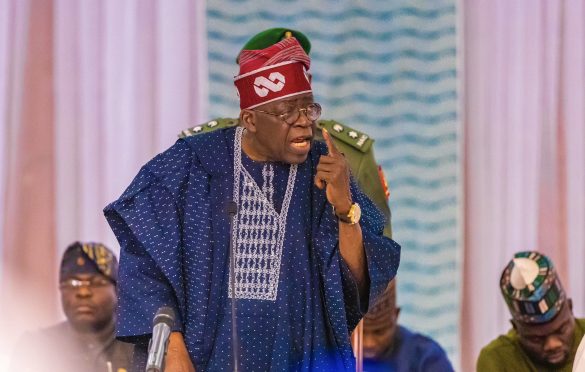
  • At Democracy Day Banquet, Shehu Sani Tells Tinubu to Pardon Imprisoned EndSARS Protesters

    At Democracy Day Banquet, Shehu Sani Tells Tinubu to Pardon Imprisoned EndSARS Protesters

    A former senator representing Kaduna central, Shehu Sani has called on President Bola Tinubu to pardon the EndSARS protesters, who are still in detention.

    Sani made this call while speaking at a dinner marking the 2024 Democracy Day on Wednesday.

    Recall that many Nigerian youths protested across the country against the excesses of the now-disbanded special anti-robbery squad (SARS) unit of the police in October 2020.

    After a series of protests,  many protesters were arrested in cities such as Lagos, Rivers, and Ibadan, some of whom have remained in detention.

    Reacting to the development, Sani said the Nigerian youths who protested against the SARS took after Tinubu, who, according to him, was at the forefront of the struggle for the return of civilian rule in the country.

    He saod, “Mr. President, there are some people who are still in detention as a result of EndSars’ protest. They were young people who were protesting for justice, freedom, and democracy,” Sani said at the event attended by Tinubu.

    “Any young protester in Nigeria today should learn from you because you were the father of protest in Nigeria. Do something about it. Give them the freedom; give them the pardon.”

    “You taught us; you funded us to stand up and fight. So, they are your children and grandchildren; give them pardon.”

    The former senator also urged Tinubu on the need to foster freedom, equity, and justice in the country.

    “Mr. President, I would like to draw your attention. A national anthem cannot unite a nation. A national pledge or a constitution cannot unite a nation.

    “A nation is united by the ideals of freedom; a nation is united by equity and justice. Many younger generations of today have not and couldn’t know the sacrifice we have made to restore democracy to this country.

    “It is important that we bring attention to those who were not here in those days of struggle.

    “Democracy wasn’t a gift given to us by the military. It wasn’t a lottery that we won. It was a product of struggle and sacrifice. There were people forced into exile, like the president and commander-in-chief of the armed forces and the likes of Wole Soyinka.

    “There were people who were sent to prison like us. We are supposed to spend the first 15 years of our lives in prison, but by the magnanimity of God, we were out. There were many who were dead. This democracy is a product of struggle.

    “The Academic Staff Union of Universities made sacrifices, and the media made sacrifices. The NUPENG, headed by the likes of Frank Kokori, made sacrifices, and the National Association of Nigerian Students made sacrifices.

    “This democracy was a product of that struggle, a product of determination, and a product of sacrifices.

    “Mr. President, you have a duty to succeed. If you succeed, we will share your glory because you came from the trenches, that period of struggle. Mr. President, if you fail, they would say those of you who fought for democracy have nothing new to offer to Nigeria.”

    Vanguard

  • FG accuses PDP of plotting another EndSARS protest

    FG accuses PDP of plotting another EndSARS protest

    The Federal Government has accused the Peoples Democratic Party (PDP) of plotting another round of EndSARS protest and peddling lies about the government of President Muhammadu Buhari.

    Minister of Information and Culture, Alhaji Lai Mohammed told a press conference in Abuja, yesterday, that though there is nothing wrong in having a viable opposition, the PDP went too far in seeking the country’s destruction through its utterances and actions.

    In its reaction to the weekend national convention of the All Progressives Congress (APC) held in Abuja, at the weekend, where a new National Working Committee of the party was elected, a day after, the PDP, in a statement by the its spokesman, Debo Ologunagba, the party said it was “appalling to see APC leaders come out one after the other at their national jamboree to spew out lies and false performance claims on the economy, infrastructure and security even in the face of biting economic hardship, high cost of living, excruciating fuel emergency, lingering crisis in the education sector and escalated insecurity that was happening real time and simultaneously when the ridiculous claims of achievements were being made.”

    But, the Federal Government accused the PDP of advocating the destruction of Nigeria by threatening to unleash another round of EndSARS on the country and deliberately misinforming Nigerians on the APC government.

    “…As you know, the folks on the other side have been doing everything in recent times to overheat the polity, distort the achievements of our Administration and spread misinformation. Yes, it is very cold out there for the hungry and desperate opposition, but every indication is that they don’t even want to wait for the 2023 elections before testing their popularity or acceptability at the polls.

    “How else does one explain their court case seeking the declaration of our convention as illegal? How do you explain their threat of another EndSARS that pushed Nigerian to the brink? How do you explain their glaring misinformation regarding the nation’s state of affairs?

    “There is nothing wrong in having a fiery and viable opposition in a democracy. We were there before and we remain the ones to beat in terms of a determined, viable and relentless opposition. But, in our time, not once did we advocate the destruction of Nigeria just because we couldn’t have our way. Not once did we seek to gain power via a desperate court action. If you destroy the country you are seeking to govern, what country will you govern? Must you cut your nose to spite your face?

    “In their most recent act of desperation, they sought to erase seven years of unprecedented achievements by the Buhari Administration. In the most egregious show of shamelessness and a blatant refusal to be remorseful, they even had the audacity to express righteous indignation that the damage they inflicted on the country in their 16 years of misrule has not been totally undone in just seven years. In other words, those who brought the country to its knees are now accusing those working hard to repair things of non-performance. They said they are ready to rescue Nigeria. Pray, where do kidnappers rescue their victims? These same guys who kidnapped the fortunes of their country are suddenly posing as rescuers. Caveat Emptor; buyers beware! Nigerians beware!” government said.

    The minister dismissed the opposition party’s claim that the PDP government handed over $550 billion economy, with single digit inflation and a much reduced debt profile.

    “Ask them what infrastructure did they leave behind? Ask them how many motorable roads did they leave behind? They frittered away our gains from oil sales. How many times, on paper, did they launch the second Niger Bridge? How many times did they launch reconstruction of the Lagos-Ibadan expressway on paper?

    “We are not saying that opposition should not critique. What we are saying is that they should not promote anarchy because we didn’t do that in our time. They wrecked the the economy and we are rebuilding it. They wrecked the country’s infrastructure and we are rebuilding them?…When PDP left, 21 states could not pay the salary of their staff. They should stop re-writing history while we are alive..”

    Asked if he was satisfied that the APC government has ameliorated the sufferings of Nigerians, in light of the present economic situation in the country, Mohammed replied: “I’m very proud of this administration’s efforts to ameliorate the suffering of Nigerians. Before we came, there was nothing like the National Social Investment Programme (NSIP).

    “They gloat that Nigerians are suffering under our watch. But we say that while they laid the ground work for today’s suffering with their mismanagement of national resources at a time of plenty, we have introduced unprecedented measures to alleviate the suffering of Nigerians, especially the very vulnerable. Our NSIP is the biggest of its kind in sub-Saharan Africa. The N-Power benefits one million people; the Government Enterprise and Empowerment Programme (GEEP), has benefitted four million people; the National Home Grown School Feeding Programme (NHGSFP) is providing quality meals daily to 10 million primary school pupils, in addition to empowering over 100,000 cooks and the same number of small holder farmers in the local areas where the schools are located; the Household Uplifting Programme (HUP), which has the Conditional Cash Transfer (CCT) as its flagship intervention, provides N5,000 monthly grants to almost 2 million eligible households across the country, in addition addition to the 1 million Urban Poor who are benefitting from the Conditional Cash Transfers, under the directive of Mr. President to further expand the programme due to the Covid-19 Pandemic.”

    On the double digit inflation raving the economy, the minister noted that, “ inflation is a global issue. On petrol scarcity: if only they did the needful (in overhauling infrastructure), we would have been benefitting from increase in crude oil prices today.”

    (Sun)

  • The Police have no power to stop the protest – Sowore


    Human rights activist, Omoyele Sowore, has stated that the Lagos State Police Command have no power to stop street protests.


    He made this known in a statement on Tuesday titled, ‘A Rejoinder to Nigeria Police Force Lagos Command!’, where he insisted that the planned protests would still hold on the 20th of October.


    Entertainers and key players in the protest Falz and Mr Macaroni, had earlier announced that a memorial car procession would be held at Lekki Tollgate in Lagos.


    However, the police had stated that only indoor and virtual protests would be allowed on Wednesday.


    Reacting to that, Sowore said, “Our attention has been drawn to the latest statement credited to the Lagos state Command of the Nigeria Police to the effect that no “street protests” will be allowed tomorrow (Wednesday) to mark the historic #Endsars rebellion of 2020 and its attendant fallout due to police repression and Nigerian army’s murderous intervention.


    “We state unequivocally that it not within the powers of the Nigerian police to stop citizens from engaging in street protests, the right to engage in protest against unjust policies, tyranny and oppression is an inalienable right and as such these latest claims are at best superfluous and belligerently arrogant.


    “We urge the police authorities to ensure they carry out their duties to protect protesters who will be on the streets by way of cars, bicycles, tricycles, skateboards and by foot all over Lagos and its environs tomorrow (Wednesday).


    “The Lagos state police commissioner will be personally held liable if anything untoward happens to any Nigerian citizen engagin lawful protest during the #Endsars anniversary.


    “We urge our compatriots to remain steadfast and prepare fully to carry out their conscientious duties and historical tasks tomorrow (Wednesday).”

  • EndSARS: After one year Nigerian Government fails to deliver justice for Victims of police killings and brutality – Amnesty International.

    Amnesty International says the Nigerian government has failed to bring perpetrators of violence and killings of peaceful protesters during the October 2020 #EndSARS protests to justice.


    The protests were led by the youth across many Nigerian cities and towns against rights violations and brutality perpetrated by the operatives of the defunct Special Anti-Robbery Squad (SARS), and other police tactical units.


    The global human rights body said it found out that the Nigerian army and the police murdered 12 people at the peak of the protest on October 20 at Lekki Tollgate in Lagos.


    Today, the historic protest and the chain of events that led to the alleged killings at Lekki Tollgate and protests are being commemorated, one year after.


    The Lagos State #EndSARS panel that was meant to unravel the the circumstances that culminated into the shootings on October 20 at Lekki has said it will submit its findings to the state government, despite the demand for justice for victims of the incident.

    #EndSARS panel is the common name referring to the various panels of inquiry set up in about 28 states and Abuja to investigate cases of rights infringements and brutality unleashed on Nigerians by the personnel of the defunct Special Anti-Robbery Squad (SARS), and other police tactical units.


    The federal and state governments had resolved to set up the panels in response to the demands of the #EndSARS protests.


    In a statement commorating the protests, Amnesty International said despite claims of broad reforms by the Nigerian government, the police operatives continue to violate the rights of citizens with impunity.


    Inspector General of Police, Usman Alkali Baba

    It lamented that in spite of the establishment of #EndSARS panels across the country, victims of police brutality were yet to get justice.


    In a desperate move to quell the protests, the government recruited hoodlums who unleashed violence on peaceful protesters with a view to discrediting the genuine concerns raised by the demonstrators.


    Lekki Tollgate shooting

    As the various panels turn in their findings, Amnesty International says, “One year after peaceful #EndSARS protests ended in a brutal crackdown by Nigerian security forces in Abuja, Lagos and other parts of the country, no one has been brought to justice for the torture, violence, and killings of peaceful protesters.


    “An investigation by the organisation found that Nigerian army and police killed at least 12 people on 20 October 2020 at Lekki toll gate and Alausa in Lagos. Amnesty International was able to establish that pro-government supporters instigated violence at many of the demonstrations, providing cover for the police to use lethal force against peaceful protesters.


    “The organisation also found that detained protesters were tortured and refused or denied immediate access to lawyers.


    “A year on, despite the gravity of these human rights violations, not a single member of the security forces has been prosecuted while judicial panels of inquiry set up to investigate abuses by officers have made little progress,” the statement said.


    ‘Fulfil promise to reform police’

    Osai Ojigho, director of Amnesty International Nigeria, said President Muhammadu Buhari must fulfill his promise of reforming the police to end the reign of impunity Nigerians have been protesting against for many years.


    President Muhammadu Buhari

    “Failure to bring to justice those suspected to be responsible for the torture and killings of #EndSARS protesters on 20 October 2020 is yet another indication that Nigerian authorities lack the political will to ensure accountability for these atrocities, and end police brutality,” Mr Ojigho was quoted as saying in the statement.


    “Under the pretext of restoring order, horrific injuries were inflicted on hundreds of people and at least 56 people were killed, among them dozens of young people lost their lives as Nigerian security forces used unnecessary and excessive force to disperse peaceful protesters across the country.


    “It is unacceptable that despite overwhelming evidence, the government continues to deny the use of live ammunition on protesters at Lekki toll gate exactly a year ago,” Mr Ojigho added.


    Amnesty International said it had documented incidents at Lekki toll gate in Lagos and other parts of Nigeria, showing the violent response of the Nigerian security forces to peaceful protests.


    “The clear aim of the crackdown was to instill fear, discourage peaceful protests and punish those demanding an end to widespread human rights violations by the police,” it said.


    Excessive use of force

    In tracking the use of excessive force, Amnesty International said “almost every person arrested during the protests described being beaten with the butt of a gun, whips and fists during their arrests.”


    Governor-Babajide-Sanwo-Olu

    The organisation referenced the Committee to Protect Journalists (CPJ), as saying that “at least 12 journalists were attacked during the #EndSARS protests by security forces and unidentified perpetrators.


    “Many of those detained interviewed by Amnesty International said that they were tortured while in detention. In many cases, police abuse continued in detention, in police stations and other holding facilities, and on the way to detention, in police vehicles.


    “Several such cases amount to torture and other ill-treatment. Delayed or no access to legal counsel.


    Amnesty International revealed that it also documented numerous cases in which police denied or delayed access to lawyers and medical care to detainees.


    “This was despite repeated requests from detainees to see or call a lawyer – and repeated requests from lawyers at places of detention to have access to the detainees. Several lawyers and human right defenders said they spent days moving from one police station to another trying to find out where those who had been arrested were being held.


    “One person arrested during a protest on 18 October 2020 and held at Lagos state Criminal Investigation Department (CID), Panti, said he repeatedly asked to call a lawyer. He was told by a police officer to shut up. While in detention, he was denied access to a lawyer who had come to see him and was unable to meet with a lawyer until a week after being arrested.


    “Providing timely access to lawyers is an important safeguard for many human rights, such as the right to a fair trial and ensuring the detainee’s rights are respected in custody, including the right to access medical care when needed, as well as protection from coerced confessions and torture and other ill-treatment.


    ‘#EndSARS panels marred by prolonged adjournments’

    The foremost human rights body in its assessment of the about 28 #EndSARS panels that were set up by various sate governments and another in Abuja, said there was no commitment to ensuring justice for victims of police violence.


    Amnesty International

    “Investigative panels set up to look into police brutality have so far been marred by prolonged adjournments, intimidation of witnesses by police lawyers and the failure of police officers to appear as witnesses, according to observer reports verified by Amnesty International. Panels have failed to sit in some states, and in others have gone on an indefinite break,” the statement noted.


    “What we observed at these panels is discouraging and clearly shows there is no real commitment to ensuring justice for victims of police violence across Nigeria. These panels raised hopes of getting justice but in some states, this is quickly vanishing,” Mr Ojigho said.


    Amnesty International called on the Nigerian government to decisively end police impunity.

    “Use of progovernment thugs to violently disperse and undermine peaceful #EndSARS protests must be thoroughly, independently, impartially, and transparently investigated and suspected perpetrators brought to justice in fair trials.


    “Nigerians must not be denied the constitutionally and internationally guaranteed right to peaceful protest.


    “All those detained or missing since the #EndSARS protests must be immediately released or reunited with their families. Nigerian authorities must ensure access of victims and their families to effective remedies, including adequate compensation, restitution, and guarantee of non-repetition,” Mr Ojigho demanded.


    Source: www.premiumtimesng.com

  • EndSARS: Protest is unnecessary, youths should embrace dialogue and reconciliation. -Sanwo-Olu

    Lagos State Governor Babajide Sanwo-Olu and Lagos Chamber of Commerce and Industry (LCCI) yesterday said a protest in commemoration of last year’s #EndSARS demonstration is unnecessary.


    Sanwo-Olu, who acknowledged that youths have reasons to demand for better life and future, admonished them to embrace dialogue and reconciliation instead of resorting to violent attacks.


    The LCCC Director-General, Dr Chinyere Almona, who lamented the impact of the #EndSARS protest on business across the country, pointed out that the business community lost over N700 billion to the protests.

    Sanwo-Olu spoke at a peace conference in Lagos with the theme: Rebuilding for Greatness: ‘Peace Conflict Resolution’.


    The LCCI chief spoke against the backdrops of the one-year anniversary of the #ENDSARS protest.


    Also lamenting the negative impact of the protest, the Ikeja Branch of the Nigeria Bar Association (NBA) said the burnt or missing case files in court have slowed down the administration of justice.


    The Nigerian Association of Road Transport Organisation (NARTO) complained that it was yet to receive compensation for losses incurred during last year’s protest, which was hijacked by hoodlums who unleashed mayhem on the metropolis.


    Yesterday, the police warned against any violent protest in Lagos.


    Led by Police Commissioner Hakeem Odumosu, policemen staged a show-of-force in the metropolis to reiterate their earlier warning against street protest.


    Also, police, soldiers and other security agents have taken over the Lekki Toll Gate, the centre of last year’s protest.


    At the Lagos Peace Conference, the state government and some youth leaders brokered reconciliation and pledge mutual commitment to conflict resolution.


    Read Also; Security operatives take over Lekki Tollgate ahead of #EndSARS memorial protest

    Many youths across Lagos State, despite the national holiday, turned up for the conference aimed at creating a common platform for the resolution to conflicts.


    The youths discussed how they could effectively channel their grievances to the authorities.


    The seven-man discussion panel moderated by Mazi Sam Uche Anyamele, a filmmaker, set the tone for the governor’s response to various suggestions by youths at the event.


    Sanwo-Olu, dressed in Boys Scouts’ green shirt and light-brown pants, with yellow tie to match, said “the moment for true reconciliation has begun.”


    He said Lagos was now set for a total healing after last year’s coordinated attacks on its assets, which also resulted in loss of lives and livelihoods.


    Sanwo-Olu stressed: “Today is a day of reconciliation and it is about our teeming youths. This is the moment to create a common ground and take ownership of our future. We have indeed assessed what we have passed through as a people; it’s now the moment to come together and build our lives together.


    “This event is about aggregating all the conversations of the millions of youths that have been represented here. All of us have agreed that, when we work together, we can build a resilient society we will truly be proud of. We will continue to build, engage and work with our young people. I certainly will not give up on you as partners in progress and your ability to bring about positive changes.”


    Sanwo-Olu acknowledged the need for inter-generational dialogue to proactively address issues that may lead to conflict, assuring the participants of his administration’s readiness to champion causes that would be beneficial to young people.


    The governor said the youth must not only be granted a stakeholder status in the state’s project, but also be given prime seats in decisions making arena. He said his administration had shown example by appointing scores of young people under 40 years into the State Executive Council, and as political aides and administrators of Government’s agencies.


    Sanwo-Olu also promised to increase the State’s investment in human capital development and equip the youths with requisite 21st century skills that would empower them economically.


    He said: “I thank all the youths who participated in this forum for the valuable suggestions offered and the ideas shared. I’m taking full responsibility and ownership of all the feedback recommended here. All the points have been taken and I will continue to rely on them in the course of governance.”


    Sanwo-Olu highlighted some programmes specifically targetted at youths. He said: “Some of these programmes, which were initiated as part of our efforts to address issues bothering on youth development and empowerment, include remodeling, development and equipping of four youth centres – Abesan, Lafiaji, Ikorodu and Omituntun.


    “On October 27, we will be holding the first of its kind Lagos Police Youth Dialogue session where our youths and policemen will deliberate on how to strengthen their relationship and create a synergy that will improve interaction and security in the state.’’


    Businesses lost N700b last year


    Almona said the LCCI estimated the immediate loss from the EndSARS to be above N700 billion in October last year, with discoveries of more losses after weeks of investigations by the government across the country.


    She added: “The 2021 Global Peace Index (GPI) released by the Institute for Economics and Peace ranked Nigeria 146 among 163 independent nations and territories, according to its level of peacefulness in 2020.


    “Nigeria moved one step from 147 in 2020 (from 2019 rank), though it still ranked eighth among the least peaceful countries in Africa after South Sudan, Somalia, the Democratic Republic of the Congo, Libya, Central African Republic, Sudan and Mali.


    “In 2020, the world witnessed almost 15,000 violent protests and riots.


    “The damage it caused came with a hefty price of about 15 trillion dollars or 11.6 per cent of the world’s Gross Domestic Product.


    “Among those, more than 5,000 were pandemic-related and were recorded between January 2020 and April 2020.”


    Burnt case files worry NBA


    Lamenting that the #EndSARS protests, Ikeja NBA said they resulted in loss of lives and property across the country.


    He condemned the hoodlums who looted and razed the Igbosere High Court in Lagos Island.


    The historic edifice was the oldest judicial building in Nigeria and rebuilding of the court complex is yet to commence.


    NBA Ikeja branch chairman, Bartholomew Aguegbodo, said the effects of the #EndSARS protest was still being felt by lawyers as key stakeholders in the administration of justice system.


    “There are a lot of hiccups caused by the burning of the courthouse, case files and exhibits got burnt during the #EndSARS crisis and some of those case files are yet to be recovered.


    “It was just less than two months ago that alternative solutions were put in place for new courthouses in Yaba and Ikoyi areas of Lagos.


    “We are still battling to grasp with the weight of the #EndSARS crisis up till now,” he said.


    The NBA chairman noted that following the arson attack, several lost records could not be retrieved because online e-filing system for the judiciary had not fully taken off.


    “We believe now that with the formal e-filing system working fully, if we are to have a repeat of the #EndSARS crisis, it will not generate cases of missing files any longer.


    “Due to the arson attack, we had instances where both the claimants and the defendants had to bring out records from themselves to reconstruct case files.


    “It created a very unhealthy task and up till today, there are a lot of case files that are yet to be reconstructed.”


    NARTO laments lack of compensation


    NARTO President Alhaji Yusuf Othman complained that the Federal Government has refused to compensate the members of the association.


    He said: “There has been no compensation. Nobody listened to us. There is no development. Nobody listened to us. We did not hear anything.”


    Othman said NARTO lost over N2 billion as their trucks were burnt.


    He added: “We have some trucks that were burnt. Others with drivers and motor boys burnt. Specifically around Imo State, over 100 trucks were burnt with maize, and cattle. And we have taken inventory of these destructions and we have sent to government. We have not heard from them (Government). “We lost more than N2billion. Of course, we cannot quantify the amount of lives (drivers and motor boys) that were lost. Some trucks were burnt at Warri. One or three trucks were burnt around Lagos. But the major destruction was around Aba.”


    The Association of Micro Entrepreneurs of Nigeria (AMEN) urged government to implement policies aimed at massive job creation, youth empowerment and engagements and poverty alleviation.


    Mr Saviour Iche, its National President, Saviour Iche, said last year’s protest was expected to bring changes, transformation, new agendas and innovative ideas, in view of the way government had handled previous issues that brought about the protest.


    According to him, the call for change appears not to have been fully addressed, hence, the need for government to look into the various demands of the youth for improved national outcomes.


    Iche advised against any protest during EndSARS anniversary, saying that the impacts would affect the masses more.


    “There are people that if they did not go out in a day, they would not eat.


    “The high cost of living will lead many people to suffering and the economy will be totally grounded.”


    Source: www.thenationonlineng.net

  • EndSARS: Families Of Deceased, Wounded Recount Ordeal One Year After Protests

    #EndSARS: Families Of Deceased, Wounded Recount Ordeal One Year After Protests

    Raji Jimoh, father of late Isiaka Jimoh. Photo: Adejumo Kabir/HumAngle.

    Ayoola Ayedungbe was the first child of his family. His three other siblings saw him as their role model and he promised not to let them down as soon as things became rosy for him.

    The 29-year-old man graduated from a bible school months earlier and was on the verge of being an evangelist before he was killed by the police during #EndSARS protest violence at Berger, Lagos State.

    Days before Ayoola’s death, his mother, a prophetess, had a dream about the incident.

    “I called him on Oct. 19, 2020, that I had a bad dream about him and he should not join the #EndSARS protest. I told him to ensure he prays for safety in all his endeavours and I also prayed for him, hoping that no evil would happen to my son,” the mother, who simply identified herself as Mummy Ayoola, said.

    “I never knew that the call was going to be my last conversation with my son. I felt all that happened to him was destiny because I prayed.”

    Picture used to connect to Ayoola’s family. Photo: Funmi Ayedungbe.

    Ayoola’s mother told HumAngle she did not know her son was a victim of the violence following the protests until 18 days after.

    “We were told that they placed his pictures on vehicles in Berger with a tag of ‘missing identity #EndSARS victim’. The banner read that those who know Ayoola’s family should tell us to come to male ward at Lagos State University Teaching Hospital (LASUTH) in Ikeja.”

    “We rushed to LASUTH the following day and all I saw was my son in severe pain. The man who rescued him told us he was shot by the police 18 days earlier at Berger during violent attacks between officers and hoodlums.”

    Ayoola gave up two days after his mother got to the hospital. A year after the incident, the family lives in sorrow.

    “I cry every time I remember my son or any time I see boys in his age bracket. He was my eldest son and, most times, his younger ones console me. Ayoola wanted to be a pastor but his life was cut short. I have accepted my faith. If not for the man who rescued him, we wouldn’t be going to the judicial panel again because it does not appear like we will get justice.”

    #EndSARS protests 

    The #EndSARS protests were triggered by grievances arising from years of harassment and rights violations by operatives of the police’s Special Anti-Robbery Squad (SARS).

    For weeks in Oct. 2020, many Nigerian youths took to the streets to protest extra-judicial killings and other irregularities by the police unit. The protests led to the disbandment of the police tactical squad. 

    In a desperate move to quell the demonstrations, which had continued despite the proscription of SARS, soldiers were deployed to the epicentre of the nationwide protests at Lekki Tollgate on Oct. 20, 2020.

    Nigerian youth at Lekki toll gate, Lagos State, in Oct. 2020. Photo Credit: Pius Utomi Ekpei/AFP VIA GETTY IMAGES.

    They shot at protesters and killed a yet-to-be ascertained number. The demonstration was later hijacked by hoodlums who looted stores, homes, warehouses, as well as private and public properties in different parts of the country. 

    Many people including police officers were killed. Some sustained gunshot injuries and innocent Nigerians were arrested randomly.

    Family of deceased live in penury

    Otu Charles, a 64-year-old Ghanian was killed on Oct. 22, 2020. He was returning from work at Sawmill, along Agege, Lagos, when he was shot dead.

    Earlier that day, facilities belonging to the Nigeria Police in Ojodu Berger area of the state, were razed during an attack by a group of hoodlums. 

    By evening, the destruction had led to a bloody confrontation between some police officers and hoodlums in the area. Immediately Otu alighted at Akinyode bus-stop, he heard sporadic gunshots.

    “A stray bullet hit him when he was running for safety. This was after he ran into a fight between police and rioters around 7 p.m. Since then, his wife and three children have been living in pain,” Wiafe Charles, the deceased’s brother, told HumAngle.

    Two months after Otu died, his family members were ejected from their residence in Akinyode following failure to meet up with their rent.

    “It has not been easy for the family. After the incident, there was no money to pay for their rent at Akinyode and, two months later, they were evicted from the house. They are now squatting with a family-friend in Yaba.”

    Wiafe is interested in helping the widow and children of his late brother but his earnings from his Baba Ijebu (lottery) business is not enough for him to feed even his own family.

    Remembrance of sorrow 

    Isiaka Jimoh, a 20-year-old electrician, went to a site at the Under G area of Ogbomoso, Oyo State, on Oct. 10, 2020. Despite yielding to his mother’s advice not to take part in the #EndSARS protest at his community, he still did not return home alive.

    Jimoh Isiaka minutes before he was killed at the Oyo protest.

    The deceased’s mother, Ramota Jimoh, believed her son died because “he was predestined to die by gunshot.”

    “I saw him a day before he died and warned him against joining the protest due to high-handedness by police operatives,” she said.

    “Unfortunately, his father called me around noon on Saturday that I should meet him at Bowen University Teaching Hospital. He told me Isiaka was shot by police who were trying to disperse #EndSARS protesters.”

    Speaking on life after Isiaka’s death, Ramota said, “I cannot forget Isiaka because he promised to  take me to Mecca for pilgrimage and buy houses for me. Even with the little he was making before his death, he was already making thrift for me to start a petty business.”

    Isiaka’s father, Raji Jimoh, told HumAngle police officers attached to the Owode Division were responsible for the death of his son. He said late Isiaka had two bullet wounds on his yellow shorts and his sweatshirt was recoloured by blood from blue to red. The protesters who witnessed the ugly incident took him to hospital but he didn’t survive it.

    “He went to LAUTECH area to work but he could not even carry out his assignment there due to #EndSARS,” the deceased’s father remembered. “He was observing the protest from a distance but unfortunately got shot with two stray bullets at the junction.”

    Raji told HumAngle, despite promises by top government officials, the family was yet to receive any support one year after the incident.

    “Many people came to pay us condolence visits including top government officials like Governor Seyi Makinde, Minister of Sports, Sunday Dare, and Senator Fatai Buhari. They all promised to assist us but we didn’t get feedback. They set up a judicial panel and we were going to the panel before it ended in July.  Till now, nothing has been heard. I cry every time I remember because Isiaka was so kind to me despite being the last-born.”

    Widows of slain police officers want help

    Like civilians, many police officers also lost their lives. One of them was Inspector Peter Abegunde. The police officer got a call from his Divisional Police Officer (DPO) in the early hours of Oct. 20, 2020. As a hard-working officer, he left his house around 6 a.m. for Ojo Police Station in Ibadan, Oyo State.

    Aside from his police job, Peter was a final-year student of Conflict Studies at the University of Ibadan. “If not for death, he would have been a graduate by now,” his widow, Abiodun Abegunde, told HumAngle.

    “He called me around 1 p.m. that the protest was getting bloody and instructed me to go pick the children up at school. By the time I was going to call him around 2 p.m., his phone was off.”

    Abiodun was worried when her husband did not return home later that night. She could not sleep after she heard the news of the attack on Ojo police station by hoodlums who had already hijacked the protest.

    Ojoo Police Station burnt during #EndSARS protest in Ibadan. Photo: Oyo Insight

    “I left the house very early the next day to be sure my husband was not among those that got attacked. On getting to the police station, I saw the place burnt. I went to the police headquarters where I met many police wives that came to look for their husbands.

    “The police spokesperson told us to go back home that our husbands will return soon, arguing that most of them ran for their lives when hoodlums attacked.”

    By Oct. 22, Abiodun returned to the police headquarters alongside her husband’s family members. Unfortunately, they were briefed that Peter was one of the officers burnt when hoodlums set Ojoo police station ablaze. 

    The children told HumAngle that they missed their father. The widow said the federal government paid the family N500,000 as compensation a month after the incident but, since then, nothing has been heard about payment of the late inspector’s gratuity.

    Abiodun Abegunde, widow of late Inspector Abegunde. Photo: Adejumo Kabir/HumAngle.

    “I have four children to take care of and ensuring that they remain in school has been difficult. We later got money from Adebayo Adelabu and there’s a man that gives us N25,000 monthly for upkeep. I added all the money to my foodstuff business so that I can keep the children in school.”

    Asked if she would allow any of her children to join the police force, she simply replied: “My husband was killed, his body was not found and here we are struggling for survival. I can’t allow any child.”

    ‘We are dying of hunger’

    Like his colleague, Inspector Yusuf Alidu also left home very early on Oct. 20 to the same police station and never returned home. Few minutes before his death, the police officer called his wife, Esther Alidu, assuring her that he would look for ways to escape from the station.

    “Immediately I heard about an attack on police officers by hoodlums, I called his phone and he responded that his station was under attack. He confirmed that he had removed his uniform but was still struggling to come out of the police station.”

    Hours later, Esther called her husband’s phone again but it was switched off. She waited all day thinking her husband would return but that never happened.

    “I told policemen close to him the next day that I was looking for my husband. One of the officers asked me to get in contact with his family members and I became suspicious. I asked them where he was but was told he was burnt in the police station by #EndSARS hoodlums.”

    Esther, who got married to Yusuf in 2016, has two children. The oldest is a five-year-old girl and the second born is a two-year-old boy. The trio have since faced a lot of hardship.

    “Life has been tough for me and my children because my husband did not allow me to work when he was alive. My children didn’t go to school throughout last week. I had to beg the school’s principal. I now eat once a day. I beg for garri and soup on a daily basis.”

    Unlike the Abegunde family, the Alidus are yet to get any compensation from the federal government. “I have made efforts to get his gratuity by submitting all necessary requirements but it is yet to yield any result. The neighbours have tried but they also have their family members to cater for,” Esther said.

    Gunshot survivors live in pain

    Theophilus Ivwrogbo used to work as a truck driver at China Civil Engineering Construction Corporation (CCECC) in Apapa, Lagos. Following the announcement of curfew by Governor Babajide Sanwo-Olu on Oct. 20, 2020, all staff of the company were asked to go home. 

    As he lives in Epe, Theophilus would have to pass through the Lekki tollgate before getting to his house. He got to the tollgate at a time when soldiers already took over the event of the day. Like many others, Theophilus woke up at the hospital the next day after sustaining a gunshot injury.

    “I got to the tollgate around 7 p.m. and that was when the soldiers just arrived, shooting sporadically at protesters. Since I couldn’t proceed, I started running backwards and the bullet hit my leg. A guy was trying to help me but he was shot dead.”

    “I woke up the next day at Reddington Hospital. The place was filled with victims of gunshots and I stayed there till the next day. Some guys paid for x-rays and all other expenses before I was transferred to another hospital at VGC.”

    Theophilus Ivwrogbo receiving treatment after a gunshot. Photo: Theophilus Ivwrogbo.

    Theophilus told HumAngle that those taken to Grandville Medical Centre at VGC were treated without payment. “The hospital did so in solidarity with the youth’s agitation for a better Nigeria,” he explained.

    “They operated my leg and helped join my broken bones with iron. I left the place after some days but was told to return in six weeks for a major operation on the leg.”

    Life became terrible for Theophilus and his wife who started taking care of his two children with stipends from her “puff-puff” business. After six weeks, he was told that the surgery would cost him over N2 million.

    Theophilus Ivwrogbo on a wheelchair and later at a trado-medical centre receiving treatment. Photo: Theophilus Ivwrogbo.

    “I told them I don’t have money so they put POP. I later met the Take It Back movement in January. They donated N200,000 to go the traditional way. My kids have stopped going to school because there is no money. I feed on donations from friends.”

    Another victim, Nicholas Anthony, was one of those picking litters at the tollgate throughout the period of the demonstration. He told HumAngle that he has on several occasions been a victim of police brutality as a driver in Lagos.

    In solidarity with other youths, he abandoned his job to join the protests. Unfortunately, Nicholas was hit by a bullet on his chest when soldiers stormed the tollgate.

    “It was God that saved me. The bullet that hit my chest shot out at my back. I woke up at Grandville Hospital where I was first diagnosed before I was taken to LASUTH. They fixed a pipe in my tummy to bring out the bad blood. Months after I was discharged, I cannot work. My wife and two children have been moved to Benue State while I remain in Lagos to attend the judicial panel. Even to attend the panel, I often beg for money.”

    More terrible experiences 

    “All I am working towards now is to get my life going and try to figure out something I can do to earn some income and help home. I can’t stand or walk on my feet for long and I’ve lived on painkillers and calcium. The shattered bone was not replaced and it needs to grow itself,” Edwin Augustine, a 25-year-old gunshot victim, told HumAngle.

    He had just finished his National Diploma programme in Office Technology and Management at Akanu Ibiam Federal Polytechnic Unwana in Ebonyi State. He came to Lagos in search of placement for his Industrial Training (IT) but that became difficult due to #EndSARS protests rocking Nigeria’s commercial capital. After two days at Berger, his friends encouraged him to join the protests at Lekki tollgate, a development that did not end well.

    “I was shot by soldiers on my left thigh on Oct. 20 and I woke up the next day at LASUTH. While I survived, my friend was shot dead. I was in LASUTH for two weeks but the bullet was not removed. The doctors said I would lose my leg if operated on.”

    He told HumAngle that his father sold his only farm and house to ensure he stayed alive. Sadly, the bullet was not removed until April 9.

    Edwin Augustine gunshot injury. Photo: Edwin Augustine.

    “I travelled to Ebonyi to operate the leg in April. This was after my father sold his properties and after some NGOs gave me N500,000. The leg is still giving issues especially when the weather is cold. I was at the judicial panel with a bullet for more than six months. My colleagues are in HND 1 now but I cannot join them,” he lamented.

    Unlike others, Emma Chibroma was shot on his thigh at Berger on Oct. 28, 2020, during a confrontation between police and rioters. He told HumAngle he “was in pain for six weeks without getting assistance from anybody.”

    “I went to Alausa to submit pictures but nothing came out of it. It was a terrible year for me. I don’t want to speak further on my bitter experience,” he added.

    #EndSARS panels

    After scrapping SARS, the federal government promised extensive police reforms, which many Nigerians believed it has yet to fulfil.

    The National Executive Committee (NEC) headed by Vice President Yemi Osinbajo, with governors of the 36 states of the federation as well as some top federal government officials as members, also passed a resolution for the setting up of the panels of enquiry and recommended that state governments should set aside about N200 million as compensation for victims.

    The panels were set up in 29 states and Abuja to investigate complaints regarding police brutality, recommend sanctions against erring officers, and award compensations to complainants in deserving situations to assuage their pains.

    HumAngle understands that no fewer than 2,791 petitions have been submitted to the panels in the 29 states and Abuja.

    Meanwhile, nine states did not set up the panel: Kano, Jigawa, Kebbi, Sokoto, Zamfara, Borno, and Yobe.

    Osinbajo said in August through a statement issued by his media aide, Laolu Akande, that the panels of enquiry had finished their assignments in 28 states.

    While the panels’ activities have been successful in some cases, victims are yet to get justice in most. HumAngle reported how 12 victims of police brutality were awarded a total of N68.3 million in six months by the Lagos State Judicial Panel.

    In another development, Abayomi Adebayo, whose mother was killed by bullets from SARS operatives, was awarded N10 million as compensation and the family of the late Kolade Johnson who was killed by Nigeria police officers in 2019 also got N10 million compensation.

    This is, however, not the case with many other panels. For instance, the Abuja Panel was abruptly  suspended. A recent report by Premium Times explained how the federal government’s failure to fund the panel in Nigeria’s capital dashed the hopes of over 300 victims and relatives of victims of police brutality.

    Some lawyers, however, believe that the judicial panel would only douse the situation in the country but not reform the police system. One of them, Festus Ogun, said in an earlier interview with HumAngle that “the panels appear to be a calculated strategy by the authorities to give false hope for victims of police gangsterism.”

    “My position hinges on the fact that the law places the implementation of the findings of the panel at the discretion of the President who himself has a stained human rights record,” he argued.

    (HumAngle Media)

  • EndSARS: Delta Judicial Panel recommends payment of compensation to victims of Police brutality and extra-judicial killings.


    Governor Ifeanyi Okowa of Delta State had on July 9, 2021 received the report of the State’s Judicial Panel of Inquiry into complaints of police brutality and extra-judicial killings in the state with a promised to do its best to support families of victims of police brutality and extra-judicial killings in the state.


    Chairman of the Judicial Panel of Inquiry, Justice Celestina Ogisi (retd.), when presented the panel’s report, disclosed that the Panel received 86 petitions and 49 were heard on merit while 37 were struck out for various reasons.


    “In total, the Panel received 86 petitions and 49 were heard on merit while 37 were struck out for various reasons.


    “The Panel also received 10 petitions which sought the enforcement of judgments of various High Courts of the State against the Police for acts of Police brutality and extra-judicial killings.


    “The Panel recommended the payment of compensation to victims and/or their families for various acts of Police brutality and extra-judicial killings in Delta State.


    “We also recommended the enforcement of all judgment debts awarded against the Police, which they have refused to obey till date,” Justice Ogisi stated.


    Meanwhile, the State government said it has concluded the consideration of that particular report except for some few items that needed to carry out some investigations with a view to arriving at the right decision.


    The Commissioner for Information, Mr. Charles Aniagwu stated that on October 14, 2021, the state EXCO continued consideration of the white paper of the findings of the Judicial Panel of Inquiry.


    “The State Executive Council concluded the consideration of that particular report except for some few items that we have to carry out some investigations with a view to arriving at the right decision.


    “Particularly some directives that will require the Attorney General to find out further details so that we don’t take decision in error.


    “In all, we have gotten to the end of that consideration except those other few items we jumped because we needed further information before we can ratify or possibly approve the report of the Ju dicial Panel of Inquiry”


    Source: www.punchng.com

  • Nigerian Army quiet as forensic report confirms bullets that killed #EndSARS protesters came from soldiers

    Nigerian Army quiet as forensic report confirms bullets that killed #EndSARS protesters came from soldiers

    Live ammunition fired at #EndSARS protesters in Lekki Toll-Gate, Lagos were registered to the Nigerian Army, findings by a forensic company, Sentinel Forensic Limited have shown.

    In its testimony before the Judicial Panel of Inquiry and Restitution set up for SARS related killings and Lekki Toll-Gate incident, the company’s representative, Joseph Kayode Funsho, said their findings confirmed claims that army personnel killed several protesters.

    While the army had claimed that only blank bullets containing gunpowder were fired at the protest ground, the company told the panel that its findings also indicated that the blanks didn’t match records from the army, Vanguard reported.

    The panel adjourned the hearing till Saturday, September 11.

    The spokesperson for the Nigerian Army, Onyema Nwachukwu, however, did not respond to People Gazette’s request seeking comments on the company’s findings.

    Since the incident occured on October 20, 2020, there have been controversies surrounding the fatality figure and the presence of the soldiers.

    Many sources, including those from security sources, confirmed to The Gazette that several lives were lost, but the army initially denied its presence at the protest ground, claiming that the photos and videos were doctored. This was after a Nigerian celebrity, DJ Switch recorded a live session of the incident.

    The army later admitted the presence of its personnel, but claimed that shots were only fired into the air to enforce curfew in the state.

    In June, chief pathologist John Obafunwa who carried out an autopsy on 99 bodies said to be of slain #EndSARS protesters in Lagos, explained that three were confirmed to be from the Toll-Gate.

    Photos presented to the audience via a display unit and sighted by The Gazette indicated that some of the bodies had bruises while others had deep cuts resulting from machete attack or high caliber gunshot wounds.

    Meanwhile, the counsel to #EndSARS protesters, Yinka Olumide-Fusika (SAN), during the cross examination opposed the claims that only three bodies were from the Lekki Toll-Gate.

    “I want to prove to this panel that the claim that only three dead bodies were brought in from Lekki is not true,” Mr Olumide-Fusika was quoted as saying.

    (Peoples Gazette)

  • 894,101 candidates pass NECO while 233,000 NECO candidates to retake missed subjects


    THE National Examination Council on Wednesday announced the release of the 2020 Senior School Certificate Examination (internal) results.


    But a total of 233,000 candidates, who were prevented from taking the NECO examination in some states due to the #EndSARS protests, would be accommodated in the external examination scheduled for between Monday February 1 and Wednesday March 3 2021.


    The states affected by the protest are Abia, Enugu, Edo, River, Ondo, Ekiti, Osun, Lagos, Oyo, Kano, Ogun and the Federal Capital Territory, Abuja.


    A comparative analysis of results released by NECO for two years showed that a total of 829,787 candidates, representing 71.59 per cent scored a total of five credits, including English and Mathematics in year 2019, as against year 2020 where 894,101 candidates, representing 73.89 per cent scored five credits, including Mathematics and English.


    The Registrar/Chief Executive Officer of NECO, Prof. Godswill Obioma, gave a breakdown of the results in Minna.


    The results further revealed that the number of candidates who made five credits and above irrespective of English Language and Mathematics were 1,112,041, representing 91.91 per cent.


    This, he said, represented an increase of 2.01 percent when compared to the 2019 June/July SSCE.


    Obioma said the subjects affected by the #EndSARS protests were Chemistry Practical, Economics, Technological Drawing, Food and Nutrition, and Further Mathematics.


    ‌

    According to him, results of the affected candidates would be pending until supplementary exams were conducted for the papers missed.


    He said, “We wish to inform the general public that the council has made specific arrangements for those candidates who missed some papers due to the #EndSARS protest in those states.


    “The affected candidates will now sit for those papers missed during the forthcoming 2020 SSCE (external) scheduled from Monday February 1 to Wedn esday March 3, 2021.”


    Source: www.punchng.com