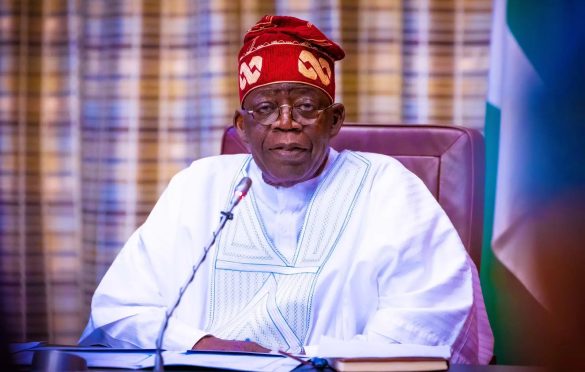
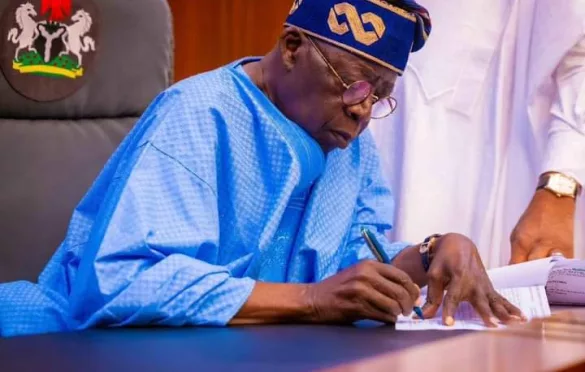
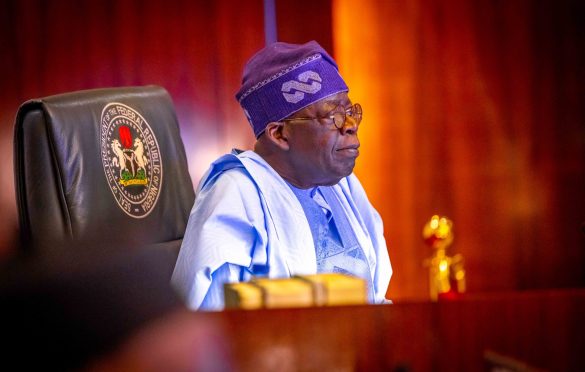
The All Progressives Congress (APC) has rejected a letter circulating on social media, purportedly written by its National Chairman, Professor Nentawe Yilwatda, asking the Independent National Electoral Commission (INEC) to ensure President Bola Tinubu wins the 2027 presidential election.
The party described the document as fabricated, warning that its circulation was intended to damage the reputation of its leadership and create distrust in the country’s democratic institutions.
In a statement issued on Monday, the National Chairman’s Special Adviser on Media and Information Strategy, Abimbola Tooki, said neither Yilwatda nor his office had any connection with the purported correspondence.
The document, dated November 22, 2026, and addressed to INEC Chairman, Professor Joash Amupitan, allegedly requested the commission’s cooperation ahead of the next presidential election.
It claimed that the APC leadership expected INEC to use its administrative and operational structures to facilitate Tinubu’s declaration as the winner of the poll.
However, the ruling party dismissed the claims, describing the unsigned letter as fraudulent and inconsistent with its official communication procedures.
The APC argued that a correspondence of such significance could not have been issued without proper authorisation and through channels outside the party’s established system.
It also challenged those behind the document to identify themselves and provide evidence to support its contents rather than circulate unverified claims anonymously.
Reaffirming its position on the 2027 elections, the party said it remained committed to a peaceful, transparent and credible electoral process.
It maintained that INEC’s independence and the right of Nigerians to freely choose their leaders must be respected, adding that electoral victories should be determined by voters rather than manipulation or interference.
The APC also cited Tinubu’s repeated appeals to eligible Nigerians to obtain their Permanent Voter Cards and participate in elections as evidence of his confidence in the democratic process.
The party urged Nigerians and media organisations to disregard the purported letter, insisting that its campaign for the 2027 elections would be guided by democratic principles and public support.
President Bola Tinubu has approved a N1.5tn recapitalisation of the Bank of Agriculture to boost lending to farmers and businesses operating across Nigeria’s agricultural value chain.
The approval was disclosed on Sunday by the All Progressives Congress Presidential Campaign Council in a statement issued by its spokesperson, Dele Alake, who is also the Minister of Solid Minerals Development.
The council said the move was intended to strengthen the bank’s financial capacity, expand its operations in underserved farming communities and increase funding for domestic food production.
It added that the Tinubu administration had committed N450bn to agricultural financing programmes aimed at improving food security, increasing local production and supporting smallholder farmers.
According to the statement, the Bank of Agriculture has reached more than 500,000 smallholder farmers through its interventions, while the planned recapitalisation would support the cultivation of 500,000 hectares of farmland under the Renewed Hope Agenda.
The council said the government’s agricultural support went beyond providing loans to include access to improved seeds, fertiliser, mechanisation, irrigation, storage facilities and commodity markets.
It also highlighted the Renewed Hope Smallholder Support and Value Chain Fund, valued at N250bn, which provides financing through Farmer Aggregation Companies responsible for registering farmers, distributing inputs, providing extension services and connecting them to markets.
The programme, according to the council, has reached over 500,000 farmers in 16 states, including more than 70,000 women. It has also facilitated the distribution of approximately 2.5 million bags of fertiliser and 300,000 bags of certified seeds.
The initiative is targeting two million farmers and the distribution of more than 10 million bags of fertiliser.
The APC campaign council identified Kaduna, Kano, Katsina, Niger, Borno, Gombe, Taraba, Adamawa, Yobe and Bauchi among the states receiving attention under the programme.
It further disclosed that the Bank of Agriculture had procured about 170,000 metric tonnes of maize, rice, sorghum and cassava through its N200bn Guaranteed Minimum Price Programme.
The programme, it said, was designed to stabilise commodity markets and protect farmers from selling their produce at unfavourable prices.
On support for onion farmers, the council said the bank had introduced a financing scheme in partnership with the National Onion Producers, Processors and Marketers Association of Nigeria, which represents more than 11,800 farmers.
Under the arrangement, farmers would receive improved seeds and fertiliser, while processors would access financing and solar-powered storage facilities to reduce post-harvest losses.
The bank is expected to cover 70 per cent of farmers’ input costs, with cooperatives providing the remaining 30 per cent.
Other initiatives listed by the council include dry-season farming support, agricultural mechanisation, ginger recovery, financing for women’s cooperatives, youth participation and commercial poultry production.
For the 2026 farming season, the bank is working with the All Farmers Association of Nigeria on a programme targeting 400,000 farmers. The plan includes financing for 120,000 hectares of wheat and another 300,000 hectares for crops such as rice, maize, sorghum, millet, cassava and soybeans.
The Nigeria Ginger Recovery Programme has also supported 3,200 farmers in Kachia, Kaduna State, with blight-free seeds, while recovering more than 9,000 bags of ginger for multiplication. The council said the initiative was expected to expand to 20,000 hectares across 16 states.
It added that the bank was targeting 50,000 women nationwide with insured cooperative loans at an interest rate of nine per cent.
On mechanisation, the statement disclosed that 1,571 tractors had been deployed to 23 states under the Renewed Hope National Agricultural Mechanisation Programme. The tractors are expected to support cultivation across 1.2 million hectares through qualified mechanisation service providers.
The council also cited a N385bn productive-use-of-electricity programme involving the provision of 44,000 electric cargo tricycles and 100,000 solar-powered irrigation pumps, with a target of supporting 500,000 farming families.
The APC Presidential Campaign Council said the interventions reflected the administration’s efforts to position agriculture as a major contributor to economic growth, employment and national food security.
The African Democratic Congress Presidential Campaign Council has criticised President Bola Tinubu for urging Nigerians to move on from the removal of fuel subsidy, describing the remark as insensitive to the economic difficulties facing citizens.
The Council said the President’s position showed a lack of understanding of the hardship caused by rising food prices, transportation fares, poverty and the increasing cost of living.
Tinubu had, during a rally at Mapo Hall in Ibadan, Oyo State, called on Nigerians to forget about fuel subsidy, insisting that the policy was a matter of the past.
However, reacting to the statement during an engagement with youths in Lokoja, Kogi State, ahead of the ADC presidential campaign rally scheduled for Tuesday, the party’s Presidential Campaign Council Director of Media and Publicity, Kola Ologbondiyan, said the President was detached from the realities confronting ordinary Nigerians.
Ologbondiyan accused Tinubu of prioritising his presidential position over addressing the suffering of citizens.
He questioned how the effects of subsidy removal could be regarded as a past issue when Nigerians continued to experience its impact in their daily lives.
According to the Council, the policy was introduced without adequate preparation, effective social protection programmes or sufficient measures to shield vulnerable households from its consequences.
It argued that the removal had contributed to higher transportation costs, increased food prices, pressure on small businesses and worsening economic conditions for many families.
The ADC-PCC maintained that responsible leadership required the government to listen to citizens, acknowledge the shortcomings of its policies and introduce measures to reduce their economic burden.
The Council also accused the Tinubu administration of persistently defending its economic decisions despite the hardship they had allegedly imposed on Nigerians.
Beyond the economy, the opposition group expressed concern over what it described as the weakening and manipulation of key democratic institutions, including the judiciary, security agencies, anti-corruption bodies and financial institutions, allegedly to advance the President’s second-term ambition.
It warned that public institutions must remain independent and serve the national interest rather than the political interests of individuals.
The Council further argued that Nigeria’s economic challenges could be addressed through better policy decisions, adequate planning and leadership focused on citizens’ welfare.
It presented former Vice President Atiku Abubakar, the ADC presidential candidate, as an alternative capable of rebuilding economic confidence, strengthening democratic institutions and improving living conditions.
The campaign council promised that an Atiku-led government would implement properly planned economic policies, effective social protection programmes and a people-centred approach to governance.
It also urged Nigerians to use lawful and constitutional means to oppose Tinubu’s re-election in 2027, describing the next general election as an opportunity to change the country’s direction.
President Bola Tinubu has announced plans to expand affordable public transportation across Nigeria through a partnership with Chinese bus manufacturer Yutong, which is expected to establish a compressed natural gas (CNG) bus assembly plant in the country.
The initiative is expected to support the Federal Government’s National Affordable CNG Transit Programme, which aims to reduce transport fares by about 40 per cent on participating routes.
The Special Adviser to the President on Information and Strategy, Bayo Onanuga, disclosed the development in a statement on Thursday, November 19, 2026.
Under an agreement with the Presidential Initiative on Compressed Natural Gas and Electric Vehicles, Yutong will initially supply 300 CNG-powered buses to Nigeria.
The first batch of 100 buses is expected to arrive in Lagos before the end of December 2026, while subsequent units will be assembled locally at YP Automobiles Bus Assembly in the former Leyland Automotive plant in Ibadan, Oyo State.
The proposed assembly operation is expected to revive local vehicle manufacturing capacity, reduce reliance on imported buses and create employment opportunities for Nigerian engineers, technicians and other workers.
Yutong, which reportedly sold 49,518 buses globally in 2025, is one of the world’s leading manufacturers of commercial buses, including electric and CNG-powered vehicles.
Tinubu said the investment would strengthen the country’s public transportation system as the government expands CNG infrastructure and adoption across the country.
According to the statement, the expansion is being supported by the Presidential Initiative on CNG and Electric Vehicles, the Midstream and Downstream Gas Infrastructure Fund and private investors.
The interventions include the deployment of mobile refuelling units and a presidential directive for the installation of 2,000 additional CNG refuelling infrastructure units nationwide.
The President said the primary objective of the programme was to reduce the amount Nigerians spend on daily transportation, noting that workers, traders, students and families depend heavily on commercial transport.
He stressed that the lower operating costs associated with CNG-powered vehicles should reflect in reduced fares for passengers.
Tinubu also reiterated his administration’s commitment to working with state governments and transport operators to extend affordable CNG-powered transportation to more routes.
He said the success of the initiative would be measured by the savings passengers make on transportation, adding that the government would continue investing in infrastructure, local manufacturing and mass transit.
The agreement between the Federal Government and Yutong is scheduled to be signed in Lagos on Thursday, November 19, 2026.
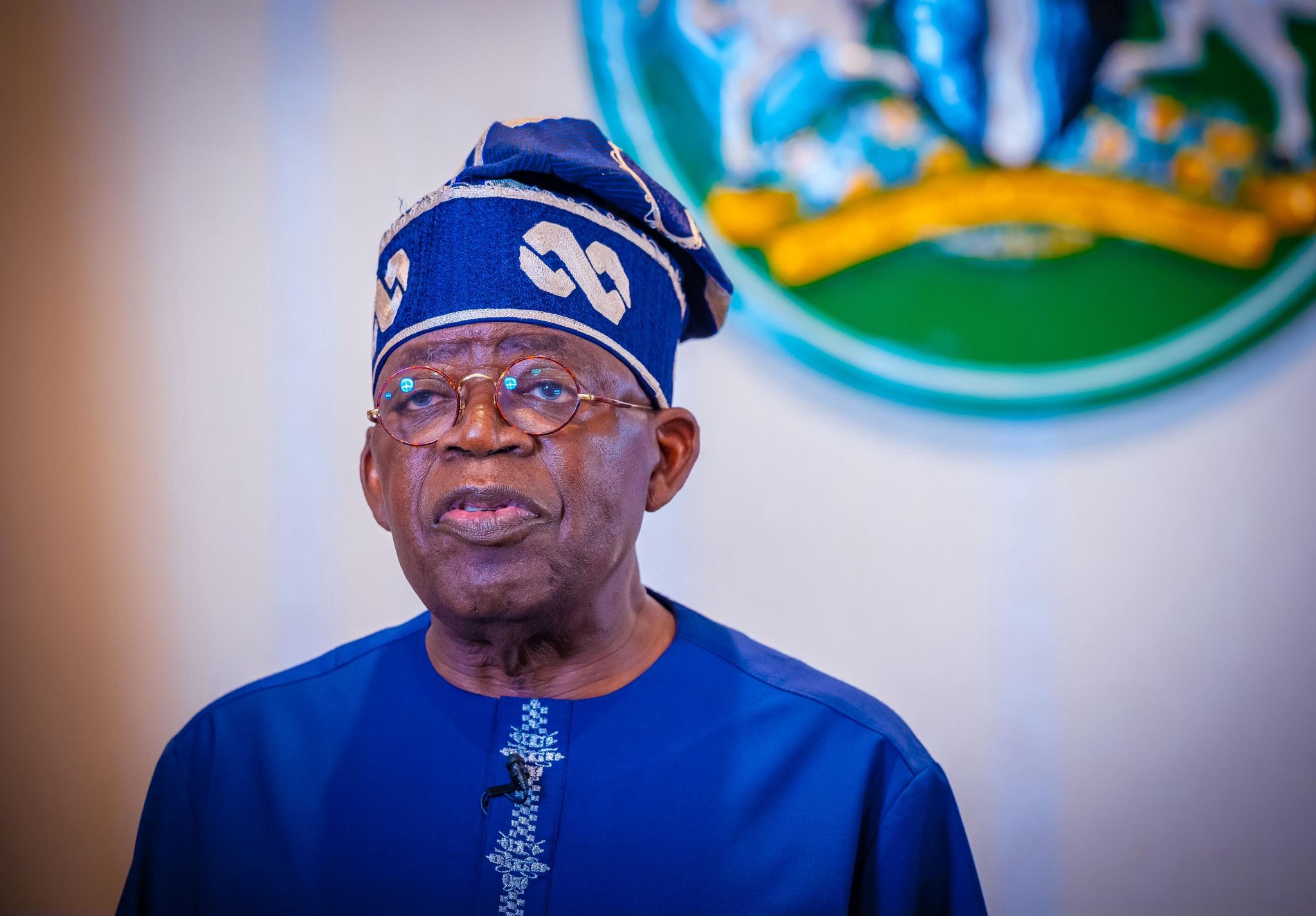
President Bola Tinubu has ordered the release of 78 suspects arrested over an attack on his motorcade in Abuja, following a presidential clemency directive.
The Federal Capital Territory (FCT) Police Command disclosed this on Monday, saying the suspects were undergoing the necessary procedures for their release.
The suspects were arrested after some youths allegedly pelted the President’s convoy with stones and other dangerous objects shortly after he observed Jumu’ah prayers at a mosque in Garki District on Friday, November 13, 2026.
In a statement, FCT Police spokesperson, Josephine Adeh, said the attack damaged several vehicles and left some security operatives injured.
She explained that a joint security team led by the police responded to the incident, while subsequent intelligence-led operations in the area resulted in additional arrests, bringing the number of suspects to 78.
Adeh said the Presidency subsequently directed that the suspects be cautioned and released after extending clemency to those involved in the incident.
The police also warned political parties and their supporters against acts of violence as preparations for the 2027 general elections intensify.
According to the statement, FCT Commissioner of Police, Ahmed Sanusi, has directed Area Commanders, Divisional Police Officers and heads of tactical units to strengthen security operations across the territory.
The police confirmation comes after the Presidency initially disputed reports of an attack on Tinubu’s convoy.
The President’s Senior Special Assistant on Digital Engagement, Strategy and New Media, O’tega Ogra, had dismissed the reports, sharing a video showing Tinubu leaving the mosque after Friday prayers.
However, African Democratic Congress chieftain, Dino Melaye, later circulated footage purportedly showing youths throwing stones at a convoy believed to be carrying the President.
The video, which went viral on social media, also captured some of the youths chanting, “Ba ma yi, ba ma so,” translated as “we don’t want you; we don’t support you.”
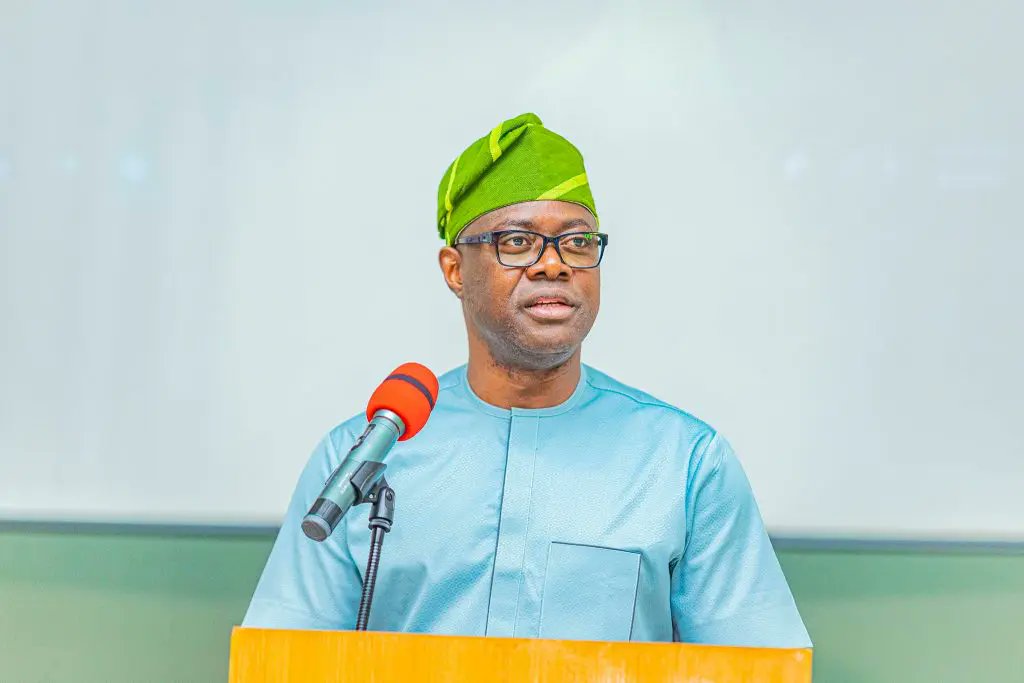
The presidential campaign organisation of the Allied Peoples Movement (APM) candidate, Seyi Makinde, has called on President Bola Tinubu to withdraw from the 2027 presidential election, warning that his re-election ambition could trigger a national crisis.
The Makinde-Daura Presidential Campaign Organisation (MDPCO) said growing public dissatisfaction with the Tinubu administration, reflected in the reported booing of the President at a mosque in Abuja and protests during his return from France in Lagos, indicated Nigerians’ desire for a change in leadership.
In a statement issued on Sunday by its Director of Strategic Communications, Richard Ihediwa, the organisation urged Tinubu to respect what it described as the wishes of citizens across the six geopolitical zones by stepping aside ahead of the next election.
It argued that the incidents were signs of accumulated frustration over economic hardship, unemployment and worsening living conditions, rather than isolated expressions of displeasure.
The campaign group also cited similar incidents allegedly recorded in Kaduna, Plateau, Rivers, Kebbi, Sokoto, Nasarawa and Osun states, warning the President against dismissing public anger.
According to the organisation, Nigerians are increasingly looking towards Makinde to provide what it called a national reset through its proposed RESET NIGERIA agenda.
The group accused the Tinubu administration of failing to address the country’s economic difficulties, citing poverty, hunger, unemployment and the high cost of petroleum products.
It claimed that about 140 million Nigerians were living in extreme poverty, more than 60 million went to bed hungry daily, while over 30 million youths remained unemployed.
The organisation also criticised the country’s rising debt profile, questioning foreign borrowings reportedly reaching N166.7 trillion and demanding explanations on how the funds would improve citizens’ welfare.
It further faulted petrol prices, which it said ranged between N1,400 and N2,000 per litre in different parts of the country.
The campaign organisation warned that another four years under the All Progressives Congress (APC) would prolong economic hardship and uncertainty, insisting that the 2027 election must be free, fair and credible.
It urged Tinubu to abandon his re-election ambition and embrace what it described as Makinde’s commitment to transparent, accountable and inclusive governance.
Mbah Defends Tinubu’s Economic Reforms
Meanwhile, Enugu State Governor, Peter Mbah, has defended the economic policies of the Tinubu administration, arguing that the removal of fuel subsidy and unification of the foreign exchange market prevented Nigeria from sliding into a deeper economic crisis.
Mbah spoke at the launch of the ‘As Tinubu Mbah Moves’ (ATM), a support group established by the Minister of Innovation, Science and Technology, Kingsley Udeh, to mobilise support for the re-election of Tinubu and the governor.
The governor said successive administrations had postponed necessary economic decisions, leaving the country with an unsustainable subsidy system and a foreign exchange market characterised by corruption and manipulation.
He maintained that the removal of fuel subsidy and the foreign exchange reforms were difficult but necessary decisions that required political courage.
According to Mbah, the previous foreign exchange arrangement discouraged investment and weakened confidence in the naira, while creating opportunities for individuals to profit from differences between official and parallel market rates.
He argued that the Tinubu administration’s policies had helped stabilise key macroeconomic indicators and encouraged foreign direct investment, particularly in the oil and gas sector.
The governor also credited the reforms with increasing resources available to state governments for infrastructure and development projects.
He urged Nigerians to support Tinubu’s re-election, insisting that the country should not abandon the reforms midway through their implementation.
Mbah also tasked members of the ATM support group with taking the message of the administration’s achievements to voters across Enugu State.
In his remarks, Udeh said the group would concentrate its mobilisation efforts on non-APC members across the state’s 4,145 polling units.
He added that technology would be deployed to register supporters, monitor participation and track the group’s mobilisation activities.
Gombe APC Flags Off 2027 Campaign
In another development, Gombe State Governor, Inuwa Yahaya, has led APC leaders and thousands of supporters to formally commence the party’s 2027 election campaign in the state.
The campaign flag-off took place on Saturday in Bajoga, the headquarters of Funakaye Local Government Area, with the attendance of presidential aide Ibrahim Masari, APC national officials, former governors, lawmakers and other party stakeholders.
Yahaya urged residents to support Tinubu and other APC candidates, saying the party’s administrations at the federal and state levels had recorded significant achievements.
He particularly commended Tinubu’s power sector reforms, which he said had created opportunities for state governments to participate in electricity generation, transmission and distribution.
The governor cited the power plant commissioned in Talasse and ongoing four-megawatt electricity projects in Kaltungo, Kumo, Bajoga and Dukku as examples of the benefits of the reforms.
He also highlighted the Kaltungo Snakebite Research Centre, Federal Orthopaedic Hospital in Billiri and Federal Medical Centre in Kumo as major projects supporting healthcare development in the state.
Other projects he listed included developments at the Federal Teaching Hospital, Gombe, the Akwanga-Jos-Bauchi-Gombe-Biu road corridor and the proposed railway development from Jos towards the North-East.
Yahaya declared that the Gombe APC was determined to secure at least one million votes for Tinubu in the 2027 presidential election.
The President’s Special Adviser on Political and Other Matters, Ibrahim Masari, described Yahaya as a dedicated leader whose administration had strengthened the APC’s political influence in Gombe and the wider North-East.
Similarly, the APC Deputy National Chairman (North), Ali Bukar Dalori, expressed confidence that the party would win Gombe and other states in the region.
The party’s governorship candidate, Jamil Gwamna, pledged to consolidate the achievements of the Yahaya administration and extend development to women, youths and rural communities if elected.
Former Deputy Speaker of the House of Representatives, Bayero Nafada, also praised Tinubu’s interventions in Gombe, describing them as significant contributions to the state’s development.
Former Borno State Governor, Ali Modu Sheriff, and former Adamawa State Governor, Bindow Jibrilla, equally expressed confidence in the APC’s chances in the forthcoming elections.
Yobe State Deputy Governor, Idi Gubana, who represented Governor Mai Mala Buni, urged Nigerians to sustain national unity and support Tinubu’s two-term ambition.
Earlier, Gombe APC Chairman, Mohammed Ndus, described the campaign flag-off as the beginning of the party’s journey towards victory in the 2027 elections, expressing confidence in the party’s unity under Yahaya’s leadership.
The African Democratic Congress has criticised the All Progressives Congress over alleged cash and gift distributions at political events, accusing the ruling party of attempting to buy public support ahead of the 2027 general elections.
The opposition party also faulted President Bola Tinubu’s administration for allegedly repeating unfulfilled campaign pledges from 2023 in its newly unveiled 2027–2031 manifesto.
The ADC Presidential Campaign Council made the allegations in two separate statements issued by its Director of Strategic Communication, Phrank Shaibu, and Director of Media and Publicity, Kola Ologbondiyan.
In its first statement, the council accused APC supporters and political groups of distributing money, food and other gifts at political gatherings to create an impression of widespread support for Tinubu.
It cited reports of luxury vehicles allegedly given to APC women leaders, cash and cooked food reportedly distributed through the City Boy Movement by the President’s son, as well as videos purportedly showing an APC women leader sharing money and fabrics at a gathering.
The ADC called on the Economic and Financial Crimes Commission and the Independent National Electoral Commission to investigate the reported incidents and determine whether any electoral or currency laws had been violated.
It questioned why ordinary Nigerians had faced enforcement action over alleged abuse of the naira while similar concerns surrounding cash distributions at political events appeared to receive different treatment.
The council argued that political support should not be secured through financial inducements, warning that money and material gifts must not be used to influence voters or undermine credible elections.
It further accused the Tinubu administration of failing to address rising poverty, insecurity and public debt, arguing that political handouts could not compensate for the economic difficulties confronting Nigerians.
On the APC manifesto, the ADC described the document as a repetition of promises made by Tinubu during the 2023 presidential campaign.
It listed affordable food, stable electricity, a stronger naira, employment opportunities for young people and improved security among the commitments it said the President had yet to fulfil.
According to the opposition council, Nigerians have instead experienced rising food prices, currency depreciation, insecurity and worsening economic hardship since Tinubu assumed office in May 2023.
The ADC also questioned the government’s management of public finances, demanding explanations on how funds generated through the removal of petrol subsidy, tax policies and increased borrowing had been used to improve infrastructure and citizens’ living conditions.
It maintained that the administration’s economic reforms had placed considerable pressure on ordinary Nigerians without providing adequate social protection or corresponding relief.
The council also questioned the government’s borrowing strategy and called for greater transparency over the utilisation of loans and the country’s growing debt obligations.
It further referred to comments reportedly made by the President’s Chief of Staff, Femi Gbajabiamila, concerning the challenges associated with the administration’s economic reforms, saying they reinforced its criticism of the government’s policies.
The ADC argued that unveiling a new manifesto at a political event in Jigawa State could not replace measurable achievements in governance.
It urged Nigerians to reject the APC’s proposals and support the ADC, which it presented as an alternative focused on economic stability, security, accountability and improved living conditions.
The opposition party said the 2027 general election would give voters an opportunity to assess the Tinubu administration’s performance, particularly on the economy, security, employment and public welfare.
President Bola Tinubu has announced a ₦100m reward for each player of Nigeria’s U-17 women’s football team, the Flamingos, following their historic victory at the 2026 FIFA U-17 Women’s World Cup.
The reward, presented in the form of savings certificates, was announced by First Lady Oluremi Tinubu at a reception held in honour of the team at the Presidential Banquet Hall in Abuja.
The First Lady, who represented the President at the event, said the team’s head coach would receive ₦100m in cash, while each member of the technical crew would be given ₦50m.
She praised the players for their determination and achievement, noting that they won six consecutive matches after losing their opening game. She also commended their discipline, humility and conduct after the final.
According to her, the victory would encourage young girls across the country to pursue their ambitions and believe in their ability to succeed on the international stage.
She also acknowledged the contributions of the coaching crew, medical and technical staff, administrators, parents and supporters.
The Flamingos secured Nigeria’s first-ever FIFA U-17 Women’s World Cup title after defeating Japan 2-1 in the final on November 7. Goals from Awawu Bashiru and Oluebube Umejiaku sealed the historic win.
Although Nigeria began the competition with a 2-1 defeat to Poland, the team recovered to defeat defending champions North Korea, Puerto Rico and Mexico.
They booked their first-ever place in the final with a 3-1 victory over Brazil before overcoming Japan to claim the trophy.
President Tinubu had earlier congratulated the players, describing their achievement as a landmark moment for Nigeria and African women’s football.
In a statement issued by his spokesperson, Bayo Onanuga, the President said he received news of the victory after returning from campaign engagements in Akwa Ibom and Rivers states.
The Senate had also pledged ₦100m to reward the team. The commitment followed a motion moved by the Chairman of its Committee on Sports, Senator Abdul Ningi, who praised the players and commended the Nigeria Football Federation for its contribution to their success.
The Flamingos’ achievement adds to Nigeria’s recent successes in women’s sports, including the Super Falcons’ 10th Women’s Africa Cup of Nations title in 2025 and D’Tigress’ victory at the 2025 FIBA Women’s AfroBasket tournament.
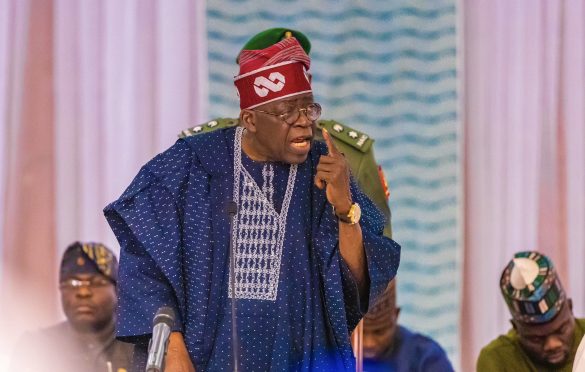
President Bola Tinubu has promised to improve electricity supply, create more employment opportunities and reduce food prices if re-elected in 2027.
Tinubu made the pledges on Tuesday during the All Progressives Congress presidential campaign rally in Dutse, the Jigawa State capital.
He said his administration would prioritise stable electricity to support businesses, boost industrial production and improve the standard of living across the country.
“We will lower the cost of living. We will provide reliable power, not the whole privatisation that is not working. We will provide you with reliable power in this Nigeria,” the President said.
Tinubu also promised to strengthen local industries and expand support for nano, micro, small and medium-sized enterprises to encourage economic growth and generate jobs.
On his administration’s economic policies, the President said the government would maintain the removal of petrol subsidy and continue programmes such as the Nigerian Education Loan Fund, which provides financial assistance to students in tertiary institutions.
He further pledged that money recovered by the Economic and Financial Crimes Commission from financial irregularities would be channelled into NELFUND to support students struggling to fund their education.
Addressing agricultural development, Tinubu announced plans to establish six mechanised farming service centres across the country’s six geopolitical zones.
He said the government would also increase investment in irrigation and agricultural research to improve farm productivity, strengthen farmers’ capacity and reduce the cost of food.
The Federal Government is seeking a new $500 million loan from the World Bank to establish an infrastructure financing platform, with the proposed approval date set for May 25, 2027, four days before the inauguration of Nigeria’s next president.
The proposed facility is part of a broader $3.85 billion infrastructure investment programme designed to attract private sector funding into critical areas of the Nigerian economy.
According to the World Bank’s Initial Project Information Document, the initiative is known as the Nigeria Infrastructure Financing and De-Risking Platform for Growth and Jobs, also called INFRAGROW.
The document, prepared and updated on November 4, 2026, listed the Federal Ministry of Finance as the borrower and the Nigeria Sovereign Investment Authority as the implementing agency.
The bank has scheduled a technical design review of the project for January 21, 2027, while May 25, 2027, has been proposed as its approval date.
The proposed timeline has attracted attention because Nigeria’s presidential inauguration is scheduled for May 29, 2027, meaning the loan could receive approval just days before President Bola Tinubu completes his current four-year tenure.
However, the proposed financing has not received final approval, and the World Bank’s timetable remains subject to changes. Approval would also not automatically translate into immediate disbursement or commencement of the project.
The World Bank identified Nigeria’s infrastructure financing deficit as a major obstacle to economic development, estimating the country’s annual funding gap at approximately $100 billion.
It attributed the challenge not only to inadequate funding but also to poor project preparation and difficulties in developing commercially viable infrastructure investments.
Under the proposed arrangement, the World Bank’s $500 million contribution would comprise $400 million from the International Bank for Reconstruction and Development and $100 million from the International Development Association.
The wider $3.85 billion financing structure is expected to attract contributions from government, private investors, commercial lenders and international financial institutions.
The Nigeria Sovereign Investment Authority is expected to invest $200 million in equity as a founding shareholder, while private investors are projected to contribute another $200 million.
Commercial lenders are expected to provide $600 million, alongside additional financing and guarantee arrangements.
The proposed structure also includes $100 million in payment guarantees from the International Development Association and $2.25 billion in guarantees from other international financial institutions.
The platform will operate through four independently governed subsidiaries established to address different challenges affecting infrastructure investment.
The first, known as the Project Preparation Facility, will support feasibility studies, risk assessments, transaction structuring and procurement processes to prepare infrastructure projects for investment.
The second component, the Viability Gap Fund, will provide financial support to economically important projects that cannot generate enough revenue to attract private investors while maintaining affordable service charges.
The World Bank explained that the fund would operate through an endowment arrangement, preserving its capital while using investment returns to finance projects requiring financial support.
The third subsidiary, the Risk Capital Facility, will provide equity and long-term investment capital to projects that are commercially viable but face difficulties attracting investors because of their risk levels.
The fourth, the Credit Guarantee Vehicle, will provide protection against specified credit defaults, failure of public institutions to meet payment obligations and political risks affecting eligible foreign investments.
The bank said the arrangements were intended to encourage greater participation by commercial banks, pension funds, insurance companies and other institutional investors in Nigeria’s infrastructure sector.
The project will also support reforms aimed at improving government institutions responsible for identifying, preparing, procuring and supervising public-private partnership projects.
Its implementation will be divided into four major areas covering institutional development, project preparation, mobilisation of financing and improvements to the regulatory environment.
The World Bank said the initiative would strengthen the capacity of relevant institutions through professional advisory services, staffing, operational infrastructure and other forms of technical support.
It also identified the International Finance Corporation as a prospective co-investor, while the Multilateral Investment Guarantee Agency is expected to provide political risk insurance.
Meanwhile, the proposed project has been classified as having high environmental and social risks because of the nature of infrastructure developments it could support, particularly in the energy, transport and water sectors.
The bank warned that some of the projects could involve land acquisition, displacement of communities, environmental degradation, occupational hazards and other social concerns.
It said appropriate safeguards would therefore be required to manage the potential environmental and social consequences of the proposed investments.
President Bola Tinubu has recounted how he worked as a taxi driver and took up other jobs in the United States to finance his university education.
The President shared the experience in a post on his X account on Wednesday while outlining his administration’s efforts to expand access to education in Nigeria.
Tinubu said he delayed starting school for several months after arriving in the US because he needed to save enough money to fund his studies.
He explained that after moving to Chicago, he took up different jobs to cover his tuition, accommodation and other expenses.
The President said the experience shaped his belief that every Nigerian child should have access to quality education, regardless of their family’s financial circumstances.
Highlighting his administration’s education programmes, Tinubu disclosed that the Nigerian Education Loan Fund had disbursed more than ₦372bn in student loans to cover institutional fees and living expenses.
He said the government’s technical and vocational education programme had received over 2.8 million applications, while 38 technical colleges had been rehabilitated.
According to him, students in federal and selected state technical colleges now benefit from free tuition, accommodation, textbooks and uniforms.
Tinubu also announced a new agreement with the Academic Staff Union of Universities, which provides for a 40 per cent increase in academic staff remuneration and measures aimed at improving stability in the university system.
He said the government was committed to ensuring that students complete their courses within the stipulated period without unnecessary delays.
On medical education, the President disclosed that ₦110bn was being invested in the rehabilitation of 24 medical schools.
He added that annual nursing enrolment had increased from 28,000 to 115,000, while medical and dental student enrolment rose from 5,000 to 12,000.
Tinubu further said more than one million children who were previously out of school had returned to classrooms, while the government was expanding teacher development programmes and educational opportunities for girls.
He also highlighted the introduction of a new national curriculum that restores Nigerian History to schools, saying children should understand the country’s past and be prepared to contribute to its future.
The President commended the Minister of Education, Tunji Alausa, Minister of State for Education, Suwaiba Sa’id Ahmad, and other officials involved in implementing the reforms.
He also announced an interactive platform for the Nigeria Education Sector Renewal Initiative, which he said would provide information on government programmes, achievements and opportunities in the education sector.
Tinubu urged parents, students and teachers to use the platform to identify available opportunities and provide feedback on challenges affecting schools in their communities.
President Bola Tinubu has declared that his commitment to Nigeria’s development remains stronger than ever, following his recent spiritual visit to Saudi Arabia, where he performed the lesser Hajj, known as Umrah.
The President made the declaration while reflecting on his pilgrimage and the rare opportunity to enter the Holy Kaaba in Makkah to offer prayers. His spokesman, Bayo Onanuga, disclosed this in a statement on Monday.
Tinubu expressed appreciation to Saudi Arabia’s King Salman bin Abdulaziz Al Saud and Crown Prince Mohammed bin Salman for granting him and members of his delegation access to the sacred site.
Describing the experience as a historic spiritual privilege, he said his prayers focused on seeking wisdom and resilience to continue serving Nigerians.
“I asked for wisdom and resilience to continue to serve the people. I know that prayer has been granted,” he said.
The President recalled that he had also performed Umrah before the 2023 presidential election, when he prayed for Allah’s blessings and promised to return in gratitude.
Reflecting on the Qur’anic teaching in Surah Aal-Imran, Verse 26, Tinubu said political power belongs ultimately to Almighty Allah and should be treated as a responsibility that demands humility and service to the people.
He described his emergence as Nigeria’s President and Commander-in-Chief as a special blessing, adding that the position carries a duty to work for the country’s progress.
Reaffirming his administration’s development agenda, Tinubu said he remained determined to strengthen the economy, promote prosperity and create opportunities for Nigerians.
“My commitment to Project Nigeria is higher. I am determined to usher in prosperity and fully develop the country, consistent with the wish of Allah and the support of the people,” he said.
The President also expressed optimism about the economy, describing the foundation laid by his administration as solid and the progress recorded as encouraging.
He, however, emphasised the need to invest in young Nigerians, warning that the decisions taken by present leaders would determine how future generations judge their leadership.
“We need to build a future for our youth. If we don’t invest in their future, how do we want to be remembered as leaders 50 years from now?” he asked.
Members of the Nigerian delegation who also expressed gratitude for the opportunity included Attorney-General of the Federation and Minister of Justice, Lateef Fagbemi; Coordinating Minister of Health and Social Welfare, Professor Muhammad Ali Pate; and governors of Borno, Sokoto, Jigawa, Kaduna, Yobe and Kwara states.
Business leaders Abdulsamad Rabiu, Chairman of BUA Group, and Wale Tinubu, Chief Executive Officer of Oando, were also part of the delegation.