Tag: Insecurity

  • Do the Children Know It Is Christmas?

    Do the Children Know It Is Christmas?

    -By Abdul Mahmud

    Editor’s Note: Shortly after PACESETTER received this week’s column for publication yesterday, Sunday, December 21, 2025, the abducted students were released. We have gone ahead to publish this piece for historical and academic purposes.

    Four weeks ago, students of a Catholic school in Papiri in Niger State were seized along with their teachers. The country absorbed the news with a familiar mix of dread and fatigue. Abduction has become a steady feature of our public life. Then came silence. Families waited. Communities prayed. A nation listened for any sign that the state still possessed the will to protect its children. When words finally arrived, it came not from the parents or the school or a rescue operation, but from the National Security Adviser. He assured our bewildered country that the children were fine. Fine. The word landed with the weight of indifference. It assumed knowledge without evidence and authority without accountability. It poses fear in a country where comfort has given way, heralding a “new civilisation”. This is how I described it in my op-ed, ‘The Country Where Hostages Are Fine’, a few weeks ago: “In a country that has arrived ahead of other countries at the new civilisation. A civilisation where captivity becomes wellness. A civilisation where fear gives way to fear that becomes comfort. A civilisation where parents receive news of their abducted children with gratitude because the NSA has spoken”.

    I described that assurance as “a piece of miracle” which abolished the need for rescue because it treated terror as mere inconvenience and pain as an abstract concern. Days later, more than one hundred children were released. Relief followed, though it was tinged with suspicion.

    Many Nigerians believe the release followed a transaction. Money exchanged for abductees. If that belief is correct, then the state has chosen the path of accommodation. It has signaled that violence pays and that innocence carries a price tag. That message travels faster than any patrol or policy.

    As you read this, Christmas is three days away. Some of the children remain in captivity. No statement has explained why they were left behind. No timeline has been offered. No public accounting has been made. Parents wait with phones pressed to their chests. The rest of the country watches with the heavy knowledge that our shared moral calendar has slipped out of joint.

    Do the children know it is Christmas?

    That question is not sentimental. It is moral. Christmas speaks to care, love, shelter, and the dignity of the vulnerable. It asks adults to protect the young and the weak. In Papiri, the season arrives without its promise. The children are held by men who thrive on fear and profit from despair. Days stretch without schooling, without safety, without the reassurance of familiar voices. Hunger gnaws. Night brings cold and whispers. A child measures time by fear and hope by the sound of footsteps. The pain of the children is compounded by uncertainty. Captivity strips away the small anchors that steady the young mind. Routine disappears. Authority becomes menace. The body tenses at every command. Sleep fractures. Faith strains. Even those released will carry the memory forward, etched into how they trust and how they dream.

    Parents endure separate torments. They replay the morning their children left home. They scan roads and phones and rumours. They negotiate between hope and dread because surrender to either feels dangerous. Mothers and fathers sit with an emptiness that refuses consolation. No prayer is too small. No official word feels sufficient. Trauma settles into the body and does not wait for permission. The country shares the bewilderment. We have watched this pattern repeat across regions and years. Schools targeted. Villages raided. Assurances offered. Payments rumored. Consequences deferred. Each episode chips away at confidence in the state. Each denial or half truth teaches citizens to expect less and fear more.

    No country can be governed on reassurance alone. It requires truth, action, and accountability. Government has a duty that precedes politics. Protect life. Protect children. Speak honestly. When officials announce that captives are fine without evidence, they gamble with credibility. When releases appear transactional, they legitimise crime. When silence follows partial success, they abandon those still held and deepen the wounds of those left waiting. There is also the matter of equality. Which children are retrieved first and why. Who decides whose life carries urgency. The absence of answers invites a corrosive suspicion that power and proximity shape outcomes. Such suspicion undermines social trust and fuels resentment. Insecurity thrives where trust collapses.

    The school itself stands as a symbol. Education should be a sanctuary. When classrooms become hunting grounds, the social contract frays. Parents withdraw children. Teachers flee. Communities shrink their aspirations. The future dims because learning retreats under threat. The cost extends beyond Papiri. It reaches every family that wonders whether school gates offer safety or risk. Christmas sharpens the questions. It draws attention to absence. Chairs left empty. Songs unsung. Gifts unwrapped. The season exposes what governance has failed to secure. Celebration becomes a test of conscience. Our country must ask itself whether it can truly celebrate while children remain in captivity. Scores of them, including those abducted from the First ECWA Church in Ayetoro Kiri, Kabba, Kogi State just days ago, are still unseen and unheard. Over the weekend, a video emerged as grim proof of life, a haunting reminder that these children are not statistics but lives suspended in fear, held by evil men in a country struggling to find its conscience.

    What should be done?

    First, the government must speak plainly. Say who remains captive. Say what is being done. Say what will not be done. Ambiguity feeds rumor and fear.

    Second, the state must commit to ending the market for abduction. Paying ransoms, directly or indirectly, entrenches criminal economies. It invites repetition. A strategy that rewards terror cannot deliver safety.

    Third, there must be accountability within security institutions. Who assessed the risk to the school. Who failed to prevent the attack. Who authorised public statements that lacked grounding. Accountability is not vengeance. It is the discipline that prevents recurrence.

    Fourth, support for the families must be visible and sustained. Counseling, medical care, and financial assistance should not depend on headlines. Trauma lingers after cameras move on. The state must remain present when attention fades.

    Finally, there must be a national reckoning with the conditions that allow terror to recruit and operate. Policing, intelligence, community trust, and justice must align. Words alone will by not rescue children. Policies that center human life might. Do the children know it is Christmas? They may know the sound of distant bells carried by memory. They may count days by the return of light. They may hold on to a prayer learned at home or school. What they deserve is more than hope. They deserve a country that acts as if their lives matter. When Christmas morning arrives, it will not be enough to wish peace. Peace is built through protection and truth. Until every child is home, the season remains unfinished. The government must choose whether it stands with the children or hides behind assurances. Our country watches. The parents wait. The children endure; but the question which remains unanswered is: do they know it is Christmas?

    Editor’s Note: Shortly after PACESETTER received this week’s column for publication yesterday, Sunday, December 21, 2025, the abducted students were released. We have gone ahead to publish this piece for historical and academic purposes.
  • Open Letter To Mr. President: Reassessing Police Deployment To VIPs For Improved National Security

    Open Letter To Mr. President: Reassessing Police Deployment To VIPs For Improved National Security

    By Dr. John Egbo

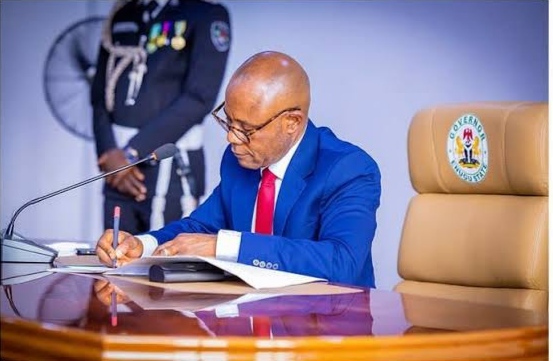
    Decreasing the number of police officers assigned to VIPs in Nigeria is a more appropriate and timely response than withdrawing the entire police officers assigned to the VIPs in this worsening insecurity across the country. The police force is overstretched, and redeploying some officers from excessive VIP protection duties back to public safety functions is essential for restoring confidence in national security. Decreasing the number of officers assigned to VIPs is a better security measure than total withdrawal of police officers from the VIPs.

    Importantly, the proposed reduction does not eliminate police protection for VIPs but strengthens police manpower for public protection and response to crime in progress incidents. It aims to ensure that assigned officers also serve as patrol personnel wherever VIPs travel to. In many cases, as VIP convoys travel through the country, the police officers accompanying them have deterred criminal elements—bandits and armed robbers, who often withdraw when confronted with an armed police escort. This has occurred repeatedly, even in areas where nearby police stations were unable to respond quickly.

    The fundamental role of the police remains: to protect and serve both the VIPs and general public. VIPs—especially national leaders, ministers, and influential citizens—are often prime targets for criminals, whether due to envy, political motives, or financial gain. As the saying goes, uneasy lies the head that wears the crown. Therefore, completely withdrawing all police officers from VIPs would be counterproductive and would expose them to greater danger than the average citizen.

    What the Inspector General of Police should prioritize is a strategic reduction, not an elimination of officers attached to VIPs and to sensitive establishments such as vulnerable businesses or schools. This approach frees up manpower for public patrols, highway security, and community policing initiatives, without placing VIPs at an unacceptable risk.

    As a retired Deputy Sheriff in the United States and a security consultant, I can affirm that crime control is most effective when resources are deployed based on threat assessment and environmental realities. Many parts of Nigeria are now serious crime hotspots, and policing strategies must adapt accordingly. Withdrawing every officer from VIP protection would only shift vulnerability, not solve the larger problem.

    In addition, elected officials—particularly members of the National Assembly and Ministers—should be directed to spend more time in their home constituencies and communities, accompanied by reduced and more efficient police security teams. Politics, like crime, is fundamentally local. Their presence at home strengthens governance, improves community relations, and supports grassroots policing.

    The President’s directive to recruit additional police officers is timely and long overdue. However, Nigeria must jealously guard the recruitment process. Criminal infiltration—whether by bandits, terrorists, or their sympathizers—poses a major internal threat to police effectiveness. Poorly vetted recruits can undermine operations, leak sensitive information, or sabotage crime-fighting efforts, placing both citizens and officers in danger.

    Nigeria needs a police force that is professional, properly vetted, and optimally deployed. Reducing excessive VIP protection details and strengthening public security roles is not just a policy adjustment—it is a necessary step toward restoring safety and order for all Nigerians.

    VIPs moving with a reduced number of police officers serve as crime deterrent along their routes.

    Dr. John Egbo is a United States retired Deputy Sheriff and Consultant on Security Matters. Jnegbo1@gmail.com

  • A Ruling Class That Eats Itself

    A Ruling Class That Eats Itself

    -By Abdul Mahmud

    Contemporary Nigeria feels like a country pulling against itself. Every day brings shock and surprises. Every night brings deeper worries. The country moves, but it moves without directions. It is not collapse, yet it is not order. It is something in between. Something that drags Nigerians down and wears them out. It resembles a place that has lost itself and the centre that no longer holds. A place where authority exists only in name. A place where power speaks loudly but acts weakly. Many Nigerians now describe the country in images borrowed from history. One of those images is China during its Warlord Era. It is not a perfect comparison. It is not even a comfortable one. But it is a useful frame for understanding the tragic drift of a country that cannot govern itself with clarity.

    China of the early twentieth century lived under fractured authority. Regional strongmen carved out fiefdoms. Armies answered to personal loyalty rather than the nation. Rulers acted like emperors. But they were actually terrors. Chinese struggled to stay alive between the shifting lines of conflict. Hope became a fragile currency. Trust disappeared. Nigeria today is not China of 1916. Still, it mirrors some of the same anxieties, the same sense of mercenary leadership, the same feeling that ruling elites no longer serve the people, the same mood of desperation among a population forced to improvise its survival; and the same suspicion that the state has become a shell that echoes emptiness, but never protects. Everywhere you look, you see a ruling class that feeds on the very system it was meant to sustain. It is a ruling class that eats itself. And in doing so, it consumes the country.

    Across Nigeria, the sense of safety has thinned to a whisper. Entire regions drift into insecurity. Armed groups take advantage of the vacuum. Communities mourn losses that have become too frequent to shock. The government responds with promises, yet the reality remains unchanged. Nigerians are stampeded with announcements, the type Fela once famously sang about as “government magic”, and endless condemnations. They hear everything except real solutions. Nigerians die on highways. They die on their farms. They die in their homes. They die while waiting for leaders who refuse to lead. It is a tragedy that repeats itself so often that it feels like part of the national routine. In China’s Warlord Era, leaders fought for territory. Control was the only ideology. The state became a broken vessel. Yet, something unexpected happened. Even in the midst of chaos, the Chinese clung to the idea of a future China. They nurtured the dream of a unified republic. They preserved their cultural memory. They produced thinkers, writers, and reformers who refused to surrender to the disorder around them. And when the warlords finally exhausted themselves, the country began the slow process of rebuilding. It was messy. It was violent. It was painful. But the idea of China survived.

    The idea of China survived because its deepest institutions outlived the warlords who tried to overthrow them. Local communities kept their traditions intact. Teachers educated children in classical texts. Merchants maintained networks that tied distant regions together. Reformers in cities like Beijing, Shanghai, and Guangzhou carried forward debates about national renewal. Newspapers, student groups, and emerging political parties kept alive a vision of a united republic, even when the country itself was fractured. These threads held society together when the state could not. The idea also survived because the Chinese never abandoned the belief that their destiny was collective. They experienced warlordism as a temporary betrayal of the national project, not its end. They protested fragmentation. They wrote against it. They fought against it. They imagined a future in which China would be whole again. This imagination created pressure that weakened the warlords’ grips, and when military exhaustion set in, the intellectual and cultural groundwork for rebuilding was ready. Out of that groundwork emerged the next phase of the Chinese state. As it was then, and as it had always been, the Chinese nation-state building was a fierce struggle for grounding visions and competing ideas, not a flippant appeal to sentiment or convenience. It required depth, conviction, and the hard labour of shaping a shared future rather than the easy pursuit of applause for the warlords.

    Nigeria is inching close to the point where it must reclaim itself from its own violent fragments. The danger of fragmentation continues to grow. The ruling elites continue to fight among themselves. They continue to chase influence and access while the country burns. They chase the next election cycle. They chase everything except the wellbeing of Nigerians. They do not confront the insecurity that terrorises ordinary Nigerians. They do not confront the poverty that reduces life to a miserable hustle. They do not confront the corruption that empties public coffers. They do not confront the decay of institutions that once held the country together. What they confront instead is each other: “Someone once said you are supposed be kept away in the zoo. Sincerely that’s where you belong”. And in that confrontation, they devastate the very system they claim to defend. The judiciary is hijacked. The legislature is compromised. The executive is swollen with power but thin on capacity. Agencies clash. Serving governors accuse past governors. They deflect; and when they are not deflecting on the real issues, they are busy abusing fellow Nigeria: “Go and die”. The federal state stumbles along as the subnational states burn. This is how a country eats itself. Not through dramatic implosion. But through constant erosion.

    China’s Warlord Era ended through exhaustion. Nigeria cannot afford such an ending. The cost in lives would be unbearable. The social damage would last generations. The economic ruin would push millions into irreversible poverty. Though the world is different now, populations are larger, weapons are deadlier, and the interdependence of communities is deeper, a Nigerian collapse would be disastrous. It would be a continental earthquake. So the question is simple. When will our ruling elite realise that it has consumed too much of the country’s vitality? When does it understand that its survival depends on the survival of the country? When does it learn that power cannot be sustained on the ruins of public trust? These lessons appear obvious. Yet they seem to escape those who hold office. A country cannot run on improvisation. It cannot survive on announcements. It cannot endure on propaganda. It needs a moral centre. It needs a political vision. It needs leaders who understand that governance is not performance. Governance is responsibility. It is a duty. It is courage. It is the ability to stand between citizens and danger. And it is the humility to know when the state is crumbling and must be rebuilt.

    China recovered because its people refused to let the idea of China die. Nigeria stands at a similar crossroads. Nigerians still believe in the idea of Nigeria. They show it every day. They show it in their stubborn resilience. They show it in their refusal to give up. They show it in their search for work, for safety, for dignity. They show it in their prayers. They show it in their grief. They show it even when the state ignores them. But belief is not infinite. Resilience is not eternal. Hope is not immortal. There comes a time when citizens look at their leaders and see nothing but hunger for power. There comes a time when they recognise that the ruling class feeds on the country like a parasite. There comes a time when they see that those who govern have no interest in building a future. At that point when the ruling class begins to devour itself, the people begin to chart a course of their own.

    If Nigeria is to avoid that fate, its ruling class must act now to save the country and itself. It must restore security. It must strengthen its institutions. It must clean its politics. It must rebuild public trust. These are not lofty ideals. They are basic responsibilities. They are the foundation of every functioning state. Without them, the country slips deeper into the logic of the Warlord Era. Disarray. Fragmentation. Fear. The tragedy of Nigeria is not that it lacks resources. It is not that it lacks ambition. It is that it lacks leaders who understand the moral weight of stewardship. Leadership is not enjoyment. Leadership is a burden. Leadership is sacrifice. Leadership is the understanding that every decision shapes the lives of millions. China’s past is a warning. Nigeria’s present is a plea. The ruling class can still step backwards from the path of self-destruction. It can still choose purpose over plunder. It can still rebuild the fragile trust that binds the country together. But it must act. It must reform. It must confront the insecurity, the corruption, the disorder, and the decay. A ruling class that eats itself leaves nothing behind. Nigeria deserves better. Nigeria deserves leaders who build. Nigeria deserves a state that protects. Nigeria deserves a future that is not swallowed by the failures of today.

  • Nigeria’s Insecurity and Leadership: The Growing Crisis of Confidence – By Dr. John Egbo

    Nigeria’s Insecurity and Leadership: The Growing Crisis of Confidence – By Dr. John Egbo

    For millions of Nigerians, the fear of being kidnapped on the road, at home, or even in school has become a grim part of daily existence. From the outskirts of Abuja to rural communities in Kaduna, Kwara, Niger, Katsina, Plateau, Benue, Rivers, and Zamfara, the wave of abductions continues to rise, eroding public confidence and raising urgent questions about the priorities of the country’s political leadership.

    Despite repeated promises from successive administrations, Nigerians widely believe that national security is still treated with alarming levity by those at the highest levels of government. From the Presidency to the National Assembly and the state governors, there is a growing public perception that the nation’s leaders are more focused on protecting themselves and their families, with troops of police officers, army personnel and DSS than ensuring the safety of the people they are supposed to serve.

    KIDNAPPINGS: A NATION UNDER SIEGE

    Kidnapping for ransom has evolved into a multi-billion-naira criminal industry. Major highways such as Abuja–Kaduna, Enugu–Abuja, Benin–Lagos, and Birnin Gwari–Funtua have witnessed repeated attacks. Communities in the Middle Belt and North-West live under a constant shadow of terrorists called bandits, militants and herdsmen while southern states once considered safe such as Edo, Delta, Imo, and Anambra, now report near-daily abductions.

    In early 2025 alone, several communities recorded mass kidnappings, including farmers, schoolchildren, church members, and even traditional rulers. For many Nigerians, these incidents underscore what they see as a failure of political will of Nigeria’s style of leadership. They travel overseas for medical treatment but will not hire foreign trained officers to help with their sick security condition.

    A trader in Suleja, who narrowly survived an attack, told our reporter: “We are left to protect ourselves. The leaders are surrounded by dozens of security men, but ordinary people are on their own. It seems we are not part of the security equation.”

    SECURITY FOR THE POWERFUL, INSECURITY FOR THE PEOPLE

    Analysts argue that a major source of public resentment is the disproportionate deployment of security personnel political leadership. Thousands of police officers are attached to politicians, government officials, business moguls, and their families, while rural communities and urban neighborhoods struggle with inadequate policing.

    A retired police superintendent, who requested anonymity, described the situation bluntly:

    “We lack manpower not because officers don’t exist, but because many of them are guarding VIPs. If you withdraw and equip half of those officers and send them back to communities, you will see an immediate improvement in national security.”

    Despite generous annual allocations running into trillions of naira for defense and monthly Security Votes to Governors, internal security, frontline officers often lack basic equipment such as bulletproof vests, patrol vehicles, communication gadgets, and sometimes even fuel. Many work long hours under hazardous conditions with limited insurance or welfare support.

    This mismatch between resources and results has fuelled widespread frustration among service men in uniform.

    POLITICAL INTERFERENCE AND REACTIVE MEASURES

    Critics say part of the problem lies in the politicization of security agencies. Postings, promotions, and procurement decisions have sometimes been influenced by political considerations rather than merit, weakening professionalism within the security sector.

    Moreover, security responses have often been reactive rather than proactive. Government interventions typically occur after tragic incidents as in mass abductions in Kebby school where there was an intelligence before the attack took place and Niger students incidents, attacks on villages, or high-profile kidnappings—rather than through coordinated preventive strategies.

    A security researcher at the University of Ibadan, Dr. Tolu Adebayo, summarized the problem: “We cannot continue waiting for attacks before deploying resources. Kidnapping gangs have saboteurs in the military and they are adapting faster than our institutions. Without intelligence-led policing, improved welfare, and professional autonomy, the cycle will continue unabated”

    CITIZENS LOSING PATIENCE

    For ordinary Nigerians, the consequences of insecurity are devastating. Farmers are abandoning their farmlands for fear of attack. Transporters avoid certain highways. Unity schools have been ordered closed in many states of the North while other Schools in high-risk regions operate under threat. Businesses are closing, and families are selling property to pay ransoms.

    An Enugu resident whose cousin was abducted in 2024 expressed anger at government inaction:

    “Every day we hear politicians talking about billions spent on security. But where is the impact? Bandits are still operating freely. We cannot live like this.”

    A CALL FOR GENUINE COMMITMENT

    The public is demanding a shift from rhetoric to action. Experts recommend:

    -Reducing VIP security escorts and redeploying personnel to communities

    -Ordering all National Assembly members and Ministers back to their respective towns to empower both Neighborhood Watch (Vigilantes) and Forest Guards as a first line protection for their people during the upcoming yuletide.

    -Improving welfare and insurance for police and military officers.

    -Deploying drones, surveillance systems, and intelligence tools for security personnel.

    -Creating  state policing structures as promised by the President to adopting a multi-layered policing model

    -Ensuring transparency in defence spending and procurement.

    -Sign an agreement with a foreign country to help flush out terrorists from the country and secure our porous borders.

    -Improving coordination among the armed forces, police, DSS, and local vigilantes.

    Ultimately, Nigerians want a leadership that demonstrates genuine commitment, not just speeches. A leadership that recognizes that security is not a privilege for the powerful, but a right for every citizen.

    As insecurity grows more brazen and kidnappers become more entrenched, the nation faces a stark choice: continue on the current path of reactive measures, or embrace bold reforms that restore public trust and reclaim Nigeria from the grip of fear. We all know that action speaks louder than words.

    The people have spoken loudly and the country’s leaders can no longer afford to ignore them.

    Dr. John Egbo is a Retired Deputy Sheriff from the United States of America and Security Consultant. Email: jnegbo1@gmail.com 

  • New Week, More Abductions and More Deaths

    New Week, More Abductions and More Deaths

    -By Abdul Mahmud

    Another week has opened in Nigeria with blood on the ground and fear in the air. The country wakes up each morning to new tragedies. Each day closes with fresh accounts of death, kidnappings, and retreats. Nigeria is living inside a vortex of violence. Nothing breaks it. Nothing interrupts it. The state has become pusillanimous, a timid spectator.

    The abduction of more than twenty five girls from Government Girls Comprehensive Senior Secondary School, Maga, in Kebbi State, is another grim reminder of how far the security collapse has travelled. The killing of the Vice-Principal in the attacks showed the brutality of the terrorists. These were girls preparing for a future that is constantly denied them. In that region, the education of girls has long been contested by extremists and patriarchal norms. The state promised to protect these children. It failed. Again.

    Across the north, the same story unfolds. In Tsafe Local Government Area of Zamfara State, entire families were taken. Women and children disappeared into forests controlled by terrorists. Homes were emptied without resistance. Communities now live under criminal rule. Citizens whisper not to provoke those who control their roads, markets, and farmlands. The state is absent. In the north east, the shock is deeper. The reported capture and killing of General Muhammed Uba, who the Army High Command assured the country was safe within his battalion, has shaken the country. A General of the Nigerian Army. Seized. Dragged away. Made to sit on the ground by his snatchers. Killed by terrorists who move on motorcycles. A military built on decades of training and investment was breached by a band that holds no formal command structure. It is shameful. It undermines morale. It raises a painful question. Is the Nigerian military still capable of fighting?

    Everywhere Nigerians turn, the failures of the state stare back at them. The military is stretched. The police is overwhelmed. Intelligence gathering is weak. Communities report danger and no one comes. Criminals move from state to state. Terrorists set up camps. They impose taxes. They administer their own justice. The state protects no one. It barely protects itself. The government keeps promising a turning point. Instead, we watch a point that turns in on itself, spinning without direction, circling like the widening gyre of WB Yeats’s The Second Coming. The turning point never arrives. Operations are launched with loud declarations of victory. The terrorists regroup. They reorganise. Villages burn. Schools fall. Families mourn. The cycle continues.

    Our country has normalised tragedy. Nigerians now expect bad news. They wait for the next report of abductions. They wait to hear which community has fallen. Prophet Amos once asked, “When will the new moon be over, so we can sell our corn?” It was a lament about a society rotting from inside. It was an indictment of leaders who worshipped power but abandoned justice. Nigeria carries that lament today. Nigerians now ask when this cycle of death will end. They now ask when the government will act with urgency. They now ask when rulers will remember that the first duty of the state is protection. Instead of answers, Nigerians see a president who governs from behind high walls. The fortress of Aso Rock grows more secure while the rest of the country grows more vulnerable. Terrorists move freely. Terrorists spread across territories untouched by government authority. Villages have no police presence. Cities shrink into islands of guarded estates. Nigerians travel only by daylight. Even then, they travel in fear.

    Nigeria cannot continue this way. Our country cannot survive when its armed forces appear unsure of their own strengths. The military once carried the weight of national pride. It was the symbol of unity. It was the institution that projected the authority of the federal government. Today, Nigerians ask if it is still primed for battle. They ask how a General can be captured. They ask why battalions retreat. They ask why weapons fall into the hands of those who seek to destroy the republic.

    These questions are fair. They must be asked.

    The military needs honest scrutiny. This government needs accountability. Nigerians deserve truth. If the armed forces are under-resourced, Nigerians need to know. If corruption has weakened capacity, the offenders must be punished. If political interference has crippled operations, it must be exposed. The attitude of silence, denial, and deflection is no longer acceptable.

    Nigeria and Nigerians are now trapped between the rock and the hard place. Some cling to patriotism, patience, and faith in the government’s ability to defeat the terrorists, mocking any notion of foreign assistance. Others insist that the country must seek help from beyond its borders. When President Donald Trump promised that he would send troops to our country to wipe out terrorists wherever they found them, Nigerians wondered what such intervention would mean here. They now ask when he intends to send help, since their own President cannot secure the country. It is a question born out of despair. A question rooted in frustration with a state that has abandoned its duties.

    The despair is not only in the number of dead. It is in the absence of hope. A country loses part of its soul when children are stolen from classrooms. A country loses its dignity when Generals are captured. A country loses its direction when leaders stay silent or offer empty speeches. Nigeria is losing too much. The new week has already brought more deaths. More abductions. The next week may bring the same. Nigerians pray it does not. Nigerians ask for a leadership that understands the urgency of the moment. They ask for a military that fights back. They ask for a police force that responds. They ask for a country that feels like a country.

    Nigeria must reclaim its security. It must rebuild its confidence. It must restore the bond between the state and the citizens. It must treat every abduction as an assault on the republic. It must treat every killing as a national injury. It must confront the terror networks with strength and strategy. It must do these things because no country can survive on a wing and on a prayer. The clock is ticking. The country is bleeding. The Nigerians are watching. The world is watching. The Nigerian state must show that it still has the will to protect itself. It must show that it can defend Nigerians. It must show that it is not a defeated republic.

    A new week has begun. The country cannot afford another filled with grief. While Nigerians sink deeper into despair, the pressing question remains: when will President Trump act, if at all, so that Nigerians can once again tend their farms, sell their corn, and bring their wheats to the market without fear? Nigerians are weary of waiting for rescue, yearning for the day they can live without daily encounters with violence, abduction, and the absence of security.

  • Tinubu and The Bad Roads Not Taken

    Tinubu and The Bad Roads Not Taken

    -By Abdul Mahmud

    “I couldn’t reach Yelawata in Benue State due to bad roads”, said President Bola Ahmed Tinubu. This sentence captures the spirit of Tinubu’s presidency. Aloof. Detached. Cold. Inconsiderate. Leadership without compassion. Governance without sacrifice. Authority without empathy. How did Mandela once describe compassion? He said, “Our human compassion binds us the one to the other, not in pity or patronisingly, but as human beings who have learnt how to turn our common suffering into hope for the future.” In those words lie the moral clarity of leadership: to feel with others, and to act in ways that dignify their pain. But in the hour when the people of Benue cried out beneath the weight of their grief, when blood soaked their soil and hope withered on parched lips, President Tinubu neither spoke with the tenderness the moment demanded nor did he offer comfort. Instead, he stood, quartered only to the state-organised gyre, where falcons heeded the call of the lying falconer while unburdened by the anguish of the listeners, unmoved by the cries circling beneath his silence.

    I return to the scene of the crime. Yelawata, in Benue State, is soaked in blood. Again. Victims of another attack. Not the first in the state. Sadly, not likely the last. Men butchered. Women slaughtered. Children silenced by bullets and machetes. Bodies burnt. Farmers buried in shallow graves. A people under siege, paying with their lives for living on ancestral land. And the President? He dilly-dallied like Nero until he was forced out of Aso Rock. When he eventually turned up in Benue State, he didn’t go to Yelawata.

    Why? The roads were bad.

    That excuse tells us everything. It tells us Tinubu doesn’t see governance as a sacrifice. It tells us he sees power as comfort, not service. That he is more concerned with personal convenience than national grief. That to him, bad roads are a reason not to visit, not a call to action. The road to Yelwata was too rough for his usual long motorcade. But is the road to governance not paved with sacrifice? A president should go where pain is deepest. He should stand with the broken. Weep with the grieving. Reassure the fearful. But Tinubu stayed away.  He dispatched men like Sunday Dare and Bayo Onanuga; envoys who, upon arrival, shielded their nostrils with cupped palms, as though the stench of death and despair in Yelawata were too profane for their privileged lungs. They came not to mourn, but to manage optics; not to grieve with the grieving, but to distance themselves from the human wreckage their master could not bear to face. He sent words instead of presence. He chose distance over duty.

    What is the worth of a ruler who cannot be troubled by the suffering of his people? Presidents do not have the luxury of comfort. They are servants, not absolute monarchs. They must lead from the front, even through valleys of blood. When George W. Bush visited Ground Zero after 9/11, he climbed the rubble. When Barack Obama went to Newtown after the school shooting, he wept with the parents. When Nelson Mandela walked into the ruins of apartheid violence, he held grieving mothers and swore it would never happen again.

    Tinubu avoided Yelawata. Then insulted the people. He claimed the killings were reprisal attacks. Without evidence. Without tact. Without truth. He invariably blamed the victims. He called them the culprits. He rewrote a genocide into justification. And when he finally arrived Makurdi, it was under pressure. Nigerians had cried. Protested. Shamed him into action. So, he adjusted his diary.

    That adjustment came too late. In Makurdi, school children were drenched by rain, lined up to wave flags at a president who couldn’t be bothered to dry their tears. In front of the Tor Tiv, the King of the Tiv, Tinubu’s lies crumbled. The monarch told him to his face: “These are not reprisals. They are genocidal. They aim to wipe out our people.” It was a moment of truth. The kind only kings and corpses can speak. Tinubu had no answer. After the Royal smack-down, he chose not to make it to Yelawata. He contrived an excuse: the roads were not motorable. A helicopter couldn’t be arranged. A convoy couldn’t roll. A man who uses presidential jets to vacation in France; and who is billed for luxurious holidays in the sunshine of Saint Lucia couldn’t find a way to reach grieving Nigerians at home.

    Now, the question many are eager to ask: What does it cost to show empathy? What does it take to be present in pain? In Tinubu’s case, apparently too much. This presidency has reduced governance to showmanship. It is all optics, no substance. Press releases instead of policies. Travel photographs instead of action. Ceremonies instead of compassion. Tinubu has become a distant figure. A president of Abuja, not of Nigeria. He rules from marble offices, not the muddy fields of the countryside. From Lagos business tables, not farming communities in Benue. He governs through statements, not presence. Through silence, not sympathy. The tragedy of this moment isn’t just the deaths in Yelawata. It is the erosion of leadership. It is about a man who sees the office of president as the crowning of a personal ambition, not a platform for national healing. A man who imagines governance is a reward, not a responsibility. This needs to be put out more plainly: this is not leadership. This is negligence. Tinubu’s refusal to visit the scene of the carnage, his false statements about the cause and his delay in responding to the tragedy that befell our country all points to a leader who doesn’t feel the country’s pain. One who doesn’t carry the emotional weight of his office.

    What happened in Benue is part of a pattern.

    Tinubu’s second year in office has been marked by detachment. Nigerians groan under inflation. Food is unaffordable. Electricity is a myth. Fuel prices break the backs of ordinary citizens. Unlike the back David Diop so powerfully evoked in his acclaimed poem, Africa, unbent, “that never breaks under the weight of humiliation”. The backs of ordinary citizens stoop beneath the burden of betrayal. Yet the president travels. Dines. Celebrates. Appoints cronies. Signs inflated budgets. Adds more burden to weary citizens. There is no compassion in his policies. No empathy in his speeches. No connection in his actions. A caring ruler would reduce his convoys. Tinubu expanded them. A president with empathy would cut down waste. Tinubu has increased waste. A ruler in tune with citizens would share in their sufferings. Tinubu asks them to “tighten belts” while he loosens his.

    To govern a country requires moral courage. Tinubu’s response to national pain is indifference. His answer to cries is silence. His reaction to mass murder is a shrug. Then, where lies the heart of his rulership? Not in Benue. Not in Zamfara. Not in Plateau. Not in the IDP camps. Not in the shanties. Not in the markets. The heart of this government beats only for the rich, the powerful, and his coterie of handlers. For friends in Lagos. For loyalists in government houses. For image-makers. Not for the rest of us.

    The presidency should be the conscience of the nation. Under Tinubu, it has become a billboard. A brand. A throne without soul. It is not just his failure to visit Yelawata that is tragic. It is the symbolism of it. It tells the story of a man who doesn’t understand the weight of grief. Who doesn’t see the power of presence. Who thinks governance is about roads, not relationships. Even if the roads were bad, there were other options. Helicopters. Courage. Love. Anything but absence. But he chose to stay away, which speaks volumes. It says, “You are on your own”, O-YO! “You are not worth the trouble.” It says, “Your pain is inconvenient.” It says, “I’ll mourn you from a distance.” A president who cannot brave bad roads for his people cannot lead them through harder paths. But, here is the deeper tragedy: the road to Yelawata isn’t the only one Tinubu refused to travel. He has refused the road of humility. Of compassion. Of moral leadership. He has chosen another path; the road of entitlement, indulgence, and imperial comfort.

    Our country is ruled by a man who cannot be disturbed. But, our country is disturbing. It cries out from every state. It begs for presence. For proximity. For a ruler who shows up. In person. Not by proxy. Until that happens, we will continue to drift.

    Governance is not about the ease of travel. It is about the urgency of compassion. It is not about what is motorable. It is about what is moral. Tinubu failed this test. In the hour of grief, he was absent. In the moment of truth, he deflected. In the face of pain, he excused. He cannot build our country from behind the presidential walls. He must descend his Olympian height. Step into our blood-soaked earth. Walk with the wounded. Cry with the survivors. Stand with the forgotten.

    Or step aside. Our country deserves more. Being the president shouldn’t be taken as a title, with all the pomp to boot. It is a task. It is not the celebration of personal ambition. It is the surrender of comfort for the sake of others. It is not about dodging bad roads. It is about building better ones and still traveling the worst ones when duty calls. Until Tinubu understands this, he will remain a stranger to his office. A visitor in his own country. A ruler, not a leader.

    While he pretends that the tragedy in Benue is “an internecine clash of neighbours”, to quote my friend, Josephine Akioyamen, the people of Benue must dig in to defend themselves against the rampaging Fulani conquistadors, Yelawata will remember his indifference. Just as our country remembers. The world will not forget.

  • Mbah Appoints New Leadership for Enugu Forest Guard

    Mbah Appoints New Leadership for Enugu Forest Guard

    The Governor of Enugu State, His Excellency, Dr. Peter Ndubuisi Mbah, has approved the appointment of Colonel Dan Didiugwu (rtd) as the Chairman of the Enugu State Forest Guard, and DCP Olamitisoji Akinbamilayo, PhD (rtd) as the Commander of the Enugu State Forest Guard.

    According to a government issued statement signed by Prof. Chidiebere Onyia, Secretary to the State Government, the appointment of the Chairman of the Forest Guard Board, which is subject to confirmation by the Enugu State House of Assembly, and that of the Commander of the Forest Guard, which takes effect immediately, are part of the State Government’s ongoing efforts to strengthen and professionalize forest and environmental security operations across Enugu State, in alignment with its commitment to safeguarding lives, property, and natural resources.

    The statement revealed that the office of Commander of the Forest Guard supersedes the previously existing position of State Coordinator, which is now abolished.

    The statement noted that the Smstate government expressed confidence in the capacity and experience of both Colonel Didiugwu and DCP Akinbamilayo to reposition the Forest Guard into a highly responsive and efficient outfit.

  • Enugu: Police Nab 2 Over Eha-Amufu Attack, as Gov. Mbah Says Enugu Among Safest States in Nigeria

    …Vows no crime will go unpunished

    Governor of Enugu State, Dr. Peter Mbah, says Enugu remains among safest states in the country, irrespective of propaganda by peddlers of falsehood.

    Mbah said the state had put proactive measures in place and invested in capacity to solve every single crime and bring the perpetrators to book.

    This was even as the Police in Isi-Uzo made arrests over the recent attack on Eha-Amufu farm settlements that left some persons dead.

    Mbah spoke when he received in audience the Assistant Inspector General of Police in charge of Zone 13, AIG Abayomi Oladipo, at the Lion Building, Enugu, on Wednesday.

    Mbah said he was aware that his administration could not achieve the ambition to grow the state’s economy from $4.4bn to $30bn and position it as the premier destination for investment, business, tourism and living without security, hence his decision to invest huge resources and political will in fighting the scourge of insecurity from the outset.

    He maintained that with the enormity of security infrastructure such as the Command and Control Centre, establishment of Distress Response Squad special police unit with over 150 security vehicles, installation of AI-enabled cameras across the state for surveillance, and other resources put in place, Enugu had acquired the capacity to not only prevent crimes, but also to solve them when they occur.

    “Enugu is the most secure city in the country, unarguably, save for people, who like to magnify things, and who believe that the security we enjoy in Enugu is disturbing them.

    “So, they like to sometimes conjecture things to somehow entertain their views or opinions. What they do is to post or peddle falsehood on social media by going back to things that happened years ago to make them appear as if they are just happening. Also, things that happened elsewhere, they make it appear as if they are happening in Enugu.

    “I have seen some images and videos recently of things that never happened here, but made to look as it they happened here in Enugu State.

    “Therefore, if we discount those false narratives, those fake narratives that we hear from social media, Enugu as I mentioned, unarguably is the safest city in this country.

    “But we are not going to rest on our oars. We have to see that our security agents are alive to their responsibilities, to their duties.

    “We do not have any tolerance for insecurity, for crime in Enugu State. We are going to continue to work with the security agencies to ensure that we sustain this security we are enjoying in the state today.

    Speaking earlier, AIG Oladipo, who said he had received security briefing from the Commissioner of Police, Enugu State Police Command, CP Mamman Giwa, and his Anambra State counterpart, CP Ikioye Orutugu, and rolled out modalities for synergy in fighting crime, commended Governor Mbah for the notable improvement in security of lives and property in the state.

    “I can tell you that what we have put in place is really working for us. I want to thank you for the support and your cooperation with the police and other security agencies of the state,” he stated.

    It is recalled that while there were various levels of warning against trips to 27 states by the UK’s Foreign, Commonwealth and Development Office, FCDO, in its 13th June 2025 travel advisory, which was still valid as of 18th June, Enugu State was among the few states without any travel warnings whatsoever against them.

    Meanwhile, the Police in Isi-Uzo have arrested two alleged collaborators and informants, Matthew Ebeh, and a woman, who allegedly provided guide for the attack and also sold information on security movement to the militant herders.

    It was gathered that Ebeh, 26, allegedly led the suspected herders into the community. He, however, ran out of luck when one of the locals escaped, leading to his arrest.

  • Nigeria loses over 500 citizens to violence, accidents, others less than 20 days into 2023

    Nigeria loses over 500 citizens to violence, accidents, others less than 20 days into 2023

    AFTER surviving the insecurity and other socio-economic challenges of 2022, death is the last thing on the minds of most people who crossed over to January 2023.

    However, less than 20 days into 2023, the Nigerian polity is littered with untimely and aborted dreams. No fewer than 508 people, across the country, have had their lives violently terminated in their prime, according to Saturday Vanguard checks.

    A deadly combination of violence, accidents, cult clashes, activities of Boko Haram insurgents, unknown gunmen and separatists in, kidnappers, and bandits have practically created many killing fields across Nigeria in the last 19 days.

    On December 31 of every year, many people troop to religious and prayer houses where they thank God for the ending year and pray for better tidings— good health, long life, prosperity and other favours in the new year.

    Often, many people outline a litany of lofty goals they want to pursue in the coming year.

    They top it up with the exchange of goodwill wishes and messages with friends and family. No matter how old, instant death is usually ruled out. Even those who are ill expect to get well in the New Year.

    The 508 deaths, according to Saturday Vanguard’s checks, include 25 Nigerians who were snatched by the outbreak of Diphtheria disease in Kano. Two persons died of Diphtheria in Lagos. They also include those of a couple set ablaze by suspected arsonists shortly after they returned from cross-over church service in Abeokuta, Ogun State, on January 1.

    The death figure is not exhaustive because it is based on reported cases.

    How 508 lives were wasted in January 2023

    January 1

    * Seven persons were confirmed dead in an accident on the Lagos-Ibadan Expressway, and sixteen others were injured in the crash.

    *Five persons were killed and four others were injured as a motorist rammed into a group of friends at Akinmorin near Oyo town.

    *Gunmen killed a seven-month pregnant woman, Mrs Urenma Chima, Ebubeagu commander’s wife in Ebonyi State.

    *Two persons were shot dead as gunmen attacked a military checkpoint at Ubomiri/Nwaorie Ubi Road in Mbaitoli Local Government Area of Imo State.

    *A medical doctor, Dr Uyi Iluobe was shot dead at Olive Clinic, in Oghareki, Ethiopia West council.

    *Suspected arsonists set a couple ablaze, shortly after they returned from cross-over church service in Abeokuta, Ogun State.

    *Eight persons died, 22 sustained various injuries in two separate accidents in Ogun State.

    * Airstrikes killed 33 Boko Haram militants in Bama, Borno.

    * Bandits killed three and abducted one in Abeokuta, Ogun.

    * Five were killed when someone deliberately drove into a party in Afijio, Oyo.

    * Police killed one bandit in Gusau, Zamfara.

    * Gunmen killed five in Awka South, Anambra.

    January 2

    * Gunmen killed four police officers during an attack on Ohakim’s convoy in Ehime-Mbano, Imo.

    * Police officers killed one bandit in Jibia, Katsina.

    * Gunmen killed one and abducted six in Toto, Nassarawa.

    * Troops killed four bandits in Giwa, Kaduna.

    * Ohakim escaped death as four of his police orderlies were killed in a bomb attack on his convoy.

    * Four persons were shot dead by suspected hoodlums in Nodu Okpuno in Akwa North Local Government Area of Anambra State.

    * Police Command in Katsina State neutralised a suspected terrorist while repelling their attack on Magamar Jibia, Jibia Local Government Area of the State.

    * Nigerian Air force Super Tucano jets between January 1 and 2, eliminated 33 Boko Haram/ISWAP terrorists during air strikes at four of their camps in Bama Local Government Area.

    January 3

    · Gunmen killed five in Akoko North-East, Ondo.

    ·Kehinde, a herbalist died during a marathon sex romp with his girlfriend in a hotel room in Ekiti State.

    · Remains of Oreoluwa Fatinoye, son of the couple killed and set ablaze afterwards by assailants, was fished out from Ogun River.

    · Federal Road Safety Corps, FRSC, confirmed that 15 persons were killed and five others were injured in an auto crash that occurred in Kogi State.

    · Troops of Operation Forest Sanity eliminated four terrorists and recovered arms and ammunition in two encounters in Kaduna State.

    .More than 20 farmers were feared killed after a boat carrying about 100 farmers capsized in Kebbi State.

    January 4

    ·Councillor and five others were killed in the Sapele bloodbath.

    ·A vigilante operative was killed and two others were injured by gunmen in Anambra State.

    · Police in Zamfara repelled the bandits’ attack, killed one and arrested five others.

    ·Multiple auto crashes that occurred a few kilometres from Nabardo village on Bauchi-Jos Federal Highway burnt 18 people to death.

    ·A couple, and six others were arrested for killing and dismembering a 26-year-old lady in Ijebu-Ode, Ogun State.

    · A cult war resulted in four deaths in Sapele, Delta.

    · Gunmen killed one vigilante in Ihiala, Anambra.

    ·Police officers killed one bandit in Malumfashi, Katsina.

    ·One police officer and two bandits were killed during a clash in Akwanga, Nasarawa.

    January 5

    ·Family of a 35-year-old baker, Hanofi Taofeek was thrown into mourning after he was crushed to death by a commercial bus driver, Arinze Okafor, in Lagos.

    January 6

    ·No fewer than seven people from Kwanar Dangora town in Kiru Local Government Area of Kano State were killed in an auto crash that occurred along Kano-Zaria Road.

    ·Seven people from Kwanar Dangora town in Kiru LGA died in a motor accident along Kano-Zaria road.

    ·Three persons died and eight others were injured when a speeding Toyota Corolla hit a taxi from the rear at the Lagos-Abeokuta Expressway.

    ·Nuhu Usman from Bauchi State was arrested for killing one of his wives with a dane gun.

    ·Burnt body of an unidentified man, concealed in a sack, was dumped by alleged cult members in Akure.

    ·Gunmen shot four persons dead including the legislative leader of Warri North Local Government Council.

    ·Taiwo Ajalorun was arrested by police operatives in Ondo State with a container full of a human dead body and an Itel phone of a dismembered 26-year-old mother of two.

    ·Ondo State government imposed a 24-hour curfew on Ikare-Akoko, Akoko North East, following a bloody clash, which claimed five lives during the youths’ carnival.

    ·Precious Adiele, member of a cult group was killed in a gang war that also left an unidentified elderly resident burnt to death in Port Harcourt.

    ·Kidnappers killed one and abducted one in Ethiope West, Delta.

    January 7

    · Police officers killed two gunmen in Gusau, Zamfara.

    · Boko Haram killed 35 Islamic State in West Africa (ISWA) militants in Kukawa, Borno.

    · Police officers killed two kidnappers in Alkaleri, Bauchi.

    January 8

    ·A woman was killed while her husband and son sustained injuries in a motorbike accident on the Abeokuta-Ibadan road.

    ·12 persons were killed and five others were injured in a road accident that occurred in Sokoto.

    · Communal violence resulted in one death in Pategi, Kwara.

    January 9

    · One person was confirmed dead with many others injured during the Yoruba Nation agitators rally in Ojota, Lagos.

    ·Police neutralised two suspected gun runners and recovered explosive shells in Zamfara.

    ·Kano State Police arrested Ghadiffi Sagir for allegedly killing his step mother and her daughter.

    ·Bandits killed twelve security operatives in Birnin-Gwari, Kaduna.

    ·Bandits killed one vigilante in Rafi, Niger State.

    ·Three men were arrested in Katsina State over a clash between the police and some hoodlums on New Year’s Day which resulted in the death of a nine-year-old boy.

    ·Police in Zamfara killed two gun runners who were conveying arms to terrorists’ camp in Zamfara from Taraba State.

    ·A member of a vigilance group was killed as local hunters repelled bandits’ attacks In Niger State.

    January 10

    ·Warri cult groups killed one person in his home in Idemili North Local Government Area of Anambra.

    ·A 200-level student of Nnamdi Azikiwe University was shot dead by armed robbers.

    ·A young man, Uchenna Okafor, allegedly died in police custody in Anambra State.

    ·An unidentified woman was killed by motorists around NNPC junction along the Kubwa-Zuba Expressway, Abuja.

    ·Suspected hoodlums murdered an intending couple in Imo State.

    ·Gunmen killed four in Ihiala, Anambra.

    ·Gunmen killed three in Ideato North, Imo.

    January 11

    ·Residents of Ushafa in Bwari Area, Abuja were thrown into confusion as gunmen invaded the community, killed Benjamin Ogundare and abducted his family members.

    ·Trailer killed an official of the Nigeria Security Defense Corps, NSCDC in Niger State.

    ·Bandits killed one and abducted two in Bwari, Federal Capital Territory.

    ·Bandits killed two and abducted four in Igabi, Kaduna.

    ·Nigerian troops killed five Indigenous People of Biafra (IPOB) militants in Mbaitoli, Imo.

    January 12

    ·The lifeless body of a man, identified only as Segun, was found in a hotel in Ogun State.

    ·Gunmen suspected to be kidnappers killed a man, Benjamin Ogundare and abducted two of his relatives, Goodluck Ogundare and Janet Ogundare in Abuja.

    ·13-year-old committed suicide in Niger State after she was caned by her parents.

    · A community leader in Kaduna State was killed by suspected bandits at his residence in Unguwar Mai Awo village.

    · Anambra State Joint Task Force on security recovered four bodies suspected to have been killed by unknown gunmen at Eziani village in Ihiala Local Government Area of the state.

    · A Deputy Superintendent of Police attached to the Anti-kidnapping Unit of the Edo State Police Command died during a shootout with kidnappers.

    · Five persons were killed in a bomb attack in Anambra State.

    · Gunmen killed four Anambra vigilantes and bombed multiple buildings in Ihiala, Anambra.

    ·Kidnappers killed one police officer in Oredo, Edo.

    · Troops killed two kidnappers in Toto, Nassarawa.

    ·Police officers killed five bandits in Magama, Niger State.

    January 13

    · Troops killed seven Indigenous People of Biafra members and arrested six others during operations conducted in Imo, Anambra, Abia and Enugu states.

    · Gunmen attacked men of the Anambra Vigilante Service and killed four.

    · Kaduna State Fire Service confirmed that an inferno killed four family members.

    · Gunmen killed two members of a vigilance group in Delta State.

    · Gunmen killed two vigilantes in Sapele, Delta.

    · Troops killed “several” (est. at ten) ISWA militants in Damboa, Borno.

    January 14

    · DSP Michael Adams, who was involved in the rescue operation of a kidnapped President of Iruegben Area Customary Court, Mrs. Precious Aigbonoga, was reported dead.

    · Ogundeji Ojo set his father’s house and died in the inferno.

    · Kingsley Enageghe was arrested for allegedly shooting a guest at Queens Victory hotel in Lagos.

    · 20 people lost their lives in both Ogun and Plateau states during road crashes.

    · 16 supporters of the Peoples Democratic Party, PDP, in Plateau State lost their lives following a road accident in Mangu Local Government Area.

    · 15 persons died in Lagos and Bauchi road crashes.

    · Head of Lambata village in Gurara Local Government Area of Niger State, Mohammed Abdulfasur, was killed.

    January 15

    · 10 persons were feared dead and several others were injured in an auto crash on Nnamdi Azikiwe Expressway in Abuja.

    · Lagos State Fire and Rescue Service rescued one and recovered another dead from a fallen fuel tanker in Lagos.

    · Reverend Father Isaac Achi of St. Peter’s Catholic Church in Kaffin-Koro, Niger State was killed by bandits and his corpse was burnt in his room.

    · The military killed two Boko Haram terrorists in Borno

    ·One Peter Abah was killed in a robbery attack in IgalaMela/Odolu Local Government Area of Kogi State.

    January 16

    · Noah, an 18-year-old boy died in Lagos after being allegedly poisoned by his friends.

    January 17

    ·18 persons and 16 cows died in an accident in Kebbi State. Forty two others sustained injuries.

    · Policeman detailed to the Independent National Electoral Commission, INEC, office in Enugu South Local Government Area of Enugu State was killed when suspected hoodlums set the facility ablaze.

    ·Three people were killed after suspected terrorists attacked Jajar Kanwa village, in Katsina State.

    · Police killed a protester in Minna, Niger State.

    ·A yet-to-be-identified trader was shot by a policeman at the Alaba Rago Market, Lagos State.

    · Ndiegoro neighbourhood in Aba South Local Government Area of Abia State was thrown into turmoil following a shootout between police and hoodlums, resulting in the death of a Police Inspector.

    · Troops killed 10 bandits in Danmusa LGA, Katsina State

    January 18

    · A leader of a suspected gang of robbers in Delta State, Bobo Ononibe, was killed during an exchange of gunfire with police operatives.

    January 19

    ·Mallam Zubairu died after a vehicle ran over him on the premises of Jos University Teaching Hospital, JUTH, Plateau State.

    ·Cult clash in Benin City, Edo State, claimed the lives of four persons around Erediauwa and Sakponba roads.

    · Police in Abuja arrested 11 suspects in connection with the lynching of a man identified as Salihu, by a mob, which mistook him for a motorcycle thief in Anguwar Dodo, Gwagwalada Area Council.

    · An unidentified car dealer was stabbed to death by suspected hoodlums on Ordnance Road, Trans-Amadi, Port Harcourt, Rivers State.

    ·Police Inspector in Ndiegoro Divisional Headquarters, Aba, Abia State, reportedly died in a gun battle between policemen and gunmen.

    ·Six persons were killed as they attempted to foil the kidnapping of two persons in Zonkwa, Zangon Kataf, Kaduna State

    ·Police killed one armed robber and arrested another over the murder of keke rider in Delta

    · Suspected armed herdsmen attacked an IDP camp in Abagena community, Benue killing eight including a family of six.

    (Vanguard)

  • FG proposes spending N30.79bn on security surveillance along Abuja-Kaduna railway, others

    FG proposes spending N30.79bn on security surveillance along Abuja-Kaduna railway, others

    The Federal Government, FG, has proposed to spend over N30 billion on the installation of Acoustal Sensing Security surveillance system for the Abuja (IDU)-Kaduna railway, including other items in the 2023 budget.

    Other items include: completion of the Abuja-Kaduna railway; completion of the Lagos-Ibadan and its associated additional works; rehabilitation of Itakpe-Ajaokuta rail line and construction of 12 NOS station building and tracks laying works at railway ancillary facilities area agbor, among others.

    The figure which is part of the federal government’s executive proposal in the 2023 Appropriation Bill also earmarked over N126.53 billion for the parent Ministry of Transport.

    Of the figure, the Ministry of Transport headquarters gets N93.66 billion; Nigerian Railway Corporation, NRC, gets N20.45 billion; National Inland Waterways Authority, NIWA, gets N5.39 billion.

    Others are: National Institute of Transportation, NIT, which gets N4.69; Maritime Academy, Oron, receives N1.55 billion, while Council for the Regulation of Freight Forwarding in Nigeria gets N775 million.

    Also, the Federal Government has proposed to spend a total of N4,31 billion of its N126.53 billion budget on purchase of trains, under the line items, code: 23010111, while N100 billion would be expended on facilitating the Mass Transit scheme.

    Procurement and rehabilitation of rolling stock (Narrow Gauge), and rehabilitation of narrow gauge track from Minna to Narrow with extension to the Baro River Port, which are ongoing, would gulp N2.98 billion.

    Also, establishment and management of six national freight offices nationwide, which is ongoing gulps N100 million, while N10 million would be spent on education and construction of speed reduction signages using the International Road Assessment Program, CIRAP, with Federal Capital Territory Authority, FCTA.

    The federal government has also planned to spend N45 million on rehabilitation of central Air conditioner system, toilets and offices and leakages on the roof, and physical head count of staff of the ministry.

    (Vanguard)

  • Abducted Reverend Sisters released in Imo

    Abducted Reverend Sisters released in Imo

    The four Catholic Church Reverend Sisters kidnapped last Sunday at Okigwe-Umulolo axis in Okigwe Local Government Area of Imo State have been released.

    Secretary-General of Sisters of Jesus The Saviour (Generalate), Zita Ihedoro, disclosed this to newsmen in Owerri, yesterday.

    The freed Reverend Sisters, Johannes Nwodo, Christabel Echemazu, Liberata Mbamalu and Benita Agu, were kidnapped on their way to a thanksgiving mass of one of their colleagues.

    Announcing their release, Sister Ihedoro said: “With hearts full of joy the sisters of Jesus the Saviour wish to announce the unconditional and safe release of four of our sisters, who were abducted around Okigwe-Umulolo axis on August 21, 2022.

    “Today is a memorable day for us. Therefore, we wish to share this joy with all men and women of goodwill, who in one way or the other contributed to the quick and safe release of our dear sisters.

    “We sincerely appreciate and thank you for your prayers and moral support during this difficult moment. May Jesus the Saviour whom we have come to serve bless, protect and provide for you. Especially in times of difficulty.”

    However, at press time, Imo State Police Public Relations Officer, Michael Abattam, was yet to respond to the report of the release of the Reverend Sisters.

    (Vanguard)

  • Breaking News: Students evacuated from Abuja school as bandits hit nearby community

    Breaking News: Students evacuated from Abuja school as bandits hit nearby community

    Breaking News: Students evacuated from Abuja school as bandits hit nearby community

    Students of Federal Government College (FCG) Kwali, Abuja, have been evacuated from their hostels following an attack at a nearby community.

    Parents trooped to the school on Monday morning to evacuate their children from the unity college located at Sheda village, on the ever busy Abuja-Lokoja highway.

    Our reporter, who visited the college on Monday morning, saw some parents evacuating their children.

    A parent, Mrs Babep Peace, told our reporter that she came from Lagos to evacuate her two children after she received a call that the college management directed parents to evacuate their wards.

    She said said she received the call at about 4pm on Sunday, a situation which she said prompted her to board a night bus from Lagos, to Abuja.

    “It was at 4pm on Sunday when one of my daughters called me through her guardians’ phone that the management asked parents to rush down to evacuate their children because of threat by suspected bandits to attack the college,” she said.

    She said it was quite unfortunate that the exams of her children had been disrupted, but it was better to take them home safely.

    Another parent, Mr Obaniyi Oluwatokpe, who spoke with our reporter, said he was in Kabba, Kogi state, on Sunday night when he also received a call from the college management.

    He said it was the fear that made him drive down to the college after he was told that bandits have threatened to attack the schoool.

    An SS II student of the college, Rebbeca Samuel, who was seen moving out her bags, told our reporter that some bandits attacked Sheda village on Saturday night, a situation which she said caused panic.

    “It was at about 12am on Saturday while we were sleeping inside the hostel that we suddenly heard gunshots which made the school management ask us to vacate the hostel,” she said.

    An official of the college, who is a member of the Parents Teachers Association (PTA), told our reporter that the management directed parents to immediately evacuate their children because of bandits’ attack on Sheda village.

    “You know it is a fence that separates Sheda village from the school, and the attack by bandits on the village amid sporadic gunshots that Saturday, caused serious panic to both students and management,” he said.

    Attempts by our reporter to have access into the school were not successful as security men at the gate denied him access. The school management could also not be reached for comments.

    Spokesperson of the FCT Police Command, DSP Adeh Josephine, has not replied to text message sent to her about the incident.

    There have been mass abduction from schools in the country by Boko Haram insurgents and bandits.

    (Daily Trust)