Category: Opinion

  • Standstill Nation and Delusion’s Last Stand

    Standstill Nation and Delusion’s Last Stand

    By Oseloka H. Obaze

    In the summer of 2011, two unconnected op-ed pieces appeared on the same page of the New York Times. They pertained respectively to challenges confronting two different nations; the United States that was then suffering from governance paralysis. The other nation was Libya, which was about to implode from NATO bombings and domestic upheaval, while her leader, Colonel Muammar Gaddafi, was busy playing chess with a guest from Russia. The first article by Peter Baker, was titled, “Standstill Nation.” The second piece by John Burns, was captioned, “Delusion’s Last Stand.”

    The two op-eds presented striking parallels with contemporary Nigeria. As such, I have borrowed the two titles as a single illustrative and conjunctive caption for this piece. The twinned caption connotes the double-barreled enormity of the challenges confronting Nigeria. Two sub-captions taken from the NYT pieces mirror in essence the characteristics of Nigeria’s unfolding governance quandary. “Paralysis (alas) is one way things are supposed to work;” and “Gaddafi plays chess with a believer in aliens. In the souk, people yearn aloud for his passing.”

    Relatedly, while President Bola Tinubu governance modalities has pushed Nigeria to a tipping-point, and the mortgaging of Nigeria continue to elicit unvarnished umbrage, very few Nigerians will publicly acknowledge that they yearn and pray surreptitiously for an Abacha-like fate to befall Tinubu; yet such thinking secretly enjoys broad flourish nationwide. That’s telling. It flags how bad things are and how distressed Nigeria are.

    As far removed as the US and Libyan issues were, certain salient lines contextualizes the thrust of the New York Times pieces, thus making them relative to Nigeria’s circumstances. “Is this any way to run a country? Ideal it is not. Inspiring, hardly at all.” And relative to Nigeria’s ruling APC, as delusion makes a last stand: “a government that set out in the past decade to cloak the old dictatorship with a new and more appealing facade has been hoist with its own petard.” Renewed hope is proving to be a fluke; a red herring.

    Apropos Nigeria, always the outlier that it has been, the country has arrived at that critical juncture where the axiomatic question is: To be or not to be a nation? Some would also ask: Which way Nigeria? However, those in power think and believe, quite erroneously, that Nigeria will continue on the sad trajectory they foisted on it and at their whims and caprices. But they are wrong. Nigerians are so fed up, that their kinetic anger is a fodder of sorts for a peoples’ revolution.

    As delusion makes a last stand in Nigeria, the population are hell bent on broad leadership change, and as they say in the local parlance, “by fire, by force.” But the first choice is engender such change constitutionally and peaceably. When that option fails, it becomes an open-ended game.

    Many years ago, Fela Anikolakpo Kuti presciently released a hit song, Go Slow. He averred to how the incessantly crawling Lagos traffic made nonsense (yeye) of every best laid out plans of Lagosians and indeed, Nigerians. That reality has been vastly extrapolated. In Nigeria, there is Go Slow in national development, employment, education, healthcare delivery, poverty alleviation, budget implementation, security responses, power and water supply, rescue operations, food production and manufacturing. Tardiness in governance is a stark reality. The tardy disposition that earned President Muhammadu Buhari of the APC the sobriquet “Baba Go Slow,” has since worsened.

    So Nigeria has become a standstill nation in every regard, expect for bad governance, borrowings and corruption. Power generation is at a standstill and power distribution exceedingly epileptic. With solar now providing power 24/7 at the presidential villa, those reporting on power matters to the president, simply allude to the fact that it’s been many months since there was any power outage at the Villa. This is a way of reassuring the president that he has kept his campaign promise. We recall him once saying to Nigerians: “If I don’t give you constant electricity in the next four years don’t vote for me.” At the Villa there’s light now 24/7, but not in Greater Nigeria. But to think that the Villa is a figurative or literal representation of Nigeria, is simple delusional.

    Meanwhile, in 2024, the national power grid collapsed more than 12 times, and there were 5 diametric collapses on 12 February, 7 March, 10 September and 29 December 2025. The national power grid has already collapsed twice in the first quarter of 2026. Indeed, since 2015 when APC assumed leadership in Nigeria, the national grid has collapsed over 100 times notwithstanding the trillions of naira invested in the sector. Lack of power has helped to bring every facet of life in Nigeria to a standstill.

    Similarly, since APC assumed Nigeria’s leadership in 2015, democracy in Nigeria has been on auto-reverse. Now, it has reached a standstill. As Fela also defined such situations in another of his hit songs, the nation is at a Stalemate. The only redeeming value is that in life as well as politics, there comes a time when delusion meets reality. For Nigerians, that time is now.

    The Bola Tinubu administration has scripted Nigeria’s worst governance nightmare by shoving the nation toward a one-party state and bankruptcy; it has also scripted unprecedented broad anti-government activism. The national population’s resentment, now far outweighs those directed at General Sani Abacha. Ironically, neither soldiers nor politicians who supported Abacha were ever publicly stoned. Tinubu’s APC acolytes are increasingly being publicly stoned in their homesteads. That’s telling!

    It seems only a matter of time before the rumbling tension and volcanic pressure erupts openly and fully. The hand writing has long been on the walls. Meanwhile, those who should read such writings are deliriously immersed in singing “on your mandate we stand” songs that only underpin the deep-seated nature of the leadership’s delusion.

    Generally, analysts and pundits who write about governance and policy challenges in Nigeria are asked: “Why bother, since Nigerian leaders neither read nor listen anymore? Statements such as these manifest the prevailing level of denial and delusion as well as national miasma.

    Writers on governance and policy often flag and dissect problems. Routinely, they proffer solutions for the sake of good governance, history and humanity; but above all, for the sake of enduring peace. They criticize in order to add value to nation building and flag required check and balances. They also challenge our leaders to act aright, because the faith of Nigerians in their leadership, stand tested by fire. Our elasticity and resilience reached its limits long ago. Most are concerned that for an already politically fraught Nigeria, while the exact snap point may be unpredictable, it’s now seemingly inevitable.

    But amidst prevailing concerns, resignation and trepidation, there is a silver lining in the global democratic space that may provide a salve for Nigeria. From faraway Hungary, Nigerians have drawn an iota of hope. The election of prime minister-designate, Peter Magyar of the Tisza Party of Hungary on 12 April, 2026, may well portend for Nigeria a glimmer of hope, notwithstanding the distance.

    If Hungarians can rally to vote out Prime Minister Viktor Orban and his Fidesz party constitutionally and peacefully, so too, can Nigerians rally to vote out Bola Tinubu and his misruling APC cohorts. Such outcomes will definitely restore a modicum of hope in fledgling democracies in Africa and globally. The possibility of ‘like Hungary, like Nigeria’, and ‘like Orban, like Tinubu’ are suddenly seductive, plausible and incentivizing. These are acute selling points for instant and unfettered leadership change in Nigeria.

    The geopolitical similarities between Hungary and Nigeria while markedly different, are striking in some ways. They are abetted by the fluke of happenstances and coincidence. Whether by conjecture or fortuitousness, these striking similarities go beyond the first names; Hungarian opposition leader is Peter Magyar and Nigerian opposition leader, is Peter Obi. Also, 16 years of bad governance in Hungary mirrors closely, the 12 years of extreme prebendalism in Nigeria. The shared commonality also extends to hope and fate; first for the Hungarians, and now for Nigerians. The point here is that history tends to mimic itself.

    What is perhaps most delusional, is that an administration that has coerced 31 of Nigeria’s 36 governors into the ranks of the ruling APC party and towards a one-party state, and has control of 86% of the states, is too jittery and scared to hold free and fair elections. Rather, its busy creating basis for a rigged electoral outcome in 2027. It is systematically destroying the major opposition parties – LP, PDP, and now, ADC.

    However, the national population, especially Nigerian youths that form the bulwark of the political opposition and voting population, are not having any of that nonsense. They are still smarting from their missed civil disobedience in 2023. As such, they have publicly reacted with vehemence and the pushback mantra, “you rig, and you die.” It would be delusional to take such declaration lightly. After all, as Benjamin Franklin had put it: “Rebellion to tyrants is obedience to Almighty God.”

    Nigeria is at a standstill. For most Nigerians, insecurity, the parlous economy and rising poverty are still the big elephant in the room. They are factors that have weighted Nigeria down to a standstill. It’s inconceivable that Nigerians will be inclined to trust the APC cohorts to fix problems they caused and benefited from. That will never happen.

    As Nigeria’s present leaders make their delusional knee-jerk last stand, the renewed hope to survive and continue in power, Nigeria’s silent majority are bracing up for their own last stand against the malign minority that has run the nation aground. The die is cast. It’s a tug of war. And as a popular social media jargon declaims, “If you know, you know.”

    ———-

    Obaze is MD/CEO, Selonnes Consult – a policy, governance and management consulting firm in Awka.
  • The Mirror We Refuse to Face

    The Mirror We Refuse to Face

    -By Abdul Mahmud

    There is a certain comfort in blaming leaders. It absolves us of responsibility. It allows us to stand at a moral distance from the foolishness of our own choices. But every now and then, a harder truth insists on being heard. A nation is often a reflection of the people who choose its leaders. If that is so, then Nigerians must look into the mirror and resist the temptation to look away.

    Not too long ago, many Nigerians convinced themselves that the late Muhammadu Buhari would transform this country into something resembling order and discipline. Some spoke of the herald of the new Nigerian Eldorado as though it were merely a matter of transplanting personal charm into power. They said his body language alone would tame corruption, restore dignity, and pummel misgovernance into submission. It was a curious faith. It was not grounded in evidence or history. It was the act of a dubious collective reimagination. This was a man whose past was not hidden. His record as a military ruler was marked by authoritarian impulses and a troubling relationship with civil liberties. But, he was recast before our eyes as a democrat, and as the symbol of integrity. He became, for many, a moral corrective to the chaos of civilian rule.

    The past was not interrogated. It was erased or explained away with cavalier disregard.

    At the same time, in another corner of our national life, a different kind of belief took hold. Some Nigerians, led by Pastor Chris Oyakhilome, insisted that 5G technology, not the global COVID virus, was responsible for the deaths that swept across continents. It was a claim that stood in defiance of science, evidence, and reason. It found an audience. It found believers. It spread.

    It is tempting to draw a line between these two moments, argue that one belongs to politics and the other to religion, and that one is more rational than the other. But that line is thinner than we think. The same habits of mind run through both. The same willingness to suspend critical thought. The same hunger for abecedarian answers to complex problems. We are, in many ways, cut from the same adire, woven with threads of impatience and the deep desire for shortcuts. We want transformation without the slow work of building institutions. We want salvation in the form of a single individual. We want certainty in a world that offers none. And so we create myths. We elevate men into Messiahs. We defend them long after they failed us.

    The tragedy is not that leaders failed us. That is almost inevitable. The tragedy is that we repeatedly set ourselves up for failure. We do not ask enough questions. We do not demand enough evidence. We are too easily swayed by rhetoric, by image, and by the promise of change that is never clearly defined.

    Now, consider the strange arguments that filled our public space at the time.

    Someone declared that he would vote for Buhari even if he presented NEPA bill as a certificate. It was said half in jest, but it revealed something deeper. A willingness to lower standards. A readiness to excuse what should never be excused. In that moment, the office of the president was diminished, not by the candidate, but by the expectations of the electorate. Then, there were the campaign grounds that took on the character of the mystical. Words like Bulaba emerged, not as meaningful political ideas, but as symbols of a certain unseriousness. Politics became more of mediocrity. Substance gave way to the superficial. And we cheered.

    What explains this pattern?

    Part of it lies in our history. Years of instability have created the longing for strong figures. Economic hardship has made the promise of quick fixes more appealing. But these explanations do not absolve us. They only help us understand the context in which our choices are made. The more important question is what we do with that understanding. Do we continue on this path, moving from one illusion to another? Or do we begin the harder work of cultivating a more critical public culture?

    Democracy cannot be stronger than the quality of thought that sustains it. It cannot rise above the poor intellectual habits of citizens. If we reward mediocrity, we will be governed by it. If we celebrate ignorance, it will find its way into power. If we refuse to learn from our mistakes, we will repeat them. This is not an argument for cynicism. It is not a call to despair. It is a call to responsibility. The responsibility to question. The responsibility to demand clarity. The responsibility to resist the easy allure of narratives that flatter our hopes but ignore reality. It is also a call to humility. The temptation is always to see ourselves as different from those we criticise. To believe that we are more discerning, more rational, and more enlightened. But the truth is less comforting. The same country that produces followers of conspiracy theories also produces voters who invest blind faith in lacklustre politicians.

    The difference is often one of degree, not of kind.

    The uninspiring pastor we mock and the insipid politician we defend are products of the same environment. An environment where critical thinking is not consistently nurtured. Where authority is rarely questioned. Where belief often takes precedence over evidence. To change our politics, we must first change ourselves. We must become citizens who are less impressed by slogans and more interested in substance. Citizens who understand that governance is not magic. It is a complex process that requires competence, integrity, and accountability. We must also hold on to memory. One of our greatest weaknesses is our tendency to forget. We move on too quickly. We allow narratives to be rewritten without challenge. We permit history to be reshaped to suit present interests. In doing so, we lose the ability to learn from our past.

    The next time a candidate is presented as a saviour, we must ask harder questions. What is his record? What are his ideas? How does he intend to achieve what he promises? Perhaps, and most importantly, what are we willing to do as citizens to support or challenge his actions?

    The mirror stays the same. It does not lie. It reflects not only our leaders, but ourselves. In that reflection are our indulgences and our excuses, our appetite for easy answers, and our impatience with the slow discipline that nation-building demands. We see the myths we have created and the men we have elevated beyond reason. We see how quickly we trade scrutiny for sentiment, how eagerly we surrender judgment at the altar of hope. The image is not flattering, but it is honest. And honesty, however uncomfortable, is the beginning of repair.

    If we do not like what we see, the task before us is neither cosmetic nor convenient. It is moral and intellectual. We must relearn the habit of questioning, recover the courage to doubt, and cultivate the public culture that prizes evidence over enthusiasm. We must become citizens who insist on standards, who measure words against records, and who understand that leadership is not a miracle to be received but a responsibility to be examined. This is the harder path. It offers no instant gratification and no intoxicating promises of overnight transformation. But it is the only path that leads away from the cycles of disappointment that have defined our politics. It is only at that point that we may begin to entertain the type of politics that doesn’t lend itself to absurdity, less burdened by tragedy, and more worthy of the politics anchored not in illusion but in clarity, not in the seductions of blind faith but in the discipline of informed choice, not in the fleeting charisma of individuals but in the enduring strength of institutions and the eternal vigilance of citizens.

    The mirror we refuse to face doesn’t hide itself away from us; it stares at our gaze, unblinking and unrelenting, compelling us to confront the difficult truth that the future we aspire to will into being remains stubbornly beyond our reach for as long as we refuse to face, with honesty and courage, the reality reflected back at us.

    The mirror stands before us. Look into it. What truth dares to look back at you?

  • The ADC Ticket and the Issue of Consistency

    The ADC Ticket and the Issue of Consistency

    By Isaac Edoboh

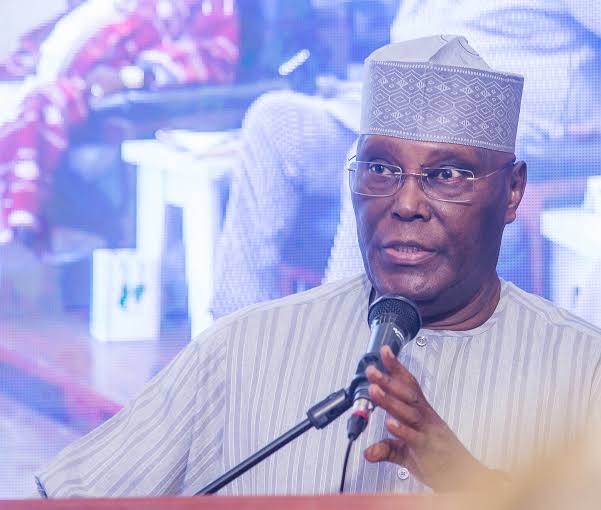
    Recent remarks by HE Atiku Abubakar in his interview with Charles Aniagolu on Arise Television have once again brought to the fore a critical issue in Nigeria’s political evolution: the question of principle, consistency and credibility in leadership.

    In that interview, Atiku made reference to the 2005 National Political Reform Conference, where he personally led the opposition that scuttled Chief Alex Ekwueme’s proposal for rotational presidency. He also recalled his 2017 declaration, made during Ekwueme’s burial, in which he expressed regret for that opposition. On the surface, this appears to be a moment of candour, even of growth.

    But it is only a partial disclosure.

    What remains unacknowledged is that the rotational principle, which emerged from Ekwueme’s minority report, has since evolved into perhaps the most stabilising political mechanism in Nigeria’s fragile federation. Imperfect as it may be, it has served as a necessary balancing tool in managing the country’s diversity and competing regional expectations.

    The irony, therefore, is striking.

    When Atiku had the opportunity to demonstrate his professed change of heart in 2023, by respecting what was widely regarded as the South’s turn, he did not. Now, as the 2027 cycle approaches, his posture and political signals suggest no clear departure from that earlier position. This disconnect between stated belief and political action raises legitimate concerns.

    More troubling is the suggestion that he would entrench rotational presidency in the constitution if elected President. Such a proposition invites scrutiny. If a principle was not upheld when it required personal sacrifice, how persuasive is the promise to institutionalise it later? It risks being interpreted not as conviction, but as convenience.

    Nigerians have not forgotten the consequences of the 2023 decision. The internal dislocation within the Peoples Democratic Party(PDP) did not occur in a vacuum. It was the outcome of choices, and those choices continue to shape perceptions of leadership intent. It is therefore not entirely unfair that some critics question whether personal ambition has too often taken precedence over collective stability.

    This concern extends beyond rotation.

    In 2019, Atiku positioned restructuring at the centre of his presidential campaign, presenting it as a defining solution to Nigeria’s structural challenges. Yet, in his recent response to a question on the same issue, he appeared to downplay its relevance, suggesting it was no longer a dominant concern within the polity.

    That answer was as revealing as it was unsettling.

    What changed? What fundamental shift has occurred in Nigeria between 2019 and now to render restructuring less urgent? The underlying issues, federal imbalance, fiscal centralisation and uneven development, remain as pronounced as ever. If anything, they have deepened.

    This apparent shift raises a broader question about consistency. Leadership demands not only ideas, but fidelity to those ideas, especially when they are presented as solutions to national challenges. When positions appear to fluctuate with the tides of political convenience, confidence is eroded.

    Atiku’s long political journey, stretching back to the early 1990s, is often cited as evidence of experience. And experience, undeniably, matters. But experience must translate into depth, clarity of thought and a coherence that reassures rather than unsettles.

    A leader, particularly one who seeks the highest office in the land, must be seen as anchored, not transactional. Transformational leadership requires steadiness of purpose, alignment between word and deed, and a willingness to act in accordance with professed principles, even when inconvenient.

    At present, there appears to be a gap between those expectations and observable conduct.

    The risk is not merely political. It is structural. When leadership choices present what seems like a false binary, where outcomes appear uncertain regardless of direction, it creates hesitation within the electorate. In such circumstances, even the prospect of change may fail to inspire confidence.

    Nigeria deserves clarity. It deserves consistency. And above all, it deserves leadership that does not leave its citizens questioning whether principles are enduring convictions or shifting positions.

    Since the African Democratic Congress(ADC) will be confronting a formidable ruling party in 2027, such glaring openings for a devastating political blow should be avoided by the coalition. This is why the most statesmanlike and ultimately most respectable path available to Atiku Abubakar may well be the hero’s option of graciously stepping aside.

    Isaac Edoboh writes from Lagos State, South West, Nigeria.

  • Rangers International Football Club: A Legacy Beyond Football

    Rangers International Football Club: A Legacy Beyond Football

    Over the years, Rangers International Football Club has remained a formidable force in Nigerian football. Its story began in 1970, in the aftermath of the Nigerian Civil War, a period marked by immense loss of lives and property.

    At that defining moment, Rangers was more than just a football club to ndi Igbo; it became a symbol of unity, resilience, and hope. For a people rebuilding their lives with as little as twenty pounds, Rangers stood as an unbreakable cord that bound them together. It was the last hope of the average Igbo man, a child of circumstance, born amidst hardship and struggle, yet growing to bring comfort, pride, and identity to many.

    A NEW ADMINISTRATION WITH PASSION

    Today, Rangers continues to embody the spirit of excellence and professionalism upon which it was founded. Under the leadership of Amobi Ezeaku (Esq.), the club has witnessed remarkable progress and success.

    Rangers GM, Amobi Ezeaku; and Club Coach, Fidelis Ilechukwu

    In 2024, just months after the inauguration of the new administration, Rangers clinched their eighth Nigeria Professional Football League title, ending a nine-year wait for league glory.

    In a bold and progressive move, the administration also established the Rangers International Women Football Club, reinforcing the belief that women are a powerful force in football. The team quickly made its mark by securing a place in the Nigeria Women Football League Championship.

    Additionally, the launch of the Rangers Academy has created a structured pathway for young talents aged 13 to 17. With over 300 players currently enrolled, the academy stands as a testament to the club’s commitment to the future of football.

    GOVERNOR PETER NDUBUISI MBAH: THE PACESETTER

    Upon assuming office in 2023, His Excellency, Dr.Barr.Peter Ndubuisi Mbah made a bold promise to restore Rangers to its glory days, and he has been instrumental in the club’s resurgence.

    Gov. Peter Mbah of Enugu State
    H.E Peter Mbah of Enugu State

    The recent successes of the club reflect his visionary leadership and unwavering commitment to youth and sports development. His continued support has provided the foundation for Rangers’ renewed dominance and progress.

    We deeply appreciate his immense contributions and pray for continued wisdom and prosperity as he leads Enugu State to greater heights.

    A MESSAGE TO OUR TWELFTH MAN.

    To our passionate fans across the world, our heartbeat and our strength, we say thank you.

    Your unwavering support, from the electrifying cheers in the stands to your constant engagement on social media, means everything to us. You are an integral part of this journey.

    As we push forward in our quest for a ninth NPFL title, we remind you that your role remains vital. We did it before, and together, we can do it again.

    The trophy belongs in the Coal City, and with your support, it will return home.

    God bless Enugu State.

    God bless Governor Peter Ndubuisi Mbah.

    God bless Rangers International Football Club.

    God bless our passionate fans all over the world.

    Never Say Die!

  • Burden of Restraint: Why Atiku Abubakar’s Ambition Must Bow to History

    Burden of Restraint: Why Atiku Abubakar’s Ambition Must Bow to History

    By Caleb Johnson 

    In politics, as in nation-building, there comes a moment when ambition must yield to wisdom, and aspiration must bow to history. That moment, for HE Atiku Abubakar, is now.

    No serious observer of Nigeria’s democratic journey can deny Atiku’s enduring relevance. He has remained a central figure in the nation’s political evolution, offering himself repeatedly for service and shaping conversations across decades. Yet, it is precisely because of this stature that the expectations upon him must be higher. Leadership is not only defined by the willingness to contest power, but also by the discernment to step aside when the greater good demands it.

    Nigeria’s fragile equilibrium has long rested on an unwritten but widely respected principle: rotation. It is not perfect, but it has served as a stabilising mechanism in a diverse and often tense federation. In 2015 and 2019, the North took its turn. In 2023, the expectation, widely acknowledged across political lines, was that power would shift to the South. The decision to contest against that expectation contributed, in no small measure, to the internal dislocation that weakened the Peoples Democratic Party and altered the course of that election.

    Atiku’s persistent return to the presidential contest, particularly at moments when the pendulum had clearly shifted away from his zone, now weighs heavily on public perception. Having vied in 2015 and 2019 during the North’s turn, and again in 2023 when the South’s turn was broadly acknowledged, a renewed bid in 2027 risks being seen not as resilience, but as disregard for a delicate national balance. In politics, perception is often reality. Many Nigerians, especially in the South, may interpret this pattern as an unwillingness to yield space when equity demands it. That sentiment, if allowed to harden, could significantly diminish the acceptability of his candidacy and, by extension, impose a heavy electoral burden on the African Democratic Congress.

    Now, as 2027 approaches, the same question returns with greater urgency. With the South still within its expected turn, another presidential bid by Atiku risks reinforcing a perception of imbalance that the polity can ill afford. Politics, at its most effective, is not merely about legality. It is about legitimacy. And legitimacy, in a country such as ours, is deeply tied to a sense of fairness.

    There is also the matter of strategy. The opposition stands at a delicate crossroads, seeking to build a credible alternative capable of challenging the incumbent, President Bola Ahmed Tinubu. That task requires not only unity, but careful calibration of public sentiment. Many Nigerians, particularly in the South, may interpret another Atiku candidacy as a continuation of disregard for their turn. In such a scenario, the unintended consequence may be to strengthen the very incumbency the opposition seeks to dislodge.

    Within the emerging coalition around the ADC, these concerns are even more pronounced. With key leadership structures already reflecting a northern tilt, introducing another northern presidential candidacy risks reproducing the same imbalance that proved costly in 2023. A coalition, by its very nature, must be built on trust, equity and visible accommodation. Without these, it becomes vulnerable before it even begins.

    There are, too, unresolved questions from the past. Atiku’s role in the privatisation era remains a subject of political contestation, one that an incumbent government would undoubtedly exploit in a high-stakes campaign. Elections are not won on history alone, but neither are they insulated from it. In a fiercely competitive environment, every vulnerability matters.

    Yet, this is not an argument against Atiku Abubakar. It is an appeal to his legacy.

    There are moments when the most powerful statement a leader can make is not in stepping forward, but in stepping back. In choosing restraint, he would not diminish his stature. He would elevate it. He would signal a commitment to balance over ambition, to nation over self, and to the long-term stability of the republic over immediate political gain.

    Such a decision would not go unnoticed. It would resonate across regions, restore confidence among sceptical constituencies, and strengthen the moral foundation of any coalition seeking to offer Nigerians a credible alternative. More importantly, it would place Atiku firmly in the ranks of those who understood that leadership is as much about sacrifice as it is about pursuit.

    Nigeria stands at a critical juncture. The choices made today will shape not only the outcome of the next election, but the trajectory of the nation itself. In such times, history is kinder to those who act with foresight.

    The call, therefore, is simple, though not easy.

    For the sake of balance.
    For the sake of strategy.
    For the sake of nation-building.

    It may well be time for Atiku Abubakar to step aside.

    Caleb Johnson writes from Abuja.

  • Giving Back to Society, TheNiche Way

    Giving Back to Society, TheNiche Way

    By Ikechukwu Amaechi

    Seven days from today, Thursday, April 23, to be precise, Nigerians who value the role of intellection in national development will gather, once again, at the Nigerian Institute of International Affairs (NIIA) for the 2026 edition of TheNiche Lecture. This will be the fifth in the series and typically, it promises to be another harvest of ideas with a rather eclectic theme: Governing the economy: Choices, Trade-offs, and National Priorities.

    Nigerians are thrilled. But the buzz is not just about the theme. It has to do majorly with the dramatis personae – Dr Alex Otti – guest speaker; HRH Muhammadu Sanusi II, Emir of Kano – chairman; and Igwe Nnaemeka Alfred Achebe (Agbogidi), Obi of Onitsha, royal father of the day – who are unarguably some of the country’s sharpest minds with exceptional mental acuity in public finance.

    Before becoming Abia governor on May 29, 2023, Otti, a renowned banker, was the Managing Director of Diamond Bank Plc., a major Nigerian retail bank that merged with Access Bank in 2019 to form a larger entity.

    Similarly, Emir Sanusi was the Managing Director of First Bank of Nigeria – the country’s oldest bank, and one of Africa’s largest financial institutions. He was also Governor of the Central Bank of Nigeria (CBN).

    Agbogidi, who bagged a Bachelor of Science degree in Chemistry from Stanford University and a Master’s in Business Administration from Columbia University, had a long and distinguished career with Shell Petroleum Company. So valued was he that even after his retirement in 1995, the oil giant seconded him to Shell International in London, where he served as “ambassador at large” for Shell Nigeria, a position he occupied until his emergence as the 21st Obi of Onitsha in May 2002. He was also chairman of Diamond Bank Plc.

    The fervent passion of the trio for Nigeria’s economic renaissance makes them kindred spirits. And getting all three, particularly Otti, a man not given to needless showboating despite his giant leadership strides in Abia, to play pivotal roles in the 2026 lecture is no mean feat. But we are not called TheNiche for nothing. We always go for the best minds when looking for solutions to Nigeria’s myriad problems.

    When the newspaper debuted in April 2014, the editorial policy captured its mission: “TheNiche will always anchor its position on the need for social justice, fairness and respect for human and communal rights … will be uncompromising against any form of discrimination and subjugation either by tribe, gender or religion.”

    In pursuit of these ideals, the organisation in 2018, set up a foundation – TheNiche Foundation for Development Journalism – a vehicle to drive the annual lectures and the weekly Young Entrepreneur page, our very idea of an ideal Corporate Social Responsibility (CSR).

    The maiden lecture with the theme, “Development reporting and hysteria journalism in Nigeria,” was delivered by Professor Kingsley Moghalu, journalist, diplomat, erudite scholar and author, former Deputy Governor of the Central Bank of Nigeria (CBN), and presidential candidate of the Young Progressives Party (YPP) in the 2019 elections, while Remi Sonaiya, another prolific author, Professor of French Language and Applied Linguistics, Obafemi Awolowo University (OAU), and only female presidential candidate in the 2015 general election under the platform of the KOWA Party, was the chairperson.

    The choice of the lecture theme which held on April 20, 2018, was informed by the hysteria that preceded the 2019 elections and the need to lower the rhetoric.

    The focus shifted to the economy, and rightly so, after the election was won by the incumbent, President Muhammadu Buhari. TheNiche clinically analysed that the economy was heading for the rocks and there was an urgent need to make it the dominant issue of Buhari’s second term.

    So, the October 15, 2019 lecture aptly themed, “Business and accountable governance: The obligations of leadership,” was delivered by Nigeria’s foremost interdisciplinary scholar, Prof Anya O. Anya, under the chairmanship of late Dr Christopher Kolade, diplomat, academic and distinguished broadcaster.

    On Thursday, September 8, 2022, former Lagos State Governor and then Minister of Works and Housing, Mr Babatunde Raji Fashola, delivered the third edition of the lecture at the MUSON Centre, Onikan Lagos with the theme, “2023 elections and the future of Nigeria’s democracy.”

    We had envisaged then that the 2023 elections would be consequential because Nigeria was at a crossroads, haunted by demons many thought had hitherto been exorcised. But seven years of the Muhammadu Buhari presidency had brought out the worst in Nigerians as the late Afrobeat legend, Fela Anikulapo-Kuti, noted in his epic song, “Beast of No Nation.”

    So, on the eve of that pivotal election, TheNiche, once again, shifted the focus to politics and the country’s leadership recruitment process and saddled Fashola, a learned silk, with the responsibility while Alhaji Tanko Yakasai, veteran First Republic politician, human rights activist, former Liaison Officer to late President Shehu Shagari and founding member of the Arewa Consultative Forum (ACF) chaired the event.

    The fourth edition, which held on Thursday, October 26, 2023 at the NIIA followed the same pattern. Nigeria was at a crossroads, no doubt, as it still remains today, teetering on the brink. All the indices of human development, without any exception, were pointing south at the end of Buhari’s disastrous eight-year tour of duty.

    While most nations stride and move to greater heights, Nigeria strides and slips. So, why is Nigeria endlessly striding and sliding? That was the theme of the 2023 lecture delivered by Rotimi Amaechi, erstwhile Minister of Transportation and former governor of Rivers State. The decision to saddle him with that onerous task was deliberate because to borrow a cliché, he knows where all the bodies are buried by virtue of the positions he has held since 1999.

    A two-term Speaker of the Rivers State House of Assembly, he also became a two-term governor of the oil-rich state, and was twice the Director-General of the Buhari Campaign Organisation and Minister of Transportation. He also aspired for the presidency in 2023.

    But because we also acknowledged the fact that Nigeria didn’t start striding and sliding in 1999, the lecture was chaired by Dr Uma Eleazu, chairman of the Board of Trustees of Anya-Ndi-Igbo, a non-partisan, socio-political and economic development-oriented organisation, committed to equity, peace, unity, justice and progress of Nigeria, whose magnum opus, “Nigeria, As I See It: Reflections on the Challenge of Leadership,” a 418-page book is a most authoritative commentary on Nigeria.

    Yet, this year’s lecture promises to be different in significant ways. As Nigeria goes into another silly season of politics, both the electorate and the politicians jostling for power need to be reminded, to use the phrase of James Carville, President Bill Clinton’s 1992 presidential campaign strategist, that ‘it is the economy, stupid.’

    A lot is really at stake, but it all boils down to an economy that remains distressed, all protestations to the contrary, notwithstanding.

    There is no better choice to deal with the issues than Otti, who, not only has cognate experience but also demystified governance in less than three years with a stellar performance many were beginning to think was impossible in Nigeria due to past and present leadership failures.

    The lecture theme is broad and will enable him speak to a lot of contemporary economic issues with respect to fiscal discipline and the political will to make tough calls. It will also give him enough room to deal with the broader subject of national development as it relates to short, medium and long term multi-sectoral priorities.

    As all roads lead to the NIIA on April 23, Governor Otti is excited. So are we, knowing full well that through these lectures, we are giving back to the society, TheNiche way.

  • Akpabio’s Reckless Remarks – By Abdul Mahmud

    Akpabio’s Reckless Remarks – By Abdul Mahmud

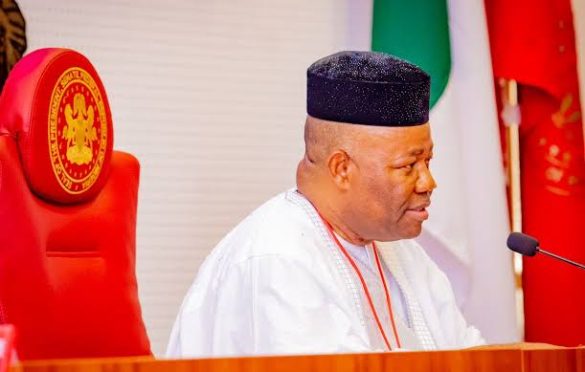
    “Insecurity is increasing because election is coming. As soon as the election is over, watch out, the first two weeks you’ll not hear a single bomb blast”. -Godswill Akpabio, Senate President.

    When the Senate President, Godswill Akpabio, spoke about insecurity rising because elections are approaching, and casually suggested that violence would disappear within “the first two weeks” after the 2027 polls, he did more than misspeak. He revealed something deeply troubling about the mindset at the highest levels of governance in Nigeria. Words matter, especially when they come from those entrusted with power. They shape public understanding, signal intent, and often betray the moral compass of those who utter them.

    What are Nigerians to make of such a statement?

    That the killings, the bombings, and the abductions that have become the daily cycle of national life are somehow seasonal? That bloodshed obeys the electoral calendar? That those who die are collateral in a political game whose rules are known only to Akpabio and his friends in power? The remark is reckless not simply because it is insensitive, but because it hints at knowledge that no ruler should possess without immediate and decisive action. If insecurity is increasing because elections are coming, as Akpabio suggests, then the government is admitting to an awareness of orchestrated violence. That admission is damning. It raises a question that cuts to the bone of governance. If the state knows that violence is politically motivated and anticipates its decline after elections, why is it not acting decisively to prevent it now? Why are security agencies not deployed with urgency to disrupt whatever networks are allegedly behind this cyclical bloodletting?

    Silence or inaction in the face of such knowledge is complicity by another name.

    There is another, equally disturbing interpretation.

    The statement not only reflects a cynical attempt to normalise violence as an inevitable feature of Nigeria’s political landscape, but also attempts at reducing the deaths of citizens to something to be endured as part of the electoral process. This is the language of moral exhaustion, the rhetoric of a bandit ruling class that has grown too comfortable with the sufferings of the people it governs. It speaks to a dangerous detachment, and the willingness to rationalise tragedy rather than confront it.

    Akpabio’s defenders might argue that he was speaking off the cuff, that his words were taken out of context, or that he merely sought to make a point about the politicisation of insecurity. Such defences collapse under scrutiny. The statement is clear, direct, and unambiguous. It was not a slip of the tongue or a gaffe. It was a reflection of his worldview. Public officials do not operate in a vacuum. Their words carry the weight of their office, and when those words trivialise human life, they erode the very foundation of public trust.

    Nigeria is not short of examples where careless statements from those in authority have deepened public cynicism. What makes this instance particularly egregious is the context. The country is grappling with a security crisis of staggering proportions. Communities are being wiped out. Senior military officers are being slaughtered. Students in captivity are meted cruelty of unimaginable bestiality in front of cameras, in order to extract ransom. Families are displaced. Fear has become the companion for millions. In such a moment, citizens look to their leaders for reassurance, for empathy, and for the sense that those in power understand the gravity of the situation. What they received instead was a remark that appears to reduce their sufferings to piteous political calculation.

    Leadership demands more than technical competence. It requires moral clarity, and the capacity to recognise the human cost of policy failures and to respond with humility and urgency. Akpabio’s comment reflects a deficit in both. It suggests a mindset that views insecurity through the narrow lens of political advantage rather than as a humanitarian crisis that demands immediate attention.

    This is not merely a failure of communication. It is a failure of leadership.

    The broader implication of such remarks is the normalisation of impunity. When those at the top speak carelessly about violence, it sends signals down the chain of command. It tells security agencies that accountability is optional. It tells perpetrators that their actions may be tolerated, even if not openly endorsed. It tells victims that their pain is secondary to political considerations. This is how states slide into deeper crises, not through dramatic collapses, but through the steady erosion of standards and expectations.

    Akpabio occupies one of the highest offices in the land. The Senate Presidency is not a ceremonial position. It is central to the functioning of Nigeria’s democracy. It carries with it the responsibility to uphold the dignity of the institution and to act as a voice of reason in times of crisis. That responsibility was abandoned in the moment he chose to make light of a grave national tragedy. Public office is a trust, not a platform for flippant commentary. There is also a deeper, more unsettling question raised by his words. If violence can be predicted to rise and fall with electoral cycles, what does that say about the integrity of the political system itself? It suggests a system in which power is pursued at all costs, where the lives of citizens are expendable in the quest for electoral victory. This is a betrayal of the very idea of democracy, which is meant to be a peaceful contest of ideas, not of bloodshed.

    Nigerians deserve better.

    They deserve leaders who speak with care, who understand the weight of their words, and who place the safety and dignity of citizens above political expediency. They deserve a government that treats insecurity as an urgent priority, not as a phenomenon to be explained away with casual remarks. They deserve accountability, not excuses. Akpabio’s statement should not be allowed to pass without consequence. It demands a response, not in the form of defensive clarifications, but in concrete actions that demonstrate a commitment to addressing the security crisis. It also demands a broader reflection on the quality of leadership in the country. How did Nigeria arrive at a point where such remarks can be made so casually by those in power? What does this say about the standards to which public officials are held?

    The answer lies in the culture of impunity that has taken root in our country today. It is a culture that tolerates mediocrity, excuses failure, and shields those in authority from the consequences of their actions. Breaking this culture requires more than outrage. It requires sustained demand for accountability, and the refusal to accept the normalisation of the unacceptable. Akpabio’s reckless remarks have done more than provoke anger. They have exposed a troubling mindset at the heart of governance. They have reminded Nigerians of the distance between those who wield power and those who bear its consequences. Closing that distance is the challenge of our time. It begins with insisting that those who lead must do so with responsibility, empathy, and a clear understanding that every word they speak carries the weight of the lives they are sworn to protect.

  • SPONSORED: Rangers Coach Fidelis Ilechukwu Embodies a Rare Blend of Technical Depth

    SPONSORED: Rangers Coach Fidelis Ilechukwu Embodies a Rare Blend of Technical Depth

    Coach Fidelis Ilechukwu has steadily carved a reputation for himself as one of Nigeria’s most astute and hardworking football tacticians, and his current dual role speaks volumes about his growing influence in the game.

    Serving simultaneously as an Assistant Coach of the Super Eagles and the Head Coach of Rangers International of Enugu, Ilechukwu embodies a rare blend of technical depth, resilience, and managerial intelligence.

    Handling responsibilities at both the national and club levels is no easy task. The demands are intense, the expectations are high, and the margin for error is often slim. Yet, Ilechukwu has shown remarkable composure in navigating these challenges. With the Super Eagles, he contributes to shaping the tactical direction of one of Africa’s most celebrated national teams, working alongside top professionals and managing elite players on the international stage.

    At the same time, his role at Rangers International places him right in the heart of the Nigeria Premier Football League (NPFL), where competition is fierce and consistency is key. Under his leadership, Rangers have emerged as strong title contenders, going head-to-head with formidable sides like Rivers United in the race for supremacy. His ability to maintain focus, discipline, and performance across both fronts highlights not just his technical knowledge, but also his mental strength and organizational skill.

    What makes Ilechukwu’s journey even more compelling is his attention to detail and his ability to maximize the potential of his players. Known for his tactical flexibility and motivational approach, he has built teams that are difficult to break down, yet effective going forward. His philosophy reflects modern football principles while still adapting to the unique challenges of the Nigerian league.

    Balancing national assignments with club duties requires more than just knowledge of the game—it demands leadership, time management, and an unwavering commitment to excellence. In Fidelis Ilechukwu, Nigerian football has a coach who continues to prove that with determination and technical ability, it is possible to excel at the highest levels simultaneously.

    As Rangers push for NPFL glory and the Super Eagles continue their quest for continental and global success, Ilechukwu remains a key figure whose impact is both visible and deeply respected. His story is not just about holding two positions—it is about mastering them.

  • No Celebration Should End in Death

    No Celebration Should End in Death

    -By Abdul Mahmud

    Grief arrived quietly in Maiduguri, but it has not left. It lingers in the home of Dr Jibril Khalil, the Director of the Heart Center and Head of Cardiac Surgery at the University of Maiduguri Teaching Hospital (UMTH), where his daughter should have been planning her future, not being laid to rest. It sits with family, neighbours, colleagues, and all who now must carry the weight of a life cut short by a stray bullet. Not on the battlefield. Inside her home that should have been a safe place. This is the cruelty of indiscriminate shooting during celebrations. It kills without warning. And yet, it kills all the same.

    There is a quiet lie that has settled into parts of our country. The lie that firing into the air during weddings, festivals, and moments of joy is harmless. The lie that it is a useless culture. The lie that it is tradition. These lies have taken root over time, repeated often enough to feel normal. But normal does not mean anything close to normal; it doesn’t mean right. And the familiar does not in anyway mean safe. A bullet fired into the air must return to the earth. Gravity has no exceptions for celebration. When a bullet falls, it does not ask who is beneath it. It does not distinguish between a child at home, a mother in her kitchen, or a passerby on the street. It simply descends, carrying death in its path.

    Writers across time have warned us about the tragic consequences of reckless acts, even when they are not born of malice. In William Shakespeare’s Romeo and Juliet, joy and love are undone by impulsive violence and needless conflict. The streets of Verona become the unfortunate stage where pride and carelessness cost lives. What begins as festivity and youthful passion ends in grief that engulfs families and the community. In Chronicle of a Death Foretold by Gabriel Garcia Marquez, a man dies not because no one knew, but because everyone assumed someone else would act. The tragedy unfolds in slow motion, shaped by collective indifference and normalised behaviour. That story feels uncomfortably close to our own reality. We know the dangers of celebratory gunfire. We have seen the headlines. We have mourned before, yet the practice endures, numbing us as we inure to tragedy, as though its next victim could never be one of our own.

    But now she was. A daughter. A human being with a name, a face, a voice, a future.

    There is something particularly painful about a death like this. It lacks even the harsh logic of conflict or confrontation. There is no argument, no crime, no warning. Just a sudden end. Families are left not only with grief, but with questions that have no answers. Why here? Why now? Why us?

    And beneath those questions lies the deeper anger. This didn’t have to happen.

    The proliferation of unlicensed firearms has made tragedies like this more likely. Weapons circulate beyond the control of the law. They find their way into the hands of those who have neither the training nor the discipline to handle them responsibly. A gun, in the wrong hands, becomes not just a tool of violence, but an instrument of death.

    A country that tolerates unregulated access to firearms invites disaster into homes. Every unlicensed weapon is a risk waiting to unfold. Every careless discharge is a reminder that control has slipped away. There must be a reckoning with this reality. Laws exist, but enforcement remains weak. Awareness exists, but compliance is poor. And so, the cycle continues. To break this cycle, we must begin with honesty. Indiscriminate shooting is not culture. It is not religion. It is not celebration. It is recklessness. It is negligence. It is death waiting to snatch a life. Our country must act decisively and without delay. Citizens must reject this practice openly. Silence gives it space to survive. Condemnation can begin to push it out. Law enforcement authorities must act with firmness. There should be no tolerance for celebratory gunfire. Arrests must follow violations. Prosecutions must be visible. Consequences must be real. Without accountability, warnings become empty words.

    At the same time, there must be a broader effort to control the spread of illegal arms. Licensing systems must be strengthened. Security agencies must intensify efforts to recover unregistered weapons. The presence of a firearm should never be casual. It should always carry weight, responsibility, and scrutiny.

    Beyond policy and enforcement, there is that moral question that we must answer. What kind of country do we want to build? One where joy carries the risk of death? Or one where celebration remains what it should be. Safe. Shared. Life affirming.

    The death of Dr Khalil’s daughter should not fade into another statistic. She must remain a name we remember, a story we tell, and the turning point we recognise. Because memory has power. Memory can shape behaviour. Memory can prevent repetition. Grief, when honoured properly, can become the singular force for change.

    There runs a fragile line between celebration and tragedy. We imagine it as distant, safely removed from our moments of joy; but it lies perilously close to us, crossed in the brief arc of a bullet that rises in reckless abandon and returns with fatal certainty. In that instant, laughter gives way to silence, and silence yields to mourning. What should have been memory becomes loss, and what began as festivity ends in grief that lingers long after the guns fall silent. No celebration should end in death. No family should gather in sorrow because another chose, in a moment of thoughtlessness, to send a bullet into the open sky. This quiet terror has taken root in our country for too long, fed by the easy presence of unlicensed firearms and the indulgence of a practice mistaken for harmless expression. To confront this danger demands more than words spoken in grief. It requires the steady resolve of all. A country that values life must defend it with intention.

    Maiduguri has mourned for years. It must now act, with clarity and courage, so that no more lives are surrendered to a moment’s folly, and no more homes are turned into places of grief by the fall of a single, senseless bullet.

    She sleeps well.

  • The Doom’s Day

    The Doom’s Day

    By C.V.C Ozoaniamalu

    Nwando had woken up and felt dizzy, dragging herself to the bathroom. A softness in her knees, as though her body had begun, without warning, to withdraw from her, to practice lifelessness.

    The tap in the bathroom ran unchecked. Steam rose from the heater in slow, deliberate spirals, climbing upward until it claimed the mirror entirely. Her reflection dissolved into a pale blur, a face without edges, without certainty. She did not reach out to wipe it clear. She was not sure she wanted to see what she had become, what this version of herself looked like.

    It had taken less than two hours. Less than two hours for everything to tilt. The apartment held its breath. Only two sounds remained: the steady rush of water and the clock’s thin, relentless ticking. She hated the clock at this moment. Each tick pressed against her skin, insisting on movement, on consequence. Time, it seemed, had refused to pause for her ruin. She should act. She knew this. But the thought refused to settle into action. It circled instead, heavy and persistent, returning always to the same place: The body in her bedroom. An adult man. Broad-shouldered. Still, lifeless and coiled in the pool of his own blood.

    The image came to her fully formed, in hours to come, newspapers’ headline shall read, bold and unforgiving: “A Young Woman Found with a Dead Man’s body in her Apartment.”

    She felt the shock move through her, sharp and cold, like swallowing water too chilled, the kind that freezes the chest before the mind can react.

    Who would believe her? I doubt anyone would. Except Belinkas shows up, only if she has not disappeared forever, leaving only her in this mess.

    _________________________

    She thought about her old self and when all these began. Perhaps it had begun long before tonight. Or perhaps tonight had only gathered all her careless choices and arranged them neatly into consequence.

    Three months. Three different relationships. It sounded, even to her, like the careless plot of a story she would once have judged.

    First, there was Mayowa, soft-faced, deliberate, his life already arranged into neat expectations. He worked at a Big Four advisory firm and spoke often of structure, of future, of family. With him came conditions disguised as culture: she must learn Yoruba, must cook the meals his mother approved of, must fit into a life that had no space for improvisation. He spoke as though love were an apprenticeship she had not yet qualified for.

    Then Emenike. Emenike did not ask; he took. His messages came uninvited and unashamed, images, instructions, demands dressed as desire. He wanted pictures of her body at odd hours of the day, wanted her to perform intimacy in stolen spaces, in public toilets, in hurried secrecy. When she obeyed, gifts followed. When she hesitated, silence. With him, everything was a transaction, even affection. And he would always send his first, naked pictures of himself- unreligious and uninvited.

    And then, unexpectedly, she met Belinkas. She met her at the gym, somewhere between routine and escape. Belinkas moved with an ease that unsettled her, spoke with a confidence that did not seek permission. They had talked only once, briefly, between gym lessons, but something lingered. A number exchanged. A thought she tried, unsuccessfully, to bury. Because this, this was not who she was. She had heard of people becoming lesbians but never thought it would be her, or at least, not who she had believed herself to be.

    And yet, she found herself thinking of Belinkas in quiet moments, replaying that single conversation, that steady gaze. Belinkas wanted a relationship with her, a queer openness and visibility, which she herself did not find easy. By the weekend, Belinkas had stopped answering her calls because she had sworn not to be hidden.

    ____________________________

    So the Monday following the weekend after her fall-out with Belinkas came with its own quiet cruelty. At the office, the air felt wrong before anything was said. People gathered in small clusters, their voices lowered, their faces arranged into careful neutrality.

    Musa, the boy who had joined them and had been placed under her tutor and supervision, was at her desk, folded into himself. “What happened?” she asked. “Did someone die?”

    He shook his head. “Have you checked your email?” Something in his voice made her chest tighten. She logged in. Or tried to. Her password failed.

    Again. She turned to him. “Is the system down?”

    He hesitated too long. “There’s… an issue,” he said finally. “With contract staff. You should go to HR.”

    Contract staff. She looked around, and most of the contract staff were not around.

    The realization came quietly, but it landed hard. At HR, the truth was already waiting. An email had been sent on Friday, which she missed. Termination of contract. Effective immediately.

    No explanation that mattered. No appeal that would be heard. Just instructions: return your tools, submit your ID, and sign here. And just like that, her name was removed. Her presence was erased.

    Outside, the world continued as though nothing had shifted. When her phone buzzed, it was either Obialor, her younger brother, who was studying Economics at the University of Uyo, asking for money, or it was Musa’s text offering sympathy, which she could not bear to read. She opened neither.

    At her apartment, in the downturn of Alimosho, inelegant, noisy, heated yet interesting, she felt withdrawn; the silence in her world felt heavier. She lay on the bed and cried, but even that felt controlled, as though she were careful not to break something further. The tears came quietly, soaking into the pillow, disappearing without a witness.

    She called Belinkas on Thursday. No answer. She sent a message: I need you now. I’m losing it.

    Hours passed. Nothing.

    Then she called Emenike. He picked the first ring. “I’m in a meeting,” he said. “I’ll come.”

    There was something in his tone, joyful, forward-looking, and amusement, perhaps that she ignored.

    At 9:59 PM, just a day before Good Friday. She heard a gentle knock on her door. She dragged herself towards the door, her feet shuffling, the type that would have triggered her grandmother to call her “Ngana”, unrepentant laziness. She opened the door expecting to see Emenike, but found another. Belinkas.

    For a moment, the world rearranged itself into something almost merciful. She pulled her in, held her, let the tears come without restraint this time. There were no questions, no explanations. Just closeness. Heat. Urgency.

    They kissed like people trying to outrun something. The door remained slightly open. Neither of them noticed. Without words or discussions, emotions tightened, and unaware of the world around them, they let loose their clothes.

    Until the voice came. Male. Calm. Too calm. It was then they knew they fucked up.

    “Evil, alu. The world must see this,” Emenike said, “On second thought, you both can make me feel good and have me delete this video. The faster the better.”

    He stood there, phone raised, recording. Time fractured.

    Nwando imagined, with a sudden tightening in her chest, what her world would become if that video ever went viral. Her mother, the respected leader of the Catholic Women in Mushin, and even more formidable in their hometown of Abatete, would crumble under the weight of gossip. And her father, who had once mocked Mr. Okolie at a full Umunna meeting for “raising a boy who turned out gay,” would see his own hypocrisy laid bare. She begged then, words tripping over themselves, thin and useless things that dissolved in the thickening air.

    Belinkas moved first, fast and furious, lunging at Emenike, her breast flat and body structured like a man. The phone fell from Emenike as both held each other down, the room erupted into movement, into noise, into something she could no longer follow.

    She reached for the phone. Her hands were shaking, and then she heard the noise, as if a mansion had collapsed on her. A sharp, blinding impact. Darkness.

    _____________________

    Now she stood in the bathroom, the tap still running. And in the bedroom, Emenike lay in a widening pool of blood. Belinkas was gone. The phone was gone.

    The room felt smaller now, closing in with each passing second. How do you explain this? How do you survive it? What if she had let Emenike go and face the lesser evil?

    A sound cut through the silence. A phone is ringing. Not hers.

    She followed it, each step careful, as though the floor itself might betray her. Emenike’s phone lay in the corner, its screen cracked like a splintered mirror, the casing scratched and smeared. And then she saw something far worse, something that hollowed her out instantly.

    Belinkas. Pale. Naked. Motionless. Her body sprawled in her own pool of blood, already cooling into a dark shine on the floor. Still. Without pulse.

    The phone rang again. Stopped. A message appeared almost immediately. She leaned in, breath trembling. The sender was saved as Obikwelu, and the message read:

    “My guyyyyy, you don finish with the babe, I don dey road dey come that side, make we enter club.”

    Her breath snagged in her throat. He was coming. Now.

    And suddenly the ticking clock no longer drifted in the background like a faraway thing. It beat loud and urgent, unmistakable.

    A countdown.

  • Iran-Israel-US-Gulf Conflict: When War Hits Your Wallet

    Iran-Israel-US-Gulf Conflict: When War Hits Your Wallet

    …How the Iran-Israel-US-Gulf Conflict Could Shake Nigeria’s Economy, and Why Africa May Pay the Hidden Price

    By Ikenna Igwe

    War usually feels distant until it shows up in your fuel bill, your transport fare, the price of bread, or the cost of fertilizer on a farm hundreds of miles away.

    That is why the conflict involving Iran, Israel, the United States, and key Gulf states matters far beyond the Middle East. For Nigeria and much of Africa, this is not just a geopolitical drama; it is an economic shock moving through oil markets, shipping routes, fertilizer supply, food systems, and inflation. The IMF says the conflict is already pushing up energy prices and increasing the risk of weaker growth and higher inflation, while the WTO now expects world trade growth to slow to 1.9% in 2026, with the war posing a further downside risk.

    The most dangerous part of this crisis is where it is happening. The Strait of Hormuz is one of the world’s most important economic chokepoints, carrying major volumes of oil, gas, and fertilizer. When tension rises there, the shock does not stay in the Gulf; it spreads quickly into freight costs, import prices, energy bills, and agricultural inputs. UNCTAD has warned that disruptions around Hormuz threaten vulnerable economies because this route is central not only to fuel but also to fertilizer flows that support food production across the developing world.

    At first glance, some people will say this should help Nigeria. Oil prices rise, so an oil producer should benefit. That logic is tempting but incomplete. Yes, stronger crude prices can improve export earnings, support government revenue, and strengthen market sentiment. But Nigeria is not insulated from global energy shocks. It still feels the pain of more expensive imported fuel, diesel, cooking gas, transport, and fertilizer. Reports from local news outlets like the Guardian show that price hikes are already being felt on the streets.

    The paradox at the heart of the Nigerian economy and reality is that a country can earn more from oil exports and still become poorer through inflation.

    And inflation is where this war becomes personal. Once oil and gas costs rise, everything else starts moving with them. Haulage gets dearer. Food distribution costs climb. Manufacturers face higher energy bills. Farmers pay more for fertilizer. Importers face higher shipping and insurance charges. The IMF has warned that if energy prices stay elevated, global inflation could rise further while output slows. For African economies already struggling with weak currencies, tight fiscal space, and high living costs, that is a serious threat.

    But perhaps the most overlooked risk is not oil; it is food.

    Reuters reports that the war is already threatening fertilizer shipments, with some prices up by 30% to 40%. That may sound like a technical market detail, but it has enormous consequences. Fertilizer shortages today can mean lower yields tomorrow, and lower yields mean higher food prices after that. In much of Africa, where millions of households already spend a large share of income on food, this is how a distant war can become a domestic economic emergency.

    Africa’s wider problem is structural. The continent remains too exposed to shocks it does not create and cannot control: imported refined fuel, imported fertilizer, fragile shipping lanes, and global commodity prices shaped elsewhere. So, each time there is a geopolitical rupture, African economies are forced into the same position—watching a foreign conflict turn into local inflation. That is why this moment should be read not just as a crisis in the Gulf, but as another reminder that economic dependence is expensive.

    Nigeria still has an opportunity in all this, but only if it thinks beyond the usual excitement over higher oil prices and focuses on structural policies that will empower local infrastructure and security. Will the Nigerian government do it? We have to wait and see where its priorities lie. The real lesson of this conflict is not that oil is rising; it is that countries without economic resilience always pay more than they expect.

    The US and Israel will describe this war in terms of deterrence, strategy, regional influence, and security. Nigeria and much of Africa will experience it differently—as higher prices, tighter budgets, pressured central banks, and a more expensive daily life. For great powers, this is geopolitics. For ordinary Africans, it is economic survival.

    And that is what makes this conflict so important.

    The missiles may fall in the Gulf.

    But the bill will arrive in Lagos, Abuja, Accra, Nairobi, and beyond.


  • Playing the 1998 Abacha Power Game in 2026

    Playing the 1998 Abacha Power Game in 2026

    By Ikechukwu Amechi

    It was Jean-Baptiste Alphonse Karr, the French critic, journalist, and novelist, who, in 1849, coined what has become an enduring proverb: plus ça change, plus c’est la même chose – the more things change, the more they stay the same. In matters of governance and power in Nigeria – military or civilian – nothing can be truer.

    As editor of the Sunday Diet newspaper, I was in Maiduguri in April 1998, yes the selfsame Borno State capital that has become a killing field, to cover the national convention of the Grassroots Democratic Movement (GDM). Borno was the home state of Alhaji Gambo Lawan, the national chairman of the GDM, one of the five political associations that included the United Nigeria Congress Party (UNCP), Congress for National Consensus (CNC), Democratic Party of Nigeria (DPN) and the National Centre Party of Nigeria (NCPN), formally approved by the electoral umpire – National Election Commission of Nigeria (NECON) – in September 1996.

    The convention was pivotal because it had become obvious that the dark-goggled General Sani Abacha was hell-bent on replacing his starched khaki uniform with overflowing babaringa while staying put in Aso Rock. The only obstacle to his vaunting ambition was the left-leaning GDM, which along with the UNCP, had voted in February 1998 to reject Abacha as the consensus candidate. But soon after, the UNCP acquiesced leaving only the GDM in the rebellious dugout.

    To ensure that the GDM presented a candidate in the presidential poll scheduled for 1999, Alhaji Muhammadu Dikko Yusufu, a former Inspector-General of Police, enthusiast of the maverick Afrobeat legend, Fela Anikulapo-Kuti, who frequented African Shrine, and another leftist politician, Dr. Tunji Braithwaite, a lawyer who was called to the bar in 1961 and founded the Nigeria Advanced Party (NAP) in 1983, declared their interest to run for the presidential primaries. So, despite the party being a creation of the junta, Nigerians held out hope that its Maiduguri convention would produce an effective counterpoise to Abacha’s tyranny.

    Sadly, it didn’t. The convention was underway when the dreaded Major Hamza al-Mustapha, Abacha’s Chief Security Officer, arrived in Maiduguri. Even when he tactically stayed away from the convention ground, chaos erupted at the El-Kanemi Warriors Sports Centre convention ground while Braithwaite was making his speech. At the end, the April 18, 1998 GDM convention which many hoped would produce an alternative presidential candidate despite immense pressure from the ruling military council to make Abacha the sole candidate, ended in his high-pressure endorsement, having purportedly garnered 1,368 votes as against Yusufu’s 408 votes.

    A defiant M.D. Yusufu rejected the outcome of the convention, insisting that he was the GDM candidate and called on Abacha to resign. Expectedly, he paid for the temerity. On May 28, 1998, one month after the convention, his campaign offices were stormed and vandalized by political thugs, his supporters threatened and campaign posters torn. The charade ended when Abacha died on June 8, 1998 and a month later, his successor, General Abdulsalami Abubakar, chopped off the five leprous fingers from the country’s withering political hand.

    Sadly, 27 years after that inglorious political stunt, Nigeria is back to ground zero as the powers-that-be are hell-bent on ensuring that President Bola Tinubu emerges the sole presidential candidate in the 2027 election. Indeed, the more things change in Nigeria, the more they stay the same.

    The attempt to hollow out the opposition is too obvious. Yet, it is a settled fact that a robust and constructive opposition is a sine-qua-non for a functional democracy, without which transparency and accountability fly out of the governance window. The administration is conjuring every trick in its tool bag, in cahoots with a supine National Assembly and a genuflecting judiciary, to ensure that the man in Aso Rock goes into the 2027 polls as a consensus candidate of the motley crowd of 21 political parties. And the question is: If General Sani Abacha, a despot, was wary of opposition in 1998, why would a self-acclaimed democrat, be similarly afraid in 2027 after four years in office?

    In his article, “How Nigeria’s presidential election in 2027 could be un-contested,” Chidi Odinkalu, a human rights law professor at the Fletcher School of Law and Diplomacy, Tufts University, and former chairman of the National Human Rights Commission, decried the mischief inherent in the 2026 Electoral Act.

    “Among other things, the Act, which became law on February 19, requires all parties to maintain ‘a digital register of its members containing the name, sex, date of birth, address, state, local government, ward, polling unit, National Identification Number and photograph in both hard and soft copies,” he wrote.

    “The Act goes further: the parties must submit the register (presumably both hard and soft copies) to the INEC at least 21 days before party primaries, which must occur between April 23, and the end of May. In effect, the parties, which have until now not been required to have digital registers, must create them in less than two working months. The cost of failure to do this will be disqualification of their candidate(s) from the contest.”

    Of course, this law is legislative rascality taken too far. But the bigger worry is not even the legislature but the judiciary. Odinkalu noted that in 1979, the Federal Electoral Commission tried to disqualify Nnamdi Azikiwe of the Nigeria Peoples Party (NPP) and Aminu Kano of the Peoples’ Redemption Party (PRP) from the presidential election but the courts saved them. That was when the country’s judiciary was manned by conscientious and upright judges who took the reinforcement of the pristine ramparts of law as a sacred duty. Not anymore.

    Odinkalu worries that “there is ample room for pre-election judicial mischief in the 2026 Electoral Act, which the courts could easily use to preclude competitive candidates from the contest.” Because of the way Nigerian judges discharged their duties in 2023, he came to the inevitable conclusion: “It will be surprising if this is not deployed to block competitive candidates from the presidential election in January 2027. The irony is that the president whose claim to fame is his advocacy against military rule, could be the person who eventually appropriates the methods of Nigeria’s maximum military ruler to make himself the only competitive candidate in an un-contested election in 2027.”

    The augury is stark. Meanwhile, some Nigerians are busy applauding the “political sagacity” of those making a mess of this democracy.

    In recent weeks, all manner of brickbats have been hauled at Mr. Peter Obi, for leaving the Labour Party. He should have stayed back to rebuild the party, his detractors chorus. But they have not asked themselves why it took the exit of Obi for the storm in the party to quieten. Few days after Obi’s exit, the courts finally ruled that the Senator Nenadi Usman-led faction is the authentic Labour Party and INEC hurriedly accorded them recognition. Julius Abure, the former chairman, disappeared from the scene, likewise the other characters like Lamidi Apapa. Obi was the target, not the Labour Party. He knew it and left before it was too late. He was smarter. But they were never going to leave him alone as long as he nurses a presidential ambition.

    Is it any surprise that of the 21 registered political parties, only the three with the potential of producing candidates that can challenge Tinubu in 2027 – Labour Party, Peoples Democratic Party (PDP) and New Nigeria Peoples Party (NNPP) – were wracked by leadership crisis? Meanwhile, the All Progressives Grand Alliance (APGA) that posed no threat was left alone. Instructively, the Prof Chukwuma Soludo-led party has adopted Tinubu as a consensus candidate, just as the Labour Party and the Wike-led Peoples Democratic Party will do sooner than later. Now that Senator Musa Kwankwaso has left the NNPP, what is left of the party will be left alone, knowing full well that it has been pulled into the Tinubu consensus candidacy loop.

    Like the GDM of 1998, the only party holding out now is the African Democratic Congress (ADC). And the Tinubu sole-candidacy orchestra is doing what it knows best – destabilization of opposition parties. On Tuesday, the party accused the APC-led Federal Government of destabilization plots by claiming possession of a March 28 letter written by some Senior Advocates of Nigeria to pressure INEC Chairman, Prof. Joash Ojo Amupitan, to interfere in its leadership structure and “destabilise the only viable opposition party left in the country.” That plot was activated when one Nafiu Bala Gombe went to court to challenge the David Mark-led leadership.

    And in a classical case of the witch crying in the night and the baby dying in the morning, INEC, on Wednesday, said it will henceforth cease to accept correspondences from either the Mark-led faction or that of Rafiu Bala, following a purported review of the Court of Appeal judgment on March 12, 2026.

    The Commission also said it will no longer engage with either faction, or monitor any meetings, congresses, or conventions of the two groups until the matter at the Federal High Court is decided. It went further to announce that it would remove the name of David Mark from the INEC portal. The ADC National Convention, a culmination of the party’s nationwide congresses, which began with ward congresses on April 7, local government congresses on April 9, and state congresses on April 11, is scheduled to hold on April 14. Party primaries must hold between now and the end of May. For any of these activities to be accorded recognition, they must be monitored by INEC. Now, the umpire says it will be unavailable unless the courts rule. There is no indication that the courts will be in a hurry to adjudicate on the matter any time soon, thereby effectively shutting out ADC out of the 2027 elections.

    Of course, INEC bowed to pressure from the Tinubu government. This is too brazen, a shameless political dog whistle. And Nigerians who have the inalienable right to choose their leaders in a democracy must come together to resist the impunity. Tinubu is behaving like the Nza bird in Igbo folklore that overfed itself and challenged its Chi to a wrestling match. At the rate Amupitan is going, he will be worse than his discredited predecessor, Prof Mahmoud Yakubu.

    Why is Tinubu, the self-acclaimed political strategist whose party has 32 state governors and absolute majority in the National Assembly, afraid of competition? Why must he go into the 2027 election as a consensus candidate? Every election is a referendum on the incumbent and the ruling party. Why is Tinubu, the so-called architect of a new Nigeria reluctant to present his scorecard to the people for validation? Why does he want a second term on the platter of failure? And most importantly, why is the judiciary enabling this perfidy?

    Someone asked recently if the ADC is a safe political platform and whether it will survive. My answer was simple: It will survive if Tinubu refrains from playing the ill-fated 1998 Abacha power game in 2026. But since it has become obvious that he won’t, it behoves Nigerians to remind him, forcefully, the immortal worlds of former U.S. President John F. Kennedy on the first anniversary of the Alliance for Progress, on March 13, 1962, that “Those who make peaceful revolution impossible will make violent revolution inevitable.” It is high time Nigerians stood up to the monkeyshines of this government.