Category: Opinion

  • Tomorrow Is Here: The Story of How Enugu Learned to Believe Again

    Tomorrow Is Here: The Story of How Enugu Learned to Believe Again

    By Dr. Collins Ogbu

    On a quiet morning inside the Government House Chapel in Enugu, Governor Peter Ndubuisi Mbah sat among worshippers, reflecting on a journey that had reached its third year. There were no grand festivities, no elaborate ceremonies, and no triumphant declarations. Instead, there was reflection; a moment to measure promises against reality.

    Three years earlier, on May 29, 2023, at the historic Okpara Square, a newly sworn-in governor had stood before the people of Enugu and signed a document known as the Citizens’ Charter. To many, it was another political pledge among countless others made over the years. Yet for Peter Mbah, it was something deeper. It was a covenant between government and citizens. It was a promise that governance would no longer be measured by speeches, but by visible outcomes.

    At the time, Enugu’s greatest challenge was not the condition of its roads or public facilities. It was something less visible but far more dangerous: a crisis of belief.

    For years, people had learned to lower their expectations. Too many promises had come and gone. Too many visions had remained trapped in government brochures and campaign speeches. Hope itself had become cautious. Citizens had mastered the art of expecting little so they would not be disappointed.

    Governor Mbah understood that before roads could be rebuilt, confidence had to be restored. Before investments could arrive, trust had to return. Before development could flourish, people needed a reason to believe that government could still work.

    That was the true significance of the Citizens’ Charter.

    Three years later, the answer is no longer found in policy documents. It is written across the landscape of Enugu State.

    Walk into one of the Smart Green Schools that now stand proudly across the state’s 260 wards and you immediately sense a different future unfolding. Inside classrooms where children once struggled with limited resources, pupils now interact with smart boards, computers, and digital learning tools. They discuss robotics, artificial intelligence, coding, agriculture, and science with a confidence that would have seemed unimaginable only a few years ago.

    The most remarkable part is that this revolution is not reserved for children in urban centres. It belongs equally to children in remote communities. A child growing up in a rural ward now has access to the same digital learning environment as a child in the capital city. In Enugu, the future is no longer determined by geography.

    A similar transformation is taking place in healthcare.

    Not long ago, many families travelled long distances to access even basic medical care. Expectant mothers often faced difficult journeys during emergencies. Communities were accustomed to seeing healthcare as something distant and uncertain.

    Today, Type-2 Primary Healthcare Centres are bringing quality care closer to the people. Across communities, residents can access maternal care, child healthcare, emergency services, and routine medical treatment without travelling far from home. The result has been profound. Lives are being saved. Families are receiving care when they need it most. Healthcare has become a service rather than a struggle.

    Meanwhile, another story is unfolding on the roads that connect Enugu’s towns and villages.
    For years, many communities lived with roads that isolated them from opportunity. Farmers watched produce spoil before reaching markets. Traders spent valuable time navigating poor road networks. Students endured difficult journeys to school.
    Today, road construction and reconstruction projects are changing that reality. Communities once separated by poor infrastructure are becoming connected. Farmers reach buyers more easily. Businesses move goods faster. Workers and students travel with greater ease. Every completed road tells a story of lives becoming simpler and economies becoming stronger.

    Inside the capital city, the daily experience of transportation has been rewritten.
    The arrival of modern CNG-powered buses has done more than move people from one location to another. It has restored dignity to public transportation. Commuters now board air-conditioned buses equipped with Wi-Fi, while newly constructed terminals bring order to what was once disorder. Traffic flows more efficiently. Travel is more predictable. Time is being returned to citizens.

    But perhaps some of the most symbolic victories can be found in places that once represented decline.
    For years, Hotel Presidential stood as a monument to unrealised potential. Endless litigation and neglect had reduced one of Enugu’s most iconic assets to a shadow of its former self. Many had given up hope of ever seeing it revived.

    Today, that story is changing.

    The same applies to the International Conference Centre, which has once again become a hub of activity, attracting events, visitors, and opportunities. These buildings are more than concrete structures. They shape perception. They influence confidence. Their revival sends a message that Enugu has chosen progress over stagnation.
    Then came a development that many once considered impossible.

    The launch of Enugu Air transformed the state’s connectivity profile. Flights linking Enugu to Lagos, Abuja, and Kano began creating new possibilities for business, tourism, and investment. Suddenly, Enugu was no longer simply a destination. It was becoming a gateway.

    When people and businesses can move easily, opportunities follow. Conversations that previously bypassed Enugu are now taking place within it.
    The same energy can be felt in the state’s growing technology ecosystem.

    As evening falls, ICT hubs remain active with young innovators building software solutions, creating startups, and exploring new possibilities.

    Restaurants stay open later. Businesses thrive after dark. Improved security and economic confidence are gradually changing the rhythm of life.

    For the first time in many years, many young people are beginning to see Enugu not as a place to leave, but as a place to build.

    Yet none of these achievements appeared by magic.
    Behind every completed project lies an untold story of planning, difficult decisions, and relentless execution.

    The revival of Hotel Presidential required legal battles and persistence. Road projects demanded technical studies, disciplined budgeting, and months of preparation. Transport reforms involved route planning, infrastructure development, pricing structures, and long-term sustainability considerations.

    The public sees the ribbon-cutting ceremonies. What they rarely see are the countless hours spent making those moments possible.

    The same determination shaped security reforms.
    There was a time when Mondays in Enugu felt unusually quiet. Businesses remained closed. Economic activity slowed. Fear dictated behaviour.
    Today, much of that reality has changed. Through strategic investments, coordination among security agencies, and firm leadership, the state’s economy has largely reclaimed the productive days it once lost. Markets operate. Shops open. Businesses plan with greater certainty.

    One of the most important victories of the last three years is not found in any building or road. It is found in the restoration of normalcy.

    Even political stability required deliberate effort.
    Behind closed doors, meetings were held. Stakeholders were consulted. Communities were engaged. Differences were managed. Consensus was patiently built. The work rarely made headlines, but it created the environment necessary for development to flourish.

    This is why what Enugu is experiencing today cannot simply be described as a collection of projects.
    It is something bigger.

    It is the reconstruction of an entire operating system.
    Education, healthcare, security, infrastructure, technology, investment, and public trust are being rebuilt simultaneously. Layer upon layer, a new foundation is taking shape.

    Most importantly, a state that had become accustomed to managing limitations is learning to think boldly again.

    Yet Governor Mbah insists the story is far from complete.
    Three years, he argues, represent a beginning, not an ending.

    The schools must be protected. The healthcare facilities must be sustained. The roads must be maintained. The institutions must endure beyond individual administrations. Progress becomes permanent only when citizens see it as their own responsibility.

    That is why the governor recently posed a simple but powerful question.

    Imagine waking up tomorrow and finding yourself back in the Enugu of three years ago.

    The roads are broken again.
    The city buses are gone.
    The Smart Schools disappear.
    Healthcare centres struggle.
    Hotel Presidential returns to decay.
    Technology hubs fall silent.
    Investors look elsewhere.
    Confidence evaporates.
    What would you fight to preserve?

    The answer to that question may determine the future of Enugu.

    Three years ago, this journey depended largely on vision and the courage of citizens willing to believe once again.

    Today, it depends on stewardship.

    Tomorrow Is Here can no longer be government’s project alone. It must become a shared commitment, sustained by citizens who participate, protect what has been built, and insist on continuous progress.
    When Governor Peter Mbah signed the Citizens’ Charter in 2023, he was asking the people of Enugu for trust.

    Three years later, that trust can be measured not by promises but by evidence.
    The schools are real.
    The roads are real.
    The healthcare facilities are real.
    The investments are real.
    The confidence is real.
    The direction of Enugu has changed.
    The challenge now is ensuring that the story continues.
    Because tomorrow, once imagined, has finally arrived.

    Ogbu is the SSA to the Governor of Enugu State on Strategic Communications

  • NDC, a Party Built for Reform or Centralised Control?

    NDC, a Party Built for Reform or Centralised Control?

    By Sebastine Okafor, Ph.D

    When the Nigerian Democratic Congress (NDC) was established earlier in 2026 after a long, protracted legal battle that resulted in a favourable judgment, which was not appealed by Nigeria’s electoral umpire, INEC, many did not see it as a viable opposition party due to the proximity between its establishment and the 2027 electoral timetable.

    When questioned, the national leader of the party, Senator Seriake Dickson, stated that the establishment of the Nigerian Democratic Congress (NDC) was driven by the need to preserve Nigeria’s multi-party democracy and to provide what he described as a credible ideological alternative after he believed that the foundations of the PDP had been weakened and its ideals compromised. It was a vision with which few initially aligned immediately after its establishment, without any iota of doubt, as they saw it as a political party that stands for national unity, political inclusion, youth and women empowerment, and democratic values.

    The party, on April 7, released a list of appointed Zonal Vice Chairmen across the six geopolitical zones before scheduling its congresses across the nation, which began in early May, before the entrance of Peter Gregory Obi and Senator Rabiu Musa Kwankwaso on May 3, 2026; a move seen by many as the lifeline of the political party, which could either make or mar the party.

    Since the move took place, the party has somehow turned into an anti-democratic structure that has begun exposing issues that many did not previously observe. This has made many begin to question several decisions and actions the party has taken so far.

    First, it scheduled its zonal congress to hold on May 6, 2026, but it was rumoured to have been shifted to May 9 and merged with the national convention, which did not take place. The NDC, as it stands, does not have any known zonal executives in the country, especially in the South-East region, where only one person appears to carry out the functions from the comfort of his room without any official office. Those who attended the national convention can attest to the fact that the party did not conduct any zonal congress affirmations on that day. The party also failed to disclose the names of elected national officers during the convention, which left many stunned, as there was no announcement of individuals elected into offices such as the National Publicity Secretary and the National Youth Leader. What surprised many further was the party’s announcement on May 17 that it had appointed Barr. Osa Director as its National Publicity Secretary, alongside Peter Agbo Ekele and Lawal Sambo as his deputies. This was another shocking anti-democratic error by the party. The appointment of deputy National Publicity Secretaries is not provided for in the party’s constitution, especially Article 12.2.3 (Page 23). A party established to correct the anti-democratic practices of the ruling All Progressives Congress (APC) cannot appear to be practising the very actions it intends to oppose.

    Another concern observed in the party’s activities is the powers allocated to the office of the National Leader. According to Article 11.3 of the constitution (Page 17), it states:

    “The office of National Leader of the Party is hereby established.

    The National Leader of the party shall be a member of the Central Working Committee of the party, holding the office of Chairman of the Central Working Committee.

    He shall be the National Leader of the party.

    He shall be the head of every delegation of the party to which he is a member.

    He shall advise and guide the party on policy formulation.

    He shall, in all circumstances where he feels the need to do so, lead efforts at the resolution of any crisis, dispute or conflict at any level within the party.

    He shall work to ensure compliance by all officers and members of the party with all directives of the Central Working Committee and the NEC of the party.”

    In Article 17, Page 51 of the party’s constitution, it further appears to expose the party to a one-man structure by stating that:

    “The Founder/National Leader shall hold the office of National Leader of the party for a period of ten years in the first instance (calculated from the date of registration of NDC by INEC), and except where he exercises discretion not to continue in office at the end of the first term, he shall assume office for a second and final term of ten years, calculated from the date of expiration of the first tenure.”

    What this implies is that the National Leader, who clocked 60 in January 2026, potentially has up to 20 years of leadership influence. If so, he may retire only at an advanced age while still serving as the National Leader.

    Aside from the early structural concerns already raised, a closer reading of the Nigerian Democratic Congress (NDC) 2026 Constitution reveals deeper institutional tensions that could affect internal democracy, transparency, and fair political competition within the party.

    A major concern lies in the expansive discretionary powers concentrated at the top of the party hierarchy, particularly within the Central Working Committee (CWC). The constitution states that the CWC shall “suspend any member of the Working Committee of the party at any level” and also “dissolve any Working Committee of the party at any level.” While internal discipline is necessary in political organisations, the absence of clearly stated procedural safeguards—such as independent review panels, timelines for hearings, or appeal guarantees—creates room for arbitrary enforcement of disciplinary actions. This structure risks turning disciplinary mechanisms into political tools against internal dissent.

    Furthermore, the National Executive Committee (NEC) is empowered to “dissolve a State Executive Committee where necessary, and appoint a Caretaker Committee.” Although the provision limits caretaker arrangements to three months, the constitution does not define what constitutes “where necessary.” In practice, such vague wording often becomes a trigger for frequent dissolutions of elected structures, weakening the autonomy of state chapters and reducing accountability to grassroots members.

    In several states, emerging reports of caretaker-style administrations replacing elected structures without clearly conducted congresses raise concerns about compliance with the constitutional requirement that state organs be elected through congress processes. For instance, Articles 12.7 and 12.8 clearly establish that state congresses “elect officers of the Party at the State level,” while the State Working Committee must function as “the principal executing organ of the State Congress.” Where these congresses are delayed, merged, or substituted with appointments, the legitimacy of such state leadership structures becomes questionable.

    Another area of concern is the growing perception of parallel or informal selection structures operating alongside constitutional organs. While the constitution allows the CWC to “create new organs or committees of the party,” this power appears broad enough to permit the establishment of ad hoc bodies that may influence candidate selection or delegate appointments outside established congress channels. If such committees are used to predetermine outcomes of primaries or delegate lists, it directly undermines Article 15 on party primaries, which presupposes competitive, regulated, and transparent procedures.

    The issue becomes more pronounced when considered alongside Article 12.4.1 (x) and (xi), which grant the National Working Committee the power to “organize and conduct all congresses and conventions of the party at all levels,” including “the election of candidates of the party for all elections.” This centralisation of electoral administration within one organ creates a structural imbalance where the same body responsible for party administration also controls candidate selection. Without independent electoral panels or neutral supervisory mechanisms, internal primaries risk being perceived as predetermined exercises.

    At zonal and ward levels, there are also concerns about uneven implementation of congress guidelines. The constitution provides for structured participation at every level, including ward congresses made up of “all duly registered card-carrying members.” However, in practice, allegations in some areas suggest restricted accreditation processes and selective invitation of delegates, which contradict the inclusive membership principle embedded in Article 10, which guarantees equal participation and voting rights for registered members.

    The tenure arrangement for the National Leader also raises governance concerns. Article 17 provides for a potentially extended leadership period of up to twenty years, renewable under certain conditions. While long-term continuity may provide stability, it also raises questions about leadership rotation, internal competition, and generational inclusion in party leadership.

    Moreover, several critical questions arise for objective observers regarding the operational guidelines of the NDC. These include: How independent are state and zonal congresses if caretaker committees can replace elected structures without clearly defined thresholds for intervention? What safeguards exist to prevent the CWC from using its power to dissolve committees as a political correction tool rather than a disciplinary measure? If the National Working Committee controls both administration and candidate selection processes, who arbitrates disputes arising from contested primaries? Are ad hoc committees being used to indirectly determine outcomes of congresses or delegate lists, contrary to the spirit of Articles 12.1 and 15? What mechanisms exist for ordinary members to challenge decisions taken by higher organs without fear of suspension under broad disciplinary provisions?

    Taken together, these structural patterns suggest that while the constitution of the NDC contains formal democratic language and multi-layered governance organs, its practical operation could tilt heavily toward centralised control unless strict internal checks, transparent implementation, and independent dispute-resolution mechanisms are actively enforced.

  • Fourteen Days Too Long

    Fourteen Days Too Long

    -By Abdul Mahmud

    Fourteen days have passed since armed men tore through the safety of a school in Oyo State and carried away teachers and pupils whose only offence was to be present in a place dedicated to education and learning. Fourteen days have passed since families were thrust into a state of anguish that no parent, spouse, sibling or child should ever experience. Fourteen days have passed since ordinary Nigerians began each morning hoping for news of freedom and ended each night with uncertainty. The voices emerging from captivity are painful to hear. They carry the weight of fear, anguish and dying hope. When the video of Mrs. Alamu appeared in the social media pleading, “Please, negotiate with them. Don’t leave us in the bush. The adults and children are suffering under the rain and sun. Don’t use force. Don’t let them waste our lives,” she spoke from a place that many of us can scarcely imagine. Her plea was neither self-serving nor contrived, it was the plea of a mother desperate to see herself and the children in captivity return home alive.

    Behind every victim is a family caught between hope and despair. There are parents staring at empty beds. There are children longing to reunite with their beloved siblings. There are relatives whose phones ring and whose hearts race with every incoming call. Daily life continues around them, but time has taken on a different meaning. Each hour feels longer. Each day deepens the burden they carry.

    Public discussion about kidnapping often gravitates towards security briefings, operational updates and official statements. Such conversations have their place. They are necessary. They help us understand the scale of the challenge confronting the country. They can, however, create distance between the public and the suffering of those at the centre of these tragedies. The victims in Oyo are not statistics. They are people whose lives were interrupted in a brutal manner. Some are teachers who chose a profession rooted in service to humanity. They entered classrooms to shape young minds and contribute to the future of their communities. Others are pupils whose days should be occupied by lessons, friendships and dreams of what they might become. Their captivity represents more than a security incident. It is an assault on the dignity of human life and on the promise that schools ought to embody.

    Schools occupy a special place in every nation. They are where parents send their children with trust. They are where nations invest their aspirations. A child walking into a classroom should never become a hostage. A teacher standing before pupils should never have to contemplate survival in a forest at the hands of armed abductors. This tragedy also confronts us with a moral questions. How do we respond when fellow citizens cry out for help? Do we sit on our palms as the government is doing at the moment and do nothing? Compassion cannot be confined to mere public statements expressing sympathy. The anguish of these victims calls for urgency on the part of the government to act. Act decisively. The federal and Oyo state governments must treat every passing day as precious.

    The emotional appeals from captivity reveal conditions that are becoming increasingly unbearable. Exposure to rain and scorching weather presents risks that extend beyond discomfort. Children are especially vulnerable. Physical hardship compounds psychological trauma. Every additional day in captivity carries consequences that may endure long after freedom is secured.

    Today, across our country, communities have become familiar with stories of abduction. Familiarity, however, must never harden us into indifference. Every kidnapping should disturb the conscience of the nation. Every victim deserves recognition as a fellow citizen whose life carries immeasurable value. Many Nigerians who watched and listened to Mrs. Alamu’s plea will hear echoes of their own fears. Parents will imagine their children in similar circumstances. Teachers will picture colleagues enduring uncertainty far from home. Citizens across the country will recognise how quickly ordinary lives can be taken away by the beasts who live in the forests of our country . Today, the most urgent concern is the safe return of those being held. Their families deserve relief from this torment. Their communities deserve reunion and healing. The children deserve an opportunity to resume their education. The teachers deserve the chance to return to the profession they embraced in service to others.

    Fourteen days is far too long for any child to spend in captivity. Fourteen days is far too long for any teacher to endure fear in the wilderness. Fourteen days is far too long for families to wait for the embrace of loved ones. Our country must hear their voices. Our rulers must remember their humanity. We must all remain steadfast in the pursuit of their freedom until every one of them comes home.

  • The Economy of Fear and the Business of Insecurity; How Insecurity is Quietly Taxing Nigeria to its Eventual Implosion

    The Economy of Fear and the Business of Insecurity; How Insecurity is Quietly Taxing Nigeria to its Eventual Implosion

    By Ikenna Igwe 

    ​Nigeria’s economic crisis is no longer only about inflation, the Naira, and well-being. It is about fear—and fear, in today’s Nigeria, has become one of the most expensive items in the national budget, even when it never appears on a budget line.

    ​A farmer abandons his land because the road is no longer safe. A trader pays more to move goods because every journey now carries an unspoken security premium. A parent hesitates before sending a child to school, not because education has lost value, but because the road to learning has become a corridor of risk. In May 2026, at least 42 pupils were reported missing after suspected militants attacked a school in Askira-Uba, Borno State, a chilling reminder that the old nightmare of school abductions is not history, but a recurring reality.

    ​This is the contradiction at the heart of Bola Ahmed Tinubu’s Nigeria. On paper, the macroeconomic story has improved. The IMF says the government has taken “important steps” to stabilize the economy by removing fuel subsidies, ending central bank deficit financing, and improving the foreign exchange market. Official data show Nigeria’s GDP grew 3.89% year-on-year in the first quarter of 2026. But the IMF also warns that poverty and food insecurity remain high, and Reuters reported at Tinubu’s mid-term mark that inflation and insecurity continue to overshadow the government’s reform narrative. Is that not an irony in itself?

    ​The deeper problem is that insecurity does not only kill people. It distorts prices, breaks supply chains, weakens labor mobility, scares off capital, and lowers the horizon of ambition. It is not just a security problem. It is an economic tax.

    ​Look across the country and the pattern is hard to ignore. In Plateau State, gunmen killed at least 30 people in a university community in March 2026. In Katsina State, Reuters reported that gunmen killed at least 10 people in May, burned homes, and looted livestock in another rural attack. In Zamfara, Amnesty said at least 100 civilians were killed in a market airstrike in May, a claim the military disputed while insisting reports of mass civilian deaths were unverified. In Kwara, Reuters reported that 170 people were killed in a February village attack that raised fears that jihadist violence was spreading into new territory. Different states, different actors, same message: insecurity is no longer peripheral to the Nigerian economy. It is embedded in it.

    ​Agriculture is where this damage becomes most visible. Daily Trust and The Guardian reported that farmers in northern Nigeria have been abandoning farms after attacks, with some paying levies to armed groups and others fleeing entirely. That has direct economic consequences in a country already battling food inflation. The Central Bank of Nigeria’s inflation data show headline inflation at 15.69% in April 2026 and food inflation at 16.06%. When farms are deserted, roads become unsafe, and haulage grows more expensive, insecurity does not sit beside inflation as a separate problem; it actively feeds it.

    ​Then there is the kidnapping economy, which is one of the clearest signs that criminal violence has evolved into an industry. SBM Intelligence reported that between July 2024 and June 2025, at least 4,722 people were abducted in 997 incidents across Nigeria, with at least ₦2.56 billion paid in ransom. That is not just a crime wave. It is a parallel market, one that pulls money out of households and businesses and redirects it into a violent underground economy. In a country trying to attract investment and widen its tax base, that is a devastating misallocation of resources.

    ​The social cost is even harder to measure because it arrives disguised as lost future potential. UNICEF says 8.4 million people in northeast, northwest, and north-central Nigeria will require humanitarian assistance in 2026, including 5 million children, while more than 3.7 million people are displaced. These are not only humanitarian statistics. They are economic warnings. A child out of school because of violence is not just a victim of the present; that child may become part of the country’s future productivity loss. A displaced family is not only a welfare concern; it is also a broken unit of production, consumption, and local demand.

    ​The Tinubu administration has not shied away from pointing to some gains, especially in the oil sector and in macroeconomic management. The IMF and World Bank have both acknowledged improved stability, and Reuters has reported stronger fiscal indicators and steadier growth. A government can improve balance sheets, but if farmers cannot farm, children cannot learn safely, traders cannot move goods confidently, and businesses keep adding a violence premium to every calculation, then growth becomes statistical before it becomes lived, and recognition from international partners doesn’t change that fact.

    ​The real danger now is normalization. Once school attacks reappear in Borno, village killings spread from Plateau to Katsina, and displacement becomes routine across large swathes of the country, the economy begins to adapt to insecurity instead of overcoming it. Businesses become cautious. Families lower expectations. Investors become selective. The country starts pricing fear into daily life. And economies that adapt to fear do not become dynamic; they become permanently defensive.

    ​Tinubu and the Nigerian populace are living two stories at once: the official story of stabilization pushed through public relations and security enforcement, and the lived story of fear and agony. The first may reassure foreign markets for a while and secure additional loans from China and the IMF. The second will decide the country’s future.

    ​And that is the price of fear: it does not only bury the dead. It quietly discounts the living and shrinks the future before it arrives.

  • [SPOTLIGHT] Meet Amobi Ezeaku, Fidelis Ilechukwu — The Duo Behind Rangers F.C’s Impressive Winning Streak

    [SPOTLIGHT] Meet Amobi Ezeaku, Fidelis Ilechukwu — The Duo Behind Rangers F.C’s Impressive Winning Streak

    Behind Rangers International FC’s remarkable and record-extending ninth Nigeria Premier Football League (NPFL) title triumph are two figures whose partnership has transformed the Enugu-based club into one of the most formidable sides in Nigerian football — General Manager Amobi Ezeaku and Head Coach Fidelis Ilechukwu.

    The club’s historic triumph and record-extending ninth Nigeria Premier Football League (NPFL) title is the story of a combination of strategic leadership, technical discipline, and a renewed winning mentality

    While Ezeaku provided the administrative leadership, strategic direction, and stability off the pitch, Ilechukwu has transformed the squad on the pitch into one of the most consistent and tactically efficient teams in the league forging a combination that powered Rangers through a dominant campaign and restored the Flying Antelopes to the summit of Nigerian football.

    From boardroom decisions to matchday execution, the Ezeaku-Ilechukwu partnership has become central to Rangers’ revival story. Their shared vision, resilience, and commitment to excellence have not only delivered silverware but also reignited the club’s identity as one of Nigeria’s most successful football institutions. Below is a closer look at the men behind Rangers’ latest success story.

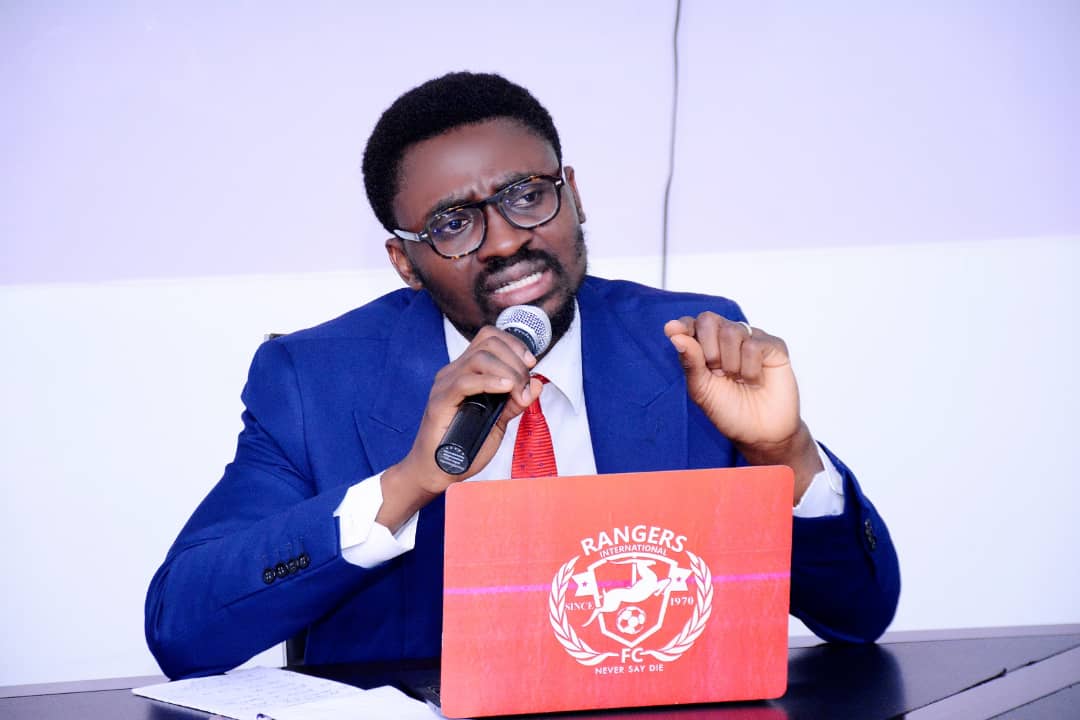
    Club President/General Manager, Barr. Amobi Ezeaku 

    Amobi Ezeaku

    Amobi Ezeaku is a sports lawyer, football executive, and FIFA Pro Bono Counsel. He currently serves as the Chief Executive Officer of Rangers International Football Club of Enugu, one of Africa’s most historic and successful football clubs.

    A graduate of the FIFA Master in Management, Law and Humanities of Sport and an alumnus of the UEFA Academy, Amobi combines academic depth with practical leadership in African football. Under his leadership, Rangers won the 2023/2024 Nigeria Premier Football League title, secured multiple commercial partnerships, revitalized youth development through the Rangers Academicals, and launched community-focused programs such as the Rangers Foundation and School Orientation Rounds.

    Beyond club management, Amobi heads the Sports Law section at Lexsetters LLP, where he advises on sports governance, contracts, dispute resolution, and regulatory compliance. His legal expertise spans both domestic and international frameworks, reflecting a deep interest in how law and governance shape the modern sports industry.

    Amobi is passionate about using law and management to drive transparency, sustainability, and inclusion in sports across Africa. His work bridges the worlds of legal policy, football management, and youth empowerment—anchored by his belief that sports can be a powerful instrument for education, justice, and social change.

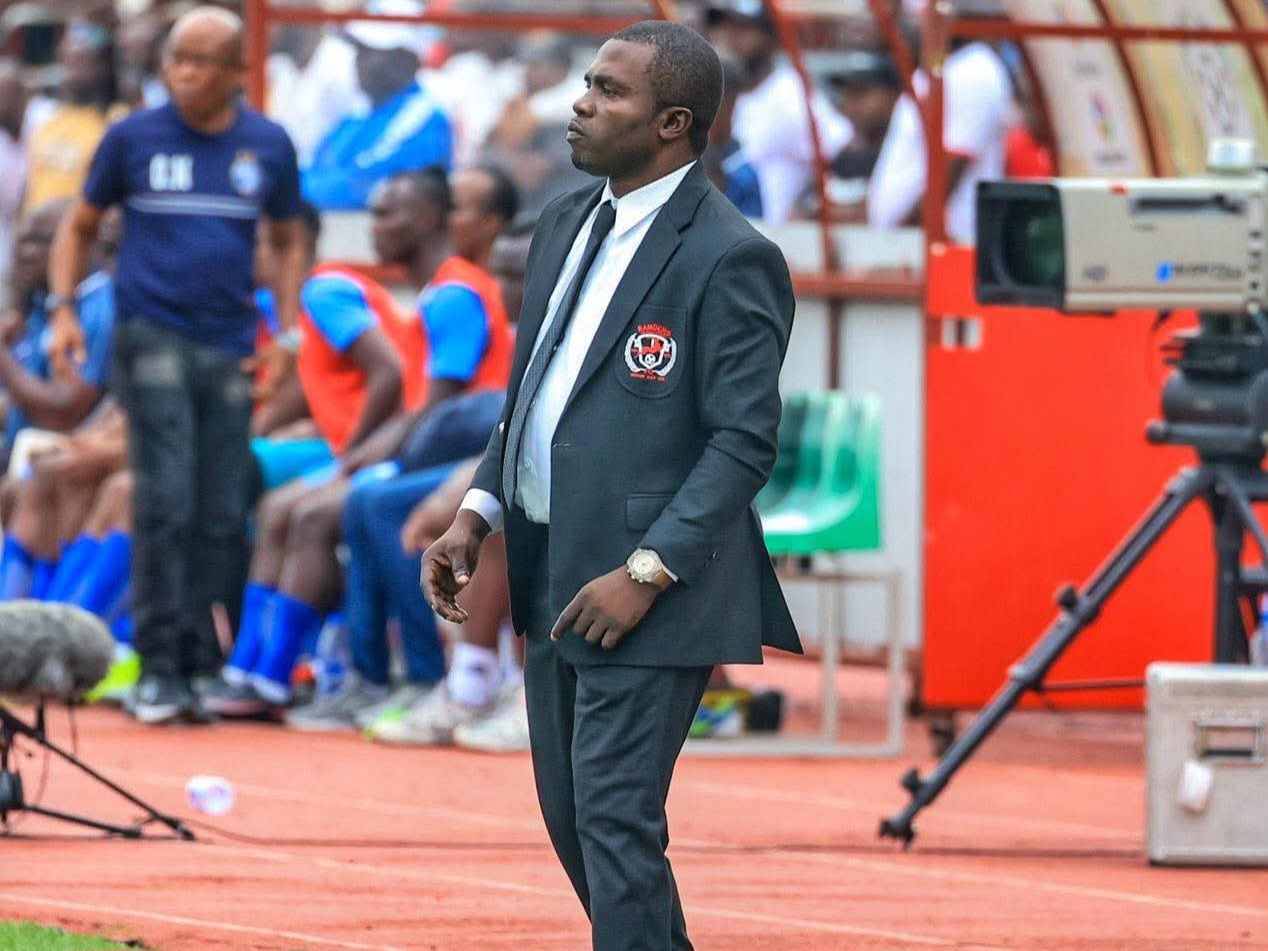
    Coach Fidelis Ilechukwu

    Fidelis Ilechukwu
    Fidelis Ilechukwu

    Coach Fidelis Ilechukwu has steadily carved a reputation for himself as one of Nigeria’s most astute and hardworking football tacticians, and his current dual role speaks volumes about his growing influence in the game.

    Serving simultaneously as an Assistant Coach of the Super Eagles and the Head Coach of Rangers International of Enugu, Ilechukwu embodies a rare blend of technical depth, resilience, and managerial intelligence.

    Handling responsibilities at both the national and club levels is no easy task. The demands are intense, the expectations are high, and the margin for error is often slim. Yet, Ilechukwu has shown remarkable composure in navigating these challenges. With the Super Eagles, he contributes to shaping the tactical direction of one of Africa’s most celebrated national teams, working alongside top professionals and managing elite players on the international stage.

    At the same time, his role at Rangers International places him right in the heart of the Nigeria Premier Football League (NPFL), where competition is fierce and consistency is key.  His ability to maintain focus, discipline, and performance across both fronts highlights not just his technical knowledge, but also his mental strength and organizational skill.

    What makes Ilechukwu’s journey even more compelling is his attention to detail and his ability to maximize the potential of his players. Known for his tactical flexibility and motivational approach, he has built teams that are difficult to break down, yet effective going forward. His philosophy reflects modern football principles while still adapting to the unique challenges of the Nigerian league.

    Balancing national assignments with club duties requires more than just knowledge of the game—it demands leadership, time management, and an unwavering commitment to excellence.

    In Fidelis Ilechukwu, Nigerian football has a coach who continues to prove that with determination and technical ability, it is possible to excel at the highest levels simultaneously. Ilechukwu remains a key figure whose impact is both visible and deeply respected. His story is not just about holding two positions—it is about mastering them.

    FA Cup Double and CAF Champions League

    Earlier in April, Rangers International Football Club of Enugu etched their name into the history books after both the men’s and women’s teams emerged champions of the Enugu State FA Cup, further underlining the club’s growing dominance in domestic football. The remarkable feat reinforced Rangers’ status as one of Nigeria’s most successful football institutions and highlighted the club’s renewed competitive edge across all levels.

    The achievements have now been capped with an even bigger milestone, as Rangers International F.C secured qualification for next season’s CAF Champions League following their triumphant Nigeria Premier Football League campaign. The qualification marks a return to continental football for the Flying Antelopes and serves as a testament to the strategic leadership, technical discipline, and winning mentality that have defined the club’s resurgence.

    For many supporters, the recent successes reflect a new era of ambition and stability at Rangers, driven by a blend of strong management, tactical brilliance, and sustained institutional support. With domestic silverware secured and continental football beckoning, expectations are already rising ahead of what promises to be another defining chapter in the club’s storied history.

  • The Next Phase: Transformational Leadership of Tomorrow is Here

    The Next Phase: Transformational Leadership of Tomorrow is Here

    By Dr. John Egbo, Deputy Sheriff (rtd.) 

    A new era of visionary governance and people-oriented leadership has truly emerged in Enugu State, championed by His Excellency Peter Ndubuisi Mbah, the Governor of Enugu State. It is a leadership driven by innovation, courage, accountability, and sustainable development. The next phase is not merely about continuing the journey; it is about accelerating progress, deepening impact, and building a future where every citizen can thrive.

    In less than three years in office, Governor Peter Mbah has transformed the state across virtually every index of growth, delivering a level of development that has surpassed the expectations of both residents and observers beyond the state. From infrastructure renewal to economic expansion, educational reforms, improved security, and investment-driven governance, Enugu State is steadily reclaiming its place as one of Nigeria’s most progressive states.

    What is the driving force behind this transformational leader? To the average Nigerian, Peter Mbah is a man with a large heart and a burning desire to leave enduring legacies beyond conventional expectations. His international exposure and professional training in Europe have clearly influenced his ambitious drive to position Enugu State beyond what many once considered possible. His governance style reflects global standards of leadership anchored on efficiency, productivity, innovation, and strategic planning.

    Transformational leadership is defined by the ability to inspire hope, create opportunities, and deliver measurable results. It is leadership that prioritizes infrastructure, economic growth, security, education, healthcare, youth empowerment, and human capital development. More importantly, it is leadership with the foresight to prepare today for the demands of tomorrow.

    Peter Ndubuisi Mbah represents a new phase of leadership worthy of emulation and sustainability if Enugu is to fully regain its historic glory as the Coal City of Africa, a city that played a pioneering role in Nigeria’s industrial revolution and the nation’s march toward independence since 1909. Enugu was once a symbol of enterprise, productivity, and economic strength, and today, the state is witnessing the rebirth of that legacy through purposeful governance.

    The arrival of Peter Mbah in Enugu State has sparked a renewed national conversation about visionary leadership, industrialization, and the possibilities of governance in Nigeria. What once appeared Herculean and unattainable is gradually becoming reality through deliberate planning, strategic execution, and a leadership philosophy built on results rather than rhetoric.

    The future belongs to leaders who are proactive rather than reactive, strategic rather than political, and committed to service rather than self-interest. The next phase represents a renewed commitment to excellence, inclusiveness, transparency, and sustainable growth. It is a bold declaration that the future is not distant; the future is already here.

    Indeed, under the transformational leadership of Peter Ndubuisi Mbah, Enugu State is not merely dreaming about tomorrow; it is building it today.

  • Finally By Abdul Mahmud

    Finally By Abdul Mahmud

    Finally, our country has arrived at that stage of national maturity where everybody accepts suffering as a public policy and inconvenience as a personal drill. Our country once promised prosperity, dignity, security, and modern development to its citizens. Experience has since changed these aspirations. Citizens now wake up each morning with the practical understanding that survival itself deserves collective applauses. Petrol queues have disappeared because many citizens can no longer afford enough fuel to justify standing in line. Economists may eventually classify this development as an innovative market adjustment introduced by the genius of President Tinubu. Transport fares rise with such determination that taxi drivers now announce prices with the solemnity of judges delivering prison sentences. Passengers protest briefly before entering vehicles because outrage remains cheaper than trekking.

    Electricity supply has also embraced philosophical consistency by appearing occasionally and departing without goodbye. Entire neighbourhoods celebrate the arrival of light with the excitement previous generations reserved for weddings or childbirth. “UP NEPA!” The Isokos are not screaming the familiar refrain. They are on the streets and across social media demanding the dignity and satisfaction of having electricity to make their screams meaningful again. Children rush to charge their phones. Barbers attempt three haircuts before they are restored to the tyranny of blackouts. Small business owners rush to buy fuel for generators with the certainty of men funding private wars against darkness while public officials continue commissioning power projects that survive mainly in speeches and photo-opp. The hospitals deserve national appreciation for teaching citizens the importance of local herbs. When citizens are not searching for herbs in bushes, they are arriving hospitals with drugs, syringes, gloves, and sometimes prayers carefully prepared in advance because the public hospitals in our country have become self-help centres. Elected public officials who cannot trust public hospitals with common headaches still deliver inspirational speeches about national progress with admirable confidence.

    Education continues to produce graduates equipped with certificates, unemployment, and motivational quotes. University students spend years studying courses repeatedly interrupted by strikes, and labour disputes. Graduation ceremonies finally arrive with elaborate gowns, expensive photographs, and parents calculating the financial consequences of raising educated job-seekers. Public office holders encourage entrepreneurship from podiums guarded by armed security personnel while millions of our young citizens attempt business ventures in an economy determined to punish them with excessive taxation.

    The roads across the country deserve historical recognition for preserving archaeological conditions within modern civilisation. Travelling between cities requires patience and prayers. Potholes enjoy prominence and permanence than public policies. Contractors receive billions to rehabilitate highways that return to ruin shortly after commissioning ceremonies conclude. Citizens driving at night approach every dark stretch of road with the combined fears of armed robbers and kidnappers. Journeys that should last two hours gradually turn to testimonies in churches on Sundays.

    Praise the Lord. Alleluia.

    Security announcements from government officials often arrive with generous promises. Armed groups continue their activities with stubborn independence from official optimism. Farmers abandon farmlands after repeated attacks while food prices rise, enough to convert ordinary meals into luxury dinners. Schoolchildren in rural communities attend classes under the shadow of abduction. Parents pray quietly each morning before waving goodbye to children whose greatest offence involves pursuing education inside a troubled country. Public corruption has matured into a national bazaar conducted with fanfare. Investigative panels appear regularly, produce lengthy reports, and disappear before meaningful consequences emerge. Politicians accused of financial misconduct frequently return to public office with fresh party memberships and renewed enthusiasm for national service. Citizens discuss stolen billions with utter consternation because the figures have exceeded ordinary human imagination. A man stealing bread receives immediate punishment while another accused of looting public funds arrives court premises accompanied by supporters beating talking drums and dancing.

    Religious institutions have also adapted creatively to economic hardship by transforming hope into an expanding enterprise. Prosperity sermons flourish magnificently among congregations struggling to afford food. Pastors promise miracles to worshippers whose immediate miracle would involve stable electricity and affordable medicine. Politicians occupy front pews during thanksgiving services after supervising years of public sufferings. Congregations clap respectfully because criticisms have become spiritually dangerous in a country where many people depend on divine intervention to survive the heartlessness of rulers. Our political class deserves admiration for maintaining extraordinary unity whenever personal benefits require protection. Lawmakers who cannot agree on urgent national questions suddenly discover remarkable cooperation regarding allowances, convoys, constituency projects, and official privileges. Citizens enduring inflation listen carefully as elected representatives debate the necessity of luxury vehicles purchased with public funds.

    Democracy increasingly resembles an expensive banquet attended by a small circle of privileged guests while millions observe proceedings through television broadcasts powered by borrowed “I-better-pass-my-neighbour” generators.

    Public communication itself has undergone useful transformation. Suffering now travels under respectable labels such as reforms, transitions, policy outcomes, and temporary difficulties. Hunger receives intellectual treatment from commentators who discuss economic pain with statistical elegance while ordinary families reduce meal portions quietly inside their homes. Market women no longer ask customers whether prices are expensive because everybody already understands the answer. Conversations in public transport now resemble WhatsApp group meetings conducted without an agenda.

    The police maintain its traditional relationship with citizens through checkpoints that combine suspicion and negotiation. Young citizens driving decent vehicles often prepare explanations before officers request documents. Bribes circulate through everyday encounters with a certain familiarity that refusal sometimes produces deadly consequences.

    Meanwhile, public celebrations continue faithfully. Political rallies attract songs, dancing, banners, and speeches promising transformation shortly before another cycle of disappointment begins. Independence Day celebrations return annually with colourful decorations and solemn declarations about national greatness. Citizens listen politely because patriotism remains compulsory even when daily experience encourages private doubt. Social media has become the national psychiatric ward where citizens gather to share jokes about collective hardships. Humour now serves as relief from failed governance. Citizens laugh at high fuel prices, electricity failures, bad roads, and political absurdities because sustained anger requires energy already consumed by the struggles for survival.

    Finally, our country has perfected the dangerous art of adaptation. Citizens adjust to conditions that should provoke outrage because continuous hardship eventually reshapes public expectations. People celebrate ordinary competence from public officials as though efficiency were an unexpected miracle. Parents praise schools for remaining open. Travellers celebrate reaching destinations alive. Communities applaud politicians for completing projects financed by public money. Our country’s decline survives with the culture of reduced expectations.

    History offers many examples of countries that mistook endurance for stability. While our country edges toward that condition with disturbing confidence, the rulers continue to display poor rulership through sloganeering and carefully rehearsed concern, ordinary citizens carry their country daily through labour, prayer, improvisation, and stubborn resilience. Their sacrifices deserve more than the speeches delivered from air conditioned podiums by rulers who escorted by lead and chase cars through sufferings they rarely experience personally. Our country has become a place where citizens survive despite governance rather than because of it.

    Finally, they said I had ported to the All Progressives Congress, APC. To borrow from the late iconoclastic American author, Edward Abbey’s The Journey Home, political parties, like the sun and the air, belong to everyone, and I belong to no party.

  • [OPINION] One-Term Promise: Why Obi’s Word Is More Bankable Than Critics Admit

    [OPINION] One-Term Promise: Why Obi’s Word Is More Bankable Than Critics Admit

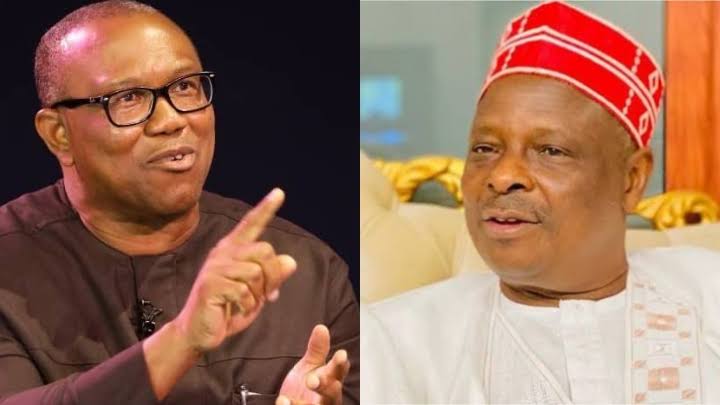
    Mr Peter Obi recently repeated his firm promise that he will serve for only one term if elected Nigeria’s president in 2027. And there have been divided opinions, especially in some parts of Northern Nigeria.

    Politics in Nigeria unfortunately has earned a reputation for deception. Campaign promises are often treated as ladders to power, abandoned once authority is secured. Yet, even in politics, there still exist a few men whose integrity was not manufactured during elections but built steadily over years of public conduct.

    A society cannot permanently assume that every promise will be broken simply because many have been broken before. Once citizens lose all faith in personal integrity, democracy itself gradually collapses into cynicism. We have had instances of promises kept by politicians. Late President Umaru Musa Yar’Adua made some promises and kept them.

    This is why the debate on Obi’s one-term pledge deserves more honesty and less blanket suspicion.

    Critics argue that the Constitution allows any president who completes a first term to seek re-election. True. But constitutions establish possibilities, not compulsory ambitions. Leadership is ultimately shaped by character.

    The strongest evidence for Obi’s promise may not even lie in today’s speeches but in yesterday’s conduct.

    As governor of Anambra State, Obi introduced a zoning arrangement aimed at ensuring fairness among the state’s senatorial districts. He promised power would move from Anambra Central to Anambra North after his tenure, then to Anambra South, before eventually returning to Anambra Central after sixteen years.

    The resistance was fierce. “Powerful” politicians mounted enormous pressure against the arrangement. But Obi stood his ground and handed over to Willie Obiano from Anambra North, exactly as promised. Today, Anambra State practises that seamless arrangement originated by Obi.

    That history matters.

    Over the years, Obi has evolved with a consistency that has earned him national respect and an integrity even many critics quietly acknowledge and admire. To many Nigerians, this is a man who values his word almost as much as, if not more than, the office he seeks.

    This is why dismissing his one-term pledge as mere political gimmick may itself amount to selective interpretation. If Nigerians remember broken promises by some leaders, fairness also demands remembering leaders who kept difficult promises despite political pressure.

    Many sceptics understandably anchor their fears on events following the death of Umaru Musa Yar’Adua and the later decisions of Goodluck Jonathan. But justice demands avoiding the habit of transferring one politician’s perceived betrayal onto another individual without examining personal records independently.

    Besides, Obi’s entire national appeal rests heavily on moral credibility and discipline. Reneging on a solemn one-term covenant after gaining office would destroy the very political identity upon which his movement stands.

    Obi’s supporters even believe he would prove that modern African politics can still produce leaders willing to voluntarily relinquish power after fulfilling agreed terms, much like Nelson Mandela did in South Africa.

    There is also political reality. Senator Rabiu Musa Kwankwaso, widely expected to emerge as Obi’s running mate, is not a passive political figure one manipulates easily. Unlike the more subdued vice-presidential role played by Namadi Sambo under Jonathan, Kwankwaso possesses a powerful political base and clearly defined ambition. Any attempt to violate a solemn one-term understanding would almost certainly trigger fierce internal resistance.

    Ultimately, the real question is whether Nigerians still believe integrity can exist in public life at all. If the answer is yes, then the country must also learn to recognise leaders whose conduct suggests that their words will indeed remain bankable.

    Written by POEM

  • Endangered at Home and Haunted Abroad

    Endangered at Home and Haunted Abroad

    By Abdul Mahmud

    These are not the best of times for Nigerians, and no honest observer of our national condition can pretend otherwise. Across the length and breadth of the country, fear has settled into daily life, shaping decisions, shrinking freedoms, and altering the meaning of home. To live in Nigeria today is to negotiate fear in its many forms, whether in the shadow of armed groups who claim lives with impunity, or in the silent anxiety that accompanies every journey on our roads, every night spent in unprotected communities, and every report of yet another abduction carried out with chilling ferocity.

    Here at home, the evidence is overwhelming.

    Kidnappings for ransom have grown into a grim industry, sustained by desperation, weak law enforcement, and absence of deterrence. Families sell land, empty savings, and borrow beyond their means in the hope of securing the release of loved ones, while others are left to mourn when negotiations fail or when violence precedes any demand. In many parts of the country, armed groups mask their violence with religious language, presenting terror as proselytisation, and turning faith into a weapon against the innocent. Villages have been emptied, farmlands abandoned, and livelihoods destroyed, leaving behind large parts of the country marked by grief and displacement. The state, expected to guarantee safety, often appears distant or overwhelmed, and citizens are left to improvise their own forms of protection.

    This condition has consequences that extend beyond the immediate loss of life and property. A country under sustained threat begins to internalise insecurity as normal, and in that process loses something essential about its own character. When trust completely erodes communities retreat into suspicion, and the idea of a shared national space disappears. Citizens who don’t feel safe in their own country are often driven by the impulse to flee from the country. Flight into self-exile becomes more than aspiration, as much as it becomes more than a necessity.

    For many Nigerians, the search for safety and opportunity leads beyond our borders, and here another layer of precarity emerges. Abroad, Nigerians often encounter hostility shaped by economic competition, cultural misunderstanding, and the easy politics of scapegoating. In South Africa, waves of xenophobic violence have repeatedly targeted Nigerians, casting them as convenient victims of broader social frustrations. Shops are looted, homes attacked, and lives disrupted, all under the banner of protecting local interests. In Ghana, recent protests against Nigerian traders have revived old tensions, framed in the language of economic protectionism, and reinforced by legal and administrative measures that restrict foreign participation in certain sectors.

    These developments are not isolated incidents. They form part of a pattern that reveals how quickly solidarity among African nations can give way to exclusion when domestic pressures rise. The removal and deportation of Nigerians from parts of Ghana in recent years, following court orders and administrative enforcement, echoes a painful history that many would prefer to forget. In 1969, during the turmoil of the Nigerian civil war, Nigerians were expelled from Ghana in large numbers, forced to return home under difficult conditions. Years later, Nigeria responded with its own expulsions of Ghanaians; an episode that long entered popular memory as “Ghana Must Go”, a phrase that now carries the weight of mutual resentment and historical irony.

    History repeats itself in new forms.

    The cycles of expulsion and retaliation reveal a troubling failure to learn from the past. Each generation inherits the consequences of earlier actions, and without deliberate effort to break the pattern. The lesson from 1969 and its aftermath should have been clear. Economic hardship and political tension must not be allowed to justify the targeting of vulnerable populations. The dignity of individuals should not be subjected to expedient national sentiments. African unity, so often invoked in speeches and declarations, must find expression in the treatment of ordinary people who cross borders in search of better lives.

    The present moment calls for a deeper reflection on what has been learned and what remains unlearned. At home, the lesson is that security cannot be treated as an intangible promise. It requires consistent investment, accountable institutions, and a willingness to confront the root causes of violence, including poverty, inequality, and the manipulation of identity for political ends. A country that fails to protect its citizens weakens its own foundation, and no amount of rhetoric can substitute for the lived reality of safety.

    Abroad, the lesson is that migration within Africa is both inevitable and necessary. Economic disparities will continue to drive movement, and host countries must find ways to manage this reality without resorting to exclusion or violence. Legal frameworks should be clear and fair, enforcement should respect human rights, and public discourse should resist the temptation to reduce complex problems to simplistic narratives about foreign influence. Nigerians, for their part, must also confront the perceptions that accompany their presence abroad, and work collectively to project values of integrity, respect, and lawful enterprise.

    Nigeria’s record in hosting migrants calls for a different reading of the present tensions. For decades, Nigerians have lived alongside fellow Africans and other foreign nationals with a level of openness that reflects both economic necessity and cultural disposition. Markets, neighbourhoods, and workplaces across the country bear witness to this quiet accommodation, where immigrants pursue livelihoods without harassment or state-backed exclusion. The hostility faced by Nigerians abroad therefore cannot be justified as a mirror of their country’s conduct. It arises from domestic pressures within host nations, shaped by economic anxieties and political narratives that cast foreigners as convenient scapegoats. Diplomatic engagement must move beyond reactive statements and toward firm, sustained dialogue that insists on the protection of Nigerian lives and livelihoods, while regional bodies are challenged to uphold principles of free movement, mutual respect, and shared responsibility among member states.

    The story of Nigerians today is one of endurance in the face of insecurity. Endangered at home, many carry their hopes across borders, only to encounter new forms of uncertainty. Haunted abroad, they navigate environments where acceptance can be conditional. This precarity should provoke a collective response that goes beyond lamentation. It should inspire a renewal of purpose, grounded in the recognition that the safety and dignity of Nigerians, whether within the country or beyond, are inseparable from the broader project of building a just and stable society. The path forward will not be simple, though it remains necessary. It will require honesty about the scale of the challenges, humility in acknowledging past failures, and courage in pursuing reforms that may be difficult but essential. Nigeria must become a place where its citizens can live without fear, and a country whose citizens are received with respect wherever they go. So long as that vision remains unrealised, the phrase “endangered at home and haunted abroad” will continue to capture the painful truth about the Nigerian condition that demands not only reflection but decisive action.


  • [OPINION] Why ESUT Should Be Named After Jim Nwobodo

    [OPINION] Why ESUT Should Be Named After Jim Nwobodo

    By Sammie Echi-Agbo

    His Excellency, Dr Jim Nwobodo, means different things to different people for different reasons. For some, he is remembered for rural development projects encompassing healthcare, water supply, electricity and empowerment. For others, his legacy lies in industrialisation, sports development and philanthropy.

    However, a common perception of Jim is that of a charismatic leader who saw tomorrow and responded to it through visionary policies that continue to shape generations.

    Jim, Anyanwu na-awara Oha of Nkanu land, emerged at a time Ndigbo needed a shining star. He governed the old Anambra State between 1979 and 1983 with astuteness and administrative dexterity. To this day, his administration remains a reference point in discussions on governance and institutional development in the South-East.

    This piece focuses on tertiary education, particularly how Jim’s vision in establishing the Anambra State University of Science and Technology (ASUTECH) became a foundation upon which higher education structures later developed across present-day Anambra, Enugu and Ebonyi States, all carved from the old Anambra State which he governed for one tenure of four years.

    According to Jim, ASUTECH was established to address educational disadvantage in parts of the old Anambra State, particularly those affected by the aftermath of the Nigerian Civil War and widespread economic hardship that limited access to university education.

    In his words:

    “It was the end of the Biafran war. It was the first civilian government after the war, and our people were down and cast. People felt defeated and humiliated, but I didn’t feel that way. I felt that I had the duty to show our people that nothing had been lost really.”

    Guided by the belief, often echoed by Nelson Mandela, that education is a powerful tool for societal transformation, ASUTECH was established with multiple campuses in Awka, Abakaliki and Enugu, which served as a major academic centre.

    The campuses were strategically distributed to reflect the administrative structure of the old Anambra State. ASUTECH operated a multi-campus system, with Enugu hosting engineering-related disciplines, Abakaliki focusing on agriculture, and Awka handling humanities and law.

    ASUTECH is widely regarded as one of the earliest state-owned universities of science and technology in Nigeria. Established in 1980, barely a year after Jim assumed office as governor, the institution initially faced scepticism from observers who doubted the viability of such an ambitious project at the time.

    However, over the years, those doubts gradually gave way to recognition as the institution became a major foundation for higher education development in the South-East.

    Jim also introduced bursary schemes for students from the state studying in tertiary institutions across Nigeria, aimed at easing financial pressure and supporting academic continuity.

    He recalled:

    “Our students then were also sad at a time. They said they were sad because of the cost of schooling. I demanded to know how much it cost to pay their school fees, buy dresses and make them happy. They worked it out. It was less than N500. I then gave every Anambra student automatic bursary of that amount. All the students, when I was governor, had an automatic bursary. That returned their spirit.”

    The bursary initiative later influenced similar policies in neighbouring states, including Imo State under Governor Sam Mbakwe, who introduced comparable support for students.

    Following the creation of Anambra, Enugu and Ebonyi States, ASUTECH was reorganised into different institutions. The Enugu campus later became the Enugu State University of Science and Technology (ESUT). The Abakaliki campus evolved into Ebonyi State University (EBSU). The Awka and Nnewi axis later contributed to the development of Nnamdi Azikiwe University.

    It is important to note that ASUTECH provided an important institutional foundation during these transitions, and elements of its structure were absorbed into emerging federal and state universities in the region. The system was later decentralised following state creation and federal education restructuring.

    Today, ESUT operates campuses in Enugu and Agbani, while EBSU has expanded across multiple academic faculties and campuses.

    Jim’s educational vision also extended beyond universities. He invested in colleges of education and polytechnics, driven by the belief that national development requires balanced investment in science, technology, humanities and vocational training.

    During his administration, the College of Education, Eha-Amufu, was upgraded from a teachers’ training institution into a full-fledged college of education. It was later taken over by the Federal Government in 1993 and has since expanded its academic offerings.

    Similarly, Nwafor Orizu College of Education, Nsugbe, received institutional strengthening during his tenure, which contributed to its later development into a degree-awarding institution affiliated with the University of Nigeria, Nsukka.

    The institution that later became Federal Polytechnic Oko also traces part of its early development to the educational expansion policies of that era. It began as the College of Arts, Science and Technology before evolving into a federal polytechnic with multiple campuses.

    This is, therefore, a tertiary education memoir of His Excellency, Dr Jim Ifeanyichukwu Nwobodo, former governor of old Anambra State, former senator of the Federal Republic of Nigeria, and former Minister of Sports.

    It is the story of a leader who governed for only one term but left a lasting institutional legacy. It is also the story of a man widely regarded as visionary, who drew inspiration from leaders such as Nnamdi Azikiwe, Michael Okpara and Kenneth Dike in shaping his approach to education and governance.

    There are lessons to be drawn from his leadership style. Though he served only one term, his administration is often cited for its clarity of vision and early definition of developmental priorities. He is credited with entering office with a structured policy direction rather than an experimental approach.

    His administration has been described by many as development-focused, with particular attention to regional balance in the distribution of educational institutions and infrastructure.

    Reflecting on his time in office, Jim once said:

    “During our time as governors, we focused on the people. Our interest was that we made promises to them, and we tried to fulfil those promises. We didn’t make them for the fun of it. We meant what we said.”

    The call for the naming of the Enugu State University of Science and Technology (ESUT) after Dr Jim Nwobodo is firmly rooted in his foundational role in the establishment of ASUTECH and his wider contributions to the growth of educational development across the region.

    This would serve as a fitting acknowledgment of his enduring legacy in the education sector. Renaming ESUT in his honour would amount to a symbolic “thank you” for his pioneering efforts, while also further cementing his place in history and reinforcing the lasting impact of his contributions to educational development in the region.

    If Governor Mbah approves this, it would be seen as a significant act of recognition of a key architect of the state’s educational foundation and a gesture that further reinforces a tradition of honouring visionary leadership in Enugu State.

    The current Governor of Enugu State, Peter Mbah, has also pursued a governance philosophy centred on long-term planning under the slogan, “Tomorrow is Here,” a phrase often referenced in comparative discussions on visionary leadership in the state.

    Dr Jim Ifeanyichukwu Nwobodo remains a significant figure in the history of education and governance in the South-East, particularly in discussions on the origins and evolution of state-owned tertiary institutions.

    In that historical context, he is often described as a man who saw tomorrow.

  • Operation Dudula and the Betrayal of Memory

    Operation Dudula and the Betrayal of Memory

    By Abdul Mahmud

    The killing of two Nigerians in South Africa is not an isolated outrage that can be explained away with the tired language of criminality or spontaneous mob action; it is part of a disturbing pattern of violence that has taken root in a country whose freedom was once nourished by the sacrifices of others, and it forces us to confront a painful truth about how quickly nations can forget the solidarities that shaped their liberation, and how easily that forgetting can harden into hostility against those who once stood as comrades in struggle.

    These recurring attacks are a stain on a shared history that ought to bind Nigeria and South Africa in enduring fraternity, because there was a time when the distance between Lagos and Johannesburg was bridged by a common purpose, when the oppression of black South Africans was felt in the streets of Nigerian cities and campuses as a moral emergency, and when ordinary Nigerians, far removed from apartheid brutality, still understood that their humanity was tied to the fate of those who lived under its crushing weight.

    Nigeria did not stand aside in those years of darkness; through the Southern Africa Relief Fund, citizens contributed what they could, not from abundance but from the conviction that they were part of something larger than themselves, and part of the continental struggles that demanded sacrifices from all who believed in justice.

    Beyond the contributions of individuals, Nigeria as a nation provided financial, diplomatic, and moral leadership to the African National Congress and other liberation movements when it mattered most, and these were not symbolic gestures but concrete commitments that came with real costs, because supporting the fight against apartheid meant diverting resources, taking global geopolitical risks, and standing firmly on the side of justice at a time when such a stance was neither convenient nor universally embraced. Nigeria bore those costs willingly, driven by the belief that the freedom of South Africa was inseparable from the dignity of the black race, and that history now stands as a testament to a generation that understood solidarity not as a slogan but as a duty.

    My own involvement in that struggle was shaped during my years at the University of Jos, where, as General Secretary of the Youth Solidarity for Southern Africa Nigeria, YUSSAN, I helped to organise, mobilise, and educate students about the realities of apartheid and the imperative of resistance. YUSSAN was a front organisation of the Patriotic Youth Movement of Nigeria (PYMN), the left-leaning core of the National Association of Nigerian Students (NANS), that engaged in ideological struggles aimed at advancing the interests of Nigerians and the broader black race, and through it we raised funds, held events, and kept alive the memory of atrocities such as the Sharpeville and Soweto massacres, ensuring that they were not reduced to distant historical footnotes but remained urgent reminders of the brutality we were determined to oppose.

    One memory remains vivid, as though it belongs not to the past but to an unbroken present, and that is the vigil we organised on the eve of the release of Nelson Mandela in 1990, when we gathered, filled with anticipation, listening to the live coverage from BBC Africa, counting the hours with a mixture of anxiety and hope, until the moment came when the prison doors were opened and Mandela stepped into freedom, his walk becoming an enduring symbol of resilience and the triumph of a just cause. Later that day, the streets of Jos erupted in celebration, as students poured into them with joy, aware that history had shifted in a way that affirmed the sacrifices made across the continent, including those made by Nigerians who had never set foot in South Africa but had nonetheless invested their hearts and resources in its liberation.

    It is against this background that the present reality becomes almost unbearable to contemplate, because what we see today with murderous marches of xenophobists who are behind Operation Dudula is not merely a breakdown of law and order but a betrayal of memory, a repudiation of the very solidarities that made South Africa. The rise of xenophobic movements and campaigns such as Operation Dudula represents a particularly troubling manifestation of this trend, as they actively promote hostility against foreigners, including Nigerians, and create an environment in which violence is not only possible but, in some circles, implicitly justified.

    Those who drive and sustain such movements must be confronted with clarity and firmness, because their actions do not merely threaten the lives of individuals but undermine the moral fabric of a race that once stood as a beacon of resistance against injustice, and they distort legitimate grievances into a politics of blame that directs anger toward the vulnerable rather than toward the structural failures that produce inequality and hardship. Economic challenges, unemployment, and social discontent are real issues that deserve serious attention, but they cannot and must not be addressed through the dehumanisation and persecution of fellow Africans who are themselves seeking opportunities for survival and dignity.

    The South African state also bears responsibility, because the persistence of these attacks suggests a failure to adequately protect those within its borders and to decisively challenge the narratives that fuel xenophobia, and while official condemnations are necessary, they are not sufficient if they are not matched by consistent action that reassures both citizens and foreigners that the rule of law will be upheld and that violence will not be tolerated under any guise. Silence, or selective enforcement, only emboldens those who believe they can act with impunity, and it sends a dangerous signal that some lives are less worthy of protection than others.

    For Nigerians, these killings strike a deep and painful chord, because they force a reckoning with a history that was built on generosity and solidarity, and they raise difficult questions about how that history is remembered and honoured by those who benefited from it. Memory, when it is genuine, carries obligations, it demands recognition, gratitude, and a commitment to uphold the values that it represents, and when it is ignored or distorted, it becomes a source of resentment and disillusionment, as those who once gave freely begin to feel that their sacrifices have been dismissed or forgotten. The deaths of these two Nigerians must therefore be seen not only as individual tragedies but as a call to restore a sense of shared African identity that transcends borders and resists the temptation to retreat into insular and exclusionary attitudes, because the challenges facing our continent cannot be addressed through division but require a renewal of the spirit of cooperation that once defined our collective struggles.

    South Africa’s freedom was achieved through a network of support that extended far beyond its borders, and preserving that legacy demands a conscious effort to reject xenophobia in all its forms and to reaffirm the principle that Africans, regardless of nationality, share a common destiny.

    When Nigerians stood with South Africa during apartheid, they did so with the belief that they were investing in a future built on justice, dignity, and mutual respect, and the violence we witness today stands in stark contrast to that vision, serving as a painful reminder of how far we have drifted from those ideals, and how urgent the task has become to reclaim them before the bonds that once united us are irreparably broken.

    This isn’t how to treat a big brother.

  • When Presidential Power Exhausts Itself

    When Presidential Power Exhausts Itself

    -By Abdul Mahmud

    What does one say to citizens who already live each day under the heavy weight of Nigeria’s iniquitous politics, who do not need lectures but only clarity, and who have learned from experience that power rarely yields to persuasion but often bends institutions until they begin to resemble instruments of private will rather than guardians of the public trust. The question is not whether the citizens understand what is happening around them, because they do, but whether those who wield power recognise the limits of force dressed up as governance and control disguised as order.

    In recent months, the political atmosphere has grown tense with a certain familiarity, one that echoes through Africa’s history of ruling parties that are confronted with the possibility of genuine opposition, only to retreat into a repertoire of tactics that range from subtle delegitimisation to overt suppression. External forces are hired to scatter opposition parties, Speeches are twisted into mischief, rhetorical irony is deliberately misread as error, and what is clearly a denunciation is conveniently recast as an own goal.

    This distortion is not accidental. It is part of a broader strategy to define the narrative before the electorate can do so for itself.

    The controversy surrounding calls for unity within the opposition and the ironic invitation to President Bola Ahmed Tinubu to resign and join that opposition is a case in point. The speech, delivered by a young opposition turk, Serah Ibrahim, at the just concluded opposition summit of the ADC, rests on two straightforward premises that are neither obscure nor ambiguous. It is first an appeal for coherence among fragmented opposition forces that have historically lost elections not only because of state power but also because of their own disunity. It is second a rhetorical device, an irony sharpened into political speech, that mocks failure and exposes the contradictions of incumbency. In the grammar of politics, such speech is properly called denunciation. It is neither confusion nor self sabotage. It is a deliberate act of political communication aimed at framing the stakes of a contest.

    The response from some quarters, however, reveals a deeper problem that has long haunted Nigeria’s political life. There is an arrogance that sometimes cloaks itself in the language of civilisational mission, a modern echo of the old idea of mission civilisatrice, which presumes that power not only governs but also instructs, corrects, and defines the limits of acceptable dissent. This arrogance is not new. It reveals itself whenever those in power begin to treat opposition not as a legitimate feature of democracy but as a nuisance to be subdued, and in the current moment it finds expression in the disposition of the administration of Bola Ahmed Tinubu, which appears increasingly inclined to weaken, fragment, and delegitimise its challengers rather than engage them within the fair and open arena that democracy demands.

    History offers cautionary parallels.

    In Ghana under Kwame Nkrumah, the promise of liberation gradually yielded to the consolidation of power, and the space for opposition narrowed until the state and the ruling party became indistinguishable. Laws were crafted in the name of stability, dissent was framed as subversion, and the moral authority of independence was invoked to justify the erosion of pluralism. Nkrumah did not begin as an autocrat. He became one through a series of decisions that each appeared defensible in isolation but together produced a political order that could no longer tolerate meaningful opposition. The comparison is not made lightly, nor is it intended as a crude equivalence, but it is necessary because it illuminates a pattern. When a government begins to see opposition not as a legitimate competitor but as an existential threat, it shifts from persuasion to control. Institutions that are meant to arbitrate fairly are gradually drawn into the orbit of power. Electoral bodies, courts, and regulatory agencies find themselves under subtle or overt pressure to act in ways that favour incumbency while maintaining the appearance of neutrality.

    Across the continent, this pattern has taken different forms. In some places, opposition parties have been weakened through legal restrictions and administrative hurdles. In others, their leaders have been disqualified on technical grounds that mask political intent. The effect is often the same, which is to narrow the field of competition until elections become rituals rather than contests. The language of law is preserved, but its spirit is hollowed out.

    Nigeria now stands at a delicate moment.

    The ruling party has deployed a wide range of political tools to contain and fragment the opposition. Opposition politicians are arrested, alliances are disrupted, narratives are managed, and dissenting voices are subjected to scrutiny that often exceeds the bounds of fairness. These efforts may yield short-term advantages, but they carry long-term risks. Presidential power that exhausts itself in the attempt to eliminate opposition often ends up weakening the very institutions that sustain its legitimacy.

    There is a growing sense that the next phase of this contest may not be fought solely in the arena of public persuasion but in the corridors where rules are interpreted and enforced. The emergence of a unified opposition platform, particularly under the banner of the African Democratic Congress, has introduced a new variable into the equation. If such a platform succeeds in producing a credible presidential candidate who can galvanise public support, the temptation to neutralise that candidacy through institutional means may prove strong. It is here that one must speak, not as a partisan, but as an observer of patterns, almost as an oracle peering into a crystal ball clouded by history but illuminated by precedent. The signs suggest a trajectory that is both familiar and troubling. When all other strategies have been deployed and the opposition remains resilient, the focus often shifts to the gatekeepers of the electoral process. Technicalities become decisive. Compliance becomes selective. Legality becomes a weapon rather than a shield.

    If this trajectory continues unchecked, one foresees a scenario in which the candidate that emerges from the opposition ranks under the African Democratic Congress faces not only political contestation but also institutional challenge of a magnitude that effectively removes him or her from the ballot. The justification will be couched in the language of law. The effect will be unmistakably political. The outcome will be an election that proceeds with the form of competition but without its substance.

    Such a development would not merely be a setback for the opposition. It would be a test of Nigeria’s democratic resilience. It would raise fundamental questions about the independence of the electoral umpire and the integrity of the processes that underpin the transfer of power. It would also remind Nigerians that democracy is not sustained by elections alone but by the conditions that make those elections meaningful. Power has a way of revealing itself most clearly at the moment it believes it has nothing left to prove. When it has exhausted persuasion, it turns to compulsion. When it has exhausted argument, it turns to authority. The challenge for Nigeria is to ensure that this moment, if it comes, does not define its future. The people already understand the stakes. The question is whether those who govern will recognise that the strength of a democracy lies not in the weakness of its opposition but in its ability to withstand it.