Category: Opinion

  • Akpabio’s Reckless Remarks – By Abdul Mahmud

    Akpabio’s Reckless Remarks – By Abdul Mahmud

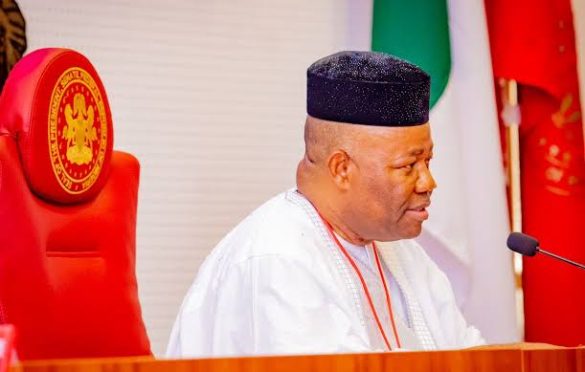
    “Insecurity is increasing because election is coming. As soon as the election is over, watch out, the first two weeks you’ll not hear a single bomb blast”. -Godswill Akpabio, Senate President.

    When the Senate President, Godswill Akpabio, spoke about insecurity rising because elections are approaching, and casually suggested that violence would disappear within “the first two weeks” after the 2027 polls, he did more than misspeak. He revealed something deeply troubling about the mindset at the highest levels of governance in Nigeria. Words matter, especially when they come from those entrusted with power. They shape public understanding, signal intent, and often betray the moral compass of those who utter them.

    What are Nigerians to make of such a statement?

    That the killings, the bombings, and the abductions that have become the daily cycle of national life are somehow seasonal? That bloodshed obeys the electoral calendar? That those who die are collateral in a political game whose rules are known only to Akpabio and his friends in power? The remark is reckless not simply because it is insensitive, but because it hints at knowledge that no ruler should possess without immediate and decisive action. If insecurity is increasing because elections are coming, as Akpabio suggests, then the government is admitting to an awareness of orchestrated violence. That admission is damning. It raises a question that cuts to the bone of governance. If the state knows that violence is politically motivated and anticipates its decline after elections, why is it not acting decisively to prevent it now? Why are security agencies not deployed with urgency to disrupt whatever networks are allegedly behind this cyclical bloodletting?

    Silence or inaction in the face of such knowledge is complicity by another name.

    There is another, equally disturbing interpretation.

    The statement not only reflects a cynical attempt to normalise violence as an inevitable feature of Nigeria’s political landscape, but also attempts at reducing the deaths of citizens to something to be endured as part of the electoral process. This is the language of moral exhaustion, the rhetoric of a bandit ruling class that has grown too comfortable with the sufferings of the people it governs. It speaks to a dangerous detachment, and the willingness to rationalise tragedy rather than confront it.

    Akpabio’s defenders might argue that he was speaking off the cuff, that his words were taken out of context, or that he merely sought to make a point about the politicisation of insecurity. Such defences collapse under scrutiny. The statement is clear, direct, and unambiguous. It was not a slip of the tongue or a gaffe. It was a reflection of his worldview. Public officials do not operate in a vacuum. Their words carry the weight of their office, and when those words trivialise human life, they erode the very foundation of public trust.

    Nigeria is not short of examples where careless statements from those in authority have deepened public cynicism. What makes this instance particularly egregious is the context. The country is grappling with a security crisis of staggering proportions. Communities are being wiped out. Senior military officers are being slaughtered. Students in captivity are meted cruelty of unimaginable bestiality in front of cameras, in order to extract ransom. Families are displaced. Fear has become the companion for millions. In such a moment, citizens look to their leaders for reassurance, for empathy, and for the sense that those in power understand the gravity of the situation. What they received instead was a remark that appears to reduce their sufferings to piteous political calculation.

    Leadership demands more than technical competence. It requires moral clarity, and the capacity to recognise the human cost of policy failures and to respond with humility and urgency. Akpabio’s comment reflects a deficit in both. It suggests a mindset that views insecurity through the narrow lens of political advantage rather than as a humanitarian crisis that demands immediate attention.

    This is not merely a failure of communication. It is a failure of leadership.

    The broader implication of such remarks is the normalisation of impunity. When those at the top speak carelessly about violence, it sends signals down the chain of command. It tells security agencies that accountability is optional. It tells perpetrators that their actions may be tolerated, even if not openly endorsed. It tells victims that their pain is secondary to political considerations. This is how states slide into deeper crises, not through dramatic collapses, but through the steady erosion of standards and expectations.

    Akpabio occupies one of the highest offices in the land. The Senate Presidency is not a ceremonial position. It is central to the functioning of Nigeria’s democracy. It carries with it the responsibility to uphold the dignity of the institution and to act as a voice of reason in times of crisis. That responsibility was abandoned in the moment he chose to make light of a grave national tragedy. Public office is a trust, not a platform for flippant commentary. There is also a deeper, more unsettling question raised by his words. If violence can be predicted to rise and fall with electoral cycles, what does that say about the integrity of the political system itself? It suggests a system in which power is pursued at all costs, where the lives of citizens are expendable in the quest for electoral victory. This is a betrayal of the very idea of democracy, which is meant to be a peaceful contest of ideas, not of bloodshed.

    Nigerians deserve better.

    They deserve leaders who speak with care, who understand the weight of their words, and who place the safety and dignity of citizens above political expediency. They deserve a government that treats insecurity as an urgent priority, not as a phenomenon to be explained away with casual remarks. They deserve accountability, not excuses. Akpabio’s statement should not be allowed to pass without consequence. It demands a response, not in the form of defensive clarifications, but in concrete actions that demonstrate a commitment to addressing the security crisis. It also demands a broader reflection on the quality of leadership in the country. How did Nigeria arrive at a point where such remarks can be made so casually by those in power? What does this say about the standards to which public officials are held?

    The answer lies in the culture of impunity that has taken root in our country today. It is a culture that tolerates mediocrity, excuses failure, and shields those in authority from the consequences of their actions. Breaking this culture requires more than outrage. It requires sustained demand for accountability, and the refusal to accept the normalisation of the unacceptable. Akpabio’s reckless remarks have done more than provoke anger. They have exposed a troubling mindset at the heart of governance. They have reminded Nigerians of the distance between those who wield power and those who bear its consequences. Closing that distance is the challenge of our time. It begins with insisting that those who lead must do so with responsibility, empathy, and a clear understanding that every word they speak carries the weight of the lives they are sworn to protect.

  • SPONSORED: Rangers Coach Fidelis Ilechukwu Embodies a Rare Blend of Technical Depth

    SPONSORED: Rangers Coach Fidelis Ilechukwu Embodies a Rare Blend of Technical Depth

    Coach Fidelis Ilechukwu has steadily carved a reputation for himself as one of Nigeria’s most astute and hardworking football tacticians, and his current dual role speaks volumes about his growing influence in the game.

    Serving simultaneously as an Assistant Coach of the Super Eagles and the Head Coach of Rangers International of Enugu, Ilechukwu embodies a rare blend of technical depth, resilience, and managerial intelligence.

    Handling responsibilities at both the national and club levels is no easy task. The demands are intense, the expectations are high, and the margin for error is often slim. Yet, Ilechukwu has shown remarkable composure in navigating these challenges. With the Super Eagles, he contributes to shaping the tactical direction of one of Africa’s most celebrated national teams, working alongside top professionals and managing elite players on the international stage.

    At the same time, his role at Rangers International places him right in the heart of the Nigeria Premier Football League (NPFL), where competition is fierce and consistency is key. Under his leadership, Rangers have emerged as strong title contenders, going head-to-head with formidable sides like Rivers United in the race for supremacy. His ability to maintain focus, discipline, and performance across both fronts highlights not just his technical knowledge, but also his mental strength and organizational skill.

    What makes Ilechukwu’s journey even more compelling is his attention to detail and his ability to maximize the potential of his players. Known for his tactical flexibility and motivational approach, he has built teams that are difficult to break down, yet effective going forward. His philosophy reflects modern football principles while still adapting to the unique challenges of the Nigerian league.

    Balancing national assignments with club duties requires more than just knowledge of the game—it demands leadership, time management, and an unwavering commitment to excellence. In Fidelis Ilechukwu, Nigerian football has a coach who continues to prove that with determination and technical ability, it is possible to excel at the highest levels simultaneously.

    As Rangers push for NPFL glory and the Super Eagles continue their quest for continental and global success, Ilechukwu remains a key figure whose impact is both visible and deeply respected. His story is not just about holding two positions—it is about mastering them.

  • No Celebration Should End in Death

    No Celebration Should End in Death

    -By Abdul Mahmud

    Grief arrived quietly in Maiduguri, but it has not left. It lingers in the home of Dr Jibril Khalil, the Director of the Heart Center and Head of Cardiac Surgery at the University of Maiduguri Teaching Hospital (UMTH), where his daughter should have been planning her future, not being laid to rest. It sits with family, neighbours, colleagues, and all who now must carry the weight of a life cut short by a stray bullet. Not on the battlefield. Inside her home that should have been a safe place. This is the cruelty of indiscriminate shooting during celebrations. It kills without warning. And yet, it kills all the same.

    There is a quiet lie that has settled into parts of our country. The lie that firing into the air during weddings, festivals, and moments of joy is harmless. The lie that it is a useless culture. The lie that it is tradition. These lies have taken root over time, repeated often enough to feel normal. But normal does not mean anything close to normal; it doesn’t mean right. And the familiar does not in anyway mean safe. A bullet fired into the air must return to the earth. Gravity has no exceptions for celebration. When a bullet falls, it does not ask who is beneath it. It does not distinguish between a child at home, a mother in her kitchen, or a passerby on the street. It simply descends, carrying death in its path.

    Writers across time have warned us about the tragic consequences of reckless acts, even when they are not born of malice. In William Shakespeare’s Romeo and Juliet, joy and love are undone by impulsive violence and needless conflict. The streets of Verona become the unfortunate stage where pride and carelessness cost lives. What begins as festivity and youthful passion ends in grief that engulfs families and the community. In Chronicle of a Death Foretold by Gabriel Garcia Marquez, a man dies not because no one knew, but because everyone assumed someone else would act. The tragedy unfolds in slow motion, shaped by collective indifference and normalised behaviour. That story feels uncomfortably close to our own reality. We know the dangers of celebratory gunfire. We have seen the headlines. We have mourned before, yet the practice endures, numbing us as we inure to tragedy, as though its next victim could never be one of our own.

    But now she was. A daughter. A human being with a name, a face, a voice, a future.

    There is something particularly painful about a death like this. It lacks even the harsh logic of conflict or confrontation. There is no argument, no crime, no warning. Just a sudden end. Families are left not only with grief, but with questions that have no answers. Why here? Why now? Why us?

    And beneath those questions lies the deeper anger. This didn’t have to happen.

    The proliferation of unlicensed firearms has made tragedies like this more likely. Weapons circulate beyond the control of the law. They find their way into the hands of those who have neither the training nor the discipline to handle them responsibly. A gun, in the wrong hands, becomes not just a tool of violence, but an instrument of death.

    A country that tolerates unregulated access to firearms invites disaster into homes. Every unlicensed weapon is a risk waiting to unfold. Every careless discharge is a reminder that control has slipped away. There must be a reckoning with this reality. Laws exist, but enforcement remains weak. Awareness exists, but compliance is poor. And so, the cycle continues. To break this cycle, we must begin with honesty. Indiscriminate shooting is not culture. It is not religion. It is not celebration. It is recklessness. It is negligence. It is death waiting to snatch a life. Our country must act decisively and without delay. Citizens must reject this practice openly. Silence gives it space to survive. Condemnation can begin to push it out. Law enforcement authorities must act with firmness. There should be no tolerance for celebratory gunfire. Arrests must follow violations. Prosecutions must be visible. Consequences must be real. Without accountability, warnings become empty words.

    At the same time, there must be a broader effort to control the spread of illegal arms. Licensing systems must be strengthened. Security agencies must intensify efforts to recover unregistered weapons. The presence of a firearm should never be casual. It should always carry weight, responsibility, and scrutiny.

    Beyond policy and enforcement, there is that moral question that we must answer. What kind of country do we want to build? One where joy carries the risk of death? Or one where celebration remains what it should be. Safe. Shared. Life affirming.

    The death of Dr Khalil’s daughter should not fade into another statistic. She must remain a name we remember, a story we tell, and the turning point we recognise. Because memory has power. Memory can shape behaviour. Memory can prevent repetition. Grief, when honoured properly, can become the singular force for change.

    There runs a fragile line between celebration and tragedy. We imagine it as distant, safely removed from our moments of joy; but it lies perilously close to us, crossed in the brief arc of a bullet that rises in reckless abandon and returns with fatal certainty. In that instant, laughter gives way to silence, and silence yields to mourning. What should have been memory becomes loss, and what began as festivity ends in grief that lingers long after the guns fall silent. No celebration should end in death. No family should gather in sorrow because another chose, in a moment of thoughtlessness, to send a bullet into the open sky. This quiet terror has taken root in our country for too long, fed by the easy presence of unlicensed firearms and the indulgence of a practice mistaken for harmless expression. To confront this danger demands more than words spoken in grief. It requires the steady resolve of all. A country that values life must defend it with intention.

    Maiduguri has mourned for years. It must now act, with clarity and courage, so that no more lives are surrendered to a moment’s folly, and no more homes are turned into places of grief by the fall of a single, senseless bullet.

    She sleeps well.

  • The Doom’s Day

    The Doom’s Day

    By C.V.C Ozoaniamalu

    Nwando had woken up and felt dizzy, dragging herself to the bathroom. A softness in her knees, as though her body had begun, without warning, to withdraw from her, to practice lifelessness.

    The tap in the bathroom ran unchecked. Steam rose from the heater in slow, deliberate spirals, climbing upward until it claimed the mirror entirely. Her reflection dissolved into a pale blur, a face without edges, without certainty. She did not reach out to wipe it clear. She was not sure she wanted to see what she had become, what this version of herself looked like.

    It had taken less than two hours. Less than two hours for everything to tilt. The apartment held its breath. Only two sounds remained: the steady rush of water and the clock’s thin, relentless ticking. She hated the clock at this moment. Each tick pressed against her skin, insisting on movement, on consequence. Time, it seemed, had refused to pause for her ruin. She should act. She knew this. But the thought refused to settle into action. It circled instead, heavy and persistent, returning always to the same place: The body in her bedroom. An adult man. Broad-shouldered. Still, lifeless and coiled in the pool of his own blood.

    The image came to her fully formed, in hours to come, newspapers’ headline shall read, bold and unforgiving: “A Young Woman Found with a Dead Man’s body in her Apartment.”

    She felt the shock move through her, sharp and cold, like swallowing water too chilled, the kind that freezes the chest before the mind can react.

    Who would believe her? I doubt anyone would. Except Belinkas shows up, only if she has not disappeared forever, leaving only her in this mess.

    _________________________

    She thought about her old self and when all these began. Perhaps it had begun long before tonight. Or perhaps tonight had only gathered all her careless choices and arranged them neatly into consequence.

    Three months. Three different relationships. It sounded, even to her, like the careless plot of a story she would once have judged.

    First, there was Mayowa, soft-faced, deliberate, his life already arranged into neat expectations. He worked at a Big Four advisory firm and spoke often of structure, of future, of family. With him came conditions disguised as culture: she must learn Yoruba, must cook the meals his mother approved of, must fit into a life that had no space for improvisation. He spoke as though love were an apprenticeship she had not yet qualified for.

    Then Emenike. Emenike did not ask; he took. His messages came uninvited and unashamed, images, instructions, demands dressed as desire. He wanted pictures of her body at odd hours of the day, wanted her to perform intimacy in stolen spaces, in public toilets, in hurried secrecy. When she obeyed, gifts followed. When she hesitated, silence. With him, everything was a transaction, even affection. And he would always send his first, naked pictures of himself- unreligious and uninvited.

    And then, unexpectedly, she met Belinkas. She met her at the gym, somewhere between routine and escape. Belinkas moved with an ease that unsettled her, spoke with a confidence that did not seek permission. They had talked only once, briefly, between gym lessons, but something lingered. A number exchanged. A thought she tried, unsuccessfully, to bury. Because this, this was not who she was. She had heard of people becoming lesbians but never thought it would be her, or at least, not who she had believed herself to be.

    And yet, she found herself thinking of Belinkas in quiet moments, replaying that single conversation, that steady gaze. Belinkas wanted a relationship with her, a queer openness and visibility, which she herself did not find easy. By the weekend, Belinkas had stopped answering her calls because she had sworn not to be hidden.

    ____________________________

    So the Monday following the weekend after her fall-out with Belinkas came with its own quiet cruelty. At the office, the air felt wrong before anything was said. People gathered in small clusters, their voices lowered, their faces arranged into careful neutrality.

    Musa, the boy who had joined them and had been placed under her tutor and supervision, was at her desk, folded into himself. “What happened?” she asked. “Did someone die?”

    He shook his head. “Have you checked your email?” Something in his voice made her chest tighten. She logged in. Or tried to. Her password failed.

    Again. She turned to him. “Is the system down?”

    He hesitated too long. “There’s… an issue,” he said finally. “With contract staff. You should go to HR.”

    Contract staff. She looked around, and most of the contract staff were not around.

    The realization came quietly, but it landed hard. At HR, the truth was already waiting. An email had been sent on Friday, which she missed. Termination of contract. Effective immediately.

    No explanation that mattered. No appeal that would be heard. Just instructions: return your tools, submit your ID, and sign here. And just like that, her name was removed. Her presence was erased.

    Outside, the world continued as though nothing had shifted. When her phone buzzed, it was either Obialor, her younger brother, who was studying Economics at the University of Uyo, asking for money, or it was Musa’s text offering sympathy, which she could not bear to read. She opened neither.

    At her apartment, in the downturn of Alimosho, inelegant, noisy, heated yet interesting, she felt withdrawn; the silence in her world felt heavier. She lay on the bed and cried, but even that felt controlled, as though she were careful not to break something further. The tears came quietly, soaking into the pillow, disappearing without a witness.

    She called Belinkas on Thursday. No answer. She sent a message: I need you now. I’m losing it.

    Hours passed. Nothing.

    Then she called Emenike. He picked the first ring. “I’m in a meeting,” he said. “I’ll come.”

    There was something in his tone, joyful, forward-looking, and amusement, perhaps that she ignored.

    At 9:59 PM, just a day before Good Friday. She heard a gentle knock on her door. She dragged herself towards the door, her feet shuffling, the type that would have triggered her grandmother to call her “Ngana”, unrepentant laziness. She opened the door expecting to see Emenike, but found another. Belinkas.

    For a moment, the world rearranged itself into something almost merciful. She pulled her in, held her, let the tears come without restraint this time. There were no questions, no explanations. Just closeness. Heat. Urgency.

    They kissed like people trying to outrun something. The door remained slightly open. Neither of them noticed. Without words or discussions, emotions tightened, and unaware of the world around them, they let loose their clothes.

    Until the voice came. Male. Calm. Too calm. It was then they knew they fucked up.

    “Evil, alu. The world must see this,” Emenike said, “On second thought, you both can make me feel good and have me delete this video. The faster the better.”

    He stood there, phone raised, recording. Time fractured.

    Nwando imagined, with a sudden tightening in her chest, what her world would become if that video ever went viral. Her mother, the respected leader of the Catholic Women in Mushin, and even more formidable in their hometown of Abatete, would crumble under the weight of gossip. And her father, who had once mocked Mr. Okolie at a full Umunna meeting for “raising a boy who turned out gay,” would see his own hypocrisy laid bare. She begged then, words tripping over themselves, thin and useless things that dissolved in the thickening air.

    Belinkas moved first, fast and furious, lunging at Emenike, her breast flat and body structured like a man. The phone fell from Emenike as both held each other down, the room erupted into movement, into noise, into something she could no longer follow.

    She reached for the phone. Her hands were shaking, and then she heard the noise, as if a mansion had collapsed on her. A sharp, blinding impact. Darkness.

    _____________________

    Now she stood in the bathroom, the tap still running. And in the bedroom, Emenike lay in a widening pool of blood. Belinkas was gone. The phone was gone.

    The room felt smaller now, closing in with each passing second. How do you explain this? How do you survive it? What if she had let Emenike go and face the lesser evil?

    A sound cut through the silence. A phone is ringing. Not hers.

    She followed it, each step careful, as though the floor itself might betray her. Emenike’s phone lay in the corner, its screen cracked like a splintered mirror, the casing scratched and smeared. And then she saw something far worse, something that hollowed her out instantly.

    Belinkas. Pale. Naked. Motionless. Her body sprawled in her own pool of blood, already cooling into a dark shine on the floor. Still. Without pulse.

    The phone rang again. Stopped. A message appeared almost immediately. She leaned in, breath trembling. The sender was saved as Obikwelu, and the message read:

    “My guyyyyy, you don finish with the babe, I don dey road dey come that side, make we enter club.”

    Her breath snagged in her throat. He was coming. Now.

    And suddenly the ticking clock no longer drifted in the background like a faraway thing. It beat loud and urgent, unmistakable.

    A countdown.

  • Iran-Israel-US-Gulf Conflict: When War Hits Your Wallet

    Iran-Israel-US-Gulf Conflict: When War Hits Your Wallet

    …How the Iran-Israel-US-Gulf Conflict Could Shake Nigeria’s Economy, and Why Africa May Pay the Hidden Price

    By Ikenna Igwe

    War usually feels distant until it shows up in your fuel bill, your transport fare, the price of bread, or the cost of fertilizer on a farm hundreds of miles away.

    That is why the conflict involving Iran, Israel, the United States, and key Gulf states matters far beyond the Middle East. For Nigeria and much of Africa, this is not just a geopolitical drama; it is an economic shock moving through oil markets, shipping routes, fertilizer supply, food systems, and inflation. The IMF says the conflict is already pushing up energy prices and increasing the risk of weaker growth and higher inflation, while the WTO now expects world trade growth to slow to 1.9% in 2026, with the war posing a further downside risk.

    The most dangerous part of this crisis is where it is happening. The Strait of Hormuz is one of the world’s most important economic chokepoints, carrying major volumes of oil, gas, and fertilizer. When tension rises there, the shock does not stay in the Gulf; it spreads quickly into freight costs, import prices, energy bills, and agricultural inputs. UNCTAD has warned that disruptions around Hormuz threaten vulnerable economies because this route is central not only to fuel but also to fertilizer flows that support food production across the developing world.

    At first glance, some people will say this should help Nigeria. Oil prices rise, so an oil producer should benefit. That logic is tempting but incomplete. Yes, stronger crude prices can improve export earnings, support government revenue, and strengthen market sentiment. But Nigeria is not insulated from global energy shocks. It still feels the pain of more expensive imported fuel, diesel, cooking gas, transport, and fertilizer. Reports from local news outlets like the Guardian show that price hikes are already being felt on the streets.

    The paradox at the heart of the Nigerian economy and reality is that a country can earn more from oil exports and still become poorer through inflation.

    And inflation is where this war becomes personal. Once oil and gas costs rise, everything else starts moving with them. Haulage gets dearer. Food distribution costs climb. Manufacturers face higher energy bills. Farmers pay more for fertilizer. Importers face higher shipping and insurance charges. The IMF has warned that if energy prices stay elevated, global inflation could rise further while output slows. For African economies already struggling with weak currencies, tight fiscal space, and high living costs, that is a serious threat.

    But perhaps the most overlooked risk is not oil; it is food.

    Reuters reports that the war is already threatening fertilizer shipments, with some prices up by 30% to 40%. That may sound like a technical market detail, but it has enormous consequences. Fertilizer shortages today can mean lower yields tomorrow, and lower yields mean higher food prices after that. In much of Africa, where millions of households already spend a large share of income on food, this is how a distant war can become a domestic economic emergency.

    Africa’s wider problem is structural. The continent remains too exposed to shocks it does not create and cannot control: imported refined fuel, imported fertilizer, fragile shipping lanes, and global commodity prices shaped elsewhere. So, each time there is a geopolitical rupture, African economies are forced into the same position—watching a foreign conflict turn into local inflation. That is why this moment should be read not just as a crisis in the Gulf, but as another reminder that economic dependence is expensive.

    Nigeria still has an opportunity in all this, but only if it thinks beyond the usual excitement over higher oil prices and focuses on structural policies that will empower local infrastructure and security. Will the Nigerian government do it? We have to wait and see where its priorities lie. The real lesson of this conflict is not that oil is rising; it is that countries without economic resilience always pay more than they expect.

    The US and Israel will describe this war in terms of deterrence, strategy, regional influence, and security. Nigeria and much of Africa will experience it differently—as higher prices, tighter budgets, pressured central banks, and a more expensive daily life. For great powers, this is geopolitics. For ordinary Africans, it is economic survival.

    And that is what makes this conflict so important.

    The missiles may fall in the Gulf.

    But the bill will arrive in Lagos, Abuja, Accra, Nairobi, and beyond.


  • Playing the 1998 Abacha Power Game in 2026

    Playing the 1998 Abacha Power Game in 2026

    By Ikechukwu Amechi

    It was Jean-Baptiste Alphonse Karr, the French critic, journalist, and novelist, who, in 1849, coined what has become an enduring proverb: plus ça change, plus c’est la même chose – the more things change, the more they stay the same. In matters of governance and power in Nigeria – military or civilian – nothing can be truer.

    As editor of the Sunday Diet newspaper, I was in Maiduguri in April 1998, yes the selfsame Borno State capital that has become a killing field, to cover the national convention of the Grassroots Democratic Movement (GDM). Borno was the home state of Alhaji Gambo Lawan, the national chairman of the GDM, one of the five political associations that included the United Nigeria Congress Party (UNCP), Congress for National Consensus (CNC), Democratic Party of Nigeria (DPN) and the National Centre Party of Nigeria (NCPN), formally approved by the electoral umpire – National Election Commission of Nigeria (NECON) – in September 1996.

    The convention was pivotal because it had become obvious that the dark-goggled General Sani Abacha was hell-bent on replacing his starched khaki uniform with overflowing babaringa while staying put in Aso Rock. The only obstacle to his vaunting ambition was the left-leaning GDM, which along with the UNCP, had voted in February 1998 to reject Abacha as the consensus candidate. But soon after, the UNCP acquiesced leaving only the GDM in the rebellious dugout.

    To ensure that the GDM presented a candidate in the presidential poll scheduled for 1999, Alhaji Muhammadu Dikko Yusufu, a former Inspector-General of Police, enthusiast of the maverick Afrobeat legend, Fela Anikulapo-Kuti, who frequented African Shrine, and another leftist politician, Dr. Tunji Braithwaite, a lawyer who was called to the bar in 1961 and founded the Nigeria Advanced Party (NAP) in 1983, declared their interest to run for the presidential primaries. So, despite the party being a creation of the junta, Nigerians held out hope that its Maiduguri convention would produce an effective counterpoise to Abacha’s tyranny.

    Sadly, it didn’t. The convention was underway when the dreaded Major Hamza al-Mustapha, Abacha’s Chief Security Officer, arrived in Maiduguri. Even when he tactically stayed away from the convention ground, chaos erupted at the El-Kanemi Warriors Sports Centre convention ground while Braithwaite was making his speech. At the end, the April 18, 1998 GDM convention which many hoped would produce an alternative presidential candidate despite immense pressure from the ruling military council to make Abacha the sole candidate, ended in his high-pressure endorsement, having purportedly garnered 1,368 votes as against Yusufu’s 408 votes.

    A defiant M.D. Yusufu rejected the outcome of the convention, insisting that he was the GDM candidate and called on Abacha to resign. Expectedly, he paid for the temerity. On May 28, 1998, one month after the convention, his campaign offices were stormed and vandalized by political thugs, his supporters threatened and campaign posters torn. The charade ended when Abacha died on June 8, 1998 and a month later, his successor, General Abdulsalami Abubakar, chopped off the five leprous fingers from the country’s withering political hand.

    Sadly, 27 years after that inglorious political stunt, Nigeria is back to ground zero as the powers-that-be are hell-bent on ensuring that President Bola Tinubu emerges the sole presidential candidate in the 2027 election. Indeed, the more things change in Nigeria, the more they stay the same.

    The attempt to hollow out the opposition is too obvious. Yet, it is a settled fact that a robust and constructive opposition is a sine-qua-non for a functional democracy, without which transparency and accountability fly out of the governance window. The administration is conjuring every trick in its tool bag, in cahoots with a supine National Assembly and a genuflecting judiciary, to ensure that the man in Aso Rock goes into the 2027 polls as a consensus candidate of the motley crowd of 21 political parties. And the question is: If General Sani Abacha, a despot, was wary of opposition in 1998, why would a self-acclaimed democrat, be similarly afraid in 2027 after four years in office?

    In his article, “How Nigeria’s presidential election in 2027 could be un-contested,” Chidi Odinkalu, a human rights law professor at the Fletcher School of Law and Diplomacy, Tufts University, and former chairman of the National Human Rights Commission, decried the mischief inherent in the 2026 Electoral Act.

    “Among other things, the Act, which became law on February 19, requires all parties to maintain ‘a digital register of its members containing the name, sex, date of birth, address, state, local government, ward, polling unit, National Identification Number and photograph in both hard and soft copies,” he wrote.

    “The Act goes further: the parties must submit the register (presumably both hard and soft copies) to the INEC at least 21 days before party primaries, which must occur between April 23, and the end of May. In effect, the parties, which have until now not been required to have digital registers, must create them in less than two working months. The cost of failure to do this will be disqualification of their candidate(s) from the contest.”

    Of course, this law is legislative rascality taken too far. But the bigger worry is not even the legislature but the judiciary. Odinkalu noted that in 1979, the Federal Electoral Commission tried to disqualify Nnamdi Azikiwe of the Nigeria Peoples Party (NPP) and Aminu Kano of the Peoples’ Redemption Party (PRP) from the presidential election but the courts saved them. That was when the country’s judiciary was manned by conscientious and upright judges who took the reinforcement of the pristine ramparts of law as a sacred duty. Not anymore.

    Odinkalu worries that “there is ample room for pre-election judicial mischief in the 2026 Electoral Act, which the courts could easily use to preclude competitive candidates from the contest.” Because of the way Nigerian judges discharged their duties in 2023, he came to the inevitable conclusion: “It will be surprising if this is not deployed to block competitive candidates from the presidential election in January 2027. The irony is that the president whose claim to fame is his advocacy against military rule, could be the person who eventually appropriates the methods of Nigeria’s maximum military ruler to make himself the only competitive candidate in an un-contested election in 2027.”

    The augury is stark. Meanwhile, some Nigerians are busy applauding the “political sagacity” of those making a mess of this democracy.

    In recent weeks, all manner of brickbats have been hauled at Mr. Peter Obi, for leaving the Labour Party. He should have stayed back to rebuild the party, his detractors chorus. But they have not asked themselves why it took the exit of Obi for the storm in the party to quieten. Few days after Obi’s exit, the courts finally ruled that the Senator Nenadi Usman-led faction is the authentic Labour Party and INEC hurriedly accorded them recognition. Julius Abure, the former chairman, disappeared from the scene, likewise the other characters like Lamidi Apapa. Obi was the target, not the Labour Party. He knew it and left before it was too late. He was smarter. But they were never going to leave him alone as long as he nurses a presidential ambition.

    Is it any surprise that of the 21 registered political parties, only the three with the potential of producing candidates that can challenge Tinubu in 2027 – Labour Party, Peoples Democratic Party (PDP) and New Nigeria Peoples Party (NNPP) – were wracked by leadership crisis? Meanwhile, the All Progressives Grand Alliance (APGA) that posed no threat was left alone. Instructively, the Prof Chukwuma Soludo-led party has adopted Tinubu as a consensus candidate, just as the Labour Party and the Wike-led Peoples Democratic Party will do sooner than later. Now that Senator Musa Kwankwaso has left the NNPP, what is left of the party will be left alone, knowing full well that it has been pulled into the Tinubu consensus candidacy loop.

    Like the GDM of 1998, the only party holding out now is the African Democratic Congress (ADC). And the Tinubu sole-candidacy orchestra is doing what it knows best – destabilization of opposition parties. On Tuesday, the party accused the APC-led Federal Government of destabilization plots by claiming possession of a March 28 letter written by some Senior Advocates of Nigeria to pressure INEC Chairman, Prof. Joash Ojo Amupitan, to interfere in its leadership structure and “destabilise the only viable opposition party left in the country.” That plot was activated when one Nafiu Bala Gombe went to court to challenge the David Mark-led leadership.

    And in a classical case of the witch crying in the night and the baby dying in the morning, INEC, on Wednesday, said it will henceforth cease to accept correspondences from either the Mark-led faction or that of Rafiu Bala, following a purported review of the Court of Appeal judgment on March 12, 2026.

    The Commission also said it will no longer engage with either faction, or monitor any meetings, congresses, or conventions of the two groups until the matter at the Federal High Court is decided. It went further to announce that it would remove the name of David Mark from the INEC portal. The ADC National Convention, a culmination of the party’s nationwide congresses, which began with ward congresses on April 7, local government congresses on April 9, and state congresses on April 11, is scheduled to hold on April 14. Party primaries must hold between now and the end of May. For any of these activities to be accorded recognition, they must be monitored by INEC. Now, the umpire says it will be unavailable unless the courts rule. There is no indication that the courts will be in a hurry to adjudicate on the matter any time soon, thereby effectively shutting out ADC out of the 2027 elections.

    Of course, INEC bowed to pressure from the Tinubu government. This is too brazen, a shameless political dog whistle. And Nigerians who have the inalienable right to choose their leaders in a democracy must come together to resist the impunity. Tinubu is behaving like the Nza bird in Igbo folklore that overfed itself and challenged its Chi to a wrestling match. At the rate Amupitan is going, he will be worse than his discredited predecessor, Prof Mahmoud Yakubu.

    Why is Tinubu, the self-acclaimed political strategist whose party has 32 state governors and absolute majority in the National Assembly, afraid of competition? Why must he go into the 2027 election as a consensus candidate? Every election is a referendum on the incumbent and the ruling party. Why is Tinubu, the so-called architect of a new Nigeria reluctant to present his scorecard to the people for validation? Why does he want a second term on the platter of failure? And most importantly, why is the judiciary enabling this perfidy?

    Someone asked recently if the ADC is a safe political platform and whether it will survive. My answer was simple: It will survive if Tinubu refrains from playing the ill-fated 1998 Abacha power game in 2026. But since it has become obvious that he won’t, it behoves Nigerians to remind him, forcefully, the immortal worlds of former U.S. President John F. Kennedy on the first anniversary of the Alliance for Progress, on March 13, 1962, that “Those who make peaceful revolution impossible will make violent revolution inevitable.” It is high time Nigerians stood up to the monkeyshines of this government.

  • Nigeria’s 2027 Offramp

    Nigeria’s 2027 Offramp

    By Oseloka H. Obaze

    Nigeria’s political landscape in the run up to Nigeria’s 2027 general election is exceedingly fluid and mercurial. While cyclical elections should be routine, Nigeria’s simmering political environment and extremely polarized country, are not exactly the most conducive atmosphere for holding what is certain to be very fiercely contentious elections.  The unyielding contention that the 2023 presidential elections were tantamount to a stolen mandate further compounds the electoral outlook. Some troubling shenanigans are already unfolding.

    What will perhaps make the 2027 elections even far more problematic is the surfeit of national disgruntlement with the ruling APC’s attempt to foist one party on the nation. Add to that broader discontent with the national elite and intelligentsia, for continually disenfranchising Nigerians. The overarching consensus is that the national leadership elite has gone rogue on the people they are supposed to lead, serve and protect. Another consensus is that the 2027 election will be between Tinubu’s APC alliance and the alliance of suffering Nigerian masses.  Whatever be the case, Nigeria’s democracy is far too precious to be sacrificed on the caprices of a few.

    The fact remains that present crop of Nigerian leaders are fully engaged in political idiocy. They can hardly conduct respectful foreign policy. Neither can they conduct credible and sufficiently free national elections, even though the broad echelon of our electoral establishments are encumbered by supposedly the “best and the brightest” professors drawn from our tertiary institutions.  Incidentally, they, too, have long gone rogue. They now represent insidious national security risk. But it does make sense, after all. Those who require “sorting” by cash or sex to pass their students certainly will engage in “sorting” to elevate charlatans into national public offices.

    In our politics, we are now fully transactional. It’s known that in politics and leadership, the ruling party has commoditized every elective and appointive position; they have subjugated every potentially good candidate, except the thieves and looters.  Recently published APC election nomination fees, speaks volumes.  INEC’s  recent decision to singularly and statutorily play court and  misinterpret a court’s decision,  by delisting ADC leaders with a view to destabilizing and destroying Nigeria’s main opposition party, speaks volumes. Ironically, it’s against this dubious political landscape that some are clamoring for a second term for the incumbent administration.

    The heady question is whether the Nigeria’s populace will extract their pound of flesh by the way the cast their protest votes and deliver their message of annoyance? This naturally, leads to another critical question.  What is Nigeria’s 2027 offramp? These questions are pertinent, considering that the national leadership has gone rogue.

    Nigeria has always been circumstantial.  That’s the literal truth.  Nigeria has also long suffered due to lack of elite consensus. And Nigerians continue to suffer immeasurably, as their national elite and intelligentsia has become complicit on matters of undermining good governance, national interest and nation-building. This is more so, as the national elite and intelligentsia willfully abdicate their moral, statutory and civic obligations, thus making the nation a tough minefield to navigate.

    Sadly, some Nigerians seem to be missing the red flag. Most gloss over full implications of the national elite and intelligentsia going rogue on them and their posterity, with unfettered impunity. Presently, Nigeria is not just being looted to the point strangulation and implosion, but also, being sold to external speculators.  The nation is also subscribing to foreclosure or re-colonization. If unchecked, when this process ends, there will perhaps be no nation called Nigeria.  The country would have gone the way of Yugoslavia and hundreds other countries that were dissolved. This assertion is hardly speculative. It is a serious, hard-stuff conclusion, founded on factuality, realty, credibility and certainty.

    First and foremost, it’s indisputable that present day Nigeria functions in a globule of leadership recklessness, profligacy, and over indulgence. The enabling variables are evident; prebendalism coupled with endless bloodletting, visceral violence, insecurity, multi-dimensional poverty, raid and rape of the national coffers. There is an expansive distrust gap between the rich and the poor, and between ethnicities. Insidious bigotry is now common place. Above all, the government keeps failing in her responsibility to protect all her citizens equally. Some unfolding events, point to rogue government agencies or rogue government agents being complicity entangled with bandits and other non-state actors.

    Whilst our leadership elite and intelligentsia covet national greatness, they work assiduously against true nation building.  In their self-serving interest, they foster public policies that demonize, rather than humanize Nigerians. They’ve been characterized as “brutes, who take delight in the suffering of the common masses.” Through their extravagant devotion to profligacy, they have foisted on Nigerians the price of blood by successfully weaponizing poverty and hunger.

    But on the flip side, there is also an emergent self-inflicted corollary. A broad cadre of the national elite and intelligentsia has progressively become victims of our worsening national situation.  Now that the nation seems to have reached the coda, the national elite and intelligentsia are just as susceptible to banditry, violence and kidnapping, and their homesteads being pillaged by armed bandits. Some are now being stoned in their villages.

    Our leadership elite and intelligentsia have not just squandered our national wealth; they have hardly built regenerative industries and projects that really empower the populace with employment and poverty alleviation.  Under their watch, public expenditures are vastly disproportional to the national revenue.  Without remorse or reserve, Nigeria is being publicly consigned and outsourced; and not with a modicum of national interest in mind. They liquidated subsidy, only to borrow profligately, even to the point of ensnaring future generations into indebtedness.  Poor national planning has led to sustained structural stress, most notably, in the power sector. Access to potable water and rudimentary healthcare services remains dismal.

    Our national infrastructure is diametrically so backward and decrepit, for a country tending towards seventy years of independence- an enviable span of lifetime in real terms.    Nigeria’s overall national development is so laggardly; we might as well be a twenty-five year old least developed country (LDC). The leadership elite and intelligentsia have turned our once productive and proud nation into a “fantastically corrupt” and “disgraced” country.  We are now net consumers of the good, bad and ugly; in imported foreign food and other manufactured products. We have not earned such opprobrium and adjectival qualifications by default, but by brazen actions, conduct, insincerity and insensate greed of our self-promoting, self-protecting and self-aggrandizing national elite and intelligentsia.

    Unquestionably, our leadership, politics, governance and national direction have all been clearly corrupted by greed that is bereft of consequences.  And so long as there are no consequences for greed, corruption and grand larceny, impunity will reign. This is particularly so, for those well-aligned with the ruling APC government.

    Clearly, it has also become public policy of sorts, to abet scoff-laws and shield criminals.   As a political vessel, the ruling APC is akin to the Titanic, in terms of its enormity, population, and seeming invincibility. Like the great Titanic, APC’s trajectory, size, vulnerability and fate, seems all too obvious. But the long-term negative impact is already unfurling. Most Nigerians, who feel extremely betrayed by the leadership elite and intelligentsia, are conscious that the chicken has finally come home to roost. As the bubble seems all set to burst, the great risk posed to the elite and intelligentsia, stems from their betrayed constituents.

    It is inconceivable to think that a few good men and women of conscience and courage no longer exist in Nigeria.  That is not so. However, the inexplicable nexus between the governing powers and Nigeria’s well-to-do, presents a deeply troubling paradox.  Most people of means in Nigeria are witnesses and already have it seared deeply in their minds, what happens to those who refuse to align with the ruling government and party. You either acquiesce to the leadership’s dictates, or lose your perks and perquisites.  State institutions including law, security and electoral agencies have been extremely weaponized. This explains the spasm of political defections to the ruling APC. Yet; Nigeria’s “refuseniks” who don’t like or support APC are in the legions.

    Self-preservation may have become the norm for some. But the price of such acquiescence is awfully prejudicial. The national degenerative consequences respect no social strata. Whereas poverty might be stratified, insecurity is not.  Decrepit infrastructure affects everyone alike. Our national elite and intelligentsia are like hooked junkies, badly in need of quick fixes and palliatives.   They now project the same pangs to the hungry masses. And for these reasons, Nigerians hold them collectively in no esteem. They have become national objects of reproach.

    Nigeria is at a very dangerous juncture. It requires to be reset urgently.  Sadly, the damage being done to corporate Nigeria is being masked by rhetoric and orchestrated political narratives designed to confuse and present faux facades of a nation well-grounded on a trajectory of renewed hope. What an irony? Blatant lies are easy to tell and sell. Yet, the inconvenient truth hits hard.  The national elite and intelligentsia have chosen the easier and lesser paths that are wrong, instead of the harder rights required for true nation building.  They are reaping from the national coffers, in places where they never speculated nor invested. But we need to bear this in mind. There will be consequences; and consequence has no expiry date.  Contextually, one will find these views by Obi J. Iwuchukwu, instructive: “Tomorrow has a way of arriving uninvited and when it does, wealth will not buy time, influence will not manufacture oxygen and power will not negotiate with morality.”

    As those in charge of governance and public coffers continue to go rogue, their “power will not negotiate with morality.”  Their actions will elicit the worst possible ramifications ahead of the 2027 elections.  The question is: what’s Nigeria’s safest offramp from the present national quandary?

    All kinds of permutations exist for 2027.  But the process and outcome will be markedly different from 2023.   There will be only two choices.  The first is Bola Tinubu, representing the state quo and discredited national elite and intelligentsia. The second is Peter Obi, representing Nigerian disenfranchised population and those still committed to resetting the system.   By way of analogy, where we are, endemic corruption is now suitably a national pastime just as the game of soccer, which we all love so much.  Sadly, in the present instance, the players, referees, VAR umpires, league officials are all in for the loot as the national population watch.  What is clear but many refuse to see it, is the inevitable mob action and chaos that will ensue in the arena were the “on your mandate we stand” game to go dubiously into overtime.

    Given the two choices confronting Nigeria, the decision will be stark. It’s either to support Tinubu or a core Northerner, and let the music play on.  Or as has been averred, support a Southeast-North alignment. The latter case will mean the support of Peter Obi from the Southeast, twined with a deputy from the core north.  Presently, Peter Obi, despite his imperfections, remains Nigeria‘s most consequential politician. Yet, the ant in Nigeria’s ointment is not Peter Obi or whether he becomes Nigeria’s president or not. The system must reset.

    Nigeria is immersed in a debilitating morass. The historically enlightened southwest has inexplicably capitulated to ethnic bigotry of a very few on the fringe. The once redoubtable southsouth still wallows in its self-imposed schizophrenia. The core North, Middle Belt and Southeast, are by fate mired in the same quagmire. They need each other to escape from the cesspit. Saving Nigeria dictates that they must forge a robust redemptive alliance girded on sacrifice and consensus. Only they can reset Nigeria and reverse prevailing damages. The battle will be fierce. The choice is really up to the North.  It may seem like the devil’s alternative for the North; but they can’t eat their cake and have it.  There’s a clear offramp. They need to take it.

    ______

    Obaze is MD/CEO, Selonnes Consult – a policy, governance and management consulting firm in Awka

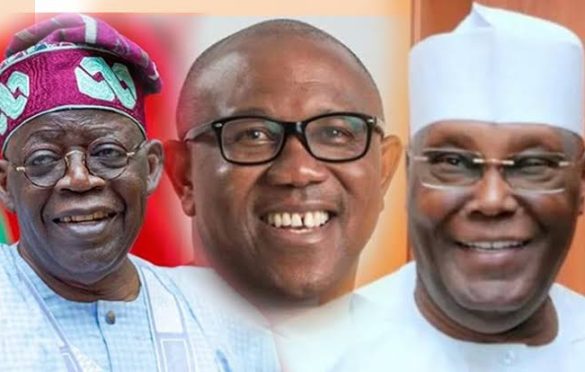
  • Obi, Tinubu, Atiku: Who Gets Inaugurated as Nigeria’s President in 2027?

    Obi, Tinubu, Atiku: Who Gets Inaugurated as Nigeria’s President in 2027?

    By Uzoma Ahamefule

    If Obi emerges as the presidential candidate for the ADC, the battle for Aso Rock in 2027 will be fundamentally altered, with up to 50 per cent of the advantage slipping from Tinubu’s grasp.

    In light of the weight of existing evidence when subjected to objective analysis, the prospect of Tinubu winning a free, fair, and credible presidential election in 2027 is exceedingly unlikely.

    If Atiku were to become the ADC’s presidential candidate, the passionate, citizen-driven momentum currently building nationwide, fuelled by “Obidient” volunteers willing to invest their own resources without expectation, would significantly wane. This would mark a departure from the Labour Party phenomenon of 2023. This erosion of enthusiasm would diminish the ADC’s competitive advantage against the ruling APC and effectively strengthen Tinubu’s position.

    History is a cold sovereign, indifferent to the pleas of the powerful and the pride of the partisan. It has no allies to protect or enemies to spite. It moves only by the relentless engine of facts that remain immune to influence because it lacks the human capacity for favouritism. One must acknowledge this reality of history and accept the stark choice or be consumed by its weight.

    In retrospect, the strategic misstep of the PDP in 2023 was the foundational tragedy that precipitated today’s systemic collapse and the current national catastrophe. History teaches us that repeating the same mistakes without reform is a recipe for stagnation. Persisting in the same failed patterns year after year yet expecting a different outcome defies political logic and the basic tenets of human progress.

    Obi

    ADC members must understand this clearly, put their feelings aside, and face reality. Peter Obi is the one beacon of hope for those seeking an alternative to the current situation, and overlooking his potential would lead to certain defeat. Nigerians cannot afford another era of political vanity and must unite behind the most acceptable option or face the harsh consequences of their own irrelevance – a tragedy of choice, not fate.

    History will not be kind to the ADC if it repeats the same mistake as the PDP in 2023. That decision has now been etched into history as a profound mistake. It serves as a reminder that when political structures ignore the will of the people, the resulting stagnation is a burden shared by all citizens. History beckons; 2027 offers another chance for Nigerians to change this narrative that has long been defined by lamentation and regret. If Peter Obi were to secure the ADC presidential nomination for 2027, it would instantly shift the political landscape, stripping the APC of half its incumbency advantage before a single vote has been cast.

    Based on verifiable evidence and objective analysis, in a free, fair, and credible election, President Tinubu would not win the 2027bpresidential election.

    However, for the ADC and Obi, the real challenge will be not just winning the votes and hearts of Nigerians but also standing resolute against thuggery and manipulation to ensure the will of the people is respected. Appeal to the hearts of Nigerians is only half of the competitive process. The rest involves confronting electoral fraud, battling the weaponisation of state apparatus, stopping ballot snatching and result swapping, preventing the use of fake security forces, stopping the mutilation of result sheets, and ensuring that manufactured data intended to override the public will is not announced. None of these issues can be solved with manifestos and good speeches alone. Without achieving total victory over these forces, the pain of the Nigerian people will only be amplified for another four years.

    Atiku

    In 2003, Atiku Abubakar’s influence in Nigerian politics was considered so significant that President Obasanjo was said to have personally appealed to him for support in his bid for a second term. As was widely reported at the time, had Atiku chosen to contest the PDP presidential primary, many believed that he had the necessary political machinery and delegate loyalty to defeat Obasanjo. In spite of that, he decided against it in the belief that Obasanjo would support his presidential bid after his second term. However, the middle of Obasanjo’s second term was marred by political turmoil surrounding the allegedly unsuccessful “Third Term” agenda.

    Whatever may have happened, Obasanjo had his reasons for not supporting Atiku’s bid for the Nigerian presidency in 2007. Atiku felt betrayed because Obasanjo did not reciprocate his support when the opportunity arose. To this day, the two men are political enemies.

    Atiku, Nigeria’s former Vice President, still remains one of the most formidable figures in the country’s political landscape. Despite pursuing the highest office in the land on several occasions, the presidency has frustratingly continued to elude him. It is difficult to ascertain whether this persistent outcome reflects a cruel twist of fate, misaligned political timing, or the complex dynamics of power itself. The reason remains open to interpretation.

    In keeping with the timeless maxim, one must give to Caesar what is rightfully his. Atiku is a very strong political opponent. His wealth of experience and loyal supporters have long established him as a formidable force and a challenger of undeniable weight. However, despite his stature, the current momentum has eclipsed the viability of his candidacy. At this stage, any attempt he makes to emerge as the ADC flag bearer would be a trial-and-error gamble. Instead, party members should see themselves as engaged in a national rescue mission with Obi at the forefront, while encouraging Atiku to play the role of a statesmanlike kingmaker in support of his candidacy. Ultimately, they would all be winners. A holistic assessment suggests that any deviation would risk plunging the country into yet another collective disaster.

    If this advice is not followed and Atiku secures the ADC’s presidential nomination, the fervent grassroots support that the “Obidient Movement” has organically mobilised across Nigeria—characterised by personal sacrifice and self-funding, as was evident during the Labour Party’s surge in popularity in 2023—would likely dissipate. Such a decline would prove disadvantageous against an entrenched ruling party like the APC, and his emergence could ultimately strengthen the position of the APC and Tinubu.

    Tinubu

    ADC members have accused the APC of orchestrating moves to exclude them from the electoral process in 2027. Despite a wave of gubernatorial defections to the APC, anxiety within the party about the ADC’s involvement in the 2027 presidential race remains persistent.

    Some political pundits and opposition figures have criticized the governors who defected to the APC, citing underperformance in office. Available evidence suggests that these defections are less an endorsement of the party’s achievements and more a reflection of self-interest and political expediency. Many of these governors now appear primarily focused on securing second terms or positioning themselves for Senate seats as their tenures draw to a close. Because they performed poorly, they lack the confidence in their ability to win in a credible electoral process; thus, they seek refuge in APC. Their calculation is clear: by supporting President Tinubu, they erroneously believe that they can leverage access to federal power to secure their ambitions, disregarding the democratic will of Nigerians in the process.

    Mounting developments have left Nigerians increasingly frustrated and dissatisfied with the APC administration’s failure to honour its electoral pledges. Based on verifiable evidence and objective analysis, in a free, fair, and credible election, President Tinubu would not win the 2027 presidential election.

    President Tinubu promised Nigerians a steady supply of electricity and said that if he failed to deliver on this promise during his first term, Nigerians should not vote for him again. He removed the fuel subsidy, which caused great hardship, but Nigerians never saw the impact of its removal or where the money went. He has continued to borrow money, resulting in Nigeria’s foreign debt reaching embarrassing levels, and there have been no visible achievements commensurate with the amount borrowed.

    In terms of security, Nigeria is currently experiencing its worst period. Presently, some villages in Kwara State have been forced to flee their ancestral homes due to terrorist and bandit activities. Many states in the northern part have been in similar or worse situations since the time of the late Buhari administration. The news from other parts of the country is not pleasant. Terrorists and bandits have continued to issue threats, maim and kill, expand their territories, and collect taxes in a sovereign land. How long will Nigerians continue to live in this state of fear and hopelessness?

    In this glaring evidence, how can anyone with integrity and honour start campaigning for a vote for the APC and President Tinubu in the name of connecting to the centre? Most people have indeed sold their conscience for money and recognition.

    Conclusion

    If you sell your dog and buy a monkey, you still have something that squats in your house.

    If Obi is not the flag bearer of the ADC for the 2027 presidential election, then President Tinubu’s inauguration in May 2027 will be guaranteed with little difficulty.

    Please note this warning: if Obi, Atiku, Kwankwaso, or Amaechi, etc., were to leave the ADC at this critical moment for whatever reason, none of them would become Nigeria’s president in 2027, regardless of the party they join. This is because, in effect, they would have inadvertently paved the way for President Tinubu. Consequently, what the opposition requires is not fragmentation but cohesion. This is non-negotiable in the face of formidable power since the ultimate battle is not just to secure votes but also to protect them from manipulation and electoral malpractice. Imperatively, they must remain united, drawing on experience and exercising wisdom to balance disagreement with consensus. Sound judgement is essential at every step—otherwise, the pursuit of 2027 will prove to be yet another illusion.

    Uzoma Ahamefule, a concerned patriotic citizen and a refined African traditionalist, writes from Vienna, Austria. uzomaah@yahoo.Com. +436607369050 (Please send messages only)

  • The State as a Predator

    The State as a Predator

    -By Abdul Mahmud

    Three stories from the north and south regions of Nigeria. Three young Nigerians. Three powerful men. One troubling pattern.

    In Port Harcourt, a young girl, named Ogadinma Miller Uchechi, from Ahoada-West Local Government Area reportedly took photographs of the crumbling structures of Community Secondary School, Odiokwu. The buildings were said to be in a state of decay. Roofs sagged. Walls cracked. Learning, if it was happening at all, was taking place in an environment unfit for children. She did what many young Nigerians now do when institutions fail. She documented it. She posted a video online. Her stated aim was simple. She wanted government attention. She wanted renovation. She wanted a better learning environment for children in her community. According to a report by a local FM station in Port Harcourt, the response she received was not repair work or an inspection team. She alleged that the council chairman, Eugene Epelle, visited her home in the company of his brother and some men. She claimed she was assaulted. If her account is accurate, then a young citizen who attempted to draw attention to a public problem was met not with dialogue but with force.

    In October 2025, in Minna, Niger State, another young Nigerian found himself on the receiving end of state power. Isah Mokwa, a master’s student and student activist at Ibrahim Badamasi Babangida University, Lapai, Niger State, posted criticism of Governor Umar Bago on Facebook. He accused the governor of lies and urged him to focus on curbing banditry in the northern senatorial district rather than appearing on television to defend his record. He also referred to the governor as Governor Amunike, a satirical name popularised by the comedian, Kevin Chinedu, to lampoon corrupt public officials.

    Added to the two cases referenced above is that of 39-year-old Emorioloye Owolemi, who has been remanded in prison custody following a complaint lodged by the Minister of Interior, Olubunmi Tunji-Ojo. Owolemi disclosed that the charges, bordering on alleged cyberstalking, arose from Facebook posts he reportedly made on December 23, 2025, in Igbokoda, Ilaje Local Government Area of Ondo State, in which he questioned the authenticity of the minister’s academic credentials. According to him, the legal action was precipitated by those publications.

    The police arrested Mokwa and Owolemi.

    The charges were not terrorism. They were not armed robbery. They were not kidnapping. They were words. Facebook posts. Political criticism. Mockery. In any functioning democracy, these are protected expressions. They may be sharp. They may be uncomfortable. They may even be unfair. But they are not crimes.

    Placed side by side, these three incidents reveal something more troubling than individual overreactions. They reveal the creeping culture of state tyranny orchestrated not through grand state policies but through the everyday impulses of small offices and big egos. They show how power in Nigeria often understands itself not as stewardship but as entitlement, not as service but as status, not as responsibility but as dominance. At the heart of both cases lies the questions: what is the role of the citizen in a constitutional democracy? Is the citizen a participant or a subject? Is he allowed to question, to document, to criticise, and to satirise power? Or must she seek permission before speaking about public decay and public failure?

    Uchechi’s alleged offence was that she demanded for accountability. She documented the condition of a public school. A public school is funded by public money. Its condition is a public concern. If a classroom is unsafe, it is not a private embarrassment to be hidden. It is a public failure to be addressed. If her allegations of assault are true, then the message sent to other young people is chilling. Do not expose decay. Do not embarrass authority. Do not use your phone to hold power accountable. Silence is safer. Isah Mokwa’s alleged offence was criticism and satire. Owolemi raised questions about the authenticity of the minister’s credentials. Democracies survive on criticism. Nigerian rulers are not absolute monarchs. Governors are not immune from ridicule. In fact, satire has long been one of the healthiest signs of a free society. When a citizen cannot call a governor a liar without risking arrest, the line between democracy and authoritarianism begins to thin out. The danger here is not only to the individuals involved. The danger is systemic. When those in power deploy police officers or personal entourages to intimidate critics, they normalise the idea that authority may be defended by coercion rather than by their stewardship. They teach citizens that speaking up carries personal risk. They enthrone the culture of fear.

    Fear has consequences. It stifles whistleblowers. It silences students. It discourages citizens’ civic engagement. It gives birth to a generation that calculates the cost of every post and weighs the danger of every comment. Over time, this corrodes public discourse and produces apathy. And apathy is fertile ground for corruption and greater avenues for personages of power to intimidate hapless citizens. There is also the institutional danger. The police exist to protect life and property, to enforce law impartially, and not to function as an extension of totalising power. When arrests follow criticisms rather than criminal conduct, the perception grows that law enforcement is selective. Once citizens lose confidence in the neutrality of institutions, trust collapses. And when trust collapses, legitimacy follows.

    Local government chairmen, ministers and state governors wield significant influence in their domains. But their power is not absolute. It is derived from the constitution and from the people. It is bounded by law. When power is personalised, when it becomes a matter of pride rather than principle, governance degenerates into vendetta. It is important to note that allegations remain allegations until tested by law. Due process matters. Fair hearing matters. But even at the level of allegation and arrest, the broader pattern deserves scrutiny. Why do public officials so often respond to criticism with force or threat? Why is there such thin skin in high office? Why does dissent trigger repression rather than reflection?

    One answer lies in the political culture that confuses office with personal honour. In such a culture, criticisms are treated as insults, and insults demand retaliation. Another answer lies in weak institutional constraints. When oversight is fragile and consequences are rare, the temptation to misuse authority grows. Democracy requires a thicker skin. It demands that leaders tolerate discomfort. It requires them to understand that public scrutiny is not hostility but accountability. Governors and ministers who are mocked today can respond with policy tomorrow. A chairman embarrassed by a viral video can renovate the school and invite the young girl to the commissioning. That is how power redeems itself. When power chooses intimidation, it sends a message that the state is not a superintending structure that exists above everyone else but the shield for ego. That message is dangerous in a country already grappling with insecurity, economic hardships and fragile public trust. When citizens see that peaceful criticisms attract punishment, they may either withdraw into silence or seek more radical forms of expression. Neither outcome strengthens democracy. In fact, it imperils democracy.

    Young people, especially students and schoolchildren, should not grow up learning that civic participation is perilous. They should learn that their voices matter. They should learn that documentation of decay leads to reform, not retaliation. They should learn that satire is part of politics, not a pathway to detention.

    Nigeria stands at a critical historical juncture, where the conduct of those in power will define the political heritage of the next generation. The path ahead diverges sharply towards a maturity of accountable leadership or a descent into a systemic tyranny enforced by police officers and private retinues of enforcers. This choice is not merely about policy, but about the very soul of the nation’s governance and whether authority will serve the people or become a tool for their subjugation.

    The recent disturbing occurrences in Port Harcourt, Akure and Minna are not isolated curiosities, but urgent heralds of a deeper threat to Nigeria’s constitutional democracy. They serve as a stark reminder that democracy cannot be sustained by the act of voting alone; it requires a labour of restraint, reverence for dissent, and the refusal to weaponise state institutions for personal or political warfare. When these pillars crumble, power ceases to be the shield and instead becomes the marauding predator, turning the republic into its prey. If the citizens fail to confront these emerging patterns of intimidation and institutional sabotage now, they risk a future where silence is the only safe harbour. For all that’s worth, they must recognise that the long-term cost of their quietude will be far greater than any immediate discomfort caused by criticisms or truth-telling. Protecting the right to speak and demanding accountability today is the only way to ensure that the democratic project does not wake up to find its freedom traded for the peace of the graveyard.


  • Soludo and Mbah’s Demolition of Properties Under Suspicion as Crime Hideouts: Right or Wrong?

    Soludo and Mbah’s Demolition of Properties Under Suspicion as Crime Hideouts: Right or Wrong?

    ​By Sebastine Okafor, Ph.D.

    ​In recent times, there have been reports of state governments in parts of South-East Nigeria, especially Anambra and Enugu States, demolishing private houses alleged to be hideouts for kidnappers and criminal groups. While the fight against insecurity is necessary and urgent, the method of destroying property based on suspicion raises serious legal and moral concerns. This article examines such actions through the lens of Nigerian law and fundamental human rights.

    ​The 1999 Constitution of the Federal Republic of Nigeria (as amended) is the supreme law of the land. Section 44(1) of the Constitution clearly states that no movable or immovable property shall be taken possession of compulsorily without prompt payment of compensation and without access to a court of law. This means that even when the government seeks to acquire or destroy property, it must follow due process. Any action taken outside this provision is unlawful.

    ​Demolishing a person’s house because it is suspected of being used for criminal activities does not automatically meet the requirement of due process. Suspicion is not proof. In law, every person is presumed innocent until proven guilty by a competent court, as stated in Section 36(5) of the Constitution. This principle is central to justice. When a house is destroyed without a court order or proper investigation, it punishes the owner without trial. This goes against the basic Rule of Law.

    ​In many cases, properties targeted for demolition may not even belong to the suspected criminals. Landlords may have rented out their buildings without knowledge of their tenants’ illegal activities. Destroying such houses punishes innocent citizens who have committed no offense. This form of collective punishment is not supported by Nigerian law. The courts have held in several cases that punishment must be personal and based on proven guilt.

    ​It is also important to consider the right to a fair hearing under Section 36(1) of the Constitution. Before any action that affects a person’s rights or property is taken, the individual must be given an opportunity to defend themselves. Demolition carried out without notice or hearing violates this right. Even where there is strong suspicion, the proper step is to investigate, arrest suspects, and prosecute them in court.

    ​Supporters of such demolitions often argue that they serve as a deterrent to crime. While deterrence is a valid goal in criminal justice, it must not come at the expense of legality. The government is expected to lead by example by obeying the law. If the state begins to act outside the law, it weakens public trust and sets a dangerous pattern where rights can be ignored in the name of security.

    ​There are also existing laws that guide how properties linked to crime should be handled. For instance, the Administration of Criminal Justice Act (ACJA) provides procedures for the seizure, forfeiture, and management of assets connected to criminal activity. Under this law, a court must first establish that the property is indeed linked to crime before ordering forfeiture or destruction. This ensures that actions are based on evidence, not mere claims.

    ​In Anambra State under Charles Soludo, recent demolitions include the Airtight Guest House and Bar at Y-Junction, Okpuno, Awka South LGA in March 2026. The operation, led by Mr. Ken Emeakayi, Special Adviser on Community Security, reportedly recovered illicit substances, an illegal firearm, and evidence suggestive of prostitution. Concerns were raised about the speed and political undertones of the demolition. Additionally, operatives of the Operation Clean and Healthy Anambra Brigade (OCHAB) demolished several structures at the Building Materials International Market in Ogidi, Idemili North LGA, citing that these were dens of criminals and hoodlums.

    ​Similarly, in Enugu State under Peter Ndubuisi Mbah, demolitions include a large farm at Ogbeke-Nike housing poultry, piggery, and plantain plantations where firearms and other items were recovered, as well as properties at Nkwubor Layout in Emene, where 17 firearms, shrines, charms, and mini Indian hemp farms were destroyed. On October 5, 2024, a building in Amaebo Owelli, Awgu LGA, was also demolished after being identified as a kidnappers’ den. These actions were supervised by the Enugu Capital Territory Development Authority (ECTDA).

    ​In response to questions about the legality of these demolitions, Mr. Uche Anya of ECTDA stated that the exercise was backed by a 2016 Enugu House of Assembly law and supported by the state’s anti-kidnapping law and the Criminal Code. He also noted that the government would take over demolished properties for public use, suggesting they could become playgrounds, parks, or healthcare centers.

    ​While these statements may appear convincing, they overlook critical constitutional principles. No law, whether at the state or federal level, allows for property to be destroyed based on suspicion without giving the owner the opportunity to contest the claim in court. Section 44(1) and Section 36 of the Nigerian Constitution remain binding and override state-level proclamations. Even if properties are suspected of criminal use, evidence must first be presented in a competent court, and owners must be notified. Failure to adhere to these steps violates both domestic law and internationally recognized human rights, including the African Charter on Human and Peoples’ Rights.

    ​Moreover, the argument that demolished properties will be converted for public use does not justify taking private property without compensation or due process. Such actions risk undermining public trust, create a precedent for abuse, and may be politically motivated under the guise of security operations. They may also punish innocent landlords and tenants who have no connection to crime, raising serious questions about collective punishment.

    ​A better approach to tackling kidnapping and related crimes is to strengthen intelligence gathering, improve policing, and ensure swift prosecution of offenders. Courts can order the confiscation of properties proven to be used for crime after due process. This method respects the law while ensuring justice. Public awareness and citizen engagement are also vital. Property owners should document tenants carefully and report suspicious activity, creating a partnership between the government and citizens in maintaining security.

    ​However, while the desire to end kidnapping and insecurity in Anambra and Enugu States is understandable, demolishing houses based on suspicion or unverified claims is not supported by Nigerian law. It violates constitutional provisions on property rights, fair hearing, and the presumption of innocence. The government must act within the law to maintain legitimacy, protect human rights, and ensure that justice is done and seen to be done.

    ​Furthermore, these extra-judicial demolitions sometimes carry significant political undertones that cannot be ignored. Rapid destruction of properties, often under publicized operations, can create the impression of selective targeting, which raises concerns about fairness and the abuse of power. When actions appear politically motivated, they risk eroding public confidence in state authorities and the security agencies involved.

    ​Normalizing extrajudicial property destruction under the guise of fighting crime sets a dangerous precedent, where suspicion alone becomes justification for violating citizens’ rights. Such practices could be exploited to intimidate opponents, settle personal disputes, or control communities, weakening both justice and democracy.

    ​The fight against crime must be firm but lawful; any approach that sidesteps due process, disregards constitutional safeguards, or punishes the innocent diminishes the credibility of the government and harms the Rule of Law it claims to uphold.

  • The Parable of the Knobheads

    The Parable of the Knobheads

    -By Abdul Mahmud

    There was a country blessed with every gift a nation could desire and cursed with rulers who mistook noise for wisdom. Rivers ran wide across the land and the soil promised abundance while the rulers spoke loudly and the land waited quietly. They called themselves rulers. The citizens called them knobheads. Every word they uttered seemed certain, every gesture grand, yet the roads broke beneath their feet, the schools cracked before their eyes, and the hospitals whispered the failure of their care as the country moved perpetually backwards. For many years the affairs of the country fell into the hands of rulers who believed power was proof of intelligence. They mistook authority for knowledge. They occupied high offices that demanded imagination and discipline, though many had neither.

    A knobhead, the citizens said, is a ruler who bangs his fist on the table and calls it policy. He mistakes noise for thinking. He believes that the screaming of commands is the same as the work of leadership. In this country, the knobheads ruled in circles. When problems appeared, they did not study them. They attacked them with speeches. When the economy faltered, they formed committees and praised themselves for forming them. When citizens complained, they answered with threats or silence.

    The roads told the real story.

    In a country where public wealth was counted in billions of oil revenue, many roads resembled abandoned paths. Potholes opened like wounds in the earth. A journey that should take an hour took days. Drivers cursed. Traders watched their goods spoil in traffic. Children jostled along sidewalks that crumbled beneath them. The knobheads drove past these roads in long convoys, their sirens clearing the way from problems they had created. The hospitals also spoke. Some stood as mere consulting clinics. Others as quiet monuments of neglect. Beds were scarce. Equipment was broken. Doctors worked with courage in conditions that mocked their profession. Nurses carried trays with tired hands. Families waited hours for medicines that never arrived. In private conversations, the rulers promised improvements. In public, they praised progress that no one could see. When illness struck, the knobheads travelled abroad for treatment, leaving behind the hospitals they claimed to have repaired. Schools suffered the same fate. Classrooms cracked under the weight of indifference. Teachers struggled to hold the attention of children who deserved far more than chalk and blackboards. Young citizens finished their education with certificates that opened no doors.

    The knobheads spoke of youth empowerment at conferences while graduates roamed the streets in search of work.

    In time, the citizens learned to read the language of knobheads. A new project announced with great ceremony meant the old one had failed. Speeches about sacrifices meant that the citizens would pay the price. A promise of reform meant the same habits continued under a different name.

    The knobheads loved the theatre of governance. They loved the sound of applause. They organised grand events where ribbons were cut and cameras flashed. They built arches of celebration around half-finished projects. They spoke with confidence about the future while the present crumbled around them.

    A country of great potential became one of practised performances. In the markets, the traders watched these performances with a mix of patience and disbelief. They understood something the knobheads did not. Running a stall requires attention. Running a farm requires planning. Running a transport business requires discipline. Ordinary citizens managed these tasks every day with skill and care. They counted their money. They carried baskets of yams, tomatoes, and onions. They haggled over prices. They mended tools. They worked when the sun rose and rested when it set. They wondered why their rulers could not manage their country with the same seriousness. Some defenders of the knobheads argued that leadership is difficult. They said the problems of the country were too large for any government to solve quickly. The citizens listened to these explanations and shook their heads. They knew that incompetence can’t be passed off as difficulty.

    A storm may challenge a captain, though only the fool steers a ship toward the rocks and blames the sea.

    As the years passed, the damage grew deeper. Industries closed. Power supply remained unreliable. Security faltered in towns and cities that once knew peace. Citizens who loved their country began to japa to distant lands. Skilled workers crossed borders. The knobheads responded with speeches about patriotism. They told the citizens to endure hardship in the name of national pride. The speeches sounded hollow to those who had endured enough.

    The tragedy of the knobheads lay in their refusal to learn. Power surrounded them with praise and protected them from truth. Advisers told them what they wanted to hear. Loyalists applauded their worst decisions as the best invention after sliced bread. In such an environment, even a thoughtful person may lose his head. The knobheads lost theirs a long time ago. Still, the citizens endured. They voted when elections came. They debated in newspapers and on street corners. They raised their children with the hope that one generation might succeed where another had failed.

    In quiet conversations, they asked the same question: how long can a country survive under the rule of knobheads?

    The answer lies in the resilience of the citizens. A country ruled by knobheads can endure for years, even decades, but joy comes when citizens are bold to say: enough is enough.

    The obsequious display of power by knobheads is a burden on a country. Authority without competence is a greater danger to public life. Any country that entrusts its destiny to knobheads should not be surprised when underdevelopment replaces development, power moves through it like a shadow, heavy and blind, careless about the impacts of its movements on ordinary citizens while the roads remain broken, schools remain empty, and hospitals echo the long absence of care.

    This is how you know a country ruled by knobheads: they sit in high offices, their hands on papers they scarcely read, eyes on applause they don’t deserve, decisions made with noise and commands issued with immediate effect while farmers work the land, teachers teach without books, traders keep their stalls open, pupils learn patience from classrooms that have forgotten them, and hapless citizens either carry their lives through markets, through long journeys, and through days of waiting for the end of their miseries that will not come, or watch convoys of knobheads that flash past them and the ceremonies of banners that follow.

    The citizens move neither forward nor backwards with their lives while always measuring and renewing hope against the steady grind of survival in a country ruled by knobheads who persist in their woeful rulership, oblivious that they write themselves as jokes and cautionary tales, stories of folly and betrayal that the present generation will recount to the future, once enough becomes more than enough!

  • Kingsley Udeh – A Technocrat at the Helm of Innovation

    Kingsley Udeh – A Technocrat at the Helm of Innovation

    By Pat Onukwuli

    Leadership does not always arrive with fanfare; sometimes it reveals itself in subdued gestures. On a crowded morning flight from Enugu to Abuja earlier this year, as passengers rose from their seats into the familiar aisle congestion after landing, amid the shuffle of impatience and luggage retrieval, one man quietly stepped aside. He beckoned other travellers to pass ahead, no display of rank, no assertion of authority, just a simple act of courtesy that spoke more eloquently than any speech.

    Only afterwards did recognition settle in the man was Kingsley Tochukwu Ude, Nigeria’s Minister of Innovation, Science and Technology. In a political culture where proximity to power often magnifies posture rather than humility, such quiet restraint felt striking. Yet the gesture seemed less deliberate than instinctive, suggesting that composure is not merely a mannerism, but a defining thread running through his professional journey.

    At 45, Ude belongs to a generation shaped by Nigeria’s democratic rebirth and the rise of the global technology era. His academic journey, from the University of Nigeria, Nsukka, to the Universities of Nottingham and Stellenbosch, reflects both discipline and depth, culminating in a focus on comparative public procurement law. Though often viewed as technical, procurement sits at the very heart of governance, determining whether public funds build infrastructure or vanish into inefficiency, where policy ultimately meets reality.

    Ude’s professional ascent followed a similarly rigorous path. Elevated to the rank of Senior Advocate of Nigeria, he distinguished himself in legal practice while contributing to academia as a lecturer and researcher. His tenure as Attorney-General and Commissioner for Justice in Enugu State further bridged theory and governance, translating legal principles into institutional reform. These experiences, academic scholarship, professional excellence, and executive responsibility now converge at the Federal Ministry of Innovation, Science and Technology. Yet credentials alone do not transform institutions. Résumés may impress; results persuade.

    Since assuming office in November 2025, the ministry has begun signalling a shift, from symbolic custodian of science policy to a strategic driver of innovation. The emphasis is gradually moving from imagination to implementation, from aspirational rhetoric to practical ecosystems.

    One internal milestone illustrates this transition. Five ministry officers recently earned national recognition under the federal government’s Digital Literacy for All workforce initiative. At first glance, the achievement may appear modest. Yet institutional credibility begins internally. A ministry cannot champion digital transformation while operating with analogue systems. Reform must start at home.

    Beyond internal capacity building, Nigeria’s presence in global innovation conversations has expanded. Participation in the World Economic Forum in Davos and the establishment of the Nigeria House platform positioned the country as more than a passive observer in international technology networks.

    Visibility alone does not create innovation, but invisibility guarantees irrelevance. More consequential, however, are emerging cooperation frameworks with the European Union under Horizon Europe, partnerships capable of unlocking research funding, collaborative laboratories and technology transfer. After all, innovation policy seldom advances through theatrical announcements; it grows through the quiet accumulation of agreements, alliances and institutional linkages that gradually shape thriving ecosystems.

    Perhaps the most consequential shift under Ude’s stewardship is the emphasis on commercialising research outputs. For decades, Nigerian universities have produced commendable scholarship that rarely moves beyond academic journals. Ideas flourished; industries lagged. Publications multiplied; patents remained scarce.

    The ministry’s evolving agenda seeks to bridge this divide by encouraging research that continues beyond discovery toward industrial application. In other words, the challenge is no longer generating ideas; Nigeria has plenty of those. The real challenge is ensuring that ideas move from concept to creation and from invention to industry.

    Without the right structures, creativity may abound, yet productivity remains constrained. Nigeria’s innovation landscape has long reflected this paradox: vision without execution, strategy without systems, and conferences without commercialisation. True innovation ecosystems are rarely born from sudden breakthroughs; they emerge through deliberate institutional alignment, education that builds STEM capability, capital that nurtures start-ups, regulation that welcomes new technologies, and infrastructure that sustains digital growth. In this delicate structural design, leadership temperament becomes decisive.

    Innovation flourishes where collaboration replaces hierarchy and curiosity outpaces arrogance. The quiet courtesy glimpsed in that aircraft aisle may seem anecdotal, yet it hints at a leadership temperament suited to building ecosystems, because arrogance closes networks while humility opens them. Still, humility alone cannot drive national transformation; in cabinet rooms dominated by louder portfolios such as finance, petroleum and defence, the innovation agenda demands not only quiet competence but also firm advocacy.

    The stakes, therefore, are considerable. Nigeria’s economic future cannot rest indefinitely on natural resources. Oil wells may decline, but intellectual capital expands, and nations that convert knowledge into technology, and technology into industry, shape the modern global economy.

    For Nigeria, innovation is therefore no longer a luxury policy but a development imperative. Yet optimism must remain disciplined: structural constraints such as limited research funding, persistent brain drain and fragile university–industry linkages endure. Real transformation rarely arrives through sweeping miracles; it begins with clear direction.

    Early signals from the ministry, such as capacity building, international engagement, and a rekindled focus on research commercialisation, suggest that important groundwork is underway. Yet in a country where ambitious policies have often faded once political attention shifted, lasting progress will depend less on individual charisma than on institutional persistence. What is emerging, for now, is the portrait of a technocrat intent on repositioning a ministry long overshadowed by more prominent portfolios.

    The task is no longer to celebrate ideas but to build systems that turn them into enterprises. Nigeria is not short of imagination; its universities, entrepreneurs and young innovators prove that daily. What the country needs now are the structures that can transform that imagination into industry.

    If Kingsley Ude sustains the path he has begun, bridging vision with execution and policy with productivity, the quiet humility glimpsed on that crowded aircraft aisle may prove to be more than modesty; it may be method. And for a nation striving to convert potential into progress, could this distinction make all the difference?

    Dr. Onukwuli is a legal scholar and public affairs analyst. patonukwuli2003@yahoo.co.uk