Category: Opinion

  • Attack on Peter Obi: If I were Tinubu

    Attack on Peter Obi: If I were Tinubu

    By Ikechukwu Amaechi

    A common African adage says that “if a witch cries in the night and a child dies in the morning, we do not go to the soothsayer to ask what killed the child.” Edo State Governor, Monday Okpebholo, is very much aware of this truism.

    In July 2025, he declared, quite unreasonably, that the presidential candidate of the Labour Party in the 2023 elections, Mr. Peter Obi, must obtain security clearance from him before visiting Edo State again, otherwise, his security cannot be guaranteed.

    Obi’s crime was that earlier that month, he visited St. Philomena Hospital School of Nursing Sciences in Benin, where he made a donation of N15 million. Rattled by the warm reception accorded him by the staff and students of the school, Okpebholo went berserk.

    Claiming, without any shred of evidence, that Obi’s visit triggered violence and the death of three persons, Okpebhelo, in a smattering of English, declared haughtily: “There is a new sheriff in town. He cannot just come into Edo without informing me. His security will not be guaranteed. If anything happens to him here, he will have himself to blame. I am not joking.”

    That was a direct threat to Obi’s life and a dangerous precedent for democracy, which ought to have elicited a sharp rebuke from the Nigerian state. None came. I don’t know, though, if any discerning Nigerian expected any. But even when intense backlash forced Okpebholo to say that his harebrained threat should not be misconstrued as such, the Edo State All Progressives Congress (APC) chairman, Jarret Tenebe, doubled down and escalated the threat at a press conference in Benin, claiming that Obi is ‘well-hated’ by Edo people.

    “The governor can say that because of the kind of hatred people have for Peter Obi in the state including me and when you have so many of us that have hatred for people like that… it is proper for him to tell the governor before he comes so that people like us can be sent on errand out of Edo before he can come and possibly go.”

    During a live interview on TVC owned by President Bola Tinubu, he was unapologetic. “The opposite of hate is love. If I don’t love you, I hate you. I know I expressed myself, so I do not hide my feelings. I do not like Peter Obi. I still maintain it, and if I do not like somebody, I hate the person… I am an extremist. I do not like Peter Obi; I hate him. I have the right to like or hate.”

    Obi, deeply hated by Edo people? Incredible! This is a state that is unarguably the melting pot of Obidients in Nigeria, a state where he floored Tinubu in the 2023 presidential election, polling a total of 331,163 as against Tinubu’s 144,471 votes. Many Nigerians were nonplussed because that was a new low. Yet, the government did nothing against these self-confessed merchants of hate.

    And barely seven months thence, there was a fulfilment of Okpebholo’s threat: the chicken coming home to roost, if you like. It is a classic case of the witch crying in the night and a child dying in the morning.

    On Tuesday, February 24, Obi was back in Benin City to formally welcome Barrister Olumide Akpata, the 2023 Edo State Labour Party governorship candidate, into the African Democratic Congress (ADC). He was not alone. Two former governors of the state – Chief John Odigie Oyegun, former APC national chairman, and Senator Oserheimen Osunbor – were also there.

    And then, the gunmen came calling. First, they went to the ADC secretariat in Benin City where they wreaked havoc. But the opposition leaders, apparently their main targets, had left the secretariat before their arrival. Undaunted, and in the manner of a child whose father sends to steal from a house, who breaks down the door with his bare foot, the hoodlums trailed them to Oyegun’s home in the Benin GRA where they rained bullets. Obi and the other ADC leaders escaped death by the whiskers. Of course, knowing who their backers are, the hoodlums became arrogant, losing all sense of precaution – a case of government officials terrorizing fellow citizens because of political differences.

    With all eyes on him, Okpebholo rushed out a press statement denying culpability. His administration will neither engage in attacks against law-abiding Nigerians, irrespective of political affiliation, nor instruct any arm of the Edo State Government to target members of any political party, he claimed.

    But he couldn’t help but take a potshot at his bête noire. “It is now evident that the ADC and by extension Peter Obi is mischievous and making efforts to cast aspersion on the good things that this administration is doing. It only suggests to us that Peter Obi is synonymous with violence and the state government will not condone such acts,” Okpebholo said in the statement issued by his spokesman, Patrick Ebojele.

    But can anyone blame him? Obi has become a fair game for every political nonentity in Nigeria. Last year, Okpebholo queried the source of Obi’s wealth, wondering where he got N15 million. But if not for Nigeria’s unprincipled brand of politics that has become an all-comers affair, elevating thugs and illiterates to positions of authority, who is Okpebholo, a man unworthy of unstrapping Obi’s shoe lace, to abuse him?

    On July 24, 2025, in my article, Only in Jagaban’s Nigeria, I wrote: “It is insulting for an Okpebholo to ask Obi, a successful businessman and one of the few Nigerian politicians who financed his election without the help of any godfather, where he got N15 million from. One wonders what he was doing when Obi became chairman of Fidelity Bank at the young age of 37.”

    Attack on opposition leaders is an ill wind that blows no one, not even the masterminds, any good. This is not about Peter Obi. It is about the penchant of the Tinubu-led APC to asphyxiate all opposition political parties. It is typical of the president’s toxic politics that does not take prisoners.

    It is ironic that a party that boasts of 31 state governors, absolute majority in the two chambers of the National Assembly, 40 million registered members, a president that is in firm control of all the levers of power and absolute loyalty of all officers and men of the armed forces of the Federal Republic, the judiciary and the so-called Independent National Electoral Commission, will not allow the weakened opposition parties to breathe. ADC meetings were disrupted in Kaduna and Lagos states. And now, Edo State. And there is every reason to believe that state agents are behind these atrocious acts. And most of them are doing it because they are reading, perhaps correctly, Tinubu’s body language.

    I find it very distasteful that some people are even blaming Obi for going to Edo State. Under Tinubu’s watch, violence has become an acceptable political language. It will be worse as the silly season of politics goes into full swing. During the Abuja Municipal Area Council (AMAC) chairmanship election on February 21, ADC agent Musa Abubakar was killed at the Gwagwa polling unit. His crime? Attempting to safeguard votes at his polling station. No arrests were made. Nigerians have moved on.

    The violence will be worse in 2027. The augury is too stark to be ignored. Emboldened by the body language of the president, many state governors will stop some opposition politicians and their political parties from using public facilities in their states for campaign purposes. Some will decree against such campaigns outright. The Federal Capital Territory Minister, Nyesom Wike, did it in 2023 when he was Rivers State governor, and to borrow his favourite phrase, the heavens did not fall. In 2027, many copycats will pirate the political brigandage which he patented in 2023.

    Democracy cannot be a diktat. What is happening is frightening and dangerous. If I were President Tinubu, I will rein in the dogs of war and ensure that nothing happens to Peter Obi and, indeed, any of the opposition leaders. He is the President and Commander-in-Chief of the Armed Forces of Nigeria. He is the country’s chief security officer. And the state governors, even the few that are still in opposition political parties, defer to him like never before.

    Moreover, the primary responsibility of a government is to secure the lives and properties of its citizens irrespective of political, religious and ideological leaning. Tinubu’s cannot be any different. Peter Obi has not committed any crime aspiring to be president of Nigeria, even when he is Igbo. It will be a tragedy if that aspiration costs him his life under Tinubu’s watch. It may well be true that if he is killed today in a politically motivated assassination as it almost happened in Benin City on Tuesday, the heavens will not fall. But Nigeria may never recover from such heinous crime.
  • Silence Finally Learns to Speak

    Silence Finally Learns to Speak

    -By Abdul Mahmud

    There is a special kind of silence that follows power everywhere it goes. It is not the gentle quiet of the monastery or the eerie quiet of mourning. It is the awkward, accusatory silence of a phone that once overheated from devotion and now lies cool, innocent, and suddenly uninterested. Such is the fate of the phone of Yusuf Buhari, son of the one-time military ruler and former President, who recently lamented that ever since they vacated the Presidential Villa, his phone has fallen into an eloquent silence. “After Goodluck Jonathan made that call to my dad to congratulate him on his victory as Nigeria’s next president, I used to receive up to 2,000 calls a day from different people. The calls would start coming in as early as 4 a.m. – from old classmates, acquaintances, extended family members, former maids, and servants who had once worked for the Buhari family at some point. There were also callers with bogus, untraceable explanations, but my assistant would simply come up with polite excuses to end those conversations quickly! But the moment my dad left power and handed the baton to His Excellency Bola Tinubu, the calls dropped dramatically to about 100 a day. After my dad was buried, they reduced even further to around 20 daily – usually just from siblings and business associates. The phones no longer ring. Nobody truly cares”.

    Yusuf Buhari’s lament is therefore not merely a personal reflection, it is indeed a public service announcement about the aura of power in Nigeria.

    Once upon a presidency, the phone rang like a Pentecostal bell on Sunday morning. Calls came in torrents. Old classmates rediscovered brotherhood. Distant cousins suddenly remembered shared ancestors. Former house helps developed emotional attachments that demanded urgent reconnection. Even strangers arrived armed with stories so creative they deserved the Nigerian Prize for Literature. Everyone wanted to talk. Everyone needed a moment. Everyone was important. The phone became the national shrine. Then came the unthinkable tragedy. Power packed its bags. The baton of power was handed over. Democracy did its modest little dance like Jimmy Bo Horne’s dance across the floor. And something even more devastating occurred. The phone began to rest. From two thousand calls to one hundred. From one hundred to twenty. From the roar of affection to the whisper of obligation. From the expressive euphoria of power to the familiarity of family group chats. This is not just decline. This is the austerity of pretend affection in the absence of power.

    Let us pause and admire the honesty of Yusuf Buhari. The phones no longer ring. Nobody truly cares. It is a brave thing to say out loud what the entire country already knows but pretends not to know. In Nigeria, love is renewable only when it is connected to power. Affection is strongest where one is close to the power. Once power goes, the allure of friendship wanes.

    This discovery is not unique to Nigeria. In the United States of America, it was made with cheese. Lyndon B. Johnson, once the most powerful man on earth, reportedly complained that after leaving the White House, senators who once hovered like loyal furniture suddenly developed hearing problems. The phone that rang relentlessly during legislative battles and war briefings became suspiciously quiet. Johnson, a man who could bend Congress with a stare and a threat, learned the old lesson in a new accent. Arms twist only when there is something left to extract. Power had been the caller, not friendship. Jimmy Carter also encountered the same silence, though he dressed it in Southern politeness. After leaving the White House, he once noted how Washington’s warmth cooled, how invitations thinned, and how the phone lost its urgency. Carter, a man who traded power for principle and later built houses with his own hands, learned that integrity is admirable but not bankable. Washington respects power more than character. When the office disappeared, so did the interest. The calls, it turned out, had been for the presidency, not the person. The meaning that Yusuf Buhari’s lament provides is that relevance only obeys the law of power. If you have power, or close to power, the laws of things will bend over to your wishes. Relevance in public life has very little to do with ideas, values, or service. It has everything to do with power. You call he who has power that can move the mountain for you. Who can whisper your name into the right ears at the right time. When that ability expires, so does the crowd.

    Power in Nigeria is a balm. It heals old grudges. It restores forgotten relationships. It multiplies cousins like loaves of bread. It turns silence into urgency. When you have it, people call at four in the morning to check on your spiritual wellbeing. When you lose it, they discover the importance of respecting your privacy. The pattern is so consistent. The same society that will not answer calls from the powerless will accuse them of being inaccessible. The same people who once dialed endlessly will later say they did not want to disturb you in your grief. Courtesy suddenly appears when usefulness disappears.

    But let us be fair. This is not cruelty. It is efficiency. Why waste airtime on someone who cannot move a file, sign a paper, influence a contract, or secure a favour. Friendship must also eat. Concern must have logistics. Sympathy needs a budget. The phone, after all, is not just a device. It is a moral instrument. It measures value in real time. It rings for the important and sleeps for the irrelevant. It is democratic only in theory. In practice, it obeys hierarchy. What makes this moment cheesy is the shock that accompanies the discovery. As if the silence is a betrayal rather than a curriculum. As if the phones were ringing out of love rather than calculation. As if two thousand daily calls were ever sustainable without the fuel of power. This is the Nigerian lesson that no civics class teaches. Power is the loudest ringtone. Without it, even your obituary struggles for attention. And yet, there is something profoundly instructive in this quiet. For the first time, the silence is honest. The remaining calls are few, but they are real. Siblings call because blood still remembers. Business associates call because interests endure. Everyone else has returned to their natural habitat, which is waiting for the next powerful number to save.

    In this silence, truth clears its throat. It tells us that many of our public relationships are seasonal. They follow office terms, not human bonds. They are loyal to chairs, not people. They are attached to corridors, not conscience. The lie which underlines Yusuf’s lament is that care is proven by ringing phones. But care has always been something else. Care is presence when there is nothing to gain. Care is the call that does not need to be returned. Care is the visit that cannot be monetised. By that standard, the phones were probably not ringing with care even at their loudest. So, maybe this is not a fall from grace. Maybe it is a graduation. The fact which stays stark is that silence strips away the noise and leaves behind a smaller, sturdier circle. It replaces the choruses of opportunists with a handful of humans. It enthrones reality.

    If those who inhabit the high chambers of power would cure themselves of this peculiar affliction, they must first reconcile with the enduring truth: it is when power recedes that solitude reveals its sharpest edge. They must learn to dwell within the natural order of things, where silence, long suppressed, at last finds its voice. They must accept that the kingdom of power admits no rival sovereign; there are never two kings upon its throne. Until that wisdom is embraced, every departure from office will be accompanied by the same bewildered lament, uttered only in differing accents.

    The phones no longer ring.

    They will never ring for the reason that Yusuf knows: “Soja go” with old friends; and Soja arrives with new friends who in turn arrive with new ring tones.

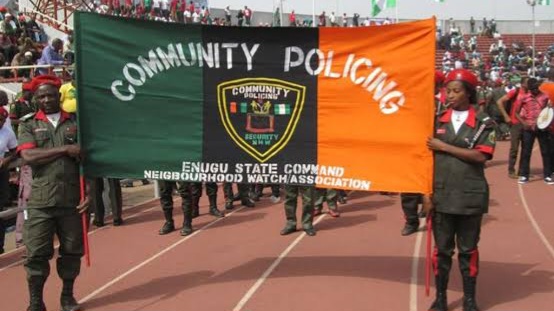
  • Neighborhood Watch and Vigilante Groups: Strengthening the Future of Community Policing in Nigeria

    Neighborhood Watch and Vigilante Groups: Strengthening the Future of Community Policing in Nigeria

    By Dr. John Egbo

    Neighborhood Watch security outfits and community vigilante groups represent a vital yet often under-optimized pillar of community policing in Nigeria. When properly constituted, professionally managed, and insulated from political manipulation, these grassroots structures can serve as force multipliers for formal law enforcement while reinforcing public trust, social cohesion, and local resilience.

    At their core, Neighborhood Watch systems embody the principle that security is not merely a state function but a shared civic responsibility.

    Contemporary policing theory increasingly emphasizes concepts such as collective efficacy, situational crime prevention, and procedural justice, frameworks that recognise the decisive role communities play in sustaining order. In societies confronting complex security challenges, localized intelligence, social legitimacy, and cultural familiarity often prove as critical as institutional capacity.

    Community Legitimacy and Structural Integrity

    The effectiveness of community-based security groups depends fundamentally on legitimacy. Representation across village units, age grades, and social strata ensures that such groups are perceived not as instruments of coercion but as custodians of communal safety. Recruitment grounded in integrity, reputation, and verifiable background checks is therefore not an administrative formality but a strategic necessity.

    Equally important is organizational independence. Neighborhood Watch groups lose credibility when captured by political interests, private disputes, or opportunistic actors. Security institutions that become entangled in patronage networks risk transforming from stabilizing forces into vectors of insecurity. Safeguarding neutrality is thus essential to sustaining public confidence.

    Fair and regular remuneration further underpins institutional integrity. Economic vulnerability can expose personnel to compromise, undermining operational effectiveness and eroding public trust. Compensation should be understood not simply as payment for services rendered but as a preventative safeguard against corruption, collusion, and divided loyalties.

    Functions Within the Community Policing Ecosystem

    Neighborhood Watch personnel perform a distinctive and indispensable role within the broader policing architecture. As embedded members of the community, they possess contextual awareness unavailable to external actors. Their routine visibility enhances deterrence, while their familiarity with local dynamics facilitates early detection of emerging threats.

    Acting as the “eyes and ears” of both community leadership and the , these groups contribute to a proactive security posture. Crime prevention increasingly depends on anticipation rather than reaction. Observing patterns of disorder, unusual movements, or behavioral anomalies enables interventions before incidents escalate into full-scale crises.

    Their contributions extend beyond prevention. In post-incident contexts, Neighborhood Watch groups often provide valuable local intelligence, eyewitness perspectives, and cultural interpretation — elements critical to effective investigation. During festivals, ceremonies, and communal gatherings, their presence strengthens crowd management, traffic coordination, and public reassurance.

    Persistent Systemic Challenges

    Despite its conceptual appeal, community policing in Nigeria continues to confront structural impediments. Inadequate training, resource constraints, fragmented coordination, and corruption have collectively constrained its transformative potential. These challenges are not merely operational; they are institutional and cultural.

    Corruption, in particular, exerts a corrosive effect on both formal and informal security institutions. Where accountability mechanisms are weak, public trust deteriorates, compliance declines, and legitimacy fractures. A policing system cannot command societal cooperation when its moral authority is contested.

    Compounding these institutional pressures are evolving security threats — kidnapping, banditry, organized criminality, and communal conflicts — which demand adaptive, intelligence-driven responses. No centralized structure, however robust, can operate effectively without localized partnerships.

    Strategic Pathways Forward

    For Neighborhood Watch and vigilante frameworks to achieve sustainable impact, reforms must move beyond rhetoric to structural recalibration:

    Professionalized Recruitment:
    Selection processes must prioritize integrity, psychological suitability, and community credibility rather than patronage or expediency.

    Capacity Development:
    Training should encompass security awareness, conflict de-escalation, intelligence observation, human rights principles, and legal boundaries. Professional competence enhances both effectiveness and legitimacy.

    Institutional Safeguards:
    Clear operational guidelines, oversight mechanisms, and reporting structures are essential to prevent abuse, mission drift, and jurisdictional conflict.

    Economic Stability:
    Regular remuneration reduces vulnerability to compromise and reinforces professionalism.

    Collaborative Governance:
    Structured cooperation between community groups, traditional institutions, local governments, and formal law enforcement fosters coherence rather than duplication.

    Rule of Law Consistency:
    Selective enforcement erodes legitimacy. Equal accountability strengthens institutional credibility and societal compliance.

    Conclusion

    Neighborhood Watch groups are neither substitutes for formal policing nor relics of informal security traditions. Properly integrated, they represent strategic assets within a modern, community-centered security framework. Their greatest contribution lies not merely in surveillance or response, but in cultivating a shared culture of responsibility, vigilance, and trust.

    Effective community policing is ultimately a legitimacy project. It thrives where citizens perceive security institutions as fair, accountable, and aligned with communal interests. When thoughtfully structured and ethically guided, Neighborhood Watch initiatives can help bridge institutional gaps, enhance crime prevention, and contribute meaningfully to social stability and national development.

    Dr. John Egbo is a retired Deputy Sheriff from the United States of America.

  • IKEOHA: Ovation for 72 years of Service and Integrity

    IKEOHA: Ovation for 72 years of Service and Integrity

    By Chinwuba Aneke

    It is said that a good service to God is service to humanity, and a good service to humanity is service to God. A good and honest service is a humane and integral aspect of life, albeit it can get difficult most times. People who can still stand tall and serve for a higher good even in tough situations, similar to what Gandhi calls losing oneself in the service of others.

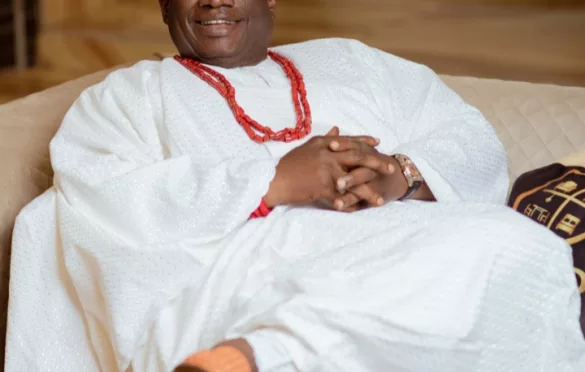
    Sir Nwabueze Nnamani is a special gift to not just the people of Nkanu West, Enugu, but to Nigeria. Anyone who suggests that Sir Nnamani dedicated his life to serving the country and his people as a way to thank God for surviving the war would not be far from the truth.

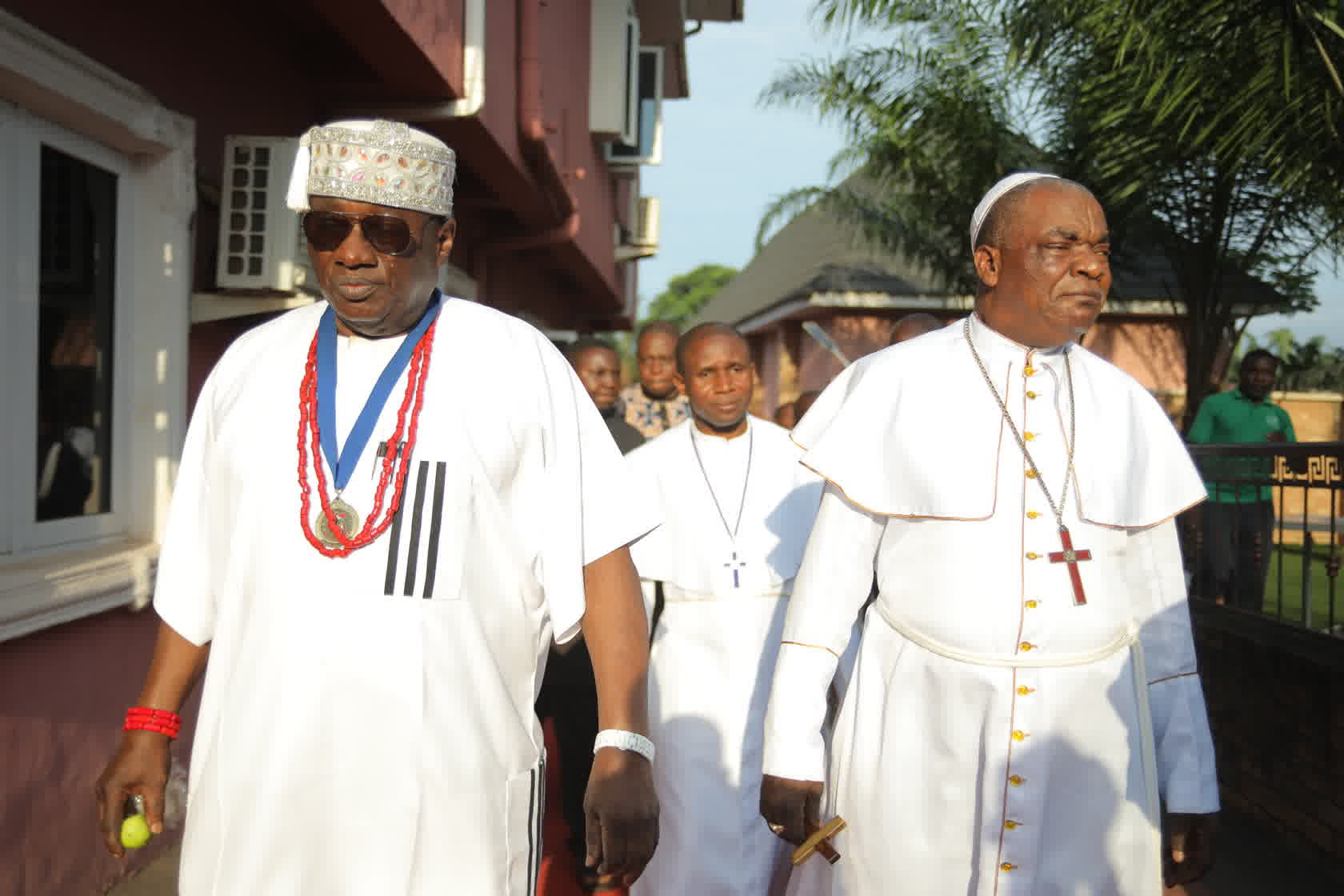
    Chief Nwabueze Nnamani Hosts Methodist Church Prelate During Apostolic Visit to the Diocese
    Chief Nwabueze Nnamani (Ikeoha) receives the Prelate, Methodist Church Nigeria, His Eminence, Dr. Oliver Ali Aba into the former’s country home on Thursday, September 4, 2025

    After the war, instead of grumbling about how the war had destroyed the region, or letting himself get dragged down by the emotional part of the war, he got down to work, earned some living, and finished with Grade One in his secondary school. When it was clear his parents couldn’t afford to send him to the university, he picked the best part of himself again, to serve.

    The disappointment of his parents not meeting his demand to go to the university did not discourage him like it would have done to many. He got into the Nigerian Customs Service, to serve his country.

    At Customs, he did not just deliver diligent service at all times, but with a smile on his face no matter what, and with an unrepentant sense of patriotism and integrity. When the British writer C. S. Lewis wrote that “Integrity is doing the right thing even when no one is watching,” Sir Nwabueze Nnamani must have burned the words into the core of his mind and in his breath. Sir Nnamani would stick to the right thing, to the law, to his values even in the dark of under his bed.

    Living a life of indefatigable and unflagging integrity is as demanding as it is mostly selflessly rewarding. It is mostly for the higher good than it is for personal gains. Most times you may lose some personal advantage in order to stand by the law, by the right thing, by the truth. Sir Nnamani while on maritime duty was almost drowned because of his unrepentant insistence on standing by the law, it did not change him.

    It didn’t end there, he was denied a lot of promotions and some advantages at the customs, not to mention being posted at dangerous and rather disadvantaged customs centres just to get him and his integrity out of the way, and perhaps to force him to change his principles, but he never budged. The Nigerian nation needs more citizens and leaders like Sir Nwabueze Nnamani. Citizens who would do the right thing in public and in private no matter the toughness of the situation; citizens who shun corruption by all means.

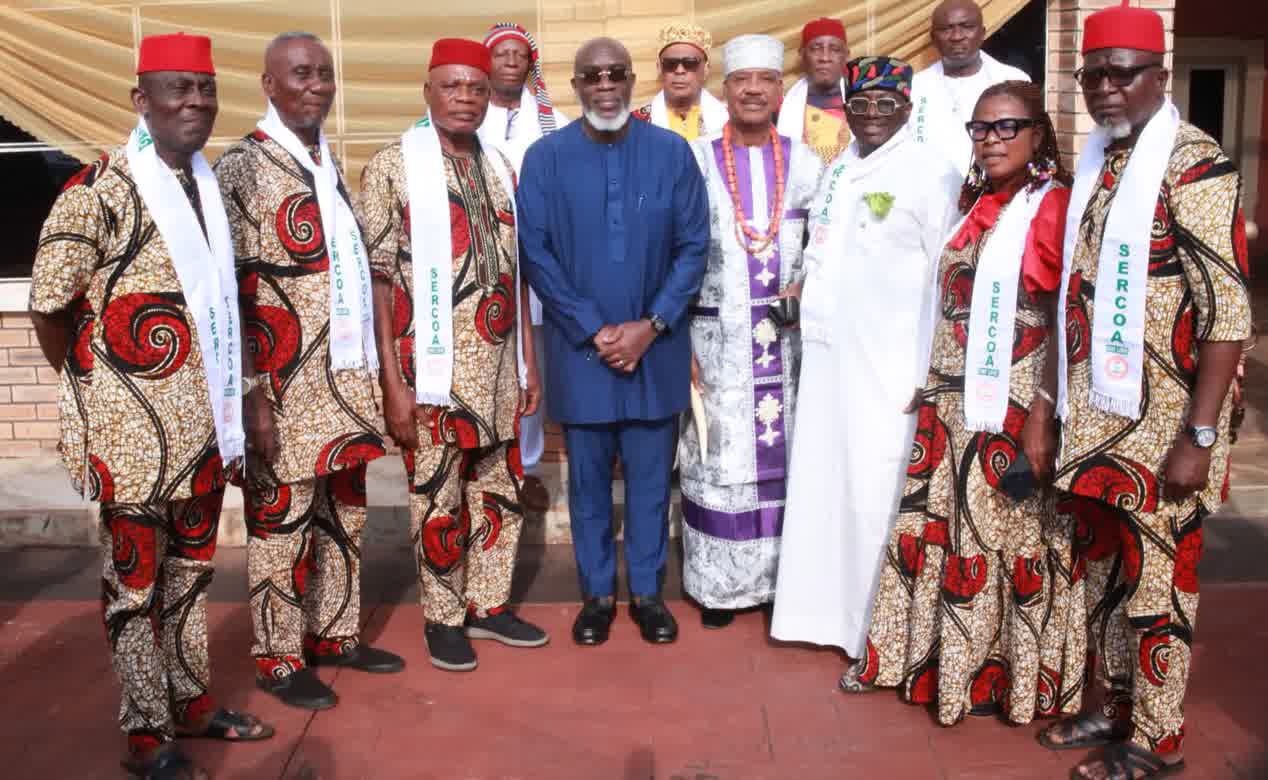
    Southeast Retired Customs Officers Hold Annual General Meeting in Enugu
    Southeast Retired Customs Officers in a photograph with Enugu State SSG, Prof. Chidiebere Onyia (middle) and the Host, Chief Nwabueze Nnamani (3rd right) at the SERCOA AGM in Enugu on Saturday, 30th August, 2025. 

    While working at Customs, notwithstanding how exhausting the job was, when his people called on him to serve at Awkunanaw Welfare Association, he didn’t think twice. He served as the Vice President of the body for at least a decade as a pioneer member, and you never found him wanting either at the body or in delivering his duty at Customs. At the same time, he also headed the body of Akegbe Ugwu indigenes resident in Lagos until he was transferred to Kaduna.

    There is hardly a time that Sir Nnamani was called to serve the country or nation that he turned it down. After retiring from the Nigeria Customs Service, instead of retiring to rest as would be expected, Sir Nnamani retired to community service. When his state and people called on him to serve as the Council Chairman, he embraced the challenge.

    As the Chairman of Nkanu West Local Government Area, Sir Nnamani went full force on different big projects from his first month in office, even as a Caretaker Chairman before being voted in as the Chairman. He saw the state of the council secretariat at Agbani, and got to work, gave the secretariat a new face with full renovation which is how it looks to this day.

    He didn’t stop there. One of the biggest markets in the council, Eke Agbani was managed badly and in a sorry state, with no modern facility, no toilet facility, and more. He stepped in, modernized the market, and built a toilet facility with a borehole powered by solar energy.

    Knowing how much Sir Nnamani values serving his people and their wellbeing, it raised no surprise when he started renovating and equipping some state health centres within the Nkanu West Council. Among the health centres he renovated is the Umueze Health Centre, and then he intervened in providing hospital equipment to health centres at Obe, Ugwuafor, and others.

    Beyond building roads, which he did at different parts of the council, building bridges, like the bridge at Nvene River in Akegbe Ugwu, encouraging education, providing succour to the needy, and increasing social security, he also understood that since money must be spent, the council must make revenue as well. He did something that was largely unprecedented in the council for years. He attracted private investors to build a plumbing material market, a hub at Agbani, the centre of the council. The investors started work on the market based on Private-Public Partnership, PPP, and the project was in its final phase before his tenure ran out. The council was to provide no funds, as the private investors were to cover the cost as agreed. This way, the council will have more options to earn handsome revenue and keep developing. Sir Nnamani has the rare vision of the Eagle to see into the far future, knowing that an independent revenue is important to the council should, God help it never happens, the FAAC allocation fail to come some months.

    Ikeoha as he is also called, is a character that everyone should admire and emulate; if one looks long enough into the life of Ikeoha, one must part with some rare life values. It is said that duty maketh a man, in addition to his sense of service, duty, and moral, is his sense of contentment. His virtue of balancing ambition and contentment without allowing either of both to tip over a sensible par is one many will be envious of. Little wonder he often smiled even more after being denied many due promotions at Customs for long because of his total insistence on what’s right. That is likely the reason he stepped away after a tenure as a council chairman for others to have it, not minding that he could go a lawful second term if he wanted.

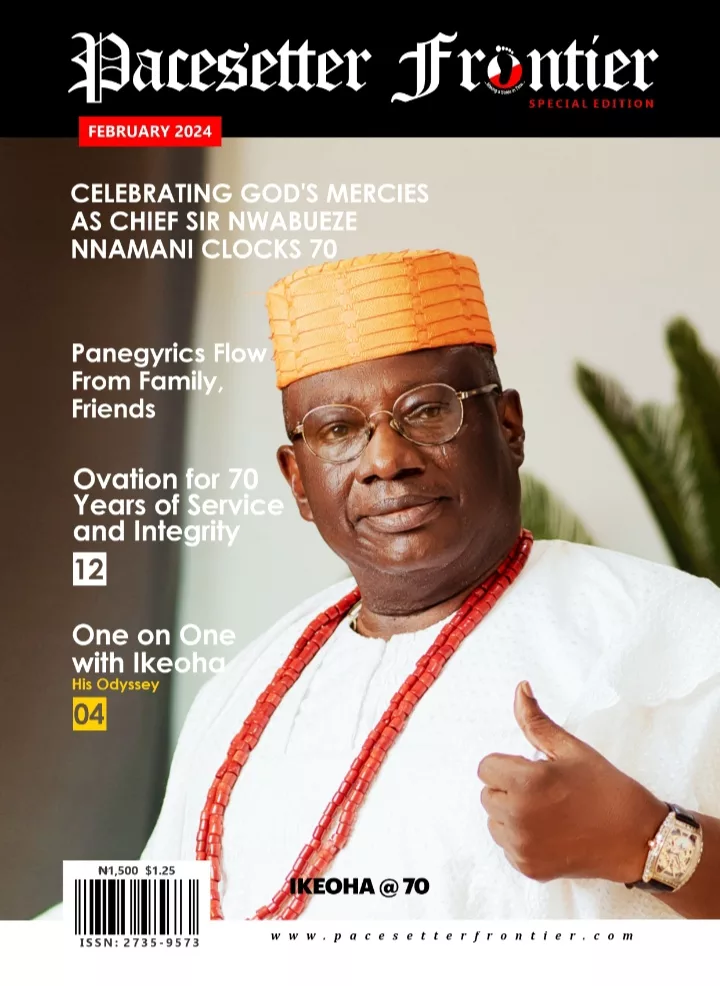
    Chief Sir Nwabueze Nnamani
    PACESETTER’s cover page during Ikeoha’s 70th birthday celebration.

    He lives by his name Ikeoha, which means the strength of the people. He believes power does not belong to one person, but to the people, that is why even at 72, he is still willing to serve his people. Little wonder that in 2025, Gov. Peter Mbah of Enugu State appointed him the Board Chairman, Enugu State Housing Development Corporation (ESHDC).

    An elder like Sir Nnamani should be made to have a lot of young people around him, to learn the ropes of life, so he will rub off his many excellent virtues on the youth, as we believe his chi will still keep him long enough with us.

    Sir Nwabueze Nnamani, my prayer is that you live long in good health to continue passing your wisdom down to the young ones, after all, good men are not simply born, they are made.

  • Is Nigeria still a secular state?

    Is Nigeria still a secular state?

    By Ikechukwu Amaechi

    When TheNiche exclusively reported on February 13, that a few hours after announcing the 2027 elections timetable, the Independent National Electoral Commission (INEC) was set to tinker with the schedule due to pressure from some Muslim groups, many were incredulous.

    Earlier that day, INEC Chairman, Prof. Joash Amupitan, after waiting endlessly for the National Assembly to pass the Electoral Act (Repeal and Re-Enactment) Bill 2026 and mindful of the provisions of the 1999 Constitution and section 28(1) of the Electoral Act, 2022, which mandate the Commission to publish the notice of election not later than 360 days before the date appointed for the election, announced that the 2027 Presidential and National Assembly elections will hold on February 20, while the Governorship and State Assembly elections will hold on March 6, 2027.

    But hardly had he finished when the brouhaha started. Some Muslim power blocs, frowning that the schedule overlaps with the holy month of Ramadan, kicked against INEC holding elections at a time when Muslims will be fasting from dawn (Suhoor) to sunset (Iftar), thereby forcing the Commission into a marathon meeting.

    While INEC ostensibly bowed to the needless pressure, no immediate announcement could be made on new dates for obvious reasons. First, just as it happened this year, both the Ramadan and the Lenten season, a period of fasting, prayer, and penance for Christians, will fall at the same time in 2027. But while Ramadan lasts for 29 or 30 days, depending on the sighting of the new moon, Lent spans a period of 46 days starting from Ash Wednesday to Holy Saturday, though technically, there are only 40 days of fast, as the six Sundays during the period are not counted. Because the lunar calendar is shorter than the Gregorian calendar, Ramadan begins 10 to 12 days earlier each year. But this year both seasons started on February 18. So, whereas Ramadan is expected to end around March 20 with the celebration of Eid al-Fitr, Lenten will run its course on April 4.

    Now, INEC cannot shift the election dates just because of Ramadan without taking cognizance of Lent because it will be unconscionable to appeal to Christians for understanding while appeasing Muslims since what is good for the goose is also good for the gander. So, if INEC would not conduct elections during Ramadan, then it should not do same during Lent.

    It will then mean that elections will not hold until April 11, 2027 which will be the first Saturday after Easter. Meanwhile, Sections 76(2), 116 (2), 132 (2) and 178 (2) of the 1999 Constitution clearly stipulates that elections to the offices of President, National Assembly, Governor, State Houses of Assembly shall hold not earlier than 150 days and not later than 30 days before the expiration of the term of office of` the last holder of that office.

    Second, if INEC could not shift the polls beyond a certain time because of constitutional provisions, it can also not bring the dates forward because of the provisions of the Electoral Act, 2022, which mandates it to publish the notice of election not later than 360 days before the date appointed for the election, which was the main reason Amupitan could not wait for the passage of the Amendment Act Bill before announcing the dates for the 2027 polls. Hence, rather than making an outright pronouncement on the issue even when it had decided to tinker with the dates, INEC kicked the ball to the NASS court.

    On Tuesday, February 17, the Senate amended Clause 28 of the Bill, reducing the mandatory notice period for elections from 360 days to 300 days, thus granting the electoral umpire the leeway to reschedule the 2027 elections much earlier than the original dates.

    The revised Clause 28 now requires that INEC “shall, not later than 300 days before the day appointed for holding of an election under this Bill, publish a notice in each State of the Federation and the Federal Capital Territory – (a) stating the date of the election; and (b) appointing the place at which nomination papers are to be delivered.”

    So, while the ball has been placed squarely, once again, back in INEC’s court, the Muslim groups that sharply criticized the dates earlier announced by Amupitan are already triumphant. And why shouldn’t they, having bent the national will to religious whims.

    But make no mistake about it: this is not about inclusivity, religious sensitivity and voter participation in a multi-faith nation as they claim. This whole idea is retrogressive. Granted, Ramadan fasting is a physically and mentally demanding religious practice, but nothing stops a Muslim, or Christian, for that matter, from voting while fasting. After all, the life of an average Muslim does not come to a standstill because he is fasting nor does that of a Christian because for the perceptive faithful, it is a month of not only increased religious activities, but also charity and community services. What could be a more civic duty than exercising one’s franchise during elections?

    To underscore the hypocrisy of the agitation, INEC has scheduled election in the six area councils of the Federal Capital Territory (FCT) on Saturday, February 21, 2026. That is three days after the commencement of Ramadan. Are there no Muslims in Abuja? Will they not be fasting? If they will, why then should they vote?

    In 2003, the Presidential and National Assembly elections were held on April 19 – Holy Saturday, a day after Good Friday, and a day to Easter – the three most important days in Christendom. Granted, the then President of the Christian Association of Nigeria (CAN) raised objection to the fixing of the presidential election on April 19, which was in the middle of the Christian Holy Week, but INEC pleaded for understanding, common sense prevailed and ultimately national interest trumped religious sentiments. But rather than emulate Sir Abel Guobadia, then INEC chairman, who explained why it was not necessary to jump off the cliff when Christian leaders prodded him, Amupitan would rather ask how high, when Muslim leaders ask him to leap.

    On March 31, 2024, millions of voters in Turkey, a Muslim country, headed to the polls to elect mayors in local elections seen as crucial both for the government of President Recep Tayyip Erdoğan, which has been in power since 2002, and the opposition. That was the month of Ramadan – the holiest month of the Islamic year when Muslims abstain from drinking, eating, smoking and sexual intimacy from sunrise to sunset for a whole month.

    Writing in the March 28, 2024 edition of The Conversation UK, Ozan Aksoy, Associate Professor in Social Science at the University College London (UCL), said “the fact that Turkey’s local elections are taking place during Ramadan should help Islamist political parties gain ground, including Erdoğan’s ruling Justice and Development Party (AKP).” So if fasting is not seen as a hindrance to elections in Turkey, why should it be in a country that pleads secularity?

    Bending over backwards at every turn to accommodate religious agitations that do not promote national interest is the reason why Nigeria continues to plumb the depths of despair. It is dangerous and stunts national development. It is an infringement on the rights of people who are not adherents of the religion. For instance, on Tuesday, the Kano State Censorship Board directed the immediate shutdown of all entertainment-related activities across Kano State for the duration of Ramadan. The state government claimed that the decision was taken to allow residents observe the Ramadan fast and carry out their religious activities in a peaceful and undisturbed atmosphere.

    But what about non-Muslims resident in the state? How will those who earn their livelihoods from those businesses survive? Doesn’t that amount to an infringement on their rights?

    For a “highly religious” country like Nigeria, the fasting period when people supposedly seek the face of God and atone for their sins would have been the best time to hold elections so that people with the fear of God, will play by the rules. Nigeria cannot claim to be a secular state when harebrained religiosity hallmarks every national policy.

    The idea of secularity presupposes a sovereign entity that maintains official neutrality in matters of religion, neither supporting nor opposing any specific faith, and ensuring equality for all citizens regardless of belief. If Nigeria is a secular state, why then does the country catch cold whenever Muslims cough?

    During an interview on Arise Television on Wednesday, following the passage of the Electoral Act (Repeal and Re-Enactment) Bill 2026 by the National Assembly, former Cross River State Resident Electoral Commissioner, who is also lawyer, Mike Igini, appealed to President Bola Tinubu to veto it by withholding assent.

    “It is, indeed, my humble recommendation to Mr. President that you are a man of history. You were a senior man to very many of us in the struggle at the time when the journey of Nigeria and the prospect of democracy was less certain,” Igini said. “What is going to be presented before you is a recipe for chaos. It is a recipe to undermine all that you have done when we were in the trenches. What is put before you, please take it back.”

    That was Wednesday morning. By evening of the same day, Tinubu had signed the Bill into law with a flourish.

    I wonder if Igini really believed that Tinubu would hearken to his appeal and veto the Bill. That will be the height of naivety. Why would he stymie a coup against the Nigerian people which he personally engineered at the point where his foot soldiers had delivered handsomely on the project?

    To leave no one in doubt as to what the ultimate goal is, on Wednesday, INEC recanted its earlier promise to transmit results for the February 21 Federal Capital Territory FCT Area Council election in “real-time,” cautioning that such terminology was a technical misrepresentation of its established processes. Whatever that means.

    What has become obvious is that President Tinubu and his APC henchmen are not preparing for free, fair and credible polls in 2027. With what has transpired in the last one week, they are telling Nigerians, “2027 elections will be rigged, do your worst.” In fact, the rigging has started in earnest and they have the entire Nigerian security apparatus to enforce their will.

    The flipside is that while Tinubu may have successfully captured the Nigerian state, he is not God and cannot be. He has thrown a challenge to Nigerians. What happens in 2027 will depend on how prepared Nigerians are to take up that challenge.

  • [OPINION] Power, Principle and the 2027 Test Before Enugu Voters

    [OPINION] Power, Principle and the 2027 Test Before Enugu Voters

    By Buchi Odoh

    In the ever-shifting landscape of Nigerian politics, Enugu State finds itself at a crossroads following Governor Peter Mbah’s high-profile defection from the Peoples Democratic Party (PDP) to the ruling All Progressives Congress (APC) in October 2025. This move, which saw Mbah bring along his entire cabinet, 17 local government chairmen, and around 80% of PDP executives, has sparked intense debate. For some, it’s a pragmatic step toward better alignment with the federal government for development. But for others, it’s a betrayal that ties Enugu to what they describe as the “cancer ravaging the entire nation”, a metaphor for the APC’s governance challenges, including economic hardships, insecurity, and perceived marginalization of the Southeast. As the 2027 elections loom, voices are rising, urging Enugu residents to reject this shift and ensure the APC, including the incumbent administration, doesn’t hold power.

    Governor Mbah tried to justify his switch by pointing to the PDP’s alleged ill-treatment of the Southeast region. In a statewide broadcast, he argued that despite decades of loyalty from Enugu and the broader Southeast, the PDP failed to offer a “fair partnership” or represent the region’s interests adequately. He emphasized the need for affiliation where the Southeast could gain better representation and support from the federal level. Mbah also cited frustrations within the PDP, such as his inability to secure the national secretary position for his preferred candidate, which reportedly contributed to his discontent.

    Proponents of the defection argue it’s driven by a desire for progress. Mbah has highlighted the need for federal assistance to govern effectively, suggesting the move could unlock resources for infrastructure and development in Enugu. The APC in Enugu has since united its factions, with leaders like Dr. Ben Nwoye and Chief Ugochukwu Agballah resolving disputes to back Mbah for re-election in 2027, aiming to strengthen the party’s hold in the state.

    Despite the fact that some people have declared their support for Mbah irrespective of political party, the defection has drawn sharp criticism from majority of Enugu people, with the PDP expressing deep disappointment and accusing defecting governors like Mbah of greed, selfishness, and covetousness. The party argues that such moves undermine democracy and voter trust, especially since Mbah was elected under the PDP banner after a hard-fought campaign. Critics view the APC as a “national cancer” due to ongoing issues under President Bola Tinubu’s administration, such as inflation, fuel scarcity, and security challenges that have affected the entire country, including the Southeast. By aligning with the APC, Mbah is seen by some as carelessly tying Enugu to these problems, prioritizing personal or political survival over regional interests.

    Former Rivers Governor Nyesom Wike, a key APC ally, even mocked PDP critics amid the wave of defections, noting how figures once accusing him of destabilizing the PDP are now joining the ruling party. In Enugu, the move has exacerbated internal APC squabbles, with accusations of “political bandits” and leadership styles that drove members away, leading to the party’s poor performance in past elections. A PDP chieftain anonymously described Mbah’s defection as driven more by personal survival than popular support, warning it could alienate voters who feel betrayed.

    This sentiment echoes broader concerns in the Southeast, where the APC now controls three states (Imo, Ebonyi, and Enugu), potentially reshaping the region’s politics ahead of 2027. However, defections like Mbah’s are part of a larger trend, with governors from Delta, Bayelsa, Rivers, and others switching to the APC for similar reasons; alignment with the federal government for protection and resources. Critics argue this erodes party loyalty and could lead to voter backlash, as Nigerians grow weary of politicians jumping ship for personal gain.

    As preparations for the 2027 elections intensify, the APC’s expanded footprint in the Southeast presents both opportunities and hurdles. Party chieftains believe the influx of governors and lawmakers will boost bargaining power at the federal level. Yet, opposition figures, including from the PDP and even within the APC’s rivals like the Labour Party or APGA, see an opening to capitalize on discontent. In neighboring Abia, for instance, Governor Alex Otti’s high ratings as a performer contrast with calls for him to join the PDP for a stronger 2027 bid.

    For those urging Enugu to reject the APC, the focus is on reclaiming the state’s independence from what they perceive as a failing national agenda. They argue that the incumbent government, having “carelessly joined the cancer,” must face consequences at the polls to restore accountability. Whether this translates to votes remains uncertain, polls and public sentiment will be key. Some analysts predict the APC’s dominance could solidify if defections continue, but a pushback from voters prioritizing regional autonomy and performance over party labels could reshape the narrative.

    Enugu State’s political drama underscores a timeless truth in Nigerian democracy: loyalty is fluid, but voter power endures. While Mbah’s defection may bring short-term gains, the long-term verdict lies with the people. As calls grow to “put them to shame” in 2027, Enugu residents must weigh development promises against broader national challenges. Ultimately, the election will test whether aligning with the “cancer” heals or harms. A decision that could redefine the Southeast’s role in Nigeria’s political future.

  • In Nigeria, Democracy Is Just A Word

    In Nigeria, Democracy Is Just A Word

    In Nigeria, democracy is just a word: The devil in Nigerian elections is in result collation, not voting. Mandatory real-time electronic transmission of results may not be a silver bullet that can prevent the country’s electoral woes entirely, but for now, it is the only plausible guardrail against electoral malfeasance. The Tinubu-led APC does not want that hence the brazen attempt to manipulate the Electoral Act. Nigerians should not be deceived by the ongoing political hanky-panky in the Senate… As an Igbo proverb says, a bird that flies from the ground onto an anthill, which was what the Senate did on Tuesday with the so-called amendment to the contentious Amendment Bill, is still on the ground. Nigerians are not fooled. The battle for electoral credibility has just begun. If the pseudo-democrats succeed in reducing Nigeria’s democracy just to a word as they are hell-bent on doing, the consequences of their felonious manipulations of the democratic process will be dire. They are the real coup plotters. Whatever it takes, Nigerians must stop this devious plot against democracy and extricate the country from the vice grip of those, who, like the overfed nza bird of Igbo folklore, are challenging their Chi (Nigerian people) to a duel.

    By Ikechukwu Amaechi

    Nigerians love clichés to bits. More often than not, you hear them regurgitate the famous “democracy is the worst form of government, except for all the others that have been tried” quip by former British Prime Minister, Sir Winston Churchill.

    The idea that democracy is the best form of government is a widely held principle in modern political theory. But what if the political system is just a pseudo-democracy that on the surface maintains its superficial trappings — elections, a constitution, and political parties — but inherently lacks genuine political competition, electoral integrity, civil liberties and equal political status that guarantees one person, one vote?

    – Advertisement –

    Now, why does equal political status matter? It is an enabler of credible elections and peaceful power transition. When the people decide who presides over the authoritative allocation of their collective values with their votes, leaders are not only accountable, but also more responsive to their needs.

    I have friends who believe that democracy is a farce, a cynical Western construct deployed viciously by those who invented it to wheedle the unwary. I disagree. Is democracy perfect? No! Does it always guarantee the emergence of good leaders? Not at all! But it contains the structural flexibility to fix its own errors and places power in the hands of the people. Simply put, it works where there is sincerity of purpose. But it atrophies where leaders use it to gain legitimacy by manipulating votes and severely limiting options for citizens, as it is the case with Nigeria.

    READ ALSO: Uma Eleazu and Nigeria’s democracy ramparts

    Democracy is defined by the freedom it affords the people to choose their leaders, without which, there is no difference between those who rig themselves into office and those who seize power by force of arms. Those who rig elections are no less felons than coup plotters.

    In his foreword to a 2012 report titled, “Deepening democracy: a strategy for improving the integrity of elections worldwide,” which was launched by the Global Commission on Elections, Democracy and Security, the former UN Secretary General, Kofi Annan, wrote, “Building democracy is a complex process. Elections are only a starting point but if their integrity is compromised, so is the legitimacy of democracy.”

    – Advertisement –

    Annan, who insisted that “elections are the indispensable root of democracy,” further warned: “When the electorate believe that elections have been free and fair, they can be a powerful catalyst for better governance, greater security and human development. But in the absence of credible elections, citizens have no recourse to peaceful political change. The risk of conflict increases while corruption, intimidation, and fraud go unchecked, rotting the entire political system slowly from within.”

    It is even worse where uncontrolled political finance, mostly money pilfered from the common till, hollows out democracy by robbing it of its unique strengths. This explains the mess Nigeria is in right now.

    In the wake of the controversy over the 2026 Electoral Act Amendment Bill, I have reflected hard on the concept of democracy in Nigeria and came to the inevitable conclusion that elections, most times fundamentally flawed, have become a convenient smokescreen used by Nigerian leaders to wrap themselves in a veneer of democratic legitimacy.  As Yiaga Africa, a non-profit civic organisation, noted in its recent report on the state of electoral integrity in Nigeria, “Without electoral integrity, democracy is just a word.”

    And that raises a fundamental question. If without credible elections, democracy risks becoming symbolic rather than substantive, as the Atedo Peterside-led GoNigeria noted on Wednesday, why is the Godswill Akpabio-led Senate bent on dismantling the guardrails which most Nigerians agree will guarantee free, fair and credible elections in Nigeria? Why is the idea of credible elections a threat to Nigeria’s political elite?

    The answer is simple. In a free and fair contest, they don’t stand a chance. The outcome of the 2023 elections was a rude awakening to them. They know for a fact that they lost woefully. To that extent, they are impostors that don’t represent the people. And they know that technology made all the difference in 2023, not minding that the then chairman of the Independent National Electoral Commission (INEC), Prof Mahmoud Yakubu, wittingly sabotaged the process when it was about to deliver.

    This time, they don’t even want to get to that stage. They want the elections rigged long before the first ballot is cast. Knowing full well, as Joseph Stalin, the former Soviet dictator, said in 1923, that “those who vote decide nothing, those who count the vote decide everything,” these pseudo-democrats who find in democracy a convenient ladder to ascend the rungs of power, are working very hard to make a mess of the very laws that will make credible elections a fait accompli.

    I have heard some people say that President Bola Tinubu has no hand in the political shenanigan playing out in the National Assembly. How convenient. To them, Akpabio, who is the chairman of the National Assembly, is the architect of the political sleight of the hand.

    Nothing can be farther from the truth. Discerning Nigerians who know Tinubu’s political antecedents cannot be deceived. Here is a man whose philosophy is encapsulated in his political power is not going to be served in a restaurant a la carte admonition to his supporters during the build-up to the 2023 general election, where he charged them to “at all cost, fight for it, grab it, snatch it, and run with it.”

    That is his abiding power worldview, which explains why even when it seems that he has all the aces on the political chessboard by playing ruthless games that have fundamentally shifted the power equation through deliberate actions in his favour, his camp is still afraid of credible elections.

    To be sure, elections in Nigeria have always been a do-or-die affair. But it has become worse since the All Progressives Congress (APC) took over power in 2015. Granted, the rot started with President Olusegun Obasanjo, but his two successors – Presidents Umaru Yar’Adua and Goodluck Jonathan – allowed the opposition to breathe. But for a man like Tinubu who does not take political prisoners, even the complete annihilation of the opposition is not good enough. That explains why even when APC now has 31 state governors and overwhelming majority in both chambers of the National Assembly, they are still afraid of free and fair elections.

    The devil in Nigerian elections is in result collation, not voting. Mandatory real-time electronic transmission of results may not be a silver bullet that can prevent the country’s electoral woes entirely, but for now, it is the only plausible guardrail against electoral malfeasance. The Tinubu-led APC does not want that hence the brazen attempt to manipulate the Electoral Act. Nigerians should not be deceived by the ongoing political hanky-panky in the Senate.

    After much dawdling, the red chamber of the National Assembly finally passed the Electoral Act (Amendment) Bill. But rather than assuage mounting anxieties, the Senate’s decision to reject a proposed amendment that would have made the real-time transmission of results from polling units to the INEC Result Viewing (IReV) portal compulsory, ignited a hailstorm of a controversy. Rather than doing the needful, as demanded by Nigerians, the lawmakers adopted the wording contained in Clause 60(3) of the Electoral Act, 2022, which provides that the presiding officer shall transfer election results “in a manner as prescribed by the Commission.”

    On Tuesday, at the emergency plenary to approve votes and proceedings on the Electoral Act amendment, a procedural step required before harmonisation with the House of Representatives can begin, the Senate, rather than hearken to the demands of Nigerians, decided to be clever by half by legislating for a hybrid model that allows both electronic and manual transmission of results. That is sheer political subterfuge.

    As an Igbo proverb says, a bird that flies from the ground onto an anthill, which was what the Senate did on Tuesday with the so-called amendment to the contentious Amendment Bill, is still on the ground. Nigerians are not fooled. The battle for electoral credibility has just begun. If the pseudo-democrats succeed in reducing Nigeria’s democracy just to a word as they are hell-bent on doing, the consequences of their felonious manipulations of the democratic process will be dire. They are the real coup plotters. Whatever it takes, Nigerians must stop this devious plot against democracy and extricate the country from the vice grip of those, who, like the overfed nza bird of Igbo folklore, are challenging their Chi (Nigerian people) to a duel.

  • In Defence of Continuity: Consolidating Representation, Securing the Future of Nkanu East and West

    In Defence of Continuity: Consolidating Representation, Securing the Future of Nkanu East and West

    By Ezefi Mike Udoh

    In representative democracy, progress is neither accidental nor instantaneous; it is the cumulative reward of vision sustained, experience deepened, and trust renewed. For Nkanu East and West Federal Constituency, the question before the people is not merely one of choice, but of continuity—whether to consolidate gains already made or to interrupt a trajectory that has begun to yield measurable dividends. On this score, the case for returning Rt. Hon. Nnolim Nnaji to the National Assembly is compelling, persuasive, and principled.

    Since assuming office, Rt. Hon. Nnaji has demonstrated that representation is more than presence in chambers; it is presence in people’s lives. His tenure has been marked by purposeful engagement—legislative participation anchored on constituency interest, empowerment initiatives that touch women and youths across wards, and a consistent visibility that bridges Abuja and home. In a political climate where distance often defines leadership, he has chosen proximity. Where rhetoric often substitutes for results, he has delivered outcomes.

    Performance, however, is only half the argument. The other half is continuity—the often underrated force that transforms good beginnings into enduring legacies.

    Legislative effectiveness matures with time. Institutional relationships deepen. Policy pursuits gain traction. Constituency projects evolve from isolated interventions into coherent development pathways. To disrupt this momentum is to reset the clock; to renew it is to accelerate progress.

    Rt. Hon. Nnaji’s record suggests a learning curve already climbed and a leadership rhythm firmly established. Returning him to the National Assembly is not an act of sentiment; it is an investment in institutional memory, strategic consistency, and expanding influence. It is to say that Nkanu East and West understands that development is a relay, not a sprint—and that handing the baton back to a proven runner is the surest way to finish strong.

    Moreover, continuity sends a powerful message beyond the constituency: that performance is rewarded, that service is recognised, and that democratic trust is renewed when promises translate into impact. It strengthens the constituency’s bargaining power, amplifies its voice, and ensures that ongoing initiatives are not abandoned midstream but refined, expanded, and completed.

    In renewing the mandate of Rt. Hon. Nnolim Nnaji, Nkanu East and West would be affirming a simple but profound truth: that leadership tested and proven deserves the opportunity to do more. The future is best secured not by frequent change, but by faithful progress—by allowing good work to mature into great outcomes.

    Continuity, in this moment, is not complacency.

    It is conviction.

    It is confidence.

    It is the wise choice of a people determined to move forward—together.

  • [OPINION] Samson Chukwu Nnamani: Measuring Leadership By Impact

    [OPINION] Samson Chukwu Nnamani: Measuring Leadership By Impact

    By Chibuike Ugwuanyi

    Leadership is often discussed in the language of power, position, and privilege, yet history repeatedly shows that the most enduring leaders are shaped not by authority alone but by values formed early and tested over time. Long before titles are earned or platforms acquired, the foundations of leadership are laid quietly in childhood experiences, community interactions, and an instinctive response to the needs of others. This truth finds clear expression in the life journey of Chief Samson Chukwu Nnamani, whose path to public relevance has been guided less by ambition and more by a consistent ethic of service.

    Born in 1971 into the family of Nnamani Chukwu of Ajama-Akpawfu in Nkanu East Local Government Area of Enugu State, Chief Nnamani grew up within a close-knit rural community where shared responsibility and communal survival were not abstract ideals but daily practice. In such settings, the welfare of one person was inseparable from that of the collective, and compassion was not optional – it was expected. These early influences later became defining traits in his adult life.

    From his formative years, he was known among peers not merely for academic engagement but for an unusual sensitivity to the struggles of others. Schoolmates recall a young man who instinctively stepped in to assist classmates who lacked basic necessities, whether through material support, advocacy, or quiet encouragement. This disposition was not cultivated for recognition; rather, it appeared to be an extension of character – an internal compass oriented toward fairness and empathy.

    As he progressed through primary and secondary education, this reputation deepened. Within age-grade circles and community youth groups, he was widely regarded as approachable and dependable, someone who could be trusted to act in the interest of others. While many adolescents are consumed by self-definition, Chief Nnamani’s defining impulse was outward-looking. He paid attention to those falling behind and sought ways, however modest, to bring them along.

    These traits became more pronounced as he matured and encountered broader social realities. Exposure to inequality, both within and beyond his immediate environment, sharpened his awareness of how opportunity, or the lack of it shapes human destiny. Rather than fostering resentment, these observations strengthened his resolve to become part of the solution. Even as personal aspirations evolved, the underlying motivation remained constant: to create value that extended beyond self.

    Those who interacted with him during his early adult years often speak of a man who listened more than he spoke and acted more than he promised. In a society where public generosity is sometimes performative, his approach was notably understated. Assistance was offered quietly, relationships were maintained with sincerity, and commitments were honoured without fanfare. This consistency gradually earned him trust across social strata, reinforcing his standing as a person whose word carried weight.

    Over time, as life experiences expanded beyond local boundaries and opportunities emerged abroad, his worldview broadened without losing its moral centre. Living outside Nigeria exposed him to structured systems of social support and organised philanthropy, further shaping his understanding of how individual success could be leveraged for collective good. Rather than disconnecting him from home, this exposure deepened his sense of responsibility to the communities that shaped him.

    It was this convergence of early values and global perspective that later crystallised into a more structured commitment to humanitarian service. The decision to formalise years of informal assistance into an organised platform was not sudden; it was the natural progression of a lifelong pattern. Friends and associates often note that the creation of the Odera Helping Hand Foundation was less an initiative than a continuation of an institutional expression of habits already ingrained.

    What distinguishes Chief Samson Chukwu Nnamani’s leadership style is not merely generosity but intentionality. His interventions are guided by an understanding that dignity matters as much as relief. Whether supporting education, healthcare, or economic empowerment, the emphasis has consistently been on restoring agency to beneficiaries rather than fostering dependency. This philosophy reflects a leader who understands development as a partnership, not a transaction.

    Community leaders across Enugu State have repeatedly described him as a bridge-builder – someone able to relate comfortably with traditional institutions, youth groups, professionals, and the most vulnerable members of society. Such versatility is rare and speaks to a leadership identity grounded in authenticity rather than performance. It is also a reminder that influence rooted in character often outlasts influence derived from position.

    In an era marked by cynicism toward public figures, the story of Chief Samson Chukwu Nnamani offers a counter-narrative. It suggests that leadership can still be anchored in conscience, that compassion can coexist with effectiveness, and that service need not be loud to be transformative. His journey underscores the idea that the true test of leadership is not how much power one wields, but how consistently one shows up for others – especially when no applause is guaranteed.

    As his humanitarian engagements continue to touch lives across communities, the values formed in Ajama-Akpawfu decades ago remain clearly visible. They surface in every intervention, every partnership, and every life restored to hope. In this sense, his story is not merely a personal biography but a case study in how early character, when nurtured and sustained, can evolve into leadership that genuinely serves humanity.

  • Tertiary Education Fees Hike in Nigeria: Why South East Must Embrace NELFUND

    Tertiary Education Fees Hike in Nigeria: Why South East Must Embrace NELFUND

    By Sebastine Okafor, Ph.D.

    There is a recent outcry about the hike in the fees paid by most higher institutions of learning in Nigeria. The hike affects not only state-owned tertiary institutions but also federal government–owned tertiary institutions. One of the most recent increases is the 60% hike in sundry charges announced by the management of the University of Nigeria, Nsukka—an announcement that triggered public outcry. It has raised questions about the interest of national leaders in the education sector, which received less than 8% of the country’s budgetary allocation between 2022 and 2025.

    Aside from UNN, other universities and institutions of higher learning across the country, such as UNIMED, EKSU, Edo State University, LAUTECH, DUFUHS, and NDU, among others, have made both minor and major increases in tuition and sundry fees. This has generated calls for more investment in education from civil society organizations, foreign agencies, and other stakeholders. Many fear that students may lose interest in education if nothing is done to make it affordable.

    But what many forget is that the federal government, despite a less-than-enthusiastic approach to education funding, has provided a scheme that enables every Nigerian who wants to study to do so without struggling to pay school fees. Some countries, like Germany, Norway, Denmark, Austria, France, and Brazil, charge almost zero tuition, while others, like the USA, Canada, England, Australia, Switzerland, Japan, and New Zealand, charge very high fees. This does not mean that countries with free or low fees place more interest in education. Both groups provide quality education, but the challenge of affordability remains central for students in countries like Nigeria.

    In Nigeria, the administration of President Bola Ahmed Tinubu in 2024 introduced the Nigerian Education Loan Fund (NELFUND), a student loan program designed to make higher education more affordable. NELFUND was created under the Student Loan (Access to Higher Education) Act, 2024, to help students who cannot afford school fees and related costs. The program covers both tuition fees and a monthly upkeep allowance for living expenses. The loans are interest-free, meaning students only pay back the money borrowed. Repayment does not start immediately after graduation; it begins two years after completing the National Youth Service Corps (NYSC) or once graduates earn a stable income.

    Since its launch, NELFUND has grown rapidly. By late 2025, it had disbursed over ₦116 billion in loans covering both school fees and upkeep allowances to hundreds of thousands of students in public universities, polytechnics, and colleges of education across Nigeria. One of its main goals is to ensure that no Nigerian student is denied access to tertiary education because of financial constraints. Families that once struggled to pay school fees have been able to rely on the loan scheme to keep their children in school.

    Despite these advantages, many Nigerian students and parents are still not taking full advantage of NELFUND. As a program under the Federal Government of Nigeria’s Tertiary Education Support Programme (TESP), it should be welcomed by everyone, especially those whose education is at risk due to finances. The South East region is the worst affected by this lack of patronage. Recent data shows that only about 81,940 students from the South East have applied for the loan, while other regions, except the South South, had over 150,000 applicants.

    Statistically, the North West has the highest number of applicants with 353,122, followed by the North East with 298,030, the South West with 280,678, the North Central with 234,814, the South South with 113,806, and the South East with 81,940. The question many ask is whether this low patronage reflects the number of tertiary institutions in the zone or is due to a lack of interest. Nigeria’s higher education institutions are unevenly spread across the six geopolitical zones. The South West has the most institutions, totaling 141 federal and state universities, polytechnics, and colleges of education. The North West follows with 103, while the South East has the least, only 72 institutions. The North Central has 96, the North East 84, and the South South 110. Even with fewer institutions, the South East must embrace NELFUND to ensure access to higher education.

    It is important for South Eastern students to understand why NELFUND is crucial. Complaining about high fees or educational marginalization will not change the reality. The program provides a direct solution, giving students the funds needed to pay tuition and cover living expenses. By using NELFUND, students can focus on learning instead of worrying about how to pay fees. Families that once feared dropping their children from school can now plan for uninterrupted education.

    Low patronage in the South East also weakens the region’s position in national education programs. If students do not utilize NELFUND, the region continues to rely on complaints rather than practical solutions. Embracing NELFUND allows the South East to catch up with other regions in terms of access to higher education, skills acquisition, and future opportunities.

    Parents and students must act immediately. Applications are simple and can be completed online. Repayment is deferred, and there is no interest to worry about. NELFUND is not just a loan; it is a tool to empower students, reduce financial stress, and improve the quality of education in the South East.

    South Easterners should stop focusing on school fee hikes and complaints about marginalization. NELFUND provides the means to overcome these challenges, as embracing the program can enable students to complete their education without financial burdens, develop their skills, and also contribute to the growth of the region. The success of NELFUND in the South East will show that the people of the region can take advantage of government programs to improve their future, rather than waiting for external interventions or policies that may never arrive.

  • SEDC: Panacea for South East’s Convoluted Problems?

    SEDC: Panacea for South East’s Convoluted Problems?

    By Okey Ikechukwu

    The four good things that can be said upfront about the South East Development Commission are: (1) The composition of its leadership team; (2) The Commission’s approach to stakeholder engagement; (3) The scope, , and analytical rigour of its public engagement of last week, which lasted from 3rd to 6th of this month of February; and (4) The fact that it is in a position to learn from the mistakes of older Commissions of the same type; some of which are now nothing more than procurement platforms for the elite with nothing to show in terms of real development of the regions they were set up together develop.

    The Concept Note for the South East Vision 2050 (SEV2050), 2026, Stakeholder Forum was well put together. The background, rationale, overarching objectives, technical deep dives and stakeholder feedback clusters were all well-conceived. Last week’s event, which was carried out in collaboration with the Office of the Vice President, Ministry of Regional Development and Governors/Governments of the South East was well contextualized.

    The objectives were apt, the Key Messages focused on issues the relevance of which cannot be contested. The Forum agenda was comprehensive. Under the broad theme of “Framing a Shared Future for the South East: Challenges, Choices and the Vision 2050”, I was required to give the major opening Keynote Speech titled “Regional Diagnostics: Where We Are, Where We Could Be, and What is Holding Us back”.

    I started by pointing out that the idea of framing a shared future for the South East requires those aspiring to do such a framing to first admit the need for some consensus on the meaning and trajectory of that future. They must also agree on its broad advantages and what it offers each of the parties concerned.

    It is within this context that anyone would be interested in a “shared” future, as presented in the projections of the SEV2050 project. Which means that the Commission must first do the homework, and grassroots consultation leading up to the desired ideals. This is where to contend with challenges that would arise from the choices and compromises needed to give the Vision joint ownership, as the property of all parties.

    Thus, a conceptually meaningful, exciting, desirable, and viable must also be sustainable. In addition to being sustainable, it must also offer a value proposition that easily conduces to a consensus. In this regard, a South East vision and revival is possible today under the SEDC, because it presents the best chance of eliminating, or at least minimizing, the dominant “Ike Out Onye” philosophy of each state doing everything by itself, and for itself in the South East.

    This new drive will require each of the five South East States to focus on their areas of comparative advantage. Such an approach will enable them create and lock into a regional template with a modern logistics system. That means networked specialization, and Economies of Scale, rather than unintelligent competition.

    Concerning where the South East is today, where it ought to be and what is holding it back, one obvious demand is a change of mindset.

    It calls for what I sometimes call the tripod of the Physical, Economic and Axiomatic spaces as the pillars to be fortified for a new regional outlook. This means working towards seeing, and making, the region an integrated and well-coordinated production, distribution, movement and governance system.

    One way of doing this is to synchronize the SEDC’s well-articulated innovation, entrepreneurship and investment-focused programmer with a detailed values reorientation initiative and values consultative programmes. These should begin in our schools and pervade the community and the local government system. This should involve programmes for youth/women leaders, town union presidents, council and ward, LG chairmen, religious leaders, traders’ associations

    In all of this, the Commission must leverage the media in a sustainable manner, so that it can go beyond mere presence and visibility to measurable media impact and dominance.

    The things holding the Region back include conspicuous deficits in leadership, social infrastructure, loss of what should be business profit to self-generated power, poor overall transportation logistics and much more. There is also the problem of weak regional coordination and limited bargaining power at the center. Add the foregoing to low trust in the region’s political leadership, armed groups, sit-at-home disruptions, and heavy-handed local Task and tax Forces and you have the perfect recipe for a people in thrall.

    There is also severe brain drain, as professionals increasingly relocate to Lagos, Abuja, or abroad. Meanwhile, the region could have since become the industrial hub for West and Central Africa, with export-driven clusters in light manufacturing, automotive parts franchising, pharmaceuticals, agro-allied processing, technology innovation and creative industries. Diaspora capital should also, by now, be driving investment, not just remittances that are mostly for domestic upkeep of family members.

    Workings together, the Sout East should have become a Model of Regional Cooperation, with shared infrastructure in power generation, rail, and logistics corridors. It is even possible to contemplate a coordinated tax, investment, and industrial policies framework across the region.

    Things are the way that are in the region today because it is dominated by a fragmented leadership orientation, wherein each governor is an emperor and also the custodian of ultimate wisdom. Nothing makes this more apparent than the absence of a shared long-term regional agenda. That is why, today, political leaders focus more on election cycles and personal popularity than sustainable development projects and projections.

    The Politics of Atomization without, and largely reactive and emotional responses to emerging issues, is another factor. That is what has partly left the region with very weak negotiating capacity at the federal level; with policy think tanks that offer more of tanks for noisy idealists than any serious thinking.

    In the end, the overall regional profile is characterized by the challenge of reliable data for long term planning. Yet, its economic profile exhibits strong entrepreneurial strength, with SMEs, commerce, trading networks, manufacturing clusters. Its human capital profile shows high literacy levels and large professional demographics.

    Unfortunately, all that creativity and energy are displayed and often dissipated in the largely informal, under-capitalized, and infrastructure-poor economy. The large number of unscaled SMEs that are not transitioning into large, competitive firms is a source for concern.

    Which takes us back to want I merely hinted at, when I spoke of the third leg of the tripod for change, namely, the axiomatic pillar. The type of people we are rests on the type of values we live by.

    It is because the human being is the primary resource of any nation that natural endowments, like Liquid and solid minerals, forest reserves and game cannot develop a nation on their own. You need human beings with knowledge, discipline and the right values for development to take place. But ideas are not enough. They must be the right ideas. Give these ideas to good and effective leadership, and modern execution templates, and you have far-reaching transformations before you. v are needed.

    The essential point being made here is that there is a fundamental difference between human resources and natural resources. The former is an agent and the latter is a tool that can be transformed by the former. Once you combine knowledge, vision, values and strategy with group discipline, development takes place.

    Look at Venezuela with the greatest oil deposit on earth. Then look at Japanese, which does not have any other resource except its human capital. Japan exports only one product, namely “Knowledge”; which manifests as cars, electronic equipment and much more.

    That is perhaps why we may be constrained to draw the conclusion that the South East’s biggest constraint may not just be marginalization. When you look at the absence of coordinated internal economic, political, and institutional power and loyalty, you begin to see many things that are not so readily visible on the surface.

    The region needs to organize its capital, protect stability, think generational succession and negotiate at the national level from the angle of partnership and strength, rather than the three Gs of Grumbling, Grievance and Grandstanding.

    As the SEDC is now, hopefully, working towards doing the right things for the South East, by knocking out a template for a realistic way forward, the real question for Ndigbo, going forward, may not be “What is Nigeria doing to, and for, the South-East?”, but “How does the South-East organize itself to be respected, respectable and indispensable to Nigeria—and Africa?”

    The other questions are: “When will the South East wake up to the fact that its undue emphasis on distributive trade that is hopelessly dependent on an operating/policy environment they are not in control of verges on pure lunacy?”. Plus, this: “Why there so much capital misallocation in the South East, with much wealth shut away in pointless real estate of big village houses”?

    It is important that the SEDC’’s drive for the better management of the many small scalable, but unscaled, ventures is supported and pursued. Ditto for the emergence of large indigenous institutions, like banks, manufacturing giants, funds, etc.?

    Truth is: The South-East cannot triumph by shouting louder, but by becoming more strategic. It needs a regional Political Coordination Template that is capable of having one position and one negotiating voice on key national issues. It must minimize the now-well-known public quarrels, so that this is not also always an indication of inner divisions. The call is for the region to play Leverage Politics, and move from political “representations”, to “Portfolio Control” in politics;

    SEDC is in a position to drive a new narrative that henceforth reframe security awareness as action in aid of Regional Economic Survival, by showing that no investor comes where he suspects social instability. The South-East will not rise by waiting for fairness, WhatsApp activism, or by online noise making. It should simply organize capital, coordinate, strengthen, thinking generationally and long term.

    The Commission must watch out for those it can call its the Driving Forces for change, the Restraining Forces trying to undermine it, and also the Direction Changing Forces which try to achieve their own personal purposes on the pretext of being in synch with the Commission.

    Finally, let the SEDC not be remiss in taking up the following three Next Steps stipulated, and arising from its Stakeholder Forum, namely: (1) Consolidate and synthesize inputs from the Forum, to informed an initial SEV 2050 Initial Framework; (2) Develop the First Integrated framework of the SEV 2050 framework; and (3) Confirm the commitment and Roles from relevant institutions and stakeholders.

    A lot will depend on the SEDC, going forward.

  • Enugu APC Registration Exercise: Acceptance or Political Optics?

    Enugu APC Registration Exercise: Acceptance or Political Optics?

    By Sebastine Chukwuebuka Okafor, Ph.D.

    When Governor Peter Ndubuisi Mbah joined the All Progressives Congress (APC) in 2025, it was received with open arms and admiration by many across the country who were already in APC. The national leadership, through their body language, showed full joy as they had made a significant move into the South-East den of the PDP by capturing one of the best leaders in the region. Many saw this as a political coup, a rare opportunity to win over a critical part of the South-East, long considered a stronghold of the PDP.

    It was not long before the party started its membership registration and revalidation exercise, which many thought would be a smooth process. The national leadership of APC planned for the exercise to start on December 1 and end by January 30, but Enugu began its own exercise on January 9.

    During the flag-off ceremony of the exercise, which was held at Owo, the political ward of the governor, he stated that the party was targeting about 2 million members within the next three weeks. This target represented over 90 percent of the entire registered voters’ population in Enugu State, according to INEC’s 2023 data of 2,112,793. The number seemed ambitious but possible if the exercise was conducted with proper planning and engagement with local communities.

    Immediately after the start of the exercise, which required the National Identity Number as well as the Voter Identification Number of each member, registrants began experiencing difficulties. What was expected to be smooth and simple started giving grassroots party leaders concern. Udi Local Government was initially at the top in registration numbers, but over time, other local governments began catching up. Leaders across Enugu worked hard to engage people, mobilizing resources to assist with the registration exercise. They used funds for radio announcements, public campaigns, and outreach programs to ensure people understood the process.

    Some council chairmen were accused of forcing civil servants to join APC, while others were reported to be using fake empowerment programs to manipulate locals into registering. These accusations created tension in some areas, with members of the public questioning the integrity of the exercise. Despite these challenges, the effort to mobilize support continued.

    What became clear was that Enugu did not initially like or accept APC. Even on radio programs, people accused Governor Mbah of backsliding from being the best-performing governor to one of the worst since joining APC. Those who voiced such opinions often admitted it was just rhetoric, yet the perception influenced many. To some, anything about APC seemed negative, while PDP remained the only party people could trust.

    Questions arose across the state about the low turnout. The exercise did not involve complex requirements, yet many people did not participate. Governor Mbah’s local government, despite being his home area, was among the lowest in registration until just a few days before the initial deadline. The National Working Committee of APC later extended the registration exercise until February 8 to give more people time to join.

    The reasons for low registration in Enugu were not far-fetched. Much of it was connected to those promoting APC. When APC started in 2013, it was demonized and labeled by PDP leaders as a party linked to Boko Haram. Former PDP leaders now advocating for APC had previously presented it as a northern Islamization agenda aimed at dominating the South and subjugating the Igbo people. In Enugu, they mocked Rochas Okorocha by calling him ‘Okoro Awusa’, a name meant to ridicule him. PDP leaders spent more resources demonizing APC than campaigning for their candidates and party.

    This campaign of misinformation influenced many in Enugu to ignore the good works of President Buhari in the state. Even when Buhari commissioned the world-class Postgraduate Centre of Excellence at the University of Nigeria, Enugu Campus, in 2019, many dismissed it as part of an Islamic agenda. Such perceptions created distrust in APC and slowed the pace of membership registration.

    It became almost laughable that some political leaders who spent lots of resources to demarket APC are now accusing innocent council chairmen, who were either in school, learning a trade, or abroad then, of being lazy or not serious about the exercise. Others claimed the low performance of local leaders caused people not to join. These accusations ignored the real problem: the psychological and political barriers created by years of misinformation. This situation calls for a massive reorientation of the people to understand that APC’s policies and activities were not harmful but rather beneficial to the state, unlike as it was propagated.

    Former PDP leaders now supporting APC have a critical role to play. They need to unite and use the extended period to educate the locals. Grassroots support is essential, as without it, political victories will not be easy to achieve as anticipated. It is very important for all to know that more effort is needed in rebuilding trust and convincing people that the party could work for them; until all these are done, even reaching half the target of 2 million members would be a herculean task, because manipulation or coercion alone cannot solve the problem.

    What is happening in Enugu APC, Enugu State, teaches a clear lesson about politics in Nigeria, because people’s opinions are shaped not just by the actions of leaders but also by the narratives they are exposed to over time. In Enugu, years of PDP propaganda against APC created a climate of suspicion, and to overcome that, it requires strategic communication, patience, and consistent engagement.