Category: Opinion

  • Do the Children Know It Is Christmas?

    Do the Children Know It Is Christmas?

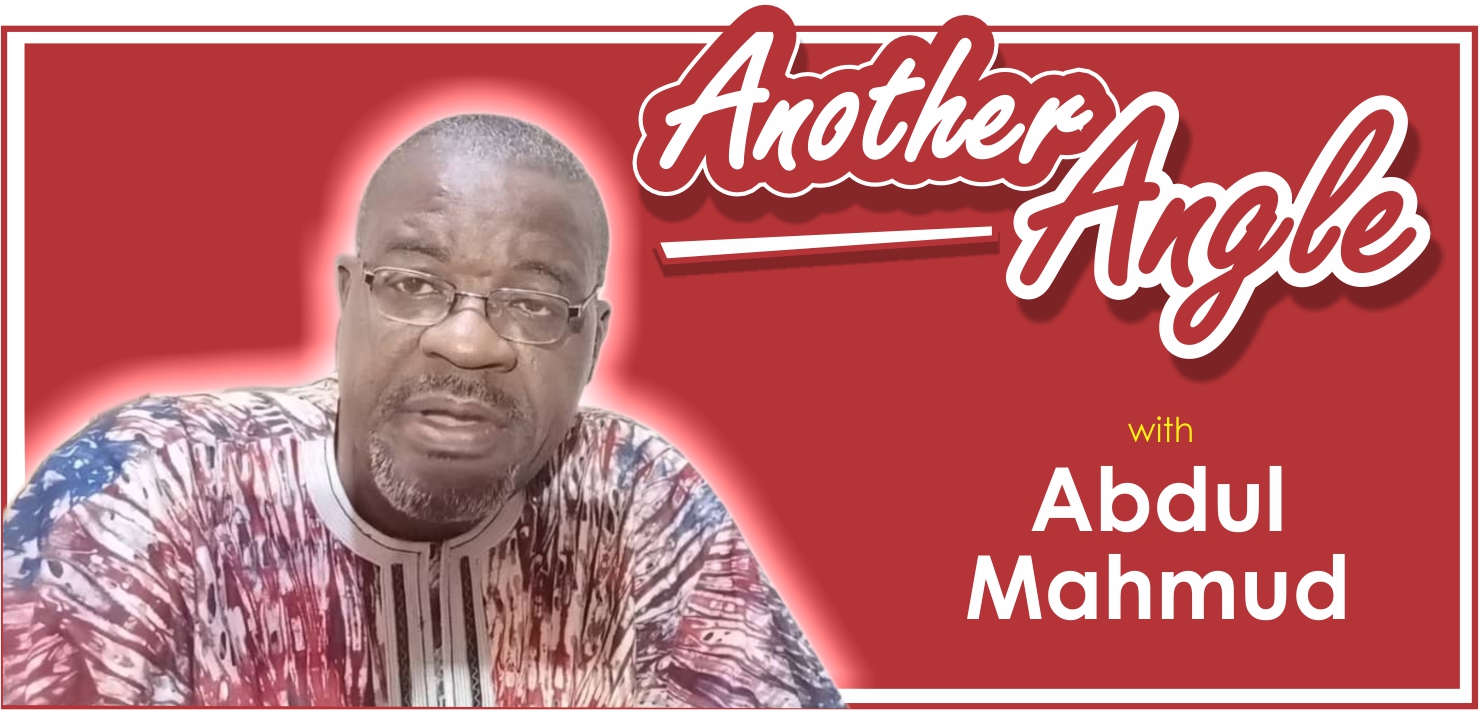
    -By Abdul Mahmud

    Editor’s Note: Shortly after PACESETTER received this week’s column for publication yesterday, Sunday, December 21, 2025, the abducted students were released. We have gone ahead to publish this piece for historical and academic purposes.

    Four weeks ago, students of a Catholic school in Papiri in Niger State were seized along with their teachers. The country absorbed the news with a familiar mix of dread and fatigue. Abduction has become a steady feature of our public life. Then came silence. Families waited. Communities prayed. A nation listened for any sign that the state still possessed the will to protect its children. When words finally arrived, it came not from the parents or the school or a rescue operation, but from the National Security Adviser. He assured our bewildered country that the children were fine. Fine. The word landed with the weight of indifference. It assumed knowledge without evidence and authority without accountability. It poses fear in a country where comfort has given way, heralding a “new civilisation”. This is how I described it in my op-ed, ‘The Country Where Hostages Are Fine’, a few weeks ago: “In a country that has arrived ahead of other countries at the new civilisation. A civilisation where captivity becomes wellness. A civilisation where fear gives way to fear that becomes comfort. A civilisation where parents receive news of their abducted children with gratitude because the NSA has spoken”.

    I described that assurance as “a piece of miracle” which abolished the need for rescue because it treated terror as mere inconvenience and pain as an abstract concern. Days later, more than one hundred children were released. Relief followed, though it was tinged with suspicion.

    Many Nigerians believe the release followed a transaction. Money exchanged for abductees. If that belief is correct, then the state has chosen the path of accommodation. It has signaled that violence pays and that innocence carries a price tag. That message travels faster than any patrol or policy.

    As you read this, Christmas is three days away. Some of the children remain in captivity. No statement has explained why they were left behind. No timeline has been offered. No public accounting has been made. Parents wait with phones pressed to their chests. The rest of the country watches with the heavy knowledge that our shared moral calendar has slipped out of joint.

    Do the children know it is Christmas?

    That question is not sentimental. It is moral. Christmas speaks to care, love, shelter, and the dignity of the vulnerable. It asks adults to protect the young and the weak. In Papiri, the season arrives without its promise. The children are held by men who thrive on fear and profit from despair. Days stretch without schooling, without safety, without the reassurance of familiar voices. Hunger gnaws. Night brings cold and whispers. A child measures time by fear and hope by the sound of footsteps. The pain of the children is compounded by uncertainty. Captivity strips away the small anchors that steady the young mind. Routine disappears. Authority becomes menace. The body tenses at every command. Sleep fractures. Faith strains. Even those released will carry the memory forward, etched into how they trust and how they dream.

    Parents endure separate torments. They replay the morning their children left home. They scan roads and phones and rumours. They negotiate between hope and dread because surrender to either feels dangerous. Mothers and fathers sit with an emptiness that refuses consolation. No prayer is too small. No official word feels sufficient. Trauma settles into the body and does not wait for permission. The country shares the bewilderment. We have watched this pattern repeat across regions and years. Schools targeted. Villages raided. Assurances offered. Payments rumored. Consequences deferred. Each episode chips away at confidence in the state. Each denial or half truth teaches citizens to expect less and fear more.

    No country can be governed on reassurance alone. It requires truth, action, and accountability. Government has a duty that precedes politics. Protect life. Protect children. Speak honestly. When officials announce that captives are fine without evidence, they gamble with credibility. When releases appear transactional, they legitimise crime. When silence follows partial success, they abandon those still held and deepen the wounds of those left waiting. There is also the matter of equality. Which children are retrieved first and why. Who decides whose life carries urgency. The absence of answers invites a corrosive suspicion that power and proximity shape outcomes. Such suspicion undermines social trust and fuels resentment. Insecurity thrives where trust collapses.

    The school itself stands as a symbol. Education should be a sanctuary. When classrooms become hunting grounds, the social contract frays. Parents withdraw children. Teachers flee. Communities shrink their aspirations. The future dims because learning retreats under threat. The cost extends beyond Papiri. It reaches every family that wonders whether school gates offer safety or risk. Christmas sharpens the questions. It draws attention to absence. Chairs left empty. Songs unsung. Gifts unwrapped. The season exposes what governance has failed to secure. Celebration becomes a test of conscience. Our country must ask itself whether it can truly celebrate while children remain in captivity. Scores of them, including those abducted from the First ECWA Church in Ayetoro Kiri, Kabba, Kogi State just days ago, are still unseen and unheard. Over the weekend, a video emerged as grim proof of life, a haunting reminder that these children are not statistics but lives suspended in fear, held by evil men in a country struggling to find its conscience.

    What should be done?

    First, the government must speak plainly. Say who remains captive. Say what is being done. Say what will not be done. Ambiguity feeds rumor and fear.

    Second, the state must commit to ending the market for abduction. Paying ransoms, directly or indirectly, entrenches criminal economies. It invites repetition. A strategy that rewards terror cannot deliver safety.

    Third, there must be accountability within security institutions. Who assessed the risk to the school. Who failed to prevent the attack. Who authorised public statements that lacked grounding. Accountability is not vengeance. It is the discipline that prevents recurrence.

    Fourth, support for the families must be visible and sustained. Counseling, medical care, and financial assistance should not depend on headlines. Trauma lingers after cameras move on. The state must remain present when attention fades.

    Finally, there must be a national reckoning with the conditions that allow terror to recruit and operate. Policing, intelligence, community trust, and justice must align. Words alone will by not rescue children. Policies that center human life might. Do the children know it is Christmas? They may know the sound of distant bells carried by memory. They may count days by the return of light. They may hold on to a prayer learned at home or school. What they deserve is more than hope. They deserve a country that acts as if their lives matter. When Christmas morning arrives, it will not be enough to wish peace. Peace is built through protection and truth. Until every child is home, the season remains unfinished. The government must choose whether it stands with the children or hides behind assurances. Our country watches. The parents wait. The children endure; but the question which remains unanswered is: do they know it is Christmas?

    Editor’s Note: Shortly after PACESETTER received this week’s column for publication yesterday, Sunday, December 21, 2025, the abducted students were released. We have gone ahead to publish this piece for historical and academic purposes.

  • The Eagle Continues to Soar High: Gov. Mbah’s Leadership is Transforming Enugu [VIEWPOINT]

    The Eagle Continues to Soar High: Gov. Mbah’s Leadership is Transforming Enugu [VIEWPOINT]

    Enugu State is undergoing a profound transformation under the visionary and results driven leadership of Governor Peter Ndubuisi Mbah. What distinguishes this administration is not rhetoric, but speed, clarity of purpose, and measurable outcomes. From security to infrastructure, education to digital innovation, Enugu is steadily reclaiming its place as a model of purposeful governance in Nigeria.

    Governor Mbah encapsulates his governing philosophy succinctly: “We did not come to manage decline; we came to build a productive, competitive, and prosperous Enugu State.” This resolve has translated into decisive action across all sectors of governance.

    Security and Intelligence Driven Policing:

    Security has become one of the most defining pillars of the Mbah administration. Recognizing that development cannot thrive without safety, the government has deployed intelligence led surveillance cameras across strategic locations in Enugu State, significantly enhancing crime detection, deterrence, and rapid response.

    This initiative is complemented by the deployment of modern patrol vehicles, a highly responsive Distress Response Squad (DRS), and drones equipped with thermal imaging technology. These assets have strengthened night operations, improved forest surveillance, and disrupted criminal networks.

    As Governor Mbah rightly noted, “Security is the foundation of development. Without safety, investment, education, and prosperity cannot thrive.” The impact is evident: Enugu State is now widely regarded as one of the most crime-free states in the country.

    Security analysts observe that the state’s investment in crime-fighting infrastructure is yielding disproportionate and far reaching benefits boosting investor confidence, enabling night-time economic activity, and restoring public trust in law enforcement.

    This success has attracted national recognition. President Bola Ahmed Tinubu recently drafted Governor Mbah and his security team to contribute to federal efforts aimed at upgrading infrastructure and operational capacity in Police Training Colleges across Nigeria, underscoring Enugu’s emergence as a reference point in internal security governance. The saying that “a goldfish has no hiding place” is very true.

    Tourism and Legacy Infrastructure Revitalization:

    The Mbah administration has also tackled long-neglected legacy assets. Moribund projects such as Hotel Presidential, the International Conference Centre, and the Enugu State Niger Gas Company once symbols of decay have been revived and repositioned as catalysts for economic growth and tourism development.

    According to the Governor, “Every idle public asset is a lost opportunity for jobs, revenue, and pride. Our duty is to unlock their value for the people.” These interventions are expected to generate thousands of jobs while expanding internally generated revenue and private-sector participation.

    Transportation Revolution:

    Enugu’s transport sector has witnessed an unprecedented overhaul. The launch of Enugu Airline has placed the state firmly on the national aviation map, improving connectivity and easing investor access. Ultra Modern Bus Terminals are redefining inter and intra city transportation while easing traffic movements along major markets in Enugu and Nsukka metropolis. All bus union operators, tricycles and taxis along the terminal axis are directed to load and offload inside the terminals. The State has gone further to approve construction of an unprecedented number of urban and rural roads to improve mobility, commerce, and security. “Roads are not just concrete,” Governor Mbah emphasizes. “They are pathways to opportunity, security, and shared prosperity.”

    Reawakening Governance and Fiscal Discipline:

    Governor Mbah has reawakened all sectors of governance, replacing bureaucracy with performance driven public service. Ministries, departments, and agencies now operate under strict timelines, benchmarks, and measurable deliverables.

    Fiscal discipline remains a cornerstone of this governance model. Public funds are deployed strategically toward projects with long-term economic and social returns. As the Governor repeatedly stresses, “Public funds are sacred. Every naira must work for the people.”

    Human Capital Development and Digital Transformation:

    Human development sits at the heart of Enugu’s transformation agenda. The state is positioning itself as a future IT and digital innovation hub, supported by expanding broadband infrastructure, digital public services, and youth-focused technology initiatives.

    Education has become a flagship sector. Smart schools equipped with digital learning tools are now the standard, while continuous retraining of teachers ensures alignment with global best practices. These reforms are preparing Enugu’s children for a competitive, technology driven world. “Our people are our greatest asset,” Governor Mbah affirms. “Infrastructure without skilled human capital is an empty shell.”

    Raising the Leadership Bar:

    Governor Peter Mbah has set a new leadership benchmark defined by competence, urgency, and results. The effects are tangible: improved quality of life, renewed investor confidence, and a growing sense of optimism among residents. Notably, Enugu indigenes in the diaspora are returning home in significant numbers, drawn by visible infrastructure, improved security, and expanding economic opportunities. As one returning professional remarked, “For the first time in decades, Enugu feels ready for the future.” Reflecting on this renewed confidence, the Governor observed, “When governance is serious, investors listen, citizens believe, and the diaspora returns home.”

    Indeed, the Eagle is not merely flying, it is soaring higher than ever before. The rolling hills of Enugu is singing a new tune, our tomorrow is truly here with Governor Mbah’s disruptive but positive innovations.

    Dr. John Egbo, Deputy Sheriff retd writes from Enugu.


  • Merits, Demerits and Remits of State Rewards

    Merits, Demerits and Remits of State Rewards

    By Oseloka H. Obaze

    Social media has a way of either uplifting your day or just sullying the day, ever before it starts. For me, SM is an inevitable tool. I gave up on television long ago. This lazy Sunday morning, I woke up and scanned my SM pages and mails. Good news; bad news, ugly news; and a huge blanket of snow. This represented Shakespearean normalcy. Neither heaven nor earth was at peace. I took in the status quo in strides.

    Then there was this snippet from a dear friend. It was not forwarded. It was unsigned. But Zee is someone I take seriously and value his views. He is not given to frivolities. His words: “I am angry. And so are millions of Nigerians. 2026 shall be named -The Year of Our Anger. In 2026 they will tax the poor. And the anger will overflow. But it will not overflow into the streets. Because it will be channeled. The straw shall break the camel’s back.”

    Very chilling words, indeed. Especially as it came from someone I’ve come to believe is clairvoyant. It gave me pause, coming as it did after my morning prayers. I did not respond. Twenty-four hours later, I have still not responded. I knew this snippet and message had to be shared, somehow.

    Then, another SM message dropped from another interlocutor. “Is this possible? The ADC to the C-in-C got another fast-track promotion; the second within 12 months.” I considered the question rhetorical, even as it came on the heels of very befuddling and controversial ambassadorial nominations. Yet my initial reaction, without prejudice to the credentials of the officer and gentleman in question, was: What a lucky fellow? But then, how would his military course mates feel? Perhaps in lieu of due process, the ‘doctrine of necessity’ was applied. I rationalised it all. Being at the right place at the right time! Membership has its privileges! Good things come to those who, wait, serve or grovel. And in that eternal East Central State parlance, I surmised: “onye ube rulu, ya larama.” (If your pear has ripened, do well to enjoy it.)

    Of late, some events and occurrences in the native land have gotten me thinking. In those immortal words of James Bond, they have gone from happenstance and co-incidence to enemy action. Although there seems to be no rhyme or reason, the entire season of undue and ostensibly unmerited rewards begins to make sense. The senseless borrowings also begin to make sense. The unrequited foreign concessions begin to make sense.

    I’m thinking outside the box, now. Come with me. Contemplate the canticle of Nunc Dimittis! The Last Wish! The Last Lunch! The Last Witness, the Last of the Mohicans, The Last Emperor and The Last Kingdom. There is a common thread here. I’m still thinking and it’s all beginning to make sense. Contextually, Randy Pausch’s The Last Lecture, is even more poignant.

    Here’s a tangential personal recall. I’ll stray briefly into the realm of morbidity and share lessons learned. In the late 90s, a very dear aunt of mine was dying of terminal breast cancer. Her doctors in the U.S. told us so. They forecasted a “maximum of three months to live,” thus ruining everybody’s Christmas spirit. My aunt reacted: “It’s not my portion. They are not God.” Conversely, my uncle, her husband, an engineer, craftsman and pragmatist, pulled me aside. “Can the doctors stabilize her sufficiently for us to fly back to Nigeria?” I passed on his question and request to the doctors. They said they could. And they did. So we turned the Christmas that followed a few days later, into one of the most indelible festivity events for me and perhaps, for other family members. My wife as I hosted my aunt and uncle and the extended clan on that Christmas Day. We sang, ate, danced and made merry. It was a twined-celebration; a Christmas and a Funeral. I knew, for sure, it was for my aunt, the Last Christmas.

    My aunt and uncle flew back to Nigeria on Swiss Air from JFK airport and spent New Year in their well appointed home in GRA Enugu. She had time to bond with her family, staff, students, mentees, etc. She passed on well wishes, gave out gifts and rewards. She hosted family and friends. More importantly, she rewarded her long term and most loyal domestics: cooks, stewards, drivers, and maids. She tidied her affairs. I flew to Nigeria to visit her a week before she passed. She thanked me for visiting her, but more importantly, she asked me to thank my uncle for bringing her home and giving her the opportunity to acknowledge, thank and reward her long-serving and loyal staff and relatives. Exactly 90 days after her US doctors told her the end was near, she passed peacefully. Lessons learned.

    As a career diplomat, mediator and policy wonk, when confronted with certain thorny situations, I often ask: What are the options? What’s the exit strategy? Where’s the off ramp? Is there a face-saving option? These questions help immensely in arbitration, mediation and conflict resolution, assuming the conflict is ripe for resolution. So much for the musing.

    Recently, someone had asked facetiously; “Please explain to me, if you could, why the present APC and Tinubu-led government is rewarding scofflaws, converting opponents and transgressors, punishing critics, offloading national assets to cronies, taking foreign loans as if it was going out of fashion and outsourcing the national commonwealth?” That was a thunderbolt slew of questions.

    With my thinking cap on, I contemplated historically known facts, actions and reactions. What was the essence of the “Nunc Dimittis?” What happened in the “Last Lecture?” What was the messaging in the “Last Wish” and personally for me; what lessons did I glean from my aunt’s near-perfect exit strategy. End stage situations; be they personal, physical or political tend to be subliminally dramatic.

    I’m not exactly sure what 2026 and 2027 portends for Nigeria. Yet, because there is honour among thieves, like most Nigerians, I am witnessing as those who participated in perfecting State Capture are being duly rewarded. I also see those who helped to drag Nigeria into her present predicament being rewarded expeditiously, as if there will be no tomorrow; no 2026 or 2027 and beyond. In that mix, I see an exit strategy and an off-ramp circumstance.

    I see the tidying up of the profligate stable, just in case tomorrow comes. I see a bunch of political leaders acting as if they have no hope whatsoever in the sustainability of the Nigerian nation. What do you do when the political permutations for the future suddenly looks bleak, despite your wherewithal? Here’s the upshot. When the odds begin to stack up against rogue leaders, they imprudently look for an egress, and exit strategy, and an off ramp. They tend to reward insensate loyalists on time, more so, those who believe in the doctrine of “heaven can wait.” Dictators tend to leave the political stage, when the price of staying on far outweighs the price of leaving; but they do leave eventually. Nigeria is no exception to this rule.

    Now let me backpedal and ponder those fateful words, once again. “I am angry. And so are millions of Nigerians. 2026 shall be named -The Year of Our Anger. In 2026 they will tax the poor. And the anger will overflow. But it will not overflow into the streets. Because it will be channeled. The straw shall break the camel’s back.” If I were a leader of a badly polarized and fractured nation, and understood this, even if by mere conjecture to be my extant reality, what would I do? Perhaps, reward those who have made my present state and sojourn possible; just in case there is no future for me and them. I’ll do so, just in case there is no second chance; just in case there is no second term. And just in case one of the many straws flying around lands on the camel’s back and the story and journey ends abruptly.

    As a not-too-good chemistry student, I remember one chemistry point vividly. Every titration has its endpoint. What’s Nigeria’s endpoint given the present national miasma? Like the song says, “the answer my friends, is blowing in the wind.” Meanwhile, we can expect more presidential pardons, rewards, national awards, promotions, outsourcings, concessions and denials. We can also expect more subversion of the rule of law.

    The merits, demerits and remits of state rewards all make sense now. But like the agberos in Ochanja Market Motor Park will tell you “make you join our own bus, so you no go enter one chance bus.” In reality, however, genuine buses and “one chance” buses all get loaded the same way and in the same motor parks. The difference is in their intended destination and how and where they offload their passengers. The reality is that even those who load “one chance” buses get criminally rewarded. Present day Nigeria offers some striking parallels. What separates genuine buses and “once chance” buses or purposeful governments and rogue governments, is that element, which some call luck and others call fate. While ill-fate might be temporary, luck eventfully runs out on even the most powerful and maximalist leaders.

    Every day, we learn! Reward or no reward, “if tomorrow comes,” with apologies to Jeffery Archer, “the anger will overflow.” And then, there will be other forms of recompense.

    ———-

    Obaze is MD/CEO, Selonnes Consult – a policy, governance and management consulting firm in Awka.

  • The Women Died – By Abdul Mahmud

    The Women Died – By Abdul Mahmud

    The photograph released by Amnesty International Nigeria of Mary Talmon, one of the women shot dead during a protest in Adamawa, confronts our country with a tragedy that demands collective introspection, if not accountability. The organisation posted her image on its X handle while calling for an impartial investigation into what it described as the horrific use of excessive force by the military.

    Her name symbolises a broader violence at the heart of state power. News reports offer conflicting figures. Some say seven women were killed. Others insist on eight or nine. The exact number remains disputed although the central truth stands firm. Defenceless women who invoked their constitutional freedom to assemble and speak were killed by armed soldiers in Lamorde Local Government Area on 8 December 2025. The lack of numerical certainty cannot dilute the moral gravity of the event. The killings echo a long and painful memory in Nigeria’s history.

    In 1929, British colonial police shot and killed scores of women during Aba Women’s protests. Those women took a courageous stand against oppressive taxation and unjust rule. They demanded dignity and fairness from a colonial system that viewed them as subjects rather than citizens. The colonial government responded with bullets. Nearly a century has passed since 1929, although the gulf in time has not weakened the thread that binds the past to the present. A similar instinct persists within the state’s reflexive reliance on force when confronted with dissent. The French writer Jean Baptiste Alphonse Karr famously captured this paradox with clarity when he wrote, “The more things change, the more they remain the same”. “Plus les choses changent, plus elles restent les mêmes”.

    Our country’s history presents an unbroken pattern that confirms this insight. The women of 1929 faced armed repression. The women of 2025 confronted the same logic. The protesters in Lamorde gathered to voice concerns over communal clashes that threatened their safety. Their protest sought state intervention and protection. They asked for peace. They demanded accountability. Their tools were words, bodies and solidarity. The military answered their calls with lethal gunfire. Such a response represents a profound inversion of purpose. State power should shield vulnerable communities. State power should support those who seek redress within lawful and peaceful means. State power should never turn its weapons against citizens who carry nothing but the weight of their fears and their desire for justice. When the machinery of force is unleashed against peaceful citizens, the social contract collapses. What remains is power stripped of legitimacy.

    The constitutional right to assemble and freedom of expression lie at the foundation of democratic society. Hannah Arendt described freedom as the capacity to begin anew and to act in ways that bring new possibilities into the world. Citizens engage in this creative act whenever they speak against injustice or join together in collective protest. Any state that responds to such actions with violence rejects this democratic potential. The freedom Arendt emphasised becomes meaningless when those who speak must weigh the possibility of death. A state cannot claim democratic credentials when its first instinct toward protest is to silence rather than listen. State violence against protesters continues to weaken public trust in institutions that should represent and protect citizens.

    Achille Mbembe offers a profound framework for understanding this descent through his concept of necropolitics, “the politics of death”. Mbembe argues that certain states organise power around the capacity to dictate who may live and who must die. This involves more than physical killing. It includes exposing specific groups to conditions where life becomes precarious and unsustainable. The women in Lamorde encountered this logic in its starkest form. They protested peacefully and were met with lethal force. Their deaths were not accidents. They were outcomes produced by a political order that continues to rely on violence as a method of governance. Mbembe’s argument deepens our understanding of the tragedy. He notes that modern states often treat marginalised communities as expendable. These communities exist in what he calls “death worlds”, zones where the state’s commitment to life becomes selective. The women of Lamorde lived in a region marked by communal conflict and insecurity. Instead of receiving robust protection, they encountered a state apparatus that met their vulnerability with indifference and force. Their deaths reflect a system where the distribution of security and dignity is unequal. Some lives receive the full protection of the state. Others are left exposed. The logic that allows soldiers to fire on peaceful women grows from this system of selective value.

    Wole Soyinka’s prison memoir, The Man Died, returns with sharp relevance. Soyinka warned that the death of the man begins with the suppression of truth. When the state silences voices through violence and intimidation, the moral fabric of society frays. A nation cannot flourish where fear outweighs freedom. The tragedy in Adamawa mirrors the environment that informed Soyinka’s reflections. The violence that confronted peaceful women in Lamorde follows the familiar path of repression that earlier generations knew. The uniforms have changed. The rhetoric has softened. The instruments of violence remain in place. The human cost of the killings extends beyond the headlines. Families must bury loved ones whose only act was to speak. Communities must learn to live with the absence of women who represented courage, solidarity and resilience. Their protest demanded that the government protect life. Their deaths reveal a painful truth about the fragility of that protection. Our country cannot claim progress when women die for exercising rights enshrined in the Constitution. A true constitutional order grows from respect for rights and from the consistent application of justice. Guns turned against peaceful protesters reflect disorder, not strength. The military’s role in national defence remains critical. This role does not extend to policing peaceful protests. Democracies rely on trained civil police, transparent rules of engagement and accountable oversight. When soldiers replace these mechanisms, boundaries collapse and abuses flourish. The tragedy in Lamorde represents not only a violation of rights but also a distortion of our constitutional purpose.

    Amnesty International’s demand for a transparent and independent investigation is not merely an institutional reflex; it is a constitutional imperative grounded in the state’s duty to protect life and secure accountability for its violation. The right to life in Section 33 of the Constitution is not couched in an aspirational language, it is a binding command on the state to refrain from unlawfully taking life while ineluctably establishing the culture in which state agents kill with impunity. When democracy loses the capacity to account for the blood spilled by its own security forces, it concedes moral authority. A credible investigation is therefore more than a procedural step; it is a test of whether Nigeria still aspires to constitutional government or has quietly surrendered to the normalisation of state-organised deaths. Accountability, in this sense, is not punishment alone; it is the architecture through which democratic legitimacy is renewed. Without accountability, institutions turn into self-serving bureaucracies insulated from oversight and indifferent to the citizens they exist to protect. The killing of unarmed women during a peaceful protest reveals, once again, how the distance between citizens and the state has widened into a chasm of fear. An unaccountable military becomes a killing machine rather than a constitutional instrument. Its failures, if unexamined, become dangerous precedents. Its abuses, if unpunished, become a doctrine. A democracy that tolerates this drift quietly teaches its security agencies that the Constitution ends where gun-a-blazing begins.

    This is why constitutional language must be understood not as an ornamental text but as a living discipline imposed on power. The guarantees of freedom of assembly, dignity, and expression are not decorative provisions; they are structural safeguards meant to restrain the arbitrary force of the state. When peaceful women are shot for gathering, the Constitution is not merely violated, it is humiliated. It becomes evident that constitutional promises are not self-executing; they require institutions willing to enforce them, leaders willing to be bound by them, and citizens determined to insist that they matter. A state cannot claim fidelity to constitutional order while presiding over a security culture that treats public protest as a threat to be neutralised rather than a right to be protected.

    The photograph of Mary Talmon thus becomes more than evidence of a crime; it is a moral and constitutional summon. It calls our country to confront the dissonance between the lofty ideals inscribed in itsconstitution and the lived experiences of its citizens. Her death, and the deaths of the women who stood beside her, forces a reckoning with what kind of country we desire Nigeria to become: one in which power is constrained by law and accountable to the people, or one in which violence by the state becomes a silent article of governance. Their memory demands truth; their courage insists on justice; their sacrifice challenges Nigeria to choose a future in which human life, dignity, and freedom are not theoretical aspirations but practiced commitments. Only then can the cycle of violence be broken, and only then can democracy claim to be worthy of its name.

    May the blood of the women of Lamorde haunt the killers. Amen.

  • OLANIYAN: The Man To Watch – By Adesola Yaqub

    Politics and Oyo State political space is becoming interesting by the day. Aspirants across the five regions of Ibadan, Ibarapa, Oke-Ogun, Oyo and Ogbomoso have started to become visible.

    Several organized groups have intensified their voices, championing this regional aspiration with remarkable consistency and clarity. Their message is no longer a distant echo; it is now drawing the attention of key influencers—both within Oyo State and at the federal level. As the conversation gains momentum, many are watching closely, eager to see how the long-envisioned goal of power rotation will be transformed from a passionate demand into an undeniable reality.

    Every aspirant emerging today carries a story of service. But beyond these individual narratives, citizens naturally hold silent convictions about who is best suited to lead Oyo State into its next chapter. For many of us, one name stands out—Engr. Rauf Aderemi Olaniyan. And for good reason.

    Olaniyan’s story is the story of possibility. Born in Igboho, Orelope Local Government Area of Oyo state, his early childhood was spent in Ghana before his family returned home during the expulsion era. His beginnings were humble; at a time his mates moved into grammar school, financial constraints held him back. Rather than languish in frustration, young Remi joined bricklayers as a help-boy—carrying mortar, fetching water and lifting blocks at construction sites. Through determination and honest labour, he saved enough to enroll in modern school, the foundational post-primary education of Oke-Ogun in those days.

    His journey from a construction site help-boy to a civil engineering graduate of the University of Nigeria, Nsukka (UNN) remains one of the most inspiring stories in Oyo State’s leadership class. After graduation, Olaniyan served diligently in the Oyo State Civil Service—rising through ONADEP (later OYSADEP), the Ministry of Works and eventually becoming Managing Director of the Oyo State Road Maintenance Agency (OSROMA). His almost three decades of career spread, placed him at the heart of Oyo’s infrastructure development—roads, dams, buildings, and agricultural projects—while working under twelve successive governors (military and civilian). He retired with honour as a Permanent Secretary, enriched with a rare understanding of governance from the inside out.

    Politics later became an extension of his commitment to public service, culminating in his election as Deputy Governor of Oyo State. The circumstances around his impeachment remain largely political, not criminal; and even he maintains—with consistency and calm conviction—that he committed no offence. Those who witnessed the events know the story.

    What matters most today is this: Engr. Rauf Aderemi Olaniyan is one of the most experienced, well-grounded and widely acceptable leaders in Oyo State. His footprints stretch across every zone. His engineering career took him to communities, roads and terrains that many politicians have never seen or heard of. He understands the challenges of the state—not from reports but from lived experience. And he understands the solutions.

    Beyond competence, Olaniyan embodies values that build societies. A devoted yet moderate muslim, he upholds religious tolerance and remains a bridge of peace among diverse faiths.

    His philanthropy knows no boundaries, offering scholarships, medical support and employment opportunities to people across religious and ethnic lines. His business operations reflect fairness and inclusiveness; what matters is merit not identity.

    Olaniyan is a man shaped by conscience—honest, principled, truthful, allergic to cheating and guided deeply by the fear of God. His generosity is legendary. In his own words: “It is God who gives and God who takes. Where are we carrying the money to?” This is not rhetoric; it is his lifestyle.

    Politically, he remains one of the most trusted and beloved figures in Oke-Ogun and beyond. Even after impeachment, his constituency still returned overwhelming support through votes for his choice—proof of a genuine bond between the leader and his people. Against all the propaganda, Olaniyan has never lost support of his constituency to vote for his party or candidates of choice.

    A trusted name. A proven technocrat. A bridge-builder. A visionary defined by hard work, humility and service. Supporting Olaniyan for Governor in 2027 is not merely a political choice, it is a vote for capacity, competence, character, commitment, inclusiveness, peace, development and a future where every citizen counts.

    He understands Oyo State because he has served Oyo State. And he is ready, once again, to rebuild, restore and reposition it as a home for all.

    Engr. Rauf Aderemi Olaniyan is indeed the man to watch.

    Adesola Yaqub (TÁSOÓLÒ) is a graduate of the School of Politics, Policy and Governance (SPPG) and can be reached via sholayaq@gmail.com

  • Security Advisory for Tinubu: Train Private Security to Replace Police VIP Escorts, Limit Police VIP Escorts to Two Officers for Yuletide 

    Security Advisory for Tinubu: Train Private Security to Replace Police VIP Escorts, Limit Police VIP Escorts to Two Officers for Yuletide 

    ADVICE TO MR. PRESIDENT: A GRACE PERIOD OF 90 DAYS SHOULD BE ADOPTED TO TRAIN ARMED PRIVATE SECURITY PERSONNEL TO TAKE OVER POLICE VIP ESCORT; LIMIT POLICE VIP ESCORT TO 1 OR 2 OFFICERS DURING THE YULETIDE.

    By Dr. John Egbo, a retired USA trained Deputy Sheriff.

    From a law-enforcement perspective, withdrawing VIP Police Escort for vulnerable political leaders, business executives, and other high-risk individuals in Nigeria without an effective transition plan is equivalent to creating new security problems while attempting to solve existing ones.

    A more strategic approach would be to delay the implementation of this directive for at least 90 days, during which period, the government can fast-track the training and licensing of armed private security personnel capable of providing escort and protection services to private citizens. This is consistent with practices in developed countries such as the United States, where President Bola Ahmed Tinubu previously lived. In those systems, private security companies rather than state police provide protection for private individuals who require it.

    Importantly, granting the President the sole discretion to decide who receives Police VIP Escort can easily be misinterpreted as political favoritism or even political witch-hunt, especially in Nigeria’s highly charged political environment. A transparent, rules-based system is therefore necessary to avoid such perceptions.

    Furthermore, VIP Police Escorts should be standardized and limited to one or two officers, ensuring operational efficiency while stripping down unnecessary and excessive deployments. These officers also contribute to public safety because, wherever VIPs travel, escort teams serve as mobile patrol units, especially in areas without established police divisions.

    As the Christmas season approaches a period historically associated with increased travel and heightened security risks exposing VIPs to avoidable vulnerability does not align with the fundamental purpose of policing, which is the protection of life and property for all persons.

    Ultimately, the President is already burdened with the complex task of governing the nation and should not be directly involved in determining individual eligibility for VIP Police Escorts. A structured policy framework based on clear criteria, private security integration, and regulated police involvement offers a more sustainable and credible solution to Nigeria’s security challenges

    Dr. John Egbo is a United States retired Deputy Sheriff and Consultant on Security Matters. Jnegbo1@gmail.com 

  • Appointment of Non‑Career Ambassadors and Its Impact on Nigeria’s Soft Power Diplomacy

    Appointment of Non‑Career Ambassadors and Its Impact on Nigeria’s Soft Power Diplomacy

    By SNC Nwagu

    Executive Summary

    Nigeria’s foreign policy has remained glued to conventional, kinetic diplomacy instead of a homegrown narrative that leverages its abundant resources.

    Soft power diplomacy—cultural and ideological outreach plus international institution‑building—is being eroded by the recent round of ambassadorial appointments, which heavily tilt toward non‑career diplomats (former politicians, many with corruption histories or pending indictments), while the principle of Federal Character (equitable state representation) is only superficially observed.

    This pattern weakens Nigeria’s soft‑power projection, erodes diplomatic professionalism, and damages the nation’s international reputation—essentially enthroning professional incompetence.

    Background

    Nigeria’s foreign policy has long been described as “ideologically inconsistent, operationally barren, philosophically and intellectually vague, an exercise in conceptual confusion and groping in the dark” (Adeboye, 1999).

    Since the Fourth Republic, strategic alliances and economic diplomacy have been sidelined for political and psychological gratification.

    Appointments of non‑career diplomats—mostly politicians lacking requisite foreign‑policy knowledge—have undermined diplomatic success and constrained state autonomy.

    As Nye (2011) notes, soft power derives from domestic and foreign policies, actions, and inherent national qualities, not just policy choice. With looming U.S. security concerns (insecurity/“Christian genocide” narrative) and a battered economy, a review of these appointments is imperative.

    Statement of Problems

    – Predominance of Non‑Career Diplomats: ≈ 65 % have no prior Ministry of Foreign Affairs (MFA) experience; many are ex‑governors, senators, or 2023 election losers.

    – Corruption & Legal Issues: At least four appointees have pending EFCC/CCB cases or past convictions for fraud, misappropriation, and money‑laundering.

    – Federal Character Misalignment: Some states get 2‑3 slots while 12 states (North‑East, North‑West) are under‑represented despite qualified career officers.

    – Lack of Strategic Competence: Ambassadors to key missions (US, UK, EU, China) lack expertise in trade, security, development cooperation—representation is prioritized over merit.

    – Due Process Gaps: Shortlisting, vetting, Senate screening lack transparency; patronage dominates.

    Impact on Soft Power

    – Reduced institutional memory, policy continuity, and mastery of diplomatic protocol.

    – Violation of Public Service Rules (integrity clause), tarnishing Nigeria’s image.

    – Perception of favouritism, eroding national cohesion and constitutional Federal Character compliance.

    – Weakened advocacy for strategic interests (security partnerships, trade tariffs, debt relief).

    – Undermined accountability and public trust—cornerstone of democratic governance.

    Overview

    For Nigeria to achieve its national strategic interests and strengthen soft‑power diplomacy, diplomats must be experienced, trained, and merit‑based. Political reward systems, weak institutional gate‑keeping, and inconsistent legal enforcement must be addressed. Section 14(3) of the Constitution (Federal Character) should be applied with integrity, not as a shield for unqualified appointments
    Recommendations

    5.1 Immediate Corrective Measures
    1. Suspend pending vetting.
    2. Integrity clearance (EFCC, ICPC, NJC) must take priority over party affiliation.
    3. ⁠5.2 Structural Reforms
    – Re‑balance career vs. political appointments:
    – Minimum 60 % career diplomats (MFA cadre).
    – Maximum 40 % political/technical experts (security, trade) with proven expertise.
    – Transparent process: public advertisement, merit‑based shortlist by inter‑ministerial panel (MFA, PSC, National Security Adviser), Senate confirmation hearings (public, recorded).
    – Legal safeguards: Amend the Ambassadors (Appointment) Act to bar anyone with pending indictments or criminal convictions; introduce a “Fit‑and‑Proper” test (integrity, financial disclosure, conflict‑of‑interest check

    5.3 Capacity Building
    – Two‑week intensive training for political appointees on diplomatic protocol, international law, MFA systems.
    – Pair each non‑career ambassador with a senior career deputy for knowledge transfer

    5.4 Institutional Measures
    – Legislate a Diplomatic Integrity Pledge (signed by all appointees, enforceable by recall on breach).
    – Publish an annual Nigeria Diplomatic Performance Index (competence, integrity, impact) to drive accountability.

    Conclusion

    The current appointment pattern jeopardises Nigeria’s soft‑power assets—credibility, cultural influence, and economic diplomacy.

    Balancing Federal Character with merit, integrity, and professionalism will restore confidence at home and elevate Nigeria’s global narrative.

    Ogbuzuru SNC Nwagu, Esq. Writes from Enugu – Coal City State.

  • Can Nigeria’s Legitimisers Save her? – By Oseloka H. Obaze

    Can Nigeria’s Legitimisers Save her? – By Oseloka H. Obaze

    Quite often, when a nation is dire straits, it is resistance groups that rally to save that nation. Just as the “partagiani,” the diverse coalition of Italian resistance fought fascist leader Benito Mussolini, NADECO, a diverse coalition of Nigerian partisans, fought the Abacha regime in order to restore democracy. In Italy, it was a populist working class movement of political and military elements that eventually freed Italy from fascism in the early parts of the 1940s. Despite NADECO’s efforts, the propitious end of the Abacha regime in 1998 followed a distinctively different trajectory. But NADECO’s role remains indisputable.

    Since often life tends to mimics art, this may well be satirical essay that grapples with some rude realities of Nigeria’s realpolitik. Then again, it may not be.

    For the third time in over six decades, Nigeria’s nationhood and democracy are once again under severe threat, this time from unfettered illiberalism, and orchestrated drift toward monocracy and one-party state. This much is beyond debate. The sustaining tenets of viable democracies are all under assault in Nigeria. There is gross diminution of ordered liberties. Separation and balance of power is vividly absent. The responsibility to protect has become a mere cliché. So, besides the civil war years and the absolutionist Abacha era, Nigerians are once again, asking under President Bola Tinubu’s leadership: Which way Nigeria?

    If Nigeria were to be a Fortune 500 company, she would have a Board of Trustees or Board of Directors. These would be persons of high integrity and irreproachable credentials; who though not directly responsible for the day-to-day running of the nation, will do whatever heavy lifting that is required of them, to keep the nation secure and functional. Two indistinct groups fit this bill: the so-called owners of Nigeria, and Nigeria’s Legitimisers. Some would readily discount the existence of any such groups; or that at best; attest to their being an amorphous group of individuals that selfishly arrogate to themselves, undue influence in national affairs. That unfortunately is neither their bona fides nor forte.

    Owners of Nigeria are by no means the Legitimisers in Nigeria. Members of both cadres cross-fertilize and they are respectively and distinctly involved in the multidisciplinary efforts at nation-building. Often, they operate remotely. A commonality shared by both groups, is the informal and unstructured nature of the two cadres. Both also exist and operate outside formal government structures, even as some might have served in government in one capacity of the other, either as civilian or military officials. As unstructured and informal as both bodies are, they play a critical role in the political and development trajectory of Nigeria. The owners of Nigeria are mostly those, who as young men, fought to keep Nigeria intact. They are now aged patriots, but a concerted bunch that is averse to seeing the Nigerian nation disintegrate.

    The Legitimisers are fewer in numbers. They are also subsumed in the larger nucleus consisting of owners of Nigeria. Whereas the owners of Nigeria are the custodians and titular successors of the founding fathers, and thus represent in the main, those who fought hard to keep Nigeria whole; the Legitimisers are the national sentinels, who are frequently consulted on vital national eldership issues. It is they, who validate national decisions, including those who are presumably fit to lead Nigeria. They will readily disavow meddling in governance matters, but are rarely shy of individually or collectively acknowledging or wielding their superlative influence. Hence, prospective, presumptive and incumbent Nigerian leaders are tacitly beholden to their imprimatur. They informally authentic candidates considered prima-facie qualified to run for the Nigerian presidency, before such candidates are presented to the voting electorate.

    When two or three of the Legitimisers speak up openly, on any national issues, things begin to happen; the policy and practical wheels begin to churn. Some are so influential, they hardly grant press interviews. Reportedly, in mid-November 1993, when some critical national stakeholders gathered at the Flag Staff House on Marina, Lagos, to decide the composition of the Abacha regime after the ousting of Interim National Government (ING), a handful of the Legitimisers were present; they would, in the national interest, largely validate the end of the ING and the return of the military to power after six months. It was they, who supposedly sanctioned some trenchant opposition and NADECO activists joining the Abacha regime.

    Ahead of return to participatory democracy in 1999, it was the Legitimisers that proffered the qualifier of “a safe hand” to guide Nigeria. When late President Umaru Yar’Adua was on his deathbed, and the “Doctrine of Necessity” was being bandied around, it was the Legitimisers that gave the non-existent notion their nod, thus allowing it to gain traction and become a redemptive national policy.

    In 2015, it was the Legitimisers that tacitly gave a nod to the formation of APC, as a means of strengthening Nigeria’s democracy and getting eclectic politicians with otherwise divergent styles, beliefs, means and modalities, to rally to a consensus as an alliance opposition party. The subterranean consideration was to ensure that the North-South leadership balance, which was intermittently disturbed by natural attrition and the death of Umaru Yar’Adua, was redressed. There are indications, that the Legitimisers are favourably disposed to endorse another political alliance going into 2027.

    It is believed, that the Legitimisers, in the national interest, also looked the other way, by tacitly acquiescing to the emergence of Bola Tinubu, despite the very flawed 2023 presidential elections, in order to sustain the merits of foundational policy of rotating presidency between the North and the South. In this sense, they made the tactical decision that played down a credible electoral outcome, in favour of sustainable and unbroken democracy, since 1999. By 2023, the Legitimisers were seemingly acquainted with Peter Obi, but not sufficiently to grant him a carte blanche to the Nigerian presidency. They needed to study him more, grasp the diversity and credentials of those around him, and ensure also that he would stick to his political undertakings, well beyond what his Manifesto or slogans promised.

    Because the Legitimisers will not implicitly or explicitly endorse Nigeria’s return to military rule under any guise, the Nigerian military has essentially remained subservient to elected civilian authorities, since 1999.

    The Legitimisers are detribalized patriots, who may have political sympathies, but are hardly ever partisans. They don’t carry party cards. Yet their exulted positions make them an asset to any party in power; and also grant them unfettered access to any incumbent Nigerian leader. When they speak, wise leaders listen. Their public remarks, when uttered, elicit prompt policy responses. Recently, when two Legitimisers spoke openly about the spiraling killings in Nigeria by armed bandits, the policy response wheels immediately began to churn. Insiders believe that it was the Legitimisers that persuaded President Bola Tinubu to put the leadership of the Ministry of Defence back into the hands of an experienced military officer and that more changes can be expected in that context.

    Two tasks presently preoccupy the Legitimisers. First, is the expeditious retracting of secular Nigeria from crag of being categorized as the fulcrum for religiously induced genocide, a situation that is already eliciting international attention. Second, is to determine, Nigeria’s next leader, cognizant that Nigerians are fed up with the lackluster performance of the Tinubu administration. This consideration assumes greater impetus with emerging evidence that the 2023 elections were exceedingly rigged. The underlying thrust of any action in this direction will be predicated largely on national interest and more importantly, with a sole focus of keeping corporate Nigeria whole.

    The Legitimisers may have witnessed various aspects of Nigeria’ socio-economic and developmental fabric damaged irreparably by transactional politicians; but they will definitely not stand and be witnesses to the destruction and implosion of Nigeria. For this reason, while the Legitimisers will discernibly not be seen as taking sides; they will, like puppeteers, ensure that Nigeria’s ongoing political kabuki, does not default to uncontrollable tremors and chasms. Their focus will be to ensure that the 2027 elections are as transparent and credible as possible, in order to keep our democracy on an even keel and the chain that started in 1999, unbroken. To that end, the balance of power will be constitutionally orchestrated to remain in the south for the remaining four years. But who will be at the helm for those four years is still up for debate and consideration. Noting can be taken for granted.

    While the Legitimisers talk to each other routinely, of late, from the various power centres in the North, South, East and West, they have intensified their consultative role. They are constructively engaged with owners of Nigeria. They understand the urgency. They are visibly perturbed. Daily, they have watched and heard Nigerians vent their anguish. They have also seen the gory photos of Nigerians being slaughtered in peace time. They have witnessed Nigeria’s lost glory as a respected global player. So, can Nigeria’s Legitimisers save Nigeria from perdition? Perhaps! They know they must act decisively before it is too late. And I suspect they are doing so. We pray, in the national interest that they will succeed as they have always done. God bless the Legitimisers; and God bless and save Nigeria.

    ———-

    Obaze is MD/CEO, Selonnes Consult – a policy, governance and management consulting firm in Awka.


  • The Forgotten Women on Death Row

    The Forgotten Women on Death Row

    -By Abdul Mahmud

    The news from Advocates Sans Frontieres France should trouble every conscience. Eighty two Nigerian women now sit on death row in different correctional centres. Their stories never for once told hide behind the walls. Their names rarely appear in public conversations. Their lives only exist in the long shadow of a criminal justice system that refuses to see women as full persons. The Country Director of ASF France, Angela Uzoma Iwuchukwu, spoke in Abuja this week. Her words opened a window into a crisis long ignored, even by advocates of civil liberties. Nigeria now has one of the highest female death row populations in sub Saharan Africa, she said. These women face the death penalty, a punishment that many scholars describe as gendered violence orchestrated by the state. How sad that the law turns its back on these women. Courts ignore the years of suffering that often precede the moment that leads to criminal charge.

    Many women on death row reacted to prolonged abuse. Some faced domestic violence. Some faced forced marriages. Some endured sexual assault. Some lived for years with controlling partners who ruled their bodies. When violence reached a breaking point, they pushed back. When that moment produced death, the law moved against them with speed. Prosecutors treated them as aggressors. Courts stripped their stories of context. The feminist legal theorist Carol Smart warned that the law often behaves like a male language. It speaks in the tongue of power, or what Judith Butler, the author of Bodies That Matter, described as the logic of the masculine symbolic order that decides which bodies are recognised and which bodies can be ignored. It excludes women from its moral universe. The Nigerian experience proves both Smart and Butler right. When abused women stand before courts, the law reads their acts as rebellion against social order. Courts punish them not only for the offence but for refusing to remain silent victims.

    This is what Uzoma Iwuchukwu described as the double punishment that women face. First for the act that leads to conviction. Second for daring to act at all. Nigerian judges rarely apply doctrines like the battered woman syndrome. Nigerian prosecutors rarely present the social conditions that shaped the accused. Nigerian investigators rarely ask why a woman acted in the way she did. A leading scholar of domestic violence whose name I cannot recall now once argued that law often refuses to see coercive control as a continuous process. It treats violence as single events. It ignores the history of abuse. That blindness appears again and again in Nigerian courtrooms.

    Poverty deepens this crisis. Many women on death row had no legal representation during investigation. Some had lawyers who lacked training in gender sensitive defence. Some had no money to secure independent medical reports. Some could not speak English. Some could not read their own statements. These failures carry the mark of what gender activists call intersectionality. Women suffer from overlapping layers of marginalisation. Gender. Class. Poverty. Culture. The law punishes those layers with a cold indifference. The situation in northern states under Sharia law raises further questions. The 2002 Katsina case of Amina Lawal offers a painful example. A young woman was sentenced to death by stoning for becoming pregnant outside marriage. The sentence which violated international human rights standards, conflicted with the African Charter, and contradicts the principle of human dignity, was eventually set aside by the Sharia Court of Appeal. As I have consistently argued, punishments that destroy the body cannot stand in a modern legal order. Nigeria continues to apply them. These women do not receive proper legal aid. They do not receive counsel trained in Sharia procedural rights. They stand before courts that see pregnancy as proof of wrongdoing. They carry the full weight of perverse judgements. But, it takes two to tango. Their partners escape accountability. The culture of silence protects the men. The full force of the law falls on the women. Alone.

    The Nigerian Correctional Centres hide the daily struggles of these women. Many live with untreated trauma. Many carry injuries from past abuse. Many raise children in prison. Scholars like Julia Sudbury describe this as the prison industrial punishment of women who are already victims. Nigeria mirrors this pattern. The system treats their pains as irrelevant. The system measures only their offence. The death penalty itself raises moral and constitutional problems. Nigeria continues to retain it. Nigeria continues to sentence people under laws inherited from colonial rule. The United Nations has urged countries to restrict the death penalty for the most serious crimes. For women charged with murder arising from domestic violence, the law ignores international standards that call for mitigation based on personal history. Hannah Arendt wrote that violence flourishes when the state loses moral authority. The state gains no moral authority when it kills women who acted to save their own lives. The criminal justice system claims to defend social order. It ends up defending patriarchy. It creates a cycle in which women face violence in the home and violence in the courtroom.

    The 16 Days of Activism Against Gender Based Violence should move Nigeria to reflection. This country cannot talk about ending violence against women while sentencing women who once fought for their own survival to the death row. Gender based violence does not end with awareness campaigns. It ends when the law listens. It ends when judges understand trauma. It ends when police treat abuse as a crime. It ends when prosecutors recognise the role of coercive control. Reform must begin with investigation. Police officers need training in interviewing survivors of domestic violence. Prosecutors need guidelines that demand full inquiry into the background of female defendants. Courts need sentencing frameworks that recognise the role of prolonged abuse. Legal aid must reach every woman. Civil society organisations must have access to women on death row. Sharia courts require urgent review, if not abolition. Punishments that destroy the body belong to an age that no longer exists. Nigeria must bring those courts in line with constitutional guarantees of dignity. Women must not face death by stoning. Pregnancy must not function as evidence of guilt. Nigeria must also confront the culture that keeps women silent. Violence inside homes continues because society treats it as a private matter. Domestic violence is a crime. Survivor stories must shape public policy. Scholars like bell hooks (the scholar who prefers her name in lower case) remind us that patriarchy survives through silence. Breaking that silence remains the first step to freedom.

    The eighty two women on death row represent a national failure. They represent the refusal of the state to protect the vulnerable. They represent a justice system that sees women through a distorted lens. Their continued imprisonment exposes the gap between constitutional promises and lived reality. Our country must not turn away from them. Their stories deserve attention. Their lives deserve compassion. Their trials deserve review. Justice must mean more than the mechanical application of law. Justice must reflect the human condition. Justice must listen to the voices that society has long pushed to the margins. Our country cannot claim progress while women wait for death in forgotten cells. Their freedom begins with truth. Their protection begins with reform. Their survival begins with a criminal justice system that treats them as human beings.

    Thank you, Angela Uzoma Iwuchukwu, for drawing our country’s attention to the plight of the forgotten women on death row.

  • The Urgency of State Police – By Uche Anichukwu

    The Urgency of State Police – By Uche Anichukwu

    Finally, the chicken has come home to roost. That which we were forewarned about has come upon us. As the late Ghanaian poet and literary icon, Koofi Awoonor, says in “Songs of Sorrow,” “Death has made war upon our house.” Kidnappers, terrorists, extremists, and all manner of criminal cartels, who dared not lift their heads to look in our faces in time past, have come out as men. Criminals, who rape our women, murder our citizens in cold blood, abduct our children (including nursery and primary school pupils), task us on ransoms as though they loaned money to us.

    We are paying the price of the obstinate refusal of successive administrations since the fall of the First Republic to allow Nigeria to run like a federation. The introduction of the highly misplaced Decree 34 of 1966 by the General Aguiyi Ironsi Administration, which put Nigeria on the path of unitary form of government as opposed to the federalism adopted after various painstaking conferences in Nigeria and London by our founding fathers set the state for our sorry state. The Ironsi Regime set up a body look at the desirability of unifying the Nigeria Police and Local Government Police. The irony is that the General Yakubu Gowon Regime, populated by those who overthrew Ironsi and made him pay the supreme price for his unitary tendencies supposedly aimed to pocket the rest of the country, and quickly nullified the contentious Decree 34 of 1966, still went ahead to foist a unitary police system on the country. This is as opposed to a decentralised police system with various layers of police services that subsisted until the coming of the military.

    That was not all. From 1966 till the last military regime quit in May 1999, a lot of harm was done to the federal structure that birthed Nigeria’s golden era. The result is the Nigeria we have today – a nation beset by security and economic woes. While the introduction of unitary police gradually made the nation vulnerable to insecurity, the destruction of fiscal federalism and subsequent introduction of what former Deputy President of the Senate, Senator Ike Ekweremadu, christened “Feeding Bottle Federalism,” destroyed the creativity, self-reliance, and competitive growth that gave rise to the economic successes recorded before the 1966 coups.

    However, as far as I am concerned, the military is no longer to blame, as 26 unbroken years of democracy are more than enough to right the wrongs we felt the military had done to Nigeria. I recall that Ekweremadu pushed for the decentralisation of policing since the Sixth National Assembly until the Ninth National Assembly. When hapless Nigerians were massacred in Barkin Ladi, Plateau State, in 2018, an already frustrated Ekweremadu forewarned that the most painful part was not just that many hapless citizens were massacred, but also that more people would be killed and more villages overrun. In his words, “there is no way you will have a big federation like Nigeria with all the diversities, and continue to operate a centralised policing.” Sadly, people who should know were more interested politics and narrow interests.

    Working closely with the Senate Committee on Constitution Review as Ekweremadu’s media aide afforded one the privilege of understanding the underpinning ethnic and regional politics as well as unfounded fears, claims and sentiments that have torpedoed every attempt to introduce state police over several Assemblies. But perhaps, the greatest enemy of state police, in my opinion, is the selfish belief by successive presidents that it is in their best interest to have a total control of all legitimate instruments of coercion in their firm grips – an assumption that have severally boomeranged in their faces. They only see the need for state police after leaving. This is where President bola Tinubu is different.

    It is therefore heartwarming seeing the consensus that now flow in favour of state police – even from the unlikeliest quarters. Only a few days ago, the top echelon of the northern political leadership and intelligentsia – governors, top traditional rulers led by the revered Sultan Sa’ad Abubakar III, top security chiefs, among others – all gathered at the Kashim Iman House to unanimously endorse state police. As former Chairman of the Senate Committee on Rules and Business and one of the critics of Ekweremadu’s State Police Bill, Senator Ita Enang, once confessed on Channels TV’s “Politics Today,” “state police is an idea, which time has come.” It is an emergency and he was no longer interested in what the governors could do with it, so long as they protect the people.

    Quite significantly – and also ironically – support for this paradigm shift has equally come from former President Goodluck Jonathan and former Head of State, General Abdulsalami Abubakar (Retd.). Of course, the recent meeting of the Southern Governors Forum and the Southern Nigerian Traditional Rulers Council in Ogun also came up with the same verdict.

    However, beside the harsh realities in the form of a worrisome wave of insecurity, the credit to the momentum and consensus state police now enjoys should go to President Tinubu for body language, statements, and federalist dispositions, including the devolving of more powers to the states. The president also gave a new kick to the push for state police during his recent declaration of emergency on insecurity. The president declared that “Our administration will support state governments, which have set up security outfits to safeguard their people from the terrorists bent on disrupting our national peace.” He also asked the National Assembly to “begin reviewing our laws to allow states that require state police to establish them.”

    Indeed, in the face of rising insecurity in recent times, the president has shown uncommon courage and the political will to navigate Nigeria away from doom. From changing the service chiefs across the military services to the appointment of former Chief of the General Staff, General Christopher Musa as new Minister of Defence, to the directive for the mass recruitment across the military services and the police as well as the recent approval by the National Economic Council, the sum of N100 billion proposed by the Governor Peter Mbah-led Committee for the Revamp of Police and other Security Training Institutions, President Tinubu has displayed a strong will to fix the nation’s security lapses.

    However, of particular commendation is his recognition of the fact that security is local. Thus, he went ahead to not only show the political will to see state policing through, but to also support local security initiatives by governors. Talking about local initiatives, what Governor Mbah is doing with security in Enugu State clearly demonstrates how far a purposeful state government can go to secure a state. In less than three years as governor, he has changed the Enugu security story. He has invested heavily in the construction of a state-of-the-art Command and Control Centre matched with AI-enabled cameras mounted across Enugu State for full surveillance. He set up the Distress Response Squad, a special police unit powered by over 150 security vehicles fixed with AI-embedded cameras for effective patrol of the state to mitigate crimes and also ensure a quick response to crime situations. Just recently, he launched hitech equipments like high-impact drones and patrol vehicles to strengthen the war against insecurity in his state. We have also seen how he dusted up Enugu’s dormant law to demolish several properties used for kidnapping in the state to send a warning to the criminals that crime does not pay. It could therefore be imagined what Mbah would do when additionally armed by the constitution to set up a state police for Enugu State.

    Now that the president has accorded the National Assembly the desired political support to amend our constitution to birth state police, the onus is now on the apex legislative body to get cracking. One of the legacies of the Ekweremadu leadership of the constitution review processes of the National Assembly is the introduction of an incremental approach. Unlike in previous Assemblies where all the proposed amendments were lumped into one bill and the failure of one (such as the tenure elongation proposal) meant the failure of every other amendment, including popular ones, the Ekweremadu-led approach ensured that proposals were broken into different bills. That way, they succeed or fail independent of the rest.

    The point here is that the Tenth National Assembly does not need to wait for the rest of the proposed amendments to be ready before proceeding with the amendment to create state police. That would be time-wasting. They should emulate the example of the Sixth National Assembly following the controversies and near constitutional crisis that arose over non-transmission of power to the then Vice President Goodluck Jonathan during the late President Umaru Musa Yar’Adua illness in 2010. Once the constitutional order was salved via the Doctrine of Necessity and Jonathan ascended the presidential seat, that Assembly quickly proposed and processed a single bill that led to the amendment of Section 145 and 190 of the Constitution. Consequently, once the president or governor is absent for more than 21 days, the vice president or deputy governor automatically assumes office in acting capacity, letter or no letter.

    Again, given the extensive work that went into Ekweremadu’s Bill for the Creation of State Police, the National Assembly has a brilliant document to dust up and work with. The special thing about the Ekweremadu bill is that it consciously and meticulously addresses the critical issues of structure, standardisation, control, armament, disciplining, co-existence with federal police, and, importantly, the fears of abuse by state governors. The bill benefits from best practices around the world, especially federal climes like the US, Canada, and Brazil.

    Now, with national momentum and presidential willpower in favour of state police, plus a ready document to work with, the ball is now in the court of the National Assembly. Let the amendment begin.

    Anichukwu is Media aide to Enugu State Governor, Peter Mbah.

  • International Civil Aviation Day: Turbulent But Not Dangerous – By Capt. Evarest Nnaji

    International Civil Aviation Day: Turbulent But Not Dangerous – By Capt. Evarest Nnaji

    As the world marks International Civil Aviation Day, aviation expert and industry leader, Captain Evarest Nnaji, popularly known as Odengene, has offered a detailed and reassuring explanation of what air turbulence really means—cutting through widespread myths and passenger anxiety with clear, authoritative insights.

    As we mark International Civil Aviation Day, it is important to reinforce the fact that aviation remains the most reliable, effective, efficient and safest mode of transportation in the world. Air turbulence may feel uncomfortable, but it is a normal part of flight—one for which aircraft are designed, and pilots are expertly trained.

    Air Turbulence remains one of the most misunderstood aspects of air travel. For many passengers, any sudden movement in flight can trigger anxiety. Yet, within the aviation industry, Air turbulence is well-studied, well-managed, and—contrary to public perception—rarely a threat to the safety of an aircraft.

    What Causes Air turbulence?

    Air turbulence is caused by rough air pockets encountered during a flight. Rough air pockets are derived from air with poor molecules. When an air pocket contains rich air molecules, the sky is clear and devoid of clouds. Clouds form when atmospheric conditions in a section of the sky collect or attract interference components in the form of moisture, mist, fog, smog, steam, dew, condensation, convection, haze, vapour, etc.

    The introduction of any or more of these elements into the atmosphere reduces the molecules in the air and creates visible air pockets known as clouds.  Clouds, when formed by the earlier mentioned interference components, then have poor air molecules which, in turn, will not be strong enough to warrant the smooth flow of rich air over an aircraft’s airfoils (wings), thereby causing turbulence.

    When clouds form, they contour into different shapes and structures, giving them divergent patterns. Different clouds are named after their shapes and strengths, such as Stratus, Stratocumulus, Cumulonimbus, Nimbostratus, Altostratus, Altocumulus, Cirrus, Cirrostratus etc.

    A more troublesome source of air turbulence in flight is thunderstorms.

    Thunderstorm is a weather system that includes lightning, thunder, heavy rain, strong winds, and sometimes hail. It can form from large towering cumulonimbus clouds, and can also form rapidly over adiabatic temperature change rate in rising unstable air.

    There are four main types of thunderstorms; light, moderate, severe and extreme thunderstorms.

    Severe and extreme thunderstorms appear scary and worrisome, but aircraft do not fly through them. Pilots and air traffic controllers avoid them using Radar, Weather reports and Satellite data.

    There is also the Clear Air Turbulence (CAT) that can form at any altitude, high or low. CAT has no visible pattern. Therefore, pilots can run into CAT without adequate preparation or forewarning, causing sudden jolting turbulence in flight. But the industry has developed a mechanism known as PIREP which enables the first pilot to encounter CAT, to make a certain immediate pattern of report, letting other aircraft in the route or region to prepare for it.

    Aircraft design capability:

    Modern aircraft are structurally designed to handle very well all forms of possible air turbulence.

    Each aircraft model’s wing-structure, at design stage, underwent a bench-test usually stronger than anything such aircraft can ever encounter in real bad weather flight conditions before certification by FAA and or EASA for commercial production and use. This certification is a without-which such model will never fly in America or European airspace, and by extension, the world over.

    So, your aircraft may shake, dip, rock and rattle in flight, but will never fall off the sky due to air turbulence. In addition, pilots are trained to navigate  air turbulence safely.

    How do passengers handle air turbulence?

    Realistically the main danger passengers can encounter in air turbulence is the sudden jolts that can cause people to fall, or hit their heads on cabin consoles.

    Another danger can result in movement within the cabin which can move the center of gravity (CG) limit of the aircraft, depending on the size of aircraft and amount of movement. Such movements can affect pilots control input and judgment causing the aircraft not to respond the way the pilot had mastered it.

    But all this can be completely avoided by simply ensuring you are seated with your seatbelt fastened.

    So, stay calm, keep your seatbelt fastened, the aircraft is built to withstand it, is the rule of thumb.

    So next time your flight encounters turbulence or rough patch of air, remember:

    It may be turbulent, but it is not dangerous.

    Captain Nnaji is both FAA (USA) and NCAA (Nigeria) licensed pilot, and the Group Chairman of OAS Helicopters, a leading conglomerate in Nigeria’s oil and gas aviation sector, as well as an astute businessman and philanthropist.

  • Open Letter To Mr. President: Reassessing Police Deployment To VIPs For Improved National Security

    Open Letter To Mr. President: Reassessing Police Deployment To VIPs For Improved National Security

    By Dr. John Egbo

    Decreasing the number of police officers assigned to VIPs in Nigeria is a more appropriate and timely response than withdrawing the entire police officers assigned to the VIPs in this worsening insecurity across the country. The police force is overstretched, and redeploying some officers from excessive VIP protection duties back to public safety functions is essential for restoring confidence in national security. Decreasing the number of officers assigned to VIPs is a better security measure than total withdrawal of police officers from the VIPs.

    Importantly, the proposed reduction does not eliminate police protection for VIPs but strengthens police manpower for public protection and response to crime in progress incidents. It aims to ensure that assigned officers also serve as patrol personnel wherever VIPs travel to. In many cases, as VIP convoys travel through the country, the police officers accompanying them have deterred criminal elements—bandits and armed robbers, who often withdraw when confronted with an armed police escort. This has occurred repeatedly, even in areas where nearby police stations were unable to respond quickly.

    The fundamental role of the police remains: to protect and serve both the VIPs and general public. VIPs—especially national leaders, ministers, and influential citizens—are often prime targets for criminals, whether due to envy, political motives, or financial gain. As the saying goes, uneasy lies the head that wears the crown. Therefore, completely withdrawing all police officers from VIPs would be counterproductive and would expose them to greater danger than the average citizen.

    What the Inspector General of Police should prioritize is a strategic reduction, not an elimination of officers attached to VIPs and to sensitive establishments such as vulnerable businesses or schools. This approach frees up manpower for public patrols, highway security, and community policing initiatives, without placing VIPs at an unacceptable risk.

    As a retired Deputy Sheriff in the United States and a security consultant, I can affirm that crime control is most effective when resources are deployed based on threat assessment and environmental realities. Many parts of Nigeria are now serious crime hotspots, and policing strategies must adapt accordingly. Withdrawing every officer from VIP protection would only shift vulnerability, not solve the larger problem.

    In addition, elected officials—particularly members of the National Assembly and Ministers—should be directed to spend more time in their home constituencies and communities, accompanied by reduced and more efficient police security teams. Politics, like crime, is fundamentally local. Their presence at home strengthens governance, improves community relations, and supports grassroots policing.

    The President’s directive to recruit additional police officers is timely and long overdue. However, Nigeria must jealously guard the recruitment process. Criminal infiltration—whether by bandits, terrorists, or their sympathizers—poses a major internal threat to police effectiveness. Poorly vetted recruits can undermine operations, leak sensitive information, or sabotage crime-fighting efforts, placing both citizens and officers in danger.

    Nigeria needs a police force that is professional, properly vetted, and optimally deployed. Reducing excessive VIP protection details and strengthening public security roles is not just a policy adjustment—it is a necessary step toward restoring safety and order for all Nigerians.

    VIPs moving with a reduced number of police officers serve as crime deterrent along their routes.

    Dr. John Egbo is a United States retired Deputy Sheriff and Consultant on Security Matters. Jnegbo1@gmail.com