Category: Opinion

  • Nigeria at the Crossroads: We Must Take Responsibility for Our Future – By Frank Nweke II

    Nigeria at the Crossroads: We Must Take Responsibility for Our Future – By Frank Nweke II

    Weeks ago, several persons were reportedly arrested over an alleged coup against the government. President Bola Tinubu responded immediately with decisive intelligence gathering, swift restructuring of the military hierarchy and clear resolve to neutralise any threat to power. That singular action revealed what our state is capable of when urgency is prioritised.

    Yet, Nigerians are being killed, displaced and terrorised every day, and have been for years, without that same determination from our governments to staunch the bloodletting. Entire communities are left unprotected, and the government’s silence carries the painful implication that defending authority is urgent but defending citizens is optional.

    America’s recent threat toward Nigeria is unhelpful and inconsistent with international laws and norms. Yet it reflects a deeper reality: the world has lost confidence in a nation that has failed to secure itself. We must look inward and rebuild strength from within.

    While there is much to say concerning this matter, I am deeply concerned that internal killings persist and that an external attack could occur even as we engage in debates to apportion blame, critique the government’s response, or analyse the dire consequences an American offensive could have on our nation.

    Therefore, here are some immediate and strategic actions the government should consider:

    1. Lead with data

    America has made proclamations based on data. The Nigerian government must respond with data, not claims of falsehood. Announce an independent, time-bound inquiry into violence against civilians across all faiths and regions. Publish monthly data on casualties and displacement, and invite credible observers. Replace claims with evidence, and make protection the metric of progress rather than propaganda.

    2. Show citizen-focused urgency at home.

    Replicate the tempo shown in the coup response by deploying civilian-protection operations in hotspots, apprehending and punishing perpetrators, and holding monthly public security briefings that clearly outline goals, timelines, and outcomes.

    3. Review the management of internal security beyond the service chiefs.

    Our security must stop revolving around personalities and partisan interests but around systems that guarantee accountability, efficiency, and measurable protection for citizens. The President should initiate a comprehensive review of Nigeria’s internal security architecture – from intelligence coordination and policing to state-level frameworks – to ensure coherence and competence across all layers.

    4. Affirm international laws

    Reaffirm that any foreign military action without a United Nations mandate violates international law and will be contested through diplomatic and legal channels. At the same time, offer cooperation against terrorism strictly within Nigeria’s consent framework.

    5. Lead with strategic communications

    Streamline all communication through official channels and designated spokespersons to ensure clarity and coherence. Address the nation with respected religious and traditional leaders alongside the President. Condemn all forms of sectarian violence, outline a clear protection plan, share progress dashboards, and provide daily briefings to pre-empt rumours and fear.

    6. Fix the diplomatic machinery.

    Immediately fill key ambassadorial posts, adequately resource embassies to function effectively, and establish a crisis coordination cell to unify messaging between Abuja and foreign missions so that Nigeria speaks with one credible voice.

    From experience in public service, I have learned that nations project power from within, not without.

    Nigeria must remember that sovereignty is not defended by defiance alone, but by competence, consistency, and credibility. True influence rests on internal security, sound policies, economic productivity, verifiable human progress and respect for the rule of law. These are the pillars that inspire confidence in citizens and command the respect of others. When they are absent, disrespect follows naturally.

    This moment is not only a test of diplomacy but of character, of whether we can rise above excuses, restore confidence in our state, and prove Nigeria’s resolve to value and defend every Nigerian life.

    Frank Nweke II.

  • One Year an Orphan: Reminiscences on Lives and Times of Rabbi Gabriel and Mother Josephine Anichukwu

    One Year an Orphan: Reminiscences on Lives and Times of Rabbi Gabriel and Mother Josephine Anichukwu

    By Uche Anichukwu

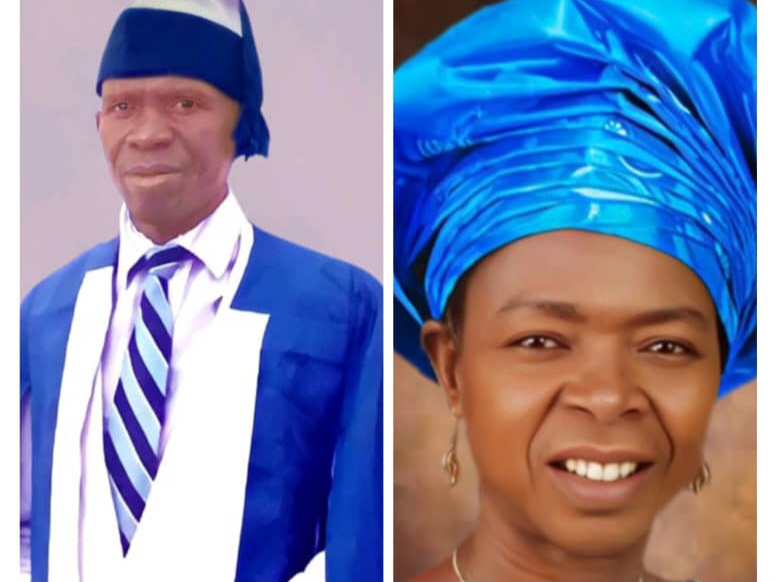
    I am penning this piece just a few minutes before 12 midnight, November 1, 2025. It is also a few minutes to the first anniversary of the passing of the great lioness, the late Senior Mother-in-Israel Josephine Mgborie Anichukwu (nee Anyianuka-Orji). October 2024 was a particularly trying period for our family, as our dear mother, fought valiantly for dear life. At about this time of the night last year, I made to go to my residence to shower, change to something else, and return to the hospital quickly. I had not showered all day. I was already downstairs, but somehow, I could not put myself beyond the door. Something in me pulled me back to my mother’s bedside.

    Back to her bedside, I sat quietly by Mama and I played one of her favourite hymns – Almighty Jah Jehovah, the freely giver of old… proclaim thy wonderful works. She was a member of the Eternal Sacred Order of the Cherubim and Seraphim. Although Mama was unconscious, I knew she was listening.

    Suddenly, Mama seemed not to be breathing again. I called out to my elder brother, Nnaemeka, who was also with her. He was taking his bath. I alerted the nurse stationed just in front of the room. She did one or two things and quickly called the doctor on night duty. After examining her, checking her pulse and all, he mentioned something to the nurse, who drew the bedsheet to cover the Lioness.

    Thank God for the disbelief which hit me first. Otherwise, I wonder if I could have survived the shock of losing my mother, unable to put up a fight, unable to defend the daughter of the Irokos, unable to at least chop off the right ear of the grim reaper just like Peter did to Malchus during Christ’s arrest. As far as I was concerned, it appeared like a drama, or perhaps, just a nightmare.

    A similar thing happened to me when I learnt of the passing of my father, the late Rabbi (Chief) Gabriel Nworie Anichukwu. He joined the saints on 15th October 1995. I had just finished my second semester, year one, examination in the university. As far as I was concerned, they did not know what they were saying. Perhaps it was just a movie scene being rehearsed. I just sat quietly and listened, confused and tensed. Somehow, I just did not believe the news. Or better put, I was too shell-shocked to come to terms with the reality. I could not even cry immediately.

    In the case of Mama, it was not until I saw her being wheeled out of the ward, covered in white bedspread that I broke down uncontrollably like a child. The words Shakespeare put in the mouth of Mark Antony’s in “Julius Caesar” tore through my heart: “O mighty Caesar! Dost thou lie so low, Are all thy conquests, glories, triumphs, spoils shrunk to this little measure? Fare thee well.” Truth is, I never really believed death could conquer her.

    Mama barred us from informing anyone, including our larger family, that she was hospitalised. She was a strong woman, who obviously did not want to be seen in her weak state. But before she left our hometown, Nomeh, to Enugu, she had spoken with Amoge (my first cousin), Madam Vicky (a family friend) and a few others detailing to them the people she gave our individual and family parcels of land to farm. Amoge, said the last time she visited Nomeh before Mama’s death, she was forced to tell Mama that she was scaring her be the story and details she was dishing to her. Mama asked her if she (Amoge) was a child. Again, Mama had also promised my younger brother, Onyekachi (Omego), who lives overseas, that she would wait to see and cuddle her grandchildren. Yet she would remind him that she had brought him up to be strong and assured him that she would always watch over us. In retrospect, I think Mama prepared us for her departure, just that we were too carried away by our love for her, our determination to keep here, to read in-between the lines. The rest is history.

    Death closes all, as Alfred Lord Tennyson puts it. But it would never close the fond memories our parents left behind or the extreme sacrifices they made to see us through life. As I stated in my tribute during Mama’s funeral in February 2025, “Mother Josephine Anichukwu: And My Mama Departs in a Blaze of Glory” (https://www.thisdaylive.com/2025/03/01/mother-josephine-anichukwu-and-my-mama-departs-in-a-blaze-of-glory/), one of our greatest gifts in life is to be parented by teachers. I urge the reader to click on the link to know more about my mother.

    A combination of their attributes helped in shaping us. Both were great disciplinarians in different ways. Mama would pursue after you until she caught and flogged you like a masquerade. Papa, on the other hand, would allow you to run all you wanted, then wake you up in the middle of your sleep in the dead of the night. He would recount your “sins” and proceed to give it to you “woto-woto”, as the Nigerian parlance goes. Again, while Papa did not beat often, each of his therapies lasted you till the next season.

    They both believed that as a teacher’s child, you should be a shining example to others. So, if we fell into punishment at school (at least one of them was always in the same primary school that we attended), you would get a double portion of discipline. On one occasion, our father flogged me so mercilessly that I could not use my buttocks for several days.

    Our father was a highly principled person, who stood for what was right. He was a Returning Officer during the heady days of the 1983 general election. Some group of gun-wielding thugs from one of the two popular parties stormed the voting centre. They wanted him to alter the results, to which he stubbornly refused. Mama’s rigid principles are also well known.
    From childhood, they taught us many deep things about life. They taught us to run away from injustice. They taught us the sanctity of human life and the sacredness of human blood. They taught us the efficacy of prayers. They taught us absolute trust in God and I can attest that there is nothing beyond God. Nothing! He has been our help in ages past and remains our hope in years to come.

    They equally taught us that hard work pays. As a headmaster, father marked his teachers’ lesson notes like examination scripts. From time to time, he would also go from class to class, along the corridors to monitor them as they taught their classes. At a point, I lived with him at Ozalla, in present day Nkanu West Local Government Area. Whenever he was sick, I would beg him not to go to work the next day. He would agree. But by 7am, he would mount his Suzuki motorcycle and ride off to work. If I tried to protest, he would say, “Boy, duty is duty.” Many years after his demise, I learnt from one of his teachers that they actually called him Duty is Duty behind him.

    Likewise, our mother refused to spend any reasonable time anytime she visited her children in the township. She would tell you that her children (pupils) would be like sheep without a shepherd. We fought over this on several occasions. Till her death, she remembered and called every one of her former pupils by his or her full name, even when some of them had become grandmothers. She had this everlasting bond with them.

    They valued education and learning so highly. Father was cerebral. Each time he took us to Agbani for Children’s Day or Independence Day celebrations, his colleagues and school mates would usually say, “I hope you are as intelligent as your father?” Father disliked bad grammar and academic laziness and pretences. Sometime during my secondary education, the idea of speaking like the Whiteman became quite popular. I tried to converse with dad like an Oyibo as we returned from evening church service. He turned and asked me why I was sounding “hio hio hio” like someone with a broken nose. I still laugh so hard each time I remember the incident.

    Following father’s demise in 1995, the entire weight of seeing us through our education fell on our mother’s shoulders. She literally overworked herself in the process. As my earlier-referenced tribute shows, she was the type that would even give her own life for her children to live and succeed.

    They taught us service to one’s community. They served Nomeh in various capacities. Father served as Secretary of Nomeh Development Union at a point, while mother served as the Financial Secretary of Nomeh Unateze United Women Association. They initiated what metamorphosed today into Nomeh-Unateze Maternity Health Centre.
    Today is exactly a year since Mama passed on and one full year since we became orphans. It has not been easy. Sometimes, after Sunday service, I make to drive to Nomeh to see Mama, but only to remember that she is no more. Again, several events since after her death keep validating all her warnings and counsels. I am sure if she was still here with us, her words would have been “Did I not warn you?” Yet in all things, God has been faithful.

    Rest on, Papa, Nwa Ofia Inyinya Okereke Igboke Anyiomaa Egbo Ogbuna na Amigbo Alumangu Obodosaa. Rest on Mama mu, Ada Anuka Orji Nwa Onuofu Orji na Njoku Ekwe Alumangu. Rest on Onwuetuegwu. You are both deeply loved and sorely missed. But it is well. Obodo gbara onwe, ochighi echi. We will keep the flags flying high.

    To thousands, who stood by us throughout the challenging times of our mother’s death and funerals, we remain ever indebted in gratitude to you all. Indeed, mmadu ka e ji aga.

    Mazi Anichukwu writes from Obinagu, Nomeh Unataeze

  • The Ambassadorial Burden of a Failing Republic

    The Ambassadorial Burden of a Failing Republic

    -By Abdul Mahmud

    Nigeria has finally plunged into the depths of morass. Deep and troubling depths, difficult to climb out. The new list of ambassadorial nominees tells a familiar story. It is the story of a country that refuses to rise. A country that recycles its worst. A country that decorates failure and calls it service. The President has sent a fresh batch of names to the Senate. Thirty two in all. They join an earlier set of three. It should be a moment of pride for our country. It should be a moment to showcase our best. Instead, it is an embarrassing parade of deadwood and political survivors who have little business representing a country in need of credibility. Look closely at the list. Former governors who left no mark at home. Former commissioners who are remembered only for patronage. Former legislators who saw public office as personal property. Election riggers who supervised the erosion of trust in the ballot. People rejected by their states but rewarded at the national level. This is not a diplomatic corps. This is a retirement home for the politically displaced persons of dubious interest and politicians of particular concern.

    The diplomatic service is the face of a country. It is the voice of a people. It is the place where competence matters. It is the place where integrity stands firm. Countries rise or fall on the quality of the people they send abroad. That is why serious countries take diplomatic postings seriously. They understand the weight of consular and diplomatic representations. Nigeria does the opposite. We treat embassies as political rehabilitation centres. We treat foreign missions as consolation prizes. We reward political loyalty. We punish merit. We sideline career officers. We insult the service. We diminish the country.

    Look at how other countries behave.

    The United States sends seasoned diplomats with years of service. Sometimes it sends political nominees but even those are men and women with serious achievements. They are people with policy minds. People nuanced in policy. People who can open doors abroad, and in promotion of their countries’ national interest. France sends its finest administrators. China sends disciplined technocrats who understand the world. India sends highly trained officers drawn from its foreign service elite. South Korea sends competent professionals who understand trade, investment and technology. These countries understand diplomacy as a strategic asset. They understand that ambassadors carry the weight of national interest. They know that representation is a serious business. They know that no country rises when mediocrities carry its passport across borders.

    Nigeria stands alone in its contempt for excellence. Its rulers insist that political actors who have failed at home somehow succeed abroad. They believe that those who ruined local institutions will protect national interests in foreign capitals. This is an illusion built on arrogance. It is a tragedy built on notoriously poor habits. The damage is visible. Many of our missions are weak. Some are directionless. Some are barely functional. They cannot protect citizens. They cannot attract investment. They cannot sell the country. They cannot build serious bilateral ties. They cannot speak the language of global diplomacy. They cannot engage because they do not understand the issues. The result? Our passport is treated with suspicion across the world. Our missions cannot help. They lack the skill. They lack the influence. They lack the respect. Nigeria is big but its diplomatic voice is small. It whispers at foreign tables where others speak loudly. It watches while others act. The new list promises more decline. Rapid decline.

    There are career officers in the Ministry of Foreign Affairs who have trained for decades. They understand protocol. They understand negotiation. They understand the UN system. They understand the African Union. They understand the slow and patient work of diplomacy. In pursuit of tokenism, a few career diplomats are thrown into the appointment mix, while many watch politicians with no knowledge of international diplomacy take positions meant for professionals. It is demoralising. It is destructive. It weakens an institution that is already fragile. But, there is a grave cost to mediocrity. Every bad envoy carries Nigeria’s weaknesses abroad. Every failed politician posted to a foreign capital worsens our country’s poor reputation. Foreign governments know who is serious and who is not. They know when a country sends its best. They know when a country parades deadwood and sends political handshake dealers abroad to man its missions.

    Nigeria keeps promoting payback tokenism. Nigeria keeps sending liabilities abroad.

    Worse still, Nigeria keeps sending men and women whose only qualification is their usefulness to the President. This is the tragedy of a country caught in the cycle of low expectations and low standards. There is a moral problem as well. Some of the nominees helped produce the electoral chaos that Nigerians now live with.  Some supervised flawed elections. Professor Mahmood Yakubu is one example. Some defended impunity with unmatched zeal. Reno Omokri and Femi Fani-Kayode stand as its most enthusiastic evangelists, men who turned public discourse into theatrics and acrobatics. They did not merely excuse the excesses of power. They flipped. They flopped. They flip-flopped. They somersaulted around truth, to the point of eating their vomits. They justified impunity. They amplified falsehoods as if truth were an inconvenience. They embraced propaganda as a vocation. In a country struggling to rebuild trust in its institutions, their voices have too often deepened cynicism and normalised the erosion of accountability. Some weakened public trust. To reward them with diplomatic postings is to endorse their conduct. It sends a message that the state has no ethical core. It signals that public office is not a service but a spoil of war.

    The world is changing. Diplomacy is now about technology, climate change, migration, security, trade and innovation. Nations that understand this are recruiting the brightest minds. They are building strong foreign services. They are investing in knowledge. They are preparing for a complex future. Nigeria is doing none of this. Nigeria is moving backward while others are moving forward. There are Nigerians who can serve well. Distinguished scholars. Former international civil servants. Former judges. Entrepreneurs who built serious institutions. Career officers who have risen through merit. Professionals who have excelled across the world. They are not on the list. They are not considered. They are not invited. They are not valued. They are simply not wanted by power. They are not listening to scholars and practitioners in the field. Even if they don’t want to listen to the former Indian diplomat and scholar, Kishan Rana, who has written extensively on diplomatic professionalism and appointment criteria, our country has the respected Professor Bolaji Akinyemi who has consistently argued that the selection of ambassadors should be grounded in merit, professionalism, and national interest rather than political patronage. In his view, diplomacy is a specialised field that demands competence, experience, cultural sensitivity, and a deep understanding of international affairs. He stresses that career diplomats, trained within the foreign service system, are best positioned to represent the state effectively and maintain continuity in foreign policy. While acknowledging that political appointments may sometimes be unavoidable, he warns that excessive politicisation weakens professionalism, erodes institutional memory, and diminishes a country’s global standing. His overarching position is that ambassadorial appointments must prioritise expertise and integrity to protect the country’s diplomatic credibility.

    These ambassadorial appointments are a mirror. They show us what our rulers think of Nigeria. They don’t take Nigeria seriously, as the poet, Odia Ofeimun highlighted with intellectual verve and flourish two decades ago. They show us how little is expected of our country. They show us how low the bar has fallen. A country that wants greatness must send great people to represent it. A country that sends its failures abroad will receive the respect such failure deserves. The Senate will confirm the nominees. It always does. It will ask a few questions. It will praise the list. It will claim that the nominees are qualified. Then, it will ask the ambassadorial nominees to “take a bow and go”. It will then move on. Nigeria will move on as well but in the wrong direction. Another opportunity for progress will be lost. Nigeria deserves better. Nigerians deserve better. The world deserves to see our country takes itself seriously. A country that knows that dignity and competence matter. A country that believes that representation is sacred.

    One day our country will rise above the needless elephantine burden it chooses to place on its own back. The weight is heavy. It is the weight of recycled failures. It is the weight of institutions drained of confidence. It is the weight of a country that keeps dragging the carcass of its worst habits into a future that demands clarity, courage and competence. No country grows by carrying the load of its own mediocrity. No Republic moves forward when it insists on hauling along with the same tired figures who helped slow its steps. Nigeria must learn to travel light. It must learn to shed the burdens that weaken its ambition. Only then can it walk with purpose among countries that have already learnt that progress begins with choices that honour the present and protect the future.

    Today is not that day for our failing Republic.

  • Soludo: Fighting Voter Apathy, Not Buying Votes [OPINION]

    Soludo: Fighting Voter Apathy, Not Buying Votes [OPINION]

    By Christian Aburime 

    Politics is that volatile turf where sentiments, propaganda, and innuendos often take centre stage in an election season. In this part of the world, the political game gets even more sinister as heightened sensibilities rush to react to every contentious news story to create warped impressions that desperate politicians exploit to denigrate their opponents.

    Thus is the perfect example of those making a mountain out of a molehill. Now, in the lead-up to the Anambra State governorship election on November 8, Governor Chukwuma Charles Soludo has been unfairly attacked with allegations of vote buying via incentivisation. The claims are not only baseless but also a significant misrepresentation of his intentions and actions. It is essential to examine the contexts and clarify the true nature of the incentives mentioned by Governor Soludo, which are entirely legitimate and in line with democratic principles.

    During a campaign rally in Umunze, Orumba South Local Government Area, Governor Soludo spoke about providing financial incentives to his party members. He stated, “When we were campaigning for the Senate, we knew we were going to win every ward in the South Senatorial Zone, but we still had some incentives. Any ward that APGA won received N1m, and we won all the wards in Orumba South. We promised each of these wards N1m, and next week, we will redeem it. The ward that comes first will get N5m, the second N3m, and the third N2m. That was the deal. For November 8, any ward that wins again will receive N1m, while the first three performing wards will get N5m, N2m, and N1m, respectively.” What a discerning reader would notice in the foregoing statements is the clause “we will redeem it.” This means that wards may have been won, but the rewards come only later, not before.

    Yet, immediately after the Umunze rally, the news went viral that the Governor was engaged in vote-buying. Impulsive outbursts took over as every opinionated critic kicked with an opinion. As typical of Nigerian political discourse, misrepresentations and vilifications spiralled out of control.

    Surprised, Governor Soludo later clarified his position at an APGA rally in Onitsha North Local Government area. He emphasized that the incentives promised were not meant to buy votes but to motivate party canvassers to mobilise voters. He stated, “Don’t sit at home and say Soludo has won. No, we have not won until you have voted. Do you still have your PVC?” He further explained, “We in the APGA, we stand for one man, one vote, transparent, free and fair election. We are going to cooperate with INEC to make sure that this will be the freest, most credible election ever conducted by INEC.” Now, do these statements sound like someone trying to compromise voters?

    Indeed, Governor Soludo likened the incentives to a manufacturer rewarding its marketers for increased sales, a legitimate exercise. He said, “That is what the prizes of APGA are about! Remember that members of political parties constitute less than 5 percent of voters. So, it is members of our political party as canvassers who are being incentivised to mobilise voters to the polling units. In politics all over the world, including America, political parties pay canvassers before elections. But in our own case, we are not paying them before the election. We say to them that if they win their wards, we will have a prize for them.” Definitely, the rewards coming for party canvassers (not voters) after the election cannot qualify as someone inducing voters before the election.

    Governor Soludo has repeatedly emphasized his commitment to a free, fair, and transparent election. He has called for cooperation with the Independent National Electoral Commission(INEC) to ensure that the election is credible and that every vote counts. He stated, “We just want people to cast the votes, count the votes, announce the votes and know who the winner will be.” His call for voters to cast their ballots and for the results to be accurately announced clearly underscores his dedication to democratic principles.

    But the real, bigger issue in all of this is voter apathy. One of the key challenges in any election in contemporary Nigeria is voter apathy. Governor Soludo’s incentives are designed to combat this issue by motivating canvassers to engage with voters and encourage participation. As he explained, “Instead of paying you upfront, we provide the incentives after the election. It’s like commission agents who earn commission on products selling. So, if you work hard and convince people to come out to vote, then we have a reward for you after the election.” This is necessary due to voter apathy which was a problem in previous elections.

    Therefore, the allegations of vote buying against Governor Chukwuma Soludo are unfounded and misleading. His statements about providing incentives are clear, noble and competition-driven: they are meant to reward the hard work of party canvassers and to combat voter apathy. These incentives are a legitimate part of campaign strategy anywhere in the world, and are in no way an attempt to bribe voters. A high-performing governor like Professor Soludo, whose impressive achievements are undeniable and winning awards, doesn’t need to buy votes to win re-election.

    With the November 8 election fast approaching, it is crucial to focus on the issues and policies that matter to Ndi Anambra, not shadows chasing. Governor Soludo’s vision for the state and his dedication to ensuring a credible and transparent electoral process should be recognised and supported, not taken out of context and spun into wild allegations.

  • A Megastar Magnifies Umuaga – By M.O Ene

    A Megastar Magnifies Umuaga – By M.O Ene

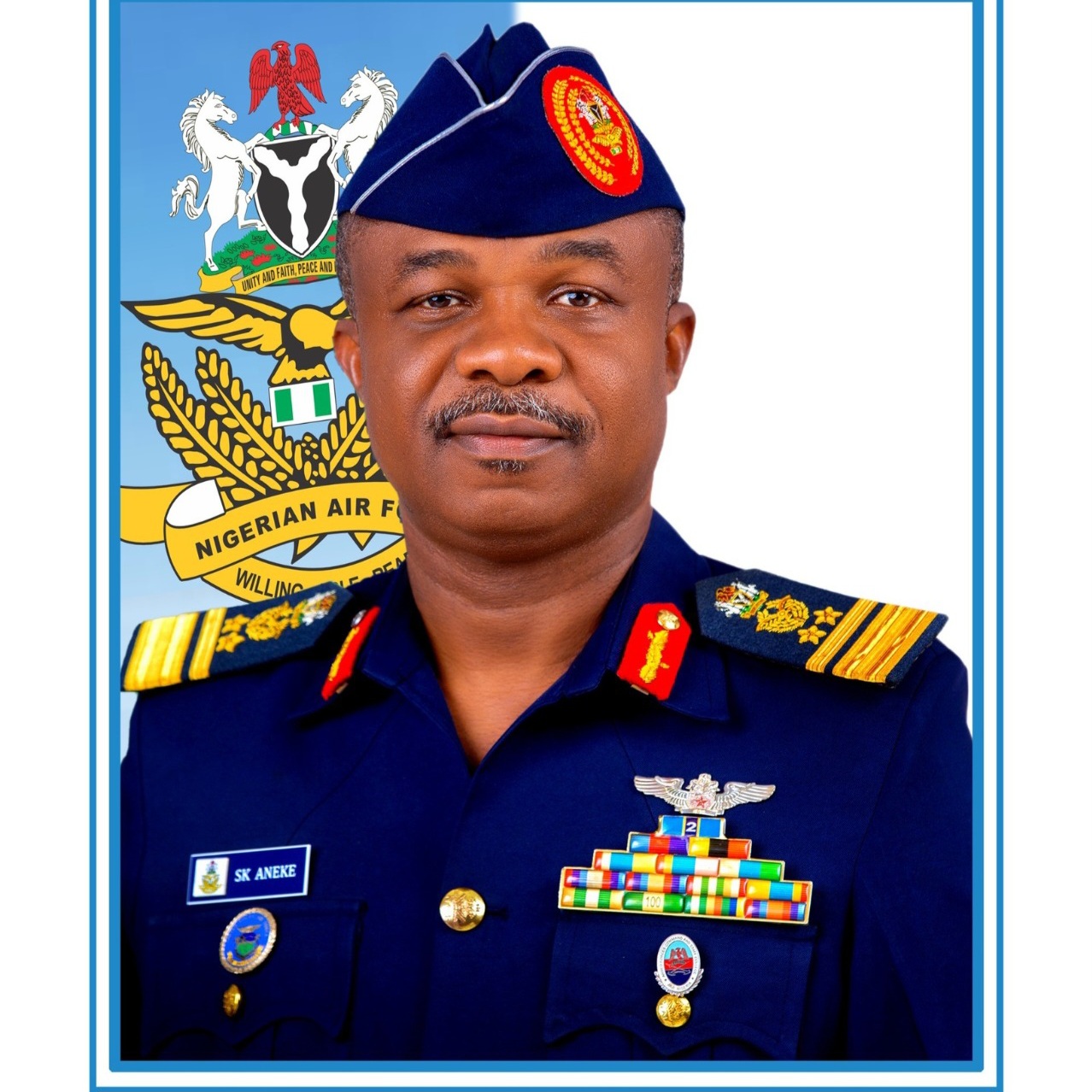
    When citizens are appointed to prominent positions, people rush to know their roots. The major appointments of Friday, October 24, 2025, were no exceptions. The military served meticulous dossiers: parents, wives, children, travels, qualifications, training, and degrees. Air Vice Marshal Sunday Kelvin Aneke, the 23rd Chief of Air Staff, popped up like a supernova in a cosmic carnival destined to renew a dormant planet.

    “He hails from Udi Local Government Area of Enugu State.” Folks of Agbaja extraction (Udi/Ezeagụ LGAs mostly) identified as “Udi”—a consequential colonial division. Udi town was the administrative capital of the East before colonial colliery took the government station and its airfield down to the valleys of Udi Hills. Enugu emerged. Coal City.

    When Aneke’s root narrowed to Ụmụaga town, the gasp was loud. Although Aneke had been known in the area, encouraging youths to consider careers in the military setups, the name, rank, and town of the megastar with a brilliant resume remained intriguing. To emerge as the first Southeasterner to hold such a lofty position is no tobacco chaff.

    So, where is Ụmụaga? The town nestles on the southern end of Udi LGA. General access is off Nkwọ Agụ market/Udi technical college on old Enugu-Onitsha highway, through Sullivan Chime-macadamized main road. The two thoroughfares geolocate Ụmụaga. The southern flank is washed by Oji River, which powered the East with hydrothermal electricity. Tentatively, one can sail from Ụmụaga to the Atlantic.

    Called “Ụmụaga Obodoeze” by natives, it is one of eight communities in Udi South. According to legend, forefather Neke had seven sons, collectively called Umuneke (children of Neke). The last son, Aga, begot sons who founded villages of Ụmụaga and the eight town, Nāchị.

    Sidebar: The singular form of ‘umu’ (children) is ‘nwa’ (child). In fast-paced dialects, ‘nwa’ becomes ‘wa’—as in some Abia, Enugu, and Ikwere parlances. Similarly, ‘w’ fades. So, ‘nwa Neke’ (son of Neke) becomes “a’Neke,” as in “Yar’Adua” but written as ‘Aneke.’

    Someone asked succinctly: What is in this for Ụmụaga? By magnifying Ụmụaga, AVM Aneke is a shining light that reveals human potentials, vast land resources, best palm wine (‘anekeachime’), food delicacies, and its vibrant cultural heritage: ‘Iheaneke’ masquerade festival, youth-fascinating ‘Okomọyọ,’ new yam festival (‘Ajụ’), and end-of-year entertainments, especially inter-village soccer sponsored by Umuaga Diaspora Union—the community project powerhouse.

    AVM Aneke could leave an indelible mark by establishing a permanent and prestigious presence of the air force in the southeast. The civil aviation activities at Akanu Ibiam International Airport should not constrain the air force base and the International Helicopter Flying School (IHFS). Such an institution deserves ample open space.

    IHFS should soar up the hills, where aviation began in colonial Southern Nigeria. Thus, during recruitment exercises into military establishments, there will be less complaints about the apathy of some sections of Nigerian youths. This will be an important yield from his appointment to the pinnacle of Nigerian Air Force.

    Good deeds follow good news. Air Vice Marshal S.K. Aneke has generated excitement. The young ones will aspire to be like him. They cannot all be air vice marshals. True: they must aspire to be marshals—marshal mechanics, marshal managers, marshal mentors and mentees… even marshal politicians. In all professions, excellence comes with hard work, honesty, humanity, and humility.

    M.O. Ene
    @OkaaMoe
    Thursday, October 30, 2025

  • [OPINION] As Nnolim Nnaji Repositions For The Future: Strategy, Constituency And Political Renewal

    [OPINION] As Nnolim Nnaji Repositions For The Future: Strategy, Constituency And Political Renewal

    By Ezefi Mike Udoh 

    In politics, timing is everything — and strategy even more so. The defection today of Rt. Hon. Nnolim Nnaji from the People’s Democratic Party (PDP) to the All Progressives Congress (APC) is neither an impulsive gamble nor a routine political migration. It is a deliberate recalibration, a tactical shift designed to position both the lawmaker and his constituency at the center of Nigeria’s evolving political equation.

    Rt. Hon. Nnaji, a respected parliamentarian and voice of reason in national discourse, has long stood for purposeful representation and pragmatic governance. His record speaks volumes: steadfast advocacy for infrastructural development, commitment to youth empowerment, and a reputation for integrity in legislative affairs. Yet, in an increasingly polarized political climate where access to power is synonymous with access to progress, remaining within the opposition bench risked constraining his developmental agenda for his people.

    By moving to the APC, Nnaji is not merely switching political jerseys — he is choosing effectiveness over sentiment, influence over isolation. His move symbolizes a new kind of political realism that recognizes that true service sometimes requires bold recalibration. The APC, as the party in control of the federal government, offers a wider corridor for legislative collaboration, policy influence, and constituency development.

    Critics may label this as opportunism, but the discerning mind will see it for what it truly is: strategic alignment. In Nigeria’s political ecosystem, where power and governance are often intertwined, aligning with the ruling party can mean unlocking access to federal projects, attracting infrastructural investments, and securing opportunities for one’s people. To ignore this reality would be to neglect the very essence of political representation — delivering tangible results.

    Rt. Hon. Nnolim Nnaji’s move is therefore not a retreat from principle, but an assertion of purpose. It is a declaration that loyalty to one’s people must supersede loyalty to partisan labels. In stepping into the APC, he steps closer to the levers of national policy, ready to engage, negotiate, and deliver more robustly for his constituency.

    Ultimately, history will judge leaders not by the colors of their political banners, but by the legacies they leave behind. And for Rt. Hon. Nnolim Nnaji, this bold political realignment may very well be remembered as the defining pivot that ushered his constituency into a new era of inclusion, empowerment, and progress.

    Ezefi Mike Udoh writes from Ihunekwagu Akpugo.

  • Just Go Further – Become the Total Entrepreneur

    A Review by Oseloka H. Obaze

    The powers of the written word “highlight its ability to shape thoughts, change the world, and create lasting connections through healing, inspiration, and reflection.”  While traditional wisdom, says that “a picture tells a thousand stories,” James Lafferty, an American actor and director, surmised that “The picture alone, without the written word, leaves half the story untold.”

    We are gathered today, first, to honour and validate the importance and power of the written word. Secondly, we have an eclectic group of invitees; prospective young entrepreneurs, change makers, visionaries, and captain of industries. What is it, exactly, that pulls this group together on a Monday afternoon in Lagos?

    We have come to honour and support one of our own, Mrs. Ebele Obi. She is the author of the book being presented today, which is titled, Just Go Further- Become the Total Entrepreneur.

    My task here is very simple; to lend my voice to the ensuing conversations, and to underpin the essence of shared vision, and support in the smallest way possible, whatever dreams, aspirations, and networking opportunities, this book and this gathering may bring about.

    For the purposes of full disclosure, I had before now, been asked to co-write the foreword to this book. I did, along with Professor M.U. Adikwu.  So, kindly forgive me, if you find some of the things I may say here, already recorded in the foreword.

    At the juncture when I read the manuscript of Just Go Further- Become the Total Entrepreneur, I was, coincidentally, engrossed in the book, How Successful People Think, by John C. Maxwell. Upon request, I accepted to do the foreword, not from the author, but from her brother, and my dear friend. Ejike Onwusowulu. I recognized in reading the manuscript, that it was a manifestation of how successful people think. They share and transfer knowledge and they also motivate others to become successful. That is history. Let’s fast forward to the present.

    Rather than following the traditional book review format, I would like from the onset, to put the book being presented today in its proper context.  Just Go Further- Become the Total Entrepreneur is a motivational book written by an entrepreneur, for budding entrepreneurs.   It is by no means, the first or last book on entrepreneurship to emerge in the Nigerian literary scene.

    Yet, it is a fit-for-the purpose book. Essentially, it has three vital strands. Why? How to, and Gateways. It is a fundamental work targeted at dreamers; those who think they can become viable and trail-blazing entrepreneurs, but are hobbled by self-doubt, aspiring entrepreneur, as well as seasoned professionals who had long transcended the elemental aspects of entrepreneurship.

    To those in these categories, the book is a clarion call, to rise persevere, despite prevalent challenges, to think boldly – at times outside the box- and sometimes as outliers; but above all  to pursue one’s dream with purpose and unfettered passion.

    The 240-page book is segmented into three self-explanatory parts. Part 1: Becoming or Being an Entrepreneur; Part 2: Sustaining Growth as an Entrepreneur; and Part 3: Crossing Generations. It also has a total of 16 chapters, along with real-life interviews with successful entrepreneurs, abstracts, recommendations for further reading, references and testimonials.

    For us in Nigeria, the book speaks to the utility of free enterprise; how to do it yourself, and how to think progressively big, even in a stifling economic environment like ours. It prods our young people, to think of themselves not as prospective employees but as prospective employers in this era of start-ups, fiercely driven by innovative and disruptive technology and artificial intelligence.

    Generally, the book speaks to why: entrepreneurs start companies and the critical roles they play in any economy. Pivoting away from the “why,” the book delves with the how to: these include identifying the problems, prospects, opportunities, as well as unmet needs, and thereafter, developing the pertinent business ideas required to solve the problem or needs. These efforts, naturally follow a well-identified industry trajectory, regardless of the cadre the entrepreneurs fall into, be it the so-called Small or Medium Scale (SME) small business enterprise, social entrepreneurship, scalable startup entrepreneurship, or large company entrepreneurship.

    The author’s first sentence is poignant: “Hey, I want to take you on a journey, like on a roller coaster.” And she surely did. Like all things in life, the book recognizes that swings, obstacles and challenges will abide. And it’s only by overcoming such obstacles, including the imponderables that success can be achieved. In tackling the challenges faced by entrepreneurs, the author touches on personal sacrifices required for success and growth, which she opines, might in extreme cases, include risking the ability to put food on the table.

    As she explains, “the growth period is a very sensitive period in the life of entrepreneurs,” and she draws lessons from an established entrepreneur, who cautions that “it is good to follow your passion but, your passion must put food on your table.” Regardless for how fervent your passion is, the concretization of entrepreneurial realities, require surmounting several thresholds related to preparation, marketing, execution and leadership in order to achieve success.

    Beyond the obvious entrepreneurial exhortations, Just Go Further- Become the Total Entrepreneur, is a special purpose vehicle, keen driver and motivational book aimed at those who aspire, those who are hobbled by self-doubt, and those who need a nudge to get-up and embark on a startup.  It is a do-it-yourself and how-to-do-it-right exposé. This three-part 16-chapter book is a handful, bursting with motivational insights for would-be-entrepreneurs.

    This book grapples with three critical questions every aspiring entrepreneur must contemplate. What does it take to become an Entrepreneur? How do you sustain growth as an Entrepreneur? And how do you replicate your success by transference of your skill sets, innovative ideas and methodologies in the workplace, in order to make them sustainable and cross-generational? These questions are germane, considering that the traditional definition of an enterprise is “a project or undertaking that is especially difficult, complicated or risky.”

    Inevitably, since there are some recurring questions relative to entrepreneurial aspirations, the author attempts to offer clarity to such questions, including a rhetorical but ubiquitous question in our evolving startup and globalized world: Are entrepreneurs born or made?

    I believe the jury is still out on that question. But as we know, some of the contemporary global redoubtable entrepreneurs and unicorn company founders were not Sorbonne, Oxford, Cambridge or Harvard graduates. In reality, and this pattern seems consistent, some notable redoubtable entrepreneurs and unicorn founders, did not even graduate from High School. What they had were ideas, personal motivation and the sheer drive and audacity to run with such ideas against all odds. The resulting high valuations were usually, consequential adjuncts.

    As such, I suspect that most readers of this book will identify with the author’s assertion that “every individual is an entrepreneur? Some blossom into business owners, some show up their entrepreneurial spirit wherever they find themselves, while others simply disappear somewhere in our big global space.” Since many entrepreneurs will never self-actualize; their dreams and skills will be stillborn. It is to such persons, amongst others, that the author directs her attention.

    In very plain language, the author has identified twenty mainstream attributes of an entrepreneur, which most people will easily recognize, but might never appreciate that they posses. But this is exactly what should set anyone thinking. She prods the reader to also explore and ask some heady questions to wit; If I am — an idea generator, if I am a passionate influencer, creative and goal-oriented, if I listen well and take honest advice; if I am courageous, motivated, comfortable with change, self-assured, diligent, resourceful and persevering — Why then, do I not belong to that “group of individuals having some common characteristics and qualities and characterized as entrepreneurs? Why am I not one of those entrepreneurs who can unlock hidden potentials?

    Since no one ever embarks on an enterprise with a mission to fail, each enterprise must have a life cycle, which if not properly sequenced, should at least be measurable by certain benchmark accomplishments and its sustainability.

    Contextually, the author offers the reader and entrepreneur-to-be, extant and acceptable insights into setting up management and growth measuring tools; the so-called SMART and SMARTER indices. As she asserts, “Every entrepreneur must have an assessment document with which to measure growth and progress. This will help direct their efforts especially in terms of marketing, branding and profitability.”

    I am convinced that every eventual reader of this book will agree with me that the ultimate selling point and value of this book lay in Part 3, wherein the issues of succession are discussed. Readers will also agree that it is commonplace in business circles in Nigeria and elsewhere, to hear expressions of grave worries about enterprise sustainability and its corollary, leadership succession challenges. The author does well to underscore the importance of effective leadership and succession planning. As she stated “Succession planning and execution can also be used to forecast the future of an organization amidst many other factors that drive success and succession.”

    Part 3, will also be most invaluable even for well-established entrepreneurs, who per chance, have not done their due diligence in succession planning and therefore, are still at risk. It will also serve young entrepreneurs well, and ensure they do not encounter the pitfalls that rendered many enterprises belonging to the past generations moribund, once the founder is deceased. Another factor that is perhaps noteworthy in this context, is the global fail rates of new SMES.

    For the record, enterprise experts estimate that “20% of small businesses fail in their first year, 30% of small businesses fail in their second year, and 50% of small businesses fail after five years in business. Finally, 65% to 70% of small business owners fail in their 10th year in business.”  Relatedly, “Over 70% of small to micro and medium enterprises (SMMEs) in South Africa fold within the first 5–7 years of inception.  In Nigeria the numbers are even direr: “about 80 percent of Small and Medium Enterprises (SMEs), in Nigeria fail within the first five years of their existence due to lack of experience and other wrong business practices.”  While these figures should give us pause, they also speak to the revelatory value of this book.

    The author does ask another heady question that ought to be of interests to us all. “If at this moment you drop dead or better may be, get entangled by a life changing ailment, which renders you incapable of carrying on with your entrepreneurial activities, what will be happening in your business?” In response, the author cites as examples, the fate of three successful Nigerian family-owned enterprises, and what happened to them because they were bereft of succession planning. You have to read the book to get the rest of the gist.

    Ebele Obi has acquitted herself creditably as an inimitable live coach, business leader and mentor.  In writing Just Go Further-Become the Total Entrepreneur, Ebele Obi has made a memorable contribution to the world of public and private enterprise, in very plain and understandable language.

    Readers may variously consider Just Go Further- Become the Total Entrepreneur, a reference book, a business guide or a do-it-yourself book. Whatever assessment it garners, the volume is compellingly motivational. It speaks to the gumption required to begin and successfully traverse the often confounding and labyrinthine recesses of entrepreneurship. Yet, the book is also the sharing of the author’s personal story, experience, resilience, and entrepreneurial journey.  As she asserts, “Entrepreneurship is about mindset, courage, and consistency. This book encourages people not just to start, but to go further, to become total entrepreneurs who can thrive anywhere.”

    The enduring influence and value of this book, which will be in perpetuity, can only be described as one of infinite possibilities. The validity and veracity of the recommendations in Just Go Further-Become the Total Entrepreneur, rests largely on the fact that the author has leveraged her privileged contacts with at least seven highly regarded and successful Nigerian entrepreneurs, thus drawing on their very vast and rich collective experience.

    I believe that most readers will glean from this book, something worthwhile. It should also interest those who wish to see the high failure rate of SMEs in Africa and Nigeria reduced drastically. Perhaps, the greatest beneficiaries of Just Go Further-Become the Total Entrepreneur will include the target audience, mainly talented young adults focused on startups, unemployed graduates, and struggling entrepreneurs. This book will surely teach our young ones to think outside the box and seek to become employers of labour instead of wage-seeking employees.

    I recommend Just Go Further-Become the Total Entrepreneur highly, to all readers, especially those who seek to become Entrepreneurs.

  • Mapping Nigeria’s Sub-National IGR Race, Growth Gaps, and Governance (2022–2024)

    Mapping Nigeria’s Sub-National IGR Race, Growth Gaps, and Governance (2022–2024)

    …Enugu, Bayelsa, and Kano Lead Nigeria’s 2024 Revenue Surge.

    By David Ugwunta, Ph.D

    The 2024 Internally Generated Revenue (IGR) map of Nigeria’s sub-nationals reveals stark contrasts and rising fiscal ambition. Lagos, shaded in deep blue, surged past ₦1.26 trillion, while Yobe barely crossed ₦11 billion, highlighting the uneven revenue landscape.

    According to the National Bureau of Statistics (NBS), total internally generated revenue for sub-nationals rose to ₦3.633 trillion in 2024, up from ₦2.427 trillion in 2023 and ₦1.926 trillion in 2022. As such, the cumulative growth rate jumped from 26.03% in 2023 to 49.70% in 2024, a net gain of 23.67%. Ten sub-nationals consistently led the IGR charge, contributing 74.53% of the national total in 2024 (₦2.71 trillion).

    Lagos remained dominant, accounting for 34.72% of national IGR and 46.59% of the top 10 in 2024. Rivers followed with ₦317.30 billion, and the FCT ranked third with ₦282.36 billion. Ogun held fourth place, while Enugu made a dramatic entrance at fifth with ₦180.50 billion, displacing Delta, Edo, Akwa Ibom, Kano, and Kaduna. Akwa Ibom climbed to eighth, Kano re-entered at ninth, and Kaduna rounded out the top 10.

    Twelve (12) states rotated through the top 10 IGR performers between 2022 and 2024 based on contribution to total national IGR. Oyo and Kwara exited top 10 in 2024, suggesting either signs of fiscal stagnation or being outpaced by faster-growing states. Ogun’s slight decline contrasted with Akwa Ibom’s quiet ascent.

    A deeper dive into percentage growth dynamics shows 23 sub-nationals posted significant IGR gains in 2024. Enugu led with a staggering 415.01% growth, driven by aggressive reforms, digital systems, and expanded revenue streams. Bayelsa followed with 198.26%, and Kano rebounded with 112.1%. Osun and Jigawa gained 82.63% and 81.92% respectively. Other notable performers included Taraba, Akwa Ibom, Abia, Rivers, Borno, and Sokoto at 54.48%, 51.41%, 50.54%, 49.30%, 40.86%, and 40.01% respectively.

    States like Oyo, Niger, Lagos, Anambra, and Gombe posted gains between 24.9% and 39.04%, while Kebbi, Imo, and Ogun grew modestly. Kaduna, Delta, and Edo recorded sub-10% increases, and Zamfara barely moved at 0.85%.

    On the contrast, 14 sub-nationals experienced IGR declines. Ebonyi suffered the steepest drop, plunging from 148.19% growth in 2023 to -57.27% in 2024, a net loss of -205.46%. Ekiti and Katsina fell by -78.76% and -61.39% respectively. Ondo and Kwara posted reversals of -51.84% and -47.43%. Plateau and the FCT lost momentum, declining by -41.78% and -35.98%. Others with negative growth included Kogi, Bauchi, Nasarawa, Benue, Adamawa, Yobe, and Cross River.

    These declines underscore the volatility of sub-national revenue generation and the risks of relying on one-time inflows or weak enforcement. They highlight the need for stronger fiscal planning, digitalization, and diversification.

    Regionally, the South-East led with an average growth of 60.87%, followed by the South-South at 51.92% and North-West at 28.96%. The North-East posted 14.26%, while the South-West managed just 5.22%. In the North-Central, despite Niger’s 31.88% gain the region ranked lowest with a -20.42% average decline as all other sub-nationals in the zone recorded negative growth.

    Nigeria’s IGR performance offers both a scoreboard and a mirror—revealing which states are innovating, which are stagnating, and the fiscal implications for development.

    Balancing Revenue Ambition with Equity, Trust, and Economic Impact
    The surge in Internally Generated Revenue (IGR) across many sub-nationals in 2023 and 2024 offers clear gains for governance and taxpayers alike. States like Enugu, Bayelsa, and Kano now have greater fiscal space to invest in infrastructure, education, and healthcare, enabling more responsive, localized development. A broader tax base also allows for a fairer distribution of the tax burden, where more contributors mean lighter individual loads and stronger voluntary compliance. However, without transparency and citizen engagement, rising revenues risk mismanagement or diversion, eroding trust and weakening accountability. Wide adoption of digital revenue platforms can help close these gaps by curbing leakages, reducing arbitrary charges, and making the system more efficient and transparent.

    Higher IGR demands higher accountability. In top-performing states, citizens expect visible returns on their taxes, pushing governments toward greater transparency. States that embrace automation and reform strengthen the link between taxation and service delivery. Crucially, digitization must cut both ways — not just boosting revenue collection, but also enhancing service delivery and tracking how funds are spent matching by open contracting reforms. The Open Contracting Data Standards (OCDS) provide a framework, not a platform for governments to structure and publish expenditure data across the entire contracting lifecycle, from planning to implementation. When citizens, businesses, and civil society can access and analyze this data, public spending becomes more transparent and accountable. Timely release of budget performance reports and audited financial statements should be standard practice to build trust and drive efficiency. These reforms not only strengthen fiscal governance but also foster voluntary tax compliance and deepen citizen–government trust.

    Crucially, high IGR doesn’t guarantee better services as rapid IGR growth brings its own set of challenges. Aggressive tax enforcement can fuel perceptions of over-taxation, especially when public services lag behind. In many states, rising levies on businesses drive up consumer prices, straining household budgets. When revenue gains come from higher service charges like land use fees, they often hit low-income residents hardest, deepening poverty.

    Ultimately, Nigeria’s IGR landscape is no longer just a ledger of numbers, it is a reflection of leadership, equity, and the evolving social contract between government and citizen. States that pair revenue ambition with transparency, inclusive policy, and responsible spending will not only expand their fiscal base but also deepen public trust. However, when digital reforms serve merely to inflate revenue figures without improving service delivery or accountability, the result is a hollow victory. The true measure of any revenue drive lies not in how much is collected, but in how visibly it transforms lives. As governors shape the next chapter of fiscal strategy, they must lead with empathy, govern with integrity, and spend with purpose. This is because every naira collected carries the weight of public hope, and every budget line should echo the aspirations of the people.

    Okelue David Ugwunta is a Nigerian university lecturer and an economic planning specialist.

  • The Cynism in Our Public Space is Poisoning Us – By Dr. Samson Abanni

    The Cynism in Our Public Space is Poisoning Us – By Dr. Samson Abanni

    Here we prove our righteousness by branding everyone else a thief or corrupt, especially if he’s anywhere near public office.

    I truly feel that as Nigerians, we lose more when we approach all things with the implicit assumption that our leaders are inherently wicked and terrible.

    I feel we should assume ignorance or incompetence first and not malice, dishonestly or corruption, I think we shouldn’t always assume evidence-taking, a lack of it as even more evidence. Once there’s an allegation, the court of public opinion concludes the public official is guilty and thus no one pushes for a true investigation that would give the law court the evidence to throw him to jail. We give up our checkmating role because we assume he’s guilty-if he’s not immediately thrown to jail, it only proves everyone is complicit.

    Begin by assuming ignorance or incompetence. It focuses energy on problem-solving and capacity building rather than on conspiracy hunting or paralysis. It helps you listen with an open mind, which helps you find out inconsistencies or identify areas that need tightening. It reduces corrosive cynicism and social polarisation, making cooperation, training, and incremental reform more possible. Believing all to be incurable thieves paralyzes us all and shuts our brain off. The problems remain unsolved while adults wring their hands and look for an external saviour.

    The new approach will give less social tension and preserves social capital and institutional working relationships that Nigeria badly needs for service delivery.

    Why “assumed malice or wickedness, or corruption first” can look attractive and may even heighten vigilance, stronger oversight, earlier investigations and deterrence we know from experience that none of these happens here. It doesn’t make use demand more accountability, it only leads to conformation bias-once there’s an allegation we assume hes guilty.. Weare appeased just by ranting-the most powerless form of anger because fear does not allow for effective anger.

    And when the assumption that all public officers actions are with corrupt intent- it breeds cynicism, demoralises public servants, discourages honest officials, shrinks cooperation, and fuels social fragmentation.

    They ask “then why should I care in doing what’s right since they expect me to only do what’s wrong?”

    Trying the new way does not do any politician a favour but it helps us keep our sanity to really ask questions, not in malice but to really know – and this is how we can provide concrete evidence, for corruption, when one exist or for reforms.

    Dr. Samson Abanni, MBA, is a business consultant with over a decade of experience in helping startups navigate the changes of business childhood. He’s also a member of the Board of Editors of Pacesetter Frontier Magazine. 

  • 2027: Deeds and Dudes

    2027: Deeds and Dudes

    By M.O Ene 

    Before the 2011 elections, Governor Sullivan Chime found himself in a sticky situation. Ex-Governor Okwesilieze Nwodo had become the national chairman of PDP. His brother Nnia Nwodo was beefing with Chime over the wrecked Coal City Centenary celebrations, a proposal I had presented to Governor Chimaroke Nnamani in his office.

    In New York City, at an airport hotel near La Guardia, Nsukka-USA 2010 convention was held. Ex-Minister Nnia Nwodo was the keynote speaker. He spoke about UNN and Enugu politics with a bombastic bluster. Then VC Prof Batho Okolo, also seated at the high table, was shocked. I had to stand behind Batho as he rebutted, but the audience had imbibed a full dose of Nnia’s oration in stirring Asadu/Ideke dialect. Nnia proclaimed a looming removal of Sullivan. It was neither minced nor nuanced. It was clear: Okwi Nwodo would stultify Sullivan’s second term.

    Long story short, Sullivan stumbled onto Okwi’s untidy party-affiliation documentation. Just like that, the man who had promised Mother Mary at Holy Ghost to be fair to all fell at the first hint of unfairness!

    Back to the present: Seven days after Governor Peter Mbah’s super-scripted shift from PDP to APC, complete with brooms, umbrellas, and utensils, the world has not ended. Some PDP partisans got together quickly, as if not to let PDP choke, but the damage is done and deep. Two ex-diasporans are set to clash: Chicago’s Ben Nwoye (APC) and Atlanta’s Ifeanyi Udibe (PDP). Great! Democracy without opposition is dead because excessive political power is an expressway to expiration.

    There are for-and-against write-ups, as if there is a major logic in partisan policies. It is all politics: permanent interests. Only the politically unsophisticated fight.

    The realignment is regular. Mbah needed to secure the ticket for a deserved second term. The dude’s deeds are great. Forces in punctured PDP positioned to derail his train. The wrecking Wike G-5 alliance with party scribe Sam-Daddy Anyanwu reflects Chime-Nwodo scenario. Mbah made the move.

    The juice here is that in the national secretary fuss, PDP disrespected Mbah, the Southeast zonal leader. He had warned the party of potential consequences. He left to grab and run with his Tinubu-assured 2027 ticket. Parties do not build states; governors do.

    For 2027, the gods are still silent. This much I know: Mbah needs more than his delighting deeds to erase the popular resentment of APC in Enugu State. Luckily, with the swift dismantling of ex-Minister Uche Nnaji, there is no popular gubernatorial contender. Wait: Ex-Minister Frank Nweke could pop up in an opposition coalition. A week can make a huge difference; it saved Mbah in 2023. I know. I was involved.

    The defection has dawned. Motion is one thing: movement is another. Mbah needs extra movement. Without a core movement, 2027 could be another toss-up. Lightweight dudes without deeds won elections in the 2023 Obidient wave. May it not be our portion again! Prayers are good, but work works better.

    #moe @OkaaMoe
    Tuesday, October 21, 2025

  • Of Sowore and Soyinka – By M.O Ene

    Of Sowore and Soyinka – By M.O Ene

    The continued custody of Mazi Nnamdi Kanu (MNK) in the dungeon of the Department of State Services (DSS) is condemnable. If MNK were an American citizen, the matter would have ended and saved lives before his state-sponsored seizure from Kenya.

    When DSS arrested activist Omoyele Sowore in 2019, we quickly gathered at the office of US Senator Bob Menendez in downtown Newark, NJ. He was the chair of US Senate Committee on Foreign Relations. Senator Cory Booker (D-NJ), whom I had known since he was a city councilor, was in attendance. And so was Sowore’s wife.

    Menendez sent a letter demanding Sowore’s release. Done! Abuja seized his Nigerian passport. Hakuna matata: He was free, and he was not done with activism.

    Sowore sensed the MNK situation brilliantly and decided to up the ante: He called for #FreeMNKOct20. Those against cited the brutality of security forces, as seen during the EndSARS protests. Ms. Obianuju Catherine Udeh, DJ Switch, is still in self-exile. The dead did not get a respectable repose.

    Those hurt by the random violence of freelance Biafra insurgents oppose participation. No one should be cajoled to join. Chuba Okadigbo could still be here and possibly the president of Nigeria, if he had not gone marching with Buhari in Kano. Nigeria happened to him.

    Why do some people read meanings into Sowore’s supposedly Yoruba ethnicity? Sowore is not Yoruba! Hear him: “I am an Ijaw person, most people don’t know this”! His activism has nothing to do with his parents’ ethnic extraction.

    Before Yele Sowore, there was Wole Soyinka, a Yoruba. During the war, Soyinka took his rabblerousing radicalism to Enugu. Hear him: “… creating a third force which would… repudiate and end both the secession of Biafra, and the genocide consolidated dictatorship of [Gowon] …which made both secession and war inevitable.” [‘The Man Died,’ p. 18] Soyinka extirpated Biafra’s initial war momentum with a fake liberation of Western Region—which, if genuine, could have been done.

    Sowore seeks outlets for his #RevolutionNow campaigns. David Hundeyin opined that a big masquerade is drumming for Sowore, making him a proverbial “nwanza.” Could President Tinubu sense a Madagascar, overreact, and crush the demonstrators?

    Dr. M.I Okpara was the premier of Eastern Region when he stepped into the Western Region’s civil crisis, sheltered Prof Sam Aluko, Wole Soyinka, and Awolowo’s wife Hannah. He also intervened to make sure that Chief Obafemi Awolowo was not unalived in jail, as Abacha’s regime did to General Shehu Musa Yar’Adua.

    I fear that #MNKOct20 may drag folks into #RevolutionNow—just as Soyinka suckered Biafra into #ThirdForce fiasco with Agbam, Alale, Banjo, and Ifeajuna in 1967. Tinubu’s tepid attempt to diffuse the situation with a court injunction was rejected by a judge on Friday. The US Embassy warned of potential violence. Saturday: rumors. Just let MNK go. Renew hope!

    Those who coldheartedly chant “no pain, no gain” anticipate blood on the streets as a necessary price to pay for change in Nigeria. This giant green god with calloused clay claws has gulped barrels of blood already. Enough!

    The shaming of Southeast governors and Ohanaeze statesmen should stop. Challenging Obi, Soludo, Otti, and Mbah to march is unwise. Their efforts failed to free MNK, unlike the Afenifere arbitration on Igboho’s case. Oduduwa is not as Biafra: Ask IBB, whom Biafra kept awake and Oduduwa sent to sleep… reportedly.

    As if Ndiigbo needed more Monday Sit@Home, the Ohanaeze Youth Council has urged a closure of Igbo-owned commercial outlets in solidarity. May this be the last Monday!

    #moe @OkaaMoe
    Saturday, October 18, 2025

  • The Pearl I Knew – A Tribute By M.O Ene

    The Pearl I Knew – A Tribute By M.O Ene

    Humanity lost a treasure. She was a distinguished diplomat, a prima inter pares, and an international intellectual. From being the first female DG of Nigerian Institute of International Affairs (NIIA), the first female minister of external affairs, and the first female Nigerian permanent representative to the UN, she rose to preside over the UN Security Council—another first for a classy lady. She capped it with the presidency of the UN Women.

    Professor Joy Ogwu was the pride of Nigeria at the UN. A beauty-full and brilliant dame, she rose to incomparable heights in international relations. It will take generations to see her kind again.

    Our paths crossed in Abuja. We attended the 2005 Commonwealth conference on women participation in politics. Organized by Elsie Onubogu of the Commonwealth Office in London, UK, it featured prominent politicians, government officials—home and abroad, academicians, and NGO executives.

    I recall her smiling through my post-presentation sidebar with Sarah Jibrin, first female presidential primary candidate. Her presence was moderating and motivating without her saying much to counter my criticisms of women politicians blaming their male counterparts more than mobilizing and sensitizing voters—mostly women.

    When she came over to the USA, our paths crossed again. She lived in Purchase, NY. We once visited the official residence in Tarrytown. With an amazing view of now Mario Cuomo Bridge (then Tappan Zee) over River Hudson, the property was in a bad state. I had been there a couple of times for official receptions when Professor Ibrahim Gambari lived there. We talked about turning the multimillion-dollar estate into a profitable Nigerian cultural center.

    She also visited me at the campus in New Jersey. She was no stranger: She attended Rutgers, the state university. She had lived down the road in The Oranges. We met at other special events in the UN and the Nigerian House, or at events of such mutual friends as Oseloka Obaze, a UN diplomat. She always exuded the elegance of an eminent envoy. When my wife and I had twins, Joy shared in our joy and surprised us with a visit from across the miles.

    A devout Catholic, she will be missed not only by her family and friends but also in the world of international relations, where her graceful presence, experience, and expertise brought new vistas to global diplomacy.

    Life is an accumulation of momentary memories. How long they last depends on how merry—or monstrous—the memories are and on how they impacted those with whom we interacted. Joy Ogwu left many merry memories.

    I don’t know how the federal government will honor her—an Abuja street, NIIA building, etc. Delta State government should consider naming, minimally, a school of diplomacy in an Anịọma-Delta university after this wonderful woman of style and substance. Future generations should know about the uncommon life of Her Excellency, Professor Uche Joy Angela Ogwu, PhD.

    May her spirit come our way again.

    M.O. Ene, PhD
    New Jersey, USA
    Friday, October 17, 2025