Category: Opinion

  • Demolitions: When rule of law goes awry – By Oseloka H. Obaze

    Demolitions: When rule of law goes awry – By Oseloka H. Obaze

    Recently, Nigerians watched on national television, as some prominent southeast politicians visited the Aspanda Market in the former Trade Fair Complex in Lagos, over recent demolitions in that vicinity by Lagos State authorities. The visit spoke of the high-octane nature of an increasingly contentious issue, fraught with allegations of bigotry and recriminations. I watched too, with bemused skepticism.

    I have no sympathy for those whose buildings get demolished because they built out of zone, and in violation of extant building and land codes. That is as it should be. I say so, as a technocrat and erstwhile policymaker and administrator. Laws are made to be respected. That’s what rule of law is all about. Such persons should not complain about the consequences of their greed and stupidity.

    Such things happen, because the Nigerian society is now so unapologetically transactional and imbued with impunity that some affluent people believe that they can subjugate rules and regulations, violate statutory laws and still buy their way out of attendant reprisals. Nowhere is such an attitude more rampant than with acquisition of landed property in major cities. Green areas, public parks, golf courses and playgrounds have been carved up and sold to rich speculators. The same fate has befallen, water causeways, and even lands, earmarked for special public projects. Invariably, the master plans of major cities, including Abuja have been at risk.

    Nevertheless, there comes a point when discretionary authority and powers needs to apply in law enforcement matters. That’s what adaptive leaders do. That’s what good governance does. Buildings should be demolished when they are unfit for habitation and pose clear and present danger to the general public. But buildings should not always be demolished simply because they violate zoning laws. And that’s not to say that zoning laws should be disrespected; or impunity not be punished.

    Lately, there has been a spate of demolitions in Lagos state. Some suggest such demolitions are punitively targeted. The contention is debatable. Yet, as policy, demolitions cannot be used for the purposes of gerrymandering or disenfranchisement. But that is not the kernel of this write up. The point here is that in a nation with over 75 million housing deficit, of which 17 million of the shortfall is in Lagos, demolishing an already completed buildings, is defeatist and not the best policy option or punishment. Such practice is also not in the best interest of the larger society. It is myopic, except there are ulterior motives. As a social scientist, I favour without apologies, the use of history in present and future decision making, especially, in governance matters. That use of history may be applicable to ongoing demolitions.

    Many years back, in the late 1980s, there was an interesting and celebrated case in New York City that speaks to the zoning, building code enforcement, respect for the rule of law and discretionary authority. It also speaks to arbitration and legal adjudication of such matters. In the New York case, a luxury high-rise building was approved for construction on the Upper East Side of Manhattan. The building’s structure, height, floors, air rights and related codes, were all sorted out and the approvals and permits granted. The highbrow building was mixed commercial and residential. This meant that the ground and lower floors could house high-end stores and the rest of the 30-floor building would house various sized apartments.

    As it happened, the builder made a subjective internal adjustment to accommodate the then fashionable high ceilings in all the residential apartments. This meant additional three feet per floor outside the approved plan. This did not seem like a big deal. But the additional three feet per floor resulted cumulatively to an extra 75 feet being added to the height of the building. Technically, this equated with adding an additional 5 floors to the original design. The high-rise building was still the stipulated 30 floors, but the height was far in excess of what was statutorily approved.

    Consequentially, the additional height of the building violated the air rights of some neighboring buildings. It was also at variance with the approved design. The owners and occupants of the contiguous buildings filed complaints. The City’s housing authorities that issue construction permits, investigated and found that the complaints were meritorious. There were deviations from the approved plan and therefore violations. What to do?

    The high-rise building could not be certified for occupancy. The developers were losing money. The City was also losing money from property taxes via sales of the apartments. Litigation seemed likely, but would be time consuming and financially costly for both sides. The parties submitted to arbitration. At mediation, it was determined that the only practical remediation required to meet compliance, would be to knock off the equivalent of five floors in order to bring the building in line with extant codes and the approved building plan. That solution itself would be also costly for the developer. So, there was need to find common ground; a win-win solution, for the developer, the City authorities and potential investors/owners of the condominium apartments.

    While the unapproved and uncertified building stood vacant for several months, arbitration commenced aimed at protecting public and private interests by allowing the law to adapt to some discretionary flexibility, away from rigid enforcement that would be totally punitive. In a city that badly needed more houses in order to meet growing demands and existing shortfalls, demolition, though an option, would be the final resort; and only if all else failed.

    Two issues were critical to agreeing to arbitration. Both the developer and city supervisors were respectively found not to have been willfully negligent of the law. Nonetheless, the developers took some architectural and structural liberties; and the city building supervisors were lax in their due diligence, and thus, had failed to catch the additional three feet-per-floor adjustment at the foundational level, where it could have been stopped or the building plan revised accordingly. Thus, the City did not meet its remit obligations fully. While the developer met the approved floors specifications, it failed to comply with the overall building height specifications.

    Rather than pursue demolition, which would have resulted in obliterating about 50 apartment units of various sizes and configurations, the City decided to allow the building to stand. For consequences, the developer would allocate three contiguous floors out of the thirty floors to the city, as low income houses, for subsidized rents over a thirty-year period. The developer would still collect rent for those three floors of about thirty units, but not at premium market rental rate. It was also agreed that a separate entrance would be created for the city-assigned floors, thus segregating that section from the remaining twenty-seven luxury stores and luxury home floors. Contextually, the building would still be designated a luxury high-rise, but with some intrinsic conditionalities.

    In essence, the errant developer was sanctioned and punished, as required by law, but not by way of punitive demolition, in which the developer, investors and the City would all be losers. The mutually accepted outcome was, the essence of decision making at its best. The non-exculpatory resolution also served as deterrent for future developers.

    As Nigerians continue to witness completed buildings, some costing billions, being demolished in parts of Lagos State especially, as well as in other parts of the federation, I often wonder if the intent of such demolitions are not conceptually punitive. If so, the rule of law has gone awry. Everyone loses; even as it may seem that the developer or owner incurs the greatest loss.

    While I’m unsympathetic to law breakers, the ongoing policy of outright demolition, is without doubt, hare-brained. Lagos state still has a high 17 million housing deficit. And most buildings targeted for demolition could have been stopped at the foundational level, but for obvious complicity, when approvals are granted by a criminal cartel of local government and state officials, bereft of any moral compass, who take advantage of very greedy and stupid rich persons.

    Besides outright demolition, several policy options exist for resolving these matters. There ought to be some compartmentalization of the problems and solutions. State governors have statutory authority to revoke Right of Occupancy on any land in the public interest. So, rights to a house or structure built on a water causeway, green area, or access road, rather than being demolished could be rendered a state property, with a statutory revocation. The city, local government or state authorities and the owner of the structure can then negotiate a settlement that might save the property built at great cost from demolition. The property could also e placed o high-luxury property tax bracket. Such decision will avert outright demolition, and help in reducing the national housing deficit.

    Demolitions might seem the only way out, when the rule of law goes awry. But they are not since demolitions also have unintended binary consequences. They stultify housing development. They also disincentivize and chase investors and developers away. The greatest danger, however, especially in the case of Lagos state, is the contention that such demolitions target certain ethnicities. That policy choice is dangerous, whether such allegations are myth or reality. Since various policy options still exist for addressing thorny zoning questions, political leaders must explore every option before embarking on a lineal policy of outright demolition that might backfire or in the long run, hurt public interest.

    ———-

    Obaze is MD/CEO, Selonnes Consult – a policy, governance and management consulting firm in Awka.


  • PRESS RELEASE: Why I Resigned as Minister – Uche Nnaji

    PRESS RELEASE: Why I Resigned as Minister – Uche Nnaji

    After deep reflection and consultations with family, associates, and well-meaning Nigerians, I have today [yesterday] tendered my resignation as the Honourable Minister of Innovation, Science and Technology to President Bola Ahmed Tinubu, GCFR.

    This decision did not come lightly. Over the past week, an orchestrated sustained campaign of falsehood, politically motivated, and malicious attacks have been waged against my person, integrity, and office across print, electronic, and social media platforms. These unfounded allegations and media distortions have not only caused personal distress but have also begun to distract from the vital work of the Ministry and the Renewed Hope Agenda of Mr. President.

    As someone who has spent more than five decades building a reputation anchored on hard work, honour, and service to humanity, I cannot in good conscience allow these distractions to cast a shadow over the noble objectives of this administration. My decision to step aside is therefore a personal choice — not an admission of guilt, but rather a principled decision to respect the sanctity of due process and to preserve the integrity of the judicial proceedings currently before the court. In the end,Justice will prevail, and history will vindicate the just.

    I remain deeply grateful to His Excellency, President Bola Ahmed Tinubu, GCFR, for the confidence he reposed in me and for the privilege to serve in his cabinet. His vision for a renewed, innovative, and technologically driven Nigeria is one I continue to hold dear, and I pledge my unflinching support to his administration and its transformative goals.

    Chief Uche Geoffrey Nnaji
    Former Honourable Minister of Innovation, Science and Technology
    Federal Republic of Nigeria

  • Why Mrs Mbah’s Kind Act in Igboeze South LG Deserves Appreciation

    Why Mrs Mbah’s Kind Act in Igboeze South LG Deserves Appreciation

    By Sebastine Chukwuebuka Okafor, Ph.D

    Mrs Nkechinyere Mbah
    H.E Mrs Nkechinyere Mbah

    Few days ago, one of the human friendly gestures was exhibited by the wife of the Governor, Mrs Nkechinyere Iheoma Mbah at Amaechara Ovoko, Igboeze South Local Government Area of Enugu State, when she gifted a fully furnished house to the family of Mr. Chisom Odoh whose wife gave birth to Quintuplets in June 2025 at a hospital in Enugu.

    When the information about this birth circulated, especially with the sad news of the man’s incapability to care for the “blessings from God”, the Local Government Chairman of Igboeze South, Hon Barr Ugochukwu Ferdinand Ukwueze, paid a visit to the hospital and drew the attention of the wife of the Governor to the issue.

    Mrs Mbah was impressed by the miracle God did to the family and intervened but, seeing how poor the family is, decided to do what even myself did not think of. She began to erect a house for the family whose level of poverty was sequel to that encountered by Job during his trial period in the Bible. When she made the promise and instructed Barr Ukwueze to swing into action immediately, many thought it was a normal trick and the more you look the less you see strategy that is associated with Tomorrow is Here administration in Enugu State since 2023 and ignored the said instructions.

    Fast forward to October 3rd, that is less than four months after the directive was given, the fully furnished house was commissioned by the First Lady. That is what is called humanity in governance. When I was watching the live video of the event, I was emotional because I saw the joy on the face of this family, who never knew such a day would come. They were tenants in their own village till that day.

    However, there was a scoop in the event. Another man received a house as a gift courtesy of the Local Government Chairman, Barr Ukwueze. The man was said to have donated his inheritance to the wife of the Governor for the said building to be erected as Mr Chisom had no land in view to call his own. But in order to balance the happiness and avoid future family land crisis, the land donor’s house was renovated and furnished too by the council chairman, an act that depicts humanity in governance.

    The development became a major talking point among residents of the area. Many community members described the gesture as a clear example of leadership that focuses on the welfare of the people. They noted that such actions give a sense of belonging to the less privileged and restore faith in governance at the grassroots level. The atmosphere in Amaechara Ovoko remained lively days after the event as people continued to celebrate the good news.

    Observers at the commissioning expressed joy that a promise of this nature was delivered within a short time. According to them, it is uncommon to see leaders act swiftly and deliver tangible results without delays. They pointed out that this project has set a new pace in community-oriented governance and serves as encouragement to other leaders to take similar steps in supporting vulnerable families.

    Religious and traditional leaders at the event offered words of appreciation to the wife of the Governor and the council chairman. They prayed for more strength and grace upon their lives, noting that this intervention has brought relief to a family that had lost hope. Songs of praise filled the air as both the beneficiaries and members of the community expressed gratitude for a gesture they described as life-changing.

    More so, as a show of appreciation for this humanity act, the council of traditional rulers in Enugu North Senatorial zone (Ndị Ìgwè Nsukka cultural zone niile) gave her a title named “Ifekaugo – Enugu.”

    Let me use this opportunity to thank Ifekaugo Enugu, nwunye Nwoke-Owo, for this gesture. Let me also praise Barr Ukwueze for having human conscience and allowing God to use him to remember that family. With this type of exhibition, one can actually see and feel that the tomorrow of the Odo’s is actually here.

  • For Sommie and For Our Country

    For Sommie and For Our Country

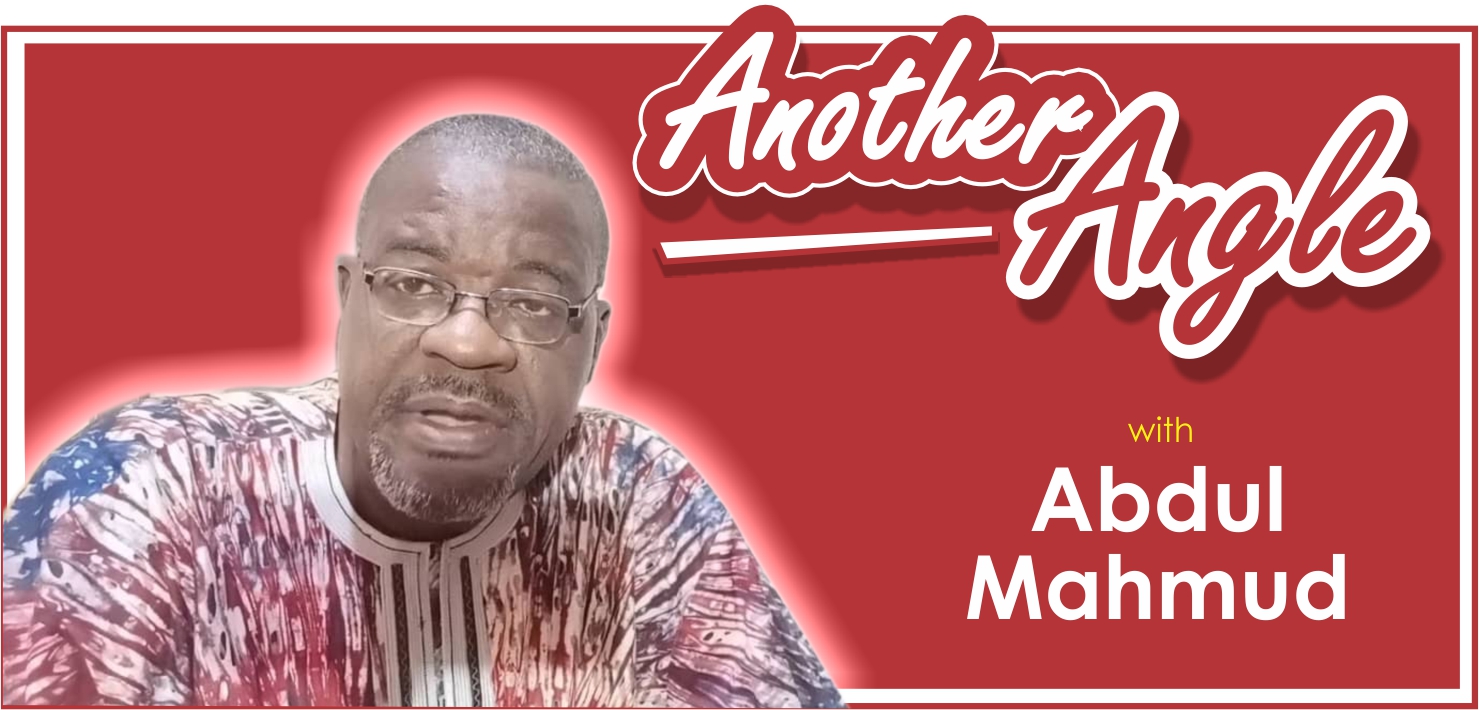
    -By Abdul Mahmud

    I did not know Somnachukwu Maduagwu. I never met her in the studios of Arise Television in Abuja, where I have gone many times for interviews. But her death touched me deeply. She was young. She was bright. She was a lawyer. She was a news anchor. She was her parents’ pride. Now she is gone. She died in the hands of armed robbers. Another life wasted in a country that treats life as disposable. Another dream crushed before it could take flight. Another family left to grieve in public. Her parents did not deserve to hear of their daughter’s death as a breaking news item. No parent deserves that. I am a parent. I have a daughter of Somnachukwu’s generation, only a few years younger. Like her, she worked hard to be called to the Bar. I look at her and I imagine what Somnachukwu’s parents now feel. I imagine the grief, the confusion, the anger. To lose a daughter that way is to lose the future. To bury a child is to bury hope. Nothing can console her parents. Nothing can restore what was taken.

    Somnachukwu was my colleague at the Bar. Her career was just beginning. She had walked the long road of law school, survived the interviews and the newsroom, built a place for herself in a country where young people are made to struggle for everything. And then she was cut down. Just like that. No warning. No second chance. This is not just about her. It is about our country. A country where lives are lost daily to the carelessness of leaders and the boldness of criminals. A country where public safety has collapsed. A country where families are broken by grief too often and too easily. The Constitution is clear. Section 14 says the security and welfare of the people shall be the primary purpose of government. That is not decoration. It is duty. It is the first obligation of any state. Without safety, there is no life. Without life, there is no country. Nigeria has failed in that duty. We are not safe anymore. Not in our homes. Not in the streets. Not on the highways. Not in the markets. Not on the farms. Not in our schools. Not in our places of worship. Not even in the studios of television stations where journalists come and go. We live in fear. And fear is now the air we breathe. Armed robbers shoot at will. Bandits operate unchecked. Kidnappers turn highways into hunting grounds. Terrorists bomb villages. Ritual killers prey on the vulnerable. Every week brings new names, new faces, new tears. Somnachukwu is one of many. This country eats its young.

    What country eats its young? What country allows its brightest to die so cheaply? What country leaves its children unprotected while the old feast on privileges and power?

    The answer is Nigeria. The human cost is unbearable. Behind every headline is a family broken forever. Behind every statistic is a mother who will never hear her child’s voice again. Behind every killing is a father who has lost the reason to live. Behind every abduction is a household plunged into debt and despair. We must not forget that these are people. Sons. Daughters. Brothers. Sisters. Dreams. Futures. Somnachukwu’s parents will never forget. They will grow old with her picture on their walls. They will remember her voice on television. They will remember the day she wore her wig and gown at the call to Bar. They will think of the grandchildren who will never be born. They will live with the emptiness that Nigeria gave them. That is the price of insecurity.

    How did we get here?

    Our policing system is broken. We have too few police officers for a country this large. The ones we have are badly trained, poorly paid, and ill equipped. Half of them are guarding politicians, businessmen, and their families. The rest are left to improvise with worn-out vehicles and ancient rifles. Criminals know this. Citizens know this. That is why nobody trusts the police. That is why people feel abandoned. So, every killing is proof of neglect. Every robbery is proof of state failure. Every kidnapping is proof that our rulers have priorities other than us. Billions are allocated for security every year. Yet the killings continue. Where does the money go? Who accounts for it? Who takes responsibility? Nobody. The result is fear everywhere. We fear the night. We fear the fork of the road. We fear the knock at the gate. We fear the silence of government. We fear because we know the police will not come. We fear because we know even when criminals are caught, justice will not follow. We fear because we know it could be us tomorrow. This is not how a country should be. Citizens should not live this way. Parents should not bury children like this. Dreams should not be extinguished on the highway. Talent should not be wasted in gunfire.

    We must say this clearly. Enough. Nigeria must choose life. We must reform the police. We must insist that community policing is not a slogan but a system that protects. We must insist that governors take real responsibility for the safety of their states. We must insist that politicians cannot keep police officers as personal guards while citizens die in the streets. We must insist that every naira budgeted for security is used for security. We must insist that justice is not selective. This is what it means to honour Somnachukwu. Not just with words, but with action. If her death passes without consequence, then we have failed her. If her parents’ grief becomes another headline that fades, then we are guilty of indifference. If her name is forgotten, then we too are lost. Her story should not end with silence. Her story should make us angry. It should make us demand more. It should make us ask why young people must die for nothing. It should make us confront the truth: Nigeria has become a country that eats its young. But it does not have to stay that way. We can build a country that values life. We can build a country that protects children and gives parents peace of mind. We can build a country where the brightest are allowed to shine, not to bleed on the roadside.

    For Sommie. For her grieving parents. For my daughter. For yours. For every child of this land. May her memory live as an unanswered question to a country that devours its young. How many more must fall before Nigeria admits its guilt? How many more must die before the state understands that its silence is complicity, and its failure is blood on its hands? The truth is simple. A country that cannot protect its children has already written its own obituary. Nigeria is walking that path. Every unpunished killing deepens the grave. Every unresolved murder is a pointer to another death, if not more deaths. Every life wasted by neglect widens the gulf between government and governed. Every parent burying a child is a monument to national shame. We must face it squarely. There are no more excuses. There are no more evasions. The time to act is not tomorrow but today. Leaders who fail to secure lives must be held accountable. Budgets that vanish without protecting anyone must be traced. Security that serves the few at the expense of the many must be broken and rebuilt. We cannot continue to weep and move on. If we fail, then Somnachukwu’s death will be one more in an endless list, and our lament will be wasted breath. But if we rise to demand safety, justice, and reform, then her memory will not be in vain. Her voice will still speak. Her promise will still live. And her loss will mark the point where a broken country finally said: no more.


  • When The Water Reached My Chest – A Fiction By C.V.C Ozoaniamalu

    When The Water Reached My Chest – A Fiction By C.V.C Ozoaniamalu

    That evening, after devouring a shawarma that was generously peppery, I found myself in what I can only call a kind of post-shawarma clarity, that acute awareness that settles like dust when the pleasure fades and the price reveals itself. A noble man of this bullying capitalism, I sat with a mental calculator, the one that adulthood sharpens in us early, computing transport fares, food expenses, the thousand little emergencies that adulthood insists on. I inhaled deeply and muttered, almost involuntarily, “Oru oyibo.” The white-collar job.

    And yet, that shawarma, in hindsight, wasn’t even that sweet.

    I paused. I remembered our parents, mostly traders, people who made just enough and were proud of it, how they still dreamed aloud of the prestige of office jobs, how they romanticized shirts tucked into trousers, air-conditioned offices, and a salary at the end of the month. Maybe the world has changed. Maybe it hasn’t.

    My phone buzzed. I looked down.

    “Guy, I fit get 90k from you?”

    It was a message from a friend. Ninety thousand naira kee, Chim. Before I could respond, another message came. This one from someone I had only just begun speaking to: “Bro, please help me with small 10k. I need to buy drugs. I’m sick.”

    The phone became heavy in my hand. I placed it face down and inhaled again.

    And then I remembered, as I often do these days.

    I was maybe five. I was in our family home in Enugu. I had just finished washing the dishes, my hands still wet, soap drying white on my fingers. My eldest brother, eighteen years older, sent me to fetch something from his room. On my way, another sibling redirected me, and then another. I stood in the middle of the parlour, tiny and tired, and screamed in frustration, “I just want to grow up and leave this house!”

    They laughed. The loud, unbothered laughter of adults who understood something that I, in my smallness, did not.

    Back then, my sister Ogochukwu would “police” my afternoons, forcing me into siestas I detested. I wanted only to play. But now, as a grown man, in a world where capitalism does not let you nap, I am beginning to feel the water, once on my feet, grow up to my belly and come to my chest. I find myself longing for those silenced afternoons. I want to sleep in the middle of the day. But I cannot.

    Adulthood has hands. Adulthood is grabbing.

    Just last week, I was talking with my sister about how everything now costs too much, how every day feels like a negotiation with hunger, with hope. She laughed, not cruelly, but knowingly.

    “Do you remember Mr. Kay?”

    “Yes,” I replied.

    “Remember how we used to call him ‘Brother Aka-gum’ because he never gave us money?”

    We burst into the kind of laughter that carries both memory and apology.

    Back then, Mr. Kay was just another adult who, in our childish minds, was stingy. We did not know that he was still finding his feet, still figuring out how to be an adult. But now we know better. Now, he’s doing well. Life has been kind to him. I smiled that deep, understanding smile that adulthood teaches you, the smile of hindsight.

    These days, when I bill my older siblings, I imagine how often they must have given me their last card, without grumbling, without letting me see the hole it burned in their pockets. That kind of love, Ife erika.

    With each step I take now, I find myself revisiting the past, matching names and faces to emotions I finally understand. Was this what he was going through? Was that why she was always tired?

    Adulthood is not a straight road. Sometimes it’s a loop, or a wave. Sometimes, it is simply a mirror held up to your childhood. There is no rest. If it’s not money, it’s illness. If it’s not heartbreak, it’s death. If it’s not your own pain, it’s your friend’s, your cousin’s, your country’s. Rejection letters multiply. Businesses crumble. Lovers leave. Rent is due. The world tightens.

    And still, we wake up. We find small joys in ordinary things, in conversations, in bread and tea, in the sound of rain on zinc, in a meme that makes us laugh hard enough to forget, just for a moment. In all, Ndubuisi. Life is the most important.

    Wherever you find yourself, whether on the mountain of abundance or the valley of dry bones, remember: your chi will not hand you a cross too heavy. Grace may not always shout, but it is there, quiet, enduring, present.

  • Irony of Ignorance in Defense of Democracy

    Irony of Ignorance in Defense of Democracy

    By Oseloka H. Obaze

    Nigeria is 65. She struggled for her independence, but never fought for it.  That has made all the difference in her appreciation of her nationalism, unity and democracy.  Also, Nigeria fought a civil war to stay united, but because the agonizing consequences of that war were not equally felt, the appreciation of the war’s underpinning value varies.

    The choice of Nigeria becoming a democracy was not one made by Nigerians. It was a convenient and not-so-hard choice made on their behalf by colonial masters.  As surmised by one writer, “Nigeria is a nation that insists on playing in the theater of democracy, while the script is being written elsewhere.” Nigeria’s present ethnic composition, defaults respectively to the feudal, monarchical, and republican system. If Nigeria was predicated purely on linguistic and ethnic considerations, there would have been, perhaps, five nations: Hausa, Igbo, Yoruba, Ijaw, and Fulani.  Other smaller ethnicities might have also qualified as confederations. Efik-Ibibio would be one such nomenclature.

    Because some things only happen in Nigeria, the nation is what it is, by expedient experimental foreign design.  That is the stark reality. A corollary, is that in Nigeria, the defense of democracy or lack thereof, is quite often driven her fractured nature, systemic ethnic biases and by the ever-present irony of ignorance. Oftentimes, these ironies border on political idiocy.  Nigeria is a perfect case study of a nation that has experienced colonial rule, self rule, authoritarianism, military anti-politics and a dual subset of participatory democracy; as a parliamentary system and now, a presidential system.

    The debate about Nigeria’s trajectory as a united nation has always been animated. Historically, Nigeria has tethered on the brink, but hardly ever reaching the tipping point. The presumptive basis for consolidated nation building has been dissected in all forms and manner, usually under the rubric of restructuring.  Not even the Aristotelian dictate that emphasizes equality amongst equals and proportionality amongst the unequal seems to have helped.

    As a nation of over 250 languages, with many ethnic groups and a surfeit of minorities, the dominant Yoruba, Hausa and Igbo tribes (WAZOBIA), have held the leadership sway since her independence in 1960. Yet, as unlikely as it seemed, by a twist of natural attrition and constitutional fiat, a member of a minority tribe, Goodluck Ebele Jonathan, fortuitously led the nation as president in the Fourth Republic.

    Yet, discussing past, present, and future of democracy in Nigeria inevitably yields mixed results. Why? Because Nigerians covet democracy, but seem incapable of living up to its ideals. Some now even consider the military era, as more constructive, productive and cost-effective in developmental terms. Perhaps, democracy in Nigeria calls for putting new eyes on old ideas and controversies that hobble the nation.

    The practice of democracy in Nigeria tends to negate the concept “of government predicated on the principle that power should be vested in the people.” Also, democracy for Nigerians is no longer predicated on political beliefs as much as it’s driven by ethnic and social identities. Such identity paradox creates unending dissonance in democratic politics and governance. By extension, it amplifies Nigeria’s “growing distrust of and frustration with democracy.”  But then, Nigeria is not by any means the only nation where democracy has caused hyper-divisions in her political landscape.

    A recent op-ed I wrote, elicited the following rebuttal from an octogenarian, who was born in pre-independent Nigeria, lived in Biafra and served in her army, and consequently served as a career Nigerian Foreign Service Officer, rising to the rank of ambassador.  His words:  “If this Nigeria doesn’t die, a rebirth of a new Nigeria might be a hoax.”  His perspective is Biblical and Botanical.

    Biblically, we read about destroying the temple and rebuilding it in three days, which for believers, is epitomized by the consequent death and rise of Jesus Christ.  Botanically, seeds die in order to regenerate and germinate and bring forth new plants and growth.  Another interlocutor asked: “How will Nigeria not die or be saved when Nigerians are afraid to die or even make sacrifices for the sake of saving her.”  These observations are beyond rhetoric. The debate about Nigeria’s fate and future tends to be schizophrenic: blunt and dodgy at the same time. Nigerians covet democracy but are unwilling to make sacrifices that underpin its efficacy, robustness and survival.

    The desirable quest for a New Nigeria is aimed at amplifying and consolidating her democracy, with its consequential rights, liberties and equality for all. The defense of democracy in Nigeria is all about finding common cause and equity in an egalitarian society.  Ironically, that quest is frequently subsumed and subjugated by the notion that democracy works well, only when a certain ethnicity is in charge. As such, various ethnicities are fixated on the notion that Nigeria only work well, if not better, under their leadership. Again, such ironical thoughts negate the fundamental notion that democracy is the government of the people by the people. Such ironies are born of ignorance or primordial considerations.

    Meanwhile, governance experts have adduced three kinds of democracy: “Constitutional democracy – governed by a constitution. Defensive democracy – a democracy that limits some rights and freedoms in order to protect its existence. Deliberative democracy – in which authentic deliberation, not only voting, is central to legitimate decision making.”  Nigeria has dabbled, I believe, in the first two and now seeks to find her grounding in Deliberative democracy. General Ibrahim Babangida unwittingly, foisted a defensive democracy on Nigeria, with a restricted two-party system inclined “a little bit to the left, and a little bit to the right.” That system flopped, courtesy of its originating dubious intent.

    Still, it should matter little, who leads a nation in a true and vibrant democracy, if the leaders abide strictly to the rule of law, and give primacy to respecting the Constitution, its dictates and legitimate decision making processes.  One of the beauties of democracy, is the holding of periodic, genuine and credible elections, in which the citizens decide who should rule them.  Voting and transparently electing who should rule in accordance with the extant laws, is a form of defense for any democracy.  Inherent in that process, is what ought to be the unfettered ability to vote out bad and underperforming leaders. Ironically, out of ignorance, miseducation, poor orientation, or blinkered bigotry, Nigeria’s voting population continue to default to ethnic considerations or financial inducement and other set of ironies predicated on ignorance.

    A major challenge dogging Nigeria’s present day democracy is the seeming inability of her leaders to abide by constitutional dictates and legitimate decision making processes.  Not only are constitutional   rights eroded routinely, the pillars of any true democracy, the separation of powers are also holistically ignored. Above all, the core principle of making the people’s vote count has never been accorded priority, despite existing laws to that effect. It is this reality that has led to the endless quest for restructuring and electoral reform.  However, because the culture of impunity and sectionalism has eaten every reform and restructuring strategy (apologies to Peter Drucker), change has remained elusive. It is the culture eating strategy that has technically, emasculated political opposition and weakened national democratic institutions. Today, Nigeria is not only insecure, physically, fiscally and psychologically, the nation is progressively on a lawless boil. This is what makes Nigeria an “undemocratic democracy.”

    Some Nigerians now advocate for a return to the parliamentary system. Their thesis is that the system ensures proportional representation in government based on votes won.  The objective is to overcome the prevailing myth of representation that is essentially lineal and skewed unapologetically in favour of the winning party. The attraction of this proposition, beyond its cost-effectiveness, is that it ensures opposition’s concerted role within and outside the government.  But it does not ensure the fealty of the system’s operators within and outside the corridors of power. It is this nexus between political idiocy and irony of ignorance, which quite often are fungible that compounds the lack of political will and shirking of sacrifices required for true nation building.

    Whereas our democracy has advanced in numerical years, it is stultified in concrete terms and still operationally nascent.  As such, Nigeria’s unchangeable past will consequentially instruct and define her unknowable future. Meanwhile, democracy is hard work.  We have to work hard at it.  But we can’t do so with the present cadre of political leaders, who are not only short-sighted, but utterly indifferent to the fundamentals ethos that undergird any sustainable democracy. Happy Independence!

    ———-

    Obaze is MD/CEO, Selonnes Consult – a policy, governance and management consulting firm in Awka.

  • Nigeria at 65: Is Our Constitution Helping or Failing Us?

    Nigeria at 65: Is Our Constitution Helping or Failing Us?

    By Sebastine Chukwuebuka Okafor, Ph.D.

    On the first of October 1960, Nigeria became an independent state and adopted the Independence Constitution, discarding the Lyttleton Constitution of 1954, which had earlier established federalism in the country. Prior to independence, Nigeria had operated under five other constitutions: Sir Frederick Lugard’s Constitution of 1914, the Clifford Constitution of 1922, the Richards Constitution of 1946, the Macpherson Constitution of 1951, and the Lyttleton Constitution of 1954. Each of these shaped the foundation of Nigeria’s political journey.

    These constitutions introduced various changes in the way Nigerians lived together and managed national affairs. The 1914 framework brought about amalgamation. The 1922 Clifford Constitution introduced elective principles in Lagos and Calabar. The Richards Constitution of 1946 ushered in regional representation. The Macpherson Constitution of 1951 expanded regional autonomy and exhibited federal tendencies. The Lyttleton Constitution of 1954 then brought Nigeria closer to full federalism before independence arrived.

    After independence, Nigeria entered another phase of constitutional experimentation. The Republican Constitution of 1963 replaced the Queen of England with a Nigerian President as Head of State. The 1979 Constitution introduced a presidential system of government modeled after that of the United States. The 1989 Constitution was drafted but never fully implemented due to the political crisis following the annulled June 12 election. The short-lived 1993 Constitution also failed to stand the test of time. Finally, the 1999 Constitution ushered Nigeria into the Fourth Republic, which remains in effect today.

    When we consider both the pre- and post-independence documents, it becomes clear that Nigeria has had a total of eleven constitutions: 1914, 1922, 1946, 1951, 1954, 1960, 1963, 1979, 1989, 1993, and 1999. Each came with its own strengths and weaknesses, reflecting the country’s ongoing search for a system that suits its diverse population.

    Today, many Nigerians are asking whether the 1999 Constitution is truly serving the people. Some argue that it has helped stabilize democracy since 1999 by ensuring regular elections and continuous civilian rule without military interference. Others contend that it remains flawed, retaining too much influence from the military era and lacking a truly people-centered foundation.

    One of the Constitution’s strengths is its clear definition of the separation of powers among the executive, legislature, and judiciary. It also guarantees fundamental rights for citizens and provides a framework for elections through INEC, elements that have helped democracy endure for over two decades.

    However, its weaknesses cannot be ignored. The Constitution grants excessive power to the Federal Government, leaving states with limited control over resources and security. The immunity clause has often been abused by leaders who use it to shield themselves from accountability. Many Nigerians also believe that local governments lack true autonomy under the current structure.

    Another concern is the rigidity of the Constitution. For a law meant to serve the people, it is far too difficult to amend. Even when changes are made, as in 2010, 2011, 2018, and 2023, many feel these amendments fall short of addressing the country’s core governance and development challenges.

    So, is the Constitution working or not? In some respects, yes, it has kept Nigeria under uninterrupted civilian rule for 26 years. But in many other ways, it falls short, as too many citizens still feel excluded from the system, and too many everyday issues remain unresolved under the current constitutional framework.

    What Nigeria needs is not just another piecemeal amendment, but a more inclusive process where the people have a stronger voice in shaping the rules that govern them. Until that happens, the Constitution will remain a blend of progress and problems, leaving the question of whether it is truly working open for debate.

  • OPINION POLL: ‘A Call to Patriotism: What does it mean to you as Nigeria celebrates 65 years of independence?’ – Nigerians Speak

    OPINION POLL: ‘A Call to Patriotism: What does it mean to you as Nigeria celebrates 65 years of independence?’ – Nigerians Speak

    In commemoration of Nigeria’s 65th independence anniversary, PACESETTER spoke to some people on the call to patriotism.

    The opinion poll forms a part of the 65th independence anniversary issues of the magazine.

    OPINION POLL

    A Call to Patriotism: What does it mean to you as Nigeria celebrates 65 years of independence?

    RESPONSES

    To me, I find it difficult to be patriotic in a country such as Nigeria. Living in Nigeria means a life of struggle and uncertainty for many. Nigeria, since independence, hasn’t had the kind of governance that has favored the ordinary folks. It’s always a power rotation between the elites. In fact, the very first generation of elites were those who seized power from the British, and that is what they want us to keep celebrating as independence. Independence ought to have positively impacted the lives of the Nigerian people, but that hasn’t been the case once throughout Nigeria’s 65 years of existence. – Nathaniel Eneanya, Anambra

    Celebrating Nigeria’s 65 years of independence is a significant milestone that symbolizes freedom, self-governance, and the country’s journey toward growth and development. As a Nigerian, it’s an opportunity to reflect on the nation’s history, acknowledging the struggles and challenges overcome, as well as the achievements and progress made. This celebration is also a call to action, urging citizens to recommit to unity, patriotism, and national growth. It’s a time to recognize the contributions of past leaders and citizens who fought for independence, while also looking forward to the future and the role we can play in shaping it. The theme of hope and resilience is woven throughout Nigeria’s history, from the introduction of the country to the United Nations in 1960 to the present day. As we celebrate, we should remember that Nigeria’s independence is not just a historical event, but an ongoing process that requires active citizenship and participation. – Chidiebere Ezeh, Enugu

    At 65, Nigeria bears scars of unfulfilled promises, wasted years, and regression. Yet, true patriotism isn’t blind loyalty but the courage to dream big, speak up, and work for a nation future generations will be proud of. It’s not about fault-finding or blame-shifting; every Nigerian has a role to play, even in their small sphere. For me, patriotism means loving Nigeria enough to believe in her possibilities despite disappointments, because one day, e go better. – Uzodimma Lucy Ogodo, Ebonyi State

    At 65, true patriotism is less about waving flags and more about asking tough questions. It means rejecting complacency and demanding accountability for the economic hardship and insecurity plaguing our nation. It is the fierce, daily commitment to challenge the status quo, build communities, and fight for a system that works for everyone. Patriotism today is the active, often frustrating work of forging the Nigeria we deserve. – Solomon Eze, Lagos

    To me, Nigeria is aging without any significant reasons to celebrate, primarily due to its deep-rooted divisions along ethnic and religious lines. Disunity championed by the political class has vitiated our need to have fruitful conversations and actions about moving Nigeria forward. Regrettably, Nigeria’s development stagnates because of it. – Ben Ajah, South Africa

    As Nigeria marks her 65th independence anniversary, I find myself reflecting on the distance between our past, our present, and the potential that lies ahead. In some areas, we can trace meaningful progress; in others, we witness troubling regressions. Looking toward the future, one question lingers most in my mind: how closely can we bridge the gap between where we are and where we are truly capable of being? What do we need to live to our potential? How do we close that gap so that our children don’t ask these same questions in another 65 years? – Mosimiloluwa Koye-Ladele

    As we celebrate 65 years of self-rule, patriotism also calls me to uphold integrity, reject corruption, and encourage accountability in leadership and citizenship alike. It challenges me to support Nigerian-made products, promote peace, and raise my voice when the values of justice and fairness are threatened. Patriotism, ultimately, means hope—believing in Nigeria’s future even in the face of challenges. It is choosing to see opportunities in our struggles, potential in our people, and greatness in our land. At 65, Nigeria is still a work in progress, and my patriotism is my promise to play my part in ensuring the dream of a prosperous, united, and peaceful nation is realized. To me, patriotism means love for our country expressed through service, honesty, and unity. It means working diligently in my own space—no matter how small—to contribute to national development. It means respecting our diversity of cultures, religions, and languages, and seeing them not as divisions but as strengths that enrich our collective identity. – Peterson John, Lagos

    Nigeria’s independence celebration is a solemn reminder of the courage, sacrifices, and struggles that birthed our sovereignty. Yet, despite our vast endowment of human and natural resources, insecurity and bad governance persist, undermining peace, justice, and democratic progress. Beyond ceremonial displays, this day should serve as a clarion call for constitutional renewal—anchored on accountability, equity, and unity—in order to build a nation worthy of its founding vision and collective pride. – Oguegbe Valentine Jachike, Esq., Abuja

    As Nigeria turns 65, and as a bona fide citizen, I really wish and hope that this country works, because we have enough resources to become the China of Africa. Nigeria shall rise, and it will happen in my time. – Okonkwo Kingsley (Enugu Loudspeaker), Enugu

  • ONE YEAR IN OFFICE: How Hon. John Ogbodo is Getting Things Done in Nkanu West

    ONE YEAR IN OFFICE: How Hon. John Ogbodo is Getting Things Done in Nkanu West

    By Johnpaul Anih, Ph.D

    If you ask around in Nkanu West today, one name comes up with surprising ease and warmth “Hon. John Ogbodo”. Not because he’s making noise or buying headlines, but because he’s quietly and consistently doing the work. For a local government area that had grown used to the politics of promise and fail, what’s happening now almost feels too good to be true. But it’s real.

    Walk into his office any day and you’ll find him on seat, not hidden behind layers of protocol or personal assistants, but right there, present and ready to listen.

    You’ll find no red tape, no gatekeepers, no “come tomorrow” excuses. The door is always open, the seat always warm, and the ear ever attentive. Whether you’re a farmer from Umueze, a youth from Agbani or a market woman from Amurri.

    His door doesn’t recognize class or status. Go there, you’ll get a chair and you’ll be heard. That kind of accessibility is rare. Too rare.

    He isn’t just occupying space, he’s carrying the weight of the office with seriousness and humility. He understands what it means to be elected. He knows who he’s working for, the people, and he has shown that through actions, not words.

    Now, I won’t compare him to his predecessors. That’s not the point.
    But to be honest, Nkanu West has entered a different kind of season under his watch.

    When the party under the solid leadership of Governor Peter Mbah called on him to serve, the reaction wasn’t mixed. The applause was thunderous. It was joy across board. Streets celebrated and party faithful felt confident.

    A loyal party man who understands the delicate dance of political structure had arrived.

    And why not? The people knew what they were getting ‘a servant’, not a “boss”, a leader with calloused hands, not manicured detachment.

    Since taking office, Hon. Ogbodo has not disappointed. He hit the ground running, not with the empty fanfare of ribbon cuttings, but with the grit of real work.
    Take a drive through the communities and you’ll see it. Access roads are under construction, especially those leading to the new Smart Green Schools and Type-Two Hospitals, aligning directly with Governor Mbah’s reforms in education and healthcare.

    These are not cosmetic projects, they are providing access to services that were once out of reach.

    Environmental sanitation has also received a major boost. Waste bins now stand tall in key locations. Roads that used to be blocked by debris like those in Umueze, Obe, and Ozalla have been cleared and beautified with flowers and landscaping. There’s a touch of pride returning to public spaces.

    One project that caught the attention of many is the revamp of the long-abandoned Eke Agbani abattoir. It’s no longer the eyesore it used to be. It has been transformed into a modern facility, complete with toilets, solar-powered boreholes and water tanks. A public health intervention right?

    There’s also what’s happening at Four Corner Park in Ozalla where the council is tackling the age-old problem of open defecation. That may not make flashy headlines, but for those living there, it’s a big deal. It’s about dignity.

    Drainages along the Enugu – Agbani road have been cleared. Why? Because Hon. Ogbodo understands that a flood doesn’t care about politics, it just destroys.
    He quickly addressed the flood threats that once kept residents awake during the rainy season.

    The once-choked neighborhoods with the chaos of unplanned buildings are being reclaimed.

    Other ongoing projects? The Ngene-Ukwa bridge at Achikpa in Ndegu Akpugo is awaiting commissioning. Other internal roads? Quiet, but making steady progress.

    These projects are the threads stitching together a more mobile and functional Nkanu West.

    But beyond the physical projects, it’s his style of leadership that people are talking about, his openness, his respect for all and his refusal to use political power as a tool for revenge or exclusion.
    He values results and believes in only one side “the people’s side”.

    Gone are the days of political thuggery and strongman tactics. Ogbodo has in turn, elevated competence and credibility.

    His philosophy? “Peace toward all, malice toward none.” And from what we’re seeing, it’s not just a catchy line, it’s the reality on the ground.

    In today’s Nkanu West, no one is too poor, too unknown or too politically unaffiliated to be heard.
    Yes, things are different now.

    He has not just raised the bar, he has redrawn the entire beat.

    And if this is what local governance looks like under Hon. John Ogbodo, then maybe, just maybe, Nkanu West has finally found its rhythm.

    Johnpaul Anih, Ph.D, is an Academic, Journalist, and Researcher. 

  • Love in the Time of Banditry

    Love in the Time of Banditry

    -By Abdul Mahmud

    They dress it up as negotiation and baptise it as dialogue, but it is nothing more than doublespeak. A masquerade of words. Behind the velvet of their language lies deceit. To call surrender by another name does not change its essence. To dignify capitulation with the vocabulary of peace is to mock both truth and justice. What they parade as dialogue is often a transaction of power, a bargain struck in whispers, where the people, unseen and unheard, are the coin of exchange. Yet, they justify it as the only path to peace. When northern governors sit across from bandits and terrorists, what unfolds is not negotiation in any true sense. It is courtship. It is a series of dates. It is love in the time of banditry. A theatre of intimacy staged under the shadow of violence. A ritual that strips empathy of its nobility, reducing what should be the compassion of leadership to the self-serving whispers of survival and convenience, which recalls obsequious intimacies that surface in times of adversity, only to blur the line between fear and affection. Gabriel García Marquez, in his literary opus, Love in the Time of Cholera, wrote of a love that endured through decay, war, and pestilence; love that was obstinate, enduring, and almost absurd in its persistence. But, what we are witnessing here is its inversion: not fidelity through ruin, but complicity masquerading as affection. It is surrender disguised as closeness; it is the twisted parody of love, showcased as reconciliation. Not love shaped by hardship.

    The first date was awkward. In Zamfara, officials drove into Shinkafi and Dansadau forests to meet warlords who had already massacred villagers and burned farmlands. The state came clothed in the uniform of authority. The bandits came with blood on their hands. Victims were not invited. There was no room for mothers who lost children in Anka or for fathers who buried their sons in Maru. The girls kidnapped from Jangebe Secondary School were absent too. Instead, the state leaned across the table, desperate for calm, while the bandits leaned back, aware of their power. In Katsina, the dates were even more surreal. Former Governor Aminu Masari presided over gatherings in Faskari and Safana, asking men who roamed the forests with Ak-47s to sheathe their swords. He offered them amnesty. He promised them a chance to return to normal life. He said forgiveness was the only way forward. The bandits promised to stop attacks. Weeks later, children were abducted from Kankara school. The romance soured, but the cycle continued. In Niger State, the story was not different. Officials met with gunmen in Shiroro and Rafi, pleading for the release of students kidnapped in Kagara and Tegina. The bandits named their price. Parents sold farmland. Traders emptied their savings. Communities gathered ransom. And still, the killers smiled at state officials, knowing that power sat firmly on their side of the table. Here’s the Babanla of it all. El-Rufai once confessed to sitting with bandits. He called it negotiation. But in truth, it was an act closer to courtship, a ritual of appeasement that gave men of violence the recognition they craved. And like all bad romances, it ended with betrayal of citizens who were left abandoned while the suitors walked away unharmed.

    Every courtship has its rituals. Ours, between the state and bandits, has acquired a disturbing familiarity. It begins with what GenZ lovers now call the talking stage – the tentative exchanges where boundaries are tested and each side pretends to listen. Soon it drifts into the season of promises. Governors, with anxious smiles, place their offerings on the table: amnesty, cash, reintegration into a society they once helped to fracture. Bandits, in turn, whisper their vows of restraint: to slow the killings, to reduce the kidnappings, and to hold their fire for a while. These are not promises of love, but pacts of convenience. They are not born of conviction, but of fatigue. It is less negotiation than seduction; and less about peace than about buying time. And like all rituals of courtship gone wrong, the words exchanged are designed not to bind hearts, but to mask betrayal. Both sides know these promises will be broken. Yet they return to the table again and again, like lovers in a toxic affair. This romance is costly. Citizens are the ones who pay the bill. In Sokoto, villagers in Isa and Sabon Birni sold goats to rescue their daughters. In Kaduna and Abuja, families borrowed money to pay ransom for their sons seized on the Abuja – Kaduna highway. When the ransom was paid, when the family was ruined, when the dead were buried, the government still appeared in public with the men who caused the pain. The same killers were photographed shaking hands with officials. The logic of this courtship is simple: violence seduces. The bandits hold power. They can stop attacks or restart them at will. They control vast forests. They instill fear more effectively than the police. The state, weak and insecure, clings to them in the hope that kindness will tame them. But kindness never tames abusers. It emboldens them. Each meeting shifts the line of what is normal. What once outraged citizens now barely raises eyebrows. A mass abduction? There will soon be talks. A massacre on the highway? Another round of dialogue. The extraordinary has become ordinary. The courtship is now part of our political culture that has taken its own linguistic ascription. Listen closely to the language officials use. They speak of “understandings”. They speak of “forgiveness”. One Zamfara governor once urged citizens to “show love” to bandits. These are not the words of justice. These are the words of romance. They reveal the dangerous intimacy between the state and cold-blooded murderers, while citizens stand abandoned.

    The Constitution does give not blessings to this romance, nor does the Terrorism Prevention (Prohibition) Act, 2022. The law does not say: dine with terrorists. It says: arrest, prosecute, punish, and protect. Yet, governors bend the law in the name of expedience. Federal law enforcement and state security officials who should protect the state and the law do more than keep quiet. They drape a cloak of protection over such encounters, ensuring that the lovers are not disturbed. Their silence is never neutral. Their silence is both complicity and consent. But, here’s the kernel: each time Abuja averts its gaze, it does more than ignore such encounters. It blesses the rendezvous. It sanctions another tryst between power and violence, another betrayal recorded in the register of statecraft. The flashing convoys, the armed escorts, and whispered briefings are not signs of resistance, they are choreography. They turn meetings that should be interrogation into consecrations shielded by the very institutions sworn to protect citizens. And so, with every silence, Abuja redraws the map of loyalty: not to the governed, but to those who terrorise them.

    The human cost is huge. Schoolgirls from Jangebe were abducted with hundreds of classmates. They returned shaken, hungry, and traumatised. When they heard that the governor negotiated with the same men who abducted them, they asked: “Why are they free? Why did they do this to us?” There was no answer. Comrade Muhammad, one of the passengers abducted from the Kaduna-bound train in 2022, once told a chilling story. He said he encountered Abubakar, one of his kidnappers, not in a forest or a hideout, but in a mosque in Kaduna. Face to face. In the open. Among worshippers. The implication is terrifying. For a man who once held a gun to his head to stroll so casually into a mosque suggests more than mere audacity of courage. It suggests assurance. It suggests the confidence of someone shielded by invisible hands. Perhaps, Abubakar had just emerged from one of those secret meetings with the state, the kind where promises are exchanged in whispers and guarantees are offered in silence. Perhaps, he knew he had little to fear. That encounter captured the paradox of our times: victims carry scars into prayer halls while perpetrators walk in with a swagger, as though their crimes had been baptised by power itself.

    There is a point that renders these grotesque courtship tragic, and it is this: the closer the state draws to the bandits, the farther it drifts from its people. Each gesture of appeasement towards killers deepens the abandonment of citizens who look to the state for protection. Every deal struck across the table with gunmen is not a negotiation, it is a betrayal carved into the memory of widows and orphans. Every handshake extended to men of violence lands as a slap across the faces of the grieving, a cruel reminder that the state has chosen to share intimacy with those who spill blood rather than solidarity with those who shed tears. In such rituals of compromise, power becomes complicit, and the line between protector and predator begins to blur. The tragedy further deepens in the symbolism of such encounters. To romance bandits is to abandon the living for the company of death. It is to sit in a room perfumed by the ghosts of the slain, and choose intimacy with murderers. Every concession to the gunmen becomes a mirror in which the people glimpse the frailty of the state that prefers to keep company with killers rather than stand vigil with victims. And so the people learn, slowly but bitterly, that the state is not a fortress built for their defence, but a stage where betrayals are performed in plain sight, leaving citizens to wonder: when their protectors embrace their tormentors, who is left to stand with them, the powerless?

    This toxic romance has no future. The bandits are not changing. They are growing richer and bolder. Each meeting gives them legitimacy. Each promise emboldens them to demand more. The state, meanwhile, grows weaker. With every compromise, it loses moral authority and public trust. If this continues, the state risks becoming indistinguishable from its new partner; a willing accomplice in crime. Nigeria must end this romance. The state cannot keep dating its killers. It must return to its first love to the people. That requires justice, not appeasement. It requires prosecutions, not reintegration. It requires investment in security forces, reform of intelligence, and development in villages long abandoned. Citizens must feel the presence of the state not only through uniforms, but through working schools, safe roads, and real jobs. The only “dates” worth keeping are with survivors, victims, and communities that still hold faith in Nigeria. They are the true partners of the state. They are the ones who deserve love, not the men who burn villages and steal children. What the government has called peace talks are not peace at all. They are surrender disguised as negotiation. They are betrayal dressed as dialogue. The Nigerian state must choose where its heart lies – with citizens or with cold-blooded murderers.

    The dates with bandits must end.

  • George Moghalu: Building Anambra’s Future Through Non-Partisan Collaboration [VIEWPOINT]

    George Moghalu: Building Anambra’s Future Through Non-Partisan Collaboration [VIEWPOINT]

    By Nneamaka Uchendu

    Dr George Moghalu, Labour Party’s candidate for Anambra’s November 8, 2025 gubernatorial election, champions a “Collaboration Over Politics” philosophy, leveraging his experience as former NIWA Managing Director to unite professionals, traditional rulers, religious leaders, civil society and the diaspora.

    His non-partisan approach aims to address insecurity, economic stagnation and infrastructure decay, by fostering collective expertise and community input. Chief Moghalu’s vision prioritizes a prosperous united Anambra through inclusive governance that transcends party lines.

    His commitment to collaboration is evident in his engagement with traditional and religious leaders.

    During September 2025 community tours in Umuoba Anam, Aguleri, and St. Andrews Cathedral Methodist Church in Awada, he paid homage to leaders, sought their inputs, and outlined plans for people-centered reforms in education, agriculture and security.

    By integrating traditional wisdom and spiritual guidance, he aims to enhance vigilante systems with technology and combat challenges like failing e-schools, ensuring every child can dream and every family feels secure.

    His campaign council, unveiled in August 2025, includes technocrats, legal experts and grassroots mobilizers like Barr. CJ Okoli-Akirika and Hon. Afam Ogene, driving issue-based campaigns across Anambra’s 21 local governments.

    Chief Moghalu’s market tours at Amichi Eke and Osumenyi Eke, coupled with diaspora engagement at Awkuzu and Onitsha, promise modernized markets, industrial revival and job creation.

    By rejecting violence and partisanship, Ohamadike Nnewi’s actionable blueprint fosters unity and competence, offering a transformative alternative for Anambra’s future.

    Nneamaka Uchendu writes for POEM!

  • ANALYSIS: Nwosu’s audacious promise to safeguard Anambra

    ANALYSIS: Nwosu’s audacious promise to safeguard Anambra

    Ahead of the Anambra governorship election billed for November 8, 2025, insecurity has once more returned to the front burner. The latest fatalities include promising Anambra businessman, Ifesinachi Onyekesi, popularly known as fishing magnet, killed in July and the Chairman of Nri Security, Rev. Mark Okonkwo, who was gunned down by assailants early in August. This is to mention but a few.

    These incidents have left many people in the state wondering what happened to the widely publicised “Agunaechemba” security outfit and “Udo-Ga-Achi” security operation launched by Governor Soludo in January this year with so much fanfare. The Soludo administration claimed it took this initiative to restore peace in Anambra state, consequent upon the terrifying insecurity in the state since the inception of the administration.

    At the time of the launch of the security outfit, insecurity rocked the state like volcanic eruption. Criminals operated with reckless abandon and unfettered access to nearly every part of the state, terrorising hapless residents. In fact, the general perception among residents was that the state government was visibly overwhelmed by the insecurity.

    Many casualties were recorded. They include three crew members of Supersports who were killed at Iseke, a border town of Ihiala LGA of Anambra state to Orlu in Imo state and 12 persons gruesomely murdered in a deadly cult violence at Nibo, Awka South LGA. The Nibo incident happened a stone throw from the Old Governor’s Lodge in Amawbia, where Governor Soludo lived at the time the incident occurred.

    Similarly, three vigilante operatives were slain at Abatete, Idemmili North LGA, while a lecturer at Nnamdi Azikiwe University, Awka, Dr. Fabian Osita, was gunned down in Awka, the state capital. Equally among the casualties were a priest of Nnewi Catholic Diocese, Tobias Okonkwo, and member representing Onitsha North 1 state constituency in Anambra State House of Assembly, Hon. Justice Azuka. The lawmaker was kidnapped and later found dead.

    The former Archbishop of Nnewi Anglican Diocese, Godwin Okpala, and his driver were lucky. They were kidnapped and later released after paying an undisclosed amount of money as ransom, so also three reverend sisters. This is to mention but a few.

    Owing to the heightened insecurity in the state, residents heaved a sigh of relief when Governor Charles Soludo unveiled “Agunaechemba” and “Udo Ga Achi.” However, six months after, the euphoria that greeted the launch of the security initiative has fizzled out, even as operatives of the security outfit have become lawless, attacking brutally the people they were recruited to protect.

    As of the time of writing this piece, the insecurity in Anambra state appears to have taken a turn for the worse. Painfully, rather than confront the situation with the utmost attention that it deserves, Soludo continues to look for scapegoats, his latest victims being Igbo youths who he recently accused from faraway United States of America (USA) of being behind the kidnapping in the South-east zone.

    As Soludo faced serious backlash for that statement, many Igbo perceived it as reckless and diversionary attempt to profile Igbo youths as criminals, in a bid to deflect attention from the glaring failings of his administration to guarantee security of lives and property in Anambra state. After all, he (not the Igbo youths) was the one who swore on the day of his inauguration to strive to preserve the Fundamental Objectives and Directive Principles of State policy contained in Chapter II of the Constitution of the Federal Republic of Nigeria 1999 (as amended).

    Under the aforementioned chapter, Section 14 (2) (b) stipulates that “the security and welfare of the people shall be the primary purpose of government.” Moreover, as the Chief Security Officer of the state, the governor receives more than N1billion monthly as security vote. Using that humongous fund to safeguard lives and property in Anambra state becomes his major remit. Having failed to do so, he must be held accountable. Whether Igbo or Hausa-Fulani or Yoruba youths are responsible for the insecurity becomes immaterial.

    Although some people may argue that insecurity is a national malady, Anambra state is one of the easiest states to secure because of its small land mass of 3, 577 square kilometres. Any serious long distance runner can cover the entire state in one day. Besides, all the security apparatuses of the Nigerian state, including the military and police are available for the governor to deploy to tackle insecurity. He has no excuse.

    Truth be told, insecurity in Anambra did not start with the Soludo administration, but whilst other governors before him confronted the menace head on, using both conventional and unconventional methods, Soludo played to the gallery while insecurity became intractable.

    It is against the background of the prevailing security situation in Anambra state that the campaign promise by the candidate of the African Democratic Congress (ADC), John Chuma Nwosu (JCN), to end insecurity in Anambra within four months has become topical.

    Alongside his one-term commitment, JCN maintains that he will be looking to entrench a sustainable legacy rather than thinking of reelection, especially given that the populace in Anambra have lost faith in Soludo administration’s ability to protect their lives and property.

    Nwosu vouchsafed that assurance while addressing the Knights of the Anglican Church at Nnewi Diocese. He told the knights that if voted into office on November 8, he would adopt a hi-tech approach to tackle insecurity in the state.

    Through his novel approach, criminals will be tracked digitally with artificial intelligence (AI), while crimes will be detected and checked in split seconds by a network of alarm bells, programmed to alert security agencies at the Command and Control Centre (CAC) to respond to the crimes instantaneously.

    The tech expert equally promised to empower the security agencies with the necessary wherewithal, including equipment, funds and operational vehicles, as well as communication gadgets, drones and other advanced technology, needed to confront insecurity. In addition, he intends to mount surveillance cameras in the state to monitor the movement of people and vehicles.

    Anambra people trust Nwosu’s strategies to exorcise the spectre of insecurity in the state. Many still recall that when he declared for the governorship, the ADC standard bearer said he was angry that things were not working very well in his home state. He pointed out that the fact that the state was very insecure, resulted in the flight of people, investors and capital.

    Consequently, the ADC flag bearer highlighted security as the priority item of his seven-point SHEEEMS Agenda. According to him, SHEEEMS represents Security, Health, Education, Environment, Markets and Social Welfare. Further, Nwosu declared his intention to run a people-centered government and pursue a popular security policy, by making security everybody’s business and not the concern of government alone.

    Does this sound as another empty political campaign promise? Frankly, I don’t think so. Anybody who understands the intricacies of campaign messaging could easily decipher the sincerity of ADC candidate. Nwosu understands that security is a key enabler of growth and development in any society. To attract both indigenous and foreign investors, security is paramount.

    In sum, November 8 is another golden opportunity for Anambra people to take their destiny in their hands. They have two clear options to choose from on that day, either to move to the Promised Land, where there is security, peace and progress, or remain in Egypt for another four years, living in perpetual fear of insecurity.