Category: Opinion

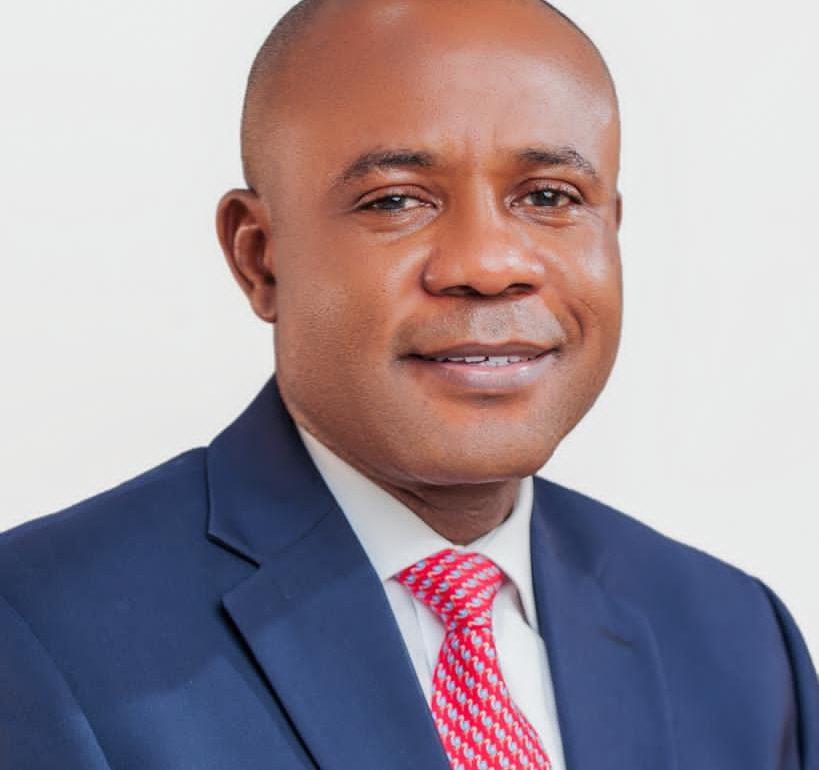
  • [OPINION] Why Anambra Must Support George Moghalu’s Governorship Race, With Education as a Priority 

    [OPINION] Why Anambra Must Support George Moghalu’s Governorship Race, With Education as a Priority 

    By Comrade Shedrack Osinachi Mmadueke 

    As Anambra State approaches the all-important governorship election on Saturday, 8th November 2025, the call for a leader with vision, experience, and an unshakable commitment to the future of our children has never been louder. In Chief Dr. George Moghalu, the Labour Party presents a candidate whose track record, competence, and passion for human capital development place him far ahead of the rest.

    Education is the foundation upon which every successful society is built. Any government that neglects the education sector is deliberately weakening its future. Ndi Anambra are known across Nigeria and beyond as lovers of knowledge, entrepreneurship, and innovation — but for us to maintain and expand this legacy, we must reform and strengthen our educational system from the ground up.

    Chief Dr. George Moghalu understands that without quality education, no society can fully unlock its economic potential. He has consistently articulated and demonstrated plans that prioritize:

    1. Massive Investment in Schools and Infrastructure – From rehabilitating dilapidated classrooms to building modern science and technology laboratories, Moghalu is committed to ensuring that every child in Anambra learns in a safe, conducive, and well-equipped environment.

    2. Teacher Welfare and Training – He recognizes that teachers are the engine of education. His administration will ensure prompt payment of salaries, regular training, and provision of teaching tools to help them deliver world-class education.

    3. Affordable and Accessible Learning – Moghalu’s vision ensures that no child is left behind due to poverty. Scholarships, grants, and targeted support for vulnerable families will be expanded so that every Anambra child , from the rural village to the urban city has access to education.

    4. Skill Acquisition and Technical Education – With global economies shifting towards technology, innovation, and skills, Moghalu plans to strengthen technical colleges and vocational centers so that our youths graduate with employable skills, ready to create jobs instead of waiting for them.

    5. Digital Transformation of Education – The world is going digital, and Anambra cannot be left behind. Under Moghalu, public schools will be equipped with e-learning resources, internet access, and digital training programs to prepare our children for global competitiveness.

    For South East For Good Governance, the choice is clear. A vote for Chief Dr. George Moghalu is a vote for an Anambra State where education is not a privilege but a right — where the children of farmers, traders, artisans, and professionals sit side by side in modern classrooms, learning the skills and values to lead tomorrow.

    This November 8th, Ndi Anambra have an opportunity to make history. We can choose a leader who will transform our educational sector into the pride of Nigeria, or we can settle for mediocrity. The future of our children demands that we rise above politics of division and embrace the candidate with a plan, a vision, and the will to execute it.

    Let us vote massively for Chief Dr. George Moghalu, Labour Party Governorship Candidate — for the sake of our children, for the sake of our future, and for the glory of Anambra State.

  • [VIEWPOINT] Moghalu’s Vision Sails on as Onitsha River Port Welcomes First Barge of 2025

    [VIEWPOINT] Moghalu’s Vision Sails on as Onitsha River Port Welcomes First Barge of 2025

    By Johnson Okoye, ACA

    The Onitsha River Port, long seen as the sleeping giant of Nigeria’s South-East trade network, roared back to life this month as the first barge of 2025, MV ZUPITOR/MV RB ALASKA, berthed to cheers and renewed hope. This milestone carries the clear imprint of a man whose foresight turned rusting infrastructure into a thriving trade hub, Dr. George Moghalu.

    As Managing Director of the National Inland Waterways Authority (NIWA) from 2019 to 2023, Moghalu’s leadership transformed the long-idle port into a beacon of economic opportunity. His bold concessioning reforms and infrastructure revival efforts ensured that Onitsha Port would not just reopen but operate as a sustainable, cost-effective alternative to congested and costly road transport.

    For decades, the port was a symbol of wasted potential. Today, it is a gateway to prosperity, cutting transport costs, easing road congestion, creating jobs, and giving South-East traders a competitive edge. The arrival of MV ZUPITOR/MV RB ALASKA is not just a shipment; it is a symbol of Moghalu’s enduring legacy. Though his tenure at NIWA ended in 2023, every vessel that docks in Onitsha stands as living proof that when leadership is anchored in vision and executed with resolve, progress becomes unstoppable.

    Now, as Dr. George Moghalu seeks the mandate to serve as Governor of Anambra State, Ndi Anambra have every reason to expect the same foresight, discipline, and results-driven leadership he demonstrated at NIWA. He has shown capacity, not in promises, but in tangible achievements that speak for themselves.

    From restoring a long-dead port to driving nationwide inland waterways reforms, Moghalu has proven he can turn dormant potential into thriving reality. As governor, he promises to replicate that same model of action, reviving key industries, unlocking economic opportunities, delivering people-oriented infrastructure, and ensuring that Anambra’s resources work for the people, not against them.

    Central to his agenda is security. Moghalu understands that no meaningful development can happen in an atmosphere of fear. He has pledged to overhaul all security outfits in Anambra, adopting a modern, technology-driven, community-focused security architecture that will restore peace in every town and village. With a secured environment, investors, local and foreign, will have the confidence to bring their businesses, industries, and opportunities to Anambra, creating jobs and driving prosperity across the state.

    The South-East does not just have a port again, it has a proven leader ready to steer Anambra into a future of sustainable growth, safety, and prosperity. With Dr. George Moghalu at the helm, Ndi Anambra can be confident that the tide of progress will keep rising and no force will be able to hold it back.

    With George Moghalu, Anambra Ga Adị Mma Ozo. This is the man whose bold vision revived the Onitsha River Port, created jobs, cut transport costs, and proved that leadership is about results, not excuses. As Governor, he will overhaul security to restore peace, attract investors, and unlock prosperity in every corner of our state. Let us support the man with bold vision, not the one that talks too much without results.

  • When the State Lies

    When the State Lies

    -By Abdul Mahmud

    Something distinctly unsettling stirred when my young friend and colleague at the Bar, Festus Ogun, quietly reversed course from his initial social media post in which he rightly drew public attention to the plight of the “Yola Six”, the law students abducted en route to resume studies at the Nigerian Law School in Yola after their externship in the south east. His later post, this time applauding the Nigeria Police for the successful rescue of the “Yola Six” struck a discordant note. The facts, as later confirmed by two of the victims, told a different story. Not just different but diametrically opposed to the claim of the police.

    Festus, one must concede, was most likely swept up in the moment, buoyed by what he believed to be credible information from the police. Who could blame him? At the centre of it all were the lives and liberties of six promising students whose futures hung precariously in the balance, held captive by criminals who recognise neither law nor the sanctity of human life. Still, the relief that greeted the eventual release of the students does not wash away the bitter aftertaste of official dishonesty and falsehood that reveals a deeper crisis of integrity within the Nigerian state. When the custodians of public trust lie, when the state manufactures its own myths of heroism in the face of tragedy, one must ask: what else is it willing to fabricate? And why?

    In the realm of public life, a state that lies does more than twist facts. It corrodes trust, fractures the moral contract between citizens and the state, and raises unsettling questions about whose truth matters. Today, in our country, official lies are no longer an aberration. They are the Directive Principles of State Policy. They are the practices of power performed without shame. Two weeks ago, six law students were kidnapped on their journey from the Southeast to Yola, in the Northeast, where they were to resume their Nigerian Law School studies. Young men, driven by the dream of law and justice, were intercepted by gunmen, abducted, tortured, and used as pawns in a ransom trade. The students’ accounts, as narrated by Reverend Ernest Okafor and David Obiora, both victims, revealed a chilling, yet tragically familiar story: departure from Onitsha on the morning of July 26; ambush between Zakibiam and Mukari, Benue State, by nightfall; relocation into the womb of a forest; physical abuse, trauma, and ransom negotiations that dropped from N50m each to N10m each before their eventual release on August 1. The state watched. Then came the lie. The Nigerian Police, in a bid to grab headlines and polish tarnished image, released a statement claiming credit for rescuing all six students. A triumphalist announcement, devoid of detail, dripping with spin. But Rev. Okafor countered it with chilling clarity: “The police played no role in our release”. None. The families paid. The six kidnapped law students were released. But, it raises the question: Why does the state lie?

    It lies because it can. It lies because truth has no constituency in a country where power is unaccountable. It lies because the state has, over time, developed an addiction to orchestrated spectacle. A need to be seen to act, even when it has not lifted a finger, or raised a stone. The lie becomes a sedative for public outrage. A script to manage perception. In this case, the image of a competent police force triumphing over terror is too useful to pass up, especially when the reality is one of chronic failure.

    But this isn’t new.

    Our country’s history is littered with official falsehoods. The Civil War, with all its horrors, was packaged in July, 1967 by the then Head of State, General Yakubu Gowon as a “police action” aimed at “restoring order”. The pogroms, starvation, and genocide were hidden behind the wall of massive state propaganda. The truth bled quietly, off camera. In 1999, the return to civil rule was hailed as the dawn of a “New Nigeria”. But the killings in Odi, Bayelsa State, later that year revealed otherwise. The military razed the town, leaving hundreds dead. The government claimed it was responding to the killing of twelve soldiers. No commission of inquiry was held. No one was punished. When asked years later about the incident, President Obasanjo said, “The people of Odi invited the military”. He lied. The state lied. In 1991, between the end of the civil war and our country’s return to civilian rule, I was abducted by operatives of the State Security Service and held incommunicado at their Ikoyi detention facility. For weeks, the state flatly denied any knowledge of my whereabouts. The then Minister of Information, the late Chief Alex Akinyele, and his cabinet colleague, the late Professor Babs Fafunwa, repeatedly took to press briefings to insist, sometimes with theatrical conviction, that the government had no hand in my “disappearance” as President of the National Association of Nigerian Students (NANS).

    Here’s another lie. But who remembers?

    In October 2020, the youth-led #EndSARS protests were crushed at the Lekki Tollgate in Lagos. Live bullets were fired into a peaceful crowd. Blood stained the road. The Nigerian Army initially denied even being present at the scene. Then, caught by evidence, admitted presence; but claimed they only fired blanks. Government officials spoke in circles, contradicting one another. The state swore no lives were lost. Meanwhile, families mourned in silence. CNN and Amnesty International exposed the state’s lies. The government responded by launching attacks, not on the killers, but on the truth-tellers. Witnesses like Obianuju Catherine Udeh, better known as DJ Switch, and Rinu Oduala, were forced into exile. In this long tradition of denial, what happened to the law students is not an exception. It is a continuation of the familiar pattern of lie-telling. The state’s cover-up. Or what my abductors during my long incarceration in 1991 glibly referred to as “the state’s cover story” – a phrase that still rings with a certain chill. It was as though the state had transformed itself into the editorial boardroom of a propaganda tabloid, where facts were doctored, and headlines manufactured to deflect public inquiry and defang public outrage. A newsroom, yes; but one staffed not by reporters of truth, but by functionaries skilled in the dark art of distortion. In that room, reality was edited, inconvenient truths redacted, and official narratives spun with the finesse of professional deceivers.

    The question must be posed again: Why does the state lie?

    It lies because it fears accountability. And because lies are cheaper than reforms. Easier than truth. The truth demands justice. It demands restitution. Lies cost nothing, except the people’s trust. The state lies because of its own decadence. There are no real consequences for lying. A police officer can announce a fake rescue. A governor can fabricate achievements. A minister can misrepresent statistics. No heads roll. No shame is felt. No apology is issued. In such a system, lying becomes a normalised administrative instinct. It lies because lies are often more palatable than the truth. The truth is messy. It complicates power. It reveals incompetence. It opens the door to scrutiny. The lie is clean like a whistle. Tidy. It reinforces the illusion of control. But the cost is enormous.

    Each lie told by the state chips away at its moral legitimacy. Trust, once broken, is hard to rebuild. Citizens retreat into apathy or rage. Conspiracy thrives. Paranoia deepens. The distance between the ruler and the ruled becomes godo godo. Deep gullies. And when citizens no longer believe their government, even in times of truth, the consequences can be lethal. Imagine being the parent of one of the kidnapped students. You scrape together millions in ransom. You pray through sleepless nights. Then you see on the evening news that the police claim they rescued your child. No mention of your suffering. No mention of your sacrifice. Just a polished press release. A lie told over your lived experience. The spectre of falsehoods, which places the state at the centre of every story, even when it played no part, comes with the erasure of the sufferings of victims. The agency of families. The courage of survival. It is this spectre of falsehoods that turns citizens’ pains into weapons of state propaganda.

    So what must be done?

    First, citizens must learn to expose the lies that the state tells. “Unmask lies wherever they are told” was Amílcar Cabral’s enduring exhortation. A call to truth as resistance and to clarity as a revolutionary act. Refuse to be gaslighted. Insist on fact. Every time a false narrative is offered, it must be met with citizens’ testimonies and documentation. Second, citizens must build a culture of public memory. Our country forgets too quickly. Lies thrive in forgetfulness. The state counts on our fatigue. But we must remember. And remind. And record. Third, institutions must be reformed to uphold transparency. Press releases should not replace accountability. Oversight mechanisms must be strengthened. Internal checks enforced. Citizens must continue to hold power to account. A lying state can only persist when citizens become indifferent. To resist the lie is to defend our republic.

    Some will argue that all states lie. That this is the nature of power. Perhaps. In functional democracies, lies are often exposed. Careers end. Elections are lost. Apologies are issued. In our country, lies are rewarded with promotions. Our citizens must change that. When the state lies, it desecrates its duty to the citizens. It abandons the ideals of public service. And it betrays the very law those kidnapped students set out to study and one day uphold. The future of a country cannot rest solely on the scaffolding of its constitution. It must be anchored in truth. Truth as a moral habit. Truth as a civic duty. Truth as a sacred covenant between the governors and the governed. For without truth, the constitution becomes a hollow text, and governance becomes the theatre of illusion. When the state lies, and lies without shame or consequence, it tells its citizens: your pain is irrelevant, your reality is disposable, and your trust is mine to abuse.

    But truth, however buried, has a stubborn way of returning. Like the voices of David Obiora and Rev. Okafor. Clear. Undeniable. Refusing erasure.


  • When Teachers Help Students Cheat: The Silent Collapse of Exam Integrity in South East Schools

    When Teachers Help Students Cheat: The Silent Collapse of Exam Integrity in South East Schools

    By Okafor Sebastine Chukwuebuka

    Recently, through friends and allies, I acquired some electronic devices designed to help curb examination malpractices across schools—both secondary and tertiary institutions. Ironically, the invention of artificial intelligence, which ought to aid learning, has worsened the situation. Some students now snap their question papers, upload them to AI-enabled platforms, and use the answers to write their exams.

    This problem is not limited to a particular school. It exists in almost every school I have recently visited—especially public institutions. During examinations, some staff members go as far as aiding these illegal acts, sometimes using physical and emotional blackmail. I have visited schools in Ebonyi, Enugu, and Anambra States in recent times, and what I witnessed was deeply troubling. Senior lecturers, Heads of Departments, and even proprietors go out of their way to protect students caught in malpractice. In some places, staff are allowed to collect as little as ₦1,000 per student to “look away” during exams. That is the sad reality.

    From the experiences gathered so far, there seems to be a widespread culture of aiding and abetting examination malpractice in educational institutions – particularly in Secondary and Tertiary institutions.

    Suffice it to state that some of the departments of Tertiary institutions are filled with personnel who seem to have lost touch with what academic integrity means. They shield their students under the excuse of: “Hapụ nụ ụmụaka ka ha dee exam [Allow these students to write their exams]; you cannot save Nigeria.” Some institutions go as far as creating Examination Malpractice Marshals, but instruct them never to penalize students. Imagine catching a student using AI to write an exam, confiscating the phone, and still allowing the student to continue without even issuing a new answer script. Consider the message this sends to other students in the hall.

    To make things worse, during one of our recent visits to a university in the South East, a Head of Department in Political Science was caught on camera instructing students to physically attack any invigilator—internal or external—who attempted to collect their phones during exams. That individual is an Associate Professor, and it is disturbing to imagine what he is teaching beyond the classroom.

    In many schools, principals even pay money to handpick invigilators for external exams. Once these compromised invigilators destroy the moral fibre of the students placed under their care, some university lecturers complete the damage by ignoring ethics entirely.

    Thankfully, not all institutions are the same. Godfrey Okoye University and Coal City University have maintained zero tolerance for malpractice. These schools have functional CCTV cameras in their examination halls, well-trained and adequate invigilators, and network-jamming devices that make cheating with mobile phones nearly impossible. Meanwhile, in many public schools, only two invigilators are assigned to monitor over 280 students in a hall where seven students sit in a single row. This makes the malpractice even easier.

    There are also institutions with good leadership but poorly motivated or compromised staff who make genuine reform impossible. Examples include ESUT, IMT, UNN, and FUNAI. These schools show signs of readiness to fight the problem but are still trapped by internal sabotage and negligence.

    This situation contributes greatly to the quality of graduates produced. Many companies today are hesitant to recruit despite the abundance of graduates with excellent results. The truth is, many of these so-called “first-class” and “second-class upper” graduates cannot meet basic workplace expectations because their grades are not a true reflection of their competence.

    It is time to borrow a leaf from our brothers in the South West, who have shown better commitment to discipline and transparency during examinations. If we are truly interested in raising thinkers, creators and honest citizens, we must rise to protect the credibility of our education system—regardless of whose name is involved.

  • Imperatives of a Single Term Presidency

    Imperatives of a Single Term Presidency

    By Oseloka H. Obaze

    When Governor Charles Soludo of Anambra State recently took a dig at his political opponents, from Anambra South, who had pledged to serve a single four-year term, in lieu of an abridged term for the incumbent, he stirred a hornet’s nest. Some by conjecture and others by acute rationalization believed Soludo’s Igboukwu Doctrine was targeted at Peter Obi. As it were, by sheer coincidence, Obi had earlier on, made public his willingness to serve in the Nigerian presidency for one term, if elected in 2027. That unscripted arrangement would guarantee maintaining the unwritten zoning arrangement between the North and the South.

    Only Gov. Soludo can say for sure, who his barb about such candidates and aspirants requiring “psychiatric evaluation” was meant for. The reactions elicited by Soludo’s remarks, have been trenchantly acerbic. His rebutters and traducers include defenders of Peter Obi, as well as the governorship candidates from Anambra South. In summary, they have categorized the governor’s contention as pretentious, pedestrian , nd induced by fear of potential loss of power.

    Incidentally, the only guardrail and determinant of the one-off single term narrative , e it at the presidential or gubernatorial levels, is the constitutional validity of such a decision. In the case of the presidency, and in the broader Nigerian context, the sole determinant of that single story narrative that Soludo stoked, ought to be the Doctrine of Necessity, anchored on the provisions of the 1999 Constitution, as amended.

    Both at the national level and at the state level in Anambra, the pledge by aspirants and candidates to serve for one term is not unconstitutional. Not by any means. Second, it respects and seeks not to upend the extant zoning arrangements. Third, the offer arises primarily from the conclusions that the incumbents have not acquitted themselves creditably in office to merit a second term. For people peddling that notion, as it is with President Bola Tinubu, so it is with Gov. Charles Soludo.

    This much is clear. The 1999 Constitution delimits every presidential or governorship tenure to four years, in the first instance. While the second term is statutorily allowed, it is not mandatory. Thus, to do one term only, or two consecutive terms, is the prerogative of the candidate. History, including Nigerian political history, is replete with leaders who served a single term by design or default and still accomplished much. Even some who left office via natural attrition had accomplished much in those short periods. It is all about personal leadership commitment, dedication , and focus.

    Clearly, Peter Obi’s offer to do only one term is necessitated by political realities, well beyond his control. Such a pledge, in real terms, ought to be a mark of sincerity, statesmanship, integrity and respect for zoning and regional equity, not the contrary. Regrettably, in Nigerian politics , skepticism is habitual.

    Those who argue that not much can be accomplished during one term or that any such pledge is a sign of desperation, utterly miss the impetus and thrust of the evolving debate. They default to the proverbial single story narrative. The ultimate selling point of that proposal is that a president committed or constrained to one term, will not be saddled with reelection responsibilities and will inevitably focus on his or her legacy projects and programmes, and other good governance deliverables and dividends.

    It has become customary, given the complex nature of Nigerian politics to adopt in the national interest, the Doctrine of Necessity when seeking to solve thorny political pproblems That same principle should apply now, just as it did, in 1999, when Olusegun Obasanjo was chosen as the “safe hands” to lead Nigeria, but in essence, his choice was meant to assuage the southwest for the annulment of the 1993 presidential election and truncating MKO Abiola’s presidency. The same principles would apply in the succession battle for bed-ridden President Umaru Yar’Adua. Applying the Doctrine of Necessity as an interim measure for arresting Nigeria’s drift, restoring confidence in the presidency , and moving Nigeria forward has become imperative.

    Also, applying the Doctrine of Necessity to give effect to a one-term arrangement will, in the present instance, address several festering sectoral concerns. First, it keeps the North-South zoning arrangement intact. Second, it offers common grounds for the political opposition to rally to a consensus and form a formidable bloc capable of unseating the incumbent president. Third, it guarantees the North (whether monolithic or not) the uncontested assumption of the presidency in 2031 for an eight-year term, just as was the case in 2015.

    Fourth, it guarantees the South that their zoned eight-year tenure, 2023 to 2031, will be respected. Fifth, it reassures the progressive elements within the southwest, especially those in political opposition, that in seeking to unseat their kith and kin, they will not be accused of breaching the zoning arrangement due to ethnic considerations. Sixth, and perhaps the most salient, it compels, the southeast, to make a huge sacrifice to serve only one term; to vouch to do so and indeed, to do so as an affirmation that they can be trusted as integral players in Nigerian. This aspect will also bring to closure, residual discomfitures from the Nigerian-Biafran civil war. Such a guarantee is one the entire southeast zone has to make, regardless of whether the presidential candidate is Peter Obi or not.

    Finally, if that arrangement works, and achieves its ultimate goal of defeating President Bola Tinubu, it will offer President Tinubu the unique opportunity to remediate and buttress his questionable bonafides as a democrat; and also as an incumbent, who ran credible elections, was defeated and willingly handed power to the opposition. He would join the league of sitting African heads of state that lost popular elections and did not use executive and extraordinary means to stay in power.

    The one-off single term presidency debate in Nigeria is now beyond an academic discourse. It is what Nigeria requires to move forward. It will address several distressing and persisting concerns, some subliminal and others, transparently concrete. The core North in its enlightened self-interest should support the plan since their unfettered support for a Muslim-Muslim ticket in 2023 in a secular state like Nigeria has yielded less than the desirable dividends They must also put to rest the prevailing belief that the North cannot trust an Igbo man with the Nigerian presidency. To help the North make up its mind, they need to revisit the 1960, 1963, and 1979 North-East alliances that yielded tangible political results, especially as regards equity and political stability.

    Bluntly, the stark reality is that despite the North’s long and overwhelming dominance of national leadership in Nigeria, their region remains the poorest, most undeveloped, and now, the most insecure. Their hitherto robust and thriving agricultural, mining, hides and skins, textiles, and manufacturing industries are all in ruins. Perhaps, it’s time for the North to think progressively outside the box. Finally, the North might use the four-year single term to address its persisting internal contradictions; specifically the internecine ethnic and religious conflicts and the rise of home grown non-state actors, who as bandits are putting the North asunder.

    Some vested interests in the south will indubitably oppose the single term presidency for the Southeast under various pretexts. Expectedly, most of their supporting arguments will be counter-intuitive. But they will surely be made, covertly or overtly. Peter Obi made a valid point that “if service is the motive, turning the tide in four years is possible.” There’s not much to add to that non-axiomatic contention. All we need to bear in mind is that we need to save and turn around Nigeria.

    The singular challenge confronting Nigeria’s political establishment at this juncture is mainly that of trust. Trust is Nigeria’s red herring. The trust deficit chasm in Nigeria is wide and expanding daily. In the several discussions I’ve been involved in on this issue; the recurring question still revolves around trust. Can Peter Obi be trusted? Can the North be trusted? Can the Igbo be trusted? Can INEC be trusted? Can the Coalition members be trusted? Can the judiciary be trusted? Can the Southwest be trusted? What is left for Nigerians to ask is: Can God or Allah be trusted?

    If Nigerians can find the courage this time around to exhibit a modicum of trust in their compatriots, then we stand a chance of making headway. Then again, arriving at a consensus on issues even as basic as elemental trust within our body politics might require a Doctrine of Necessity. That is where we are and who we have become as a nation.

    ——
    Obaze is MD/CEO, Selonnes Consult – a policy, governance and management consulting firm in Awka.

  • Anambra’s Exclusion From Q1 2025 Foreign Investment: A Damning Verdict on Failed Governance [OPINION]

    Anambra’s Exclusion From Q1 2025 Foreign Investment: A Damning Verdict on Failed Governance [OPINION]

    By Johnson Okoye

    The recently released Q1 2025 capital importation report by the National Bureau of Statistics (NBS) is a clear and indisputable indictment of the abysmal performance of the Anambra State Government under the current administration.

    Out of the entire 36 states of the federation, only six states and the Federal Capital Territory (FCT) received any form of foreign direct investment (FDI) in the first quarter of 2025. These are:

    FCT – $3.05 billion
    Lagos – $2.56 billion
    Ogun – $7.95 million
    Oyo – $7.81 million
    Kaduna – $4.06 million
    Kano – $117,000
    Ekiti – $4,250

    Anambra State received nothing. Zero. Not one cent.

    This is not just a number. It is a clear message from the global investment community: Anambra is no longer seen as a safe or viable destination for investment.

    A State Once Full of Promise, Now Sidelined

    Anambra was once hailed as the gateway of commerce and industry in the South East — home to a vast pool of entrepreneurial talent, bustling markets, educated workforce, and strategic road and river networks. Today, under the present administration, Anambra has been reduced to a state of economic paralysis and political confusion.

    The complete absence of foreign investment is symptomatic of deeper systemic failures.

    1. Rising Insecurity and Lawlessness

    No investor puts money where life and property are not safe.
    For the past two years, insecurity has worsened in Anambra. Armed robbery, kidnapping, cult violence, and politically motivated attacks have become the norm. Entire communities live in fear, and businesses are being forced to shut down or relocate.

    This government has no sustainable security strategy. Its response to violence has been reactionary, inconsistent, and politicized. The governor is quick to blame “unknown gunmen” and quicker to go silent when lives are lost.

    Foreign investors are not blind. They read the news, they assess the risks. And clearly, they have concluded that Anambra is too dangerous to do business in.

    2. Economic Mismanagement and Anti-Business Policies

    Even beyond insecurity, the investment climate in Anambra is toxic. Instead of making life easier for businesses, this government has introduced aggressive taxation, harassment of traders, extortion by revenue agents, and a total lack of infrastructure support.

    There is no functional investment promotion agency, no meaningful dialogue with the private sector, no visible plan for industrialization or economic growth. The government lacks the basic tools of modern governance: data-driven planning, transparency, and accountability.

    The result is clear. Investors flee. Capital dries up. And unemployment soars.

    3. Empty Rhetoric, No Results

    Instead of facing these issues with honesty and courage, the governor has chosen a path of political distraction. In recent weeks, he has launched verbal attacks on political opponents, insulting those who dare to challenge his record.

    But the facts are stubborn.

    While his counterparts in Lagos, Ogun, and even Ekiti are attracting millions and building investor confidence, Anambra is sinking into irrelevance. The governor is not just presiding over failure. He is defending it with arrogance.

    No amount of propaganda or press conferences can cover up this disaster. Governance is not about speaking good English. It is about delivering results, securing lives, attracting investment, and growing prosperity. On all these counts, the Anambra State Government has failed woefully.

    A Call for New Leadership

    The people of Anambra deserve better than empty speeches and photo-ops. They deserve a government that understands how to unlock the economic potential of the state — that knows how to attract investment, create jobs, secure lives, and restore the dignity of the people.

    If in 2025, Anambra cannot appear on the investment map of Nigeria, then what exactly is the government doing?

    The time has come for Ndi Anambra to demand answers. Not excuses. Not distractions. But real change. Bold, visionary, and competent leadership that will rescue our state from economic collapse and political decay.

    Mr. Johnson Okoye, ACA writes from Abuja

  • Erosion is Killing Auchi, One Rain at a Time

    Erosion is Killing Auchi, One Rain at a Time

    -By Abdul Mahmud

    Just recently, photos of deep erosion gullies cutting through Auchi began circulating on social media. They are terrifying images. Stark. Stark enough to jar the conscience of any public official in Edo State with an ounce of duty. But, unsurprisingly, they haven’t. Auchi, the northern Edo town, one of the most important towns of the Afemai people, which now wears the look of a town falling into itself, is being eaten alive. Its red earth is pockmarked by holes and yawning gullies that stretch for metres. Gullies that now resemble open graves. Open graves. That is what Auchi’s erosion sites have become; gaping, growing pits that threaten lives, homes, memories. They spread like a slow poison. They don’t stop. They have no boundaries. They creep into compounds, under buildings, across streets. They swallow the land. They take trees, people, homes, hope.

    For decades, Auchi has battled the effects of erosion. But what began as seasonal floodwater carving paths across the town has today become a humanitarian and environmental catastrophe. Nature is no longer whispering. It is roaring. Though, Auchi is not an exception. In every part of the world, climate change announces itself in its own voice. Sometimes it is wildfires. Other times, floods. In Auchi, it has taken the form of massive gullies that now disfigure the landscape. While nature raises its voice in fury, tearing through land and life with devastating force, the State and Federal Governments respond with silence, as if deaf to the groaning earth. The Governor of Edo State, rather than confronting the crisis head-on, is busying himself with frivolous ceremonies and jejune receptions for dignitaries inside the Government House; or issuing petty threats to political opponents who decline the summons of protocol. At the federal level, the President and his men are adrift in the sea of re-election calculations, too absorbed in the arithmetic of power to reckon with the crumbling soil beneath their citizens’ feet. The tragedy unfolds, and those entrusted with responsibility look away, either blinded by ambition or numbed by indifference. No State and National Disaster Agencies have made perfunctory visits, at least to take photos and issue hollow promises as they always do.

    Meanwhile, the earth keeps shifting beneath Auchi. The people are afraid. And they have every reason to be. Houses now perch on the edge of gullies. Families wake up to discover the land beneath them has vanished. Roads once busy with motorcycles and schoolchildren have disappeared. There is no exaggeration here. What is happening in Auchi is a disaster. One that is both natural and political. Natural because the red Mars-like earth of Auchi is loose, vulnerable, and unable to withstand repeated assault by floodwaters. Political because those charged with protecting communities like Auchi have done nothing. A few interventions have been attempted over the years. But, they are far too little to address the problem. Auchi appears to have been abandoned to its fate. Auchi is what abandonment looks like in a country where the elites fly over disaster zones and do not walk through them. Auchi is a town on nobody’s priority list, rendered voiceless by the geography of power.

    But, Auchi matters to me. It always has.

    My provenance lies just across the expressway in Sabo, South Ibie clan. A community, once distinct, now inseparable from Auchi by the tides of time and traffic. The expressway from Benin to Abuja slices through both, but geography no longer draws the lines clearly. First-time visitors often ask: where does Auchi end, and where does Sabo begin? No one knows for sure anymore. The land has fused, as memory and place sometimes do. Auchi is woven into the fabric of my life. It is where my story turned the corner. I returned there at sixteen. An abrupt return occasioned by the death of my father. Auchi received my mum, my siblings and I like a relative waiting at the door. It became the ground of my becoming. The streets were my first library. Modest bookshops filled with promise stood proudly from Up-Garage down to the junction of Inu-Umoru Street. They drew me in. That was how I met books. That was how books met me. News vendors became my morning tutors. They stood in front of the old New Nigeria bank building, shouting headlines, turning the heart of the town into a public classroom. I began to see that education did not end in the four walls of a school. The world itself could be a blackboard. It was here, too, in the stirrings of student politics, that the future beckoned. November 1990. Delegates gathered for the NANS Convention at Auchi Polytechnic. The convention was botched by the military dictator, IBB, but something was born. The talk of my candidacy began there, whispered in the corners. Days later, I became President of NANS at the University of Benin. But the idea was seeded there. Auchi also carries grief. Beneath its red earth rests a friend, a brother, a comrade. Professor Abubakar Momoh – one of the finest political economists of his generation. He lived with courage and brilliance. He died with his integrity intact. His memory breathes in the soil of Auchi. Bless his soul. Auchi is not just a town. For me, it is a map of memory. A place of pain and purpose. It is where the past and the future shake hands.

    Yet, today, Auchi is being cut in half by gullies.

    Whole sections of the town are being disconnected. Roads linking the town’s quarters have become impassable. In some cases, the gullies have reached several metres deep. Some as deep as 25 to 30 feet, making them death traps for children and even adults. It is hard to imagine how a town this important could fall into this level of neglect. But it has. The images don’t lie. Photos show the town being gnawed from the inside. Videos show frightened residents looking at a growing abyss outside their homes. Some tell stories of neighbours who had to flee in the middle of the night when the ground cracked open beneath them. These are not scenes from a disaster movie. They are real. And they are a warning. A warning about what happens when climate change meets government indifference. For years, experts have said that Nigeria is vulnerable to climate disasters. From desertification in the North to rising sea levels in the South. From deadly floods to droughts. Yet, there is still no coordinated climate resilience plan. Auchi is paying the price. The gullies that once began as harmless rills have now turned into fullblown canyons. In some places, these canyons have reached homes, schools, and clinics. The town’s economy will suffer in the future if nothing is done today. No investor will build on land that might vanish. No school can function where access roads have become rivers of mud. No resident can sleep in peace when they fear the next rainfall might bring their house down.

    What Auchi needs is not a photo-op by a government delegation. It needs action. Urgent, technical, focused action. There is a National Erosion and Watershed Management Project (NEWMAP). There is a Federal Ministry of Environment. There is a Niger Delta Development Commission. And there are ecological funds. Where are they? What is the use of these institutions if they cannot stop a town from falling into the ground? But, Auchi is not alone. Even my provenance, South Ibie clan, is battling to save itself from the frightening gullies showing up. Other towns in southeastern Nigeria, like Agulu, Nanka, and Oko in Anambra State are facing similar gully erosion disasters. They are crying for attention.

    And that raises painful, even haunting, questions: Why are these people being condemned to suffer through neglect? Why does the Edo State government avert its gaze, in particular, as though willful blindness might erase the deepening wounds of the land? Is it that someone in power has shrugged off responsibility, consoling himself with the fatalistic notion that these terrifying gullies are mere acts of God?

    There is no sense in which this erosion can be called an act of God. It is the act of a system that looks the other way when danger builds up. It is the act of leadership that plans for ribbon-cutting ceremonies, not for long-term environmental protection. We cannot keep blaming the rain. We must blame our refusal to build drainages. Our failure to regulate construction. Our inability to act before disaster strikes. Every year, government agencies speak about climate change. They sign agreements. They attend international conferences. They talk about emissions and net zero. But in Auchi, and elsewhere, climate change is not a theory. It is a lived reality. It is the sound of the earth caving into itself. The scream of a child falling into a pit. The helplessness of parents watching their compounds dissolve into nothing. We must not allow Auchi to become a town of mourning. We must not let it become a cautionary tale. The time to act is now. Erosion doesn’t wait. Gullies do not pause. They grow. With every rain. Every storm. Every season. The gullies stretch across the land like wandering prophets gone rogue and cast themselves in the image of Diogenes with his flickering lamp, not in search of honest men, but probing endlessly for the next soft earth to devour.

    They move with a quiet, deliberate menace, carving their paths deeper into the yielding earth, as though animated by some unspoken philosophy of ruin. They do not rush, but open up slowly, as if conscious of their role in a slow and inevitable undoing. In their wake, they leave haunting images of absence and sad reminders of what once stood with pride and permanence. This is not progress; it is the architecture of decay masquerading as motion. Here, Auchi becomes a palimpsest of vanishing memory, a terrain where grandeur is not merely lost, but dismantled by the hands of water and time. Auchi is the theatre of sheer destruction which echoes the melancholic vision that the 18th century French philosopher, Denis Diderot, once conjured: a world that exists only as the broken remnants of what has been. In this philosophy of ruin, nothing is built; everything is unmade, and the silence that follows speaks louder than any storm.

    Erosion is Killing Auchi, one rain at a time.

    The people are pleading. They are not asking for miracles. They are asking for attention, for responsibility, for help. We cannot claim to be building a country while allowing its towns to collapse. We cannot talk about development while our earth gives way beneath our feet. Auchi is weeping. It is breaking apart. Will our leaders come to its rescue before it is too late?


  • Justice for Sale

    Justice for Sale

    -By Abdul Mahmud

    When the Sultan of Sokoto rose at the just concluded Nigerian Bar Association (NBA) Conference in Enugu to declare that “justice is now purchasable in Nigeria”, his words struck a raw national nerve. It was not merely an observation; it was an indictment. It was the voice of moral authority saying what Nigerians whisper under their breath in court corridors and in the dark alleys of daily life. Justice, once the hallowed preserve of principle, has become a commodity in the open bazaar of our democracy. The Sultan’s lament is not a hyperbole. It reflects a crisis that has eaten deep into the marrow of our legal system. Justice is not blind in Nigeria; it peers closely at the purse of the litigant. Those who command higher purchase power buy it. The poor man, unable to raise the Shekels, is left stranded on the steps of a courthouse that has become hostile to his hope. What should be the last sanctuary of the common man has mutated into a trading post of the powerful. No country progresses this way.

    In a previous op-ed, I noted that we now live with “judges who have become kings who sit on imperial thrones where they measure justice by the Shekels”. That is not a metaphor stretched beyond its shape. It is reality. We have enthroned judges as kings in black robes, surrounded by the rites and rituals of power, dispensing justice not by law but by patronage. Richard Joseph’s conceptual coinage, prebendalism, which Oby Ezekwesili deployed at the same conference to rebuke the legal profession, best describes the patronage-clienteleism within the bench. The gavel, that ancient symbol of fairness, no longer falls with the weight of principle but with the heaviness of cash. In this new order, judgments are not delivered; they are purchased.

    But how did we get here?

    Two forces sustain this decay. The first is the culture of unaccountability. In Nigeria, judges are rarely punished – in the real sense of punishment – for misconduct. A judge who’s found to have fudged his age is merely given a wrap on the wrists. Voila, he is compulsorily retired! The act of forgery, which is a crime, is thus overlooked. No trials. No convictions. Only newspaper reports of the NJC dismissing judges – which are, of course, framed as aberrations, not the failure of a judicial system which provides soft landing for errant judges. The result is a bench that behaves like an untouchable caste, shielded from scrutiny by the black robe. The judicial branch that bends to its obsequious convenience, with unbothered judges sitting as kings above the law. The second force is more pernicious: the politicisation of the judicial process. As I wrote in the same op-ed, “A politicised judicial process invites corruption. When judges are seen as gatekeepers to power, the temptation to influence them becomes overwhelming. The judiciary, once the last hope of the common man, has become a marketplace of elite bargains. Those who command higher purchase power buy justice”. Politics has corrupted justice because every election dispute, every transfer of power, every clash of political titans, ends at the altar of the court. The judge, in such moments, ceases to be an impartial arbiter. He becomes a broker in the grand bazaar of power.

    We are left with a tragic irony: the very institution meant to defend the law is now guilty of betraying it. And the consequences are grave. When justice is sold, the poor retreat from the law, and with them retreats faith in the social contract. When justice is sold, the rich grow more arrogant, convinced that the courts are but one more arm of their wealth. And when justice is sold, the very idea of the rule of law collapses. What replaces it is anarchy dressed in the garments of legality.

    This is why the Sultan’s words must not be dismissed as mere rhetoric. They are an urgent call to conscience. Nigerians already live with cynicism about every institution. The legislature is seen as self-serving. The executive is viewed as predatory. The only branch that once retained a flicker of reverence was the judiciary. But now that flame is dimming. Once the judiciary becomes an auction house, what remains of our republic? Let us remember that nations do not collapse first through war or famine. They collapse when their institutions lose legitimacy. Rome did not fall merely because of the barbarian invasion; it fell because its institutions rotted from within. Nigeria faces the same danger. A judiciary that sells verdicts undermines the very possibility of citizenship. It tells the ordinary Nigerian: you do not belong here unless you can pay. And a citizen who does not belong ceases to believe in the nation itself. We have seen this rot play out in high-profile cases. Gubernatorial elections decided not by ballots but by dubious rulings. Here is that familiar case in point: a governorship candidate who came fourth in a returned poll was subsequently declared by the judges as the winner! Billionaire politicians escaping accountability with a wave of a judge’s hand. Corruption cases dragging for decades, only to end in acquittals for the wealthy while petty thieves rot in jail. Each of these stories is a needle piercing the fragile fabric of trust between citizens and the state. Each confirms the marketplace that our courts have become.

    The question, then, is whether reform is possible. Can Nigeria reclaim its judiciary from this descent? Reform will require courage, courage from within the legal profession, and courage from the society that empowers it. Lawyers must refuse to be agents of manipulation, filing frivolous applications that clog the system and trading influence on behalf of their clients. Judges must be subjected to real accountability: transparent trials, open disciplinary records, and the removal of those who disgrace the robe. And above all, politics must be decoupled from justice. So long as the judiciary remains the final battlefield for political wars, it will remain compromised. But reform also requires something deeper: a cultural shift in how Nigerians think of justice itself. Justice cannot be reduced to transactions. It cannot be a trophy won by the rich. It must be a common good that protects the weak, restrains the strong, and binds society together. Without justice, there is no order; without order, there is no society. As the philosopher Heraclitus once said, “The people should fight for their law as they would for their city wall”. In Nigeria, we must fight for our judiciary as if our very survival depends on it.

    Surely, we won’t realise that our lives depend on it, until Nigeria happens to us!

    The Sultan’s cry at the NBA Conference is more than a passing lament; it is the cry of a nation wounded in its soul. His words carry the anguish of countless litigants who have knocked at the temple of justice only to be turned away by the gatekeepers of power. It is the voice of citizens who have been betrayed by the very institution meant to defend their dignity. It is the sigh of a democracy steadily hollowed out by corruption and elite bargains. In that moment, the Sultan did not speak for himself alone; he gave voice to the unspoken despair of millions.

    We deceive ourselves if we think this is only about the poor. When justice is commodified, it poisons the entire body politic. The wealthy may think they can purchase verdicts, but in doing so they dismantle the very foundations that protect their own power. A court that sells judgments to one bidder today can just as easily sell them to another tomorrow. What begins as the privilege of the powerful ends as the peril of all. A nation that abandons justice abandons stability, for injustice is a fire that consumes indiscriminately.

    History teaches us that when the courts fail, society itself unravels.

    Rome, in its decay, learned that law without justice is merely violence in disguise. Nations of our own time, scarred by authoritarianism, remind us that when courts become markets, the people cease to believe in the state. Nigeria stands dangerously at that threshold. The gavel, once a symbol of fairness, risks becoming a tool of oppression. If this collapse is allowed to continue, the people will no longer seek redress in the courts; they will seek it in the streets. And when lawless streets replace lawful courts, democracy dies. A nation without justice is not a nation; it is a mere marketplace of power. And in marketplaces, bargains are struck, but no one truly wins. The powerful may strut like victors for a season, but the erosion of justice eventually sweeps them into the same abyss as the weak. The warning of the Sultan, therefore, is not a cry to be ignored. It is a summons to conscience, a call to rescue the judiciary before the ground beneath us gives way. For without justice, we are not citizens bound by law; we are only traders in a soulless bazaar where, in the end, everyone loses.


  • Ashleigh, Identity, and the Diaspora’s Return

    Ashleigh, Identity, and the Diaspora’s Return

    -By Abdul Mahmud

    When Ashleigh Plumptre pulled on the green jersey of the Super Falcons, she was not just representing our country. She was performing a deeper act: an act of cultural reimagination. She was constructing a new identity. One that defies borders, blurs categories, and reclaims ancestral memory. Her decision to play for our country was not simply professional. It was symbolic. And a welcome. The same holds true for Michelle Alozie, though in a different sense. Her identity and cultural belonging are affirmed more directly. Her parents are Nigerians by birth. Their citizenship anchors her connection. Ashleigh’s case is further removed. Her story begins with her grandfather. She is third generation by blood, not by birthplace. Yet, both women, by different paths, have found their way to the homeland.

    In Morocco, during the just concluded Women’s Africa Cup of Nations, WAFCON, Ashleigh wasn’t the only one who showed up. Her white friends turned up too in the final game. In green and white. In song. In spirit. The country folks in the stands showed up for her, screaming: “Oyibo, Oyibo, Oyibo”. It wasn’t performative support. It was a collective ritual. Hers was a public reaffirmation of belonging to a homeland that once felt remote, but now stood close: immediate, intimate, and deliberately embraced. This is the emerging narrative of diasporic identity. It is no longer about return in the old nationalist sense, but about reimagining connection that is chosen and not inherited. It’s about the formation of the new self. A new selfhood. Rooted not in the soil, but in memory. Not imposed by geography, but spawned by cultural will. For many years, the children of African immigrants in the West lived in the liminal. They straddled two worlds. Often, they were forced to choose between assimilation and alienation. Many chose silence. Some chose denial. A few wrestled with duality in the few emerging multicultural European states, where the opposition of far right groups to multiculturalism is growing, for instance. Over the weekend, far-right agitators marched on the major streets of London, Norfolk and Essex, fanning the flames of hate and fears.

    But today, something new is happening.

    This generation is not simply identifying with the homeland. They are reconstructing the homeland within themselves. They are returning, not to a physical homeland; but to an imaginative one. They are engaged in the work of cultural reimagination, taking fragments of ancestral memory, mixing it with lived diaspora experiences, and shaping a composite identity that is both authentic and innovative. Ashleigh Plumptre’s case is instructive. Born in Leicester. Raised in English schools. Trained in English football academies. She could have followed the familiar path: play for the senior women’s team in England, lean into Euro-visibility, ride the institutional comfort. But she didn’t. Instead, she turned towards our country. Not because of nostalgia. Not out of charity. But because she saw herself differently. She reimagined the story of her lineage in a manner that her reimagination and story invariably don’t end up serving as a footnote to her Britishness, but as a foundational part of her identity. Her grandfather’s Nigerian heritage became a map. She traced it backwards, then forward again, into her own body, her own future.

    This re-rooting of identity is an active process. It requires intention. It requires curiosity. It requires the courage to be different. To live differently. And to live across cultural lines. Ashleigh’s identity is not a throwback. It is not mimicry. She does not need to “be more Nigerian than the rest of us” to prove belonging. Her very decision to claim the country of her grandfather’s birth on her terms, through football, is already a profound act of self-definition. Hear her: “I’ve just opened myself up to everything in the culture. I want to be able to encourage young people to do the same thing and identify with being mixed race”. And this is the core of the matter: diasporic identity today is performative, political, and deeply personal. Ashleigh’s decision is performance in the sense that it is enacted before a global audience. She performs belonging on the pitch. Her body moves in ways that express her allegiance, her pride, her conviction. But it is also political because she chooses to represent a country that has long been marginalised on the global stage. A country whose name doesn’t carry the same prestige as England’s, but whose history, culture, and resilience mean something far greater to her personal narrative.

    Her act is not one of rejection, but of reconstitution.

    She hasn’t abandoned England. She is reassembling our country inside herself. She is expanding what it means to be a fellow compatriot within the frontiers of cultural reimagination. Diaspora children are not just “returning” to the homeland. They are remaking the homeland in new forms: through fashion, through music, through sports, through social media discourses, through literature and academic theory. You see it in the rise of Afrobeats in London, Atlanta, and elsewhere. In the Nigerian-infused slang of Toronto teenagers. In the names proudly worn by second-generation Americans. You see it in the TED talks, the Instagram bios, our country’s flags in bios, the poetry slams, the Nollywood TikToks. You see it in how Ashleigh plays. Calm. Composed. Tactical. In the “Never-Say-Die” attitudes, “Dia-Body-Go-Hearam” and “E choke” dispositions of our younger countryfolks. The attitude of the British in training, Nigerian in expression. She doesn’t fit into the old categories. That’s the point. She is rewriting them with clarity.

    For decades, the homeland treated its diasporas as lost. As footnotes to colonial displacement. The story was one of escape, of absence, of loss. But that’s not the story anymore. This generation is reimagining the diaspora not as a departure but as an extension. Not as lost children, but as bridge-builders. They are redefining what it means to belong. Not to one place. But to many. Simultaneously. What Ashleigh represents is this: post-postcolonial identity that is fluid, global, but emotionally anchored in the ancestral. She is not burdened by the nationalism of the first generation. Nor by the silence of the second. She is free to choose and she chooses this: that freedom is power. It allows her to say, “I am British, and I am a Nigerian. Not one before the other. Not one more than the other. Both. Together”.

    And this is perhaps the most radical thing. In a world still obsessed with purity of culture, of blood, of loyalty, Ashleigh and others like her in our national basket teams are dismantling those myths. They are proving that identity is layered, negotiated, and dynamic. They are not confused. They are composed. They are not torn. They are woven. And our country folks must learn to embrace this. Too often, the homeland struggles with diaspora returnees. Questions of authenticity arise. “Do you speak the language?” “Do you eat the food?” “Do you know the history?” But, these are the wrong questions. Ashleigh may not speak the Yoruba tongue of her grandfather. But she understands solidarity. She understands the burden of representing a black country in a white-dominated world. She carries the flag, wears and kisses the badge on her jersey with pride. That should be enough.

    Identity is not measured in jollof rice. It is measured in meaning. Then, what does it mean to claim the homeland? It means carrying its name with dignity. It means choosing it, even when it’s not the easier option. It means amplifying it on the world stage, when others are silent. Ashleigh is doing all of this. So are thousands of young people around the world. They are not waiting to be invited to adopt the identity of the homeland. They are claiming it. Reimagining it. Living it. And they are demanding that we expand the borders of belonging. That we make room for the hybrid selves. That we honour choice as much as bloodlines. That we embrace the return not just of bodies, but of imagination.

    Ashleigh’s return is not simply to the homeland. It is to a narrative that was once broken by colonialism, exile, and dislocation, that is now being fixed by a new generation. A generation that refuses to forget. That refuses to be strangers. That insists on its place in our collective story. Our grand narratives. Her story is just one example. But it speaks volumes. It tells us that return is no longer a physical journey. It is a spiritual reckoning. A political choice. A cultural rebirth. An invitation that we must accept as public intellectuals to rethink the way we frame identity. To shift our gaze from the narrow lens of ethnicity, which has long anchored our scholarship, toward new formations. Toward acts of reimagination that speak to a more fluid and inclusive understanding of who we are. It invites us to craft fresh discourses. To see our country not as a fixed terrain of bloodlines and boundaries; but as an imagined space that is open, evolving, and welcoming to all who choose to belong.

    Finally, and in summary, the homeland stands for more than geography. It is a place of love, of memory, of origin. It belongs to those born within its borders and to those born far away, who carry it faithfully in their hearts. Ashleigh carries it. So does Alozie. And in carrying it, they remind us of something profound: the homeland is not only a place. It is a people. It is a history remembered. It is a choice made. It is the quiet insistence that belonging can stretch across oceans and generations. In this era of evolving identities and cultural reimaginings, the homeland is also a future. One that the children of the diaspora are helping to shape through their voices, their music, their sports, and their return. One match at a time. One song at a time. One return at a time. All in pursuit of life’s many missions. Ashleigh and the girls fulfilled one of such missions. Mission X, accomplished.

    Congratulations are in order, country people!

  • Of Southeast Governors and the Rarely Issued Certificate of Occupancy

    Of Southeast Governors and the Rarely Issued Certificate of Occupancy

    By Sebastine Chukwuebuka Okafor 

    The Land Use Act of 1978 placed all lands in every state under the control of the governor, who holds the land in trust for the people. According to the law, anyone who occupies land in Nigeria must do so with the permission of the governor, and that permission is confirmed through a document known as a Certificate of Occupancy, often called a C of O. This document is supposed to be the legal proof that a person has the right to occupy and use a particular piece of land for a number of years—usually 99.

    In the South East region, it is difficult to find people who have genuine Certificates of Occupancy. Even those who try to get it are often discouraged by the long and frustrating process. From Enugu to Abia, Anambra to Ebonyi and Imo, the story is the same—applications stay unattended to for months, sometimes years, and in many cases, they never get approved.

    One of the major reasons behind this delay is the heavy bureaucratic process surrounding land administration in the region. Offices responsible for land matters are often disorganized, with files moving from one desk to another without any sense of urgency. There is little use of technology to track applications, and many of the processes still rely on manual documentation.

    What makes it worse is that several approvals must pass through the office of the governor, and unless there is a personal connection or political interest involved, the process simply stalls.

    There is also the issue of money. In many cases, land applicants are made to pay several fees—application fees, inspection fees, survey approvals, ground rent, and processing charges. Even after all these are paid, there is no guarantee that the C of O will be issued. Some are told unofficially that they must “settle” certain individuals before anything can move forward. This type of exploitation has discouraged honest land users from even starting the process at all.

    Another problem is tied to politics. Land in the South East is not just property—it is seen as power. There are cases where governments deliberately hold back the issuance of Certificates of Occupancy to keep control over certain lands. These lands are later given out quietly to political allies or influential individuals. In some communities, the lands that should be processed and titled for the benefit of the people end up in the hands of those who know how to play the political game.

    It is also important to mention the strong presence of customary land ownership in the region. Many families and communities still operate under traditional landholding systems. In such places, land is inherited and passed down from generation to generation without any formal documents. People do not see the need to go through government procedures because they believe their family history is enough to prove ownership. This belief has created a gap between what the law requires and what people are willing to do. As a result, many governors avoid pushing for full implementation of the land laws so as not to offend traditional institutions.

    Another reason for the low number of issued C of Os is the fear of legal commitment. Once a Certificate of Occupancy is signed, it becomes a binding document. The state cannot revoke it easily. Some governors prefer not to issue them at all so that they can always have the option of reclaiming the land in the future, especially when disputes or government projects arise.

    Many states in the South West have made efforts to reform their land systems by embracing technology, simplifying procedures, and cutting down corruption. In the South East, however, land matters are still trapped in old systems, personal interests, and administrative negligence.

    Until land administration is given proper attention in the South East, the people will continue to suffer. Without proper documentation, investors will remain hesitant, land disputes will increase, and the region will find it difficult to attract meaningful development. A Certificate of Occupancy should not be a favour or a privilege. It should be a right for every qualified land user who follows due process. That is how to build confidence, structure, and a better future.

  • Trump, House Negroes, and the Tragedy of African Leadership

    Trump, House Negroes, and the Tragedy of African Leadership

    -By Abdul Mahmud

    Two weeks ago, Joseph Boakai, the Octogenarian President of Liberia, stepped into the White House, the symbolic heart of American power, to meet Donald Trump who had literally summoned five African presidents from Gabon, Guinea-Bissau, Liberia, Mauritania and Senegal to a landmark summit on trade, investment and security. It was supposed to be moments of diplomacy in which sovereigns usually stand together as equals, even if power asymmetry hung visibly in the air; and in which the business of bilateral relations is conducted with utmost civility and mutual respect. President Donald Trump forgot all of this, carrying himself with a certain abrasiveness that offends sensibilities and imperils the dignity of the state he represents, and turning the summit into a Q & A session. A job interview, to put it mildly. By displaying such abrasiveness, President Trump simply lent credence to George Mason’s enduring observation: “A state is nothing more than a reflection of its citizens; the more decent the citizens, the more decent the state”. When the conduct of its leader falls beneath the threshold of civility, a nation begins to mirror that coarseness, blurring the lines between the individual and the institutional. The office loses its aura, and the republic begins to speak in the crude accent of its commander-in-chief. But, what unfolded before television cameras was a scene more telling than any press release could muster. A scene that peeled back the layers of old colonial wounds, racism, ignorance, and above all, the enduring failure of African leadership.

    So, what really happened?

    This is what happened. During the USA-Liberia bilateral meeting, President Donald Trump caught sight of the cameras and turned toward the Liberian President and offered what he perhaps thought was a compliment. “Such good English. Where did you learn to speak so beautifully?” he quipped, half in jest, fully in condescension. And how did the Liberian President respond? He nodded with the eagerness of a schoolboy desperate for approval. With the meekness of one unsure of his worth. With the servility of the “House Negro” Malcolm X once warned us about. “Yes Sir, from Liberia,” he said, bowing as though he stood in front of a master, not a counterpart or an equal. Even before the stage was set and the cameras began to roll, the youthful President of Senegal was also heard, almost breathlessly, begging President Trump to consider building one of his famed golf courses on Senegalese soil. It was a scene both painful and revealing: a sovereign leader reducing his office to the role of a supplicant in pursuit of the ephemeral. One could almost hear the echo of the colonial plea of yore. Moments like this confirm an unsettling truth that some countries do, indeed, have his kind: leaders who confuse servility for diplomacy, who mistake flattery for statecraft, and who forget that leadership is not about seeking favour, but about earning respect.

    There is, without doubt, more to be said about President Diomaye Faye. As a youthful politician who rode the cresting waves of youth agitation and popular discontent to ascend the Senegalese presidency, one would have hoped that his vision for investment would be shaped by both discernment and duty. His very mandate came from the restless streets and from young men and women demanding jobs, dignity, and a future. That he would, in a rare bilateral moment, use the occasion to plead for a golf course is not only disappointing but telling. Of all the investments he could have championed, including those that build factories, power tech hubs, fund vocational training, or stimulate agro-industrial growth, he chose leisure over labour, turf over tools. Golf is not the future the Senegalese youth marched for. It is difficult not to read his request as symbolic: an appeal not for sustainable development, but for prestige cloaked in links and fairways, sand traps and putting greens. A vision of Senegal where the young and unemployed citizens who imagined a different dawn would become caddies and buggy drivers under the blazing Sahelian sun, ferrying the clubs of foreign tourists is certainly not the vision the youths surrendered their lives for. But, a country that fought for change cannot be sustained by spectacle. Leadership, especially one born of youthful struggle, must rise above the temptation of ornamental investments. The real green Senegal needs isn’t manicured fairways, it’s fertile economic opportunity.

    Regardless, the Trump-Boakai moment captured everything that is wrong with African leadership in the 21st century. Everything that remains broken about post-colonial consciousness. And everything that still stinks in the corridors of foreign diplomacy.

    Here, I return to the question itself.

    “Such good English…”

    Trump’s statement, in its full ignorance, reveals something deeply rooted in the Western psyche. The inability, or refusal, to accept African sophistication unless it is filtered through European-American norms. English fluency becomes an achievement for an African, not a basic civic attribute. Like a dog that has learned to walk on two legs, the African is congratulated not for being intelligent or articulate; but for being surprisingly so. Here is the subtle bigotry that colonialism taught the West to internalise: that Africans are children of Babel, speaking in tongues and unfit for civil discourse, unless trained. The notion that any elegance, eloquence, or sophistication must be the result of exposure to Western values. Never innate. Never cultural. Never home-grown.

    Yet, even more galling than Trump’s remark was the Liberian President’s response. He should have been offended, or at least, diplomatically assertive. He should have reminded Trump that Liberia is an English-speaking country founded by freed African-American slaves. That its Constitution and institutions bear American fingerprints. That the flag of Liberia waves with a single white star against stripes drawn from the U.S. flag. That speaking English in Liberia is as natural as breathing.

    But, no. Boakai bowed. In that bow, he betrayed Africans. In that nod, he shrunk his office. He forgot the weight of the presidency. He forgot the millions of Liberians whose dignity he represents. And he forgot, most importantly, that African leaders must now speak not only as citizens of their nations, but as the voice of a continent long misrepresented and misunderstood. President Boakai became the embodiment of the “House Negro” Malcolm X described in his fiery speeches. Malcolm’s House Negro metaphor is what it is: the “House Negro” who lives in the master’s house. He eats the master’s leftovers. He wears the master’s clothes. And when the master falls sick, he asks, “What’s the matter, boss, we sick?” He loves the master more than he loves himself. That was the image that the Liberian President evoked with his reply. Not a partner. Not equal. Not a leader. But a grateful servant in the White Man’s house.

    This isn’t merely about one President and one moment. It is about a pattern. A chronic crisis of leadership in Africa. A ridiculous helplessness passed down through generations of post-independence elites who still bow to foreign powers. Our leaders seek validation, not partnership. They smile too quickly, nod too eagerly, and apologise when they should assert. They crave photo-ops with Western presidents more than they pursue meaningful outcomes for their people. The handshake becomes more valuable than trade deals. The state dinner more important than school funding. It is the politics of inferiority. Wrapped in Western suits, our leaders walk into foreign capitals unsure whether they belong. And because they do not believe in their own equality, neither do their hosts. The tragedy is that Liberia, of all countries, should have known better. Liberia’s founding is an anomaly in African history. Established by the American Colonisation Society in the 19th century for freed Black slaves, Liberia has always been tethered to the United States. Its capital, Monrovia, is named after a U.S. president. Its political and legal systems mirror those of the U.S. If any country should not be asked, “Where did you learn to speak English?”, it is Liberia.

    So, the ignorance of Trump was not only an insult, it was a statement of just how forgotten Africa remains in the imagination of the Western world. Even those countries with deep historical ties are reduced to caricature of the linguistically exotic. And unfortunately, too often, their leaders reinforce that caricature.

    How different things could be. What if the President had smiled and responded, “Mr. President, Liberia was founded by African-Americans. English is the language of our Constitution. Your nation helped shape our republic. So, I should be asking you, where did you learn to speak so beautifully?” That would have turned the moment into dignity. Into assertion. Into a quiet reminder that African nations are not guests in world affairs. They are equals.

    Instead, something else came to the limelight: the hollowness of diplomacy when it is not backed by self-respect. The collapse of historical memory. A leader who, in trying to please, diminished the office he holds. And Africans were thus reminded again that the worst of colonialism isn’t in the past. It lives on, in minds, in gestures, in words unspoken, and bows uncalled for. Africa doesn’t need leaders who seek to be liked. It needs leaders who know history. Leaders who speak with pride. Leaders who challenge ignorance with quiet firmness. Leaders who carry the continent on their shoulders when they step into global arenas.

    The time for doffing hats and nodding like the agama lizard is over. It is time for standing tall. For reclaiming the narratives. For teaching even the most powerful that African states are not curiosities. They are nations. With languages, with histories, with pride.

    If African Presidents forget that, then the shame isn’t Trump’s alone.

    It is ours, as Africans.

    Leaders like Boakai and Diomaye Faye represent Africa. And Africans must demand better from them.

  • AI Optimization: The New SEO Paradigm – By Dr. Samson Abanni

    AI Optimization: The New SEO Paradigm – By Dr. Samson Abanni

    How Brands Must Adapt for an AI-Mediated Digital Landscape

    Event those who live under a rock can feel that there is a fundamental change in the technology that moves the world. Artificial intelligence has upended all we know about all we know. And like all technology, once it arrives it must first have handshake with business.  Artificial intelligence has fundamentally altered the rules of digital discovery, and a stark new reality emerges: if AI cannot find you, you effectively cease to exist in the digital ecosystem.

    Introducing AI Optimization (AIO)

    AIO represents the natural evolution of search engine optimization for an AI-dominated world. It is a strategic paradigm focused on ensuring your brand, product, or content is featured, recommended, or cited in AI-generated responses from Large Language Models (LLMs) and other AI-powered search interfaces. The AI scene has been ablaze with the cut throat competition among leading AI firms to route all search through their AI agents. This has massive implications that ChatGPT for example,has five hundred million users. With this new trend fewer people will search for information via google search, and evn there, the search is now handled by LLMs. The implication is that in the nearest months almost all information search on the internet will be mediated by LLMs. SEO as we know it is dead.

    This shift is changing digital marketing because users increasingly depend on AI agents for information , news, and date rather than navigating traditional search results. AI tools now synthesize and recommend content—often without providing direct links to original sources. Being included in the AI’s response has become a critical competitive advantage.And soon customers would be able to make purchases directly and commerce is the lifeblood of the internet, now dominated by AI.

    The Rise of AI-Mediated Search

    Generative AI platforms like ChatGPT, Perplexity, Claude, and Google’s Search Generative Experience are upturned search behavior. Research from BrightEdge indicates that AI-powered search features now influence over 60% of search interactions, with users demonstrating marked preference for summarized responses over traditional link-based results.

    Citation-Based Brand Authority

    Brands that achieve consistent citation in AI outputs gain authority and a broader appeal as users implicitly accept the steer of the LLMs. When an AI system references your brand in response to relevant queries, it signals to users that you are a recognized authority in your domain—similar to appearing in the featured snippet of traditional Google search, but with greater perceived credibility.

    The Zero-Click Future

    Contemporary user behavior increasingly favors immediate answers over exploratory browsing, wether for convenience or to save effort. Users consume AI-generated responses as final answers, integrating them directly into their workflows. In this environment, your brand must be embedded within the answer itself, or risk digital extinction.

    Strategic plan or AIO Implementation

    1. Content structure for AI Consumption

    Structure your content with AI processing in mind. LLMs favor clear, factual, well-cited information that can be easily parsed and synthesized.

    • Structure your content for AI consumption Use clear, factual, cited, and structured authentic information. LLMs love structured data as it makes their job easier. Answer questions concisely and with domain authority (like a smart human expert). Format: use FAQ-style pages, comparison tables, and how-to content with clarity and rich metadata as this gives rich data at a glance.
    • Get featured in trusted sources LLMs scrape from LLMs don’t read your website directly as humans do—they read: High-authority sites (Wikipedia, news sites, journals). Product reviews (Amazon, G2, Capterra, etc.). Social signals (Reddit, Quora, Twitter threads). Your content on Medium, Substack, or editorial partner sites. This means you have to have a digital proof of life on these important platforms and inspire robust engagement there. Strategy: Get quoted or mentioned in trusted sources that LLMs use as training material or plugins (like Perplexity, Bing, or ChatGPT web browsing mode).
    • Publish AI-friendly content Use schema markup (especially for product, FAQ, and article content). Prioritize simple formats and organic information that is generated in-house. Write content that is clear, neutral, balanced. Include statistics, summaries, and references.
    • Prompt engineer your way into visibility Reverse-engineer AI answers. Study the way AI produces answers and ask AI to explain what it prioritizes when searching for information in your brand area, in your country. Ask it what it looks out for and why. Tweak your content and brand positioning to align with your new knowledge. For example:

    Ask Perplexity or ChatGPT: “What’s the easiest online media platforms in Nigeria for you to read and cite?” If you’re a news media and not in the answer—you’ve got work to do. The good thing is that you can share link to your site and ask for ideas on how to improve.

    The First-Mover Advantage

    Early adopters of AIO strategies are establishing significant advantages now things are in more of a flux. Brands achieving consistent presence in AI responses for target queries create new competitive moats—barriers that become increasingly difficult for competitors to overcome as AI systems reinforce their authority through repeated citations.

    This advantage is particularly pronounced because AI systems often exhibit consistency in their responses, meaning brands establishing early epistemic authority tend to maintain positioning across multiple queries and platforms.

    Future Considerations

    As AI systems become more sophisticated, emerging trends include personalized responses based on user context, real-time information integration, and AI-driven purchasing decisions. Brands must prepare for these developments while mastering current AIO fundamentals.

    Advanced AI systems now process images, charts, and PDFs, requiring multimodal optimization strategies that include visual content with descriptive metadata and properly formatted documents for AI extraction.

    Conclusion

    AI Optimization represents a fundamental shift in how brands must approach digital visibility and authority building. Unlike traditional SEO, which focused on algorithmic rankings, AIO demands genuine expertise, authoritative content, and strategic positioning within the information ecosystems that AI systems trust.

    The brands that master AIO early will establish sustainable competitive advantages in an AI-mediated world. This isn’t about manipulating systems—it’s about becoming the definitive answer when artificial intelligence seeks authoritative information in your domain.

    Dr. Samson Abanni, MBA, is a business consultant with over a decade of experience in helping startups navigate the changes of business childhood. He’s also a member of the Board of Editors of Pacesetter Frontier Magazine.