Category: Opinion

  • Burying Buhari – By M.O Ene

    Burying Buhari – By M.O Ene


    Humans are made up of body and soul. The body is of the earth. The soul is divine. The body dies. The soul lives. The body is buried to dissipate the distress. The soul is a spirit; no one knows better. Faith enters the equation: Don’t speak ill of the dead. The death of one diminishes humanity. Such cultural mumbo-jumbo emissions help to heal the heart of the grieving.

    I understand not speaking ill of the dead. It is of no use. The deceased has lost the physical ability to counter. Yet, the memories of life cannot be swept away. Interestingly, the speed with which we forget the dear departed is alarming. Lucky are those of whom the living still recall just months after they leave the scene. Therefore, the focus is on learning the lessons of the life lived—not rehashing rabidly the actions of the deceased.

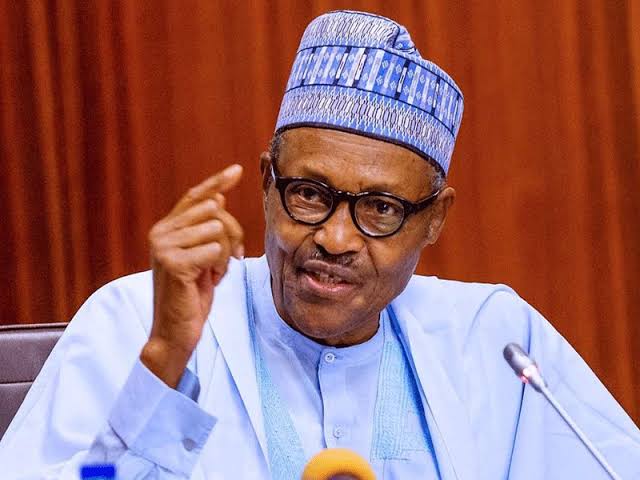
    So let it be with Muhammadu Buhari.

    It is not easy to recall the good deeds that Buhari did with the great opportunities he had. As a military muscleman, his laudable ‘war against indiscipline’ turned into draconian decrees, including ludicrous long jail terms for political prisoners, muzzling of mainstream media, and shocking retroactive public execution of petty drug dealers!

    On his second coming, Buhari dashed the hopes of Nigerians by unleashing more corruption, bandits, and terrorist herdsmen with AK-47. He visited his signature violence of dogs and baboons on EndSARS protesters. He was particularly harsh on the Southeast, “the dot” in his warped ethnic estimation, which is to be visited with threats of another genocide. When censored for the vile statement, he banned Twitter (now X). Not even on his way out would Buhari forgive Nnamdi Kanu, Sunday Adeniyi Adeyemo (Igboho), and El Zakzaky, the Shi’a Muslim cleric. On the other hand, he treated the butchering Boko Haram terrorists with mittens!

    Buhari died peacefully in London, where he had spent many moons receiving good medical attention. His wife, who had been living in Dubai, reportedly relayed a plea for forgiveness. Fair enough: forgiven, not forgotten. Meanwhile, MNK (whom courts in Kenya and Nigeria have freed) languishes in jail because Buhari would not forgive a simple juvenile insult. What will it take for men to accept mistakes and make amends while the good gods guarantee life! I hope that Yakubu Gowon is listening and learning, not adding more insults of lies to injuries he caused and failed to heal.

    When the present emotions ebb, Nigerians must rise against medical tourism. It is ridiculous that Nigeria cannot set up topnotch medical facilities to treat its top executives. Putting Nigerian leaders at the mercy of foreign pharmacological firms is a screaming shame and a stupid security risk. Ironically, Nigerian medicos who offer commendable care abroad can offer better care in Nigeria.

    President Ahmed Bola Tinubu should establish decent hospitals at which prominent politicians get great care and die peacefully when the time comes—as it will come inevitably. We had two former heads of state in London, possibly getting care from exiled Nigerian doctors they could not keep in the country. The cost of retrieving the remains of Buhari and transporting people to and from the UK is enough to equip a set-aside standard clinic in Abuja, FCT.

    Before he jets out to France again, President Tinubu must learn the lasting lessons of the current bala-blu (hullabaloo) and think of legacy, a bequest for the memory of ex-President Muhammadu Buhari.


    #moe, 7.15.25

  • Africa Is a Cemetery for Africans

    Africa Is a Cemetery for Africans

    -By Abdul Mahmud

    The phrase, “Africa is a cemetery for Africans,” falsely credited to Vladimir Putin, has long taken a meaning that goes beyond the dubiety of its source. But, whoever couched it and pushed it into the virtual space, acquiring its virality in the process, must have seen further than most of us. It isn’t just a phrase about the continent’s history of slavery, war, famine and the brutality of tyrannical rulers. It isn’t even just about the millions who die needlessly from hunger or curable diseases. It is, more sharply, a commentary on the kind of men who govern the continent. Men who live off their people and die in lands far away from them. Men who snatch the people’s hope, supplanting it with indignity, and burying their future.

    To call Africa a cemetery is to point fingers at the power-holders who turn statehouses into slaughterhouses. At men who transform democracy into dictatorship, and public trust into private holdings. It is to hold the mirror up to the likes of Jean-Bedel Bokassa, who ruled the Central African Republic like a butcher, crowned himself emperor in a lavish ceremony modelled after Napoleon, then died quietly in exile. Or Paul Biya of Cameroon, who has ruled from Geneva’s five-star hotels longer than from his country’s capital in Yaoundé. Kamuzu Banda of Malawi, Julius Nyerere of Tanzania, Edgar Lungu of Zambia, and our own Umaru Yar’Adua and Muhammadu Buhari. These men, whose names merely make up one half of the cycle of rulers, ran their countries into the ground and found their final comforts abroad. And the other half of the cycle is squared by current rulers who not only have ruined what is left and are making weekly and monthly detours to foreign lands as medical tourists. President Tinubu are you there?

    It is a tragedy. A continent that raised these men must now bury them in soils they once betrayed. They left in luxury. They returned in caskets. In many ways, these rulers are a symbol of something far more enduring and sinister. They represent a political culture that rewards oppression and celebrates impunity. In their hands, power isn’t a tool for service, it is an instrument of self-preservation. Here, governance becomes nothing more than the extraction of value from the state to feed a narrow circle of cronies. The people? Forgotten. Their suffering? Just background noise to the wailing of sirens and the clinking of champagne glasses at state dinners.

    The facts have been consistently laid bare in the public space. Let’s recall a few here. African presidents are some of the most travelled in the world. Not for diplomatic shuttles; but for healthcare. They build no functioning hospitals at home, but they travel to London, Paris, Berlin and Dubai for treatment. They abandon their people in crowded and understaffed clinics, but they fly first-class overseas to seek the best medical attention money can buy. And when their bodies fail them, as all bodies must, they breathe their last far from the people they ruled. Far from the streets they never fixed. Far from the schools they underfunded. Far from the hospitals they refused to equip.

    What else can one call it but medical tourism, the grim betrayal dressed as privilege? The brutal irony lies in this: men who, in life, denied their citizens the dignity of basic healthcare, now claim in death the full embrace of global medical excellence. It is a perverse reward system, where rulers who left their nations gasping for breath are themselves intubated in sterile wards abroad. Since the days of Bokassa, Banda, and Nyerere, whose memories now live mostly in footnotes and faded eulogies, a new figure has emerged to personify this legacy of abandonment. Buhari. His memory stands today as the emblem of that cold, clinical disregard. He will forever remain the poster child of the paradox: a ruler absent from his people in sickness, yet ever-present in their sufferings. In his eight years in power, he spent over 200 days in London receiving medical treatment. No one knew the nature of his ailment. No one knew the cost. He never spoke of it. But the planes flew, and the presidential entourage never grew smaller. At home, doctors were going,  coming, and going on strikes – in that endless cycle of going. Patients were dying. Hospitals were gasping for life support. But the president was always in the UK, wrapped in the quiet of Harley Street clinics. When he eventually left office, he slipped out of the country again, reportedly for medical treatment. He died there. In a land not his.

    What kind of man does that? What kind of ruler spends more time receiving treatment abroad than fixing what’s broken at home?

    This is the paradox: they die abroad. But they are always buried here. They want our earth, but not our air. Our soil, but not our service. They want the glory of being mourned by the people they abandoned. State burials, public holidays, military salutes and obsequious rituals designed to lend dignity to the undignified. Even in death, they take from the people. But, come to think about it, which country buries its own betrayal with such fanfare? Nigeria. There’s a point to note just as well about a good number of these rulers who die nameless deaths in luxurious suites abroad. Their final breaths are heard not by the nurses in their own public hospitals, but by foreigners whose names their citizens will never know. Then, after death, the surreal drama begins: the flag-draped coffins, the sorrowful national broadcasts, the endless condolence registers. The body returns. But the damage remains.

    The story always morphs into a drama that repeats itself. Over and over. New rulers emerge, promising change. Promising health reforms. Promising to stay at home. But in time, the lure of the nanny-state; the state that pampers and provides for their every private need draws them in. They forget the people. They remember only their pleasures. Governance in Africa, to these men, is not duty. It is privilege. The State becomes the nursemaid. It feeds them, bathes them, tucks them into presidential suites, and sends their children abroad to elite schools. It handles their birthdays and bankrolls their funerals. Even in retirement, the State remains their slave.

    This is what all Africans must call out. This nannyhood. This warped conception of public office as a private inheritance. This sucking of the breast of the nation until it runs dry. There is no nobility in dying abroad, far from the people you led. No honour in returning as a cargo on a presidential jet. No dignity in a life that denied others theirs. Yet, how many more must we watch go this route? How many more African leaders will fail to understand that leadership is not about luxury? That power is not about self-protection?

    Africans know what good governance looks like. They see it in countries that invest in their people, in their institutions, in their futures. They see it in leaders who die among their people, not above them. But Africa has been denied this reality for too long. Too many of its rulers rule like monarchs and flee like fugitives. Their names decorate airport lounges and stadiums. But their legacies rot in the ruins they left behind.

    Africa needs a new kind of leadership. One that sees the presidency not as an escape, but as a service. One that understands that a hospital bed in Lagos is worth more than a thousand hospital visits to London. That education for all is better than scholarships for the few. That the real measure of leadership is not in miles travelled, but lives touched. Until then, the cemetery metaphor remains. And the burials will continue. Not just of bodies. But of dreams. Africa deserves more than being the final resting place for men who ruined it. Africa deserves leaders who will live for her, suffer for her, and if they must, die with it. Not in exile. Not in a foreign suite. But on the soil they swore to serve.

    That, perhaps, is how Africa must escape the cemetery.

  • Nigeria’s Ruling Class and the Collapse of Decency

    Nigeria’s Ruling Class and the Collapse of Decency

    -By Abdul Mahmud

    In a country starved of dignity, the conduct of members of the political class becomes akin to the conduct of wayward sailors staggering on the deck of a sinking ship. Call it the Titanic. They stagger through public spaces, like the character, Juda Pesa, the self-proclaimed market philosopher in the Kenyan writer, Meja Mwangi’s novel, ‘Striving for the Wind’, who, while heavily inebriated, staggers and lectures his fellow villagers in the market square of Kambi, their tongues loosed by hubris, their minds empty of ideas, and their mouths brimming with insults.

    What ordinarily should be spaces for sober public discourses have become arenas of farce, disrespect, and sheer moral bankruptcy.

    Take, for instance, the appalling behaviour of Clement Jimbo, a member of the House of Representatives from Akwa Ibom State. Last week, he took to the social media and desecrated it. In a misguided attempt to attack the newly proposed coalition party, the African Democratic Congress (ADC), Jimbo likened its fate to that of the ADC airline that crashed into the Lagos lagoon many years ago. In doing so, he not only revealed a stunning lack of emotional intelligence, but also insulted the memory of those who perished in that national tragedy. Such a comparison is not just insensitive; it is utterly inhumane. It reflects the deepening rot within a political class that sees human suffering as a metaphor to win cheap political points. It was neither a slip of tongue nor the exaggeration of a man caught in his own rhetorical flourish. It was deliberate. And it was cruel. Disgraceful. Jimbo’s words betray a disturbing disregard for the solemnity of human life and the rights of association and assembly guaranteed by the Constitution. For what is the ADC coalition but a constitutional expression of political will? In mocking it with the imagery of death, Jimbo abandoned reason, embraced the vulgar and displayed bitter animus. No man, and no less an elected representative, with a sober mind, would write such a nonsense.

    But Jimbo is not alone in this descent.

    Please, welcome the former Governor of Rivers State and current FCT Minister, Nyesom Wike, who, on his own part, has since embarked on a media roadshow of abuse and puffery. Like a man possessed by the ghost of Dionysus, he spares no one. His language, coarse. Elder statesmen who should be honoured are dragged into the portorportor of his invectives. Colleagues are treated as some objects of oddity. Wike’s verbal outbursts are not only unbecoming, they are offensive. They reflect a broader cultural decline where the values of restraint, humility, and honour have been replaced by noise and braggadocio. His public tantrums are not those of a statesman. They are the antics of a man too drunk on power to distinguish office from the theatrical circus. On this point alone, the late French thinker, Guy Debord was right when he described those, intoxicated by their authority, who turn power to a spectacle, mediated by performances that reduce governance to a public circus. Unfortunately, brilliant as Debord was, his life, shaped by heavy drinking, reflected what he critiqued, suggesting a definitive parallel to the self-destructive intoxication of power that was the oeuvre of his scholarship.

    Ours has become the republic of the vulgar. Our rulers have normalised vulgarity and the kind of rulership that promotes staged circuses over substance. Rulers now speak before thinking. Their followers cheer, not for the wisdom in their words, but for the damage done to perceived enemies. There is no decorum. No civility. No depth. Only spectacle. What is worse is that this malaise is not confined to individual outbursts. It has become commonplace. From legislative chambers, social media, to press conferences, from campaign rallies to the marketplace, public communication has been stripped of thoughtfulness and replaced with buffoonery. Public discourses have collapsed under the weights of ego and idiocy. This is no accident. It is the consequence of a country that no longer rewards intellect or insists on virtue in governance. Today, political office is often the reward of wealth without work, noise without nuance, ambition without direction. Men and women who should never be entrusted with the responsibility of representing constituencies find themselves in charge of states. Those who should be in motor parks soliciting passengers for taxi drivers are making laws. Those who should be practitioners of virtue have instead become performers on the stage of vice.

    The result is a tragic comedy. Ours, a country of famed thinkers and scholars, now finds itself led by jesters. A country that once inspired the continent with the intellect of its statesmen is now mocked by the vacuity of its present custodians. Our rulers do not read. They do not listen. They do not reflect. They hurl words the way savages hurl stones. Blindly and destructively. Aristotle, in his reflections on ethics and politics, reminds us of Eudaimonia and the idea of human flourishing through virtue. Leadership, he argued, should strive towards the good life, a life rooted in moral excellence. But our rulers appear to inhabit a different moral universe; one in which the basest instincts are rewarded, and vulgarity is taken as strength.

    But, this is not just a problem with bad manners. Or of rulers or the rest of us behaving badly. It is a problem of ethics. When rulers lose the capacity for shame, the republic suffers. When elected public officials dance naked in the marketplace of ideas, citizens lose faith. When the elites speak like urchins, then what hope remains for street hawkers? Or for children coming after them? Yet, our citizens must ask: How did their country get here? How did men of such hollowness rise to such prominence? The answers lie partly in the decay of our civic institutions, in the ghettoisation of democracy, in the commodification of politics, and in the retreats of citizens from moral engagement. When elections are bought or stolen, not won; when godfathers select, not the voters electing their representatives; when loyalty to power replaces loyalty to principle, this type of rulership emerges.

    All is not lost. No country weeps forever over its losses. It can recover. And it does recover what it loses. But recovery demands courage. It demands that citizens cease to excuse bad behaviour from leaders. It demands that voters look beyond ethnic and party lines. It demands that young people, women, professionals, and thinkers enter the arena, not with the weapons of insult, but with virtue, intellect, service, and vision.

    Today’s rulers may act like drunken sailors, but they do not represent the totality of who the citizens truly are. They are a symptom of our collective complacency. If our country is to correct this course, it must recenter its values and reimagine its politics. It is not enough to pity these men of Brobdingnag. It is not enough to laugh at their tantrums. Citizens must demand better. Citizens must rebuild the moral spine of their national life. They must raise the ethical bar. Leadership is not the theatre of the absurd. It is a responsibility. It requires the mastery of the finesse of governance, empathy, and restraint. A country doesn’t achieve greatness or rise above the pedestrian through the actions of straw men and women; but by the character of those it entrusts with power.

    The time to restore dignity is now.

    As virtuous citizens sound the resonant bugle of conscience, summoning the wayward sailors of state back to the shore of reason and rectitude, our country must steady its helm and chart a new course of moral clarity and purpose across the calm waters of virtue and public decency, while it unyields to the tempests that may come.

    A word is enough for the wise.

  • [SPONSORED] From Green Checkered Shirt to Excellence: The Journey from Health Prefect to Doctor of Philosophy

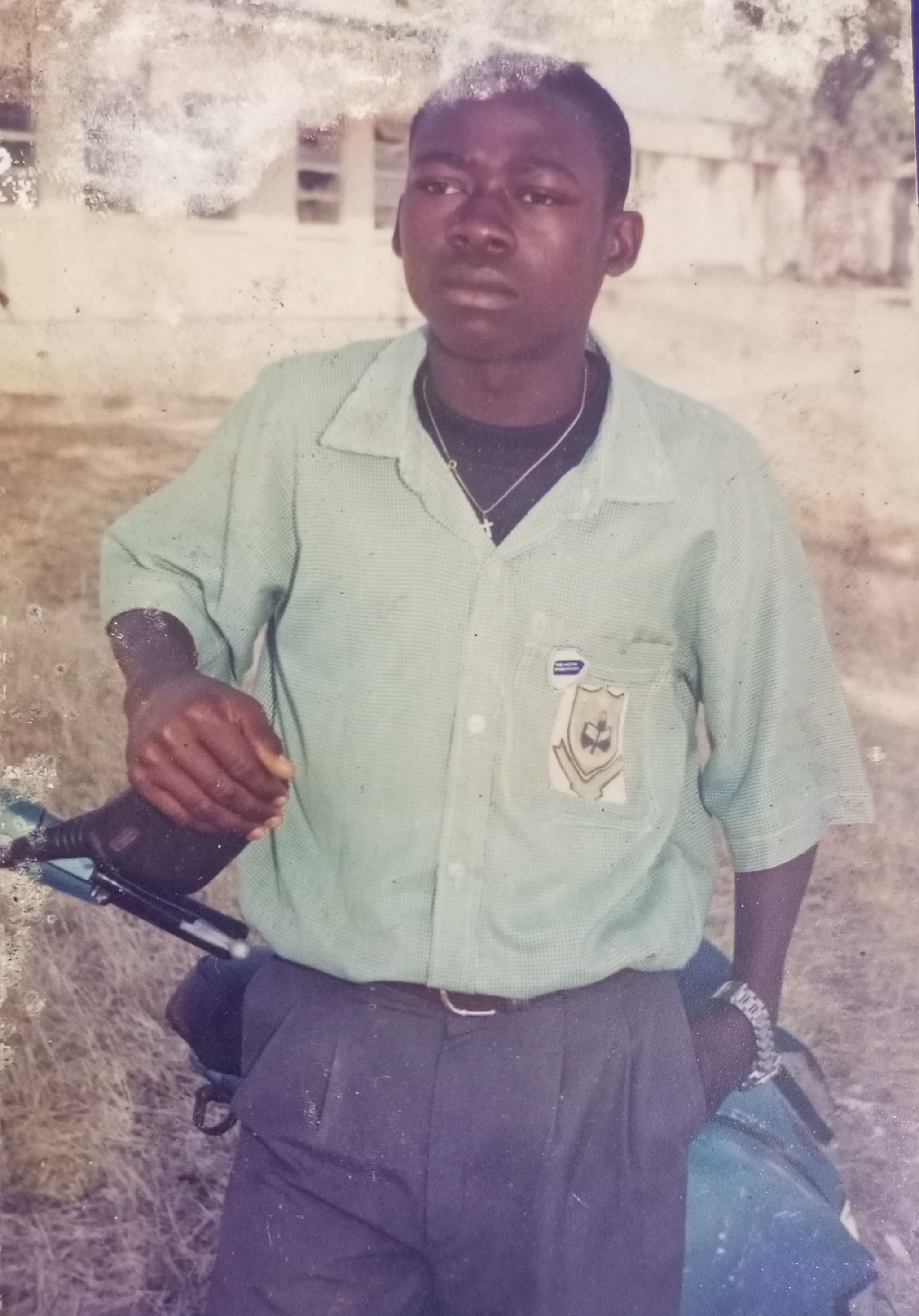
    This picture holds a very special place in my heart. It was taken in the year 2000 during my final year (SS3) at Sardauna Memorial College, SMC, Kaduna. I was the Health Prefect at the time, a role I held with pride and responsibility. Standing on the school grounds, dressed in my green checkered uniform with the school prefect badge pinned neatly and firmly to my chest pocket, a badge of honour worn with purpose. Around my neck hangs a modest silver cross, symbolizing faith, resilience, and identity. I had no idea that this single photo would one day serve as a powerful reminder of how far I’ve come.

    In the photo, my right hand is resting casually, not on a desk or a railing, but on the Vespa motorcycle of my physics teacher, Mr. Sidi. That detail might seem small, but it brings back a flood of memories. Mr. Sidi was one of those rare teachers who made complex science topics feel relatable. His Vespa was iconic, it symbolized movement, energy, and a kind of quiet authority. I suppose I leaned on it that day not just for balance, but as a subtle reflection of my admiration and connection to the world of science and innovation.

    Back then, I was known among my classmates for being firm yet approachable, committed to discipline, hygiene, and the general well-being of the student body. I took my responsibilities seriously. Being Health Prefect wasn’t just about monitoring, it was about setting an example, creating awareness, and promoting personal responsibility.

    Academically, I was driven by a deep curiosity, especially in subjects like chemistry, physics, and mathematics. I wasn’t satisfied with just learning formulas. I wanted to understand the why and how behind everything. That inquisitive mindset, combined with the encouragement of some great mentors, laid the foundation for what would later become a lifelong journey in engineering.

    After graduating from Sardauna Memorial College, I pursued my undergraduate degree in Chemical Engineering with the same determination I had in secondary school. The road ahead was not always smooth. There were financial hurdles, academic challenges, and moments of self-doubt. But every time I was tempted to quit, I reminded myself of that boy in the green checkered uniform – confident, hopeful, and standing tall in front of a future he could barely imagine.

    Years of hard work, research, and sleepless nights eventually led to a crowning moment in my academic journey; I was awarded a Ph.D. in Chemical Engineering by the prestigious Enugu State University of Science and Technology. It was more than a certificate or a title; it was the fulfillment of a dream seeded in the dusty classrooms of SMC, Kaduna and watered by years of discipline, faith, and resilience.

    Looking back now, that photo isn’t just a school memory. It represents a beginning, a quiet declaration that I was ready to take on the world. From leaning on a teacher’s Vespa to contributing to cutting-edge research in chemical engineering, the journey has been nothing short of remarkable.

    To every young student out there: your present doesn’t define your limit, it defines your starting point. Stand tall in your green shirt, whatever it may be, and don’t be afraid to dream beyond what you see.

    Dr. Onyebuchi Emmanuel Nnaji

    Ph.D. Chemical Engineering | Scholar | Engineer | Lifelong Learner

  • Africa’s Ethnic Diversity and the Search for a Home-Grown Democracy

    Africa’s Ethnic Diversity and the Search for a Home-Grown Democracy

    -By Abdul Mahmud

    I must begin with a confession. I write two columns weekly. One for this magazine and the other for the People’s Gazette. After finishing my piece for the People’s Gazette, I found myself staring into that graveyard of silence familiar to writers: the sudden and barren wasteland of the mind, the dreaded place called writer’s block. My Muse had packed her bags. Without a whisper. Without a rustle of inspiration. Perhaps, as the GenZs say with half a chuckle and half a fear, my village people had finally located me. So, I resolved not to place my fingers on the keyboard this week; and to retreat in quiet surrender to emptiness. But fate, or perhaps the gods of public engagement, had other plans for me.

    I posted a short prelude to my other column on Facebook; just a few lines excerpted from my other column. It elicited reactions. But one reaction in particular arrested me. It came from my dear friend and Nigeria’s former Ambassador to Guinea-Bissau, John Usanga. His words were warm, but they carried a troubling question, foregrounded by that kind of humility that makes one pause and think: “I love your write-up, great comrade! But my problem is this: Given that Africa – and I mean no disrespect to us as a people – is tribal in composition, what would be the proper home-grown democratic structure that will accommodate the diversity of ethnic groups in Africa to the satisfaction of all Africans?” His question haunted me. It tugged at my conscience. It lingered, even as I told myself I had nothing more to say this week. So here I am, struggling still with the Muse who has refused to return, but compelled to respond to a question too important to ignore. For at the heart of it lies Africa’s oldest dilemma: how to reconcile her many tongues, her many nations, her many peoples, into a shared political life that is just, inclusive, and truly democratic.

    Before I venture into the heart of the matter, a brief detour is necessary as an interrogation of Ambassador Usanga’s use of the phrase, “tribal in composition.” Though likely used in good faith, the phrase carries a heavy historical burden. It echoes the vocabulary of early sociologists and anthropologists like Levi-Strauss, Durkheim, Malinowski whose positions were tainted by racist prejudices. In their writings, Africa’s ethnic nations were flattened into “tribes”; a term that became the shorthand for the primitive, the pre-political, the undeveloped. These so-called “tribes” were not seen as evolving cultures with histories, institutions, and systems of governance. They were imagined as static relics of humanity’s past that were exotic, chaotic, and in need of external order. The description may have served colonialism, but it does violence to the richness of African identities. To call African nations “tribal” is not simply to misname them; it is to diminish them. It is to cast them outside the realm of the modern. And that, let it be said plainly, is racist.

    Africa’s nations are complex. They are multi-layered. They are diverse. They are dynamic. They are not “tribes” in the sense of the colonial. To continue to describe them as such is to remain trapped in that colonial imagination.

    Now, I return to the main themes of this piece.

    In 1957, as Britain’s colonial project began to collapse, the Colonial Office in London released a troubling Report. Democracy, it stated, would not travel well in the colonies, especially in Nigeria. Its reason? Widespread poverty. Ignorance. And, in more guarded colonial-speak, the “tribal” character of the Nigerian.

    It was a cold dismissal. A quiet warning that democracy, imported wholesale, would break under the weight of ethnic diversity. The Report wasn’t entirely wrong. It was, however, short-sighted. The late Claude Ake, the renowned Nigerian political economist, would later put it more clearly. In his book, The Feasibility of Democracy in Africa, Ake wrote that democratisation must precede democracy. In effect, he meant that democracy cannot exist without it being practised. It cannot take root in an environment where it is not nurtured. It cannot be wished into being. Today, nearly 70 years since that colonial report, Africa still struggles with democracy. The question remains: what form of democracy can truly work for Africa? One that respects the continent’s ethnic, linguistic, and cultural diversity. One that Africans can call their own.

    This isn’t a question plucked from the sheaf of the abstract. It goes to the heart of Africa’s failures and its hopes. Across the continent, post-independence governments inherited the Western liberal model. Parliaments. Presidents. Political parties. Constitutions. They adopted Westphalian and European legal systems and bureaucracies. But they did not dismantle the colonial state, as Professor Chidi Odinkalu argued recently at a webinar. Nor did they adapt these systems to the realities of the continent. In many cases, they simply exchanged white rulers for black elites. Or they simply masked their black skin with white masks- with apologies to Frantz Fanon.

    The result? Electoral violence. Ethnic competitions. Winner-takes-all politics. Fragile institutions. Military coups. The problem isn’t that democracy is foreign. The problem is that African societies are structured differently. Identity is local before it is national. People trust their kin before they trust the state. Allegiance to clan, ethnicity, and religion runs deep. This is not inherently bad. Diversity is not Africa’s curse. It is the character of those who run the state that implicates the operationalisation of democracy in terrible ways. But when the operators ignore the essential character of representation of democracy, it leads to conflict. When states impose uniformity, people resist the imposition in many conflictual ways. When political systems fail to give space to different groups, people feel excluded.

    So, what is to be done?

    First, we must accept that Africa cannot copy and paste democracy. We cannot take the American presidential model or the British Westminster system and expect it to thrive in our societies. We need to build democracy from the ground up. Based on our own histories. Based on our own realities.

    Perhaps, a hark to the past will help provide some clarity.

    Before the advent of European colonialism, African societies governed themselves. Many had systems of consensus. Kings and chiefs ruled, but often in consultation with the people. These governance systems were participatory. They were inclusive. They recognised diversity. Modern democracy must learn from these traditions. It must be rooted in African social structures.

    Second, we need to embrace federalism. True federalism. Not in name, but in substance. Many African countries are artificial states, with colonial borders. The colonialists bundled together dozens, even hundreds, of ethnic groups; and expected them to coexist under a centralised government that has turned out unrealistic. The unitary model has failed in places like Sudan, Ethiopia, and the Democratic Republic of Congo. A genuine federal system allows communities to govern themselves while remaining part of the national framework. It provides autonomy. It reduces ethnic tension. It encourages participation. Take Nigeria, for instance. With close to 600 ethnic groups, its problems are partly structural. The current quasi-federal system concentrates too much power at the centre. It breeds resentment and unhealthy competition. A restructured federation that returns power to the regions may offer better stability.

    Third, Africa needs inclusive institutions that must reflect the plural character of society. Power must be shared. Representation must be guaranteed. This goes beyond ethnic balancing. It means building systems that represent every voice. Minority protections must be enshrined in the basic law.

    My position doesn’t mean that the past must be romanticised. Some traditional systems are patriarchal or discriminatory. But a hybrid of modern state institutions working alongside reformed traditional authorities can enhance legitimacy. Rwanda’s Gacaca courts offer one such example. Though controversial, they blended customary law and community justice to address post-genocide reconciliation and enthroned restorative justice. South Africa’s Truth and Reconciliation Commission is another example. Though not perfect, it reflected Ubuntu.

    Fourth, democracy must be localised. Too often, elections are national rituals, far removed from ordinary people. Controlled by money. Captured by elites. But real democracy starts at the local level. In the ward. The village. The township. When people feel they have a say in their everyday governance, democracy begins to make sense. Democracy is a verb; people learn democracy by doing democracy.

    But we must also go deeper. Political education is key. People must understand that democracy is not just about voting. It is about dialogue. Debate. Compromise. More importantly, democracy cannot thrive on empty stomachs. The Colonial Office was partly right: poverty undermines democracy. So does unemployment. Illiteracy. Disease. People who are desperate do not care for ballots. They care for bread. Building home-grown democracy requires investing in people. Education. Health. Jobs. Infrastructure. These are not luxuries. They are necessities. When people are empowered, they can participate fully in governance. When citizens are informed, they can hold their leaders accountable.

    Across Africa, the civic space and freedoms are under attack. Governments shut down the internet. Arrest critics. Clamp down on protests. But history shows that democracy often comes from below.

    In 2020, Nigerian youths mobilised for #EndSARS. In 2023, Senegalese students led demonstrations for justice. Last week, Kenyans protested new taxes and forced their government to retreat. The Togolese weren’t left out. These are signs of democratic awakening. Young Africans are no longer waiting for perfect systems. They are demanding accountability. They are building platforms. They are using technology to organise and mobilise. They are showing that democracy is not a concession. It is a fight borne out of courage of conviction. But, in the end, the question isn’t whether Africa is fit for democracy. The question is whether democracy can be made fit for Africa.

    And the answer is yes.

    But it will not come through mimicry. It will come through imagination and struggle. Through bold reforms. Through the reforms of the African mindsets. Through the reinvention of local traditions. Through federal structures. Through inclusive governance. A home-grown African democracy must rise from the soil of the continent. It must speak its languages. Honour its cultures. Embrace its complexities. Only then can democracy take root. Only then can it flourish. No more.
  • PDP Problems Require Legal and Not Political Solution

    PDP Problems Require Legal and Not Political Solution

    By Godswill Eketabubu

    The above caption appears strange given the well advertised succession of political problems that have afflicted the PDP since 2015; problems that became exacerbated during the 2023 presidential election cycle. Yet, as grave as these political maladies appear, they currently pale into relative insignificance in relation to the complex legal challenge the party is facing. My theory of the case is thus very simple: tackle and resolve this knotty legal challenge and the party’s political pathologies will begin to disappear rapidly but ignore it, throw it under the bus or attend to it half heartedly and the envisaged political solution canvassed for will only bring temporary relief.

    PDP’s 2023 Political ‘Wahala’

    The enormity of the crippling political crises that the PDP faced during the 2023 presidential election season are very well known. From the party’s ambiguous decision over the zoning of the presidential ticket, the refusal of Dr. Iyorcha Ayu, then National Chairman of the party to resign and the open rebellion mounted by the Nyesom Wike led G-5 Governors, the party’s fate and fortune was quickly sealed. Its perennial candidate, Atiku Abubakar, lost the presidential election, Wike landed the top job as President Bola Tinubu’s minister of the FCT, and a vicious political war was levied at the heart of the party’s functioning as a coherent political apparatus. Those angry about the party’s behaviour in 2023 were then resolved to get their pound of flesh and to achieve this, the party must be taught a lesson and made to suffer so much so that it would have broken into many pieces before 2027- thus paving the way for President Tinubu’s leisurely re-entry into office.

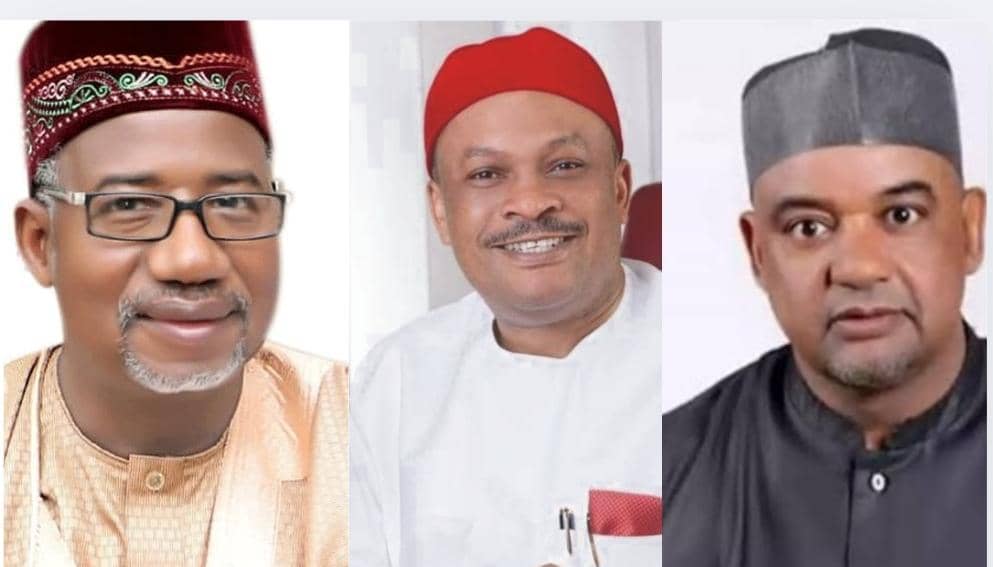
    At this stage the driving force in the party’s persistent crises was political contestation – who will control the party’s institutional machinery, determine its direction and to what use it will be put to. There are three forces engaged in this political rofo-rofo: those who insist that the party must remain an autonomous political entity, free from external control so that it can wage and possibly win the political war of 2027; those who want the party to be tied to the apron strings of President Tinubu and the ruling APC; and those who neither want the party to be strong, firm and united because “they have no portion in it again” nor want Tinubu to have anything to do with it. Without a shadow of a doubt, the Governor of Bauchi state and Chairman of the PDP Governors’ Forum, Sen. Bala Mohammed best exemplifies the first tendency. He has of late been joined in that space by the Ag. National Chairman of the party Amb. Illiya Damagun whose loyalty to the party was initially perceived to be questionable.

    PDP Lands Itself in a Legal Quagmire

    The noise over these political challenges was so loud and heavy that scant attention was paid to the legal challenge that sneaked into the party’s core: what has now become the epic battle over the National Secretary position. Why this struggle is existential to the party is not merely the perception of institutional disorder but that unless it is resolved the future of the party will be in grave danger. The matter is fairly straightforward. There are three claimants to that throne- the elected National Secretary, Sen. SamDaddy Anyanwu; Comrade Ude Okoye who the South East Caucus of the party nominated to takeover the position when Sen. Anyanwu contested for the Governorship of Imo state; and Setonji Kosheodo, the Deputy National Secretary who emerged as the Ag. National Secretary to resolve the fight between two brothers.

    Any member or leader of the party who fails to recognize the centrality of this legal tussle to the future survival of the party is either being mischievous or is downright clueless and politically idiotic. If this tussle is resolved speedily, the party will be able to hold a valid and legally sound NEC, ratify the appointment of valid and legally tenable convention and zoning of elective positions committees, hold a valid and legally sound National Convention where it will elect a new NWC, and thereafter in 2026 hold presidential primaries that will produce its Presidential Candidate for the 2027 general elections. If the party does the wrong thing with regard to the National Secretary position, retain the wrong person and proceed to unleash the processes I enumerated above thereof, the fate that befell APC in Zamfara state in 2019 will befall it. This will not only be with regard to all PDP candidates in off season elections but indeed all its governorship, senatorial, House of Representatives and State House of Assembly elections in 2027. Period.

    INEC Holds the Ace in Resolving PDP’s Legal Problem

    There is a loud noise out there that it is unbecoming of the party to call upon INEC to help resolve its problems, that INEC has no business interfering in its affairs or summoning its leaders to a meeting, that the June 30th NEC meeting is sacrosanct and must hold and that Sen. SamDaddy Anyanwu can never return as its National Secretary. While it may be necessary to let off steam and hold onto this kind of outlandish immature political reasoning approaching and tackling the reality on ground must be done devoid of this kind of emotion and sentiment. Only by such a deliberate, rational and logical mode of reasoning and acting will the party come out this mess and solve its problem.

    In Nigerian Constitutional democracy and with regard to multiparty political practices, INEC is the Alpha and Omega. As awful as this sounds, it is the truth. As a regulator INEC has powers that few people comprehend. INEC’s legal team is deep and formidable because of the nature of its work and the legal challenges it faces on a daily basis. I will rather go with INEC’s interpretation of the Supreme Court ruling on the question of who the National Secretary of the party is than that of 100 SANs combined! On this matter INEC has spoken and as regrettable and odious as it may sound to many people, this stance is FINAL. If the PDP does otherwise, trust me, it will be the end of the party, not today but after the 2027 elections – especially if it succeeds in dethroning President Bola Tinubu.

    What is this INEC position? Simply put and devoid of sentiment it is this: that the 30th June NEC meeting was illegally convened and thus cannot hold; that the National Secretary ought to have co-singed the notice with the Ag. National Chairman; that Sen. Anyanwu remains the party’s National Secretary till its next elective convention; and that anything to the contrary will spell legal doom for the party down the road. This picture is stark and clear whether INEC has said so directly or not. A visit to INEC secretariat and a perusal of its records will attest to this loud and clear.

    Gov. Bala Mohammed’s Rescue Mission

    The Governor of Bauchi state and the Chairman of the PDP Governors Forum appears to have recognized this fact given his tenacity, relentless drive and immense sacrifices in hosting countless meetings of the various organs of the party in the search for solution to this problem. He appears to have recognized that Sen. Anyanwu’s moral conduct in refusing to resign when he became the party’s flag bearer in the Imo governorship election or the kind of friends he keeps are irrelevant in the task of saving the party. His embrace of Sen. Anyanwu is thus a logic of common sense and wisdom that emotions and sentiments don’t win legal arguments. The Ag. National Chairman appears to have embraced this position given his stance on the postponement of the 30th June NEC and Sen. Anyanwu’s restoration as the party’s National Secretary. Sen. Bukola Saraki, the Chairman of the Reconciliation Committee appointed by the Gov. Bala Mohammed led PDPGF and other stakeholders appears to be working towards this sound outcome.

    My charge to all members of the party, sympathizers like myself and indeed all lovers of multiparty democracy which is under severe pressure by a frightened APC and its vauntingly ambitious Presidency is to rally round those working day and night to salvage it. If the likes of Gov. Bala Mohammed is to turn his back on the party as this point in time, one wonders what its fate will be. Rather than being vilified and called names, patriotic party faithful will gain more by chipping in their bit in the urgent task of rescuing the party from the jaws of APC sharks.

    Plea to South East Party Leaders

    My plea to the South East leaders of the party, particularly to the dynamic, high performing Gov. Peter Mbah of Enugu state and Sen. Adolphus Wabara who is the Chairman of the party’s BOT, as a neighbour from the South South and a long time PDP sympathizer, is to calm down, rise above your righteous anger over Sen. Anyanwu’s apparent betrayal of trust and unethical conduct and allow peace to reign. You cannot destroy that which you created. You cannot win this case in the eyes of INEC and the eyes of INEC is ultimately the eyes of the law in this regard. This may sound harsh and defeatist but it is the truth. Trust me. Unless you have some other reason why you want to leave the party which you formed that will be fine. It cannot be because of Sen. Anyanwu, whose tenure will lapse in November of this year.

    What will it profit you to ruin it all because you cannot stomach your anger for three or four months and demand that the party re-zones the position to the South East at the next convention so that you can finally get your person in for four years.

    The South East leaders of the PDP has everything to gain by working with the likes of Ag. Chairman Damagun and Gov. Bala Mohammed to put to rest, once and for all, the vexatious issue of the National Secretary, abandon the delusion of a NEC meeting on 30th June 2025 and see that gathering as an Expanded National Caucus during which the party can resolve the date of the next NEC and the upcoming National Convention. To do otherwise is to play into the hands of the enemies of the party and partake in its ultimate ruination.

    Dr. Eketabubu wrote from Port Harcourt Rivers state

  • [OPINION] Umeha: The New Bride of Enugu APC as Political Tides Shift in Udi/Ezeagu

    [OPINION] Umeha: The New Bride of Enugu APC as Political Tides Shift in Udi/Ezeagu

    By Clems Ohajiagu

    In what many political observers have described as a game-changer for opposition politics in Enugu State, Hon. Sunday Cyriacus Umeha, the Member representing Udi/Ezeagu Federal Constituency in the House of Representatives, has officially joined the All Progressives Congress (APC), positioning himself as a pivotal figure in the party’s new growth trajectory in the state.

    Umeha, who was elected under the Labour Party, formally defected to the APC on May 17, 2025 during a well-attended rally held at Igbo-Eze South Local Government Area. His defection, which drew applause and strategic attention, marks a historic development as he becomes the first elected political officeholder under the APC platform in Enugu State.

    The significance of his move was further underscored on June 7, when the lawmaker was officially received into the APC fold by the National Chairman of the party, represented by Deputy National Chairman (South), Chief Emma Eneukwu. This symbolic endorsement not only reinforced the party’s interest in Enugu politics but also validated Umeha’s stature as a strategic political asset.

    “Hon. Umeha’s entry into the APC has redefined the political direction of Enugu State. He brings grassroots support, legislative experience, and bold leadership. With him, the APC has found not just a member, but a pathfinder,” Chief Eneukwu remarked at the reception which was held at Akama-Oghe Hall.

    The ripple effect of his defection was immediate and significant. In a dramatic political realignment, no fewer than 40 ward chairmen of the Labour Party in Udi and Ezeagu also announced their defection to the APC, pledging loyalty to Hon. Umeha’s new political movement. This mass defection has upended political calculations in the constituency and beyond.

    With the political dynamics in Udi and Ezeagu undergoing a seismic shift, Umeha has wasted no time in consolidating his influence. The lawmaker has embarked on a strategic mission to solidify APC structures in his federal constituency and across the state, holding consultative meetings, rebuilding party units, and forging new alliances.

    Political analysts believe that Umeha’s move is a pointer to larger realignments ahead of 2027, with many suggesting that his emergence could ignite a new wave of defections and reposition the APC as a serious contender in Enugu State politics.

    “Umeha is the face of political courage and recalibration. He has not only broken the dominance of traditional parties but has proven that APC can have strong grassroots acceptability in Enugu,” said a political analyst based in Enugu.

    As Hon. Sunday Cyriacus Umeha cements his place in the APC and steers the party into previously uncharted territories in Enugu State, one thing is clear: he is no longer just a lawmaker — he is the new bride of the APC in Enugu, and perhaps the face of the political transformation the party has long awaited.

  • Empowering Women, Honoring Elders: Precious Chinweani’s Bold Vision for an Inclusive Africa

    In a world where leadership is often defined by power, one young Nigerian changemaker is redefining it through purpose, compassion, and inclusion. Meet Precious Chinweani, a UPG Sustainability Leader, award-winning advocate, and founder of She Leads Global a transformative initiative empowering women and StoryCare Africa preserving intergenerational wisdom across Africa.

    Her work speaks boldly to the United Nations Sustainable Development Goals — particularly SDG 5: Gender Equality and SDG 10: Reduced Inequalities — proving that impactful leadership is not just about raising your voice, but lifting others along the way.

    “Real sustainability begins with dignity — when women have a voice and the elderly have a seat at the table,” says Precious.

    She Leads Global: Mobilizing Women, Transforming Communities
    Born out of a deep desire to see women empowered beyond cultural and systemic limitations, She Leads Global (SLG) is more than a platform — it’s a movement. Since its founding in 2016, SLG has reached over 20,000 women and young professionals, providing capacity-building programs, digital skill training, leadership development, and safe spaces for growth.

    At its heart, SLG embodies SDG 5, advancing gender equity by providing the tools and networks women need to thrive as leaders, entrepreneurs, and changemakers.

    With signature initiatives like the “She Leads Business & Leadership Conference”, The Leadership Room, and weekly community mentorship circles, Precious has created a ripple effect across Africa’s leadership ecosystem — where women are not only seen but heard, valued, and empowered.

    “Empower a woman, and you empower generations,” she says. “That’s not just a proverb — it’s a strategy for sustainable development.”

    StoryCare Africa: Giving a Voice to the Forgotten.

    While many development programs focus on the future, StoryCare Africa focuses on the wisdom of the past — specifically, the elderly. Founded after Precious witnessed the neglect of senior citizens in her native Ebonyi State, StoryCare collects and preserves the life stories of older individuals, using them as mentoring tools and educational archives for the next generation.

    The project promotes intergenerational connection, cultural preservation, and social inclusion — making it a critical solution aligned with SDG 10: Reduced Inequalities.

    Through home visits, storytelling sessions, gift donations, and digital curation, over 1,000 elders have been directly impacted, while thousands of young people have benefitted indirectly through the wisdom passed on.

    “There’s untapped gold in our elders — in their stories, experiences, and resilience. StoryCare is our way of saying they still matter.”

    UPG Sustainability: Global Learning, Local Action.

    Precious’s journey was amplified by her selection as a UPG Sustainability Leader, a role that gave her access to global sustainability training with over 1,000 leaders from 186+ countries. UPG Sustainability Leadership is the world’s largest and most comprehensive sustainability leadership training for young adults. It is a free programme that mobilises people and organisations to support positive citizen leadership on sustainability. This training is possible because of the support of UPG’s partners and collaborators, especially the author and philanthropist, Rosamund Zander.

    From community workshops and online campaigns to high-impact speaking engagements and advocacy training, Precious has continued to push the boundaries of what’s possible when purpose meets preparation.

    Today, she hopes to be selected for the fully-funded UPG Hurricane Island Training, where she plans to develop more scalable models for StoryCare homes and women-led cooperatives under She Leads Global.

    A Future Built on Dignity and Inclusion
    Precious Chinweani’s work goes far beyond programs — it’s a philosophy. A belief that societies grow stronger when no one is left behind, when women lead fearlessly, and when the elderly are honored, not hidden.

    “Sustainability is not just about the planet — it’s about people,” she says. “If we build a world where everyone matters, we won’t just meet the SDGs — we’ll exceed them.”

    From grassroots leadership to global recognition, Precious is sowing seeds of dignity, resilience, and equity — and Africa is beginning to bloom.

    1.  Learn about #UPGSustainability Leadership: https://www.youtube.com/watch?v=UdxYNm-OwaY&list=PLHh4FoZmRefmjiNlaw9JyRKGsRAlmg6Nc
    2. To partner or collaborate with UPG Sustainability Leadership, please visit: https://upglive.org/letsconnect
    3. More about United People Global https://unitedpeople.global/about-us
    4. Join UPG: https://unitedpeople.global/join
    5. Join UPG’s Media Community: https://unitedpeople.global/nominations/journalists-nomination
    6. Follow UPG on most social media: @unitedpeopleglobal or on Twitter: @unitedpeople36
    7. Social Media Hashtags: #UPGSustainability and #JourneyToHurricane
  • Tinubu and The Bad Roads Not Taken

    Tinubu and The Bad Roads Not Taken

    -By Abdul Mahmud

    “I couldn’t reach Yelawata in Benue State due to bad roads”, said President Bola Ahmed Tinubu. This sentence captures the spirit of Tinubu’s presidency. Aloof. Detached. Cold. Inconsiderate. Leadership without compassion. Governance without sacrifice. Authority without empathy. How did Mandela once describe compassion? He said, “Our human compassion binds us the one to the other, not in pity or patronisingly, but as human beings who have learnt how to turn our common suffering into hope for the future.” In those words lie the moral clarity of leadership: to feel with others, and to act in ways that dignify their pain. But in the hour when the people of Benue cried out beneath the weight of their grief, when blood soaked their soil and hope withered on parched lips, President Tinubu neither spoke with the tenderness the moment demanded nor did he offer comfort. Instead, he stood, quartered only to the state-organised gyre, where falcons heeded the call of the lying falconer while unburdened by the anguish of the listeners, unmoved by the cries circling beneath his silence.

    I return to the scene of the crime. Yelawata, in Benue State, is soaked in blood. Again. Victims of another attack. Not the first in the state. Sadly, not likely the last. Men butchered. Women slaughtered. Children silenced by bullets and machetes. Bodies burnt. Farmers buried in shallow graves. A people under siege, paying with their lives for living on ancestral land. And the President? He dilly-dallied like Nero until he was forced out of Aso Rock. When he eventually turned up in Benue State, he didn’t go to Yelawata.

    Why? The roads were bad.

    That excuse tells us everything. It tells us Tinubu doesn’t see governance as a sacrifice. It tells us he sees power as comfort, not service. That he is more concerned with personal convenience than national grief. That to him, bad roads are a reason not to visit, not a call to action. The road to Yelwata was too rough for his usual long motorcade. But is the road to governance not paved with sacrifice? A president should go where pain is deepest. He should stand with the broken. Weep with the grieving. Reassure the fearful. But Tinubu stayed away.  He dispatched men like Sunday Dare and Bayo Onanuga; envoys who, upon arrival, shielded their nostrils with cupped palms, as though the stench of death and despair in Yelawata were too profane for their privileged lungs. They came not to mourn, but to manage optics; not to grieve with the grieving, but to distance themselves from the human wreckage their master could not bear to face. He sent words instead of presence. He chose distance over duty.

    What is the worth of a ruler who cannot be troubled by the suffering of his people? Presidents do not have the luxury of comfort. They are servants, not absolute monarchs. They must lead from the front, even through valleys of blood. When George W. Bush visited Ground Zero after 9/11, he climbed the rubble. When Barack Obama went to Newtown after the school shooting, he wept with the parents. When Nelson Mandela walked into the ruins of apartheid violence, he held grieving mothers and swore it would never happen again.

    Tinubu avoided Yelawata. Then insulted the people. He claimed the killings were reprisal attacks. Without evidence. Without tact. Without truth. He invariably blamed the victims. He called them the culprits. He rewrote a genocide into justification. And when he finally arrived Makurdi, it was under pressure. Nigerians had cried. Protested. Shamed him into action. So, he adjusted his diary.

    That adjustment came too late. In Makurdi, school children were drenched by rain, lined up to wave flags at a president who couldn’t be bothered to dry their tears. In front of the Tor Tiv, the King of the Tiv, Tinubu’s lies crumbled. The monarch told him to his face: “These are not reprisals. They are genocidal. They aim to wipe out our people.” It was a moment of truth. The kind only kings and corpses can speak. Tinubu had no answer. After the Royal smack-down, he chose not to make it to Yelawata. He contrived an excuse: the roads were not motorable. A helicopter couldn’t be arranged. A convoy couldn’t roll. A man who uses presidential jets to vacation in France; and who is billed for luxurious holidays in the sunshine of Saint Lucia couldn’t find a way to reach grieving Nigerians at home.

    Now, the question many are eager to ask: What does it cost to show empathy? What does it take to be present in pain? In Tinubu’s case, apparently too much. This presidency has reduced governance to showmanship. It is all optics, no substance. Press releases instead of policies. Travel photographs instead of action. Ceremonies instead of compassion. Tinubu has become a distant figure. A president of Abuja, not of Nigeria. He rules from marble offices, not the muddy fields of the countryside. From Lagos business tables, not farming communities in Benue. He governs through statements, not presence. Through silence, not sympathy. The tragedy of this moment isn’t just the deaths in Yelawata. It is the erosion of leadership. It is about a man who sees the office of president as the crowning of a personal ambition, not a platform for national healing. A man who imagines governance is a reward, not a responsibility. This needs to be put out more plainly: this is not leadership. This is negligence. Tinubu’s refusal to visit the scene of the carnage, his false statements about the cause and his delay in responding to the tragedy that befell our country all points to a leader who doesn’t feel the country’s pain. One who doesn’t carry the emotional weight of his office.

    What happened in Benue is part of a pattern.

    Tinubu’s second year in office has been marked by detachment. Nigerians groan under inflation. Food is unaffordable. Electricity is a myth. Fuel prices break the backs of ordinary citizens. Unlike the back David Diop so powerfully evoked in his acclaimed poem, Africa, unbent, “that never breaks under the weight of humiliation”. The backs of ordinary citizens stoop beneath the burden of betrayal. Yet the president travels. Dines. Celebrates. Appoints cronies. Signs inflated budgets. Adds more burden to weary citizens. There is no compassion in his policies. No empathy in his speeches. No connection in his actions. A caring ruler would reduce his convoys. Tinubu expanded them. A president with empathy would cut down waste. Tinubu has increased waste. A ruler in tune with citizens would share in their sufferings. Tinubu asks them to “tighten belts” while he loosens his.

    To govern a country requires moral courage. Tinubu’s response to national pain is indifference. His answer to cries is silence. His reaction to mass murder is a shrug. Then, where lies the heart of his rulership? Not in Benue. Not in Zamfara. Not in Plateau. Not in the IDP camps. Not in the shanties. Not in the markets. The heart of this government beats only for the rich, the powerful, and his coterie of handlers. For friends in Lagos. For loyalists in government houses. For image-makers. Not for the rest of us.

    The presidency should be the conscience of the nation. Under Tinubu, it has become a billboard. A brand. A throne without soul. It is not just his failure to visit Yelawata that is tragic. It is the symbolism of it. It tells the story of a man who doesn’t understand the weight of grief. Who doesn’t see the power of presence. Who thinks governance is about roads, not relationships. Even if the roads were bad, there were other options. Helicopters. Courage. Love. Anything but absence. But he chose to stay away, which speaks volumes. It says, “You are on your own”, O-YO! “You are not worth the trouble.” It says, “Your pain is inconvenient.” It says, “I’ll mourn you from a distance.” A president who cannot brave bad roads for his people cannot lead them through harder paths. But, here is the deeper tragedy: the road to Yelawata isn’t the only one Tinubu refused to travel. He has refused the road of humility. Of compassion. Of moral leadership. He has chosen another path; the road of entitlement, indulgence, and imperial comfort.

    Our country is ruled by a man who cannot be disturbed. But, our country is disturbing. It cries out from every state. It begs for presence. For proximity. For a ruler who shows up. In person. Not by proxy. Until that happens, we will continue to drift.

    Governance is not about the ease of travel. It is about the urgency of compassion. It is not about what is motorable. It is about what is moral. Tinubu failed this test. In the hour of grief, he was absent. In the moment of truth, he deflected. In the face of pain, he excused. He cannot build our country from behind the presidential walls. He must descend his Olympian height. Step into our blood-soaked earth. Walk with the wounded. Cry with the survivors. Stand with the forgotten.

    Or step aside. Our country deserves more. Being the president shouldn’t be taken as a title, with all the pomp to boot. It is a task. It is not the celebration of personal ambition. It is the surrender of comfort for the sake of others. It is not about dodging bad roads. It is about building better ones and still traveling the worst ones when duty calls. Until Tinubu understands this, he will remain a stranger to his office. A visitor in his own country. A ruler, not a leader.

    While he pretends that the tragedy in Benue is “an internecine clash of neighbours”, to quote my friend, Josephine Akioyamen, the people of Benue must dig in to defend themselves against the rampaging Fulani conquistadors, Yelawata will remember his indifference. Just as our country remembers. The world will not forget.

  • Why Nigeria Is Always Economically Behind

    Why Nigeria Is Always Economically Behind

    By Dr. Samson Abanni

    Let me tell you a story from the long ago—around 1400—when the world’s most advanced technology wasn’t smartphones or artificial intelligence, but something far simpler: turning raw wool into finished cloth. This was the quantum science of its day.

    England was the world’s largest producer of raw wool, but not a single person in all of England had mastered transforming that wool into the fine textiles that commanded premium prices across Europe. Just like modern African countries that export cocoa beans, coffee, and crude oil, England was trapped as a raw material supplier while other nations captured the lion’s share of value.

    The English king decided enough was enough. He crafted an irresistible immigration package: tax breaks, free land, guaranteed markets, and citizenship to any skilled textile worker willing to relocate and teach their craft to English apprentices.

    The strategy worked. Skilled artisans from Flanders, Italy, and other textile centers packed their tools and headed to England. Within a generation, English workshops were humming, local workers had mastered the technology, and the domestic market was flourishing.
    Phase two was even more audacious. Once local production could meet domestic demand, they banned raw wool exports and prohibited imports of finished woolen goods. European competitors, suddenly cut off from their primary raw material source, found themselves forced to import expensive finished products from England—the very country they had previously supplied. This single strategic shift helped launch England toward economic dominance.

    I shared this hoping you would ask, why can’t we copy this playbook ?

    The answer isn’t corruption—though that certainly a good part—but something far more structural and sinister.

    THE TAX COLLECTION TRAP

    Poor countries struggle desperately to collect taxes. Our tax collection system is rudimentary, our property and citizens registration system is poor. Just imagine tax collectors going door-to-door in your neighborhood—we’d have more murders than revenue! This forces African governments to rely on the easiest taxes to collect: tariffs and excise duties at ports and airports. Unless the goods you’re importing are spiritual, you can’t avoid these taxes. Last year, half of our government revenue came from excise duties—that’s too high by global standards. Even if our personal income tax is lower we will get much more revenue from there , if we can just find a way to collect it from the millions in the informal sector.

    A small increase in tariffs could substantially boost government income while encouraging local production. But here’s the catch: one of the key conditions attached to IMF and World Bank loans is that borrowing countries cannot raise tariffs.

    Let’s use the Cocoa industry as a poster child.

    Last year, Nigeria made about N2 trillion from selling raw cocoa beans. But countries that export raw cocoa capture only 10% of the final value. The remaining 90% goes to those who add value — processing, manufacturing, branding, and marketing. If we processed our own cocoa, that N2 trillion could become N20 trillion or more.
    When you export raw cocoa to Europe, it enters duty-free. But if you dare to add even the smallest bit of value—grinding those beans into powder—Europe slaps a 7% tariff on your product. Process it further into chocolate? Forget it. This isn’t accidental; it’s designed to force producer countries to only sell raw materials.

    Meanwhile, Mars chocolate alone earned $50 billion in 2024. That’s more than the GDP of many African nations, built largely on cocoa beans purchased at artificially suppressed prices from African farmers.

    THE INTELLECTUAL PROPERTY PRISON

    Try to make chocolate in Africa for export to Europe and you’ll discover a maze of “health and safety standards” designed more to exclude us, and the intellectual property needed for advanced manufacturing is locked away in Western patents.

    England mastered woolen goods by learning from Flemish artisans. They later “stole” printing technology from India and tea cultivation from China. The United States built its textile industry by stealing spinning tec from England. Taiwan’s semiconductor industry began with technology “acquired” from IBM.

    If we were free to tinker, a firm in Nigeria can try to modify OpeanAi models for example, and sell it here, so that the subscription I pay monthly to the US would stay here in our economy to create jobs. It’s through it that England mastered wollen goods, stole printing of colour tech from India and tea production from China.

    The US stole IP of cotton spinning tech from England. Taiwan stole ICs tech from IBM etc. In their days these were cutting edge tech. This was stopped when the World Trade Organization (WTO) was born. You cannot learn these very advanced stuffs without stealing some part, you just can’t. This is why China is still doing so today. Anybody who is anybody today stole this way, Japan inclusive.

    THE WTO PARADOX

    The WTO was supposedly created to encourage free trade and level the playing field between nations. In reality, its structure systematically favors already-developed economies. The rules only appear neutral on paper.

    Advanced goods that African countries import are priced astronomically high, allowing developed nations to exchange a few manufactured products for vast quantities of our raw materials, which are artificially priced low through market manipulation. Meanwhile, Western governments provide subsidies to their citizens, making these expensive goods affordable domestically while maintaining high export prices.

    When African governments want to borrow money to make the infrastructure investments necessary for development, IMF loans come with caps on the budget deficits countries can operate but the US can borrow as they like. This effectively prevents the kind of massive public investment that every developed nation used during their industrialization phase.

    THE GOLDEN WINDOW THAT CLOSED

    Our best chance was probably between 1960 and 1990 — a period in world history when any country with a well-intentioned government could realistically break free from underdevelopment, regardless of their starting point. Many economists argue this was because the economic competition between the United States and the Soviet Union made both superpowers generous with development aid and technical assistance as they competed for influence.

    Once the USSR collapsed and was dismantled, the world became fundamentally different. The incentive for the West to help other nations develop diminished. Countries that escaped poverty—Singapore, Taiwan, South Korea, Japan—all made their breakthroughs during this golden window.

    Meanwhile, we were exchanging military coups like playing cards, with leaders competing to see who could cart the most wealth abroad. And unfortunately, this mentality hasn’t fundamentally changed.

    THE PATH FORWARD

    The situation is more challenging now. But not impossible. It would require sacrifices and strategic thinking on a scale that we, as a people, have historically been reluctant to make.
    It would require governments willing to risk aid cuts and loan restrictions to protect domestic industries. It would require citizens willing to pay higher prices for locally-made goods during the transition period. It would require leaders who think in decades rather than election cycles.

    Most critically, it would require recognizing that the current global economic system isn’t a natural phenomenon—it’s carefully designed to perpetuate existing hierarchies.

    The question is whether we can find our own path in a much more constrained world, knowing that every step forward will be met with resistance from those who benefit from the current system.

    The technology that could transform Africa exists. The resources certainly exist. What’s missing is the collective will to pay the price of economic sovereignty—a price that, ironically, gets higher with each passing year of inaction.

    Abanni is a Medical Doctor and Member of the Board of Editors of Pacesetter Frontier Magazine.

  • [OPINION] Echoes From the Chambers: A Midterm Assessment of the People’s Parliamentarian 

    [OPINION] Echoes From the Chambers: A Midterm Assessment of the People’s Parliamentarian 

    By Ezefi Mike Udoh 

    In the grand theatre of representative democracy, where the sacred trust of the people is entrusted to the stewardship of chosen legislators, few have held that mandate with the uncommon fidelity, unwavering commitment, and visionary fervor as Rt. Hon. Nnolim Nnaji — an illustrious son of Nkanuland, a colossus bestriding the legislative landscape with measured dignity and impactful cadence.

    As we pause midway through the tenure, to cast a contemplative gaze upon the tapestry of his service—a scorecard woven with threads of purpose, passion, and performance—it becomes incumbent upon us to engage in a solemn reflection, a musing over midterms, that gives honor to whom it is due.

    Rt. Hon. Nnaji, ever the cerebral legislator and tireless advocate, has elevated the voice of Nkanu East and West beyond the narrow corridors of Enugu State into the expansive chambers of national discourse. With each motion moved, each bill sponsored or co-sponsored, he has demonstrated not merely legislative competence, but a rare alchemy of intellect and empathy. His interventions have not been ephemeral declarations from the pulpit of politics, but rather, enduring imprints upon the lives of the governed.

    Behold the classrooms he has built and equipped—temples of learning where the future of Nkanu is being nurtured under rooftops of dignity. See the solar-powered boreholes that dot the rural landscape, quenching the thirst of communities long forsaken by infrastructure. Witness the cascade of agricultural inputs and transport incentives that have revived the hopes of farmers, and the economic empowerment schemes that have breathed life into the entrepreneurial aspirations of women and youth.

    Rt. Hon. Nnaji is not a mere occupant of a parliamentary seat—he is a custodian of a vision, a steward of hope, a midwife of progress.

    This scorecard, though midterm, gleams with the luster of excellence. It bespeaks a man who did not wait to be cajoled into action, but who understood that the true essence of representation lies in accessibility, accountability, and the relentless pursuit of the people’s welfare.

    In summation, Rt. Hon. Nnolim Nnaji stands today not only as a lawmaker but as a trailblazer, a bridge between aspiration and achievement. His odyssey in the House of Representatives is a testament that with the right spirit, public office can indeed be a platform for purposeful service.

    As history watches and posterity pens its verdict, Nkanu East and West can beat their chests with pride, knowing they sent not just a man, but a mission, to Abuja—and that mission has not faltered.

    Let the musings now give way to movements. Let applause follow articulation. For in the person of Rt. Hon. Nnolim Nnaji, the people have found not only a voice but a vessel. And he, in turn, has found in their trust, the fuel to soar higher still.

    Ezefi Mike Udoh writes from Ihunekwagu, Akpugo.

  • A Flame That Never Fades: The Enduring Light of Rt. Hon. U.S.A Igwesi

    A Flame That Never Fades: The Enduring Light of Rt. Hon. U.S.A Igwesi

    By Engr. Dr. Onyebuchi Nnaji

    As June 18th resurface, so does the opportunity to celebrate a man whose life has become a shining beacon of selfless service, uncommon loyalty, and unwavering integrity – Rt. Hon. U.S.A Igwesi (Ikemba Enugu). This year’s birthday is more than a personal milestone; it is a celebration of a legacy rooted in purpose and people.

    Since the dawn of Nigeria’s Fourth Republic in 1999, Rt. Hon. Igwesi has remained a relevant, respected, and resilient political figure. From his early days as Leader of the Enugu State House of Assembly to his notable service at the Federal House of Representatives, he has proven time and again that politics can be principled, and power can serve the people.

    Unlike many who have passed through the corridors of power, Ikemba Enugu has never lost touch with the grassroots. His understanding of leadership is people-centric. It is this belief that continues to shape his journey; a belief that politics is not a tool for personal gain but a platform to transform lives.

    What sets Rt. Hon. U.S.A Igwesi apart is his quiet impact. While some shout their modest achievements from rooftops, he makes real change behind the scenes. Over the years, countless youths across Enugu State and beyond have benefitted from his silent intervention, which include, but not limited to federal and state employment opportunities, political appointments, and strategic mentorship – all given without noise or expectations of public gratitude.

    These acts, though often undocumented, are deeply felt by those whose lives have been touched. He has built a legacy of influence not with billboards or broadcasts, but with consistent action and sincere advocacy for others. For him, doing good is a duty, not a show.

    His political relevance for over two decades is not by accident. It is built on a foundation of trust, loyalty, and results. People still rally around his name today because they know that beyond the titles and honors lies a man who has never betrayed the cause of the people. His honesty has earned him respect across party lines, and his loyalty to friends and allies has made him a dependable force in both state and national politics.

    After surviving a life-threatening health challenge, many expected him to slow down. But true to his nature, he returned with even greater strength and clarity of purpose. He has since redoubled his efforts in youth empowerment, and community development advocacy – proving that leadership evolves, it doesn’t retire.

    Today, his continued relevance in public life is no mystery. It is anchored in the trust he has earned, the people he has helped, and the values he upholds. His name opens doors not just because of past titles, but because of present integrity.

    As we mark his birthday, we do so with gratitude. Grateful for his sacrifices, for his vision, and for his example in a time when true leadership is desperately needed. He is a son of the soil, a bridge between generations, and a living testimony that leadership is not about being the loudest voice, but being the most dependable presence.

    Happy Birthday to Rt. Hon. Prince U.S.A Igwesi (Ikemba Enugu), the people’s man, the quiet achiever, and a leader whose legacy is still unfolding.

    Published in honor of Rt. Hon. U.S.A Igwesi’s birthday – June 18th.