Category: Opinion

  • Mary Habila: Death in the Castle

    Mary Habila: Death in the Castle

    -By Abdul Mahmud

    The American-English poet, T.S. Eliot’s Murder in the Cathedral is, on its face, a play about the assassination of Archbishop Thomas Becket in Canterbury Cathedral in 1170. Beneath its religious setting, however, it is a profound meditation on power, authority and the moral corrosion that occurs when political office comes to regard itself as standing above the law. King Henry II never explicitly ordered Becket’s murder. His famous lament, “Will no one rid me of this turbulent priest?”, was enough to embolden four knights who interpreted royal displeasure as royal licence. The tragedy, therefore, was not merely the killing of a churchman. It was the collapse of the boundary between power and accountability.

    Nigeria has no Canterbury Cathedral; but it has castles of the nouveau riche, country homes, ministers’ residences, government guesthouses, and official quarters. It has, too, a Constitution that promises equality before the law. Even so, recent events surrounding the death of 26-year-old physiotherapist, Mary Habila, at the country home of the Minister of Works, David Umahi, compel an uncomfortable question: If a young woman dies in the residence of one of the country’s most powerful ministers, why does the law appear to proceed with extraordinary caution, when in every other circumstance it would move with ruthless speed?

    It bears repeating that there is, at the time of writing, no public report that the Minister himself was present when the death occurred. There has been no official allegation that he committed any crime. These facts matter and ought to be stated without equivocation. Though the point here is not to presume guilt where none has been established, the point nonetheless is to ask why the ordinary instincts of Nigerian law enforcement seem to operate differently whenever political power occupies the same address as tragedy.

    The contrast is impossible to ignore.

    In countless criminal investigations across Nigeria, particularly those involving ordinary citizens, the police often arrest virtually everyone present at the scene of an unexplained death. Family members, neighbours, domestic staff and visitors frequently find themselves detained while investigators attempt to establish what transpired. The practice has attracted sustained criticism from lawyers and human rights advocates, but it remains commonplace. Presence alone often becomes sufficient reason for arrest. But, not when the deceased is poor, and proximity to death belongs to the politically connected, anonymity invites severity for the former while caution suddenly becomes a constitutional virtue in the latter. This selective elasticity in the application of criminal investigation diminishes public confidence far more effectively than any courtroom acquittal ever could. Justice loses its legitimacy not merely when the innocent are punished, but when the powerful appear insulated from the inconveniences routinely imposed upon everyone else.

    The memory of the raid on Sunday Igboho’s residence remains instructive. Security operatives descended on the house in an operation whose legality remains the subject of intense controversy. People died. At least, according to the number of deaths the SSS itself acknowledged. Igboho’s supporters put the figure much higher. Property was also destroyed. In one of the most surreal details of that operation, even the household cat was reportedly shot dead. The image endured because it came to symbolise the indiscriminate reach of state power: a demonstration that when the Nigerian state decides to deploy force, nothing within its target appears beyond its grasp. The cat became, unintentionally, a metaphor for the ferocity with which the coercive powers of the state can be exercised against those it chooses to pursue.

    Today the country confronts the unexplained death of a young woman within the premises associated with a serving minister, and the machinery of the state appears to have shifted into an altogether different gear. Where once even a cat did not escape the violence of a state operation, now there appears to be extraordinary restraint in circumstances where Nigerians would ordinarily expect investigators to secure everyone present for questioning while establishing the facts. This is not to suggest that anyone should be arrested arbitrarily or presumed guilty. It is to ask why the standards routinely applied to ordinary Nigerians appear to become negotiable when public power occupies the same address as public tragedy. Eliot understood this moral asymmetry. Murder in the Cathedral is ultimately about the atmosphere created by power rather than the mechanics of homicide. The King’s authority generated a climate in which some lives became expendable and some questions became dangerous. The knights who killed Becket did not believe themselves criminals. They believed themselves servants of necessity. Henry II did not wield the sword, but the moral burden of power hung over the Cathedral long before blood stained its floor.

    Modern democracies are not threatened only by overt tyranny, they are equally endangered by the quiet normalisation of unequal accountability. Institutions need not announce that ministers occupy a privileged legal category, they merely need to investigate them differently. That difference is sharper and not difficult to be noticed, even where the law derives its authority not from the magnificence of statutes but from the consistency of their application. Every unexplained deviation weakens the invisible covenant between citizens and the state. Nigerians have become accustomed to seeing handcuffs produced with astonishing speed for activists, artisans, drivers and market women. They therefore struggle to understand why those same institutions become hesitant whenever official residences enter the frame.

    The issue extends beyond one minister or one tragic death; it concerns the constitutional meaning of public office itself. Does political power confer additional scrutiny because it carries public trust, or does it confer practical immunity because it commands institutional deference? A constitutional democracy can survive many scandals. What it cannot survive indefinitely is the perception that criminal procedure itself has become class-conscious. The death of Mary Habila deserves a thorough, transparent and independent investigation. Such an investigation protects not only her memory but also the reputation of every person whose name has become associated with the tragedy. Truth serves both the innocent and the guilty in a manner that clears  one and convicts the other. Silence accomplishes neither.

    Eliot’s Becket understood that institutions perish long before buildings collapse. Cathedrals fall first in the conscience. Democracies suffer the same fate, not when constitutions are amended; but when citizens conclude that justice has acquired two entrances: one for the powerful and another for everyone else. If the law cannot enter a minister’s house with the same confidence that it enters the home of an ordinary Nigerian, then the real victim is not merely the deceased. It is the Republic itself. And if even a cat could not escape the uncompromising force of the state in one home, while the law treads gingerly in another because power resides there, then the Republic has not only wandered dangerously close to Eliot’s Canterbury, it has occupied it.

    Hear: the greatest threat to justice is not simply murder, but the deference that power demands before the truth can be told.

  • 2027: Who Is Afraid of Nelson Maduka Arum?

    2027: Who Is Afraid of Nelson Maduka Arum?

    By Dr. Chukwuebuka Agah

    ​Politics has never been a contest of ideas alone; it is also a battle of narratives. Throughout history, candidates who inspire enthusiasm, attract grassroots support, or threaten entrenched political interests often become targets of coordinated attacks aimed at diminishing their public appeal.

    ​There is an old saying in politics: when your opponents stop debating your ideas and start attacking your name, it is because they have begun to fear your popularity.

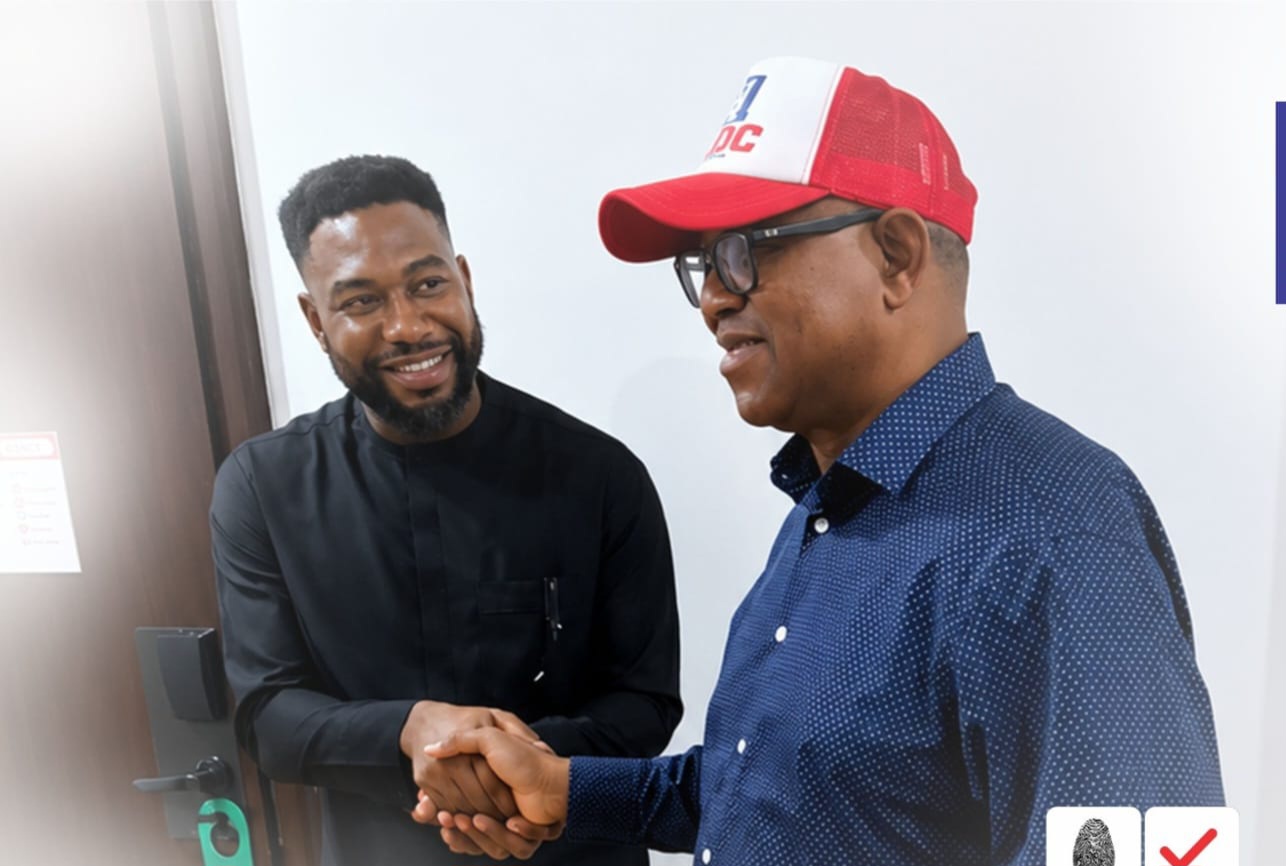
    ​The emergence of Hon. Nelson Maduka Arum, popularly known as Mama na Malaga, as the Nigeria Democratic Congress (NDC) candidate for the Enugu North and South Federal Constituency in the upcoming 2027 general elections appears to be following that familiar script.

    ​Arum, who secured the NDC ticket after a fiercely contested and transparently conducted primary election, has been reaching out behind the scenes to party members to galvanize support and foster unity of purpose. In recent weeks, his political profile has continued to attract attention in Enugu’s evolving political landscape. Yet, as his visibility increases, so too do the calculated assaults on his reputation—most notably, spurious allegations seeking to link him to violent crimes.

    ​State-sponsored actors have launched a campaign of calumny, and it’s not even the official campaign season yet.

    ​Such accusations, if true, would be matters for law enforcement and the courts. Instead, every rumor is deliberately amplified, every whisper becomes a headline, and every anonymous social media account suddenly claims to possess “inside information.” It is a familiar script.

    ​Why? Because some people have realized that Mama is a political force they can no longer afford to ignore. Mama is coming.

    ​In any democratic society governed by the rule of law, reputations should not be destroyed through anonymous social media posts, political gossip, or coordinated disinformation campaigns.

    ​The question, therefore, begs to be asked: Who is afraid of #MAMA2027? Who is afraid of Mama?

    ​Political smear campaigns are rarely random acts; they emerge when political opponents perceive a candidate as capable of altering the political equation. Rather than debating policy frameworks, legislative priorities, or leadership qualities, attention is diverted toward sensational claims designed to provoke emotional reactions and dominate public discourse.

    ​This strategy is not unique to Enugu. Across democracies, misinformation has become a common political weapon. False or exaggerated claims spread rapidly through social media, often travelling much faster than verified information. By the time the truth catches up, the intended damage is already done.

    ​Who benefits when public discourse shifts from policies to personal attacks? Who gains when voters spend more time discussing rumors than evaluating representation? Who fears allowing the people to make their own judgment at the ballot box?

    ​The answers will become clearer as the campaign progresses.

    ​For now, one thing is certain: ideas must confront ideas, records must confront records, and leadership must confront leadership. That is the only mechanism through which a democracy matures. Those who cannot beat Mama at the polls are seeking to distract him with baseless personal attacks.

    ​If Hon. Nelson Maduka Arum has committed any crime, the appropriate institutions are the police, investigative agencies, and the courts—not politically motivated rumor mills. Conversely, because these allegations are entirely fabricated, those responsible are undermining not only a singular candidate but the very integrity of the democratic process. Mama should identify and sue them, letting the law take its full, punitive course.

    ​Democracy demands better.

    ​Elections should be won through ideas, competence, vision, and public service—not through character assassination. Voters deserve the opportunity to assess candidates based on their developmental blueprints and their capacity to offer effective representation.

    ​Arum’s supporters remain confident that the people of Enugu North and South will not allow noise to replace reason. They will examine every candidate, reject the politics of division and innuendo, and ultimately cast their ballots for the individual best suited to champion their collective interests. If anything, the attacks proves that his candidacy has become politically significant.

    ​When that day comes, it will not be political gossip that will determine the outcome. It will be the voice of the people. And that voice, as always, remains the ultimate authority.

    ​As #MAMA2027 evolves into a formidable movement promising liberation and systemic progress in Enugu North and South, the conversation should center on what he intends to achieve, his execution strategies, and whether he deserves the people’s mandate. Anything less weakens our democratic culture and shifts attention away from the issues that matter most to the citizens.

    ​The answer to the question, “Who is afraid of #MAMA2027?” may not lie with a single individual or political group. It is found in the growing intensity of those trying to define a candidate before voters have the chance to judge him on his own merits.

    ​Hon. Nelson Maduka Arum maintains that he is running for #TheLoveOfTheCity—a city we all agree is in dire need of rescue and visionary leadership, far removed from the opportunistic representation it currently endures. It certainly deserves better than the influence of the worst political party to exist in the history of Nigeria, the All Progressives Congress (APC), unfortunately for us, our dear federal constituency.

    ​This journey is demanded by love. It is required by a very deep connection to the city and its people. It is for #TheLoveOfTheCity that we all agree that #MAMA2027 for the Enugu North and South Federal Constituency is non-negotiable. In Mama, the people see someone like them, with the same drive, resilience, and passion for progress—and they will deliver him triumphantly at the polls.

  • Makinde’s Call for UN probe of Oyo Abduction is Patriotic

    Makinde’s Call for UN probe of Oyo Abduction is Patriotic

    By Ikechukwu Amaechi

    There is no well-meaning Nigerian who is not relieved that the Oyo State kidnap saga ended happily despite the multiple fatalities and the 56 agonising days it took the country to embrace, once again, the light at the end of what was, to all intents and purposes, a very dark chapter in its beleaguered history.

    The mass abduction which took place on May 15, when terrorists raided three schools in the Yawota and Ahoro-Esinele communities in Oriire local government, whisking away 39 pupils and six teachers, ended on July 10, when they were rescued by a combined team of the armed forces. Eight of the suspects were arrested while others were killed in an operation many agree demonstrates operational efficiency and improved inter-agency collaboration among the security agencies.

    For 56 days, the country was on the edge particularly after one of the victims, Michael Oyedokun, a mathematics teacher, was gruesomely murdered and a graphic video of his execution posted online. Nobody was sure what other fatal pranks the terrorists had up their sleeve.

    But in a country where the sanctity of human life is often desecrated on the altar of hypocritical politicking, all that matters to politicians is how to use the incident to gain political traction, which explains why Oyo State governor, Seyi Makinde, is in the eye of a contrived storm.

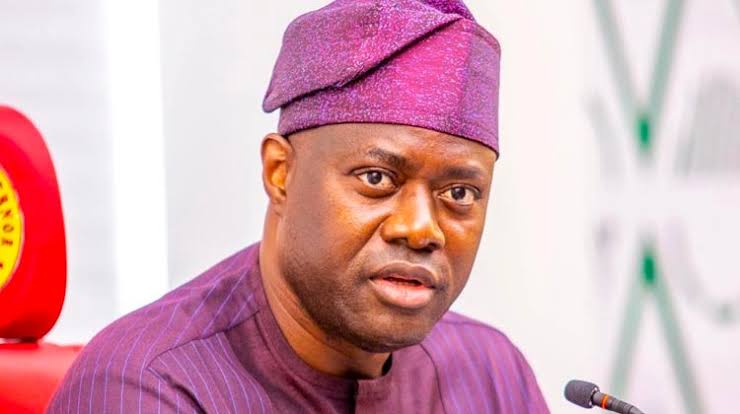
    Makinde, while receiving the rescued teachers and pupils on Monday, expressed his appreciation to President Bola Tinubu and all the security forces that carried out what could rightly be described as the most audacious rescue operation in Nigeria so far, even as he assumed responsibility for their welfare, rehabilitation and education.

    But he didn’t allow the euphoria of the moment to becloud his sense of apprehension, hence his call for a UN-backed investigation into the abduction. He argued that Nigerians deserve a full account of the circumstances surrounding the incident.

    Gov. Seyi Makinde

    In a sense, that was an amplification of his earlier insinuation that the abduction was a calculated political attack against him. While addressing the Allied Peoples Movement (APM) in Bauchi on the eve of the release of the victims, he noted that he declared to run for the presidency at 4 p.m. on May 14, and by 9 a.m. the following day, the teachers and children were abducted.

    For him, therefore, the dramatic rescue of the victims, as heart-warming as it is, didn’t answer the fundamental question of what happened and why. That question cannot be wished away even as Nigerians celebrate. Sadly, such an innocuous call has ignited a political firestorm with Tinubu’s storm troopers throwing everything they have at him, including the kitchen sink.

    The presidency fired the first salvo same day, dismissing Makinde’s call as unnecessary and politically motivated. The Special Adviser to the President on Information and Strategy, Bayo Onanuga, said the request suggested a lack of confidence in Nigeria’s security institutions.

    The Senate took a cue from that when it passed a resolution the following day warning that Makinde’s remarks could undermine government’s efforts in tackling insecurity. The Secretary to the Government of the Federation, George Akume, whose job, including signing of appointment letters that are statutorily within the purview of his office, has been brazenly usurped by others, finally found his mojo and accused Makinde of politicising the abduction.

    Leading the criticism of the governor during plenary, Senator Adams Oshiomhole described Makinde’s call as unnecessary and capable of diminishing the achievements of the security forces. He said the call was not only “unsportsmanlike” but also stretches partisan politics. In his warped logic, which unfortunately carried the day in the Red Chamber, because “Nigeria is a sovereign nation,” it is therefore inexpedient to call on a foreign body to investigate any domestic matter.

    Not to be left out, the Oyo State chapter of the All Progressives Congress, also jumped into the condemnation fray, describing Makinde’s call as “shameful, shocking and unbecoming of a leader.”

    But how could the governor’s call for an independent probe into the circumstances that led to the death of three teachers, security personnel – Lt F.A. Isaac, Private Silas Musa, and Sgt Abena John Jerome of the Nigeria Police Force, among others be deemed subversive? Subversive of who?

    Truth be told, Makinde’s call is not self-serving. It is neither an indictment on the Tinubu government nor security agencies. If it were, he wouldn’t have been upfront in pouring encomiums on them.

    But even if he insinuated political motivations, he would only be re-echoing the sentiment of APC chieftains including Tinubu himself who have consistently said the spike in insecurity was politically motivated. In other words, it may well be true that Makinde thinks the kidnap was politically motivated. But he won’t be the first to so insinuate.

    Those calling for his head on the platter of his UN probe advocacy echo the same sentiment. Senate President Godswill Akpabio recently claimed that opposition figures and “enemies of progress” were sponsoring violence, bombings, and unrest to distract Tinubu’s administration. Tinubu himself was once quoted as saying, “My enemies want to use insecurity in the country to get rid of me, but I am a stubborn politician who refuses to go.”

    What has changed is that Tinubu now sees a more efficacious propaganda tool in the successful rescue of the Oyo kidnap victims than his previous lamentation that his adversaries were weaponising insecurity in an effort to unseat him.

    The contrived angst of the Tinubu hatchet men against Makinde mirrors their diatribe against Peter Obi, the presidential candidate of the Nigeria Democratic Congress (NDC), late last year when he stated that he would welcome U.S. military assistance if it helped improve Nigeria’s security. They branded him a traitor. Onanuga, in one of his harebrained tweets said Nigerians would “never forget nor forgive” Obi for supporting foreign intervention.

    Yet, when one month later the U.S. launched some precision strikes against ISIS-linked terrorists in Sokoto, the same characters turned around to endorse an actual foreign military action on Nigerian soil. Since then, Americans have put boots on the ground and the Tinubu administration is brandishing that as an achievement. That raises the question of credibility. As the Prof Pat Utomi-led Big Tent Coalition noted last year, “You cannot vilify a prominent citizen for expressing a conditional policy opinion, only to turn around and implement that very option in practice.”

    That is classical hypocrisy and for the Tinubu administration, duplicity is a way of life. It is the oxygen that energises their politics. It is at the heart of the incoherence and policy somersaults that have become the hallmark of the administration.

    So, it is not a surprise that the APC-led Federal Government is angry that Governor Makinde is calling for an international probe of the Oyo abduction saga. They have conveniently forgotten, as they are wont to do, that 13 years ago, the defunct Action Congress of Nigeria (ACN), led by Tinubu demanded the trial of President Goodluck Jonathan at the International Criminal Court (ICJ) at The Hague because of the mass killings that happened under his watch, particularly the April 2013 killings that devastated the fishing community of Baga in Borno State.

    It will not be a surprise if the Tinubu administration tomorrow invites any international organisation for validation if that will serve its narrow political interest. It will be true to character. They don’t have the moral fibre to govern selflessly. As one commentator noted recently, “Principles lose their worth the moment they become prisoners of partisan convenience.” The problem is that Tinubu and the APC have no affinity whatsoever to ennobling values, that moral compass that can help Nigeria grow by inspiring citizens to act with dignity, honour and purpose.

    Makinde should not be deterred by the fulsome attacks on his person. Instead, he should amplify the call because his request, which is neither an attack on the armed forces, the president nor the integrity of the Nigerian state, is germane and resonates with majority of Nigerians who want to know why their country is going south.

    We will miss the point when, inebriated on the loud applause the successful rescue has engendered, we fail to ask the critical question: what happened? That is what Makinde did. His is not a political question. It is a question that tends to address the issue of public safety frontally considering the fact that while it is true that the Oriire 46 are free, the Askira-Uba 50 are still in captivity, and the 176 women and children abducted from the Woro community in Kaiama local government, Kwara State on February 3, 2026 are yet to be accounted for.

    So, contrary to the contrived outburst of APC bigwigs, Makinde’s call for UN probe of the Oyo abduction is patriotic. In any case, if the Tinubu administration has nothing to hide, why is it kicking against the idea of credible enquiry into the country’s scandalous level of insecurity?

  • [OPINION] Mike Ogbuekwe will Reposition Nkanu East Agriculturally and Drive Development Across all Sectors

    [OPINION] Mike Ogbuekwe will Reposition Nkanu East Agriculturally and Drive Development Across all Sectors

    By Mike Ebuka

    Nkanu East Local Government Area stands on the precipice of a transformative epoch. Across the council, stakeholders, traditional rulers, and community leaders are coalescing behind Engr. Mike Ogbuekwe, a technocrat widely adjudged to possess the foresight, competence, and political will to unlock the council’s latent potential.

    Nkanu East is endowed with expansive arable land and a resilient, industrious populace. For decades, however, these God-given endowments remained largely underutilized. The emergence of His Excellency, Dr. Peter Mbah, a son of Nkanu East, as Governor of Enugu State, has inaugurated a new dawn of strategic investment in agriculture and infrastructure. To consolidate and domesticate that vision, Engr. Ogbuekwe is being positioned as the grassroots executor who will ensure that the policies and aspirations of the Mbah administration permeate even the remotest hamlets of the LGA.

    *Agriculture: the cornerstone of his agenda*
    Engr. Ogbuekwe brings to bear a formidable pedigree in public service and agricultural governance. His portfolio spans: Secretary, Anambra State Land Acquisition and Mediation Team; Senior Special Assistant to the Governor of Anambra State on Agriculture; Special Adviser on Agriculture to the Governor of Enugu State; and Chief Executive Officer of Enugu State Marketing Company Limited, among other strategic assignments.

    With such antecedents, it is axiomatic that agriculture will constitute the fulcrum of his development blueprint for Nkanu East.

    Nkanu East, blessed with loamy and fertile soil, has long been a major contributor to Enugu’s food basket, supplying produce to Enugu metropolis and beyond. During his tenure in state-level roles, Engr. Ogbuekwe was instrumental in projecting Enugu’s agricultural brand onto the global stage through the standardization and export packaging of _Enugu Garri, Enugu Pepper, Enugu Tomato, Enugu Rice,_ and other indigenous commodities.

    In alignment with Governor Mbah’s vision of establishing Farm Estates across the 260 wards in the state, Ogbuekwe championed the mechanization of farming, the establishment of agro-processing facilities, and the creation of efficient value chains that grant farmers direct access to markets. His objective is to transit Nkanu East from subsistence agronomy to a commercialized, export-driven agricultural economy.

    To achieve this, he has already articulated key policy proposals, including: the establishment of farm clusters for economies of scale; youth-focused agribusiness and entrepreneurship programs; irrigation and all-season farming support; and strategic partnerships with agro-processing and off-take companies. Stakeholders contend that this paradigm shift will not only generate employment and augment household incomes, but also galvanize diaspora remittances through increased export revenue.

    *Development across all sectors*
    Beyond agriculture, Engr. Ogbuekwe is envisioned as a holistic development architect. He is reputed as a meticulous, results-driven leader with an unwavering focus on deliverables. His record suggests he will ensure that allocations due to Nkanu East are judiciously channeled into projects that tangibly elevate the standard of living.

    His multidisciplinary experience reinforces this confidence. He has served as Member of the Road Design Review Committee in Anambra State; Secretary of the Standards and Modernization Committee; Member of the Anambra State Economic Think Tank; Director General of both the Project Management & Monitoring Office and the Cost Reduction Research & Development Office in Anambra State. At the federal and state levels, he was Focal Person for the Enugu State Non-Oil Export Program and served on the World Bank-driven Nigeria COVID-19 Action Recovery and Economic Stimulus Committee, as well as the Enugu State COVID-19 Emergency & Palliative Committee.

    These assignments underscore a career defined by prudence, accountability, and impact. It is little wonder that among a constellation of leaders, Engr. Mike Ogbuekwe is regarded as a benchmark (standard).

    His affinity for youth development is particularly noteworthy. Celebrated as _Eze Ndi Ogo Nkanu_ (“King of the Youths” ) he has pledged to institutionalize skill acquisition programs, vocational training, and tech-enabled empowerment initiatives as integral components of his administration.

    As the party flagbearer, Engr. Ogbuekwe represents more than a candidacy; he embodies a covenant with the people. His mission is clear; to reposition Nkanu East as an agricultural powerhouse and a model of inclusive, sustainable development.

    Having understudied his antecedents and convictions, I have no doubt that under his stewardship as Council Chairman, Nkanu East will witness unprecedented progress. Posterity will, in due course, immortalize his contributions.

    Mike Ebuka is a trained Public Administrator, Political Scientist and a farmer that writes from Uzo-Uwani.

  • Time We Refix Nigeria

    Time We Refix Nigeria

    -By Abdul Mahmud

    The recent demonstrations in Ghana, where some protesters openly demanded that Nigerians leave their country, should trouble every thoughtful Nigerian for reasons that extend beyond the immediate insult, since the spectacle of fellow Africans questioning the place of Nigerians within their  countries represents not merely a diplomatic embarrassment but a painful reminder of how profoundly our national circumstances have changed. The actions and opinions of some Ghanaians should never be mistaken for the sentiments of an entire people, just as the alleged criminal conduct of a handful of Nigerians should never be used to condemn millions of honest citizens whose only offence is carrying the same passport, although none of these distinctions should distract us from the larger question that now confronts us with increasing urgency, namely why Nigerians have become so widely dispersed across Africa that every political controversy, and every allegations of criminality, in another country seems capable of placing them at its centre.

    Isn’t it time we tell ourselves a few home truths about ourselves?

    There was a time when Nigeria embodied the promise of African possibility. Universities across the country attracted students from every corner of the continent, an expanding economy drew workers beyond our borders in search of opportunity, diplomatic influence carried weight in African affairs, and unwavering support for the liberation of Southern Africa sprang from the conviction that the freedom of one African people was inseparable from the freedom of another; a conviction that earned Nigeria a standing far greater than its material wealth alone could have secured. Our country invested enormous political capital, financial resources and diplomatic influence in struggles whose victories would benefit countries far beyond our borders, not because we expected gratitude preserved for eternity, but because we understood that leadership carried obligations extending beyond narrow national interest. History, however, does not preserve influence on sentiment alone, since every generation inherits the responsibility of renewing the foundations upon which earlier generations built their reputation.

    The hostility recently directed at Nigerians in Ghana deserves condemnation, just as previous episodes of Afrophobic violence and intimidation directed at Nigerians in South Africa deserved condemnation, since civilised societies cannot surrender justice to the dangerous temptation of collective guilt. Every country produces individuals who violate its laws, although mature democracies distinguish between criminals and nationalities. The overwhelming majority of Nigerians living abroad rise each morning to earn an honest living as teachers, engineers, traders, doctors, academics, artisans, entrepreneurs, transport workers and professionals whose labour strengthens the economies of their host countries without attracting newspaper headlines. Their quiet contributions disappear beneath the noise created by a few whose misconduct unfairly becomes the measure by which millions are judged. But, there’s a significant number dragging our country’s name to the mud, with their criminality. We can’t deny this; and it’s time we address this! Emotional appeals to our glorious past cannot mask these slurs that have made Nigerians a hunted people in South Africa and Ghana.

    Still, the uncomfortable truth which confronts us is that migration on a large scale rarely occurs where citizens possess confidence that their homeland offers security, opportunity and the possibility of a decent future. Nigerians are not scattered across the continent because they have forgotten where they belong, nor are they a people wandering through history without roots or destinations. Nigerians are not a people lost in Babylon. They have a homeland and possess one of the most richly endowed countries in Africa, blessed with extraordinary human talent, abundant natural resources and immense economic possibilities, although decades of corruption, institutional decline, insecurity and economic mismanagement have steadily transformed departure into a rational decision for millions who would otherwise have preferred to remain at home. Every Nigerian compelled to leave under the pressure of collapsing institutions rather than personal ambition carries an invisible burden that extends beyond individual sacrifice, since each departure represents another measure of confidence withdrawn from the country itself. Families become permanently divided across continents, hospitals lose experienced specialists, universities watch distinguished scholars relocate abroad, industries struggle to retain skilled professionals and young graduates increasingly organise their lives around escape rather than contribution. The country continues to celebrate the resilience of its people while quietly ignoring the tragedy that resilience has become necessary for survival instead of national progress.

    Political leaders regularly celebrate the billions of dollars remitted home by Nigerians living abroad as though those impressive figures constitute evidence of economic success, although every remittance also reflects the productive capacity that Nigeria failed to retain within its own economy. Those transfers sustain families, support communities and strengthen foreign exchange reserves, although they cannot replace functioning schools, reliable electricity, productive industries, quality healthcare, public safety and competent governance. A country cannot continue congratulating itself for exporting its brightest citizens while neglecting the conditions that compelled their departure in the first place.

    The events unfolding in Ghana should therefore serve as a mirror rather than merely a provocation. Ghana has every sovereign right to enforce its laws against those who violate them, just as Nigeria possesses the same right within its own territory, although fairness requires that criminal responsibility remain individual rather than national. Nigerians should reject every attempt to stigmatise an entire people because of the conduct of a few, although they should also reject the comforting illusion that wounded patriotism alone can restore national dignity. Respect among nations cannot be demanded through emotional appeals or historical recollections. It emerges most naturally from countries whose institutions function, whose economies create opportunities and whose citizens travel principally through choice rather than necessity.

    Refixing Nigeria therefore demands far more than periodic elections followed by familiar promises of reform. It requires rebuilding public institutions until merit once again carries greater weight than patronage, establishing an economy capable of rewarding enterprise rather than political connections, securing lives and property with seriousness instead of official rhetoric, restoring confidence in education and healthcare and recovering a public service animated by integrity rather than personal enrichment. Young Nigerians should complete their education believing that meaningful opportunities await them within their own country instead of assuming that fulfilment exists only beyond our borders.

    Government carries the greatest responsibility for this national reconstruction because it possesses the constitutional authority to shape public policy, although citizens also bear obligations that cannot be transferred to elected officials alone. Nigerians must refuse to normalise the corruption that has gradually entered everyday life under the false appearance of necessity. The embarrassment many Nigerians now experience whenever fellow Africans publicly question their presence within another African country should awaken us to a truth that can no longer be postponed. Nigeria cannot continue relying upon memories of past continental leadership while neglecting the difficult work required to deserve renewed respect.

    Our response to the protests in Ghana should not be bitterness towards Ghanaians, nor should it be self-congratulation founded upon historical achievements whose value diminishes with every passing decade of national decline. Our response should be a determined commitment to rebuilding the republic until every Nigerian possesses genuine freedom to remain at home without sacrificing ambition, dignity or hope. Nigerians are not a people without a country. They have a homeland, and the time has come to refix it before the humiliation of watching our fellow Africans ask us to leave their countries becomes an accepted feature of our national story.

  • STATE POLICE: Nigeria Cannot Police a 21st-Century Crisis with a 20th-Century Model

    STATE POLICE: Nigeria Cannot Police a 21st-Century Crisis with a 20th-Century Model

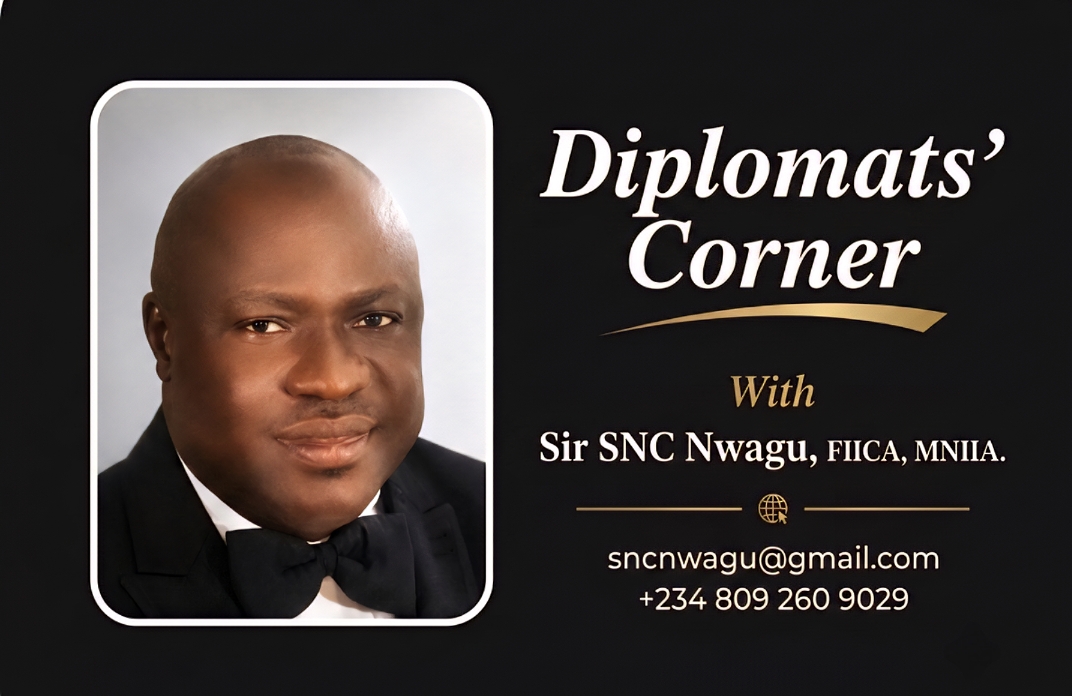
    By SNC Nwagu, Esq

    The centralised Nigeria Police Force was never designed to handle the scale, spread, and complexity of insecurity that defines Nigeria today. A constitutionally grounded, multi-level state policing framework is not a radical idea — it is an overdue necessity.

    Nigeria’s insecurity in 2026 is no longer episodic. It is structural. From Boko Haram and ISWAP’s insurgency in the North-East, to banditry and mass kidnapping in the North-West, to separatist agitation and cultism in the South-East, to farmer-herder bloodshed across the Middle Belt — the country faces a multi-front security emergency that a single, centralised command was never built to manage.

    And yet, that is precisely what the 1999 Constitution demands. Section 214 vests all policing power in the Nigeria Police Force (NPF) — one command, one chain, for 36 states, the Federal Capital Territory, and a population of over 200 million people. The gap between that design and operational reality is not a governance anomaly. It is a catastrophe hiding in plain sight.

    The NPF’s police-to-population ratio remains below 1:500, against the United Nations benchmark of 1:450. Response times in rural communities are routinely measured not in minutes but in hours — if a response comes at all. Trust has collapsed: many Nigerians now prefer vigilante groups, hunters’ associations, or private security arrangements over official state response, which they regard as slow, corrupt, and inaccessible.

    This paper makes a straightforward argument: Nigeria needs a constitutionally grounded, multi-level state policing framework. It draws on comparative lessons from India, Germany, and the United States, adapted for Nigeria’s fiscal constraints, ethnic complexity, and political realities. It proposes design principles, safeguards, and an implementation pathway — not to fragment the country into policing fiefdoms, but to build a federal system in which national capacity and local knowledge reinforce each other.

    THE CASE FOR PROXIMITY POLICING

    Policing theory is largely settled on this point: legitimacy increases when citizens perceive police as accessible, representative, and accountable. Proximity policing improves intelligence collection and reduces response time. When the officer on the ground speaks the local language, knows the terrain, and understands the conflict actors in a community, early warning becomes possible. When that officer is stationed 500 kilometres away in Abuja, it does not.

    What Nigeria currently experiences is what this paper terms “security latency” — the dangerous gap between incident and state response. It is structural, not incidental. And it cannot be resolved by hiring more officers into a centralised system that is already stretched beyond capacity.

    State and community-level policing offers three concrete advantages. First, proximity: officers embedded in their communities possess local intelligence that no centralised database can replicate. Second, specialisation: states can tailor their security architecture to their specific threat profile — anti-kidnap units in the North-West, anti-cultism and border policing in the South-East, agro-security corps in the Middle Belt. Third, accountability: elected state governments are more directly answerable to their residents for visible security outcomes than a distant federal command ever could be.

    WHAT OTHER FEDERATIONS HAVE LEARNED

    India: Insulating Police from Political Capture

    India operates a dual policing system. Each of its 28 states maintains a State Police Force, while Central Armed Police Forces handle specialised national security functions. Crucially, several states — including Kerala and Karnataka — have established State Police Commissions that handle recruitment, discipline, and promotion, insulating the police from direct political interference by the executive.

    The lesson for Nigeria is clear: gubernatorial capture of state police is a real and serious risk, but it is a design problem, not an argument against state policing. Independent commissions provide the structural solution.

    Germany: Decentralisation with National Standards

    Germany’s 16 Länder each maintain their own police forces under their state interior ministries. The Federal Criminal Police Office (BKA) coordinates cross-border and national security matters, and interoperability across Länder forces is enforced by federal law. German policing is decentralised in command but standardised in capability.

    The lesson for Nigeria: a National Policing Standards Act can ensure common training curricula, forensic protocols, criminal databases, and communications systems — even as operational command devolves to states.

    United States: Dispersed Power with Layered Oversight

    The United States has over 18,000 law enforcement agencies at federal, state, county, and municipal levels. What holds the system together is not a single command structure, but layered accountability: civilian oversight boards, federal pattern-or-practice investigations by the Department of Justice, and robust constitutional litigation.

    The lesson for Nigeria: when policing power is dispersed, oversight must be proportionally rigorous. This is a design requirement, not an afterthought.

    THE RISKS — AND HOW TO MITIGATE THEM

    Honesty requires acknowledging the risks. A poorly designed state police system can worsen Nigeria’s problems, not solve them. Four risks demand upfront mitigation.

    Politicisation. The fear that governors will weaponise state police against political opponents or ethnic minorities is legitimate. The historical record of regional police in Nigeria’s First Republic offers a cautionary tale. The answer is not to reject state policing, but to design robust commissions, judicial oversight, and federal audit mechanisms that make political abuse costly and difficult.

    Fragmentation. Incompatible training, equipment, and command protocols across 36 state forces would cripple joint operations. A National Policing Standards Act and a National Oversight Council must enforce minimum standards and interoperability from day one.

    Human rights abuse. Weak state-level oversight has historically enabled abuses by police and vigilante groups alike. Independent state ombudsmen, mandatory human rights training, and clear community reporting mechanisms are essential.

    Fiscal strain. Several Nigerian states struggle to pay civil service salaries, let alone fund a professional police service. A phased rollout, dedicated security funding streams from the Federation Account, and a structured federal support mechanism are necessary prerequisites.

    A FRAMEWORK FOR WHAT MUST BE BUILT

    The following pillars outline a workable policy architecture.

    Constitutional and Legal Architecture

    The NPF should be retained as a national force with responsibility for terrorism, interstate crime, and border security. A new State Police Service should be created as a distinct constitutional tier with defined powers. A concurrent list amendment must specify exclusive, concurrent, and residual policing functions to avoid jurisdictional conflict. A National Policing Standards Act should govern training, vetting, use of force, and shared data systems across all tiers.

    Governance and Oversight

    Each state should establish an Independent State Police Service Commission — modelled on India’s state commissions — with authority over recruitment, promotion, and discipline, independent of the governor’s office. A State Policing Board with representation from civil society, the judiciary, traditional institutions, women, and youth should provide community accountability. At the federal level, a National Oversight Council should audit standards compliance, mediate cross-state disputes, and coordinate joint operations.

    Operational Integration

    A clear unified command protocol must govern joint tasking between the NPF, State Police, Armed Forces, and the Nigeria Security and Civil Defence Corps during insurgency or terrorism. Interoperability — common communications, criminal databases, and forensic standards — must be legally mandated, not left to informal arrangements. A mutual aid mechanism should allow states to support one another during security emergencies.

    Human Rights and Community Legitimacy

    State police officers must undergo mandatory background vetting, human rights modules, and de-escalation training before deployment. Community policing units should be locally recruited and accountable to both the command structure and community boards. Every state must establish an independent police ombudsman with investigatory powers — not merely complaint-receiving functions.

    Funding and Phased Rollout

    A dedicated security funding stream — ring-fenced from the Federation Account, supplemented by state security trust funds — must underpin implementation. The rollout should be phased: pilot programmes in six states across the six geopolitical zones, with independent performance evaluation before national scale-up. Non-state security actors — vigilante groups, hunters’ associations, community guards — must be formally regulated, trained, and integrated under state command with clear rules of engagement.

    Data, Technology, and Intelligence

    A National Crime and Incident Database, shared in real time across all policing tiers, is foundational. Community reporting applications linked to state command centres provide early warning capacity. Performance metrics must go beyond arrest numbers to track response time, case clearance rates, and — critically — public trust.

    A REALISTIC IMPLEMENTATION TIMELINE

    Months 1–6: Secure constitutional amendment enabling State Police Services. Pass a National Policing Standards Act. Establish the National Oversight Council. Launch six pilot states across all geopolitical zones.

    Months 7–18: Establish State Police Service Commissions and Policing Boards. Recruit and train first officer cohorts. Deploy initially in urban centres and border local government areas.

    Months 19–30: Conduct independent evaluation of pilot performance against published benchmarks. Refine legislation, funding structures, and standard operating procedures.

    Months 31–36: Scale to additional states with performance conditionalities and sustained federal support.

    CONCLUSION

    Nigeria cannot police a 21st-century security emergency with a 20th-century institutional design. The centralised model has had seven decades to prove itself. The evidence is in: it cannot close the proximity gap, it cannot build community trust, and it cannot match its capacity to the geographic and operational complexity of Nigeria’s security threats.

    State policing, designed with strong oversight, minimum standards, and genuine intergovernmental cooperation, is not a threat to national unity. It is a precondition for it. A country where communities are unsafe, where kidnapping has become a business model, and where citizens arm themselves because they do not trust the state to protect them — that country is already fracturing.

    The question before Nigeria’s policymakers is not whether to reform policing. It is whether they have the political will to design the reform properly, or whether they will continue to fund a cycle of reactive security spending that leaves communities no safer than before.

    The answer cannot wait another decade.

    SNC Nwagu Esq is a legal practitioner. He writes from Enugu, the Coal City State. Views expressed are his own.

  • [OPINION] Political Assassination: Should We Take Obi Seriously?

    [OPINION] Political Assassination: Should We Take Obi Seriously?

    By Etim Etim 

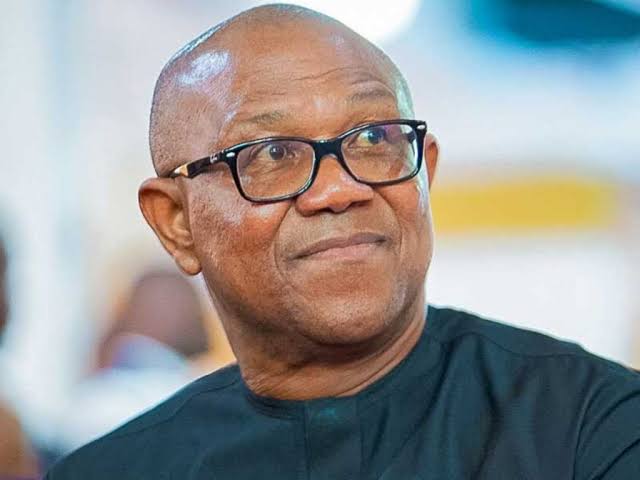
    Murder for  political reasons is not rare in Nigeria, so when Nigeria Democratic Congress (NDC) presidential candidate, Peter Obi, said the other day that he might be assassinated before the 2027 elections, I was considerably alarmed. Only last February, Obi and his team were shot at in Benin in what his supporters claimed was an assassination attempt. Since then, the former Anambra State governor has been hinting at his frustrations with the government. It is therefore important that we listen to his recent fears.

    Speaking in an interview with Chude Jideonwo this week, Obi said Nigerian authorities are systematically frustrating his activities and targeting other opposition politicians. ‘’Every single thing I do for a living, this government is frustrating it. Deliberately so. So, there is even a possibility, if they have the opportunity, I will not be alive’’, Obi said. He however pointed out that he was not making a direct accusation against any individual, but noted that his experiences pointed to deliberate efforts to frustrate him or obstruct his activities. He cited an incident in Lagos airport in which his vehicle was clamped for ostensibly for wrong parking, whereas other vehicles were also parked at the same area and the officials ignored them.

    But in a quick response, President Tinubu’s spokesman, Bayo Onanuga, said Obi was raising false alarm to ‘’attract undue sympathy’’. Onanuga said: ‘’His claim that he may not be alive for the January 2027 election and that people are being pressured not to invite him to social events is nothing more than a fabricated narrative, a page from his book of lies and propaganda.’’

    But should we ignore Obi? Is he crying wolf to attract public sympathy as Onanuga claims? What do our experiences teach us as far as politically motivated murders are concerned? On February 24, 2026, Obi and other opposition politicians were nearly assassinated when armed men opened fire on a political convoy in Benin City, Edo State. The incident occurred following an event hosted by the African Democratic Congress (ADC), to which Obi belonged then. Other ADC dignitaries in the gathering were former Edo State Governor John Odigie-Oyegun and former Edo Labour Party governorship candidate, Olumide Akpata.

    The event was a rally staged to welcome Akpata into ADC. Unmarked vehicles trailed the convoy from the ADC state secretariat where the rally was held to Oyegun’s private residence. Peter Obi and top political leaders escaped unhurt. But multiple vehicles sustained bullet damage and shattered windscreens. Several party members and supporters sustained injuries during the clashes at the secretariat and the residence. ADC and Obidient Movement representatives blamed political opponents for orchestrating a premeditated attack, with some pointing to previous security warnings issued regarding Obi’s visits to Edo State.

    On December 23, 2001, Chief Bola Ige, the serving federal Attorney-General and Minister of Justice, was shot dead inside his bedroom in Ibadan, creating a massive political crisis. He was a member of the Action Congress (AC), and was murdered for allegedly blocking someone’s governorship ambition.

    On March 5, 2003, Dr. Marshall Harry, the National Vice-Chairman (South-south) of the opposition All Nigeria Peoples Party (ANPP), was murdered at his Abuja home. The following year, Chief Aminosoari Dikibo,    PDP’s National Vice-Chairman (South-south), was ambushed and killed on a highway in Delta State on February 6, 2004. Both men were assassinated for the stance they took in the  politics of their home state of Rivers.

    On January 25, 2010, Otunba Dipo Dina, a prominent politician, chartered accountant and Action Congress (AC) gubernatorial candidate was returning to his Lagos residence from a political meeting in Abeokuta, Ogun State. Near Sango- Ota, an unmarked vehicle blocked his SUV. Armed men forced him out of his vehicle into another car, abducted him and shot him dead at close range. It is almost 20 years to the day Chief Funsho Williams, a leading Lagos State PDP gubernatorial aspirant, was killed in his home at Dolphin Estate, Lagos on July 27, 2006. He had earlier defected from Action Congress (AC) when it was clear to him that he was not the favoured candidate of the party for the 2007 election. The then-outgoing governor of Lagos, Bola Tinubu, had another person in mind as a successor.

    In March 2011, Akwa Ibom ACN (Action Congress of Nigeria) governorship candidate in that year’s election, Senator John James Akpanudoedeghe, was almost killed when his convoy was ambushed on his way from Uyo to Ikot Ekpene for a campaign event.  My younger brother, who was in his convoy, escaped by a whisker and called from the bush where he and other ran into. But others were not that lucky as they were hit by bullets. Akpanudoedeghe was challenging then-governor, Godswill Akpabio, who was going for reelection. Even before this ambush, many opposition figures in the state were kidnapped or murdered in a rash of violence that rocked the state between 2009 and 2011.

    Nigeria has many cases of unsolved politically motivated murders. Many of the victims are typically persons who dared to challenge the incumbents or the preferred choices of the incumbents. We should therefore not dismiss Peter Obi’s alarm. The Federal Government has a responsibility to protect all leading politicians and save us from the agony of another  political violence. It is therefore quite irresponsible of Onanuga for him to rush to judgment and dismiss Obi’s unease so casually.

    Etim, a journalist, writes from Abuja. 

    Culled From ThisDay

  • PFIPC Saga: The Joke is on Aso Rock

    PFIPC Saga: The Joke is on Aso Rock

    By Ikechukwu Amaechi

    Nigeria is a country where scandals break at the speed of light. As a public commentator, you can hardly keep pace.

    On May 15, 2026, terrorists raided three schools in the Oriire local government area of Oyo State, abducting 46 people, including 39 schoolchildren. The victims, who include seven teachers and a toddler, have spent almost two months at God knows where. Two teachers were killed – one of them during the raid while the other, Mr. Michael Oyedokun, a mathematics teacher, was beheaded in captivity.

    On the same day, terrorists also struck in Borno State, whisking away more than 50 schoolchildren from Mussa Central Primary and Junior Secondary schools in Askira-Uba local government area. Most of the children are below the age of 10. Despite the initial outrage, Nigerians have moved on as they are wont to do.

    Scandals have very short lifespan in Nigeria. And our leaders know that for sure, which is why they always sit it out no-matter how ruinous, knowing that after one week, the rage will be over and the whole matter will be forgotten.

    One month after the schoolchildren abductions, retired Major General Rabe Abubakar, former Director of Defence Information, who was abducted alongside his wife on May 30 in Katsina State, died in captivity. It is scandalous that till date, no one can exactly say what caused his death. While the Katsina State government claimed that he died from complications related to diabetes and hypertension while in captivity, his family strongly disputed the claim, stating instead that he died from a snakebite. Why the state government officially attributed his tragic death in the kidnappers den to his underlying health conditions, even as his children insisted he had no history of diabetes remains an unanswered question. And I dare say it will never be answered. The outrage is over. He has been forgotten and Nigerians have moved on.

    More students have been kidnapped since the Oriire abductions. On June 29, terrorists attacked Government Day Secondary School, Lassa, in the beleaguered Askira/Uba local government area, abducting dozens of students writing NECO examination. Two teachers and one soldier were killed during the assault.

    Notwithstanding the fact that troops of Operation Hadin Kai swiftly rescued 10 of the victims, including a vice principal, teachers, and NECO candidates, 37 of the children and women selling food items within the school premises remain unaccounted for. Barely one week after families of the victims staged peaceful protests demanding urgent government intervention, nobody is talking about the remaining captives again. Nigerians, inured to scandals, no matter how horrendous, have moved on.

    Whether it is the scandal of children being abducted from their schools moments after soldiers deployed to provide security were withdrawn without any explanation or people without the requisite educational qualifications finding themselves in the corridors of power or the absurdity of politicians claiming to have attended schools that were not in existence as at the time of their purported graduation and going ahead to submit such patently fake credentials to the Independent National Electoral Commission (INEC), nothing shocks Nigerians anymore because scandal has become a staple diet.

    In-between these scandalous security breaches, there are financial scandals. On Wednesday, July 1, the International Monetary Fund (IMF) resident representative in Nigeria, Christian Ebeke, said the country had about 2% of Gross Domestic Product (GDP) worth of public spending (about N8.83 trillion) not recorded in recent official budgets.

    The implication as Atiku Abubakar, presidential candidate of the African Democratic Congress (ADC) in the 2027 elections, noted is that the Tinubu administration is awarding multi-trillion naira contracts, moving massive public capital, and commissioning infrastructure projects entirely beyond the reach of the Auditor-General, the nation’s procurement laws, and the legitimate oversight of the National Assembly. Atiku calls it “a parallel fiscal universe” governed by executive whim and shielded from constitutional accountability. Peter Obi, presidential candidate of the Nigeria Democratic Congress (NDC) calls it “horrible.”

    But who cares what Obi and Atiku think or say when the people know that it is a matter of days, if not hours, before news of another scandal breaks. It is a vicious cycle – a self-perpetuating chain of negative events. We are a people trapped in an endless downward spiral. So, less than one week thence, the story that ordinarily will make any sane country quake has disappeared, literally, from the news. Nigerians have taken it in their putative stride.

    Why? Because another scandal has supplanted it. This time, it is one Prince Adeniyi Adeyemi Matthew, Director-General of the Presidential Foreign Intervention Promotion Council (PFIPC), an agency the Tinubu administration claims is non-existent.

    Adeyemi demurs, insisting that the agency not only exists but has the imprimatur of the presidency. The problem, he claims, is his refusal to give President Tinubu’s Chief of Staff, Femi Gbajabiamila, 48% of the agency’s N27.4 billion takeoff grant as allegedly demanded after paying a N400 million bribe to secure the job, with an outstanding N200 million to pay.

    The presidency hurriedly queued behind Gbajabiamila, one of their own. Presidential spokesman Bayo Onanuga urged Nigerians not to allow Adeyemi, a “con artist” with a history of fraudulent misrepresentation to hoodwink them. The police, Onanuga further claimed, had investigated the matter and established that the agency Adeyemi headed was fake. The police also found out, according to the presidency, Gbajabiamila’s primary constituency, that Adeyemi forged his appointment letter, falsely paraded himself as a government appointee, falsely solicited a note verbal from the Foreign Affairs Ministry to enable him and his staff to obtain US visas, operated 34 bank accounts, used fake documents to open a CBN account. Only in Nigeria!

    And then, an unforced error. The police also uncovered, Onanuga revealed, that the middleman between Adeyemi, the con-artist, and Gbajabiamila, Tinubu’s guardian angel, one Dolapo Babatunde Tanimola, “died in a fire incident at Kachi Hotel in Abuja” on October 22, 2025, five days before Adeyemi’s arrest. The suspect’s star witness died mysteriously before the police mustered the courage to file charges against him in court. How convenient!

    But the presidency’s defence of Gbajabiamila has raised more questions than it provided answers. How possible is it for one private citizen to invent a presidential agency, forge his own appointment letter, secure office space inside the Federal Secretariat, recruit staff, hold meetings with diplomats, correspond with government institutions, open a CBN account through official channels and wangle his “fake” agency into the Appropriation Act with a N1.3 billion allocation. If one man can pull off this scam, Nigeria has, indeed, become worse than a banana republic under Tinubu’s watch.

    But the truth remains that Onanuga’s narrative, as usual, beggars belief. There are, simply, too many moving parts. The questions that need to be answered are: Who assigned the office space at the National Secretariat? Who created the budget line for the “non-existent” agency? Who approved it? Who authorised staff postings? Who facilitated CBN account opening? Was the N27.4 billion takeoff grant paid? If yes, by who? If no, with which funds was the agency run? Already, the Senate has washed its hands off the mess, pushing it back to the executive.

    Apparently, the Tinubu regime takes Nigerians for fools. Onanuga as Special Adviser on Information and Strategy speaks for the president. In his July 1 statement earlier referenced, he claimed that the police having thoroughly investigated Adeyemi on the strength of Gbajabiamila’s October 17, 2025 petition to the DSS and police, found him solely responsible for his crime, arrested him on October 27, 2025 and filed an eight-count charge against him at the Federal High Court in Abuja on November 27, 2025. The matter was subsequently adjourned to July 27, 2026.

    Simply put, Adeyemi is currently standing trial on charges of conspiracy, forgery and impersonation, prosecuted by the Tinubu regime, with Gbajabiamila and 10 others as prosecution witnesses.

    So, how can the same Tinubu order another “thorough investigation” when he had already cleared Gbajabiamila of culpability? In any case, the same president who is ordering a thorough investigation just appointed Gbajabiamila a member of the Presidential Working Group saddled with the responsibility of preparing the legal framework for implementing state police across the country. To the discerning, that appointment at this critical moment is a loud statement from the president. It is tantamount to saying, “This is my beloved aide in whom I am well pleased.”

    Ideally, if Tinubu wanted a “thorough investigation,” Gbajabiamila would have been asked to step aside until the investigation is concluded. That is global best practice. Stepping aside is not a pronouncement of guilt on him. It is the right thing to do. It strengthens the process and engenders fairness. The president’s body language communicated through the state police assignment has foreclosed that.

    Instead, the presidency is trying so hard to convict Adeyemi in the court of public opinion and using state might to crush him even before he gets the chance of having his day in the court.

    On Monday, police raided the Ogbomosho home of his parents and arrested his father. The same day Gbajabiamila threatened a N10 billion suit over what he called Adeyemi’s defamatory remarks. His counsel, Kemi Pinheiro, gave him 72 hours to take down all videos and comments in which he made allegations that are “malicious, reckless and entirely without factual foundation” and targeted at showing Gbajabiamila as “corrupt, morally bankrupt, and a murderer.”

    This is sheer legal subterfuge and presidential high-handedness. Nigerians are not impressed. The PFIPC saga is one scandal, too many. The joke is on Aso Rock. What exposed the Presidential Foreign Intervention Promotion Council scandal is not the altruism of some high-minded public officials. No! It is as a result of a sharing formula that went awry because the conspirators refused to abide by the “there is honour among thieves” dictum. Nigerians should be worried about the legions of illegal MDAs still in operation because the villains running them are faithful to their agreed sharing formula.

  • PFIPC Scandal and Culpability of 10th National Assembly

    PFIPC Scandal and Culpability of 10th National Assembly

    By Iyobosa Uwugiaren

    There is a popular old saying that when something smells bad, you do not spray perfume over it; you find the source of the odour. Nigeria’s latest budget controversy surrounding the alleged Presidential Foreign Intervention Promotion Council (PFIPC) is producing an unmistakable  political disgusting odour. The temptation is to look only toward the Presidency, where denials, counterclaims and allegations continue to dominate the headlines. But that would be only half the story. The other half sits comfortably inside the National Assembly.

    The PFIPC affair has exposed something that many Nigerians have long suspected but could rarely demonstrate so blatantly: legislative oversight is increasingly becoming a constitutional ritual rather than a constitutional responsibility.

    The institution that should serve as the nation’s first line of defence against questionable public spending now finds itself confronting difficult questions about whether it is still capable of performing that role effectively. This is not merely a partisan dispute between government and opposition; it is a fundamental question about institutional integrity and the credibility of Nigeria’s democratic architecture.

    The Presidency’s attempt to contain the controversy has done little to answer those questions. Indeed, the statement issued by the Presidential spokesman, Bayo Onanuga, appeared to raise almost as many questions as it sought to answer. While the statement firmly dismissed the PFIPC as a fictitious organisation and sought to distance the Presidency from its activities, it offered little that advanced public understanding of the institutional issues now at the heart of the controversy.

    If the council never legally existed, how did it reportedly gain sufficient recognition to engage public officials and present itself as operating within the corridors of power? More fundamentally, how did an entity now described as non-existent reportedly find its way into the 2026 Appropriation Act with a budgetary allocation of N1.3 billion; and opened an account with the Central Bank of Nigeria (CBN)?

    Rather than confronting these questions directly, the official response appeared more concerned with repudiating the organisation and dismissing those associated with it. Consequently, it has done little to dispel public suspicion or strengthen confidence in the systems that are supposed to prevent such anomalies from occurring in the first place.

    If, as the Presidency insists, the PFIPC never legally existed, Nigerians deserve to know how an allegedly non-existent body reportedly found its way into the 2026 Appropriation Act with a budgetary allocation of N1.3 billion. Budgets do not simply materialise. They pass through ministries, the Budget Office, the executive, standing committees, appropriation panels, harmonisation processes, plenary debates and, ultimately, the votes of elected lawmakers.

    Somewhere along that chain, someone should have paused to ask the most basic question: under what law does this agency exist? Whether that question was never asked or was asked and ignored, either possibility raises serious concerns about the quality of legislative scrutiny. These are not political questions; they are constitutional ones.

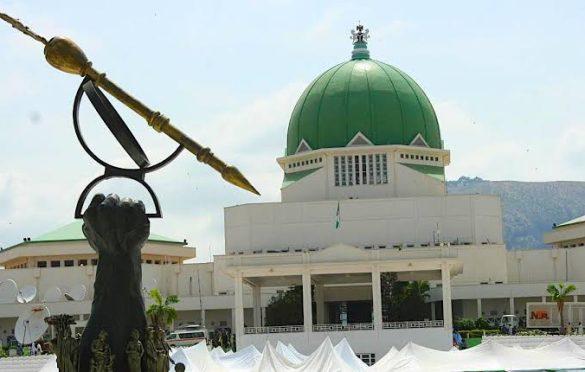
    The National Assembly cannot plausibly present itself as an innocent bystander in a controversy involving a document that it painstakingly debated, amended and enacted into law. Appropriation is among the legislature’s most significant constitutional powers, and every budget line approved by parliament bears its institutional imprint. Every allocation represents a mindful exercise of legislative authority. That is precisely why this controversy should concern Senator Godswill Akpabio-led National Assembly far more than it appears to.

    For years, legislators have defended the enormous cost of maintaining one of the world’s most expensive legislatures by arguing that democracy is inherently expensive because effective oversight is indispensable. Nigerians have repeatedly been told that parliament must rigorously scrutinise executive proposals, interrogate expenditure, investigate abuses and protect taxpayers’ money.

    Those arguments are persuasive in theory. However, episodes such as the PFIPC controversy inevitably raise doubts about whether the scrutiny promised is consistently reflected in practice. The legislature cannot simultaneously enjoy the prestige that comes with constitutional authority while disclaiming responsibility whenever serious questions arise concerning the exercise of that authority.

    Oversight should never be measured merely by the number of committee hearings convened or reports produced. Its real measure lies in outcomes. Did Parliament identify questionable allocations before they became law? Did it detect procedural irregularities? Did it insist that every agency receiving public funds possessed a proper legal foundation? Did it prevent waste before it occurred? These are the questions that define the effectiveness of legislative oversight. If the answer to too many of them is negative, Nigerians are entitled to ask what oversight has become and whether it is fulfilling the constitutional purpose for which it exists.

    The PFIPC controversy is especially troubling because it does not stand alone. It arrives against a backdrop of recurring public concerns about budget padding allegations, cloudy constituency project allocations, duplicated projects, unexplained insertions into appropriation bills and legislative investigations that often generate considerable publicity but seldom produce lasting institutional reforms.

    Each controversy gradually erodes public confidence, reinforcing the perception that transparency is frequently demanded from other arms of government while not always being demonstrated within the legislature itself.

    Perception, admittedly, is not always reality. Institutions should not be judged solely by public cynicism. Nevertheless, public trust cannot be sustained by declarations alone. It must be earned through openness, accountability and noticeable competence. Trust cannot be legislated into existence; it must be cultivated through conduct that consistently inspires public confidence.

    This is where the National Assembly confronts its greatest challenge. Rather than embracing a transparent inquiry into how the PFIPC allocation emerged, there is a risk that familiar institutional instincts will prevail: committee referrals that disappear into bureaucratic silence, partisan exchanges that obscure constitutional questions and official statements that explain everything except what citizens most wish to understand.

    Nigerians have witnessed this cycle repeatedly. A scandal erupts, investigations are announced, public attention gradually shifts elsewhere and, before long, another controversy emerges exposing many of the same institutional weaknesses. The cycle continues because its underlying causes remain insufficiently addressed.

    However, this moment presents an opportunity. The National Assembly possesses every constitutional instrument necessary to restore public confidence. It can establish a genuinely bipartisan inquiry into the appropriation process that produced this controversy. It can publish committee records relating to the relevant budget deliberations.

    It can identify where institutional safeguards failed and recommend reforms that make future budget insertions more transparent, more traceable and less susceptible to abuse. Such measures would strengthen parliament rather than diminish it because strong institutions do not fear scrutiny; they invite it. Democratic institutions mature when they are prepared to hold themselves to the same standards they demand of others.

    The controversy should equally stimulate a broader conversation about Nigeria’s budgeting process. In an era increasingly defined by digital governance, there is little justification for budget amendments that remain difficult for citizens to trace or understand. Every legislative adjustment should be digitally documented.

    Every budget insertion should identify its originating authority. Committee recommendations should be publicly accessible, allowing citizens, journalists and civil society organisations to follow the legislative history of every appropriation. Transparency should not depend upon investigative reporting or whistle-blowers; it should be embedded within the very architecture of public financial management.

    The National Assembly frequently reminds Nigerians that it is a co-equal branch of government, and constitutionally that is beyond dispute. However, co-equality necessarily entails equal responsibility. It is impossible to celebrate legislative independence while resisting legislative accountability. Parliament cannot credibly present itself as the nation’s watchdog while appearing reluctant to answer legitimate questions about its own vigilance. No democracy can function on selective accountability.

    If ministers must explain their actions, lawmakers must also explain theirs. If government agencies are expected to defend their budgets, parliament should equally be prepared to defend the integrity of its oversight processes. If the executive must answer for institutional failures, the legislature cannot claim immunity from criticism whenever those failures appear to have passed through its own constitutional responsibilities.

    The PFIPC affair may ultimately reveal fraud, administrative incompetence or systemic procedural weaknesses. Whatever the eventual findings, one conclusion is already difficult to avoid: the controversy has exposed significant questions about the effectiveness of Nigeria’s legislative oversight. Those questions deserve substantive answers rather than  political slogans.

    The National Assembly should regard this episode not as an attack upon its authority but as an opportunity for institutional renewal. Democracies become stronger when legislatures willingly subject themselves to the same standards of transparency and accountability that they expect of the executive.

    Otherwise, the unpleasant smell surrounding this controversy will linger. And the longer legitimate questions remain unanswered, the more Nigerians may conclude that the deeper problem lies not merely with one controversial budget allocation but with an oversight system that too often identifies problems only after the public has already discovered them. No democratic institution should find comfort in such a verdict, least of all the one constitutionally entrusted with safeguarding the nation’s purse. ThisDay

  • RENEWED HOPE IN ACTION: How Dr. Kingsley Tochukwu Udeh, SAN, is Turning Science and Innovation into Nigeria’s Economic Engine

    RENEWED HOPE IN ACTION: How Dr. Kingsley Tochukwu Udeh, SAN, is Turning Science and Innovation into Nigeria’s Economic Engine

    By Professor Ani Casimir

    When President Bola Ahmed Tinubu rolled out his Renewed Hope Agenda, critics and allies alike watched closely to see how its ambitious pillars of economic diversification, job creation, and industrial growth would manifest in the federal civil service.

    Few ministries have captured this transformative shift quite like the Federal Ministry of Innovation, Science and Technology (FMIST). Since taking the helm, the Honourable Minister, Dr. Kingsley Tochukwu Udeh, SAN, has aggressively repositioned science and technology from a quiet, academic enclave into a high-octane economic driver.

    Upon assumption of office, he has evidentially activated the potency and capabilities of the departments and agencies which were lying dormant for a long time.

    This deliberate and intentional technocratic efficiency came through high-profile executive actions and orders to implement the President’s Renewed Hope Agenda, interpreting the strategy into realizable policies and programs in the departments and agencies in his Ministry. From a past record of relative passivity, the Ministry has come alive and the President’s mandates are manifesting with uncommon speed through new partnerships the Minister is orchestrating in the 36 states, the academia, foreign development organizations and the private sector.

    For close observers of Nigeria’s governance landscape, Dr. Udeh’s explosive, execution-first approach comes as no surprise. The brilliant jurist and administrator comes directly from the highly corporate and technocratic stable of Governor Peter Ndubuisi Mbah’s transformative “Tomorrow is Here” team in Enugu State. Having served distinctively as the Attorney-General and Commissioner for Justice in Enugu State, Dr. Udeh has successfully imported that same governance ethos—characterized by disruptive innovation, institutional transparency, and rapid economic scaling—to the federal stage.

    He is obviously justifying with his sterling performance, Governor Mbah’s strategic political shift to the ruling party, APC and to log on to the destiny of a progressive President Bola Ahmed Tinubu, a move seen by many as strategic, fruitful, and supportive of sustainable development for Enugu state citizens in good and record time.

    Nigerians, not only Enugu state, are reaping the good fruits of a prepared Ministerial human capital who was well prepared under the Tomorrow is Here ethical leadership mantra of Governor Peter Ndubuisi Mbah.

    Under Dr. Udeh’s leadership, the Ministry is actively demonstrating that the Renewed Hope Agenda is not just a political framework, but a tactical blueprint for national survival and global competitiveness. We can take the pragmatic lens of good milestones already achieved to confirm his effectiveness.

    Breaking the Laboratory Walls: Research to Industry

    For decades, Nigeria’s brilliant scientific minds suffered from the “shelf syndrome”— breakthrough academic research gathering dust in university laboratories rather than solving real-world problems. Dr. Udeh has moved decisively to change that, deploying the same legal and policy frameworks he used to de-risk investments during his time in Enugu. For him, the university is meant to be the think tank for real time scientific, innovative and technological challenges facing every nation.

    Speaking recently at a national stakeholders’ engagement in Abuja, the Minister made the administration’s stance clear:

    “The world is currently being reshaped by knowledge-driven economies powered by innovation. We are not just funding research and innovation for academic purposes; we are funding them to reach the market and industry. The Renewed Hope Agenda provides a clear opportunity to reposition science, technology, and innovation as a strategic driver of economic growth and job creation.”

    To achieve this, Dr. Udeh is championing the operationalization of the National Research and Innovation Fund (NRIF). By actively engaging with lawmakers and key stakeholders, the Minister is building a transparent, unified funding mechanism designed to rescue innovative projects from fragmentation and scale them directly into commercial products.

    Going Global: Strategic Alliances with the United Nations and WIPO

    A key marker of Dr. Udeh’s ministerial strategy is leveraging international partnerships to scale local ideas — a skill sharpened during his prior roles managing development aid coordination.

    In a high-level engagement with United Nations Resident Coordinator, Mohammed Malik Fall, the Minister forged a powerful structural alliance. The resulting UN–FMIST Working Group is moving beyond standard diplomatic pleasantries toward actionable frameworks. The partnership focuses on:

    -Developing pipelines of bankable, investment-ready technological projects: Advancing green technologies, such as clean cooking solutions and green hydrogen. In real-time domestication of innovation, this amounts to downloading scientific breakthroughs into homes, into transportation hubs and percolating them to the grassroots of Nigeria urban and rural areas.

    -Maximizing value from Nigeria’s critical solid minerals.

    -Harnessing youth entrepreneurship through structured national tech hackathons.

    Simultaneously, Dr. Udeh has engaged the World Intellectual Property Organization (WIPO) to tighten patent registration and technology incubation structures, ensuring that homegrown intellectual property is fiercely protected as it moves to market.

    Bridging the Subnational Divide: Federal-State Synergy

    Realizing that national growth cannot happen in isolation, Dr. Udeh is aggressively taking the gospel of innovation to the states. At the recent PLASSTIFEST, the Minister emphasized that FMIST is treating Science, Technology, and Innovation (STI) not as a standalone federal asset, but as an infrastructure layer for subnational development.

    Drawing from his intimate understanding of subnational administration under Governor Peter Mbah, he has ensured that federal incubation programs are seamlessly pairing with state governments. This synergy helps local startups scale, upgrades science laboratory standards, and deploys tech solutions directly into regional agriculture, healthcare, and manufacturing.

    A New Chapter for Nigeria’s Future

    As a Senior Advocate of Nigeria, a stellar academic, and seasoned public administrator from the elite Enugu school of governance, Dr. Udeh’s analytical rigor and execution-first mindset are precisely what the ministry needs to inject life into the Renewed Hope Agenda.

    By forcing a handshake between researchers and industrialists, formalizing elite global partnerships, and building deep subnational synergy, the Ministry of Innovation, Science and Technology is proving that Nigeria’s path to prosperity will be written in code, powered by homegrown patents, and actualized through decisive leadership.

    Professor Casimir Kingston Chukwunonyelum Ani, is the Team Lead/Director, Ethics, AI and Higher Education Strategy Team (EAISTRAP) and a member of the strategic UNESCO Technical Implementation Policy Team for Ethics of Artificial Intelligence Team for NIGERIA since 2023). He can be reached at casimir.ani@unn.edu.ng

  • This Will Not End Well for South Africa

    This Will Not End Well for South Africa

    -By Abdul Mahmud

    The 30 June deadline issued by the Afrophobic marchers in South Africa  to African migrants to leave South Africa has now passed into history. History will remember the infamy of those who turned on their fellow Africans, looted their shops, terrorised entire communities, and forced many to flee South Africa with nothing but their lives and painful stories of a nation that once proudly called itself the Rainbow Nation. Official silence and ritual condemnations have done little to erase the memory of repeated attacks that have scarred countless African migrants, Nigerians included. For Nigerians, these recurring episodes of Afrophobia are no longer isolated outbreaks of mob violence; they have become part of a dangerous historical pattern. Each cycle of attacks, followed by familiar promises of investigations and assurances that the violence does not reflect official government policy, only deepens the conviction that African solidarity has become an empty slogan.

    Across Nigeria, public patience with diplomatic caution is rapidly evaporating. It is against this backdrop that Senator Adams Oshiomhole’s call for retaliatory measures against South African companies operating in Nigeria must be understood. Remarks that might once have been dismissed as political grandstanding now resonate with a broad section of the public because they express accumulated anger rather than momentary outrage. History teaches that when grievances are ignored for too long, they eventually acquire the force to shape political action. South African businesses have flourished in Nigeria for decades. MTN built one of the largest telecommunications operations on the continent and has invested billions of dollars in the Nigerian market. MultiChoice turned DStv and GOtv into household names. Stanbic IBTC became a major player in banking and financial services through its connection to South Africa’s Standard Bank Group. Protea Hotels established some presence in the hospitality sector. South African retail and consumer brands have also operated in Nigeria at different periods. These businesses arrived in Nigeria because they found a large market, substantial profits, and an environment that welcomed foreign investments. They benefited from the openness of a country whose government and citizens played a significant role in supporting the anti-apartheid struggle when South Africa was isolated from much of the world.

    Many Nigerians increasingly ask the simple question: how long can economic hospitality survive repeated images of Nigerians being hunted, beaten, or killed in South African streets?

    Nobody should underestimate the political consequences of that question.

    History offers several warnings. The anti-Asian expulsions in Uganda under Idi-Amin produced economic and diplomatic consequences that damaged Uganda’s international standing for years. The anti-Chinese riots that erupted in Indonesia during the dying days of the Suharto era reshaped social relations and left scars that remain visible decades later. In many parts of the world, violence directed at minority communities eventually provoked commercial boycotts, retaliatory campaigns, diplomatic disputes, and long-term reputational damage. Economic relationships depend on confidence; but confidence disappears when citizens begin to associate foreign-owned businesses with a country perceived as hostile to their compatriots. Nigeria already witnessed a glimpse of what retaliation could look like during previous outbreaks of xenophobic violence. Demonstrators targeted South African-linked businesses, but security agencies had to protect some commercial locations from attacks.

    The anger was real, even if it eventually subsided.

    Future retaliations which may unfold differently will not end well for South Africa.

    The next major Afrophobic episode in South Africa could trigger coordinated consumer boycotts, and even violent attacks on its economic interests everywhere when politicians discover electoral advantages in demanding punitive measures, trade unions pressure governments to review bilateral arrangements, activist groups organise campaigns against prominent South African brands, and social media amplify every incident within minutes. In such a climate, companies like MTN, MultiChoice, Stanbic IBTC, Protea Hotels, and other South African-linked businesses could become symbols in a conflict they did not create. Their offices, retail outlets, infrastructure, and public image would carry the burden of public anger directed at South Africa.

    This possibility should concern business leaders in Johannesburg far more than quarterly earnings reports.

    Corporate investments do not exist in isolation from politics. They rely on goodwill. Once that goodwill evaporates, even profitable businesses become vulnerable. South Africa faces a deeper challenge than the protection of foreign nationals, as is the question of what kind of continental leadership it seeks to exercise in the coming decades. The country possesses considerable economic influence, with its banks, telecommunications firms, retailers, mining companies, media corporations, and investment houses operating across Africa. Such influence carries obligations. A state that aspires to continental leadership cannot repeatedly witness attacks against fellow Africans without suffering reputational consequences.

    The consequences extend beyond Nigeria. Ghanaians, Zimbabweans, Malawians, Ethiopians, Somalis, Mozambicans, Congolese, and many others who are today the victims of the mindless mobs in South Africa are watching and considering the next steps for the future. After all, what once appeared as isolated anger now resembles a growing reservoir of resentment waiting for a catalyst. Public sentiment across the continent is changing. Conversations on social media reveal a level of bitterness that would have been difficult to imagine twenty years ago.

    South African policymakers still have an opportunity to prevent a future rupture through effective law enforcement and sustained political campaigns against Afrophobia. Diplomatic statements alone will not achieve that objective. The government in Pretoria must be told that history teaches that grievances rarely remain confined to the place where they originate. They travel across borders, enter public consciousness, influence political calculations, and reshape economic relationships. No nation repeatedly exports fear and expects to import goodwill forever.

    Surely, this will not end well for South Africa.

  • [OPINION] The Akara Economy that Nigeria Runs on But Won’t Fund

    By Akinola Morakinyo (Ph.D)

    Nkechi Okonkwo has been awake since 3:45 in the morning. By the time most of Oshodi is still arguing with its alarm clock, she has soaked beans, queued at the neighbourhood mill, lit her coal pot, and begun producing one of the most economically efficient food products in Nigeria.

    An akara ball costs between one hundred and five hundred Naira. It requires no supply chain from Rotterdam or The Strait of Hormuz. It requires beans, palm oil, a frying pan, and a 3:45am discipline that would make most MBA students reconsider their choices. Nkechi does not have an MBA. She has a waiting list.

    On the last Wednesday in late June 2026, First Lady Oluremi Tinubu addressed State House correspondents after the Renewed Hope Initiative’s second-quarter meeting with wives of state governors. She encouraged Nigerians, particularly women, to start selling akara, roasted corn, and kuli-kuli, noting that these businesses require little capital.

    A video surfaced online by Friday. By Saturday, the country had started approximately one million satirical akara businesses on social media. The debate that followed was heated, widespread, and largely missed the actual economics. This article attempts to recover them.

    Nigeria’s informal economy, of which the akara stall is one of the recognisable faces, is not just peripheral to the national economy. It is the national economy. The International Labour Organisation’s 2024 Nigeria policy brief places the informal sector’s share of total employment at 92.3%. Among women specifically, the figure is 96% compared with 88.7% of men. World Economics estimates Nigeria’s informal economy at about 57.2% of GDP, using its own methodology.

    According to SMEDAN, Nigeria has approximately 40 million micro, small, and medium enterprises. The dismissal of the akara economy as beneath serious policy attention is not sophistication. It is innumeracy. The First Lady was not advising Nigerians to embrace poverty. She was describing the sector that employs nine in ten working Nigerians and produces more than half of national output. The satire got ahead of the statistics.

    The economics of a ₦50,000 capital injection into a micro-enterprise are more consequential than the mockery suggested. The switch from charcoal to a 3kg gas cylinder costs below ₦5,000 per refill but yields faster output, lower fuel cost per unit, and a cleaner product over the course of a month’s trading.

    The akara seller who cannot afford the upfront cylinder deposit stays on coal, paying more per unit of heat and producing less per hour. Working capital also unlocks bulk purchasing: the seller with ₦50,000 buys beans wholesale at discounts of up to 20% versus the retail prices she pays on a daily cash cycle. These are not marginal gains. They compound into the difference between subsistence and modest accumulation. Not all fingers are equal, but a hand needs all of them. The akara economy needs its fingers to have working capital, and the formal system has been largely unwilling to provide it.

    The First Lady’s remarks were correct in substance and poorly timed in context, and the honest analysis requires holding both judgements simultaneously. She was right that starting a food micro-enterprise requires little capital and can generate sustainable income. Come to think of it, most Nigerians are already active participants in the country’s largest informal financial institution: the Extended Family.

    Its lending policy is simple with no collateral, no interest, no repayment schedule, and no realistic expectation of ever seeing your money again. The Bank of Mum, Dad, Uncle, Auntie, Brother, and Cousin dispenses perpetual grants with remarkable consistency and rarely asks for repayment. This is a visible thing needing no microscope. She was right that grants are a more appropriate instrument than loans for the lowest-income tier of the MSME base, as an annualised interest rate on loan of up to 60%, aside from other hidden fees, for a seller on a daily cash cycle, transfers income to the bank rather than capitalising the enterprise.

    What the video could not carry was the distinction between akara as an entry point into accumulation and akara as the ceiling of national aspiration. If a child washes his hands clean, he will eat with elders. The graduate mechanical engineer who cannot find work commensurate with her training has washed her hands. The table is not yet set. Telling her the frying pan is available was heard as a dismissal of her preparation rather than a bridge to opportunity. That is not what I think the First Lady meant. It is what the timeline heard. The two things can be true simultaneously.

    The scale problem that the debate missed is the most consequential number in this story. Of Nigeria’s 40 million MSMEs, only 4% have access to formal bank credit, per PwC’s MSME Survey 2024. SMEDAN’s 500,000 active loan beneficiaries represent 1.25% of the MSME base. The World Bank’s FINCLUDE programme, approved in December 2025 with $500 million in capitalisation, targets 250,000 additional MSMEs a combination of commercial banks, microfinance institutions, fintech lenders, and credit guarantee mechanisms, bringing the potential formal reach to roughly 750,000 enterprises out of 40 million, less than 2%.

    The federal government’s N1 billion MSME grant disbursed in April 2026 is correct in instrument and wholly insufficient in size. The Moniepoint Informal Economy Report 2025 found that 51% of informal businesses have never taken a formal loan and do not intend to, up from 30% the year before. The informal economy has not refused capital. It has concluded that capital has refused it, through interest rates, collateral requirements, credit bureau conditions, and processing timelines that have nothing to do with the economics of an akara stall and everything to do with a system designed for a different kind of borrower.

    Unfortunately, an idle hand is the devil’s workshop. Perhaps the greatest tragedy is not the unemployment itself, but where that unemployment leads. An idle labour market has become a waiting room for criminal enterprise. This is why employment policy is also security policy.

    Every new factory, every thriving SME, every apprenticeship, every digital skills programme, and every successful farm enterprise does more than increase GDP by competing directly with criminal organisations for the time, talent, and aspirations of Nigeria’s youth. The safest communities are often those that provide the greatest opportunities for legitimate work.

    Four interventions and a rhetoric question are immediately available. First, the World Bank’s FINCLUDE programme must be implemented at speed and expanded in scope. Its December 2025 approval targets 250,000 MSMEs over several years. The sector’s 57.2% of GDP share warrants a target of 2.5 million over the same period. The difference is between a pilot and a policy.

    Second, SMEDAN’s zero-interest N500 million revolving fund and single-digit loan facility are correctly designed instruments at wholly insufficient scale. N500 million distributed across 40 million enterprises is N12,500 each if all were reached, which they are not. The fund needs to be fifty times larger to be proportionate to the growing sector it is supposed to serve.

    Third, the movable collateral registry under Nigeria’s Secured Transactions in Movable Assets Act must be operationalised at the micro-enterprise level, allowing businesses to borrow against inventory, receivables, and equipment rather than land certificates most informal operators will never hold. Fourth, grants rather than loans are the correct instrument for the smallest enterprises: a N50,000 grant combined with basic business training can move an akara operation from coal pot to gas stove, from retail to wholesale sourcing, from one shift to two, from one employee to three. That is infrastructure investment in the sector that employs 92.3% of the workforce.

    Finally, let’s face it: is it not high time we established a dedicated government ministry fashioned after South Africa’s Department of Small Business Development (DSBD) explicitly focused on the providing funding and business toolkits to informal entrepreneurs and traders?

    The scenario projections in this article show the scale of what is at stake. Scaling formal capital access from 1.25% of MSMEs today to 18% by 2030, through expanded grants, single-digit rate loans, and collateral reform, could move more than 6 million additional micro-enterprises toward the small enterprise tier. The status quo trajectory delivers approximately 1.8% by 2030, a marginal improvement while the coal pots stay on and the wholesale discounts remain uncollected.

    Nkechi Okonkwo does not need a debate. She needs a gas cylinder, at least N50,000 in working capital, a city council that does not confiscate her table every other Thursday, and a government that counts her in the programmes it announces rather than only in the statistics it publishes about sectors it does not fund.

    The First Lady was right that the akara economy is real, accessible, and important. The government’s job now is to match the scale of the advice to the scale of the sector. 92.3% of the workforce cannot be served by programmes that reach 1.25% of enterprises. The akara is frying. The policy is not.

    Akinola Morakinyo (Ph.D) writes on MINT economies from the Department of Economics, Finance & Quantitative Analysis, Kennesaw State University, GA, USA. 

    Originally Published on Nairametrics.com