Category: Opinion

  • NDC, Awkunanaw and the Question of Genuine Endorsement

    NDC, Awkunanaw and the Question of Genuine Endorsement

    By Sebastine Okafor, Ph.D.

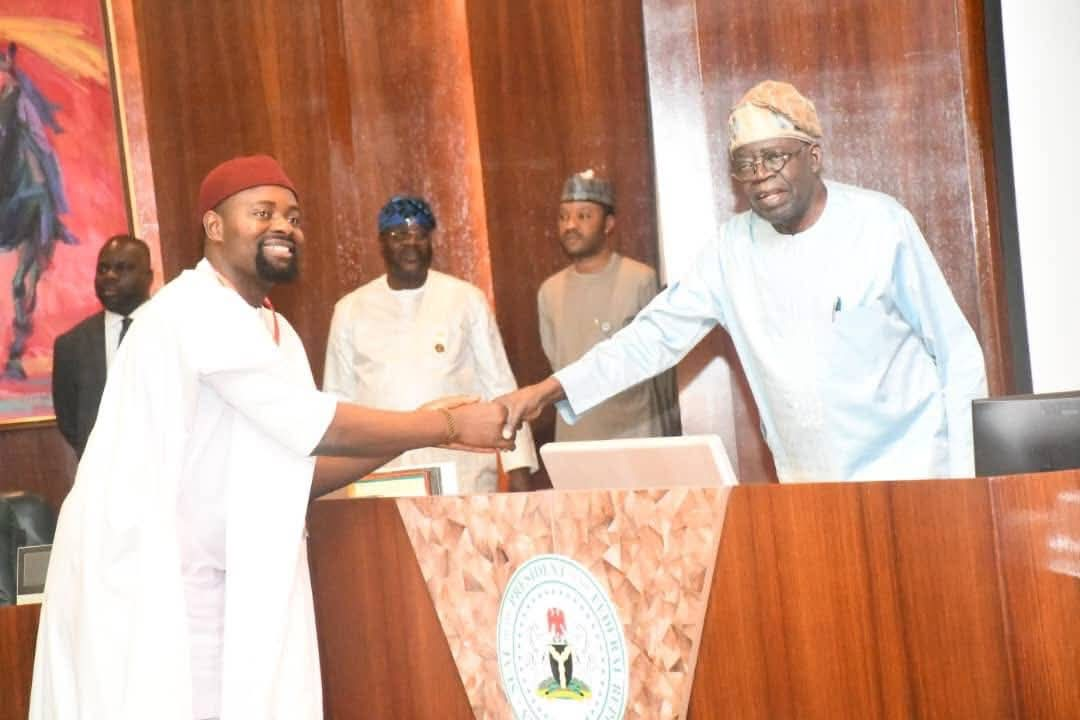
    A few days ago, I saw media reports about the endorsement of a factional candidate of the Nigeria Democratic Congress (NDC), Enugu State Chapter, by 22 communities in Awkunanaw, and how his supporters were jubilating over it. I was pleased to see that the factional candidate was engaging with some of his people, who had earlier prayed for and endorsed the candidate of the All Progressives Congress (APC) months before.

    During the said endorsement, an ọfọ was given to him as a mark of blessing, which he collected as expected. I had to watch the visuals of both events to ascertain whether, in the presentation to both Nkanu sons, there was any issuance of a fake one, but there was none. I also watched the visuals again to ascertain whether it was an endorsement or a prayer, and I found out that the APC candidate was prayed for and received an endorsement, while the factional NDC candidate only received prayers.

    Just as the Igbo adage says, “Anụ bụ ụzọ, na aṅụ mmiri ọma”. Going by that, the first candidate has already taken the blessings, while others that will follow are just mere portions that they will enjoy.

    So, for all the noise about endorsement, there was nothing like that. It was a mere prayer, and many more of such will still come before the election. If you beckon on them, they will answer, just as churches will also and always do when anyone comes to them. They will welcome, accept and bless the person, and he goes.

    While we are working for a better Enugu State through a viable opposition, it is also important that we do not sideline the principles of justice and democracy because one of the least things expected of a leader is to be just and fair to all. I wonder how someone who never emerged through any primary election would want to lead Enugu State. Tomorrow, if the court sacks him, we will start shouting, “Democracy on fire.”

    No matter how you see it, there was no primary election conducted in Enugu State that produced him as a candidate. Since the matter is already before the court, I will refrain from delving deeper into the legal questions. It is, however, only a matter of time before the courts pronounce on the dispute.

    So, prayers by the Awkunanaw clan do not mean endorsement. They are simply a request for divine intervention and blessings. We should therefore be careful not to turn every prayer into political endorsement simply because it suits our preferred narrative.

    Politics is about people, but it is also about rules, fairness and due process. If we genuinely desire a better Enugu State and a stronger opposition, then we must be willing to defend democratic principles even when they do not favour our side. We cannot condemn injustice today and celebrate the same injustice tomorrow because it benefits us. The people deserve leaders who emerge through a process that is transparent, credible and acceptable to the law.

    The court is already handling the matter, and I believe that justice will ultimately prevail. Until then, political supporters should reduce the noise, allow the legal process to take its course and stop presenting ordinary prayers as though they were formal political endorsements. The people of Enugu deserve clarity, not confusion.

  • From Humanitarian Dependence to Strategic Solidarity: Can Africa Protect Africans?

    From Humanitarian Dependence to Strategic Solidarity: Can Africa Protect Africans?

    By SNC Nwagu, Esq., FIICA, MNIIA

    The next frontier of African sovereignty is not another declaration. It is the capacity to protect African lives.

    For decades, Africa has remained at the receiving end of humanitarian intervention. When war erupts, communities are displaced and populations face famine, disease or violence, the familiar pattern begins: international agencies mobilise, foreign governments announce assistance, donors pledge money and external actors debate what should be done.

    Africa participates. Africa appeals. Africa receives.

    But an uncomfortable question can no longer be avoided: why should a continent of 1.5 billion people remain structurally dependent on external actors to protect its own populations?

    This is not an argument against international humanitarian cooperation. Africa needs its partners, just as the international community has a responsibility to respond to human suffering wherever it occurs.

    The problem is deeper. Africa has gradually normalised a system in which externally supplied money, logistics and strategic capabilities often determine whether a humanitarian response is possible at all.

    That is not sustainable.

    Africa must begin moving from humanitarian dependence to strategic solidarity.

    The Missing African Firewall

    Africa does not lack institutions. The African Union has its Peace and Security Council, the African Peace and Security Architecture, regional security mechanisms, early-warning systems, mediation structures and peace-support capabilities. The African Peace Fund also provides an important foundation for continental peace and security operations.

    Yet these mechanisms do not always function as one integrated system.

    Early warning may exist without rapid response. Diplomacy may begin after violence has already escalated. Humanitarian agencies may arrive without sufficient logistics. Peace operations may lack predictable financing. Governments may possess the political will to act while lacking the strategic airlift, intelligence, equipment or emergency financing needed to act effectively.

    The problem, therefore, is not that Africa has no institutions. It is that Africa has institutions without sufficient integration.

    This is where the proposal for an Integrated Security and Civilian Assistance Architecture (ISCA) deserves serious consideration.

    ISCA should not become another African bureaucracy. Nor should it become an African version of NATO. Its purpose should be practical: to connect the capabilities Africa already possesses into a coordinated system for preventing crises and protecting civilians.

    It could function as an African humanitarian-security firewall.

    The first layer would be early warning. Africa must be able to identify when political tension, communal conflict, food insecurity, climate shocks or security threats are moving towards catastrophe.

    But warning is meaningless if nobody acts on it.

    The second layer would therefore be preventive diplomacy: African mediators, diplomats and political leaders engaging before violence becomes war.

    The third would be humanitarian preparedness. Why wait until hundreds of thousands of people have been displaced before searching for medical supplies, shelters, transport and food? Strategically located preparedness hubs could allow Africa to respond rapidly when emergencies occur.

    The fourth layer would be civilian protection. Where prevention fails, African institutions should have the capacity, under clear legal mandates and appropriate safeguards, to protect civilians, humanitarian workers, medical facilities and essential infrastructure.

    The fifth would be peace and security response. Not every crisis requires soldiers. But where armed groups threaten civilian populations and diplomacy fails, Africa must possess the ability to respond.

    The sixth would be recovery. Protection without reconstruction merely postpones the next crisis.

    Together, these six layers—early warning, preventive diplomacy, humanitarian preparedness, civilian protection, security response and recovery—could make ISCA more than another acronym in Africa’s institutional vocabulary. They could turn it into a functioning architecture.

    Partnership, Not Dependence

    There will be an understandable objection. Is this simply another version of the familiar slogan of “African solutions to African problems”?

    Not quite.

    Africa’s relationships with external powers are too important and too complex for isolationist rhetoric. China, Europe, the United States, the Gulf states, India and international organisations will remain important partners. Africa should welcome their resources, technology, intelligence, logistics and expertise.

    But there is a difference between partnership and dependence.

    External partners should complement African capacity, not substitute for it. The guiding principle should be simple:

    External resources without external ownership.

    Africa should welcome international assistance while retaining the authority to define its own priorities, coordinate its own response and remain accountable to the people it exists to protect.

    That is not isolation. It is sovereignty.

    The Financing Test

    Every ambitious African proposal eventually encounters the same question: who will pay for it?

    This is where ISCA must be different. Africa cannot establish another institution whose mandate is impressive but whose bank account is empty.

    The African Peace Fund offers a foundation, but civilian protection requires additional and predictable financing. African governments must contribute. African financial institutions and businesses must participate. Telecommunications companies, airlines, logistics firms, pharmaceutical manufacturers and technology companies all possess capabilities that could be mobilised during emergencies.

    External partners should also remain part of the financing ecosystem. But Africa must progressively build the capacity to fund the first response itself.

    That could involve emergency reserves, assessed contributions, pre-positioned supplies, regional procurement agreements and formal partnerships with private logistics and medical providers.

    The objective should be clear: no African humanitarian emergency should become a catastrophe simply because Africa could not finance the first response.

    Nigeria’s Special Responsibility

    Nigeria should pay close attention to this debate.

    For decades, it has presented itself as a major African power and has invested diplomatic, military and financial resources in continental peace and security. Its experience gives it both an interest and a responsibility in the development of any continental protection mechanism.

    But Nigeria should not approach ISCA as an opportunity to become Africa’s permanent security leader. That would be counterproductive.

    Nigeria’s more constructive role would be that of a capacity anchor. It can contribute diplomatic expertise, mediation experience, peace-support capabilities, intelligence cooperation, training, logistics, medical capacity and financing.

    At the same time, the architecture must belong to Africa collectively.

    Nigeria should help build the system without seeking to own it. That distinction matters. A continental institution will succeed only if smaller states see it as a shared instrument rather than an extension of the ambitions of the largest powers.

    Do Not Militarise Humanitarianism

    Another danger must be confronted directly. If humanitarian institutions become too closely tied to military structures, humanitarian neutrality can be compromised.

    ISCA must never become a mechanism for militarising humanitarian assistance. Humanitarian actors must retain the principles of neutrality, impartiality, independence and humanity. Security forces may protect humanitarian space; they must not control it.

    The objective is coordination, not fusion.

    Any civilian-protection system must also operate under clear legal mandates, respect human rights and remain subject to political and public accountability. The protection of civilians cannot become a licence for unchecked intervention by governments or security agencies.

    A New Measure of Sovereignty

    The debate about African sovereignty has usually focused on political independence, economic independence and freedom from external interference. These remain essential.

    But sovereignty also has a more basic meaning: the capacity to protect one’s people.

    A country that cannot protect its population during a crisis must inevitably look elsewhere for assistance. A continent that repeatedly requires external logistical and financial intervention to manage its security emergencies cannot claim complete strategic autonomy.

    This does not mean Africa needs to become militarised. It means Africa needs to become capable.

    The strongest Africa is not necessarily the Africa with the largest armies. It is the Africa that can see a crisis coming, act before it escalates, protect civilians when prevention fails, mobilise resources quickly and rebuild afterwards.

    That is strategic solidarity.

    From Recipients to Responders

    Africa’s humanitarian narrative must change.

    The continent is too often described through the language of vulnerability: refugees, conflict, famine, terrorism, fragile states and humanitarian emergencies. Those realities cannot be ignored. But Africa is also a continent of extraordinary human capital, institutions, entrepreneurs, diplomats, soldiers, researchers, businesses and civil societies.

    The difficulty is that these capabilities frequently operate separately.

    ISCA is therefore not primarily about creating new capabilities. It is about connecting African capabilities.

    The central question should no longer be: who will come and help us?

    It should be: what can we organise together before we need help?

    That question captures the meaning of strategic solidarity.

    African leaders do not need to choose between Africa and the international community. They must choose between dependence and partnership.

    The continent should not close itself to the world. It should become stronger within it.

    Africa does not need a fortress. It needs a firewall: one that detects threats early, activates diplomacy before violence spreads, moves food and medicine rapidly, protects civilians when necessary, mobilises peace-support capabilities when diplomacy fails and remains accountable to the people it serves.

    The next chapter of African sovereignty should not be written only in terms of gross domestic product, military strength or diplomatic influence. It should also be written in a more fundamental language:

    Can Africa Protect Africans?

    The answer should eventually be yes—not because Africa rejects the world, but because Africa has learned to stand with the world without depending on the world for its survival.

    That is the journey from humanitarian dependence to strategic solidarity.

    And ISCA could be one of the institutions through which Africa begins that journey.

  • Peter Mbah: The Governor Redefining Enugu’s Story — Let the People Decide

    Peter Mbah: The Governor Redefining Enugu’s Story — Let the People Decide

    By Emmanuel Uchenna Chukwu

    Leadership is ultimately judged by impact.

    Not by the number of promises made during campaigns. Not by the volume of political speeches. And certainly not by how loudly supporters or opponents speak on social media.

    Leadership is judged by what changes.

    It is judged by what the people can see, what they can feel and what they can point to.

    This is why the leadership of Governor Peter Ndubuisi Mbah deserves a careful and objective assessment.

    Who is Peter Mbah?

    He is not simply the man occupying the Lion Building. He is a governor who came into office with an ambitious vision of transforming Enugu State from a predominantly civil-service economy into a more productive, investment-driven and economically competitive state.

    And that vision is increasingly becoming the central conversation about his administration.

    From infrastructure and road construction to education, healthcare, urban renewal, economic development and efforts to attract investment, the administration has placed development at the centre of its agenda.

    But beyond government statements and political arguments, the most important question remains:

    What can the people see?

    THE ROADS ARE SPEAKING

    Across Enugu State, infrastructure remains one of the most visible areas through which citizens assess government performance.

    Roads connect communities.

    Roads open up businesses.

    Roads reduce travel difficulties.

    Roads create opportunities.

    That is why investments in road infrastructure are not merely about constructing roads; they are about creating the physical foundation for economic growth and improving everyday life.

    For many residents, the most meaningful measure of government is not a speech delivered in a conference hall but the road leading to their community.

    INVESTING IN THE FUTURE

    Another important part of the Mbah administration’s agenda is education.

    A state cannot build a strong future without building strong minds.

    Investment in schools, learning environments and human capital is therefore not simply another government project. It is an investment in the next generation of Enugu.

    The same principle applies to healthcare.

    A government that wants to build a prosperous society must ensure that its people have access to quality healthcare and the basic conditions necessary to live productive lives.

    BEYOND TODAY: THE VISION FOR ENUGU

    Perhaps the most important aspect of the Mbah administration is that its conversation is not limited to what is happening today.

    It is also about what Enugu can become tomorrow.

    The administration’s economic vision is centred on building a state that can attract investment, expand opportunities, create employment and develop an economy capable of generating sustainable prosperity.

    That is a bigger conversation than politics.

    It is a conversation about the future of our children.

    It is a conversation about whether young people will have to leave Enugu to find opportunities elsewhere.

    It is a conversation about whether businesses will see Enugu as a place where they can confidently invest and grow.

    It is a conversation about whether Enugu can become one of Nigeria’s most competitive subnational economies.

    These are the questions that should dominate our public discourse.

    LET THE PEOPLE JUDGE

    Nobody should be asked to support a government simply because somebody praises it.

    Neither should anybody be asked to reject a government simply because somebody criticises it.

    The people deserve better than that.

    Let them look.

    Let them ask questions.

    Let them compare.

    Let them examine the projects.

    Let them listen to the communities.

    Let them assess the direction of the state.

    Let everybody bring their scorecard.

    Governor Peter Mbah is bringing his.

    2027 should therefore not be reduced to political noise, social-media battles or empty promises.

    It should be about performance.

    It should be about vision.

    It should be about capacity.

    It should be about continuity.

    And above all, it should be about the future of Enugu State.

    The conversation is no longer simply about what has been promised.

    The evidence is everywhere.

    The roads are speaking.

    The schools are speaking.

    The healthcare system is speaking.

    The communities are speaking.

    The business environment is speaking.

    And ultimately, the people are speaking.

    This is not the time to be distracted by political noise.

    This is the time to look around and ask one simple question:

    WHO IS MOVING ENUGU FORWARD?

    The answer is in the work.

    The answer is in the vision.

    The answer is in the results.

    ENUGU IS MOVING FORWARD.

    THE VISION IS CLEAR.

    THE WORK CONTINUES.

    THE PEOPLE CAN SEE IT. ENUGU CAN FEEL IT. OUR TOMORROW IS HERE.

    And when the time comes for the people to decide, let them decide not from rumours, not from propaganda and not from political emotions, but from the evidence before them.

    Let the people decide.

  • Osun Election: Matters Arising

    Osun Election: Matters Arising

    By Ikechukwu Amaechi

    Nigerians are an excitable lot. It is, therefore, not surprising that the outcome of the August 15 off-cycle Osun governorship election is generating so much buzz. To be sure, the outcome calls for celebration because for the first time in a long while, the will of the people prevailed in an election. And it prevailed not because attempts were not made by the powers-that-be to replicate the September 21, 2024 Edo State governorship election heist. Till date, the beneficiary of that abracadabra, an open sesame of sorts, sits comfortably on the purloined mandate while the winner is languishing in political purgatory.

    It almost happened in Osun last Saturday but for the determination of the longsuffering people of the State who, individually and collectively, vowed like the biblical Queen Esther that: “If I perish, I perish,” rather than allow political vampires have their way.

    And their unflinching resolve paid off handsomely. Officials of the Independent National Electoral Commission (INEC) behaved themselves. Security operatives respected their calling. Sensing that they may not live to tell tales of their violent exploits, political thugs mobilised from far and near to cause mayhem played safe. By 2 am on Sunday, the game was over. President Bola Tinubu, the leader of the All Progressives Congress (APC) called to congratulate Governor Ademola Adeleke, and APC chieftains who had invaded the state to do what they know how best – manipulation of election results – scurried out of town with their tails between their legs: in deep shame, humiliation and utter defeat.

    Unlike what happened in Edo two years ago when a deafening silence enveloped the State after INEC announced the dubious result, Osun erupted in celebrations when the INEC Returning Officer, Prof Joshua Ogunwole, announced the final result early Sunday morning declaring Adeleke, the Accord Party candidate, winner with 511,067 votes and victory in 19 of the State’s 30 local governments. The APC candidate Bola Oyebamiji polled 444,815 votes and secured victory in 11 councils, while the African Democratic Congress (ADC) candidate, Najeem Salaam, received a paltry 17,180 votes.

    According to the electoral umpire, a total of 1,010,684 voters were accredited. The election recorded 985,079 valid votes, 207 rejected ballots and 1,005,800 total votes cast. With the last of the 15 candidates, Saliu Oyelami of the Peoples Redemption Party (PRP), garnering only 83 votes, Adeleke’s 511,067 votes was more than the votes of the 14 other candidates put together. He earned the political epaulet on his shoulder.

    But I am not ululating despite my excitement that Osun people made the APC and its conceited leaders kiss the dust. Why? Because the Osun governorship election has demonstrated, once again, how jaded Nigeria’s so-called democracy is.

    On the eve of the election, several APC governors, federal lawmakers, including Senate President Godswill Akpabio, and high-ranking party leaders with their retinue of aides and heavily-armed, ferocious-looking security details invaded Osun with sacks of money taken, no doubt, from the public till without authorisation. Their goal? To compromise the ballot by subverting the electoral will of the people.

    That was crass irresponsibility. Granted, political parties have the constitutional right to campaign, mobilise supporters and deploy legitimate party structures in prosecuting electoral battles, but the motive of those who exported their nuisance value to Osun on Election Day when campaign had ended could have been anything but altruistic. What business, for instance, had Akpabio in Osun on August 15 when he is neither an indigene nor INEC official?

    Former President Goodluck Jonathan made that point succinctly on Tuesday when he warned that: “There is a point at which political mobilisation, particularly when it involves the overwhelming presence of serving governors, senior public officials and powerful political actors from across the country on Election Day, can create an atmosphere of apprehension, intimidation, bullying and undue pressure.”

    Such egregious political conducts are antithetical to the spirit of free and fair democratic competition and hardly happens in other democratic climes. But I doubt if any anyone is surprised. In a country where the president says “all is fair in politics,” political contests easily become wars of attrition.

    I am happy that the APC was worsted but not celebrating because Adeleke’s victory came at a very high cost. A Pre-Election Security Risk Assessment (ESRA) by the Kimpact Development Initiative (KDI) recorded no fewer than 73 election-related violent incidents which resulted in 29 deaths.

    The report lamented the strategic deployment of political, criminal, operational, social, coercive and information pressures to intimidate voters, suppress turnout and influence electoral outcomes. The huge presence of APC governors, lawmakers and party officials who had no business in Osun on August 15 was in furtherance of that devious plot.

    Nigeria, the democracy outlier

    I am not celebrating because truth be told, democracy is retreating, not blossoming, in Nigeria particularly under Tinubu’s pugnacious watch. And the continued militarisation of the electioneering process is a proof. In most countries, even in Africa, election days don’t take unnecessary toll on citizens.

    Nigeria is an outlier to that precept as Osun proved most conclusively. The State was totally shut down last Saturday, with the police deploying 15,000 personnel that included 30 Commissioners – one for each of the 30 local governments – and a Deputy Inspector-General. The deployment started three weeks prior to the election, together with helicopters and drone units for aerial surveillance. Two Mobile Police Force (MPF) units, each comprising over 60 personnel, were deployed to the INEC headquarters in Osogbo, and each local government area had a unit to boot; Deputy Commissioner of Police in each local government, as well as a Mobile Police Commander and a PMF commander with the rank of Assistant Commissioner of Police. All these are beside the over 10,000 personnel from other paramilitary agencies like the Nigeria Security and Civil Defence Corps (NSCDC).

    To complete the lockdown, the Army was brought in to cordon off all the border roads leading into Osun. Now, consider the fact that all these deployments were for a standalone election in one of the smallest states in the country by landmass. Osun ranks as the 9th smallest state by total land area, covering approximately 9,251 square kilometres.

    INEC is not left out. The Commission deployed 16 Resident Electoral Commissioners (RECs) from different states of the federation as “helping hands” to the Osun State REC making them 17 for the election that took place in just 3,700 polling units? So, what will happen in 2027 when elections will hold in all the 36 states simultaneously?

    Adeleke’s misplaced appreciation

    Though contestation for power in every clime is a serious matter, it is basically a contest of ideas. So, when Senator Francis Fadahunsi, who represents Osun East Senatorial District, recklessly makes an incendiary statement that promotes political killings, one cannot help but shudder.

    “From now on, whenever you see Accord members, kill them. I authorise you to kill them. They have wives and children too. This is a Federal Government election. On election day, even if they come with voter cards, we won’t allow them to vote,” he told his thugs on the eve of the poll.

    Many Nigerians are appalled that anyone could make such a call. But what can one realistically expect from a member of a political party whose leader claims that all is fair in politics? All being fair in politics, in Fadahunsi’s understanding, includes murdering opposition members.

    The National Human Rights Commission (NHRC) has called for his suspension from the Senate and immediate arrest. But I wager a bet: Nothing will happen. He is one of Tinubu’s disciples.

    And that is the reason why Adeleke’s praise for the president is grossly misplaced. Tinubu and his political party threw the kitchen sink at him. There was nothing that the APC did to subvert the electoral will of the people and upstage Adeleke that didn’t have his buy-in.

    Nothing! So, what was the praise singing for?

    The Tinubu-led administration withheld statutory allocations to Osun local governments running into billions of Naira. There was an attempt to use the courts to deregister Accord Party in order to forestall Adeleke’s candidacy. When that failed, federal agencies, including the Nigerian police, became unashamedly biased and selective in their enforcement actions in the state. The First Lady, Remi Tinubu, humiliated him in Osogbo by snatching the microphone from him at a public event. All these are calculated political gimmicks aimed at diminishing his standing with the people and eroding his electoral appeal.

    Then on August 5, the Economic and Financial Crimes Commission (EFCC), imposed a Post-No-Debit (PND) restriction on three of the state’s accounts in order to starve his administration financially before the election. It only took an “embarrassed” and the ever-benevolent godfather, Tinubu, to order the EFCC to back off. Another deceit from the trick bag of a man to whom all is fair in politics. Gullible Nigerians praised the president for his magnanimity. But anyone who believes the EFCC chairman, Ola Olukoyede, unilaterally took that decision may well believe anything. But that is not how this system works.

    That is why Adeleke’s praise for Tinubu’s illusory role in ensuring that democracy ‘lives on’ rankles. A position that now feeds into the harebrained claim of FCT Minister Nyesom Wike that he won the elction because Tinubu allowed free and fair poll.

    That is a lie from the pit of hell. Adeleke won because the good people of Osun staked their all for him. He won in spite of the machinations of Tinubu and the APC, not because “agreement is agreement.” But the very idea that it takes the magnanimity of Tinubu to guarantee a free and fair election should be a cautionary note to Nigerians as 2027 inches closer.

  • Nigeria’s CODESA Moment – By Abdul Mahmud

    Nigeria’s CODESA Moment – By Abdul Mahmud

    The proposal by the G-100, a coalition of 100 Nigerians advocating that the opposition parties should unite behind a single presidential candidate for the 2027 election, deserves to be taken more seriously than the familiar reactions that greet every attempt at opposition consolidation in Nigeria. The group’s intervention comes at a particularly important moment because, unlike the opposition movements of countries where the governing party has already entered a period of unmistakable electoral decline, Nigeria’s APC has not yet reached that point. The G-100 is therefore attempting to solve the problem before the ruling party becomes vulnerable enough for opposition victory to appear inevitable.

    There is a useful historical lesson in this for Nigeria, and it can be found in South Africa’s transition from apartheid; though, it is convenient nowadays, especially among younger South Africans who have grown impatient with the economic limitations of the post-apartheid order, to remember 1994 simply as the moment when the African National Congress (ANC) came to power. That interpretation misses the extraordinary complexity of the period that preceded the election. The negotiations were not conducted after the apartheid state had been militarily defeated, nor did the ANC enter them with an unlimited revolutionary mandate. The international environment had changed fundamentally. The Cold War had ended, the Soviet Union was collapsing, the strategic circumstances that had sustained armed liberation movements were disappearing, and liberal democracy and market capitalism had become the dominant global order. South Africa itself remained a formidable state with its bureaucracy, security establishment and economic elite intact. The genius of the South African transition was therefore not that the ANC obtained everything it wanted; it was that the liberation movement recognised the limits of what could be obtained at that particular historical juncture and concentrated on securing political power. The Convention for a Democratic South Africa (CODESA), which began formally in December 1991, brought together nineteen political parties and political formations, including the ANC, the National Party and Inkatha Freedom Party, while the subsequent negotiating process widened the field further. The participants were not united by ideology. They were simply united by the recognition that their country had to find a political mechanism for transferring power without descending into civil war.

    The South African experience offers a useful lens through which to examine Nigeria’s present opposition politics.

    The opposition today appears to be approaching the 2027 election as though its principal challenge is to discover which individual politician is personally capable of defeating President Bola Tinubu. That is too narrow a conception of the problem. The question is whether the opposition can construct a political alignment capable of converting dispersed dissatisfaction into a coherent electoral majority. The G-100’s call for a coalition president therefore deserves to be understood not only as an appeal for politicians to surrender their ambitions but as an attempt to solve the structural problem created by a fragmented opposition confronting an incumbent political establishment that has not yet demonstrated serious electoral exhaustion, regardless of the outcome of the Osun governorship election over the weekend.

    The experience of CODESA suggests that political consolidation does not require agreement on everything. South Africa’s negotiators came from organisations with sharply different ideological positions and competing conceptions of the future state. The National Party wanted institutional protections for minorities and a constitutional arrangement that would prevent the ANC from exercising unrestricted power of the majority. The ANC resisted arrangements that it believed could preserve minority domination through constitutional mechanisms. Inkatha had its own conception of federalism and regional autonomy. But, the negotiations proceeded because the principal actors eventually understood that agreement on the fundamental rules of political transition was more important than agreement on every substantive question.

    Nigeria’s opposition needs precisely this kind of political realism. Peter Obi does not have to become Atiku Abubakar. Neither does Atiku have to become Rotimi Amaechi, nor does Kwankwaso have to abandon the political constituency he has built in the North. The parties do not need to dissolve their identities into some artificial ideological uniformity. What they need is an agreement on the minimum political objective that can bring their constituencies into one electoral arrangement. That is where the G-100 proposal becomes important. A coalition president should not be selected merely by determining which aspirant has the largest following on social media or which politician commands the loudest applause at political gatherings. The choice must be based on the candidate’s capacity to aggregate the geographically and politically diverse constituencies required to win a Nigerian presidential election. The candidate must be the product of a negotiated electoral calculation, not the prize awarded to whoever is first to declare himself the natural leader of the opposition.

    There is another lesson from South Africa that Nigeria’s opposition must not miss. Negotiations work when they are connected to organised political power outside the negotiating room. CODESA was not simply an elite conversation in Johannesburg. The parties represented mass constituencies, political organisations and movements with the capacity to mobilise. When the process broke down, the ANC did not cease to exist as a political force. When violence and deadlock threatened the transition, negotiations were repeatedly restructured until a workable settlement became possible. The September 1992 Record of Understanding between the government and the ANC helped reopen the process, while the subsequent Multi-Party Negotiating Forum produced the framework that eventually led to the Interim Constitution and the 1994 election. For Nigeria, this means that a coalition agreement signed by political leaders in Abuja will achieve little if it is not translated into organisation at the polling-unit level. The opposition must be capable of protecting the votes it intends to win. It must know where its strength lies, where the APC is vulnerable and where the coalition can realistically add votes. It must build the organisational capacity to ensure that the result announced at the polling unit reflects the votes cast there. The negotiation among political leaders is only one part of the exercise; the electorate must eventually ratify that agreement with actual votes.

    There is also a lesson about timing. South Africa’s political actors did not wait until the National Party had become electorally irrelevant before beginning to negotiate the transition. They negotiated while the old order still possessed substantial power. That is perhaps the most important lesson for Nigeria. An opposition movement that waits for the APC to collapse before constructing its coalition may discover that the collapse never comes, or that when it finally begins the opposition is too divided to take advantage of it. The Nigerian opposition should therefore think of 2027 not simply as an election but as a contest over the configuration of political power. If the APC has not shown significant electoral decline, the opposition must create the conditions under which its own disparate constituencies become greater than the sum of their separate parts. This requires compromise, and compromise requires political actors who understand that losing personal control of the presidential ticket may be the price of obtaining collective access to political power.

    The final lesson from South Africa is perhaps the most difficult. The ANC understood that political power had to come before the larger struggle over the economic and institutional transformation of the country. The 1994 settlement did not resolve every historical injustice. It established a democratic state within which those questions could subsequently be contested. Whether the ANC made the best use of that power afterwards is a legitimate subject for historical criticism, but that later question should not obscure the strategic achievement of securing political power under extraordinarily constrained circumstances. Nigeria’s opposition faces a different historical problem, but the principle is comparable. It cannot approach the future as though history has already chosen its winner. The opposition must confront the balance of forces as it exists and organise accordingly.

    The continued strength of the APC is not an argument for opposition despair; it is an argument for opposition seriousness.

    The G-100’s call for a coalition president should therefore be treated as the beginning of a political negotiation rather than the conclusion of one. What Nigeria needs is not merely a coalition of politicians who agree that President Tinubu should be defeated; it needs a coalition capable of persuading Nigerians that the political differences among its component parts can be subjected to a credible national alternative. South Africa’s experience demonstrates that political transitions are rarely delivered by one party possessing all the advantages. They are produced when politicians recognise that the balance of forces requires them to negotiate, compromise and construct an arrangement capable of winning the moment that history has opened before them.

    For the Nigerian opposition, that moment has not yet arrived. The wiser course is to prepare for it before it does.

  • The Sovereignty Century: Why Africa Must Build Its Own World Order

    The Sovereignty Century: Why Africa Must Build Its Own World Order

    By SNC Nwagu, FIICA, MNIIA

    For nearly eight decades, the international system has operated largely under an American-led order. From Bretton Woods and the United Nations to NATO, the dominance of the US dollar, Silicon Valley and an unrivalled naval reach, the United States has shaped global finance, security, technology and governance. Today, that order faces its most serious strategic test since the Cold War. The question for Africa is not whether American power will disappear—it will remain a dominant military, technological and economic force for years to come. The real question is whether Africa will continue as an arena for rival powers, or become a strategic actor capable of shaping its own destiny.

    The unipolar moment that followed the Soviet collapse is receding. Militarily, the United States still possesses unmatched capabilities. Yet the withdrawal from Afghanistan, the war in Ukraine, renewed instability in the Middle East and an expanding Indo-Pacific focus have exposed the rising costs and limits of sustaining global primacy on multiple fronts.

    Economically, the dollar remains the principal reserve currency, about 57 percent of global official reserves, according to the IMF early-2026 COFER data—but its share has ticked down as central banks diversify and emerging economies pursue alternative payment arrangements. BRICS+, after recent expansion, now accounts for a larger share of global GDP measured by purchasing power parity than the G7. Politically, middle powers such as India, Brazil, Saudi Arabia, Türkiye and Indonesia are exercising greater strategic autonomy and preferring interest-based partnerships over fixed alignments.

    These trends point not simply to multipolarity but to a multi-order world in which overlapping political, economic and security architectures coexist and compete.

    Three broad geopolitical groupings are emerging. The Atlantic System—led by the United States and including the EU, the United Kingdom, Canada, Japan and NATO allies—still dominates advanced technology, global finance and many multilateral institutions, even as internal disagreements over industrial policy, defence spending and China policy grow. The Eurasian System—centred on China and Russia—has deepened cooperation in infrastructure, energy, finance, technology and security, offering alternatives to Western arrangements. And a Strategic Middle made up of India, Brazil, Indonesia, Saudi Arabia, the UAE, South Africa and Nigeria is asserting influence through strategic autonomy rather than permanent alignment.

    Unlike the Cold War, today’s competition is driven less by ideology and more by control of technology, supply chains, energy, critical minerals, digital infrastructure and economic resilience.

    This shifting landscape presents Africa with historic opportunities and grave risks. On the opportunity side, African states enjoy unprecedented bargaining power. China finances major infrastructure. The United States remains a key trade, investment and development partner. The EU is expanding industrial and climate partnerships. Gulf states, India, Türkiye and others are deepening commercial engagement. This plurality of partners gives African governments greater negotiating leverage than at any time since decolonisation.

    Financial diversification is another opportunity. The African Continental Free Trade Area (AfCFTA), backed by the Pan-African Payment and Settlement System (PAPSS), can increase local currency settlement for intra-African trade. While the dollar will remain indispensable globally, greater use of African payment systems can lower transaction costs, conserve foreign exchange and bolster resilience.

    But the risks are real. Africa may become the principal theatre for intensified competition over critical minerals, digital infrastructure, maritime routes and political influence. Weak institutions could turn external rivalry into renewed dependency. Equally worrying is the persistent model of resource extraction without industrial transformation: exporting raw materials while importing high-value manufactured goods will keep African economies structurally subordinate.

    Africa’s appropriate response is neither isolation nor passive alignment. It is Active Non-Alignment: engage all major powers where interests align, attach to none permanently, and deliberately build internal capacity across strategic sectors. Yet doctrine without execution is empty rhetoric. Strategic autonomy must be translated into concrete policy across five pillars for 2035.

    1. Economic sovereignty as industrial policy. Governments should set measurable industrialisation targets for local processing of critical minerals, agro-processing and manufacturing. AfCFTA must be used to build regional value chains, underpinned by reliable energy, transport infrastructure and investment in productive capacity.

    2. Financial sovereignty through integration. Fast-track AfCFTA implementation and wider PAPSS adoption. Central banks should expand local currency settlement arrangements, strengthen regional financial institutions and diversify reserve management.

    3. Security sovereignty with institutional finance. The African Union and Regional Economic Communities should create sustainable, predictable funding for peace and security. The African Standby Force must become fully operational with interoperable capabilities and rapid deployment capacity.

    4. Digital and data sovereignty as strategic infrastructure. African governments should jointly invest in sovereign cloud infrastructure, regional data centres, semiconductor capabilities where feasible, cybersecurity and African AI research. Public data must be governed by robust African legal and regulatory frameworks.

    5. Diplomatic sovereignty through coordination. Africa should negotiate common positions on trade, climate, technology, finance and global governance while pressing for equitable representation, including permanent African seats on a reformed United Nations Security Council.

    The American-led order has contributed to trade, growth, public health cooperation and institutional stability, but it also reflected unequal power relationships in which African priorities were often secondary. The emerging order will not automatically be fairer; it will intensify competition for African markets, minerals, technology and influence. Africa’s response must therefore be deliberate, coordinated and institutionally grounded.

    The objective should not be to swap one external dominance for another. It is to build the institutional, economic, technological and security capacities that make strategic dependence optional rather than inevitable. The twenty-first century will favour regions that can produce, process, power, protect, innovate and govern themselves.

    If the twentieth century was the century of political independence, the twenty-first must be the century of strategic sovereignty. The flag was raised in the 1960s. The responsibility now is to build the capacity that gives it meaning. Our goal is to end hegemony for Africa. By 2035, Africa must be the fourth pole in a four-pole world: US, China, EU, Africa.

    Africa’s freedom is now or never.

  • Did the Law School Keep the Faith?

    Did the Law School Keep the Faith?

    -By Abdul Mahmud

    The reported death of Faith Alayande, a 23-year-old female student of the Nigerian Law School who was found dead after a fall from the rooftop of a hostel at the School’s Lagos Campus in the early hours of Friday, 7 August 2026, should not be reduced to another tragic piece in the daily news cycle. The Nigerian Law School has confirmed the death and said that it is investigating the circumstances, while the police have also commenced inquiries.

    Reports that Alayande was undertaking an externship at the Lagos Campus after being enrolled at the Enugu Campus make the circumstances particularly deserving of careful examination, especially because movement between campuses and placement environments can separate students from the support structures upon which they normally depend. No responsible person should presume, before the investigation is completed, what caused Faith to die, and certainly no institution should be condemned for a failure that has not been established by evidence. The question that her death nevertheless forces upon us is larger than the circumstances of one morning: what duty does a tertiary institution owe to the psychological welfare, physical safety and general wellbeing of the young people placed in its care?

    Nigeria has become accustomed to treating tertiary education as though the institution’s responsibility begins with collecting fees, conducting lectures and examinations, and ends when the student walks out of the examination hall. Such a conception of education is dangerously narrow, particularly in institutions where students are subjected to intense academic pressure, professional uncertainty, financial strain, separation from family and the demands of transition into adult life. A student is not simply a candidate for an examination; a student is a person whose wellbeing can affect the capacity to learn, perform and remain safe.

    British universities provide a useful point of comparison, not because Britain has eliminated student mental-health crises, or because its universities are incapable of institutional failure, but because student welfare has increasingly been incorporated into the formal responsibilities of university life. The NHS states that most universities in the United Kingdom provide free and confidential counselling services staffed by professionally qualified counsellors and psychotherapists, while many institutions also have mental-health advisers who help students obtain additional support.

    Students experiencing low mood, anxiety, stress or other difficulties can seek assistance without first having to establish that they have a diagnosed psychiatric condition. The point goes further: a student does not have to reach the point of psychiatric crisis before an institution considers intervention appropriate. A student struggling with anxiety before examinations, deteriorating emotionally after a family crisis, becoming overwhelmed by academic demands, or showing signs of persistent low mood may be referred for counselling or other support long before the circumstances become an emergency. The institutional philosophy is preventive rather than purely reactive.

    Some British universities go further by connecting university-based support with the National Health Service. The University of Cambridge and Anglia Ruskin University, for example, have access to an NHS-linked mental-health student service providing psychological support and clinical care. Universities in the UK have also recognised that students undertaking placements may face particular mental-health risks because they can be separated from familiar support structures, and has urged universities and placement providers to maintain appropriate support before, during and after placements. Such arrangements should make Nigerian educational administrators uncomfortable, because they expose how little of our institutional conversation about student welfare is concerned with the student as a whole human being.

    The Nigerian Law School is not an ordinary institution of learning; it is a professional institution whose students arrive after years of undergraduate legal education and are placed under considerable pressure as they prepare for entry into one of the most demanding professions in the country. The Bar Final examinations carry enormous consequences for young people who have already invested years of study and substantial financial resources in becoming lawyers. Expectations are high, competition is real and failure can carry a heavy emotional burden. An institution operating within such an environment should have a welfare structure commensurate with the pressures imposed upon its students.

    Counselling should therefore not be treated as an ornamental service, brought into existence to satisfy an administrative checklist. There should be professionally trained counsellors or psychologists whom students can approach confidentially, without fear that seeking help will be interpreted as weakness. There should be clear procedures for identifying students in serious distress, mechanisms through which lecturers, hostel officials and fellow students can raise concerns, and a pathway for referring students requiring specialised psychiatric care to appropriate medical services.

    Physical safety requires the same seriousness. If a hostel permits students access to a rooftop from which a person can fall to her death, questions about the design, access controls, barriers, surveillance and emergency procedures should form part of the investigation.

    The answer cannot simply be that the student should not have gone there. Institutions have a duty to anticipate foreseeable risks within facilities under their control, particularly where young people live, study and spend substantial periods away from their families. The larger problem is the culture of Nigerian tertiary education, where students are frequently expected to endure almost everything in silence. Poor accommodation, inadequate welfare facilities, administrative hostility, financial pressures, overcrowding and academic stress are often treated as unavoidable features of student life. Fees rise, while the quality of the services provided frequently fails to rise with them. Students are charged for accommodation, development, registration and other institutional services, but the language of consumer responsibility is rarely accompanied by an equally serious understanding of institutional responsibility.

    A university or professional institution is not absolved of responsibility because students are adults. Adulthood does not make a person immune to emotional distress, and intellectual maturity does not make a person immune to depression, anxiety, despair or psychological crisis. The NHS itself recognises that students with ordinary life difficulties can benefit from counselling and that support should be accessible before a diagnosed mental-health condition develops. The lesson from Britain is therefore not that Nigeria should reproduce the British university system; it is that student welfare must become part of the core business of education rather than an afterthought to academic administration.

    Faith Alayande’s death should prompt the Nigerian Law School to ask difficult questions of itself, and the answers should not be confined to the immediate circumstances of her death. Was there an accessible counselling service? Did students know where to seek confidential psychological assistance? Were hostel personnel trained to recognise signs of distress? Were there adequate procedures for responding to students considered vulnerable? Was the hostel physically designed with suicide prevention and general safety in mind? Did students undertaking externships retain meaningful access to welfare support from the institution? Nigerian universities and professional institutions should also be asking themselves the same questions.

    There is also a danger in allowing the language of suicide prevention to become detached from the broader question of institutional care. A university or professional institution cannot prevent every tragedy, and no responsible analysis should suggest otherwise. Mental-health crises arise from complicated circumstances that institutions cannot always see or control. The obligation is to create an environment in which distress can be recognised, help can be reached without stigma, and obvious physical risks are taken seriously. Faith’s name should therefore remain in this discussion not as an accusation against an institution before the facts are established, but as a reminder of what can be lost when education is reduced to examinations, fees and certificates. The Nigerian Law School trains people who will spend their professional lives arguing about rights, duties and accountability. So, its own treatment of student welfare should reflect the seriousness of those principles.

    A point to note here: the law school cannot guarantee the outcome of every student’s struggle; but it can, however, ask whether a student in distress can reach appropriate help and whether the conditions in which students live reflect a serious commitment to their welfare. Faith deserved an institution that kept watch over her more than her academic performance.

    The question now is: did the law school keep the faith?

  • Déjà Vu: The Silence Before The Storm

    Déjà Vu: The Silence Before The Storm

    By Elsie Onubogu 

    “Rwanda did not begin with a million dead. Srebrenica did not begin with mass graves. Yugoslavia did not disintegrate in a single day. They are the result of accumulated catastrophes. May Nigeria not happen”.

    The danger facing Nigeria is not simply that:

    • The 2027 elections may be rigged, manipulated or stolen;
    • Courts and election tribunals may be compromised;
    • Opposition parties may be intimidated and harassed;
    • Media and journalists may lose their independence;
    • Citizens may be disenfranchised;
    • ⁠Political violence may claim lives;
    • Votes may not be counted, ballot boxes snatched, or
    • The Independent National Electoral Commission (INEC) manipulated; or
    • Legislature and the Judiciary reaffirm its incapability to maintain its independence, or
    • Impunity, corruption, intolerance, exclusion and insecurity is worsening – catastrophes.

    The deeper danger is the normalization of all these failings—to the point where a majority of Nigerians have become convinced that nothing they do can change the political order.

    This is passive nihilism: the surrender of hope and agency, and the abandonment of the belief that collective action can make a difference.

    That mindset is already taking hold among millions of Nigerians.

    People feel exhausted, disillusioned, powerless and increasingly apathetic.

    When life feels meaningless and change seems impossible, people stop fighting back.

    They stop demanding accountability.

    Eventually, they may stop caring about freedom itself.

    That is the environment in which authoritarianism flourishes.

    Democracy does not always die with tanks in the streets.

    Yet, in that moment, a dangerous silence, like a whirlwind before a storm, gathers.

    Democracy dies quietly — through the steady destruction of institutional restraints, the politicization of state power, the intimidation of opponents, the manipulation of elections, the erosion of judicial and legislative independence, and terrorization of the public, resignation and political apathy – as witnessed in today’s Nigeria.

    The objective of authoritarian rule is often more insidious than the outright abolition of democracy:

    it is to preserve the appearance of democracy while emptying it of meaning.

    Elections (or the semblance) hold. Institutions function with limitations, but accountability disappears.

    When institutions collapse, rights are violated, and citizens lose faith in peaceful political participation.

    In Nigeria, this danger is increasingly captured in the political expression, “standing on Bola’s mandate” — a phrase that has turned what ought to be constitutional authority into a justification for impunity – eroding democratic values.

    The consequences extend beyond politics to national stability, security, and trust.

    Nigeria’s warning signs must therefore be assessed in its totality.

    It is a national security concern – with regional, continental, and global implications.

    Such warning signs places Nigeria in a precarious state.

    History has shown that- the most dangerous moment is not necessarily when people take to the streets in anger.

    It is when they become convinced that nothing they do matters.

    That is when democracy begins to die — not with a bang, but with resignation.

    It is also when a little flicker can trigger an uprising.

    That little flicker – is usually the spark that sets off the storm.

    Most recently, this was witnessed in Tunisia (2010 – The Arab Springs) – a spark by a street vendor named Mohamed Bouazizi, who set himself on fire to protest police abuse, corruption, and economic hardship.

    Bouazizi dealing with hunger and abject poverty had his fruit hawking cart seized by the Police against street ‘hawking.’ Unable to tolerate the hardship, he set himself on fire in front of a government building. His desperate act set off a wave of anger that eventually toppled the Tunisian government and spread across the entire region.

    Nigeria stands on a dangerous precipice — and it may take only a spark to ignite it. This precipice is double-edged.

    1) Against the haunting lessons of Rwanda and Srebrenica, one can only say: ‘May Nigeria never happen.’

    2) Yet there is another, troubling reality: impunity, corruption, injustice, abuse and state capture has become deeply entrenched, Nigerians’ pent-up anger may eventually reach a breaking point – to usher in transformative change.

    It may come at a cost – and there’s the danger! For a society repeatedly denied accountability does not remain indefinitely passive. When institutions fail, justice becomes inaccessible and peaceful avenues appear closed, frustration can harden hearts into desperation — which can spiral out of control.

    For instance, the lessons of Rwanda and Srebrenica is not that societies suddenly descend into catastrophe.

    It is that warning signs accumulate, institutions weaken, impunity takes root, hatred and divisions deepen, opportunities for prevention are repeatedly ignored and missed.

    Beyond Rwanda, Srebrenica, and Somalia – the lesson of “missed opportunities” compelled the United Nations to emphasize that – the critical challenge is to act before warning signs (sparks) become mass graves. In digress, that spark may come as a consequence of recent ‘hate speeches’ recorded last week.

    Nigeria’s National Human Rights Commission warned that hate speech constitutes a direct threat to Nigeria’s peace, unity and democratic development, particularly as the country approaches another major electoral cycle.

    Both political actors and religious leaders have a responsibility not to employ speech that incites hatred, hostility or violence.

    This past week, two (2) Islamic clerics (Sheikh Sani Yahaya Jingir, and Sheikh Shafiy Adeba) publicly declared Nigeria a Moslem country where people of other faiths – ‘infidels’ are not welcomed. Both clerics asked anyone unwilling to accept that fact to leave Nigeria. Such public statements are not mere rhetorics but ‘HATE SPEECH.’

    As the then Special Adviser to the United Nations Secretary General on the ‘Prevention of Genocide’ Alice Ndelitu, pointed out, “Violence does not start when physical attacks are launched. Violence often begins with words. Words of hatred spread intolerance, divide societies, promote and endorse discrimination, and incite violence.”

    Nigeria’s religious diversity is a strength and a sensitive fault line — politicians often exploit this as election approaches. Statements suggesting that Nigeria belongs exclusively to one faith, or that citizens of another faith are less entitled to belong, cannot be dismissed as harmless rhetoric. In a country deeply scarred by sectarian conflict, the normalization of religious supremacy is dangerous.

    Nigeria belongs to Nigerians—not to Muslims, Christians, political parties, ethnic groups or ruling elites. Any attempt to make citizenship conditional on faith strikes at the constitutional foundation of the Nigerian state.

    This is why the National Human Rights Commission’s warning on hate speech must be taken seriously. In a polarized society, hate speech is not merely offensive language; it can help categorize, dehumanize and mobilize citizens against one another.

    The Tinubu administration (if responsive) must act decisively. The fact that similar inflammatory remarks have previously been made by Sheikh Gumi cannot justify silence. Tinubu government’s consistent failure to respond plays into the narrative that hate speech is acceptable when politically convenient. You know this because the usual defenders of the indefensible did not utter a word.

    These warnings must not be viewed with religious or ethnic lens, or dismissed as routine noise of Nigerian politics – particularly when the credibility of Nigeria’s democratic process is already strained and stained.

    As the Catholic Bishops recently told President Tinubu, there is growing disenchantment with electoral manipulation and a widespread belief that votes do not count.

    Declining voter turnout reflects this deepening distrust and political apathy – particularly after the Mamood Yakubu’s claim of ‘IREV’ malfunctioning during the presidential results in 2023. .

    Against this backdrop, the Osun governorship election slated for August 15, 2026 had recorded allegations of violence, intimidation and attempts to undermine citizens’ participation.

    The Osun State Government accused senior APC figures, including Senator Adenigba Fadahunsi, of encouraging political violence. Such allegations should be independently and transparently investigated.

    The Inspector-General of Police – Olatunji Disu, addressing the violence in Osun, reportedly offered a crucial reminder:

    “This is an election, not a war.”

    That principle should resonate beyond Osun as Nigeria prepares for 2027.

    An election is not a war. A political opponent is not an enemy combatant. A ballot is not an act of hostility. It is a civic responsibility. Political victory does not confer the right to intimidate, persecute or silence those who vote differently.

    When political competition adopts the language and methods of warfare, democratic values are compromised. When religious or ethnic identity is added to this explosive mix, the danger becomes even greater. Unequivocally, Nigeria must reaffirm that; Nigerian’s citizenship, dignity, security or political rights does not depend on religious or ethnic filiation.

    When exclusionary rhetoric precedes persecution; political violence turns into communal violence; communal violence morphs into organized conflict – leading to full blown war – ethnic cleansing, etc.

    The movie with such exclusion is ‘Déjà vu.’ Rwanda did not begin with a million dead. Srebrenica did not begin with mass graves. Yugoslavia did not disintegrate in a single day. They are the result of accumulated catastrophes.

    In the final analysis, catastrophes are often preceded by weakened institutions, political violence, demonization, impunity, propaganda, intolerance, divisions, identity-based mobilization and the erosion of public trust.

    This is followed by the normalization of political violence, the demonization of opponents, and impunity by perpetrators.

    The Tinubu administration has a profound responsibility: to stop striking, fueling or permitting the spark that could ignite a storm. Its constitutional duty involves preservation of Nigeria’s unity, defense of rights and dignity, uphold the rule of law, and safeguard institutions and values of democracy.

    But the responsibility does not rest with government alone. The Nigerian people must stand firm. We must refuse to surrender our voice, rights and democracy to fear, apathy or political intimidation.

    What I know for sure is, the warning indicators are not hypothetical — they are already present and increasingly visible in Nigeria.

    Nigeria must act before these warning signs become tomorrow’s tragedy.

    #MayNigeriaNotHappen!

    ElsieOnubogu.NomM©15August2026. Email:Elsiedavis2025@gmail.com

  • 2027: Nkanu West APC Moves to Strengthen Grassroots Structure for Electoral Victory

    2027: Nkanu West APC Moves to Strengthen Grassroots Structure for Electoral Victory

    The All Progressives Congress (APC) in Nkanu West Local Government Area has begun moves to strengthen its grassroots structure ahead of the 2027 elections, with party leaders urging members to unite and take the party’s message and the achievements of the Peter Mbah administration to communities across the council.

    The resolve was made at the party’s monthly meeting in Nkanu West, attended by the Executive Chairman of the council, Hon. John Chukwuma Ogbodo; his deputy, Engr. Friday Nnam; the Secretary to the Local Government, Barr. Onochie Igwesi; party leaders, stakeholders and members.

    The APC chairman in Nkanu West, Hon. Chinedu Nnaji, commended Governor Peter Ndubuisi Mbah for his leadership and praised Ogbodo for what he described as uncommon leadership and commitment to the development of the local government.

    Nnaji also appreciated the support of the council chairman and other stakeholders for the party, urging members to remain committed to the growth and unity of the APC.

    Victor Okechukwu, who also addressed the meeting, encouraged party members to remain dedicated to the party’s progress. He conveyed greetings from Ben Nwoye, APC National Vice Chairman, South, and Dr. Amaka Ngene, Chairman, STVSMB, who also supported party faithful with a cash donation.

    Hon. Desmond Iloabuchi Aniagu, member representing Nkanu West Constituency in the Enugu State House of Assembly, and Hon. Barr. Nwabueze Ugwu, Chairman of the Governing Council of the Enugu State College of Education (Technical), also commended the party and local government leadership, urging members to sustain their support.

    The Chairman of the Enugu State Council of Presidents-General, Hon. Chief Arinze Nnia Ogbodo, commended Governor Mbah for his achievements across the state and praised the leadership of Hon. John Chukwuma Ogbodo in Nkanu West.

    Ogbodo reaffirmed the support of Presidents-General across the state for the governor, saying it was time for the people to reciprocate his efforts.

    Representing Distinguished Senator Kelvin Chizoba Chukwu, Hon. Cyprian Chukwu (Obele Nwa Ogboogu) also commended Governor Mbah and Ogbodo, disclosing that the senator would soon return to interface with his constituents.

    The Enugu East APC Zonal Chairman, Hon. Nnamdi Nwafor, said Ogbodo was replicating at the local government level the purposeful leadership being demonstrated by Governor Mbah at the state level.

    Nwafor urged residents to continue supporting Ogbodo, whom he described as a “working mayor”, while encouraging party members to remain united and committed to the success of the APC and the Mbah administration.

    In his remarks, Ogbodo thanked party leaders, stakeholders and members for their continued support.

    He urged members to take the party’s message and the achievements of the Mbah administration to their respective towns and communities, stressing the need for stronger grassroots engagement ahead of 2027.

    Ogbodo described the Mbah administration as “second to none” and expressed confidence that the APC would work collectively to deliver Governor Mbah and all its candidates in the 2027 elections.

    He also charged ward chairmen to strengthen their respective party structures and remain focused, saying “the time has come for serious work and constructive engagement rather than creating unnecessary problems within the party.”

    The meeting ended with a renewed commitment by the party leadership and members in Nkanu West to strengthen the APC’s grassroots structure, promote unity and work collectively towards electoral success in 2027.

  • Who Owns Nigeria? Not Christians. Not Muslims. Nigerians.

    Who Owns Nigeria? Not Christians. Not Muslims. Nigerians.

    -By Sir SNC Nwagu

    Nigeria is neither an Islamic nor a Christian state. It is a constitutional republic in which citizens are entitled to equal rights irrespective of religion. Our citizenship is Nigerian before it is religious. Section 10 of the 1999 Constitution explicitly prohibits the adoption of any state religion.

    Christianity teaches the dignity of every human being, created in the image of God. Jesus Christ taught love of neighbour, mercy and reconciliation—not the expulsion of people because they belong to another faith.

    But this principle must work both ways. If a Christian cleric declared that Muslims should leave Nigeria because Nigeria belongs to Christians, we would rightly condemn it as dangerous and unacceptable. The same standard must apply when such a statement comes from a Muslim cleric. Religious authority does not confer political ownership.

    So, when anyone says that Nigerians of another faith should leave, the obvious question is: Leave Nigeria and go where?
    If we accept that logic, we will not solve Nigeria’s problems. We will turn Nigeria into a permanent contest over religious eviction.

    The Real Challenge Is Religious Supremacism and Political Instrumentalization

    Nigeria’s crisis is fundamentally a crisis of governance, citizenship and national purpose. Yet we must also recognize that religion has been instrumentalized by political elites to mobilize support, distribute resources, and legitimize power. Religious supremacy often functions less as pure theology and more as the expression of political identity in contests over land, offices, and state resources. This reality demands more than moral exhortation—it requires structural reforms.

    Religious leaders should therefore be building bridges, not walls. The Nigerian state must enforce constitutional secularism more rigorously, promote interfaith civic education in schools, impose legal consequences for clerics inciting religious expulsion, and create national dialogue frameworks that include traditional religious leaders alongside Christians and Muslims.

    The Same Standard Must Apply to Everyone

    There must also be moral consistency on the Christian side. We cannot condemn religious extremism when it comes from Muslims and excuse it when it comes from Christians. If a Christian preacher calls for Muslims to leave Nigeria, Christians should reject the statement with equal force. The answer to Islamic supremacism cannot be Christian supremacism. The answer is equal citizenship under the law.

    The Nigerian state must therefore be clear: no religious leader has the constitutional authority to expel Nigerian citizens because of their faith. Nigeria has enough wounds. Reckless religious rhetoric can deepen suspicion and turn neighbours into enemies.

    While this article focuses on Christian–Muslim tensions, it is important to acknowledge that adherents of traditional African religions whose spiritual heritage predates both Islam and Christianity on this land have often been marginalized in public discourse dominated by the two major faiths. A truly inclusive vision of Nigerian citizenship must protect and respect these indigenous spiritual traditions as well, recognizing their contributions to our cultural identity and social cohesion.

    And for these, I will defend the right of a Muslim Nigerian to live peacefully in Nigeria because, by the same principle, I expect the right of a Christian Nigerian to be defended.

    That is not weakness. That is civilisation.

    Nigeria belongs to neither Christians nor Muslims. Nigeria belongs to Nigerians.

    The future of Nigeria should therefore not be determined by the question, “Which religion owns Nigeria?” but by a more fundamental one: “How do we build a Nigeria in which every citizen—Christian, Muslim, traditional believer, or none—can live, worship and belong without being threatened with expulsion from home?”

    This is not a Christian rejoinder. It is a civic call for equal citizenship, constitutional patriotism, and a shared commitment to human dignity. Only by answering this call can we transform Nigeria from a battleground of religious supremacy into a home for all its children.

  • Engr. Mike Chikosolu Ogbuekwe: A Visionary Leader for a New Nkanu East

    Engr. Mike Chikosolu Ogbuekwe: A Visionary Leader for a New Nkanu East

    Nkanu East stands at a defining moment that requires visionary, transparent, and people-focused leadership to deliver meaningful development. Engr. Mike Chikosolu Ogbuekwe, popularly known as Mmiri Ọma, is committed to driving inclusive governance and sustainable progress across every community in the local government.

    His vision prioritizes youth empowerment, quality healthcare, education, agriculture, infrastructure, security, and economic growth to improve the lives of all residents. More than a campaign, Mmiri Ọma represents a collective movement for unity, shared prosperity, and transformational leadership that leaves no ward behind.

    A Technocrat with Unmatched Experience

    Engr. Ogbuekwe brings a wealth of experience that sets him apart as the candidate best equipped to lead Nkanu East. A Mechanical Engineering graduate of the University of Nigeria, Nsukka (UNN) with an MBA , his career spans the private sector and high-level public administration.

    His professional journey began at Baker Hughes Incorporated, a global energy technology company, where he worked as a Measurement While Drilling Engineer in Nigeria and the United States. This exposed him to global best practices and leadership training in Houston, Aberdeen, Paris, and Seoul.

    In public service, Engr. Ogbuekwe has served at the highest levels in two states—a rare feat that speaks to his competence and integrity. In Anambra State, he was Senior Special Assistant on Agriculture, Secretary of the Anambra State Economic Think Tank, and later Director General of the Project Management and Monitoring Office (PMMO), where he saved the government over two billion naira through rigorous project monitoring. He also served as Secretary of the Roads Design Review Committee and the Standards and Modernization Committee.

    Returning to Enugu State, he was appointed Special Adviser to the Governor on Agriculture and subsequently became the General Manager/Managing Director/CEO of the Enugu State Marketing Company Limited. In these roles, he drove transformative agricultural initiatives, including the “Buy Now, Pay Later” Workers’ Food Scheme targeting 20,000 civil servants, and the development of branded products such as Enugu Garri, Enugu Rice, Enugu Cashew, and Enugu Palm Oil. He also sponsored over 260 youths for modern agricultural training in Nasarawa State, reaffirming his commitment to youth empowerment.

    His contributions have earned him recognition, including the Distinguished Agbebite Award from UNN’s Faculty of Engineering in April 2026.

    A Blueprint for Nkanu East’s Transformation

    As the APC Chairmanship Candidate for Nkanu East Local Government Area, Engr. Ogbuekwe is poised to replicate this success at the grassroots level. His agenda is anchored on repositioning Nkanu East as an agricultural powerhouse through farm clusters, irrigation support, and partnerships with agro-processing companies. He will also focus on inclusive development across infrastructure, healthcare, education, and youth skill acquisition programs .

    His track record of accountability, transparency, and results-driven leadership makes him the ideal candidate to ensure that the dividends of governance reach every community in Nkanu East.

    Together, the people of Nkanu East have the opportunity to build a brighter future by supporting a leadership committed to purposeful service and lasting development.

    Support Engr. Mike Chikosolu Ogbuekwe for Chairman, Nkanu East Local Government Area.

  • When the Righteous is on the Throne – A Case Study of the Performance of Peter Eze, Federal Character Commissioner

    When the Righteous is on the Throne – A Case Study of the Performance of Peter Eze, Federal Character Commissioner

    -By Chidiebere Ezeh

    “For the first time, we felt that someone in Abuja was actually fighting for our slot. He opened the door.” – Beneficiary, Federal Civil Service Recruitment

    The Federal Character Commission was not created to be decorative. Section 14(3) of the 1999 Constitution gave it one job: ensure that every Nigerian, regardless of state or tribe, has a fair shot at the Nigerian project.

    For many years, that office was silent. The arrival of Peter Eze as Federal Character Commissioner appears to have changed the conversation.

    FROM A QUIET OFFICE TO A PEOPLE’S DESK

    When Eze assumed office, he met an institution many citizens did not understand. His first move was to take the FCC out of Abuja files and into town halls.

    Across the 3 Senatorial Zones, his team held sensitization meetings. The message was simple: federal jobs and projects have quotas, and you have a right to them.

    “Leadership is not about title. It is about ensuring your people are not left behind in the sharing formula.” — Peter Eze

    That shift — from bureaucracy to outreach — became the hallmark of his tenure.

    CASE STUDY 1: JOBS AND FAIR RECRUITMENT

    The biggest complaint was “marginalization in federal employment.” The Commissioner’s office attacked it head-on.

    1. Data Bank: Compiled and updated database of qualified graduates, NYSC members, and professionals

    2. Compliance Monitoring: Wrote and followed up with MDAs to ensure state quota was respected during Police, NSCDC, and Civil Service recruitments.

    3. Zero Tolerance for Sale of Slots: Office policy insisted recommendations be based on qualification and indigene status.

    The result: A noticeable uptick in appointment letters for indigenes in the last 2 federal recruitment cycles.

    CASE STUDY 2: PROJECTS AND INFRASTRUCTURAL EQUITY

    Federal Character is not only about jobs. It is also about presence.

    Working with NASS members and MDAs, the Commissioner’s office began auditing federal projects. Where gaps were found, memos and position papers were forwarded to the FCC plenary and relevant ministries.

    This evidence-based approach helped in lobbying for more federal presence in rural and underserved LGAs.

    THE PRINCIPLES: INTEGRITY, ACCESS, SERVICE

    What separates this tenure is style.

    1. Integrity: No “pay-to-play.” Multiple sources confirm recommendations were not monetized.

    2. Access: The Commissioner’s office became reachable to students, women groups, and traditional institutions.

    3. Service: The FCC was treated as a duty post, not a retirement benefit.

    “He answered our calls. He tracked our applications. That is what representation should look like.” — LGA Youth Leader

    THE LIMITS AND THE LESSON

    The challenges remain real — limited vacancies, slow MDA responses, and political pressure. But the lesson is clear: an institution is only as strong as the person running it.

    When a Commissioner chooses to be diligent, the FCC stops being a “paper tiger” and becomes what the founders intended — a guarantor of unity.

    CONCLUSION

    Proverbs 29:2 says, “When the righteous are in authority, the people rejoice.”

    In, that rejoicing is in the employment letter received by a graduate, in the federal project cited in a forgotten LGA, and in the renewed belief that Nigeria can still be fair to all.

    Hon. Peter Eze’s case study is a reminder: put the right person on the throne, and the people will feel it.

    Chidiebere Ezeh is a public affairs analyst based in Abuja and can be reached through ezegengene@gmail.com