Category: Opinion

  • Amódemájá and Nigeria’s Political Paradise of Lies

    Amódemájá and Nigeria’s Political Paradise of Lies

    By Festus Adedayo

    In 1969, legendary Yoruba Sakara music lord, Yusuff Olatunji, serenaded and celebrated the sterling qualities of the Seriki of Egbaland, Chief Abdul-Wahab Amódemájá. Amodemaja held an Egba high-ranking military-derived civil title. In his Volume 3 album entitled Amódemájá, using a twin engine of dense metaphor and vivid imagery, Olatunji advocated for the place of good people as templates of a good society. The man he called “Abudu Amodemaja” was his prime example. He sang: “If you behold some people gaily and expensively dressed, sitting in royal poise on elegantly embroidered horses, unbeknownst to an enraptured world taken in by these adornments, these men are merely decorated swindlers.” Olatunji’s raw Yoruba rendering was: “B’óo r’òmo elòmíìn l’órí esin, jìbìtì l’ó fi ñs’èsó.”The paradox of esin (horse) and èsó(adornments), set against jìbìtì (swindle), was a potent literary tool this Sakara legend deployed to teach the virtues of the noble citizen.

    Are there still good people in Nigeria? Are there good people in Nigerian politics? Can they be found anywhere in Nigerian government circles?

    Yusuff Olatunji sang this song barely nine years into the Nigerian post-colony. It was an era when personal honour was paramount, and dishonorable people were treated as social rejects and villains. Olatunji himself had carved a remarkable niche in the social cosmos. A musical hippopotamus, his feat in popularizing traditional Yoruba music across Nigeria and the West African coast was adjudged legendary. Deploying profound poetic lyrics, philosophical reflections on existential matters, and a mastery of the single-headed frame drum called the Sakara, Olatunji denounced societal ills while celebrating impeccable character.

    Amodemaja was equally known by the moniker, “A. B. Council” due to his massive influence in First Republic’s Abeokuta Council local administration. Musicians of the era took turns celebrating this incredibly influential powerhouse of Egbaland. Yet, Amodemaja was a prominent Ogboni secret society leader for whom the Edan – a sacred, highly revered pair of cast brass/bronze figures clipped by an iron chain that served as membership emblem and spiritual authority in the indigenous Yoruba Ogboni society – was his bond. In an emerging post-colony where Christianity and Islam had colonized the religious consciousness of the people, how did that society reconcile this complex reality?

    Amodemaja spent a lengthy period as the Adelé Oba (Regent) of Egbaland before the coronation of Oba Oyebade Lipede as the 9th Alake of Egbaland. His character must have been the reason why, when he passed in the late 1970s, his death caused a seismic rupture in the social fabric of Egbaland. Indescribably hurt by the shock of his passage, his fellow Egba son and Apala music spellbinder, Ayinla Omowura, composed an evergreen tribute in his honour. In it, Omowura deconstructed death as a “disheveled idiot with ugly, black, and dilating eyes” for its audacity in stealing the crème de la crème of society. Suddenly, as Omowura sang, the cadence of his drums shifted. His drummers masterfully infused the solemn, heavy rhythmic beats of the Ogboni traditional dance into their drumming. It was a final salute to a man for whom neither the Bible nor the Quran, but the cylindrical Edan, was his bond – a tribute that led critics to submit that Omowura himself was likely an initiate.

    Forgive the digression. The offering today is not music, traditional worship, or a tribute to departed heroes. It is politics – raw Nigerian politics in its most roiling, unfiltered form. The focus today is the dwindling values of Nigerian politics and politicians, alongside the elaborate swindle racket that governance in the country has become.

    Look around you today. Even before they officially mount campaign podiums, Nigerian politicians have begun regaling us with grand promises. In real terms, these are simply an assortment of lies in which they do not believe and which will never materialize.

    What is the precise place of lies in Nigerian governance? A vast body of literature exists on lying as a political weapon. The Nigerian electorate should, as usual, prepare to be treated to a confetti of falsehoods as we travel the 2027 election road. Worldwide, debates on social and political lies continue to engage public discourse. Are political lies symptoms of a systemic cancer, or are they mere political sports that should be excused? In the 2022 Annual Billy Dudley Memorial Lecture he delivered, Prof. J. A. A. Ayoade, dwelt extensively on this phenomenon. It is a paper that remains an essential reading.

    Lying, Ayoade noted, is “ubiquitous and prevalent in human society.” He defined a political lie as one “purposely constructed in the politician’s heart to deceive the public with a view to gaining and/or maintaining political power.” He observed further: “Studies say that Americans lie an average of 11 times per week. This is in contrast to Donald Trump, who, according to the Washington Post, logged 20,055 falsehoods in 1,207 days – an average of fifteen lies per day. The average politician, starting at age eighteen, would have lied 33,747 times by age seventy. At 30,000 false claims attributed to Trump in his four-year term, he told 88.9% of the lies the average citizen would tell in fifty-three years.” This reality likely drove Nobel Laureate Wole Soyinka to dub Nigeria “the Republic of Liars” in his 2015 work, InterInventions: Between Defective Memory and the Public Lie.

    The maths above does not diminish the toxicity of political lies or the sheer scale on which politicians deploy them. The liar, Ayoade argued, “opts to lie because he calculates that the truth cannot deliver the expected reward to him in that particular case.” He cited Adolf Hitler, who concluded that “it is not truth that matters, but victory.” Ayoade set this side-by-side with former Aviation Minister Femi Fani-Kayode’s boast that he would rather die than defect to the APC. When Fani-Kayode eventually defected, he justified eating his words by stating, “There is no point having principles without power” – a sentiment echoed by American politician, Robert S. Strauss, who famously remarked, “If you’re in politics, you’re a whore anyhow.”

    In Nigeria’s contemporary political landscape, the petroleum subsidy has become the lowest-hanging fruit of national mendacity. It is a convenient bait dangled like worms on fishing hooks to catch unsuspecting fish. Aware that the subsidy removal is the hemlock Nigerians have been forced to drink in 39 months under Bola Tinubu, with severe effects on their daily existence, politicians view it as the primary path into the electorate’s hearts. Both President Tinubu and former Vice President Atiku Abubakar have boarded this convenient vessel to secure prime space in the public consciousness. Yet, the truth remains that neither figure holds the masses as their main concern; the primary objective is the preservation of their elite status and personal political empires.

    As the whistle blows for the commencement of the 2027 political campaigns, Nigerians are once again in for a seasonal roulette of tears, sorrow, and blood. It is a season of sabre-rattling, damaging rhetoric, and a dangerous descent into political anarchy. The dress rehearsals are already being served à la carte across the nation. Politicians are painting the dais red with do-or-die rhetoric. If I’m asked for examples, myresponse remains that once an okra farm is within reach, harvesting it before it becomes overripe need not be a complex enterprise. Yoruba say this as “Bí oko ò jìnnà, ilá ìí kó”.

    One example holding Nigerians on tenterhooks is the ongoing drug allegation debate -a humiliating spectacle for the nation. It is humiliating because, regardless of guilt or innocence of the charge, it is a shame that a Nigerian president is subject of a drug inquisition. After all, Yoruba say if one does not walk in the manner of an Òkété, the African giant pouched rat, no one would offer one the rat’s palm kernel favourite meal.

    The central dispute, whether evaluated in American court dockets or in the court of public opinion, centers on whether the Nigerian president was involved as a baron or courier of illicit narcotics. In recent statements, the Washington-based lobbying firm hired by Atiku Abubakar, Von Batten-Montague-York, claimed that FBI files link Tinubu to a criminal organization smuggling heroin during the 1980s and 1990s. As the firm presses its claims, the presidency’s efforts to distance itself from the matter have only drawn more attention to the allegations. It then will seem that, the more it tries to pull its horse from this dirty manger, the more messy dung this heroine drama pelts on its face. The American lobbyists, in a most recent X post, claimed that Tinubu would face international embarrassment at the UN General Assembly. Looks like, in the hands of Atiku, our president is carrying on his head a faggot enveloped by a notorious beehive (ó ti ru igi oyin).

    Through this evidentiary search — what some have termed “legal tourism” — Atiku Abubakar appears to be pursuing a Samson option: the total destruction of what he views as a political house of cards built by his former friend and ally.

    Tinubu and Atiku, friends-turned-foes, risk treating the nation to an equivalent of a Mutually Assured Destruction (MAD) — the Cold War military doctrine where a full-scale nuclear attack by one power guarantees complete annihilation for both sides. For both men, this dynamic represents a destructive equation. Francis Bacon’s reflection on friendship underlines the tragedy of this dispute: “Age appears to be best in four things: old wood best to burn, old wine to drink, old friends to trust, and old authors to read.” Even Yusuff Olatunji, in the album referenced earlier, sang that the deity in a friend’s house should not seek one’s ruination: “Òrìsà ilé òré eni, kò gbodò run ni.” Both gladiators seem deaf to that counsel.

    Yet, this destructive chess game continues between men vying for the ultimate political prize. As this piece was about going to press, news filtered in that a regime fawner has called for an exhumation of Atiku’s 2006 indictment by the EFCC. He has thus issued a 14-day ultimatum to the EFCC to reopen and prosecute these historical corruption allegations against the Wazirin Adamawa.

    Seasons of political campaigns in Nigeria remain seasons of vitriol and drama. Painfully, everyday citizens are regularly drawn into these partisan conflicts. To be fair to contemporary politicians, rhetoric, exaggeration, and underlying tension have long been part of the nation’s political lineage. Like Tinubu and Atiku, when the relationship between erstwhile friends, Western Region Leader Chief Obafemi Awolowo and Premier Chief S. L. Akintola, broke down irretrievably in the 1960s, the region was consumed by incendiary rhetoric. Campaign grounds became arenas of ethnic anxiety and personal insults, where hostility was openly weaponized.

    As the 1964 general elections and the 1965 Western Regional elections approached, Premier Akintola formed an alliance with the Northern People’s Congress (NPC) led by the Sardauna of Sokoto, Ahmadu Bello called the NNDP. Action Group also aligned with Nnamdi Azikiwe’s NCNC to form UPGA. Akintola accused UPGA of facilitating an Eastern takeover of the West, using campaign tropes that framed the opposition as an ethnic vehicle designed to disenfranchise the Yoruba. He frequently repeated names like “Okafor” and “Okeke;” “Ikejiani” which he inflected to “Ekini-ani” to highlight claims of Igbo domination of western region civil service appointments. He used this logic to justify his alliance with the NPC. Conversely, UPGA labeled Akintola a feudal puppet and traitor who sold Yoruba to Hausa-Fulani hegemony.

    Akintola, an orator par excellence, who used to be labeled by Adegoke Adelabu as “Osanyin Awolowo” – “Awo’s deity” due to his tiny voice like that of an Orisa deity – deployed the Yoruba language to great effect at campaign rallies. Veterans of that era recall that during campaigns in the Ekiti district – where Awolowo’s reputation was held in high regard – Akintola openly mocked the opposition’s emphasis on formal education. He joked that only in Ekiti could one find professors named after birds, playfully altering the name of the renowned economist, Professor Aluko, to “Professor Agbe and Professor Atioro.” In the Bendel area, he derided Awolowo’s prominent supporters like Dennis Osadebey, declaring: “Bí Òrìsà bá d’ébè, a ó f’òkò tu ká!” – meaning, even if a deity manifested as a farm mound, his party would level it with hoes.

    In the Eastern region during the Second Republic, political contests were equally fierce. In old Anambra State, the primary struggle was between Jim Nwobodo of the NPP and Christian Chukwuma (C. C.) Onoh of the ruling NPN. As both sides competed, language became a central weapon. Campaign strategists satirized opponents using localized humor and wordplay. Nwobodo’s supporters mocked Onoh’s name through deliberate homophones, calling him ‘Onoh ono Okpa,’ meaning “Onoh who swallows Okpa,” – a popular, protein-rich traditional food pudding made from ground Bambara nuts – while Onoh’s camp portrayed their rival as desperate for political survival. Figures like Nnamdi Azikiwe were surrounded by elaborate political mythologies, with supporters attributing near-mystical resilience to him to rally voters.

    When political engagement is reduced to manufactured promises, historical grudges, and calculated character assassination, governance loses its moral compass. Just as Yusuff Olatunji warned his listeners 57 years ago not to be deceived by the grand adornments of riders on horseback who conceal fraudulent intent, the contemporary electorate must learn to look past the elaborate pageantry of the political class.

    Until citizens demand genuine integrity and accountability over strategic deception, the nation will remain trapped in a paradise built on falsehoods – a system where power is pursued as an end in itself, and public good remains a secondary consideration.
  • August of Deaths – By Abdul Mahmud

    August of Deaths – By Abdul Mahmud

    August has ended, but it has left behind the peculiar silence that follows the departure of people whose lives had become part of our own the landscape. It was, for me, an August of deaths, arriving not as a single calamity but as a succession of personal encounters with mortality, each death reopening the same age-long question that humanity has asked in different languages: what does it mean to be alive when those with whom we shared portions of our journey suddenly cease to be?

    August had barely travelled halfway of its own calendar when the news of the death of my younger colleague at the Bar, Rockson Igelige, who was introduced to me many years ago by my Comrade and fellow poet, Ogaga Ifowodo, filtered into the social media space. Rockson was then pursuing his law degree at the Metropolitan university in London when he was introduced to me, and we spoke a few times while I was still living in England. Our paths became more closely connected after I relocated to Nigeria, and we subsequently collaborated on a few trademark and intellectual property matters. There are professional relationships that remain simply professional; but there are others that acquire, almost imperceptibly, the warmth of friendship and intellectual companionship, and Rockson belonged to both categories. The news of his death therefore arrived like a thunderbolt, not by the mere announcement of the end of a life but the abrupt closure of a future that, until the moment of death, seemed to belong naturally to him.

    No sooner had the shock settled than the news of the death of Dotun Oladipo broke out. I knew Dotun only fleetingly, but his work as one of Nigeria’s pioneer digital publishers was sufficient to register his name in my memory. There is something particularly poignant about the death of people whose work helped shape a world that continues to exist after them, because their absence is measured not only by those who knew them personally but also by the persistence of the institutions, ideas and practices to which they contributed. Death removes the person while leaving behind the consequences of the person’s labour of love, creating that strange human paradox in which someone can be gone and still remain present in the things he helped bring into existence. Then came the death of Comrade Emma Ugboaja, General Secretary of the Nigerian Labour Congress, and with it came the sorrow that accompanies the departure of a Comrade. Emma was ever smiling, possessing a manner of deference that often made me appear to be a much older Comrade whenever we met. “You be senior Comrade,” he would say whenever I resisted the reverence. His death diminishes an already dwindling tribe of Nigerian activists, those men and women whose political lives were formed in an era when activism demanded something more than the convenience of commentary, and solidarity was often sustained by personal sacrifices rather than the transient excitement of social media. The death of an activist-tribune, another voice of courage and conviction, was yet another painful blow.

    The month ended with the death of Dan Orbih. As a young man just out of school in 1985, I knew Dan as the manager of his late father’s Hilltop Hotel at the time. He was also one of the young men who occasionally turned up at my mother’s saloon in Auchi for drinks, a lively and urbane youth, sufficiently memorable to remain in the mind of a young man watching, with the curiosity of youth, the young men who gathered there to entertain themselves in revelry. Close to two decades later, he attended my wedding in Auchi, where there was the happy reunion with my mother, who was delighted to reintroduce me to him. Our relationship had, interestingly, been forged at another level through  my in-laws who have shared a family relationship with the Orbihs stretching back into time. In fact, my wife lived in his house in Port Harcourt during her NYSC year. His death, therefore, arrived not simply as the death of a political figure I had known, however distantly, but as the disappearance of someone woven into different strands of a personal story.

    Perhaps, this is what death does to humanity: it converts the living into memories and memories into questions. Epicurus famously argued that death should not trouble us because when we exist, death is not present, and when death arrives, we no longer exist to experience it. There is an austere logic to this Epicurean point, but human beings have never experienced death as a mere proposition in logic. They experience it through the empty chair, the unanswered telephone, the photograph suddenly acquiring a different meaning and the familiar name that can no longer be attached to a living voice. Martin Heidegger understood human existence through what he called being-toward-death, suggesting that mortality is not an incidental event at the edge of life but a condition that shadows every human possibility. Death gives urgency to existence precisely because our time is finite. The tragedy is that we usually understand this only when someone close to the circumference of our lives dies. The dead do not only depart from us; they alter the meaning of our own remaining time.

    Shakespeare was more explicit when he captured this fleeting human existence with extraordinary economy: “Life’s but a walking shadow, a poor player that struts and frets his hour upon the stage. And then is heard no more.” There is something unsettlingly contemporary about those words. We spend our lives acquiring professional distinctions and reputations, influence, friendships, grievances and possessions, still death possesses the ultimate power to flatten these distinctions without negotiating with their owners. Then, the lawyer, publisher, labour activist and politician are heard no more. While death does not entirely defeat us, it reveals the extent to which a human life exceeds the biological fact of its ending. Rockson remains in the professional memories of those with whom he worked; Dotun’s memory remains wholly in the Nigerian digital news world he helped create; Emma and Osaretin remain in the memories of comrades who shared the struggle with them; Dan remains in the recollections of families, associates and friends whose lives intersected with his. The dead therefore continue to inhabit the living, not as ghosts but as memories, stories and unfinished conversations.

    August has passed, and September has since arrived with the ordinary demands of life, reminding us with cruel efficiency that the world does not stop because someone died. Perhaps, this is the final lesson that death painfully conveys to us: that mortality does not take people from us, it asks the living to reconsider what they are doing with the time they still possess. For those of us who knew these men, however briefly or intimately, August will never again be just another month on the calendar; it will remain a reminder that life is temporary, memory is fragile, and every human encounter may one day become elegy.

    May the memories  of the faithful departed be a blessing.

  • “After Ichie Omee-Okachie Spoke to Ejindu” – By Okey Ikechukwu

    “After Ichie Omee-Okachie Spoke to Ejindu” – By Okey Ikechukwu

    Ejindu was a young man whose voice had not yet become strong enough to be heard during the meetings and conversations of elders. He had always disliked the behaviour of the King and others who were supposed to be the leaders of the community. And his closeness to his grandfather, Omee-Okachie, gave him deep insights into community affairs and human nature well beyond his years.

    He had become an old man in a young body, because of his inner maturity. Yes, his years of carrying his grandfather’s bag and accompanying him to the meetings of elders have not been in vain.

    Earlier in the day, during a public event, the King was behaving so disgracefully that an old man in the Village Square shouted, as he was leaving in rage and indignation: “Does it mean that there is no young man of character who can say ‘Eji ndu eme gini’ and put an end to this nonsense and debauchery.

    It was this incident which Ejindu witnessed in the Village |Square that made him to seek out his grandfather for a conversation.

    “What is the full meaning of my name?” the young man asked his grandfather, as he entered the old man’s house and sat before him. Okachie, his grandfather, smiled at his grandson and was silent for a while. He surveyed his visitor with a satisfied air that could only be noticed by the most discerning. The young man had not turned out badly, thought the old man to himself.

    Then, addressing Ejindu, he said: “Is it now our custom in Alaoma for young men not to greet their elders? Has it also now become our custom that someone who has come in from the midday sun after a long day should not first sit down, even have a drink of water?

    In a mildly caressing but dignified and firm tone, Okachie demanded an explanation from his grandson.

    Ejindu apologized for his behaviour, but declined the invitation to drink water. What brought him to his grandfather at that time of day was more important to him than life itself. As the people of Alaoma would say, personal comfort is the last thing on the mind of a man who has crossed seven rivers and seven evil forests in pursuit of a goal.

    In response, Okachie said: “Before I go into the full meaning of your name, let me first confess that I was recently beginning to ask myself whether you were indeed the person I thought you were on the day your mother gave birth to you. Now that your time has come, I must tell you that you are the one to find out the true meaning of your name and live up to it.”

    This was not what Ejindu expected to hear. What does the old man mean by saying that ‘his time’ had come? He prodded his grandfather further.

    Then Okachie said: “The words in your name cannot be easily explained, but your name asks the question: ‘Of what value is one’s life if it is not spent in the service of what is good? This name is for people who easily act out of conviction and concern for truth and justice, because they want what is right. Such people will rather die than save their lives and positions, while living for nothing.”

    Ejindu sat still, like one in a trance, even as Okachie continued speaking. Besides the first two sentences about the meaning of his name, he actually did not hear the rest of what his grandfather was saying. All he could sense in his soul was: “Oh, so I was right all along, after all. I was not mad each time I thought of challenging the wrong things in Alaoma community”.

    After the visit to his grandfather, after their conversation that lasted for hours and after Ejindu had time to reflect on so many things, he spent the next twelve months meeting different age grade associations, groups of titled men and women, elders, women leaders, tradesmen and others. What was he doing? What was he planning? At every such meeting, he would remind the people of how things used to be in the past and how it could now be again if they all rejected what was wrong.

    Neither Ejindu nor any of the individuals and groups he spoke could understand, or explain, how the young man acquired such deep knowledge of these things that was evident in his words; and also in the solutions he offered.

    And, wait for this, Ejindu made out time, now and again, to sharpen his obejili. This was a machete of such excellent workmanship that it put every other machete in Alaoma to shame. Then twelve months passed since Ejindu’s conversation with his grandfather.

    The people were now preparing for yet another New Yam Festival. Ejindu spent the last three days before the festival reviewing his activities of the last twelve months. He also still made out time to sharpen his Obejili regularly.

    When the day of the festival finally came, Ejindu’s mind was clear. His determination was also firm. He arrived the community square on time. As the King came in with his retinue of shameless elders and reprobate titled men, he knew what to do – or so he thought.

    On sighting the King as he entered the square, Ejindu was so overcome with anger and loathing that he instinctively began to draw his Obejili from its sheath. But then, all of a sudden, before he could pull it out completely, raise it, or walk into the square to strike the King, it was as if the very gods themselves whispered words of wisdom into his ears. He slowly and calmly put his half-drawn machete back into its sheath. Fortunately, no one noticed anything.

    Pausing for a moment, Ejindu collected himself surprisingly quickly. He had realized in an instant that to kill the King would be to commit murder. That would not be the best way to get the people to come around to what he had been preaching to them.

    If he wanted the people to re-invent themselves and restore the lost glory of Alaoma, if he wanted them to create a new society that would really be their own, then he must make them remember all he had discussed and agreed upon in the periods and months of his quiet consultations with them. He must give them the chance to prove that they were the people he believed them to be.

    Resolved to bide his time and pick his moment, Ejindu waited for the King to begin his usual empty speeches. When, as was now the norm under this King, eight men formed two rows and went down on all fours, for the King to use them as steps to come down from his horse, Ejindu stepped forward.

    He stood tall, imposing and defiant in the Square. Then, turning to the crowd, he spoke in that bellowing voice he inherited from his ancestors: “People of Alaoma, is it our custom for Kings to walk on us as foot stools?”

    The Square fell silent; so very silent! You could almost touch the silence in the air. The King turned, astonished at the presence of what he considered ‘a nobody’ standing in the Square. In his presence? Someone dared to enter the square, while he, the King, was there?

    Worse still, this nobody found the voice to also speak; again, in his presence? Regaining self-control, the King laughed at the Ejindu’s audacity and addressed him thus: “Young man, why are you in such a hurry to join your ancestors before your time?”

    Many people in the crowd feared for Ejindu’s life. They knew the usual fate of anyone who annoyed the King. But the drama was only just beginning.

    “I asked our people a question”, Ejindu replied without even looking at the King. “You say you are King, so you are not the people. Allow the people to answer my question.”

    One of the sycophantic elders found his voice and gave a shrill cry of feigned outrage. Facing Ejindu, but at a safe distance because he had seen the young man’s Obejili and the sheath housing it, he shouted: “Is there no limit to insolence? So, because of your senseless question, which is an affront to the King, you will not allow royalty to come down from the horse that has the honour to carry him? What do you think …”

    But Ejindu interrupted him, replying without also looking at the man: “There is no royalty sitting on this horse. The horse has dignity, but the burden on it does not.”

    The crowd moved uncomfortably and a few subdued voices tried to warn Ejindu. Others tried to repeat what he said.

    He continued, “This horse has suffered long enough. I shall now save it from the humiliation of this demeaning task. At the same time, I shall help this no-King to come down from the horse.”

    With these words, Ejindu drew his machete, raised it and struck just one blow. It was the type of blow Alaoma village had not seen for many generations. The head of the horse was neatly separated from the body and the King tumbled to the ground, shaking in terror.

    Some people scattered out of fear, and also because of the restive and headless horse, but quickly rallied again.

    As the King and his crowd of scoundrels were shivering in discomfort, an old man shouted from the crowd, “Alaoma people are you surprised? Have I not been saying it for a long time now? Our people say that a bad dancer has no right to expect gifts from the audience. A King that is un-Kingly also has himself to blame if there is no genuine cry of outrage when he is humiliated in public.”

    Another voice replied from the opposite end of the Square, saying: “A masquerade that destroys market stalls and flogs its drummers cannot blame anyone, or say it has been desecrated, if a woman defiantly walks up to it to offer unsolicited advice, or even gives it a slap.”

    When no one else made any further comments, Ejindu turned his back to the King and began to address the people. (Thisday Backpage)

  • NDC Enugu at a Crossroads: The Crisis, the Revelations and the Road to 2027 — Part 2

    NDC Enugu at a Crossroads: The Crisis, the Revelations and the Road to 2027 — Part 2

    By Sebastine Okafor, Ph.D.

    In the part 1 of this piece, I alluded to how I was able to extract the information of all that transpired as a well-trained columnist, investigative and interpretative journalist. I will proceed with detailing my findings in this part 2.

    Less than 24 hours after a meeting with the National Leader of the party, Sen. Seriake Dickson, another meeting was held at the residence of an aide to the National Leader in Maitama Extension, Mpape, Abuja. The meeting was moderated by the National Secretary, who reportedly presented a version of events that was strongly disputed. Perhaps he forgot that he was dealing with young people who keep records and documentation.

    The meeting lasted more than three hours and was attended by only some of those who had participated in the earlier meeting with Senator Dickson. Several others reportedly stayed away, including the Enugu East Senatorial candidate backed by one faction, the gubernatorial aspirant from Nike and former Senator, and the House of Representatives candidate for Enugu North and South Federal Constituency, among others.

    The moderator, during his speech, said that the National Leadership had agreed to return all the Protem Chairmen who were in place prior to the congress across the nation and that this was the reason they were at a crossroads with Enugu. He also asserted that Dr. Johnpaul and his team had been defiant and never wanted to participate in any discussion, which, according to him, made the National Leadership ignore them.

    These were claims that even he himself knew were untrue. As our elders say, “An elder who lies forgets that the younger ones may still remember the truth.” A man who stands before people must be careful with his words because records do not forget what the mouth says.

    Taking the floor, he accused the National Secretary of presenting what he described as “childish lies” and questioned the basis of his narrative. He recounted how his team waited for him at Transcorp Hilton until 3 a.m. on May 6, how they met him in his office on May 7, and how appointments were subsequently fixed at Guzape on two occasions, only for the team to arrive and wait for hours without meeting him. He also questioned the planned installation of Prof. Akubue as the State Chairman, among other issues.

    These questions, among others, exposed serious contradictions in his narrative and left his claims difficult to defend. As the saying goes, “When a man digs a pit with his own hands, he should not be surprised when he falls into it.” The attempt to rewrite the sequence of events only made the existing records more relevant.


    The meeting also descended into heated exchanges between an Awgu-born Senatorial aspirant and the gubernatorial candidate backed by one faction. The gubernatorial candidate reportedly accused the Senatorial aspirant of abusing and maligning him in the media. The Senatorial aspirant rejected the allegation and responded in equally strong terms. It was reported that, in his words, he said he could not support a placeholder who was not running an election to win but was allegedly participating merely to play a role and secure space for the APC.

    The confrontation became so heated that the convener had to intervene to prevent the meeting from breaking down completely.

    To me, the exchange further exposed the deep mistrust and unresolved disagreements among the various interests claiming to represent NDC in Enugu State.

    After the situation became calm, a proposal was presented which, according to many observers, suggested that those who claim to be Enugu NDC leaders either do not genuinely want peace or may be pursuing interests that are inconsistent with the party’s growth in the state.

    They agreed that there had been a congress whose outcome was not properly managed and that there was therefore a need for harmonisation. However, they proposed that the harmonisation should take place after the election among three groups: the Dr. Johnpaul group, Protem Obetta and other interested parties.

    Under the proposal, the Dr. Johnpaul group would provide only 5 out of the 29 State Executive positions. They would also retain the Protem Chairman whom the National Secretary claimed was brought in by an NWC member and former APC Enugu lawyer who, according to the account presented, is from the same village and ward as the said Protem Chairman.

    They further proposed that all court cases should be withdrawn, after which the party structure would be announced and properly authenticated after the election.

    If that account is correct, it raises legitimate questions about the basis for the choice. The central political question remains: why should a disputed structure be the foundation of a reconciliation process that is supposed to resolve a disputed structure? That, in my view, is hardly a convincing formula for reconciliation. It is increasingly difficult to understand how a lasting peace can emerge when individuals who are themselves accused of contributing to the crisis are expected to determine the terms of its resolution. A genuine reconciliation process must be transparent, inclusive and acceptable to all sides.

    It is also clear why people should be wary and meticulous about supporting or investing in NDC-peddled candidates because, from the events unfolding, such candidacies may struggle to gain the legitimacy, structure and organisational backing required to fly.

    Political investors, aspirants and supporters must therefore ask difficult questions before committing their resources, reputation and political future to candidates presented under a disputed structure. They must demand clarity on the party’s leadership, congresses, primaries, legal standing and the authenticity of the structures under which candidates are being presented.

    A political party cannot build confidence among voters while its own internal processes remain surrounded by contradictions, competing structures and unresolved litigation. Until there is genuine reconciliation, proper documentation and a transparent resolution of the Enugu crisis, anyone dealing with the party must exercise caution and conduct proper due diligence.

    The records are available, the meetings took place, the appointments were made, and the communications exist. Those who attempt to rewrite history should therefore remember that political arguments may be forgotten, but documented records remain available to speak for themselves.

  • The Petrol Price Question (2): The Cost Of Energy And The Nigerian Household

    The Petrol Price Question (2): The Cost Of Energy And The Nigerian Household

    In my earlier writeup, “The Fuel Subsidy Question,” I asked:

    “If Nigerians have sacrificed through the removal of petrol subsidy, where is the dividend of that sacrifice?”

    That question remains unanswered, and may not be satisfactorily answered.

    But there is a bigger question. How much should Nigerians pay for energy in a country blessed with crude oil, gas, sunshine, rivers, and enormous human resources?

    For decades, Nigeria has treated energy as just another commodity to be taxed and sold. We disagree.

    Energy is the foundation of an economy. When diesel becomes expensive, factories become expensive to run, and food becomes expensive to move. When petrol becomes expensive, transportation becomes expensive. When Jet A1 becomes expensive, flying from Lagos to Abuja becomes a luxury. When cooking gas becomes expensive, the household pays for a policy failure in the kitchen. In other words, when energy is expensive, everything becomes expensive

    A nation cannot industrialise when its manufacturers must generate their own electricity. A farmer cannot be competitive when moving his produce consumes its value. A small business cannot grow when powering its shop competes with paying its workers. This is why Nigeria cannot build a productive economy on expensive energy.

    For almost twenty-five years Nigeria paid for a broken subsidy system. The Federal Government records show that over N16.5 trillion naira was spent on petrol subsidy since 1999. In 2011 alone, N2.1 trillion was spent, that was more than half the federal budget that year.

    If those payments were full of fraud, where is the accounting for that fraud? Who took it? How much was recovered? Who was held responsible?

    And there is another subsidy Nigerians pay that no government accounts for.

    In 2023 alone, Nigerians spent N16.5 trillion buying diesel, petrol and generators to power their own homes and factories. This is according to federal government data.That means in one year, Nigerians spent on generators what the Nigeria government purportedly spent on petrol subsidy in twenty-four years.

    That is the cost of darkness. That is the cost of an economy that runs on generators instead of electricity. Factories, hospitals, schools, shops and homes – all paying twice for power that should be once. When I say expensive energy is the foundation of expensive everything, this is what I mean.

    A government that makes electricity reliable will return that N16.5 trillion annually to Nigerian families and factories. That is money that can build homes, pay workers, fund vacation, and make food cheaper.

    Therefore, the current political debate of whether fuel subsidy should return or stay removed is too narrow. It simply tells us that those who have been holding the country down in the past forty years, especially the past twenty-five years, whether they once held office, currently hold office or waiting on the sideline to return to power, represent the same system of backwardness.

    One says subsidy should return. Another says it must never return. Another promises N605 per litre. They are all arguing about the price tag on a broken system.

    We will fix the system. We will not make attempt to amend the broken system and make it more efficient, we will fix it, reform it and transform the system.

    We produce crude oil. We must refine it in Nigeria. We must ensure reliable crude supply to refineries, create competition among refineries, strengthen pipelines and storage and eliminate the unnecessary costs loaded onto every litre.

    We will establish a transparent framework that publishes the real cost of petrol from crude to pump. Nigerians should pay the efficient cost of production, not the cost of inefficiency and corruption.

    Where temporary support is necessary, it will be open, budgeted and independently audited. But our destination will always be the same – petrol becomes cheaper because it costs less to produce in Nigeria.

    The same will be true for diesel, for aviation fuel and for household energy.

    Diesel is not a luxury. It is what powers production. We will reduce its cost and reduce the economy’s dependence on it by making electricity reliable.

    Jet A1 is not a luxury. An economy as large as Nigeria should not make domestic flights affordable only for the wealthy.

    Cooking gas is not a luxury and should never be seen as one. No family should spend a disproportionate share of its income simply to cook. Energy policy must have the Nigerian household at its centre.

    But the biggest energy reform of our reform is electricity.

    The cheapest petrol for any business is the litre it does not need because it has light.

    If factories have reliable electricity, diesel falls. If hospitals and schools have reliable electricity, their costs fall. If homes have reliable electricity, generator dependence falls.

    Therefore electricity will be at the centre of our economic transformation.

    And we will change who owns and who refines.

    For several decades Nigerians were told NNPCL belongs to them, but in the real sense, it belongs to a few elites. Under a CDA government, it truly will belong to the people. We will list NNPCL on the Nigerian Exchange so ordinary Nigerians can own a stake and become shareholders in their petroleum wealth. What belongs to the people must be owned and watched by the people.

    And we will break the monopoly on refining. We will promote modular refineries across the country, owned by Nigerian investors, cooperatives and states. We will not build an economy where one refinery determines whether 220 million people can move. Competition will drive efficiency, and efficiency will drive affordability.

    We will not subsidise inefficiency. We will not subsidise corruption, smuggling or monopoly. We will not subsidise dependence. We will subsidise transformation.

    We will invest in making energy cheaper to produce, not in permanently paying for an expensive system.

    And we will open the books.

    Nigerians will know how much crude is produced, how much is stolen, how much is exported, how much goes to refineries, how much it costs to refine and transport, and what the consumer finally pays.

    So how much should Nigerians pay for energy under a CDA government?

    Our answer is not an arbitrary political figure.

    Our principle is that Nigerians should not pay more than the efficient cost of producing, refining and delivering energy in Nigeria, plus a reasonable and transparent margin.

    As refining expands, as modular refineries grow, as NNPCL becomes owned by Nigerians, as electricity becomes reliable and transportation becomes cheaper, the need for any intervention will reduce.

    The destination is cheaper energy without permanent dependence. The destination is Nigeria where crude is refined in Nigeria, where factories have electricity, where food and other goods move cheaply, where a family can afford cooking gas, and where the wealth under your soil makes life affordable for you.

    For almost forty years Nigerians have been told to sacrifice today for tomorrow. Nigerians have sacrificed. It is time for a government that honours that sacrifice.

    Imagine a Nigeria under CDA leadership: a Nigeria where crude is refined in Nigeria, where factories have light, where food moves cheaply, where a family can afford cooking gas, and where the wealth under your soil makes life affordable for you. That Nigeria is inevitable.

    Let’s Work To Make Nigeria Work.
    Tamunotonye S S Inioribo
    Founder & National Chairman
    Citizens Democratic Alliance
    27 August 2026

  • Why Mike Ogbuekwe Fits Nkanu East’s Next Chapter

    Why Mike Ogbuekwe Fits Nkanu East’s Next Chapter

    Politics, as the saying goes, is often about timing. But in local government administration, timing alone is not enough. The quality of the man who takes over can determine whether the gains of one administration are consolidated or gradually eroded.

    That is why the coming transition in Nkanu East Local Government Area of Enugu State is attracting attention.

    The contest is not simply about who wins an election. It is about who succeeds a chairman whose administration has significantly raised the expectations of the people.

    Hon. Sydney Edeh, the outgoing chairman of Nkanu East and Chairman of the Association of Local Governments of Nigeria (ALGON) Enugu State Chapter, has been widely regarded as one of the best-performing local government chairmen in the country.

    That reputation creates an interesting political dilemma for Nkanu East: how do you replace a performing chairman without lowering the bar?

    It is against this background that the emergence of Hon. Chikosolu Mike Ogbuekwe as the APC chairmanship candidate becomes significant.

    Ogbuekwe is not merely another politician seeking an elective office. His trajectory suggests a different kind of political proposition—one built around professional competence, administrative experience, exposure and grassroots politics.

    Beyond the usual political résumé

    There is something unusual about Ogbuekwe’s public service journey.

    A Mechanical Engineering graduate of the University of Nigeria, Nsukka, he first built a career in the private sector, working with Intercontinental Bank and later Baker Hughes, where his professional assignments exposed him to international training and global business practices.

    He subsequently moved into public service and, rather than remaining confined to one portfolio, became a recurring presence in policy and administrative circles.

    In Anambra State, under former Governor Willie Obiano, Ogbuekwe served as Senior Special Assistant on Agriculture and was subsequently entrusted with responsibilities in the state’s Economic Think Tank, Land Acquisition and Mediation Team and Agriculture Transformation Implementation Team.

    In 2018, he was appointed Director-General of the Project Management and Monitoring Office, a position that placed him at the intersection of government policy and implementation.

    That assignment is particularly instructive.

    Government is often good at announcing projects but considerably less impressive at ensuring that those projects are delivered according to specification. Ogbuekwe’s job was to monitor projects, programmes and contracts and ensure compliance with standards.

    His reported experience in that office, including savings to the Anambra State Government through project monitoring, offers an insight into the management philosophy he could bring to local government.

    The Enugu chapter

    His return to Enugu did not mark the end of that trajectory.

    Under former Governor Ifeanyi Ugwuanyi, Ogbuekwe served as Special Adviser and Focal Person on the state’s Non-Oil Export Programme. He was also involved in the World Bank-supported Nigeria COVID-19 Action Recovery Economic Stimulus Committee, the state’s COVID-19 Emergency and Palliative Committee and Public Sector Reform Committee.

    Under Governor Peter Mbah, he has continued to occupy strategic positions, serving as Special Adviser on Agriculture and Chief Executive Officer of Enugu State Marketing Company Limited.

    For a man now seeking to administer a local government, the significance of this experience is obvious.

    He has seen government from several sides: policy formulation, project monitoring, economic development, agriculture, public-sector reform and implementation.

    The question is whether that experience can be translated into effective grassroots governance.

    That, ultimately, is the real political test.

    The Sydney Edeh standard

    But there is another dimension to the Nkanu East succession question that cannot be ignored.

    Sydney Edeh’s tenure has changed the political conversation in the local government.

    A chairman who also emerged as ALGON chairman and gained recognition for his performance has, by implication, made the job of his successor more difficult.

    The successor will inherit not only an office but also a benchmark.

    This is why the argument that Ogbuekwe should succeed Edeh is not simply about party loyalty or political succession.

    There is a case to be made for continuity with capacity.

    Nkanu East does not necessarily need a carbon copy of Edeh. What it needs is a successor capable of preserving the strengths of the outgoing administration while introducing his own ideas and energy.

    And that is where Ogbuekwe’s background becomes politically relevant.

    A technocrat in grassroots politics

    The irony of Nigerian politics is that the people who know how to manage institutions are not always the people who know how to win elections.

    Ogbuekwe now faces both tests.

    His professional credentials may get him through the door, but his connection with the people will determine how far he can go.

    Those close to the Nkanu East political terrain point to his community presence, interventions and relationships with ordinary people as evidence that he is not detached from the grassroots.

    That distinction matters.

    Local government is perhaps the most intimate level of government. Its failures are experienced at the doorstep, in the market, on rural roads, in schools, health centres and farms.

    The chairman therefore needs more than a good résumé. He needs political sensitivity, accessibility and the ability to convert limited resources into visible impact.

    The bigger political calculation

    There is also a broader political calculation.

    With the APC consolidating its structure in Enugu State and Ogbuekwe enjoying the backing of the party leadership, his candidacy represents more than an individual ambition. It fits into the emerging political architecture of the state.

    But elections are ultimately decided by voters, not endorsements.

    The real question is whether Ogbuekwe can convert institutional experience, party support and personal goodwill into a popular mandate.

    If he does, the significance will extend beyond winning an election.

    He would be taking over a local government from an administration that has set a relatively high performance benchmark. That would make his first responsibility clear: do not lower the bar.

    A succession that carries expectations

    Perhaps this is the strongest argument for Ogbuekwe.

    Nkanu East is not looking for an administrator who merely wants to occupy the chairman’s office. The political environment demands someone who understands that local government has become an important instrument for development.

    Ogbuekwe’s decade-plus journey through the private sector and the governments of Anambra and Enugu states has given him an unusual breadth of experience for a first-time electoral candidate.

    Whether that experience will translate into good local government remains a question only governance can answer.

    But in a succession contest where the outgoing chairman is widely regarded as one of the country’s better-performing council bosses, it is hardly unreasonable for the people to demand a successor with comparable stature.

    Ogbuekwe’s supporters believe he is that man.

    The voters of Nkanu East will have the final word.

    And if the politics of the moment is about continuity without complacency, experience without detachment and fresh leadership without abandoning what works, then Ogbuekwe appears to fit neatly into the conversation.

  • Enugu 2027: Gov. Mbah Deserves Collective Support Not Distractions

    Enugu 2027: Gov. Mbah Deserves Collective Support Not Distractions

    By Hon. Anayo Edeh

    As the 2027 General elections approach, it is imperative to emphasise the need for the People of Enugu State to collectively support Governor Peter Mbah’s re-election bid.

    Another four years for Mbah, will put Enugu on the path of sustainable development in all Sectors.

    In the past three years, Enugu has witnessed unprecedented
    development in Education, job Creation, Health, Infrastructure, Security and Human Capital. Never in our history have we seen a government that is so prepared for overall transformation in all the nooks and cranies of Enugu State.
    All over the state, the impact of effective governance under Mbah abounds: Smart Schools in all the Wards, second to none International Conference Centre, a novel Airline, Bus Terminals for orderly Public Transportation, 300-room World-class Hotel within the International Conference Centre, resuscitation of Niger Gas, New Layouts for Smart Cities, several kilometres of newly-constructed roads across the State, 260 Smart Farms in all the Wards, World -Class Hospitals, Type 2 Hospitals in the 260 Wards in the State, Massive Investments in the digitalization of the State’s Economy, Civil Service Reforms, a new Security Architecture with State of the art equipment and facilities to keep Enugu safe, acquisition of Drones for surveillance and a renovated Presidential Hotel which was left moribund for Ages by previous Administrations.

    Mbah’s developmental strides are limitless and visible.

    The promise by Mbah to move Enugu’s economy from Four Billion United States Dollars to thirty Billion dollars has become achievable. The signs are everywhere.

    It is in the light of the outstanding accomplishments of Mbah in all Sectors that it has become morally binding for all to support him in the 2027 Governorship election. It is, indeed, a desideratum for the new Enugu of our dream.

    Those who want to constitute a clog in the wheel of progress under the guise of contesting the Enugu Governorship in 2027 against Mbah, need to be told in very clear terms that they are embarking on a futile adventure that can only cause distractions. They can only cause a crack in the wall , they cannot fall the wall of progress which Mbah is erecting in Enugu. This advice is particularly necessary for the Nkanu Sons who claim to be running for Governorship.
    Chiefs Chinyeaka Ohaa and Uche Nnaji who claim to be running for the 2027 Governorship election in Enugu, need to be told to sheathe their Swords and allow the good works under Mbah to continue for another four years.

    As Nkanu sons, Ohaa and Nnaji need to be counselled that a contest against their brother now is ill-advised, inappropriate and unnecessary. We need all hands on deck under Mbah to reposition Enugu. This is not the time to dissipate energy unnecessarily.

    The entire Nkanuland ought to maintain a united Front on the re-election of Mbah for continuity.

    Nkanu West produced former Governor Chimaroke Nnamani. Oha and Nnaji who are from Nkanu West need to be told that their contest against Mbah (their brother from Nkanu East) is reprehensible and vexatious. Mbah is the first Governor from Nkanu East since the creation of Enugu State.

    Any plot against him will be seen as an affront on the entire Nkanuland. This will be crushed.

    Furthermore, the visibility which Enugu is enjoying today in National Politics is as a result of Mbah’s influence. Enugu is no longer a Spectator at the Centre. It is now a Key Actor in Mainstream Politics in Nigeria.

    The re-election of Mbah in 2027, is a task that must be done. Let the Heathens stop raging and imagining vain things.

    Enugu is on the path of irreversible development. We cannot allow detractors to pull us back.

    Anayo Edeh writes from Onicha-Agu, Nkanu East.

  • When the Bar Lowers the Intellectual Bar

    When the Bar Lowers the Intellectual Bar

    -By Abdul Mahmud

    Last week, I read a few Facebook posts about the Nigerian Bar Association (NBA) Annual General Conference which took place in Port Harcourt. The Uyo-based lawyer and scholar, Solomon Ekokoi’s post on the shoddy arrangements captured the mood better than most. There was, clearly, much to complain about in the organisation of this year’s conference. But the concern of this column lies elsewhere and is, for all practical purposes, a more fundamental one: between the 2025 Enugu AGC, where Julius Malema was the keynote speaker, and the 2026 Port Harcourt AGC, where George Weah delivered the keynote address, one cannot help but ask what these choices say about the direction of the Nigerian Bar Association. Perhaps someone needs to explain what happened to the intellectual imagination of the Nigerian Bar Association.

    The NBA is not another jack-in-the-box professional association gathering people together for an annual jamboree. The legal profession occupies a peculiar place in any serious country because lawyers are expected to engage with the questions that govern the exercise of power, the meaning of liberty, the character of the State and the obligations of citizens. A Bar conference should therefore be one of those rare occasions when the profession moves away from routine litigations and confronts the larger questions that confront a country and its citizens. Who is invited to address such a gathering is therefore not a trivial matter. A keynote speaker is not simply an entertainer who happens to possess a recognisable name. The choice is itself a statement about what the association considers intellectually important.

    And this is where I find the recent choices deeply troubling.

    Julius Malema is a formidable political personality. He is a controversial figure, an accomplished political mobiliser and an arresting public speaker, but he lacks the intellectual nous, analytical depth and conceptual rigour that would ordinarily qualify a political personality to deliver a keynote address to a profession whose central preoccupation is the disciplined interrogation of law, power and society. George Weah is a global sporting icon who became President of Liberia. His journey from football to the presidency is remarkable and worthy of discussion. But neither achievement, celebrity nor political visibility automatically translates into intellectual authority appropriate for a keynote address to a professional body whose membership includes some of Africa’s finest legal minds. The question is not whether Weah is an accomplished man. Of course, he is. The question, therefore, is not simply whether a keynote speaker is famous or accomplished in some other field, but whether the record he brings to the podium is compatible with the intellectual and ethical demands of the occasion. In the case of George Weah, his stature as an international football icon and former president of Liberia could not, by itself, erase the troubling human-rights record of his presidency, including the failure to advance accountability for grave violations committed during Liberia’s civil wars and his government’s retreat from the question of a war-crimes court.  To invite such a figure to deliver a keynote to a profession whose foundational claim is a commitment to the rule of law and human rights was, at the very least, a profoundly questionable exercise of judgment. Celebrity cannot be permitted to launder a record that ought itself to invite scrutiny.

    When the Nigerian Bar Association convenes its annual conference, the intellectual standard ought to be considerably higher. The question should not be how famous a prospective keynote speaker is, how many followers he commands or how much publicity his presence might generate, but what new question he will compel the profession to confront, what body of thought he will bring to the table and what difficult conversation his address will provoke. These are not unreasonable demands; they are the minimum questions any intellectually serious professional association ought to ask of the person entrusted with its keynote. The NBA seems increasingly comfortable with personalities when what it ought to be searching for are ideas. It celebrates visibility more readily than scholarship, confuses popularity with influence and public recognition with intellectual depth. Did the immediate past President not himself suggest that Martins Otse was invited to a roundtable at the conference partly because he had more followers on social media than the NBA? At some point, the NBA’s appetite for celebrity begins to look less like an attempt to engage the public and more like an abdication of intellectual judgment. The absurdity is that, in a profession whose very business is the disciplined engagement of ideas, the harder work of thought appears increasingly to be giving way to the easier currency of visibility.

    This should worry every lawyer, particularly when set against the depth of the African intellectual tradition available to us. Issa Shivji, a towering African legal thinker, has spent decades interrogating law, constitutionalism, class and political economy in Africa; Makau Mutua has profoundly shaped contemporary debates on human rights and international law; while Nigeria itself has produced contemporary legal scholars of the stature of Wahab Egbewole and Oyelowo Oyewo. Their scholarship does more than furnish answers to familiar legal questions; it unsettles assumptions that have too easily become settled and demands a more searching engagement with the problems confronting nation-states. Africa or the disaporan black race has never suffered from an absence of ideas. Our problem has often been the unwillingness of institutions to take ideas seriously.

    The irony is particularly painful in the legal profession. Lawyers make their living from words and ideas. They argue over constitutional meaning, interrogate precedent, distinguish one principle from another, challenge assumptions, and persuade judges to see familiar facts differently. The intellectual life of the lawyer should therefore be inseparable from the practice of law. A profession that ceases to think deeply eventually ceases to practise law deeply. This is not an argument for elitism, nor is it an argument that only university professors can deliver meaningful keynote addresses. A lawyer, politician, entrepreneur, artist or athlete may possess extraordinary insights. But relevance must be demonstrated, not assumed. A conference of lawyers should not lower its intellectual threshold simply because a prospective speaker possesses an identifiable celebrity status.

    Nigeria desperately needs institutions capable of producing serious public thoughts. Our political class has not provided enough of it. Our universities struggle under enormous constraints. The media is increasingly dominated by immediacy. The Bar, with its intellectual resources and constitutional role, ought to be filling some of this vacuum. When the Bar lowers its intellectual expectations, our country loses one more place where difficult questions might have been asked without fear. The organisers of NBA conferences should in future rethink what a keynote address is supposed to accomplish. The objective should not be to generate photographs, headlines or fleeting social-media excitement. A keynote should provoke thought worthy of the institution hosting it, challenge the profession to interrogate its assumptions, confront the defining questions of its time and leave its audience with ideas that endure beyond the conference hall. There is no suggestion here that every keynote speaker must be an Issa Shivji. That would be absurd.

    What is required is something much simpler: intellectual seriousness.

    The new President of the NBA should therefore look beyond the predictable culture of performative visibility, in which celebrity, social-media following and public recognition have become increasingly attractive substitutes for intellectual consequence. The Association should resist the temptation to measure relevance by the size of a person’s audience and instead recover a more demanding conception of intellectual authority that’s grounded in ideas, scholarship, originality and the capacity to unsettle received wisdom. The NBA needs fewer celebrities at its podiums and more minds capable of making the profession think. Why not invite Issa Shivji to speak to Nigerian lawyers about law, power, political economy and the enduring struggle over the meaning of justice? Why not bring Mia Mottley, the Prime Minister of Barbados, to Nigeria to speak about climate change, climate justice and the grotesque inequalities embedded in the global response to the climate emergency? Mottley is not another head of government who happens to speak eloquently about climate change; through the Bridgetown Initiative, she has placed the relationship between climate change, global finance, debt and development at the centre of the international conversation. And if the NBA chooses to extend that conversation to Africa and the oceans that connect us, it can invite Wavel Ramkalawan, the former President of Seychelles, whose country embodies the existential threats posed by rising seas to small island states. Seychelles has itself described climate change as an existential threat, while Ramkalawan has argued that the ocean must be treated as a central pillar of the climate agenda rather than an afterthought.

    These are the sorts of people a keynote committee should be thinking about. Not because they are celebrities whose presence would fill a conference hall, but precisely because they would force Nigerian lawyers to think beyond the narrow confines of legal practice. What does our law owe communities in Igbokoda and Okitipupa in Ondo State that are facing ecological collapse, with some disappearing into the sea? What does environmental justice mean in a country where oil extraction, pollution, land degradation and the destruction of livelihoods are everyday realities? What obligations do lawyers, courts, governments and corporations have to generations that have not yet been born? These are legal, political and moral questions, and a profession that prides itself on being the guardian of justice should be willing to engage them seriously. In the Age of Climate Change and Environmental Injustice, the NBA cannot afford to be playing pussy-fussy with its intellectual life. The annual conference should not become another stage for photographs with famous people whose principal qualification is that they are famous. The keynote should be an intellectual intervention, an invitation to think more deeply about the world in which the law operates and the kind of society the profession is helping to construct. If the new President wants to leave a mark, one place to begin is by restoring intellectual seriousness to the NBA conference keynote.

    Over to you, Mr President, Oyinkansola Badejo-Okusanya, SAN!

  • When America Steps Back, Nigeria, Africa Must Step Up

    When America Steps Back, Nigeria, Africa Must Step Up

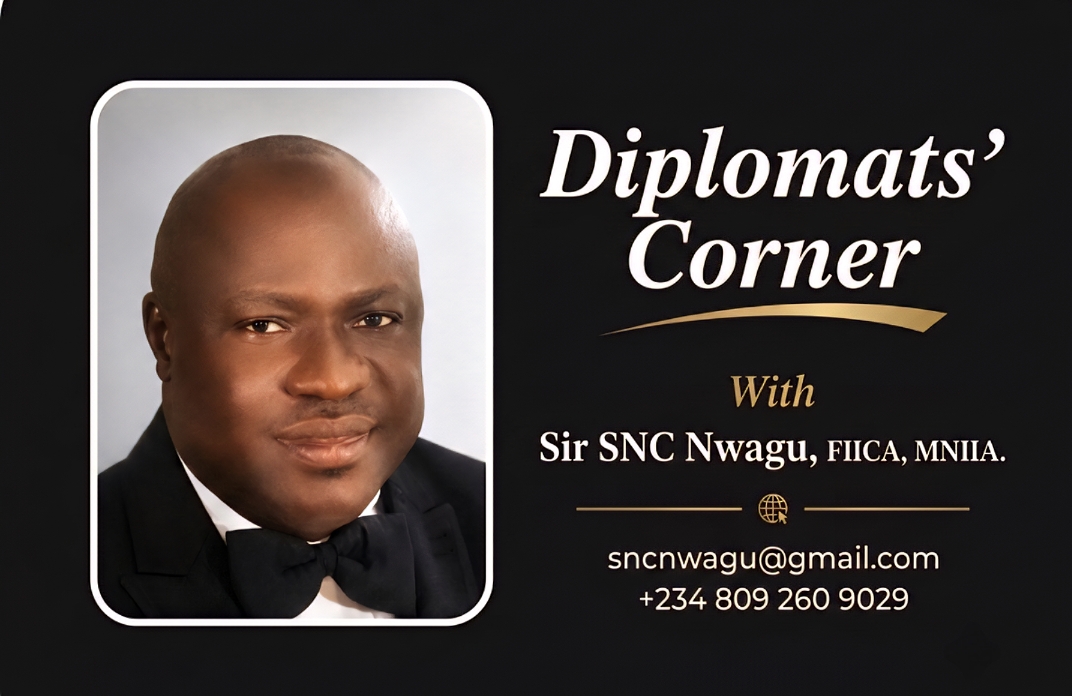
    By SNC Nwagu 

    ​The debate over whether NATO can function without substantial American military support is essentially a European question. But its implications are unmistakably African.

    ​For more than seven decades, American power has underwritten NATO. Now, as Washington reassesses its global commitments, Europe is being forced to assume greater responsibility for its own defense. The lesson is clear: great powers ultimately prioritize their own strategic interests. Africa must take note.

    ​If Europe becomes more focused on defending its own territory, rebuilding its defense industries, and reinforcing its eastern flank, African security may receive less European attention and fewer resources. Africa cannot answer this shift with complaints. It must answer with capacity.

    ​The continent possesses immense natural resources, strategic waterways, a vast population, and expanding markets. Yet it remains heavily dependent on external powers for weapons, intelligence, military financing, training, and logistics. That is Africa’s central strategic contradiction: a resource-rich continent without strategic autonomy.

    ​The African Union has made progress through initiatives such as the Peace Fund, but the larger challenge remains unresolved. Africa must develop the capacity to finance and conduct African-led security operations without perpetually waiting for external assistance. That means intelligence-sharing, indigenous defense production, maritime security, strategic mobility, secure communications, and predictable financing. Above all, it requires political will.

    ​NIGERIA’S RESPONSIBILITY

    ​For Nigeria, the changing NATO equation should be treated as both a warning and an opportunity. Nigeria is too important to remain merely a consumer of global security arrangements. If Abuja genuinely seeks strategic autonomy, that ambition must begin with national capability.

    ​The country’s persistent internal security challenges expose the gap between diplomatic aspiration and strategic capacity. A state unable to secure its borders, citizens, and critical infrastructure will inevitably find its international influence constrained.

    ​Nigeria’s foreign policy should therefore move beyond choosing between America, Europe, China, Russia, or any other competing power. The objective should be partnership with everyone and dependence on no one. Nigeria should cooperate with major powers where such partnerships advance its interests, while building the indigenous capabilities required to make independent choices.

    ​More importantly, Nigeria should use its diplomatic and economic weight to champion a stronger African security architecture—one grounded in collective intelligence, defense cooperation, indigenous military industries, and reliable African financing. Africa does not need another external security guarantor. It needs the capacity to negotiate with every power from a position of strength.

    ​The significance of a possible NATO without America, then, is not simply that Europe may have to defend itself. It is that the international system is delivering an old lesson with renewed urgency: those who cannot provide for their own security will ultimately depend on those who can.

    ​Europe is preparing for that reality. America is recalibrating around it. Africa—and particularly Nigeria—must wake up to it.

  • 35 YEARS AGO TODAY

    35 YEARS AGO TODAY

    -By Abdul Mahmud

    Exactly 35 years ago today, on Wednesday, 28 August 1991, the gates of the Maximum Security Prison, Kirikiri, were finally flung open, and two young student leaders walked out into the Lagos morning after four months of detention by the military regime of General Ibrahim Babangida, carrying with them the belongings with which they had entered the prison and the memory of a struggle that had already begun to shape their lives in ways neither of them could then have fully understood. They were this writer, Abdul Mahmud, then President of the National Association of Nigerian Students (NANS), and Bamidele Aturu, then National Mobilisation Officer of NANS, two young men who had committed the unforgivable offence, in the eyes of a military junta, of insisting that Nigeria deserved something better than the political contrivance that the regime called a transition programme.

    The events that brought us to Kirikiri had begun several months earlier, between 29 April and 2 May 1991, when the Babangida junta moved against the central leadership of the Nigerian student movement and arrested student leaders across the country. The immediate offence was political, and there was nothing clandestine about it: we had called for the resignation of the military junta and demanded an end to what we regarded as its contrived political transition programme, proposing instead a Government of National Unity that would oversee a genuine, inclusive and credible transition to democratic rule. The student movement had understood something that the political class of the period sometimes struggled to acknowledge, namely that a transition designed by an unelected military government could not become democratic simply because the junta gave itself a timetable and announced a succession of political stages, and that the people whose country was supposedly being returned to them had a right to participate in determining the terms upon which that return would occur.

    The response of the junta was to reach for one of the most notorious instruments of repression in its arsenal: the State Security and Detention of Persons Decree No. 2 of 1984, a decree designed to place political detainees beyond the ordinary protection of the law and to give the security apparatus extraordinary powers to detain people without meaningful judicial scrutiny. Under that decree, the courts were effectively shut out from enquiring into the circumstances surrounding an arrest and detention, while those detained could be denied access to visitors and legal representation, turning detention into an experience in which the state became the investigator, jailer and ultimate arbiter of the detainees’ fate. It was this legal hole into which a generation of young Nigerians was thrown, and for those of us who were barely out of our teens or in our early twenties, the experience was particularly brutal because the purpose of detention was never simply to confine the body; it was intended to break the will of the person who had dared to challenge the authority of the state.

    I was 22 years and 6 months old when I was arrested, first taken to the holding facilities of the State Security Service on Awolowo Road, Ikoyi, Lagos, and subsequently transferred to Kirikiri Prison with Bamidele Aturu. Other student leaders were also arrested and detained. Opeyemi Bamidele, who would many years later become the Majority Leader of the Nigerian Senate, Luke Aghanenu, the late Olaitan Oyerinde, the late Biodun Aremu, the late Biodun Ogunade, and Bola Aidi, who would go on to become a Senior Advocate of Nigeria, were among those taken into the SSS custody, while Kayode Olatunji, Chris Akani, who would later become a traditional ruler in Rivers State, Bunmi Olusona, who would later emerge as a chieftain of the All Progressives Congress, Nasir Kura and Chima Okereke were detained in Ikoyi Prison. Looking back after 35 years, the different paths our lives eventually took make the circumstances of our youthful detention even more remarkable, because the state had gathered us together not because we were criminals but because we had become inconvenient voices in a political order that had little tolerance for dissent.

    The experience of prison was deliberately calculated to humiliate and demoralise. Young men who had been students, elected representatives and organisers of a national movement were suddenly treated as though they were hardened criminals, and the authorities were perfectly capable of understanding the psychological effect of placing political detainees in a prison environment designed for ordinary criminal incarceration. For a 22-year-old, the message was unmistakable: the state wanted you to understand that your education, youth, office and political convictions offered no protection whatsoever once the machinery of military power had been turned against you. We were not before a court where the evidence against us could be tested; we were not appearing before a judge who could ask why we had been arrested; we were detainees under a decree whose very design was to remove the ordinary restraints of law from the exercise of state power.

    There was, however, something the military rulers could not quite understand about the student movement, and that was the peculiar stubbornness of conviction among young people who had come to believe that their country belonged to them as much as it belonged to those who occupied the offices of government. Detention could deprive us of liberty, but it could not settle the argument that had brought us there, and imprisonment could postpone a political demand without making the demand itself illegitimate. The years have demonstrated that the questions we raised about military rule, political engineering and the credibility of transition programmes were not the products of youthful impatience; they were questions about the nature of political legitimacy that Nigeria has continued to confront long after the soldiers returned to the barracks.


    Our release itself became a small theatre of the absurdity of military detention. On 27 August 1991, the SSS released us from its headquarters on Awolowo Road, Ikoyi, but there was no formal release order, and, naive as we were, we returned to Kirikiri to collect our belongings, believing that the matter was finally over. The prison authorities, however, were not prepared to let us simply walk away, and so we spent another night in detention, as though the state had forgotten that it had decided to release us. It was only the following morning, 28 August, that the gates of Maximum Security Prison were opened and we stepped out into freedom.

    I have often wondered about those gates, because they have acquired a meaning in my memory that extends far beyond the physical moment of our release. They opened after four months of incarceration, but they also opened into a future none of us could see. We were young men leaving prison with the conviction that Nigeria still had to be changed, although we could not have known what the next decades would bring, which of our comrades would remain beside us and which would depart before the work was finished. We could not have known that some of those who walked into detention with us would later occupy important positions in public life, or that others would become lawyers, politicians and community leaders, or that one of the men who walked out of Kirikiri with me that morning would not live to see this 35th anniversary.

    Bamidele has gone ahead.

    He died in 2014, at the age of 49, leaving behind a life that was far too short for the measure of his convictions. When I remember him today, I do not remember merely the political detainee with whom I shared a cell or the student leader with whom I confronted a military government; I remember a comrade whose courage was formed in the difficult years when dissent carried a price, a friend with whom I shared an extraordinary chapter of Nigeria’s history, and a man who believed that political freedom was not a gift to be bestowed by those in power but something citizens had to insist upon and defend. Thirty-five years is a long time in the life of an individual, but it is a short period in the life of a country, and perhaps that is why the memory of Kirikiri remains so immediate. The faces of those who detained us have faded, the military decrees under which they acted have largely disappeared from everyday political vocabulary, and many of the young people who now participate in Nigeria’s politics were not yet born when those prison gates opened, but the fundamental question that brought us to Kirikiri remains alive: what does it mean to build a country in which citizens can challenge power without being treated as enemies of the state?

    The struggle of that generation therefore cannot be reduced to nostalgia, because to remember those years only as an episode of youthful rebellion would be to misunderstand what was at stake. We were fighting over the right of Nigerians to determine their political future, and although history moved in directions none of us could have predicted, the obligation to continue that work did not expire when the military eventually left office. Political freedom is never won once and for all, and the generations that inherit the gains of earlier struggles inherit, with them, the responsibility to protect and extend those gains. So, 35 years after those gates opened, I remember Bamidele Aturu with gratitude. I remember the young man he was, the convictions he carried and the price he was willing to pay for them. I remember those with whom we shared those dark months, some of whom have gone on to serve Nigeria in very different capacities. Above all, I remember that the gates of Kirikiri did not open because the state had suddenly discovered the virtue of freedom; they opened because, in the end, detention could not permanently imprison an idea.

    Bamidele has gone ahead. I remain. And the work for which we were detained remains unfinished.


  • NDC Enugu at a Crossroads: The Crisis, the Revelations and the Road to 2027

    NDC Enugu at a Crossroads: The Crisis, the Revelations and the Road to 2027

    By Sebastine Okafor, Ph.D.

    A few days ago, the National Leader of the Nigeria Democratic Congress (NDC), Senator Seriake Dickson, convened a meeting for all the leaders of the party in Enugu State to identify the issues affecting the party and discuss how to move the party forward.

    As the Secretary of the party in Enugu State, some members of the State Working Committee and I were invited, but due to time constraints, I could not make it. However, as a well trained columnist, investigative and interpretative journalist, I was able to extract all the information that transpired from our group, opposing group, and others who work with some leaders of the party at the National level.

    My findings are what I will detail in this piece. I found out that what was meant to be a meeting to find a way forward became a can of worms, as one revelation opened the door to another. Even the convener was said to have been shocked by the extent of the problems and allegations that emerged.

    In the meeting, it was evident that NDC Enugu State is on course for total electoral failure, which will favour the PDP and APC in 2027 if absolute justice is not allowed to thrive. During the meeting, the former alleged Senatorial candidate of the party, who was visibly aggrieved, accused the factional gubernatorial candidate of working for the APC and not being serious about the party. He alleged that the man is not popular and that the only face of the opposition is the former Minister of Innovation, Science and Technology, who is already in the PDP. In making his point, he also alleged that the gubernatorial candidate gave him a sum [named sum withheld by us] to run an election in which he did not attend his campaigns and subsequently worked with some members of the national leadership to remove him. From his statement, one could feel the anger in his voice and the fire in his determination to fight back against those he believed had betrayed him. The bitterness surrounding the allegation was understandable, particularly against the background of their previous political relationship.

    The situation became even more revealing when allegations previously directed against other members of the party were reportedly turned against those making them.

    My findings revealed that the meeting also reportedly exposed the extent to which young leaders had become alienated from the party. According to accounts of the discussions, many participants believed that the marginalisation and neglect of younger members contributed significantly to the internal crisis.

    One particularly serious allegation concerned the claim that Dr. Johnpaul Anih and his group collected ₦300 million from the APC to destabilise the NDC. The allegation was reportedly made by one of those who had previously advanced similar claims, and it allegedly shocked Senator Dickson. No evidence substantiating the allegation was presented in the meeting.

    The development demonstrated one uncomfortable reality of internal political conflicts: allegations can eventually return to those who make them. The truths that began to emerge from the meeting were a clear indication that the National Leader was not aware of the enormity of the crisis in the state. He was not aware that the people he entrusted with managing the party did not understand his vision and political ideology.

    Perhaps the most significant revelation was the apparent lack of clarity surrounding the emergence of candidates in Enugu State. It reportedly became clear that some candidates currently presenting themselves as NDC candidates did not emerge through recognised primary elections. Questions were also raised over the circumstances surrounding the acceptance of the name of the party’s factional gubernatorial candidate. According to the account of my findings, INEC officials had initially questioned the candidate’s emergence on the grounds that he had not participated in a known primary election. It was subsequently alleged that the party asked that his name be submitted while arguing that only a court of competent jurisdiction could remove him if anyone challenged his candidacy.

    The controversy reportedly became more complicated after the candidate announced himself publicly as the NDC candidate on May 26, 2026, before subsequently deleting the post after being cautioned.

    These developments raise a fundamental question: can a political party claim to be offering Nigerians a credible alternative while failing to adhere strictly to the democratic procedures required to produce its candidates?

    Another issue raised during the meeting concerned the relationship between the NDC and the Enugu Resident Electoral Commissioner.

    One of the factional candidates reportedly accused the REC of frustrating the NDC and working for the APC. However, another factional female NDC candidate reportedly challenged that argument, pointing out that the REC had applied the same standards to other political parties. That intervention deserves commendation because electoral rules cannot be selectively applied simply because a particular party is dissatisfied with them.

    In my view, the Enugu REC has demonstrated firmness in dealing with questions surrounding electoral compliance. His reported position captures the fundamental principle that should guide electoral administration. If a party did not conduct a primary election, it cannot reasonably expect an electoral officer to certify that one took place. You cannot build a house on sand and blame the wind when the walls begin to shake.

    The meeting with Senator Dickson was inconclusive, reportedly ending without a final resolution, with the National Leader asking that the Enugu crisis be resolved within the state.

    That proposal raises another important concern.

    If the National Secretary and Zonal Vice Chairman of the party are themselves alleged to have played roles in the crisis, can they objectively preside over the process of resolving it? Those with direct interests in a dispute should not ordinarily be the final arbiters of that dispute. You cannot ask the accused to sit as judge in his own case, nor can you put the fox in charge of guarding the henhouse.

    NDC leaders should also recognise the role played by Dr. Johnpaul Anih and his team in conducting a primary election which, according to their position, produced candidates for the party. If the argument is that Dr. Anih lacked the authority to conduct the primary, then the obvious question is: who conducted the recognised primary election that produced the party’s candidates?

    The inability of Senator Dickson’s representatives to conduct a primary election was reportedly one of the factors that frustrated several politicians, including Hon. Tony Ugwu and Hon. Humphrey Onyima, out of the party. You cannot shut the door and complain that people are standing outside; you cannot destroy the bridge and then blame others for not crossing the river.

    Dr. Johnpaul Anih and his team  —which I am a part of — should not be underestimated. They have demonstrated that they are prepared to defend their position, and any peace process must therefore be transparent, credible and inclusive. Any attempt to get the issues resolved must be clear and not an ambush. Nobody is a fool, and any attempt to peddle what did not happen during the meeting will be resisted. Let me say it again: peace talks in Enugu are important, but the National Secretary and Zonal Vice Chairman should not be part of them as interested parties. The process should be handled by independent bodies with zero interest in the matter.

    From all indications, however, some of those calling for peace may not yet be prepared for the compromises required to achieve it. The reported attitude that some members are too insignificant to negotiate with is fundamentally incompatible with democratic politics. You cannot seek peace with one hand while holding the sword with the other. No political organisation can build a sustainable opposition by treating sections of its membership as irrelevant.

    In my next write-up, I will examine what happened at the second meeting, why some leaders reportedly boycotted it despite attending the first meeting with Senator Dickson, their laughable proposed solution and more.

    However, I must acknowledge that I am beginning to admire Dr. SKC Ogbonnia. He is a force to reckon with — a firm, fearless and purpose-driven leader who tells bitter leaf its ugly taste to its face. He does not sugarcoat the truth or dance around the issue; he looks it straight in the eye and calls it by its name.

  • Has APC Exhausted Its Electoral Goodwill?

    Has APC Exhausted Its Electoral Goodwill?

    -By Abdul Mahmud

    In my op-ed last week, Nigeria’s CODESA Moment, I argued that the governing All Progressives Congress (APC) had not yet entered the kind of unmistakable electoral decline that would make its defeat in 2027 a reasonable assumption. That, however, is not the same as saying that the APC is electorally invulnerable. The more immediate question is whether the party has now exhausted enough of its electoral goodwill to become vulnerable to defeat in the 2027 presidential election. Its institutional capacity to win elections remains beyond serious dispute, but institutional power is not the same thing as electoral consent. The relevant test, therefore, is whether the APC still commands sufficient support among voters to overcome the combined effects of incumbency fatigue, political disaffection and the growing capacity of an opposition, however fragmented, to mobilise against it. The recent record of Nigeria’s off-cycle governorship elections offers an imperfect but useful starting point for examining that question.

    Since 2023 general election, the APC has contested eight off-cycle governorship elections in Bayelsa, Imo, Kogi, Edo, Ondo, Anambra, Ekiti and Osun. It won five of them and lost three. At first sight, that record appears formidable. A closer examination produces a rather more complicated picture. In Bayelsa, Timipre Sylva polled 110,108 votes against Douye Diri’s 175,196. In Imo, Hope Uzodinma secured 540,308 votes, while his two principal challengers, Samuel Anyanwu and Athan Achonu, together obtained 135,584. Kogi produced 446,237 votes for Usman Ododo against 259,052 for Murtala Ajaka and 46,362 for Dino Melaye. The two subsequent victories are equally instructive. In Edo, Monday Okpebholo defeated Asue Ighodalo by 291,667 votes to 247,274, a margin of 44,393 in an election in which the opposition was divided between the PDP and Labour Party. In Ondo, Lucky Aiyedatiwa obtained 366,781 votes against Agboola Ajayi’s 117,845, winning all 18 local government areas. Anambra was the reverse of that picture: Charles Soludo of APGA won overwhelmingly with 422,664 votes, while the APC candidate, Uche Ekwunife, managed 99,445.

    Across those eight elections, APC candidates accumulated over 1.85 million votes. That number is large, but numbers detached from their electoral context can be deceptive. The more revealing question is how much of that vote represents durable political attachment and how much is attributable to incumbency, local political structures, candidate-specific advantages, fragmented opposition, patronage, the deployment of state resources or the peculiar circumstances under which each election was conducted.

    No serious analysis should simply subtract alleged votes bought, intimidation or institutional interference from declared results and announce the residue as the “real” APC vote. Such an exercise would require evidence that can withstand scrutiny. There were, however, credible concerns surrounding aspects of several recent elections, including reports of irregularities and questions about electoral integrity. Civil society assessments of the 2023 Bayelsa, Imo and Kogi elections recorded substantial concerns, while subsequent assessments of the 2024 Edo and Ondo elections also examined issues such as overvoting and the integrity of the ballot. The more useful exercise is therefore to ask what happens to APC’s electoral position when the advantages of incumbency are placed under greater pressure and when opposition parties begin to behave as though victory, rather than mere participation, is the objective.

    That is where the eight elections become politically revealing.

    APC’s victories in Imo, Kogi and Ondo were substantial. Its victory in Edo was considerably narrower. Its defeat in Bayelsa, Anambra and Osun demonstrated that the APC could still be beaten in a state where the incumbent possessed a strong local political base. However, Anambra offered perhaps the most striking warning. APGA’s Soludo won with 422,664 votes, more than four times the APC candidate’s total, despite the enormous resources and visibility available to a governing party at the centre.

    Anambra should not be treated as a template for 2027. Neither should Imo or Ondo. State elections are shaped by local political histories, personalities, ethnic and regional calculations, incumbency and the peculiar organisation of political parties. The presidential election will operate on a different scale. Nevertheless, these elections expose a weakness that the APC cannot afford to dismiss: its electoral strength is not uniformly transferable across Nigeria. That weakness becomes more consequential when placed beside the condition of the opposition. The APC’s greatest electoral asset may not be its own popularity but the fragmentation of those who oppose it. The opposition remains dispersed among parties whose leaders have frequently struggled to subject personal ambitions to a common electoral project. The experience of the 2023 presidential election demonstrated the consequences of that fragmentation, when the opposition vote was divided among Atiku Abubakar, Peter Obi, Rabiu Kwankwaso and others. The 2024 Edo election provided another illustration of how division can make a competitive race more difficult for the challenger: the APC won, while the PDP came second and Labour Party came a distant third.

    That is the paradox of 2027. APC may be electorally vulnerable without being electorally exhausted. The distinction is crucial.

    A ruling party can lose goodwill and still win an election. Electoral politics is not a popularity contest in which the candidate with the greater reservoir of public dissatisfaction automatically loses. Victory requires organisation, credible candidates, polling-unit presence, voter mobilisation, legal preparedness and the capacity to translate public sentiment into actual votes. The opposition presently has considerable work to do in each of those areas. The streets matter in this equation. By “connection to the streets” I do not mean social-media popularity or the ability to generate online outrage. Nigerian elections are still ultimately won at polling units, wards and local government areas. The political party that can identify its supporters, persuade them to register, ensure that they vote, protect their votes and remain present through collation possesses an advantage that no amount of online enthusiasm can substitute for.

    APC understands this reality. Its strength is not simply the unpopularity of President Bola Tinubu or the performance of his government. The party has inherited and consolidated an extensive network of political actors across the states. Governors, legislators, local party structures and political appointees provide party political and organisational reaches that fragmented opposition parties presently struggle to match. An opposition party that discovers this only during the campaign will have discovered it too late.

    The assumption that APC has already exhausted its electoral goodwill therefore requires qualification. The party may have suffered a significant erosion of goodwill, but erosion is not exhaustion, and dissatisfaction is not automatically an electoral majority. Nigerians may be unhappy with the party’s performance in government and still vote for the governing party if the opposition presents a disunited front. They may also prefer continuity where they distrust the opposition more than they dislike the incumbent. The real danger to APC is that 2027 could become an election in which accumulated dissatisfaction meets an opposition that has finally learnt how to organise. That combination would be different from the scattered contests of recent years. A disparate opposition gives the APC room to survive with pluralities. A coordinated opposition could transform the same underlying numbers into a formidable challenge.

    For the opposition, therefore, the lesson from the eight off-cycle elections is not that APC is finished. The lesson is that APC can be beaten, but only by an opposition prepared to do the unglamorous work of winning elections. The figures from Bayelsa, Anambra and Osun demonstrate that the ruling party is not invincible. Edo demonstrates that fragmentation can rescue it from a competitive contest. Imo, Kogi and Ondo demonstrate the continuing power of incumbency and political organisation.

    The 2027 election will therefore be decided less by declarations about APC’s declining goodwill than by whether the opposition can convert that decline into an organised electoral force. If it remains disparate, disconnected from the streets and preoccupied with elite negotiations, APC may win despite the erosion of its popularity. If it builds a broad political coalition, develops credible candidates and establishes a physical presence where votes are actually cast and counted, the numbers begin to tell a very different story. APC may have less goodwill than it once enjoyed. Whether that becomes defeat in 2027 will depend substantially on what its opposition does with the opportunity.