Category: Opinion

  • Before We Ask The Police To Die For Us

    Lanre Olagunju
    Lanre Olagunju

     By Lanre Olagunju

    There is something curious about the Nigerian relationship with the police. We complain about them. We criticise them. We film them. We sometimes mock them. But when the armed robbers arrive, we call the police. When kidnappers invade a community, we call the police. When violence breaks out at night, when a missing child needs to be found or when an armed criminal is on the loose, the same institution many Nigerians love to hate suddenly becomes the institution we expect to save us.

    But what do we owe those we ask to protect us?

    Nigeria has lost police officers repeatedly this year while they were doing the job we expect them to do. Since March, publicly reported incidents alone show at least 21 police officers killed in eight separate operational incidents that I could verify.

    DownloadInteractive Maps


    Two officers were killed at a border checkpoint in Kebbi in March. Four died while repelling a terrorist attack in Borno in April. Three Explosive Ordnance Disposal officers were killed by an IED in Zamfara in June. Two were killed at a checkpoint in Rivers, while another two died following a patrol crash in Imo. Two more police officers were killed in Zamfara in July.

    Then came Benue. Four Mobile Police officers were killed defending Ayilamo on 10 September. Four days later, two newly deployed officers were killed in an ambush while escorting the Divisional Police Officer back to the community. That is six policemen dead in one community within days.

    These are not numbers on a spreadsheet. They had names. They had parents. They had wives. They had children who will now grow up with stories about fathers who left home to work and did not return.

    Consider the three EOD officers killed in Zamfara in June. Superintendent Abdulrazak Musa Hassan, Inspector Murtala Musa and Inspector Auwal Ahmad were part of a team responding to a suspected explosive device planted along the Anka-Bagega road. Their mission was to clear a route made dangerous by an IED. The device exploded before they could neutralise it.

    This is one of those jobs that most of us would rather not imagine doing. Someone has to approach the bomb. Someone has to inspect it. Someone has to decide how to make it safe. And sometimes, that someone does not come home.

    The tragedy is that we can become so accustomed to hearing about dead policemen that the  news barely stops us anymore. Perhaps that is part of the problem.

    AccessPremium News


    We should be careful here. Respecting the police does not mean pretending every police officer is innocent, professional or beyond criticism. They are not. Where officers abuse their powers, citizens must be able to speak up, document wrongdoing and seek justice.

    That distinction matters in the current argument about filming police officers. The Inspector-General of Police, Olatunji Disu, recently said Nigerians should not turn policemen into social-media skits, describing indiscriminate filming as demoralising. But he also acknowledged that citizens have the right to record officers performing their duties in public. The NBA President, Oyinkansola Badejo-Okusanya, similarly supported the right to record officers while calling for clearer boundaries around privacy and accountability.

    That seems like the sensible conversation. A citizen should be able to document misconduct. But should a policeman who is risking his life in a dangerous operation also become entertainment because someone happened to have a smartphone?

    There is a difference between accountability and humiliation. There is also a difference between criticism and contempt.

    There is another part of this conversation that Nigerians can influence directly: welfare.

    DownloadInteractive Maps


    A police officer who spends a significant portion of his salary getting to work is carrying a burden before the shift even begins. This is why the recent Lagos initiative is worth watching. The state has provided 2,000 Cowry Cards giving police officers three months of free access to BRT, rail and electric boat services, followed by a proposed 50% fare discount.

    That is not a substitute for better policing. It is not a reward for misconduct. It is simply recognition that welfare and performance are connected.

    The private sector can do more. Air Peace, for example, has been acknowledged by the police for providing rebates and special boarding arrangements for officers.

    Why not extend the idea? Why should a serving police officer not receive modest discounts at selected pharmacies, supermarkets, transport companies, bookshops or educational institutions?

    Why should companies not create scholarship schemes for children of officers who die in service?

    The Police Officers’ Wives Association (POWA), under the leadership of the president, Olufunmilola Disu, has already shown what is possible.

    Through a partnership with the Niger Delta Development Commission (NDDC), it secured a $200,000 master’s scholarship programme for five children of police officers to study in the United Kingdom. It has also supported scholarships, nursing education, medical outreaches and welfare programmes for families of police officers.

    These gestures matter because a policeman does not leave his family behind when he puts on his uniform. He carries them with him. And when he dies, they remain.

    Perhaps Nigerians need a new phrase. Not because the police should be above scrutiny, but because those who serve should not be beneath appreciation.

    Thank an officer. Support an officer. Demand professionalism from an officer. Report an officer who abuses power. Protect the right of citizens to demand accountability. But also remember that the person standing at that checkpoint is human.

    In America, “Thank you for your service” is often used for members of the armed forces and security services. Nigeria need not copy another country’s culture wholesale. But we could borrow the principle.

    Before we ask the police to sacrifice everything for the country, perhaps we should ask ourselves a simpler question: What are we doing to make it worth their while to keep standing between us and danger?

    Because a country cannot endlessly demand courage from people it refuses to honour.

    And if we want better policing, perhaps the first step is not simply asking the police to do better. Perhaps it is also asking whether we, as a society, are doing enough to help them do better.

    Lanre Olagunju wrote in from Abuja

  • Why NDC May Be Heading for a Ballot Crisis in Enugu

    Why NDC May Be Heading for a Ballot Crisis in Enugu

    By Sebastine Okafor, Ph.D.

    A few days ago, various media platforms were filled with reports of the withdrawal of one of the gubernatorial aspirants of the Nigeria Democratic Congress (NDC), Enugu State Chapter, Prof. Enenwannaji, following his alleged truce with one of his fellow aspirants, Sir Chinyeaka Oha. The Prof. is said to have emerged from what many described as an “illegal primary” conducted by the state chapter of the party, led by Dr. Johnpaul Anih, whom they claimed was not recognised. However, after a series of peace talks, he decided to step down for Sir Oha, whom he described in the media as his brother.

    That act was seen by many as a welcome development, to the extent that many media houses reported that the crisis bedevilling the party was over. But, in reality, it may only be the beginning of the main crisis.

    Where there are two allegedly disputed processes and one person decides to step down, the withdrawal of one does not, by itself, cure the alleged legal defects surrounding the process that produced the other. In law, a disputed process cannot simply become valid because one of its participants has withdrawn.

    It is a well-known fact that the National Working Committee of the party did not conduct any primary election in the state, while the state faction recognised by INEC, led by Dr. Johnpaul Anih, conducted what it described as one of the best primary elections to be held by any opposition political party in the state.

    Going by the legal questions surrounding the process, NDC may be heading into a deep electoral problem in Enugu State. The party, for instance, swore affidavits to protect some of its earlier fielded candidates, including Hon. Emeka Aba for Igboeze North/Udenu Federal Constituency, Barr. Agubuzo of Udi/Ezeagu Federal Constituency and Bishop Oscar Ossai of Enugu North Senatorial District, among others, before somehow removing them.

    In those affidavits, the party allegedly confirmed that it did not conduct any primary, while filing a series of conflicting documents. In one document, the party stated that the chairman of the electoral committee, Chief Teddy Obey, conducted the primaries with his team. In another affidavit, the party denied that Chief Teddy Obey was the chairman of the electoral committee.

    The reason for this is not far-fetched. Chief Obey is the Zonal Vice Chairman of the party in the South-East Zone and also a member of the 20-member National Selection Committee and Screening Committee. Chief Teddy’s alleged involvement in these different capacities has raised substantial questions about compliance with the party’s guidelines, especially where the party itself appears to have attempted to remove his name from the list of those who conducted the primary election.

    It is also a known fact that, even where the party claims to have conducted a primary in Enugu, questions remain about the existence of a clear and verifiable list of electoral committee members who conducted the alleged primaries across the senatorial zones, federal constituencies and state constituencies.

    This is important because the courts have repeatedly held that a party’s primary process must comply with the law, the Constitution of the party and its own guidelines. In APC v. Nelson & Ors (2023) LPELR-59758(CA), the Court of Appeal stressed that evidence must establish that the primary was actually conducted by the competent organ of the party before other issues surrounding it can have legal effect.

    As it stands, the party has about 40 cases challenging the outcome of the primary in the Federal High Court, Enugu, and more than 11 doing the same at the Federal High Court, Abuja.

    One clear position running through these disputes is the allegation that the NWC of NDC did not conduct any primary election in Enugu State and that even the primaries the party claims to have conducted are not supported by a clearly established INEC monitoring report.

    The courts have recognised that the conduct of party primaries is not completely beyond judicial scrutiny where statutory or party rules are alleged to have been breached. In Mansur v. PDP & Ors (2023) LPELR-59791(CA), the Court of Appeal considered the legal consequences of an alleged failure to conduct a valid primary, while in Agi v. PDP, the Supreme Court reaffirmed that the courts can intervene within the limited area created by electoral law when the nomination process is alleged to have violated the law or party guidelines.

    Another angle to this is that, in some cases, the party would allegedly deny the involvement of the plaintiff in the pre-primary election process, claim that its candidate emerged through affirmation and still publish the names of those it claimed never participated, with the names appearing in certified copies of its primary election result sheets reportedly signed by the same Chief Obey whose involvement the party had denied.

    These conflicting positions are not matters that can simply be wished away through political negotiations. They raise questions of evidence, credibility and the legal foundation upon which any candidate seeks to stand.

    The Supreme Court has made it clear that the political party plays a central role in the sponsorship of a candidate. In Ozomgbachi v. Amadi & Ors (2018) LPELR-45152(SC), the Supreme Court addressed the relationship between political parties and their candidates in electoral contests.

    It is a known fact that a series of allegations have been flying around about the party in Enugu, but the truth remains that you cannot build something on nothing. You cannot collect money from people, write names of candidates, create conflicting records and expect those affected not to seek justice.

    Where a party wants its candidate to appear on the ballot, the foundation of that candidacy must be legally defensible.

    A settlement between two aspirants may resolve a personal disagreement, but it does not automatically extinguish the rights of other aspirants who have approached the courts, nor does it erase questions concerning the legality of the primary process.

    The courts have repeatedly treated the statutory and party-guideline requirements as relevant where a genuine aspirant challenges the nomination process. As the Court of Appeal noted in Labour Party v. Nnaji & Anor (2023) LPELR-59426(CA), disputes surrounding party nomination can turn on whether the party complied with the applicable legal and internal requirements.

    As it stands, the party in Enugu State may find it difficult to escape the legal tussle in which it has allegedly found itself because just one successful suit out of the many pending cases could have serious consequences for its candidates and its participation in the election.

    This is why the question is no longer simply whether Prof. Enenwannaji has withdrawn for Sir Chinyeaka Oha. The bigger question is whether the process that produced the candidate who remains can survive judicial scrutiny.

    If a court finds that the relevant primary was not conducted by the competent organ, was not properly monitored or was otherwise not conducted in accordance with the Electoral Act and the party’s guidelines, the withdrawal of one aspirant cannot rescue the process.

    In that situation, the real possibility is that NDC may be left without a legally sustainable candidate in Enugu State and, consequently, may not find its name on the ballot for the affected election.

    The only potentially sellable candidate for the party in the state, therefore, remains Peter Gregory Obi, but even that political strength cannot substitute for compliance with the law.

  • Nigeria Owes Tobi Amusan a Statue

    Nigeria Owes Tobi Amusan a Statue

    –By Abdul Mahmud

    There are countries that build monuments to their heroes because they understand something that Nigeria appears to have forgotten: a nation does not preserve its memory by allowing history to remain in books, archives and speeches alone, it gives memory a physical address, places the faces of its heroes in the public square and tells succeeding generations, through bronze and stone, that these are the men and women whose lives enlarged the meaning of the country they served; Nigeria should begin such a conversation with Tobi Amusan, and I would go further, I think Nigeria owes her a statue.

    The argument has little to do with athletics alone, and even less to do with the transient excitement that accompanies victory on a track, for Amusan did something considerably larger than win a race: she placed the Nigerian flag at the summit of world athletics, became the first Nigerian world champion in an athletics event, broke the world record in the 100 metres hurdles in Eugene in 2022 with 12.12 seconds, and returned almost immediately to win the world title in a manner that transformed her from a gifted athlete into part of the country’s permanent sporting history. The world record has now been taken from her by America’s Masai Russell, but records move, champions change and sporting history keeps rewriting itself; what cannot be erased from Nigerian history is that Amusan was the first Nigerian athlete to hold a world record and win a World Athletics Championships title.

    A statue would therefore not be a reward for a race, nor an ornamental gesture towards a successful sportswoman, but a public declaration about the kind of citizenship Nigeria chooses to honour; in a country where too much public space has been appropriated or effectively privatised by people whose careers have left the country poorer in both material and moral terms, there is something almost radical about returning the public square to the public and filling it with the likenesses of people whose achievements belong to everyone. Nigeria has become remarkably generous with the elevation of political power into public memory, with the names and images of officeholders appearing on roads, buildings, and institutions, while their records remain contested, but the people who have given the country reasons to feel proud are too often left with medals, photographs and the fading applauses of ceremonies. Other countries understand the difference. Britain has placed Nelson Mandela in Parliament Square in London, among figures whose public lives have become part of the moral language of the country and the wider world; India has filled its public spaces with monuments to Gandhi, Ambedkar and other figures whose lives are inseparable from the country’s history;

    Such monuments do something more than preserve likenesses. They tell a nation what deserves remembrance.

    Nigeria has no shortage of people deserving such remembrance. The country has produced writers who enlarged the African imagination, scientists whose work travelled beyond our borders, athletes who made the Nigerian flag visible on the greatest stages of world sport, soldiers and civilians who paid the ultimate price in moments of national crisis, teachers who spent entire lives educating children without receiving anything approaching the honour accorded to less deserving public figures, and ordinary citizens who performed extraordinary acts of courage without cameras, government delegations or ceremonial titles. Joseph Blackson should belong to this conversation. In 2018, when a passenger boat capsized in Rivers State, Blackson, a 36-year-old diesel supplier and father of two, repeatedly entered the water and rescued 13 people; he was attempting to rescue the 14th when he died. There is something deeply unsettling about the fact that such a man can disappear almost completely from national memory while the names and faces of men who have done considerable harm to the public good remain permanently reproduced across Nigeria’s civic landscape.

    Abuja offers us an extraordinary opportunity to correct this imbalance. The Federal Capital is a city of hills, and those hills already give the capital a natural scenery from which to contemplate the city below. I would like to see Nyesom Wike, the Minister of the Federal Capital Territory, consider turning one of those hills into a national place of remembrance, perhaps the hills around the intersection of the road beyond NICON Junction and the expressway running from the AYA Junction towards Gwarimpa, into what might appropriately be called Heroes’ Hills. Or the hills overlooking the city gate. Imagine approaching Abuja and seeing, rising above the metropolis, the statues of Nigerians whose lives have given the country something larger than political office: Amusan standing with the quiet authority of an athlete who carried the Nigerian flag to the summit of world sport; Blackson looking towards the city whose citizens he once risked his life to save; and, alongside them, the men and women whose courage, intellectual achievement, sacrifice, or service have enlarged the grand Nigerian story.

    The idea has an appealing symbolism because Abuja was conceived as the capital of a nation that sought a common centre, a place that could stand above the claims of particular regions and speak to the idea of Nigeria as one country. What better place, then, for a hill of heroes? From such a height, the statues would look over a city that represents the Nigerian idea of unity, while the city below would look upwards towards people whose achievements belong to no single ethnic group, religion or political party. Heroes’ Hills could become a place where a Nigerian child from Sokoto stands beside another from Rivers and sees in the monuments a shared inheritance; a young athlete from Edo could encounter Amusan’s story and imagine a future of her own, while the story of Blackson could remind another child that heroism does not require office, wealth or fame. A visitor to Abuja would encounter not another monument to political power, but a hillsscape devoted to the memory of people who gave something to the nation without demanding the nation in return.

    A country should know the difference between power and heroism. Power can purchase a billboard, commission a portrait and name a road; heroism does not need an office before it deserves remembrance. Amusan ran for Nigeria when the world was watching, Blackson entered a river when people were drowning, and the moral value of their acts does not depend on whether either of them possessed political influence. A child walking past a statue of Amusan would encounter the image of a Nigerian woman who reached the highest level of her sport; a child standing before a monument to Blackson would encounter the story of a Nigerian who saw strangers in mortal danger and entered the water until his own life was lost.

    There is also a deeper reason for putting Amusan in bronze. Her world record may have been taken from her, but the passing of a record should strengthen rather than diminish the case for preserving her place in Nigerian memory. Records belong to the present; monuments belong to memory. Another athlete may run faster, another generation may produce a greater hurdler, but nobody can become the first Tobi Amusan again. Her 12.12 seconds in Eugene belongs permanently to the history of Nigerian sport, just as her world championship belongs to the country’s history. The statue should stand somewhere Nigerians actually encounter it in the course of ordinary life, somewhere young people pass on their way to school, work or sport. A monument should interrupt the ordinary movement of a city and ask the passer-by to remember. Heroes’ Hills would offer precisely such a setting.

    Let us build the hill where Nigeria’s real heroes can look over the country they helped make proud. Let us put Tobi Amusan in bronze.

  • Broken System, Broken Lives:Tinubu’s Toxic Legacy – By Oseloka Obaze

    Broken System, Broken Lives:Tinubu’s Toxic Legacy – By Oseloka Obaze

    Under President Bola Ahmed Tinubu and the ruling All Progressive Congress (APC), Nigerians have experienced an abhorrent failure of governance.  Eight years of Muhammadu Buhari was a disaster. In its aftermath, and four years of President Tinubu’s presidency, nationalism, governance, unity, peace and security have foundered progressively.  Patriotism is all but dead.

    APC’s leadership -in the three arms of government – has behaved so capriciously that rule of law and, our entire democracy is at stake.  Tinubu’s administration, has mortgaged the future of Nigerian children, including the unborn. Our lives and our governance modalities are broken. That’ is sufficient grounds to vote them out in 2027.

    Under Tinubu’s watch Nigeria has borrowed itself into a huge debt trap; so much so that our national economy and fiscal profile are unsustainable.  Presently, Nigeria owes a whopping N160 trillion in debt. Meanwhile, the government has squandered N9.3 trillion saved from fuel subsidy on salaries and other non-capital and non-generative expenses.  The government now wants to raid the N270 billion in dormant accounts and unclaimed dividends belonging to private citizens.

    As a nation, Nigeria has never been this weak and this exposed. This explains why the government is running national budgets from three fiscal cycles concurrently. Budget padding has become the norm. Due process, savings or the sovereign wealth fund is not their priority. APC has been so fiscally profligate that there is neither a firewall nor a safety net for the national population.  And there are no proper guardrails against official malfeasance. Nigeria is now a crime scene. The evidence abound.

    Then there is the blatant failure in delivering basic education and primary healthcare, resulting in 20 million out-of-school children and a globally high rate of infant and maternal mortality.  Pervasive insecurity nationwide, threatens communities, livelihood, food security, manufacturing, and has resulted in 350,000 civilian deaths and over 900, 000 internally displaced persons (IDPs).

    Overall, the government has failed in its primary responsibility to protect Nigerians. Hunger and poverty stand weaponized. Ungoverned spaces are expanding. Cost of governance and cost of living have spiraled sky-high.

    Tinubu’s government is audaciously undemocratic. Constitutional violations abound in its actions. Budget padding and whimsical alteration of legislative bills is now the norm. A case in point, the presidency altered provisions of the 2025 tax reform bill passed by the National Assembly.  The presidency by subterfuge arrogated to itself authoritarian powers like seizing and selling of taxpayers assets without court orders.  This is not just criminality; it is authoritarianism writ large.

    All our national development indices now point southwards.  180 million Nigerians are strapped in multidimensional poverty. We have 20 million out of school children, the highest globally. A bulge of our national youth population falls within the NEET cadre-Not in Education, Employment or Training.

    Tinubu’s Nigeria represents the classical case of leadership hubris and arrogance. Tinubu’s leadership is so fraught with hubris that our national psyche is egregiously damaged. The president’s personal and leadership credentials continue to demarket Nigeria. Bigotry, nepotism, and tribalism in governance, appointments, projects and resources distribution has worsened our deep-seated challenges in ways hitherto unimaginable.

    Disconcertingly, the present cadre of leaders does not only display extreme false pride, but also a false sense of superiority.  Their groupthink deludes them into believing that they know best; they refuse expert advice and often contend that the rule of law is not applicable to them.  It’s hardly surprising that the government’s top hierarchy as well as the APC presidential campaign team is replete with public officials with pending criminal cases.

    Tinubu’s government has wittingly become fascist. The present administration is driven by precepts rather than best practices. Government’s purpose and possessiveness are tribe-driven. So despite visible and indisputable infrastructural blight and palpable broad disenfranchisement, such gross domestic disapproval has been muted by bigotry and tribalism.

    Tinubu and the ruling APC are the very antithesis of clean governance. What is most troubling is that the leadership seems insensitive or clueless as to how bad things are in Nigeria.  They also seem oblivious that price hikes of over 20% on commodities like medicine, food and fuel induce adverse shock on the society.

    For most Nigerians, there is no aspirational quality to national life. Indeed, life under Tinubu is short, brutish and cheap.  Bloodletting and death becomes us. Things are so bad that if APC were a manufactured product, it would have been pulled off the shelves and banned for being detrimental to human existence.

    Clearly, Tinubu’s governance modality is off-kilter and his administration is so undisciplined that the government has no compassion or moral compass. Misaligned policies elicit toxic legacies. As such, a patent glaring distrust and distance now exists between the Presidency and the national population. This is the result of a perversely broken system, broken lives, and Tinubu’s toxic legacy. This is a disaster for Nigeria. The status quo cannot stand. It cannot continue, not when Nigeria faces an existential threat.

    Year 2027, will serve as Nigeria’s meeting moment. Presently, most political discourse in Nigeria revolves on bad governance, excessive borrowings, and excessive cost of governance; the parlous economy, pervasive insecurity, impunity, blinkered corruption and diametric State Capture.  These are undemocratic dividends under Tinubu that must end.

    Already public criticisms of Tinubu’s government and open dissent are on the rise.  Public anger is also simmering, especially amongst Gen Z youths. Some scrimmages have occurred publicly. The situation seems fragile and ready to snap at which point the anger might spill into the streets.  As things stand, Nigeria runs the risk that an electoral incident, a faux electoral outcome or a mere happenstance, might be catalytic to such an uprising.  Those who deem that possibility unlikely are living in a fool’s paradise. They should be thinking of how to avoid or react to the type of violent Gen Z uprising that occurred in Bangladesh in 2024 and Nepal in 2025.

    Despite presumed sectional gains and coveted advantages, President Tinubu has done enormous political damage to his tribe in the context of Nigeria. Nonetheless, only Nigerians can redress their national plight. As such, Nigeria’s political opposition must rally to the common cause of voting out Tinubu and the APC.  Another four years of Tinubu and the APC means that we won’t have a nation called Nigeria. 2027 might be Nigeria’s tipping point.

    ———-

    Obaze is MD/CEO, Selonnes Consult – a policy, governance and management consulting firm in Awka.

  • ​Energy Transition Milestone Under Dr. Kingsley Udeh: President Tinubu Commissions Africa’s First Barefoot Renewable Energy College – PART 1

    ​Energy Transition Milestone Under Dr. Kingsley Udeh: President Tinubu Commissions Africa’s First Barefoot Renewable Energy College – PART 1

    By Professor Ani Casimir, KC

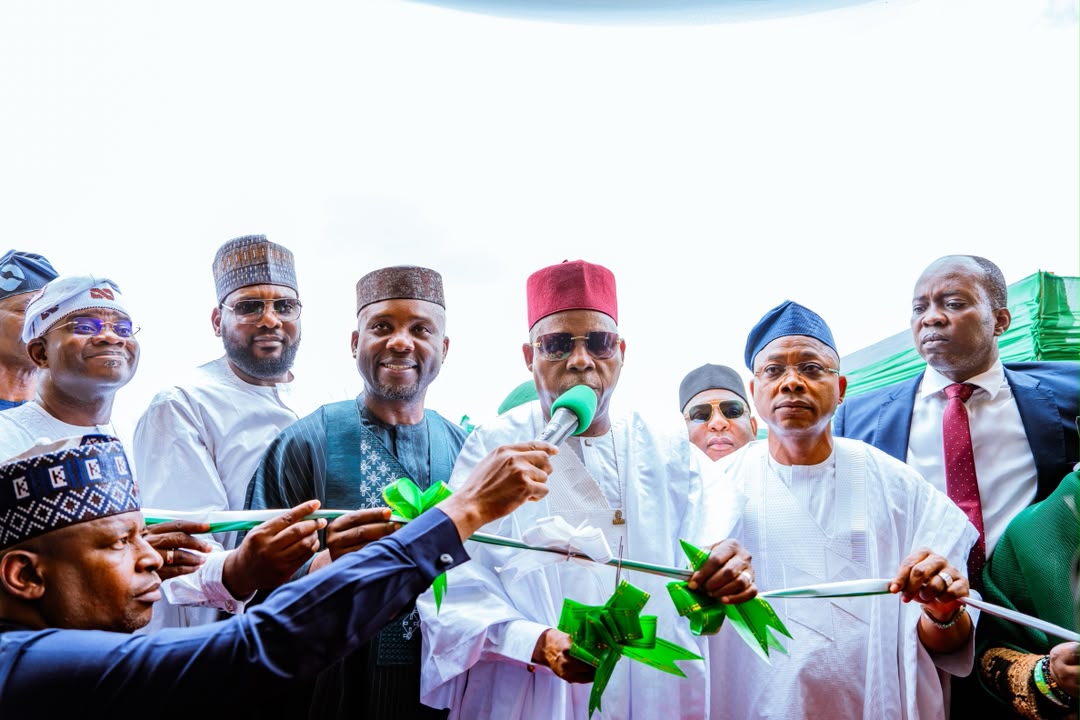
    ​Osara in Kogi State, Nigeria, has turned into another Jerusalem and a history maker for the President Bola Ahmed Tinubu, GCFR, administration in the critical sub-energy sector. The Honourable Minister of Innovation, Science, and Technology is chalking up huge creditable records that are increasing his validity and positive visibility in the eyes of the Presidency—something never witnessed before by his predecessors in office. He is a record breaker, as Osara has made national history under President Tinubu’s watch as the new vista of sustainable energy generation. In a historic leap toward sustainable power and green economic growth, President Bola Ahmed Tinubu, GCFR, has commissioned the Energy Commission of Nigeria (ECN) Complex and the pioneer Barefoot Renewable Energy College in Osara, Kogi State, Nigeria. Described as the first of its kind in Africa, the project stands as a strategic cornerstone of the Federal Government’s commitment to energy security, technical capacity building, and clean energy transition under the Renewed Hope Agenda.

    ​The Honourable Minister waxed poetic as he hailed the commissioning of BARECKS and the Green Hydrogen Pilot Plant, which President Tinubu reaffirmed as a practical manifestation of his commitment to innovation-led development. The elated President Bola Ahmed Tinubu, GCFR, represented by Vice President Senator Kashim Shettima, GCON, commissioned the Barefoot Renewable Energy College (BARECKS) and the Green Hydrogen Research and Demonstration Pilot Plant in Kogi State. The Honourable Minister of Innovation, Science, and Technology, Dr. Kingsley Tochukwu Udeh, SAN, beaming with patriotic pride, described the landmark projects as a bold demonstration of the Federal Government’s commitment to innovation, renewable energy, and sustainable national development. While giving his keynote address at the commissioning ceremony, the Minister said the twin projects reaffirm the Federal Government’s resolve under President Tinubu’s Renewed Hope Agenda to build a knowledge-driven economy where Science, Technology, and Innovation (STI) serve as catalysts for industrialization, job creation, economic prosperity, and sustainable national development. He noted that the Ministry remains focused on translating research into practical solutions, innovation into commercial opportunities, and scientific discoveries into national wealth.

    ​The National Strategic Investment for a Sustainable Energy Future

    ​Highlighting the transformative vision behind this historic development, the Honourable Minister of Innovation, Science, and Technology, Dr. Kingsley Tochukwu Udeh, SAN, described the complex as a strategic national investment designed to bridge Nigeria’s technical skills gap and power its renewable energy infrastructure. “The Energy Commission of Nigeria Complex and the Barefoot Renewable Energy College perfectly align with and project the Renewed Hope Agenda of Mr. President,” Minister Udeh stated after the successful commissioning of the Osara Energy Project. “It will promote job creation, economic diversification, improved energy access, poverty reduction, and sustainable development.”

    ​The Barefoot Renewable Energy College is structured to deliver hands-on, practical training in solar technology, biomass, and other decentralized renewable platforms. By equipping technicians, youth, and rural innovators with market-ready skills, the institution will nurture and sustain a massive concentration of an indigenous workforce capable of installing, maintaining, and scaling clean energy systems across West Africa. The Honourable Minister and the Presidency have spent quite some time ensuring that everything is in place for the success of the commissioning. Now that it has taken place, we need to highlight the insider details of this strategic breakthrough in Nigeria’s sustainable renewable energy institutionalization.

    ​Key Highlights of the Osara Complex

    ​1) Each facility and unit in the College is an innovative project initiative with core functional impact for Nigeria’s technological transformation and development. Nigeria is on the move in Africa as a core driver of technological innovation. A conceptual clarification of the complex’s separate units will illustrate this strategic benchmark with the Osara College curriculum layout:

    ​2) Barefoot Renewable Energy College: Practical vocational training in solar, biomass, and renewable technologies to build a skilled workforce.

    ​3) Green Hydrogen Research & Demonstration Pilot Plant: Decentralized green hydrogen testing as a clean alternative to diesel generators.

    ​4) National “Research to Revenue” Alignment: Translating home-grown indigenous scientific innovation into commercialized, market-driven energy solutions.

    ​5) Net-Zero 2060 Commitment: Targeting greenhouse gas reduction across the industrial, transportation, and power sectors.

    ​Pioneering Green Hydrogen Innovation

    ​The four core functional areas go beyond vocational training. A technical layout identifies the Osara complex’s technological innovative energy project that houses the Green Hydrogen Research and Demonstration Pilot Plant. The facility serves as a testing ground for decentralized green hydrogen systems—a zero-emission alternative designed to offset heavy reliance on diesel generators, particularly in regions with fragile grid infrastructure. Dr. Udeh emphasized that diversifying Nigeria’s energy mix with green hydrogen directly advances the country’s pledge to attain net-zero carbon emissions by 2060. The Ministerial vision mirrors the President’s Renewed Hope vision that cascades to many functional divisions: first, the Barefoot Energy College, and second, the Green Hydrogen Facility. In the first place, the Barefoot College will generate and activate practical training, workplace upskilling, and local technical assembly. On the other hand, the Green Hydrogen Facility will establish a diesel alternative for Nigeria, increase grid stabilization, and help Nigeria achieve the 2060 net-zero target set by Mr. President.

    ​As the Honourable Minister, Dr. Kingsley Tochukwu Udeh, SAN, assured: “Osara will empower Nigeria and Mr. President to achieve this strategic energy target for the nation.”

    ​…to be continued in the next part.

  • Who Really Benefits From Africa’s War On Terror?

    Who Really Benefits From Africa’s War On Terror?

    By S.N.C Nwagu

    For years, Africa has fought terrorism with soldiers, budgets and foreign partnerships, and for years terrorism has survived them. Armies are deployed, emergency security budgets approved, foreign assistance received, counter-terrorism operations launched in succession. Yet from Nigeria’s northeast to the Sahel, from Somalia to parts of Central and East Africa, terrorist organisations keep demonstrating the same disturbing skill: they absorb military pressure, recruit new fighters and reinvent themselves.

    This is the question Africa has not sufficiently confronted: why does terrorism persist, and who benefits from its persistence?

    THE RELIGIOUS EXPLANATION—AND ITS LIMITS

    The conventional answer is religion. Boko Haram, al-Shabaab, al-Qaeda affiliates and Islamic State-linked organisations invoke Islam and dress their violence in religious language. That is real, and no honest analysis pretends otherwise.

    But it is also incomplete. Millions of African Muslims reject terrorism outright. They live, trade and worship peacefully alongside Christians and adherents of African traditional religions across the continent. If religion alone produced terrorism, every country with a large Muslim population would experience it at comparable scale. None do.

    Religion supplies the ideological vocabulary of terrorism. Poverty, exclusion, weak governance, political grievance, criminal economies and the absence of state authority supply the soil it grows in. Collapsing that distinction is where Africa’s terrorism debate keeps going wrong.

    WHEN TERRORISM BECOMES AN ECONOMY

    A young person without work, education, security or hope is vulnerable to any organisation offering money, protection, identity and belonging. Poverty does not manufacture terrorists on its own, but it lowers the cost of recruiting them.

    And once an extremist organisation takes root, something more dangerous follows: terrorism becomes an economy in its own right. Fighters need financing, and they get it through kidnapping for ransom, extortion, illegal taxation, smuggling, illicit mining, trafficking and control of commercial routes. Where government authority is weak, armed groups do not merely disrupt the state — they become an alternative one, taxing communities and traders directly.

    A group may preach religion while running the books of a criminal enterprise. That is the part of the story Africa’s terrorism debate keeps skipping.

    THE BENEFICIARIES OF INSECURITY

    The question worth asking is not only what religion the terrorists profess. It is what political and economic conditions let them survive, what criminal networks sustain their operations — and, more uncomfortably, who gains when insecurity continues.

    Terrorist organisations gain obviously: money, recruits, territory, publicity, bargaining power. Criminal networks gain alongside them, since weapons trafficking, illegal mining and smuggling flourish precisely where government control is thin.

    There is a third beneficiary Africa is reluctant to name: corruption. Every prolonged security crisis demands enormous expenditure — weapons, equipment, surveillance systems, security contracts, emergency budgets, special interventions. Spending money to protect citizens is not the problem. The problem begins when weak accountability turns insecurity itself into an opportunity for private enrichment, and a war quietly becomes an industry. Once that happens, peace threatens the interests of everyone who has learned to profit from war.

    THE INTERNATIONAL DIMENSION

    Africa’s insecurity does not unfold in isolation. Foreign governments have legitimate security interests on the continent — and economic and geopolitical ones alongside them. Terrorism can justify military cooperation, intelligence partnerships, foreign bases and strategic engagement that might otherwise be harder to secure.

    None of this proves that foreign powers created African terrorist organisations; that claim would be simplistic and unearned. The more defensible argument is narrower: existing conflicts can be, and are, exploited by external actors for strategic advantage. External actors exploit local grievances. Local elites exploit foreign interests. Criminal organisations exploit instability. Terrorist organisations exploit poverty and weak governance. Everyone enters the same conflict carrying a different objective.

    NIGERIA’S BOKO HARAM: A CASE STUDY IN COMPLEXITY

    Nigeria’s experience with Boko Haram makes the point concrete. Its religious ideology is real, and its violence against civilians, schools, religious institutions and government targets cannot be waved away as mere economic grievance dressed up in scripture.

    But neither can the environment that let Boko Haram grow be ignored. Poverty, unemployment, poor governance, corruption and weak state presence built the vulnerabilities that extremism exploited. Military victory over its fighters was never going to be sufficient on its own — and it has not been.

    Africa can eliminate fighters and still leave behind the conditions that produce their replacements. It can destroy camps without destroying the criminal economy that finances them. It can raise military spending without strengthening the institutions that earn citizens’ trust. And it can keep describing every terrorist as a religious fanatic without asking why certain communities remain fertile ground for recruitment.

    BEYOND THE BATTLEFIELD

    The central African question is not whether terrorism is religious or economic. It is both, and neither explanation stands on its own. Religion supplies the ideology; political grievance, the motivation; economic deprivation, the vulnerability; weak governance, the opportunity; illicit markets, the financing; geopolitics, the amplification.

    This is why the fight against terrorism has to move beyond the battlefield. Africa needs security forces capable of defeating armed groups — and, just as urgently, governments capable of defeating the conditions that let those groups regenerate: employment, education, accountable government, effective justice, secure borders, transparent management of natural resources, and the disruption of terrorist financing.

    FOLLOW THE MONEY

    Above all, Africa must start following the money. When a terrorist organisation survives for years, somebody is financing it. When illegal mining continues under armed groups’ control, somebody is buying the minerals. When weapons cross borders repeatedly, somebody is supplying them. When ransom payments keep kidnapping networks in business, somebody is receiving the money. And when insecurity persists despite enormous security expenditure, somebody should be asking where that money has actually gone.

    The real question is bigger than terrorism itself: who benefits from Africa’s insecurity? Until the continent asks that question honestly — and insists on an answer — it may keep winning battles against terrorists while losing the larger war against the political and economic conditions that let terrorism survive.

    Terrorism speaks the language of religion. Its survival is sustained by economics, politics and power. That is where Africa’s next counter-terrorism conversation should begin.

  • Amódemájá and Nigeria’s Political Paradise of Lies

    Amódemájá and Nigeria’s Political Paradise of Lies

    By Festus Adedayo

    In 1969, legendary Yoruba Sakara music lord, Yusuff Olatunji, serenaded and celebrated the sterling qualities of the Seriki of Egbaland, Chief Abdul-Wahab Amódemájá. Amodemaja held an Egba high-ranking military-derived civil title. In his Volume 3 album entitled Amódemájá, using a twin engine of dense metaphor and vivid imagery, Olatunji advocated for the place of good people as templates of a good society. The man he called “Abudu Amodemaja” was his prime example. He sang: “If you behold some people gaily and expensively dressed, sitting in royal poise on elegantly embroidered horses, unbeknownst to an enraptured world taken in by these adornments, these men are merely decorated swindlers.” Olatunji’s raw Yoruba rendering was: “B’óo r’òmo elòmíìn l’órí esin, jìbìtì l’ó fi ñs’èsó.”The paradox of esin (horse) and èsó(adornments), set against jìbìtì (swindle), was a potent literary tool this Sakara legend deployed to teach the virtues of the noble citizen.

    Are there still good people in Nigeria? Are there good people in Nigerian politics? Can they be found anywhere in Nigerian government circles?

    Yusuff Olatunji sang this song barely nine years into the Nigerian post-colony. It was an era when personal honour was paramount, and dishonorable people were treated as social rejects and villains. Olatunji himself had carved a remarkable niche in the social cosmos. A musical hippopotamus, his feat in popularizing traditional Yoruba music across Nigeria and the West African coast was adjudged legendary. Deploying profound poetic lyrics, philosophical reflections on existential matters, and a mastery of the single-headed frame drum called the Sakara, Olatunji denounced societal ills while celebrating impeccable character.

    Amodemaja was equally known by the moniker, “A. B. Council” due to his massive influence in First Republic’s Abeokuta Council local administration. Musicians of the era took turns celebrating this incredibly influential powerhouse of Egbaland. Yet, Amodemaja was a prominent Ogboni secret society leader for whom the Edan – a sacred, highly revered pair of cast brass/bronze figures clipped by an iron chain that served as membership emblem and spiritual authority in the indigenous Yoruba Ogboni society – was his bond. In an emerging post-colony where Christianity and Islam had colonized the religious consciousness of the people, how did that society reconcile this complex reality?

    Amodemaja spent a lengthy period as the Adelé Oba (Regent) of Egbaland before the coronation of Oba Oyebade Lipede as the 9th Alake of Egbaland. His character must have been the reason why, when he passed in the late 1970s, his death caused a seismic rupture in the social fabric of Egbaland. Indescribably hurt by the shock of his passage, his fellow Egba son and Apala music spellbinder, Ayinla Omowura, composed an evergreen tribute in his honour. In it, Omowura deconstructed death as a “disheveled idiot with ugly, black, and dilating eyes” for its audacity in stealing the crème de la crème of society. Suddenly, as Omowura sang, the cadence of his drums shifted. His drummers masterfully infused the solemn, heavy rhythmic beats of the Ogboni traditional dance into their drumming. It was a final salute to a man for whom neither the Bible nor the Quran, but the cylindrical Edan, was his bond – a tribute that led critics to submit that Omowura himself was likely an initiate.

    Forgive the digression. The offering today is not music, traditional worship, or a tribute to departed heroes. It is politics – raw Nigerian politics in its most roiling, unfiltered form. The focus today is the dwindling values of Nigerian politics and politicians, alongside the elaborate swindle racket that governance in the country has become.

    Look around you today. Even before they officially mount campaign podiums, Nigerian politicians have begun regaling us with grand promises. In real terms, these are simply an assortment of lies in which they do not believe and which will never materialize.

    What is the precise place of lies in Nigerian governance? A vast body of literature exists on lying as a political weapon. The Nigerian electorate should, as usual, prepare to be treated to a confetti of falsehoods as we travel the 2027 election road. Worldwide, debates on social and political lies continue to engage public discourse. Are political lies symptoms of a systemic cancer, or are they mere political sports that should be excused? In the 2022 Annual Billy Dudley Memorial Lecture he delivered, Prof. J. A. A. Ayoade, dwelt extensively on this phenomenon. It is a paper that remains an essential reading.

    Lying, Ayoade noted, is “ubiquitous and prevalent in human society.” He defined a political lie as one “purposely constructed in the politician’s heart to deceive the public with a view to gaining and/or maintaining political power.” He observed further: “Studies say that Americans lie an average of 11 times per week. This is in contrast to Donald Trump, who, according to the Washington Post, logged 20,055 falsehoods in 1,207 days – an average of fifteen lies per day. The average politician, starting at age eighteen, would have lied 33,747 times by age seventy. At 30,000 false claims attributed to Trump in his four-year term, he told 88.9% of the lies the average citizen would tell in fifty-three years.” This reality likely drove Nobel Laureate Wole Soyinka to dub Nigeria “the Republic of Liars” in his 2015 work, InterInventions: Between Defective Memory and the Public Lie.

    The maths above does not diminish the toxicity of political lies or the sheer scale on which politicians deploy them. The liar, Ayoade argued, “opts to lie because he calculates that the truth cannot deliver the expected reward to him in that particular case.” He cited Adolf Hitler, who concluded that “it is not truth that matters, but victory.” Ayoade set this side-by-side with former Aviation Minister Femi Fani-Kayode’s boast that he would rather die than defect to the APC. When Fani-Kayode eventually defected, he justified eating his words by stating, “There is no point having principles without power” – a sentiment echoed by American politician, Robert S. Strauss, who famously remarked, “If you’re in politics, you’re a whore anyhow.”

    In Nigeria’s contemporary political landscape, the petroleum subsidy has become the lowest-hanging fruit of national mendacity. It is a convenient bait dangled like worms on fishing hooks to catch unsuspecting fish. Aware that the subsidy removal is the hemlock Nigerians have been forced to drink in 39 months under Bola Tinubu, with severe effects on their daily existence, politicians view it as the primary path into the electorate’s hearts. Both President Tinubu and former Vice President Atiku Abubakar have boarded this convenient vessel to secure prime space in the public consciousness. Yet, the truth remains that neither figure holds the masses as their main concern; the primary objective is the preservation of their elite status and personal political empires.

    As the whistle blows for the commencement of the 2027 political campaigns, Nigerians are once again in for a seasonal roulette of tears, sorrow, and blood. It is a season of sabre-rattling, damaging rhetoric, and a dangerous descent into political anarchy. The dress rehearsals are already being served à la carte across the nation. Politicians are painting the dais red with do-or-die rhetoric. If I’m asked for examples, myresponse remains that once an okra farm is within reach, harvesting it before it becomes overripe need not be a complex enterprise. Yoruba say this as “Bí oko ò jìnnà, ilá ìí kó”.

    One example holding Nigerians on tenterhooks is the ongoing drug allegation debate -a humiliating spectacle for the nation. It is humiliating because, regardless of guilt or innocence of the charge, it is a shame that a Nigerian president is subject of a drug inquisition. After all, Yoruba say if one does not walk in the manner of an Òkété, the African giant pouched rat, no one would offer one the rat’s palm kernel favourite meal.

    The central dispute, whether evaluated in American court dockets or in the court of public opinion, centers on whether the Nigerian president was involved as a baron or courier of illicit narcotics. In recent statements, the Washington-based lobbying firm hired by Atiku Abubakar, Von Batten-Montague-York, claimed that FBI files link Tinubu to a criminal organization smuggling heroin during the 1980s and 1990s. As the firm presses its claims, the presidency’s efforts to distance itself from the matter have only drawn more attention to the allegations. It then will seem that, the more it tries to pull its horse from this dirty manger, the more messy dung this heroine drama pelts on its face. The American lobbyists, in a most recent X post, claimed that Tinubu would face international embarrassment at the UN General Assembly. Looks like, in the hands of Atiku, our president is carrying on his head a faggot enveloped by a notorious beehive (ó ti ru igi oyin).

    Through this evidentiary search — what some have termed “legal tourism” — Atiku Abubakar appears to be pursuing a Samson option: the total destruction of what he views as a political house of cards built by his former friend and ally.

    Tinubu and Atiku, friends-turned-foes, risk treating the nation to an equivalent of a Mutually Assured Destruction (MAD) — the Cold War military doctrine where a full-scale nuclear attack by one power guarantees complete annihilation for both sides. For both men, this dynamic represents a destructive equation. Francis Bacon’s reflection on friendship underlines the tragedy of this dispute: “Age appears to be best in four things: old wood best to burn, old wine to drink, old friends to trust, and old authors to read.” Even Yusuff Olatunji, in the album referenced earlier, sang that the deity in a friend’s house should not seek one’s ruination: “Òrìsà ilé òré eni, kò gbodò run ni.” Both gladiators seem deaf to that counsel.

    Yet, this destructive chess game continues between men vying for the ultimate political prize. As this piece was about going to press, news filtered in that a regime fawner has called for an exhumation of Atiku’s 2006 indictment by the EFCC. He has thus issued a 14-day ultimatum to the EFCC to reopen and prosecute these historical corruption allegations against the Wazirin Adamawa.

    Seasons of political campaigns in Nigeria remain seasons of vitriol and drama. Painfully, everyday citizens are regularly drawn into these partisan conflicts. To be fair to contemporary politicians, rhetoric, exaggeration, and underlying tension have long been part of the nation’s political lineage. Like Tinubu and Atiku, when the relationship between erstwhile friends, Western Region Leader Chief Obafemi Awolowo and Premier Chief S. L. Akintola, broke down irretrievably in the 1960s, the region was consumed by incendiary rhetoric. Campaign grounds became arenas of ethnic anxiety and personal insults, where hostility was openly weaponized.

    As the 1964 general elections and the 1965 Western Regional elections approached, Premier Akintola formed an alliance with the Northern People’s Congress (NPC) led by the Sardauna of Sokoto, Ahmadu Bello called the NNDP. Action Group also aligned with Nnamdi Azikiwe’s NCNC to form UPGA. Akintola accused UPGA of facilitating an Eastern takeover of the West, using campaign tropes that framed the opposition as an ethnic vehicle designed to disenfranchise the Yoruba. He frequently repeated names like “Okafor” and “Okeke;” “Ikejiani” which he inflected to “Ekini-ani” to highlight claims of Igbo domination of western region civil service appointments. He used this logic to justify his alliance with the NPC. Conversely, UPGA labeled Akintola a feudal puppet and traitor who sold Yoruba to Hausa-Fulani hegemony.

    Akintola, an orator par excellence, who used to be labeled by Adegoke Adelabu as “Osanyin Awolowo” – “Awo’s deity” due to his tiny voice like that of an Orisa deity – deployed the Yoruba language to great effect at campaign rallies. Veterans of that era recall that during campaigns in the Ekiti district – where Awolowo’s reputation was held in high regard – Akintola openly mocked the opposition’s emphasis on formal education. He joked that only in Ekiti could one find professors named after birds, playfully altering the name of the renowned economist, Professor Aluko, to “Professor Agbe and Professor Atioro.” In the Bendel area, he derided Awolowo’s prominent supporters like Dennis Osadebey, declaring: “Bí Òrìsà bá d’ébè, a ó f’òkò tu ká!” – meaning, even if a deity manifested as a farm mound, his party would level it with hoes.

    In the Eastern region during the Second Republic, political contests were equally fierce. In old Anambra State, the primary struggle was between Jim Nwobodo of the NPP and Christian Chukwuma (C. C.) Onoh of the ruling NPN. As both sides competed, language became a central weapon. Campaign strategists satirized opponents using localized humor and wordplay. Nwobodo’s supporters mocked Onoh’s name through deliberate homophones, calling him ‘Onoh ono Okpa,’ meaning “Onoh who swallows Okpa,” – a popular, protein-rich traditional food pudding made from ground Bambara nuts – while Onoh’s camp portrayed their rival as desperate for political survival. Figures like Nnamdi Azikiwe were surrounded by elaborate political mythologies, with supporters attributing near-mystical resilience to him to rally voters.

    When political engagement is reduced to manufactured promises, historical grudges, and calculated character assassination, governance loses its moral compass. Just as Yusuff Olatunji warned his listeners 57 years ago not to be deceived by the grand adornments of riders on horseback who conceal fraudulent intent, the contemporary electorate must learn to look past the elaborate pageantry of the political class.

    Until citizens demand genuine integrity and accountability over strategic deception, the nation will remain trapped in a paradise built on falsehoods – a system where power is pursued as an end in itself, and public good remains a secondary consideration.


  • August of Deaths – By Abdul Mahmud

    August of Deaths – By Abdul Mahmud

    August has ended, but it has left behind the peculiar silence that follows the departure of people whose lives had become part of our own the landscape. It was, for me, an August of deaths, arriving not as a single calamity but as a succession of personal encounters with mortality, each death reopening the same age-long question that humanity has asked in different languages: what does it mean to be alive when those with whom we shared portions of our journey suddenly cease to be?

    August had barely travelled halfway of its own calendar when the news of the death of my younger colleague at the Bar, Rockson Igelige, who was introduced to me many years ago by my Comrade and fellow poet, Ogaga Ifowodo, filtered into the social media space. Rockson was then pursuing his law degree at the Metropolitan university in London when he was introduced to me, and we spoke a few times while I was still living in England. Our paths became more closely connected after I relocated to Nigeria, and we subsequently collaborated on a few trademark and intellectual property matters. There are professional relationships that remain simply professional; but there are others that acquire, almost imperceptibly, the warmth of friendship and intellectual companionship, and Rockson belonged to both categories. The news of his death therefore arrived like a thunderbolt, not by the mere announcement of the end of a life but the abrupt closure of a future that, until the moment of death, seemed to belong naturally to him.

    No sooner had the shock settled than the news of the death of Dotun Oladipo broke out. I knew Dotun only fleetingly, but his work as one of Nigeria’s pioneer digital publishers was sufficient to register his name in my memory. There is something particularly poignant about the death of people whose work helped shape a world that continues to exist after them, because their absence is measured not only by those who knew them personally but also by the persistence of the institutions, ideas and practices to which they contributed. Death removes the person while leaving behind the consequences of the person’s labour of love, creating that strange human paradox in which someone can be gone and still remain present in the things he helped bring into existence. Then came the death of Comrade Emma Ugboaja, General Secretary of the Nigerian Labour Congress, and with it came the sorrow that accompanies the departure of a Comrade. Emma was ever smiling, possessing a manner of deference that often made me appear to be a much older Comrade whenever we met. “You be senior Comrade,” he would say whenever I resisted the reverence. His death diminishes an already dwindling tribe of Nigerian activists, those men and women whose political lives were formed in an era when activism demanded something more than the convenience of commentary, and solidarity was often sustained by personal sacrifices rather than the transient excitement of social media. The death of an activist-tribune, another voice of courage and conviction, was yet another painful blow.

    The month ended with the death of Dan Orbih. As a young man just out of school in 1985, I knew Dan as the manager of his late father’s Hilltop Hotel at the time. He was also one of the young men who occasionally turned up at my mother’s saloon in Auchi for drinks, a lively and urbane youth, sufficiently memorable to remain in the mind of a young man watching, with the curiosity of youth, the young men who gathered there to entertain themselves in revelry. Close to two decades later, he attended my wedding in Auchi, where there was the happy reunion with my mother, who was delighted to reintroduce me to him. Our relationship had, interestingly, been forged at another level through  my in-laws who have shared a family relationship with the Orbihs stretching back into time. In fact, my wife lived in his house in Port Harcourt during her NYSC year. His death, therefore, arrived not simply as the death of a political figure I had known, however distantly, but as the disappearance of someone woven into different strands of a personal story.

    Perhaps, this is what death does to humanity: it converts the living into memories and memories into questions. Epicurus famously argued that death should not trouble us because when we exist, death is not present, and when death arrives, we no longer exist to experience it. There is an austere logic to this Epicurean point, but human beings have never experienced death as a mere proposition in logic. They experience it through the empty chair, the unanswered telephone, the photograph suddenly acquiring a different meaning and the familiar name that can no longer be attached to a living voice. Martin Heidegger understood human existence through what he called being-toward-death, suggesting that mortality is not an incidental event at the edge of life but a condition that shadows every human possibility. Death gives urgency to existence precisely because our time is finite. The tragedy is that we usually understand this only when someone close to the circumference of our lives dies. The dead do not only depart from us; they alter the meaning of our own remaining time.

    Shakespeare was more explicit when he captured this fleeting human existence with extraordinary economy: “Life’s but a walking shadow, a poor player that struts and frets his hour upon the stage. And then is heard no more.” There is something unsettlingly contemporary about those words. We spend our lives acquiring professional distinctions and reputations, influence, friendships, grievances and possessions, still death possesses the ultimate power to flatten these distinctions without negotiating with their owners. Then, the lawyer, publisher, labour activist and politician are heard no more. While death does not entirely defeat us, it reveals the extent to which a human life exceeds the biological fact of its ending. Rockson remains in the professional memories of those with whom he worked; Dotun’s memory remains wholly in the Nigerian digital news world he helped create; Emma and Osaretin remain in the memories of comrades who shared the struggle with them; Dan remains in the recollections of families, associates and friends whose lives intersected with his. The dead therefore continue to inhabit the living, not as ghosts but as memories, stories and unfinished conversations.

    August has passed, and September has since arrived with the ordinary demands of life, reminding us with cruel efficiency that the world does not stop because someone died. Perhaps, this is the final lesson that death painfully conveys to us: that mortality does not take people from us, it asks the living to reconsider what they are doing with the time they still possess. For those of us who knew these men, however briefly or intimately, August will never again be just another month on the calendar; it will remain a reminder that life is temporary, memory is fragile, and every human encounter may one day become elegy.

    May the memories  of the faithful departed be a blessing.

  • “After Ichie Omee-Okachie Spoke to Ejindu” – By Okey Ikechukwu

    “After Ichie Omee-Okachie Spoke to Ejindu” – By Okey Ikechukwu

    Ejindu was a young man whose voice had not yet become strong enough to be heard during the meetings and conversations of elders. He had always disliked the behaviour of the King and others who were supposed to be the leaders of the community. And his closeness to his grandfather, Omee-Okachie, gave him deep insights into community affairs and human nature well beyond his years.

    He had become an old man in a young body, because of his inner maturity. Yes, his years of carrying his grandfather’s bag and accompanying him to the meetings of elders have not been in vain.

    Earlier in the day, during a public event, the King was behaving so disgracefully that an old man in the Village Square shouted, as he was leaving in rage and indignation: “Does it mean that there is no young man of character who can say ‘Eji ndu eme gini’ and put an end to this nonsense and debauchery.

    It was this incident which Ejindu witnessed in the Village |Square that made him to seek out his grandfather for a conversation.

    “What is the full meaning of my name?” the young man asked his grandfather, as he entered the old man’s house and sat before him. Okachie, his grandfather, smiled at his grandson and was silent for a while. He surveyed his visitor with a satisfied air that could only be noticed by the most discerning. The young man had not turned out badly, thought the old man to himself.

    Then, addressing Ejindu, he said: “Is it now our custom in Alaoma for young men not to greet their elders? Has it also now become our custom that someone who has come in from the midday sun after a long day should not first sit down, even have a drink of water?

    In a mildly caressing but dignified and firm tone, Okachie demanded an explanation from his grandson.

    Ejindu apologized for his behaviour, but declined the invitation to drink water. What brought him to his grandfather at that time of day was more important to him than life itself. As the people of Alaoma would say, personal comfort is the last thing on the mind of a man who has crossed seven rivers and seven evil forests in pursuit of a goal.

    In response, Okachie said: “Before I go into the full meaning of your name, let me first confess that I was recently beginning to ask myself whether you were indeed the person I thought you were on the day your mother gave birth to you. Now that your time has come, I must tell you that you are the one to find out the true meaning of your name and live up to it.”

    This was not what Ejindu expected to hear. What does the old man mean by saying that ‘his time’ had come? He prodded his grandfather further.

    Then Okachie said: “The words in your name cannot be easily explained, but your name asks the question: ‘Of what value is one’s life if it is not spent in the service of what is good? This name is for people who easily act out of conviction and concern for truth and justice, because they want what is right. Such people will rather die than save their lives and positions, while living for nothing.”

    Ejindu sat still, like one in a trance, even as Okachie continued speaking. Besides the first two sentences about the meaning of his name, he actually did not hear the rest of what his grandfather was saying. All he could sense in his soul was: “Oh, so I was right all along, after all. I was not mad each time I thought of challenging the wrong things in Alaoma community”.

    After the visit to his grandfather, after their conversation that lasted for hours and after Ejindu had time to reflect on so many things, he spent the next twelve months meeting different age grade associations, groups of titled men and women, elders, women leaders, tradesmen and others. What was he doing? What was he planning? At every such meeting, he would remind the people of how things used to be in the past and how it could now be again if they all rejected what was wrong.

    Neither Ejindu nor any of the individuals and groups he spoke could understand, or explain, how the young man acquired such deep knowledge of these things that was evident in his words; and also in the solutions he offered.

    And, wait for this, Ejindu made out time, now and again, to sharpen his obejili. This was a machete of such excellent workmanship that it put every other machete in Alaoma to shame. Then twelve months passed since Ejindu’s conversation with his grandfather.

    The people were now preparing for yet another New Yam Festival. Ejindu spent the last three days before the festival reviewing his activities of the last twelve months. He also still made out time to sharpen his Obejili regularly.

    When the day of the festival finally came, Ejindu’s mind was clear. His determination was also firm. He arrived the community square on time. As the King came in with his retinue of shameless elders and reprobate titled men, he knew what to do – or so he thought.

    On sighting the King as he entered the square, Ejindu was so overcome with anger and loathing that he instinctively began to draw his Obejili from its sheath. But then, all of a sudden, before he could pull it out completely, raise it, or walk into the square to strike the King, it was as if the very gods themselves whispered words of wisdom into his ears. He slowly and calmly put his half-drawn machete back into its sheath. Fortunately, no one noticed anything.

    Pausing for a moment, Ejindu collected himself surprisingly quickly. He had realized in an instant that to kill the King would be to commit murder. That would not be the best way to get the people to come around to what he had been preaching to them.

    If he wanted the people to re-invent themselves and restore the lost glory of Alaoma, if he wanted them to create a new society that would really be their own, then he must make them remember all he had discussed and agreed upon in the periods and months of his quiet consultations with them. He must give them the chance to prove that they were the people he believed them to be.

    Resolved to bide his time and pick his moment, Ejindu waited for the King to begin his usual empty speeches. When, as was now the norm under this King, eight men formed two rows and went down on all fours, for the King to use them as steps to come down from his horse, Ejindu stepped forward.

    He stood tall, imposing and defiant in the Square. Then, turning to the crowd, he spoke in that bellowing voice he inherited from his ancestors: “People of Alaoma, is it our custom for Kings to walk on us as foot stools?”

    The Square fell silent; so very silent! You could almost touch the silence in the air. The King turned, astonished at the presence of what he considered ‘a nobody’ standing in the Square. In his presence? Someone dared to enter the square, while he, the King, was there?

    Worse still, this nobody found the voice to also speak; again, in his presence? Regaining self-control, the King laughed at the Ejindu’s audacity and addressed him thus: “Young man, why are you in such a hurry to join your ancestors before your time?”

    Many people in the crowd feared for Ejindu’s life. They knew the usual fate of anyone who annoyed the King. But the drama was only just beginning.

    “I asked our people a question”, Ejindu replied without even looking at the King. “You say you are King, so you are not the people. Allow the people to answer my question.”

    One of the sycophantic elders found his voice and gave a shrill cry of feigned outrage. Facing Ejindu, but at a safe distance because he had seen the young man’s Obejili and the sheath housing it, he shouted: “Is there no limit to insolence? So, because of your senseless question, which is an affront to the King, you will not allow royalty to come down from the horse that has the honour to carry him? What do you think …”

    But Ejindu interrupted him, replying without also looking at the man: “There is no royalty sitting on this horse. The horse has dignity, but the burden on it does not.”

    The crowd moved uncomfortably and a few subdued voices tried to warn Ejindu. Others tried to repeat what he said.

    He continued, “This horse has suffered long enough. I shall now save it from the humiliation of this demeaning task. At the same time, I shall help this no-King to come down from the horse.”

    With these words, Ejindu drew his machete, raised it and struck just one blow. It was the type of blow Alaoma village had not seen for many generations. The head of the horse was neatly separated from the body and the King tumbled to the ground, shaking in terror.

    Some people scattered out of fear, and also because of the restive and headless horse, but quickly rallied again.

    As the King and his crowd of scoundrels were shivering in discomfort, an old man shouted from the crowd, “Alaoma people are you surprised? Have I not been saying it for a long time now? Our people say that a bad dancer has no right to expect gifts from the audience. A King that is un-Kingly also has himself to blame if there is no genuine cry of outrage when he is humiliated in public.”

    Another voice replied from the opposite end of the Square, saying: “A masquerade that destroys market stalls and flogs its drummers cannot blame anyone, or say it has been desecrated, if a woman defiantly walks up to it to offer unsolicited advice, or even gives it a slap.”

    When no one else made any further comments, Ejindu turned his back to the King and began to address the people. (Thisday Backpage)

  • NDC Enugu at a Crossroads: The Crisis, the Revelations and the Road to 2027 — Part 2

    NDC Enugu at a Crossroads: The Crisis, the Revelations and the Road to 2027 — Part 2

    By Sebastine Okafor, Ph.D.

    In the part 1 of this piece, I alluded to how I was able to extract the information of all that transpired as a well-trained columnist, investigative and interpretative journalist. I will proceed with detailing my findings in this part 2.

    Less than 24 hours after a meeting with the National Leader of the party, Sen. Seriake Dickson, another meeting was held at the residence of an aide to the National Leader in Maitama Extension, Mpape, Abuja. The meeting was moderated by the National Secretary, who reportedly presented a version of events that was strongly disputed. Perhaps he forgot that he was dealing with young people who keep records and documentation.

    The meeting lasted more than three hours and was attended by only some of those who had participated in the earlier meeting with Senator Dickson. Several others reportedly stayed away, including the Enugu East Senatorial candidate backed by one faction, the gubernatorial aspirant from Nike and former Senator, and the House of Representatives candidate for Enugu North and South Federal Constituency, among others.

    The moderator, during his speech, said that the National Leadership had agreed to return all the Protem Chairmen who were in place prior to the congress across the nation and that this was the reason they were at a crossroads with Enugu. He also asserted that Dr. Johnpaul and his team had been defiant and never wanted to participate in any discussion, which, according to him, made the National Leadership ignore them.

    These were claims that even he himself knew were untrue. As our elders say, “An elder who lies forgets that the younger ones may still remember the truth.” A man who stands before people must be careful with his words because records do not forget what the mouth says.

    Taking the floor, he accused the National Secretary of presenting what he described as “childish lies” and questioned the basis of his narrative. He recounted how his team waited for him at Transcorp Hilton until 3 a.m. on May 6, how they met him in his office on May 7, and how appointments were subsequently fixed at Guzape on two occasions, only for the team to arrive and wait for hours without meeting him. He also questioned the planned installation of Prof. Akubue as the State Chairman, among other issues.

    These questions, among others, exposed serious contradictions in his narrative and left his claims difficult to defend. As the saying goes, “When a man digs a pit with his own hands, he should not be surprised when he falls into it.” The attempt to rewrite the sequence of events only made the existing records more relevant.


    The meeting also descended into heated exchanges between an Awgu-born Senatorial aspirant and the gubernatorial candidate backed by one faction. The gubernatorial candidate reportedly accused the Senatorial aspirant of abusing and maligning him in the media. The Senatorial aspirant rejected the allegation and responded in equally strong terms. It was reported that, in his words, he said he could not support a placeholder who was not running an election to win but was allegedly participating merely to play a role and secure space for the APC.

    The confrontation became so heated that the convener had to intervene to prevent the meeting from breaking down completely.

    To me, the exchange further exposed the deep mistrust and unresolved disagreements among the various interests claiming to represent NDC in Enugu State.

    After the situation became calm, a proposal was presented which, according to many observers, suggested that those who claim to be Enugu NDC leaders either do not genuinely want peace or may be pursuing interests that are inconsistent with the party’s growth in the state.

    They agreed that there had been a congress whose outcome was not properly managed and that there was therefore a need for harmonisation. However, they proposed that the harmonisation should take place after the election among three groups: the Dr. Johnpaul group, Protem Obetta and other interested parties.

    Under the proposal, the Dr. Johnpaul group would provide only 5 out of the 29 State Executive positions. They would also retain the Protem Chairman whom the National Secretary claimed was brought in by an NWC member and former APC Enugu lawyer who, according to the account presented, is from the same village and ward as the said Protem Chairman.

    They further proposed that all court cases should be withdrawn, after which the party structure would be announced and properly authenticated after the election.

    If that account is correct, it raises legitimate questions about the basis for the choice. The central political question remains: why should a disputed structure be the foundation of a reconciliation process that is supposed to resolve a disputed structure? That, in my view, is hardly a convincing formula for reconciliation. It is increasingly difficult to understand how a lasting peace can emerge when individuals who are themselves accused of contributing to the crisis are expected to determine the terms of its resolution. A genuine reconciliation process must be transparent, inclusive and acceptable to all sides.

    It is also clear why people should be wary and meticulous about supporting or investing in NDC-peddled candidates because, from the events unfolding, such candidacies may struggle to gain the legitimacy, structure and organisational backing required to fly.

    Political investors, aspirants and supporters must therefore ask difficult questions before committing their resources, reputation and political future to candidates presented under a disputed structure. They must demand clarity on the party’s leadership, congresses, primaries, legal standing and the authenticity of the structures under which candidates are being presented.

    A political party cannot build confidence among voters while its own internal processes remain surrounded by contradictions, competing structures and unresolved litigation. Until there is genuine reconciliation, proper documentation and a transparent resolution of the Enugu crisis, anyone dealing with the party must exercise caution and conduct proper due diligence.

    The records are available, the meetings took place, the appointments were made, and the communications exist. Those who attempt to rewrite history should therefore remember that political arguments may be forgotten, but documented records remain available to speak for themselves.

  • The Petrol Price Question (2): The Cost Of Energy And The Nigerian Household

    The Petrol Price Question (2): The Cost Of Energy And The Nigerian Household

    In my earlier writeup, “The Fuel Subsidy Question,” I asked:

    “If Nigerians have sacrificed through the removal of petrol subsidy, where is the dividend of that sacrifice?”

    That question remains unanswered, and may not be satisfactorily answered.

    But there is a bigger question. How much should Nigerians pay for energy in a country blessed with crude oil, gas, sunshine, rivers, and enormous human resources?

    For decades, Nigeria has treated energy as just another commodity to be taxed and sold. We disagree.

    Energy is the foundation of an economy. When diesel becomes expensive, factories become expensive to run, and food becomes expensive to move. When petrol becomes expensive, transportation becomes expensive. When Jet A1 becomes expensive, flying from Lagos to Abuja becomes a luxury. When cooking gas becomes expensive, the household pays for a policy failure in the kitchen. In other words, when energy is expensive, everything becomes expensive

    A nation cannot industrialise when its manufacturers must generate their own electricity. A farmer cannot be competitive when moving his produce consumes its value. A small business cannot grow when powering its shop competes with paying its workers. This is why Nigeria cannot build a productive economy on expensive energy.

    For almost twenty-five years Nigeria paid for a broken subsidy system. The Federal Government records show that over N16.5 trillion naira was spent on petrol subsidy since 1999. In 2011 alone, N2.1 trillion was spent, that was more than half the federal budget that year.

    If those payments were full of fraud, where is the accounting for that fraud? Who took it? How much was recovered? Who was held responsible?

    And there is another subsidy Nigerians pay that no government accounts for.

    In 2023 alone, Nigerians spent N16.5 trillion buying diesel, petrol and generators to power their own homes and factories. This is according to federal government data.That means in one year, Nigerians spent on generators what the Nigeria government purportedly spent on petrol subsidy in twenty-four years.

    That is the cost of darkness. That is the cost of an economy that runs on generators instead of electricity. Factories, hospitals, schools, shops and homes – all paying twice for power that should be once. When I say expensive energy is the foundation of expensive everything, this is what I mean.

    A government that makes electricity reliable will return that N16.5 trillion annually to Nigerian families and factories. That is money that can build homes, pay workers, fund vacation, and make food cheaper.

    Therefore, the current political debate of whether fuel subsidy should return or stay removed is too narrow. It simply tells us that those who have been holding the country down in the past forty years, especially the past twenty-five years, whether they once held office, currently hold office or waiting on the sideline to return to power, represent the same system of backwardness.

    One says subsidy should return. Another says it must never return. Another promises N605 per litre. They are all arguing about the price tag on a broken system.

    We will fix the system. We will not make attempt to amend the broken system and make it more efficient, we will fix it, reform it and transform the system.

    We produce crude oil. We must refine it in Nigeria. We must ensure reliable crude supply to refineries, create competition among refineries, strengthen pipelines and storage and eliminate the unnecessary costs loaded onto every litre.

    We will establish a transparent framework that publishes the real cost of petrol from crude to pump. Nigerians should pay the efficient cost of production, not the cost of inefficiency and corruption.

    Where temporary support is necessary, it will be open, budgeted and independently audited. But our destination will always be the same – petrol becomes cheaper because it costs less to produce in Nigeria.

    The same will be true for diesel, for aviation fuel and for household energy.

    Diesel is not a luxury. It is what powers production. We will reduce its cost and reduce the economy’s dependence on it by making electricity reliable.

    Jet A1 is not a luxury. An economy as large as Nigeria should not make domestic flights affordable only for the wealthy.

    Cooking gas is not a luxury and should never be seen as one. No family should spend a disproportionate share of its income simply to cook. Energy policy must have the Nigerian household at its centre.

    But the biggest energy reform of our reform is electricity.

    The cheapest petrol for any business is the litre it does not need because it has light.

    If factories have reliable electricity, diesel falls. If hospitals and schools have reliable electricity, their costs fall. If homes have reliable electricity, generator dependence falls.

    Therefore electricity will be at the centre of our economic transformation.

    And we will change who owns and who refines.

    For several decades Nigerians were told NNPCL belongs to them, but in the real sense, it belongs to a few elites. Under a CDA government, it truly will belong to the people. We will list NNPCL on the Nigerian Exchange so ordinary Nigerians can own a stake and become shareholders in their petroleum wealth. What belongs to the people must be owned and watched by the people.

    And we will break the monopoly on refining. We will promote modular refineries across the country, owned by Nigerian investors, cooperatives and states. We will not build an economy where one refinery determines whether 220 million people can move. Competition will drive efficiency, and efficiency will drive affordability.

    We will not subsidise inefficiency. We will not subsidise corruption, smuggling or monopoly. We will not subsidise dependence. We will subsidise transformation.

    We will invest in making energy cheaper to produce, not in permanently paying for an expensive system.

    And we will open the books.

    Nigerians will know how much crude is produced, how much is stolen, how much is exported, how much goes to refineries, how much it costs to refine and transport, and what the consumer finally pays.

    So how much should Nigerians pay for energy under a CDA government?

    Our answer is not an arbitrary political figure.

    Our principle is that Nigerians should not pay more than the efficient cost of producing, refining and delivering energy in Nigeria, plus a reasonable and transparent margin.

    As refining expands, as modular refineries grow, as NNPCL becomes owned by Nigerians, as electricity becomes reliable and transportation becomes cheaper, the need for any intervention will reduce.

    The destination is cheaper energy without permanent dependence. The destination is Nigeria where crude is refined in Nigeria, where factories have electricity, where food and other goods move cheaply, where a family can afford cooking gas, and where the wealth under your soil makes life affordable for you.

    For almost forty years Nigerians have been told to sacrifice today for tomorrow. Nigerians have sacrificed. It is time for a government that honours that sacrifice.

    Imagine a Nigeria under CDA leadership: a Nigeria where crude is refined in Nigeria, where factories have light, where food moves cheaply, where a family can afford cooking gas, and where the wealth under your soil makes life affordable for you. That Nigeria is inevitable.

    Let’s Work To Make Nigeria Work.
    Tamunotonye S S Inioribo
    Founder & National Chairman
    Citizens Democratic Alliance
    27 August 2026

  • Why Mike Ogbuekwe Fits Nkanu East’s Next Chapter

    Why Mike Ogbuekwe Fits Nkanu East’s Next Chapter

    Politics, as the saying goes, is often about timing. But in local government administration, timing alone is not enough. The quality of the man who takes over can determine whether the gains of one administration are consolidated or gradually eroded.

    That is why the coming transition in Nkanu East Local Government Area of Enugu State is attracting attention.

    The contest is not simply about who wins an election. It is about who succeeds a chairman whose administration has significantly raised the expectations of the people.

    Hon. Sydney Edeh, the outgoing chairman of Nkanu East and Chairman of the Association of Local Governments of Nigeria (ALGON) Enugu State Chapter, has been widely regarded as one of the best-performing local government chairmen in the country.

    That reputation creates an interesting political dilemma for Nkanu East: how do you replace a performing chairman without lowering the bar?

    It is against this background that the emergence of Hon. Chikosolu Mike Ogbuekwe as the APC chairmanship candidate becomes significant.

    Ogbuekwe is not merely another politician seeking an elective office. His trajectory suggests a different kind of political proposition—one built around professional competence, administrative experience, exposure and grassroots politics.

    Beyond the usual political résumé

    There is something unusual about Ogbuekwe’s public service journey.

    A Mechanical Engineering graduate of the University of Nigeria, Nsukka, he first built a career in the private sector, working with Intercontinental Bank and later Baker Hughes, where his professional assignments exposed him to international training and global business practices.

    He subsequently moved into public service and, rather than remaining confined to one portfolio, became a recurring presence in policy and administrative circles.

    In Anambra State, under former Governor Willie Obiano, Ogbuekwe served as Senior Special Assistant on Agriculture and was subsequently entrusted with responsibilities in the state’s Economic Think Tank, Land Acquisition and Mediation Team and Agriculture Transformation Implementation Team.

    In 2018, he was appointed Director-General of the Project Management and Monitoring Office, a position that placed him at the intersection of government policy and implementation.

    That assignment is particularly instructive.

    Government is often good at announcing projects but considerably less impressive at ensuring that those projects are delivered according to specification. Ogbuekwe’s job was to monitor projects, programmes and contracts and ensure compliance with standards.

    His reported experience in that office, including savings to the Anambra State Government through project monitoring, offers an insight into the management philosophy he could bring to local government.

    The Enugu chapter

    His return to Enugu did not mark the end of that trajectory.

    Under former Governor Ifeanyi Ugwuanyi, Ogbuekwe served as Special Adviser and Focal Person on the state’s Non-Oil Export Programme. He was also involved in the World Bank-supported Nigeria COVID-19 Action Recovery Economic Stimulus Committee, the state’s COVID-19 Emergency and Palliative Committee and Public Sector Reform Committee.

    Under Governor Peter Mbah, he has continued to occupy strategic positions, serving as Special Adviser on Agriculture and Chief Executive Officer of Enugu State Marketing Company Limited.

    For a man now seeking to administer a local government, the significance of this experience is obvious.

    He has seen government from several sides: policy formulation, project monitoring, economic development, agriculture, public-sector reform and implementation.

    The question is whether that experience can be translated into effective grassroots governance.

    That, ultimately, is the real political test.

    The Sydney Edeh standard

    But there is another dimension to the Nkanu East succession question that cannot be ignored.

    Sydney Edeh’s tenure has changed the political conversation in the local government.

    A chairman who also emerged as ALGON chairman and gained recognition for his performance has, by implication, made the job of his successor more difficult.

    The successor will inherit not only an office but also a benchmark.

    This is why the argument that Ogbuekwe should succeed Edeh is not simply about party loyalty or political succession.

    There is a case to be made for continuity with capacity.

    Nkanu East does not necessarily need a carbon copy of Edeh. What it needs is a successor capable of preserving the strengths of the outgoing administration while introducing his own ideas and energy.

    And that is where Ogbuekwe’s background becomes politically relevant.

    A technocrat in grassroots politics

    The irony of Nigerian politics is that the people who know how to manage institutions are not always the people who know how to win elections.

    Ogbuekwe now faces both tests.

    His professional credentials may get him through the door, but his connection with the people will determine how far he can go.

    Those close to the Nkanu East political terrain point to his community presence, interventions and relationships with ordinary people as evidence that he is not detached from the grassroots.

    That distinction matters.

    Local government is perhaps the most intimate level of government. Its failures are experienced at the doorstep, in the market, on rural roads, in schools, health centres and farms.

    The chairman therefore needs more than a good résumé. He needs political sensitivity, accessibility and the ability to convert limited resources into visible impact.

    The bigger political calculation

    There is also a broader political calculation.

    With the APC consolidating its structure in Enugu State and Ogbuekwe enjoying the backing of the party leadership, his candidacy represents more than an individual ambition. It fits into the emerging political architecture of the state.

    But elections are ultimately decided by voters, not endorsements.

    The real question is whether Ogbuekwe can convert institutional experience, party support and personal goodwill into a popular mandate.

    If he does, the significance will extend beyond winning an election.

    He would be taking over a local government from an administration that has set a relatively high performance benchmark. That would make his first responsibility clear: do not lower the bar.

    A succession that carries expectations

    Perhaps this is the strongest argument for Ogbuekwe.

    Nkanu East is not looking for an administrator who merely wants to occupy the chairman’s office. The political environment demands someone who understands that local government has become an important instrument for development.

    Ogbuekwe’s decade-plus journey through the private sector and the governments of Anambra and Enugu states has given him an unusual breadth of experience for a first-time electoral candidate.

    Whether that experience will translate into good local government remains a question only governance can answer.

    But in a succession contest where the outgoing chairman is widely regarded as one of the country’s better-performing council bosses, it is hardly unreasonable for the people to demand a successor with comparable stature.

    Ogbuekwe’s supporters believe he is that man.

    The voters of Nkanu East will have the final word.

    And if the politics of the moment is about continuity without complacency, experience without detachment and fresh leadership without abandoning what works, then Ogbuekwe appears to fit neatly into the conversation.