Tag: coalition

  • 2027: APC Governors Reject Alliance With Wike’s Rainbow Coalition

    2027: APC Governors Reject Alliance With Wike’s Rainbow Coalition

    Precious Nwonu, Enugu

    Governors elected on the platform of the All Progressives Congress have ruled out any political alliance with individuals or opposition groups ahead of the 2027 general elections.

    The governors said they remained committed to the APC and would support only candidates sponsored by the ruling party in the forthcoming elections.

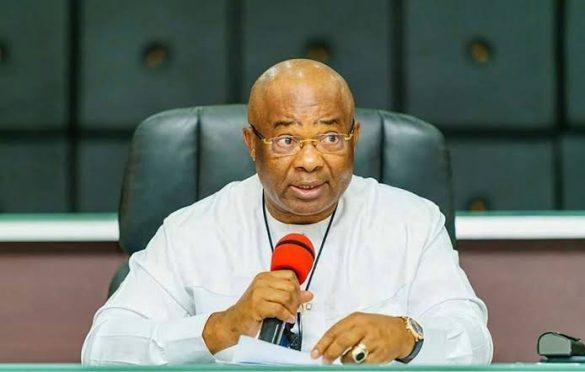
    Chairman of the APC Governors Forum and Imo State Governor, Hope Uzodimma, disclosed this after the forum’s meeting in Abuja on Monday night.

    Uzodimma said the governors had not entered into any formal agreement with any individual or opposition party ahead of the elections.

    The position comes amid the growing activities of the Minister of the Federal Capital Territory and Peoples Democratic Party leader, Nyesom Wike, who has been promoting a political movement known as the Rainbow Coalition in Rivers State.

    Wike, who is serving in the APC-led Federal Government, has declared his support for President Bola Tinubu’s re-election bid in 2027 while maintaining that his Rainbow Coalition is separate from the APC.

    The minister has also been at odds with some APC governors over political matters.

    During a recent media chat, Wike alleged that Uzodimma and Kwara State Governor, AbdulRahman AbdulRazaq, were among those behind the political challenges he had faced.

    He attributed the alleged opposition to the growing influence of his Rainbow Coalition, which he said was attracting politicians interested in contesting against some APC governorship and senatorial candidates in 2027.

    However, the APC governors, in a communique read by Uzodimma after their meeting, said they would not support any political arrangement that could undermine the party or its candidates.

    The forum said its campaign efforts would be directed exclusively towards APC candidates at all levels.

    Uzodimma said, “The APC Governors Forum unanimously resolved that its members will not participate in, support or endorse any alliance or political arrangement capable of undermining the re-election of Mr President, weakening the APC or adversely affecting any candidate of the party at all levels.”

    He added that the governors would not support candidates outside the APC.

    “In other words, the forum has no intention to support any candidate at any level that is not an APC candidate because our candidates who are contesting the election are being sponsored by our party,” he said.

    According to the Imo governor, the forum’s campaign strategy would remain aligned with President Tinubu and the leadership of the APC.

    “The governors’ campaign commitment is exclusively to all APC candidates. All levels of the party campaign architecture will align with the expectations of Mr President and the strategic objectives of the party,” he said.

    The declaration effectively draws a line between the APC governors’ official political activities and Wike’s Rainbow Coalition, despite the minister’s support for Tinubu’s second-term bid.

    The 2027 elections are expected to produce further realignments as political parties and influential politicians intensify efforts to consolidate support ahead of the polls.

  • Nigeria’s CODESA Moment – By Abdul Mahmud

    Nigeria’s CODESA Moment – By Abdul Mahmud

    The proposal by the G-100, a coalition of 100 Nigerians advocating that the opposition parties should unite behind a single presidential candidate for the 2027 election, deserves to be taken more seriously than the familiar reactions that greet every attempt at opposition consolidation in Nigeria. The group’s intervention comes at a particularly important moment because, unlike the opposition movements of countries where the governing party has already entered a period of unmistakable electoral decline, Nigeria’s APC has not yet reached that point. The G-100 is therefore attempting to solve the problem before the ruling party becomes vulnerable enough for opposition victory to appear inevitable.

    There is a useful historical lesson in this for Nigeria, and it can be found in South Africa’s transition from apartheid; though, it is convenient nowadays, especially among younger South Africans who have grown impatient with the economic limitations of the post-apartheid order, to remember 1994 simply as the moment when the African National Congress (ANC) came to power. That interpretation misses the extraordinary complexity of the period that preceded the election. The negotiations were not conducted after the apartheid state had been militarily defeated, nor did the ANC enter them with an unlimited revolutionary mandate. The international environment had changed fundamentally. The Cold War had ended, the Soviet Union was collapsing, the strategic circumstances that had sustained armed liberation movements were disappearing, and liberal democracy and market capitalism had become the dominant global order. South Africa itself remained a formidable state with its bureaucracy, security establishment and economic elite intact. The genius of the South African transition was therefore not that the ANC obtained everything it wanted; it was that the liberation movement recognised the limits of what could be obtained at that particular historical juncture and concentrated on securing political power. The Convention for a Democratic South Africa (CODESA), which began formally in December 1991, brought together nineteen political parties and political formations, including the ANC, the National Party and Inkatha Freedom Party, while the subsequent negotiating process widened the field further. The participants were not united by ideology. They were simply united by the recognition that their country had to find a political mechanism for transferring power without descending into civil war.

    The South African experience offers a useful lens through which to examine Nigeria’s present opposition politics.

    The opposition today appears to be approaching the 2027 election as though its principal challenge is to discover which individual politician is personally capable of defeating President Bola Tinubu. That is too narrow a conception of the problem. The question is whether the opposition can construct a political alignment capable of converting dispersed dissatisfaction into a coherent electoral majority. The G-100’s call for a coalition president therefore deserves to be understood not only as an appeal for politicians to surrender their ambitions but as an attempt to solve the structural problem created by a fragmented opposition confronting an incumbent political establishment that has not yet demonstrated serious electoral exhaustion, regardless of the outcome of the Osun governorship election over the weekend.

    The experience of CODESA suggests that political consolidation does not require agreement on everything. South Africa’s negotiators came from organisations with sharply different ideological positions and competing conceptions of the future state. The National Party wanted institutional protections for minorities and a constitutional arrangement that would prevent the ANC from exercising unrestricted power of the majority. The ANC resisted arrangements that it believed could preserve minority domination through constitutional mechanisms. Inkatha had its own conception of federalism and regional autonomy. But, the negotiations proceeded because the principal actors eventually understood that agreement on the fundamental rules of political transition was more important than agreement on every substantive question.

    Nigeria’s opposition needs precisely this kind of political realism. Peter Obi does not have to become Atiku Abubakar. Neither does Atiku have to become Rotimi Amaechi, nor does Kwankwaso have to abandon the political constituency he has built in the North. The parties do not need to dissolve their identities into some artificial ideological uniformity. What they need is an agreement on the minimum political objective that can bring their constituencies into one electoral arrangement. That is where the G-100 proposal becomes important. A coalition president should not be selected merely by determining which aspirant has the largest following on social media or which politician commands the loudest applause at political gatherings. The choice must be based on the candidate’s capacity to aggregate the geographically and politically diverse constituencies required to win a Nigerian presidential election. The candidate must be the product of a negotiated electoral calculation, not the prize awarded to whoever is first to declare himself the natural leader of the opposition.

    There is another lesson from South Africa that Nigeria’s opposition must not miss. Negotiations work when they are connected to organised political power outside the negotiating room. CODESA was not simply an elite conversation in Johannesburg. The parties represented mass constituencies, political organisations and movements with the capacity to mobilise. When the process broke down, the ANC did not cease to exist as a political force. When violence and deadlock threatened the transition, negotiations were repeatedly restructured until a workable settlement became possible. The September 1992 Record of Understanding between the government and the ANC helped reopen the process, while the subsequent Multi-Party Negotiating Forum produced the framework that eventually led to the Interim Constitution and the 1994 election. For Nigeria, this means that a coalition agreement signed by political leaders in Abuja will achieve little if it is not translated into organisation at the polling-unit level. The opposition must be capable of protecting the votes it intends to win. It must know where its strength lies, where the APC is vulnerable and where the coalition can realistically add votes. It must build the organisational capacity to ensure that the result announced at the polling unit reflects the votes cast there. The negotiation among political leaders is only one part of the exercise; the electorate must eventually ratify that agreement with actual votes.

    There is also a lesson about timing. South Africa’s political actors did not wait until the National Party had become electorally irrelevant before beginning to negotiate the transition. They negotiated while the old order still possessed substantial power. That is perhaps the most important lesson for Nigeria. An opposition movement that waits for the APC to collapse before constructing its coalition may discover that the collapse never comes, or that when it finally begins the opposition is too divided to take advantage of it. The Nigerian opposition should therefore think of 2027 not simply as an election but as a contest over the configuration of political power. If the APC has not shown significant electoral decline, the opposition must create the conditions under which its own disparate constituencies become greater than the sum of their separate parts. This requires compromise, and compromise requires political actors who understand that losing personal control of the presidential ticket may be the price of obtaining collective access to political power.

    The final lesson from South Africa is perhaps the most difficult. The ANC understood that political power had to come before the larger struggle over the economic and institutional transformation of the country. The 1994 settlement did not resolve every historical injustice. It established a democratic state within which those questions could subsequently be contested. Whether the ANC made the best use of that power afterwards is a legitimate subject for historical criticism, but that later question should not obscure the strategic achievement of securing political power under extraordinarily constrained circumstances. Nigeria’s opposition faces a different historical problem, but the principle is comparable. It cannot approach the future as though history has already chosen its winner. The opposition must confront the balance of forces as it exists and organise accordingly.

    The continued strength of the APC is not an argument for opposition despair; it is an argument for opposition seriousness.

    The G-100’s call for a coalition president should therefore be treated as the beginning of a political negotiation rather than the conclusion of one. What Nigeria needs is not merely a coalition of politicians who agree that President Tinubu should be defeated; it needs a coalition capable of persuading Nigerians that the political differences among its component parts can be subjected to a credible national alternative. South Africa’s experience demonstrates that political transitions are rarely delivered by one party possessing all the advantages. They are produced when politicians recognise that the balance of forces requires them to negotiate, compromise and construct an arrangement capable of winning the moment that history has opened before them.

    For the Nigerian opposition, that moment has not yet arrived. The wiser course is to prepare for it before it does.

  • 5th Frontier Discourse Public Lecture: Stakeholders Examine Power Struggles Defining Nigeria’s Democracy

    5th Frontier Discourse Public Lecture: Stakeholders Examine Power Struggles Defining Nigeria’s Democracy

    Political stakeholders and citizens have examined the dynamics of power struggles between citizens and ruling elites in Nigeria’s democratic landscape at the 5th Frontier Discourse Annual Public Lecture Series and Awards, organized by Pacesetter Frontier Magazine.

    The event, held on Tuesday, November 11, 2025, at the Nigerian National Merit Award House, Abuja, focused on the theme, “Politics of Convergence and Collisions: Navigating Power Struggles in Shaping Democracy.”

    Delivering the keynote address, Prof. Udenta O. Udenta, Founding National Secretary of the Alliance for Democracy, argued that the state often represents an ideology rather than the people themselves.

    “It’s impossible to represent everyone. You represent your policies, your government, and the segment of people who buy into your ideology”, Udenta said.

    He said collisions are inevitable when the interests of different groups and classes clash, emphasizing the need for dialogue and inclusion in resolving societal conflicts.

    Also speaking, Dr. Ahmed Sajoh, Executive Director, FutureNow Initiative, and the second keynote speaker, lamented that democracy in Nigeria had become synonymous with elections rather than governance.

    “Our political parties have become revolving doors. People move from one party to another. How, then, do we hold them accountable?”

    He stressed the importance of mentoring young people before transferring power to them, warning that leadership without guidance could be disastrous.

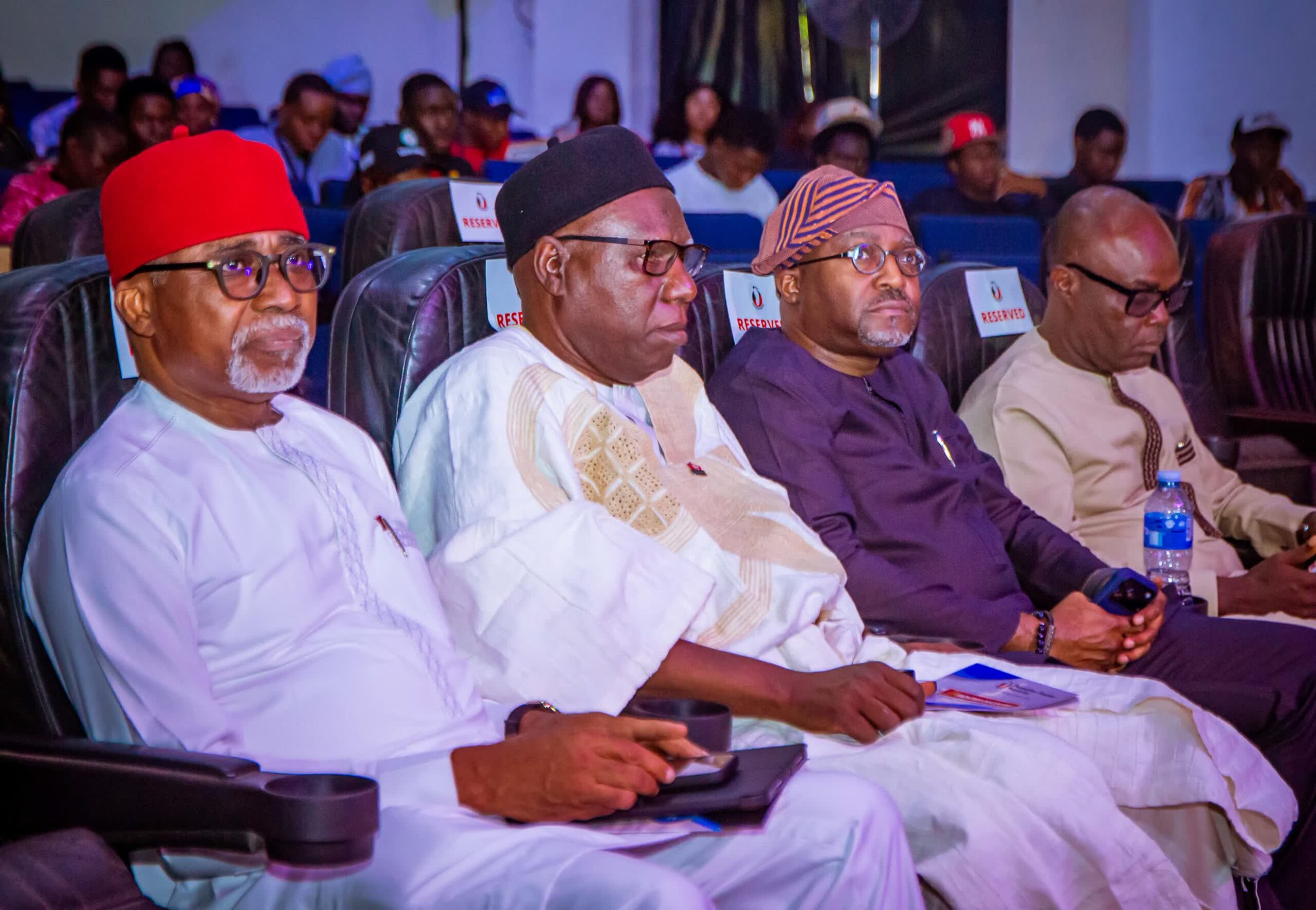
    Chairman of the occasion and senator representing Abia South district, Sen. Enyinnaya Abaribe, expressed concern over the erosion of moral values in governance, criticizing leaders who prioritize appeasement over justice.

    “You do not reward those who thrive on ransom and blood. A government that chooses appeasement over justice signs the death warrant of its citizens.”

    During the panel session, Journalist, Laolu Akande, urged citizens outside the political system to “invade” it, warning that complacency equated complicity.

    Activist, Aisha Yesufu, highlighted how poverty has been weaponized to suppress dissent in Nigeria. She emphasized education as a critical foundation for sustaining democracy.

    “We cannot fully access democracy without education. Children must be taught early about good governance and the power they hold to demand accountability.”

    Catholic priest and social commentator, Rev. Fr. John Chinyere Oluoma, condemned what he described as Nigeria’s “politics of convenience,” insisting that true change must come through civil action. Echoing Udenta’s call for ideology-driven politics, he said:

    “Let political parties be founded on ideology. State clearly what system of government you represent in your manifesto, so voters know they’re choosing ideas, not tribes, religions, or personalities.”

    Mr. Ademola Oshodi, Senior Special Assistant to the President on Foreign Affairs, reminded citizens of the importance of institutions that hold the government accountable. He urged Nigerians to focus less on complaints and more on understanding the slow but steady evolution of governance, encouraging active engagement in the electoral process.

    Speaking to newsmen on the choice of the theme, the Founder of Pacesetter Frontier Magazine, Onochie Igwesi, noted that the idea behind the initiative was in line with the duties of the press as the fourth estate of the realm. He stressed that conversations geared towards the 2027 elections had begun and it was necessary for citizens to make their decisions in 2027 based on data, not sentiments.

    The event also featured awards recognizing outstanding individuals and institutions. Honorees included:

    Good Governance (Governor of the Year): H.E. Dr. Peter Ndubuisi Mbah

    Public Sector Person of the Year: Mallam Lanre Issa-Onilu

    Humanitarian Service Award: Mary Dinah Foundation

    Media Person of the Year (TV): Aaron Atsahyel

    Media Person of the Year (Radio): Maryann Okon

    Brand of the Year: Centre for Memories

    Promising Entertainer (Music): Ugochukwu Uneabunso (Une 50)

    Business Person of the Year: Chief Chukwudi Nnaji

    Frontier Person Award: Prof. Udenta O. Udenta, Dr. Ahmad Sajoh

    Literary Icon Award: Abuja Literary Society

    Tech Person of the Year: Gbenga Sesan

    Sports Icon of the Year: Barr. Amobi Ezeaku

    Lifetime Achievement Award: H.E. Dr. Okwesilieze Nwodo

    Other highlights were a saxophone performance and live musical entertainment.

  • Anambra Guber: Coalition stakeholders adopt ADC’s John Nwosu as candidate

    Anambra Guber: Coalition stakeholders adopt ADC’s John Nwosu as candidate

    The national leadership of the African Democratic Congress (ADC) and leaders of some other political parties under the aegis of Anambra Coalition Stakeholders Forum convened its first strategic meeting in Awka with key stakeholders across the state in attendance.

    The meeting officially adopted the governorship candidate of ADC for the November 8 election, Mr.John Nwosu, as the coalition candidate for the election.

    Nwosu, said the historic gathering marked a significant milestone in the party’s renewed commitment to reposition Nigeria for meaningful governance and the delivery of true dividends of democracy to the citizenry.

    He said: “The coalition meeting was more than just a convergence of political minds; it was a strategic and deliberate response to the growing outcry for accountable leadership, inclusive development, and a governance model that genuinely reflects the will and welfare of the people.

    “At the heart of this new direction is the party’s vision to foster a people-centered democratic culture; one rooted in transparency, equity, economic empowerment, and social justice.

    “With the Anambra State gubernatorial election fast approaching, the ADC coalition is set to take a bold stand, leveraging the political opportunity as a litmus test for its ideological and practical commitment to ending bad governance.

    “Anambra, a state rich in human capital, entrepreneurial spirit, and cultural heritage, has for years yearned for leadership that prioritizes its people over personal or political interests.

    “The ADC-led coalition sees Anambra as the ideal launchpad for a broader national reawakening; a testing ground to prove that governance in Nigeria can be done differently, done better, and done for the people.

    “The coalition aims to disrupt the status quo, dismantle anti-people policies, and demonstrate that good governance is not just possible, but achievable when visionary leadership is combined with grassroots mobilization and coalition strength.

    According to him, the essence of the coalition meeting went beyond electoral strategy, adding that it was rooted in a shared belief that democracy must begin to work for the ordinary citizen, which entails revamping economic policies that had left the masses impoverished, challenging state actors who perpetuate corruption and impunity, and promoting inclusive governance that listens, learns, and leads with the people in mind.

    He said further: “Through the strategic coalition, the ADC is building a platform of unity, resilience, and national purpose, bringing together civil society groups, youth organizations, professional bodies, community leaders, and political allies who are committed to charting a new democratic course.

    “The coalition is a clarion call to Nigerians who believe in a better future and are ready to contribute to a transformational political movement.

    “As the political momentum builds towards the Anambra election, the ADC is positioning itself not just as a contender for office, but as a catalyst for a democratic rebirth.

    “The coalition’s activities will focus on grassroots engagement, policy articulation, and strategic alliance-building that can challenge entrenched interests and inspire a new wave of political participation across the state and the nation.” Vanguard

  • 2027: Atiku, El-Rufai, others pick new All Democratic Alliance party for coalition, writes INEC for registration

    2027: Atiku, El-Rufai, others pick new All Democratic Alliance party for coalition, writes INEC for registration

    Opposition leaders under the banner of the Nigeria National Coalition Group (NNCG) have adopted the All Democratic Alliance (ADA) as the platform to use in tackling the ruling All Progressives Congress (APC) in 2027.

    NNCG has also formally applied to the Independent National Electoral Commission (INEC) to register as a party ahead of the next general elections. The coalition’s application letter addressed to INEC chairman, Prof. Mahmood Yakubu, and dated June 19, was co-signed by the National Chairman of ADA, Chief Akin Ricketts and Protem National Secretary, Abdullahi Musa Elayo.

    The letter which was stamped received by the office of the INEC chairman on June 20, 2025, was titled: “Application for registration as a political party” with ADA name and flag.

    “We respectfully write to the Independent National Electoral Commission requesting the registration of our association, the All Democratic Alliance as a political party.

    “This is sequel to the decision taken by the Nigerian National Coalition Group to sponsor our association for full registration.

    “The name of the party shall be All Democratic Alliance with ADA as our acronym and ‘Justice for All’ as our slogan.

    “The National Secretariat of the party is as stated at the bottom of the association’s letterhead used in this application.

    “We have also herewith attached our logo describing in details the symbolism of our party colours and the their configuration and the corn (Maize).

    “We have further attached our manifesto encompassing details of our party ideology, and our constitution providing the legal framework that defines our identity, structures and organization, regulates our affairs and guides our actions in alignment with Section 40 and 222 of the Constitution, Section 75 of the Electoral Act (2022) and global democratic principles and objectives.

    “Please find attached the following documents: our party flag depicting our name, acronym and slogan, manifesto, constitution and minutes of meeting.

    “While we eagerly await further action from the commission on the next step forward towards attaining our desired goal, please accept the consideration of our highest respect. Thank you yours most sincerely; Chief Akin A. Rickets, Protem National Chairman,” the letter read.

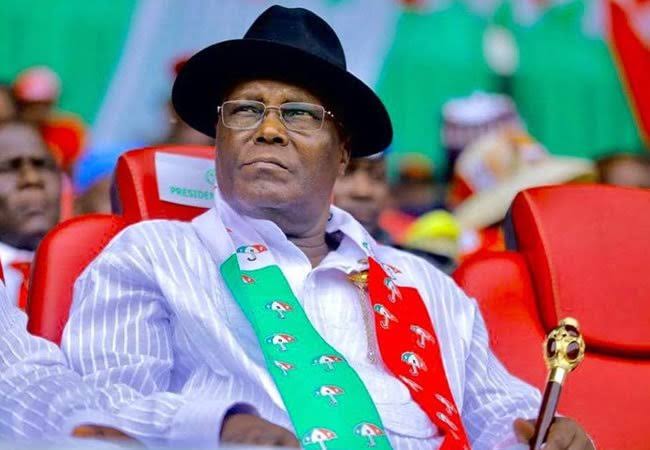
    Members of the coalition include: Former Vice President, Atiku Abubakar; ex-Rivers State governor, Rotimi Amaechi; his Kaduna State counterpart, Nasir El-Rufai; the convener of the League of Northern Democrats, Dr. Umar Ardo, and former Senate President David Mark, among others.

    The group had considered joining an existing political party which saw the African Democratic Congress (ADC), and the Social Democratic Party (SDP) being earlier considered.

    The coalition later set up a committee to consider the option of registering a new platform where all members will start on equal footing in terms of membership.
    This was after several members of the coalition expressed concerns over the internal wrangling within existing parties, which in some cases led to litigation. Daily Trust

  • 2027 and the Opposition’s Test

    2027 and the Opposition’s Test

    By Abdul Mahmud 

    A few days ago, opposition leaders gathered in Abuja. They called it a national political summit. Their mission was clear: to take back political power in 2027. In speeches laced with urgency and ambition, they signaled the start of a political war to win the hearts of the electorates. At the heart of this new resolve is the burning question: can the opposition really defeat Bola Tinubu’s ruling APC? On the surface, the resolve looks like a noble dream, and the mere push of love for power. But, dreams alone don’t win elections; or as my friend, Ayisha Osori, puts it more poignantly in her book, ‘Love Does Not Win Elections’. Power doesn’t fall into laps. It is taken through strategy, sacrifices, and unity. The opposition coalition must face the uncomfortable truths. They must ask themselves: are we truly ready? Or we are merely taking the citizens who are desperate to escape Tinubu’s nightmare for the ride?

    Right now, the opposition space is fragmented. The PDP, the biggest opposition party, is a shadow of its former self. Its governors bicker in public. Others inside it wear the party’s colours on their sleeves, yet their hearts beat the drums of power inside the ruling party where their personal selfish interests whisper louder than party loyalty and allegiance. Its presidential candidate in the 2023 election appears not to have a foothold on the party. The Labour Party, once the surprise of the last election, is struggling with identity and cohesion. Peter Obi remains popular, but his party lacks depth. Enter Sowore who has consistently presented himself as an insurgent at the gates of neoliberal power; and whose party, the African Action Congress, AAC , conflates radical struggles with petit bourgeois liberalism, and with ill-fitting rhetoric. In seeking to marry the fire of radicalism with bourgeois politics, Sowore mistakes the fact that he is operating within a bourgeois neoliberal political order for a radical political environment, with the presence of revolutionary conditions. He has to operate inside the coalition, posing an objective modernity that is rooted in emancipatory politics or what the British sociologist, Anthony Giddens, describes as “engagements concerned with the liberation from inequality”. Though, internal rifts and ego battles often threaten to reduce opposition coalition to a personal cult rather than a national political force organising for power, how the opposition coalition deals with the rifts over personal ambitions matters in aggregating unity within itself.

    There is a fundamental truth that I must lay bare here – one so central that it ought to serve as the rallying cry for all aggrieved citizens: that within the opposition coalition lies the last viable platform upon which their collective aspirations can be realised. It is not merely a political alignment, but a covenant of common purpose, the big tent under which the dispossessed, the disillusioned, and the determined can find both voice and vision. The orchestrated gale of defections, engineered from the commanding heights of power in our country, has done more than disrupt party lines; it has helped drain the political swamp, clarifying the landscape into a vivid binary: on one side, those content to watch the nation stagger deeper into the mire of misery and ruin; on the other, those resolved to staunch the bleeding and set the republic on the path of recovery and rebirth. This is no longer a matter of mere politics; it is a moral referendum. A battle between light and darkness, justice and impunity, hope and despair. The choice is stark, and the hour is upon us. I am in that hour and have chosen to be on the side of the opposition coalition.

    But, there is this familiar story worth retelling here that the opposition coalition can learn from elsewhere. One that mirrors the fate of Cambodia’s now-defunct opposition. In Cambodia, the ruling Cambodian People’s Party, CPP, led by Hun Sen, waged a quiet and effective war of attrition. It didn’t need to defeat the Cambodia National Rescue Party (CNRP) at the polls. It simply dismantled it. First, by using the courts to de-legitimise it. Then by orchestrating defections and stripping the party of its core. In 2017, the CNRP was dissolved by the Supreme Court. By then, its leaders were in exile or in prison. The party was gone. And so was any real challenge to Hun Sen’s rule. The opposition faces a similar threat. A sinister ministerial order to ‘close the shop’ dangles like a noose around the neck of the PDP, whose national secretariat in Abuja now sits under lock and key – sealed off for alleged non-payment of ground rent. Yet, beneath this ministerial veil of legalism lies the darker pretext: a crude attempt to slam-dunk the party out of existence, not through the ballot, but through the backdoor of state power wielded as vendetta. Also, APC is slowly drawing away influential voices. Defections are gathering momentum. Every defection erodes credibility. It tells voters that the opposition cannot protect or reward loyalty. And as it stands, neither PDP nor Labour has a coherent strategy to prevent further haemorrhage.

    But, defections are just one part of the challenge. The larger problem lies in the opposition’s inability to define itself. What does it stand for? Why should our citizens trust it? Removing Tinubu is not a vision. Citizens want to know what comes after. They want to know how the opposition coalition will end hunger, grow jobs, rebuild institutions, secure lives and secure their country. It is this clarity that is still missing. Though it isn’t late yet to pose and give clarity to all of this.

    The contrast with Senegal is instructive. In 2024, the Senegalese opposition did what many believed was impossible. It defeated the ruling elite and produced the country’s youngest president. This wasn’t luck. It was the result of years of tireless grassroots organising, unity, and ideological clarity. Even when their main figure, Ousmane Sonko, was jailed, the movement endured. The opposition didn’t collapse under pressure. Instead, it grew stronger. It didn’t focus on personalities. It focused on change. That discipline, that resilience, is what turned a protest movement into a governing force. The opposition coalition and its supporters and promoters continue to make elections about individuals. The Atiku-Obi rift cost the opposition dearly in 2023. Instead of presenting a united front, they split the base. Kwankwaso’s ambitions added another fracture. The APC didn’t win because it was popular. It won because the division allowed it to work and game the electoral process in a fraudulent way.

    And now, with 2027 on the horizon, that same lack of coordination is creeping back in. The Abuja summit was the first step. I welcome it, warts and all. But, walking the talk becomes cheap, a mirage, when unity of purpose is absent. Walking the talk begins with shared sacrifices. Someone must be willing to step aside. As Ousmane Sonko did in Senegal last year. Someone must lead the charge. As Diomaye Faye did. Others must fall in line. That’s the nature of coalition politics.

    Coalitions aren’t new to Africa. In Ghana, the National Democratic Congress has built enduring strength through consistent messaging and grassroots work. In Kenya, Raila Odinga’s ability to unify various political camps, despite internal contradictions, shows that coalition-building can deliver momentum. Our opposition coalition leaders must stop seeing each other as rivals and start behaving like allies. They need a memoranda of understandings. On consensus. On ambition. Not the ones signed in hotels but those signed in action. The practical roadmaps with timelines, benchmarks, and compromises. The opposition coalition must also overcome another major weakness: its detachment from the masses. Our citizens want change, but they don’t want elite quarrels. They want food, security, dignity, and a country that works for all. The Senegalese opposition understood this. They mobilised students, unions, and rural farmers. They protested. They forced the state to listen. The opposition coalition is still too focused on media sound bites and elite meetings.

    There’s also a lesson from the Philippines. Rodrigo Duterte didn’t come from the traditional elite. He spoke plainly. He sounded like the people. He wasn’t polished, but he was relatable. That authenticity gave him power. Behind him was a campaign machine that knew how to touch nerves. His supporters built online armies. They controlled narratives. They sold hope. He defeated an entrenched political dynasty because he knew how to connect with ordinary people. The opposition coalition should pay close attention. In 2023, the opposition tasted the power of social media. But it wasn’t enough. Opposition coalition doesn’t win elections alone online. It wins them in the cities, towns, villages, and hamlets. It wins them by convincing the citizens and build the coalition of the aggrieved around them. It wins them by building trust, one handshake with the citizens at a time. And it must organise, not just mobilise. Mobilisation is what serious opposition coalition does before elections. Organisation is what it builds between elections. The opposition coalition needs ward structures, data, election monitors, logistics hubs. It needs to recruit and train volunteers. It needs to know every local issue, every polling unit, and every INEC officer to deliver the message: rig and die. It doesn’t win elections by outrage; it wins by converting citizens’ outrage into protective bulwarks against rigging. It wins by planning.

    Time is not on the side of the opposition coalition. The APC has the tools of incumbency. It will play the ethnic card. Tinubu will argue that it’s still the South’s turn. The opposition must be ready to counter that narrative with a national message. It must present a pan-Nigerian ticket that appeals across the north and the south, across religion, across class. It must also confront the demons within. Ego, ethnicity, and ambition are the three poisons destroying the opposition. Too many leaders think they are saviours. They are unwilling to compromise. They want to lead, even if it means losing. That mindset must change. Politics is not about personal fulfilment. It’s about service. Those who cannot accept this should step aside.

    Ambition will also be a test, with eyes are on 2027. Atiku may run again. Obi is interested. Kwankwaso wants relevance. But there is only one ticket. Unless these men can sit together, agree on terms, and stick with them, the ruling party will coast to victory again. More importantly, the opposition coalition must also take defections seriously. Loyalty must be rewarded. Structures must be protected. There should be clear rules. Crossing to the ruling party shouldn’t be treated as a mere political mischief. It should be political treason. Voters must be made to see defectors as traitors, not heroes. That requires narrative control. It requires discipline. It requires a clear sense of identity.

    And that leads to the final point: the battle of stories. Every election is a contest of narratives. The opposition coalition must invest in storytelling. They must define the 2027 election before APC does. They must control the message. Not just in English, but in Hausa, Yoruba, Igbo, and Pidgin. They must craft a story of hope and urgency. A story that says: 2027 is about saving our country. They must tell this story in markets, at bus stops, on radio, on TikTok, Twitter, Instagram and Facebook. They must reach the old and the young. They must inspire, but also instruct. They must be clear about what they will do differently. And they must say it often.

    History shows that opposition coalitions don’t win by accident. They win because they plan, they unite, they learn. Cambodia shows what happens when an opposition coalition doesn’t protect its base. Senegal shows what’s possible when it does. The Philippines shows how one man with a message can change the game. The opposition coalition still has time. But not much. If it starts now, I mean truly starts now, it can build something powerful. If not, the summit in Abuja will be just another jamboree. And 2027 will be a repeat of 2023- with stolen ballots and all that jazz.

    Our citizens are waiting, watchful, weary, but not without hope. The youths, disillusioned by empty rhetoric, now demand substance and not slogans. The old, mindful of the hourglass, yearn to walk hand-in-hand with the young, to pass on a country that works to the next generation before the final summons of death arrives. In this twilight of despair and flickers of hope, the opposition coalition stands at the cusp of possibility. It can give shape to these longings, give breath to a new covenant.

    I believe it, with the quiet urgency of faith.