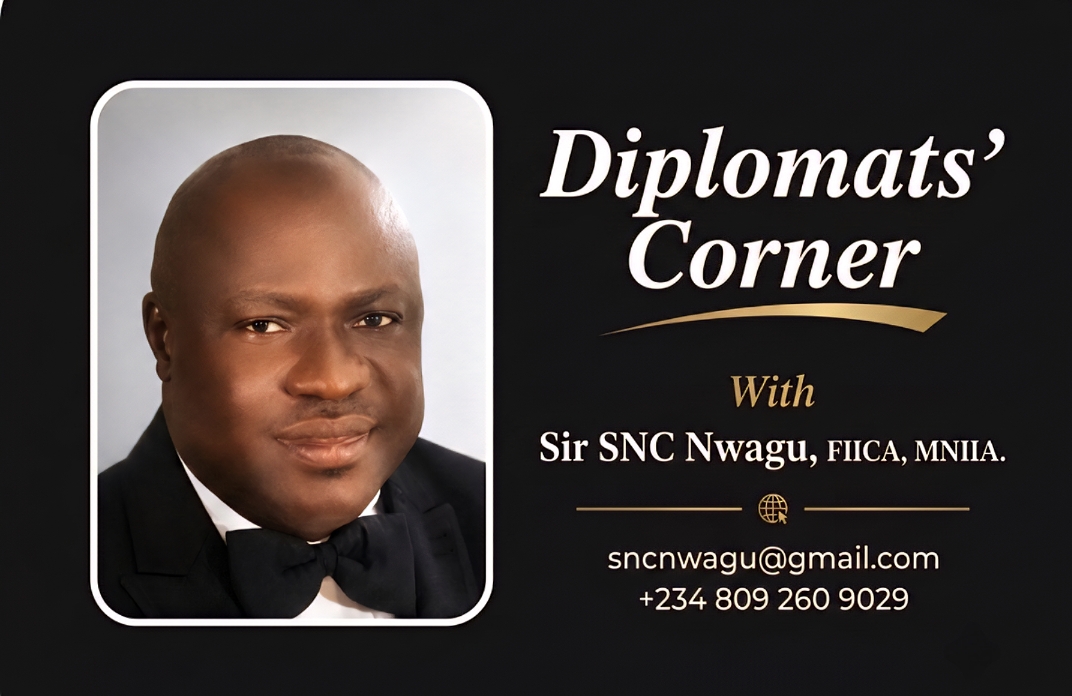
By SNC Nwagu
The debate over whether NATO can function without substantial American military support is essentially a European question. But its implications are unmistakably African.
For more than seven decades, American power has underwritten NATO. Now, as Washington reassesses its global commitments, Europe is being forced to assume greater responsibility for its own defense. The lesson is clear: great powers ultimately prioritize their own strategic interests. Africa must take note.
If Europe becomes more focused on defending its own territory, rebuilding its defense industries, and reinforcing its eastern flank, African security may receive less European attention and fewer resources. Africa cannot answer this shift with complaints. It must answer with capacity.
The continent possesses immense natural resources, strategic waterways, a vast population, and expanding markets. Yet it remains heavily dependent on external powers for weapons, intelligence, military financing, training, and logistics. That is Africa’s central strategic contradiction: a resource-rich continent without strategic autonomy.
The African Union has made progress through initiatives such as the Peace Fund, but the larger challenge remains unresolved. Africa must develop the capacity to finance and conduct African-led security operations without perpetually waiting for external assistance. That means intelligence-sharing, indigenous defense production, maritime security, strategic mobility, secure communications, and predictable financing. Above all, it requires political will.
NIGERIA’S RESPONSIBILITY
For Nigeria, the changing NATO equation should be treated as both a warning and an opportunity. Nigeria is too important to remain merely a consumer of global security arrangements. If Abuja genuinely seeks strategic autonomy, that ambition must begin with national capability.
The country’s persistent internal security challenges expose the gap between diplomatic aspiration and strategic capacity. A state unable to secure its borders, citizens, and critical infrastructure will inevitably find its international influence constrained.
Nigeria’s foreign policy should therefore move beyond choosing between America, Europe, China, Russia, or any other competing power. The objective should be partnership with everyone and dependence on no one. Nigeria should cooperate with major powers where such partnerships advance its interests, while building the indigenous capabilities required to make independent choices.
More importantly, Nigeria should use its diplomatic and economic weight to champion a stronger African security architecture—one grounded in collective intelligence, defense cooperation, indigenous military industries, and reliable African financing. Africa does not need another external security guarantor. It needs the capacity to negotiate with every power from a position of strength.
The significance of a possible NATO without America, then, is not simply that Europe may have to defend itself. It is that the international system is delivering an old lesson with renewed urgency: those who cannot provide for their own security will ultimately depend on those who can.
Europe is preparing for that reality. America is recalibrating around it. Africa—and particularly Nigeria—must wake up to it.
Leave a Reply