Politics, as the saying goes, is often about timing. But in local government administration, timing alone is not enough. The quality of the man who takes over can determine whether the gains of one administration are consolidated or gradually eroded.
That is why the coming transition in Nkanu East Local Government Area of Enugu State is attracting attention.
The contest is not simply about who wins an election. It is about who succeeds a chairman whose administration has significantly raised the expectations of the people.
Hon. Sydney Edeh, the outgoing chairman of Nkanu East and Chairman of the Association of Local Governments of Nigeria (ALGON) Enugu State Chapter, has been widely regarded as one of the best-performing local government chairmen in the country.
That reputation creates an interesting political dilemma for Nkanu East: how do you replace a performing chairman without lowering the bar?
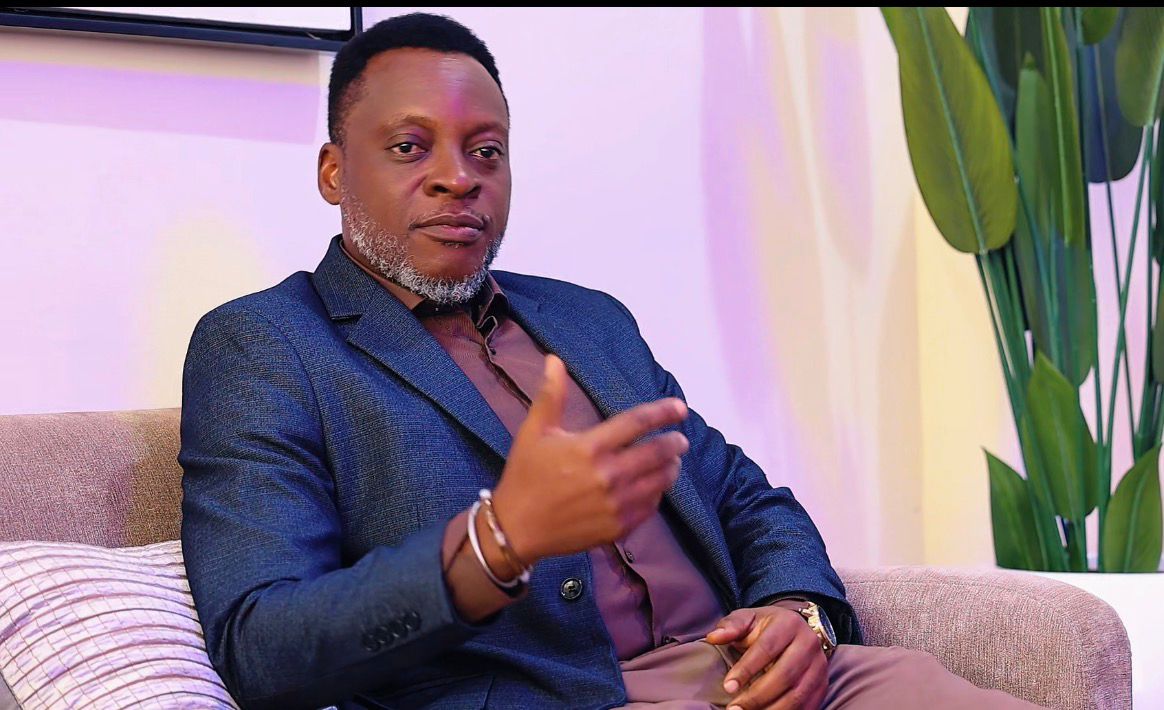
It is against this background that the emergence of Hon. Chikosolu Mike Ogbuekwe as the APC chairmanship candidate becomes significant.
Ogbuekwe is not merely another politician seeking an elective office. His trajectory suggests a different kind of political proposition—one built around professional competence, administrative experience, exposure and grassroots politics.
Beyond the usual political résumé
There is something unusual about Ogbuekwe’s public service journey.
A Mechanical Engineering graduate of the University of Nigeria, Nsukka, he first built a career in the private sector, working with Intercontinental Bank and later Baker Hughes, where his professional assignments exposed him to international training and global business practices.
He subsequently moved into public service and, rather than remaining confined to one portfolio, became a recurring presence in policy and administrative circles.
In Anambra State, under former Governor Willie Obiano, Ogbuekwe served as Senior Special Assistant on Agriculture and was subsequently entrusted with responsibilities in the state’s Economic Think Tank, Land Acquisition and Mediation Team and Agriculture Transformation Implementation Team.
In 2018, he was appointed Director-General of the Project Management and Monitoring Office, a position that placed him at the intersection of government policy and implementation.
That assignment is particularly instructive.
Government is often good at announcing projects but considerably less impressive at ensuring that those projects are delivered according to specification. Ogbuekwe’s job was to monitor projects, programmes and contracts and ensure compliance with standards.
His reported experience in that office, including savings to the Anambra State Government through project monitoring, offers an insight into the management philosophy he could bring to local government.
The Enugu chapter
His return to Enugu did not mark the end of that trajectory.
Under former Governor Ifeanyi Ugwuanyi, Ogbuekwe served as Special Adviser and Focal Person on the state’s Non-Oil Export Programme. He was also involved in the World Bank-supported Nigeria COVID-19 Action Recovery Economic Stimulus Committee, the state’s COVID-19 Emergency and Palliative Committee and Public Sector Reform Committee.
Under Governor Peter Mbah, he has continued to occupy strategic positions, serving as Special Adviser on Agriculture and Chief Executive Officer of Enugu State Marketing Company Limited.
For a man now seeking to administer a local government, the significance of this experience is obvious.
He has seen government from several sides: policy formulation, project monitoring, economic development, agriculture, public-sector reform and implementation.
The question is whether that experience can be translated into effective grassroots governance.
That, ultimately, is the real political test.
The Sydney Edeh standard
But there is another dimension to the Nkanu East succession question that cannot be ignored.
Sydney Edeh’s tenure has changed the political conversation in the local government.
A chairman who also emerged as ALGON chairman and gained recognition for his performance has, by implication, made the job of his successor more difficult.
The successor will inherit not only an office but also a benchmark.
This is why the argument that Ogbuekwe should succeed Edeh is not simply about party loyalty or political succession.
There is a case to be made for continuity with capacity.
Nkanu East does not necessarily need a carbon copy of Edeh. What it needs is a successor capable of preserving the strengths of the outgoing administration while introducing his own ideas and energy.
And that is where Ogbuekwe’s background becomes politically relevant.
A technocrat in grassroots politics
The irony of Nigerian politics is that the people who know how to manage institutions are not always the people who know how to win elections.
Ogbuekwe now faces both tests.
His professional credentials may get him through the door, but his connection with the people will determine how far he can go.
Those close to the Nkanu East political terrain point to his community presence, interventions and relationships with ordinary people as evidence that he is not detached from the grassroots.
That distinction matters.
Local government is perhaps the most intimate level of government. Its failures are experienced at the doorstep, in the market, on rural roads, in schools, health centres and farms.
The chairman therefore needs more than a good résumé. He needs political sensitivity, accessibility and the ability to convert limited resources into visible impact.
The bigger political calculation
There is also a broader political calculation.
With the APC consolidating its structure in Enugu State and Ogbuekwe enjoying the backing of the party leadership, his candidacy represents more than an individual ambition. It fits into the emerging political architecture of the state.
But elections are ultimately decided by voters, not endorsements.
The real question is whether Ogbuekwe can convert institutional experience, party support and personal goodwill into a popular mandate.
If he does, the significance will extend beyond winning an election.
He would be taking over a local government from an administration that has set a relatively high performance benchmark. That would make his first responsibility clear: do not lower the bar.
A succession that carries expectations
Perhaps this is the strongest argument for Ogbuekwe.
Nkanu East is not looking for an administrator who merely wants to occupy the chairman’s office. The political environment demands someone who understands that local government has become an important instrument for development.
Ogbuekwe’s decade-plus journey through the private sector and the governments of Anambra and Enugu states has given him an unusual breadth of experience for a first-time electoral candidate.
Whether that experience will translate into good local government remains a question only governance can answer.
But in a succession contest where the outgoing chairman is widely regarded as one of the country’s better-performing council bosses, it is hardly unreasonable for the people to demand a successor with comparable stature.
Ogbuekwe’s supporters believe he is that man.
The voters of Nkanu East will have the final word.
And if the politics of the moment is about continuity without complacency, experience without detachment and fresh leadership without abandoning what works, then Ogbuekwe appears to fit neatly into the conversation.
Leave a Reply