By Prince Ejeh Josh
Some people pass through life chasing recognition; others leave behind something far more enduring—the quiet gratitude of lives they have touched. Their names may not dominate headlines every day, yet they are remembered in whispered prayers, heartfelt testimonies and the silent triumphs of those they once lifted from uncertainty to hope.
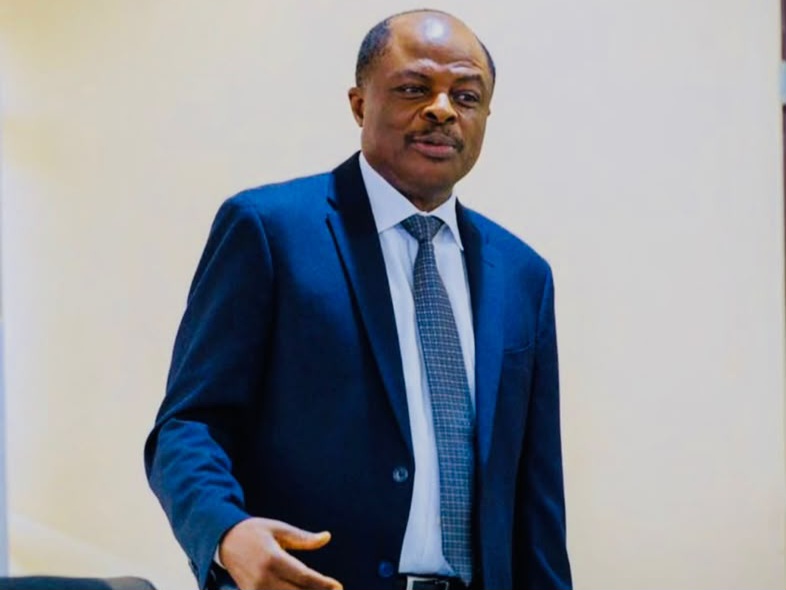
History reserves a special place for such men because their greatest achievements are neither measured by wealth nor by political office, but by the countless human stories forever altered by their kindness. Barr. Victor Udeh, Chief of Staff to the Governor of Enugu State, belongs to this uncommon class of leaders whose influence is written less in speeches than in the lives they have transformed.
Leadership, as Aristotle once succinctly observed, is not merely about possessing authority but about cultivating virtue. Likewise, the Roman philosopher Marcus Aurelius reminded humanity that “What we do now echoes in eternity.” These timeless reflections aptly capture the essence of Barr. Udeh—a legal luminary, policy strategist, administrator and compassionate leader whose daily actions continue to echo in the lives of ordinary people.
Indeed, history is replete with stories of extraordinary men whose greatness lay not in the monuments erected in their honour but in the invisible footprints they left upon human hearts. This calls to mind Abraham Lincoln, the 16th United States President, whose humility remained intact even while occupying the highest office in America; Nelson Mandela, whose greatness was measured by his capacity to forgive; and Mahatma Gandhi, whose quiet strength altered the destiny of millions without the force of arms. Their stories affirm an enduring truth: authentic leadership is ultimately an act of service.
Barr. Udeh belongs to this noble tradition of servant leadership making the world around us beautiful, liveable and wonderful.
Long before assuming public office as Chief of Staff to Governor Peter Mbah, he had already established himself as an accomplished legal practitioner whose professional excellence earned him recognition within and beyond Nigeria. Yet, for those privileged to know him, his greatest distinction has never been confined to the courtroom. Rather, it lies in his remarkable humanity—the rare ability to see potential where others see limitation and to extend helping hands without seeking recognition or reward.
Many who today occupy enviable positions in society can trace pivotal moments in their lives to his quiet interventions. Hundreds, if not thousands, have benefited from his educational scholarships, empowerment initiatives, leadership mentorship and personal encouragement. Significantly, many of these beneficiaries were complete strangers before their encounters with him. Their stories seldom make newspaper headlines, yet together they constitute perhaps the most authentic biography any public servant could ever hope to possess.
There is a profound lesson in the philosophy of Confucius who taught that “The superior man is modest in his speech but exceeds in his actions.” Barr. Udeh embodies this principle with uncommon consistency. He speaks sparingly, avoids unnecessary publicity, and allows his actions to become his loudest testimony. “Josh, you know I don’t really grant interviews or have retinue of media clustering around,” he would say, especially when persuaded to speak before camera. However , in an era increasingly dominated by performative leadership and carefully orchestrated public relations, his preference for substance over spectacle distinguishes him as a refreshing exception.
Within the administration of Governor Mbah, a highly distinguished, leading and pacesetting governor in Nigeria, Barr. Udeh has emerged as one of the most respected strategic minds. Beyond the title of Chief of Staff lies the demanding responsibility of coordinating government priorities, harmonising policy execution, managing complex institutional relationships and ensuring that governance remains focused on measurable outcomes rather than political distractions. Such responsibilities require uncommon intellectual discipline, emotional balance and strategic foresight.
It is, therefore, unsurprising that many regard him as one of the principal policy architects whose quiet diligence contributes significantly to the efficiency associated with the present administration.
His work ethic has become almost legendary among those who work closely with him. He exemplifies disciplined industry, approaching every assignment with meticulous attention to detail and unwavering commitment. The philosopher Thomas Carlyle once remarked that “Blessed is he who has found his work.” For the Chief of Staff, work is evidently not merely an obligation but a calling. His resilience, consistency and unwavering dedication have earned him admiration across different sectors of government and society.
Yet perhaps what distinguishes him most is not merely professional competence but character.
In our weekly leadership classes, we’re taught that character remains the invisible currency of enduring leadership. It cannot be manufactured through political jingles, gimmicks nor acquired through public office. It is cultivated over decades through consistent choices, quiet sacrifices and unwavering principles. Barr. Udeh’s humility, emotional intelligence, decency and respect for others have become defining features of his public life. Those who encounter him frequently describe an easy-going, approachable and remarkably unassuming personality that contrasts sharply with the prestige attached to his office.
He moves around freely. No armed men. No masked man. No trigger-clutching giants. He calls each staff by name. He understands schedules assigned to each person. He shows that uncommon behavioural and emotional maturity, and that’s endearing.
Such disposition reflects the wisdom of Lao Tzu, who observed that “The highest goodness is like water. Water gives life to the ten thousand things and does not strive.” Like flowing water, Barr. Udeh’s influence nourishes without demanding attention. His leadership persuades without intimidation, empowers without patronage and inspires without self-promotion.
Again, his austere approach to governance equally deserves recognition. At a time when citizens increasingly demand prudent management of public resources, his administrative philosophy aligns closely with Governor Peter Mbah’s vision of lean government and aggressive investment in transformative infrastructure. The emphasis on efficiency over extravagance, productivity over bureaucracy and development over unnecessary expenditure reflects a leadership philosophy that prioritises the welfare of future generations above personal comfort.
This philosophy echoes the enduring counsel of Peter Drucker, widely regarded as the father of modern management, who argued that effective leadership is ultimately measured by results rather than rhetoric. Enugu’s growing reputation for fiscal discipline, institutional coordination and ambitious capital projects owes much to this culture of purposeful governance sustained by disciplined administrators working quietly behind the scenes.
Beyond governance, however, lies an even deeper legacy.
Every society progresses because certain individuals deliberately invest in people they may never fully know. Udeh has consistently demonstrated this uncommon generosity of spirit. His scholarship programmes have opened educational opportunities for promising students. His empowerment initiatives have restored dignity to struggling families. His mentorship has inspired emerging professionals and young leaders to pursue excellence with integrity.
However, he would say; let’s not go beyond the what we’ve done. It’s all to the glory of God. No media. No publicity. Yet, the gestures resonate like timeless memories.
These acts may never be fully documented in official records, yet they remain permanently inscribed in the memories of grateful beneficiaries. Indeed, there are moments in human history when a single act of kindness redirects an entire generation. Such moments often begin with individuals who choose compassion over convenience.
Albert Schweitzer once wrote, “The purpose of human life is to serve, and to show compassion and the will to help others.” Few descriptions better capture the moral architecture of Barr. Udeh’s life.
Leadership scholars frequently distinguish between transactional leadership, which merely exchanges benefits for loyalty, and transformational leadership, which elevates people beyond their perceived limitations. In Governor Mbah’s words: “Our administration are achieving all this massive transformation not for acclaims or for applause….” That is the intrinsic rather than extrinsic values that motivated the Mbah administration into embarking on its bold vision often described as insanely impossible! An ambitious driven by the zeal to make our society better than we met it. This, indeed, aligns with. Barr. Udeh’s enduring investment in discovering, nurturing and empowering young minds. He understands that societies are ultimately transformed not simply by policies but by people equipped with opportunity, confidence and character.
As we celebrate a mentor today, we celebrate more than a distinguished legal practitioner or an accomplished public administrator. We celebrate the enduring power of humility in leadership, the quiet dignity of service, the discipline of excellence and the timeless beauty of human compassion.
His story reminds us that greatness does not always announce itself with fanfare. Sometimes, it walks quietly through the corridors of responsibility, lifting others while asking for nothing in return. Sometimes, it appears in the scholarship that rescued a young student’s dream, in the mentorship that redirected a promising career, in the compassionate intervention that restored hope to a struggling family, or in the disciplined governance that quietly improves the lives of millions.
Ultimately, every generation searches for examples that restore faith in public service. Barr. Victor Udeh stands among such examples. He demonstrates that influence need not be loud to be profound; that authority need not diminish humility; and that genuine leadership is measured not by titles accumulated but by lives transformed.
Indeed, his enduring kindness, intellectual depth, strategic insight and unwavering commitment to humanity will continue to resonate far beyond the offices he occupies today. They will live in grateful hearts, flourishing careers, transformed communities and future generations inspired by his example.
And in celebrating him, we are reminded that the finest legacy any individual can leave behind is not what he accumulated for himself, but what he invested in others.
Happy Birthday and many more years, mentor.
Leave a Reply