Category: Opinion

  • Nigeria and South Africa’s Xenophobia: A Passport Must Be More Than Paper

    Nigeria and South Africa’s Xenophobia: A Passport Must Be More Than Paper

    -By SNC Nwagu

    “Life is sacrosanct. It cannot be regained once lost. Ghana evacuates. Malawi shields. Nigeria reacts — but only after the caskets are counted.”

    Since 2008, South Africa has recorded repeated waves of anti-foreigner violence known as “xenophobia” or “Afrophobia.” Nigerians have paid the price in blood and business every time. As a fresh and more dangerous wave tears through Johannesburg, Pretoria, and Durban in 2026, the pattern is painfully familiar: Nigeria moves, but only in crisis mode — and only after other nations have already moved first.

    THE BLOOD AND DATA

    The record stretches back nearly two decades. In 2008, at least 62 people were killed nationwide in South Africa’s first major xenophobic uprising, the wave that set the template for every one since. Just over a decade later, the 2019 riots in Johannesburg and Pretoria left at least 12 Nigerians confirmed dead and roughly 50 Nigerian-owned businesses destroyed or damaged; Nigeria’s government announced a target of repatriating 640 citizens, and while the first Air Peace flight carried only 187–189 people, the total eventually surpassed 600 across several flights and a private real-estate firm’s donated fares.

    The toll since has only deepened. The Nigerian Union South Africa (NUSA) and the Nigerian Citizens Association South Africa (NICASA) say at least 105 Nigerians have been killed in South Africa over the past seven years — including roughly 8 deaths in 2024, another 8 in 2025, and a sharp spike of more than 20 deaths since January 2026 alone, blamed on shootings, mob violence, and deaths in police custody. That spike traces directly to the latest unrest: between April and June 2026, vigilante movements “Operation Dudula” and “March and March” led mass protests across Johannesburg, Pretoria, and Durban demanding the removal of undocumented foreigners, reportedly setting a June 30 deadline for migrants to leave. The killings of Nigerians Amaramiro Emmanuel and Ekpenyong Andrew triggered Nigeria’s Ministry of Foreign Affairs to summon South Africa’s Acting High Commissioner — a step in the right direction, but one still driven by outrage after the fact rather than a standing protocol.

    To its credit, this time Abuja moved faster than in 2019: President Tinubu approved five Air Peace evacuation flights, more than 1,000 Nigerians registered for voluntary return, and over 600 had been repatriated by early July — with the Acting High Commissioner now also compiling records of abandoned businesses and property to pursue compensation from Pretoria. That is real progress. But it remains improvisation, not institution: chartered when the cameras are rolling, not built into law long before the next mob forms.

    WHAT OTHERS DID WHILE WE WAITED

    Ghana offers the clearest contrast. In 2019, 187 of its citizens were airlifted within 72 hours using a standby evacuation arrangement and coordination with the Ghanaian community union in South Africa; in the 2026 crisis, Ghana was again among the first nations to begin repatriating its citizens, ahead of Nigeria. Malawi partnered with the IOM in 2015 and again in later waves, moving citizens toward the Beitbridge border corridor before looting peaked, drawing on an existing evacuation relationship rather than assembling one from scratch each time. Mozambique, too, repatriated hundreds of its nationals in the opening weeks of the 2026 crisis, moving in step with Ghana and ahead of Nigeria’s own evacuation approval. Zimbabwe, for its part, has run a standing “Harare Desk” in Pretoria in past waves, with SMS alerts and community safe houses feeding early warning back to citizens on the ground.

    Nigeria’s pattern, even now, is to scale up dramatically once a crisis is already underway — five chartered flights, a High Commissioner summoned, a compensation claim opened — rather than to run a permanent early-warning and evacuation system that activates automatically. We have three missions in South Africa, but still no standing crisis protocol and no pre-funded evacuation fund written into law. Bilateral trade between the two countries stood at roughly $2.3 billion in 2024 — Nigeria’s crude exports to South Africa alone worth close to $1.9 billion — yet that leverage is invoked only in the heat of a crisis, never as sustained pressure beforehand.

    THE COST OF FAILURE

    The failure to act early carries a price on both ends. At home, past waves have triggered reprisal attacks on South African-owned businesses in Lagos, Abuja, and Ibadan, and this year’s crisis has again seen Nigerian police publicly warn against reprisals on South African nationals and interests. When citizens see the state respond only after the fact, some take matters into their own hands — and that is how law and order unravels on both ends of the relationship. Abroad, the cost is just as plain: a passport that cannot protect its holder before disaster strikes is just paper. Even a well-funded emergency airlift, however commendable, is an admission that protection came too late for the ones already buried.

    THE REMEDY: NIGERIA’S FIRST PROTOCOL

    The starting point must be law. Nigeria should enact a Nigerians Abroad Protection & Evacuation Act, mandating a fixed share of the Foreign Affairs budget for emergency response, automatically triggered when a defined threshold of attacks on Nigerians is recorded within 30 days — rather than relying on presidential approval assembled flight-by-flight, as happened again in 2026. That law should fund concrete operations on the ground: a 24/7 hotline and USSD app in Pretoria, Johannesburg, and Cape Town linked directly to NiDCOM; pre-identified safe houses in each city, run jointly with the Nigerian Union South Africa; and standing evacuation contracts with Air Peace and other carriers negotiated before a crisis, not five ad hoc flights approved mid-emergency.

    Diplomacy needs teeth to match. The South African High Commissioner should be summoned within a fixed, published window — 24 hours — of any fatal attack, as a standard rather than a reaction to public pressure, and the pattern should be raised at the AU Peace and Security Council. Continued failures to prosecute attackers should be made to carry a cost, affecting the ease of doing business for South African firms operating in Nigeria. None of this works without data: NiDCOM and the NBS should publish a quarterly “Nigerians in South Africa Safety Report” tracking deaths, assaults, extortion, and business losses in one place, rather than leaving the count to community associations like NUSA and NICASA to compile and defend against official denial. And accountability must run through the system itself — the Foreign Missions Act should be amended to sanction heads of mission who fail to act promptly during a crisis. The current compensation claim for abandoned Nigerian businesses is a welcome step; it should be standard practice from the first day of any evacuation, not a follow-up idea raised weeks in.

    CONCLUSION

    Ghana, Malawi, and Mozambique prove that political will, not just budget size, determines how fast a nation can move for its people. Nigeria has shown in 2026 that it, too, can move — five flights, a summoned High Commissioner, a compensation claim — once the crisis is already burning. The unfinished work is turning that emergency improvisation into permanent law, so the next wave of violence meets a system already built, not one assembled in the same week as the funerals. A Nigerian life in Soweto must matter as much as one in Sokoto — and it must be protected before the headlines force our hand, not after.

    SNC Nwagu writes on Foreign Policy, Strategy and Diplomacy. 
  • State Police and the Growing Challenge of Centrifugal Forces in Nigeria

    State Police and the Growing Challenge of Centrifugal Forces in Nigeria

    -By Daniel Ndukwe

    State police might mean safer neighborhoods. But can Nigeria’s institutions and shared values hold firm against the centrifugal forces a more decentralized model might unleash?

    Nigeria just took another step towards decentralized policing with the Senate’s passing of a constitutional amendment bill establishing the state police. Most of the discussions surrounding this potential reform has focused on its merits and dangers. But we need to address the bigger picture: what does a future with state police signify for the nation’s unity, especially in a country where ethnic, religious, and regional identities often wrestle with our collective national identity?

    This is not solely about security. State police is just one facet of a larger devolution process that could either fortify Nigeria’s federal structure or widen the centrifugal forces that have, time and again, attempted to tear the nation apart.

    What exactly are centrifugal forces? Political scientists define them as forces that push people apart, away from a shared national identity, towards regional, ethnic, religious, or class affiliations. The flipside of this, the unifying factor, is called centrifugal forces: the institutions, values, and shared experiences that tie us together under a common purpose.

    The history of post-independence Nigeria has been defined by the interplay of these two forces. The Civil War, separatist movements, ethnic and religious violence, regional politics, terrorism tinged with ethnic and religious motives, as well as enduring mutual suspicion among different groups all attest to the difficulty of building a cohesive nation out of our sheer diversity.

    However, despite these immense challenges, Nigeria has remained a single nation. Why? In part, due to the institutions that have functioned as centripetal forces: our armed forces, the Nigeria Police Force and other federal security agencies, the National Youth Service Scheme, federal universities, and even national sports. Specifically, the Police Force has remain one of the pivotal institutions symbolizing and fostering national unity.

    Imperfect as they may be, these institutions have helped weave a thread of common nationhood. This is where the state police discussion finds itself, in this crucial context.

    Now, it is understandable to be drawn to the argument for state police. Proponents are quick to point out that local control would provide intimate knowledge of each community, improve intelligence gathering, and facilitate quicker responses to security issues. In the context of the multifaceted security challenges plaguing Nigeria, this argument certainly holds water and warrants serious consideration.

    However, let us not get caught up in just the intended benefits of any reform. The truth is, every major reform carries unforeseen consequences. State police represents yet another transfer of power from the centre to the states. While this can be a recipe for better governance and accountability, it could also magnify centrifugal tendencies, particularly if measures to consolidate national unity are not pursued alongside it.

    For the sake of clarity, this is not an argument that decentralization is intrinsically dangerous. After all, federalism depends on the delicate balance between central authority and regional autonomy. Rather, the concern here is that in countries where national identity is yet to solidify, decentralized institutions may become easily swayed by local pressures emanating from politics, ethnicity, and religion.

    Nigeria’s political landscape makes ignoring this possibility difficult to swallow. Our elections are often viewed through a sectarian, religious, and regional lens, and political affiliations too often align with ethnic affiliations. In such a climate, institutions designed to be impartial arbiters could easily end up serving partisan interests.

    History from across the world shows that decentralization fares best when strong, central institutions and a deeply entrenched sense of shared citizenship already exist. When these pillars are shaky, decentralization can unintentionally amplify divisions and intensifies competition amongst constituent groups.

    Nigeria stands in this uneasy middle ground – a federation trying desperately to strike a balance between its diverse parts and its unified whole. Thus, our discussion of state police cannot solely focus on operational efficiency. It must broaden to embrace strategies to protect and strengthen the institutions that keep the federation together.

    If state police becomes a constitutional reality, we must also recommit to reinforcing Nigeria’s centripetal forces. This means making federal institutions more robust, inclusive, and trustworthy. It means civic education that emphasizes shared citizenship and national responsibility. It means policies that actively encourage inter-group and inter-regional cooperation rather than aggravating existing fissures.

    Crucially, political leaders must resist rhetoric that elevates group identities above national interests. A nation endures not because its regions or groups are identical, but because its citizens believe in a shared future.

    Therefore, the debate on state police reaches far beyond just law enforcement. It goes to the very heart of nation-building and the future trajectory of Nigeria’s federal experiment. As demands for greater regional autonomy grow, it is paramount that we approach each step of decentralization with an equally conscious effort to foster national unity.

    Yes, state police may improve local security and bolster operational efficiency. But the pressing question that looms is whether Nigeria’s centripetal institutions are robust enough to withstand the mounting centrifugal pressures of greater power devolution.

    In the long run, Nigeria’s federal system will succeed not based on the distribution of power, but on the willingness of Nigerians to see themselves as participants in a shared national destiny. For any nation that is pulled apart more strongly than it is held together, cannot possibly stand the test of time.

    Daniel Ndukwe is a public relations and strategic communication practitioner, and a governance, social change and development specialist. He writes from Enugu, Nigeria.

  • NDLEA and the Fight Against Drugs: An Operational Assessment

    NDLEA and the Fight Against Drugs: An Operational Assessment

    By Sebastine Chukwuebuka Okafor, Ph.D

    ​Since its establishment on December 29, 1989, by Decree No. 48 of 1989 (now the NDLEA Act), the National Drug Law Enforcement Agency began full operations in January 1990.

    ​Prior to this, Nigeria was experiencing a sharp increase in drug trafficking and substance abuse that threatened to turn the country into a major transit hub for international drug cartels, severely damaging its global reputation. The need to meet the country’s obligations toward curbing illicit narcotics under international frameworks—including the 1988 United Nations Convention Against Illicit Traffic in Narcotic Drugs and Psychotropic Substances—became paramount.

    ​Under the act, the core functions of the NDLEA include combating the cultivation, manufacture, sale, and trafficking of illegal drugs; the arrest and prosecution of drug offenders; the seizure and destruction of illicit substances; public education on the dangers of drug abuse; and collaboration with international law enforcement agencies to dismantle transnational syndicates.

    ​Over the years, the agency has recorded remarkable successes. It has intercepted several tonnes of cocaine, heroin, cannabis, methamphetamine, tramadol, and other dangerous synthetic drugs at international airports, seaports, and land borders. Thousands of suspected drug traffickers have been arrested, prosecuted, and convicted by competent courts across the country. Illegal cannabis plantations have been discovered and destroyed in several states, while the agency continues to partner with international organizations to prevent Nigeria from being exploited as a transit corridor.

    ​The introduction of the War Against Drug Abuse (WADA) campaign has also bolstered awareness among young people, students, and local communities regarding the dangers of substance abuse. Through counseling and rehabilitation programs, numerous individuals battling addiction have received support to rebuild their lives.

    ​Despite these achievements, deep concern remains at the grassroots level, where drug abuse has become a daily occurrence. In many communities, illicit drugs are openly sold on streets, in neighborhoods, and at notorious local joints, yet the presence of the NDLEA is rarely felt. Unlike the military or police, which often establish forward operational bases in flashpoints facing serious security challenges, the NDLEA rarely maintains a sustained operational footprint in areas notorious for retail drug distribution. Most often, the agency executes sporadic raids and withdraws, allowing cartels and dealers to reclaim the streets almost immediately.

    ​Another structural challenge is the severe shortage of personnel. Considering Nigeria’s vast population and expanding narcotics market, the agency’s workforce is insufficient to effectively monitor every local government area. This human capital deficit directly impairs localized intelligence gathering, counter-narcotics surveillance, and rapid responses to drug-related distress calls.

    ​Public engagement also remains constrained. Compared to other law enforcement organizations, the NDLEA rarely holds regular media briefings, community town halls, or collaborative sessions with traditional rulers, youth groups, and market associations. Consequently, many citizens remain disconnected from the agency’s strategic goals, and a significant portion of the populace does not know how to contact or locate the nearest NDLEA command.

    ​Furthermore, there is a widespread perception that enforcement efforts prioritize high-profile international traffickers, while retail drug networks operating openly within neighborhoods are left to thrive. Since the youth primarily access narcotics through these local distribution networks, a strategic shift toward community-level enforcement is critical to curbing addiction before it feeds organized transnational trafficking.

    ​As Nigeria navigates this growing public health crisis, there is an urgent need to strengthen the NDLEA through aggressive recruitment, expanded funding, modern logistics, and community-oriented policing models. Establishing permanent operational outposts in high-risk communities, scaling up public enlightenment campaigns, and institutionalizing partnerships with local leadership will significantly optimize the agency’s operational efficacy.

    ​Ultimately, the war against drugs cannot be won by the NDLEA in isolation. It demands the active participation of families, academic institutions, religious bodies, community leaders, and the media. With institutionalized grassroots engagement and sustained state funding, the agency can transition into a more visible, accessible, and formidable force capable of protecting Nigerian communities from the devastating impact of illicit drugs.

  • The Presidential Spokesman Who is Out of Touch

    The Presidential Spokesman Who is Out of Touch

    -By Abdul Mahmud

    Public officials often forget that their words travel further than their offices. A minister, adviser or presidential spokesman may regard an interview as another routine media appearance, but citizens hear something else: an account of how those who govern understand their condition. That is why Bayo Onanuga’s recent remarks during his interview with Charles Aniagolu on Arise Television have provoked such public discomfort. In dismissing claims of widespread hunger and hardship, or suggesting that the suffering Nigerians describe does not correspond with his own observation, the presidential spokesman revealed a troubling distance between official perception and social reality.

    A spokesman is not merely a defender of government policy. He is expected to interpret government to citizens and communicate public sentiment back to government. That role requires attentiveness and restraint. Loyalty to an administration cannot replace acquaintance with everyday life. Once public communication becomes detached from lived experience, official statements begin to sound less like explanations and more like declarations from another country. The difficulty with Onanuga’s comments lies not simply in disagreement over economic policy. Citizens may differ on whether reforms are necessary or whether temporary pain is justified by promised future gains. The difficulty lies in denying the existence or scale of hardship at a time when ordinary Nigerians have reorganised their lives around scarcity.

    One does not require a statistical report to notice what has happened to the country. Markets have become sites of daily adjustments. Families that once bought food in quantity now purchase in fragments. Transport costs determine whether workers go to work every day. School fees compete with food bills. Medical appointments are postponed. Social ceremonies increasingly function as informal fundraising opportunities. Across urban centres and smaller communities alike, survival has become an exercise in difficult calculation.

    Global institutions have not ignored these developments. Reports over the past two years from international development and humanitarian agencies have repeatedly identified Nigeria as facing rising food insecurity, deteriorating household purchasing power and growing poverty levels. Food inflation has remained persistently high while incomes have failed to keep pace with rising costs. Such findings may be debated in terms of causes and remedies, but dismissing the underlying distress places official claims in direct conflict with evidence and with lived experience. Supporters of President Bola Tinubu would argue, with some justification, that inherited economic distortions required difficult choices. They point to fuel subsidy removal, exchange rate liberalisation and broader economic reforms as unavoidable measures postponed by previous administrations. Economic reforms are rarely painless, and no serious observer expects structural adjustments to produce immediate comfort.

    Citizens, however, are entitled to examine outcomes.

    Fuel subsidy removal increased transportation costs almost immediately and produced consequences across every layer of economic life. Exchange rate reforms increased the cost of imports and raised production expenses for local businesses. Prices adjusted upward. Household budgets contracted. Small businesses struggled to absorb higher operating costs. Wages remained largely static while inflation reduced their value in practical terms.

    Economic arguments lose persuasive force when daily experience moves in the opposite direction.

    A worker whose salary has technically increased but whose purchasing power has collapsed does not experience improvement. Families that once maintained modest stability now depend on relatives abroad, informal loans or support networks. Professionals quietly adjust expectations downward. Retirement savings lose value. Young people postpone milestones once considered ordinary. Many Nigerians who previously occupied stable middle class positions now speak openly about survival.

    This explains why remarks denying widespread hardship have generated such resentment. Citizens can endure sacrifice more easily than dismissal. Governments gain public trust when they acknowledge burdens honestly and explain their choices with candour. Public anger grows when officials appear insulated from consequences borne by everyone else. Political office creates its own form of distance. Daily exposure to official briefings, controlled environments and protected routines can produce an incomplete picture of national life. Those who occupy such spaces risk believing that public complaints are exaggerated because deprivation is no longer visible within their immediate surroundings.

    That danger is not unique to Nigeria.

    Political history contains many examples of governing classes that gradually lost contact with social conditions until public frustration became impossible to ignore. The comparison many Nigerians drew after Onanuga’s interview was the famous phrase associated with pre-revolutionary France: “Let them eat cake.” Historians have long disputed whether Marie Antoinette ever uttered those words. Their symbolic significance remains powerful because they represent indifference born of distance. When ordinary people complained of hunger, the phrase imagined rulers so removed from public suffering that they responded with disbelief and absurdity.

    No one suggests that Nigeria is at the same stage as pre-revolutionary France, nor should historical comparisons be stretched beyond their limits. The lesson remains useful. Public officials must resist the temptation to substitute personal observation for collective reality. Bayo Onanuga’s responsibility is not to agree with every criticism of the Tinubu administration. His responsibility is to speak with enough humility to recognise that millions of Nigerians understand their own circumstances better than any official briefing can describe.

    A spokesman who cannot hear public hardship risks speaking only to power while losing the confidence of the public he is meant to address.

  • The One-Man Village – By Abdul Mahmud

    The One-Man Village – By Abdul Mahmud

    Last week, I came across an account on X, formerly known as Twitter, the haunting account by one Elder Oyin Zubair about Owa-Onire, a community once known for its celebrated waterfall but now reduced to silence and abandonment. His telling was not merely reportage; it read like an elegy for a place emptied of itself. What lingered was not only the fact of depopulation, but the image at its centre: a town that had become, in effect, a one-man village.

    That account stayed with me because it illuminated, with unusual clarity, a reality that official language often fails to capture. There are moments in the life of a country when a single image says more than official briefings and ministerial speeches combined. Owa-Onire offers one such image. A whole town emptied of life. A man living by himself among abandoned homes. Churches without worshippers. Mosques with silent muezzins. Streets walked by one man because everyone else has fled. Security operatives arrive and discover that the place they came to protect has already ceased to exist in any meaningful civic sense. And it is not an isolated tragedy.

    As The Guardian reported two years ago, “Most traditional rulers in Ifelodun Local Government of Kwara State have fled their communities for fear of being kidnapped by gunmen. The Guardian newspaper gathered that some communities in the local government have turned into ghost towns as residents have fled to safer areas outside the council and the state. Kidnappers in the area now address letters to the monarchs, informing them of when they would strike in their domain”.

    That image ought to unsettle every Nigerian.

    When officers drawn from the drone unit, the Mobile Police Force, and the Anti-Kidnapping Squad entered Owa-Onire as part of ongoing operations across the forest corridors of Kwara South, they encountered silence. There were no signs of ordinary life. No market activity. No communal movement. No evidence that people still regarded the place as home. Only Lekan remained.

    His description of himself as “the landlord” carries a tragic irony. It is not the boast of a wealthy proprietor but the lonely designation of a man who has outlasted the social life of his community. His neighbours are gone. His king was abducted and held for months. The economy of the place he once called home has collapsed. His nearest market is elsewhere. His hometown exists only as geography.

    What happened in Owa-Onire is neither accidental nor sudden. Communities do not disappear overnight. People endure hardship for long periods before abandoning their provenances. Rural Nigerians understand insecurity more intimately than security policies acknowledge. They know the sound of fear. They adjust their lives. They avoid certain roads. They avoid their farm lands. They stop travelling at dusk. They negotiate with danger until living itself becomes impossible. The story from Owa-Onire suggests precisely such a regression into the self when bandit incursions become recurrent. Kidnappings turn ordinary movements into calculated risks. The abduction of the monarch marks the decisive point of departure for the self. If the king could be taken and held in the forest for months, what protection remained for everyone else?

    The ordinary people depart.

    This is perhaps the most serious indictment of insecurity in Nigeria today. Death is devastating, but displacement creates another kind of wound. It empties communities gradually and normalises retreat. Citizens surrender territory without formal declaration. Villages become mere nodal points on security maps rather than places where people build lives. The reports that dozens of communities across Ifelodun and neighbouring areas have suffered similar abandonment should force national reflection. These are not isolated incidents. They represent a creeping alteration of Nigeria’s internal landscape.

    Nigeria should treat this moment with greater urgency than it currently does. Security cannot remain an episodic response that appears after communities have already collapsed. The presence of armed personnel matters, but sustained territorial confidence matters more. Intelligence gathering must become local and continuous. Rural policing requires deeper integration with communities. Forest governance can no longer remain vague. State and federal authorities must clarify responsibility rather than trade blame.

    The ruling class should recognise that insecurity is no longer confined to distant places that can be discussed with casual indifference. It should also recognise that empty villages alter migration patterns, strain urban centres, deepen poverty, create recruitment grounds for criminal networks, and weaken social cohesion. When these conditions persist, decline rarely announces itself with spectacle. Countries seldom collapse in dramatic scenes; they weaken through quiet accumulations that become normal enough to ignore.

    A town without people should never become ordinary.

    The details that linger most from Owa-Onire are not the deployment of one hundred security personnel, nor the donation of ten thousand naira to a solitary resident, it is Lekan’s account as told by Elder Oyin Zubair that unknown people entered the community during the night, and by morning nothing appeared different because there was almost nothing left to take. That sentence captures something larger than one deserted settlement. It describes a country confronting danger while behaving as though time remains abundant. Nigeria is playing with fire while sitting on its palms. It cannot continue losing communities, and normalising abandonment without eventually confronting consequences that exceed security language. Territorial presence means little when people no longer believe they can inhabit their provenances safely.

    Owa-Onire should not become another passing headline.

    It should become a dire warning.

  • Father’s Day: “Men and Things are Doing”

    Father’s Day: “Men and Things are Doing”

    By Uche Anichukwu

    July 17, 2021 is forever etched in my heart. It was the day my first son, who is also my second child, graduated from primary school. I was reeling in pains from the burns I suffered during a domestic fire incident. My legs, wrapped in bandage, were hurting badly.

    The Igbo often seem to have a fitting folklore for every situation. There is one about the woodpecker, who boasted that he would cut down Iroko trees to supply firewood for his mother’s funeral ceremony. But when the sad incident happened, the woodpecker was impaired by a large abscess on his beak. That was going to be my case.

    I was particularly emotional about it because my son was the valedictorian. We were both sad that I could not be there for him. I hugged him tightly, encouraged and prayed for him.

    With everyone gone, it was just me and an empty house. The void was filled by a rush of memory: his first cry as I paced anxiously outside the labour room, his first day in school, and the long journey to his graduation. I felt a sudden surge of strength and made up my mind to risk it. I called the driver to come back home and take me to the event.

    The gratitude and joy in my son’s eyes was evident as he waved at me. I smiled and waved back. Despite the excruciating pain I felt, I put up a happy face throughout the ceremony and posed for a few photographs with my family. Several guests congratulated us and many admired my three-piece ceremonial suit. Little did they know that beneath the joyful face and beautiful clothes were bleeding wounds and excruciating pains. I also knew that my doctor would be mad at me for venturing out and for putting on those pairs of trousers and shoes. But all those did not matter to me – what mattered was my son’s happiness.

    But guess what? Physical wounds are probably the least of the brunt that men bear. Fatherhood is a great honour. It is a joyful experience and something everyone wishes to experience even in their next life. Yet, it comes with its own realities also worth reflecting on during the Father’s Day celebration.

    Even the Bible in Job 14:1 declares that “Man that is born of woman is of few days and full of trouble.” Therefore, the title, “Men and things are Doing,” is a loose translation (a transliterations actually) of a popular Igbo expression, “Nwoke na ihe na-eme.” It captures the silent struggles of men who bear the weight of their families, friends and relatives.

    In our African setting, in the absence of any social welfare scheme, a man begins to bear burdens once he earns his first pay. It is not bad in itself. We have all benefitted from such it.

    Furthermore, once a man seeks a bride, he becomes automatically ripe as a provider for his wife and children: food, shelter, clothing, school fees, medical bills, just to name a few. He also becomes ripe for in-laws and the responsibilities that come with it. If grace smiles on you as a man, you will have enough resources to shoulder the responsibilities effortlessly. Otherwise, it becomes an endless cycle of hustle and pondering from one meal to the other and from one school fees to the other. Like Sisyphus, you are likely going to continue with the cycle until old age gradually creeps in – if you are lucky to live to old age.

    My child, the valedictorian, voiced a rather unsettling question when he was in primary four or so. “Daddy, why do men die earlier?” he had asked, sitting beside me. I was lost, not sure what may have prompted the question. He narrated his observations in school and church.
    I could also relate. My father, the late Rabbi Gabriel Anichukwu, teacher and headmaster par excellence, died shortly after my first year in the university. As I stood with my wife facing the congregation on my wedding day, I saw my former boss and number three man in the country at the time, His Excellency, Senator Ken Nnamani, GCON, and a good number of senators. I saw the famed Chief C.C Onoh, former governor of old Anambra State, who honoured us with his presence, having been informed of my wedding that Saturday morning by Barr. Nana Ogbodo. I saw other dignitaries and captains of industry. But my father was conspicuously missing in the congregation. Same applied to my father-in-law. A tear or two dropped on my shoe.

    I explained to my son the much his young mind could comprehend, but assured him that his daddy would be there for him till old age, by God’s grace.

    Meanwhile, as you age, you discover, as Alfred Lord Tennyson’s Ulysses does, that you are no longer that strength “That ever with a frolic welcome took/ The thunder and the sunshine.” If you are lucky, you will have a family that still treasures your sacrifices and relatives that still remember your contributions to their lives. Otherwise, you are left to rot away as though you were just one foolish, useless, and irresponsible man throughout your life.

    Several months ago, I visited a much senior friend. I found just him alone with his driver, who now works as driver, cook, and house manager. A home that had once bustled with life and laughter had become empty and cold. I asked about madam. He retorted, “Uche, when last did I see her? If she is not in Europe today, she is in America tomorrow seeing her children and grandchildren.” Instructively, both have always got along well and their bond was never in doubt. So, the absence could not be intentional.

    The tale referenced is not an exception. It is now very common to visit a former rich or influential man living all by himself in a desolate mansion. Children are all abroad or elsewhere. The wife moves from one location to the other. In most cases, “Omugwo” (the Igbo customary practice where a mother travels to nurse her daughter and new grandchild), which typically should not last more than three months, turns into years of “wifelessness” and solitude for the man. You have just a house help or steward, who manages to cook your meals and administer your drugs for age-related illnesses like hypertension, arthritis, dementia, etc.

    Instructively again, men’s health easily fails them as they grow older because of both mental and physical exertion. Years spent sacrificing for others and taking little care of their health, often come home to roost. Before they know what is happening to their bodies, it is already too late. Their days are already numbered.

    And God help you if you are married to someone who would rather inundate your children with all your real and imagined wrongdoings, than highlight your sacrifices. In your sunset, when your strength has failed you, you would begin to wonder if you had not spent your prime raising household enemies. You are abandoned to face death in installments. Just carefully observe your neighbourhood.

    It is probably for these reasons that King Solomon wonders in Ecclesiastes 1:3, “What profit hath a man of all his labour which he taketh under the sun?”

    But should men, therefore, shy away from their responsibilities? Never! What then should a man do? The answer lies in Ecclesiastes 2:24 where King Solomon admonishes men: “There is nothing better for a man, than that he should eat and drink, and that he should make his soul enjoy good in his labour. This also I saw, that it was from the hand of God.”

    As a man, learn to take care of your physical and mental health. Make yourself happy, responsibly. Cut your coat according to your cloth. Importantly, invest in your retirement. And frankly, children should never be the sole retirement hope, for they also have their own (rat) race to run.

    Some discussions quickly remind you that your family cannot abandon you if you treated them well in your prime. That is not an absolute truth; for many fathers have been abandoned in spite of all their sacrifices. Again, scan your neighbourhood. Besides, why rely on what is controlled by another person for something as critical as your wellbeing in old age? An Igbo adage reminds us that money in another’s pocket is always very far.

    As I conclude, I salute my late father, a gentleman and cerebral headmaster. One of his teachers told me that they usually called him “Mr. Duty is Duty” behind him because of his diligence and work ethic. He and mom taught us hard work and diligence by example. May their souls continue to rest in peace. Amen!

    Happy Father’s Day to my fellow fathers.

    Mazi Anichukwu is a media consultant and public affairs analyst.

  • General Rabe Abubakar: Many Questions, Few Answers

    General Rabe Abubakar: Many Questions, Few Answers

    Late Major General Rabe Abubakar

    By Ikechukwu Amaechi

    When Major General Rabe Abubakar (retd), former army spokesman, died in captivity on Saturday, June 13, all hell broke loose. Understandably! He was not an ordinary citizen. But knowing Nigerians well, all it takes to forget him is another high-profile abduction.

    And that nearly happened on Monday night when terrorists attacked the National Institute for Policy and Strategic Studies, Kuru, near Jos, killing two soldiers and a policeman. NIPSS is Nigeria’s foremost policy think-tank and executive leadership training institution where some of the country’s most consummate public servants, senior military commanders, police and intelligence chiefs, diplomats, and private sector leading lights gather annually to reflect on the future of the country.

    For now, nobody knows the motive but had the gunmen succeeded in their evil enterprise of killing and maiming or abduction of any of the high profile participants, the impact would have been consequential.

    Already, some say the attack is unprecedented in its brazenness considering that the Institute is a high-security zone. But such people forget that on August 24, 2021, terrorists attacked the permanent site of the Nigerian Defence Academy (NDA) in Afaka, Kaduna State, infiltrated the officers’ quarters, killed two military officers – a Major and a Squadron Leader – and abducted Major Christopher Datong. He was only rescued by security forces 24 days later.

    Nobody, it seems, remembers that dastardly act again, which explains why the security breach at NIPSS is being portrayed as the first of its kind in Nigeria. It is not. The problem is our collective amnesia.

    That is why it is necessary to interrogate the circumstances surrounding General Abubakar’s death before it becomes another distant tale. The Katsina State Government attributed his death in captivity to complications arising from diabetes and hypertension. “The deceased retired General died a natural death from complications of diabetes and hypertension,” the Commissioner for Internal Security and Home Affairs, Nasiru Mu’azu, said in a statement.

    Death is usually considered natural by medical experts if it wasn’t caused by an external factor. In answering the question, “What does it mean to die of natural causes?” Dr. Alexander Fitzthum, a pathologist and assistant professor at the Ohio State Wexner Medical Center, U.S., said: “A natural death is one that occurs due to an internal factor that causes the body to shut down, such as cancer, heart disease or diabetes.”

    So, General Rabe Abubakar may well have died a natural death if it is true that he died as a result of alleged complications from pre-existing medical condition. But did he? Assuming without conceding that he was, indeed, diabetic and hypertensive, could he have died if he had access to his drugs? To what extent can the death of a 61-year-old man even with pre-existing medical condition in the hands of terrorists who denied him access to life-sustaining drugs be deemed natural?

    The retired major general and former director of defence information was abducted alongside his wife, Amina, and driver when armed men attacked his vehicle on May 30 while travelling along the Marabar Musawa–Kafinsoli Road in Katsina State. He was going for a wedding and definitely didn’t have his drugs assuming the tale bandied by the government is true.

    But the more important questions are: Why was that piece of information so important to the government? Why did they deem it necessary that the public must know he died of natural causes? Whose agenda was that? Besides, how did they know the cause of death even without an autopsy?

    These questions are germane given that General Abubakar’s family has dismissed the state government’s claim. Speaking during an interview with the Deutsche Welle (DW), a German multilingual news network, one of his sons, Isyaka Abubakar, said reports attributing his father’s death to diabetes and hypertension were inaccurate. He was emphatic that his father had no history of either illness.

    Instead, he said based on the last video released by the kidnappers, some people believed the late general died from a snake bite, a claim reechoed by his sister, Adda Abubakar.

    But this is a riddle that would have been easily solved through an autopsy. Granted, in Islam, autopsies are generally considered a violation of the sacredness and dignity of the human body, but even at that, they are permitted in cases of necessity when there are overriding societal benefits or legal requirements, which fall under the Islamic principle of maslaha (public interest).

    That is why recognised Islamic scholars and legal bodies such as the International Islamic Fiqh Academy (IIFA), a universal scholarly organisation and a subsidiary organ of the Organization of Islamic Cooperation (OIC), with eminent Muslim jurists, scholars, and intellectuals – specialists in jurisprudential, cultural, scientific and economic fields of knowledge – allow post-mortem examinations under specific conditions, including legal and criminal investigations, homicides, unexplained sudden deaths, or foul play. This is intended to serve the cause of justice.

    The circumstances surrounding General Abubakar’s death and the need for an autopsy tick all these boxes. If an autopsy had been carried out, the cause of death would have been factually established and not left to conjecture.

    The Katsina State Government should have done that and it would still have met the requisite conditions prescribed by Islam. And if the autopsy had been carried out, the burial would still have been done within the ideal 24-hour period. So, why was he hurriedly buried?

    The third controversy has do with how his body was recovered. While one account claims, as reported by Premium Times, an online newspaper, that the terrorists directed state government officials to a location near the Karaduwa community, where they handed over the body before it was conveyed to Katsina under military escort, former Kogi West senator Dino Melaye, in a post on X on Sunday, claimed that “heavily armed bandits” handed over the late general’s body in Katsina before returning to a nearby forest in Matazu. He did not disclose the source of his information.

    Yet, another version of the same story claimed that the terrorists dumped the body near a sawmill in Karaduwa community, and some locals who found it notified security personnel, who came, identified the remains, and picked them up in an ambulance escorted by the army to Katsina.

    However, it is instructive that General Abubakar’s family claims ignorance of how his body was found. “When I announced the time for my father’s funeral prayer, many people began asking how the body was recovered. I told them I did not know and that they should direct such questions to the government,” Ishaka said in the Deutsche Welle interview. “I myself want to know how the body was recovered without rescuing her.”

    Of course, he was referring to his mother who was abducted alongside her husband. When the story of the death broke, the initial report was that the terrorists handed not only the General’s body but also the wife to government officials.

    But that story also turned out to be false. Then, two days after the death and burial of her husband, troops of the Nigerian Army, supported by the Nigerian Air Force, rescued Mrs. Amina Abubakar.

    Announcing the rescue on Monday, the Defence Headquarters said the operation followed intensified search-and-rescue efforts by troops of Operation Fansan Yamma. A statement signed by the Director of Defence Information, Major General Samaila Uba, said troops made contact with the kidnappers at Tunga Village during sustained offensive operations against criminal elements in the area.

    “In the course of the encounter, the bandits shot Mrs. Abubakar before abandoning her and fleeing due to the overwhelming pressure from advancing troops,” the statement said. Not surprisingly, there was no word on the fate of the driver. Is he alive or dead? Isn’t his life also important? And there is no indication that any of the terrorists was arrested or neutralized in the course of rescuing Mrs. Amina.

    They simply shot her on the leg and disappeared into thin air. If they wanted, they would have wasted her as they did the husband. So, why didn’t they travel that route this time? An act of benevolence from contrite minds or what?

    The death and hasty burial of Major General Rabe Abubakar and the “rescue” of his wife, Amina, raise so many questions. Sadly, only few answers have been provided. Why was the family blindsided in this harrowing saga? The way the Katsina State Government handled the matter leaves much to be desired. There seems to be more to it than meets the eye. Hopefully, one day a fully recovered Mrs. Amina will fill in the yawning gaps.

  • NOVELLA: The Waters Will Take Us Back

    NOVELLA: The Waters Will Take Us Back

    By C.V.C Ozoaniamalu

    I did not feel anger when the white girl at the Adidas shop on Admiralty Way, Lekki Phase 1, had called me “Wonder Woman.” She had said it with that thin smile people wear when they want their cruelty to pass as humour, her eyes lingering too long on my arms, on the muscles that sat heavily beneath my dark skin. I remember only shrugging, almost amused. Looking at myself now, at the grand age of almost thirty-two, standing before the mirror in my apartment while evening gathered itself outside the windows, I think I, too, would call this woman in front of the mirror a Wonder Woman.

    Perhaps I am.

    My brothers were made differently from me, as though the universe had been careful with them and careless with me.

    Ozonna, my immediate younger brother, looked like my mother’s people: light-skinned, slender, with the sort of smile that entered a room before he did. Women loved him immediately. Even as a child, he carried beauty carelessly, as though unaware of its power. My mother called him “Ozonna, the Magnificent,” and on days when joy softened her voice into song, she called him “His Mother’s Father.” I never saw the resemblance between him and Papa Nnukwu, but I understood that naming in our family was often less about truth than possession. By naming him after her people, she claimed him more fully.

    Nze, my elder brother, belonged entirely to my father. Dark-skinned. Broad-shouldered. Quiet in the deliberate way handsome men often are, because they know silence can also command attention. He spoke only when necessary and carried himself with the confidence of somebody whose body had always been rewarded. My father called him “Dike” whenever he lifted something heavy or fixed what none of us could fix. On ordinary evenings, he became “Ifemelumma,” said with warmth over dinner while my father recounted his achievements as though they were family scripture, in the same way my mother too often showed off Ozonna to the other Catholic women, after the ten o’clock Mass at the Church of Assumption, Falomo, while I hurried behind them in uncomfortable shoes, sweating beneath lace dresses I hated. Nobody spoke of me with pride.

    My father called me “Onyeka Onwenu” or the names of other popular Igbo celebrities that I shared the same name with, and those sounded less like affection and more like instruction, as though he were reminding me of the kind of woman I ought to become.

    My mother’s compliments were cautious things. “You do not look bad at all,” she would say whenever I slipped into her room, waiting, almost holding my breath, for her approval of what I was about to wear. Sometimes, instead of answering me directly, she would drift into a story, one she seemed to carry with quiet reverence from my paternal grandmother: the story of her husband’s uncle, Udenze.

    He was my paternal grand-uncle, she would say, sold at Arochukwu by my great-grandfather during the slave trade in Abatete, the town that still calls itself ours. She told the story so often that it began to settle into me, to take the shape of memory rather than inheritance. In my mind, I began to build him, piece by piece, from her retellings. I imagined his face before I ever saw my own reflected in his.

    He was fierce, I decided. He was not tall. His hair was full and close-cropped, stubborn in the way it grew. And his arms, she always lingered on his arms, were strong, dense with muscle, the kind that spoke of work and will. In this imagined man, I began to recognize something unsettlingly familiar. I saw his arms in mine.

    At eighteen, during one of our silent drives home from Mass through the stillness of Ikoyi on a Sunday afternoon, I remember wondering why a man like Udenze had chosen to return as a woman. Worse still, why he had chosen me without permission.

    It was not until my first year at Enugu State University that I began to understand him. I found a book in the library about Igbo Landing. I remember sitting there for hours beneath the stale smell of old paper, reading about the enslaved Igbo people who chose drowning over bondage. There was a line from a song they sang before entering the water:

    “The waters brought us here, and the waters will take us back.”

    And suddenly Udenze made sense to me.

    Perhaps he had been among those men. Perhaps he had walked into the water carrying faith in reincarnation like a lantern inside his chest. Perhaps he had returned through me because unfinished lives are stubborn things.

    After that, I began asking my grandmother endless questions about him. What foods did he like? Did he laugh loudly? Did he fight often? What would he have become if he had lived?

    She grew tired of me eventually.

    But I did not grow tired of trying to know Udenze.

    So, my grandmother was not surprised when my parents announced that I had led a student protest at Babcock against the corrupt union government and earned myself a two-year suspension before my enrollment at a State University in Enugu as punishment. She merely sighed, shook her head slowly, and said, “Udenze has come again.”

    Now, standing before this mirror years later, preparing to meet Ofiafuluagu, I find myself wondering whether love is ever entirely innocent.

    I met him at the theatre. He had come with his younger sister for auditions for The Nights of Glory, a stage production one of my mother’s colleagues insisted I would suit. I had not wanted to go. Acting seemed frivolous to me then. But my mother persuaded me gently, saying perhaps performance could become another form of protest. “You are always fighting,” she said. “At least let them clap for this one.”

    Ofiafuluagu — Fulu-Agu, as I later began calling him, was a doctor at Mea Mater Hospital on Banana Island. He had a rounded face, soft but careful eyes, and the measured movements of a man who trusted discipline. During rehearsals, he spoke little, but when he did, people listened.

    At SkyBar on Victoria Island weeks later, with the lagoon shimmering below us like dark silk, I watched him speak about the future using “we” before I had fully allowed myself to imagine one with him.

    “We should travel there someday.”

    “We could build something together.”

    The word wrapped itself around me slowly. We.

    I fell in love not dramatically, but gently, like cloth lowered into water.

    Two years later, I was wheeled into a hospital theatre in Connecticut with Fulu-Agu gripping my hand so tightly it almost hurt. Labour lasted for hours. Jideobi arrived first, at 11:40 in the morning on February 13. Akuabata followed thirty minutes later, entering the world just after midnight on Valentine’s Day.

    When they placed Jideobi in my arms, I laughed with relief because he looked entirely like his father.

    And then came Akuabata.

    I had feared she would inherit my face, my heavy arms, my Udenze-ness. But she was beautiful in the easy way my mother had been beautiful in old photographs. Delicate nose. Bright eyes. Softness.

    The universe, for once, had been merciful.

    Then came the third child. Nwando.

    He looked like me. Not exactly, but enough to make my chest tighten the first time I held him. He had my stubborn eyes, my thick limbs, my fierceness sitting quietly beneath the skin. Even as a baby, he clutched things tightly, as though unwilling to lose the world once it entered his hands.

    He cried a little. Observed much.

    And unlike me, he was born into a world that would reward his fierceness simply because it lived inside a boy’s body.

    I loved him for that.

  • June 12 Honours List and the Missing Names

    June 12 Honours List and the Missing Names

    By Abdul Mahmud

    Governments often lionise those they choose, but history reserves its own place for those it recognises as true heroes. For anyone who followed the social and political movements of the 1980s and 1990s, and the long struggle for the revalidation of June 12, two names remain impossible to ignore: Glory Kilanko and Chom Bagu, who earned the epithet General during the halcyon years of the June 12 struggles. There are names that enter public records through appointments, titles, and ceremonial recognition. There are others that survive because they were written into difficult moments when fear carried official authority and resistance carried consequences. June 12 belongs to the latter category.

    Each year, as speeches are delivered and honours lists are announced, the country performs remembrance in a language that increasingly favours visibility over sacrifice. Public memory becomes selective, and selective memory eventually transforms political history into a comfortable narrative in which victory appears detached from struggle.

    That distortion deserves correction.

    The annulment of the June 12, 1993 presidential election was not merely a constitutional rupture. It was experienced as a direct assault on democratic possibility by a generation that had spent years confronting military rule through student organising, labour mobilisation, and civic agitation. What followed was neither spontaneous outrage nor abstract idealism. Resistance had to be organised, coordinated, and sustained.

    One of the decisive moments came in mid-July of that year at the residence of Dr. Beko Ransome-Kuti at 8, Imaria Street, Anthony Village, Lagos, where activists gathered to determine the course of organised resistance. Out of that meeting emerged the Campaign for Democracy as the principal vehicle through which opposition to annulment acquired structure, direction, and public expression. Instructions were clear. Resistance cells were to hold Lagos. Every axis had its assignment.

    As activists prepared to leave, Beko turned his attention to the Lagos Island group and gave a specific directive. The embassies had to feel the reality of public anger and understand that the annulment had consequences beyond government communiqués and diplomatic briefings.

    Indeed, there was work to do.

    Fabian Okoye, Odion Akhaine, Omano Edigheji, Uche Onyeagocha and yours sincerely moved into action. I reached out to an old comrade from the University of Jos, Yakub Aromashodun, a son of Lagos Island, whose knowledge of the terrain became invaluable in navigating its streets, passages and strategic points. What followed remains among the defining memories of that period.

    At Apongbon, activists confronted combined police and military resistance in one of the fiercest engagements of the June 12 struggle. The objective was political and geographical at once. Carter Bridge had to be held down. Victoria Island had to be separated from the rest of the city through strategic occupation of access routes. The bridge approaching Bonny Camp, home to one of the country’s most famous military barracks, became contested ground. The overhead bridge before the Nigerian Law School formed part of that theatre of resistance.

    Those encounters were not symbolic exercises.

    People faced batons, arrests, bullets, detention, death, and uncertainty with no assurance that history would remember their names.

    Across Lagos, others opened different fronts of resistance. Activists such as Baba Aye, Wale Adeoye, John Odah, Uzo Nwaogbe, Ogaga Ifowodo, Lanre Ehonwa, the late Olaitan Oyerinde, the late Biodun Ogunade, Omoyele Sowore and Segun Mayegun occupied their own spaces within that movement and contributed to sustaining pressure at a time when silence offered greater personal comfort. Beyond Lagos, the struggle acquired national expression through figures, including Nasiru Kura, Lukman Salihu, Kingsley Chinda, Teejay Yusuf, Chijioke Uwasomba, HRM Chris Akani, Yomi Gidado, Jiti Ogunye, Ola Doifie, Edward Daudu, Louis Alozie SAN, the late Wisdom Durueke, and the late Chris Abashi among many others whose contributions deserve careful historical recovery. Many of these individuals emerged from the culture of struggle cultivated within the National Association of Nigerian Students, an organisation that, during those years, served as one of the principal organisations of democratic engagement and political courage.

    Their stories remain largely absent from official recognition.

    This omission matters because honours are never merely decorative. They are statements about what a nation values and whom it chooses to remember. They influence public understanding of how democratic gains were secured and whose labour made present freedoms possible. A country that commemorates June 12 while overlooking many of those who carried resistance into the streets risks reducing history into ceremony. Recognition cannot restore youth spent in struggle. It cannot return years consumed by detention, exile, or interrupted ambitions. However, it can restore honesty to national memory.

    The names that appear on honours lists deserve scrutiny, not from resentment but from the belief that commemoration ought to meet the standards of historical seriousness. Numerous figures who stood at the barricades remain alive, while others who bore the weight of resistance continue to exist beyond official remembrance. Some whose sacrifices helped widen democratic space now watch later beneficiaries of that freedom occupy the centre of public recognition. History has a way of correcting omissions, though often more slowly than justice permits. June 12 was built through human courage and struggle. Those who shaped it should not be reduced to footnotes, nor should their place in national memory depend on political convenience.

    Nigeria owes them remembrance.

  • The Old Man Wept – By Abdul Mahmud

    The Old Man Wept – By Abdul Mahmud

    A viral video can sometimes reveal what a thousand official statements cannot. A few days ago, the Governor of Oyo State, Seyi Makinde, visited Oriire in Oyo State to sympathise with families whose children remain in captivity after the abduction of pupils and staff of three schools in the community. The video that emerged from the visit which has refused to leave the mind showed an elderly man, standing among others, his face contorted by grief, weeping profusely, and with tears flowing freely. The man was Pa. Alamu, husband of Mrs. Rachael Alamu, the vice principal of Esiele Community Grammar School, whose desperate voice had reached our country through a video recorded in captivity. In that video, Mrs. Alamu pleaded for her life and the lives of the children snatched from Baptist Nursery and Primary School and the Local Authority Primary, Ahoro-Esinele. Her pleas were stripped bare of rhetorical pretence. She spoke as a mother trapped in the forest with frightened children, exposed to the elements and uncertain of what the next hour might bring.

    Her husband watched from home. He could not protect her. He could not rescue the children. He could only wait, like many Nigerians who have since taken to the streets to demand that this government does something drastic and urgent. The video captured what waiting does to the human spirit. Of course, there are also many who have become accustomed to reading reports of kidnappings, and who scan headlines, exchange a few messages and move on without expressing outrage.

    Tears resist such I-Don’t-Care attitude.

    The tears of Pa. Alamu brought the tragedy into sharp focus. They reminded us that every kidnapping creates circles of suffering extending far beyond those held captive. Behind every victim is a family caught between hope and despair. There are husbands who stare endlessly at telephones, praying for news. There are wives who struggle to answer questions from her children. There are parents and grandparents who sit silently through the night, fearing the arrival of devastating information. For eighteen days, the families of these schoolchildren have lived in that state of torment.

    Eighteen days of torment.

    For a child, two weeks in captivity can feel like an eternity. A child does not measure time as adults do. Each day carries its own fears, discomforts, and uncertainties. The forest offers no classroom, no playground, and no familiar embrace. It offers only fear. One can only imagine what these children have witnessed and endured. Our country reveals much about itself through the value it places on the safety of its children. When schoolchildren are taken from their schools and transported into captivity, the injury extends beyond the immediate victims. It strikes at the confidence of every parent who sends a child to school, weakens faith in public authority, and creates anxiety in communities far removed from the scene of the crime. Education and learning cannot flourish where fear becomes a constant companion.

    Across many parts of our country, parents increasingly calculate risks that previous generations never contemplated. They ask whether the roads to schools are safe. They wonder whether boarding facilities can be protected. They question whether governments at all levels possess the capacity to respond effectively when danger arrives. These are painful questions because education has long been presented as the pathway to opportunity. Families make enormous sacrifices to educate their children. Many deny themselves basic comforts to pay school fees. They do so because they believe the classroom offers a better future. When children are abducted from that space, the social contract suffers a profound rupture.

    The anguish visible on Pa. Alamu’s face should also provoke reflection about the emotional cost of insecurity. Public discussions often focus on operational responses, security deployment and tactical considerations. Those matters are important. Human suffering deserves equal attention. What support exists for families navigating such trauma? How do elderly parents cope with prolonged uncertainty? What assistance is available to children who eventually return from captivity, carrying sad memories that may remain with them for years?

    These questions deserve serious engagement.

    Our country has spent years confronting kidnapping in its various forms. Villages have virtually been emptied out. Farmers have abandoned farm lands. A generation is growing up in an environment where stories of abduction have become distressingly familiar. But familiarity should never breed acceptance. Every prolonged captivity carries consequences that may not immediately appear in official reports. Trust erodes. Anxiety deepens. The country retreats into fear. Citizens begin to organise their lives around fear. That is a heavy burden for any country to carry.

    The video from Oriire, viewed as more than a moment of personal grief, reflects a collective failure that demands urgent attention. The tears of Pa. Alamu symbolise the fears of countless families scattered across our country. His sorrow not only speaks to parents who lie awake waiting for children travelling on dangerous roads, it also speaks to families whose loved ones remain missing and to communities that feel exposed and forgotten.

    Pa. Alamu did not need to deliver a speech. His tears conveyed enough. They told the story of a husband separated from his wife. They told the story of children who should be at home with their families. They told the story of a country struggling to guarantee one of the most basic responsibilities of governance: the protection of life. Governor Makinde’s visit offered comfort and solidarity to grieving families. Such gestures matter. Human beings need reassurance that they have not been abandoned. Compassion from public officials carries value during moments of crisis. Families, however, need more than sympathy. They need results. They need to see their loved ones returned safely. They need confidence that future tragedies can be prevented. They need evidence that the security of schoolchildren remains an overriding national priority.

    Our country should never become comfortable with scenes of children and their teachers disappearing into the dark of the forest. An elderly man should not have to weep publicly while his wife and schoolchildren remain captive. A teacher should not be forced to plead for the lives of children through videos recorded under duress. Childhood should not be interrupted by terror. As the days pass, the image from Oriire remains. It endures because it strips away political arguments and exposes the simple truth: an old man wept. He wept for his wife. He wept for the children. He wept for a country that constantly sleepwalks into tragedies of unimaginable proportions.


  • Eight pastors remanded over fake miracles in Anambra

    Eight pastors remanded over fake miracles in Anambra

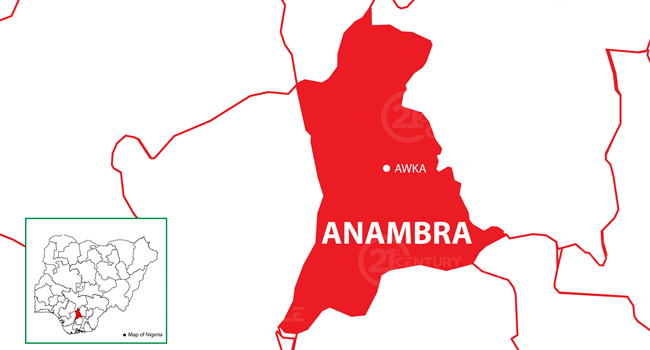
    A High Court sitting in Awka, Anambra State, on Friday remanded eight pastors in a correctional centre after they were arraigned over alleged violations of the state’s Homeland Security Law, 2025, including hiring paid actors to stage “fake” miracles.

    The defendants are Pastors Ndubisi Nnachukwu of Omega Dominion Ministry; Ekeleme Ugochukwu of Cloud of Glory Prophetic Ministry; Bishop Emeka Nwamkpa of Chapel of Faith Ministry; Peter Chukwu of Messiah Adoration Ministry; Chinedu Egwuonwu of Citadel of Grace Ministry.

    Others are Ebele Nnachukwu of Jehovah the Mighty Than All Ministry; Miracle Iruoma of City of Power Ministry; and Chukwukadibia Ogwuama of Land of Testimony Adoration Ministry.

    The pastors were brought before the court by operatives of the state security outfit, Agunechemba, led by the Special Adviser to the Governor on Security, Ken Emeakayi.

    In charge sheet numbers A/65C/26, A/55C/26, A/63C/26, A/64C/26, A/57C/26, A/60C/26, A/58C/26 and A/61C/26, the defendants were accused of wielding fake supernatural powers, using a religious place of worship for the commission of a crime contrary to Sections 18(3) and 19(1) of the Anambra State Homeland Security Law, 2025, and obtaining by false pretence contrary to Section 3(1) of the Advance Fee Fraud and Other Fraud-Related Offences Act, LFN 2006.

    Some of the pastors, who pleaded not guilty, were arraigned before Justice Jude Obiorah alongside “agents” they allegedly used to procure persons who were paid to pretend they had been healed or delivered.

    According to the charges, the pastors obtained rewards from members of the public through the fake miracles they allegedly performed.

    The proof of evidence filed alongside the charges listed video-recorded confessions of the pastors as part of the evidence, with a flash drive attached, indicating that they confessed to the offences.

    After listening to all parties, Justice Obiorah ordered that the defendants be remanded in a correctional centre and adjourned the matter until June 15, 2026, for further hearing and motion for bail.

    Speaking with journalists shortly after the proceedings, the state Attorney General and Commissioner for Justice, Tobechukwu Nweke, SAN, who led the prosecution, said the confessional statements of the pastors formed part of the evidence frontloaded by the state.

    “The state intends to rely on these evidences. The charges are part of the efforts of the administration of the state governor, Prof. Chukwuma Soludo, to nip in the bud, the practice of exploiting vulnerable members of the public through deception of staged miracles, just as the state is doing in its crackdown on fraudulent native doctors,” Nweke said.

    The arraignment comes amid the state government’s ongoing crackdown on individuals it describes as fake pastors, native doctors and spiritualists allegedly involved in activities that promote criminality. Punch

  • Ogbuekwe: A Leader Defined by Vision, Results, and Service [VIEWPOINT]

    Ogbuekwe: A Leader Defined by Vision, Results, and Service [VIEWPOINT]

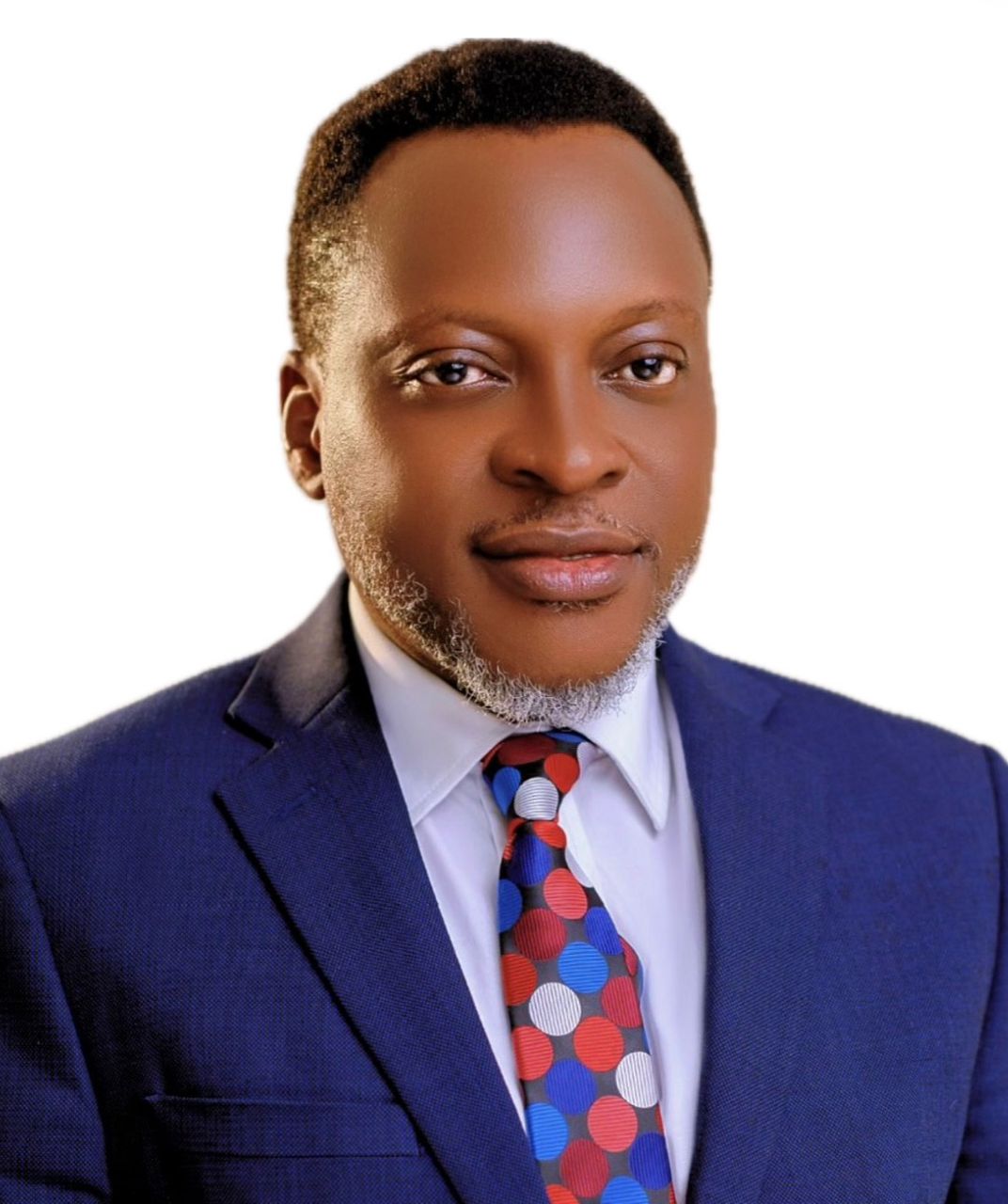
    Exceptional leaders are not measured by the positions they occupy but by the impact they create, the institutions they strengthen, and the people they inspire. Engr. Mike Ogbuekwe embodies these qualities through a distinguished career spanning public service, policy development, project management, economic transformation, and organizational leadership.

    His leadership style is rooted in strategic thinking, innovation, accountability, and a deep commitment to public value. Throughout his career, he has consistently demonstrated the ability to transform ideas into practical solutions, lead multidisciplinary teams, and deliver measurable results across government and private sector institutions.

    As a public sector leader, he has played pivotal roles in driving governance reforms, project monitoring, economic development, agricultural transformation, and public sector modernization. His contributions to digitizing government processes, improving project oversight, reducing costs, and enhancing operational efficiency reflect a leader who understands that sustainable development requires both vision and execution.

    One of his defining strengths is his ability to build systems rather than merely manage activities. Whether leading large project teams, coordinating economic development initiatives, or overseeing strategic government programs, he has consistently championed transparency, innovation, and performance-driven governance.

    Engr. Ogbuekwe is also recognized for his collaborative leadership approach. He brings together stakeholders, builds consensus, mentors teams, and creates an environment where people can perform at their highest potential. His dedication to capacity building and youth empowerment demonstrates a leadership philosophy centered on creating opportunities and developing future leaders.

    His experience across engineering, business, public administration, and economic development provides him with a rare ability to connect technical expertise with strategic policy decisions. This unique blend of competence enables him to navigate complex challenges, identify opportunities for growth, and implement solutions that generate lasting impact.

    Above all, Engr. Mike Ogbuekwe is a results-oriented leader whose career reflects integrity, innovation, excellence, and an unwavering commitment to service. His leadership journey stands as a testament to the power of vision, discipline, and purposeful action in transforming institutions and improving lives.