Category: Business/Economy

  • Petrol Subsidy Morass


    THE All Progressives Congress, APC, Federal Government must accept the blame for the fact that after six years in power, we are still deeply mired in our intractable petrol subsidy regime.


    As the leader of the then opposition party, Muhammadu Buhari had intensely argued that there was no fuel subsidy; that the subsidy which the then Peoples Democratic Party, PDP, government was paying was used to oil the wheel of corruption. He promised to stop the subsidy and even reduce the pump price of petrol if elected.


    Many Nigerians believed Buhari because as a former Oil Minister who oversaw the establishment of the Nigerian National Petroleum Corporation, NNPC, he was seen as an expert of sorts. He also assumed the portfolio of Petroleum Resources Minister, a post he still occupies.


    It will be recalled that the APC had led a massive protest which ended former President Goodluck Jonathan’s plan to remove petrol subsidy to save one trillion naira in 2012 alone.

    Shockingly, Buhari continued subsidy payments until May 2016 when it was announced that the Federal Government had withdrawn the policy, thus jerking petrol price to N145 per litre. Since then, it has been confusion galore, as the Federal Government keeps paying huge subsidies even after several announcements of “full deregulation”.


    The Country Director of the World Bank in Nigeria, Shubham Chaudhury, recently disclosed that Nigeria is on track to spend almost N3trn on subsidies this year. The Federal Government itself says it will continue to pay the subsidy till June next year.


    Spending over seven out of its maximum eight years in power nursing this massive drain on our resources amounts to failure. Unless the regime begins now to align policies towards minimising the social pains of complete and genuine deregulation, we will be back to January 1, 2012 when the APC led out Nigerians against subsidy removal.


    Measures that must be taken include helping the Dangote Refineries meet the December 2021 for full commencement of operations. As a critical shareholder, the Federal Government has a duty to do this.


    The Federal Government must extend the same gesture to all upcoming private refineries to ensure adequate servicing of their immediate vicinities. More importantly, the revival of all viable public refineries must be completed before June next year.


    We should also resuscitate the practice of supplying crude at subsidised price to all local refiners to enable them sell at affordable prices to the Nigerian market. Full downstream deregulation is the desired final destination for the Nigerian economy.


    But it must be done with the social safety net of subsidising local refining for the domestic market. If Buhari plans to withdraw subsidy in June 2022 without providing these palliatives just because he is on his way out, he risks getting his party  voted out of power.


    Source: www.vanguardngr.com­

  • Opening grazing ban ‘ll be difficult to enforce – Gov Abdulrazaq

    Governor AbdulRahman AbdulRazaq hardly grants interviews. In this rare chat with a select group of journalists, he speaks on the challenges of governing Kwara, how insecurity in North-West and ban of open-grazing in Southern Nigeria is affecting Kwara, his problem with Senator Bukola Saraki; and relations with Minister of Information and Culture, Alhaji Lai Mohammed, among others. Excerpts:

    On his staying power in spite of challenges

    I took an oath to serve the people of Kwara State. I am focused on service delivery to the greatest number.

    To serve well, you have to be a good listener. And that is one of my strongest attributes. I talk less and listen more. It takes a humble person to listen.

    We are not shouting about what we are doing. That is why it is like we are not doing anything, but the people are feeling the impact.

    I started with where we’re coming from. The last administration was very good with the media, exceedingly good, the best in Nigeria.

    We did our manifesto and programme, thinking we were coming to inherit something good. What they were saying was not what was on ground.

    We really didn’t know the depth of the challenges. It was when we got in that we found out that our manifesto was useless because we credited the last administration with a lot of achievement based on what they were saying in the media.

    On peculiar security challenges he is facing in Kwara

    Security challenges are huge, especially with insecurity in the North-West, and the declaration by Southern Governors to ban open grazing.

    Once they pronounced it and set a date, we saw a migration of herdsmen coming in to the extent that if you go to Kwara South, Kwara North now, in some villages, the Fulani have moved in. They are more in population than the indigenes.

    Many times, I have engaged with the traditional rulers, especially to say, let’s be accommodating, it will soon pass.

    The ban on open grazing is a law that cannot be enforced. It’s about fundamental human rights; the right to free movement. It is enshrined in our Constitution. You can try to minimize it.

    But now you’re saying you have to buy your food and water from next month. It’s not going to happen. In terms of ethnic groups across Nigeria, in terms of literacy, the Fulani are at the bottom.

    When you see the herdsmen, they are children, herding the cattle to the bush. Those children don’t understand. They are illiterate. You’ve gone to the bank to collect money to plant maize. He sees food for his cattle.

    You see maize that you want to cultivate, sell and pay back your loan but he sees food for his cattle and he passes through your farm. What you also forget is where he is passing may be a grazing route from the colonial era.

    They maintained that route. We don’t know it, they know it. It is like a federal highway. It’s been there. The British Colonial administrators created those routes; they put veterinary officers and tax collectors at certain strategic points.

    They were collecting tax and vaccinating the cattle and all sorts of things. The routes were there like the federal highways. In Kwara, we have about four or five grazing reserves we inherited from the colonial era. They are there. We are going to take and develop those reserves.

    With localization, global warming and urbanization, things have changed. Global warming means less water, less vegetation, desertification and therefore, smaller space, they have to come further South to graze.

    Urbanization means that you have built on their grazing routes, where they used to graze 50 years ago for free, somebody else has a C of O on it now. He is doing his own plantation for maize.

    But maybe from somewhere in Yobe, they have told the boy where to go, and he’s followed his father there before, so he knows where to go and forage, but when he gets there, corn is there but he knows that is where he used to come for food, but it’s now a farm.

    In terms of literacy, he doesn’t understand that. He knows that this is where he comes to play. It’s his area.

    When Yar’Adua came in, he had a challenge: militants in the Niger-Delta, production of petroleum products was reduced to less than 500,000 barrels a day from 2.2 million barrels.

    What did he do? He sat down and did the amnesty programme which today has cost us about N1 trillion. Do you see any factories? Do you see anything? But we don’t care.

    We know we used the money to buy peace and oil has been flowing well since then. Tompolo, everybody benefited. But we bought peace. Now, we are having a cycle of violence with Fulani herdsmen.

    We’re not offering these Fulani anything other than the bullets. That’s the truth of it. What are the options? We say we ban open grazing, so what option did we give them other than move out of our state, we have banned open grazing?

    They are Nigerians who have rights to freedom of movement. If you ban open grazing, you have to give them an option.

    Northern governors agreed in principle that this thing is not sustainable forever. They said it will be sedentary but they need to set up committees to find out how to do it, to the extent that even Kano State said all the Fulani in Kano should remain, they should not move out.

    So, a committee is going to be set up to look at how to mitigate these issues. To say, those that have land should give them land. But even with land, it is a big issue.

    They say states own land. State do not own land. If you take a piece of land, you’ll have to compensate the original owners. The state has to buy the land.

    And that’s why some governors are saying that the Federal Government needs to put money in this programme, the same way Yar’Adua invested money in the militants issue. Let’s begin to settle them.

    Apart from the National Livestock Transformation Programme, there’s no real effort, other than to say, stop this. We need to open an avenue for them to say.

    We want you to stop this, this is how we mitigate and compensate you. Some people might say, why should you compensate them, but they’re transitioning.

    You need to either compensate them or give them enough time to change because the cost of beef has to go up, because they’re now buying food to feed the cattle, instead of getting it for free in the bush.

    Source: www.thenationonlineng.net

  • Missing N881bn: SERAP sues Buhari

    Socio–Economic Rights and Accountability Project (SERAP) has filed a lawsuit against President Muhammadu Buhari over his failure to probe allegations that over 880 billion of public funds are missing from 367 ministries, departments and agencies (MDAs), to ensure the prosecution of those suspected to be responsible, and the recovery of any missing or diverted public funds.

    The suit followed allegations contained in part 2 of the 2018 annual audited report by the Office of the Auditor General of the Federation that 880,894,733,084.811 was spent by 367 MDAs without any appropriation.

    In the suit, number FHC/ABJ/CS/1281/2021, filed last week at the Federal High Court in Abuja, SERAP is seeking: “an order of mandamus to direct and compel President Buhari to promptly investigate the alleged missing N881 billion of public funds, and to ensure the prosecution of those suspected to be responsible, and the full recovery of any missing, mismanaged or diverted public funds.”

    In the suit, filed by its lawyer, Kolawole Oluwadare, SERAP is arguing that: “complying with constitutional requirements and international standards on spending of public funds would ensure effective and efficient management of public resources, and put the country’s wealth and resources to work for the common good of all Nigerians.

    “It is in the interest of justice to grant this application, as it would improve respect for the rights of Nigerians, and improve their access to essential public goods and services, which ought to be provided by the indicted MDAs.

    “President Buhari has a constitutional duty to ensure the investigation and prosecution of allegations of corruption, as well as recovery of any missing public funds. Section 15(5) of the 1999 Nigerian Constitution (as amended), requires the Buhari administration to abolish all corrupt practices and abuse of power.

    “Granting the reliefs sought would help to address the adverse consequences of unconstitutional and poor management of public resources on the human rights of poor Nigerians.”

    Joined in the suit as respondents are the Minister of Justice and Attorney General of the Federation, Abubakar Malami, and the Minister of Finance, Budget and National Planning, Zainab Ahmed.

    No date has been fixed for the hearing of the suit.

    Source: www.sunnewsonline.com

  • CBN: Criteria for participating in its 100 for 100 policy on Production and Productivity (PPP).

    In its bid to reverse the nation’s over-reliance in imports by creating a platform that supports right companies and projects with potential to immediately transform and jumpstart the productive base of the economy, the Central Bank of Nigeria (CBN) has unveiled the criteria for participating in its 100 for 100 policy on Production and Productivity (PPP).

    According to the apex bank, the intervention under the 100 for 100 PPP instrument shall provide Naira funding under existing CBN Intervention Processes and complete FX funding for new machinery. This instrument is for only new projects and will not cover any refinancing of existing facilities and will be subject to independent evaluation by international audit firms.

    It adds that all intervention under this project will be made public and published in national dailies.

    These are projects that must catalyse sustainable employment-led economic growth through increased domestic production and productivity in the near term.

    The CBN has therefore invited candidate companies with satisfactory performance to apply through their banks with effect from today, November 01, 2021, to the CBN Department of Development Finance, Officce of the Governor, Central Bank of Nigeria, Central Business District, Abuja with complete documentation.

    Source: www.sunnewsonline.com

  • CBN: eNaira is secure and dependable


    The Central Bank of Nigeria has said its newly launched e-Naira project is secure and dependable.


    The Director of Corporate Communications, Mr Osita Nwanisobi, stated this while speaking at the ongoing CBN-Fair in Abakaliki on Thursday.


    According to the apex bank, the security and dependability of the e-Naira stem from the fact that it uses cryptographic technologies encrypted with two factors for authentication.


    The CBN, however, observed that the new digital financial project might pose some challenges to Nigerians in the short term because it works with Bank Verification Numbers.


    Nwanisobi said, “The issue of security and dependability of the e-Naira platform is guaranteed. It is guaranteed because the technology uses cryptographic encrypted two factors of authentication. And so, the issue of whether the platform is secured is taken, as it is secured.


    “The e-Naira project is a journey; we expect that there are going to be minor challenges in the short-term and I can tell you where some of these things are coming from. The e-Naira platform works with BVN and if I ask some people if they have email addresses, they would tell me they do not have.”

    He warned Nigerians to eschew unregulated financial schemes propagated by fake Ponzi operators, saying this had robbed them of their hard-earned money.


    “The first is to sensitise the Nigerian public because you are the greatest security for yourselves. So, when we sensitise you, you will begin to see some of these things (fake Ponzi operators) and avoid them. The moment you see them, you will know it,” Nwanisobi stated.


    He continued, “The other thing is for us to work with the security agencies to ensure that those who gullibly defraud Nigerians must be brought to book and we have done quite a number in this regard. We work with security agencies to ensure that those who claim what they are not, are brought to book.”


    According to him, there is no way a genuine investment can offer 10 per cent monthly returns and 120 per cent per annum.


    He said, “You take that to be real? Where is he going to make the money from? What kind of business is the person doing? Is the person regulated?”


    Source: www.punchng.com

  • Senate disapproves FG’s plans to borrow $200m for mosquito nets


    The Senate Committee on Local and Foreign Loans on Tuesday kicked against the proposal by the Federal Ministry of Health to borrow $200m  under the Malaria Programme to buy mosquito nets in the 2022 budget.


    The committee’s condemnation was in response to the Ministry of Health’s submission about its intention to borrow the amount for purchase of mosquito nets for 13 vulnerable states.


    The Permanent Secretary in the Ministry, Mahmuda Mamman had justified the proposal before the panel.


    He said, “The loan if approved by the National Assembly and accessed, will be used to medically fight malaria in the 13 orphan states which cover 208 local government Councils and 3, 536 primary health care centres”


    Angered by his submission, Senator Ibrahim Oloriegbe and other senators present descended heavily on the Permanent Secretary and the Executive Secretary, National Primary Health Care Development Agency, Dr.Faisal Shuaib.


    Oloriegbe wondered why N450m was budgeted for Malaria treatment in the proposed 2022 budget and yet, plans being made to borrow $200m for the same purpose.


    He said, “This is unacceptable. We should be able to put our feet down when dealing with these donor agencies or creditors  as regards loans to be taken and what it should be expended on.”


    “Don’t we have local manufacturers of mosquitoes nets and malaria drugs in Nigeria to patronise with the loan even if approved.


    “This is a clear case of money and jobs for the boys by creditors luring you for loans and railroading you on what it should be spent on.


    “Washington or whatever creditor offering the loan, should stop giving us money with one hand and taking it back with another hand through railroaded spending,”  he said.


    Other members of the committee like Senators Adelere Oriolowo (APC Osun West), Abba Moro (PDP Benue South) and other, also blamed the Ministry for coming up with such idea.


    The N450m already budgeted for fighting the scourge in the alleged vulnerable areas, according to them, was enough.


    They angrily asked the permanent Secretary to explain how the idea was arrived at and how it will be implemented.


    The Permanent Secretary in his response said subsidiary arrangement had been made with all the states involved through required signing of agreement.


    In his further clarification, the Executive Director, National Primary Heal Care Development Agency, NPHCDA, Dr. Faisal Shuaib noted that the $200m was for importation and local production of mosquito nets.


    The panel however demanded the total needs of the agency to ascertain if there was need for borrowing.


    Source: www.punchng.com

  • Buhari has expressed hope that e-Naira “ll help tackle money laundering


    President Muhammadu Buhari has expressed hope that the recently launched eNaira would buoy and reposition Nigeria’s economy to attract investors.


    He also said the Treasury Single Account (TSA), Bank Verification Number (BVN), and National Identification Number (NIN) initiatives have reinforced his administration’s efforts in tackling corruption.


    Speaking at the fifth edition of Future Investment Initiative Summit in Riyadh, Saudi Arabia, Buhari assured that his administration would encourage public and private initiatives that increases investments in health, education, capacity building, youth empowerment, gender equality, poverty eradication, climate change and food security.


    “e-Naira, the electronic version of our national currency, which puts us on track to become the first African country to introduce a Central Bank Digital Currency was launched on October 25th, 2021. We believe this and many other reforms, will help us increase the number of people participating in the banking sector, make for a more efficient financial sector and help us tackle illicit flow of funds. To further strengthen our anti-corruption drive, increase accountability and transparency, we have centralised government funds through a Treasury Single Account, and ensuring that all Nigerians with a bank account use a unique Bank Verification Number (BVN). These initiatives, coupled with our nationwide National Identification Number (NIN) exercise, reinforce our efforts to tackle corruption and fraud. We believe that this should give investors a lot of comfort.”

    USA companies need customer service reps to work from home, hourly pay in $13 per hour, must have a quiet environment to work, internet access.Click here to apply .

    The president, who described the summit as a credible forum for interaction between public and private sectors, to explore ways of advancing economic growth, development and global prosperity, said Nigeria’s diversification efforts have continued to yield results, particularly in agriculture.


    “We introduced policies that supported investments in agriculture and food processing. We provided loans and technical support to small holder farmers, through the Anchor Borrowers Programme. As a result, Nigeria today has over 40 rice mills from less than 10 in 2014. Nigeria also has over 46 active fertiliser blending plants from less than 5 in 2014.


    “Furthermore, in agriculture, we have reformed the process of obtaining inputs such as fertiliser and seeds. We have several million hectares of available arable land and have embarked on the creation of Special Agriculture Processing Zones across the country. These initiatives we believe will make it easier for investors in agriculture,” he said.


    President Buhari told the gathering of world leaders, global investors and asset managers that the oil sector was already undergoing a reform that would make it more attractive and inclusive.


    “Two months ago, I signed the Petroleum Industry Act. The Act will serve as a catalyst to liberalise our petroleum sector. It has introduced a number of incentives such as tax holidays, 100 percent ownership, zero interest loans and easy transfer of funds. In addition, we have highly skilled in-country workforce and a large domestic market. In mining, we have also made several opportunities available for investors. Nigeria is a country rich in minerals from gold, iron ore, tin, zinc, cobalt, lithium, limestone, phosphate, bitumen and many others. We have made the licensing process easier and also made extensive investments in rail and transportation.


    “Infrastructure investments represent significant potential for investors in Nigeria. We have opportunities in seaports, rail, toll roads, real estate, renewable energy and many others. We have created several institutions that are available to co-invest with you in Nigeria. We have the Nigeria Sovereign Investment Authority and more recently, I approved the creation of Infrastructure Corporation of Nigeria. These institutions are run as independent world class institutions to make investments in the country and are available to co-invest with you.”


    Buhari urged more interest in infrastructure such as healthcare and education, which “present enormous opportunities for investors in a country our size.”


    The president also drew attention of world leaders to the devastating effect of climate change on livelihoods of people around the Lake Chad.


    “As we strive to build resilience towards a sustainable economy in our various countries, let us not forget the negative impact of climate change on our efforts to achieve this goal. Nigeria and many countries in Africa, are already facing the challenges posed by climate change. Climate change has triggered conflicts, food insecurity, irregular youth migration, rising level of sea waters, drought and desertification, as well as the drying-up of the Lake Chad.


    “In the Lake Chad Basin region, where Boko Haram insurgency continues to undermine the peace, security and development of the region, climate change is largely responsible for the drying up of the Lake Chad which has shrunk by more than 85 per cent its original size. The diminishing size of the lake is at the root of the loss of millions of livelihoods, displacement of inhabitants and radicalisation of teeming youths in the region who are recruited to serve as foot soldiers in the insurgency.


    “In order to redress this situation and restore the lost fortunes of the Lake Chad Basin region, strong public-private partnership through massive investments will be needed to recharge the waters of Lake Chad. I am confident that this forum will rise to the challenge in the interest of durable peace and sustainable devel opment of our region.”


    Source: www.sunnewsonline.com

  • Enugu State Government Committed to Youth Development and Sustainable Growth- Dr. Ugwunta

    Enugu State Government Committed to Youth Development and Sustainable Growth- Dr. Ugwunta

    Enugu State Government Committed to Youth Development and Sustainable Growth- Dr. Ugwunta

    It is said that the youths of a nation are the trustees of posterity; and their power the common wealth for the entire world. Thus the Enugu state government under the leadership of His Excellency Rt. Hon. Dr. Ifeanyi Ugwuanyi has been working tirelessly to ensure that youths are fully involved in sustainable development.

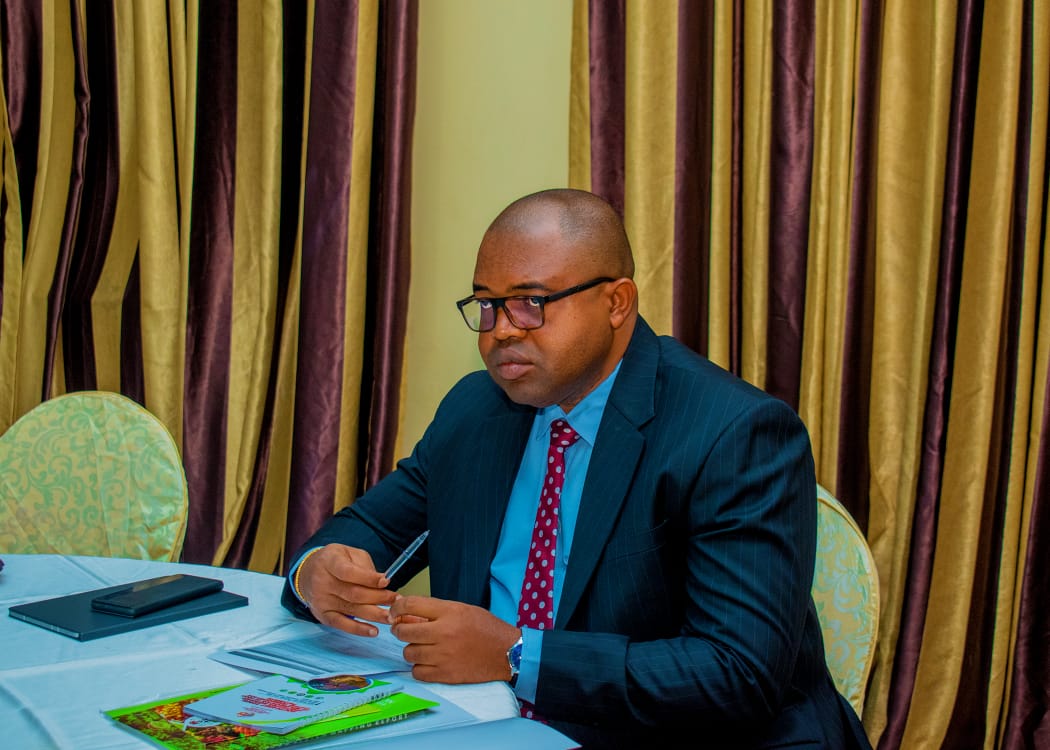
    Dr. David Ugwunta

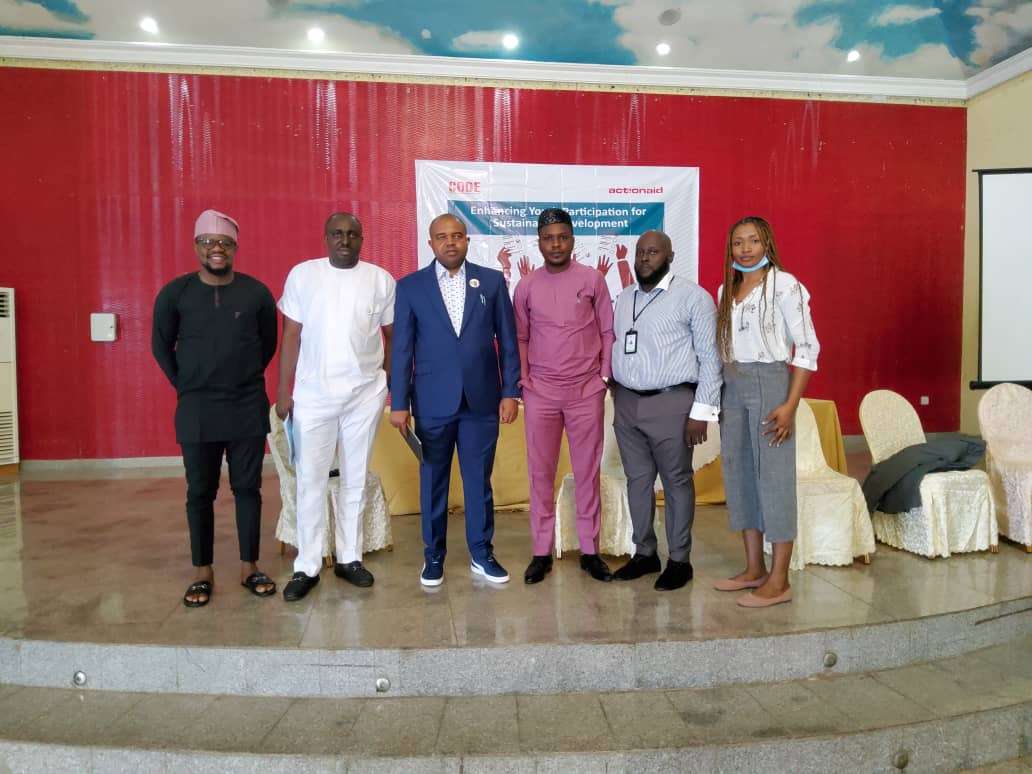
    Speaking at the public hearing event organised by Connected Development, themed “Enhancing Youth Participation for Sustainable Development”, the Honourable Commissioner for Budget and Planning, Dr. David O. Ugwunta reiterated that the administration of Rt. Hon. Dr. Ifeanyi Lawrence Ugwuanyi from inception saw the need to carry the youths along in the development process; and as a result has appointed so many youths into strategic positions. Dr. Ugwunta noted that the State Government has, through the Ministry of Budget and Planning “Citizens Engagement” platform, provided an opportunity where the youths can participate in discussions pertaining to budget preparation and implementation as well as nominate projects and programmes in the budget, they would want the State Government to implement.

    Governor Ifeanyi Ugwuanyi

    Recall that aside the numerous development projects in the Economic Sector of the 2021 budget, Enugu State Government allocated over 2.5billion naira representing 2.5% of its capital size of over 101billion naira for youth oriented programmes in the areas of SME, Agriculture, Science and Technology, Human Capital and Poverty alleviation, labour and productivity amongst others.

    Dr. Ugwunta equally stated that the state government all in a bid to empower the youths for sustainable development through the Enugu State Scholarship and Loans Board runs a mentorship programme where the Board have recruited about six mentors in various institutions across the globe to mentor Enugu State citizens on accessing fully funded scholarships abroad. Both internationally and locally, the State government has been sponsoring young people from the State on scholarship.

    Reacting to questions raised by participants in the public hearing pertaining to the budgetary provision of 10million naira in the 2021 budget for the Tech Hubs, Dr. Ugwunta stated that the State Government recently inaugurated the two Tech and Innovation Hubs as a youth-focused project targeted at alleviating the crippling effects of the COVID-19 pandemic by empowering youths in the State to develop IT skills which will in turn leverage them in the fast changing and competitive world. Thus, the 10million naira allocated to the project in the 2021 budget was for the completion of the construction and equipping of the Hubs which its construction started in year 2020. He clarified that the Tech hub domiciled in the Ministry of Science and Technology is not yet backed by an Act of legislation and this explains the reason why it could not appear in the budget of the State as an Agency of Government. He further noted that the Managers of the Hub which were recently recruited are expected to come up with their programmes / projects for inclusions in the 2022 budget and beyond.

    Further reacting to a question asked on “what the State Government is doing to revive the educational sector in the area of medicine, research and substandard quality of education”, Dr. Ugwunta said that the State Government is currently building a world class teaching hospital, 2Nos 12 classroom faculty buildings, 2nos 10 classroom Faculty Buildings, 2Nos 8 classroom Faculty Buildings and 2Nos 120 rooms Hostel building at ESUT College of Medicine, Igbo-Eno. Recall that as at the end of year 2020 Enugu State through ENSUBEB has constructed, reconstructed and renovated 339 classroom buildings and toilets, providing 1,595 fully equipped classrooms, provided 33,621 lockers, desks and chairs for pupils and teachers, distribution of 54,545 books and instructional materials to all primary and secondary schools in Enugu State as well as massive construction and reconstruction of classroom buildings, offices and hostels in Secondary Schools across the State.

    On the issue of “what the state government is doing to alleviate water scarcity in Enugu state”, Dr. Ugwunta noted that there is an ongoing Solar-powered Water Crash Project located at 9th Mile which is worth about 600million naira and nearing completion. In addition to this, he noted that there is an AFD-funded 3rd National Urban Water Sector Reform Project (3rd NUWSRP) ongoing in the state with a life span of 5-years (2018-2023). The deliverables of the 3rd NUWSRP include rehabilitation of Ajali & Oji River Waterworks, installation of power line, upgrading of water transmission system by installation of a second pipeline (12.8km long and 700mm diameter), replacement of about 240km of asbestos cement pipelines, expansion of the secondary network of 60km, replacement of 16,000 existing connections with new piping and metering and to supply about 40,000 new domestic connections amongst others.

    However, Dr. Ugwunta urged the youths to co-create viable and impactful ideas and innovative programmes alongside appropriate MDAs for inclusion in the 2022 budget and beyond.

    In his address, the South East Lead of the organization, Dr. Daniel Ugwu, noted that the Connected Development, an NGO with support from ActionAid is saddled with the vision of improving access to information, empowering grassroots communities in Africa and working with the government to ensure that government projects are effective, people-oriented and youth-focused through one of its programme tagged, “Follow the Money”.

    Dr. Ugwu commended the Enugu State government for giving youth-focused projects a top priority in the State’s annual budget. He noted that Connected Development, under its Strengthening Youth Focused Public Service Delivery Project, is carrying out this public hearing to engage citizens and government stakeholders to discuss government programs and enhancing youth inclusion in governance for sustainable development. The hearing, now in its third phase, aims to empower young people to influence public expenditure towards gender-responsive public service delivery through budget monitoring and tracking.

    Written by:
    Chukwuka, Ifunanya Judith
    PRO/Information Officer Ministry of Budget and Planning.

  • Suspension of Onitsha seaport: FG orders contractors to terminate rail at ports


    The South-East Shippers Association has protested the constant suspension of activities at Onitsha River Port in Anambra State.


    The group said that Onitsha port is a natural deposit which Nigeria should focus on the revenue it generates rather than politics of ethnicity.


    The President of Anambra State Shippers Association, Mr. Emma Akpaka, in a protest letter described the suspension of activities at the port as politically motivated against the Southeast zone.


    The group lamented the dilapidated Niger road that connects the River port to the Main Market that has become a death trap for the users. “We see it as political sabotage against us. We don’t want what happened to Warri port to happen in Onitsha port. Warri Wharf was labeled a gateway for arms and ammunition. Those who should protest were silent because they did not know it was conspiracy, until those who were illegally disengaged moved to the creeks to forment trouble.


    When Onitsha River port became operational in 2017, we celebrated and expected that going forward, Onitsha will be in the same page with Jakarta in Indonesia, Guangzhou in China, Bangkok in Thailand among others.


    Indeed that expectation was right, but there is no enabling environment to augment the contributions of the Federal Ministry of Transport.


    Niger Street, the only road that links the wharf to Onitsha main market has collapsed. Our expectation since 2017 is that this road would be rehabilitated with speed. But the road is so bad that any heavy-duty truck that tries to pass through it must fall.

    “Therefore, Anambra State shipper are calling on the state government to come to our aid immediately by giving this road a facelift. this under the guise of internally generated revenue. This action has frustrated many of our customers.


    “We equally advice governor Willie Obiano to facilitate the building of a jetty at the bank of the River Niger. Meanwhile as part of efforts to decongest the ports and end the intractable gridlock along Apapa- Oshodi Expressway, the Federal Government, has ordered relevant authorities to ensure that all rail lines terminate at the ports.


    Speaking during a press briefing to kickstart the 27th Nigerian Economic Summit (#27NES) in Abuja, the Minister of State for Finance Budget and National Planning, Prince Clem Ikanade Agba, said the focus of government was on the rail and by the time that is realised there will be less pressure on the roads.


    Source: www.sunnewsonline.com

  • Budget deficit has risen to N20.64tn under Buhari Regime


    Budget deficit has risen to N20.64tn under the president, Major General Muhammadu Buhari (retd.), according to analysed data from the budget office.


    The data covered periods from 2016 to 2020.


    According to the budget office, more than N7.97tn was borrowed from foreign and domestic sources to fund these deficits.


    According to Investopedia, a budget deficit occurs when expenses exceed revenue and indicate the financial health of a country.


    The budget office said the Federal Government generated a revenue of N3.42tn to fund the budget in 2020.


    It said total government spending for the year was N10.02tn, 0.43 per cent above the N9.97tn budgeted.


    Hence, the budget deficit for the year was N6.59tn (14.17 per cent of the 2020 GDP), and this was partly financed through domestic borrowing of N2.06tn.


    In 2019, the Federal Government generated a total of N4.12tn to fund the budget.  For the year, total expenditure was N8.29tn, a decrease of N618.14bn (6.93 per cent) from the annual projection.


    Budget deficit stood at N4.18tn (2.9 per cent of 2019’s GDP), and was partly financed through domestic borrowing of N912.82bn.


    In 2018, a total of N3.48tn, excluding other funding sources, was generated in revenue to fund the year’s budget.


    For the year, total spending was N7.51tn, a decrease of N1.61tn from the budget. This meant a budget deficit of N3.65tn (2.85 per cent of the 2018 GDP), which was financed to the tune of N2.50tn through foreign borrowing of N1.17tn and domestic borrowing of N1.34tn.


    According to the budget office, the implementation of the 2017 budget was affected by poor revenue outturn as oil production and exports remained below the budget estimates while the performance of the economy continued to impact negatively on non-oil revenue.


    The office said a total of N2.38tn revenue, excluding other funding sources, was generated to fund the budget in 2017.


    It added that actual expenditure in 2017 was N6.46tn, a N977.57bn decrease from the annual projection.


    This left a budget deficit of N3.81tn, which was financed to the tune of N2.50tn, comprising of N1.17tn and N1.34tn of external and domestic borrowings respectively.


    In 2016, the Federal Government generated a revenue of N2.95tn to fund the budget. For the year, total government spending was N5.36tn, an expenditure shortfall of N700bn of the budget estimate of N6.06tn for the period.


    Budget deficit was N2.41tn (2.37 per cent of GDP) or 45 per cent of total expenditure.


    For the period under review, N7.76tn was released for the implementation of capital projects and programmes of MDAs for the years under review.


    In descending order, N1.95tn was released in 2020, N1.17tn was released in 2019, N1.86tn was released in 2018, N1.56tn was released in 2017, and N1.22tn was released in 2016.


    In her budget presentation for 2015, then Coordinating Minister for the Economy and Minister of Finance, Dr Ngozi Okonjo-Iweala, disclosed that the budget deficit for the year was going to be N755bn (or 0.79 per cent of GDP).


    She added that the budget deficit for 2014 was N994bn (or 1.24 per cent of GDP).


    According to her, there was a need to keep the deficit under three per cent of GDP because of the Fiscal Responsibility Act, 2007 and in accordance with the international norm.


    Recently, the Minister of Finance, Budget and National Planning, Mrs Zainab Ahmed, disclosed that the Federal Government was going to borrow to fund its N6.25tn deficit in the proposed 2022 budget.


    She said, “If we just depend on the revenues that we get, even though our revenues have increased, the operational expenditure of the government, including salaries and other overheads, is barely covered or swallowed up by the revenue.


    “So, we need to borrow to be able to build these projects that will ensure that we’re able to develop on a sustainable basis.


    “Nigeria’s borrowing has been of great concern and has elicited a lot of discussions. But if you look at the total size of the borrowing, it is still within healthy and sustainable limits. As of July 2021, the total borrowing is 23 per cent of GDP.”


    Echoing the words of his minister, the President, Major General Muhammadu Buhari (retd.), while presenting the 2022 budget to the joint session of the National Assembly, said his government planned to borrow as much as N5tn from local and foreign sources to cover the budget deficit for 2022.


    He said, “We plan to finance the deficit mainly by new borrowings totalling N5.01tn; N90.73bn from privatisation proceeds and N1.16tn drawdowns on loans secured for specific development projects.”


    The President of the Senate, Ahmad Lawan, had at the joint session of National Assembly for the budget raised concern about the rising spate of borrowing.


    He had said, “Mr President, the need to enhance revenue generation and collection cannot be overemphasised.


    “The level of budget deficit is high, and both the legislature and the executive should work to reduce this deficit through the availability of more revenues.”


    Lawan added that the government should consider other sources of funding its projects in order to reduce borrowing.


    In a recent interview with The PUNCH, the Chief Executive Officer of Financial Derivatives Company, Bismarck Rewane, said the only way to finance a deficit was by borrowing.


    In April 2021, the Edo State government accused the FG of printing money indiscriminately to be able to meet up with some of its obligations.


    A report by The PUNCH in August showed that the Federal Government’s total borrowing from the Central Bank of Nigeria through Ways and Means Advances had ballooned to N15.51tn under Buhari.


    Ways and Means Advances is a loan facility used by the central bank to finance the government in periods of temporary budget shortfalls subject to limits imposed by law.


    According to Section 38 of the CBN Act, 2007, the bank may grant temporary advances to the Federal Government in respect of temporary deficiency of budget revenue at such rate of interest as the bank may determine.


    While the FG has borrowed N7.97tn from domestic and foreign sources to finance its N20.64tn budget deficit in the period under review, the shortfall of about N12.67tn may have been financed by the CBN.


    In June, London-based Capital Economics, in a report titled ‘The perils of deficit monetisation in Nigeria’ disclosed that the FG had been turning to the CBN to plug its budget deficits.


    They added that this move would deepen some of Nigeria’s existing economic woes, including high inflation, downward pressure on the naira and weak economic growth.


    The organisation said, “The authorities in Nigeria have routinely relied on the Central Bank of Nigeria to help finance budget deficits in recent years.


    “This was the case even before the onset of the pandemic and has also occurred irrespective of whether the budget shortfall was in line with official projections or not – Nigeria has a pretty poor track record of sticking to its budget plans.”


    It added that over the past six years,  on average, around 55 per cent of annual budget shortfalls had been financed by the CBN.


    Source: www.punchng.com

  • FG approves cultivation of genetically modified Maize


    The Federal Government has granted environmental approval for the evaluation and open cultivation of TELA Maize, a new variety of genetically modified maize developed by researchers at the Institute for Agricultural Research, Ahmadu Bello University, Zaria.


    Approval for the cultivation of the crop was announced in a statement issued in Abuja on Sunday, jointly signed by the Communications Officer, West and Central Africa for African Agricultural Technology Foundation; and the Information Officer, IAR/ABU, Yakubu Dodo.


    According to the statement, the genetically modified maize would resist fall armyworm, stem borers, and tolerate moderate drought.

    The government decision was contained in a certificate issued to IAR by the National Biosafety Management Agency, the agency mandated to regulate genetically modified products across the country.


    The certificate dated October 8, 2021, with permit code no. NBMA/CM/003, was issued to IAR for general/commercial release of TELA maize genetically modified for drought tolerance, resistance to stem borer and fall armyworm.


    “It comes into effect from October 8, 2021, to October 5, 2024,” the statement read in part.


    A decision document accompanying the certificate from NBMA stated that in arriving at the decision to grant the permit, the agency took into consideration the advice of the National Biosafety Committee, the National Biosafety Technical Sub-Committee, and the risk management report provided by the applicant.


    The statement added, “The agency was convinced that there are no known adverse impacts to the conservation and sustainable use of biodiversity, taking into account risk to human health.

    “The permit, pursuant to this decision, is without prejudice to other extant legal requirements.”


    It stated that this approval would authorise the permit holder and persons covered by the permit to commercialise the TELA maize genetically modified for drought tolerance and insect resistance.


    Reacting to the decision, the Executive Director, IAR, Prof. Ishiyaku Mohammed, said it was inspiring for the institute to secure NBMA approval for the commercial release of the drought-tolerant and  insect-resistant maize.


    Source: www.punchng.com

  • The reason Why Cannabis cannot be legalised in Nigeria


    The agitation for the legalisation of Cannabis Sativa cannot succeed in Nigeria because the proliferation of illicit drugs often leads to crime, chaos and conflict, the National Drug Law Enforcement Agency has explained.


    In a statement issued on Friday by the spokesperson of the NDLEA, Femi Babafemi, the Chairman/Chief Executive of the NDLEA, Brig. General Mohammed Bubba Marwa (retd.), made this statement as a guest speaker at the 2021 Ulefunta annual public lecture organised by the Deji of Akure Kingdom, His Imperial Majesty, Oba Aladetoyinbo Aladelusi and chaired by a former Secretary to the Government of the Federation, Chief Olu Falae.


    Marwa said, “The proliferation of illicit drugs often engenders a pattern of crime, chaos and conflict. In the advanced world, it is the driver of the high crime rate and violent killings in the inner cities. In developing or third world countries, it is the escalator of strife, pogroms and civil war, and has played a big role in countries torn to pieces by tribal war, such as it is playing in Syria, which has become the hotbed of Captagon, and Afghanistan, which controls the opium trade.

    “We have seen narco-terrorism in countries like Colombia and Mexico where drug cartels are a law unto themselves and are as powerful, if not more powerful, than the state. So, there are real cases, not scenarios, of where and how illicit substances played a role in a society’s rapid descent into chaos and teetering on the brink of a failed state.


    “So the pertinent question for us today is: Have drugs played any role in the festering insecurity in Nigeria? The answer is yes. Of this, we have ample evidence.”


    Marwa, represented by his Special Adviser on National Drug Control Master Plan, Otunba Lanre Ipinmisho, stated that considering the intractable burden of insecurity facing the country, “We do not have the luxury of allowing a narcotic economy to take root and thrive in our society. Africa, nay, Nigeria has enough problems without adding the burden of narco-terrorism.”


    He said, “Of all the known illicit substances, Cannabis Sativa is the only one that is native to Nigeria and it is the most abused of all illicit drugs, and from the findings of the National Drug Survey of 2018, cannabis is becoming a national albatross.”


    While warning that the population of Nigerians hooked on cannabis alone was more than the population of countries like Portugal, Greece or the Republic of Benin, he said that as such Nigeria could not afford to toy with the grim reality of the danger of legalizing cannabis when all the needed infrastructure to monitor and control it are still far from being in place.


    “Where cannabis is concerned, we should not by any argument allow ourselves to become the proverbial fool that rushed in where angels fear to tread. Countries like Canada, which are pro-cannabis have strong and efficient institutions that are way ahead of ours by long mileages.


    “Given the reality of our law enforcement, controlled cultivation of cannabis is a mirage. Aren’t pharmaceutical opioids controlled? Tramadol, codeine, Rohypnol, Benzopam, are all controlled, yet, their trafficking and abuse is causing us unquantifiable human and economic loss.


    “And for those who point at the inherent economic benefit that could accrue from the legalisation of its cultivation, following our reality, would you be comfortable, if by tomorrow, your 13-year-old son can easily access marijuana, or you find some wraps of weed in his pocket, or you learnt that someone has introduced your 16-year-old daughter to smoking cannabis under the pretext that it has medicinal value?


    “Our individual answer to that question will give us a public opinion of where we should stand as a country in the cannabis debate,” he said.


    Source: www.punchng.com