Category: Business/Economy

  • Shortage of Gas halts power plant operations.

    Shortage of Gas halts power plant operations.

    Six power plants under the management of the Niger Delta Power Holding Company have stopped operations due to a breach in the supply of gas to the facilities.

    A letter from the NDPHC to the Managing Director of the Nigerian Bulk Electricity Trading Plc stated that the breach was reported by the Nigeria Gas Company, the supplier of gas to the plants.

    The letter, which was dated December 20, 2021 and titled, “Re: Notice of gas shortage from Nigeria Gas Company”, stated that five of the power plants were impacted by the gas curtailment, while one was forced to shut down.

    It read in part, “We (NDPHC) have been notified on December 18, 2021, by the Nigeria Gas Company, via an email (Annexure I) of a breach on their gas supply network as well as technical issues affecting gas suppliers on the western axis.

    “These challenges have led the NGC to issue the notice of gas curtailment arising from the abysmal system pressure levels that must be managed to avoid collapse of the gas grid.”

    It added, “According to the NGC, the Trans-Forcardos Pipeline was breached on December 17, 2021 and has impacted Seplat’s production and may affect other producers if not immediately repaired.

    “Also, the NGC reported that the Nigeria Petroleum Development Company’s Ughelli East Plant is currently down, while Chevron Nigeria Limited had also lost a compressor because of technical issues.”

    It noted that the combined impact of all these issues was a deferment, unavailability to off-takers, of about 250 million standard cubic feet of gas from the pipeline network.

    On plants that were affected, the power firm said, “The NHPHC has five of its operational power plants viz, Olorunsogo, Omotosho, Sapele, Ihovbor and Geregu impacted by this gas curtailment, while Omotosho NIPP (National Integrated Power Project) has been forced to shut down.

    “Geregu NIPP and Ihovbor NIPP are only receiving limited gas volumes thus leading to part load or low generation operation.”

    The letter, however, stated that the management of the NDPHC was monitoring the situation and was committed to ensuring that the plants return to full operations as soon as gas supply improves.

    Source: www.punchng.com

  • FEC approves N65.39bn to execute power projects in Nigeria


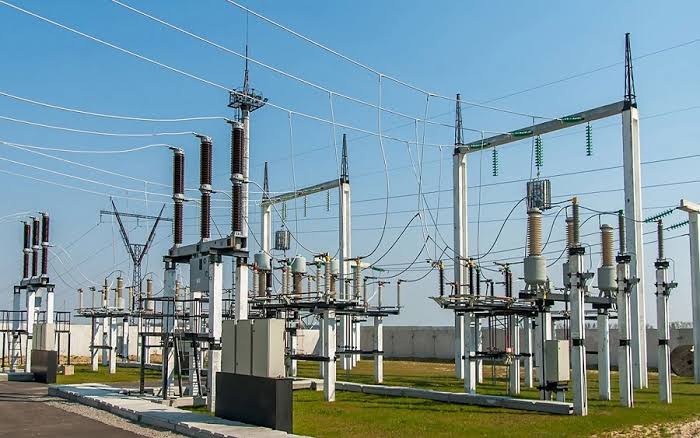
    The Federal Executive Council meeting has approved N65.39bn in foreign and local denominations to execute power projects in the country.


    The Minister of Power, Abubakar Aliyu, disclosed this to State House Correspondents on Thursday at the end of an extraordinary meeting of FEC presided over by Vice President Yemi Osinbajo at the Presidential Villa, Abuja.

    He said the extraordinary session was to ensure the country begins 2022 on a clean slate in the area of electricity supply.


    Aliyu who presented 16 memos which were all approved by the council, said the Buhari regime had done more than its predecessors to ensure that Nigerians experience improved electric power supply.

    He said “FEC approved$65,606,420, €15,152,651 and N31,360,272,397 respectively for the award of contract for the construction of a 2X60MVA 132/33 KVA substation at Ikare-Akokoand 2×132 KV Lines Bay Extension at Oke-Agbe, Ondo State at the cost of$9,9928,912.80 and N2,037,076,700.00.

    “Supply of 65 Hilux vehicles and20 SUVs nationwide at the cost of N2,741,787,500.00. Procurement of 1,500 drums of transformer oil nationwide at N322,500,000.00. Supply of 19 Sergitransformer explosion and fire protection devices nationwide at €5,326,663,70and N347,629,092.57.


    Source: www.punchng.com

  • Bolt, Uber drivers earning up to N120,000 weekly, need to be taxed: Reps

    Bolt, Uber drivers earning up to N120,000 weekly, need to be taxed: Reps

    Bolt, Uber drivers earning up to N120,000 weekly, need to be taxed: Reps

    The House said these companies benefit “from facilities of the Federal Government such as road and security network which grants them ease of doing business.”

    The House of Representatives has resolved to setup a committee to investigate whether operators of internet-based ride hailing services pay taxes in accordance with Nigerian laws.

    Representative Ganiyu Abiodun (APC-Lagos state) had moved the motion at plenty on Thursday, urging the house to probe the tax compliance of these transport services.

    The House unanimously adopted the motion.

    Presenting his arguments in moving the motion, Mr Abiodun averred that ICT-enabled companies such as Bolt and Uber are now widely used in Nigeria, offering very accessible, cheaper and lucrative transport services, especially in the urban areas.

    “ICT has created many job opportunities for unemployed persons as the people’s desire for comfortable ride services have enabled companies such as Bolt and Uber spread widely across the country,” he posited.

    Mr Abiodun further claimed the average weekly earnings of Bolt and Uber drivers range between N60,000 and N120,000 while the companies take off 20 per cent and 25 per cent respectively as commission from the earnings of each driver operating on their platforms.

    He noted that these companies benefit “from facilities of the Federal Government such as road and security network which grants them ease of doing business.”

    He therefore submitted that they ought to be fully accountable and made to remit taxes to the federal government as and when due.

    The lawmaker said it was not clear whether the companies were fully compliant with the requirements of the Companies and Allied Matters Act, considering that the services were online.

    In his ruling, the Deputy Speaker of the house, Ahmed Wase, said that the committee, when constituted was expected to report back within four weeks for further legislative action.

    (NAN)

  • Use of common seal by companies no longer mandatory – CAC boss

    Use of common seal by companies no longer mandatory – CAC boss

    Use of common seal by companies no longer mandatory – CAC boss

    The Registrar-General, Corporate Affairs Commission (CAC), Alhaji Garba Abubakar, has said the use of common seal by companies is no longer mandatory.

    Abubakar said this in statement issued on Thursday in Abuja, signed by Mr Rasheed Mahe, CAC’s Media Head, after declaring open a one-day Customers’ Stakeholders Forum.

    Abubakar was represented by Mr Abdulhakeem Mohammed, Director Compliance.

    He enumerated a series of reform initiatives embarked upon by the commission, pursuant to CAMA, 2020.

    Abubakar said that notable features of the new law included the dispensation of the appointment of company secretary by private companies in pursuant of Section 330 of the new law.

    According to him, while electronic signature has been introduced by the new law, one man is allowed to register a private company, adding that incorporated trustees amalgamation with similar objectives is now possible under Section 849.

    The Registrar-General also said that the minimum share capital for private companies was increased to N100,000 and two million for public liability companies.

    He said it was upgraded to two million respectively under Section 27 sub-section 2 of the act.

    Abubakar said that small companies and one-man company were now permitted to hold statutory and annual general meetings abroad.

    He said the provisions of Sections 705 and 707 which introduced the registration of accredited insolvency practitioner, liquidator, receiver or receiver-manager stated that such professionals could only practice upon obtaining due accreditation from the CAC.

    Abubakar said key reforms contained in the new law also stated that there was now prohibition of the combination of the office of the chairman and chief executive officer in one and the same person for public companies.

    He said the commission, in collaboration with its software provider, was making strenuous efforts to fine-tune its processes in line with global best practices.

    Abubakar reiterated its resolve to continue to initiate and implement enduring institutional reforms tailored not only for the demands of ease of doing business, but to establish a registry that would rank as one of the best 10 in the world.

    He said the commission had resolved to ensure complete digitisation of its operations to further provide efficient and effective services in 2022.

    In their separate goodwill messages, Dr. Balogun Abdulrasheed, Chairman, Institute of Chartered Accountants of Nigeria (ICAN) and the Acting Managing Director, Abuja Enterprise Agency, Mr Shehu Abdulkadir, represented by Aisha Yusuf, applauded the initiatives and urged the commission to sustain the tempo.

    Speaking in the same vein, representatives of the Nigerian Bar Association (NBA), Mr Folarinwa Aluko, Mr Tony Idoko and Mr Clement Owowo, applauded the CAC for the engagement and stressed the need for more frequent engagements.

    They restated their commitment to partnering with the commission and described as world class, the ability of a customer to register and download CAC registration certificate anywhere in the world.

    The stakeholders, however, implored the commission to review its post incorporation processes, as well as enhance its customer engagement mechanism to become real time.

    Other speakers, who similarly applauded the commission’s reform initiatives and charged it to sustain the tempo, included the representative of the Chairman of the Institute of Chartered Secretaries & Administrators of Nigeria (ICSAN).

    The News Agency of Nigeria (NAN) reports that in addition to the Abuja Forum, the commission has held Customers’/Stakeholders forum in Kano, Port Harcourt, Lagos (Ikeja and Ikoyi) and Enugu where it has Nodal offices. (NAN)

  • 2021 Budget: ICPC discovers 257 fake projects worth N20 billion

    2021 Budget: ICPC discovers 257 fake projects worth N20 billion


    The Independent Corrupt Practices and Other Related Offences Commission (ICPC) said, yesterday, the review of the 2021 budget has led to discovery of 257 duplicated projects worth N20.138 billion.


    Chairman of ICPC, Prof. Bolaji Owasanoye, made the disclosure at the third national summit on Diminishing Corruption in Public Sector, with the theme: Corruption and Coat of Government New Imperatives for Fiscal Transparency, organised by the Office of the Secretary to the Government of the Federation and the Independent Corrupt Practices and Other Related Offences Commission (ICPC).


    Breaking News, Nigerians can now work in Nigeria and get paid in US Dollars Click here to apply today .


    He said the commission also uncovered a syndicate of corrupt individuals within the service which corruptly employed unsuspecting Nigerians, issued them fake letters of employment, fraudulently enrolled them on IPPIS and post them to equally unsuspecting MDAs to commence work. He said ICPC was already prosecuting one of the leaders of the syndicate from whose custody led to the retrieval of several fake letters of recommendation purportedly signed by Chief of Staff to the President, ministers, federal civil service commission and other high ranking Nigerians.


    Owasanoye added that ICPC’s projects tracking covered 1,083 projects across entire country with exception of Borno and Zamfara due to security challenges.


    He said the exercise verified implementation of executive and zip projects of legislators. He added that so far, action has been initiated against 67 contractors and forced them back to site and ensured completion of 966 projects worth N310 billion some of which were hitherto abandoned.


    The ICPC boss added that there was a mini civil wars going on between the Board and management and sometimes within the board. He added that the squabbles were as a result of abuse of power prohibited by ICPC Act and unreasonable demands by some Board members for privileges contrary to extant circulars and laws and government’s resolve to minimise cost of governance.

    He identified illegal recruitment, illegal and unilateral increase in wages and remuneration by some MDAs as some of the factors responsible for high cost of governance and rising personnel budget. Other factors, he said, were indiscriminate local and international travels, unreasonable demands by some political appointee board members of MDAs and budget padding.


    According to him, ICPC is investigating some cases of illegal recruitment forwarded to it by the Office of the Head of the Civil Service of the Federation.


    He said the Ministry of Labour and the University College Hospital, Ibadan, and some employees of other MDAs had been implicated in illegal recruitments.


    “This abuse of power is consummated with complicity of compromised elements in IPPIS. These cases are currently under investigation. At another level, a syndicate of corrupt individuals within the service corruptly employ unsuspecting Nigerians and issue them fake letters of employment.


    However, President Muhammadu Buhari has threatened that his administration would not hesitate to punish heads of Ministries, Departments and Agencies (MDAs) that fraudulently present new projects as ongoing projects  in the budget.


    This is even as he warned that his administration would sanction those who bring in personnel into the public workforce by illegal recruitment, pad their payroll and retain ghost workers.


    “We reduced the cost of governance by maintaining our promise to complete abandoned or ongoing projects commenced by previous administrations and have ensured that MDAs do not put forward new capital projects at the expense of ongoing projects.


    ‘‘Government has, however, noted from the activities of the Independent Corrupt Practices and Other Related Offences Commission (ICPC) that some MDAs have devised the fraudulent practice of presenting new projects as ongoing projects.


    “Necessary action and sanctions will continue against the heads of such errant MDAs. I am confident that ICPC will continue to maintain the vigilance required of her by the ICPC Act in this regard,” he said.


    But reacting to the ICPC’s allegation, Minister of Labour and Employment, Dr. Chris Ngige, said he was the one that initiated an investigation when he discovered the employment scam in his ministry.


    A statement by the Deputy Director Press and Public Relations in the Ministry, Charles Akpan, said the case was an old but ongoing investigation which the ICPC ought to have completed since Senator Ngige reported the matter, upon re-appointment as  Minister in August  2021.


    “Yes, there was an illegal recruitment perpetrated between May 29, 2019 and August 2019 when the president dissolved his first term cabinet and Senator Ngige temporarily out of office.  However, upon re-appointment and resumption of duties in August 2021, Sen. Ngige  discovered the illegality and promptly raised it at the Federal Executive Council, necessitating  a preliminary investigation by the office of the Head of Service of the Federation.


    “The minister subsequently empaneled an internal investigative committee in the ministry to unearth how 752 senior  and 532 junior staff members  were recruited in the ministry without ministerial and Head of Civil Service of the Federation approval, as stipulated in the extant circular on recruitment  .


    “Unfortunately, the activities of the Committee  were stalled by the then Permanent Secretary who claimed that the ICPC had stepped into the matter .


    “The onus, therefore, lies squarely on the ICPC to break the syndicate which the Minister appropriately reported first at the Federal Executive Council and subsequently  taken over by the ICPC two and half years ago.


    “This is the right step instead of rehashing  an old development and singling out for bad publicity, a ministry whose Minister decided to  blow the whistle on fraud  as the Deputy Chairman of the Presidential Committee on Salaries saddled with the responsibility of bringing down undue personnel cost , especially via illegal recruitment .


    “The ministry wishes to further note that every recruitment, especially  of senior civil servants,  passes through the Federal Civil Service Commission, in fact, solely authorized by it. The ICPC should therefore  expand its investigation into the Federal Civil Service Commission to break the syndicate, a commendable step in this direction, no doubt.


    •60% of overhead expenditure on travels, stationery, reveals SGF


    Secretary to the Government of the Federation, Boss Mustapha, in his opening remarks said in three years, 60 per cent of its overhead expenditure were on travels, maintenance, welfare and stationery in three years.


    He said it was no longer acceptable for the country’s resources to be expended on frivolities, fake projects and meaningless capital projects.


    He added that the Federal Government is working towards reducing the cost of governance and utilising its resources efficiently.


    He added that the Buhari’s administration has so far demonstrated and still continues to demonstrate its determination to fight corruption and improve governance no matter what it takes and howsoever corruption fights back with the stolen resources at its disposal.


    He urge Nigerians to support the anti-corruption agencies in its fight against graft, because it is a collective responsibility.


    •746 corruption cases dispensed with –CJN


    In his good will message, the Chief Justice of Nigeria, Tanko Muhammad, said the judiciary has been in the forefront in the fight against graft.


    He said despite the devastating impact of the COVID-19 pandemic in virtually the whole of 2020 and a better part of 2021, 746 corruption cases were dispensed with.


    “Similarly, the number of forfeited non-cash recoveries made, include 51 Automobiles, 16 Real Estates, 11 Barge/Tug Boats and 2 Schools. Between 2nd January and 14th November, 2021, a total number of 1,144 suspects were convicted of various corruption and financial related crimes, while the number of non-cash forfeited assets has also risen to include: eight Aircrafts, seven Filling Stations, 48 Real Estates and 149 Vehicles, amongst others. Similarly, various cash forfeiture were made in hundreds of millions of Naira. We shall not rest on our oars until every trace of corruption and undue exercise of influence to negatively secure unmerited advantage over others is stamped out of our clime.

    “It is my fervent belief that if all of us work in harmony with one voice and renewed determination, corruption and allied vices will certainly be on their way out of our beloved country and our voice shall, once again, be loudly heard and respected among the comity of nations.”


    Source: wwwsunnewsonline.com
  • Tackle the menace of abandoned street children in the north in order to curb the country’s security problems. – Cardinal John Onaiyekan


    Emeritus Archbishop of Abuja, Cardinal John Onaiyekan, has called on the Federal Government to tackle the menace of abandoned street children in order to end the country’s security problems.


    Onaiyekan made the call in Abuja yesterday while speaking at the premiere of ‘’The Oratory’’, a movie raising awareness on the plight of street children in the society.He expressed regret that the nation had been witnessing a seemingly intractable security woes as most children abandoned by their parents become easy targets for radicalisation and recruitment by terrorists.


    He said:  “We have a major issue right now in the North about the Almajiri system. These are young boys mainly who have been abandoned by their respective parents. We know that many of them end up as Boko Haram terrorists.


    “But this question of abandoned children is not new. It has been in the world almost from time immemorial, in this age and year 2021, there ought not to be any more children abandoned.


    “Right now, where are all the criminals coming from? Go to Kuje prison and find out the ages of the people who end up in jail, those who are now insurgents and bandits.


    ‘’Information reaching us indicated that many of the heads of those bandits are all young people, because of the way they have been trained.


    “So, the consequence of abandoning children on the streets shows immediately, and you don’t have to wait for 10 or 20 years to see the implications of not doing anything to tackle the menace of street children.


    “Today, we are already facing it, and if we say that security is very difficult, this is one of the reasons..  But, it is not too late, if we decide to work seriously about it.”


    The Emeritus Archbishop, however, blamed northern leaders for the worsening scenario in the region, saying they ought to be more concerned about the millions of young people in the region who are out-of-school.


    “10 years ago, these youths were children, but today they are teenagers and young men who have no skill of any sort, and they are ready to be recruited to do anything,” he added.


    While stressing the need for all hands to be on deck, Onaiyekan urged the government to collaborate with the church, and parents to check the menace.


    He said:  “The menace of street children concerns every part of our society, starting from the family. Even within the church, there are people who just feel that there are certain categories of people who don’t belong, and they look down on them.


    ‘’Even the priests themselves are not too sure how far we can go. Then, of course, there is the government who ought not to abandon the youth.


    “It’s not only the children of the rich people who deserve to be alive, the children of the poor also have a future. Some of the poor children of today can be important people tomorrow.


    ‘’I think the film has made the case very strongly and very clearly. These children are the future.”


    In his remarks, the Executive Producer of the movie, Dr. Cyril Odia, who is a Roman Catholic priest of the Salesian Order, noted that the number of out-of-school children in Nigeria was in millions


    He, therefore, explained that the movie was an attempt to call for action.


    “As Salesians, we believe in faith, in action. If we don’t multiply that effect and get more partners to come on board, we can foresee that there is going to be disaster. The more young people are increasing on the street, the more the threat of insecurity,” he stated.


    According to him, the movie has received a very positive and heartwarming response from two categories of viewers.


    Odia said:  “For some viewers, the positive ending of the story confirms the desire for good to always overcome evil, especially in the light of modern-day Christian persecution.


    ‘’For other viewers the movie gives hope about the Catholic mission to young and poor people who often have little or no hope in politicians. Many got a validation of the idea that religion has a lot of capacity to bring about social change.”


    Source: www.vanguardngr.com


  • Cooking Gas Inflation: Investors urge FG to tackle Foreign Exchange instability and high prices


    The President, Nigeria LPG Association, Mr. Nuhu Yakubu, said the association had been engaging with relevant agencies, with a view to addressing the issues.


    Speaking at the just-concluded 11th International Conference and Exhibition in Lagos, he said: “As an association, we are currently engaging with respective government agencies in addressing issues around LPG supply, particularly access to foreign exchange, value-added tax, levies, etc. We believe our efforts will yield positive results in good time.


    “Also, it is not far-fetched to state, therefore, that sustaining the growing adoption of LPG through sector-friendly policies and programmes will advertently support economic growth that will yield jobs and wealth creation. It is our collective responsibility to make this happen and an event such as this is one aimed at setting the pace.


    “In line with the 7th Sustainable Development Goals, SDGs, deepening education on the role of diverse applicable uses of LPG is critical as the world aims to provide cleaner, reliable, sustainable and affordable energy sources for everyone by 2030.

    ”Worthy of mention is the declaration of the Decade of Gas, by the Minister of State for Petroleum Resources, Chief Timipre Sylva with the support of the President and Commander in Chief, Retired Gen. Muhammadu Buhari, GCON, who ably doubles as Honorable Minister of Petroleum Resources.


    “The LPG sector is projected as an industry with this executive posturing to galvanize the entire LPG value chain to drive an upsurge adoption of LPG in spurring growth and improving the wellbeing of households across Nigeria.”


    Also, in the communiqué obtained by Vanguard at the end of the event, the experts noted that the nation had very huge gas reserves of over 200 trillion standard cubic feet, but noted that the current business environment had not been friendly.


    Specifically, the communique stated: “That the Petroleum Industry Act, PIA, should be implemented in a manner that will encourage massive domestic and foreign investments, required to stimulate sustainable growth while creating many multiplier effects, including jobs for Nigerians.


    “That such new investments are required to reduce Nigeria’s current dependence on imported LPG as well as meet rising future demand based on increased population. That the government should be consistent in the conceptualization and implementation of policies needed to ensure stability in the LPG sector.


    READ ALSO: Outrageous cost of cooking gas


    “That relevant stakeholders need to be involved and carried along in the process of taking new decisions to ensure successful implementation. That the imposition of the Value Added Tax, VAT, has negatively affected the sector in many unintended ways and should be eliminated.


    “That the high prices of LPG have shifted the demand to firewood and charcoal, thus fuelling desertification and erosion with a very negative impact on the environment. That a package of new incentives should be introduced to stimulate investment, processing and utilization of LPG in Nigeria in line with the nation’s Decade of Gas agenda.


    “That the LPG sector gasps for massive infrastructural development to stimulate and sustain expansion in the coming years. That the government and its agencies should intentionally eliminate all hindrances, especially lack foreign exchange, currently staring the sector in the face.”


    However, the Federal Government, yesterday, moved to check the rising price of cooking gas by setting up a new Domestic Base Price for gas as the, “Export Parity Price at the delivery point where there is a dominant supply of gas in Nigeria.”


    The Chief Executive Officer of the Nigerian Midstream and Downstream Petroleum Regulatory Authority, NMDPRA, Engr Farouk Ahmed, in a statement in Abuja, set out a new Domestic Base Price, DBP, framework and applicable gas wholesale price for the strategic domestic sector.


    Engr. Ahmed explained that the applicable Wholesale Gas Price for the power sector shall be the established Domestic Gas Price.


    According to him, the DBP will be determined annually based on the criteria set in the Third Schedule of the Petroleum Industry Act, which are a reference DBP to prices of gas in countries with significant reserves and production of natural gas, ensuring that Base Price considers the lowest cost of gas supply based on a Three-tier Cost of Supply Framework and DBP is related market-prices tied to International Benchmarks (for strategic investors)


    The Authority explained that, “Export Parity Price in this context is defined as a market-driven pricing framework, responsive to fiscal changes and weighed to ensure pricing flexibility while moderating swings to protect fragile domestic industries”.


    Investigation by Vanguard, weekend showed that the price of the product has continues to hover at N8,500 per 12.5 kg as consumers take to increased firewood consumption in different parts of the nation.


    Source: www.vanguardngr.com


  • Don’t over burden Nigerians through fuel subsidy removal


    THe Pentecostal Fellowship of Nigeria (PFN) has cautioned the Federal Government against further aggravating the suffering of Nigerians through the proposed subsidy removal.

    Its President, Bishop Wale Oke, noted that the implementation of such a policy could increase the hardship being experienced, especially by the masses.


    Breaking News, Nigerians can now work in Nigeria and get paid in US Dollars Click here to apply today .

    He also contended that the planned introduction of N5,000 for 40million poor Nigerians would create a cesspool of corruption.


    This caution was contained in a statement by his Media Office, and made available to journalists in Ibadan, the Oyo State, yesterday.


    Oke, who is the Presiding Bishop of the Sword of the Spirit Ministries international, with headquarters in Ibadan, lamented that prices of consumables and other items were increasingly becoming out of reach, noting that if the proposed subsidy removal is effected, it would heighten the hardship.


    “Everybody will feel it, particularly the underprivileged. The negative effects will surely outweigh the positive. The cost of transportation for human and goods across the country, will skyrocket and other things connected, which will have a spiral effect on general living standard of the populace; the suffering will be multi-dimensional. Please let all stakeholders be sensitive to this avoidable path and do the needful.”


    He admonished the government to do all it could to revive the four ailing refineries in the country, with a view to ensuring they operate at optimal level for a lasting benefit, for the country and its people.


    “By whatever means, let the Federal Government put its heart into ensuring that our refineries are back to life. In addition, in order to stem the rising cost of living, farmers and others connected to them should be encouraged. This is what can help our economy,” he stressed.


    While maintaining that the Christian body would always support policies that would enhance good governance, he charged the government to put in place tangible palliative measures that could ameliorate the hardship being experienced.


    “Without begging the issue, there should be well defined palliative measures in place that can cushion the effect of the hardship being experienced by Nigerians, especially the commoners. One is not talking about political palliatives that never last. We have seen enough of such.


    “An increase in the price of petroleum from its present N165  to N340 per litre, can trigger tension and crises in the country, which in turn can paralyse our economy if not handled with utmost care.Again, the planned introduction of N5,000 for 40 million poor Nigerians, is to create a cesspool of corruption. How do you define ‘the poor? They, mostly, don’t use telephones. They, mostly, don’t have bank accounts. How will the money get to them?”


    He advised government to be wary of policies that could jeopardise the conduct of the 2023 general elections, insisting that all hands must be geared towards steering the wheel of the country to safety.


    He also implored the government not to relent in its efforts at ensuring that security challenges in the country become a thing of the past.


    Meanwhile, President of Vision Africa, Bishop Sunday Onuoha, has blamed the socio-economic and political challenges ravaging Nigeria and the world on lack of love and tolerance.


    He stated this at the  annual harvest thanksgiving of the Methodist church Nigeria, Cathedral of Unity, Diocese of Abuja, yesterday.


    He stressed that Nigeria is one and must learn to forgive each other in order to be  able to regain its lost sweetness.


    “For this country is regain its lost glory and move forward economical, we must learn how to forgive each other. Once we have a group of people, offence must certainly occur. So, there is need for us to continually forgive ourselves.


    “We don’t need to be discouraged due to the level of crisis in the country because God is still in charge and is out to deliver the country. We need to love ourselves.”


    The clergy, therefore admonished Nigerians not to be discouraged, adding that God is still in charge ànd is set to redeem Nigeria.


    Source: www.sunnewsonline.com


  • Ingrace Group unveils “Water on Wheels” project.

    Ingrace Group unveils “Water on Wheels” project.

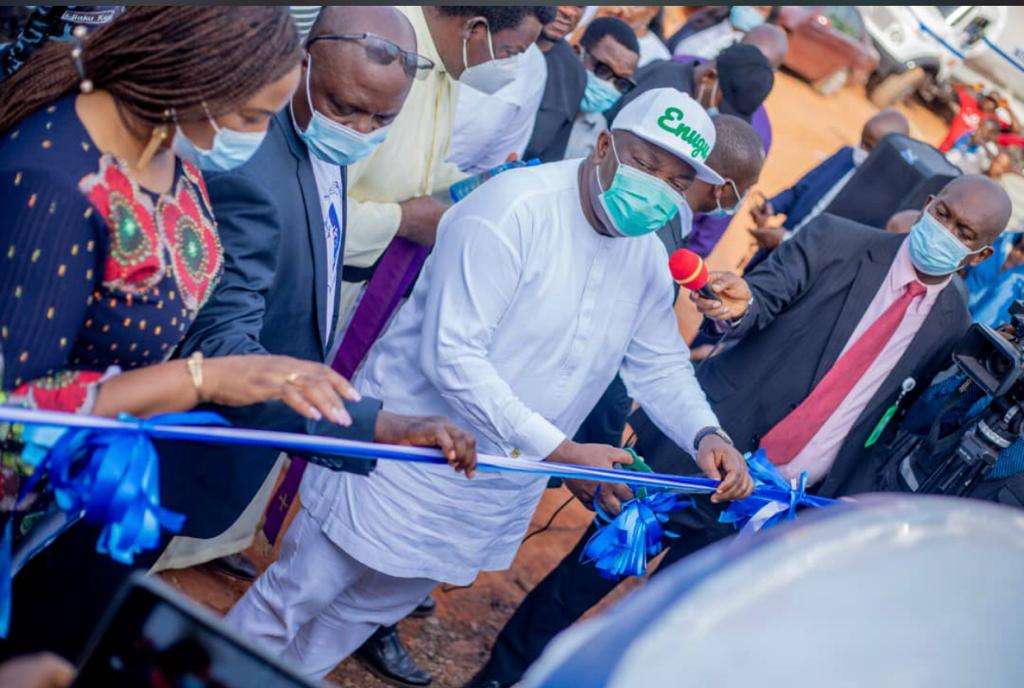
    Ingrace Group has launched a project named ‘Water On Wheels’, which will facilitate the availability of clean, portable water at the doorstep of Enugu residents via online booking.

    Speaking at the launch which took place on 26th November, 2021, Chinedu Onu, the Founder/President of Ingrace Group of Companies said Water on wheels is one of the subsidiaries of their organisation and will “compliment the efforts of the state government.

    “We’re aware of the efforts of the administration of Rt. Hon Ifeanyi Ugwuanyi, the Governor of Enugu State in ensuring that the water problem in Enugu State is solved.”

    Onu also stated that their depot which they purchased is located at 9th mile corner (which has the best water in the state) and they have “two functional boreholes which will be doubled in the coming weeks.

    “The company also has in its fleet, 25 water tankers and in the coming weeks, the number will increase to over 100.

    “The citizens can now be sure of the source of their water and this will help in solving the problem of water-borne disease,” he said.

    He also called on investors to bring in their water tankers which after being certified by their company, can be used to deliver water to ndi Enugu while the investors make their money.

    Onu appreciated governor Ugwuanyi for creating and sustaining a good investment climate in Enugu which made it possible for investors to be trooping into the Coal City state.

    Ingrace Group CEO, Onu, speaking at the Launch of the Water on Wheels initiative

    As a way of giving back to the Ngwo Community where their depot is located, Onu announced that 20 girls from the area will get scholarship up to university level.

    Commissioning the project, Governor Ugwuanyi said the “Ingrace Water on wheels initiative is laudable and also compliments the efforts of our administration to ensure speedy provision of clean portable water to Ndi Enugu.

    Governor Ugwuanyi commissioning the project

    “Our administration at inception, met a heavily challenged water sector, especially at the production end. The Oji River and Ajari water schemes were gripped with daily water production far below their installed capacity. The 9th Mile crash borehole programme was comatose and its major installations have been vandalised, occasioning grossly inadequate clean portable water supply to Enugu citizens.”

    The Governor highlighted the progress made by his administration in providing clean water to Ndi Enugu, these includes;

    • Emergency rehabilitation of Oji and Ajari water schemes, resulting in the improved water supply to most parts of Enugu city, including: GRA, New Haven, Asata, some parts of Independence layout, Achara layout, Trans Ekulu and Coal Camp areas, etc.
    • Construction of additional water boreholes in Nsukka and this has led to great improvement in water supply in Nsukka urban.
    • Construction of water pipeline extension in many streets and communities in Enugu Urban and Nsukka due to increased water supply
    • Complete rehabilitation of 9th mile crash borehole programme that’s fully powered by solar energy. Eight water boreholes are already productive in this scheme and soon, with eminent commissioning of this project, water supply to Enugu metropolis will receive a significant boost.
    • Rejigging and retooling of Enugu State water cooperation to ensure a competent, well equipped and well motivated workforce.

    Ugwuanyi also stated that; “Bidding processes for drilling of 10 new solar energy powered boreholes in Okwojo Ngwo is on course and Enugu State Government participation in AFD, French development agency support to third national urban water sector reform project will deliver end-to-end water supply solution to Enugu metropolis. Withing the project implementation plan, the detailed engineering design of works component of the project is in progress and a tender for rehabilitation of Oji and Ajari water schemes, including water treatments and other works will commence by the end of this year.

    “The dilapidated water pipeline network in Enugu metropolis will be replaced  with new ones while new estates development and unserved neighbourhood will be connected to the public water supply system.

    The Governor also expressed his appreciation of “the role of Ingrace Water on wheels initiative in ensuing that our people have access to clean, portable water especially, as our administration goes through with the phased implementation of the AFD supported third national urban water sector reform project” and went on to assure “the good people of Enugu State that Enugu water supply challenges will become history as soon as the AFD supported water project comes fully on speed in a few months time.”

    Lawrence Ibeabuchi Ede, the Admin Manager of Ingrace Group while speaking on how the water on wheels works, said they have been able to break Enugu metropolis into three zones.

    “We have Ziks’ avenue zone that will serve Uwani, Garriki, Agbani and Achara layout. We also have the GRA Zone that will cater for GRA, Abakpa and Trans Ekulu areas and finally, the Independence layout zone that will serve Ogui Road, Emene and Thinkers’ Corner.”

    Explaining how customers can order for this water, Mr. Ede said they have been able to deploy a technology in their service delivery.

    “We have developed an app named ‘Water On Wheels’ which is available on apple store and goggle play store. Once any customer download and install the app, he should take note of the delivery address because that means where the water will be delivered and not basically where you live except where your residential address is your delivery address.

    “Customers will be made to pay online and a driver will be assigned to you and within 3-4 hours, your water will arrive at your doorstep.”

    Also commenting on the initiative, Uche Gabriel, the Chairman of Enugu OAPs commended the Ingrace Group for the project, saying that “It represents what we have been saying on air, it’s not enough to think that government can do everything.

    “This is a private sector driven initiative to ameliorate the water crisis in Enugu, we are totally behind it because its progressive and as OAPs who are progressives, we think we should partner with him, we are promoting what he’s doing online and we love the project.”

  • CBN spends N58.6bn to print 2.52bn Naira notes

    CBN spends N58.6bn to print 2.52bn Naira notes

    The Central Bank of Nigeria spent the sum of N58.6 billion to print 2.52 billion Naira notes valued at N1.1 trillion in 2020.

    Disclosing these yesterday in its Annual Currency Operations report for 2020, the apex bank also said it utilized $1.83 billion within the same year to fund Bureaux De Changes (BDCs) and Ministries, Agencies and Departments (MDAs) operations.

    The currency printing cost, however, indicated a significant decrease Year-on-Year as it spent N75.5 billion and N64.04 billion in 2019 and 2018 respectively for the same purpose.

    The current management of the CBN under the leadership of Mr. Godwin Emefiele, has been driving the cashless policy with a view to cutting the cost of printing bank notes and cash management, in the country. The new e-Naira was also initiated in line with the policy.

    According to the report, “The total cost incurred on printing of banknotes in 2020 amounted to N58,618.50 million, compared with N75,523.50 million in 2019, indicating a decrease of ¦ 16,905.00 million or 28.84 per cent.”

    CBN indicated in the report that the notes were printed in-country by the Nigerian Security Printing and Minting Plc (NSPM Plc).

    The report indicated that CBN, “approved an indent of 2,518.68 million pieces of banknotes of various denominations in 2020 to satisfy the currency needs of the economy, compared with 3,830.94 million in the preceding year.

    “The NSPM Plc was awarded the contract for the production of the entire indent.”

    It put the total stock of currency (issuable & non-issuable) in the vaults of the bank at end December, 2020 at 2.747 billion pieces, compared with 2.641 billion pieces in 2019, indicating an increase of 105.73 million pieces or 4.00 per cent.”

    Forex

    The report also indicated that a total of $1.830 billion was procured over the course of 2020.

    According to the report, “This value represents a decrease of USD2,120.00 million or 53.67 per cent relative to the USD3,950.00 million procured in 2019.

    “This was used to fund Bureaux De Change (BDC) operations, payment of estacode and Personal Travel Allowances (PTA) to Ministries, Departments and Agencies (MDAs).”

    Currency processed

    In 2020, a total of 173,585 boxes of banknotes valued at N980. 758 billion was processed, compared with 260,651 boxes of banknotes valued at N1. 533 trillion in 2019.

    This represents a decrease of 33.40 per cent in the number of boxes or N552. 971 billion in value of processed banknotes.

    (Vanguard News Nigeria)

  • Cubana Scandal: Igbo youths fume.


    Angry Igbo youths, yesterday, accused the Federal Government of deliberately arresting successful Igbo sons for selfish and political motives.


    Their anger followed the recent arrest of Igbo billionaire entertainer, Obinna Iyiegbu, popularly known as Obi Cubana, by operatives of the Economic and Financial Crimes Commission (EFCC) over alleged money laundering and tax evasion.


    In a statement by the Coalition of South East Youth Leaders (COSEYL), signed by its President, Goodluck Ibem, and released to newsmen in Owerri, the youths viewed the arrest and that of other prominent politicians earlier arrested by the commission and other federal government security agencies as an insult to Ndigbo.


    It stated: “The arrest of Obi is another version of President Muhammadu Buhari’s anti-Igbo policies. We can now confirm that any Igbo man who succeeds in business or a philanthropist who helps his brothers is an enemy of the present administration.


    Setup your own platform that allows you to earn a minimum of ₦100,000 daily, payments are in US dollars, 100% legitimate .Click here to start now .

    “Just a few days ago, Senator Anyim Pius Anyim was arrested, an Igbo man, the residence of a Supreme Court Justice was invaded by EFCC, an Igbo woman, and, today, Obi Cubana was also arrested because he is an Igbo man. The entire scenario confirms that this is complete ethnic profiling by the federal government.


    “It is still fresh in our minds how the federal government victimised an Igbo son who owned Ibeto cement, so that a northerner will be the only one in-charge of the business in Nigeria. The business of victimising and intimidating Ndigbo is still fully on, we have seen it.


    “Obi Cubana is not a politician nor a government contractor, but a legitimate businessman of great repute, who has invested so much in human capital. What is his offence to be embarrassed by EFCC.


    “The reason for his arrest by EFCC is just a flimsy excuse by the EFCC to insult and embarrass the integrity of the Igbo nation.


    “The EFCC claimed he was arrested because of money laundering and tax evasion. Now, how many Fulani cattle dealers and businessmen pay tax in Nigeria.


    “The main people who are money launderers in Nigeria are Fulani businessmen. They keep large sums of money running into over N200,000,000 in their houses. They carry such an amount of money in cash to buy cows and transact other businesses.


    “Over 80 percent of Fulani and Hausa businessmen do not have any bank account. Now who is the real money launderer here if not the Fulani businessmen.


    “Obi Cubana is just a victim because he has been seen with some politicians who visited him in his house, so people within the corridors of power now see him as a threat who may sponsor his Igbo brother in the 2023 presidential election.


    “We warn the EFCC to stop the intimidation and harassment of prominent Igbo sons and daughters under the guise of fighting corruption. If the EFCC claims they are looking for those evading tax and laundering money, they should go and arrest cattle dealers, tomatoes and carrots dealers from the North. So many of them do not even know what tax is and what is called a bank account,” Ibem stated.


    Wondering why the commission would delve into matters of tax evasion, Ibem said: “EFCC is not an agency that collects tax on behalf of the government. For the EFCC to dabble into a matter that is not its constitutional responsibility confirms a sinister motive and plot by the FG to embarrass and intimidate the Igbo nation.


    “The Federal Government should leave Ndigbo alone and concentrate on its responsibility of governance. The present administration has victimised Ndigbo enough and it has to stop.


    “We demand immediate unconditional release of Obinna Iyiegbu and warn the EFCC to stop insulting the sensibility of the Igbo nation,” he said.


    Source: www.sunnewsonline.com

  • World Bank: Nigeria owes China $3bn


    The total amount of money owed to the Chinese government by the Federal Government as at March last year rose to $3. 121 billion (N1,126.68 trillion at USD/N361). The amount represents only 3.94 per cent of Nigeria’s total public debt of $79.21 billion as at September 2021.


    Similarly, in terms of external sources of funds, loans from China accounted for 11.28 per cent of the External Debt Stock of USD27.67 billion as at the same date.


    According to document from World Bank, the total borrowing from China of USD3.121 billion as at March 31, 2020, are concessional loans with interest rates of 2.50 per cent per annum with a tenor of 20 years and grace period (moratorium) of seven years.


    “These terms are compliant with the provisions of Section 41 (1a) of the Fiscal Responsibility Act, 2007. In addition, the low interest rate reduces the interest cost to government while the long tenor enables the repayment of the principal sum of the loans over many years. These two benefits, make the provisions for debt service in the annual budget lower than they would otherwise have been if the loans were on commercial terms” the document, said.

    Setup your own platform that allows you to earn a minimum of ₦100,000 daily, payments are in US dollars, 100% legitimate .Click here to start now .

    “The $3.121 billion loans, the document, explained, are project-tied loans. The projects, (eleven – 11 in number as at March 31, 2020), include: Nigerian Railway Modernisation Project (Idu-Kaduna section), Abuja Light Rail Project, Nigerian Four Airport Terminals Expansion Project (Abuja, Kano, Lagos and Port Harcourt), Nigerian Railway Modernisation Project (Lagos-Ibadan section) and Rehabilitation and Upgrading of Abuja – Keffi- Makurdi Road Project.

    “The impact of these loans is not only evident but visible. For instance, the Idu – Kaduna Rail Line has become a major source of transportation between Abuja and Kaduna. Also, the new International Airport in Abuja, has improved air transportation for the populace, while the Lagos – Ibadan Rail line when completed, will ease traffic on the busy Lagos -Ibadan Expressway.

    “The projects also have the added benefits of job creation, not only by themselves but through direct and indirect service providers, a number of which are Small and Medium Enterprises” the document, further explained.

    Although, these loans are project-tied, Nigerians still rejected a request by President Muhammadu Buhari for a fresh loan, prompting the Minister of Finance Budget and National Planning, Zainab Ahmed to assure the nation that the country’s debt is still sustainable. “Nigeria’s debt is still very much within sustainable limits. “We need to roll out infrastructure now, and grow the economy now— not later,” she said.


    Source: www.sunnewsonline.com