Category: Business/Economy

  • PDP, APC fight over Plateau State Gov’s plan to spend N18bn on flyovet


    THE Plateau State chapter of the Peoples Democratic Party, PDP, and the ruling All Progressive Congress, APC, are at each other’s throats over plans by Governor Simon Lalong to spend N18 billion on British-American flyover. The PDP, which is contending that government should tackle insecurity in the state, alleged that the project was a ploy for siphoning state resources.


    State Publicity Secretary of the Party, John Akans, in a statement in Jos titled: “As Lalong spends N18 billion on British-American Flyover: Kidnappers take over Plateau”, accused the governor of inflating the cost of the contract.


    Akans said: “The Plateau State chapter of the Peoples Democratic Party, PDP, is continuously worried with the reckless way and manner Governor Simon Lalong is running affairs of the state. Reliable information is that the governor has earmarked a whooping sum of N18 billion for the recently announced British-American flyover when he is yet to complete other projects on ground.


    “It is believed that the governor inflated the cost of the less than half- kilometre bridge to siphon money as he prepares to hand over in the next one year. This is happening amidst the overwhelming and escalating insecurity in the state where people are being killed and kidnapped almost on a daily basis without succour because he has also refused to help the security agencies do their work. The proliferation of criminals in the state which has resulted in rampant killings, kidnappings and ritual activities is wreaking havoc in the state. People are no longer sleeping with their two eyes closed, including our traditional leaders who are the worst victims because of fear of criminals. Why a road construction in Plateau State should cost higher than that of Borno State where Governor Zulum awarded similar construction of such flyover bridge at the cost of N1.6 billion, while Abdulrahman of Kwara also awarded the construction of 34.5km road at the cost 3.7 billion.”


    But in a swift reaction, the ruling APC rebuked the PDP for raising such allegations, saying the PDP is “either suffering from crass ignorance or it has totally lost focus of governance process barely seven years after it was sacked by the electorate from governing the state.” Sylvanus Namang, the State APC Publicity Secretary in a reply asked the opposition party to note that “The mega project will cover design, compensation for land and property, geophysical surveys, soil test, load test and the main construction of the interchange (flyover) at the British-America Junction and dualisation from the junction to Lamingo Junction totaling 1.7 kilometres.”


    According to him: “Our attention has once again been drawn to a press release by the sleepy PDP in Plateau state. The press statement could have been simply ignored as one of its usual mischief except for the need to put the records straight for the reading public and for posterity. Going through the statement, it could be observed that the party is either suffering from crass ignorance or it has totally lost focus of the governance process barely seven years after it was sacked by the electorate from governing the state.”


    “The Honourable Commissioner of Works, Pam Bot-Mang on 18th December, 2021, issued a press release detailing the public on what the whole project entails. For the sleepy PDP’s information, the mega project will cover design, compensation for land and property, geophysical surveys, soil test, load test and the main construction of the interchange (flyover) at the always very busy and congested British America Junction and dualisation from the junction to Lamingo Junction totaling 1.7 kilometers.


    “The easy route for the PDP mischief to make its allegation look convincing is the reference to the project being inflated by the governor in order to divert the funds to personal use. This cheap blackmail cannot fly in the face of the Plateau State government’s recent winning of the international prize for transparency in governance in faraway South Korea.”


    Namang added, “The party alleged that the insecurity being witnessed in the state is because the state governor has “refused to help the security agencies to do their work.” Nothing can be further from the truth as no governor under the present democratic dispensation has funded and provided the enabling environment to security agencies as governor Lalong.


    “Let the point be clearly made, security is everybody’s business and when we ignore this fact, we shall all become victims. The APC government in Plateau State has invested greatly on security with innovation such as the Plateau Peace Building Agency, PPBA which is copied by several states.


    “It has consciously mended the broken fences of ethnic rivalries. Why can’t the PDP commend the security agencies when necessary rather than the crocodile tears and orchestrated lamentation by its leaders?”


    Source: www.vanguradngr.com

  • Nigeria loses N630.57bn to twitter ban


    Nigeria lost a whopping N630.57 billion in seven months of ban on Twitter operations in the country just as US, UK, EU welcome its return to Nigeria.


    This is according to statistics disclosed by Netblocks.org.


    The microblogging platform has welcomed Nigeria’s decision to lift the restrictions placed on its operations in the country.


    “We are pleased that Twitter has been restored for everyone in Nigeria. Our mission in Nigeria and around the world is to serve the public conversation.


    “We are deeply committed to Nigeria, where Twitter is used by people for commerce, cultural engagement, and civic participation”, Twitter’s Public Policy team said in a tweet on Thursday.

    Meanwhile, the United States, the United Kingdom, and the Delegation of the European Union to Nigeria and the Economic Community of West African States (ECOWAS) have expressed delight over the lifting of the suspension on Twitter’s operations in Nigeria by the Federal Government.


    In the same vein, former Vice President, Atiku Abubakar, has expressed gladness over the lifting of the Twitter ban by the Federal Government.


    Atiku, in a tweet, said the effects of the Twitter ban on small businesses in Nigeria was evident for all to see.


    The platform said it relied on booking institution method which uses development indicators, approximated digital economy extent of 0.05 and classic free app GDP impact technique to arrive at its conclusion. Being an artificial intelligence, AI-based study.


    According to the NetBlocks Cost of Shutdown Tool, Nigeria lost N104.02 million ($250,600) every hour to the ban, bringing the daily losses to N2.46 billion.


    Netblocks is popular and its statistics are reliable.


    Recall that, the Federal Government announced the suspension of Twitter operations on June 4, 2021, after the social media giant deleted a post by President Buhari for “violation of the company’s abusive behaviour policy.”


    By June 5, 2021, the suspension was effected by telecommunications companies as Nigerians woke up to a Twitter shutdown across all platforms.


    But, the Federal Government on Wednesday finally lifted the ban on Twitter operations in Nigeria.


    While some Nigerians reacted positively to the lifting of the ban on Twitter by the government others were of the view that the ban was unnecessary ab initio


    Source: www.sunnewsonline


  • The Coalition of Northern Groups call for a total boycott of Igbo buisneses in the North


    The Coalition of Northern Groups, CNG has reacted to the Proscribed Indigenous People of Biafra, IPOB’s ban on the consumption of ‘Fulani cows’ (beef) in South-East, calling for a total boycott of all businesses operated by the Igbo all over the North.


    CNG through its Spokesperson, Abdul-Azeez Suleiman, said that IPOB’s order issued in a statement on Monday by one Emma Powerful, amounted to a grave provocation and serious threat to northern commercial interests in the South East and by extension, to the physical wellbeing of Northerners living as minorities among Igbo communities.


    In a renewed resolve to pay a coin for any direct or indirect attack or threat to Northerners and their interests anywhere in the country, the CNG called for the total boycott of all businesses, goods and services operated by Igbo in the North effective from the same April 2022.


    The CNG also called on northerners everywhere to decline support for any political party or formation or movement that has the active participation of South-East politicians.


    “For the avoidance of doubt, the North while maintaining its tradition of tolerance and accommodation, shall however no longer be disposed to condoning further acts of irresponsibility in the form of deliberate threats of intimidation or harassment targeted at Northerners living and doing legitimate businesses elsewhere in the country.


    “Since such targeted utterances have in the past been preludes to physical attacks on northerners and destruction of their properties in particularly the South East, we urge northern transporters and suppliers of goods to consider alternative trade routes to avoid the imminent risks that come with this IPOB threat.


    “We warm that the North has had enough of the antagonism from the South East and its attack dog, the IPOB and will no longer remain passive under such deliberate and sustained attacks and will henceforth be forced to react to every provocation and unwarranted abuse and violations.


    “All those who have no other useful vocation other than attacking northerners under the slightest of pretexts should know that our patience has reached its nadir.


    “The North’s reticence in speaking out or taking action is not born of fear or ignorance of how to respond in kind,” Suleiman said.


    Source: www.vanguardngr.com

  • Minister of Finance unveils FG’s initiative for a robust revenue generation that would meet 2022 budget

    Minister of Finance unveils FG’s initiative for a robust revenue generation that would meet 2022 budget


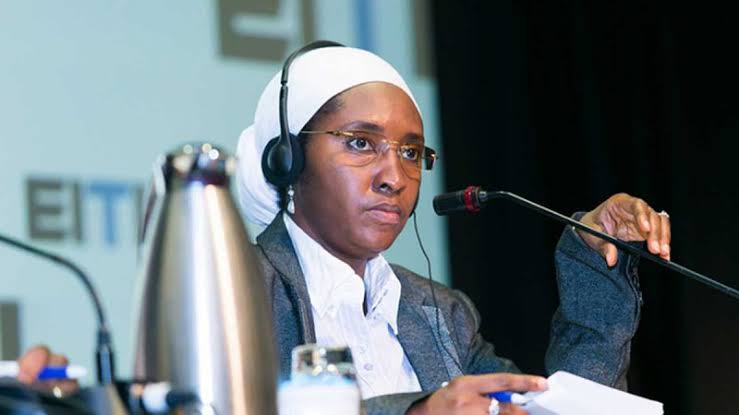
    The Minister of Finance, Budget and National Planning, Mrs. Zainab Ahmed, has unveiled the federal government’s strategic initiative for a robust revenue generation that would meet the federal government’s N10. 74 trillion target, with which to fund the 2022 budget.


    She said at the federal government’s 2022 Budget Public Presentation, in Abuja, on Wednesday, that revenue generation remained the major fiscal constraint of the federal government and that her team would vigorously pursue the administration’s Strategic Revenue Growth Initiatives to improve its fiscal position in the year.


    According to her, “Several measures are being instituted under the Administration’s Strategic Revenue Growth Initiatives to improve government revenue and entrench fiscal prudence with emphasis on achieving value for money.”


    Some of the specific actions under the initiatives, Mrs. Ahmed said would include, “Evaluation of the process and policy effectiveness of Fiscal Incentives, including the review of sectors eligible for Pioneer Tax Holiday Incentives under the Industrial Development Income Tax Relief Act; dimensioning the cost of tax waivers/concessions, and evaluating their policy effectiveness; setting annual ceilings on Tax Expenditures to better manage their impact on already constrained government revenues; and ensuring that MDAs appropriately account for and remit their internally-generated revenue.”


    Besides, the minister said that her team would identify and plug existing revenue leakages to enhance tax compliance and reduce tax evasion, as well as, leverage technology and automation to eliminate fiscal drainers like subsidies.


    Revenue streams


    According to the minister, an oil revenue forecast of N 3.362 trillion to fund the 2022 budget would be higher by N1.350 trillion (67.18%) above the previous year’s target of N 2.011 trillion.


    Similarly, FG share of Non-Oil Taxes would be expected to stand at N 2.132 trillion, this year, which is about 43.27 percent above last year’s budget of N1.488 trillion.


    Mrs. Ahmed said that N2.216 trillion would be earned as Independent Revenue, up from the 2021 budget of 1.061 , which recorded actual collection of N1.1 trillion, as at November, last year.


    Other revenue streams, according to the minister were: Dividend from various investments in companies, N195. 716 billion; NLNG Dividend, N187.397 billion; Share from Share of Minerals & Mining, N2.915 billion; Share of Electronic Money Transfer Levy (formerly called Stamp Duty), 29.367 billion down from 500 billion in the preceding year; and Share of Oil Price Royalty, N96.943 billion.


    The rest were: Revenue from Government Owned Enterprises (GOEs), N3.306 billion, up from N2.173 billion budgeted for 2021; Draw down from Special Levies Accounts, N 300.000 billion; Signature Bonus 280.855 billion; Domestic Recoveries, N 26.933 billion; Grants and Donor Agencies funding, N63.376 billion; and Education Tax, N305.998 billion.


    Source: www.vanguardngr.com

  • New Tax, Sugar Tax, to be paid on non-alcoholic Drinks-Finance Minister

    New Tax, Sugar Tax, to be paid on non-alcoholic Drinks-Finance Minister

    New Tax, Sugar Tax, to be paid on non-alcoholic Drinks-Finance Minister

    Ms Ahmed said the new ‘Sugar Tax’ was introduced to raise revenues for health related expenditures in line with the 2022 budget priorities.

    An excise duty of N10 per litre will now be charged on all non-alcoholic, carbonated and sweetened beverages, finance minister Zainab Ahmed has announced.

    Ms Ahmed on Wednesday disclosed this at the public presentation and breakdown of the 2022 budget in Abuja.

    The minister asserted that the charge on beverages is a new policy introduced in the Finance Act signed into law by President Muhammadu Buhari on December 31, 2021 alongside the 2022 Appropriation Bill.

    The National Assembly raised the total 2022 budget figure from the proposed N16.391 trillion to N17.126 trillion.

    The budget was passed with the crude oil benchmark increased from $57 per barrel to $62 per barrel.

    Ms Ahmed said the new ‘Sugar Tax’ was introduced to raise excise duties and revenues for health related and other critical expenditures in line with the 2022 budget priorities.

    She also said it was aimed at discouraging excessive consumption of sugar in beverages, which contributed to diabetes, obesity and other diseases.

    Ms Ahmed added that the Finance Act also raised excise duties and revenues for the health sector.

    Also under the Act, she said provision was made to reinforce the Federal Inland Revenue Service’s (FIRS) mandate as the principal tax collection agency while collaborating with other law enforcement Ministries, Departments and Agencies (MDAs).

    On independent revenue collection, Ahmed said as at November 2021, the federal government generated N1.04 trillion, surpassing its N973.41 billion target.

    She also said to further enhance independent revenue collection, the federal government aimed to optimise the operational efficiencies and revenue focus of Government Owned Enterprises (GOEs).

    Speaking on critical sectoral allocations of the 2022 budget, Ms Ahmed said the education sector got N1.234 trillion with 815.69 billion allocated to the Ministry of Education and its agencies for recurrent and capital expenditure.

    She said N112.29 billion was allocated for Universal Basic Education Commission (UBEC), while N306 billion was allocated for Tertiary Education Trust Fund (TETFUND) for infrastructure projects in tertiary institutions.

    The health sector, which got N876.38 billion as 5.1 per cent of the total budget, had N770.87 billion go to the Ministry of Health and its agencies for recurrent and capital expenditure including hazard allowance.

    However, the defence and security sector gulped 13.4 per cent of the budget at N2.29 trillion; infrastructure 8.3 per cent of the budget at N1.42 trillion and N462 billion for social development and poverty reduction programmes.

    Ms Ahmed said the 2022 budget was expected to further accelerate the recovery of the nation’s economy, facilitate the completion of critical projects and improve the general living conditions of the people.

    She added that the budget reflected the key execution priorities and strategies of the National Development Plan (NDP) 2021-2025.

    “Government will continue to create the enabling environment for the private sector to increase their investment and contribute significantly to job creation, economic growth and lifting millions of our citizens out of poverty.

    “Early passage of the 2022 budget for implementation from Jan. 1, will significantly contribute towards achieving the government’s macro-fiscal and sectoral objectives,” said the minister.

    (NAN)

  • Tech suggestions for govt in a defining year


    Okoh Aihe

    SO early in the year, there are plans and projections, hopes and promises, and optimism so strong in the air that life can be a sustained swan song. But there are also fears.


    People thinking that the kind of uncertainties and bloodletting we witnessed in the previous year may have enough momentum to stain the optimism that spreads into the future.


    But the spirit is to count tomorrow as gain. The year 2022 is a defining one for Nigeria, a year that politics will take centre stage, when politicians will dress in their big robes crisscrossing the country to sell manifestoes, mostly lies garnished as truth to a long suffering people, nearly emasculated by the seasonal hallucination of a tiny political group.


    In this season of politics, everything takes back seat. Development is suspended. Pressing national or state issues are given the silhouette of politics or even opposition rantings.


    Budgets and plans are streamlined to achieve one purpose: successful campaigns with enough gathering to form some tiny countries in other parts of the world, gatherings peopled by the ordinary folks with empty stomachs who would value the N2,000 purchase fee from the politician as the kind of manna that comes from the devil they see once in every four years.


    Just less than one and half years for the ruling party at the Federal level and in some states to join the dinosaurs of history, there is the reading based on the auguries of history, that there is no time for any other thing at all other than politics; but that the people should marshal the hunger in their stomach to make better choices next time or they remain perpetual victims of feeding the wickedness of a tiny few that eat up the future of other people.


    Knowing that politicians will always be politicians and that the variance may be in a matter of details only, this writer would humbly suggest to this administration the need to put closure on some projects and make urgent conclusions, at least to earn some campaign points, although the truth or even verification of performance or projects hardly matters in our campaigns.


    There are some low hanging fruits they can hold on to but there are others receding into a distance with their nebulous features that have to be recovered urgently.


    NCC 3.5GHz Spectrum Auction

    December 13, 2021, the Nigerian Communications Commission, NCC, conducted a successful auction for two Lots of 100MHz, the band for 5G technology. The Generic Reserve Price, GR, was $197, 400, 000 only.


    Although there were complaints about such a steep price which tended to place emphasis on revenue generation more than service deployment for pervasive use, the auction which involved MTN Nigeria, Airtel Nigeria and Mafab Communications, a tech greenhorn with a history that is even greener, went through eleven grueling rounds with the price peaking at $273. 6m.


    Both MTN and Mafab emerged epochal winners of such a defining tech moment which could mean so much for the country in its determination to align with the rest of the world, to march into a future where machines could whisper to each other, more than human to humans. Payments are expected to be concluded before the end of February 2022.


    Although there was a little stir about the identity of Mafab, this writer posits that this is a low hanging fruit that should be harvested immediately without procrastination. NCC should pursue payment of fees with determination and ensure that rollout obligations are simple enough for the operators to understand the import.


    The foregoing suggestion is informed by the underperforming status of Nitel which had a reserved Digital Mobile Licence, GSM, at the auction in 2001 but had hardly had any success ever since. The NCC should put a closure to the 3.5MHz deal.


    SIM/NIN Integration

    Penultimate December, government made a policy decision that mobile users in Nigeria must sink their Subscriber Identification Module, SIM, with their National Identification Number, NIN, which is issued by the National Identity Management Commission, NIMC. It was to be done in two weeks. The exercise has witnessed a lot of resistance because of the complaints of multilayer data collection processes in the country, but is fairly on the way now.


    Closure is indeterminate as the date has had to be moved severally. Just last week another shift in date was granted by Dr. Isa Pantami, Minister of Communications and Digital Economy, who oversees the Committee that steers the registration process. The Federal Government, according to a statement, has extended the date to March 31, 2022. The statement adds that so far, NIMC has issued 71m unique NINs with about three to four SIMs linked to a number.


    Observe that the statement is unclear how many SIMs have been properly linked to NIN. But here is the math. By October 2021, phone lines in the country peaked at over 191 million. Just think of how long it will take to achieve a SIM/NIN harmonisation or what they call integration.


    Here is my little counsel. Let there be no pretences. SIM/NIN integration is a constantly shifting target, made even more complex by officials who live in a dream world. The government should be frank enough to fix a realistic date which is within the window of its exit from power, to enable Nigerians take its activities seriously and work towards realistic results.


    Digital Switchover

    The Digital Switchover, DSO, started in Nigeria in 2016 after the presidential Digiteam set up by former President Goodluck Jonathan made all the preparations for the launch in Jos. Information and Culture Minister, Alhaji Lai Mohammed, made a meal of the determination of the Buhari administration to stick strictly to the switchover date as sanctioned by the International Telecommunications Union, ITU.


    Understandably, he was excited about the job spin-off that would come from the exercise and the rain of funds that would also come from the sales of the vacated and freed spectra released by broadcast stations. Then the crisis at the National Broadcasting Commission, NBC.


    From leadership crisis to some dose of scandals. Nigeria missed the switchover date twice. But lately there has been a rejuvenation in focus. However, complaints that launch is different from actual switchover and availability and activation of set top boxes, are clear pointers that this government has to properly audit the process and ensure that proper timelines are set for implementation.


    Rebuilding the networks

    This is an issue that people hardly talk about because of its very sensitive nature because of lives that are being lost and property being destroyed on an extensive level. Insurgency in parts of the North has laid to waste telecom infrastructure on a massive scale. In some places, base stations have been bombed out.


    So much ruination has been caused by these devils from the hottest part of hell that this government just has to encourage the operators to remobilise to site. It’s like starting afresh. Some operators have confided in this writer that they would like to work with the governors of the affected states. Yes. So much love for a nation by the operators but they must be encouraged to do so.


    Source: www.vanguardngr.com

  • FG set to gazette order classifying gunmen terrorists


    The Federal Government is set to gazette the court order classifying bandits as terrorists, it was learnt yesterday.

    The November 26, 2021 judgment by Justice Taiwo Taiwo of the Federal High Court in Abuja has also become a critical factor in the deployment of Super Tucano aircraft in the fight against terrorists, kidnappers and bandits.


    Also, the Attorney-General; and Minister of Justice, Abubakar Malami, said President Muhammadu Buhari would be guided by public interest while considering the request to release the detained leader of the proscribed Indigenous Peoples of Biafra (IPOB), Nnamdi Kanu.


    Malami spoke on the gazette and the request for Kanu’s release on the Nigeria Television Authority (NTA) ‘Good Morning Nigeria’ show.


    On the process of gazetting the order declaring bandits as terrorists, he said: “The gazetting of a court order or judgement is a process, but what matters fundamentally within the context of international convention is the judicial declaration and that has been obtained; the court has declared bandits, kidnappers, cattle rustlers as terrorists.


    “So, with or without the gazette, what gives effect to such a declaration is a judicial pronouncement but the gazette is a mere formality and it has been on and I believe within a matter of days, it will be concluded.”


    The minister said government acted promptly in declaring IPOB and Boko Haram as terror groups because of the “threats to lives and properties they have caused in the nation.”


    He stressed: “Government has a responsibility to act, but within the context of acting, you are equally expected to operate within the confines of international best practices associated with engagement.


    “One of such best practices is that you can only use maximum force on groups or individuals that are declared terrorists and that is where the application of the Terrorism Act comes in place.


    “With that in mind, Nigeria acted, first by proscribing IPOB, taking into consideration the threats to lives and properties they have caused in the nation. Boko Haram was also proscribed.”


    The AGF said the outcome of IPOB and Boko Haram’s proscription encouraged government to consider the decision to deploy military hardware against bandits.


    Malami said: “Now, we are confronted with another threat in the North-west associated with banditry, kidnapping, cattle rustling and in all these, these people are using weapons to attack Nigerians, kidnap them and created a situation of serious security challenge and fear in the system.


    “Whatever military hardware you acquire, there are limits within the context of the international convention as to how it can be used, when it can be used and against who it can be used. And that is how the idea of looking at the activities of the bandits, cattle rustlers, kidnappers come into being.


    “Our assessment, taking into consideration that they are causing a major threat to the territorial peaceful co-existence and causing a major threat to lives with weapons, the idea then came about that indeed, they (bandits) have satisfied the criteria of being declared terrorists within the context of the law so that whatever military hardware are at the disposal of the Federal Government can best be used against them within the context of the international convention and within the context of the law.”


    On whether the military can now deploy the Super Tucano aircraft against the bandits, Malami said: “I can tell you that the international convention demands associated with the usage of Super Tucano has been obtained, which is a judicial pronouncement and declaration of bandits, cattle rustlers and indeed, kidnappers as terrorists, and that has been procured and the way has now been cleared for the application, deployment and usage of Super Tucano. Whether they have been put to use or not, I cannot say.”


    Malami said President Buhari will consider the interest of Nigerians before considering the request to release Kanu.


    Some Igbo elders, led by First Republic Minister of Aviation Chief Mbazulike Amaechi, had visited the President and requested Kanu’s unconditional release on November 19, last year.


    The President told them while he would not want to interfere in the judicial process in relation to the Kanu case, he would consider their demand though it is “a heavy one.”


    On November 10, 2021, Malami had hinted that the government would not rule out political solution while addressing the cases of Kanu and Sunday Adeyemo (Igboho), adding that pleas by credible individuals and groups cannot be ignored.


    Malami said yesterday: “By way of general statements to the two issues presented – the issue relating to Electoral Bill and the issue relating to Kanu and by extension, IPOB, what I can tell you for certain is that the decision of the President is based fundamentally and at all times on public interest consideration.”


    He added: “In the art of governance and what I have come to learn about the mind and heart of the President, Muhammadu Buhari, is to consider the 200 million Nigerians as against the limited people.


    “By extension, the issue of Kanu, what would as well govern the decision of the President in terms of whatever request is presented is the public interest as against limited sectional interest of it.”


    Source: www.thenationonlineng.net

  • Nigeria is not ready for cashless economy


    THE usual hustle and bustle of the recently-concluded Yuletide season came with the harsh reality of the shortage of cash in Nigerian banks.


    This was evidenced by the unusually long queues at the ATMs with many of them not being functional, as well as the inundation of banks by customers who require cash to meet their needs. It would, however, seem that the impact of the cash shortage was more felt by individuals and corporations who required large sums of money in cash to either fulfil personal needs or for corporate social responsibility.


    Though the Central Bank of Nigeria had earlier noted, in November 2021, that N3.15 trillion cash was in circulation as against the N2.7 trillion reported in November 2020, the reverse would seem the case as a majority of customers with fairly large transactions have been reported as unable to successfully carry out their transactions. Reportedly, a customer who recently visited a Nigerian bank to make a cash withdrawal was informed that the bank did not have the cash amount sought to be withdrawn. I personally experienced a similar situation when my request for withdrawal of a certain amount of money could not be granted.


    One of the most defining characteristics of a cash-dominated economy such as Nigeria is an upsurge in the velocity of money particularly in festive seasons. According to Investopedia, velocity of money is a measurement of the rate at which money is exchanged in an economy.


    It is the number of times that money moves from one entity to another. It also refers to how much a unit of currency is used in a given period of time. It refers generally to the rate at which consumers and businesses in an economy collectively spend money. Put differently, the velocity of money is the frequency at which one unit of currency is used to purchase domestically-produced goods and services within a given time period.


    If the velocity of money is increasing, then more transactions are occurring between individuals in an economy. The frequency of currency exchange can be used to determine the velocity of a given component of the money supply.


    READ ALSO: NDDC: We’re fed up with Buhari’s empty promises – Ndokwa youths

    Put in proper perspective, if a client pays a lawyer the sum of N50,000 for legal services rendered, the lawyer may, on his way home, develop a flat tyre or two, and, therefore, seek to replace them. If he buys both (tokunbo) tyres for N20,000, the tyre seller may decide to buy vegetables, pepper and fish worth N5,000 from a nearby seller for his wife to prepare soup at home. On her part, the fish and vegetable seller may decide to change the school uniform of her son and then calls a tailor to buy and sow the material, and the narrative goes on. From this scenario, it is clear that there is a high velocity of money exchange from the client who paid his lawyer down to the tailor who sowed the uniform of the fish seller’s son. One thing is clear, the above scenario which demonstrates the velocity of money would not have been feasible if there was no flow of cash.


    Nigeria is not ready for a cashless economy


    For nearly a decade, the Central Bank of Nigeria has formulated policies and engaged in series of reforms aimed at bringing the Nigerian banking system and economic system in tune with global trends. One of such is the development of a cashless payment system. Developed countries such as the United States, having earlier adopted a cashless policy, have enjoyed its inherent benefits thereby prompting the Central Bank of Nigeria to adopt the policy. The adoption of the cashless policy is in line with Nigeria’s vision to be among the largest economies by 2020 and to move from a cash-driven economy to a cashless economy.


    According to the CBN, the cashless policy was aimed at curbing some of the negative consequences associated with the usage of physical cash in the economy, including high cost of cash, high risk of using cash, high subsidy, armed robbery, inefficiency as well as corruption.


    Consequently, economists have noted that the introduction of mobile banking, electronic banking and online transactions (cashless policy) in Nigeria has paved way for a new era of development where the use and demand for physical cash is gradually declining. In a CBN report, it was stated that the increase in emerging Information Technology, IT, has made banking services become more and more automated and less paper work than in the past.


    Soon enough, banks in Nigeria realised their corporate existence would be in grave jeopardy unless they were able to keep up with the pace at which Information Technology, IT, has remodelled the entire banking system for the creation of value and worth for their customers. Consequently, banks began to get national and international ratings based on the level of their adoption of information technology vis-à-vis value creation.


    However, it is to be noted that internet facilities and the entire concept of electronic banking is yet to penetrate through the crannies of the Nigerian commercial ecosphere. According to a report, internet penetration in Nigeria is still less than 50 per cent of the population of over two hundred million while just about 15.8 per cent of the total population are social media users. The relatively-low acceptability of the e-commerce/e-banking system ranges from a low or nil usage of internet, outright distrust of the system, or the inability to comprehend its modalities. Therefore, a greater percentage of Nigerians still favour the old standard of banking.


    Besides the relatively low acceptability of the cashless policy by Nigerians, it has been noted that the poor implementation of the policy across the country has, in itself, contributed to the high cost of cash movement and cash management by banks over the years thereby impacting negatively on banks’ profitability in particular and economic growth in general.


    Conclusion


    While the concept of the implementation and maintenance of a cashless system is laudable, there yet remains the need to strike a balance between the need to reduce the incidence of shortage of cash and the adoption of an IT-driven economy.


    Besides factoring the peculiarities of the Nigerian economic ecosphere and the low rate of internet usage and exposure, particularly among the low-income market men and women who constitute the greater percentage of the workforce, there must be a workable system that ensures the constant circulation of cash in the economy.


    While it has been identified that the ultimate ideals of the cashless policy system is the modernisation of the Nigerian payment system, reduction in the cost of banking services as well as reduction in high security and safety risks, as well as corruption, yet, there must not be a reduction in the circulation of cash in the economy, at least until the average market woman is enlightened enough to carry out internet banking.


    Source: www.vanguardngr.com

  • Bank loans from CBN rise by 233 percent


    Banks’  borrowings from the Central Bank of Nigeria, CBN, rose by 233 per cent, year-on-year, to N26.9 trillion in 2021 reflecting  increased  reliance on the apex bank to cope with the intense scarcity of funds which prevailed in the interbank money market for most part of last year.


    The CBN has two short term lending windows for banks namely the Standing Lending Facility (SLF) and Repo (Repurchase) lendin


    While the CBN lends money to banks through the SLF at interest rate of 100 basis points (bpts) above the Monetary Policy Rate (MPR), it also lends money to banks through Repo arrangement, which involves the purchase of  banks’ securities with the agreement to sell back at  a specific date and  usually for a higher pric


    On the other hand, the CBN accepts deposits from banks through its Standing Deposit Facility (SDF


    Data from the CBN showed that banks’ borrowing through  Repo arrangement rose sharply last year by 1,602 per cent to N13.938 trillion from N819 billion in 2020. Most of the borrowing via Repo occurred in the second  half of the year (H2’21) when banks’ borrowed N7.37  trillion, up by 12 per cent from N6.57 trillion in the first half of the year (H1’21


    Similarly, banks’ borrowing through the CBN’s SLF rose sharply by  79 per cent, YoY in 2021 to N13 trillion from N7.25 trillion in 2020. Financial Vanguard analysis however showed that borrowings through the SLF fell by 57 per cent in H2’21 to N3.9 trillion from H9.04 trillion in H1’2


    Consequently, banks’ borrowing from the apex bank through the SLF and Repo rose by 233 per cent,  YoY,  to N26.9 trillion in 2021 from N8.1 trillion in 2020

    Similarly, banks’ deposit of idle cash through the CBN’s SDF rose 273 per cent, YoY, to 3.1 trillion in 2021 from N819.3 billion in 2020. Further analysis however showed that banks’ deposits through the SDF fell by 23 per cent in H2’21 to N1.33 trillion from N1.73 trillion in H1’21.


    Source: www.vanguardngr.com

  • Governor Ortom earmarks N1 billion for the payment of gratuity of state workers


    Governor Samuel Ortom of Benue state has said N1billion has been earmarked for the payment of gratuity of workers in the state from the loan facility being extended to states by the federal government.


    He said he had also directed his Finance Commissioner as well as Accountant General of the state to ensure that all pensioners received their pay in the month of December.


    The Governor who made this known shortly before signing the 2022 Appropriation Bill in Makurdi regretted that successive governments in the state have had to contend with the challenge of paying pensioners their entitlements.


    Governor Ortom said his government had taken steps to finding a permanent solution to the challenge by domesticating the Pension Commission, PenCom, law in the state.


    He said, “We are one of the few states that have domesticated the PenCom law which ensures that we make our 10 per cent contributions to the scheme just like the workers and on retirement they get their entitlements.


    “This will permanently take care of that challenge and our workers will be happier for it.”


    The Governor said following the agreement his government reached with the leadership of pensioners in the state about seven months ago, Local Government Council Chairmen increased the monthly allocation to pensioners from N150million to N300million while the state pensioners had been getting N400million making a total of N700million.


    “This is what we have been doing in the past seven months. And since we started that we have not failed.


    “As for the state pensioners, because of their large number and funds involved, they have been segmented in two.


    “There is the Makurdi office which has large chunk of the pensioners; and there is the outside station like Gboko, Otukpo and others.


    “So we have divided them into two, the Makurdi office and the outside station. We agreed with the union that we should be alternating N400million payments between the segments. We have not failed to respect that agreement no matter its implications to the finances of the state.”


    “Despite the agreement we had with the leadership of pensioners, I have also directed that for this month of December the Accountant General and Finance Commissioner should get a loan to ensure that all pensioners in the state get paid for December.


    “We have also resolved that N1billion of the N18billion loan coming from the federal government should be set aside for payment of gratuity to workers.”


    He said the government would continue to prioritize the welfare of its workers and retired senior citizens and appealed for understanding.


    Source: www.vanguardngr.com

  • NLC threatens to shut down activities if FG increases fuel price in 2022


    Nigeria Labour Congress (NLC) had after its organs’ meetings recently threatened to shut down activities nationwide should the Federal Government increase the pump price of petrol in 2022.

    Secretary General of the Association of Senior Civil Servant of Nigeria (ASCSN), Bashir Alade Lawal, in an interview with Daily Sun, yesterday,  vowed that the threat by labour would be enforced saying  it would be detrimental to the overall well-being of citizens to allow the government  have its way on the policy.

    He said an increase in pump price of petrol would exacerbate crime as petrol was like an exchange rate which affected every facet of life in the coun

    “Our response to the proposed fuel price increase? It should be spontaneous. We would not play to the gallery. We are already down and they want to add to the problem. Nobody is going to run out of the country. We are all going to be here to see the consequences of what they are planning,” he said.

    Lawal said labour does not believe in the government’s planned palliative of N5,000 to 40 million Nigerians to cushion the effect of the planned increase in price of petrol.

    “They are not going to give anybody anything. I can say it with every sense of responsibility. The last one they did, they set up a palliative committee in which I was a member.  Initially, what they told us was that there was N600 billion palliatives fund in the kitty which we are going to appropriate to different sectors of the economy to cushion the effect of COVID-19.

    “Our own memo, that is TUC, was about 50 something pages, while NLC was higher. The two of us met to harmonise it. After our second meeting at Bolton Hotel in Abuja, I stopped going for the meeting because I was dumbfounded when the NNPC man said nobody promised anything. Till now, nothing has come out of it.  They are just deceiving us with lies. They won’t give anybody any N5,000.”

    The labour leader said measures ought to have been on ground and running  for at least one year before the government could come up with this policy,  so that the effect would not negatively affact citizens.

    “But here, we don’t have anything like that. You see, it’s a normal thing to subsidise things because it happens globally. But now they have removed almost everything. So at the end of the day almost 70 per cent of the resources of the state that should have gone to all these areas, they now appropriate it to themselves. With that, they have more than enough to share and that is why they are misbehaving and people are suffering.”

    NLC at its meetings in Abuja penultimate Friday had scheduled a nationwide protest for January 27 and February 1, but with a clause that it would not wait till then should the announcement on fuel price hike come before the scheduled dates.

    The NLC charged the government to promote local capacity to refine petroleum products for domestic use.


    Source: www.sunnewsonline.com

  • President Muhammadu Buhari launches Nigeria’s National Development Plan 2021-2025.


    The plan, which was approved by the Federal Executive Council earlier in November, was launched, yesterday, at the State House in Abuja.


    Prior to the public presentation of the official document, the Minister of Finance, Budget, and National Planning, Zainab Ahmed disclosed that the new document replaces the Economic Recovery and Growth Programme 2017- 2020.


    The plan replaces the Economic Recovery and Growth Programme 2017- 2020.


    The plan, according to her, is designed to among other things facilitate the nation’s robust development in the area of science and technology as well as achieve its agendas on the continental and global levels.


    Meanwhile, the Federal Executive Council, FEC, yesterday, approved N5.7 billion for contracts in the Agriculture and Water Resources ministries.

    The government also explained that the National Development Plan, NDP, has a financing plan to increase the Gross Domestic Product, GDP, from the current seven per cent to 15 per cent


    Briefing State House correspondents at the end of the virtual council meeting presided over by President Buhari at the Council Chambers, Presidential Villa, Abuja, Minister of Water Resources, Engr. Sulaiman Adamu said his ministry obtained approval for the execution of two water projects in Gashua, Yobe State.

    He said the projects became urgent because of an observed surge in the prevalence of kidney diseases and kidney failure among people living in the Gashua region in the last few years.

    According to him, the two water projects were approved at the sum of N3.51 billion, adding that while one is to extend water supply service to Zango and Sabongeri Lamido, the other project is for an upgrade of existing waterworks.


    Also, briefing, the Minister of State for Agriculture and Rural Development, Mustapha Shehuri, said the council approved two memoranda for his ministry.


    On his part, the Minister of State, Budget and National Planning, Mr Clement Agba, while speaking on the unveiling of the National Development Plan, NDP, earlier by President Buhari, said: “The difference with this plan is that it provides a mechanism to engage, empower, and employ our teeming energetic youth.

    “The plan puts opportunities for inclusiveness for young people, women, people with special needs, and the vulnerable ones, mainstreaming women gender into all aspects of our social, economic and political activities.”

    “This plan also has a financing plan to increase revenue to 15 per cent of GDP. Currently, revenue to GDP is seven per cent. This plan also separates sports from youth and take sports as a business.

    “For the first time in our planning history, we have three volumes of the plan. In the past, we have always had one volume, which is the plan itself. But this time, we have three volumes. Volume One is the main plan, and that’s what will be accessible to the public.

    “Volume two is then a prioritised and sequential list of programmes and projects that will be fed into the annual budgets. While Volume Three are the legislative imperatives.”

    The FEC had at the meeting, observed a minute silence in honour of former Minister of Labour and Productivity, Hussaini Akwanga, who passed on December 17, at 77.

    Secretary to the Government of the Federation, SGF, Boss Mustapha, informed council members of the demise of the former minister and urged that a minute silence be observed in his honour.

    The late Akwanga served as minister in 2003 during the administration of former President Olusegun Obasanjo.


    Source: www.vanguardngr.com