Category: Business/Economy

  • FG suspends removal of fuel subsidy

    Minister of Finance, Budget and National Planning, Mrs Zainab Ahmed, said yesterday that the Federal Government has suspended removal of fuel subsidy.

    She said the government had made provisions for subsidy in the 2022 budget from January to June this year, adding that government will forward a request to the National Assembly to make additional provisions for fuel subsidy from July this year till a time deemed appropriate for its eventual removal.

    According to her, all payments on fuel subsidy ordinarily would cease as from July, 2022.

    The minister spoke as the Senate President, Ahmad Lawan, pleaded with the Nigerian Labour Congress, NLC, and Trade Union Congress, TUC, to shelve the planned strike schedule for Thursday nationwide against fuel subsidy removal.The NLC, however, insisted yesterday that the planned strike would go on, saying it will not believe government until the suspension of subsidy was effected.

    The union also petitioned the Nigerian Governors’ Forum, NGF, giving reasons for insisting on the scheduled protest.

    ‘Problematic timing’

    However, Mrs Ahmed, who disclosed this at a meeting with the Senate President, Ahmad Lawan, at the National Assembly complex in Abuja, observed that in view of the timing which is “problematic”, the Federal Government decided to suspend its plan to go ahead with the removal of subsidy on petroleum products in July, particularly against the backdrop of outcomes from ongoing consultations.

    She added that the Federal Government is exploring alternatives to premium motor spirit as well as pushing to step-up the country’s crude oil refining capacity.

    Ahmed, in company of the Minister of State for Petroleum Resouces, Mr. Timipre Sylva, disclosed that efforts are also underway by the executive arm of government to forward a request to the National Assembly to make additional provision for fuel subsidy from July this year till a time deemed appropriate for its eventual removal.

    Also at the meeting were Senate Leader, Yahaya Abdullahi and the Deputy Whip, Aliyu Sabi Abdullahi, CEO of the Nigerian Midstream and Downstream Regulatory Authority, Farouk Ahmed, Managing Director of the Nigerian National Petroleum Corporation, Mele Kyari, and CEO of the Nigerian Upstream Regulatory Commission, Engr. Gbenga Komolafe.Others include the Special Assistant to the President on Natural Resources, Habib Nuhu, Permanent Secretary, Federal Ministry of Finance, Aliyu Shehu Shinkafi, and Permanent Secretary, Ministry of Petroleum Resources, Nasir Sani-Gwarzo.

    Mrs Ahmed said: “Let me start by stating the fact that we did make a provision in the 2022 budget for fuel subsidy from January to June. And that suggests that from July, there would be no fuel subsidy.

    “This provision was made sequel to the passage of the Petroleum Industry Act, PIA, that has made provision that all products will be deregulated.“Subsequent to the passage of the Act, we went back and amended the Fiscal Framework that was submitted to the National Assembly to incorporate this demand, but after the budget was passed, we have had consultations with a number of stakeholders.

    “It became clear that the timing is problematic, that practically, there is still heightened inflation, and also removal of subsidy will further worsen the situation, thereby, imposing more difficulties on the citizens, and the President clearly does not want to do that.“What we have to do now is to continue with the discussions we are making, in terms of putting in place a number of measures, one of which is the deployment of an alternative to Premium Motor Spirit, PMS, and also the roll-out of enhanced refining capacity in the country, including the 650,000 barrels per day Dangote Refinery and also the rehabilitation of the four national refineries that have a combined capacity of 450,000 barrels per day.

    “The increased refining capacity in the country means we will need to import less products. But also as we are discussing right now within the Executive the possibility of amending the budget, we may need to come back to the National Assembly by way of amendment to make additional provision for fuel subsidy from July, 2022, going forward, or to whatever period that is agreed as the right time.

    “Also, while we are exploring ways and means through discussions with various stakeholders in the executive as well as the civil societies and labour unions by which we can address this removal in a manner that is graduated and will have as minimal impact on the citizens as possible.

    “So, we will come back to make further amendments on the fiscal framework as well as in the 2022 budget.”

    Lawan urges NLC, TUC to shelve planned protests, says its unnecessary

    Speaking earlier in his welcome address, President of the Senate, Ahmad Lawan, urged the Nigerian Labour Congress, NLC, and the Trade Union Congress, TUC, to abort the planned protests against the Federal Government’s proposed removal of fuel subsidy, saying the move was “totally unnecessary”.

    He faulted the timing for the planned removal of subsidy on petroleum products, stating also that in as much as the administration and management of subsidy on petroleum products were flawed, President Muhammadu Buhari’s government believed that sufficient planning must be carried out before its eventual removal.

    Lawan, therefore, called on Labour unions, such as the Nigerian Labour Congress, NLC, and the Trade Union Congress, TUC, to shelve the planned protest rallies, adding that the Federal Government had no plan of removing the petroleum subsidy now.

    He said: “The position of everyone in government today is that admittedly, subsidy administration and management are flawed because of so many reasons. Admittedly, the burden is huge and massive and there is need at one point to do away with the subsidy. Even though our economy is growing, we still have the challenge of getting things to be better for our people.

    “A lot of us in this administration believe that the issue of removal of subsidy should be handled with utmost care, especially that sufficient planning needs to be done. Significant arrangements for absorbing the shocks that will come with the removal should be done, that the timing should be such that the impact and consequences will not add to hardship. We all believe in this and the President leads us in this feeling.

    “What we are saying is that this is not the time. All of us are of the same opinion and, therefore, there is nothing like confusion or lack of understanding within government circles. We all agree that the subsidy is abused and, therefore, it is a challenge to us as an administration to deal with the abuse, to find appropriate means of stopping it. After this meeting, there will be other ones, all in search of ways and means of ensuring that the ordinary Nigerian does not suffer any hardship, that when the subsidy will be removed eventually, it would be at such a point that the hardship will be very minimal and taken care of by several programmes.

    “It is not about NLC, we are talking about every Nigerian. We are concerned beyond the Nigerian Labour Congress. I am taking this opportunity to appeal to the TUC and NLC to shelve this plan to go on strike or demonstration, it is totally unnecessary. There is not going to be removal of subsidy, so there is no need for this. Please, let’s not create unnecessary tension where there should be none. I appeal to them using this medium, to please forget about this January 27, 2022, deadline because there is no need for any deadline. We are supposed to come together and work assiduously to ensure that our country is stable, and our people enjoy the benefits of government programmes and projects, and that whatever decision would be taken will be in the best interest of our people and protecting the most vulnerable among us.”

    NLC insists on Thursday’s nationwide protest

    Reacting to the development yesterday, the Nigeria Labour Congress, NLC, insisted that the nationwide protest over the proposed fuel subsidy removal would go ahead as planned, saying it was not strike but an avenue to inform workers and masses its view on petrol subsidy and deregulation of the downstream sector of the petroleum industry.Congress said it is not swayed by the report that the Federal Government had shelved its planned subsidy removal and hike in the pump price of premium motor spirit, PMS, otherwise known as petrol.

    Speaking to Vanguard, NLC’s General Secretary, Emma Ugboaja, said: “We are not distracted by the report that the Federal Government has shelved its plans to remove subsidy on petrol and increase the pump price of petrol because seeing is believing. We are going ahead with our planned nationwide protest on Thursday.

    “The government has all mechanism and means for communication and information. The government has the resources to take advertorials in newspapers, radios, televisions, commission writers, columnists, opinion writers, and so on to propagate their position. All we have is the ability to gather massively for information.

    “This protest is not a strike. It is about gathering en masse to inform our members, Nigerian workers and masses, how we feel about subsidy on petrol, increase in the pump price of petrol, total deregulation of the downstream sector of the petroleum industry.

    “So, Thursday’s protest will go ahead as planned.”

    Not surprising, political decision with economic consequences – Muda Yusuf, CPPE CEO

    Also reacting yesterday, Dr Muda Yusuf, CEO, Centre for the Promotion of Private Enterprise, CPPE, said the policy reversal was not surprising, adding that it was based on obvious political considerations but will come with economic consequences.Yusuf, who was former Director-General of Lagos Chamber of commerce and Industry, LCCI, stated: “The capitulation on the subsidy removal did not come as a surprise. There were too many odds against the move.

    “There were obvious concerns about the potential political cost to government and the ruling part. There were worries about the social cost given the excruciating poverty in the country. There was also the waning goodwill required by government to enlist the support of the people. The whole subsidy story became a political economy matter. It was moved from the realm of economics and investment to the political realm. The outcome was predictable, especially with impending general elections next year.

    “But the economic cost of the capitulation is equally weighty. The truth is that you cannot eat your cake and have it. We should expect the cost of funding the subsidy to be much higher this year because of the surge in crude oil price. If the oil price remains high for most part of the year, the subsidy cost could go as high as N2.5 trillion or even more by the end of the year. This would surely affect funding for critical infrastructure such as roads, railways, healthcare education, and even security.

    “The petroleum products smugglers, beneficiaries of the fiscal leakages in the fuel subsidy ecosystem and their collaborators will continue to smile to the banks for the next one and half years. Some states would struggle to pay salaries, especially states that are heavily dependent on federal allocation. Some may have to lay off some of their work force. Many will struggle to meet their financial obligations as sub-nationals.”

    NLC petitions govs, gives reasons for protest

    Meanwhile, leaders of Nigeria Labour Congress, NLC, yesterday petitioned the 36 state governors, informing them of Thursday planned nationwide protest against government’s planned removal of subsidy on petrol and further increase in the pump price of petrol.

    In a six-page petition by the President and General Secretary of NLC, Ayuba Wabba and Emanuel Ugboaja, respectively, the union detailed the controversy surrounding subsidy removal dating back to 1999, culminating in the current imbroglio between government and labour after Nigerian workers, through their elected representatives, signed an agreement with the Federal Government on September 28, 2020, to freeze further increases in the pump price of petrol.

    It lamented that following the prompting of the International Monetary Fund, IMF, and the World Bank, after a few weeks of interaction with government on this critical national matter, government suddenly adjourned further discussions sine die.

    According to the union, the situation has remained the same for nearly two years now as government treats inquiries and promptings by organized labour with levity, disdain and contempt. NLC urged the governors to prevail on the federal government to jettison planned subsidy removal, among other demands.

    The petition read: “The Federal Government should demonstrate seriousness and commitment to overhauling our local refineries as a lasting panacea to mass importation of refined petroleum products, importation pricing model, and a host of lost opportunities, official corruption and self-inflicted dislocations occasioned by mass importation of refined petroleum products into Nigeria.

    “Governments at all levels in Nigeria should take immediate steps to improve governance and public accountability in order to regain the confidence of Nigerians that the cardinal constitutional mandate of guaranteeing the welfare and security of Nigerians has not been traded off. Nigerian workers understand that government pays out significant amount of money as petrol subsidy.

    “Nigerian workers also appreciate the fact that the monies spent on petrol subsidy would be totally unnecessary if government is alive to its responsibilities of proper management of critical national assets, especially our local refineries.

    “It is the mismanagement of our four public oil refineries over the years by successive governments that has opened the floodgates of mass importation of refined petroleum products and consequently, unfurled incessant increases in the prices of refined petroleum products in Nigeria.

    “The fact is very clear, there is no way a country can control the price of what it does not produce.

    “For a critical national security product like petrol and other refined petroleum derivatives, the situation is akin to handing over our national sovereignty to other climes. There is no better description of neo-colonialism and toxic neo-liberalism than this.

    “The situation has remained the same for nearly two years now as government treats inquiries and promptings by the organized labour with levity, disdain and contempt.

    “This is why Nigerian workers were completely taken aback by the sudden proposal by government to increase the pump price of petrol. Coincidentally and curiously, the declaration by the Nigerian government to increase the pump price of petrol came a few days after the same demand was made by the World Bank and the International Monetary Fund.

    “Clearly, the Nigerian government is more interested in listening to foreign vested interests than engaging with the Nigerian people.

    “Organized Labour in Nigeria as a responsible social partner, is willing and ready to work with government to find enduring solutions to the crisis in Nigeria’s downstream petroleum sector and other areas of challenge in governance.

    “It would be a great relief for organized labour if government meets us halfway in this regard.

    “The current protest holding nationwide on January 27, 2022 ,is only geared at alerting government on the sufferings that Nigerians are going through and the additional insufferable trauma that Nigerians would be subjected to if the government goes ahead with the hike in the price of refined petroleum products.

    “From our foregoing submissions, there is no reason Nigeria, like other nations of the world, should not utilize the comparative advantage of crude oil which is our domineering foreign exchange earner as a strategic national asset for improving the lots of the Nigerian workers and the ordinary citizens of our great country.

    “We plead that Your Excellency should use your position as a member of the National Economic Council, NEC, to convey our foregoing persuasions and demands to the Federal Government.

    “We also warn that Nigerian workers would have no other choice than to down tools once the government goes ahead to force another round of petrol price increment on Nigerians. Nigerians have suffered enough.”

    (Vanguard)
  • Confusion trail planned fuel subsidy removal


    Nigerians seem to be at crossroads over the move by the Federal Government to suspend payment of subsidy on Premium Motor Spirit (PMS), popularly called petrol.

    President Muhammadu Buhari had in August 2021 signed the Petroleum Industry Bill into law, signaling an end to petrol subsidy.

    But in what looks like a dramatic twist, the Senate President, Mr. Ahmed Lawan, had last week during a meeting with Buhari, said the President has not authorised the removal of fuel subsidy.

    Nigerians and stakeholders alike were still dissecting the comments of Lawan when they were confronted with another position of the National Executive Council (NEC) which suggests that the Federal Government may not be in a position to continue with petrol subsidy.

    If the recommendation of the ad-hoc committee of NEC was implemented by the Federal Government, it might increase the price of petrol to N302 per litre in February.

    This position, however contradicts the stance of the Federal Government as put forward by the Minister of Finance, Budget and National Planning, Mrs. Zainab Ahmed, that funding of petrol subsidy will continue till June because it has made provisions for it in the budget.

    Governor Godwin Obaseki of Edo State said the Federal Government was spending about N2 trillion on petroleum subsidy annually.

    The governor said the amount could have been used for other purposes, adding that petrol, which sells for N162-165 per litre in Nigeria, is 100 per cent higher in other countries.

    According to him, the NEC wondered whether that should be allowed to continue in a situation where, he pointed out, only two-thirds of the states of the federation consume the subsidy.

    Nasarawa State Governor, Abdullahi Sule, said: “As you are aware, the issue of subsidy has been one matter that NEC has deliberated on for more than a year now.

    “There was an ad-hoc committee, which was set up by NEC headed by Governor Nasir El-Rufai of Kaduna State that included members of the Executive arm of government.

    “The committee worked on recommendations as to what we should do about the cost of PMS locally because as you realise, as has been told us, the cost of PMS in Nigeria today is about N162 per litre, whereas every other country surrounding Nigeria is selling the same product at more than 100 per cent of the cost in Nigeria.

    “And the country as at last year spent in excess of N2 trillion subsidising petroleum products. That is money that could have gone into building roads, money that could have gone into healthcare and education.

    “So, for NEC, the arguments have been put out: should we continue this regime of spending money we do not have to subsidise the living standards of only mostly those who have vehicles?

    “And when NEC looked at some of the analysis last year, we then realised that less than 1/3 of the states of this country consume two-thirds of the subsidy.

    On his part, former Head of State, Abdulsalami Abubakar, has warned against removing fuel subsidy, saying the decision will push more Nigerians into poverty.

    Abubakar stated this at the 19th Daily Trust Dialogue in Abuja, last week.

    The recommendations were put forward by the NEC ad-hoc committee interfacing with the Nigerian National Petroleum Company (NNPC) on the appropriate pricing of petrol in Nigeria.

    Commenting on the development, Abubakar said: “The expected fuel price increment will push more Nigerians into poverty.

    Over 80 million Nigerians are still cut off by poverty. Nigeria faces a food crisis worsened by the global COVID-19 pandemic.”

    The Nigerian Labour Congress(NLC), which has consistently warned against subsidy removal, also last week reiterated its earlier position against the move.

    NLC Chairman in Ebonyi State, Mr. Ikechikwu Nwafor, warned that the planned removal of fuel subsidy and subsequent increase in fuel price would affect every facet of life, including transportation, cost of food items, clothing, housing and others.

    Nwafor stated that it was high time Nigeria fixed its own refineries, adding that Nigeria can end the importation of fuel in the country if it can have the refineries working.

    “We should understand that this is not the right time to increase the pump price when the cost of living is already difficult. Prices of food commodities are already beyond the capacity of civil servants.

    “How will the civil servants, who are the engine of the economy, cope?

    “What we are telling the Federal Government is to consider the consequences of the increase on the masses and the current economy,” Nwafor said.

    He warned that the increase is going to affect every facet of life, including transportation, high cost of food items, clothing, housing, among others.

    He also stated that the NLC Chapter in Ebonyi State plans to embark on a protest on January 27, urging all Nigerians and Ebonyi state to rise against the removal of oil subsidy and hike on fuel price.

    “Of course, the increase is going to affect all citizens and we are saying no to it,” he said.

    Meawhile, the Organised Private Sector of Nigeria (OPSN) recently presented three prerequisites that will ensure a rancour-free removal of the fuel subsidy and prevent economic disruption and industrial disharmony in the country. The OPSN comprises Manufacturers Association of Nigeria (MAN); Nigeria Association of Chambers of Commerce, Industry, Mines and Agriculture (NACCIMA); Nigeria Employers’ Consultative Association (NECA); Nigeria Association of Small Scale Industries(NASSI) and Nigeria Association of Small and Medium Enterprises (NASME).

    Proffering ways to ensure a rancor-free subsidy removal, its Chairman, Taiwo Adeniyi, said: “The controversy being generated by fuel subsidy is getting to a crescendo and it will be important to guide government and other stakeholders.

    “While there are proponents and opponents of the fuel subsidy regime, three things are indisputable: the fuel-subsidy regime seems fraught with corruption, with few petroleum importers benefiting. The subsidy payment is a huge leakage from the revenue portfolio of the nation and there is a need to address it urgently to free up needed funds for development. The resuscitation of the four refineries that millions of dollars had been invested in their Turn Around Maintenance (TAM) or outright sale of the refineries to private investors to enhance their sustainability.

    “Specific relieves to address the anticipated drastic reduction in the citizen’s disposable income and standard of living. It is expected that an increase in fuel price will have a direct and immediate consequence on transportation and costs of foodstuff, amongst others.

    The touted N5,000 monthly stipend to 40 million poorest of the poor will most likely aggravate tempers. A more sustainable, well-thought-out relief should be proposed.’’


    (Sun)

  • Nigeria facing tighter financing as US hikes rate

    Nigeria facing tighter financing as US hikes rate

    Nigeria’s economy, particularly the financial sector is faced with the risk of increased capital outflow in 2022 given the proposed interest rate hike by the United States of America’s Federal Reserve Bank (US Fed), equity researchers have said.

    Additionally, they said the rate hike would increase the cost of foreign borrowing for Nigeria and possibly cause further depreciation of the Naira.

    The US Fed has indicated plan to increase interest rate at least four times this year in response to rising inflation with the first hike expected to happen mid-March when the Federal Open Market Committee (FOMC) meets.

    US inflation rate had surged 6.8 percent in November last year, it’s highest since 1982, according to the Labour Department.

    The proposed rate increase is the first in three years since the Fed reduced its benchmark borrowing rate to almost zero as the nation confronted a pandemic that threw the global economy into a sudden and shocking tailspin.

    Impact on Nigeria

    Equity dealers and investment analysts have now indicated that the planned rate hike by the Fed would mean increased attraction of investment to US economy with its fund managers, which constitute the largest foreign investors in the world, pulling their funds out of Nigeria and other emerging markets of the world.

    They, however, recommended a corresponding rate hike in Nigeria in order to stem the impact of the planned increase in the US.

    Commenting on the situation, David Adonri, Vice-chairman, Highcap Securities, said: “Interest rate hike in the US will increase the attraction of investments to the US economy. It will also strengthen the US Dollar. Consequently, capital inflow to most countries will decline drastically in 2022.

    “The Nigerian economy is expected to suffer serious decline in capital importation this year as a result of the US rate hike.

    “The Fed rate hike will also increase foreign borrowing cost for Nigeria and possibly cause further depreciation of the Naira. More investors may opt for hard currency as investment option in 2022.”

    On the possible impact on the equities market, Adonri posited that the hike would result in reduced portfolio investment inflow.

    Already foreign portfolio inflows into the equities market has been on decline. The latest data on domestic and foreign portfolio investment in the stock market for November 2021 showed that foreign portfolio inflow saw a 19.4 percent Year-on-Year (Y/Y) decline to N189.42 billion in November 2021 from N226.13 billion in November 2020.

    However, the rate of outflow slowed down, falling by 106.5 percent Y/Y to N209.76 billion from N433.15 billion in the corresponding period in 2020.

    The data also indicated that FPI outflows surpassed inflows throughout 2021. For instance, outflows surpassed inflows by 49.9 percent in the first quarter of 2021 (Q1’21) with total outflows standing at N90.12 billion, while inflows stood at N60.11 billion.

    In the second quarter (Q2’21) of the year, outflows rose to N116.72 billion, while inflows closed at N105.24 billion, outpacing inflows by 10.9 percent.

    The trend continued in the third quarter (Q3’21) with outflows again surpassing inflows by 12.1 percent. For Q3 ’21, outflows stood at N151.811 billion, while inflows were N135.39 billion.

    Adonri said: “The equities market is a major platform through which capital is imported into Nigeria via portfolio investment.

    “Based on Nigeria’s country risk together with high foreign exchange (forex) risk and negative real return on investment, US Feds rate hike is expected to reduce foreign portfolio investment.

    “Capital flight may increase as more funds may actually exit Nigeria in 2022 for the US to take advantage of the rate hike.

    “A lot of foreign capital enters Nigeria through the bonds market. With US Feds rate hike, and already existing negative real return on Nigerian bonds and other debt instruments, lesser foreign capital is expected to flow into the bonds market in 2022.

    “Foreign investment in Treasury Bills (TBs) is also expected to decline due to US Feds rate hike.”

    Agreeing with him, Victor Chiazor, Head, Research and Investments at FSL Securities Limited, an arm of Fidelity Bank Plc, said: “The proposed rate increase by the US Feds if implemented is clearly going to trigger more capital flows out of Nigeria especially given the low interest rate levels in Nigeria currently.

    “This will negatively affect both the Nigerian equities market and fixed Income market as investors will exit their positions and move capital back to the US given the higher yield environment and stable currency.”

    Also speaking, Emmanuel Onoja, Head, Research at GTI Group, a Lagos based investment banking firm, noted that higher interest rates in the US and other developed markets would, invariably, increase the cost of capital for the emerging/frontier markets like Nigeria, increasing debt burden and capital outflows.

    Recommendations

    Meanwhile, the analysts have recommended a corresponding increase in the benchmark interest rate in Nigeria to stem the impact of the planned rate increase in the US and keep funds stable in the country.

    According to Chiazor of FSL Securities, “The most direct way of attracting or keeping these funds will be to increase our interest rate environment to yields higher than the current inflation level. This will also mean that government interest expense will begin to rise on the back of a high yield environment.

    “In any of these scenarios the equities market will struggle as a result of a higher yield environment as funds will be redirected to the fixed Income market.”

    Corroborating him, Onoja of GTI Group said: “The rate increase in the US will impact the direction of monetary policy domestically as the Monetary Policy Committee (MPC) of the Central Bank of Nigeria, CBN, may need to hike rates to make Naira assets attractive.

    “This will mean higher yields on fixed income assets in 2022 and pressure on equities as a higher risk-free rate increases the cost of equity.”

    In his own views, Adonri of Highcap Securities said: “The current negative real return on Nigerian capital market investments due to inflation makes yield on Nigerian financial assets unprofitable and uncompetitive at current rates.

    “If this is combined with the high forex and country risks, the Nigerian capital market may not be competitive enough in 2022 to withstand the negative impact of US Feds rate hike.

    “Except if there is a Nigerian rate hike to correct domestic imbalance and also in response to US Feds rate hike, with current macroeconomic conditions and indicators, capital may exit Nigeria more than inflow in 2022 due to US Feds rate hike.”

    (Vanguard)

  • Reps mull 10-year jail term for ponzi scheme operators


    The House of Representatives, yesterday, passed for second reading, a bill to repeal the Investments and Securities Act (ISA) 2007 and enact the Investments and Securities Act to establish Securities and Exchange Commission (SEC).

    The bill, which seeks to make SEC the apex regulatory authority for the Nigerian capital market, prescribes 10-year jail term for ponzi scheme operators, in the country, among others.

    The proposed legislation, which is sponsored by Babangida Ibrahim, also empowers SEC to shut down all illegal investment schemes.

    Ibrahim, in his lead debate, said current trends in the capital market has made the review of the Investments and Securities Act, Act No. 29 of 2007, enacted 14 years ago, imperative.

    He noted that the proposed legislation would make the Nigerian capital market conform with international best practices.According to him, the major essence of the bill are introduction of new provisions to regulate the activities of financial market infrastructure, as well as netting and bankruptcy provisions to protect investors in derivatives contracts.

    Ibrahim said”there are new provisions on the regulation of Financial Market Intermediaries (FMIs) such as Central Counter Parties (CCPs), Clearing Houses, Trade Depositories etc.

    “The general law of insolvency would have no effect on market contracts or action taken under the rules of an exchange, FMI with respect to market contracts, or an action taken to transfer any collateral.

    “Furthermore, no entity, trade association can operate or hold itself out as a Self Regulatory Organization (SRO) unless recognised or registered as such by SEC. The responsibilities of SRO are also well spelt out, while a new provision has been introduced on netting of financial contracts.”

    He added: “We are enhancing provisions relating to efficient regulation of investment scheme. Recently there is a lot of complaints by Nigerians to the extent the Federal Government itself put some embargo on some accounts on Ponzi schemes. So as of the time of signing the current account, the ponzi scheme was not in existence in Nigeria. So we have to put some regulations to monitor them.”


    Source: www.sunnewsonline.com

  • The provision for the payment of fuel subsidy is made in the 2022 budget only until June – NEC


    Decision on removal of subsidy on petroleum would be made in June when the provision for its payment in the 2022 budget expires, the National Economic Council (NEC), has said.

    Responding to questions while briefing State House Correspondents on the outcome of the meeting, Governor of Nasarawa State, Abdulahi Sule, said it was understandable that the provision for the payment of the subsidy is made in the 2022 budget only until June.

    Sule, who briefed alongside his Edo State counterpart, Godwin Obaseki, said any decision on removal of subsidy would be taken after the budget provision runs its course in June.

    He said though NEC, through a committee it has set up on the issue, has been having a conversation on the matter, it was yet to take a stand on it.

    Nassarawa governor said: “What you have to understand is that we didn’t make any presentation on this because there has not been a decision. But in reality, all of us Nigerians know that there is now the Petroleum Industry Act. And NNPC has now become a limited liability company. So, NNPC will run differently. So, if the minister of finance provides for six months, you probably can understand part of the reason for provision of six months before NNPC fully takes off and at that moment, that’s when decisions will be made.

    “But I want to make the correction that it is not governors who are making recommendations. It is actually a NEC committee, you know, which comprises of all the other people that are looking at this and no decision has been made and probably by the time a decision will be made, you know, the Petroleum Industry Act would have fully taken charge, and it will not require any recommendation from anybody.”

    Also responding to questions, Obaseki pointed out that Premium Motor Spirit (PMS), which sells for N162-165 per litre in Nigeria, sells for over 100 percent higher in neighbouring countries.

    He said the Federal Government was spending about N2 trillion on petroleum subsidy, an amount he said could have been channelled to the nation’s infrastructure, education, healthcare among others.

    According to Obaseki, the NEC, therefore, wondered whether that should be allowed to continue in a situation where he observed only two thirds of the states of the federation consume the subsidy.

    “As you all know and aware, the issue of subsidy has been one matter that NEC has deliberated on, for more than a year now. There was an ad hoc committee, which was set up by NEC headed by Governor Nasir el-Rufai of Kaduna State that included members of the executive who worked on recommendations as to what we should do about the costs of PMS locally because as you realise, as has been told us, the cost of PMS in Nigeria today is about N162 per litre. Whereas every other country surrounding Nigeria is selling the same product at more than 100 percent of the cost in Nigeria.

    “We need to have the exact figures, but we must have spent almost N2 trillion subsidising petroleum products. That is money that could have gone into building roads, money that could have gone into healthcare and education. And so for NEC, the arguments have been put out, should we continue this regime of spending money we do not have to subsidise the living standards of only mostly those who have vehicles? “And when NEC looked at some of the analysis last year, we then realised less than one third of the states of this country consume two thirds of the subsidy. So, the issue of equity also came up. All of these findings were presented to NEC and NEC has had several deliberations. And the deliberations are still ongoing. So, NEC has not come up with any decision yet. I think recommendations have also been made to the president. That is what I am aware has transpired so far.”

    Asked if complaints of governors on illegal deductions to pay subsidy was addressed, Obaseki said: “No, no, no no. What was presented to NEC today was a document for us to note the decision that was reached by the Federation Account Allocation Committee (FAAC).

    “They had met, they had brought up the constitutional issue about deductions of 13 percent derivation, which should have occurred before any expenditure. So, this was a constitutional issue, which had been dealt with. And it was realised refunds had to be made as a result of those unconstitutional deductions and it was agreed how those refunds should be paid whether it was to be paid in three years or in four years or in five years. That was what was brought to NEC for noting.”

    Asked how subsidy deductions was affecting states, the Edo governor said: “Well, I’ll put it very succinctly…as at last year, NNPC was supposed to contribute N200 billion a month to FAAC for distribution to the states. But because of the payment of subsidy, NNPC was unable to put that money into FAAC for distribution, which means less money going to the states and less money going to the Federal Government.”

    On if states can survive, Nasarawa Governor responded, “we are surviving now.”


    Source: www.sunnewsonline.com

  • Cybersecurity Landscape: Protecting Nigeria’s cyberspace from the massive ransomware attacks that affected companies in 2021

    The year 2021 witnessed massive cyberattacks that affected private organisations, government agencies, individuals, and supply chains globally. Nigeria had its fair share of cyberattacks and compromise albeit largely underreported.

    On December 9, an acute Remote Code Execution (RCE) vulnerability was reported in the Apache logging package Log4j 2 versions 2.14.1 that shook the internet.

    By December 10, more than 3.7 million hacking attempts had been made to exploit the vulnerability, according to leading cybersecurity firm Checkpoint, with more than 46% conducted by known malicious groups.

    Meanwhile, President, Cybersecurity Experts Association of Nigeria, CSEAN, Mr Remi Afon has warned that 2022 is expected to witness an escalation in cyberattacks and cybercrime from what was witnessed in 2021.

    Afon said that his prediction was based on cybersecurity trends in Nigeria and around the world, coupled with insights from leaders and global experts who assess the evolving cyber environment and the security threats.

    He said that existing trends show that there will be a spike in Ransomware and Business Email Compromise (BEC) scams, as well as deepfakes.

    He said: “The year 2021 witnessed unprecedented Ransomware attacks with the rise of Ransomware-as-a-Service (RaaS) groups on the Darkweb. The average amount of reported Ransomware transactions per month in 2021 was $102.3 million, according to FinCEN Report. “Approximately 37% of global organisations said they were victims of some form of a ransomware attack in 2021, according to IDC’s 2021 Ransomware Study. “In 2022, the ransomware threat and level of severity of ransomware attacks will grow. “With ransomware becoming the new digital pandemic, we expect to see the highest reported ransom paid by organisations in 2022 and disruption of service with maximum impact in terms of financial loss.

    “The loss would not only be calculated based on ransom paid, but in terms of financial losses due to service unavailability, loss of market share, and a drop in stakeholder confidence, amongst other factors.”

    He also hinted that as the 2023 Nigeria general elections draw nearer, the use of Deepfakes and fake news will rise in 2022. Deepfakes are videos, images, or audio recordings that are manipulated by AI technology.

    In a deepfake, an individual can be presented as saying or doing something that didn’t happen. Deepfakes are typically used to slander targets, manipulate events, falsify statements, or evidence, and create scandals. They’re made with artificial intelligence software that maps targeted people’s faces into scenes and onto other people’s bodies, or otherwise manipulate parts of videos. The Deepfakes threat has also been used to facilitate business email compromise (BEC) fraud. It was also used to bypass Multi-Factor Authentication (MFA) protocols, and Know Your Customer (KYC) ID verification. Afon said in 2022, it will be increasingly used. He warned that the growth of cloud adoption through 2022 will coincide with the increase of cloud compromise and abuse. So, as organisations continue to rely on the cloud and cloud-hosted third-party providers, those third parties face mounting pressure to maintain confidentiality, integrity and availability of customers’ data because Afon predicts that Cloud security misconfiguration and supply chain attacks will rank among the top cyber threats in 2022. “Towards the end of 2020, there was a devastating SolarWinds breach and in July 2021, the REvil ransomware gang exploited a Zero Day in Kaseya VSA to launch a supply-chain attack on its customers. “Neither of these attacks occurred in isolation. In 2022, we can expect that cybercrime gangs will continue to seek ways to hijack the digital transformation of organisations to deploy malicious code, infiltrate networks and gain persistence in systems all over the world.”

    Source: www.vanguardngr.com

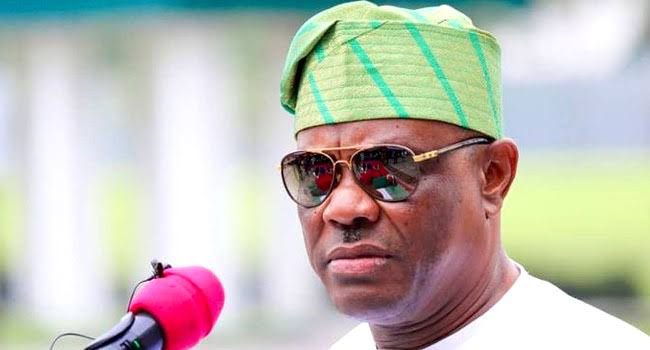
  • Wike takes action against oil theft and illegal oil refineries

    Wike takes action against oil theft and illegal oil refineries

    Oil marketers, under the aegis of Association of Tank Farm Oil and Gas Marketers of Nigeria (ATOGMAN), have commended Governor Nyesom Wike of Rivers State for taking action against illegal refineries and oil bunkering. Wike had issued a 48-hour ultimatum to the 23 local government areas chairmen to provide list of illegal refineries and their operators within their areas in the ongoing battle to stop the menace of soot. In addition, he ordered the redeployment of a divisional police officer in charge of Emohua Local Government Area of the state, for operating illegal refinery.

    The governor said, “he must leave this state. I can’t be governor here and the security man owns an illegal refinery. No, it is not possible. The man has to go. Take him to wherever they allow bunkering.”

    To this end, ATOGMAN’s National President, Lawrence Kanu, in a statement, yesterday, said the decision of Governor Wike would drastically reduce the act as Nigeria was losing N25 billion monthly to illegal oil operators. Kanu said ATOGMAN would support the governor in any way possible to ensure insidious act is nipped in the bud. He, however, called on Nigerians to provide intelligence to security agencies to arrest and prosecute unlicensed operators.

    “ATOGMAN hails Governor Wike’s actions and pledged to support fight against illegal bunkering.

    “All hands should be on deck, through community policing to stop the menace. With the recent development, if we can join hands together in the fight against illegal bunkering, it would help Nigeria economically, there will be no need for fuel increase as speculated by the Federal Government in February 2022.”

    He also applauded the Commandant General of the Nigeria Security and Civil Defence Corps (NSCDC), Ahmed Audi Abubarkar, for disbanding the Anti Bunkering Unit in Rivers State Command and advised other agencies to do same. He advised that, “any officer that have served in Rivers State for six months, must be transferred to another state for effectiveness. “Same to be done nationwide. I mean massive transfer nationwide any officer serving in the South, South West and South East must be transferred to northern part, and those currently serving in northern Nigeria should be transferred to South East, South South and South West for efficiency.”

    Source: www.sunnewsonline.com

  • Cryptocurrency Ban and its economic implications in Nigeria         

    Cryptocurrency Ban and its economic implications in Nigeria         

    By Ikenna Igwe

    In the last four years, cryptocurrencies especially Bitcoin have become ubiquitous, prompting both global and domestic monetary authorities to devise a means to regulate and accept their usage. In Nigeria alone, the crypto market has expanded so much that the volume of Bitcoin traded monthly is estimated at $200mn according to Buycoin, one of Nigeria’s largest cryptocurrency exchange.

    Background to the Ban

    Digital currencies have proved to be highly volatile and risky, forcing several regulatory bodies including the Central Bank of Nigeria (CBN) to earn against huge investment in the crypto market. In a letter dated 5th February, 2021, the Nigerian government through its apex bank, the Central Bank of Nigeria (CBN), clamped down on cryptocurrency in Nigeria. The letter mentioned that all banks and financial institutions must comply with the following directives:

    1)Stop the facilitation of payment for cryptocurrency exchange

    2) Identify persons/entities transacting in cryptocurrency within their system and close such accounts.

    A degree of public backlash followed the letter that made the CBN release a rejoinder attempting to clarify the reasons for the ban. Some of the reasons given were:

    ~Transacting in cryptocurrency carries the risk of loss of investment, money laundering, terrorism financing, illicit fund flows and criminal activities.

    ~There is an extreme price volatility of cryptocurrency preventing it from being a viable option as a lasting means of payment.

    ~Being unregulated, cryptocurrency violates the CBN Act as the only institution that can create a legal tender.

    With the release of the letter, cryptocurrency was made categorically illegal in Nigeria. Major financial technology companies including Chaka, Bamboo, Kuda and Piggyvest, among others notified their customers. However, it has to be said that there are alternatives for cryptocurrency transactions regardless of the ban. Cryptocurrency retailers and other outfits are now making recourse to Peer to Peer (P2P) trades.

    P2P trades are trades between individuals without intermediation by a third party, typically a corporation or business. Binance launched an Express mode for P2P trades in Nigeria. This means that users can now buy and sell on the platform without going through banks as a third party.

    Although it is fair to note that countries like China have also outlawed cryptocurrencies, where there created a state owned cryptocurrency known as DC/EP, but it appears to be some sort of communist approach, where the government seeks to own and regulate almost everything.

    Effects of the ban

    1)The ban on cryptocurrency will also no doubt decrease investors’ confidence in the Nigerian market. It tends to heighten the regulatory risk associated with doing business in Nigeria and reduce the rate at which venture capital or other investors are willing to fund innovations in Nigeria.

    2)The fast expansion of the Nigerian crypto market has created numerous jobs especially for the youths and the ban will affect individual home based traders. Stopping the operation of the emerging crypto market could mean more job loss and will also tend to trigger a faster increase in the rate of unemployment which is already projected by the Presidential Economic Advisory Council (PEAC) to increase up to 40% by the end of 2021.

    A new game changer (E-Naira)

    In October 2021, the Nigerian government and its apex bank, the Central Bank of Nigeria (CBN) launched a new digital currency called E-Naira, which is basically a digital representation of the paper naira and coexists with it as an additional form of money. It has the same value as the physical naira and guarantees simple, safe and fast transfer and payments anytime and anywhere. The introduction of the E-Naira will indeed be a game changer to the Nigerian economy. It is a great leap in the country’s digital economy and shows a touch of pacesetter mindset from the federal government.

    A digital and borderless naira will foster diaspora remittance and cross-border trade. This digital currency definitely promotes financial inclusion and enables the government to make welfare payment easier and faster. The possibilities that the E-Naira hold are huge, although it is still in its “infancy”, we have to watch and see how it plays out in the long run.

    From all indications, the crypto market is not going anywhere soon. Therefore, it is vital and paramount for the CBN to invest in understanding the market and utilizing it to attract much needed investment inflows.

  • Vreg platform crash: more than 3,000 imported vehicles trapped

    Clearing agents and freight forwarders have decried over 3, 000 imported vehicles trapped at the Tin-Can Island Ports Complex, Apapa, due to the collapse of the National Vehicle Registration (VReg) platform created by the Federal Ministry of Finance (FMoF) for imported vehicles. The clearing agents lamented the daily rising costs incurred from demurrages arising from several imported vehicles trapped at the various terminals in the port as they unable to clear them over breakdown of Vreg platform. They said that VReg platform, which was created by the Federal Ministry of Finance (FMoF) for imported vehicles in 2021 became mandatory and first prerequisite for any vehicle that must be cleared from the nation’s port has been malfunctioning.

    Speaking with Daily Sun, the Public Relations Officer, Association of Nigerian Licensed Customs Agents (ANLCA), Tin-Can Island chapter, Onome Monije, said agents have not been able to access the Vreg’s platform in the last one week.

    He explained that exiting vehicles from the terminals have been a nightmare, adding that vehicles are attracting huge storage and demurrage charges from terminal operators and shipping companies.

    “Accessing Vreg platform since last week has been a nightmare as the portal had been down due to server breakdown. The Vreg is for all consignment with chassis/serial number and it is mandatory for us to register with vreg before we can proceed to Customs portal for duty accessment and payment because the Vreg has been integrated with that of Customs platform.

    “As a result of the inability to access the Vreg platform, we stay awake in the middle of the night searching for network and sometime it comes up 2am or 3am and whenever there is an amendment it is always difficult to amend mistakes.

    However, she pleaded with the FMoF to have a help desk where complaints can be made and resolved.

    “We are appealing to the Federal Ministry of Finance or their consultant to open the link icons for importers to pay directly. It is also important that they have office in Lagos and all the port for effective working relationship with clearing agents and importers.

  • NCC’s commitment to enhancing digital skills in Youths


    The Federal Government has applauded the commitment and dedication of the Nigerian Communications Commission (NCC) towards enhancing digital skills development among youths, through implementation of various Information and Communication Technology skill acquisition programmes.


    Minister of Interior, Rauf Aregbesola, and the Minister of Communications and Digital Economy, Prof. Isa Ali Ibrahim Pantami, gave the commendation during the inauguration of a Digital Nigeria Centre (DNC), a project executed by the Universal Service Provision Fund (USPF), an arm of NCC, at the Ijesa Muslim Grammar School, Ilesa, Osun State recently.


    Representing President Muhamadu Buhari at the event, Aregbesola commended the NCC for timely and thorough implementation of the project, saying he was confident that the project will promote the connection of public secondary schools to broadband internet in Ilesa community and ultimately equip beneficiaries with 21st century skills.


    “I would like to thank my very good friend and brother, the Honourable Minister of Communications and Digital Economy, Prof. Isa Ali Ibrahim Pantami, for assenting to our request to have the first of this remodeled project in Osun State sited in Ilesa. I will also like to thank the Executive Vice Chairman of NCC, Prof. Umar Garba Danbatta and the entire Management and staff of NCC and the USPF, as well as their technical partners for a timely and successful completion of this laudable project,” he said.


    On the sideline of the commissioning, Aregbesola also announced the establishment of President Muhammadu Buhari N100 million Technology Fund for Youth Empowerment, to nudge the emergence of world class technology experts. The Minister of Interior stated that the Fund targets 2,000 youths in the next two years, who will be provided with devices for training in different areas such as software development and design, amongst others.


    The Governor of Osun State, Adegboyega Oyetola, who was represented by the state’s Commissioner for Innovation, Science and Technology, Dr. Babatunde Olawale, expressed the gratitude of the State Government to the Federal Government, the Ministry of Communications and Digital Economy and the Nigerian Communications Commission, for initiative and particularly for inaugurating the pioneer remodeled DNC project in Osun State. Oyetola also informed the enthusiastic gathering that Osun State Government was willing and ready to collaborate with NCC to replicate the project in other parts of the State.

    Speaking in the same vein, Pantami, who was represented at the event by the Chairman, Board of Commissioners of NCC, Prof. Adeolu Akande, also commended the NCC and USPF on the delivery of the DNC project on behalf of the Federal Republic of Nigeria. He declared that the project and similarly instituted ones were initiated by government to give expression to its vision to effectively digitise the nation’s economy for increased prosperity for all Nigerians.


    Pantami stated that the Federal Government is focused on promoting digital economy across the country and that this had informed the renaming of the Ministry of Communications to the Ministry of Communications and Digital Economy. On the heels of the re-christening, Pantami recalled that the Federal Government emplaced Digital Nigeria-oriented policies to reinforce the focus of existing policies in order to accelerate the delivery of derivable benefits of digital economy to Nigerians, regardless of their locations and circumstances.

    Very central among the policies is the National Digital Economy Policy and Strategy (NDEPS) 2020-2030, a 10-year, eight-pillar focused blueprint for actualising Federal Government’s digital economy agenda unveiled in November, 2019.


    Pantami asserted that the DNC inaugurated at Ilesa was a concrete implementation of the Digital Literacy and Skills, the second pillar of NDEPS.


    According to Pantami, the overarching objective of the DNC project is to facilitate adoption of digital lifestyle in the schools as well as in the school communities. The Minister averred that the project’s significance cannot be under-estimated, considering its ability to improve digital skill for the youths and subsequently make them globally competitive.


    Pantami said the Nigerian government is determined to arm the youths with digital skills, strong literacy and numeracy skills, critical and innovative thinking skills, complex problem solving aptitude, the ability to collaborate, and deploy socio-emotional skills, which they require to transform their lives and build the economy.


    “We have already made a number of giant strides in the development of our digital economy culture and the deployment of initiatives such as the Digital Nigeria Centre eloquently demonstrates the current administration’s commitment to connecting all Nigerians,” Pantami said as he equally expressed Federal Government’s commitment to its tripartite agenda of improving the economy, curbing corruption and enhancing national security through effective deployment of ICT in all nooks and crannies of the country.


    In his remark, Danbatta, who was represented at the event by the Commission’s Director of Projects, Iyabode Solanke, said all the regulatory activities, initiatives and programmes that the Commission had undertaken since 2019, in collaboration with its critical stakeholders, including its arm, the USPF, have been targeted at giving concrete expression to Nigeria’s deliberate policy to migrate to a full digital economy.


    He said the Commission achieves this by consistently committing itself to expansion of appropriate infrastructure to enhance digital literacy and skills in view of the economic and social impact of digitization on all sectors.


    The NCC Chief Executive restated the Commission’s commitment to the overall objective of bridging the digital divide through the provision of Information and Communication Technology (ICT) as well as broadband access to the unserved and underserved institutions and communities in the country.


    Earlier, the Principal of Ijesa Muslim Grammar School, Ramota Ilesanmi, thanked the President Buhari-led Federal Government for the project, saying that it will go a long way in meeting the ICT needs of students and residents of the city.


    The DNC, formerly known as School Knowledge Centre (SKC), is one of the projects in the Access Programme framework of the USPF, conceptualized to promote the availability and utilisation of ICT and resources of the Internet in teaching and learning in public schools in underserved, unserved and rural areas.


    Specific objectives of DNC are to increase ICT literacy among school teachers and students; provide a platform for accessing online educational resources; equip students with ICT skills; facilitate ICT adoption in teaching and learning; as well as increase pass rate in Mathematics, English language and other science subjects.


    Source: www.punchng.com

  • CBN Gov: Pan-African payment platform “ll reduce the use of pounds and dollars in intra-African trade.

    CBN Gov: Pan-African payment platform “ll reduce the use of pounds and dollars in intra-African trade.

    CBN Gov: Pan-African payment platform “ll reduce the use of pounds and dollars in intra-African trade.

    Godwin Emefiele, Governor of the Central Bank of Nigeria, CBN, says the pan-African payment and settlement system, PAPSS, will simplify cross-border transactions and reduce third currencies for intra-African trade.

    The third currencies include dollars, pounds and euro for cross-border transactions in Africa.

    Emefiele said this, yesterday, in Accra, Ghana, at the launching of PAPSS.

    The Africa Export-Import Bank, Afreximbank, in collaboration with African Union, AU, and African Continental Free Trade Area, AfCFTA, officially launched the platform for commercial use.


    “Prior to the launch of PAPSS, settlements for intra Africa trade required a third currency and a non-African correspondent bank. This resulted in an estimated loss of close to $5 billion annually and undermined trade in Africa countries.

    “The launch of PAPPS gives the fresh opportunity and aspiration for the African continent. It will simplify cross-border transactions, reduce third currencies for intra-African transactions and remove the need for correspondent Banks and ultimately amplify intra trade significantly.

    “As a percentage of total trade, intra-African trade is expected to increase to 35 per cent from 15 per cent in five years with infrastructure provided by PAPSS as payments and settlements are resolved.

    “With the growing pace of digitisation in financial services, which has been accelerated from the onset of the COVID-19 pandemic, PAPPS can serve as a viable platform for supporting e-Commerce in Africa.”

    The CBN governor said Nigeria is excited by the potential of PAPSS, and “that is the reason we participated actively in the programme, and we have put our best efforts to ensure the realisation of the payment platform.”

    Emefiele said CBN would continue to facilitate the widespread adoption, acceptance and implementation of PAPSS.

    “CBN will ensure the financial institutions under its jurisdiction accept PAPSS and recommend it to businesses across Nigeria,” he said.


    Source: www.vanguardngr.com

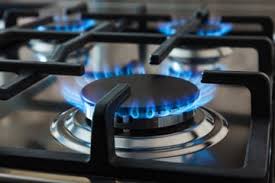
  • Cooking gas price set to crash to an all time low


    The price of Liquefied Natural Gas (LPG), popularly called cooking gas which hit the roof top about five months ago selling at N8,500 per 12.5kg is set to crash to an all time low as the Board of Directors of the Nigerian Liquefied Natural Gas Limited (NLNG), has approved the supply of 100 per cent of the company’s LPG production(Propane and Butane) into the Nigerian domestic market.


    The development may not be unconnected with strong calls and appeals from stakeholders in the gas sector that NLNG increase its supply of LPG into the domestic market which they claim accounts for about 65 per cent.


    They argued that the shortfall of 35 per cent is sourced from imports which comes at a premium due to the imposition of Value Added Tax of 7.5 per cent among other added cost, leading to a sharp rise in cooking gas price.


    Consumers of cooking gas had in the last five months contended with the escalating price of the product, forcing many to resort to the use of dirty fuels which included; charcoal, firewood, Kerosene among others. The milestone according to NLNG is coming just three months after the Company supplied its first Propane cargo into the domestic market and has developed a scheme to sustainably supply Propane for usage in cooking gas blending as well as in agro-allied, autogas, power and petrochemical sectors of the Nigerian economy to further deepen gas utilisation in Nigeria.


    NLNG explained that these initiatives are designed to increase LPG availability in Nigeria, diversifying its uses and support the Federal Government’s Decade of Gas initiative. NLNG is currently the highest single supplier of LPG into the domestic market, with an estimated 400,000 metric tonnes supplied in 2021.


    100% Natural Herbs to Finally End Premature Ejaculation, Weak Erection and Small Manhood. Click Here Now .

    Speaking on the development, the Managing Director and Chief Executive Officer of NLNG, Dr. Philip Mshelbila, said the announcement marked the Company’s strong commitment to the continued growth of the domestic LPG market and its passion to increase utilisation of one of the most versatile energy sources in the world.


    He said the Company was inclined towards helping to build a strong economy based on the gas resources that Nigeria is abundantly blessed with, and that natural gas could help drive the economy by providing cooking gas for homes, supporting industrialisation, powering mobile cell sites and complex transportation systems, impacting food supply through its usage for fertilizer production and increasing power supply to both homes and industries while reducing the country’s carbon footprint.


    According to Mshelbila, “Gas, as the cleanest of the fossil fuels, has become an essential energy source to be reckoned with during this energy transition period. Other countries are revolutionising their energy industry to cut down on carbon emissions drastically. Nigeria should not be left out in this drive, considering its abundant gas resources. Gas is essential for life and living at the moment, because it can support everything we will need to develop our economy and create better living standards for Nigerians. We need to change the narrative, and NLNG is being pragmatic about it.


    “We are ardently following up on the commitment we made in March 2021 at the NLNG-sponsored pre-summit conference of the Nigeria International Petroleum Summit (NIPS) 2021 organised by the Federal Ministry of Petroleum Resources to support the Decade of Gas declaration by the Federal Government. We are driven by our vision to remain a globally competitive LNG company helping to build a better Nigeria and are making a reality of our collective dreams that one day we can switch all cooking fuels to gas, and power our vehicles with gas as encapsulated in the government’s National Gas Expansion Program and the Autogas Policy,” he said.


    Source: www.sunnewsonline.com