Category: Business/Economy

  • Are NFTs the Next Big Thing in the Digital World?

    Are NFTs the Next Big Thing in the Digital World?

    By Ikenna Igwe

    The whole cryptocurrency and its blockchain matrix do seem to most people as a hollywood scam series that will come crashing down one day in an epic manner. On the contrary, though there is nothing that makes headline news like another blockchain news that leaves you thinking “Wait what’s going on here?”, that’s exactly the kind of feeling I’ve experienced while reading about GRIMES getting millions of dollars for NFTs or MIKE WINKLMANN aka BEEPLE, whose NFT artwork was sold close to $69millon in 2021.

    One has to ask, why are these people paying this ridiculous amount of money for a piece that is not even tangible and every other person can access?

    What is an NFT? What Does It Actually Mean?

    NFTs stand for Non-Fungible Tokens. Non-Fungible, more or less, means that it’s unique and can’t be replaced with something else. For example, a bitcoin is fungible because if you trade one bitcoin for another, you will get exactly the same thing. A one-of-a-kind trading card is however Non-fungible; once you trade it, you get a different stuff in return.

    An NFT

    NFTs and Safety/Management 

    To understand how NFTs work, a basic understanding of blockchain has to be in place. Blockchain technology operates as a ledger that makes digital transactions visible and accessible to the public. Through secure encryption, this information is grouped into blocks and each block comprises a timestamp and transaction data. Popular cryptocurrencies like Bitcoin and Ethereum are designed and operated with blockchain functionality. NFTs on the other hand make use of this innovation but issue a digital certificate of ownership to buyers to show authentication of what has been bought. Digitally, one can buy videos, gifts, images, illustrations, all as NFTs.

    What’s the Point of NFTs?

    That really depends on whether you’re an Artist, a Buyer or a Collector. Let me explain; If you are an artist, you might be interested in NFTs because it gives you a way to sell works that there otherwise might not be much of a market for. It provides artists with more options (bigger market) and decentralized model that bypasses gallery middlemen.

    NFTs have a feature that you can enable that you will be paid a percentage every time the NFT is sold or changes hands, making sure that if your work gets super popular and balloons in value, you will see some of those benefits.

    If you are a BUYER in another case, one of the obvious benefits of buying arts is to support the artist you like financially. Buying an NFT also usually gets you some basic usage rights, like being able post the image online or set it as your profile picture. Plus of course, there are bragging rights that you own the art with a blockchain entry to back it up.

    If you are a COLLECTOR, good for you because NFTs can work like any other speculative asset, where you buy it and hope that the value of it goes up one day, so you can sell it for a profit.

    NFTs and Nigerian Youth/Economy 

    NFTs as a cutting-edge innovation have shaken up the art world and redefined the creative economy. Global conversations about Non-Fungible Tokens (NFTs) are unavoidable these days and Nigeria is at the forefront. So many online exhibitions and showcase of NFTs have been going on around the country. After hosting a digital only exhibition in 2020, ART X Lagos hosted another showcase in 2021 at the Federal Palace in Victoria Island that brought together 30 leading international galleries from around the world to present work both online and in person, where we saw close to 120 artists from over 30 countries ranging from Spain, USA, Egypt, Ghana to mention a few. This trend is opening Nigeria to the world and that is what our struggling economy really needs now; foreign remittance is coming into the country through this means.

    Local artists who were previously shut out from the art world on a global scale have started to own their voice and their space. Exportation of Nigerian art and artists is a thing now, where people pay good money to see and possess Nigerian art works. Nigerian youths are leading the way in Africa in terms of NFTs. Let’s look at PRINCE JACON OSINACHI IGWE, who according to the BBC, is the first digital artist from Africa to have his work sold by CHRISTIE’S auction house in Europe, one of the world biggest art sellers in the world. Osinachi, born in Aba, Abia state, garnered attention for selling $75,000 worth of NFTs in 10days. Osinachi partnered with MOHAMMED AMIN FOUNDATION to release NFTs for a catalog featuring 2.5millon photographs and more than 5,000 hours of video content. The wonderful thing about this is that Osinachi is only one among many Nigerians who are using this medium to earn a very decent living for themselves.

    How do you start your NFTs journey? How and where to buy and sell your NFTS with ease

    NFTs are by far still the biggest story that hit the crypto screen in recent times and quite understandable, most people want to get into the space and make their own millions. NFTs markets aren’t exactly Amazon where it comes with ease of use, although buying your first digital collectible isn’t hard as much, it just requires a little guidance.

    Firstly, you have to purchase Ethereum (one of the biggest cryptocurrencies) given the fact that most NFTs are Ethereum-based tokens. Most marketplace for those collectibles accepts only Eth token as payment. So, you need to go buy some Ethereum from a reliable crypto space (Coinbase and eToro are good options for beginners).

    Secondly, send the Ethereum tokens to an NFT hub like MetaMask, where you create a wallet address and then start making and buying NFTs from there.

    Thirdly, in other not to limit yourself to viewing few NFTs, you will have to connect your MetaMask account to Opensea or other NFTs marketplace, where there give you the leverage to view, buy and sell varieties of NFTs to much wider audience.

    Like every other new innovation, NFTs have its critics and doubters, some stating that this is the end of “Real art” and the environmental dangers of minting NFTs. One thing which is clear for both digital and traditional artists is that NFTs are here to stay, providing artists with more options and a decentralized model that bypasses gallery middlemen and their protocols.

  • Reps renew call for declaration of state of emergency on security

    Miffed by the widespread insecurity across the country, particularly the recent killing in Plateau State, the House of Representatives, yesterday, demanded immediate sack of the National Security Adviser (NSA) and the Minister of Defence, including the indictment of the security agencies.

    It also reaffirmed its call for the declaration of state of emergency on security in the country

    The resolutions followed the adoption of a motion of urgent public importance by Yusuf Gagdi at plenary yesterday, following the murder of 92 people in Plateau State on April 10.

    He noted that over 20 victims that sustained various degrees of injuries were receiving medication at various hospitals. He said in spite of intelligence reports by the Department of State Service on the influx of terrorists fleeing into Plateau, there was no proactive measure taken to avert the terror attack.

    He claimed security agencies had reliable information at their disposal of the various camps of the terrorists at Kambari forest in Taraba State. He added that they also had information on Bangala in Wase LGA from where the terrorists organised and coordinated attacks.

    In his contribution, Deputy Speaker of the House, Ahmed Wase, alleged that a security personnel who was supposed to be on duty in Zamfara got a pass and stayed in Plateau for six months supplying uniforms to bandits. He said members would now understand the complicity of the security agencies in the killings, stating that actions needed to be taken against some security agencies. He called on security agencies to do their job, adding that the last time, it was in Birnin Gwari, Kaduna State, where over 162 were killed.

    He said an early warning signal was given, as identified by the citizens, where bandits coming from Zamfara and Niger to Plateau were reported but nothing was done to forestall it.

    He added that in this case, he did not know what anybody could do not to hold the security agencies responsible.

    “I have written a letter, paid visit to inform the police. As I speak, 42 villages in my constituency are in IDP camps.”

    Bamidele Salam said he watched the massacre of the people of Plateau and it was emotional. “We have come to a situation where people are being killed and no one is held accountable. Things have turned upside down in the last one decade.”

    He said to live in Nigeria was now an unusual privilege, adding that the shocking part was that there were early warning signals that there would be an attack but it was not acted upon.

    “Is it that they feel that some people behind it cannot be touched or are too powerful? It appears that there is an absence of government,” he said

    Fatuhu Muhammed (APC-Katsina) said President Muhammadu Buhari, as chief security officer, should be held responsible for insecurity in the country. He, however, said there was no way such killings would be happening without security information but condemned the attempt of always sweeping it under the carpet.

    “The security agencies come here, present their budget and we allow it pass, there is no oversight function to unravel the truth. I just came back from my state, no security is willing to come out and protect people, we have to give them money. Everybody is important in this battle, though the president should be held responsible,” he said.

    The House, therefore, called for the establishment of a military base and the deployment of troops to the affected areas.

    (Sun)

  • Nigeria’s oil production dips to 1.24m bpd, lowest this year

    All is not well in Nigeria’s oil industry as the Nigerian Upstream Petroleum Regulatory Commission (NUPRC) stated that oil output dropped to an average of 1.24 million barrels per day (bpd) from 1.25 million recorded in February 2022.

    NUPRC stated this in its latest crude oil and condensate production data for March 2022.

    Vanguard learnt that the figure represents a 0.80 per cent decrease from the previous month, representing the lowest production capacity so far in the year. Nigeria is said to be producing below 1.4 million barrels per day in 2022, failing to meet its Organisation of Petroleum Exporting Countries (OPEC) quota of about 1.8 million bpd.

    The development is coming amid controversies surrounding the actual volume of oil that ended in the hands of illegal bunkers. The decline in oil output has also depleted revenue accrued to the federation account amid zero remittances from the Nigerian National Petroleum Company (NNPC) Limited despite soaring oil prices. Last March, Timipre Sylva, minister of state for petroleum resources, had outlined poor investment and the exit of oil majors as major issues affecting Nigeria’s inability to meet the oil production quota.

    NUPRC also stated that Nigeria lost more than 115,000 barrels per day (bpd) to oil theft and vandalism between January 2021 and February 2022, which amounts to $3.27 billion worth of crude oil.

    It will be recalled that last week, President Muhammadu Buhari asked the House of Representatives to adjust the 2022 fiscal framework to include an increase in the projected oil price benchmark, from $62 per barrel to $73 per barrel, up by US$11 per barrel. Buhari also asked for a reduction in the projected oil production volume by 283,000 barrels per day, from 1.883 million barrels per day to 1.6 million barrels per day.

    (Vanguard)

  • Insecurity: Northern elders tell Buhari to resign

    President Muhammadu Buhari has been told to immediately resign over his alleged failure to address the issues of killings, kidnappings and general insecurity in the country.

    The Northern Elders Forum (NEF) in a statement by its Director, Publicity and Advocacy, Dr. Hakeem Baba-Ahmed, said the Nigerian constitution allows the President to step down if he can’t solve the challenges confronting the country.

    “The administration of President Muhammadu Buhari does not appear to have answers to the challenges of security to which we are exposed. We cannot continue to live and die under the dictates of killers, kidnappers, rapists and sundry criminal groups that have deprived us of our rights to live in peace and security.

    “Our constitution has provisions for leaders to voluntarily step down if they are challenged by personal reasons or they prove incapable of leading.

    “It is now time for President Buhari to seriously consider that option, since his leadership has proved spectacularly incapable of providing security over Nigerians. Our Forum is aware of the weight of this advice, and it is also aware that we cannot continue to live under these conditions until 2023 when President Buhari’s term ends.

    “Killers and other criminals appear to have sensed a paralyzing vacuum at the highest levels of leadership, and they grow more confident and acquire more competence in subverting the State and our security.

    “Nigerians have shed enough tears and blood without appropriate response from those with responsibilities to protect us.”

    (Sun)

  • Nigeria, others at high risk of debt distress, IMF warns

    Nigeria and 72 other countries are at high risk of debt distress or already in debt distress, according to a new report by the International Monetary Fund.

    The report, titled “Restructuring debt of poorer nations requires more efficient coordination,” noted that low-income countries face fewer debt challenges today than they did 25 years ago, thanks in particular to the Heavily Indebted Poor Countries initiative, which slashed unmanageable debt burdens across sub-Saharan Africa and other regions.

    The report noted that although debt ratios were lower than in the mid-1990s, the debts have been creeping up for the past decade and the changing composition of creditors would make restructurings more complex.

    The report read in part, “About 60 percent of DSSI countries are at high risk of debt distress or already in debt distress—when a country has started or is about to start, a debt restructuring, or when a country is accumulating arrears.”

    Spurred by low-interest rates, high investment needs, limited progress in raising additional domestic revenue, and stretched systems for managing public finances, the debt ratios of DSSI countries have increased, partly reversing a decline seen in the early 2000s.

    “Now, the economic shocks from COVID-19 and the war in Ukraine are adding to the debt challenges faced by low-income countries, even as central banks start to raise interest rates.”

    The report said that among the 41 DSSI countries at high risk of or in debt distress, Chad, Ethiopia, Somalia (under the HIPC framework), and Zambia have already requested debt treatment.

    “Around 20 others exhibit significant breaches of applicable high-risk thresholds, half of which also have low reserves, rising gross financing needs, or a combination of the two in 2022.

    “On the domestic side, difficult trade-offs will exist between the need to restructure sovereign debt owed to domestic banks, in some cases, and the impact of such restructurings on financial sector stability and the capacity of domestic banks to finance growth,” the report read further.

    According to the IMF, the situation differs significantly across countries, however.

    The report further said that China is now the largest official bilateral creditor in more than half of DSSI countries, including when counting all 22 Paris Club creditors as a single pool.

    China would therefore play a key role in most DSSI countries’ debt restructurings that would involve official bilateral creditors.

    About 60 per cent of Debt Service Suspension Initiative countries are expected to face these challenges.

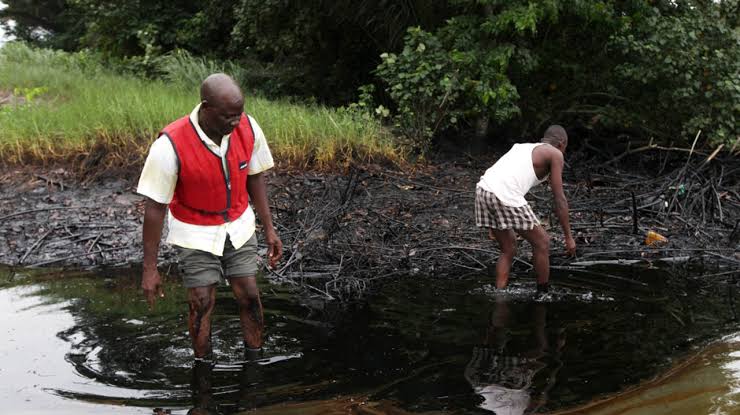
  • Nigeria lost $1.5bn to oil theft in 3 months –NNPC

    Nigeria lost $1.5bn to oil theft in 3 months –NNPC

    Nigerian National Petroleum Corporation (NNPC) has said the country lost $1.5 billion worth of crude oil, which represents about 250,000 barrels of crude per day, to oil theft between January and March 2022.

    NNPC Group Managing Director (GMD), Mele Kyari, stated this, yesterday, in Abuja, at an interactive session with House of Representatives Committee on Petroleum Upstream.

    Consequently, Kyari canvassed the establishment of a special court to try cases of oil theft and pipeline vandalism. He said this would ensure speedy trial of culprits.

    The GMD, who blamed the drop in the country’s daily crude oil production on the activities of oil thieves and pipeline vandals, said they must be tackled seriously in view of the danger their activities are posing to the economy.

    He said: “From January till date, we lost an average of 250,000 barrel per day and at the current price of about 100 dollars to the barrel, even within this short period, we have lost close to 1.5 billion dollars. This led to decline in production from the Bonny terminal. In January 2021, we were producing 239,000 barrel from the line linking Bonny terminal and we only receive 190,000 barrel meaning that we lost about 19,000 barrel to thieves then per day.

    “This situation deteriorated to the extent that by March 7, 2022, it came to zero and so, we shut down the line and declared ‘force Majeur’. Even on our most reliable pipeline which is the Forcados pipeline, we still lost about 7000 barrel per day. Needless to say that this is all coming as a result of act of vandals and oil thieves.

    “So many interventions has taken place and we have continued to remove the insertions. To put it in a context, within a distance of less than 20 kilometre, we removed 85 insertion. So, you can imagine when you are running a pipeline of about 300 to 400 kilometres.

    “Some of these activities are done in a very professional manner. If you look at slide two, you see the connections. You will see that you need a lot of time, capacity to make these insertions. In one location, we have seen an insertion that is exactly the size of the servicing pipeline.”

    Kyari told the lawmakers that the government is intensifying efforts to battle the menace. However, he said: “All we need to do is to increase the advocacy so that the legal process takes its cause and prosecutions are done timely.

    “I will recommend we set up a special court for this. Such cases will be speedily dealt with, so that it is not just the ordinary ‘small’ people that you see at those locations that are prosecuted.

    “We know that to sell crude oil in the international market, it is not the business of the ordinary people that you see in these illegal refineries. It is an elitist business and we must have the courage to set up very independent special courts to try cases related to this.”

    (Vanguard)

  • CBN slams N800m fine on 3 banks for breaching crypto currency rules.

    Access Bank, Stanbic IBTC Bank and United Bank for Africa have been slammed with an N800 million fine by the Central Bank of Nigeria over flagrant disregard to existing regulations outlawing consumers from transacting in crypto currencies.

    According to Bloomberg, the sanctions were part of the CBN’s deterrence to ensure banks’ compliance; just as the apex bank tightens the noose around cryptocurrency.

    The CBN in a circular dated 5th February 2021, notified Deposit Money Banks, Non-Financial Institutions, other financial institutions against doing business in Crypto and other digital assets.

    According to the report, Access Bank Plc, the country’s largest lender by assets, was fined N500 million for failing to shut down customers’ crypto accounts.

    United Bank for Africa Plc was fined N100 million naira for a customer’s digital-currency transactions.

    CBN penalized Stanbic IBTC Bank, the local unit of Standard Bank Group Ltd., N200 million for two accounts allegedly used for crypto transactions.

    Chief Executive Officer of Stanbic IBTC, Wole Adeniyi disclosed at an investor conference call in Lagos that while Stanbic IBTC followed the central bank’s orders, the transactions for which it was sanctioned may have passed through its system undetected.

    He explained that the CBN was able to detect the relevant transactions using “advanced capacity” that Nigerian lenders do not have access to, and they have urged the central bank to share the technology.

    “It doesn’t seem that they are going to entertain a refund, but they are now sharing intelligence with us to be able to kind of deter clients,” Adeniyi noted.

    (Sun)

  • Reps to investigate hike in diesel price

    House of Representatives, Tuesday, resolved to investigate the sharp increase in the price of diesel also known as AGO.

    It therefore mandated its Committees on Petroleum Resources (Downstream), Petroleum Resources (Upstream), and Gas Resources to handle the assignment with a view to ensuring that a reasonable price is fixed to alleviate the sufferings of Nigerians.

    The resolution followed the consideration of a motion presented at the plenary by Hon. Chike John Okafor, (APC, Imo)Moving the motion, Okafor recalled that Nigeria Mainstream and Downstream Petroleum Regulatory Authority (NMDPRA) was created in August 2021 in line with the Petroleum Industry Act with the mandate to provide effective regulatory oversight, ensure sufficient product distribution and supply at an equitable and fair price.

    According to him, almost all businesses and households in Nigeria depend on diesel-powered generators as an alternative source of electricity.

    He said: “The outrageous rise in the price of Automotive Gas Oil (Diesel) as the product which was sold between N280 to N350 per liter three (3) weeks ago is currently being sold above N780 per liter and still rising on a daily basis accounting for over 115.4 percent increase within three weeks.

    “Diesel was deregulated in 2009 with an initial price of 100 Naira per liter, and between 2009 till date, Nigerians have witnessed a rising percentage increase in the price of the product.

    “The hike in the cost of diesel is alleged to be the handiwork of unscrupulous stakeholders in the industry, and is tantamount to economic sabotage, causing untold hardships for Nigerians as it will result in an increase in prices of food as well as other goods and services.

    “The possible inflationary pressure envisaged from the rise in the cost of diesel could reduce consumers’ disposable income, thus making it impossible for average Nigerians to meet their basic needs.”

    The lawmaker submitted that if the ugly trend of the increasing price of diesel was not checked, the multiplier effect will spell doom for Nigeria’s economy.

    The motion was supported by the majority when put to voice vote and eventually adopted.

    The Committee was given 6 weeks within which to conclude the assignment and report back for further legislative action.

    (Vanguard)

  • Oil theft: Expert urges FG to leverage on the expertise of Nigerian tech firms to track oil theft.

    Oil theft: Expert urges FG to leverage on the expertise of Nigerian tech firms to track oil theft.

    An indigenous player in the energy sector, Mr. Victor Ekpenyong, has urged the federal government and oil firms to maximise oil production and leverage on the expertise of Nigerian tech firms to check oil theft.

    Ekpenyong, who made the call in an interview with newsmen on Sunday, noted that there was a need to raise oil production beyond current levels to take advantage of increased oil prices in the international market.

    He said that although the nation was capable of producing up to 2.5 million barrels of crude oil per day, the activities of oil thieves and vandals, who frequently attacked oil installations, had compelled operators to shut down vandalised assets.


    The News Agency of Nigeria reported that Group Managing Director of the Nigerian National Petroleum Corporation Limited, Mr. Melle Kyari, at a public event in Abuja on Friday, stated that oil output had nosedived to less than 1.15 million barrels per day due to the upsurge in oil theft and vandalism.

    Ekpenyong, who is the Chief Executive Officer and Founder of Kenyon International West Africa Limited, explained that the indigenous oil services firm had developed a home-grown solution to oil theft and vandalism.

    He explained that the solution, which the company referred to as Idle Well Management Solution, was currently being deployed in some oil fields and had proven to be cost-effective and efficient.

    The solution, according to him, includes the installation of anti-theft devices on wellheads that makes it impossible to steal crude or vandalise wellheads.

    He said that if the solution was adopted across oilfields, oil production would take an upward swing and enable Nigeria to benefit from the rising oil prices.

    Ekpenyong said that the package to secure oil installations relied on idle well management practice which helped to monitor idle wells, preventing them from vandalism and theft.

    “Nigeria has the capacity to produce nearly 2.5 million barrels of oil per day, but now, it is struggling to produce 1 million-plus barrels a day.

    “Some of the factors that caused the plunge in production are vandalism and oil theft. This has inevitably led to some Nigerian companies shutting down their operations.

    “To salvage the situation, the government needs to conduct a situational analysis.

    “From the information, we have seen so far, the country previously produced more oil, and we should enquire why our oil-producing capacity is plunging as the days go by.

    “Now that oil is above US$100 per barrel, we should take advantage of it and maximise our revenue. Our government needs to devise plans on how to safeguard oil and gas assets and conduct community engagement.

    “Currently, we have a lot of tech-savvy youths in the country, and in community engagement, citizens can proffer some tech solutions to these problems we face.

    “Young people can develop applications that can track vandals. This can be potentially beneficial to both oil companies and the citizens as well,” Ekpenyong said.

    He also advocated that the regulatory agencies in the oil and gas sector should ensure that oil companies are following the industry-recommended procedures and best practices.

    He expressed optimism that, in a properly regulated environment, where operators imbibed operational practices, oil output would improve and boost the much-needed revenue to the government.

    (Punch)

  • CBN to penalise banks for depositing mutilated notes

    The Central Bank of Nigeria (CBN), at the weekend, warned Deposit Money Banks (DMBs) to immediately desist from bringing mutilated banknotes as part of their deposits.

    Composed banknotes or mutilated Naira notes comprise several parts of different banknotes of the same denomination.

    The parts of such currency notes are usually put together with the intention of receiving value.

    The stern warning, which took effect on April 1, was contained in a circular issued by the Director, Currency Operations Department of CBN, Ahmed Umar.

    According to him, having mutilated banknotes in the economy completely distorts the true value of currency in circulation, aside from being a fulcrum for fraudulent activities.

    He emphasized that henceforth, composed banknotes discovered in the deposit of DMBs shall attract a penalty of 400 per cent of the value.

    “The management of the CBN observed with concern the increase in the number of composed banknotes deposited by DMBs and request for replacement of such banknotes by members of the public.

    “The existence of composed banknotes in the economy falsifies the true value of currency in circulation, and can also be an avenue for fraudulent activities”.

    (Sun)

  • Security threats at Nation’s port: Maritime workers union raise alarm

    The Maritime Workers Union of Nigeria, MWUN, has raised the alarm over increasing security threats at the port formations and private jetties across the country, saying they have become very porous for vessels laden with dangerous cargoes such as illicit drugs, arms and ammunition, among others.

    MWUN blamed the absence of Tally clerks and onboard security men on vessels berthing and operating in the Nigerian waters and ports for the influx of the dangerous cargoes, and urged the Federal Government to return the Tally clerks and the onboard security men, commonly known as ‘onboardship gangway securitymen, to check the influx of dangerous cargoes.

    At a media parley, President-General, PG, of MWUN, Prince Adewale Adeyanju, also lamented that most of the International Oil Companies, IOCs, have refused to implement the Nigerian Maritime Administration and Safety Agency, NlMASA, Act, 2007, a Government Marine Notice No. 106, 2014 stressing that the workers would be forced to renew their suspended strike notice.

    Government Marine Notice 106 applies to all companies and persons engaged in Stevedoring work, including Dock Labour Employer and Private Operators of any work location including Ports, Jetties, Onshore or Offshore Oil and Gas or Bonded Terminals, Inland Container Depots, ICDS, off- Dock Terminal, Dry Ports and Platforms.

    Adeyanju contended that apart from the government losing huge revenue due to the breaching of laws, the refusal of the IOCs to implement Marine Notice No. 106, has increased the atrocities and criminalities perpetrated at the ports and private jetties.He said: “If government wants to generate and earn more revenue, the government should return the Tally clerks and onboard security men. The vessels coming into the Nigerian ports and private jetties are not monitored. Anything can go out and come in. With onboard securitymen, we will be able to check what comes in or goes out through the vessels. Federal Government does not know what is happening in the ports. We do know more because we are on standby and receive information from our men on the field. The Tally clerks and onboard security men should be reinstated to check influx of illicit drugs, dangerous weapons, and other prohibited cargoes.”

    The PG urged the Minister of Transportation, Rotimi Amaechi and the Minister of State for Petroleum, Timipre Sylva, to show more commitment and interest in the Maritime sector, claiming that the Transportation minister’s non-commitment to the sector is making the country lose huge revenue.

    He urged the two ministers to work together and investigate the resistance of the IOCs to the implementation of Marine Notice 106.

    The Union had last month threatened to shut the ports, but government’s intervention through the Nigerian Ports Authority, NPA, which called representatives of the IOCs, Nigerian National Petroleum Corporation, NNPC, National Petroleum Investment Services, NAPIMS, National Association of Stevedoring Operators, NASO, and leaders of MWUN to a stakeholders’ meeting where far reaching decisions were taken, forced the Union to suspend the strike notice at the last minute.

    Adeyanju expressed disgust that up till now, “the IOCs have bluntly refused the appointed and deployed stevedoring companies to commence operations and has thus deprived its members (dockworkers) in the employ of the stevedoring companies from working and earning a living.”He said up till now, out of 30 IOCs operating in the country, only three have complied, thus making Nigeria lose huge revenue in the oil and gas sector.

    The PG added that the Union would renew the suspended strike notice if no urgent measure was taken to address the issue.

    (Vanguard)

  • Nigeria produces first wholly made tomato paste

    Tomato Jos Farming and Processing Limited, has launched its Tomato Jos paste variant into the Nigerian market.

    The new tomato paste variant, packaged in a 65-gram sachet, is produced directly from fresh tomatoes grown in the country, thereby guaranteeing superior flavour and colour. It is the company’s first consumer product since the commencement of operations at its multi-billion-naira factory in Kaduna state last year.

    First City Monument Bank (FCMB), in 2019, financed the construction of Tomato Jos Farming and Processing Limited’s 3.5tons/hr state-of-the-art tomato paste processing plant located at Kangimi, Kaduna State. The funding was through the Central Bank of Nigeria’s Real Sector Support Facility (RSSF) intervention fund to procure plants and machinery for the factory.

    Speaking at an event to unveil the Tomato Jos sachet variant, the Managing Director of the company, Mira Mehta, said: “It is a dream come true. Though entrepreneurship is full of ups and downs, I feel encouraged whenever I see my passion for this business ignite in one of my colleagues. I am incredibly proud of the Tomato Jos team for their hard work and belief that we could achieve something on this scale. The facility is the only one of its kind in Nigeria that can produce sachet tomato products directly from fresh tomatoes.”

    Also commenting on the development, the Managing Director of FCMB, Mrs Yemisi Edun, described the Bank’s funding of the factory as another landmark intervention to boost agribusiness, food security and food sufficiency in Nigeria.

    (Vanguard)