Category: Business/Economy

  • NB invests N56bn in Ama breweries expansion

    Nigerian Breweries (NB) Plc has invested N56 billion into Ama Breweries, Enugu as part of its expansion plan.

    In a statement, Chief Executive Officer, Heineken, Mr. Dolf van den Brink, said that the investment in Ama Breweries is a further demonstration of the long-standing history and relationship between Heineken and Nigeria, which dates back to 1946.

    Brink stated: “Based on our longstanding role in the past and present, Heineken is investing 112 million euros in Ama Breweries expansion project because we see ourselves as playing a major role in Nigeria’s future. We are proud to be part of the growth and development of this great state and country.”

    Speaking at the commissioning ceremony, Governor, Central Bank of Nigeria, CBN, Mr. Godwin Emefiele, said that the apex bank would continue to come up with policies that would improve the non-oil sectors of the economy as a means of cushioning the impact of the global shock on the Nigerian economy.

    Emefiele, who was represented by the Director, Trade and Exchange, Dr. Ozoemena Nnaji, urged the company to take advantage of the several intervention programs put in place by the bank for further expansion projects.

    He added that CBN remains committed to collaborating with the company in the collective quest to increase the contribution of the non-oil sector to Nigeria’s GDP.

    Also, Governor of Enugu State, Ifeanyi Ugwuanyi, who was represented by Secretary to the State Government, Prof. Simon Ortuanya, commended NB for taking the bold step to expand its current brewing capacity, which demonstrates its commitment to the Nigerian economy and Enugu State.

    Ugwuanyi stated: “When completed, this project would enhance the industrial growth of Enugu and Nigeria while improving the company’s market share.”

    In his remarks, Minister of Industry, Trade & Investment, Otunba Niyi Adebayo, who was represented by the Deputy Director, Industrial Department, Federal Ministry of Industry, Trade & Investment, Mrs. Olumuyiwa Ade-Ajayi, commended the management of the company for their foresight and determination in embarking on the project which would, no doubt, mark a significant milestone in local content achievement.

    (Vanguard)

  • eNaira Upgrade: CBN to include bills payment

    The Central Bank of Nigeria (CBN) has said that it will include bills payment in the upgraded version of its Central Bank Digital Currency (CBDC), eNaira.

    The CBN said that this is part of measures to increase use of the digital currency, including sensitisation campaigns in major markets across the country.

    CBN Branch Controller, Lagos, Mr. Bariboloka Koyor disclosing this at a sensitisation campaign on the eNaira held at the Kairo market in Oshodi Lagos in collaboration with Bizi Mobile,

    Koyor said: “Starting from next week, there is going to be an upgrade on the eNaira speed wallet app that will allow you to do transactions such as paying for DSTV or electric bills or even paying for flight tickets. Also the USSD code *997# is out and it is just for more people to be aware of it and begin to use it.”

    Explaining the difference between the eNaira and the internet banking services offered by banks, Koyor said, “with the eNiara speed wallet, compared to the internet banking that many are used to, it is fast and convenient and there are no charges.

    He told the gathering of business owners and market leaders that the USSD code for the eNaira *997# has been launched to make the onboarding of more Nigerians much easier, adding that, “The enaira will be an instrument that will be used going forward by the government to disburse funds that they want to give to alleviate poverty. So the advantage is for people to onboard early.

    We decided to come today to sensitise the traders and businessmen around the market today concerning the eNaira.

    “This is a project that the CBN has rolled out to reach out to every Nigerian in terms of financial inclusion and in terms of efficiency, reliability and safety of banking transactions so that we can do banking transactions very easily and safely and the people in Nigeria can enjoy the benefit of the eNaira.

    “It is a new project and the people in the market are excited about the project and accepted it and we are sensitising people everywhere in the country.”

    Speaking at the event, Secretary of the Oshodi Market Traders Association, Obinna Omeh said the eNaira will be a relief for traders as it will solve the challenge of unseen alerts, fake alerts and issues of fraud typically seen in the market.

    (Vanguard)

  • UBA, Access Bank, 10 others make over N334bn profit in Q1 2022, pay N53bn tax

    Nigerian banks recorded an impressive first quarter of 2022, with 12 reporting a profit before tax of N334 billion.

    This was an increase of 13.7per cent when compared to N293.5 billion reported in the first quarter of 2021.

    However, out of the profit recorded the banks paid a combined N52.4 billion tax to the federal government account leaving a profit after tax of N281.56 billion.

    The figures are according to the bank’s unaudited financial statement for Q1 submitted to the Nigerian Exchange.

    The 12 banks are; Access Holdings Plc, United Bank for Africa (UBA) Plc, Zenith bank Plc Ecobank Transnational Incorporated (ETI), Guaranty Trust Holding Plc (GTCO) Plc,

    Others include; Union Bank for Nigeria Plc, Stanbic IBTC Holdings Plc, FCMB group Plc, Wema Bank Plc, Sterling Bank Plc, Fidelity Bank Plc and Jaiz Bank Plc.

    Of all the 12 banks, only Union Bank of Nigeria reported a decline in profit before tax.

    The breakdown showed that Zenith bank grew profit before tax by 11 per cent to N67.99 billion in Q1 2022 from N61.92 billion reported in Q1 2021, as Access Bank grew profit before tax by 8.5 per cent to N65.12billion in Q1 2022 from N60.05billion in Q1 2021.

    In the same vein, UBA reported about 10 per cent increase in profit before tax to N44.48 billion in Q1 2022 from N40.58 billion in Q1 2021.

    GTCO reported a marginal increase of 1.12 per cent growth in profit before tax to N54.29 billion in Q1 2022 from N53.68 billion in Q1 2021.

    However, Eco Bank’s profit before tax grew significantly by 29 per cent to N52.07billion in Q1 2022 from N40.58billion in Q1 2021.

    (Ripples)

  • Geometric Power Completes Retrofitting of Power Turbine in US, Returns Equipment to Nigeria

    Geometric Power Completes Retrofitting of Power Turbine in US, Returns Equipment to Nigeria

    Geometric Power Completes Retrofitting of Power Turbine in US, Returns Equipment to Nigeria

    Hope for the inauguration of the Aba Power Project later this year has been rekindled as the last  of the three Geometric Power Company’s thermal turbines sent to Houston, Texas, in the United States for periodic retrofitting is back in the country.

    Geometric Power Aba Limited (GPAL) said in a statement issued yesterday, that two of the three turbines sent out in December 2019, to the United States for a comprehensive check at the plant of General Electric (GE), the world’s biggest electricity equipment manufacturing group in the world, have already been reinstalled at the plant.

    The power facility is located at Osisioma Industrial Layout in Aba, Abia State. According to the company, the third turbine is now on its way to the plant.

    Each of the three natural gas-fired turbines generates 47 megawatts, bringing the total capacity of electricity which can be generated at the Aba Power Project to 141MW, though the plant is licensed to produce 181MW.

    “If the demand for electricity grows beyond the current installed capacity of 141MW, we will just acquire one more 47MW turbine, which will bring our generation to 181MW,” explained the Managing Director of Geometric Power Aba Limited (GPAL), Mr. Ben Caven, in the statement.

    Though the three GE turbines have not been used to generate electricity since they were installed the first time in 2012 following a dispute with the Enugu Electricity Distribution Company (EEDC), which has been resolved, Caven stated that Geometric Power found it necessary to return them to the manufacturer for review, “because it is in consonance with the best international engineering practice.”

    Caven, who was a former Executive Director of the defunct National Electric Power Authority (NEPA), further disclosed that Geometric Power, “is lucky to have sent out our three turbines when it did in December 2019, otherwise the retrofitting would have been delayed for long on account of COVID-19, which the World Health Organisation (WHO) declared a pandemic in March 2020.”

    Like the two turbines already installed, he said the third turbine would be installed by KS Energy, an American company based in Turkey and run by erstwhile GE executives.

    “KS will complete, commission, operate and maintain the turbines,” the Chairman of Geometric Power and former Minister of Power, Prof. Bart Nnaji, was quoted to have said in the statement.

    Nnaji, who also disclosed that KS was investing in the Aba Integrated Power Project owned by Geometric Power group, revealed that the over new 100 kilometres of 33KV power lines and over 40km of 11KVA power lines in Aba built by Geometric Power were installed by Asea Brown Boveri (ABB), one of the two greatest electricity companies in the world.

    “We have made conscious efforts to ensure that our service is world-class in every sense,” Nnaji added.

    “Rather than concrete electric poles, which are sometimes pulled down by strong winds in Nigeria, we have installed gigantic tubular poles, made from steel, and with 10 metres of each buried in the ground.

    “This means that the nine LGAs we will be supplying power will continue to have uninterrupted supply even in the unlikely event of a natural disaster,” Nnaji explained.

    Commenting on the Aba Power Project, a former engineer with Texas Power and Light who was to serve as a Senior Manager with the defunct Power Holding Company (PHCN) in Lagos, Mr. Cliff Eneh, said that “many cities in the United States do not have power facilities as sophisticated as what Geometric has built in Aba.

    “Geometric Power is truly a model electricity firm,” he said.

  • Jack Dorsey makes N405.3bn after Elon Musk acquires Twitter

    Founder and former Chief Executive Officer of Twitter, Jack Dorsey, made a whooping N405.3 billion ($977.8 million) after the world’s richest man, Elon Musk, acquired the social media company on Monday.

    The board of Twitter met with Musk early hours of Monday, but the deal was confirmed to have been accepted later in the day by the billionaire businessman.

    Musk had acquired Twitter with over $43 billion after sourcing $46.5 billion from banks to finance the deal. The Tesla and SpaceX boss is worth $268.2 billion as of April 25, 2022.

    Following the completion of the acquisition, Ripples Nigeria understands that Dorsey made N405.3 billion (based on official market exchange rate) from the deal, as Musk paid $54.20 per share to investors holding Twitter’s stock.

    Dorsey held 18.04 million shares in Twitter before his exit as CEO in November last year, making him one of the top ten largest shareholders in the social media platform prior to the acquisition.

    Dorsey is the 356th richest person on earth. He is valued at $6.8 billion by Forbes, and currently heads Block, formerly known as Square, a payment company in the United States.

    (Ripples)

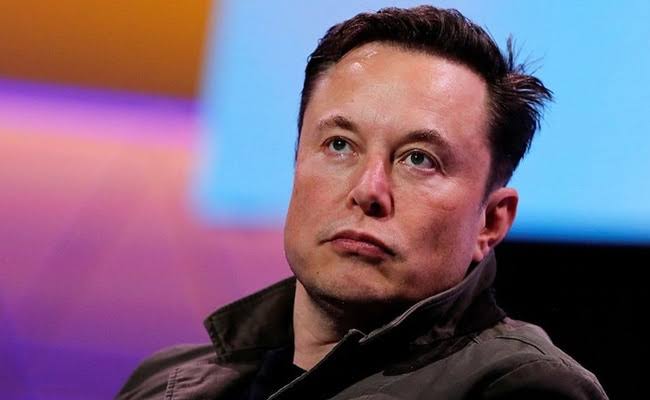
  • What Elon Musk’s $44 billion purchase of Twitter means for the platform

    What Elon Musk’s $44 billion purchase of Twitter means for the platform

    What Elon Musk’s $44 billion purchase of Twitter means for the platform

    Twitter said Monday it has agreed to sell itself to Elon Musk in a roughly $44 billion deal that has the potential to expand the billionaire’s business empire and put the world’s richest man in charge of one of the world’s most influential social networks.

    The deal, which will take the company private, caps off a whirlwind period in which the Tesla and SpaceX CEO became one of Twitter’s largest shareholders, was offered and turned down a seat on its board and bid to buy the company — all in less than a month.

    Under the terms of the deal, shareholders will receive $54.20 in cash for each share of Twitter stock they own, matching Musk’s original offer and marking a 38% premium over the stock price the day before Musk revealed his stake in the company.

    “Free speech is the bedrock of a functioning democracy, and Twitter is the digital town square where matters vital to the future of humanity are debated,” Musk said in a statement Monday. “Twitter has tremendous potential — I look forward to working with the company and the community of users to unlock it.”

    The deal, which was unanimously approved by Twitter’s board, is expected to close this year. It comes after Musk revealed last week he had lined up $46.5 billion in financing to acquire the company, an apparent turning point that forced Twitter’s board to seriously consider the deal. The board met Sunday to evaluate Musk’s offer.

    “The Twitter Board conducted a thoughtful and comprehensive process to assess Elon’s proposal with a deliberate focus on value, certainty, and financing,” Twitter independent board chair Bret Taylor said in a statement, calling the deal ” the best path forward for Twitter’s stockholders.”

    Twitter stock was up nearly 6% following the announcement of the deal, hovering around $51.84, just shy of the offer price. The deal is pending approval from shareholders and regulators.
    In an internal message to employees obtained by CNN, Twitter CEO Parag Agrawal said he would hold an all-hands meeting with Taylor on Monday afternoon to answer questions about the deal. “I know this is a significant change and you’re likely processing what this means for you and Twitter’s future,” he said.

    What Musk means for Twitter

    Musk is both a high-profile Twitter user and a controversial one. He has more than 83 million followers on the platform, which he has used over the years for everything from sharing memes and discussing his companies to insulting politicians, spreading misleading claims about Covid-19 and making offensive remarks about the transgender community.
    Musk has repeatedly stressed in recent days that his goal is to bolster free speech on the platform and work to “unlock” Twitter’s “extraordinary potential.”
    In his statement Monday, Musk said he wants to “make Twitter better than ever by enhancing the product with new features, making the algorithms open source to increase trust, defeating the spam bots, and authenticating all humans.” Separately, he said in a tweet Monday that he hopes “even my worst critics remain on Twitter, because that is what free speech means.”
    Still, some industry experts worry that Musk’s desire for free speech on Twitter could mean rolling back some of the platform’s work to curb hate speech, misinformation, harassment and other harmful content. Others questioned whether Musk might restore former President Donald Trump’s account, which was removed early last year for violating Twitter policies against inciting violence following the Capitol Riot. Such a move could have significant ramifications for the upcoming 2024 US presidential election.
    While Twitter is smaller than some social media rivals, it has an outsized influence in the online and offline worlds because it is used by many politicians, public figures and journalists, and has sometimes acted as a model for other platforms in how to handle harmful content.
    “Do not allow Twitter to become a petri dish for hate speech, or falsehoods that subvert our democracy,” Derrick Johnson, president of the NAACP, said in a statement directed at Musk Monday following the deal.

    A new and uncertain era for Twitter

    In the days since Musk’s initial bid, many following the company wondered whether Twitter would try to find another buyer, especially after the company put in place a poison pill to make it more difficult for Musk to acquire the company without its approval.
    But CFRA senior equity analyst Angelo Zino said Monday that Twitter’s board more seriously considering Musk’s offer may have come “from the Board’s realization that an alternative bid from a ‘white knight’ may be difficult to come by, especially following the decline in asset prices from social media companies in recent weeks/months.”
    It’s not clear whether Agrawal — who took over the CEO role from founder Jack Dorsey in November — will remain in the top job following the takeover. Musk previously tweeted a meme comparing Agrawal to former Soviet leader Joseph Stalin. Musk also said in his offer letter to buy Twitter that he does not “have confidence in management.”
    The deal could, however, put an end to nearly a decade of chaos at Twitter as a public company, during which it has cycled through CEOs, grappled with an activist investor and struggled to ignite growth and successfully monetize its influential user base.
    Agrawal said in Monday’s statement that “Twitter has a purpose and relevance that impacts the entire world,” He added: “Deeply proud of our teams and inspired by the work that has never been more important.”
    (CNN)
  • Naira appreciates against US dollar after CBN rejects IMF, World Bank reform advice

    The Nigerian currency appreciated against the United States currency after the Central Bank of Nigeria (CBN) boldly rejected the call by International Monetary Fund (IMF) and World Bank to allow market forces to determine the exchange rate.

    Data from FMDQ securities at the last trading day of last week showed naira closed at $418.33 to a dollar compared to the N419.50/$ it exchanged a day before.

    The improved performance on Friday last week happened on the back of improved forex supply at the official market.

    CBN on Friday pumped $169.06 million to the official market to meet Investors’ and Exporters’ forex needs.

    Godwin Emefile, CBN governor had last week insisted on a homegrown solution to managing Nigeria’s exchange rate and continue with its intervention in the forex market despite IMF, World bank saying it was putting pressure on the naira.

    “The IMF and World Bank provide advice that we work with. But even at some of our private meetings, we realise that there are challenges, leading us to adopt homegrown solutions to address them. We cannot adopt what is being proposed; we cannot adopt a free float of our currency,” Emefiele said.

    Similarly, the value of the naira also appreciated against the British Pound Sterling on Friday by N6.70 to N536.58/£1 from N543.28/£1

    Naira also gained against the Euro, by 29 kobo closing Friday at N450.28/€1 compared with the previously quoted value of N450.57/€1.

    At the Peer-to-Peer (P2P) segment, the Naira gained 0.17 per cent or N1 against the American currency last week to trade at N585/$1 in contrast to the previous day’s N586/$1.

    (Ripples)

  • Imo explosion: Buhari orders clampdown on illegal refineries

    President Muhammadu Buhari has described the explosion that rocked an illegal crude oil refinery in Abaezi forest in Ohaji-Egbema Local Government Area of Imo State as a national disaster,.

    He, therefore, directed the armed forces, security and intelligence agencies to intensify clampdown on illegal refineries following reported deaths of tens of people in the disaster.

    According to a statement by his Senior Special Assistant on Media and Publicity, Garba Shehu, Buhari said responsibility for the loss of lives and property must squarely lie with the sponsors of the illegal refinery, “who must all be caught and made to face justice.”

    Conveying his condolences and the full depth and range of the nation’s shock and trauma, to the families of the victims, the Ohaji Egbema community, and the government and people of Imo State, the president urged community leaders, the police, and the secret service not to allow occurrence of the heart-breaking incident in any part of the country again.

    (Sun)

  • Rethink Your Policy on Fuel Subsidy, World Bank Tells Nigeria

    Rethink Your Policy on Fuel Subsidy, World Bank Tells Nigeria

    •Insists the rich benefit more from fuel subsidy than the poor

    •Says barriers distorting country’s trade flows

    The President of the World Bank Group, Mr. David Malpass has once more reiterated the need for Nigeria’s federal government to reconsider its policy on fuel subsidy, saying that the huge amount being expended on the policy could be channeled to other critical sectors.

    Malpass said this yesterday, while responding to a THISDAY question during a media briefing at the ongoing World Bank/International Monetary Fund Spring Meetings in Washington DC.

    The Senate last week approved the total sum of N4 trillion for petrol subsidy in 2022. The figure represented the amount contained in two separate requests by the President to the National Assembly for approval. The President, had in a letter to the Legislature dated 10th February, 2022, sought an additional N2.557 trillion to fund subsidy payments from July to December, 2022.

    The World Bank had last November sounded the alarm bells to Nigeria, saying further delay in removing the fuel subsidy which had been described as a major drain and waste on the economy could see federal and state governments unable to pay salaries from 2022. The Lead Economist, Nigeria Country office of the World Bank, Marco Antonio Hernandez, had painted a gloomy picture of Nigeria if the country decides to continue with the controversial fuel subsidy.

    But speaking during the media briefing, Malpass pointed out that generalised subsidies have significant negatives effects on any system.

    “One is that they are expensive because they go to everyone and they are often used by people with upper incomes than by people with lower incomes so they are not targeted.

    “So, we encourage that when there is need for subsidy, either food or for fuel, that it should be carefully targeted at those most in need of it. And so, we have encouraged Nigeria to rethink its subsidy effort,” he said.

    Speaking further, the World Bank boss reiterated the need for the country to do away with multiple exchange rate system, which according to him was often, “complicated and is not as effective as it would be if there were a single exchange rate.”

    He added: “The most useful thing for developing countries is to have a single exchange rate that is market-based, that is stable over long periods of time as that attracts investment and so that would help.”

    Malpass noted that Nigeria also has trade barriers that continue to distort trade and capital flows, urging the federal government to improve on this so as to help the country and its people move forward.

    Commenting on the spate of insecurity in the country, he said: “I take note of the complicated situation that they face where there are weapons flowing into northern Africa that find their way into to none Nigerians that create violence in Nigeria.

    “This is a very challenging situation that the government faces. I think all over the world, people should have an understanding of the fragility that is facing several parts of the world, but in particular, the Sahel and the Sub-Saharan Africa area where the weapons flow from outside of Africa are putting a great burden on governments around the continent.

    “Nigeria has huge opportunity because of its natural resources and because of its people, and I think I could see its growth accelerate with improvements in policy.”

    Meanwhile, the International Monetary Fund (IMF) has stressed the need to boost agricultural productivity in Africa and get farmers to produce more, even as it noted that 20 countries in the region were either in debt distress or very close to debt distress.

    Speaking at the opening press conference of the ongoing World Bank/IMF 2022 spring meetings holding virtually, the Managing Director of the Fund, Kristalina Georgieva, said the multilateral institution was working on debt restructuring for the affected countries.

    She stated that the IMF and its partners had agreed on an action plan to address the situation.

    “In Sub Saharan Africa, 20 countries are in bed distress or very close to debt distress, with interest rates going up. This burden of debt is intolerable. So working to get that restructuring currently, this is a priority for us. And this is why I talked about the common framework,” she said.

    Whilst noting that the high and rising food prices were of particular concerns, especially in poor countries where there was a growing risk of a food crisis, she said an international action to avoid it was critical.

    “Fighting inflation through monetary policy tightening raises the costs of servicing debt. For low-income countries, its burden has reached 50 percent of GDP, placing 60 per cent of these counties at or near debt distress,” the IMF boss added.

    She noted: “To address debt, countries need domestic policies that can help bring their budgets back on track, while providing targeted assistance to the most vulnerable. They can help finance this with more equitable tax policies.”

    Furthermore, she said the ongoing Ukraine war had resulted to spike in global inflation as well as insecurity.

    (Thisday)

  • N4trn bill: How petrol subsidy grew by 349.42% in 3 years

    Petrol subsidy payments grew by 349.42 per cent from N350 billion in 2019 to N1.573 trillion in 2021, propelled by the rising price of crude oil in the international market and the falling value of the Naira.

    The cost of subsidizing the product in 2020 was N450 billion. In 2022 alone, the total cost of subsidy in January and February was N396.72 billion, the latest data from the Nigerian National Petroleum Corporation, NNPC, has shown.

    Federal legislators approved the sum of N4 trillion to be spent on petrol subsidies in 2022.

    The Federal Government had previously disclosed through the Minister of Information, Alhaji Lai Mohammed, that it spent N10.413 trillion on fuel subsidies between 2006 and 2019.

    With Nigeria importing all its petrol from refineries abroad, the low value of the Naira has had a significant impact on the pricing of the product in-country.

    None of the three government-owned refineries is currently operational, despite huge investments in their Turn Around Maintenance (TAM) by the government.

    The current administration has failed on its promise to make the refineries operational within a short period of assuming office.

    Deregulation on hold

    A plan by the government to deregulate the sector, following enactment of the Petroleum Industry Act (2021) that prescribes a free market for the downstream sector of the petroleum industry has been abandoned, with the government seeking and obtaining budgetary approval to spend N4 trillion on petrol subsidy.

    The annual expenditures on petrol subsidy under the current administration contrast very sharply when compared with fuel subsidy under the government of former President Goodluck Jonathan, which was accused of fuel subsidy fraud.

    According to data published by the defunct Petroleum Products Pricing Regulatory Agency, PPPRA, the Federal Government paid a total of N2,105.92 trillion in 2011, an increase of N1,437.84 trillion from the 2010 payment.

    It also noted that in 2012, N1.35 trillion was paid as a subsidy, the highest within the period under review.

    “A total of N 1, 316 trillion in 2013, N1,217 trillion in 2014 and N653.51 billion in 2015 was paid as subsidy claims,” it added.

    It noted that the NNPC since 2016, had been the sole importer of the product to the country.

    Determined to curb fiscal leakages associated with the fuel subsidy regime, President Jonathan had announced deregulation of the downstream sub-sector, with a view to eliminating fuel subsidy.

    However, incumbent President Mohammadu Buhari, and other opposition party leaders, under the Save Nigeria Group, organised nationwide protests to stop Jonathan from going ahead with the decision.

    Other notable Nigerians that led the mass protest included Pastor Tunde Bakare, who was Buhari’s running mate in Congress of Progressive Change (CPC) and Governor Nasir el-Rufai of Kaduna State.

    The protests forced Jonathan to rescind the policy. When Buhari took over power in 2015, his government initially refused to pay fuel importers for products imported into the country.

    It took a fuel crisis, characterised by long queues, to force the government to pay the debts, as the marketers insisted that they would not import more products unless their earlier bills were settled.

    The Buhari administration was to later come to terms with the realities of the rot in the industry.

    President Buhari made himself Minister of Petroleum and by so doing, has directly managed the petroleum industry. However, he has failed to make any policy changes.

    ‘Global price of crude determines petrol price here’

    Speaking in a telephone interview from Ibadan, Director, Centre for Petroleum, Energy Economics and Law, University of Ibadan, Professor Adeola Adenikinju said the price of petrol is determined by the international price of crude and cost of foreign exchange.

    Adenikinju noted that the government’s decision to continue subsidy payment was more political than economic, given the revenue challenges facing governments at all levels.

    He pointed out that by retaining the petrol subsidy, the government would find it difficult to meet other commitments.

    According to him, “It is a political decision, not an economic one. Economically, we know that subsidies have been very costly to the country and this is going to have serious implications on government revenue, particularly the state governments.

    “The states are going to feel it more because they depend heavily on revenue from the Federation Account and secondly, they do not have the leverage to borrow like the Federal Government.

    “If it goes ahead, the states are going to be hard-hit financially and it is going to be extremely difficult for them to meet all their commitments in terms of payment of salaries and keeping their obligations to pensioners”.

    He noted that he would not be surprised later in the year if the states and local governments are unable to meet their commitments.

    The university teacher also pointed out that the decision went beyond just revenue but would also have implications for the oil industry.

    “It is also at the heart of the deregulation of the downstream sector. It will have implications for the implementation of the Petroleum Industry Act 2021 significantly because the decision on pricing is about market forces being at play to allow investment decisions to be made.

    “This is going to hinder investment, so we can say that until the issue is resolved there is not going to be much private investment flow to the downstream sector.”

    He blamed the middle class and the elite, who he said are the main beneficiaries of the petrol subsidy regime for mounting pressure on the government to retain the policy.

    “Once you touch the middle class, the elite, they react. The argument is about the protection of the privileges of the middle class to which the labour unions belong. This is because kerosene was deregulated, nothing happened, diesel was deregulated, nothing also happened but once you touch something that affects the middle class, it becomes difficult to implement because they have access to the media”, he added.

    (Vanguard)

  • Learning Crisis in Nigeria: UNICEF predicts doom

    The United Nations Children Fund (UNICEF) has warned that Nigeria might not be able to compete in the global circle in the next few decades because of the kind of people that will take over the affairs of the country’s political leadership.

    It said the country is producing children who are not provided with the opportunity to acquire necessary education and skills that would make them relevant and compete with the rest of the world.

    The UN agency was particularly concerned that while millions of children are out of school, over 70 per cent of the ones in school are just attending and not learning anything that would add value to them and the society.

    The implications, it said, is that in two to three decades, the children who are currently in streets doing and learning nothing, and those in school, who are just attending classes and not learning anything, would not be able to add value to the society and economy of the country.

    UNICEF Education Specialist, Ahmed Sharouda, in a presentation at a two-day media dialogue on Sustainable Development Goals (SDGs) and Child Rights, organised by the Federal Ministry of Information and Culture, in collaboration with UNICEF, in Kano, suggested a re-awakening measures to salvage the posterity of Nigeria.

    She said Nigeria is faced with a severe staggering learning crisis with the learning outcomes being one of the lowest in the world.

    She expressed concern that aside from the millions of children across the country, particularly in the North, who ought to be in school but are in the streets, a larger percentage of the ones in school are not achieving basic foundational knowledge and skills that would prepare them for the world of work.

    She highlighted the fact that there’s low public spending on education, stating that 1.7 per cent of Gross Domestic Product is allocated to education, as against the 26 per cent that was said to have been recommended by the United Nations Educational, Scientific and Cultural Organisation.

    In addition to that, she highlighted the negative impact of the uneducated, inadequate and under-prepared workforce in the basic education circle, making reference to data from the Federal Government that indicated that 27 per cent of teaching staff in the basic education system in Nigeria are unqualified.

    Similarly, Ezinwa Chidiebere of the Department of Mass Communication, Enugu State University of Science and Technology (ESUT) also made a presentation that highlighted the rights of children as contained in the SDGs.

    He was, however, concerned that Nigeria was not doing enough as regards the part that deals with children’s rights, attributing it to poor commitment of the government to the enforcement of children’s rights, as well as culture and traditions of some ethnic nationalities in Nigeria.

    Ezinwa was unhappy that in Nigeria, children are seen and regarded by many people as an ‘object’ that belongs to their parents or for whom decisions are taken on their behalf, instead of seeing and regarding them as human beings and individuals who have their own rights.

    He explained that childhood is a period when children are allowed to grow, learn, play, develop and flourish with dignity, love and care.

    He made reference to several national, regional and global conventions and treaties that highlighted the rights of children, particularly education, health, parental care and love, among several others, warning that Nigeria might face serious danger in the future, if the rights of children are not protected.

    (Sun)

  • FG, NASS under fire over N200bn cut in upstream projects

    The Federal Government and the National Assembly are under attack over the decision to slash federally funded upstream projects from N352.80 billion to N152.80 billion, representing a N200 billion decline.

    The National Assembly last Thursday passed amendments to the 2022 Appropriation Act and 2022 Fiscal framework as requested by the executive.

    President Muhammadu Buhari had earlier written the Senate and House of Representatives to consider his request for a slash in upstream funding and increase in subsidy funding to N4 trillion, among other demands.

    In acceding to the request, the National Assembly also approved new oil price benchmark of 473 per barrel and a new oil production volume of 1.600 million per day.

    Buhari explained that the adjustments became imperative because of new developments in both the global and domestic economies.

    He said the developments were occasioned by spikes in the market price of crude oil as a fallout of the Russian-Ukraine war.

    “As you are aware, there have been new developments both in the global economy as well as in the domestic economy which have necessitated the revision of the 2022 Fiscal Framework on which the 2022 Budget was based,” the letter reads.

    “These developments include spikes in the market price of crude oil, aggravated by the Russian-Ukraine war, significantly lower oil production volume due principally to production shut-ins as a result of massive theft of crude oil between the production platforms and the terminals.

    Economist and Chief Executive Officer of Centre for the Promotion of Private Enterprise, Dr.Muda Yusuf, warned that, with this development, our macroeconomic outlook in the near term should be a cause for worry.

    He said the outcomes of these approvals include increased borrowing, higher debt service, surge in fiscal deficit , heightening inflationary pressure and a risk of further depreciation In the naira exchange rate.

    ‘‘Infrastructure budget implementation may be negatively impacted as recurrent expenditure increases sharply. The combination of debt service and fuel subsidy is likely to consume the entire revenue.

    The implications are that we should brace up for more challenging times. There is no quick fix. Major reforms necessary to return the economy to a recovery and growth path are unlikely to happen in the near term. This is coupled with the distractions that come with electioneering and transition periods,’’.

    For his part, former Chairman of the Society of Petroleum Engineers (SPE), Mr. Joe Nwakwue, said the cut in upstream funding spells dooms for the economy. He maintained that stakeholders have constantly lamented the state of underinvestment in the oil and gas sector which has led to a situation whereby the country consistently fails to meet its Organisation of Petroleum Exporting Countries (OPEC) oil production quota.

    Nwakwue said even though if all encumbrances confronting the oil sector are removed, the country cannot meet the OPEC quota because the level of investment cannot meet the volume of oil production required to meet the target.

    The former SPE Chairman said it was laughable that Nigeria that has consistently failed to meet its OPEC production quota was the same increasing the its target to 1.6 million barrels per day.

    In February, Nigeria failed to meet the 1.8 million barrels per day oil production quota set by OPEC.

    The country clocked 1.258m/d production, according to the Monthly Oil Market Report released by OPEC.

    Also in January,the country missed its crude oil output target, pumping 1.46 million barrels per day against a target of 1.683 million bpd approved by OPEC.

    Also speaking, the President of Petroleum Products Retail OUTLET Association of Nigeria (PETROAN), Mr. Billy Harry, said the downward review of upstream funding is a negative action to the growth of the economy of the country.

    (Sun)