Category: Business/Economy

  • 2023 Presidential Election Amidst Crippling Inflation Crisis and Devaluation of the Naira

    2023 Presidential Election Amidst Crippling Inflation Crisis and Devaluation of the Naira

    By Ikenna Igwe

    For the most part in Nigerian politics, candidates have been known to play the identity politics game, where the focus is largely on ethnic affiliation, political parties and defacement of an opponent’s name and reputation. We hardly see election candidates debate on things in the line of a sustainable economic goal.

    In July 2009, Boko Haram stared its insurgency against the Federal Republic of Nigeria and since then, the major national issue has been the case of Insecurity and rightly so, but with the dollar at 450 as at 30th May 2022, inflation eating up the value of the Naira, poverty becoming the reality of many Nigerians and essential commodities becoming even harder for the average Nigerian to get, big economic questions have been asked of the government and as the general election is approaching, the majority of the populace have tossed out party affiliation and ethnic difference. Financial experts have cited the need for diversification of the economy. As things stand currently, the GROSS DOMESTIC PRODUCT(GDP) is too low for a country of the size and population of Nigeria. Exchange rate of the dollar and other foreign currencies have made the economy more volatile and the country almost at risk of another recession.

    And If there is anything Nigerians want to understand so badly, it is why and how exactly the same amount of money tends to be able to buy less and less than it used to be able to buy just few months ago. Prices of commodities keep rising without any corresponding rise in wages or income. The process and cause as to why a currency might lose its value and purchasing power is what majority of the populace don’t understand.

    Economists and Financial analysts always focus on inflation as the major reason why a currency over time tends to lose its value and purchasing power. In this piece, we will understand the basics as regards to inflation, the causes, the control measures and its impact on the whole economy.

    UNDERSTANDING INFLATION

    Inflation is the upward movement in the average price of general goods and commodities. A rise in inflation means an increase in the overall cost of living.

    Inflation affects your ability to purchase goods and services, making them costlier over time. For example, a crate of egg sold for 900 naira in March rose in May to 1350 naira, that is essentially a 50% increase in the cost. Similar prices rose across various other commodities such as milk, bread, oil, petrol etc .This simply means that people tend to spend more to buy for less. Inflation largely occurs when an economy grows due to increased spending without any accompanying increase in the production of goods and service.

    When this happens, prices rise and the currency within the economy loses its value and when it loses worth, its exchange rate weakens when compared to other currencies. However this depends on whether other countries are inflating less than yours; this is a key point because if they are inflating faster than your country, your currency will be strengthened against theirs.

    According to STATISTA, in 2022, Nigeria’s inflation rate reached 16.1%. As at March 2022, the inflation rate in the urban area of Nigeria grew by 16.44% compared to the prior year, while the rural inflation rate experienced an increase of 15.49%.

    Experts recorded Nigeria as one of the highest inflated economies in the world in 2020 and no wonder, for a country that relies heavily on importation, the impact of the Covid-19 pandemic affected the economy harshly because exporting countries were essentially on lockdown. As the economy was in recovery against the impact of the pandemic as at the end of 2021 and the beginning of 2022, the prices of petroleum products such as diesel increased sharply. Putting into account the Russia-Ukraine war, the stability of oil prices is a long way and experts around the world are alerting the public to prepare for more heavy hit on oil price.

    IMPACT OF INFLATION ON THE ECONOMY

    Human beings tend to see everything around it in twos-either good or bad. In most cases, this is not actually the whole truth. Something can be good and only becomes bad when it is out of control. That is the case with inflation.

    Sometimes, inflation is good for the economy. Mild inflation has a healthy side effect. Once people start to expect inflation, they spend now rather than later because they know prices will be higher in the future and you know that consumer spending is what drives economic growth. In fact the federal reserve sets an inflation target, they expect a healthy core inflation rate of at least 2% every year. The Central Bank wants a little inflation which also leads consumers to believe prices will continue rising and this triggers spending.

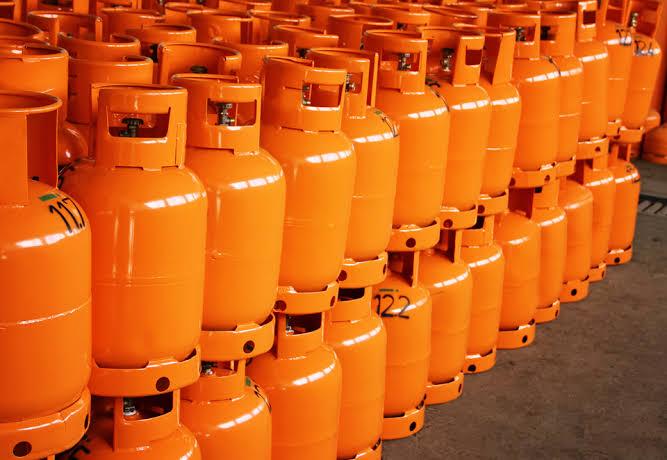
    For consumers, inflation means filling up gas cylinders, stocking up food stuffs and bucking up the cupboard with essentials.

    For businesses, it means making CAPITAL INVESTMENT that under different circumstances might be put off until later. For some it means to buy Gold and other precious stones in order to hedge them from inflation.

    Unfortunately, the urge to spend and invest in the face of inflation tends to boost inflation, in turn creating a potentially catastrophic feedback loop. As people and businesses spend more quickly in an effort to reduce the time they hold their depreciating currency, the economy finds itself awash in cash no one particularly wants. In other words, the supply of money outstrips the demand and the purchasing power of the currency falls at an even faster rate.

    The frequency at which this is happening is what results in a case of HYPERINFLATION, which was seen in Zimbabwe [2000s], where consumers were known to be hauling around wheelbarrow loads of millions and billons of “ZIM DOLLAR” notes. That is the same with Venezuela [2010s], where thieves were practically refusing to even steal their local currency, the “BOLIVARES”, and this is essentially what brought about the destabilization of Germany in the 1920s where the inflation rate rose up to 29,525% in one month.

    As the case of inflation is growing around the world and in Nigeria more so, it is paramount that the government and other regulatory bodies in the country put in place control measures on how to curb this trend.

    CONTROL MEASURES TO CURBING INFLATION

    It is the major responsibility of the government and different financial agencies to control and regulate inflation. There are two major ways governments regulate and curb inflation in its economy.

    -Contractionary Monetary Policy: This has to be the most popular method used to control inflation. The goal of this policy is to reduce the MONEY SUPPLY within an economy by decreasing the price of government ‘TREASURY BONDS’ and increasing the ‘INTEREST RATES’. Decreasing the price placed on Treasury Bonds is meant to encourage citizens to buy government bonds which helps in reducing the money in circulation. Removing as much money from the public hands is the goal of this control measure. Increasing the interest gain on bonds is meant to encourage more investors to buy.

    These are all ways employed to essentially reduce the liquid cash in the economy. Calling in debts that are owed to government are all geared towards collecting money from the public and give to government who tries to regulate the cash flow.

    Policies that mandate banks and other financial agencies to increase its interest on loans are all engineered towards ensuring that people borrow less and spend less. As the news of increasing price of commodities have been all over the news, we have seen several countries hike their interest rates in order to curb inflation.

    The Reserve Bank of India (RBI) raised their interest rate to as high as 4.4% for the first time in two years. With US inflation at a 40 year high, the US Federal Reserve raised its interest rate up by 1% and with the rate of inflation still soaring high, further hikes are expected. The Reserve Bank of Australia (RBA) announced on 4th May, 2022, that it had lifted its cash rate to 0.35%, a move designed to combat rising inflation, which is at a 21 year high.

    According to a report from the BBC, The Bank of England warned that inflation in the UK would be over 10% by the end of the year, something not seen since 1982.

    In Nigeria, the Central Bank of Nigeria, on 24th May, 2022, jacked up the bench market interest rate to 13% from 11%, the first change in almost a year and the first hike in six years.

    CBN Governor, Godwin Emefiele, at the Monetary Policy Committee’s (MPC) 142nd meeting said that the action of increasing interest rates was geared towards taming the rising inflation rate in the country.

    -Reserve Requirement: Another effective tool used is to increase the reserve requirement on the amount of money banks are legally required to keep on hand to cover withdrawals.

    The more money banks are required to hold back, the less they have to lend consumers, which will decrease spending and by a huge margin reduce the direct impact of inflation. The CBN by regulation mandates bank to deposit up to 30% of their total capital as CASH RESERVE REQUIREMENT(CRR). Funds deposited are not accessed by the banks for loans and advances. It is noteworthy that Nigeria has the highest reserve requirement in Sub Saharan Africa. South Africa, Kenya and Ghana all have CRRs of below 10% . The CBN Governor, Godwin Emefiele, admitted that the high CRR was part of efforts to curb excess liquidity in the banking system and check inflationary pressure.

    CONCLUSION

    As the general election is fast approaching, the need for Nigerians to place issues regarding the sustainability of the economy at the forefront is so important, because we can’t get it wrong with another administration in power. Let’s do away with ethnic bias and party affiliation over everything else but rather look for competency and integrity.

    The importance of exporting more and having a larger stack in another country’s economy cannot be overemphasized because that is the most effective way to strengthen the Naira against inflation or devaluation. This is a call for the country’s central bank to enact a functioning monetary policy that will curb this growing rate of inflation.
  • Bitcoin price falls below $20,000 for first time since 2020

    The cryptocurrency market has hit new lows as Bitcoin fell below $20,000 for the first time since 2020.

    On Saturday morning, the price of a Bitcoin dipped below $20,000, a threshold regarded as a crucial support level for the cryptocurrency. At the time of filing, Bitcoin is trading at $19,249 according to Coinbase.

    The second most popular cryptocurrency, Ethereum, has also seen new lows, as it had traded below $1,000. At this time, the current trading price for Ethereum price is $999.84, according to Coinbase. Ethereum is down 9.67 per cent in the last 24 hours.

    The crash at the markets follow a price increase by the Federal Reserve. On Wednesday, the reserve increased its benchmark lending rate by three-quarters of a percentage point, making it the biggest hike since 1994.

    The volatility and a lack of liquidity in the Bitcoin market has made it increasingly difficult for large-scale crypto investors to continue holding, especially the collapse of a stablecoin called TerraUSD.

    This week, Crypto platforms like Binance and Celsius announced that they were halting all withdrawals of Bitcoin and Coinbase began a hiring freeze and letting staff go.

    The entire cryptocurrency markets crashed to a new low of 2022 in June, with its market cap shrinking below $1 trillion to $977 billion. This comes months after it hit the $3 trillion mark in November  2021.

  • FirstBank secures $150 million Afreximbank facility

    FirstBank secures $150 million Afreximbank facility

    African Export Import Bank (Afreximbank) has announced the disbursement of a $150 million finance facility to First Bank of Nigeria Limited under its Pandemic Trade Impact Mitigation Facility (PATIMFA).

    FirstBank, in a statement, explained that the money will be accessible to its customers that are involved in the manufacturing and importation of products and equipment required to combat the COVID-19 pandemic, as well as initiatives to rehabilitate hospitals and strengthen diagnostic and testing capacity.

    “The loan will also be used for the financing of trade debt payments falling due to avert payment defaults in trade debt obligations. In addition, proceeds of the facility will help beneficiary businesses manage the impacts of the Ukraine crisis,” it added.

    Professor Benedict Oramah, President and Chairman of the Board of Directors of Afreximbank, commented: “This new disbursement under PATIMFA is a further proof of the relevance of the programme in helping African economies to recover from the crisis induced by the COVID-19 pandemic. Since April 2020, when PATIMFA was launched, we are more than proud to have disbursed more than $7 billion to help Afreximbank member countries manage the adverse impact of the financial, economic and health shocks caused by the COVID-19 pandemic. Through First Bank, one of our trade finance intermediaries, this $150 million facility will help build the resilience of many businesses to the adverse impacts of the pandemic, while helping them overcome the consequences of the current Ukraine crisis.”

    Also commenting, Dr. Adesola Adeduntan, FirstBank’s CEO, said: “We commend Afreximbank for this impactful financial response. It will immensely contribute to empowering many businesses adversely impacted by the economic shocks caused by Covid-19.”

    (Sun)

  • Access Bank to acquire Kenya’s Sidian Bank for N15bn

    Access Bank to acquire Kenya’s Sidian Bank for N15bn

    Access Bank Plc has entered into an agreement to acquire the entire 83.4 per cent equity stake held by Centum Investment Plc, a Kenyan-based investment company, in Sidian Bank Ltd, for the sum of about N15 billion ($37 million).

    Access Bank disclosed the acquisition in a statement sent to the Nigerian Exchange Limited, NGX on Wednesday noting that the transaction is subject to regulatory approvals in Kenya and Nigeria. Access Bank said the purchase consideration includes the price to “book multiple of 1.1 times” based on the audited March 31, 2022 shareholders’ equity of Sidian.

    Commenting on the transaction, Herbert Wigwe, the group chief executive, Access Corporation said: “This growth transaction being implemented in Kenya represents the relentless focus and execution of our strategic objectives within our banking subsidiary even as we grow the other businesses within Access Corporation’s core segments.”

    “The acquisition of Sidian is a significant step-up in scale and potential for Access Bank in Kenya which represents the largest market and trade corridor in East Africa.

    “The significant increase in scale and customer base presents us with enormous opportunities to support growth in the various ecosystems we are building in our trade and payment business.”

    On his part, Roosevelt Ogbonna, chief executive officer, Access Bank, said the transaction builds on their earlier acquisition of the former Transnational Bank Plc (now Access Bank Kenya) “and underscores our resolve to strengthen our presence in Kenya, a key African market that fits into our strategic focus for geographic earnings growth and diversification.”

    (Vanguard)

  • Nigeria’s first instant messaging app

    Telecommunications firm, Lets Talk I.T & Telecommunications Company is to launch Nigeria’s first instant messaging application, Lets Talk before the end of the third quarter of 2022.

    Its Chief Operating Officer, Ms Folashade Ayeni made this known while speaking with newsmen, yesterday.

    Ayeni said the application was designed by a team of Nigerian software engineers in line with the vision of the National Information Technology Development Agency ( NITDA) for indigenous companies to come into the social media space.

    “Lets Talk was created out of a need that Nigerians and Africans have. If you look at it, sometime last year in October, October 4 to be precise, WhatsApp, Facebook, Instagram crashed. No one was able to use those applications because of one thing or the other.

    “Many people lost money, several people were not able to reach families, friends, relatives and do business normally, because a whole lot of people have taken business and relationship to the social media.

    “It crashed for about six hours or so and the reality dawned on us that really, whether it was intentional or not on purpose that we could lose everything. So, we thought about owning our social media platform; where Nigerians can have guaranteed communications, with outmost security, which is Nigerian owned and indigenous to us and for us in Africa.”

    Ayeni said the company was aiming to collaborate with NITDA, the Nigerian Communications Commission (NCC) and other relevant agencies to ensure the success of the application and acceptability by Nigerians.

    On the unique features of the app, she said it is end-to-encrypted, allows users to listen and share music, video and audio call, 5,000 member group chat, seven person conference calls and file exchange up to 2GB.

    According to her, it also allows for device and cloud caching as well as sharing moments and trends which will give users very pleasant experiences.

    She said the application could be downloaded on Google Play and App Store for both android and Apple phones.

    Ayeni also explained that the application would be in two parts, Lets Talk Basic which would be a free social media platform while there would be a secondary phase that would be on subscription basis.

    (Sun)

  • OPEC raises Nigeria crude oil quota to 1.799million barrels per day

    OPEC raises Nigeria crude oil quota to 1.799million barrels per day

    The Organisation of Petroleum Exporting Countries (OPEC) has increased Nigeria crude oil quota from 1.772million barrels per day for June 2022 to 1.799million barrels per day in July 2022.

    According to the world’s oil supply governing body, the raise was by 27,000 barrels, translating to 3.4% increase in the month of July.

    The cartel disclosed the news in its press statement on its 29th OPEC and non-OPEC Ministerial Meeting was held via videoconference on Thursday.

    In the statement, OPEC also approved the highest production volume of 10.833million barrels per day for Saudi Arabia and Russia.

    As the United Arab Emirates is to produce 3.127million barrels per day, Iraq and Kuwait are to produce 4.580million barrels per day and 2.768millions barrels per day respectively, the organisation ratified 1.753million barrels per day for Mexico and 1.680million barrels per day for Kazakhstan.

    The increase made Nigeria to be top on the list of its African counterparts and followed by Angola that got approval for 1.502million barrels per day.

    According to OPEC, the meeting “advance the planned overall production adjustment for the month of September and redistribute equally the 0.432 mb/d production increase over the months of July and August 2022.

    “Therefore, July production will be adjusted upward by 0.648 mb/d as per the attached schedule.”

    The meeting, said the cartel, resolved to reaffirm the decision of the 10th OPEC and non-OPEC Ministerial meeting on 12 April 2020 and further approved in subsequent meetings, including the 19th OPEC and non-OPEC Ministerial Meeting on the 18 July 2021.

    It also affirmed the production regulation plan and the monthly production adjustment mechanism approved at the 19th OPEC and non-OPEC Ministerial Meeting and the decision to adjust upward the monthly overall production by 0.432 mb/d for the month of July 2022.

    It extended the compensation period until the end of December 2022 as requested by some underperforming countries and request that underperforming countries submit their plans by 17 June 2022.

    On compensation plans, OPEC said it should be submitted in agreement with the statement of the 15th OPEC and non-OPEC ministerial meeting.

    It, however, restated the critical significance of observing total conformity and to the compensation mechanism.

    The meeting resolved to hold the 30th OPEC and non-OPEC Ministerial Meeting on June 30, 2022.

    (Vanguard)

  • Headache for Nigeria as oil prices soar after EU ban cut off Russia

    It is mixed blessing for the Nigerian economy as prices of crude oil further soared on Tuesday, 24 hours after the leaders of the European Union (EU) countries reached an agreement to ban 90 per cent of Russian energy imports by the end of the year.

    The 27-nation organisation has spent weeks haggling over a complete ban on Russian oil but encountered stubborn resistance from Hungarian Prime Minister, Viktor Orban, who said an embargo would destroy his country’s economy.

    After deliberation, EU finally agreed on a compromise deal and this action sent the Brent crude higher by $1.17 or 0.96 per cent to $122.80 per barrel and raised the West Texas Intermediate (WTI) crude higher by 37 cents or 0.32 per cent to $115.40 per barrel.

    While it is expected that the rise in oil prices is a blessing, Nigeria’s unpreparedness on what is happening in the global oil space could bring more pains to the country.

    Godwin Emefiele, Governor of the Central Bank of Nigeria at the last Monetary Policy Meeting (MPC) revealed how Nigeria’s reserves was depleting due to the high cost of importing fuel.

    He said, “Gross external reserves declined moderately to US$38.36 billion as at May 19th, 2022 from US$39.28 billion at end-March 2022. This was attributed to the weak accretion to the reserves from exports and the high cost of importation of refined petroleum products.”

    When oil price crossed $120 per barrel in March, Nigeria suffered a nationwide scarcity occasioned by the importation of adulterated fuel.

    The Nigeria National Petroleum Corporation was also unable to remit any funds to the federation accounts as it spent an average of N7.92bn daily or N245.77 billion in March on subsidy payments.

    Nigerians will be hoping that this time, the federal government would be prepared to mitigate any negative development the higher price could bring to the economy.

    (Ripples)

  • After 2 days of gains, Naira depreciates, exchanges at 418.88 to a dollar

    After 2 days of gains, Naira depreciates, exchanges at 418.88 to a dollar

    After 2 days of gains, Naira depreciates, exchanges at 418.88 to a dollar

    After appreciating for two days, the Naira on Thursday fell in value against the US dollar by 0. 21 per cent at the Investors and Exporters window.

    The local currency was exchanged at 418.88 to the dollar, compared to 418 traded on Wednesday.

    During trading, increase demand for dollars drove down value of Naira to as high as N444.00 before it settled at N418.88 as participants traded $157.46 million.

    Naira also came under pressure against other foreign currencies as it lost N4.49 against the British Pound Sterling to settle at N523.56/£1 in contrast to the previous day’s value of N519.07/£1 and against the Euro, it depreciated by N2.12 to close at N445.07/€1 compared with N443.95/€1 of the midweek session.

    However, the Nigerian Naira exchange rate to dollar at the Peer-to-Peer (P2P) window of the FX market remained unchanged at N616/$1 and at the parallel market, the Naira was exchanged with the Dollar at N603/$1.

    (Ripples)

  • FG: $60bn Needed to Aid Access to Reliable Electricity, Clean Cooking Facilities in Eight Years

    FG: $60bn Needed to Aid Access to Reliable Electricity, Clean Cooking Facilities in Eight Years

    The federal government yesterday stated that Sub-Saharan Africa could require as much as $60 billion to access reliable electricity and clean cooking facilities between now and 2030.

    The Minister of State for Petroleum Resources, Timipre Sylva, who disclosed this, noted that an annual investment of around $35 billion could bring electricity access to 759 million Africans who currently lack it.

    Speaking at the annual Symposium and Exhibition of the Society of Petroleum Engineers (SPE), in Lagos, Sylva added that another $25 billion a year could help 2.6 billion people globally to access clean cooking by 2030.

    The SPE annual symposium and exhibition had as its theme: “Energy Transition in Africa: A Strategic Pathway to Net Zero.”

    “Annual investments of around $35 billion could bring electricity access for 759 million people who currently lack it, and $25 billion a year can help 2.6 billion people gain access to clean cooking between now and 2030,” the minister said.

    However, he stressed that the required investment represents only a small fraction of the multi-trillion-dollar global energy investment needed overall.

    Sylva noted that despite contributing less than six per cent of world energy consumption and two per cent of total global emissions, there was need for the continent to shift to cleaner energy use.

    With significantly untapped fossil fuel reserves, which could provide the much-needed foreign direct investment and export revenue, Sylva said Africa has the ability to play a leading role in this regard.

    However, the minister stressed that Nigeria has the mineral resources with approximately 208.62 trillion cubic feet (TCF) of proven gas valued at over $803.9 trillion and potential upside of 600TCF of gas, the most extensive in Africa, and in the top 10 globally.

    Describing the Petroleum Industry Act (PIA) as a game changer, Sylva said the legislation would help support the continent to alleviate energy poverty.

    “The PIA has generous incentives to enable development, distribution, penetration, and utilisation of gas even as it incentivises entry into the midstream, especially for pipelines with an additional five-year tax holiday for investment in gas pipelines.

    “The PIA is a supply-side enabler, capable of provoking and triggering commercial interests and investments in gas utilisation as well as treating gas as a stand-alone commodity.

    “As a nation, we are following a transition pathway that combines technology, investment, business strategies, and government policy that will enable Nigeria to transition from its current energy system to a low-carbon energy system with natural gas playing a pivotal role over the next generation, roughly between now and 2060,” he added.

    The minister insisted that there must be multiple pathways to the energy transition in order to ensure that no country is left behind in the process of achieving net-zero by 2060.

    “As a continent, we need to be intentional and recognise the need to develop hydrocarbon resources in environmentally and socially responsible ways.

    “And as alluded to by the African Union, we need to be realistic in choosing the energy transition pathways which addresses our unique requirements and circumstances,” Sylva said.

    According to Sylva, global energy demand would likely be almost 60 per cent higher in 2060 than today and by 2070 the world is likely to be using at least 50 per cent more energy than it does currently as population grows and people seek to improve their quality of life.

    “According to the International Energy Agency (IEA), renewable energy is expected to support the growth of electricity from 20 per cent to 50 per cent of total energy supply by 2050.

    “The remaining energy demand that is impossible to electrify will require cleaner solutions, which can only come from natural gas – the closest ally to renewables,” he noted.

    Quoting United Nations estimates, he noted that the current world population of 7.6 billion was expected to reach 8.6 billion in 2030, 9.7 billion in 2050 and 11.2 billion in 2100, while half of the world’s population increase is anticipated to occur in just five nations in Africa between 2017 and 2050.

    He listed the countries as Nigeria, the Democratic Republic of Congo, Ethiopia, Tanzania, and Uganda.

    Sylva said around 900 million people are presently without access to clean cooking in Africa; and in 32 countries more than 75 per cent of the population are without access to clean cooking.

    “Let me also mention that the world’s 20 least-electrified countries are in Sub-Saharan Africa, where most of the global unserved population live,” he pointed out.

    But he insisted that the foregoing does not mean it is all gloom and doom, maintaining that everyone in the world could have access to clean, affordable energy within the next nine to ten years if countries modestly increase investments.

    (This day)

  • Naira continues free fall; now N420 per dollar at I&E window

    Naira continues free fall; now N420 per dollar at I&E window

    Naira continues free fall; now N420 per dollar at I&E window

    Godwin Emefiele

    CBN Governor, Godwin Emefiele and Bureau de Change

    The naira slid further on Thursday to exchange at 420.33 to the dollar at the Investors and Exporters window.

    This represents a 0.26 depreciation from its value on Thursday where it was traded at N419.25.

    The open indicative rate closed at N417.70 to the dollar on Thursday.

    An exchange rate of N444.00 to the dollar was the highest rate recorded within the day’s trading before it settled at N420.33.

    The naira sold for as low as 410 to the dollar within the day’s trading.

    A total of 75.56 million dollars was traded in foreign exchange at the official Investors and Exporters window on Thursday.

    (NAN)

  • Global Tax Rule: Why we opted out –Osinbajo

    Global Tax Rule: Why we opted out –Osinbajo

    Federal Government, yesterday, clarified the reason it opted out of the global tax rule, also known as the Global Corporate Minimum Tax Agreement, signed by almost all the Organisation for Economic Co-operation and Development (OECD) members.

    Making the clarification at the 24th Annual Tax Conference of Chartered Institute of Taxation of Nigeria (CITN) in Abuja, the Vice President, Professor Yemi Osinbajo, said that Nigeria opted out of the agreement because of the highly contentious portions of the agreement.

    According to Osinbajo, who was represented by the Executive Chairman of Federal Inland Revenue Service (FIRS), Mohammed Mamman Nami, Nigeria was already facing tax leakage and this was impacting heavily on the revenue of the country. To this effect, if foreign enterprises stop paying taxes to Nigeria because of the conditions in the agreement that favours them, Nigeria’s tax revenue would dip.

    “The leakage is unprecedented. The OECD agreement by the position of FIRS and the Joint Tax Board (JTB) is going to further compound the issue of leakage in our tax system.

    “So, we didn’t sign (the agreement) not because we wanted to do it in our own way. We have an requirement that for you to be able to tax any digital player or any multinational enterprise, globally, that company or enterprise must have an annual turnover of $20 billion.

    Earn in US Dollars weekly by trading in US Stock options from companies like Apple, Facebook, Twitter, Amazon, Tesla, etc. Weekly earnings paid directly to your bank account. Click here to learn more .

    “That was the first concern. The second concern was the averaging mechanism. This $20 billion is going to be for one tax year. It has to be $20 billion for an average of three years. So, that enterprise must make $20 billion for three consecutive years otherwise that enterprise will never pay tax to any country that it operates in the world except the country which the enterprise comes from or the country of origin.

    “Another thing that caught our attention is that 10 per cent of the tax of the $20 billion turnover must be generated in a country like Nigeria or else whatever business it does, we cannot reduce it to any tax in Nigeria. Above all, we should not forget our tax law. The minimum turnover you require as a business in Nigeria to be able to register with FIRS and pay taxes in Nigeria is just N25 million.

    And for somebody that makes less than 10 per cent of $20 billion which I believe is about $2 billion in Nigeria, that person will not pay tax in Nigeria. I think that injustice is unimaginable. It’s wrong. We spent time to consider it and that’s why we rejected signing the agreement.”

    “If a company operating in Enugu generated only N25 million ($60,000), it is going to open an office in Nigeria, pay for utilities, employ staff, and still pay tax in Nigeria. But somebody who earns a billion dollars works away with tax. We say that that should not be done. We are not saying that it is not the correct thing.

    (Sun)

  • Prices of kerosene, cooking gas hit the roof

    Prices of kerosene, cooking gas hit the roof

    The astronomical rise in the cost of cooking gas and kerosene in the country has subjected homes, particularly poor homes, in the South-East zone, to more stress, in addition to the excruciating hardship the general economic condition in Nigeria has already placed on them. The situation has forced many families to resort to alternatives such as firewood and charcoal.

    A housewife in Awka, Anambra State, Mrs. Eucharia Ezeamaka lamented that high cost of cooking gas is causing so much tension in many families as husbands sometimes feel that their wives are deliberately wasting the product.

    Narrating her experience, Ezeamaka said: “We were buying 12.5 kg of cooking gas at N1200. After some time, it went up to N2000 and it has been increasing such that few days ago, I filled the 12.5 kg cylinder with N11,350. My husband is always unhappy whenever we tell him that the gas is finished, but there is nothing we can do about it because there is no alternative.

    “I contemplated cooking with electricity and discovered that gas is even much cheaper and so, I discarded the use of electricity.”

    A student of Nnamdi Azikiwe University, Awka, Miss Odinaka Okoli said because of high cost of cooking gas, she has shifted to the use of electricity to cook, which, according to her, has turned out to be much cheaper than cooking gas and kerosene.

    “When the cost of cooking gas became so high, I decided to buy hot plate for cooking while gas serves as a support. Since we live in a house where the landlord included electricity bill as part of the rent, I found cooking with electricity much cheaper.

    “Now the N2,000 gas I bought in January this year is yet to finish because I only use it when there is no public power supply.”

    She wondered why the cost of cooking gas is so high when the product is being flared ceaselessly in the Niger-Delta. A civil servant in Enugu State, Mrs. Gladys Igbokwe said she has resorted to using firewood for cooking. She lamented that as a salary earner of N30, 000 minimum wage, she could not afford to buy gas at N700 per kilogram.

    ”We don’t know what we should be using now because even firewood is very costly now.

    A painter of charcoal which can only help you prepare a pot of soup is now sold for N500. The problem we mothers are having after buying the food is what we will use to prepare it.” The widow and mother of three children lamented that government has made life unbearable for them. A cross section of housewives who spoke to South- East Voice in Umuahia, said they now use charcoal, firewood and electric stove for cooking whenever electricity is available.

    It was gathered that cooking gas now sells for as high as N750 to N800 per litre in Abia State.

    The situation has made it difficult for average families to continue to use cooking gas for cooking. A housewife, Mrs. Blessing Onuma, said she resorted to using charcoal for cooking as alternative because her family could no longer afford cooking gas, considering the high cost of foodstuff and other household items in the market.

    ”My family can no longer afford cooking gas. I have resorted to using charcoal which is cheaper. A pack of charcoal sells for N500, N1,000 or N1,500, depending on your choice and it lasts longer than cooking gas; a litre of cooking gas which sells for N750 can’t last for two days. We buy eight kilograms of cooking gas at between N6, 000 and N7, 000 and it can’t last for more than two weeks for an average family.”

    Another housewife, who simply gave her name as Chinenye, said she uses electric stove for cooking whenever electricity is available because her family can no longer afford cooking gas.She explained that many families have adopted the use of electric stove, firewood and charcoal to save cost due to the skyrocketing prices of food items in the market.

    ”The major problem is that prices of food items are going up daily in the market. Any item you buy at a given price won’t be the same price when next you visit. There are too many bills waiting for the family even with scarce resources. You have the children’s school fees and rent to pay, among other bills. So, families are now adjusting to alternatives to save cost and make ends meet. Using electric stove and charcoal are the alternatives to the increasing cost of cooking gas,” she explained. An auto mechanic in Owerri, Imo State, Jude Maduoma, said he had since resorted to the use of firewood for cooking following high cost of gas.

    Maduoma stated that his family of six persons was making use of 12-kilograms of gas which he said would usually last for two weeks until about two months ago when he said he could no longer bear the cost. The mechanic who resides in Ubomiri, Mbaitoli Local Government Area in the outskirts of Owerri, happens to live in his own house, which affords the family the opportunity to make use of firewood.

    According to him, resorting to the use of firewood has given him relief in terms of the money he was spending to buy gas.

    Maduoma, however, said his second son would have been consumed by fire some weeks ago when he poured petrol on firewood thinking it was kerosene. ”We now use firewood to cook. We were using 12 kilograms of gas which finishes within two weeks. I realised I was spending so much on gas, so two months ago, I decided to stop and start using firewood.

    ”Luckily for me, I live in my own house at Ubomiri; so, it is easy for us to use firewood.

    “But God saved us last two weeks; my second son would have been burnt because of this firewood issue. He mistakenly poured petrol on firewood thinking it was kerosene and the thing exploded. How he managed to escape is what has remained a miracle. The jerry can containing the fuel and a guava tree in my compound were burnt down,” he narrated.

    For Mrs. Priscilla Umeh, a Commissioner in the Abia State Local Government Service Commission, the outrageous cost of cooking gas has forced her to stop boiling water for bathing in her house.

    She said the decision was taken as a measure to minimize the impact of the rising cost of cooking gas on the economy of the family. Apart from stopping the use of hot water to bathe, the lawyer also said she had long stopped cooking some of her favourite meals such as local beans (akidi), bread fruit (ukwa) which take a long time to cook.

    She also said she had reduced the rate of cooking in the family all in a bid to cut cost. Mrs. Umeh who said she has no alternative to resort to than using gas, described the experience as very excruciating. She, therefore, urged government to quickly intervene by removing all the bottlenecks responsible for the rising cost of cooking gas and kerosene. ”It is not funny.

    It is a hellish experience. We are suffering in this country. The rising cost of cooking gas and kerosene has gone out of control, and unless there is urgent government intervention, many families may not be able to feed well in the coming months,” she said.

    Narrating her own experience, a university lecturer, Mrs. Onyi, lamented that cooking gas “is now taking a big chunk of the family’s resources,” lamenting that 15kgs of gas she previously bought at between N3,750 and N4000, now sells for N9,750. ”It is really not a good time for most families.

    “If I am cooking I will be always afraid the gas might finish midway. Cooking for my family which has always been my hobby, is no longer pleasurable.”

    Cooking gas is now taking a toll on the family’s income. The amount we spent on gas two months before now, is hardly enough for three weeks. It is not funny at all. The children are scolded for over-boiling water with gas.” Mrs. Onyi also said she had stopped preparing meals that consume so much gas to cook as part of measures to save cost. She appealed to the Federal Government to come to the rescue of families by declaring a state of emergency on cooking gas and kerosene.

    In Owerri, the Imo State capital, a housewife, who simply identified herself as Mama Daberechukwu, lamented that the cost of living was getting unbelievably unbearable for most families.Her words: “The cost of living is getting unbelievably unbearable for most families.

    The cost of virtually all goods and services in the country has become extremely high and our leaders do not appear to care. Cost of foodstuffs, cooking gas and kerosene, have hit the roof. Only God will save us.”

    Similarly, the Chairman, Citizens for Righteousness and Social Justice, Bishop Kenneth Obi, who addressed newsmen in Owerri, blamed the plight of the citizens on “the inability or unwillingness of the people to speak out.

    ”The disheartening aspect of it is not that bad leadership has negatively affected the country’s economy, but that a lot of people are not speaking out, either for fear of being killed or intimidated by those who are behind our woes in the society.

    Of particular interest here is the prevailing high cost of virtually all the petroleum products in Nigeria. It has sadly worsened the economic situation in the country.

    ”The transportation sub-sector is also badly affected by the cost of fuel. Apart from the fact that people now pay through their nose to move from one point to the other, the issue of insecurity also stares the citizens in the face,” he lamented. According to the cleric, “sadly enough, the hardest hit by this ugly development are the people considered as ordinary Nigerians, whose wages have not experienced the necessary upgrade.”

    A commercial driver, who simply identified himself as Mathias said: “Our leaders and government officials can afford to pay for the petroleum products, despite the cost and that is why they are not speaking for the masses. Government should please realise that there is an elastic limit to everything under the sun.”

    Speaking with South-East Voice, a federal civil servant, Mrs. Happiness Igboke described the development as unbearable and very frustrating. ”This is really unbearable and frustrating. The price of cooking gas has gone up. The price of kerosene is something else.

    The last time I bought kerosene, the price was N580 per litre. How can one cook in this country? Right now, we are on strike. How to feed is a challenge and the high cost of kerosene has compounded it. God will save us in this country,” she cried out. A trader in the popular Kpirikpiri Market, Abakiliki, Mrs. Nwabueze Amaka lamented the high cost of cooking gas and kerosene, saying that something has to be done to reduce the prices, so that Nigerians will not be driven into starvation.

    ”Well, the situation has made us to resort to alternatives. In fact, cooking with firewood is even better. The food tastes better. We have now created an area in my compound for cooking with firewood. We must survive no matter what. The government needs to come up with policies that will make life better for Nigerians,” she noted. An Onitsha-based legal practitioner, Prince Christopher. O. Muo said the situation has forced many homes to resort to the use of fire wood, especially if they stay in apartments conducive for that, though he noted there are some health implications, moreso when materials like polythene and plastics are used to ignite and sustain the fire while cooking.

    Commenting on the ugly development Anambra State chairman of the Nigerian Red Cross Society Prof Peter Emeka Katchy said that it is quite unfortunate that the Federal Government has the wherewithal to repair our dilapidated refineries and make them functional and save Nigerians from unnecessary hardship.Many families who could not afford to buy kerosene and cooking gas have now resorted to the use of charcoal and firewood to do their domestic cooking even as they continue to ponder on what they termed ineptitude of the present government of the federation.

    (Vanguard)