Category: Business/Economy

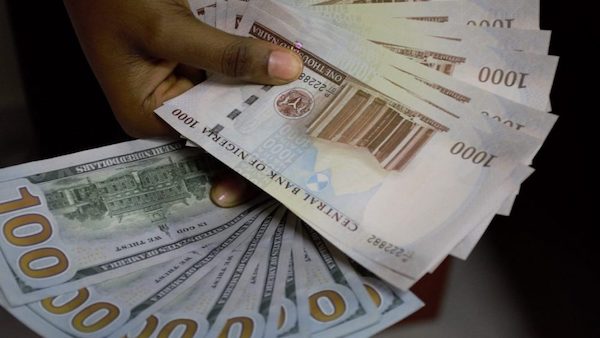
  • Banks suspend international transactions on naira debit cards

    Banks suspend international transactions on naira debit cards

    Nigerians will not be able to use their Naira debit cards for international transactions as scarcity of foreign exchange (forex)worsens in Africa’s largest economy and biggest oil exporter, Daily Trust learnt.

    Some banks have already alerted their customers on the latest development while it was gathered that others are keenly watching activities before implementing the policy owing to the scarcity of forex.

    This development is coming a few months after banks in the country reduced the monthly international spending limit on Naira cards to as low as $20. The daily international withdrawal limit has been around $100 for most banks until March when banks cut international spending.

    Banks had in 2020 stopped the use of naira cards for ATM foreign currency withdrawals while reviewing monthly international spending using naira cards from $500 to $300 and ultimately to $100.

    According to data obtained from the Central Bank of Nigeria (CBN), Nigeria’s external reserves depreciated by $1.37 billion (3.37%) in the first six months of 2022 to $39.16bn as of June 30 from $40.52bn it closed in 2021. This is despite the recent surge in global energy prices

    A further scrutiny of the data also revealed that the external reserves fell to $38.882bn on August 11 from $39.219bn at the end of July 2022.

    External reserves are assets held on reserve by CBN in foreign currencies and these reserves are used to back liabilities and influence monetary policy.

    In the latest development however, First Bank announced that international transactions will be stopped on all Naira cards from September 30.

    “Due to current market realities on foreign exchange, you will no longer be able to use the Naira Mastercard, Naira Credit Card, our Virtual card and Visa Prepaid Naira card for international transactions. This will take effect on 30 September 2022.

    “Please use your Visa Debit Multi Currency Card, Visa Prepaid (USD) Card and Visa Gold Credit Card to continue transacting abroad with limits of up to $10,000,” it said.

    Standard Chartered Bank had earlier announced the suspension of international transactions on Naira visa debit cards from August 1.

    “Kindly be informed that effective August 1, 2022, International spend on our Naira Visa Debit Card will be suspended. Also, the International spend limit on our Standard Chartered Bank Credit Card however remains at $1,000 monthly and Foreign Currency Debit Card limits remain unchanged,” it had notified its customers in July.

    A reliable source in one of the banks that have not implemented the latest policy said ‘it is a matter of time as we are also observing the situation’

    Experts expressed worries that banks are reacting to the realities of the market, noting that the CBN has explanations to make on forex scarcity despite its many policies to encourage foreign exchange earnings.

    “Are we not exporting at all? Are exporters not repatriating their funds to Nigeria despite CBN policies? Why are we having serious scarcity? The fault is not with the banks, CBN should be able to explain why we are having these challenges,” noted an analyst who does not want his name in print.

    (Daily Trust)

  • JUST IN: Nigeria’s inflation at an all time high, hits 20.52% in August

    Nigeria‘s headline inflation climbed to a new high of 20.52 per cent in August, the National Bureau of Statistics posted on Thursday.

    This is contained in the federal statistics office’ Consumer Price Index (CPI) report for the month of August 2022.

    Making this disclosure in a tweet on its official Twitter page, NBS wrote: “Headline Inflation for August 2022 was 20.52%.”

    The latest inflation data represents a 0.88 per cent increase from the 19.64 per cent recorded in July 2022.

    Peoples Gazette in August reported that Nigeria’s inflation rate reached a 17-year high of 19.64 per cent in July with food inflation rising to 22.02 per cent.

    The NBS tied the July inflation increase to hike in the cost of bread and cereals, food items, potatoes, yams, and other tubers, as well as meat, fish, oil, and fat.

    (Peoples Gazette)

  • PENGASSAN threatens to shut down operation for 30days; Nigeria risks losing N1.37tn

    PENGASSAN threatens to shut down operation for 30days; Nigeria risks losing N1.37tn

    Protesting members of the Petroleum and Natural Gas Senior Staff Association of Nigeria on Thursday threatened to shut down oil production in Nigeria for 30 days if the Federal Government fails to curb the lingering massive oil theft in the Niger Delta.

    Members of the union staged protests in various parts of Nigeria including Abuja, Warri in Delta State, Kaduna and Port Harcourt in Rivers State.

    Findings by our correspondent showed that should the workers implement their threat, Nigeria might lose about N1.37trn from the non-production and sale of crude oil, a major foreign exchange revenue earner for the country.

    Speaking at the sensitisation rally that was held at the Delta State Governor’s Office Annexe in Warri, the PENGASSAN Zonal Chairman, Prince Audu Osihiokhamele, noted with concern that “the big men doing the business of crude oil theft are in government.”

    He added, “They say they load vessels, but we don’t see any. Is it a needle?”

    He then declared that failure by the authorities to find lasting solutions to the menace would push PENGASSAN into taking more drastic actions.

    “We will shut down the country for 30 days until we all come to the round table to unravel the mysteries surrounding the thefts,” Osihiokhamele stated.

    He added, “PENGASSAN will resort to shutting down production for 30 days by withdrawing members, both onshore and offshore, wherever they are producing crude, should the government fail to hearken to this warning.”

    An analysis by The PUNCH showed that by shutting down oil production for 30 days, the country could lose about 30.03 million barrels of crude, valued at an estimated N1.37trn.

    Figures from the Nigerian Upstream Petroleum Regulatory Commission showed that in January, February, March and April 2022, the country’s crude oil production (without condensates) were 1.39 million barrels per day, 1.26mbpd, 1.24mbpd and 1.22mbpd respectively.

    In May, June, July and August 2022, the figures were 1.02mbpd, 1.16mbpd, 1.08mbpd and 0.97mbpd respectively. The average oil production for the eight months is therefore 1.168mbpd.

    This means that should the workers shut down production for 30 days, the country would not produce about 30.03 million barrels of crude.

    For the prices of oil during same eight-month period, data from countryeconomy.com, an international analytical firm, showed that the average monthly costs of Brent, the global benchmark for crude, was $86.51/barrel in January, $97.13/barrel in February and $117.25/barrel in March 2022.

    In April, May, June, July and August 2022, the average costs of a barrel of crude were $104.58, $113.34, $122.71, $111.93 and $100.45 respectively. This implies that the average cost of the commodity in the eight-month period is $106.74/barrel.

    By not producing an estimated 30.03 million barrels in 30 days, the country would lose about $3.21bn or N1.37tn (as at Thursday’s official exchange rate of N427.43/$)

    The protesters besieged Delta State Governor’s Office Annexe in Warri on Thursday as at 8 o’clock in the morning.

    The governor’s office complex was jam-packed with the placard-carrying protesters, who sang solidarity songs, condemning the massive crude theft.

    They called on the government to take urgent and proactive measures to checkmate the ugly trend, which they said had virtually crumbled the national economy.

    They lamented that Shell and Mobil had been compelled to relocate and divest following unbearable crude oil theft coupled with pipeline vandalism.

    Also speaking, Prince Emea Okorie, PENGASSAN Group Chairman, NNPC Ltd, Warri, expressed concern that Nigeria could no longer meet its OPEC target of 1.8mbpd, as the country was “presently struggling to meet 1mbpd due to thefts.”

    Addressing the gathering, Mrs. Violet Onowakpokpo, the Director, Governor’s Office Annexe, Warri, said the protest was a noble course. She commended the participants for their patriotic and peaceful disposition.

    She said the issue at stake was affecting everybody, stressing that the struggle must continue until there was enduring peace in the sector.

    The National President, PENGASSAN, Festus Osifo, who led the protest in Abuja, called on the President, Major General Muhammadu Buhari (retd.), to sack his service chiefs in 30 days if the massive theft of cruse oil continues.

    He said, “We have said over and over again that the President of Nigeria should sit up. He is the Minister of Petroleum Resources. He is also the Commander-In-Chief.

    “He must act. He must give KPIs to the security chiefs and he must give them a timeline. Give them one month, if there is no appreciable progress, then you sack them.

    “You bring in new set of people who will go into the details to investigate the entire security outfit that you have sent to the Niger Delta. Anyone who is found culpable should go to jail.”

    Osifo said the union had repeatedly engaged stakeholders over the last one year to proffer solutions to the problem of oil theft and pipeline vandalism, but that the engagements had not yielded results.

    “In the last one year, we have been engaging all stakeholders and we have been trying to proffer solutions on what we think could resolve this impasse on crude oil stealing and pipeline vandalism,” he said.

    He added, “We have engaged all the stakeholders, from the regulatory agencies to the operators, to the security chiefs, in other to find a solution to this menace, but we have realised that those engagements have not yielded the desired results.”

    Osifo said the problem had continued to degenerate, while vandals and oil thieves got emboldened, causing the shutdown of oil production in the Niger Delta.

    He added that over 95 per cent of crude oil in the pipelines were stolen, and that members’ welfare and jobs were being threatened.

    The PENGASSAN president said, “A lot of companies operating today in the Niger Delta, most especially, in the land regions, shut-in their production, they don’t produce anymore, in most of the land locations.

    “It’s affecting literally every single operator in the Niger Delta. They shut down their production because their efforts became fruitless. When you pump in 10,000 barrels into the pipeline, at best, you are going to get about 1,000 barrels from there.

    “Over 95 per cent of the crude oil, pumped into the pipeline, they are vandalised. So, because of that, the majority of them have had to stop production. And because they have shut down production, the welfare of our members is being threatened, the jobs of our members are being threatened.”

    The Deputy Inspector-General of Police, Department of Operations, Bala Senchi, received members of the association, on behalf of the Inspector-General of Police, Bala Mohammed, at the Police headquarters.

    He appreciated the protesters for keeping the protest peaceful and promised to relay their message to the IG, for onward transmission to the President, and assured them of further actions on the issue.

    Similarly, the Group General Manager, Security, Nigerian National Petroleum Company Limited, Abba-Gana Muhammed, received the protesters at the NNPC Towers, on behalf of the Group Chief Executive Officer of the oil firm Mele Kyari.

    He also appreciated members of PENGASSAN, stating that the NNPC boss was also doing his best to nip the situation in the bud.

    He added that the vandals in the South-South were equally citizens of Nigeria, and needed sensitisation to be de-radicalised and allow investors in the country and the region to thrive.

    (Punch)
  • Oil production falls below 1mb/d, Nigeria losses $2.7bn

    Oil production falls below 1mb/d, Nigeria losses $2.7bn

    Nigeria’s oil production crashed below the one million barrels per day mark in August costing the country about $2.658 billion, latest data has shown.

    Oil production figures posted by the Nigerian Upstream Petroleum Regulatory Commission, NUPRC, yesterday, showed that daily average production for August was 972,394 barrels, compared to 1.083 million barrels produced in July 2022.

    The production figure was 857,606 barrels short of Nigeria’s OPEC daily production quota of 1.83 million.

    At the average price of $100 per barrel, the country lost $85.76 million daily, amounting to $2.658 billion during the month.

    NUPRC data showed that condensate, which is not part of Nigeria’s OPEC quota was 207,052 barrels per day.

    Nigeria’s oil production has been hampered by rising oil theft, illegal refining and production shut-ins.

    Yesterday, oil and gas workers protested against the rising level of crude oil theft in the Niger Delta and demanded that the Federal Government take action against the criminals.

    (Vanguard)

    Marching under the aegis of the Petroleum and Natural Gas Senior Staff Association of Nigeria, PENGASSAN, in Abuja, the workers said companies in the industry were struggling to stay afloat due to loss of revenue.

  • Crude Oil price falls below $90 per barrel; signals danger for nation’s economy

    Crude Oil price falls below $90 per barrel; signals danger for nation’s economy

    Nigeria’s oil revenue recorded further shock with Brent Crude, the international benchmark, falling below $90 per barrel for the first in seven months, yesterday.

    Minister of Finance, Budget and Planning, Zainab Ahmed, said the government was projecting a total revenue of N8.46 trillion in 2023 out of which N1.9 trillion is expected from oil-related sources while the balance would come from non-oil sources.

    Ahmed had explained that crude oil price is pegged at $70 per barrel at the exchange rate of N435.57 per dollar, oil production is put at 1.69 million barrel per day

    As at 17.50 WAT yesterday, Brent traded at $82.55 per barrel, a development that may not augur well for Nigeria in the face of dwindling oil revenue.

    Nigeria in the past months has consistently failed to meet its Organisation of Petroleum Exporting Countries (OPEC) 1.83 million barrels per day quota due to massive oil theft, among other constraints.

    The country lost 90,000 barrels per day in August, or roughly 2.8 million barrels in the month, making last month’s production of 1.43 million bpd one of the lowest in five years.

    Minister of Finance, Budget and Planning, Zainab Ahmed stated that the government is projecting a total revenue of N8.46 trillion in 2023 out of which N1.9 trillion is expected to come from oil-related sources while the remaining balance is to come from non-oil sources.

    Ahmed explained that crude oil price is pegged at $70 per barrel at the exchange rate of N435.57 per dollar, oil production is put at 1.69 million barrel per day

    Oil demand concern and weaker than expected economic news from China have reversed the gains oil prices booked on Monday after OPEC+’s meeting, with both Brent crude and WTI opening trade on Wednesday with losses.

    Brent slipped from $92.83 per barrel at the end of Tuesday to $91.72 per barrel at the time of writing, down by more than a percentage point.

    West Texas Intermediate was down from $86.88 per barrel at close on Tuesday to $85.62 per barrel in early trade on Wednesday.

    “The OPEC+ news is now in the market and the focus has temporarily shifted to economic and inflationary concerns amongst which the two relevant factors are the extended COVID lockdowns in China and Thursday’s ECB rate decision,” PVM oil analyst Tamas Varga told Reuters.

    “Fundamentally we’re probably moving in the right direction in terms of calming the oil market, but all of that friction out there related to Russia seems like it’s only going in one direction,” FGE president Jeff Brown told Bloomberg following the OPEC+ meeting.

    “OPEC is essentially signaling that we don’t like US$90 a barrel. They’re pretty much at production limits, so let’s defend a high price,” he also said.

    (Sun)

  • FX: Naira falls heavily against US dollar, as report ranks it 11th worst in the world

    FX: Naira falls heavily against US dollar, as report ranks it 11th worst in the world

    Nigeria’s currency, Naira, continued its depreciation against the US dollar, and it is now officially at its lowest level on the official market.

    Data from FMDQ securities shows that Nigeria’s currency, Naira, fell to its lowest in 2022 on Tuesday, September 6, to close the day’s trading at N436 per dollar at the Investors and Exporters (I&E) market, the country’s official foreign exchange market window.

    This is a second straight day of record-breaking depreciation after closing at an 8-month low on Monday at N434.7 per dollar.

    Naira depreciation has been attributed to the dollar shortage as Nigeria continues to struggle to diversify and improve foreign exchange inflows.

    Tuesday rate means Naira has depreciated by 3.21 per cent when compared to N422 quoted on the first trading day this year.

    At the parallel market, popularly called the black market, Naira also depreciated heavily as currency traders sold to buyers at N710 per dollar on Tuesday.

    The local currency has depreciated by 20.42 per cent at the black market from N565/$ at the beginning of the year.

    Meanwhile, a new report has ranked Naira as one of the worst performing currencies in the world against the US dollar.

    According to the latest ranking by Hanke’s Currency Watchlist, Naira is the 11th worst-performing currency in the world.

    The rating, which was as of September 2, 2022, also put the Venezuelan Boliver in the number one spot as the worst-performing currency globally, while the Zimbabwean RTGS Dollar is number two.

    The Lebanese Pound, the Sudanese Pound and the Syrian Pound occupy the third, fourth and fifth spots, respectively.

    West African neighbour currency, Ghana Cedi, is in the 13th position, while the currency of war-torn Ukraine, Hryvnia, ranks 14th among the list of 19 currencies.

    (Ripples)

  • Nigeria’s Total Debt Profile Now N41.60trn- DMO

    Nigeria’s Total Debt Profile Now N41.60trn- DMO

    The Director-General of the Debt Management Office (DMO), Mrs. Patience Oniha yesterday confirmed that Nigeria’s total debt profile as at March, 2022 stood at N41.60 trillion.

    Oniha said this during her appearance at the ongoing engagement on the 2023 – 2025 Medium Term Expenditure Framework (MTEF) and Fiscal Policy Paper held by the House of Representatives Committee on Finance yesterday. She attributed Nigeria’s high debt profile to shortfall in revenues and the deficit in the annual budget as approved by the National Assembly. These, according to her, increased the debt stock of the country.

    She revealed that, “as at December 2020, the debt stock of Nigeria and that includes the federal, state governments and the Federal Capital Territory was N32.92 trillion. By December 2021, it was N39.556 trillion. As at March of this year, we published quarterly, it was N41.6 trillion. On the average, the federal government is owing about 85 percent of the total debt.

    “We have been running deficit budget for many years and each time you approve a budget with a deficit, by the time we raise money, because when you approve it is giving us a mandate, authority to borrow, it will reflect in the debt stock, so the debt stock will increase. Also note that states are also borrowing. So we add their own. They also have laws governing their borrowings and as debt stock increases so does debt service.

    “Until the issues of personnel, overhead and capital expenditure are properly addressed in the budget, borrowing would not stop.”Speaking further, she said, “a World Bank report showed that in terms of debt-to-GDP ratio, Nigeria is low but for debt service-to-revenue ratio, we are very high. So, if you look at tax-to-GDP ratio of these other countries, they are in multiples of Nigeria.”

    According to her, the World Bank survey report of about 197 countries revealed that Nigeria was 195, meaning that the country was only able to beat two countries and that was Yemen and Afghanistan, “and I don’t think we want to be at those places.”“When the MTEF for 2021 to 2023 was being prepared, it is to say, let’s begin to look at revenues because as debt is growing, debt service is increasing. So, the language we used is for debt to be sustainable in the medium term.

    “Sustainable means you can service your debt without difficulty, without it consuming all your revenues because you have very little for other projects. You must look at revenues very closely and I think the discussions you have had with the Customs is one part of it.

    “There are many other revenue generating agencies. So, we must increasingly begin to look out our revenue for funding our activities as opposed to deficit.“We talked about N11 trillion deficit and borrowing for 2023, how much is the revenue there? When we looked at the first tranche that was N10 trillion for full year of subsidy and N9 trillion for subsidy next year and the size of the borrowing was 62 per cent of the budget. That’s high.

    “The responsibilities, I think, are on both sides. Query the various expenditure lines and see what it is we can handle. So, if the deficit is lower, the borrowing will be lower and that’s how to grow on a slower pace,” she added.

    The Deputy Chairman of the Committee, Hon. Saidu Abdullahi who presided over the session, in his remarks said, “the country was on a good pedestal to keep borrowing. The need for borrowing will always be there. It doesn’t matter how much we make; the country must borrow.“What we should be interested in is the sustainability of what we are borrowing and from what she has said, the country is on a good pedestal in terms of managing its borrowing.”

    (Thisday)

  • Nigeria’s debt to reach N50 trillion as FG proposes N11.3 trillion budget shortfall in 2023

    Nigeria’s debt to reach N50 trillion as FG proposes N11.3 trillion budget shortfall in 2023

    The Federal Government on Monday said Nigeria would likely borrow to finance another budget deficit of N11.3 trillion in 2023, thereby taking the country’s debt stock to N50 trillion.

    Zainab Ahmed, cabinet minister in charge of finance and national planning, said the regime plans to spend N19.76 trillion next year, out of which the government could only raise N8.46 through oil sales and other revenues. She made the statement while addressing a hearing of the House of Representatives Committee on Finance on the 2023-2025 Medium Term Expenditure Framework in Abuja on Monday afternoon.

    Ms Ahmed said N1.9 trillion would come from oil-related sources while the balance would come from non-oil sources.

    She said the budget would be premised on 70 dollars per barrel of crude oil and an exchange rate of N435.57 to the dollar.

    The minister said oil production for 2023 was pegged at 1.69 million barrels per day; a real GDP growth rate of 3.7 per cent and inflation rate of 17.16 per cent for the year.

    She hinted that petrol subsidy would remain up to mid-2023 sequel to the 18-month extension announced early in 2021.

    Ms Ahmed added that N3.36 trillion would be provided to pay the subsidy in 2023.

    The minister also told the session that there would be tighter enforcement of the performance management framework for Government-owned Enterprises that would significantly increase operating surplus/dividend remittances in 2023.


    Ms Ahmed assured that there were no projections that Nigeria would default in her debt services in the nearest future.


    She also assured that while the amount currently used in debt servicing had overshot appropriation in the 2022 budget, systems had been put in place to manage the situation.

    “We planned that 60 percent of revenue would be spent on debt servicing, but in some months, the ratio went up to 90 per cent.

    “We have been able to, consistently without fail, serviced our debt and we do not have any projections even in the near future that we will fail.

    “We actually follow the Medium Term Debt Management Strategy very strictly; the debts are not taken haphazardly and they are planned.

    “They are appropriated and then we borrow against appropriation,’’ she said.

    The minister acknowledged, however, that the government was under pressure to manage debt servicing following the drop in revenue generation.

    She called on the National Assembly and on other stakeholders to join the government to increase revenue performance.

    “Yes you have been doing that and we are beginning to see improvement, but we need to keep pushing the bar,’’ she stressed.

    House Finance Committee chair James Faleke (APC-Lagos) said everyone was aware of Nigeria’s situation in terms of revenue generation.

    Mr Faleke noted that Nigeria was short of revenue, and that so many things suffered when revenue was short.

    The Debt Management Office had earlier stated that Nigeria’s debt profile as at December 2021 stood at N39.55 trillion.

    (NAN/Peoples Gazette)

  • CBN releases $265m to foreign airlines

    CBN releases $265m to foreign airlines

    Soothing news came the way of foreign airlines on Friday, as the Central Bank of Nigeria (CBN) says it has released $265 million to them to repatriate funds accrued from ticket sales.

    A breakdown of the figure indicates that the sum of $230 million was released as special FX intervention while another sum of $35 million was released through Retail SMIS auction. Confirming the release, the Director, Corporate Communications Department at the CBN, Mr. Osita Nwanisobi, said the Governor, Godwin Emefiele and his team were concerned about the development and what it portends for the sector and travellers as well as the country in the comity of nations. Nwanisobi reiterated that the bank was not against any company repatriating its funds from the country, adding that what the bank stood for was an orderly exit for those that might be interested in doing so.

    With Friday’s release, it is expected that operators and travellers will heave huge sighs of relief, as some airlines had threatened to withdraw their services in the face of unremitted funds for outstanding sale of tickets.

    Before this intervention, the angry foreign carriers, accounting for 80 per cent of commercial aviation earnings in Nigeria, had threatened to halt flights over their ‘detained’ funds estimated to have reached $464 million as of July 2022.

    Specifically, Emirates Airlines said it would stop flights to Nigeria effective September 1

    (Sun)

  • Nigeria’s GDP dropped to N45 trillion in Q2 2022- NBS

    Nigeria’s GDP dropped to N45 trillion in Q2 2022- NBS

    The National Bureau of Statistics (NBS) says Nigeria’s Gross Domestic Product (GDP) dropped to N45 trillion in the second quarter of 2022 as against the N45.32 trillion recorded in the first quarter.

    On a year-on-year basis, however, the nominal GDP rose by 3.54 per cent.

    This was contained in a statement issued by Statistician-General Semiu Adeniran on the Nigerian Gross Domestic Product Report Q2, 2022 in Abuja on Friday.

    Mr Adeniran said the Q2 2022 GDP performance is higher when compared to the second quarter of 2021 which recorded N39.12 trillion, indicating a year-on-year nominal growth rate of 15.03 per cent.

    He noted the nominal GDP in the preceding quarter of Q1 2022 stood at N45.32 trillion.

    Mr Adeniran said that in terms of real GDP, the second quarter of 2022 was recorded at N17.29 trillion.

    “This is higher by N591.22 billion than the N16.69 trillion recorded in the second quarter of 2021.

    “It is lower by N63.50 billion when compared to the first quarter of 2022 when the aggregate real GDP was N17.35 trillion.”

    Giving a breakdown of the report by sector, Mr Adeniran said the crude oil production in the second quarter of 2022 recorded an average daily oil production of 1.43 million barrels per day (mbpd).

    He said this was lower than the daily average production of 1.61mbpd recorded in the same quarter of 2021 by 0.18mbpd.

    “This is also lower than the first quarter of 2022 production volume of 1.49mbpd by 0.06mbpd.

    “Resultantly, the oil GDP grew by -11.77 per cent in Q2 2022 and accounted for 6.33 per cent of total output during the reference quarter.’’

    The statistician-general said that the poor performance of the sector was occasioned by operational challenges such as vandalism of pipelines and oil theft.

    He said the non-oil sector grew by 4.77 per cent in real terms during the reference quarter (Q2 2022).

    Mr Adeniran said the sector in the second quarter of 2022 was mainly driven by activities in the Information and Communication (telecommunication) sector, Trade, Financial and Insurance sectors.

    “Others are the Transportation (road transport), Agriculture (crop production) and Manufacturing (food, beverage and tobacco) sector, all accounting for positive GDP growth.’’

    Mr Adeniran said in real terms, the non-oil sector contributed 93.67 per cent to the nation’s GDP in the second quarter of 2022.

    He said this was higher than the share recorded in the second quarter of 2021 which was 928 per cent and higher than the first quarter of 2022 at 93.37 per cent.

    On the broad sectoral performance, Mr Adeniran said that agriculture grew by 1.20 per cent during the second quarter of 2022 in real terms.

    He said this was lower than the second quarter of 2021 which recorded 1.30 per cent.

    “The industry grew by 2.30 per cent, which is a decline over the figure recorded in the second quarter of 2021 when it recorded a growth of -1.23 per cent.’’

    The statistician-general said the services sector grew by 6.70 per cent, from 9.27 per cent reported in the second quarter of 2021.

    Agriculture, industry, and services contributed 23.24 per cent, 19.40 per cent, and 57.35 per cent, respectively to GDP in the reference period, the statistician said.

    According to him, this shows a higher contribution of services in the second quarter of 2022 compared to the second quarter of 2021.

    (NAN)

  • Within 6months, FG borrows N2.45tn from CBN; total borrowings equal 19.91tn

    Within 6months, FG borrows N2.45tn from CBN; total borrowings equal 19.91tn

    The Federal Government’s total borrowing from the Central Bank of Nigeria through Ways and Means Advances rose from N17.46tn in December 2021 to N19.91tn in June 2022.

    According to data from the CBN, this shows that the Federal Government borrowed N2.45tn from the apex bank within six months.

    The N19.91tn owed the apex bank by the Federal Government is not part of the country’s total public debt stock, which stood at N41.60tn as of March 2022, according to the Debt Management Office.

    The public debt stock only includes the debts of the Federal Government of Nigeria, the 36 state governments, and the Federal Capital Territory.

    Ways and Means Advances is a loan facility through which the CBN finances the shortfalls in the government’s budget.

    According to Section 38 of the CBN Act, 2007, the apex bank may grant temporary advances to the Federal Government with regard to temporary deficiency of budget revenue at such rate of interest as the bank may determine.

    The Act read in part, “The total amount of such advances outstanding shall not at any time exceed five per cent of the previous year’s actual revenue of the Federal Government.

    “All advances shall be repaid as soon as possible and shall, in any event, be repayable by the end of the Federal Government financial year in which they are granted and if such advances remain unpaid at the end of the year, the power of the bank to grant such further advances in any subsequent year shall not be exercisable, unless the outstanding advances have been repaid.”

    However, the CBN has said on its website that the Federal Government’s borrowing from it through the Ways and Means Advances could have adverse effects on the bank’s monetary policy to the detriment of domestic prices and exchange rates.

    “The direct consequence of central banks’ financing of deficits are distortions or surges in monetary base leading to adverse effect on domestic prices and exchange rates i.e macroeconomic instability because of excess liquidity that has been injected into the economy,” it said.

    The World Bank had, in November last year, warned the Nigerian government against financing deficits by borrowing from the CBN through the Ways and Means Advances, saying this put fiscal pressures on the country’s expenditures.

    Despite warnings from experts and organisations, the Federal Government has kept borrowing from the CBN to fund budget deficits.

    It had been reported earlier that the Federal Government paid an interest of N2.03tn from January 2020 to November 2021 on the loans it got from the CBN through the Ways and Means Advances.

    It was also reported that Federal Government paid an interest of N405.93bn from January 2022 to April 2022 on the loans it got from the CBN.

    The Managing Director/Chief Executive Officer, Cowry Asset Management Limited, Mr Johnson Chukwu, said the central bank lending put pressure on the exchange rate and the inflation rate, with “liquidity that has no productivity attached to it coming into the system.”

    A development economist, Aliyu Ilias, said the refusal of the government to remove petrol subsidy had significantly increased expenditure, forcing the government to resort to borrowing to close its widening fiscal deficit.

    He advised the government to seek better ways of generating revenue, such as widening its tax net and privatising its assets.

    (Punch)

  • Nigeria displaces Vietnam on World Bank’s list of chronic debtors

    Nigeria displaces Vietnam on World Bank’s list of chronic debtors

    Nigeria displaces Vietnam on World Bank’s list of chronic debtors

    Nigeria has moved up on the World Bank’s top 10 International Development Association (IDA) borrowers’ list.

    In its newly released audited account, for the Fiscal Year 2022, known as the IDA financial statement, the World Bank showed that Nigeria is fourth on the list with $13 billion debt.

    As at June 30, 2021 Nigeria was rated fifth on the list with $11.7bn IDA debt stock

    This shows that Nigeria accumulated about $1.3bn IDA debt within a fiscal year, with the country taking over the fourth top debtor position from Vietnam.

    This debt is different from the outstanding loan of $486m from World Bank’s International Bank for Reconstruction and Development.

    The top five countries on the list slightly reduced their IDA debt stock except Nigeria.

    India, which is still the first on the list reduced its IDA debt stock from $22bn in the previous fiscal year to $19.7bn, followed by Bangladesh from $18.1bn to $18bn.

    It is followed by Pakistan which cut its debt from $16.4bn to $15.8bn, and lastly, Vietnam, which went down the list to fifth position, from $14.1bn to $12.9bn.

    Nigeria has the highest IDA debt in Africa, as the top three IDA borrowers (India, Bangladesh and Pakistan) are from Asia. The World Bank disclosed recently that Nigeria’s debt, which may be considered sustainable for now, is vulnerable and costly.

    The bank said, “Nigeria’s debt remains sustainable, albeit vulnerable and costly, especially due to large and growing financing from the Central Bank of Nigeria.”

    However, the Washington-based global financial institution added that the country’s debt was also at risk of becoming unsustainable in the event of macro-fiscal shocks.

    The bank further expressed concerns over the nation’s cost of debt servicing, which according to it, disrupted public investments and critical service delivery spending.

    (Ripples)