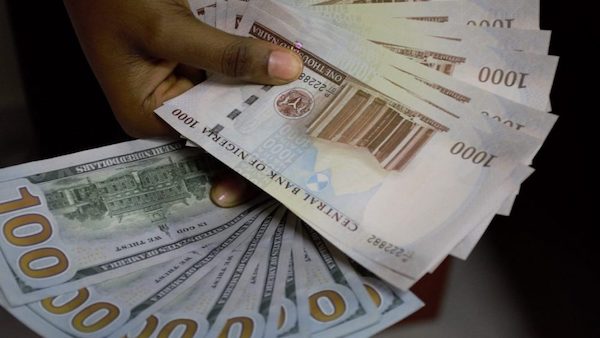
Category: Business/Economy

  • Implementation of cashless policy not rigid, subject to periodic review – Emefiele

    Implementation of cashless policy not rigid, subject to periodic review – Emefiele

    He said one trillion naira old notes now in CBN and other banks’ vaults.

    Governor of Nigeria’s central Bank, Godwin Emefiele, has disclosed that government will not be rigid in the implementation of the cashless policy in the country.

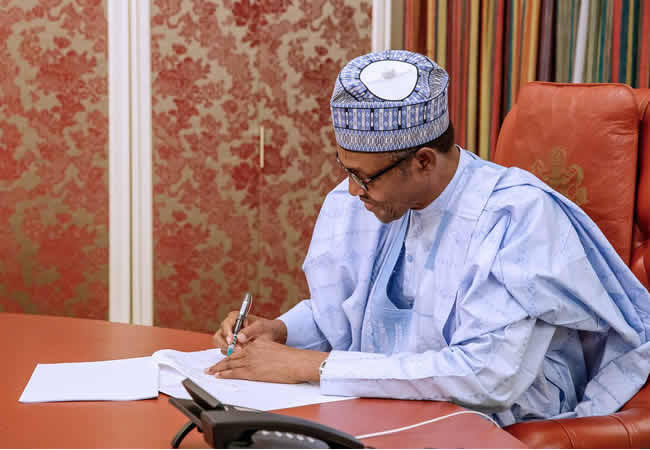
    Emefiele, who spoke with newsmen Thursday in Daura, Katsina state, after briefing President Muhammadu Buhari, said the policy would be reviewed from time to time to accommodate the concerns raised by the people.

    He, however, revealed that the policy which is about ten years old will not be reversed.

    His words: “We will be reviewing from time to time how this is working because I cannot say that we are going to be rigid. But it is not to say that we will reverse, it is not to say that we will change the timing, but whether it is about tricking some amount to be a little bit higher or a little bit lower, and all the rest of them. We will do so because we are humans, we want to make sure that we are make life good for our people. We do not want to make life difficult for them. So there is no need for anybody to worry, the central bank is monitoring what is happening and I can assure everyone that we are up and alive to our responsibilities and we will do what is right for Nigeria and Nigerians.”

    Commenting on the concerns raised by the Senate on the cash withdrawal limits, the apex bank boss said:”Well, the senate of the Federal Republic is National Assembly, they are legislative arm of the government and from time to time we brief them about what is happening and about our policies and I’m aware that they have asked for some briefings and we will brief them”

    Commenting on the policy, Emefiele said it had been in place since 2012 but was stepped down several times to deepen the nation’s financial infrastructure.

    According to him, the nation’s payment infrastructure had already been deepened with 1.4 million online banking platforms scattered across the country.

    ” I think it’s important for me to say that the cashless policy started in 2012. But almost three to four occasions we had to step down the policy because we felt that there is a need for us to prepare ourselves and deepened our payment system infrastructure in Nigeria.

    “Between 2012 and now 2022, almost about 10 years, we believe that a lot of electronic channels have been put in place that will aid people in conducting banking and financial service transactions in Nigeria.

    “We heard about people talk about some of the people in the rural areas and the truth is that even online banking, as I was coming out to Daura, I saw a kiosk that has super agent today. It’s because of the way we felt that there was a need for us to deepen the payment system infrastructure. We have 1.4 million super agents that are all over different parts of the country, all local governments, and all villages in this country.

    “And I have told my colleagues, some of their names are already on the CBN website and we will publish all the names of all the super agents. And having super agent which is different from the banks which is different from microfinance banks, which is different from other financial institutions. Having 1.4 million of them is as good as having 1.4 million banking points where people can conduct services.

    ” We think, Nigeria as a big country, the biggest economy in Africa that we need to leapfrog into the cashless economy. We cannot continue to allow a situation where over 85 per cent of the cash that is in circulation is outside the bank. More and more countries that are embracing digitization have gone into cashless.

    “I said it at different fora, that this is not targeted at anybody, it’s just meant for the good and development of the Nigerian economy and we can only continue to appeal to Nigerians to please see this policy the way we have presented it.

    He said Nigeria, as the biggest economy in Africa, needed to leapfrog into the cashless economy adding that “We cannot continue to allow a situation where over 85 per cent of the cash that is in circulation is outside the bank. More and more countries that are embracing digitization have gone into cashless. And I said it at different fora, that this is not targeted at anybody, it’s just meant for the good and development of the Nigerian economy and we can only continue to appeal to Nigerians to please see this policy the way we have presented it.”

    Emefiele, who disclosed that the banks have gotten delivery of the new notes and would beging to dispense same to the customers soon, urged the people not to worry assuring that the currencies would go round.

    The CBN governor disclosed that over one trillion Naira had already been raked into the banking system with the announcement of the cashless policy and redesign of the currency in November 26, adding that the President encouraged him to go ahead without habouring any fear.

    “In the Central Bank, we have taken more than have a trillion and in the banks we also have close to have a trillion. But what we have done in the central bank is to move more people from different departments into currency processing so that they can process this cash as quickly as possible and from there, banks can now move what they have with them”.

    (Arise News)

  • Reps ask CBN to suspend new cash withdrawal limit

    Reps ask CBN to suspend new cash withdrawal limit

    The House of representatives has asked the Central Bank of Nigeria (CBN) to suspend the limits on weekly cash withdrawals by individuals and corporate entities.

    The lawmakers also summoned Godwin Emefiele, governor of te apex bank, to appear before it next Thursday over the new policy scheduled to take effect on January 9, 2023.

    The resolution was passed at plenary, yesterday, following adoption of a motion of urgent public importance sponsored by Aliyu Magaji.

    In a memo issued on Tuesday by the Director of Banking Supervision, Haruna Mustafa, CBN directed all banks and other financial institutions to ensure that over-the-counter cash withdrawals by individuals and corporate entities do not exceed N100,000 and N500, 000, respectively, per week. It also directed that only N200 and lower denominations should be loaded into banks’ ATMs.

    The Senate had earlier faulted apex bank on the implications and timing of the policy, arguing that it might worsen the tight economic environment while stakeholders worried about the possibility of implementing hitch-free cash withdrawal limits in communities with ‘blind spots or poor network connectivity.’

    At plenary, yesterday, Aliyu, in his motion, said the policy would impact negatively on the country’s economy. He argued that this may further weaken the naira, as Nigerians may resort to the dollar and other currencies for their transactions to the detriment of the country’s economy.

    While acknowledging that the CBN has the right to issue monetary policies to be able to guide and direct the economy to the right part of recovery and growth, he warned that the new policy would cripple small businesses.

    “Majority of the small business owners in Nigeria are the major drivers of the Nigeria’s economy, and who are majorly residents of rural area and carried on their business, trade and activities in the said rural business areas. These small business owners transacts their businesses, trade and transactions in physical cash and are in most cases not inclined to the use of electronic banking system as most of them are either illiterate, half educated or not learned at all.”

    Chairman, House Committee on Higher Education, Aminu Suleiman, while urging the parliament to stop the new withdrawal, said: “More than 70 per cent of communites in this country do not have banking system, only few like Lagos, Rivers, Kano and probably Delta states might boast of about 70 per cent banking coverage. Yet, the CBN under the almighty Emiefele woke up and introduced this very heartless decision; this will completely eradicate all the successes we have gathered as a country in order to arrest restiveness and banditry.”

    Similarly, Chairman, House Committee on Aviation, Nnolim Nnaji, said the decision was against commerce.

    Regardless, the Minority Leader, Ndudi Elumelu, said the policy is a step in the right direction, as it will help to curb banditry and other crimes

    Meanwhile, the Arewa Youth Consultative Movement and the Middle Belt Youth Forum have applauded President Muhammadu Buhari and Emefiele.

    The youth groups said the new cash withdrawal limit is a death knell to those engaged in vote buying, money laundering and financial crimes, urging Nigerians to support the policy.

    Chief Convener of the groups, Godwin Meliga, who spoke at a press briefing, in Abuja, said the policy was in the best interest of the country and was not intended to impoverish any part of the country.

    Consequently, Meliga charged the National Assembly to resist any plot by anyone to use the legislature to truncate the new CBN policy on cash withdrawal limit.

    However, the Abuja Chamber of Commerce and Industry (ACCI) has reacted cautiously to the recent new policy, particularly on the ease and cost of doing business.

    In a statement by the president, Dr Al-Mutjaba Abubakar, the chamber raised posers on the impact of the new policy on cost of doing business and ease of doing business in Nigeria.

    “We have perused the policy guidelines and we first commend the CBN for constantly innovating to address the fiscal and monetary challenges facing the country.

    “We note the intention of the apex bank, which is the urgent need to address growing inflationary pressure and stabilise the value of Naira.

    “As commendable as this policy is, we are worried about the timing of the announcement that coincides with the ongoing plan to phase out old naira notes,” he said.

    Abubakar said ACCI’s concerns stemmed from the disruption the new policy would have on many Small and Medium Enterprises (SMEs) in several big local markets.

    He said the limitation on withdrawal will constrain business transactions, especially as most businessmen rely on such withdrawal for quick business engagement from one market to the other.

    (Sun)

  • JUST IN: CBN limits cash withdrawals to N100K, ATMs to issue N200 as highest denomination

    JUST IN: CBN limits cash withdrawals to N100K, ATMs to issue N200 as highest denomination

    The Central Bank of Nigeria (CBN) has ordered Deposit Money Banks (DMOs) and other financial institutions to ensure that weekly over-the-counter (OTC) cash withdrawals by individuals and corporate entities do not exceed N100,000 and N500,000, respectively.

    The apex bank made this known on Tuesday in a circular signed by CBN Director of Banking Supervision, Haruna Mustafa.

    The memo read, “Further to the launch of the redesigned naira notes by the President, Major General Muhammadu Buhari (retd.), on Wednesday, November 23, 2022, and in line with the cashless policy of the CBN, all deposit money banks and other financial institutions are hereby directed to note and comply with the following:

    “1. The maximum cash withdrawal over the counter by individuals and corporate organisations per week shall henceforth be N100,000 and N500,000 respectively. Withdrawals above these limits shall attract processing fees of 5% and 10%, respectively.

    “2. Third-party cheques above N50,000 shall not be eligible for payment over the counter, while extant limits of N10,000,000 on clearing cheques still subsist.

    “3. The maximum cash withdrawal per week via Automated Teller Machine shall be N100,000 subject to a maximum of N20,000 cash withdrawal per day.

    “4. Only denominations of N200 and below shall be loaded into the ATMs.

    “5. The maximum cash withdrawal via the point of sale terminal shall be N20,000 daily.

    “6. In compelling circumstances, not exceeding once a month, where cash withdrawals above the prescribed limits are required for legitimate purposes, such cash withdrawals shall not exceed N5,000,000.00 and N10,000,000.00 for individuals and corporate organisations, respectively, and shall be subject to the referenced processing fees in (1) above, in addition to enhanced due diligence and further information requirements.

    “Further to (6) above, you are required to obtain the following information at the minimum and upload same on the CBN portal created for the purpose:

    “a. Valid means of identification of the payee (National Identity Card, International Passport, Drivers License.). b. Bank Verification Number of the payee. c. Notarised customer declaration of the purpose of the cash withdrawal. d. Senior management approval for the withdrawal by the Managing Director of the drawee, where applicable. e. Approval in writing by the MD/CEO of the bank authorising the withdrawal.

    “Please further note the following: i. Monthly returns on cash withdrawal transactions above the specified limits should be rendered to the Banking Supervision Department. ii. Compliance with extant AMUCFT regulations relating to the KYC, ongoing customer due diligence and suspicious transaction reporting etc., is required in all circumstances. iii. Customers should be encouraged to use alternative channels (internet banking, mobile banking apps, USSD, cards/POS. eNaira, etc.) to conduct their banking transactions.”

    (Channels TV/Vanguard)

  • Naira depreciation adds N9tn to foreign debt burden, local currency weakens by 53%, external debt rises by 288%

    Naira depreciation adds N9tn to foreign debt burden, local currency weakens by 53%, external debt rises by 288%

    The value of naira to dollar fell from N196.92 in June 2015 to N414.72 in June 2022, worsening Nigeria’s foreign debt burden.

    Within the seven years under review, the naira depreciated by 52.52 per cent against the US dollar.

    So This Happened (193) reviews Adeleke’s inauguration as Osun governor, 14-day paternity leave|PunchHow We Juggled Schooling With Our Royal Duties -Ondo Female RegentsWe Also Deserve To Be Allocated New Govt Houses -Lagos Slum Dwellers| I Returned From Work To Find My Son’s Lifeless Body- Father Of Murdered Lagos Schoolboy

    The Monthly Average Exchange Rates of the Naira (Naira Per Unit of Foreign Currency) for 2015 document obtained from the website of the Central Bank of Nigeria shows that the one dollar was N196.92 for Inter-bank Foreign Exchange Market.

    The exchange rate for one dollar as of June 30, 2022, was N414.72, according to the figure provided by the CBN.

    The reporter recently reported that Nigeria’s total external debt rose from $10.32bn as of June 30, 2015, to $40.06bn as of June 30, 2022.

    This showed that there was an increase of 288.18 per cent in seven years, according to the external debt stock reports by the Debt Management Office.

    A breakdown shows that in 2015, states had $3.27bn external debt while the Federal Government had $7.05bn.

    By 2022, states’ external debt had risen to $4.56bn, while the Federal Government’s external debt was $35.5bn.

    The debts include: loans from multilateral sources such as the World Bank, the African Development bank and the International Monetary Fund, including those from bilateral sources such as China, France, Japan, Germany and India.

    They also include debts commercial sources, which include Eurobonds and Diaspora bonds.

    If the CBN average exchange rate for June 2015 was used to weigh the country’s current $40.06bn foreign debt, Nigeria’s external debt in naira terms would have been N7.89tn.

    However, with the exchange rate of N414.72 as of June 30 this year, the total external debt in naira terms was N16.61tn, showing a difference of N8.72tn.

    By implication, it will cost Nigeria N8.72tn in naira terms if the country decides to pay back the $40.06bn external debt in 2022. If this same debt was incurred in 2015, Nigeria would have spent N8.72tn less, given the then exchange rate of N196.92/$.

    Reacting, the Managing Director/Chief Executive Officer of Cowry Asset Management Limited, Mr Johnson Chukwu, said that high external debt would impose a huge debt service on the economy.

    He said, “This will impose a huge debt service on the economy, particularly at a period when we have low revenue from oil sales. If the revenue from oil sales does not improve, then the government will be struggling to meet that debt service obligation to foreign lenders.”

    However, he noted that Nigeria could service its foreign debt at the current level, but a constant increase in debt without a corresponding increase in foreign currency earnings could put the country in a difficult position.

    Policy failure

    In a bid to manage the value of the naira, the CBN introduced a number of policies such as stopping 41 items from accessing forex at the official market, offering N5 for every $1 of funds remitted to Nigeria through Internal Money Transfer Organisations, banning the supply of forex to Bureau de Change, among others.

    However, these policies have not been able to guarantee naira stability.

    The World Bank has said it disagrees with the CBN on how it tries to achieve price stabilisation of the naira, adding that the local currency should be allowed to respond to real pressures, and not be bottled up by the CBN.

    It added that the country’s exchange rate strategy discouraged investors and increased inflation risks.

    A Global Finance Report has also said that the CBN has failed to curb rising inflation and stop the naira from sliding against the US dollar.

    The International Monetary Fund recently said that the long-term rate of the depreciation of the naira equated to a loss of 10.6 per cent of its value annually since 1973.

    According to the IMF, this rate was 1.5 times higher than the long-term rate of the currencies of other emerging markets and developing economies at 7.2 per cent, and sub-Saharan Africa at seven per cent over the same time period.

    The IMF said, “Its exchange rate underwent more persistent depreciation. Nigeria’s long-term rate of currency depreciation (on average 10.6 per cent annually since 1973) was 1.5 times higher than both EMDE (7.2 per cent) and SSA (seven per cent). Given limited availability of long-term data, it is difficult to estimate the exact reasons.”

    The Bank of America recently said Nigeria’s local currency unit was set to weaken further next year as its current exchange rate to the dollar was well above fair value.

    According to a report by Bloomberg, “Three indicators, the widely-used black-market rate, the central bank’s real effective exchange rate, and our own currency fair value analysis show the naira is 20 per cent overvalued.

    “We see scope for it to weaken by an equivalent amount over the next six-nine months, taking it to as high as 520 per USD.”

    During a workshop on tax expenditure organised by the ECOWAS Commission in Abuja, financial experts advised that Nigeria and other West African countries should move away from reliance on foreign assistance to finance developmental projects in the region.

    According to them, over-dependence on financial aid and external loans might affect long-term prosperity for the entire region.

    The Special Advisor to the Director (Custom Union and Taxation in ECOWAS), Gbenga Falana, while emphasising that the debt profile of most of the countries in the sub-region was mounting, stressed the need for West African countries to look inwardly and finance local projects through effective domestic resource mobilisation.

    Supply, demand factors

    Most experts who spoke with The reporter described the current situation as naira devaluation, rather than depreciation.

    While depreciation is driven by demand and supply, devaluation is often a policy measure employed by the central bank to achieve certain economic outcomes.

    A member of the Monetary Policy Committee, who spoke in confidence with our correspondent, said certain demand and supply factors were triggering the devaluation.

    The source said, “The issue of devaluation is a function of demand and supply factors. If the value of a currency is depreciating, it means the demand is more than the supply.”

    On the issue of supply, he said that the country was not exporting enough and foreign investments into the country were dropping.

    “If we are having issues with supply, it is either the export is not growing, or foreigners are not investing in the country.

    “Our export is mainly oil, but there are issues like sabotage in Niger Delta areas. Our volume has not been increasing as it should, and then subsidy as part of what we earn is also spent on subsidising refined product.

    “Also, our non-oil export is not growing, which means that we have not been diversifying the economy sufficiently to move away from oil to non-oil,” the source said.

    The source also said that the pandemic, insecurity and certain policies contributed to devaluation.

    He said, “Also, the pandemic has affected remittances, and there has been decreasing capital flow, especially due to insecurity. Foreigners are also not happy with the policies that we practice. There is risk in the system discouraging investors. All of these contribute to the failure of supply.”

    On the issue of demand, the source said there had been the issue of people buying dollars to use as bribes and to keep. This, among other things, had led to more demand than supply, he noted.

    “On the demand side, people demand for foreign currencies to import raw materials, final products or capital goods. In Nigeria, we also see that the dollar has become the currency that people use to bribe. There are also those who buy dollars to keep them. This makes the growth in demand higher than that of supply, affecting exchange rate over the year,” the MPC member said.

    The source added that the government needed to restructure the economy, reduce dependence on oil, address the issue of oil subsidy, while controlling speculators buying dollars to keep.

    Low export

    A Professor of Economics at the Olabisi Onabanjo University, Ago-Iwoye, Ogun State, Prof Sheriffdeen Tella, said there were certain political and economic issues triggering naira devaluation.

    On the economic side, he said the increase in import over export and illicit capital flows had been major reasons for naira depreciation.

    He said, “The devaluation is caused by both political and economic issues. The economic issue is that we continue to import goods, and we are not exporting much beyond oil. Also, the non-oil sector is not doing very well, and we are still importing more.

    “There is also the issue of illicit capital flow. That is, people taking foreign currency without caution. The coronavirus has also affected output.”

    He also said that the CBN had been intentionally devaluing the naira in order to increase the funds given to state governments.

    “On political grounds, the CBN, probably with collusion from the Ministry of Finance, has been devaluing the value of the naira officially to increase the amount of naira given to the state government.

    “The official devaluation of naira has taken place twice, and that is a political thing. They are doing it to satisfy fiscal expenditures,” he added.

    He urged the government to address these issues to achieve naira appreciation.

    Productive economy

    A professor of Economics and Public Policy at the University of Uyo and Chairman of the Foundation for Economic Research and Training, Prof. Akpan Ekpo, condemned the intentional devaluation of the naira by the CBN.

    He said, “When you devalue, you are hoping that the goods you export will be cheaper. You can export more and earn more revenue. However, our major export is crude petroleum, and we don’t control the price or output. So, we don’t get anything from the government’s outright devaluation.”

    Ekpo urged the government to boost production and ensure the country had a strong, productive economy.

    “The only way we can stop the devaluation of currency is production. We need to produce more goods and services, and export them to earn foreign exchange. That is our basic problem in Nigeria; we consume what we don’t consume.

    “The government needs to build an economy that is strong and doesn’t rely on one commodity,” he told our correspondent.

    (Punch)
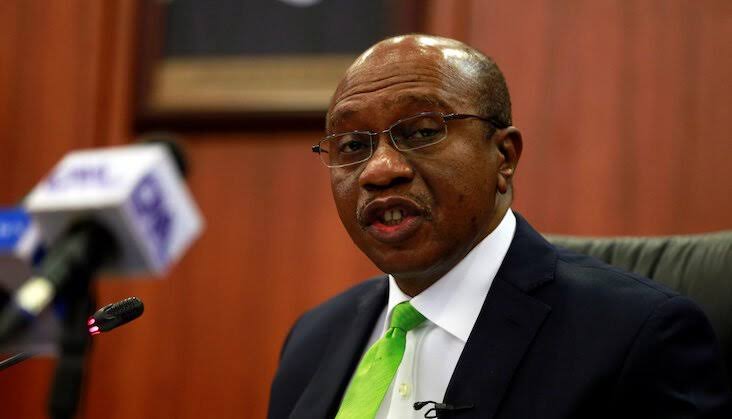
  • Enugu’s $30 billion economy: Mbah woos German, Danish, Austrian, other foreign investors

    Enugu’s $30 billion economy: Mbah woos German, Danish, Austrian, other foreign investors

    …as investors, university, commend vision, promise partnership


    As part of his development plans to build the Enugu State gross domestic product (GDP) from the current $4.4 billion to $30 billion, the governorship candidate of the Peoples Democratic Party, Dr. Peter Mbah, has reached out to investors from Germany, Denmark, Austria and other European countries to consider bringing down their businesses, and investing in the huge market existing in the state.

    Mbah made the overtures on Friday at the official opening of GoUni-European Business Park and Centre for Practical Skills at the Godfrey Okoye University, Ugwuomu Nike, a skills acquisition and vocational training centre for students and youths.


    He promised the investors that his administration, if elected, will enable a business-friendly environment by derisking investment flow, clearing the legal hurdles and other extraneous bottlenecks that endanger investment prospects and providing a one-stop-shop for documentation and other permits.

    The industrialist who reiterated his determination to grow the state economy exponentially through technology, skills acquisition and vocational training centres, said these will be largely private sector-driven and enabled by flexible policy incentives.


    Mbah stressed that the establishment of the business park and center for practical skills were in tandem with his development plans for the state, noting further that his plan is to work in synergy with lawmakers for a proactive and dynamic legislative framework that will make it compulsory for every child that attains the age of 12 to commence the acquisition of one or more skills and by age 18, become mentally, skillfully and physically equipped to create wealth for themselves.

    While assuring of his readiness to partner the centre for training of youths in different skills and vocations that will add to the economic growth of the state by creating jobs, the governorship hopeful insisted that all opportunities must be explored for productiveness.


    He stated that the idea behind the centre had justified his driving philosophy that “tomorrow is here” by hastening those factors that serve as catalysts for development and economic growth.

    According to him: “the establishment of the centre of practical skills and the business park directly cut into our development plans for the people of Enugu State. Our goal is that in the near future, this practical skills centre and indeed the European Business Park will constitute one of many hubs for enlargement of small and medium size businesses. So what you have done by the establishment of this practical skills centre is on all fours with our development plans and indeed consistent with our strategy to lead a public sector enabled but private sector driven economic growth”.

    Assuring the investors of his commitment to make the state the preferred destination for investment, business, tourism and living, Mbah maintained that the “Made-in-Enugu” products that will serve both domestic and foreign markets and will address the problem of unemployment, eradicate poverty, and also create opportunities for investors to explore other areas such as the new energy and mineral resources sector his soon-to-be administration is exploring. These, he said, included huge deposits of lime stones, ironstone, gypsum, alum, glass sands, clay minerals, coal, in different parts of the state.

    The oil and gas mogul while sharing ideas with the European business community, re-echoed his background as someone coming from the private sector who understood the pain business owners go through to start up and sustain their businesses, said his experiences had prepared him with the right tool to dislodge all the barriers that frustrate investment through friendly legislation, e-governance, accessing of title documents within one week from the comfort of their homes and offices, since his key mission is to attract as many investments as he can to the state.

    Mbah further stated that the plan to construct a cargo airport, improve on the existing relationship the state has afforded investors, and create the platforms that will convince the business community that Enugu State is open to partnership and businesses are all part of his vision statement.

    He commended the resoluteness of the university management led by the Vice Chancellor, Rev. Prof. Christian Anieke, for its “doggedness and excellence” in the management of the laudable projects, saying his administration will partner with them to produce responsible, wealth-creating young men and women that will be useful to the world.

    On his part, an international energy investor from Europe, Mr. Jens-Christian Moller, expressed confidence in Mbah’s ability to achieve the “ambitious $30 billion dollars economy”, adding that his company will be willing to invest in the state once he wins the forthcoming election.

    He said they’re interested in the training of Enugu people in Europe and bringing them back so that they can replicate the technical-know-how and other skills they would have learned in Europe back home to their people.

    While speaking with our correspondent, Mr. Moller said what Mbah intended to achieve in the state was quite ambitious. According to him, it’ll take extra efforts to achieve seven times the current gross domestic product (GDP) in the state, adding that he was impressed listening to the PDP gubernatorial flagbearer marshalling his blueprint.

    He further assured that he would be partnering with the state under the leadership of Mbah as soon as the right framework to cooperate, and to present young people who can travel to Europe from Enugu to learn and exchange ideas is made available.

    According to him, they are ready to engage Enugu youths in vocational trainings, to be world-class engineers and help them work globally, especially in the area of electricity generation where they can live in Africa, pay their taxes in Africa and earn their income abroad, adding that they’re ready to create thousands of jobs once the framework is provided for them.

    While lending his voice, the Danish Consulate General in Nigeria, Per Christensen said they had their corporate investments and activities in Lagos state and one in Northern Nigeria. He, however, noted that they had none in Eastern Nigeria, stressing that they’re willing to have one in Enugu State that will serve the Eastern Nigeria with the right policies, such as government’s transparency once the new government comes into office.

    The Consul General further said he would be glad to come back to Enugu State once Mbah is elected to discuss further on how they can come in with their investments, maintaining that it would be in the interest of the state to have a businessman as their governor who’ll be transparent with investors.

    Speaking at the event, the Director General of the ICMPD, Dr. Michael Spindelegger, stated that the business centre and business park opened in the university was a unique collaboration meant at bringing together migration expertise, a local university and the private sector to open up prospects for the local population, business location and companies, in order to attract small and medium-sized enterprises to Nigeria with its large and growing market of over 220 million people.

    Speaking earlier, the Vice Chancellor of the university said the programme was possible because of their uncanny innovation and commitment where they were able to transform a jungle to a Catholic University, and to a GO Uni-European Business Park and Centre of Practical Skills.

    Commending Mbah’s entrepreneurial exploits in the private sector, Professor Obiora Ike said he was able to grow his company from a late entrant to a leading global conglomerate.

    He lauded Mbah’s patriotism for coming back to Nigeria to invest after acquiring the best education in America and Europe, saying the foremost entrepreneur will rescue the state and transform it to an unprecedented status in the country.


  • Petroleum Marketers says fuel crisis likely to linger till Christmas

    Petroleum Marketers says fuel crisis likely to linger till Christmas

    As the fuel shortage continues to bite harder, the South West Chairman of the Independent Petroleum Marketers Association of Nigeria (IPMAN), Mr Tajudeen Adigun, has warned that the scarcity might extend to the Yuletide season unless it is quickly addressed.

    He also said there was a massive shortfall in supply by the importer of last resort, the Nigerian National Petroleum Company Limited (NNPCL).

    ‘’Once there is a shortfall in supply, this will create disruption in the distribution channel and that is what is being experienced now,” he said.

    He said history has shown over the years that the demand for Premium Motor Spirit (PMS) popularly called petrol is usually on the rise during the Yuletide.

    He said people engage in a lot of intra and inter state travels during this period, saying any slight hiccup in supply will lead to fuel scarcity.

    Adigun added that the shortage of daughter vessels was adversely affecting the turnaround time of petrol evacuation.

    Adigun explained that due to the shortage of the daughter vessels, it takes about one week for such a vessel to make a trip, thus compounding the challenges around petroleum distribution and evacuation.

    The IPMAN boss said most of the depot owners were adversely affected by this development as the cost of chartering daughter vessels have recorded an astronomical rise in recent times.

    ‘‘You know the depth of our water is too shallow for mother vessels to berth. So what happens is that, they wait some kilometres away for the smaller vessels to evacuate petroleum products and this comes at an additional cost,” he said.

    According to the Executive Secretary of the Major Oil Marketers Association of Nigeria (MOMAN), Mr Clement Isong, the cost of hiring a daughter vessel to bring the product from onshore to offshore is now $45, 000 per day as against the previous $20, 000 per day because of the high cost of diesel.

    This, he said, is aside other charges paid, including the Nigeria Ports Authority (NPA), Nigerian Maritime Administration and Safety Agency (NIMASA) among other charges.

    Adigun further added that the poor state of the Nigerian National Petroleum Company (NNPC) depots in South West, which have not functioned due to the effect of pipeline vandals in the last two years, was also a major setback.

    Adigun listed the non-functional depots to include Lagos Satellite depot in Ejigbo, Mosimi, Ore, Ibadan and Ilorin. He said the dysfunctional state of these depots was putting pressure on the little petroleum product available in Lagos as marketers will have to come as far as Ilorin to load products in Lagos which was at variance with what the intention was when these depots were established.

    (Sun)

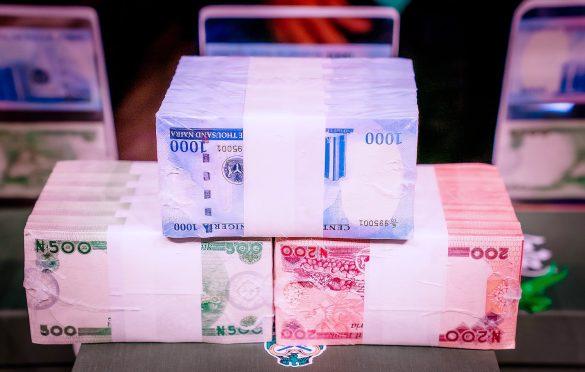
  • N165bn deposited into commercial banks as Buhari unveils redesigned Naira

    N165bn deposited into commercial banks as Buhari unveils redesigned Naira

    One hundred and sixty five billion old naira notes have so far been absorbed by commercial banks since the announcement of the planned launch of new naira notes on October 26.

    Director Currency, Central Bank of Nigeria (CBN), Ahmed Bello Umar, made the disclosure in Abuja at a post-Monetary Policy Committee media briefing.

    According to him, the amount deposited thus far was small compared to what the apex bank has anticipated.

    He also revealed that the apex bank will from Thursday, begin reticulating the new naira notes to all its branches across the country since the currency has been officially launched by President Muhammadu Buhari at the presidential villa on Wednesday.

    He added that the new notes will be available for spending from December 15, even as he reiterated the federal government’s position that the no extension will be given to the old naira notes beyond January 31.

    He said: No extension will be given. From Thursday, we will start distribution to our networks and not to customers yet.

    “We have N3.2 trillion currency in circulation and out of this, N2.7 trillion is outside the banking system. As at 18th of November, N165 billion has been deposited since the announcement. The amount is small and we are not seeing the rush. Some banks have not made any recoveries of the old notes. It’s a challenge for us and we hope there won’t be stampede when it’s almost the deadline. We have made several concessions to encourage deposit. We removed all deposit limits, mandated the banks to work of Saturday, etc

    “We hope that 80 per cent of the N2.7 trillion will come back. We are also pessimistic that we may record 40 per cent recovery and the reality is around 60 per cent recovery”.

    Umar said the bulk of the new notes will be lower denomination, adding that 88 per cent of the money returned to the banks by customers were N500 and N1,000 notes.

    “We won’t print much of the high denomination. We will have currency for transaction which is more like the N200 note.

    We want to drive cashless policy, mobile money, electronic payments etc. And this is certainly not an exchange programme where a customers deposits let’s say N10 million of the old currency and expects to get N10 million equivalent of the new currency. Deposit the money in your account and spend it more through electronic means. That’s what we want to achieve”, he added.

    Also speaking at the event, the Director, Development Finance Department of the CBN, Mr Yusuf Yila noted that apex bank was working with insurance companies to see ways of assisting farmers ameliorate their sufferings following the heavy flooding that destroyed their agricultural investments.

    “With the right evidence, we can restructure the loans of those who suffered losses. But you have to pay back the loan you received”, he said.

    (Sun)

  • Redesigned naira notes to be unveiled by Buhari today

    Redesigned naira notes to be unveiled by Buhari today

    Central Bank of Nigeria (CBN) Governor, Mr Godwin Emefiele, on Tuesday disclosed that the redesigned naira notes hitherto slated for unveiling on December 15 has been brought forward to Wednesday and would be launched by President Muhammadu Buhari, at the Presidential Villa, Abuja.

    He also ruled out the chances of any extension in the timeframe given for the lodgment of old notes, insisting that by January 31, 2023, the old notes cease to be legal tender.

    Emefiele, who made the disclosure at a media briefing to mark the end of the 288th Monetary Policy Committee meeting and the last in 2022, urged those in possession of the old notes to hurriedly offload them at the nearest bank branch to beat the deadline.

    “If you’re a diasporan, we will not wait for you. You should not keep the naira. You don’t need it. You don’t spend naira.

    “We thank Mr President for ever supporting us because when we were being harassed, he defended the actions of CBN. We also thank security agencies who worked with us to see a smooth transition especially the EFCC, to help monitor the flows. We thank the Senate for the support despite all odds.

    “Having said all these, let me say that we won’t shift the deadline. Capital No. What we have done is not against the law. Upon release of new currency, it will run concurrently with the old notes till January 31, 2023. That’s 100 days to make the transition”, he said.

    (Sun)

  • Price of cooking gas soars by 70 percent in October year-on-year

    Price of cooking gas soars by 70 percent in October year-on-year

    Between October 2021 and 2022 same month, the price of Liquefied Petroleum Gas (LPG) soared by 70.62percent.

    The average retail price for refilling a 5kg Cylinder was N2,627.94 in 2021 but rose to N4,483.75 in October 2022.

    On a month-on-month basis, the commodity increased by 0.21% from N4,474 recorded in September 2022 to N4,483.75 in October 2022.

    According to data from the Nigeria Bureau of Statistics (NBS), Kwara recorded the highest average price for refilling a 5kg Cylinder of Liquefied Petroleum Gas (Cooking Gas) with N4,955, followed by Niger with N4,950 and Adamawa with N4,940.

    On the other hand, Abia recorded the lowest price with N4,045 followed by Kano and Delta with N4,100 and N4,139 respectively.

    Similarly, the average retail price for refilling a 12.5kg Cylinder of cooking gas increased by 1.45% on a month-on-month basis from N9,906 in September 2022 to N10,050 in October 2022.

    On a year-on-year basis, this rose by 51.40% from N6,638 in October’s 2021 with Cross River recording the highest average retail price with N10,986 followed by Oyo with N10,826 and Kogi with N10,783.

    The lowest average price was recorded in Yobe with N8,533 followed by Sokoto and Katsina with N9,100 and N9,202 respectively.

    The ​Nigeria LNG Limited (NLNG) had at the Nigerian Association of LPG Marketers (NALPGAM) 35th Annual General Meeting in September said the market’s inability to completely absorb NLNG’s propane production was part of the challenges which have slowed the utilisation of LPG in the country.

    NLNG’s Managing Director/Chief Executive Officer, Dr. Philip Mshelbila, said,”When we made that commitment last year, the intention was that every molecule of butane and propane that we produce in our facility will come into the domestic market and since then we have made every effort to keep to that since January 2022. We have been successful in achieving supply of 100% of our butane production.

    “We have not been able to reach 100% with propane, not because we don’t want to but because the market capacity to absorb the propane is just not there. We intend that all the butane and all the propane that we produce goes into the domestic market whether propane is being used to blend with butane as cooking gas, used as autogas, or used in industry to generate power,” he said

    He said the NLNG was committed to supply 100% of all its Liquified Petroleum Gas (LPG) production (butane and propane) to the Nigerian domestic market despite feed gas and market challenges.

    Mshelbila noted that:“Our production capacity as NLNG can supply about 400,000 tons per annum which is somewhere roughly about 40% of the current national demand. This means that the balance has to be imported.”

    However, he noted the need to address crude oil theft saying,”Last year, we supplied about 400,000 tons per annum into the Nigerian market. But we did that under extremely difficult circumstances where our gas supply into our plant was heavily compromised by numerous upstream factors, the single biggest one of which is crude oil theft. And as a result of the disruption that this created, our capacity utilisation fell.

    “Unfortunately, that remains the case today. If we have more gas input to our plant, we can produce more LPG. So the issue of supply for us starts with addressing the upstream supply challenges, the biggest of which is crude oil theft,” he added.

    (Tribune)

  • Adamawa BDC operators reject dollars as naira rebound destabilize parallel market

    Adamawa BDC operators reject dollars as naira rebound destabilize parallel market

    Bureau de change operators in Adamawa State are rejecting foreign currencies from customers due to growing uncertainty in the parallel market.

    Some of the money changers interviewed at Jimeta Modern Market in Yola said they were apprehensive over the sudden and continued crash of the dollar which destabilized the parallel market.

    The chairman, bureau de change operators association in Adamawa State, Lawan Mai Yasin, said the traders incurred heavy losses after they bought a dollar at around N870 from sellers before it suddenly crashed to N680.

    He explained that many trades were wary of the situation which still looked bleak for the parallel market and decided to hold on and monitor the trend to avoid further losses.

    “Traders have a large quantity of goods in stock which they purchased at high price before the prices suddenly nosedived and continued to go down in the weekend, so with the uncertainty in the market, many of us are no longer buying for now”, he said.

    Some customers interviewed by Daily Trust said the bureau de change operators refused to buy dollars and other foreign currency notes from them during the weekend.

    “Only one bureau de change agreed to buy dollars from me on Saturday because they had it in stock and did not want to risk buying more when the price was falling dramatically. Even when I found a buyer on Sunday the price was too low, that I decided to keep my money for now”, a customer working with a foreign company said.

    (Daily Trust)

  • CBN releases $3.5bn for foreign education under Buhari

    CBN releases $3.5bn for foreign education under Buhari

    Data obtained from the website of the Central Bank of Nigeria on Sunday revealed that Nigeria’s educational sector suffered massive capital flight during the regime of the President, Major General Muhammadu Buhari(retd).

    Specifically, using the CBN’s balance of payment statistics, Nigerians have spent a hefty sum of $3.5bn on foreign education in the past seven years (June 2015 to August 2022).

    It was reported that education in Nigeria, most especially in the tertiary education sector, has been marred by industrial actions by unions such as the Academic Staff Union of Universities and the Academic Staff Union of Polytechnics.

    How We Juggled Schooling With Our Royal Duties -Ondo Female RegentsWe Also Deserve To Be Allocated New Govt Houses -Lagos Slum Dwellers| I Returned From Work To Find My Son’s Lifeless Body- Father Of Murdered Lagos SchoolboyHow I Was Beaten, Shot In The Leg By Mobile Police Officer -Ogun Okada Rider

    Recently, academic activities in Nigerian universities, polytechnics and colleges of education were grounded for months in 2022.

    According to the CBN data gathered from amount spent on educational services under the sectoral utilisation for transactions valid for foreign exchange, a sum of $375.99 million was released by the apex bank between June 2015 and December 2015,

    Further analysis of the data revealed that a total of $269.1 million was released in 2016.

    There was a huge leap in 2017 when the apex bank disclosed that a total of $514.16 was released for foreign education.

    In 2018, a total of $546.78 was released.

    For 2019, there was a huge decrease as the bank released $197.52 million.

    It was also noted that $270.42 million was released in 2020 amidst the coronavirus pandemic.

    There was a huge leap in 2021 as the bank recorded a total of $720.05 million released for same purpose.

    So far in 2022, only the data from January to August has been made available which revealed that a total of $609.5 million has been released so far.

    The data from the apex bank revealed that Nigerians remitted more than $3.5 billion to foreign academic institutions under Buhari without significant reciprocity in the form of inflows from foreign sources to the local education sector.

    The huge net dollar outflows have dual adverse effects of underinvestment in domestic education and creates pressure on the naira exchange rate, economists said.

    The high demand for dollars to pay foreign educational institutions affects Nigeria’s foreign reserves and contributes immensely to piling pressure on the exchange rate.

    (Punch)

  • Forex: Traders lose as naira rebounds to 720/dollar at black market

    Forex: Traders lose as naira rebounds to 720/dollar at black market

    The naira has rebounded by 20.8 per cent to 720/dollar at the parallel market, findings by The PUNCH have shown.

    The development came two weeks after the local currency came under severe pressure at the black market, following the announcement by the Federal Government to redesign the naira.

    The naira which fell consistently throughout last week against the United States dollar tumbled to an all-time low of 910/dollar last weekend.

    However, the currency began a rebound against the greenback on Monday, after a week-long clampdown on foreign exchange dealers in Abuja, Lagos, Kano and other major cities by the personnel of the Economic and Financial Crimes Commission.

    EFCC officials had arrested over 90 Bureau De Change operators across major cities in the country over allegations of currency hoarding and aiding politically exposed Nigerians and other criminal elements in money laundering.

    The naira which was bought and sold on the streets of Lagos and Abuja between 735/dollar and 745/dollar about two weeks ago began a free fall shortly after the decision of the Federal Government to redesign the local currency.

    On Monday, however, the naira rebounded and was bought and sold between 850/dollar and 860/dollar. The national currency gained significantly and steadily on Tuesday and Wednesday and closed at 720/dollar on Thursday.

    Financial analysts and forex dealers who spoke to our correspondents attributed the development to market sentiment and the activities of the EFCC personnel.

    The clampdown on forex dealers was said to have forced several BDCs into hiding, a move that reportedly made many politically exposed persons and currency speculators hold back in their demand for the greenback.

    There had been a huge demand for the dollar at the parallel market in Lagos, Abuja and other cities.

    Speaking with our correspondents on Thursday, a BDC operator at the Murtala Muhammed Airport, Lagos, Mustafa Abdullahi, noted that he bought the local currency for 715/dollar and sold it for 720/dollar.

    He said several BDCs had gone into hiding following the EFCC clampdown, adding that the demand for the greenback had dropped significantly.

    “Many of our people have lost hundreds of millions of naira due to the fall. Many of them bought the dollar when it was over N800. Now the US currency has started falling and they are losing several millions. I personally lost millions of naira.”

    Seriki Muhammed, another BDC operator at the Lagos airport, said he also bought the greenback for 717/dollar and sold it for 721/dollar on Tuesday.

    Muhammed told our correspondent that some BDCs were licking their wounds because some had bought over $500,000 at about 820/dollar in anticipation of further loss in naira value.

    “We are in a big trouble unless the dollar rises again. Many of our people bought so much dollar, hoping it would gain further,” he told one of our correspondents.

    A currency dealer in Allen Avenue, Ikeja, Lagos, simply identified as Gambo Bello, said he was buying and selling the US currency for N715 and N720.

    (Punch)