Category: Business/Economy

  • CBN’s decision to redesign naira a political agenda — Obaseki

    CBN’s decision to redesign naira a political agenda — Obaseki

    Governor Godwin Obaseki of Edo State has described the decision of the Central Bank of Nigeria, CBN, policy to redesign the N200, N500 and N1,000 notes as a political agenda.

    Obaseki stated this while inaugurating the Edo State Peoples Democratic Party Women Campaign Council at the Presidential Campaign secretariat in Benin City, Edo State.

    He said: “How can we sit down? They say we should not bring our naira and give it to them again. That they want to change it. Is that our priority? How does change of currency reduce the price of food in the market? They say they want to change Nigerian currency, how much is the dollar today? They should have left our currency for us.

    “Now they say that they want to change it. We can’t buy dollars. I am an economist. I can tell you that this policy by the Federal Government and the Central Bank of Nigeria has no basis. There is no basis for it. This is purely political

    “When you decide to change a currency in such a reckless manner, 30 days before an election, all you can deduce is that it is purely political. There is nothing urgent in changing our currency today.”

    He noted that such urgency in redesigning the naira should be focused on feeding the nation and managing its foreign exchange rate. “The urgency for us is how to get food for our citizens so that we can remove the starvation of the land. The urgency is how to maintain discipline in our monetary policy so that we can manage our foreign exchange rate because we are so import dependent.”

    (Vanguard)

  • eNaira records 700,000 transactions valued at N8bn – Emefiele

    eNaira records 700,000 transactions valued at N8bn – Emefiele

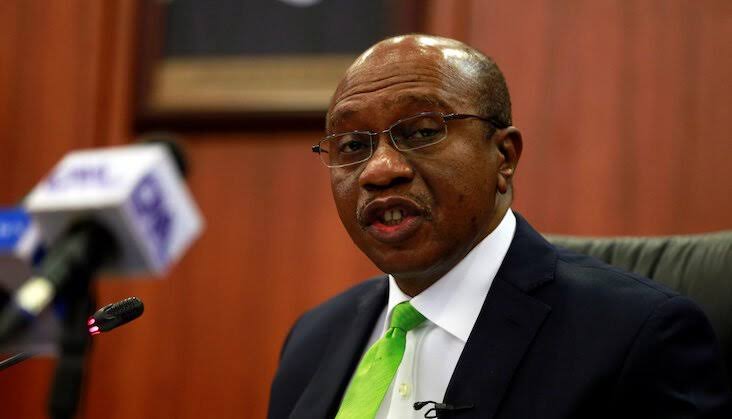
    The Governor of the Central Bank of Nigeria (CBN), Mr Godwin Emefiele says eNaira has recorded 700,000 transactions valued at N8 billion, since its inauguration on Oct. 25, 2021.

    Emefiele said this on Wednesday in Abuja, at the 28th edition of the apex bank’s annual In-house Executive Seminar with the theme, “Digitalisation of Money and Monetary Policy in Nigeria”.

    He was represented by Aisha Ahmad, Deputy Governor, Financial System Stability, CBN.

    The News Agency of Nigeria (NAN) reports that the eNaira, CBN’s version of the Central Bank Digital Currency (CBDC), was inaugurated by President Muhammadu Buhari on Oct. 25, 2021.

    According to Emefiele, the eNaira was developed to broaden the payment possibilities of Nigerians, foster digital financial inclusion, with potential for fast-tracking intergovernmental and social transfers, capital flow and remittances.

    He said that the eNaira had been globally acclaimed as a success story.

    “Since its launch, a total of N8 billion, consisting over 700,000 transactions has passed through the eNaira platform.

    “As part of the CBN”s effort to further integrate and broaden the usage of the eNaira, it was assigned an Unstructured Supplementary Service Data (USSD) code, enabling payments by simply dialing ‘*997#’ on a mobile phone.

    “I am proud to announce to you today that the eNaira has been attracting accolades across the globe as a monumental success.

    “It topped the charts on retail CBDCs projects globally, as at April (PwC, 2022) and several central banks across the globe have been requesting for our success template on the eNaira,” he said.

    He said that the story of the eNaira had been one of courage, persistence and commitment to explore new frontiers and possibilities.

    He added that, as part of the digitisation drive, the apex bank had taken transformational steps in entrenching a culture of “big data” and data analytics, as tools for effective policy making.

    “To this end, the CBN Data Architecture Project (CeDAP), code-named “Project OXYGEN” was commissioned, with the objectives of providing a repository of a variety of data from different sources,” he said.

    The CBN governor said that considerable gains had been achieved on boosting financial inclusion in Nigeria.

    He added that at 64.0 per cent, the inclusion rate slowed down the digital transformation wheel, as all citizens must be carried along to optimise the gains of a digital economy.

    “While cash-based transactions have declined significantly in the last decade, it is still the dominant means of payment, amidst a large informal sector.

    “Nigeria boasts of one of the fastest growing FinTech ecosystems in Africa, with the industry projected to grow by 12 per cent annually.

    “But the technological space is still maturing, with limited market size, funding and venture capitalists, access to baseline technologies, and skills, as common features, ” he said.

    Also speaking, Dr Kingsley Obiora, Deputy Governor, Economic Policy, CBN, said that the seminar was an annual platform to brainstorm on topical economic issues.

    Obiora said that the intention was to proffer policy options for the consideration of management of the CBN.

    “Through the past years, the seminar has lived up to its expectations by providing significant inputs towards improving management’s decisions.

    “Our gathering here today should be seen as an important avenue to critically search for fresh solutions to emerging monetary and financial challenges confronting us today,” he said.

    According to him, the digitalisation of money enhances the powers of the CBN to impact its monetary policy.

    He added that it also had the potential to change traditional structures of the banking and financial systems, while sustaining the primary mandate of the CBN.

    “The gains in the digitalisation of money spans across enhancing tax collection, social welfare transfers, and more importantly, provide benefits that would enhance the goal of cashless policy in Nigeria.

    “Similarly, the digitalisation of money is very important for the facilitation of remittances, financial inclusion, financial market deepening and ultimately, economic growth,” he said.

    He said that the eNaira platform had so far recorded 927,000 total downloads; 317,560 activated consumer wallets with 33 banks fully integrated and live on the platform.

    “N3.0 billion has been successfully minted; N2.10 billion has been issued to financial institutions; over 3,320 merchants have successfully registered on the eNaira platform across the country.

    “Over 700,000 transactions amounting to about N8 billion has been recorded on the platform; and there are over 2.5 million daily visits to the eNaira website, ” he said.

    The Federal Capital Territory (FCT) Minister, Alhaji Muhammad Bello, in his goodwill message, commended the CBN for the initiative to bring together experts and key stakeholders to discuss topical policy issues aimed at improving the Nigerian economy.

    In an address delivered by Mr Agboola Dabiri, Secretary, Economic Planning and Research Department, FCTA, Bello also commended the CBN for being proactive in its timely introduction of the eNaira.

    “The eNaira is now acclaimed as the first CBDC in Africa and one of the first retail CBDCs deployed in the world.

    “It holds huge potentials for the Nigerian economy in terms of increasing cross-border trade, improving financial inclusion, strengthening social interventions, and bolstering Nigeria’s monetary policy and payments system.

    “On the fiscal front, maximising the potential of digital currencies could be a panacea to the subsisting revenue challenge of government.

    “It could be a tool for optimising tax revenue collection and improving public expenditure management in Nigeria,” he said.

    (NAN)
  • FG seeks global support for $1.9trn Energy Transition plan

    FG seeks global support for $1.9trn Energy Transition plan

    The Federal Government yesterday sought global support for its Energy Transition Plan, ETA, estimated to cost about $1.9 trillion in the next 60 years.

    The plan, which requires an investment of $10 billion annually to fund projects in mini-grids and renewable energy sectors, also aims at de-carbonising Nigeria’s hydrocarbons.

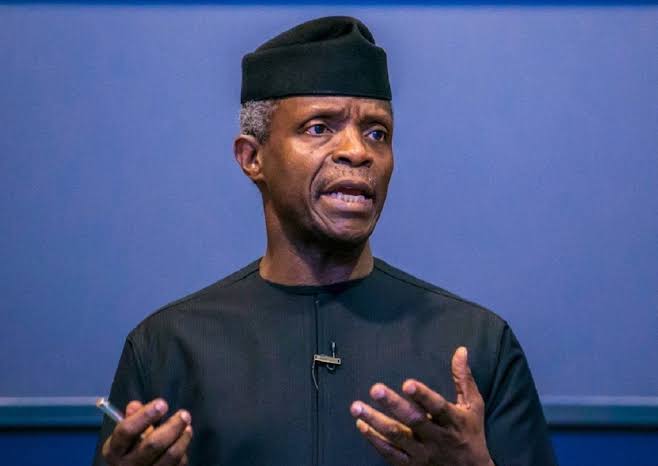
    Speaking at the opening ceremony of the ECOWAS Sustainable Energy Forum, ESEF, part of the International Energy Transition Week – Nigeria, Vice President Yemi Osinbajo lamented that despite the global push for energy transition, very little funding had been channeled to African countries.

    Prof. Osinbajo, who was represented by the Minister of Power, Abubarkar Aliyu, noted that lack of access to finance remained the biggest challenge for accelerating action on energy access and climate goals in Africa.

    He said: “Only 2%, about USD60 billion, of the USD2.8 trillion invested in renewable energy from 2000 to 2020 came to Africa.

    ”The West African region received just 7% of that, about USD4 billion. To reach our goals, sufficient capital must be made available in the region, and we must do our part in creating the enabling environment for these funds.

    “For the sake of emphasis, it is relevant to note that Nigeria’s Energy Transition Plan (ETP) would require funding of about USD1.9 trillion up to 2060. USD410 billion of this amount is above usual spending and implies that we need to mobilize an additional USD10 billion per annum.“

    ”The success of universal energy access and carbon neutrality is dependent on effectiveness in crowding in these investments.

    “Our government plans to roll out a set of policy measures that would attract financing and investments of up to USD10 billion and create scalability of programs of over USD30 billion over the coming decades.

    ”These policy measures and programs would be leveraged on, to catalyze the Nigeria ETP specifically on renewable power.”

    Earlier, the President of the ECOWAS Commission, Dr. Omar Touray, disclosed that about half of ECOWAS citizens lacked access to modern energy service, adding that in the rural areas, just 10 per cent had access to clean energy.

    energy security need to be addressed and that access to financing and technology are crucial if we want to succeed.

    ”If the EU is the world’s leading actor in climate change, it is not only because of the ambitious goals that we have set for ourselves, but also of our commitment to help others to attain this.

    “During the African Union/European Union summit we launched the EU EU Africa Global Gateway investment package with the Africa EU Green Energy Initiative as a key component to consolidate existing investments or to launch new ones.

    “In the framework of the new world, the annual indicative programme 2021 2027 of the EU, we are planning to allocate 600 million Euros of grants funding in the sustainable energy sector in West Africa alone.

    ”The EU considers equity and I quote from the message that I have been asked to convey as a key partner in the domain of sustainable energy and has the wish and the vision for a close cooperation in the future”.

    (Vanguard)

  • Buhari supports Emefiele on naira re-design project

    Buhari supports Emefiele on naira re-design project

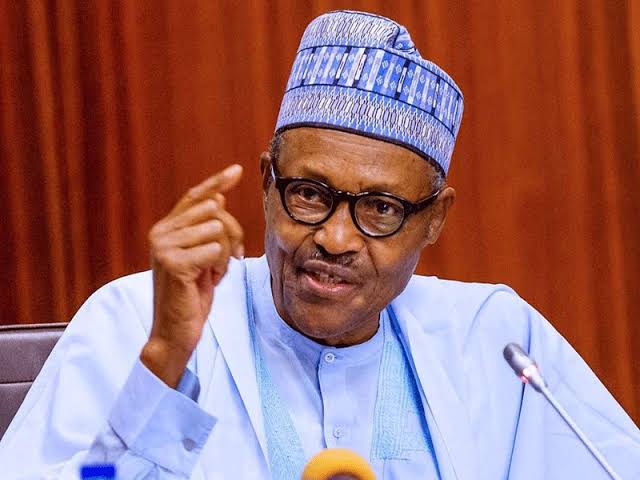
    Amid controversies over the position of the Finance Minister, Mrs Zainab Ahmed, on the decision of the Central Bank of Nigeria, CBN, to embark on the redesigning of Naira notes, President Muhammadu Buhari said yesterday that the CBN has his support on the project.

    Ahmed, at the weekend, declared that the CBN did not carry her Ministry along in the new Naira note plan, warning that the new notes could have dire consequences on the value of the Naira.

    But Buhari in a statement by his Senior Special Assistant on Media and Publicity, Mallam Garba Shehu, said he is convinced the nation will gain a lot by doing so.

    Speaking in a Hausa radio interview with Halilu Ahmed Getso and Kamaluddeen Sani Shawai, Buhari said reasons given by the CBN convinced him that the economy stands to benefit from a reduction in inflation, currency counterfeiting and the excess cash in circulation.

    He said he did not consider the period of three months for the change to the new notes as being short.

    According to him, “people with illicit money buried under the soil will have a challenge with this, but, workers, businesses with legitimate incomes will face no difficulties at all.”

    Experts call for harmony

    Meanwhile, economists and financial experts have harped on the need for harmony between the fiscal and monetary policy authorities while maintaining the independence of the CBN.

    David Adonri, Vice-Chairman, Highcap Securities, said that, while it is important for both the CBN and the Finance Ministry to synergise on policy-making in order to achieve a better outcome, the independence of the CBN as obtained in other economies does not require the permission of even the president to undertake a project such as the redesigning of the Naira.

    In his words: “The economy is managed by the government through macro-economic policies (fiscal and monetary policies); while the Federal Ministry of Finance (FMoF) is the fiscal authority, CBN is the monetary authority. They are expected to work harmoniously in policy formulation and implementation. Any discord between these authorities is detrimental to economic management.

    “Before any policy is formulated by any of them, there ought to be in-depth consultation between them and thorough analyses to know the sensitivity on either side of the economy.

    “Although each authority has its areas of exclusivity, which it may exercise without recourse, carrying each other along will facilitate superior policy outcomes.

    “In this particular instance, the reasons for changing of currency by CBN are justifiable but there is no reason for not carrying the FMoF along for them to be prepared for the change. Where the monetary authority is independent, which we clamour for, the Central Bank does not even require permission from the President to undertake any monetary action.

    “Independence of a central bank is essential so that monetary policy will not be influenced by political expediency.”

    Further insight from CBN

    The CBN, reacting to the position of the Finance Minister at the weekend, said it was surprised by the minister’s outburst and that due process was followed in arriving at the Naira redesign project, including obtaining the approval of President Muhammadu Buhari.

    Also, the apex bank doused concerns about the cost of printing the new notes, saying they will come at no outrageous cost, printed in the country and within the budget of the apex bank.

    According to a statement from the CBN’s spokesman, Mr Osita Nwanisobi, the apex bank stressed that the CBN remains a very thorough institution that follows due process in its policy actions.

    According to Nwanisobi, the management of the CBN, in line with provisions of Section 2(b), Section 18(a), and Section 19(a)(b) of the CBN Act 2007, had duly sought and obtained the approval of the President, Major General Muhammadu Buhari (retd.) in writing to redesign, produce, release and circulate new series of N200, N500, and N1,000 banknotes.

    However, urging Nigerians to support the currency redesign project, he said it is in the overall interest of Nigerians, and that some persons were hoarding significant sums of banknotes outside the vaults of commercial banks. This trend, he said, should not be encouraged by anyone who means well for the country.

    Why Naira redesign is necessary — Moghalu

    Commenting on the issue, a former Deputy Governor of the CBN, Kingsley Moghalu, said that the decision of the CBN to redesign the naira notes is a ‘necessary step’ for the good of the economy.

    Moghalu averred his support for the decision in a series of tweets on his Twitter account on Friday.

    He explained that the CBN is trying to gain control over the money supply in the economy.

    “I fully support the Central Bank’s redesign of the Naira,” he said. “If 80% of banknotes in circulation are outside the banks, that’s troubling. The CBN obviously wants to force all those notes back into the banking system. Those with the notes must surrender to get new ones or else it becomes illegal tender after January 31 2023.

    “This is also a way to withdraw currency from circulation, an unorthodox way of tightening the money supply since the country is battling high inflation.

    “The flip side is that people who are holding huge amounts of cash outside the banking system for nefarious reasons will go the parallel forex market to buy hard currency, putting further downward pressure on the value of the Naira as too much Naira will be chasing too few dollars.

    “I doubt it will solve inflation because there also are other major reasons for inflation such as the forex crisis, which this new move could exacerbate, as well as impact of the security crisis on food price inflation. But overall it is a necessary step.

    “I just think the time window for its implementation is rather short. This will put a lot of operational pressure on commercial banks and the financial system in general. A 90-day window would have been better, but one can understand the need to avoid interfering with the elections.”

    (Vanguard)

  • Internal disagreement in govt over Naira redesigning plan

    Internal disagreement in govt over Naira redesigning plan

    Barely 48 hours after the announcement of the new naira redesign fixed for December 15, 2022 by the Central Bank of Nigeria ( CBN), the Minister of Finance , Budget and National Planning, Zainab Ahmad, said she is opposed to the policy . The minister, who commented on the policy in response to a question raised by Senator Opeyemi Bamidele (APC Ekiti Central) during the 2023 budget defence session she had with the Senate Committee on Finance, warned the CBN of consequences that may arise from it .

    Senator Bamidele had in his question, told the Finance Minister that barely two days after announcement of the policy by CBN , repercussion of it on the value of Naira to US dollar was being felt.

    He asked: “Just two days after announcement of the policy, the value of the Naira to a US dollar has risen from N740 to N788 due to the rush in exchange of stashed naira notes for foreign currencies, particularly dollar.

    “To me, the policy may be a well conceived one, but the timing going by realities on ground, is very wrong as the Naira may fall to as low as N1,000 to a US dollar before January 31, 2023 fixed for full implementation of the policy.”

    The minister in her response said she and her ministry were not aware of the policy, but only heard of it through the media.

    “We were not consulted at the Ministry of Finance by CBN on the planned naira redesigning and cannot comment on it as regards merits or otherwise .

    “However as a Nigerian privileged to be at the top of Nigeria’s fiscal management, the policy as rolled out at this time portends serious consequences on value of naira to other foreign currencies.

    “I will however appeal to this committee to invite the CBN governor for required explanations as regards merits of the planned policy and rightness or otherwise of its implementation now,” she said . The CBN Governor , Godwin Emefiele had on Wednesday said that the apex bank would redesign the country’s currency from 200 Naira denomination to N1,000 notes.

    He said that the action was taken in order to take control of the currency in circulation just as he posited that the bulk of the nation’s currency notes were outside bank vaults and that the CBN would not allow the situation to continue.

    The planned policy, he added, was in line with Sections 19, Subsections a and b of the CBN Act 2007, upon which the Management of the CBN sought and obtained the approval of President Muhammadu Buhari to redesign, produce, and circulate new series of banknotes at N200, N500, and N1,000 levels.

    (Sun)

  • BREAKING NEWS: CBN to introduce redesigned higher denomination Naira notes by December

    BREAKING NEWS: CBN to introduce redesigned higher denomination Naira notes by December

    The Central Bank of Nigeria (CBN) on Wednesday announced that it would soon release resigned naira notes into the economy.

    Governor of the CBN, Godwin Emefiele who made the announcement during a press briefing, stated that the redesigned naira notes would be introduced by December 15, 2022 and will affect the highest denominations: 200, 500, 1000 notes.

    He said that the action was taken in order to take control of the currency in circulation.

    According to him, the bulk of the nation’s currency notes were outside bank vaults and that the CBN would not allow the situation to continue.

    He also said that the old notes and the new notes would circulate together until January 31, 2023 when the old notes would cease to be legal tender.

    He added that the action would also raise CBN’s stake in addressing the challenge of inflation.

    Reminded that the current regulation allows only N150, 000 free cash deposit, he said that even if a customer wanted to deposit N 1 billion, the person would be allowed to do so.

    Mr. Emefiele assured that the CBN would continue to monitor both the financial system in particular, and the economy in general, and always act in good faith for the achievement of the Bank’s objectives and the betterment of the country.

    There has been claims even by top government officials that some unscrupulous members of the society were hoarding large volumes of currency notes in warehouse, farms, septic tanks.

    Very dirty and smelly Naira notes have been in circulation, especially since political activities heightened across the  country.

  • CBN completes sale of Polaris Bank to Strategic Capital Investment Limited (SCIL) for N50bn

    CBN completes sale of Polaris Bank to Strategic Capital Investment Limited (SCIL) for N50bn

    The Central Bank of Nigeria (CBN) and the Asset Management Company of Nigeria (AMCON) on Thursday confirmed the sales of Polaris Bank.

    This followed the completion of a Share Purchase Agreement (SPA) for the acquisition of a 100 percent stake in Polaris Bank by Strategic Capital Investment Limited (‘SCIL’).

    The House of Representatives had on Wednesday okayed the sale of the bank, noting that the acquisition followed the laid down procedure and the relevant presidential approval.

    The Chairman of the House ad-hoc Committee investigating the sale of Polaris Bank, Henry Nwabuba, told journalists that 35 companies bided for the bank.

    Nwabuba’s revelation came a few days after Nigerians criticised the CBN for planning to sell Polaris Bank for N50 billion.

    The amount raised eyebrows given that over N1.2 trillion have been spent by AMCON to revive the bank.

    In a statement issued by its Director of Corporate Communications, Osita Nwanisobi, the CBN said that SCIL has paid upfront of N50 billion to acquire a 100 percent stake in Polaris Bank

    The apex bank added that SCIL accepted the terms of the agreement, including the full repayment of the sum of N1.305 trillion as the value of the bonds when the licence of the former Skye Bank Plc was revoked in 2018 to assume its assets and certain liabilities.

    The statement read: “The Central Bank of Nigeria (CBN) and the Asset Management Company of Nigeria (AMCON) are pleased to announce the completion of a Share Purchase Agreement (SPA) for the acquisition of 100% of the equity in Polaris Bank by Strategic Capital Investment Limited (‘SCIL’).

    “Polaris has been operating as a bridge bank since 2018 when the Central Bank of Nigeria intervened to revoke the licence of the former Skye Bank Plc. and established Polaris Bank to assume its assets and certain liabilities. As part of the CBN intervention, consideration bonds with a face value of N898 billion (future value of N1.305 trillion) was injected into the bridge bank through AMCON, to be repaid over a 25-year period.

    “These actions were taken to prevent the imminent collapse of the bank, enable its stabilisation and recovery, protect depositors’ fund, prevent job losses and preserve systemic financial stability. SCIL has paid an upfront consideration of N50 billion to acquire 100% of the equity of Polaris Bank and has accepted the terms of the agreement which include the full repayment of the sum of N1.305 trillion, being the consideration bonds injected.

    “The CBN thus received an immediate return for the value it has created in Polaris Bank during the stabilisation period, as well as ensuring that all funds originally provided to support the intervention are recovered. The sale was coordinated by a Divestment Committee comprising representatives of the CBN and AMCON, and advised by legal and financial consultants. The Committee conducted a sale process by ‘private treaty, as provided in Section 34(5) of the AMCON Act to avoid negative speculations, retain value and preserve financial system stability.”

    (Ripples)

  • President Buhari set to commission Pinnacle Oil Tank in Lagos

    President Buhari set to commission Pinnacle Oil Tank in Lagos

    Chetanne Chinelo, Enugu

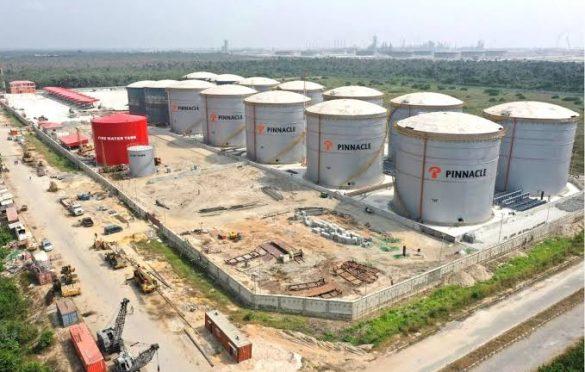
    President Muhammadu Buhari is set to commission an FZE Terminal belonging to Pinnacle Oil and Gas Limited in the Lekki Free Trade Zone Terminal.

    In a brief statement made available to Pacesetter Magazine, the Presidential commissioning is set to hold on Saturday, October 22, 2022 by 11am at the Lekki Free Trade Zone, Ibeju-Lekki, Lagos, and will be performed by President Muhammadu Buhari.

    The terminal is a major disruptive innovation which would transform the whole downstream value chain.

    The CEO of Pinnacle Oil and Gas Limited also described the terminal as a resilient infrastructure with the capacity to export and import from the same pipeline.

    Meanwhile, he expressed optimism that Nigeria would soon become a net exporter of refined products.

    “We have built a resilient infrastructure. We have the capability to export and import from the same pipeline.

    “We believe that over time, with the investment we are seeing, Nigeria will become the net exporter of refined products,” he said.

    Pinnacle is an Indigenous Oil and Gas company active across the entire downstream value chain, with emphasis on the petroleum trading, marketing, distribution and retail segments of the Nigerian Oil and Gas Sector.

    The company was founded in 2004 with headquarters in Lagos, one of Africa’s largest business hubs. 

    Commencing operations in 2008, Pinnacle has a 23 percent leading market share in the downstream sector of the oil and gas industry.

    The Chief Executive Officer of Pinnacle Oil and Gas, Mr. Peter Mbah, is the 2023 Peoples Democratic Party (PDP) governorship candidate for Enugu State.

    More details later…

  • IMF predicts slow economic growth in 2023, urges anti inflation, pro-poor, fiscal policies

    IMF predicts slow economic growth in 2023, urges anti inflation, pro-poor, fiscal policies

    THE International Monetary Fund, IMF, has projected that Nigeria’s economic growth will slow to 3.0 per cent in 2023 while the inflation rate drops to 17 per cent.

    Making these projections in the IMF October World Economic Outlook, WEO, released on the sidelines of the ongoing IMF/World Bank annual meetings, in Washington DC, the Fund called for fiscal policies that support current efforts by central banks to curb inflation as well as protect the vulnerable from the impact of inflation.

    According to the IMF, Nigeria is projected to record Gross Domestic Product, GDP, growth of 3.2 per cent in 2022, and 3.0 per cent in 2023, both representing 0.2 percentage points lower than the 3.4 per cent and 3.2 percent respectively projected in the July WEO.

    The IMF however forecasted a decline in Nigeria’s inflation rate to 19 per cent in 2022 and 17 per cent in 2023.“Inflation forecast

    Speaking at the October WEO press briefing held on the sidelines of the ongoing IMF/World Bank annual meetings, in Washington DC, Daniel Leigh, Divisional Chief, Research Department, IMF, said that the lower inflation rate projections for Nigeria is premised on the recent hike in the Monetary Policy Rate, MPR by the Central Bank of Nigeria, CBN, as well as global decline in prices of crude oil and food.

    He said: “For Nigeria, in particular, we forecast inflation at about 19 per cent this year, but then some moderation next year down to 17 per cent, and part of that does reflect the monetary policy actions which is the 4.0 per cent point increase in Nigeria’s Central Bank as well as the decline that we expect in oil and food prices globally.”

    On its part, Pierre-Olivier Gourinchas, Director of Research of the IMF, advised the CBN and its global peers on the choice of monetary instruments needed to curb inflation rate.

    Global economy forecast

    The projections for Nigeria’s GDP growth was in line with the lower growth rate projected by the IMF for the global economy in 2023.

    While the IMF, in the October WEO retained its forecast for global economy growth in 2022 at 3.2 per cent, it however lowered its forecast for 2023 to 2.7 per cent, representing 0.2 percentage points lower than the July forecast.

    Explaining the basis for its lower growth forecast for the global economy, the IMF said: “The global economy continues to face steep challenges, shaped by the Russian invasion of Ukraine, a cost-of-living crisis caused by persistent and broadening inflation pressures, and the slowdown in China.

    Anti-inflation, pro-poor fiscal policies

    Stressing that the most immediate threat to current and future economic growth is the high inflationary trend across the world, Pierre-Olivier Gourinchas, Director of Research of the IMF, called for fiscal policies that support ongoing central banks monetary policy focused on taming inflation and also that protect the vulnerable members of the society.

    He said: “First, fiscal policy should not work at cross purposes with monetary authorities’ efforts. Doing otherwise will only prolong inflation into a serious financial instability as recent events reminders.

    Fiscal policy should instead aim to protect the most vulnerable and targeted and temporary constraints. Third, fiscal policy can help economies adapt to more volatile environments by investing in productive capacity, human capital, digitization, green energy and supply chain diversification. Expanding these can make economies more resilient when the next crisis occurs. Unfortunately, these important principles are not always guiding policy right now.”

    (Vanguard)

  • Nigerians spent $609.5m on foreign education between January and August 2022 – CBN

    Nigerians spent $609.5m on foreign education between January and August 2022 – CBN

    Nigerians spent $609.5m on foreign education between January and August 2022. The figure is contained in the data obtained from the Central Bank of Nigeria, calculated based on the information provided on the amount spent on educational services under the sectoral utilisation for transactions valid for foreign exchange.

    In January 2022, the apex bank noted that a total of $60,202,730.84 was spent on foreign education, while noting that $69.9m was spent in February 2022.

    In March 2022, there was a significant increase as the bank stated that $87.26m was spent.

    In April, there was a little reduction as a total of $78.62m was recorded by the apex bank.

    The figure for May 2022 was stated as $82.70m.

    Further analysis revealed that in June 2022, the apex bank released $84.90m, while a total of $61.99m was released in July 2022.

    A slight increase was recorded in August 2022 when a total of $84.01 million was released.

    It was reported that Nigerians have continued to troop out in their numbers in pursuit of foreign academic qualifications.

    Recent data released by the home office of the United Kingdom revealed that the number of study visas released to Nigerians increased by 222.8 per cent, with 65,929 issued as at June 2022 as against 20,427 in the same period in 2021.

    According to the reporter education in Nigeria, especially in the tertiary educational sector, has been marred by industrial actions by tertiary institution-based unions such as the Academic Staff Union of Universities, the Academic Staff Union of Polytechnics and the Colleges of Education Academic Staff Union.

    Currently, academic activities in Nigerian universities and colleges of education are grounded due to issues bordering on lecturers’ welfare amongst others.

    The data from the CBN revealed that Nigerians remitted more than $609.5m to foreign academic institutions in eight months without significant reciprocity in form of inflows from foreign sources to the local educational sector.

    It was reported that the United Nations Educational Scientific and Cultural Organisation observed that about 76,338 Nigerians were studying abroad as of 2018, the highest from an African country.

    Commenting on the development, Programme Director of Reform Education Nigeria, Ayodamola Oluwatoyin, stated, “The truth is that most people see ‘japa’ as a means of survival. People just want to leave the country and that is fine. The ASUU strike is close to eight months now.

    “Most of the policies by the government itself are anti-youth; the government has made the economy difficult for youths to thrive. Most people are still going to leave before the end of the year and to be honest, it is very sad; this is brain drain and the country has not even realised it yet.”

    (Punch)

  • CBN lends N9.3tn to businesses, slows down intervention

    CBN lends N9.3tn to businesses, slows down intervention

    The Central Bank of Nigeria has lent N9.3tn to businesses, recovering N3.7tn from it.

    The apex bank said N5tn was not yet due.

    Director of Development Finance, CBN, Dr Yusuf Yila, disclosed this to journalists on Wednesday in Abuja, noting that manufacturers got 31 per cent of the fund, which was the biggest chunk.

    “Some of the loans are under moratorium. We have moved from agriculture to manufacturing. So far, manufacturing, agriculture, health, exports and SMEs, have benefitted from the intervention,” he said.

    He noted that intervention funds had been slowed down in the bank’s efforts to rein in inflation.

    He further said that N1tn had been disbursed under the Anchor Borrowers Programme while N400bn had been recovered.

    He warned debtors to repay as the bank had collaborated with the Economic and Financial Crimes Commission to set up a desk with a view to recovering the loans.

    “Any person who borrowed from us will pay back. We have recovered from states and we debit their FAAC. Every single loan taken from our development finance will be returned.”

    (Punch)

  • Reason for Nigeria’s foreign exchange crises – CBN

    Reason for Nigeria’s foreign exchange crises – CBN

    The Governor of the Central Bank of Nigeria(CBN), Mr. Godwin Emefiele, has blamed the low revenue inflow from oil sales for the nation’s current foreign exchange crises.

    Emefiele stated this during a panel session at the Nigeria International Economic Patnership Forum held in New York, United States, yesterday.

    According to the President, Nigeria has for several months, failed to meet its Organisation of Petroleum Exporting Countries(OPEC).

    He said that the nation’s crude oil revenue further dropped in August as oil production slumped to 900,000 barrels from one million barrels recorded in July according to the latest OPEC monthly oil report.

    The development according to him led to massive depreciation of the Naira with exchange rate at the Import and Export window crashing to N436 to $1.

    He said the CBN was already addressing the situation with its RT 200 project which will help boost foreign exchange supply with non-oil export proceeds repatriation.

    Emefiele said in the first quarter of 2022, export repatriation was about $64 million, second quarter rose to $622 million, while the third quarter increased to $954 million,with projections that by the last quarter, the figures would have increased further.

    He regretted that Nigeria is still highly dependent on oil revenue to support its import obligations, while assuring that government was aggressively looking at non- export for foreign exchange proceeds, to shore up the deficit in the months to come.

    The CBN boss assured that Nigeria remains the best investment haven where returns on investment is guaranteed.

    This was even as he noted that the country’s foreign exchange repatriation have equally dropped.

    Do we have a large market yield for your business? Last year, it means the largest economy in Africa today. And we will continue to give all the policies that have been put in place to support growth and development and investment. And then engineers talking about the global economy and challenges I think why over the last one year, the global economy has been shaped by a number of factors, a higher than expected inflation was seen from the Russia- Ukraine war. Realistically, we’re seeing inflation moving. But that is why we’ve seen monetary authorities globally, doing everything possible to curtail inflation by actually reducing rates. Practically all virtual authorities that did not receive liberty today are raising rates because the monetary authorities need to research so as to keep inflation on check. Another factor that we’ve seen globally is a slowdown in China. Going to count, pandemic lockdowns and property crisis. We’ve seen tighter financial conditions and international financial markets importance rising astronomically. These also technically put pressure was the new inflation and these have also put pressure on output as well as the value of currencies. Look at this system tightening of monetary policy by major central banks. And in fact, earlier this week, the Swedish Central Bank raised rates by their highest margin in the last 30 years and the last couple of days whether the Fed was double headed by Fed this year originally by almost 3 percent already, and if the US Fed in history has raised rates in this year, one year by 2 per cent. You could imagine what that means for the global economy.

    At the current levels that we’ve seen. We’ve seen all the issues of inflation has led to significant slowdown in global growth when I am progressing downwards, twice this year to 3.2perent in 2022 and 2.9 per cent in 2023.

    (Sun)