Category: Business/Economy

  • Sale of Polaris Bank to SCIL: CBN defends transaction

    Sale of Polaris Bank to SCIL: CBN defends transaction

    The Central Bank of Nigeria, CBN, yesterday explained that Polaris Bank was sold to Strategic Capital Investment Limited, SCIL, because it offered the highest financial bid of N1.355 trillion.

    Dismissing allegations to the contrary by an online news outlet, CBN’s Director, Corporate Communication Department, Mr. Osita Nwanisobi, in a press release yesterday stated: “For the records, the public is referred to the statement dated October 20, 2022 by CBN & Asset Management Corporation of Nigeria, AMCON, announcing the sale of 100 percent equity in Polaris Bank to a new core investor, Strategic Capital Investment Limited (SCIL), wherein it provided copious details of the process by which the sale was conducted.

    “Contrary to claims in the aforementioned online publication, the divestment from Polaris Bank was supervised by a Divestment Committee (Committee) comprising senior representatives of AMCON & CBN and supported by reputable legal and financial advisers.

    “In addition, the divestment mode, process and decision received requisite board and regulatory approvals.

    “At no time did any other party make a higher purchase offer as falsely claimed by the online publication.

    “The entity in question, Fairview Acquisition Partners, had indicated an interest in acquiring two banks, including Polaris Bank, for a total sum of N1.2 trillion, an indicative offer which significantly discounted the existing N1.305 trillion debt owed by Polaris Bank to AMCON and so represented a material loss to the Federal Government.

    “Notwithstanding, along with twenty-four (24) other parties, Fairview Acquisition Partners was invited by the financial advisors to participate in the sale process via the execution of a Non-Disclosure Agreement (NDA), the first stage of the process.

    “The financial advisors informed the Committee that Fairview Acquisition Partners neither executed nor returned the NDA despite verbally confirming receipt of the agreement and after follow-up from the financial advisors. Therefore, Fairview Acquisition Partners did not take the opportunity to update their offer by participating in the divestment process and thus did not make a binding purchase offer for Polaris Bank.

    “The divestment was executed based on the relevant laws, global best practices for bank resolutions, and requisite regulatory approvals. The Committee, along with its legal and financial advisers, conducted a rigorous technical and financial evaluation of the purchase proposals, assessing promoters’ fitness and propriety, offer price received vs. reserve price, funding structure and financial capacity, strategy and growth plans, amongst others.

    “Following evaluation, the promoters of the strategic purpose vehicle, SCIL, emerged as the preferred purchaser, having presented the most comprehensive technical/financial purchase proposal and the highest-rated growth plans for Polaris Bank.

    “In addition to passing all fitness and propriety tests, the promoters also made the highest financial offer for the bank, which was significantly above its core valuation and reserve price. SCIL’s binding offer involved an immediate upfront consideration of N50 billion and full responsibility for the debt of N1.305 trillion owed to AMCON, essentially a total purchase consideration of N1.355 trillion.

    “This offer was the most competitive and provided taxpayers and the Federal Government with more than full recovery of its intervention cost. By the sale, the CBN and Federal Government achieved a successful, value-driven resolution of a strategic financial institution. “This curiously-timed online publication deliberately misrepresents the circumstances surrounding the sale of a strategic asset of the Federal Government”.

    (Vanguard)

  • FG risks paying N1.8trn interest on N23.7trn loan  — Buhari

    FG risks paying N1.8trn interest on N23.7trn loan — Buhari

    President Muhammadu Buhari said yesterday it would cost the federal government N1.8 trillion in interest, if the National Assembly failed to approve N23.7 trillion in extra-budgetary spending.

    The President also said his government had made adequate provisions in the 2023 budget for the successful conduct of the forthcoming general elections and the transition programme.

    Recall that Buhari had asked the National Assembly to approve the sum he said were funds provided by the Central Bank of Nigeria, CBN, through loans for emergencies in the space of 10 years.

    The Senate had last week, suspended the request of the President after a rowdy session, as

    Senators Betty Apiafi and Thompson Sekibo had argued that the request was not constitutional.

    They also demanded that before the Senate could approve the request, it must have the details of what the funds were spent on.

    But speaking at the signing ceremony of the 2023 budget of N21.83 trillion at the Presidential Villa, Abuja, Buhari said he had no intention to contest the decision of the lawmakers.

    He said: “I also urge the National Assembly to reconsider its position on my proposal to securitise the federal government’s outstanding Ways and Means balance at the Central Bank of Nigeria, CBN.

    “As I stated, the balance has accumulated over several years and represents funding provided by the CBN as lender of last resort to the government to enable it to meet obligations to lenders, as well as cover budgetary shortfalls in projected revenues and/or borrowings.

    “I have no intention to fetter the right of the national assembly to interrogate the composition of this balance, which can still be done even after granting the requested approval.

    “Failure to grant the securitisation approval will however cost the government about N1.8 trillion in additional interest in 2023 given the differential between the applicable interest rates which is currently MPR plus three percent and the negotiated interest rate of nine percent and a 40-year repayment period on the securitised debt of the Ways and Means.”

    The President also accused the National Assembly of introducing N770.72 billion new projects into the 2023 budget proposal he submitted , adding that the national legislative body increased the provisions made by Ministries, Departments and Agencies, MDAs, by N58.55 billion.

    He said the aggregate expenditure of N21.83 trillion was an increase of N1.32 trillion over the initial executive proposal for a total expenditure of N20.51 trillion.

    He explained that the 2022 Supplementary Appropriation Act would enable the administration respond to the havoc caused by the recent nationwide floods on infrastructure and agriculture sectors, and asked

    the Minister of Finance, Budget and National Planning to subsequently provide more details of the approved budget and the supporting 2022 Finance Act.

    ”We have examined the changes made by the National Assembly to the 2023 Executive Budget proposal. The amended fiscal framework for 2023 as approved by the National Assembly, showed additional revenue of N765.79 billion, and an unfunded deficit of N553.46 billion.

    ”It is clear that the National Assembly and the executive need to capture some of the proposed additional revenue sources in the fiscal framework. This must be rectified.

    ”I have also noted that the National Assembly introduced new projects into the 2023 budget proposal for which it has appropriated N770.72 billion. The National Assembly also increased the provisions made by Ministries, Departments and Agencies (MDAs) by N58.55 billion,” he said.

    Buhari said his decision to sign the 2023 Appropriation Bill into law as passed by the National Assembly was to enable its implementation commence without delay, considering the imminent transition process to another democratically elected government.

    He, however, directed the Minister of Finance, Budget and National Planning to engage with the legislature to revisit some of the changes made to the executive budget proposal, expressing the hope that the National Assembly would cooperate with the executive arm of government in this regard.”

    He urged the National Assembly to reconsider its position on his proposal to securitize the Federal Government’s outstanding Ways and Means balance at the Central Bank of Nigeria, CBN.

    Buhari thanked the National Assembly for approving his request for an extension of its validity date to March 31, 2023.

    He directed the Ministry of Finance, Budget and National Planning to work towards early release of the 2023 capital votes to enable Ministries, Departments and Agencies commence the implementation of their capital projects in good time to support efforts to deliver key projects and public services as well as improve the living conditions of Nigerians.

    Reiterating that the 2023 Budget was developed to promote fiscal sustainability, macroeconomic stability and ensure smooth transition to the incoming administration, the President said it was also designed to promote social inclusion and strengthen the resilience of the economy.

    He pledged that adequate provisions had been made in the budget for the successful conduct of the forthcoming general elections and the transition programme.

    According to him, “As I mentioned during the presentation of the 2023 Appropriation Bill, the budget was developed to promote fiscal sustainability, macroeconomic stability and ensure smooth transition to the incoming administration.

    “The budget was also designed to promote social inclusion and strengthen the resilience of the economy. Adequate provisions have been made in the 2023 Budget for the successful conduct of the forth-coming general elections and the transition programme.”

    On achieving revenue targets for the budget, the President directed MDAs and Government Owned Enterprises, GOEs, to intensify their revenue mobilization efforts, including ensuring that all taxable organizations and individuals pay taxes due.

    To achieve the objectives of the 2023 Budget, he said relevant agencies must sustain current efforts towards the realization of crude oil production and export targets.

    ”To augment available fiscal resources, MDAs are to accelerate the implementation of Public Private Partnership initiatives, especially those designed to fast-track the pace of our infrastructure development.”

    On the Finance Bill 2022, the President expressed regrets that its review, as passed by the National Assembly, was yet to be finalized.

    ”This is because some of the changes made by the National Assembly need to be reviewed by the relevant agencies of government. I urge that this should be done speedily to enable me assent law,” he said.

    In his remarks, the Senate President, Ahmad Lawan, assured that the National Assembly would work to ensure increased funds for the government and reduce the rate of deficit in the budget.

    “But that is not to say that we should raise taxes that will be out of the roof to cause problems for our citizens. But I believe that as a National Assembly, in the next five months, we must be looking at increasing the funds available to the government and also ensuring that the deficit budget is minimized in the next assembly by the grace of God,” he said.

    On his part, speaker of the House of Representatives, Femi Gbajabiamila, denied any padding or jerking up of the budget, explaining that the lawmakers had done very well in meeting their constitutional mandate.

    “If you understand constitutional democracy, there are different layers of government and it’s called separation of powers. Ours is for us to receive proposals and that’s why they’re called proposals anywhere in the world.

    “The National Assembly has done very well in meeting its constitutional mandate. It takes all arms of government to be on board to give a true working document for the country. The executive did everything they could; and we have even a wider view, a bird’s eye view of what’s going on in all the agencies.

    ”We have also complemented what the executive has done. It’s all for the good of the country and that’s what we’ve done,” he said.

    (Vanguard)
  • World Bank blames rising inflation on CBN loans to FG

    World Bank blames rising inflation on CBN loans to FG

    The World Bank has said the Central Bank of Nigeria (CBN) financing of the fiscal deficit has continued to fuel inflation by increasing liquidity in the money market.

    The Bank also noted that interest payments on the Nigerian government’s borrowing from the CBN will gulp over 62 percent of its total revenue by 2027.

    The Brittonwoods institution made this known in the latest edition of its Nigeria Development Update (NDU) titled, ‘Nigeria’s choice’.

    With the Nigeria’s government borrowing from the apex bank through its Ways and Means advances, to finance budget deficits, there hacve been concerns that its stock of loans may be heading to unsustainable levels if left unchecked .

    In its latest report, the World Bank said interest payments on such advances will increase by 2.4 percent points of the gross domestic products (GDP) between 2018 and 2027.

    Just last year, some economic experts had warned that Nigeria’s advances to the Federal Government in the seven years of the Muhammadu Buhari administration grew to over N23.8 trillion, in a trend seen as a violation of the fiscal responsibility law, triggering inflation and aggravating the country’s debt burden.

    In a similar vein, the International Monetary Fund (IMF) had last November, warned that the CBN’s continued financing of the country’s deficit through Ways and Means will complicate government’s effort to contain inflation. The global institution added that financing of the fiscal deficit through Ways and Means continues to fuel inflation by increasing liquidity in the money market.

    The report added that at least five million Nigerians were pushed into poverty as a result of rising inflation between January and September 2022.

    The World Bank estimates that between 2020 and 2021, inflation left about eight million more Nigerians below the poverty line by increasing the total number of poor people to about 90 million.

    But higher inflation in 2022 is estimated to have pushed an additional five million Nigerians into poverty between January and September 2022, largely through higher prices of foods especially in urban areas.

    The report said that inflation is partly the result of monetary, exchange rate and fiscal policy decisions.

    “After loosening monetary policy through September 2020 to help combat the economic impact of the pandemic, the CBN left its monetary policy rate unaltered until May 2022, making it one of the last emerging economies to begin tightening policy,” the report said.“CBN has implemented measures to curtail inflation, raising the monetary policy rate by 500 bps and the cash reserve ratio by 500 bps.

    (Sun)

  • The Redesign of the Naira amidst National insecurity, crippling inflation and the 2023 presidential election

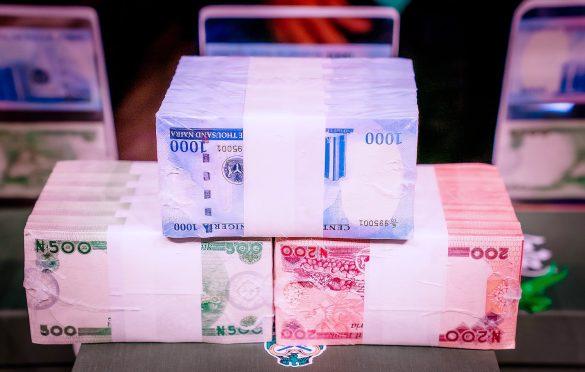
    The biggest topic on the front burner in economic policy discourse in 2022, unexpectedly, is the abrupt decision by the Central Bank of Nigeria, CBN, to redesign the N200, N500 and N1000 notes. The public announcement came on October 26, 2022 by the CBN Governor, Godwin Emefiele, via a press release. The announcement came with mixed reactions from the public, many questioning the importance of such policy in a time when the Naira continues its daily plunging against the dollar and the country facing so many security threats.

    In the press release, the CBN governor stated clearly the reasons and the need for this key monetary policy. We will look at some of those reasons, how they impact the economy and what it means for the general public. It is right to point out that currency management comes within the ambit of roles of the apex bank, CBN, as clearly stated in the section 2(b) of the CBN Act 2007. It is in their duty/rights to maintain the integrity and credibility of the currency.

    Reasons/Benefits of the Redesign

    According to the CBN Governor, Godwin Emefiele, one of the reasons the CBN decided to redesign the bank notes was based on the disturbing fact that the currency had faced several challenges that had gotten not only bigger in scale but more sophisticated in practice. These challenges included significant hoarding of bank notes by members of the public, with statistics showing that over 80% of the currency in circulation was outside the banking sector, which is quite alarming. With the scheme, the central bank aims to take control of the money supply by mopping up all the cash from the economy, both within the vaults of the banks and in the hands of citizens. With the current inflation rate in the country at above 20%, this will serve as an unorthodox way of tightening the money supply. And this serves as a huge opportunity for the CBN to move away from physical cash in business transaction to a more cashless economy. This policy in large part will give the apex bank the opportunity to have full control of the volume of physical cash in the system.

    The increasing sophistication in counterfeiting of the Naira is another reason for the redesign, which the CBN have promised to imprint more security features in the new currency, to help in mitigating and preventing the risks of counterfeit. According to the CBN annual report, a total of 67,265 pieces of counterfeited notes with a nominal value of N56.83millon was recorded in 2021. That is a lot of fake money in circulation threatening the credibility and integrity of the currency. Some of the secondary benefits hinted by the CBN governor was the fact that with the redesign, the ill-gotten cash hoarded by kidnappers, terrorists and politicians will be brought out or face becoming obsolete.

    In view of the prevailing level of security situation in the country, the CBN is convinced that the incidence of terrorism and kidnapping would be minimized, as access to large volume of money outside the banking system used as a source of funds for ransom payment will begin to dry up, the process being under the surveillance of both the CBN and the Economic and Financial Crimes Commission (EFCC). With the effect of this policy, terrorists will have to choose between the risks of being trapped while smuggling the huge amounts they have accumulated through ransom payment into the bank or see it become valueless.

    Another key secondary effect of this new policy is the issue of vote buying. As Nigeria heads to the polls in 2023, the redesigning of the Naira will eliminate and address vote buying and the purchase of permanent voters’ cards in the 2023 elections. Vote buying over the years has always played a role in Nigeria’s polls, helping politicians that have created personal bank vault at home to sway voters with money. This policy will put politicians who have amassed huge financial war chests to prosecute the 2023 election in a tight hole, as all the old currencies are expected to back to the vaults by January 31, 2023 and with Section 2(1) of the Money laundering Act of 2022 which states “No person or body corporate shall, except in a transaction through a financial institution, make or accept a cash payment of a sum exceeding (a) N5,000,000 or its equivalent in the case of an individual or (b) N10,000,000 or its equivalent, in the case of a body corporate. This won’t rule out the whole practice overnight but it will definitely go a long way in mitigating it.

    Restrictions and Regulations on Bank/Cash transaction.

    In a circular issued by the CBN on December 6, 2022, it stated that with effect from January 9, 2023, the maximum over the counter cash withdrawal limits by individuals and corporate organizations per week, would be N100,000 and N500,000 respectively, adding that withdrawal above these limits would incur a processing fees of 5% and 10% respectively. It further stated that the maximum cash withdrawal per week via Automated Teller Machine (ATM), from January 9, would be N100,000 subject to a maximum of N20, 000 cash withdrawal per day. The decision saw a huge backlash from stakeholders involved and the public, who felt that this cash limit policy was out to make an already bad situation even worse. It sparked protests and lobbying among institutions that were involved, as they believed that the decision was taken without adequate consideration of the plight of the masses.

    In a recent circular dated December 21, 2022, the CBN’s Director of Banking Supervision, Haruna Mustafa, stated that the CBN had reviewed its pervious stand on the cash limits imposed earlier, with the maximum weekly limit for cash withdrawal across all channels by individuals and corporate organization being N500,000 and N5,000,000 respectively. The CBN stated also that the new development was a byproduct of the feedback it got from the stakeholders and general public.

    Conclusion

    The CBN took a very decisive step in redesigning the naira and the imposing of strict measures cash transactions and gave straightforward reasons as to why it is necessary. This shows their commitment to safeguarding the integrity of the local legal tender, the efficiency of its supply and the credibility it ought to offer.

    This monetary policy, like every other economic policy, can have the opposite of its intended purpose. It is early to judge if it is the right call or not. We can only be optimistic and hope the best intentions of the CBN and Federal government plays out right.

  • Brain Drain and what it actually means for the Nigerian economy (The new rise of the ‘JAPA-CULTURE’)

    It’s no news of how so many Nigerians have been flooding the shores of Europe and America for better livelihood. With the current insecurity in the country seemingly getting worse, unemployment and underemployment at an all time high, increasing cost of things due to inflation, all making it harder to live in an already fragile economy, thousands of Nigerians are sorting their way out of the country.

    The most outflux of people leaving are professionals and highly skilled workers who can easily get better job opportunities outside of their country. This outflux of people have created what is now termed “BRAIN DRAIN”.

    Brain drain is simply the loss suffered by a country or a region as a result of emigration of highly qualified persons.

    Nigeria has one of the youngest skilled populations in the world. But every year, a large percentage of these young, skilled workers are exported to first world countries for free, which has created a huge intellectual gap in the country’s fragile economy.

    In this article, we will try to understand the consequences that brain drain poses to the economy and the possible upside to it, if there is any to begin with. We will largely be focusing on the health sector and technology sector, two sectors that have been hit the most by this phenomena.

    The Buhari led administration campaigned to Nigerians that top of their agenda when elected into office would be to revive the health sector and abrogate medical tourism, but the reality is far from the case as the president himself and his officials have been seen to betray those promises.

    The 2022 budgetary allocation for the country’s health sector was just N724 billion, which is only 4.2 percent of the entire budget. Again falling short of the Abuja Declaration of 2001 which recommended that at least 15% of our budget should be allocated to the health sector. We have to note that a large chunk of this budgetary allocation goes into recurrent expenditure while little is left for infrastructural development and capital expenditure. For a country that has the fifth lowest life expectancy according to data from WHO, to allocate a paltry 4.2% of the budget to the health sector at a time the country is facing challenges from malaria, cholera, lassa fever, monkeypox and the aftermath of the Covid-19 pandemic, it shows not just the state of the health sector but also how the Federal Government view the needs of the sector.

    Report from the “DAILY POST” shows that Nigeria graduates about 3,000 doctors yearly. With such output of doctors, there shouldn’t be shortage of doctors but is not the reality. According to the Nigerian Medical Association (NMA), Nigeria has lost over 9,000 medical doctors to the UK, US and Canada alone in less than 3 years. This loss has left Nigeria with only 4.7% of its specialists to service the healthcare needs. The World Health Organisation (WHO) stated that Nigeria has a doctor-to-patient ratio of 1:5,000; that is a doctor to 5,000 patients which falls far short of the WHO recommended ratio of 1:600 patients. Over half of the doctors registered with the Medical and Dental Council of Nigeria(MDCN) practice outside Nigeria. It’s an open secret that most Americans and Europeans can’t get medical degrees without incurring a ton of money in student loan debt, while in Nigeria, medical schools and residency training centres in Nigeria are supported by government subvention, an investment that these foreign countries reap. According to MO IBRAHIM FOUNDATION, it costs an African country between $21,000 to $51,000 to train a single medical doctor.

    VANGUARD Nigeria reported that Nigeria has lost more than $2billion since 2010 to training doctors who later migrated to countries such as UK. 10% of doctors working in the UK come from Africa, saving the UK about $2.7billon by recruiting these doctors. Depletion of professionals within a single industry would mean that citizens will go elsewhere for solution. With the shortage of medical consultants, India have become the beautiful bride for middle class Nigerians in search of medical solutions. Reports from DAILY TRUST stated that Nigerians spend over N663 billion annually on healthcare abroad: that almost matches the entire country’s healthcare budget.

    When you think about 70% of Nigerians who live below the poverty line and can’t afford to travel to receive medical treatment, you understand that we can’t afford to let our doctors go.

    IS IT ACTUALLY A BRAIN GAIN OR BRAIN DRAIN? 

    Trying to see the phenomena in a different light, we have to look at whether there is an upside to it. And I think there is.

    According to WORLD BANK records, Nigeria’s annual remittances was estimated to be over $23billion in 2019 and $21billion in 2020, making Nigeria the largest receiver of diaspora remittance in Africa. To put that into a simpler perspective, in 2018, Nigeria earned $32billion from the sell of oil, which is the country’s major export. That is to say that the money from abroad more than doubles our capital expenditure budget. And we have to take into account the possibility that remittances to Nigeria are much higher than they have been officially captured. “The data collected by the central bank are funds sent through the banking system ” says Akinola Owosekun, a Professor of Economics at Bowen University in Iwo southwest Nigeria.

    The World bank and International Monetary Fund (IMF) say remittances sent through informal channels could be 50% higher than those paid using the official systems. So, there is really no way to measure the amount of dollars that comes into the country in cash undeclared.

    The huge question that needs to be answered is what these remittances are being spent on. Are the remittances spent on some social benefits or are they just miscellaneous private spendings by family members? In other to maximize the gains from all these funds, we need to understand the need to invest them in the right programs and ventures. It is a fact that those that send money from abroad, send what will be considered a small fraction of their income, which shows that we can actually generate way more. And as we thank them for the ones that have sent, there has to be a change of mindset of Nigerians in diaspora. They need to understand the importance of timely involvement and the role that their finance will play in building stable social welfare programs that work.

    The Nigerians in Diaspora Commission (NIDCOM) and The Nigerians in Diaspora Organisation (NIDO) can actually play a key role in generating funds, skills and knowledge that will help in attracting more remittances and Foreign Direct Investment (FDI) for the health sector, agriculture, ICT, education and service sector of the country.

    BRAIN DRAIN IN THE TECH SECTOR

    The technology sector holds the same shades of disappointment, where most skilled professionals in the field of TECH, have chosen to leave the country for bigger opportunities.

    The brain drain in Africa as well as the digital skills shortage currently being experienced in the continent calls for concern. As the demand for adequate and up to date cybersecurity systems grows, the knowledge and skill gap in this field is quiet enormous. We have seen how daring cybercriminals can be in targetting national assets, highly reputable firms and even individuals.

    With African Tech presence increasing by the day and Nigeria leading the way in the emergence of new Tech start ups, we need all hands to be on deck in order to harness the full potentials that Africa’s emerging digital market possesses. The Banking and Telecommunication industry have taken the most direct hit in this sector, where key IT persons that companies have trained and invested on, uproot themselves out of the blue with little or no notice to these companies, travel and leave a vacancy that is difficult for most companies to find a stable replacement.

    Start ups in Nigeria and other African nations have raised $3.1billion in the first six months of 2022 according to data from “BIG DEAL AFRICA” and we know that this large amount of investor capital will be used in recruitment of capable personnel that will help to grow all the business. But due to the current outflux of skilled workers in the Tech field, creating an environment for this new and fragile start up to essentially grow and be stable will be hard. The potential that this new Africa market possess is evident for all keen investors to see. According “REST OF WORLD.ORG”, by 2050 Africa’s digital economy will grow six fold to $712billon, this is amidst the challenges facing the continent and that has barely scratched the surface of its potentials. Despite fears, Africa’s venture funding is heading for more large scale increase in funding. Data from “BIG DEAL” reveals the first half of 2022 funding for Africa start ups as topping $3billion in the first six months of the year. For context, funding for all of 2021 was $4.4billon. The Nigeria tech space have been credited to generating a large chunk of these monies, where we have some Nigeria tech companies turning over some ridiculous amount of money. Data from “NAIRAMETRICS” shows that last year alone, Nigeria start-ups attracted over $150billon, which was 35% of the total investment that came into Africa in 2021.

    Nigerian youths have become a shining light in the continent, with the development of innovative products that addresse key challenges, from Fintech to Edtech, they are breaking new grounds.

    Let’s look briefly at some companies that are on the front line of this trend.

    With the country’s health deteriorating at a fast rate, young Nigerian are using their digital skills to solve some the problems. One company at it now is, “RELIANCE HEALTH”, has been at the fore front of this quest to give Nigerians and Africans standard healthcare services that they can trust. Started in 2016 by DR. FEMI KUTI, OPEYEMI OLUMEKUN AND MATTEW MAYAKI,Reliance Health is an emerging market focused digital healthcare provider, who in February 2022 generated $40millon in its series B funding round, funds provided to better address the complex needs of today’s patients.

    BAMBOO, a brokerage app that lets Africans buy and trade US stocks in real time, is a fast growing Fintech company that is breaking boundaries. In January 2022, they raised $15millon series A funding round which aims to accelerate its growth, move into new markets and launch more products. BAMBOO was founded by two young Nigerians, RICHMOND BASSEY and YANMO OMOROGBE in January of 2020 and since than have employed so many other youths with digital skills.

    MOOVE a Nigeria based mobility fintech start-up founded in 2019 by British born Nigerian, LADI DELANO and JIDE ODUNSI, in March 2021, raised $105millon in an oversubscribed series A2 funding round to scale up their business into new markets. MOOVE provides loan to mobility entrepreneurs by selling them new vehicles and financing up to 95% of the purchase within five days of sign up. Users choose to pay back loans over a 24, 36, or 48 month period.

    In conclusion, as Nigeria is experiencing the adverse effect of poor leadership, insecurity, diseases and a general downturn in the economy of the country, which has resulted in so many Nigerians seeking to leave at any given opportunity, the case still remains that whether you are leaving or staying, Nigeria is our own and no one can take that away from us. Let Nigerians quit whining about the government and its poor policies but rather start focusing on ways to add values. Let’s join the visionary and focused Nigerians who are creating innovations, opportunities, resources and value using their digital skills and hard work. Maybe then we might see our country fulfil its long awaited potentials.

  • We ordered 500m pieces of new naira notes –CBN

    We ordered 500m pieces of new naira notes –CBN

    The Central Bank of Nigeria (CBN) has said it ordered 500 million pieces of the redesigned naira notes introduced recently.

    Its governor, Godwin Emefiele, stated this yesterday, when he briefed the House of Representatives on the new cash withdrawal limit introduced by the apex.

    The CBN boss, in reaction to a question on the quantity of the redesigned N1000, N500 and N200 notes printed, especially as the new notes are being rationed in commercial banks, said: “We ordered 500 million pieces of currency from the mint. That is what has been ordered.”

    Emefiele, who was represented by the CBN deputy governor, in charge of Financial System Stability, Aisha Ahmad, said the new cash withdrawal limit was not politically motivated.

    The House had two weeks ago summoned the CBN boss to appear before it after lawmakers kicked against the policy saying it was inimical to country’s economy.

    Emefiele after failing to appear before the House twice for varied reasons, delegated Ahmad to represent him, yesterday.

    The deputy governor explained that the new cash withdrawal limit was a continuation of the cashless policy, which kicked off in 2012.

    Ahmad, in response to conspiracy theory by some lawmakers that the cash withdrawal limit is a ploy to weaken opposition parties, ahead of the 2023 polls, noted that the polices of the apex bank were not politically motivated.

    “We have to make it very clear that the CBN is an independent institution. Our decisions are taken based on research, data and it is the work of many teams working together across the different directorates. At no time do we make decisions based on any political consideration and I think it’s important that I state that.

    “Our policy pronouncement on December 5 was a continuation of the cashless policy that we started 10 years ago and it was in recognition of the positive changes that have happened in the financial and payment system since the cashless policy was first launched.”

    She noted that though there might be some challenges associated with the policy, the benefits far outweigh the challenges, adding that the benefits include a reduction in cash processing cost, minting, costs of destroying old notes and moving cash around.

    “Also, this is an opportunity to promote Nigeria’s positive image from money laundering perspective. Even the recently passed Anti-Money Laundering Law has limits for cash for a reason because cash is usually the medium by which some of these nefarious activities are done.”

    He further explained that “the data available to us shows that 94 percent of all cash transactions falls below the N500,000 limit and this includes in areas in the country that are not part of the cashless policy. Eighty two percent of corporate transactions also are below this limit.

    “What does this mean? It means that 94 percent of all individual transactions will not be affected by this fees that we have talked about. I have seen some misconceptions about the fees that we are charging the fees on the entire amount that wants to be withdrawn.

    “The fees are to be charged on any withdrawal above the limit. For example, if you are withdrawing N550,000, the fee will be on the N50,000. We also looked at transactions for agents. So, transactions by Nigerians that go to the agent’s location and transactions by the agent’s themselves, the average cash transactions of agents is N2,184,000 which is clearly within the current limit.

    “The average transaction per individual that walks up to an agent is about N18,000. What the policy is trying to do is to encourage more people to come into the formal payment system because of the numerous benefits that accrue.”

    She said the policy was expected to create new jobs in the ICT sector, contrary to insinuations that it would lead to job lost.

    She said operators of Point on Sales (POS) would not be affected by the policy, adding that CBN was aware POS had created a means of livelihood for about 4.4 million.

    The speaker, Femi Gbajabiamila, said the House would meet and deliberate on the brief by the CBN boss. “Reason the House needed to be briefed under the contemplation of the law was because this House represents the people out there. So, by briefing the House, we can now go back, assuming we agree with your policy to our constituents and let them know what is going on and why it is going on.”

    (Sun)

  • Counterfeiting concerns: CBN releases security features of new Naira notes

    Counterfeiting concerns: CBN releases security features of new Naira notes

    Amidst concerns of counterfeiting, the Central Bank of Nigeria (CBN) on Wednesday, released details and position of the security features in the new Naira notes.

    There had been concerns from Nigerians after the Deposit Money Banks (DMBs) started circulating the notes last week.

    Many respondents who spoke to the reporter said they were afraid of being victims of counterfeits as a viral video raised the alarm over the presence of a counterfeited N1,000 new Naira note.

    However, the CBN in a statement obtained from its website noted that to recognise the N1,000 notes, users should look out for intaglio raised print, portrait watermark, officially variable ink that changes from blue to green with change in angle of view, kinegram with the image of N1,000 and Coat of Arms, iridescent band, windowed metallic security thread and see through printing in register.

    Describing the security features on N500 note, the CBN said that the note includes a hand-engraved portrait, windowed metallic security thread with CBN inscription, CBN 500 watermark, portrait watermark, officially variable ink that changes from blue to green with change in angle of view, silver patch with embossed Coat of Arms, see through printing in register and raised intaglio print.

    “Also, the N200 has several security features including hand-engraved portrait, windowed metallic security thread with CBN inscription, CBN 200 watermark, portrait watermark, officially variable ink that changes from blue to green with change in angle of view, gold patch with embossed Coat of Arms, see through printing in register and raised intaglio print.

    Aside, these criteria, there are also other five simple guidelines on a Naira note that will help holders of the currency to differentiate a counterfeit Naira from a genuine one.

    The first step to identifying a genuine banknote from the counterfeit is to check the texture”, It said.

    Findings showed that a soft texture and dull image are indicators of a fake naira. That means one should be sensitive to the touch of the banknote when carrying out a transaction. There is also need to observe the gold foil on the right side, close to the CBN governor’s signature. One can also differentiate the genuine naira note from counterfeit by applying liquid to the note, and a fake currency can easily change colour.

    Also, the ribbon-like thread on all Naira notes can also be observed and touched to confirm if the note is genuine or otherwise. One can also raise a naira notes on a mercury bulb. This exercise enables the one to see many features of the local currency, not visible to the naked eyes, among others.

    Meanwhile The Pacesetter Frontier Magazine had earlier reported that the Central Bank of Nigeria (CBN)  increased the maximum weekly limit for cash withdrawals across all channels by individuals and corporate organisations to N500,000 and N5million, respectively, on Wednesday.

    The earlier limit for over-the-counter weekly cash withdrawal for individuals was N100,000 and N500,000 for corporate entities.

    The apex bank warned banks and other financial institutions to live above board as anyone caught aiding and abetting the circumvention of the policy will be severely sanctioned. The increase was contained in a letter signed by Haruna Mustafa, CBN’s Director of Banking Supervision and addressed to Deposit Money Banks DMBS and other financial institutions, Payment Service Banks PSBs Primary Mortgage Banks (PMBs) Microfinance Banks MFBs Mobile Money Operators MMOs and Agents. Under the new rule, anyone or organisation that has a compelling need to withdraw above the approved limits to transact legitimate businesses will pay a processing fee of 3% and 5% for individuals and corporate organizations, respectively.

    Aside that, the financial institution shall obtain the following information from the customer, at the minimum, and upload same on the CBN portal created for the purpose: Valid means of identification of the payee (National ID, International Passport, or Driver’s License); Bank Verification Number (BVN) of the payee; Tax Identification Number (TIN) of both the payee and the payer; Approval in writing by the MD/CEO of the financial institution authorising the withdrawal.

    More so, third party cheques above N100,000 shall not be eligible for payment over the counter, while the extant limit of N10 million on clearing cheques still subsist. The letter added: “Monthly returns on cash withdrawal transactions above the specified limits should be rendered to the Banking Supervision, Other Financial Institutions Supervision and Payments System Management Departments as applicable.

    “Compliance with extant AML/CFT regulations relating to KYC, on-going customer due diligence, currency and suspicious transaction reporting etc. is mandatory in all circumstances.

    “Customers should be encouraged to use alternative channels (internet banking, mobile banking apps, USSD, cards/POS, eNaira, etc.) to conduct their banking transactions.

    “Bank and Mobile Money Agents are important participants in the financial system, enabling access to financial services in underserved and rural Communities. They will continue to perform these strategic functions, in line with existing regulations governing their activities. The CBN recognizes the vital role that cash plays in supporting underserved and rural communities and will ensure an inclusive approach as it implements the transition to a more cashless society.

    “The above directives supersede that of December 6, 2022 and take effect nationwide from January 9, 2023”, it explained.

    The cash withdrawal limit policy has pitched the apex bank against various sectors of the economy, including the national assembly, who insisted the CBN must rescind the move.

    It said the increased withdrawal limit was as a result of the feedback it got from relevant stakeholders.

    (Sun)

  • JUST IN: CBN adjusts withdrawal limits, raises weekly limits to N500K for Individuals, N5m for firms

    JUST IN: CBN adjusts withdrawal limits, raises weekly limits to N500K for Individuals, N5m for firms

    The Central Bank of Nigeria (CBN) on Wednesday bowed to pressure from many Nigerians and announced an upward review of its cash withdrawal limits directive.

    Individuals can now withdraw N500,000 cash weekly and corporate entities can now withdraw up to N5 million cash across all channels including Automated Teller Machines (ATMs) and Point Of Sale (PoS) terminals, the apex bank said in a circular issued on Wednesday and signed by its Director of Banking Supervision, Haruna Mustafa.

    The directive becomes effective from January 9, 2023, the apex bank maintained.

    The CBN had on December 6, 2022 ordered Deposit Money Banks (DMOs) and other financial institutions to ensure that weekly over-the-counter (OTC) cash withdrawals by individuals and corporate entities do not exceed N100,000 and N500,000, respectively.

    The directive sparked outrage from Nigerians and the National Assembly who disapprove of the policy.

    However, the apex bank on Wednesday adjusted the weekly cash withdrawal limits to N500,000 for individuals and N5m for corporate firms.

    (Channels TV)

  • Court Summons CBN, Emefiele, AGF to Defend Suit Challenging Naira Redesign Policy

    Court Summons CBN, Emefiele, AGF to Defend Suit Challenging Naira Redesign Policy

    The Central Bank of Nigeria (CBN), its Governor, Mr. Godwin Emefiele and the Attorney General of the Federation, Abubakar Malami have been dragged to a Federal Court in Awka over the implementation of the naira redesign policy.

    The redesigned currencies N1,000, N500 and N200 went into circulation on December 15, 2022, and would finally displace the old notes by the end of January 2023.

    But the Incorporated Trustees of a non-governmental organisation and the African Initiative against Abuse of Public Trust had filed a suit on behalf of over 50 million Nigerians in rural areas who have to bank account, to stop the CBN from implementing the policy.

    In the Suit marked FHC/AWK/CS/195/2022 filed by Mr. N. D. Agu, on behalf of the plaintiff, the court had on November 30, 2022, delivered a ruling granting the application in part and gave an order for the defendants to be served with the motion ex parte dated November 18, 2022, but filed on November 29, 2022.

    But the court presided over by Hon. Justice H. A. Nganjiwa directed the plaintiff to put the defendants on notice to compel them to appear before it and show cause why the plaintiff’s prayers should not be granted.

    An Aba-based lawyer, Chief Musa Tolani, the counsel to the three defendants told journalists yesterday at the commercial city of Aba that the plaintiff’s prayers were for the court to order an interim injunction stopping the policy implementation.

    According to the plaintiff, the policy on redesigned naira should not be implemented until, “a clear policy (is put in place) on how to accommodate over 50 million Nigerians without bank accounts.”

    The plaintiff, therefore asked the court to issue an order restraining the defendants, particularly, the CBN and Emefiele, either by themselves or their proxies or agents, “from taking any step to enforce the implementation of the policy without protecting the interest of unbanked Nigerians.”

    The reliefs sought by the plaintiff included granting accelerated hearing and determination of the substantive originating summons, granting the claimant leave to serve the defendants with the court processes by substituted means by posting or courier services.

    They also prayed the court for an, “order of departure from the rules by abridging the time within which the Defendants may file their respective Counter Affidavit to substantive Originating Summons to a period of five days from the date of service of the processes.”

    After the counsel informed the court that both the CBN and Emefiele had served the plaintiff with their responses to the originating process, Justice Nganjiwa granted the relief to the plaintiff to serve the third defendant, Malami with the originating summons.

    However, citing, “the nature and far reaching effects,” of two of the reliefs sought, the court refused to grant an order of interim injunction restraining the defendants, especially CBN and its governor, from implementing the naira redesign policy.

    It also refused to bar the CBN and Emefiele, “from taking any steps to dissipate, discountenance or in any other manner inhibit over 50 million Nigerians without bank accounts from using alternative means and or physical means to exchange old notes with the redesigned notes.”

    The court said that it, “finds it very difficult to grant the said reliefs wiithout hearng from the other side” and adjourned the matter to January 19, 2023 for hearing of motion on notice for interlocutory injunction.

    (This day)

  • Scarcity of new naira notes hits, as banks, ATM continue to dispense old notes

    Scarcity of new naira notes hits, as banks, ATM continue to dispense old notes

    Five days after the Deposit Money Banks (DMBs) began dispensing the newly-redesigned naira notes, depositors are lamenting the scarcity of fresh currency, as banks have continued to dish out the old notes slated to be binned by January 31, 2023.

    Against this backdrop, bank customers are querying the rationale behind having more of the old notes constituting the bulk of cash dispensed by the banks and Automated Teller Machines (ATMs), when their lifespan is barely a month away.

    Although the Central Bank of Nigeria (CBN) says the volume of the new notes would be far less than what currently obtains with the old notes, the Nigerian business community is appealing to the regulator to put more new notes into circulation.

    While the banks are rationing the new notes, Daily Sun gathered that currency traffickers and influential individuals are allegedly colluding with banks to mop the little available new notes released to them by the CBN.

    Timothy Akparawa, a businessman in Wuse Market, told Daily Sun that getting the new notes has become a huge challenge since they were released.

    “I have been to three of my banks to get the new notes but to no avail. The cashiers are still paying out the old notes. Same with the ATMs. This is a serious problem because we have about a month to stop using the old notes”, he lamented.

    Also lamenting, Florence Agada, a Point of Sales operator, said her customers were uncomfortable accepting the old notes.

    “Some of my customers don’t want to collect the old notes anymore. They said it will soon expire , but banks are not giving us new notes. They keep asking us to check the next day. It’s been one story after the other. No new notes. We also have issues around acceptance of the new notes in some remote areas”, she said.

    Commenting on the development, the Chief Executive Officer, Centre for the Promotion of Private Enterprise (CPPE), Muda Yusuf, told Daily Sun that the CBN should be given the benefits of doubts to quickly fine-tune logistics challenges that may have been encountered in the initial rollout of the new notes.

    “CBN should not underestimate the huge logistics required to ensure the new notes get to every nook and cranny of the country. Nigeria is a vast country and we must ensure the new notes get to all areas, especially remote places. A programme like this requires sound preparedness. By now, ATMs should not be dispensing old notes. It should not be”, he said.

    Several institutions and groups have continued to complain about the currency withdrawal limit policy, with States Governors urging President Muhammadu Buhari to compel the CBN to rescind the move.

    (Sun)

  • FG Targets $12trn GDP in 2050 Development Agenda

    FG Targets $12trn GDP in 2050 Development Agenda

    The federal government has disclosed that the much-anticipated development blueprint, Agenda 2050, was being finalised for launch, with a target of catapulting Nigeria into a $12 trillion gross domestic product (GDP) economy in the next 17 years. The Minister of Finance, Budget and National Planning, Mrs. Zainab Ahmed, made the disclosure in a keynote address presented at the launch of the National Plan on Financing Safe Schools in Nigeria. The Plan is a national investment response aimed at protecting ‘At-risk’ schools, learners, teachers, and non-teaching staff from attack.

    At the event which took place in Abuja, the minister said: “I am pleased to inform you that our development agenda- Agenda 2050- is being finalised for launch. The development plan focuses on achieving inclusive growth through the implementation of the long-term economic transformation blueprint aimed at mitigating our current developmental challenges and attaining the upper middle-income country status. “With an average real GDP growth rate of 7%, a GDP of about US$12 trillion by 2050, and an end period per capita income of US$33,000 per annum. “These lofty targets can only be actualised if all critical stakeholders collaboratively create safer teaching and learning environments across Nigeria via critical intervention investments as captured in the validated cost plans of action.” On the financing of safe schools, the minister said the Plan which is a four-year investment plan was developed through rigorous consultative strategic engagements with all relevant critical stakeholders in the education and security sectors at national and sub-national levels such as the Federal Ministry of Education; Nigeria Police Force; Nigerian Security and Civil Defense Corps (NSCDC); Department of State Security (DSS); Defense Headquarters (Army, Navy and Air Force). According to her, the 36 states and Federal Capital Territory Ministries of Education, Finance and Budget, development partners; donor agencies and civil society organisations. Ahmed noted that the National Plan will be implemented between 2023 and 2026, with a total investment size of N144.8 billion. The Plan proposes N32.58 billion in 2023, N36.98 billion in 2024, N37.15 billion in 2025, and N38.03 billion in 2026, respectively. “To this end, the federal government has made a provision of N15 billion in the 2023 budget, leaving a funding gap of N13.6 billion in 2023, expected to be filled by state governments, agencies, the private sector, and development partners interested in supporting Nigeria,” the minister said. She encouraged all relevant stakeholders- national and subnational, to speedily facilitate implementation at various levels. She stressed: “Likewise, I urge development partners and civil society organisations to hold us accountable via periodic evaluation of our performance, which will complement the government’s tracking through the implementation of a robust financing safe schools secretariat Monitoring and Evaluation mechanism.” The National Plan on Financing Safe Schools aims to cover 50 per cent of the Most-At-Risk public schools over the medium term (2023-2026). Implementation will commence with the Very High-Risk States in 2023, while the implementation with the High-Risk States will follow in 2024.

    (This Day)

  • Emefiele tasks banks on ‘actionable plans’  to boost foreign exchange inflow

    Emefiele tasks banks on ‘actionable plans’ to boost foreign exchange inflow

    Governor, Central Bank of Nigeria, Mr. Godwin Emefiele yesterday called on banks and stakeholders in the financial sector to come up with actionable plans to boost foreign exchange inflow from non-oil exports.

    Emefiele made this call in his opening remarks at the 13th annual Bankers Committee retreat held in Lagos with the theme, “Increasing the Productive Base of the Nigerian Economy and Non-Oil Export Revenues,”

    Emefiele stressed that the nation needs actionable plans to boost non-oil revenue given the sharp decline in forex inflow from oil exports triggered by various factors bedevilling the global economy

    Consequently, Emefiele challenged the gathering of bank executives on the need to come up with measures to resolve structural issues inhibiting Nigeria’s non-oil export receipts as well as strengthen the immunity and engender the resilience of the economy against exogenous shocks.

    He said, “We must, in an attempt to walk towards diversifying the nation’s economy, think about how we can be less reliant on crude revenues. We are in the business of servicing our customers and servicing customers also entails that they have import needs and they need foreign exchange to conduct their import activities.

    “To do so means you need foreign exchange for solving them. There is a clear shortage of foreign exchange today but yet as bankers, we must meet the needs of our customers. The market is tight and I know we don’t have a choice, we will have to do something to ensure that this problem is solved.

    “That is the reason we decided at this retreat to focus on RT200 because essentially, we have to think about how to source foreign exchange for our customer’s needs without necessarily needing to resort to revenues from crude which as we all know has come to zero or almost zero compared to about $3 billion monthly that we were getting in 2014″

    Speaking further, the CBN Governor said: “This retreat is convened to focus on the development of the local manufacturing industry and non-oil sectors, more broadly, and particularly to enhance the sector’s capacity to generate foreign exchange inflows. The focus is even more germane considering the enormity of the global economic turbulence, as wave after wave of negative shocks continue to ravage many countries.

    “The Bankers’ Committee must recognise the critical role of the financial system in accelerating the development of the productive base of the economy. We must play our productive parts to engender the necessary infrastructure and services that are critical to boos non-oil exports.

    “The 2022 Bankers’ Committee Retreat provides us with the opportunity to review the progress and impact of implementation of RT200. It is equally an occasion to re-examine our support for other government programmes to promote non-oil export and to identify specific implementable actions by the financial system to enhance foreign exchange revenues.

    “At this retreat, we must come up with actionable steps to ensure that the Bankers’ Committee continues to make meaningful contributions to the growth and development of our dear country.”

    (Vanguard)