Category: Business/Economy

  • Despite Cash Scarcity, Inflation Rate Rises To 21.91% – NBS

    Despite Cash Scarcity, Inflation Rate Rises To 21.91% – NBS

    The National Bureau of Statistics (NBS) says the country’s headline inflation rate rose to 21.91 percent in February 2023 compared to 21.82 percent of January 2023, indicating an increase of 0.09 percent points.

    The bureau stated this in its report titled ‘Consumer Price Index (February 2023)’.

    The report comes as the country attempts to bounce back from months of naira scarcity occasioned by the naira redesign policy of the Central Bank of Nigeria (CBN) first announced on October 26, 2022.

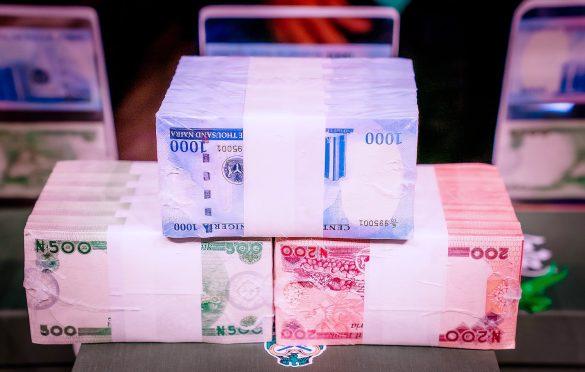
    The CBN launched the redesigned N200, N500 and N1,000 banknotes in November 2022 in a bid to tackle cash hoarding and vote-buying ahead of the 2023 general elections.

    The extended deadline of February 10 was enforced amid a Supreme Court ruling allowing the validity of the old notes.

    “In February 2023, the headline inflation rate rose to 21.91% compared to January 2023 headline inflation rate which was 21.82%,” it stated.

    “Looking at the trend, the February 2023 inflation rate showed an increase of 0.09% points when compared to January 2023 headline inflation rate.”

    Similarly, on a year-on-year basis, the headline inflation rate was 6.21 percent points higher, compared to the rate recorded in February 2022, which was 15.70 percent.

    “This shows that the headline inflation rate (year-on-year basis) increased in February 2023 when compared to the same month in the preceding year (i.e., February 2022),” the report stated.

    “The contributions of items on a class basis to the increase in the headline index are presented, thus: Bread and Cereal (21.67%), Actual and Imputed Rent (7.74%), Potatoes, Yam and Other Tubers (6.06%), Vegetable (5.44%) and Meat (4.78%).”

    The NBS noted that on a month-on-month basis, the percentage change in the All-Items Index in February 2023 was 1.71 percent, which was 0.16 percent points lower than the rate recorded in January 2023 (1.87 percent).

    “This means that in February 2023, on average, the general price level was 0.16% percent lower relative to January 2023.

    “The percentage change in the average CPI for the twelve months period ending February 2023 over the average of the CPI for the previous twelve months period was 19.87%, showing a 3.15% points increase compared to 16.73% recorded in February 2022. The increases were recorded in all COICOP divisions that yielded the headline index.”

  • Naira Redesign: Commercial Banks Resume Issuance of Old N500, N1000 Notes

    Naira Redesign: Commercial Banks Resume Issuance of Old N500, N1000 Notes

    Naira Redesign: Commercial Banks Resume Issuance of Old N500, N1000 Note

    Some commercial banks in Nigeria on Monday resumed the issuance of the old N500 and N1000 denominations to the public.

    The move followed a Supreme Court judgement, which extended the validity of the banknotes till December 31, 2023.

    In another development, the Central Bank of Nigeria (CBN) on Monday disclosed that total repayments under its Anchor Borrowers’ Programme (ABP) stood at N503 billion, representing 52.39 per cent of total exposure.

    On the issuance of the old banknotes to customers, the reporter gathered that the absence of a statement by either President Muhammadu Buhari or the apex had resulted in uncertainty, as businesses in Abuja and other places continued to reject the old denominations.

    Since the Supreme Court’s ruling, no further clarification or directive had been issued by the central bank, a situation that has caused the banking public to take precaution with regard to the old notes.

    It was further learnt that some GTBank and Access Bank branches paid out the old banknotes in Abuja. In Lagos, it was gathered that Sterling Bank and Access Bank at Iyana Ipaja loaded the old N1000 and N500 notes on their ATMs and people were withdrawing them.

    However, scarcity of cash remained evident across the Federal Capital Territory (FCT), as practically none of the Point of Sale (POS) agents had cash at the time of the check.

    A POS operator told THISDAY that it was sickening to idle at banking premises only to be given between N2000 and N5000 at the end of the day.

    Findings further revealed that many POS operators resorted to online money transfers and did very little cash exchanges.

    Analysts, however, believed that cash availability and circulation would greatly improve in the coming days following the apex court’s decision. They also hoped that the conclusion of the general election next week would lead to some monetary policy decisions that would improve cash circulation in the economy.

    Ultimately, providing clarity and direction on the court’s ruling would quell apathy on the part of the banking public, many believe.

    Meanwhile, CBN yesterday disclosed that total repayments under its ABP stood at N503 billion, representing 52.39 per cent of total exposure.

    Addressing journalists in Abuja, CBN’s acting Director, Corporate Communications Department, Dr. Abdulmumin Isa, added that the balance of N 119 billion was not due for repayment.

    The International Monetary Fund (IMF) last week said only 24 per cent of loans collected by farmers under the ABP had been repaid. This implied that 76 per cent of the loans were yet to be paid.

    But in his reaction to the IMF, Isa said the CBN remained committed to its development finance mandate of stimulating access to finance for the real sector.

    Providing further update on the ABP, Isa said the bank had released the sum of N1.08 trillion, as of February 28, 2023, of which N960 billion was due for repayment. He said CBN ABP had supported about 4.57 million smallholder farmers who cultivated over 6.02 million hectares of 21 commodities across the country as of February 2023.

    He listed the commodities to include rice, wheat, cowpea, millet, maize, cotton, fish, soya bean, poultry, and cassava.

    Others are groundnut, ginger, sorghum, oil palm, cocoa, sesame, tomato, castor seed, yellow pepper, onions, and cattle/dairy.

    Further citing data from the Food and Agriculture Organisation (FOA), the acting director noted that the ABP had contributed significantly to increased national output of focal commodities, with maize and rice peaking at 12.2 million metric tonnes and 9.0 million metric tonnes in 2021 and 2022, respectively.

    Isa said the programme had also helped to improve the national average yield per hectare of these commodities, with productivity per hectare almost doubling within the eight years of the programme’s implementation.

    Isa further noted that repayments under the ABP were made through cash or produce by the beneficiaries, adding that the outstanding due balance on loans was still under moratorium due to the COVID-19 forbearance granted to beneficiaries through the apex bank’s interventions in March 2020 and extended to February 28, 2022.

    Isa explained, “It is pertinent to note that the tenure of loans under the ABP is based on the commodity gestation period. For instance, loans granted to farmers cultivating some perennial crops could have up to seven-year tenure.

    “The CBN remains committed to its development mandate of stimulating access to finance for the real sector, particularly agriculture, as it continues to support the federal government’s drive for food security and economic growth.

    “Accordingly, the CBN continues to welcome applications from eligible Nigerian farmers and firms under the Anchor Borrowers’ Programme.”

    Isa added that the central bank’s core objective of catalysing the productive base of the economy had continued to support investments in capital assets in sectors with high-growth and employment-elastic potential through its various interventions.

    (Arise News)

  • CLARIFICATION: We didn’t ask banks to collect old N500, N1,000 notes — CBN

    CLARIFICATION: We didn’t ask banks to collect old N500, N1,000 notes — CBN

    The Central Bank of Nigeria, CBN, has said it did not direct banks to collect the old N500 and N1,000, as earlier reported.

    Director, Corporate Communication, Mr. Osita Nwanisobi, stated this in response to media reports that the apex bank had directed commercial banks to collect the old N500 and N1,000.

    He said: “The attention of the Central Bank of Nigeria has been drawn to some fake and unauthorised messages, quoting the CBN as having authorised the Deposit Money Banks to collect the old N500 and N1,000 banknotes.

    “For the avoidance of doubt, and in line with Mr. President’s broadcast of February 16, the CBN has been directed to ONLY re-issue and recirculate the old N200 banknotes and this is expected to circulate as legal tender for 60 days up to April 10.

    “Members of the public should, therefore, disregard any message and/or information not formally released by the Central Bank of Nigeria on this subject.

    “Media practitioners are advised to PLEASE verify any information from the correct sources before publication.”

    The report was in sync with the method of returning old notes, which was still on the homepage of CBN at the time of the report.

  • Naira Redesign: CBN directs banks to accept old N500, N1000 notes 

    Naira Redesign: CBN directs banks to accept old N500, N1000 notes 

    The Central Bank of Nigeria (CBN) has asked banks to start collecting old N500 and N1000 notes from customers.

    Osita Nwanisobi, spokesman of the apex bank, disclosed this on Friday, stating that any amount above N500,000 could not be deposited.

    The development comes amid the nationwide outrage over the rejection of the notes which President Muhammadu Buhari declared were no longer legal tender.

    In his national broadcast, Buhari had asked Nigerians to take old N500 and N1000 notes to the CBN.

    Nigerians had trooped to the apex bank offices to deposit their old notes.

    As the bank officials struggles to control the crowd, they directed them to commercial banks but the people refused.

    Details later…

    (Daily Trust)

  • Pinnacle Oil and Gas Petitions DSS, Alleges Plot to Breach Peace, Sabotage Economy

    Pinnacle Oil and Gas Petitions DSS, Alleges Plot to Breach Peace, Sabotage Economy

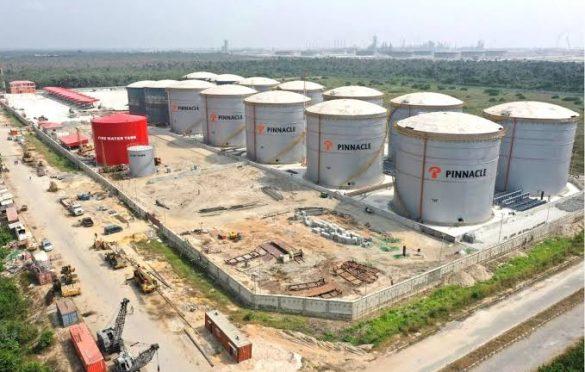
    Pinnacle Oil and Gas Limited has petitioned the Director-General of the Department of State Services (DSS) alleging a sinister plot by political opponents of its Founder/Chief Executive Officer and the Peoples Democratic Party (PDP) governorship candidate in Enugu State, Dr. Peter Mbah, to cause a breach of the peace and sabotage the national economy by instigating protests at its terminal situated at the Lekki Free Zone, Ibeju Lekki, Lagos.

    Pinnacle Oil and Gas is the market leader in the petroleum downstream subsector.

    In a letter signed by its Managing Director, Robert Dickerman, the company alleged that persons suspected to be Mbah’s political opponents in his home state were desperately trying to recruit the company’s partners and customers, to stage massive and well-publicised protests at the facility over “a totally false and absolutely non-existent failure to fulfill the terms of product supply contract with marketers”.

    It alleged that the plotters were seeking to create the impression that Mbah channelled monies paid to the company for supply of products to his governorship project, thereby precipitating the fuel shortages across the country.

    The company described the narrative as “totally malicious, untrue and unpatriotic, and shows how far his (Mbah’s) political opponents in his home state are ready to go to stop him even if their sinister plot to destabilize the national economy not minding the various difficulties, including fuel shortages faced by Nigerians”.

    It stated, “This wicked machination to complicate current national economic and security situation due to challenges of fuel distribution in Nigeria, is geared towards not only destroying the facility and reputation of Pinnacle Oil and Gas Limited and its Founder/Chief Executive Officer across the country and beyond, but also to cause a major breach of peace and security across the country in an election month.

    “Pinnacle Oil and Gas Limited is a well governed corporate organisation with an effective Board, hence insulated from whatever political ambitions being pursued by its Founder/CEO.

    “We are the undisputed market leader in the downstream subsector of the Nigerian oil and gas industry. Our records as a major factor in ameliorating the challenges of fuel distribution in Nigeria is public knowledge and well published on NNPCL’s website and verified social media handles”.

    It therefore called on the DSS to “immediately step into the matter to not only nip the planned chaos in the bud, but also to thoroughly investigate it and bring all the culprits to book in overall national interest”.

    (This Day)

  • Banks reject old notes despite Supreme Court’s order 

    Banks reject old notes despite Supreme Court’s order 

    Deposit Money Banks (DMBs) across the country yesterday started rejecting the old naira notes despite the Supreme Court order extending the deadline till tomorrow, February 15 when an action would most likely be taken.

    Daily Trust findings across several states of the country and the Federal Capital Territory (FCT) indicates that the commercial banks were turning down customers who had walked into their branches to deposit old notes collected over the weekend.

    Recall that a seven-member panel of the Supreme Court, last week, issued an order of interim injunction halting the plan by the Central Bank of Nigeria (CBN) to end the use of the old banknotes of N200, N500, and N1, 000.

    The court adjourned the hearing of the main case until tomorrow, February 15.

    The decision follows a lawsuit filed by the governors of Kogi, Kaduna and Zamfara states, who challenged the naira redesign policy of the Muhammadu Buhari-led federal government.

    This development left many Nigerians confused. While some were accepting the old notes, others blatantly refused them.

    In the same vein, President Buhari who had asked for 7 days to enable him to resolve the crisis caused by the scarcity of new naira notes has remained silent.

    Analysts have expressed concern that despite the intervention of the National Council of States, there is no policy statement from both the FG and the CBN, beyond the rhetoric that more of the new notes be printed or the old ones recalculated.

    Daily Trust correspondents, who visited commercial banks in Lagos, Abuja, Kwara, Ondo, and Bayelsa states amongst others, observed that the old notes were rejected by the banks.

    “I was shocked that the old notes were rejected at the bank today. I took the money I had with me but the bank rejected the old N500 notes,” lamented Mrs Juliet Okoro, who visited one of the old-generation banks in Ikeja.

    The situation in Bayelsa State was different as almost all the commercial banks in Yenagoa, the state capital, shut down operations over the alleged security threats to the banks.

    The commercial banks around the Amarata axis of Yenagoa, the state capital, were totally closed down with only security men on duty, while Automated Teller Machines (ATM) were not dispensing, as no cash was stored inside.

    Similarly, many commercial banks in Ondo State rejected the old currencies from customers yesterday.

    According to our reporter in Akure, many customers who besieged the Jaiz Bank at Alagbaka quarters of the state capital said they were advised by the official to take their old notes to the CBN.

    Another customer, Mr Owamoyo Tolani Okolo explained that the old notes with him were also rejected at one of the commercial banks located in Owo.

    Top officials of UBA, Jaiz and FCMB in Ilorin who spoke with Daily Trust on anonymity confirmed the development adding that all banks in the state have officially started to reject the old notes.

    A top management staff of one of the new-generation banks also added that the banks were waiting on the CBN for the next line of action.

    He said the banks were not parties in the suit filed by the governors so they were waiting for the CBN to issue a directive on the order.

    Majority of Zenith Bank branches in the Federal Capital Territory have been shut down due to scarcity of cash, Daily Trust can report. Most of the branches visited in the city centre by Daily Trust were under lock and key with bold notice of closure on the gates.

    However, the few branches working were filled with massive crowds who were left unattended due to network glitch and scarcity of cash.

    At one of the branches visited by Daily Trust on Monday in the Wuse area of Abuja, the branch manager, when asked why most of their branches in the FCT were shut down, said it was not necessary to open several branches without cash to service customers.

    While addressing the mammoth crowd at the entrance of the bank, he said, “Only customers with fund transfer slips will be serviced as the branch currently does not have cash supply from CBN for the day, but will attend to customers and load ATMs as soon as cash comes.”

    Filling stations, supermarkets reject old naira notes

    Many business operators, especially filling stations and supermarkets across the country have started rejecting the old naira notes despite an order of the Supreme Court temporarily halting the ban on their use.

    Findings by our correspondent revealed that the government’s filling station – the Nigerian National Petroleum Company Limited (NNPCL) – is at the forefront of those rejecting the old naira notes from customers.

    Our correspondents in Abuja report that fuel attendants at the NNPCL petrol stations in Berger and Zone 4; Total filling stations in Zone 3, Central Area (opposite NNPCL Towers) and Area 11; Conoil in Central Area (opposite NNPCL Towers) and the NNPCL Mega Station in Central Area all rejected the old notes over the weekend.

    It was only in the Conoil in the Central Area that the POS was working while all the other petrol stations said their POS were not working due to network glitch.

    Also, the popular Shoprite and other supermarkets rejected the old notes, preferring the usage of the POS and bank transfer, which required confirmation before the customer could be served.

    One of our correspondents, who visited the H-Medix Supermarket located on Ademola Adetokunbo in Wuse 2, Abuja on Sunday, saw a public notice at the entrance that it would not collect old notes starting from February 10.

    The situation was the same in many states of the country including Borno, Imo, Benue, Edo, Niger, Ebonyi, Rivers and Oyo.

    Supermarkets give half value of products in Borno

    In Borno, our correspondent, who visited filling stations and supermarkets in Maiduguri, observed that virtually all the business outlets were not collecting old naira notes.

    He said that in most of the filling stations, they deployed private POS operators and charged N100 per transaction irrespective of the amount of fuel consumed, while old naira notes were rejected.

    Meanwhile, a former deputy governor of the CBN, Bayo Adelabu, has said the naira redesign policy is ill-timed. Adelabu, who is the governorship candidate of the Accord Party in Oyo State, also said the current scarcity of naira and fuel were signs that some people were hell-bent on disrupting the forthcoming election.

    He stated this in Ibadan at the weekend when he appeared on a live radio programme: “Political Circuit” monitored by our correspondent.

    “Ordinarily, the idea of introducing new currency started during my stay at CBN as deputy governor (operations), but a lot of things stopped it and we were looking at the bigger picture.

    CBN mum over commercial banks’ action 

    Efforts to get the Director of Corporate Communications proved abortive as he did not return calls made to his line.

    Banks undermining circulation of new notes – EFCC chair

    The Chairman of Economic Financial Crimes Commission (EFCC), Abdulrasheed Bawa, in an interview with Hausa Service of the BBC, asked Nigerians to expose individuals and organisations hoarding the new naira notes for the agency to track them and seize the money.

    He said that some commercial banks were “putting a spanner in the works” in making the new naira bills available to Nigerians.

    Bawa said information gathered from the CBN showed that so far, the apex bank had issued new bills to the tune of over N400billion.

    He, however, said the commercial banks were refusing to issue them to the public.

    Bawa therefore asked Nigerians to expose individuals that ‘hoard’ the new notes, for the agency to track them and seize the money.

    According to him, “This is the next stride that EFCC believes will bring succour to the ordinary Nigerians.”

    He said a huge reward awaited whistle blowers who helped in exposing the places or the persons who stockpiled the new notes.

    “They (commercial banks) are denying the poor people money in the banks and ATM machines. That’s why we send our officials to the states to monitor the banks and the people who are involved in the shoddy deal and undermining the process,’’ he said.

    (Daily Trust)

  • We don’t have capacity to print new notes at the moment– Emefiele

    We don’t have capacity to print new notes at the moment– Emefiele

    Amidst the cash crisis bedevilling the country and the expectations of Nigerians that President Muhammadu Buhari would resolve the matter in seven days as promised, the governor of the Central Bank of Nigeria (CBN) has said the apex bank does not have the capacity to print adequate new naira notes.

    Emefiele made the disclosure on Friday when he briefed the emergency meeting of the National Council of State, sources who attended the meeting told PREMIUM TIMES.

    On Friday, Mr Emefiele told the leaders that the Nigerian Security Printing and Minting Plc (The Mint), suffers capacity constraints, resulting in the failure to print adequate new notes to replace the old N200, N500 and 1,000 notes.

    “The Mint has run out of papers to print N500 and 1,000 notes. They have placed orders with a German firm and De La Rue of the UK (for papers) but they have been placed on a long waiting list, so their orders cannot be met now.

    “The Mint had received CBN’s request to print 70million copies of the new notes, totalling N126billion to be pumped into circulation by today (yesterday), The Mint doesn’t have the capacity,” a source told PREMIUM TIMES.

    Meanwhile, Mr Buhari was non-committal at the meeting and barely spoke, the source added. He left the meeting as the time for the Muslim’s Jummah prayer drew close and his deputy, Vice President Yemi Osinbajo, took over.

    Osinbajo said the president would take a decision.

    Meanwhile, seven days after President Muhammadu Buhari promised to address the cash crisis that hit the country following the naira redesign and old notes swap policy of the Central Bank of Nigeria (CBN), the new and old naira notes have remained elusive, Daily Trust Saturday reports.

    Last December, the Godwin Emefiele-led CBN introduced the new notes amid efforts to fight corruption, terrorism, counterfeiting and related crimes, with a January 31, 2023 deadline.

    However, Nigerians have had a hard time getting the new notes amid scarcity and rising tension across the country, forcing the apex bank to extend the deadline by 10 days, which was due yesterday, February 10.

    President Buhari had on February 3 implored Nigerians to give him seven days to resolve the cash crunch that has become a problem across the country from the policy of the CBN.

    The president made the call while speaking to the Progressive Governors Forum (PGF) who paid him a visit to seek solutions to the cash crunch, which they said was threatening the good records of the administration in transforming the economy.

    Buhari, in a statement by his spokesman, Malam Garba Shehu, noted that he had seen television reports on cash shortages and hardship to local businesses and ordinary people and gave assurances that the balance of seven of the 10-day extension would be used to crack down on whatever stood in the way of its successful implementation.

    There has been a flurry of suits at the Supreme Court by some state governors, challenging the apex bank’s policy over the hardship the policy has brought on the people.

    The apex court had issued an order asking the CBN and the federal government not to go ahead with the implementation of the policy pending the determination of substantive suits before it.

    No respite, 7 days after

    But seven days after Buhari’s assurance, Nigerians have expressed disappointment over his inability to resolve the issue as long queues persist in banks across the country.

    A meat seller at Agege, Lagos, Shakiru Alabi, said he knew President Buhari was not going to solve the problem within seven days.

    He said, “From his body language, Emefiele is working for him. I was not expecting him to do anything. He should come to Lagos and see how people are suffering to get their money. People will leave their work to queue at banks from 5am to collect N2,000,” he lamented, saying the situation has drastically affected their business.

    For Comrade Yusuf Ibrahim Yara, a resident of Kurna in the Dala Local Government Area of Kano State, the promise by the president failed due to improper coordination in his team.

    Yara said he would not blame the president alone for the failure but his cabinet, who he said failed to understand and believe in the suffering Nigerians are facing as a result of the policy.

    Another resident of Kano State, Abdullahi Usman, an engineer, said people had already given up and didn’t put much expectation on the promise by the president.

    “I think the government lacks the sincerity of purpose. Instead of improving the economy, it has brought hardship,” he said.

    Re-circulate old naira, Council of State tells CBN

    The Council of State yesterday backed the new currency redesign policy but advised the CBN to ensure the availability of naira notes to douse tension and ameliorate the suffering of citizens across the country.

    The Attorney General of the Federation and Minister of Justice, Abubakar Malami, governors Darius Ishaku of Taraba State and Babajide Sanwo-Olu of Lagos State, as well as the Special Adviser to the President on Media and Publicity, Femi Adesina, briefed State House reporters on the key issues after the Council meeting at the Presidential Villa, Abuja.

    Malami, who gave a summary of the meeting said, “The two major resolutions that were driven, arriving from the deliberations of the Council, are that we are on course as far as elections are concerned and we are happy with the level of preparation by the Independent National Electoral Commission (INEC) and the institutions.

    “Also, the naira redesign policy stands, but the Council agreed that there is the need for aggressive action on the part of the CBN as it relates to implementation, by ensuring adequate provision with regard to the supply of the naira to the system.”

    Also, Governor Ishaku said members of the Council of State advised President Buhari, who chaired the meeting, to ensure that the CBN makes provision for the availability of naira notes in the country to cater for the needs of the poor.

    He said deliberations on the new currency redesign policy took more time because of hardship across the country.

    Ishaku said members of the Council mostly expressed concern over the implementation of the policy after a briefing from the governor of the CBN, Godwin Emefiele.

    He said the CBN governor was advised to make new naira notes available or re-circulate old ones to ease the suffering of Nigerians.

    He, however, added that the president would take a final decision, having received advice from members of the Council of State.

    Kano, Ondo join gale of Supreme Court cases against policy

    Meanwhile, the governments of Kano and Ondo states have filed separate suits before the Supreme Court against the federal government in respect of the policy.

    In a suit number SC/CS/200/2023, the Kano State attorney-general, through his counsel, Sunusi Musa, a Senior Advocate of Nigeria (SAN), is asking the apex court to declare that the president of Nigeria cannot unilaterally direct the CBN to recall the new N200, N500 and N500 old bank notes without recourse to the Federal Executive Council and the National Economic Council respectively.

    The state government, among other things, prayed the court to issue a mandatory order reversing the federal government’s policy to recall the N200, N500 and N1,000 notes from circulation, saying it is affecting the economic well-being of over 20 million of Kano citizens.

    The applicant is also seeking a mandatory order compelling the federal government to reverse the naira redesign policy for failing to comply with the 1999 constitution of the Federal Republic of Nigeria (as amended).

    The Ondo State Government also filed a suit against the federal government at the Supreme Court over the CBN’s directive on the limitation of cash withdrawal from banks.

    In the suit filed by the state’s attorney-general, Charles Titiloye, the apex court was asked to stop the implementation of the policy.

    INEC, IGP assure Council of readiness for elections

    Speaking further, Ishaku said, “The INEC chairman briefed the Council of State on their preparedness for the forthcoming general elections. The Inspector-General of Police also told the Council that they were equally prepared for the elections.

    Also, asked if there would be any deadline for the president to proffer solutions to the problem of scarcity of new naira notes, Femi Adesina said, “The deadline is a judicial matter.”

    Malami, however, gave assurance that President Buhari would be guided by the interest of Nigeria and Nigerians. He added that though the matter is in court, both parties were still open to an amicable resolution.

    Yesterday’s meeting was attended by former heads of state and presidents, including General Yakubu Gowon (retd), General Abdulsalami Abubakar (retd) and Goodluck Jonathan. Former President Olusegun Obasanjo joined online.

    Others who joined virtually include the governor of Sokoto State and chairman of the Nigerian Governors Forum (NGF), Aminu Tambuwal; governor of Kebbi State and chairman of the Progressive Governors Forum (PGF), Abubakar Bagudu; the governor of Plateau State and chairman, Northern States Governors Forum, Simon Lalong, among others.

    CSOs speak

    Speaking on the development, the executive director, Resource Centre for Human Rights and Civic Education (CHRICED), Dr Ibrahim M. Zikirullahi, said the organisation knew that the February 10 deadline would pass without any resolution to the cash crisis.

    He said President Buhari and the CBN governor had never been prepared to solve the naira crisis.

    “As a result, the president’s seven-day promise was just one of many broken promises that have become a feature of this government. Therefore, even if the deadline is extended 20 times, Buhari and Emefiele will still be unable to find a solution, especially now that they are more confused than ever.

    “Worse, the president has refused to listen to any advice or voice of reason from any source. Even his closest friends, the International Monetary Fund (IMF) and World Bank advised him to postpone the deadline, which he refused.

    “It is inexcusable that President Buhari continues to turn a blind eye while the country burns due to the unpopular naira redesign policy, which is seriously affecting the health of the economy and sending hundreds of citizens to premature graves on a daily basis,” Zikirullahi said.

    Petty traders in dilemma over old naira notes in Jos

    Petty traders in Jos, the capital of Plateau State, were Friday thrown into confusion on whether or not to accept old naira notes from their customers as February 10, the deadline by the CBN on the collection of old naira notes.

    The traders said they were rejecting the old notes in order not to lose their capital.

    The confusion by the traders began a day before the February 10 deadline announced by the CBN governor, when he said people should use the opportunity to deposit their old naira notes before the expiration of the date.

    Jamilu Abubakar said, “Honestly, we are in a difficult situation. When I came out in the morning I refused to collect the old notes from my customers, but I later started collecting it when I listened to the news on the issue. But even with that, we don’t have a clear direction on the naira notes. Today, the federal government would say something and comes out to say another thing tomorrow.”

    Lawn Sarkinpawa, another Jos trader said, “It is true that people have been thrown into confusion.”
  • UPDATED: Only CBN, not Banks, will be able to accept old naira after deadline, ‘Subject To Certain Conditions’

    UPDATED: Only CBN, not Banks, will be able to accept old naira after deadline, ‘Subject To Certain Conditions’

    The Central Bank of Nigeria (CBN) has clarified it’s position on the legal status of the old series of the N1,000, N500, N200 banknotes after the February 10 deadline for depositing the affected banknotes.

    The Director, Corporate Communication Department of the CBN, Mr Osita Nwanisobi, while speaking with newsmen on Tuesday in Abuja, explained that the old notes will cease to be legal tender after February 10, 2023, and would no longer be used for any form of transactions afterwards.

    Only CBN Will Accept Old Notes After Deadline

    Nwanisobi said after the deadline, Nigerians will be able to redeem the face value of the Naira only at the CBN and not at commercial banks, in line with the provision of section 20(3) of the CBN Act. He also added that the acceptance will be subject to meeting certain conditions.

    Re-emphasizing the pledge of the CBN Governor, Mr.Godwin Emefiele, at the meeting with the House of Representatives Ad-hoc committee on Tuesday, Nwanisobi said Nigerians would not lose their money, even as he urged citizens to take advantage of the extended deadline to deposit the old banknotes.

    The duration for the acceptance of the old notes after the expiration of the deadline was, however, not stated.

    While citing instances from other climes, Nwanisobi explained that banknotes that cease to be legal tender are only redeemable by the monetary authorities of such jurisdictions upon demand subject to conditions/processes as may be prescribed by that Central Bank.

    He further encourage Nigerians to adopt other payment channels for transactions, stressing that Nigeria’s payment system is robust enough and ranks amongst the first in the world.

    Earlier on Tuesday, Emefiele appeared before the House of Representatives Adhoc Committee on naira swap months after the invitation by lower chamber and days after the Speaker of the House, Femi Gbajabiamila threatened to issue an arrest warrant on the apex bank chief.

    The CBN chief told the committee that the old notes would be accepted after the February 10 deadline.

    (Arise News/Pacesetter/Channels)

  • Osinbajo: Cashless Policy Will Curb Illicit Election Financing In Nigeria

    Osinbajo: Cashless Policy Will Curb Illicit Election Financing In Nigeria

    He noted that so much money can be spent without it being tracked under the current election financing system in the country.

    Nigeria Vice President Yemi Osinbajo has declared that cashless monetary policy will go a long way to curb illicit election financing in the country.

    He submitted that when fully operational, the cashless policy being introduced in Nigeria can help stem the surge of illicit election financing by making it possible to track funds.

    Speaking Monday while playing host to a delegation of the European Union Election Observation Mission led by the Chief Observer, Mr. Barry Andrews, who is also a member of the European Parliament at the State House, Abuja, Osinbajo noted that so much money can be spent without it being tracked under the current election financing system in the country.

    According to him: “I think that what we should be looking at is to provide more infrastructure. The cashless thing has been really advantageous and helps with tracking. That sort of infrastructure is useful for more financial inclusion and the more financial inclusion you have, the easier it is to track.”

    While noting the serious difficulty in controlling election financing because of cash transactions, the Vice President stated that there are still infrastructure issues required to be in place to ensure an efficient cashless system in the country.

    He observed that with cash transactions, it is still difficult to seriously control election financing.

    On the issue of electoral offences, Osinbajo noted that there is the Electoral Offences Commission Bill at the National Assembly and “we hope that it will begin a new regime of dealing with electoral offences which would be helpful.”

    He emphasized that by and large, one shouldn’t expect INEC to be the investigator of electoral offences. I think that law enforcement agencies should be responsible for arresting and prosecuting offenders, State by State.

    “Electoral offences are always seen through a political prism; people will always feel that they are being prosecuted because they belong to a certain party.

    “What is more important is that we have to find a system where the police could have a special unit for offences during the course of elections. The Federal High Courts could also have a special jurisdiction to deal with offences and not extend beyond the Federal High Courts.”

    Commenting on the role of the judicial system, the Vice President noted that more attention should be paid to the monitoring of tribunals and their outcomes, calling for more scrutiny from the National Judicial Council.

    He disclosed that there were discussions in the past concerning malfeasance on the part of some judges saying those found guilty should be brought to the fore.

    His words: “There should be sanctions and that way, we would be able to clean up and correct some of the problems”.

    In his remarks, Mr Andrews mentioned that the Observer Mission would be monitoring the elections coming up next month and hope for a peaceful and fair electoral process.

    According to him, this is the seventh time the Independent National Electoral Commission is inviting the EU Mission to monitor the elections, adding that the team has been in the country since 11th January and would be here till the end of March, 2023.

    Other members of the delegation include Ambassador, EU Delegation to Nigeria and ECOWAS, Ms Samuela Isopi and Deputy Chief Observer, EU Election Observation Mission, Mr Thomas Boserup

    (Arise News)

  • Old notes: There’s need for slight extension, Jan. 31 deadline too tight, will cause heavy discomfort – Atiku

    Old notes: There’s need for slight extension, Jan. 31 deadline too tight, will cause heavy discomfort – Atiku

    The presidential candidate of the Peoples Democratic Party (PDP), Atiku Abubakar, has called for extension of deadline by the Central Bank of Nigeria (CBN) to phase out old naira notes in circulation.

    The apex bank had issued January 31 as the deadline the old naira notes will stop being legal tender, insisting it would not extend the period.

    There has been tension across the country as many banks have been overcrowded with Nigerians who want to deposit their old naira notes.

    There have been calls on the CBN to extend the date considering the scarcity of the new naira notes and the problem of rejection of the old naira notes for transactions.

    Atiku in a short video released on social media on Saturday, said the deadline is creating hardship on Nigerians.

    According to Atiku, redesigning of currency is a normal thing across the world, hence the situation in Nigeria is not unusual but rather the January 31 deadline is creating hardship on the people.

    He said, “The ongoing policy by the Central Bank of Nigeria to redesign the naira notes has generated wild reactions across the country and beyond.

    “This exercise is a worldwide practice and not anything new, especially as the January 31 deadline draws closer, a large number of Nigerians out of good conscience have expressed apprehension about how the policy and the deadline will make life more difficult for Nigerians.

    ‘’Many Nigerians, especially farmers, artisans and those in the rural areas do not have bank accounts, so the time frame for the change of old notes to new one is not achievable.”

    He appealed for the extension of the deadline so as to address the situation of hardship facing the people.

    “On this note, I am compelled to align with the upsurge of demands for a slight extension of the monetary conversion policy.

    “The January 31 deadline is certainly going to cause a heavy discomfort on our people and it will be magnanimous on the part of the government and the regulatory agency to ease the burden on the people for the public interest,” he said

    (Daily Trust)

  • NBA Writes Emefiele, states CBN’s Statutory Obligation To Redeem Old Banknotes After January 31

    Maikyau expressed what he described as telling concerns about the fate of Nigerians with the old currency past the deadline, saying, “The law is clear on this issue.”

    The Nigerian Bar Association (NBA) says the Central Bank of Nigeria (CBN) is under statutory obligation to redeem the old N200, N500, and N1,000 banknotes after the January 31 deadline.

    The apex bank has however remained unequivocal about its decision that only the redesigned currency will be legal tender after the date.

    But the NBA President, Yakubu Maikyau, SAN, in a letter addressed to the CBN Governor, Godwin Emefiele, insisted that the law allows Nigerians to redeem their old naira notes at the CBN.

    According to a statement by the NBA’s National Publicity Secretary, Akorede Lawal, on Saturday, Maikyau expressed what he described as telling concerns about the fate of Nigerians with the old currency past the January 31, 2023 deadline, saying, “The law is clear on this issue.”

    He cited the provisions of Section 20 (3) of the CBN Act which he said provides that “notwithstanding Sub-sections (1) and (2) of this section, the Bank shall have power, if directed to do so by the President and after giving reasonable notice in that behalf, to call in any of its notes or coins on payment of the face value thereof and any note or coin with respect to which a notice has been given under this Sub-section, shall, on the expiration of the notice, cease to be legal tender, but, subject to section 22 of this Act, shall be redeemed by the Bank upon demand.”

    The NBA President noted that “any person who shall be in possession of the old notes which have ceased to be legal tender by 31 January 2023 is at liberty to approach the CBN and demand for the redemption of the notes and the CBN is under statutory obligation to ‘redeem’ the notes.”

    In view of the dearth of information in this regard, the NBA President added that “our recommendation, on this issue is that in addition to educating Nigerians on demonetisation itself, a campaign on what happens to old bank notes after 31 January should be launched so as to adequately inform the public on what to do and prevent or reverse the rising panic or agitations caused by concerns about the inability of Nigerians to swap their old notes for the new notes by 31 January.”

    See the full statement below:

    PRESS RELEASE

    CBN DEMONETISATION POLICY:

    *NBA PRESIDENT WRITES CBN GOVERNOR,

    *MEETS MINISTER OF FINANCE,

    *APPEALS FOR URGENT REVIEW OF POLICY,

    *SAYS PRESIDENT BUHARI MAY HAVE BEEN WRONGLY ADVISED, INSISTS THE LAW ALLOWS NIGERIANS TO DEMAND CBN TO REDEEM OLD NOTES AFTER THE JANUARY 31 DEADLINE

    In reaction to the demonetisation policy of the Central Bank of Nigeria (CBN) which directs that the old naira notes (N100, N200, N500 and N1000) will cease to be legal tender in Nigeria from February, 2023, the Nigerian Bar Association (NBA) has insisted that the law allows Nigerians to redeem their old naira notes at the CBN even after the January 31, 2023 deadline set by the apex bank.

    The NBA has also appealed for the urgent review of the demonetisation policy of the CBN.

    The NBA’s appeal is contained in a letter signed by the NBA President, Mr. Yakubu Chonoko Maikyau, OON, SAN and addressed to the CBN Governor, Mr. Godwin Emefiele.

    While acknowledging that the policy is laudable as it has the potential to stem corruption, votes buying and other criminal activities, the NBA President noted that “the necessary logistical, infrastructural and manpower support, required for the successful implementation of the policy are in short supply and should be greatly improved upon if they are to be leveraged for full implementation of the policy with minimal loss or economic hardship.”

    In the letter, the NBA President expressed the telling concerns that there is no information in the public domain as to what would happen to the old currency in possession of Nigerians, by or after the 31 January 2023, even as the law is clear on this issue. Quoting the provisions of Section 20 (3) of the CBN Act which provides that

    “notwithstanding Sub-sections (1) and (2) of this section, the Bank shall have power, if directed to do so by the President and after giving reasonable notice in that behalf, to call in any of its notes or coins on payment of the face value thereof and any note or coin with respect to which a notice has been given under this Sub-section, shall, on the expiration of the notice, cease to be legal tender, but, subject to section 22 of this Act, shall be redeemed by the Bank upon demand”, Mr. Maikyau noted that “any person who shall be in possession of the old notes which have ceased to be legal tender by 31 January 2023 is at liberty to approach the CBN and demand for the redemption of the notes and the CBN is under statutory obligation to “redeem” the notes.”

    In view of the dearth of information in this regard, the NBA President added that “our recommendation, on this issue is that in addition to educating Nigerians on demonetisation itself, a campaign on what happens to old bank notes after 31 January should be launched so as to adequately inform the public on what to do and prevent or reverse the rising panic or agitations caused by concerns about the inability of Nigerians to swap their old notes for the new notes by 31 January.”

    In a related development, the NBA President on Friday paid a courtesy call on the Minister of Finance, Budget and National Planning, Dr. Zainab Shamsuna Ahmed in Abuja and relayed the concerns of the Nigerian people over the demonetisation policy of the CBN, particularly in view of the scarcity of the new notes and the difficulty Nigerians are encountering in swapping the old notes .

    The NBA President informed the Minister that he directed the chairmen of the 128 branches of the NBA to survey and assess the impact of the policy on Nigerians in their respective jurisdictions and the aggregate of report thus far indicated that banking facilities are being overstretched and citizens are uncertain about the policy.

    Mr. Maikyau noted that the worse hit are the under-privileged citizens whose life asset may not be up to N10,000 and who do not have access to the new notes and may therefore be denied of their hard earned money in the old naira notes.

    The NBA President recalled that the Government ought to avoid the repeat of the harsh experiences of Nigerians in 1984 when a similar demonietisation policy reportedly claimed the life of a trader who committed suicide because he was stranded with about NGN 200,000 of the old notes.

    While addressing the Minister, Mr. Maikyau stressed that “President Buhari may have been wrongly advised on the policy because by the provisions of the CBN Act the power of the CBN to call in any of its notes or coins otherwise described as demonetisation, can only become operational upon the directive of the President after giving reasonable notice for the recall.

    From the clear wording of the section, these two conditions must coexist before the power to call any of the notes or coins by the CBN can crystallise. The questions that have trailed this policy from our consultations include; “was there a directive of the President? And where there was one, could it be said that the notice, given the prevailing circumstances was reasonable ? The questions seek to interrogate the process leading to the policy and justify the need for extension of the timelines for its implementation.”

    Speaking of the condition of reasonable time as provided for in the law, the NBA President added that while the CBN for the first time announced the policy in October 2022, citizens have only been given a mere 45 days to swap naira notes, since the new naira notes only became available from December 15, 2022. Mr. Maikyau noted that when a similar policy was introduced in an advanced economy as United Kingdom’s, the government had announced a date for demonetisation 18 months in advance.

    In her response, the Minister of Finance commended the NBA for being the first professional body to express concern over the issue, particularly as it relates to the provisions of Section 20 (3) of the CBN Act which allows Nigerians to approach the CBN to redeem their old currency notes even after the deadline. She added that the government is aware of the concerns over the policy and that the ministry would reach out to the CBN in a bid to consider revisiting the January 31 terminal date of the demonetisation policy.

    Akorede Habeeb Lawal

    National Publicity Secretary, NBA

    (Channels TV)

  • Businesses, customers reject old notes as CBN’s Jan 31 deadline closes in

    Businesses, customers reject old notes as CBN’s Jan 31 deadline closes in

    As the deadline for the cessation of old notes closes in, many business owners and customers across Lagos have started rejecting the old notes for the fear of being caught up by the CBN directive possession of the notes.

    This is coming after the CBN Governor, Godwin Emefiele, insisted that i January 31 deadline remains sacrosanct for old notes.

    Speaking during the recent Monetary Policy Committee (MPC) meeting which held in Abuja, Emefiele said, the CBN together with the Presidency felt that 100 days was enough for people who had old notes to deposit them in the banks.

    He noted that the bank took several measures and embarked on various strategies to ensure banks remained open to accepting the old notes.

    “We do not see any reason for a shift or extension because we did enough to encourage Nigerians to bring these old notes to the bank. At the initial stage, we observed that banks were paying these new notes to their priority customers and we ordered them to stop over the counter withdrawals and told them to dispense these notes via their ATMs. That worked but when new notes finished, we told them to put in the old notes to ensure that customers can still withdraw money to go about their needs.

    We then changed tactic and mandated them to dispense only new notes because we disbursed huge volumes of new notes to them which is currently running,” he said.

    According to him, there is an adequate quantity of new notes available for collection at the ATMs.

    Due to the announcement, investigations reveal that businesses (hotels) and bank customers started rejecting the old notes.

    Speaking to Daily Sun, Jane Uloma, a businesswoman, said, “I heard about the announcement and since the CBN is still adamant on the deadline, I have stopped accepting the old notes because I do not want to lose and I do not want to queue at the banking halls because time is money”.

    Ebube Odili, a trader, said, “I went to the ATM hoping to get the new notes but instead I got the old notes. I immediately went into the bank to complain only to be told that the new notes are inadequate. Anyways, I have told myself that since it is like this, I would henceforth stop collecting the old notes. I might not come to the shop as from next week just to observe what would be going on.”

    Reacting to the development, governors as well as the senate have urged the apex bank to soft-pedal on its deadline for phasing out old Naira notes fixed for the end of January but to extend to July 31, 2023.

    Senators, during debate on a motion by Sadiq Suleiman Umar (APC, Kwara) at Tuesday’s plenary, said the new notes were not enough in circulation, warning that if the deadline was not extended, there would be chaos in many parts of the country.

    The lawmakers also expressed dismay that the CBN had insisted on the January 31 deadline despite huge public outcries.

    The Senate, therefore, asked the CBN to extend the deadline by six months to allow Nigerians especially those in rural areas more time to change their old notes.

    The Red Chamber also urged the CBN to compel deposit money banks to open a naira exchange window for those without bank accounts.

    Senate President Ahmad Lawan assured that the National Assembly leadership would ensure that the resolution is implemented by the CBN.

    A look at the CBN’s website shows that it is three days to the January 31, deadline.

    (Sun)