Category: Business/Economy

  • NNPCL to sell shares soon, says Kyari

    NNPCL to sell shares soon, says Kyari

    The Nigerian National Petroleum Company Limited (NNPC Ltd) has restated plans to issue its Initial Public Offer (IPO) to investors very soon.

    The Group Chief Executive Officer (GCEO) of NNPC Ltd, Mele Kyari said this at the 22nd edition of the 2023 Nigeria Oil and Gas (NOG) Energy conference and Exhibtion on Tuesday in Abuja.

    The News Agency of Nigeria (NAN) reports that the theme of the conference is , “Powering Nigeria’s Sustainable Energy Future”

    Kyari while speaking on ”Redefining Nigeria’s Energy Landscape for a Sustainable Energy Future’’ said the decision was based on the law.

    ”As a Company that it is guided under the regulations of the Companies and Allied Matters Act, the NNPC Ltd.will declare its shares to the public for acquisition very soon.

    “We will pay taxes; we will pay royalties like anyone; we will also pay dividends to our shareholders which many of you are.

    ”We are in business and business means competition. We are a private sector, forget about the fact that we are own by the government 100 per cent.

    “You are also aware, we are going Initial Public Offer very soon, we will sell a part of our equity.

    ”It is in the law, and once that happens, we will not be any different for any of you and it will be a very different business environment,”he said.

    On subsidy removal, kyari said it had ensured positive change in the sector by freeing up capital for powering the sustainable supply of energy.

    “Are we positioned to facilitate business? Yes, but our partnership produced over 80 per cent of the oil and gas in the country either directly or through our off stream company or through our partnership.

    “I am in a position to facilitate business. On the PSC today, we are just agents of the state, trying to make sure we deliver value to them and then they will pay.

    “I am sure you appreciate this new relationship. The PSCs are not on the balance sheet on the NNPCL.

    ”We make sure you do your work because when you do, we are compensated 40 per cent of your profit oil, so it is important for us as well as business for us,”he said.

    On energy poverty, the NNPCL boss said the focus was now to ensure that more people had access to energy.

    Kyari said, “Over 30 per cent do not have access to electricity. So, is energy available or is it the problem of affordability.

    “Or it is that we have an unsustainable situation or is it combination of all of them? I think we are dealing with the combination of all.”

    According to him, energy is not available, it is not affordable in definite sense.

    He said this was due to many structures and issues that made affordability a matter of concern for everybody.

    “We supply gas, we do not get payment for it; We supply power and we do not get payment for it.

    ”So, you cannot run any business this way. You cannot be sustainable. You cannot create affordable energy and it will not be available.”

    According to him, affordability, accessibility and sustainability are the drivers of Nigeria’s energy future.

    He said that key initiatives on the horizon for NNPCL would include expanding gas infrastructure to deliver gas across West Africa and potentially, Europe.

    He further said expansion of liquefaction capacity of NLNG and enabling availability of LPG as a cooking fuel and CNG as alternative fuel for automobiles were paramount.

    Kyari then reiterated the need to bridge the skilled manpower gap, ensure asset security, and invest in infrastructure to transform challenges into opportunities.

    NAN reports that the NOG Energy Week is Nigeria’s foremost international energy conference aimed at discussing policy implementation, vital energy agenda and investments, among others.

    The ongoing event was attended by policymakers, regulators, leaders, stakeholders and partners of the industry.

    NAN

  • Tinubu suspends 5% tax on telecom services, import tax on vehicles, others

    Tinubu suspends 5% tax on telecom services, import tax on vehicles, others

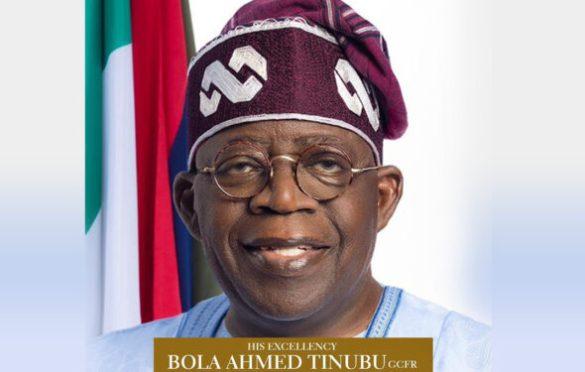
    President Bola Tinubu has suspended the newly introduced Green Tax by way of Excise Tax on Single-Use Plastics, including plastic containers and bottles.

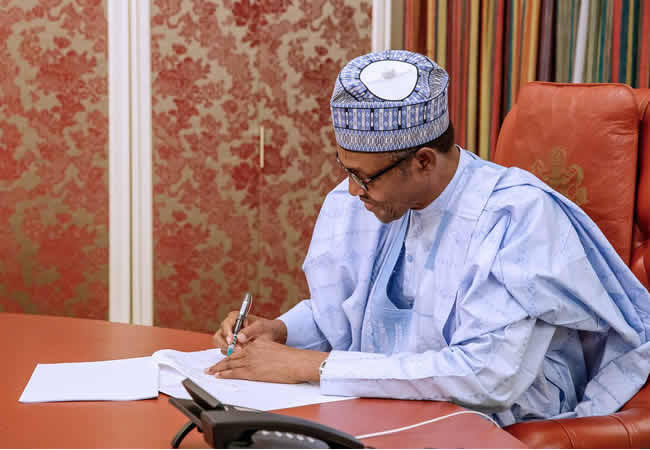
    The President has also signed an Executive Order suspending the “5% Excise Tax on telecommunication services as well as the Excise Duties escalation on locally manufactured products.”

    A statement released on Thursday by Dele Alake, Special Adviser to the President on Special Duties, Communications and Strategy, said that Mr Tinubu also ordered the suspension of the Import Tax Adjustment levy on certain vehicles.

    The statement noted that Mr Tinubu issued these orders to alleviate the negative impacts of the tax adjustments on businesses and chokehold on households across affected sectors.

    “His Excellency will not exacerbate the plight of Nigerians,” he said.

    The statement noted that the Tinubu Administration has since noticed that some of the tax policies are being implemented retroactively with their commencement dates, in some instances, pre-dating the official publication of the relevant legal instruments backing the policies.

    This lacuna has created some challenges in implementation, Mr Alake said.

    “Indeed, the intentions behind upward adjustments of some of these taxes are quite noble. They were designed to raise revenue as well as address environmental and health issues of concern.

    “However, they have generated some significant challenges for, and elicited serious complaints amongst key stakeholders as well as in the business community,” the statement said.

    Based on the new executive orders, the Finance Act (Effective Date Variation) Order, 2023, has now deferred the commencement date of the changes contained in the Act from May 23, 2023, to September 1, 2023. This is to ensure adherence to the 90 days minimum advance notice for tax changes as contained in the 2017 National Tax Policy, the statement said.

    Similarly, the president signed the Customs, Excise Tariff (Variation) Amendment Order, 2023.

    “This has also shifted the commencement date of the tax changes from March 27, 2023, to August 1, 2023 and also in line with the National Tax Policy,” it said.

    Premium Times

  • DMO makes case for improved revenue, less borrowing

    The Debt Management Office (DMO) has commended President Bola Tinubu for his economic focus on improved expenditure as a way of reducing public debt levels.

    Director-General of the DMO, Patience Oniha
    Director-General of the DMO, Patience Oniha

    The Director-General of the DMO, Patience Oniha, said this in an interview with the News Agency of Nigeria (NAN) on Friday in Abuja.

    Oniha cited the removal of petrol subsidy and the unification of rates in the Foreign Exchange (FX) market, as steps capable of boosting revenue and reducing new borrowing.

    She called for increased investment in infrastructure as key to economic growth and development, adding that Public-Private Partnership (PPP) was a more viable option for infrastructure development.

    NAN reports that the DMO recently released the Market Access Country-Debt Sustainability Analysis (MAC-DSA) for 2022.

    MAC-DSA is a template used to analyse debt levels to determine future debt sustainability.

    The DMO stated that the analysis of the results of 2022 MAC-DSA showed that the Total Public Debt-to-GDP ratio, was projected to increase to 37.1 percent in 2023 relative to 23.4 percent as at September 2022.

    It said that the proposed increment was due to the inclusion of the N8.80 trillion new borrowings for the year 2023, and the Ways and Means Advances at the Central Bank of Nigeria of over N23 trillion.

    It also listed estimated Promissory Notes issuance of N2.87 trillion in the debt stock under the baseline scenario.

    “The Country’s debt stock remains sustainable under these criteria.

    “But the borrowing space has been reduced when compared to the Nigeria’s self-imposed debt limit of 40 per cent set in the Medium-Term Debt Management Strategy (MTDS), 2020-2023.

    “On the other hand, Debt Service-to-Revenue ratio at 73.5 percent in 2023 exceeds the recommended threshold of 50 per cent due to low revenue, which means that there is need to significantly increase government revenue.

    “Under the alternative scenario, the total public Debt-to-GDP ratio at 45.4 per cent in 2023 exceeds the Nigeria’s self-imposed debt limit of 40 percent ” it said.

    It said that the Debt Service-to-Revenue also exceeded the recommended threshold of 50 percent.

    As part of its recommendations based on the MAC-DSA, the DMO called for moderation in new borrowings.

    “The Baseline analysis projects total public Debt-to-GDP ratio at 37.1 per cent for 2023, indicating a borrowing space of 2.9 per cent (equivalent of about N14.66 trillion) when compared to the self-imposed limit of 40 percent.

    “But it is recommended that this should not be used as a basis for higher level of borrowing as was the case in the 2023 Budget.

    “This is because the outcome of the Shock Scenario, which is more realistic in the circumstances, exceeded the self-imposed limit,” it said.

    It added that the projected Federal Government of Nigeria (FGN) Debt Service-to-Revenue ratio at 73.5 percent for 2023 is high and a threat to debt sustainability.

    According to the DMO, it means that the revenue profile cannot support higher levels of borrowing.

    “Attaining a sustainable FGN Debt Service-to-Revenue ratio would require an

    increase of FGN revenue from N10.49 trillion projected in 2023 budget to about N15.5 trillion,” it said.

    With respect to expansion in fiscal deficit, the DMO said that there was need to strictly adhere to the provision of extant legislations on government borrowing.

    It specifically called for adherence to the Fiscal Responsibility Act 2007 and Central Bank of Nigeria Act, 2007 as it relates to Ways and Means Advances, in order to moderate the growth rate of public debt.

    It also emphasised the need to prioritise revenue generation.

    “There is urgent need to pay more attention to revenue generation by implementing far reaching revenue mobilisation initiatives and reforms including the Strategic Revenue Growth Initiatives and all its pillars.

    “This is with a view to raising the country’s tax revenue to GDP ratio from about seven per cent (one of the lowest in the world) to that of its peers.

    “Government should encourage the private sector to fund infrastructural projects through the PPP schemes and take out capital projects in the budget that are being funded from borrowing to reduce budget deficit and borrowing.

    “Government can also reduce borrowing through privatisation and sale of government assets,” the DMO said.

    NAN

  • Tinubu Woos Afreximbank, Investors In Paris, says Nigeria Ready For Business

    Tinubu Woos Afreximbank, Investors In Paris, says Nigeria Ready For Business

    President Bola Tinubu says Nigeria is ready for business, urging foreign investors to take advantage of the opportunities and ongoing reforms in the country.

    President Bola Tinubu (C) with African Export-Import Bank executives in Paris, France on Thursday, June 22. 2023. Credit: State House/Nosa Asemota

    The President told investors on Thursday in Paris, France, that ongoing reforms including the removal of fuel subsidy and unification of exchange rate, will be sustained for a more competitive economy that attracts Foreign Direct Investment (FDI).

    “We are ready for business, prepared to welcome investments,’’ he said, while receiving President and Chairman of the Board of Directors of African Export-Import Bank (Afrexim), Prof. Benedict Oramah; and President of European Bank for Reconstruction and Development (EBRD), Odile Renaud–Basso, in separate meetings, on the sidelines of the Summit for New Global Financing Pact.

    According to a statement by Dele Alake, the President’s Special Adviser on Special Duties, Communication and Strategy, Tinubu assured the delegation of Afreximbank Executives that the Federal Government will continue to stimulate the economy with policies that support investments in areas of Nigeria’s competitive advantage, particularly agriculture.

    “We need reforms for national survival,’’ Tinubu added, noting that it would take boldness and courage to reposition the economy, calling for more collaboration to solidify the economy.

    “We must stimulate recovery for the growth and prosperity of our people, which will not be far away. Nigeria is ready for global business and our reform is total.

    “Nigeria is blessed with human and material resources,’’ the President told the delegation, who had earlier listed areas of interventions to buoy the economy, like infrastructure, health, energy and agriculture.

    The President of AfreximBank commended Tinubu for the steps in removing the fuel subsidy and unification of the exchange rate, assuring the Nigerian leader of the full support of the financial and development institution on the ongoing reforms.

    Channels TV

  • FX: Naira weakens at I&E window

    FX: Naira weakens at I&E window

    Naira weakened significantly against the United States dollar on the Investors and Exporters (I&E) window on Wednesday, data posted on the FMDQ securities exchange window where forex is officially traded showed.

    The decline occurred as foreign exchange supply within the market segment plummeted substantially.

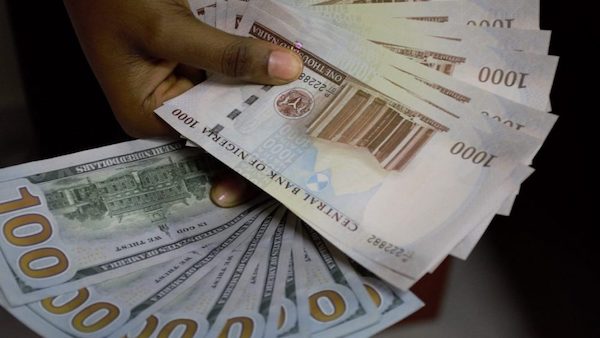
    According to the FMDQ data published, the naira closed at N763.17 per $1 on Wednesday. This implies a N6.56 or 0.87 per cent fall from N756.61, the local unit traded in the previous session on Tuesday.

    The naira commenced the day’s trading at N741.21 but slumped to an intraday low of N815.00— the lowest range ever recorded within the window–and a high of N476.00 before it finally settled at N763.17 per $1 on Wednesday.

    The market session experienced a foreign exchange supply of $96.44 million. This signifies a 28.3 per cent decrease from the $134.47 million recorded Tuesday.

    At the unauthorised market, currency dealers exchanged the dollar at N758.00 and N760.00 across states in Nigeria, including the Federal Capital Territory, on Wednesday.

    The margin between the authorised and unauthorised markets is pegged at N3.17, representing 0.42per cent at the close of business on Wednesday.

    Premium Times

  • Six Companies Receive Approval To Import Petroleum Products

    Six Companies Receive Approval To Import Petroleum Products

    The Federal Government, on Monday, said six new companies have received approval to import petroleum products into Nigeria.

    The Managing Director of Nigeria Mainstream and Downstream Petroleum Regulatory Authority (NMDRA), Farouk Ahmed made this disclosure to state correspondents at the Presidential Villa.

    Farouk stated that apart from the approved six, several companies applied for permit to import petroleum in due course.

    Ahmed also debunked insinuation that the Nigerian National Petroleum Company Limited (NNPCL) had given approval to Dangote Group to import petroleum, saying that the company has no powers to give such approval.

    The managing director further noted that there are several companies that applied for fuel importation permit and anyone can apply for importation to get access to the port as the authority is open to all those interested in importing.

    Ahmed said, “There are six companies who said they want to import fuel in July. Of course, all the others may import in December in November, or anytime but those who expressed interest to bring in fuel in July there were six of them as of this morning.

    “The beauty of it is that there are interests which means that they have been able to have access to foreign exchange in order to import.

    “Now, as we go along, of course, we’ll be briefing you on the progress or the achievements so far, but the important thing is that NNPC has 30 days fuel sufficiency, so we do not anticipate any gap in supply or in distribution.”

    Meanwhile, President Bola Tinubu has taken steps to stop ship owners from withdrawing their vessels over what they see as excessive back charges.

    The Special Adviser to the President on Revenue, Zacchaeus Adedeji, who led government officials in an interactive session with shipping stakeholders at the State House, warned that Nigeria cannot afford not to have vessels move in and out of the country.

    Reports had suggested that at least two ship owners said they were keeping their vessels away from Nigeria after a series of multimillion dollar tax bills were sent out, seeking to recover back unpaid duties from 2010 to 2019.

    Briefing State House correspondents after a meeting today with stakeholders, Adedeji allayed fears within the oil and gas sector, spelling out the agreement reached to avert vessel withdrawal so as not to disrupt the flow of products.

    The presidential aide assured that a technical committee has been set up to resolve the issues in contention.

    He noted that no vessel would be arrested or detained as the committee works to reconcile the back taxes.

    Channels TV

  • CBN Removes Cash Deposit Restriction On Domiciliary Accounts, Permits Up To $10,000 Withdrawals Daily

    CBN Removes Cash Deposit Restriction On Domiciliary Accounts, Permits Up To $10,000 Withdrawals Daily

    The Central Bank of Nigeria (CBN) has declared the removal of cash deposit limitations on domiciliary accounts, saying account holders can withdraw up to $10,000 per day.

    The apex bank, in a statement made available to Channels Television on Sunday, stated that this followed a June 14 announcement on new guidelines in the foreign exchange market.

    A subsequent extraordinary Bankers’ Committee meeting was said to have been held on Friday, June 16, to discuss its implementation and implications for the banking public.

    “Domiciliary account holders are permitted to utilize cash deposits not exceeding USD$ 10,000 per day or its equivalent via telegraphic transfer. DMBs shall provide returns to the CBN, including the “purpose” for such transactions,” it said.

    “Cash deposits into domiciliary accounts will not be restricted, subject to DMBs conducting proper KYC, due diligence and adhering to the spirit and letter of extant AML/CFT laws and other relevant rules and regulations.”

    See the full statement below:

    CBN Issues Further Guidance on Operational Changes to Foreign Exchange Market 

    Following the Central Bank of Nigeria (CBN) press statement of June 14, 2023, on new guidelines in the foreign exchange market, an extraordinary Bankers’ Committee meeting was held on Friday, June 16, 2023, to discuss its implementation and implications for the banking public.

    These policy changes aim to promote transparency, liquidity and price discovery in the FX market in order to improve FX supply, discourage speculation, enhance customer confidence and ensure overall stability in the FX market.

    According to the Director, Corporate Communications, Dr. Isa Abdulmumin, the CBN, in line with deliberations at the meeting, provided further guidance to Deposit Money Banks (DMBs) as follows:

    All visible and invisible transactions (medicals, school fees, BTA/PTA, airline and other remittances) are eligible for the Investors’ and Exporters’ (I & E) window.

    DMBs shall ensure expeditious processing of all eligible invisible transactions on behalf of their customers using the applicable rate at the I & E window.

    Ordinary domiciliary account holders shall have unfettered and unrestricted access to funds in their accounts. Domiciliary account holders are permitted to utilize cash deposits not exceeding USD$ 10,000 per day or its equivalent via telegraphic transfer. DMBs shall provide returns to the CBN, including the “purpose” for such transactions.

    Cash deposits into domiciliary accounts will not be restricted, subject to DMBs conducting proper KYC, due diligence and adhering to the spirit and letter of extant AML/CFT laws and other relevant rules and regulations.

    The CBN will prioritize orderly settlement of any committed FX forward transactions as they fall due in order to boost market confidence further.

    The Bank will normalize its CRR maintenance processes and ensure equity in its implementation across the banking industry.

    The CBN will continue to engage stakeholders and issue further guidance as it implements the ongoing reforms.

    Channels TV

  • Naira depreciates as CBN commences rates harmonisation, faces supply hurdle

    Naira depreciates as CBN commences rates harmonisation, faces supply hurdle

    The Central Bank of Nigeria (CBN) may have embraced the painful, but realistic path to foreign exchange rate convergence, adopting a clean float at the interbank market.

    The option, a liberalist move that supports the interplay of demand and supply to determine the equilibrium rate, saw the apex bank pulling the trigger on the naira at the bank rate, which plunged from about N466 a dollar traded on Tuesday to about between 750/$ and 755/$ yesterday.

    At the investor’s and Exporters’ (I & E) window, the naira also depreciated significantly by 29 per cent to N664.04/$, suggesting a broader adjustment of the rates.

    Earlier in the week, naira traded at N765/$ band at the alternative market. Dusting off the historical volatility, the currency had traded at a narrow range around N735/$ since December 2022 until recent weeks when the dollar edged higher.

    The CBN last night confirmed the collapse of all exchange rates in the Investors and Exporters’ (I &E) window directing all eligible transactions to access FX at the window.

    The statement signed by the Director of Financial Markets, Angela Sere-Ejembi, also informed that the RT200 FX Programme ceases to exist effective June 30, 2023.

    According to the bank, all government transactions would be executed using the average rates of the previous day’s trading at the I $E.

    Most banks had earlier communicated the changes to their customers and were quoting above N700/$ for buying and selling rates.

    The 61 per cent deep dive, which has not happened in recent memory, has eliminated the spread between the official and parallel markets, which hit a multi-decade high of 100 per cent in the run-up to political party nominations for the last general elections.

    Then, the local currency traded against the greenback at around N450/$ while the black market, trading against heightened speculation, headed to about N900/$.

    Interestingly, the usual tension at the parallel market eased at Lagos and Abuja, yesterday, with naira trading between N750 and 755 to a dollar. The Guardian also learnt that demand has dropped significantly.

    There are fears, however, that de-pegging could mean a more damning depreciation if the situation is not properly managed. The suspended CBN governor, Godwin Emefiele, had taken a stand against pure float, saying the economy will not survive it at its current state.

    Existing dollar-denominated instrument debt instruments would be serviced at much-higher rates, while FX-priced services is expected to adjust. Perhaps, the effect on general prices could be minimal as imported goods, as reported by The Guardian previously, are priced at the black market exchange rate.

    At the close of last year, Nigeria’s total national external debt stock stood at $4.69 billion. A higher exchange rate will see the government, at both federal and state levels, requiring more volume of naira to service the debt. But the high cost of debt service could be cancelled out as the government would also get more naira revenues from its FX earnings.

    With the development, however, the differential between bank and parallel market rates would narrow to zero for the first time since 2015 when both markets were trading at about N195 to a dollar.

    Experts are looking up to the apex bank to kick-start the process of increasing FX supply to raise liquidity levels and enable foreign investors with trapped earnings to access dollars to repatriate their funds.

    The aviation industry bookmarks everything that has gone wrong with a subtle capital control regime adopted by the CBN to survive the ravaging pressure. At the cusp of losing major foreign operators last year, the CBN released $120 million to the aggrieved airlines to repatriate the outstanding, comprising mostly of sales.

    But the value has long ballooned to $818.2 million or 36 per cent of the global figure as per data provided by the International Air Transport Association (IATA).

    The value of foreign investors’ capital trapped in the capital market as a result of FX illiquidity is in the realm of speculation. But David Adonri, a stockbroker, said the amount reflects the steady decline of foreign participation.

    Amid the FX liquidity crisis, foreign participation in the local bourse fell from 54 per cent in 2014 to less than 17 per cent last year.

    Telecommunication infrastructure investments have been hobbled by the challenge. According to a source, as of December 2022, the FX demand by the sector was in millions of dollars, “but I am not sure the CBN released up to 40 per cent of the amount needed.”

    The source disclosed that a major delay affecting one of the Fifth-Generation (5G) network licensees from deploying and expanding services is lack of FX.

    “I remembered the licensee requested some $35 million to procure some equipment late last year into earlier 2023, I am not sure that has been granted as of today.

    This is even though the sector, earlier in the year, was added to the priority list by the CBN,” the source said.

    Manufacturers, at 2021, put the outstanding FX demand at $2 billion. Over time, some requests have remained in queues for as many as 12 months, pushing most users, including multinationals, to the alternative market. The challenge, according to Dr. Muda Yusuf, the chief executive officer of the Centre for Promotion of Private Enterprise (CPPE), in a chat with The Guardian, weakens local capacity utilisation and fuel unemployment.

    Yusuf, a strong advocate of rate harmonisation, estimated the total loss to FX arbitrage from 2020 to 2022 at N8 trillion. Beneficiaries of much of what many have described as unnecessary subsidy foreign students who stay back in Britain, Canada and other countries after their studies.

    The CBN had restricted access to FX for the importation of a basket of items totaling 41 but later expanded to 43. Other demand-side management approaches, including the suspension of weekly funding of Bureau de Change (BDCs) were taken but the bleeding continued with naira falling from around N200/$ to also N900/$ last year.

    But experts have seen yesterday’s de-pegging as the beginning of the return of sanity if the process is followed through.

    President Bola Tinubu, during his inauguration, urged the CBN to work towards achieving rate harmonisation as a necessary option for growing a competitive economy. The President aligned with calls by the World Bank, International Monetary Fund (IMF) and leading local economists for pro-market reform of the market.

    Historically, the wide market spread has fueled round-tripping and other manipulation with a former CBN governor revealing that some high-network Nigerians sit at home and make billions off the system.

    In a statement, CPPE wrote: “The liberalisation of the foreign exchange market would unlock the huge potential for investment, jobs and capital flows.

    Investors’ confidence would be positively impacted. Meanwhile, it should be clarified that this is not a devaluation policy, but a pricing mechanism that reflects the demand and supply fundamentals in the foreign exchange market.

    “It is a framework that allows for flexible rate adjustments as and when necessary. It is a model that is predictable, equitable, transparent and sustainable. It is a policy regime that would reduce uncertainty and inspire the confidence of investors. It would minimize discretion and arbitrage in the foreign exchange allocation mechanism.”

    The statement signed by Yusuf, argued that rate unification does not imply that rates would be the same in all segments of the market, adding that the “objective is to ensure that the differentials are very minimal, possibly between 5-10 per cent”.

    A unified exchange rate regime offers the following benefits for the economy: it enhances liquidity in the foreign exchange market; it reduces uncertainty in the foreign exchange market and therefore enhances the confidence of investors; it is more transparent as mechanism for forex allocation, it minimises discretion in the allocation of forex and reduces corruption vulnerabilities”.

    Also speaking, CEO of Moniepoint, a fintech company, Tosin Eniolorunda, hailed the decision, saying: “It is a clear step in the right direction for our economy, ensuring investor confidence continues to grow. Today’s decision is good for business, jobs and growth. It will help Nigeria’s brilliant entrepreneurs to do business globally and attract foreign investment. It will also help reduce inflation, leaving more money in people’s pockets.”

    A fund manager at Stanbic IBTC Pension Managers Ltd, Chidi Uzo, also described the decision as a “bold step in the right direction”.

    “However this should go in tandem with the lifting of capital restrictions for investors waiting on the sidelines to repatriate their funds. We expect foreign investor participation to be swayed by the extent to which capital is allowed to flow freely.

    “Overall, the effective harmonisation of Nigeria’s multiple exchange rates by allowing market forces to determine the fair value of the naira should immediately reverse the multi-year widening spreads between the official exchange rate and the parallel market exchange rates,” he said.

    Meanwhile, stakeholders said the floating of the foreign exchange is a good thing for the energy sector.

    Admitting that immediate shocks in prices are imminent, they argued that the development would bring transparency and global competitiveness to the sector and in turn attract investors.

    Economist at the University of Ibadan, Prof Adeola Adenikinju, said the development would enable investors and market players to make investment decisions based on some level of certainty.

    “All these measures would have short-term adjustment costs. However, in the medium to long term, the economy would be better for it,” he said.

    A leading expert/scholar in Electricity Law, Prof. Yemi Oke, lauded the decision, stressing that it would introduce a level playing field.

    According to him, with the downstream sector already deregulated, the new move would enable every marketer to bring their product and compete while investors would have the confidence to come to the power sector.

    Oke said the multiplier effect would boost the economy, job creation and ensure the sustainability of the energy sector, as investors would be willing to come into the sector. He noted that the development would also create clarity and certainty around investment and project funding in the sector, as multiple exchange rates won’t favour the sector.

    “It will make the economy very attractive and globally competitive. So it is a good thing,” Oke stated.

    Adonri described the decision as a giant stride in deregulating the economy, coming at the heels of subsidy removal. He pointed out that the structural rigidities in the economy and pressure points are gradually being eliminated

    According to him, the decision would enable the true value of the Naira to be market-driven and determined at any point in time.

    Adonri also added that the action would ultimately enhance the allocative efficiency of hard currency resources, eliminate rent-seeking, curb the scarcity of forex and ultimately boost federal government revenue.

    Chief Executive Officer of Wyoming Capital and Partners, Tajudeen Olayinka said the government is introducing an adjustment program that will make the economy attain internal equilibrium, while at the same time putting up policies and measures that will make the economy restore external equilibrium.

    “Fuel subsidy is gone. Foreign exchange subsidy is gone. Desirable capital inflow is expected. Capital Market will remain a major source of funding long term capital requirements by firms and governments, as cost of capital in the economy moderates to a much lower level and capital formation increases to a new level that could create decent jobs and drive down inflation.”

    He stressed the need for the government to first and foremost eliminate the already known source(s) of exchange rate divergence, to be able to encourage a convergence of rates across markets.

    However, he noted that all economic agents will initially experience short-run adjustment pains but noted that the new government is currently taking good steps in the right direction. He also expressed optimism that these policies would boost stock market liquidity and spur a resurgence of IPO in the capital market.

    An industry player, who pleaded anonymity, said the decision would impact negatively on the sector and economy. The source noted that retail collections would become an issue once tariffs are changed.

    “This means more misery for Nigerians. This single policy will further impoverish the masses. Inflation will skyrocket and funny enough the dollars will still not be available. This same trick was used during IBB days in 1985 when the dollar was N3 and the rest they say is history now.

    “No country has ever floated her currency and benefits from such action. The list of countries that tried and failed is too big to even start naming them. The currencies of Ghana, Egypt and Turkey have all been devalued by over 50 per cent in the last year all in the name of ‘floating’. This is a one-way journey into a bottomless pit of self-destruction if you have your assets in naira,” the source said.

    Guardian
  • Nigeria’s oil export storage capacity increases by 4m barrels

    Nigeria’s oil export storage capacity increases by 4m barrels

    The Federal Government, yesterday, offered its first terminal establishment licences under the Petroleum Industry Act (PIA) to Nigeria National Petroleum Company Limited and Balema Oil Producing Limited, while wooing investors into the sector.

    Offered by the Nigerian Midstream Downstream Petroleum Regulatory Authority (NMDPRA), the move, according to the Chief Executive of the regulator, Farouk Ahmad, remains a key milestone as the development will add more than four million barrel capacity to Nigeria’s export storage.

    While the development is expected to address unemployment, especially in the Niger Delta region, as one of the facilities will raise as much as $5.85 billion in revenue, Ahmad disclosed that the licences offered to NNPC Exploration and Production Limited would see the establishment of a 2,179,747 barrel crude oil terminal at Offshore Akwa Ibom State within the waters of the Exclusive Economic Zone Nigeria.

    He added that Belema Sweet Export Terminal would see the establishment of a 2,000,000 barrel crude oil terminal at 20 Nautical Miles of Kula Southern Part of the Exclusive Economic Zone of Nigeria.

    According to him, investors with an interest in developing crude terminals should see the move as a fresh approach by the government to offer more such licences.

    “We are here to enable investment and we will make it eases as we are already committed to ease of doing business. These are the first two, we believe that these will open the door to people who are interested in investing in the sector,” he said.

    According to him, the terminals are expected to operate within the provision of the conditions of the Licences as contained in the licence documents.

    President of Balemaoil, Tein Jack-Rich stated that the project would address the growing demand for operational efficiency, storage production security and transportation solutions in Nigeria’s Petroleum Industry.

    The terminal, according to him, will serve as a vital Infrastructural component for the processing, storage, handling and distribution of crude oil design capacity of 400,000 barrels of liquid dally and secure revenue of over $5.85 billion.

    Disclosing that the infrastructure will address oil theft and create 100,000 jobs for the Niger Delta and Nigeria, adding that the project operates as a hybrid facility that would address climate change challenges.

    Jack-Rich, who said the project is funded on collaboration, noted that the facility would be operational in six months.

    ”The Terminal will be primarily powered by green energy generated from installed 3.6MW Wind Turbines as well as the integration of traditional energy This will be the first of its kind in an oil export terminal in the World. This operational model is to reduce carbon footprint while protecting the environment,”  he said.

    Guardian

  • Gov Sule says Buhari spent over $19bn used for Dangote refinery in failed attempts to revive Nigeria’s refineries

    Gov Sule says Buhari spent over $19bn used for Dangote refinery in failed attempts to revive Nigeria’s refineries

    Governor Abdullahi Sule of Nassarawa State says the government of ex-President Muhammadu Buhari spent more than the $19 billion used in building the Dangote Refinery on maintenance of the country’s refineries.

    Nigeria has refineries in Kaduna, Port Harcourt, and Warri but none is operational with experts saying the recent launch of the Dangote Refinery would be a game-changer in the sector.


    A Photo Collage Of Former President Of Nigeria And Port Harcourt Refinery


    “Look at how much the President Buhari administration spent on fixing the refineries. In the eight years, he spent more money than the $19 billion that Dangote spent in building a refinery.

    “That is one and a half times the size of our three refineries combined,” Sule said during Channels Television Sunrise Daily on Thursday.

    He pinned the payments of subsidy on Nigeria’s non-functional refineries.

    “From the government side, I think we didn’t do a good job. When the (former) President (Buhari) came in in 2015, prices of crude oil dropped by less than 30 dollars. At that time, there was zero subsidy.

    “Our three refineries in Nigeria today have a total of 450,000 barrels per day, Dangote is 650,000. He spent $19 billion on building it. We spent, not building a new one, but in maintaining these refineries; more than $19 billion in eight years, yet they have not been maintained,” he said.

    The Dangote Refinery which is Africa’s biggest oil refinery launched its building plans in 2017. But the project was commissioned in May 2023, a few days before the end of Buhari’s administration.

    ‘Maintaining Refinery Components’

    Governor Sule also lamented the complexity of maintaining the refineries due to their diverse components.

    “The refinery is actually a component for water, crude, and diesel, about five or six different components that constitute a refinery.

    “The moment the government says we are going to spend $2 billion this year on the refinery. The $2 billion is spent and as far as the President is concerned, they have given $2 billion.

    “Now when it goes to the three refineries that we have in Port Harcourt, Warri, and Kaduna. Then they say, you now take $700 million, you now take $800 million – by the time they take that, it goes to fix maybe only one component out of the four components that are all bad,” Sule noted.

    The Governor suggested that the ideal resolve would have been to allocate the major funds to one of the refining states to fix it totally before allocating the remainder to the other states.

    “So, zero work is done. These are the true realities of what is happening, and that is why none of the refineries is working. These are truly the problem, we have not really managed this thing well,” he said.

    Channels TV
  • We Have Not Devalued Naira, Says Nigeria’s Central Bank; Describes Contrary Report As ‘Outright Falsehood’

    We Have Not Devalued Naira, Says Nigeria’s Central Bank; Describes Contrary Report As ‘Outright Falsehood’

    The Central Bank of Nigeria has called on the public to disregard the news report published by the Daily trust newspaper titled “CBN Devalues Naira To 630/$1”.

    In a statement signed by the Ag. Director, Corporate Communications, Isa AbdulMumin, the institution stated that the report was filled with “outright falsehood”.

    The statement read “The attention of the Central Bank of Nigeria (CBN) has been drawn to a news report by Daily Trust Newspaper of June 1, 2023, titled “CBN Devalues Naira To 630/$1”.

    “We wish to state categorically that this news report, which in the imagination of the newspaper is exclusive, is replete with outright FALSEHOODS and destabilizing innuendos, reflecting potentially willful ignorance of the said medium as to the workings of the Nigerian Foreign Exchange Market.

    “For the avoidance of doubt, the exchange rate at the Investors’ & Exporters’ (I&E) window traded this morning (June 1, 2023) at N465/US$1 and has been stable around this rate for a while.

    “The public is hereby advised to ignore the news report by Daily Trust in its entirety, as it is speculative and calculated at causing panic in the market”.

    He also advised media practitioners to verify their facts from the Central Bank of Nigeria before publishing in order not to misinform the public.

    Arise News

  • While Oil production climbed to 1.5m barrels, GDP dropped in Q1 2023 – NBS

    While Oil production climbed to 1.5m barrels, GDP dropped in Q1 2023 – NBS

    Nigeria’s oil production of crude oil has increased to an average of 1.51m barrels per day in the first quarter of 2023, the National Bureau of Statistics (NBS) has disclosed.

    The report titled Nigeria Gross Domestic Product Report Q1 2023 disclosed that oil production in the country moved above 1.m barrel per day for the first since the third quarter of 2021.

    The report also indicated that Nigeria’s Gross Domestic Product grew in Real terms by 2.31 per cent during the period.

    While in nominal terms, it showed that the aggregate GDP stood at N51.2trn which is higher than the N45.3trn recorded in the fourth quarter of 2022.

    “Overview of GDP in Quarter One 2023 Nigeria’s Gross Domestic Product (GDP) grew by 2.31 per cent (year-on-year) in real terms in the first quarter of 2023. This growth rate declined from 3.11 per cent recorded in the first quarter of 2022, and 3.52 per cent in the fourth quarter of 2022.”

    The NBS attributed the reduction in growth to the adverse effects of the cash crunch experienced during the quarter.

    It said the performance of the GDP in the first quarter of 2023 was driven mainly by the Services sector, which recorded a growth of 4.35 per cent and contributed 57.29 per cent to the aggregate GDP.

    Non-oil sector contributed 93.79 per cent, oil sector 6.21 per cent.

    The report stated that the non-oil sector continues to contribute the highest share to Nigeria’s GDP, contributing 93.79 per cent while the oil secor contributed 6.21 per cent.

    Similarly, the non-oil sector grew by 2.77 per cent in real terms during the period which was lower than the by 3.30 per cent points compared to the rate recorded in the same quarter of 2022 and 1.67 per cent points lower than the fourth quarter of 2022.

    It explained that the sector was driven in the first quarter of 2023 mainly by information and communication (telecommunication); financial and insurance (financial institutions); trade; manufacturing (food, beverage & tobacco); construction; and transportation and storage (road transport), accounting for positive GDP growth.

    On sectoral growth, the agriculture sector grew by -0.90 per cent, lower than the growth of 3.16 per cent recorded in the first quarter of 2022.

    “Although the growth of the industry sector improved to 0.31 per cent relative to -6.81 percent recorded in the first quarter of 2022, agriculture, and the industry sectors contributed less to the aggregate GDP in the quarter under review compared to the first quarter of 2022.”

    “The real growth of the oil sector was -4.21 per cent (year-on-year) in Q1 2023, indicating an increase of 21.83 percent points relative to the rate recorded in the corresponding quarter of 2022 (-26.04 per cent). Growth increased by 9.18 per cent points when compared to Q4 2022 which was –13.38 percent. On a quarter-on-quarter basis, the oil sector recorded a growth rate of 20.68 percent in Q1 2023. The Oil sector contributed 6.21 per cent to the total real GDP in Q1 2023, down from the figure recorded in the corresponding period of 2022 and up from the preceding quarter, where it contributed 6.63 per cent and 4.34 per cent respectively.”

    Daily Trust