Category: Business/Economy

  • CBN announces revocation of licences of 139 microfinance banks, others [FULL LIST] 

    CBN announces revocation of licences of 139 microfinance banks, others [FULL LIST] 

    The Central Bank of Nigeria (CBN) has revoked the licences of 139 microfinance banks in the country, as well as four primary mortgage banks and three finance companies.

    This was disclosed in the official gazette of the Federal Government, which was published on the website of the CBN on Tuesday.

    According to the gazette, the licences of the financial institutions were revoked because they ceased to carry on in Nigeria, the type of business for which their licences were issued for a continuous period of six months.

    The official gazette for the last batch stated that the banks have “Either remained inactive, insolvent, failed to render returns, closed shop, or ceased to carry on the type of banking business for which they were licensed for more than six months in contravention of the Banks and other Financial Institutions Act (BOFIA), 2020 and the Revised Regulatory and Supervisory Guidelines for Microfinance Banks in Nigeria.”

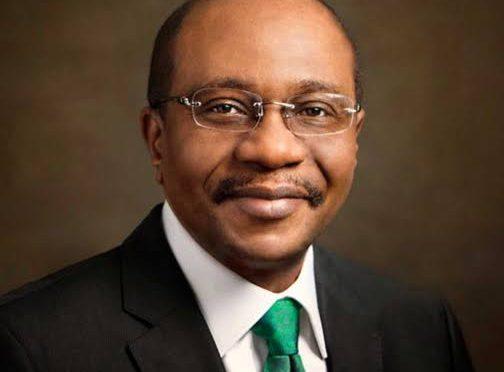
    The CBN Governor, Godwin Emefiele, revoked the licences in the exercise of the powers conferred on the Central Bank of Nigeria under Section 12 of BOFIA 2020, Act No.5.

    Below is the list of the affected banks:

    MICROFINANCE BANKS LICENCES REVOKED

    Atlas Microfinance Bank

    Bluewhales Microfinance Bank

    Everest Microfinance Bank

    Igangan Microfinance Bank

    Mainsail Microfinance Bank

    Merit Microfinance Bank

    Minna Microfinance Bank

    Musharaka Microfinance Bank

    Nopov Microfinance Bank

    Ohon Microfinance Bank

    Premium Microfinance Bank

    Royal Microfinance Bank

    Statesman Microfinance Bank

    Suisse Microfinance Bank

    Vibrant Microfinance Bank

    Virtue Microfinance Bank

    Zamare Microfinance Bank

    North Capital Microfinance Bank

    Chidera Microfinance Bank

    Excellent Microfinance Bank

    Ni’ima Microfinance Bank

    Cosmopolitan Microfinance Bank

    Progressive Link Microfinance Bank

    Trust One Fomerly Desmonarchy

    Ekuombe Microfinance Bank

    First Index Microfinance Bank

    Ola Microfinance Bank

    Uli Microfinance Bank

    Verdant Microfinance Bank

    Aguleri Microfinance Bank Limited

    Apeks Microfinance Bank Limited

    Fahimta Microfinance Bank Limited

    Manny Microfinance Bank Limited

    Reality Microfinance Bank Limited

    Surbpolitan Microfinance Bank Limited

    Onyx Microfinance Bank Limited

    Osina Microfinance Bank Limited

    Olofin-Owena Microfinance Bank Limited

    Zikado Microfinance Bank Limited

    Prudential Cooperative Microfinance Bank Limited

    Peniel Microfinance Bank Limited

    Taraba Microfinance Bank Limited

    Brass Microfinance Bank Limited

    Michika Microfinance Bank Limited

    Ndiagu Microfinance Bank Limited

    Northbridge Microfinance Bank Limited

    FCT Microfinance Bank Limited

    Omu-Aran Microfinance Bank Limited

    Cherish Microfinance Bank Limited

    Bipc Microfinance Bank Limited

    Danels Global Microfinance Bank Limited

    Bancorp Microfinance Bank Limited

    Manna Microfinance Bank Limited

    Moneywise Microfinance Bank Limited

    Mercury Microfinance Bank Limited

    New Age Microfinance Bank Limited

    Pearl Microfinance Bank Limited

    Zawadi Microfinance Bank Limited

    Seed Capital Microfinance Bank Limited

    Eduek Microfinance Bank Limited

    Eksu Microfinance Bank Limited

    Dakingari Microfinance Bank Limited

    Ogoja Microfinance Bank Limited

    Nwabosi Microfinance Bank Limited

    Nuture Microfinance Bank Limited

    Active Point Microfinance Bank Limited

    Amoye Microfinance Bank Limited

    Boluwaduro Microfinance Bank Limited

    Iyede Microfinance Bank Limited

    Mayfair Microfinance Bank Limited

    Calabar Microfinance Bank Limited

    Ighomo Microfinance Bank Limited

    Hackman Microfinance Bank Limited

    Idese Microfinance Bank Limited

    Bridgeway Microfinance Bank Limited

    Grassroot Microfinance Bank Limited

    Surelife Microfinance Bank Limited

    Tijarah Microfinance Bank Limited

    Ic-Global Microfinance Bank Limited

    Ejiamatu Microfinance Bank Limited

    Briyth Covenant Microfinance Bank Limited

    Nanka Microfinance Bank Limited

    Cub Microfinance Bank Limited

    BFL Microfinance Bank Limited

    Umunne Microfinance Bank Limited

    Oroke Microfinance Bank

    Alkaleri Microfinance Bank Limited

    Crowned Eagle Microfinance Bank Limited

    Unifa Microfinance Bank Limited

    Dadinkowa Microfinance Bank Limited

    Ifesowapo Microfinance Bank Limited

    Oaf Microfinance Bank Limited

    Bama Microfinance Bank Limited

    Ngala Microfinance Bank Limited

    Iwoama Microfinance Bank Limited

    Kada Microfinance Bank Limited

    Keffi Microfinance Bank Limited

    Nut-Endwell Microfinance Bank Limited

    First Multiple Microfinance Bank Limited

    SBDC Microfinance Bank Limited

    Oros Capital Microfinance Bank Limited

    Ozizza Microfinance Bank Limited

    Primera Credit Microfinance Bank Limited

    Ifeanyichukwu Microfinance Bank Limited

    Ihioma Microfinance Bank Limited

    Josad Microfinance Bank Limited

    Akpo Microfinance Bank Limited

    Aiyepe Microfinance Bank Limited

    ABC Microfinance Bank Limited

    Star Microfinance Bank Limited

    Purple Money Microfinance Bank Limited

    Utuh Microfinance Bank Limited

    Stallion Microfinance Bank Limited

    Kjl Microfinance Bank Limited

    Credit Afrique Microfinance Bank Limited

    Cowries Microfinance Bank Limited

    Lawebod Microfinance Bank Limited

    Mabinas Microfinance Bank Limited

    Business Support Microfinance Bank Limited

    Ogbe-Ahiara Microfinance Bank Limited

    Olofin Microfinance Bank Limited

    Obosi Microfinance Bank Limited

    Fiyinfolu Microfinance Bank Limited

    Bishopgate Microfinance Bank Limited

    Awka Microfinance Bank Limited

    Zigate Microfinance Bank Limited

    Esan Microfinance Bank Limited

    Enugu-Ukwu Microfinance Bank Limited

    Echo Microfinance Bank Limited

    Ally Microfinance Bank Limited

    Network Microfinance Bank Limited

    Awgbu Microfinance Bank Limited

    FINANCE COMPANIES LICENCES REVOKED

    HHL Invest and Trust Limited

    TFS Finance Limited

    Treasures and Trust Limited

    PRIMARY MORTGAGE BANKS LICENCES REVOKED

    Resort Savings and Loans

    Safetrust Mortgage Bank

    Adamawa Savings and Loans

    Kogi Savings and Loans

    Daily Trust
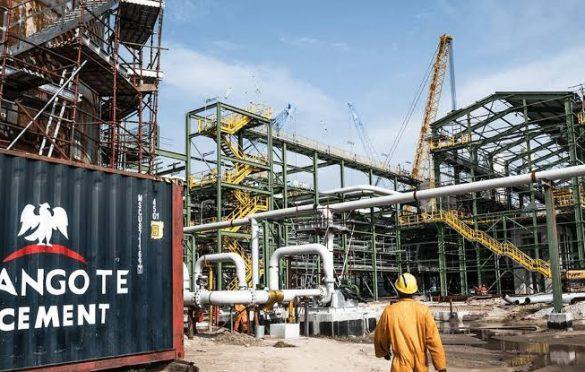
  • Dangote Refinery: Aliko Dangote speaks on reason for venturing into oil business

    For Africa’s richest man, Aliko Dangote, it is about determination and doggedness, steeped in fortitude that is today yielding dividends.

    For eleven, consecutive years, he has been the richest man in Africa according to both Forbes and Bloomberg.

    A graduate of Al-Azhar University in Cairo, Egypt, Dangote began his business career in 1978, trading in rice, sugar and cement before he ventured into full-scale manufacturing. The Group he founded currently has a presence in 17 African countries and is a market leader in cement on the continent.

    One of the Group’s subsidiaries, Dangote Cement Plc, is the largest listed company in West Africa and the first Nigerian company to join the Forbes Global 2000 Companies list. The Group has two other subsidiaries: Dangote Sugar Refinery and NASCON Allied Industries listed on the Nigerian Exchange Limited (NGX). Now, you can add Dangote Petroleum Refinery and Petrochemicals, located in the Dangote Industries Free Trade Zone Area of Ibeju-Lekki, Lagos.

    Dangote is one of the few companies in the world executing a Petroleum Refinery and a Petrochemical complex directly as an Engineering, Procurement, and Construction (EPC) contract. Globally, apart from three companies, no individual owner has done the complete EPC Contract for a Petroleum Refinery.

    Many may never know what Aliko Dangote endured to birth this latest project. Contrary to the naysayers who think it came easy, Vanguard can authoritatively assert that the construction of the largest refinery in the world faced serious, humongous challenges.

    Ponder the following:

    How do you deal with a situation whereby your imported consignment for the refinery is about 70% of the total cargo at the ports in Lagos, yet, you can not get them out?

    How do you bring in equipment that would weigh about 3000 tons, when the capacity of your ports is between 200 and 250 tons?

    Even after succeeding in bringing the equipment in, on which road would you transport them?

    What do you do when the biggest crane in the country is 650 tons, whereas you need a 5000-ton capacity crane?

    Worse, there were only two such 5000-ton capacity cranes in the world, and they were in use.

    So, instead of hiring a crane for $300,000 a day, what do you do? Dangote bought his cranes.

    There are a lot of over-dimensional cargoes like the heaters and pipes, so, Dangote had to sign a contract with a company to do the transportation into its yard and had to pay over $70 million just for that.

    Inside the plant itself, Dangote constructed about 126 km of road. There are 54,000 storm columns built for protection

    On-site, there are over 200 buildings.

    Piecing together the thoughts of Aliko Dangote through statements, speeches and his celebrated interview with Francine Lacqua, an anchor on Bloomberg TV in London, in 2017, we present the reason why Dangote went into the oil business.

    Today, he is celebrated globally as the one who has built the world’s largest petroleum refinery and it is based in Nigeria. Its commissioning had been thought impossible on a day like this. But by dint of hard work, sleepless nights, logging of thousands of kilometres all over the world and the thousands of dedicated staff of Dangote Group, today is the day of commissioning.

    Going into the oil business

    Well, let me tell you why we had to go into oil. Our strategy was to be an African company. When you look at the other options, it’s agriculture — and agriculture doesn’t take that much money. We always invest most of our money back into the business, so when we looked at it in 2015 and projected our revenue for the next few years, we looked at what we had left after investing in fertilizer and realized we still had billions of dollars we could put somewhere else. The only place we could invest that much money was in the oil and gas business. So the refinery takes those dollars and allows us to invest in something we are used to, which is industry. The majority of people here made their money through oil. But we have never dealt with oil, which is to prove that you don’t have to be in oil. In Nigeria, oil has damaged our thinking. Everyone is thinking about oil, oil, oil. And we are one company that has made a success without doing that. Also, people always say, “Oh, he’s in oil and gas—there’s a lot of corruption in oil and gas.” We didn’t want to be a part of that. There are a lot of friends of mine in oil, and they are doing the right things. But I didn’t want to be a suspect, so that’s why we didn’t go into oil earlier.

    Why go so big?

    In business, you need to know before you jump into something. You have to do quite a lot of homework. For instance, Nigeria’s refineries were privatized in 2007. We bought two, but after a few months, we had a new government that decided to void the transaction.

    So, since 2007, we’ve been working on building our refinery, but we didn’t finally start something until 2015. Here the capital investment are huge—much larger. And if you are not a big player, you have no way of survival”

    The journey to building the largest refinery in the world

    We had already studied doing 300,000 barrels a day back in 2005. At that time I couldn’t even fathom a larger refinery. I had no financial capacity. Then in about 2010, we paid up Dangote Group’s debts, which amounted to $2 billion, and then started accumulating cash. When we decided to build the refinery of our dreams, we reviewed our plans again and put the figure at 400,000. Then it jumped up to 650,000bpd. So a refinery had been on the drawing table for years, but this is how we were able to finally push it through.

    I don’t have that worry about not completing it. We have the most robust team anyone can put together, and we’ve been doing this sort of work together for years. We have never failed in delivering any project.

    It’s an ambitious project, yes, but we have others at that particular site, too. We have a gas pipeline, for instance. We are trying to bring gas to Nigeria. The total gas that will come out is at par with the likes of Shell and other oil firms. This will transform Nigeria because, as we speak, we have about 6,800 megawatts of power capacity that have been installed but not been put to use, the reason being that we don’t have the infrastructure.

    We don’t want to listen to the critics, because they intend to destroy us. We are using our own money. This is my lifetime project. I have to back it up with my own life to make sure it is delivered. I know that, yes, it’s true, a lot of people have tried to deliver on refineries in the past, mostly governments. They couldn’t.

    I’m not a person who just likes to throw away money. I spend more money on charitable things than myself. Luckily, myself and my children, have been very disciplined. That’s why if you look at it today, because of the way I run my lifestyle, I don’t have any home outside Nigeria. I stay in hotels. Quiet. Simple. My life is not very lavish, and I get very embarrassed if I try to show that I have money. I don’t.

    I think I always advise people that it’s better to be very communal. In Lagos, I drive myself around on weekends. I ask my driver to go have a rest, and then I drive myself around. I still visit the normal friends I grew up with. My house is open 24 hours a day for them. I mingle with everybody. That’s the only way to get to know what’s going on.

    Facts Sheet On Dangote Petroleum Refinery

    • World Class Projects

    • The Dangote Petroleum Refinery is located in Ibeju-Lekki, Lagos, covering a land area of approximately 2,635 hectares (seven times the size of Victoria Island.)

    • World’s Largest Single-Train 650,000 barrels per day Petroleum Refinery with 900,000 tonnes Polypropylene Plant.

    • The 435 MW Power Plant in the Refinery alone will be able to meet the total power requirement of Ibadan DisCo of 860,316 MWh covering five States including Oyo, Ogun, Osun, Kwara and Ekiti.

    • Dangote Petroleum Refinery can meet 100% of the Nigerian requirement of all refined products (Gasoline, 53 million litres per day; Diesel, 34 million litres per day; Kerosene, 10 million litres per day and Aviation Jet A1, 2 million litres per day) and also have surplus of each of these products for export.

    • Designed for all Nigerian Crude with flexibility to process other crudes.

    • Self-sufficient Marine facility with ability for freight optimization. Largest single order of 5 SPMs anywhere in the world.

    • Diesel, Gasoline and aviation fuel from the refinery will conform to Euro V specifications.

    • The refinery design complies with, EU Emission StandardEPA, European emission norms and Department of Petroleum Resources (DPR) emission / effluent norms.

    • State- of- the- art technology.

    • Designed to process large variety of crudes including many of the African Crudes, some of the Middle Eastern Crudes and the US Light Tight Oil.

    • 65 Million Cubic Metres of Sand dredged costing approximately 300 Million Euros, using the world’s largest, the second largest and the tenth largest dredgers to elevate the height by 1.5 metres, to insure against any potential impact of increase in mean sea level due to global warming.

    • Bought over 2,262 units of various equipment to enhance the local capacity for site works since even the biggest local civil contractors are unable to handle even small portions of our construction requirement.

    • Bought 308 cranes to build up equipment installation capacity since the current capacity in Nigeria is extremely poor.

    • Built the world’s largest granite quarry to supply coarse aggregate, stone column material, stone base, stone dust & material for break water. (10 million tonnes per year production capacity).

    • Developed a port and constructed two quays with a load bearing capacity of 25 tonnes/ sq meter to bring Over Dimensional Cargoes close to the site directly.

    • Constructed two more quays in the port with a capacity to handle up to Panamax vessels to export the fertiliser and the petrochemicals and two quays to handle liquid cargoes. The port will thus have 6 quays, including a Roll-on/Roll-off quay.

    • In the course of the civil works, some days 700 piles were drilled daily, and the total number of piles came to 250,000.

    • It has 177 tanks of 4.742 billion litre capacity.

    • Total capacity loading of 2,900 per day. This number is based on tanker capacity of 33KL.

    • Dangote is one of the few companies in the world executing a Petroleum Refinery and a Petrochemical complex directly as an Engineering, Procurement, and Construction (EPC) contract. Globally, apart from three companies, no individual owner has done the complete EPC Contract for a Petroleum Refinery

    • Temporary housing units on the premises can house 50,000 persons.

    • The project utilised the coordination of various local and international suppliers and the coordination of multi-cultural work teams.

    • Training of 900 young engineers in refinery operations outside the country. Another six Mechanical Engineers trained in the GE University in Italy. 50 Process engineers trained by Honeywell/UOP for six months; 50 Management Trainees; secondment for succession.

  • The Digitization of Africa’s Biggest Economy Sequel Naira Redesign and 2023 Presidential Election

    The Digitization of Africa’s Biggest Economy Sequel Naira Redesign and 2023 Presidential Election

    By Ikenna Igwe

    The modern world we find ourselves in today is one that is fast becoming digitized in every sector, ranging from finance to technology, agriculture, transportation, health and every other industry. Since the appearances of the Automatic Teller Machine (ATM) first in the shores of America finance market in 1969 and subsequently in 1989 in Nigeria, the world and Nigeria have been gunning hard to do away with fiat money and fully digitize its finance. The industrialized world has gone deep in digitizing their money and their transactions. In the US for example, up to 88% of transactions are done without the use of physical dollars contrary to what we see in sub-Sahara Africa where the idea of “Cash is king” still holds strong.

    Remember that on 26th October, 2022, the Central Bank of Nigeria received the approval of the President to redesign the N200, N500 and N1000 notes, a policy geared towards enhancing financial inclusion among the rural populace who are largely unbanked and help decrease the heavy reliance on physical cash for virtually every transaction, among other reasons.

    The policy of the Naira redesign and digitization of the economy was a good policy that I guess had the best of intentions, but the poor implementation of the policy has had a huge toll on the economy and the people. With inflation at an all-time high, unstable fuel price, scarcity of the redesigned note and epileptic power supply, the policy almost had a counter effect of what it intended. The knock on effect on critical sectors of the economy will definitely deepen. For instance, the estimated loss in the trading sector which contributes about 14% of the nation’s Gross Domestic Product (GDP) which is valued at N35trillion and the agricultural sector which contributes about 25% to the GDP which is valued at an estimated N62trillion was massive. It is estimated that the crisis could put Nigeria’s N100trillion component of the national GDP at risk. A more clear matrix of economic measurement stated by Yemi Kale, former Director General of the National Bureau of statistics [NBS] has estimated that Nigeria lost between N10 – N15 trillion of national productivity in the first quarter of 2023, as a result of difficulty created by the Naira redesign policy.  

    DIGITIZATION OF THE ECONOMY AMIDST HARDSHIP AND UNCERTAINTY

    Amidst the economic gridlock created by both the Naira redesign and presidential election, one thing is evidently true, the fact that the country has improved and scaled up its digital framework, be it in finance, telecom, or banking as the country’s digital economy keeps making waves, contributing 18.44% to the GDP in the second quarter of 2022. Taking advantage of some of gains of the growth in the digital economy, some of the obvious loopholes need to be addressed not just by the government but also all the stakeholders involved.

    CURRENT STATE OF DIGITIZATION IN NIGERIA

    Heightened Pressure on the Digital Infrastructure: The paucity of the new naira notes mounted unprecedented pressure on digital alternatives for transactions in Nigeria. The digital infrastructure of banks in their present state seemed incapable of handling the sharp increase in transaction volume. The unreliable nature of digital services meant that some digital transactions took up to 48 hours, while customers with failed transactions had to fight through huge crowd, banks taking as much as 10 working days to resolve complaints by customers. The worsening case of brain drain in valuable IT support department also contributed to the digital scalability constraints faced by the commercial banks in Nigeria.

    Telecommunication services and security: The telecom industry is an indispensable component of the digital economy. Despite its importance, telecoms still have huge gap to cover in terms of offering adequate and stable network especially in the rural parts of the country.

    According to the “Centre for the Study of the Economics of Africa [CSEA], Nigerian banks are indebted to telecom companies to the tune of N80billion in unstructured supplementary service data [USSD] fees as of November 2022. This poses a significant impact on the execution of financial services and transactions. It is not good because the USSD service is what facilitates the financial services in underserved and financially excluded areas who have unreliable internet connectivity.

    Over 50,000 cases of major harm have been recorded on telecom infrastructures and facilities in the span of five years leading up to 2021. The security of telecom infrastructures has an impact on user experience, accessibility and affordability of digital services. 

    High Migration of Customers from Traditional Banks to Financial Technology companies [FINTECH]: Due to the CBN’s Naira redesign policy’s influence on digitization, the constraint and failure of commercial banks to technologically scale up their activities left depositors with no choice but to rely on financial technology firms for financial services. Depositors are not burdened by arbitrary and multi-layered protocols that have characterized commercial banks, in contrast to the digital banks who offer unlimited free transfers, instant but expensive uncollateralized loans and providing saving options for depositors with excess funds that can earn close to 20% interest rate.

    Minimal/No digital services in the informal sector of the Nigerian Economy: Data from the Centre for the study Economics of Africa [CSEA] shows that financial inclusion rate in Nigeria 64% as of April 2022, implying that over 30% of the population did not have access to financial services such as payments, saving, credit and insurance. Given the labor intensity features characterized of the informal sector, the policy curtailed real demand and plunged producers’ sales because of no existing financial payment solutions.

    According to the World Bank in 2021, more than 50% of Nigerians lack basic digital skills. This makes the cashless policy way harder and the fact that up to 44.6% of Nigerians lack access to electricity, adds another layer of problem to the already existing one.

    BREAKTHROUGH AND LEADWAYS IN THE DIGITIAL ECOSYSTEM 

    The Naira redesign and the subsequent cash shortage that followed made digital banking more challenging for Nigerians. The increasing reliance on banking apps and USSD platforms have negatively impacted bank performance, putting strain on the already unsteady infrastructure of digital banking. Sources from one of the big banks attributed these failures to a combination of network failures, higher traffic and understaffed IT department, in contrast to these new banks [Fintech] who do not have so many users and so find it easier to manage transactions efficiently.

    As the traditional banks are drowning in negative PR, it has allowed non-traditional banks [Fintech] to display their competence and breakthrough into the market with full speed, building what seems to be a resilient cashless infrastructure in Nigeria.

    OPAY, one of Nigeria’s biggest Fintech Company, reported on Techcabal that they currently have over 26million active users and have reported that significant number of them are first time users.

    In the continuous quest to deepen internet penetration in rural and underserved parts of Nigeria, the Nigerian government has attracted big tech companies such as STARLINK, owned by SPACEX and TELSA CEO, Elon Musk. This aim is to deliver a global broadband network, using satellite connectivity to provide a high speed internet coverage with capacity to penetrate into the rural and geographically isolated areas where internet connectivity is hardly accessible. In a bid to achieve a stable and effective digital economy, having a strong internet connectivity devoid of glitches and malfunctions is very essential to growth. There is no doubt that the launch of STARLINK in Nigeria will bring about job creation, increased investment and access to internet in places where the likes of MTN and other telecom don’t have a good presence.

    But the major issue that might stall the company from reaching its aim is the fact that both the cost of installation and subscription are well above the income bracket of the average Nigerian and the fact that most Nigerians can’t pay for the hardware and subscription in dollars because most Nigerian banks have suspended dollar transactions on their Naira cards. With the aftermath of the 2023 presidential election, Nigerians can only hope that the new government that is set to take office will be the sort of government that is keen on spurring the country to sustainability and growth in terms of harnessing the digital and technological potentials of the nation.

  • Dangote Refinery Can Save Nigeria $10bn in FX, Generate Another $10bn in Exports – Aliko Dangote

    Africa’s richest man and owner of the Dangote Refinery, Mr. Aliko Dangote, has said with the planned commencement of the refinery located in Lagos, Nigeria could save up to $10 billion in foreign exchange (FX) and generate another $10 billion in exports when the facility begins operation.

    The 650,000 barrels per day Dangote Refinery, the world’s largest single-train refinery, is set for inauguration on May 22, by President Muhammadu Buhari.Dangote spoke in an interview with a special edition of London-based The Economists Magazine, titled ‘The World Ahead 2023,’ which was unveiled with considerable focus on West Africa and aimed to highlight both the potential as well as areas for improvement in Africa.

    Expressing his views on expectations for the creation of value-added industries in Africa, the richest black man in the world stated that Nigeria’s economy as presently constituted has largely been built around the extraction and exportation of its natural wealth.As a major oil producer, Dangote noted that Nigeria currently imports over 90 per cent of its refined petroleum products, which amounted to roughly $10 billion in imports in 2022.While this has brought major benefits to many businesses, Dangote explained that more prosperity could be created by locally refining Nigeria’s resources, with the refinery being a major step in this direction by reducing the country’s dependence on imported refined petroleum products.

    “The refinery’s completion will not only create direct and indirect jobs, but also lead to skills transfer and technology acquisition opportunities that will benefit the downstream sector.

    “Moreover, the refinery’s production of critical products like naphtha and polypropylene will stimulate the development of other industries, such as cosmetics, plastics, and textiles. Refineries on this scale could save Nigeria up to $10 billion in foreign exchange and generate approximately $10 billion from exports.

    “We see room for development of added value in agribusiness too. Here, initiatives like our Sugar Backward Integration Projects look to create a strong localised supply in the sugar industry. With a goal to produce around 0.5 million tons of sugar per annum from locally grown sugar cane, benefits will be created across the sugar value chain for local suppliers,” he added.

    He noted that the soon-to-be commissioned 650,000 barrels per day refinery in Lagos, would enable Nigeria achieve self-sufficiency in refined petroleum products, as well as export to other African markets.

    According to him, there are also ample opportunities to increase the country’s rice production, with the ongoing construction of six rice mills that could mill approximately one million tons per annum of locally produced rice, thereby empowering local farmers. The renowned businessman pointed out that the group of companies also has a 2.8 million tons per annum fertiliser plant tapping into the fertiliser market, while opportunities are being explored in tomato cultivation and processing as well as dairy production.

    “With many parts of West Africa still facing food insecurity, the emergence of strong localised industries with resourceful suppliers and clear trade networks will be a big step in the right direction,” he maintained.

    Dangote stressed that Nigeria presents an attractive investment opportunity for international investors, saying with the country’s abundance of natural resources, diversifying and digitising economy, youthful demographics and vibrant society, investors will find in Nigeria a country of many possibilities.

    “Its population of over 200 million — of which 40 per cent is under the age of 15 – means the country’s demographic dividend offers investors with a long-term view an encouraging option in several sectors.

    “Nigeria has a variety of untapped natural resources which, for commodity-driven investors, offers options in the upstream, midstream, and downstream segments. Its vast arable land and favourable climatic conditions similarly support a wide range of crops, positioning it as an auspicious destination for agriculture-based investments.

    “Here, we expect to see the development of a strong, home-grown agribusiness industry. We are also seeing the emergence of a strong digital economy, with several Nigerian start-ups becoming vibrant players in their respective tech-fields.

    “Nigeria’s import dependency and reliance on foreign markets presents major prospects for import substitution and supply chain localisation. Across various consumer-goods sectors of the economy, as well as supply-side needs for commercial and industrial enterprises, there are different options to set up localised supply networks,” he argued.

    With the conclusion of the recent elections, Dangote explained that he was looking forward to government taking proactive steps to enable and empower investment by the private sector as the country has a variety of opportunities for businesses to work alongside the government through Public-Private Partnerships (PPP) in infrastructure development.On opportunities provided by the Africa Continental Free Trade Agreement (AfCFTA), Dangote stated that the initiative has the strong support of many businesses across Africa with different private sector leaders actively involved in the process leading up to its signing and ratification.

    Within the context of manufacturer’s associations and industrial groups, which he said he participated in, Dangote explained that he saw the willingness of African governments to engage with the private sector so they can hear what ingredients are needed to unlock increased intra-Africa trade.In looking to opportunities for exports from a strong base such as Nigeria, the cement industry, he said, could benefit greatly from not only exporting cement to burgeoning construction markets across the continent, but could look to build cement plants in other markets.Driven by population growth, urbanisation, infrastructure development, and housing demand, he noted that Africa’s cement consumption has considerable room for growth as evidenced by its per-capita cement consumption of 130kg, far behind the global average of 541kg.

    “Sub-Saharan Africa presents an opportunity for expansion, as its population is projected to grow from 1.1 billion to over 2.1 billion by 2050, with two thirds of this growth in urban areas. Nigeria currently has an installed cement production capacity of about 54m tons/pa, which exceeds local demand and so a lot of this can be exported across Africa.

    “Governments and businesses need to work together to improve competitiveness, dismantle barriers to accessing markets and develop supportive industrial policies.

    “It is also important for countries to understand the potential revenue loss from the elimination of tariffs and develop strategies around tariff revenue gaps.

    “Additionally, effective monitoring and enforcement of rules of origin is essential to ensure that products traded within the market originate from within the continent. By forging partnerships, businesses and governments can collaborate to overcome these challenges and maximise the potential benefits of initiatives like AfCFTA,” he explained.

    As a key player in Africa’s push towards self-sufficiency in the cement industry, he disclosed that the group has an installed production capacity of approximately 51 million tons per annum across 10 African countries.In addition, he noted that the group’s newly inaugurated urea plant in Lagos, with a capacity of 2.8 million tons per annum, not only ensures a secure supply of fertiliser for Nigeria, but also allows for exports.

    On climate change, Dangote said businesses should actively look to integrate sustainable practices throughout their operations while embedding an awareness among staff of how business activities impact the socioeconomic realities of stakeholders.

    By prioritising energy efficiency, water conservation, waste management and emissions control, he posited that companies could look to alternative fuel sources, energy-saving initiatives and waste management protocols as easy wins to benefit stakeholders.

    This Day

  • CBN to utilise about N500bn in millions of dormant bank accounts

    CBN to utilise about N500bn in millions of dormant bank accounts

    The Central Bank of Nigeria (CBN) has issued new guidelines to commercial banks on the operations of dormant accounts which have received no deposit or withdrawal for upwards of one year.

    The new guideline is contained in the bank’s circular to commercial banks issued on Wednesday.

    According to the apex bank, it shall open a pool account to warehouse all funds left in dormant savings and current and domiciliary accounts.

    According to a check on NIBSS by Ripples Nigeria, as of December 2021, there were 191.4 million bank accounts in Nigeria, out of which 133.5 million were active.

    Meaning there are 57.9 million inactive bank accounts both savings and current in Nigeria. A report said that about N500 billion have been left by their owners in abandoned bank accounts as of January 2021.

    The bank said it would invest the warehoused funds in Treasury Bills and other interest-yielding ventures and return the profits to the owners of the accounts upon reactivation.

    Per the circular, the dormant accounts shall be reopened and the funds, including interest rates, returned to the owners upon request within two days. It directed commercial banks to continue paying interest into dormant accounts and maintain periodic communications with account owners via emails, text messages, and other necessary mediums.

    CBN stated that dormant and unclaimed accounts are targets of fraudsters, hence the move to warehouse the funds in a joint account known as “Unclaimed Balances Trust Fund Pool Account.

    CBN says: “The continuous maintenance of such accounts results in the accumulation of huge unclaimed balances at the disposal of the financial institutions for which the depositors may not be adequately compensated. In addition, dormant and unclaimed balances are increasingly susceptible to fraudulent transactions or abuse.”

    CBN said it would establish a management committee to oversee funds from the accounts and disburse them accordingly. It also stated that a bank account should be deemed dormant if it has not done any transactions for one year.

    It said: “A bank account shall be classified as dormant if there has been no customer or depositor-initiated transaction in it for one (1) year after the last customer or depositor-initiated transaction.

    “The bank shall institute controls consistent with its precautionary policies, including surveillance procedures and 58-level authorization. To make such account active, the customer is to provide satisfactory evidence of account ownership, means of identification, and present place of residence.

    “Unclaimed funds shall be categorized as Proceeds of stale local and foreign currency drafts not yet presented for payment by beneficiaries. Funds received from a correspondent bank without sufficient details as to the rightful beneficiary and/or a recall of funds made to the remitting bank to which the Nigerian bank’s account had not been debited; and a judgment debt for which the judgment creditor has not claimed the amount of judgment award.”

    The bank said it is empowered by the provisions of Section 72 (11) of the bank and other financial institutions to carry out the guideline.

    (Ripples)

  • [UPDATED] World Bank projects 3.2% growth in Nigeria’s Economy in 2023

    [UPDATED] World Bank projects 3.2% growth in Nigeria’s Economy in 2023

    The International Monetary Fund (IMF) has retained its growth forecast of 3.2 percent for Nigeria’s economy in 2023.

    The IMF, in its World Economic Outlook for April 2023 titled ‘A Rocky Recovery’, also forecast a three percent growth in the country’s gross domestic product (GDP) for 2024.

    Other countries highlighted in its 2023 projections were USA (1.6%), Germany (-0.1%), France (0.7%), Italy (0.7%), Spain (1.5%). Japan (1.3%), UK (-0.3%), and Canada (1.5%).

    Others are China (5.2%), India (5.9%), Russia (0.7%), Brazil (0.9%), Mexico (1.8%), Saudi Arabia (3.1%), and South Africa (0.1%).

    The projection by the Washington DC-based global lender comes days after the World Bank revealed that the naira recorded a 10.2 percent depreciation in 2022, prompted by rising food and fuel prices globally, among other stimulants.

    In its Africa Pulse report published last week, the World Bank stated that the depreciation of the exchange rate was also a major contributor to inflationary pressures in the Sub-Saharan region.

    “In Nigeria, recently released activity data show mixed results. On the one hand, real GDP growth was higher than expected in the fourth quarter of 2022. It picked up to 3.5 percent y/y, from 2.3 percent in the third quarter. Both oil and non-oil sector activity improved by late 2022,” it said.

    “After a 22.7 percent y/y contraction in the third quarter of 2022, oil GDP fell by 13.4 percent y/y in the fourth quarter as security services were making headway against oil theft.”

    (Channels TV)

  • Those pushing for subsidy removal in Nigeria are out to set the country on fire -NLC warns govt

    Those pushing for subsidy removal in Nigeria are out to set the country on fire -NLC warns govt

    The Nigeria Labour Congress, NLC, has warned that those pushing for subsidy removal in Nigeria are out to set the country on fire.

    The warning came against the backdrop of an announcement that the outgoing government of President Muhammadu Buhari had left the decision of petrol subsidy removal to the incoming government.

    According to NLC, the focus should be on the local refining of petroleum products and not subsidy removal.

    General Secretary of NLC, Emma Ugboaja, in a chat in Lagos yesterday, said nobody should drag Nigerian masses and workers into any increase in fuel price in the name of subsidy removal, insisting that organized labour will not accept it.

    He said: “It will be uncharitable in 2023 for any government to talk about subsidy or no subsidy for a product that is naturally and thoroughly well-endowed in Nigeria. It smacks of wickedness for us to be discussing subsidy as an issue, rather than discussing production.

    ‘’The energy and resources people are putting into discussing subsidy show a lack of focus. It shows a lack of seriousness and a lack of appreciation of what governance should be. If in 2023, rather than getting people that will make proper use of our natural endowment, we are busy discussing the cosmetic challenge of subsidy or no subsidy, it is absurd.

    “One would have thought that people should be setting before the incoming government a genuine challenge on how to move Nigeria forward, not for us to continue in the rigmarole of vicious, musical chairs and absurd comedy of subsidy or no subsidy. We cannot be people that do not respond to records.

    “It is an open thing that the government that is about to leave in 2016 told Nigerians they had removed the subsidy. Despite the NLC’s position that there was no subsidy to remove and that what people were harping on was a price hike. They had told us that they removed the subsidy in 2016, so what subsidy are they removing or are we discussing now?

    “What we should be discussing is how to refine crude oil in Nigeria and make the product available for domestic consumption. Anything outside that shows the wickedness of the kind of intellectuals we have. We feel sick each time we see normal people come out on national television giving theories on subsidies and how they can be ploughed into healthcare or education.

    “Nothing is more dangerous than the way our elites try to hoodwink Nigerians. The truth is Nigerians need to wake up, we cannot continue in this vicious cycle of humiliation and slavery.

    “There is no subsidy for anybody to be removed. The point that has to be made is that we must refine it. Anything outside making our refineries work is wickedness. We need to make our refineries work. It is not rocket science. We hear them on an almost daily basis say Taskforce has demolished or destroyed certain numbers of refineries in Niger Delta creeks. Why can’t you use our universities to process quality control, why will you not use our universities to process cheaper and smaller processes of refining?

    “We should stop treating these elites with kid gloves. Our elites are wicked to the country. So, don’t tolerate this new wave of wastage of our resources in the name of a media wave to create a capture of the psyche of Nigerians on subsidy removal that is imminent. What should be imminent is the local refining of crude in Nigeria. Nothing else should be imminent.

    “Anybody moving Nigerians in the direction of subsidy removal wants to blow up the country. They can go ahead and blow up the country. But the truth is anything less than refining crude in Nigeria; you cannot push us into that argument. We have been down this route before, and it has never paid off. We keep calling it a fraud and that fraud was confirmed in 2016 when they looked us in the face and told us that they have removed the subsidy. They looked us in the face and said they were finally removing subsidiaries to free Nigerians. We protested, and they said we didn’t have any capacity to stop them and went ahead with it. They should not drag us into any increase in fuel price in the name of subsidy removal. Any increase in petrol price from the government in the name of subsidy removal, we will challenge it. We will work against it, it is straightforward.”

    Speaking similarly, the Pro-Labour Civil Society Organisations, the Joint Action Front, JAF, through its Secretary, Abiodun Aremu, said: “JAF is opposed to the neo-liberal policies of privatisation and deregulation at all times.

    ‘’It is such policy regime that is responsible for the hike in fuel prices, sharp corrupt practices in the petroleum sector and the artificial fuel crisis induced by the Buhari regime in the past eight years

    ‘’The new NLC leadership needs to restore confidence in Nigerians that labour is, indeed, prepared for a total fight against all inimical socio-economic policies at the heart of the underdevelopment of the country.”

    Reacting to labour’s warning yesterday, the chairman of the Major Oil Marketers Association of Nigeria, MOMAN, Olumide Adeosun, said major marketers were not comfortable with the sustenance of petrol subsidy because it had over the years stifled investment and growth in the sector.

    He said: “We need full deregulation in line with the provisions of the Petroleum Industry ACT, PIA. The legislation is ultimately the best for the nation.”

    Similarly, the National Operations Controller, the Independent Petroleum Marketers Association of Nigeria, IPMAN, Mike Osatuyi, said the Federal Government had continued to subsidise the price of petrol because of continued regulation of the sector.

    He said: “We have always been opposed to petrol subsidies. We believe that subsidy will cease to be once the downstream sector is deregulated.

    “This is required to conserve funds currently expended on subsidy as well as attract serious investors to invest, thus growing the sector.”

    Also speaking, the Chief Executive Officer, the Centre for the Promotion of Private Enterprise, Dr Muda Yusuf, said: “It is clear that the current petrol subsidy is fiscally unsustainable.

    “But there is a need to creatively manage the transition from the current pricing regime to a fully or partially deregulated arrangement. It is a tricky issue which could pose a serious challenge to the government if not tactically managed.

    ‘’The reality is that the sentiments among the citizenry are not favourable to the deregulation of petroleum product pricing or petrol subsidy removal. Even some elites are curiously not persuaded by the justification for the subsidy removal.

    “If the policy transition is not properly managed, there is a risk of a social and political backlash which may be difficult to contain. No doubt, there is a sound economic and business case in favour of fuel subsidy removal.

    ‘’But the social and political contexts are equally critical. The subsidy is not sustainable, which is why there is a need to accelerate engagement with the relevant stakeholders to come up with a policy transition strategy that is sustainable, realistic and pragmatic. The conversation should not only be economic, but also social and political.”

    “We need to expeditiously address the ongoing rehabilitation of our refineries. Domestic refining of petroleum products will ease the currently prohibitive cost of petroleum products which is largely a consequence of our vulnerability to volatilities in global oil prices and currency depreciation. The Dangote Refinery should also be supported to ensure early completion.”

    (Vanguard)

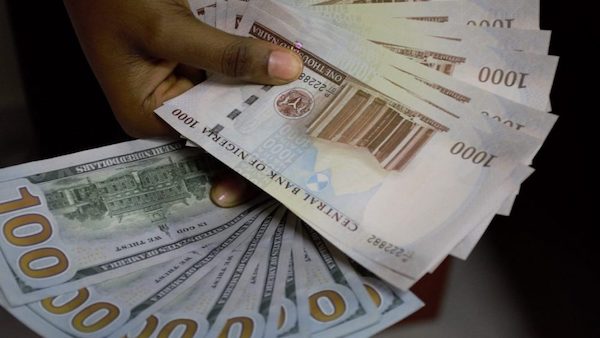
  • Naira appreciates against dollar across different Forex segments

    Naira appreciates against dollar across different Forex segments

    The Naira appreciated against the United States Dollar across the main segments of the foreign exchange (forex) market, the Peer-2-Peer (P2P), the Investors and Exporters (I&E), and the black market windows.

    Data obtained from FMDQ Securities Exchange revealed that the Naira gained 12 Kobo or 0.03 per cent on Friday against the greenback during the session to sell at N461.38/$1, in contrast to the previous day’s value of N461.50/$1.

    Also, in the P2P arm of the market, the Nigerian currency was exchanged with its American counterpart on Friday at N765/$1, in contrast to the previous day’s N766/$1, indicating an appreciation of N1.

    Similarly, in the parallel market, the domestic currency closed stronger against the US Dollar yesterday by N2 to settle at N747/$1 compared with Thursday’s closing rate of N749/$1.

    However, in the interbank window, the local currency lost N1.85 against the Pound Sterling to quote at N570.35/£1 compared with the preceding session’s N568.50/£, and against the Euro, it depreciated by 96 Kobo to finish at N501.17/€1 versus N500.21/€1.

    (Ripples)

  • Nigeria’s Public Debt Grow by 4.96%, Hits N46.25trn In Q4 2022 – NBS

    Nigeria’s Public Debt Grow by 4.96%, Hits N46.25trn In Q4 2022 – NBS

    Nigeria’s public debt stock which includes external and domestic debt hit a new mark of N46.25 trillion in Q4 2022 from N44.06 trillion in Q3 2022.

    This is according to the Nigeria Bureau of Statistics(NBS) which released its quarterly report titled “Nigerian Domestic & Foreign Debt Q4 202” on Friday.

    The report revealed that the nation’s public debt grew by 4.96% in Q4 2022, while

    external debt stood at N18.70 trillion in the same quarter of 2022.

    “However, the share of external debt to total public debt stood at 40.44% in Q4 2022, while domestic debt was recorded at 59.56%. In addition, the Federal Government’s share of domestic debt was 80.62% in Q4 2022,” the report read.

    In a debt profile breakdown, the commercial hub of the nation, Lagos, tops the states with the highest debt profile recording a total of N807.21 billion in Q4 2022, while Delta came in second with N304.25 billion and Ogun with N270.45 billion.

    Meanwhile, Jigawa recorded the lowest debt with N43.95 billion followed by Kebbi and Katsina with N61.31 billion and N62.37 billion respectively.

    (Channels TV)

  • Dangote Industries Lists N200bn Bonds On Nigerian Exchange

    Dangote Industries Lists N200bn Bonds On Nigerian Exchange

    Dangote Industries Limited, yesterday listed N200 billion series 1 and 2 Bonds on Nigerian Exchange (NGX) Limited.

    At the Closing Gong Ceremony commemorating the listing of the bond held at the Exchange in Lagos, the Group chief executive officer, Dangote Industries Limited, Mr Olakunle Alake expressed delight upon the completion of the listing of the firm’s bonds on the Exchange.

    Alake, who was represented by the Group chief finance officer, Mallam Mustapha Ibrahim said: “we are pleased to have showcased the depth and liquidity of the domestic capital market whilst we reflect the strong quality of the issuer, despite the current global market realities.”

    According to Ibrahim, the depth of the market reflected in the successful issuance of the bond, which was the largest aggregate local currency bond issued in the capital market so far, within the year.

    He further noted that the listing of the bond recorded participation from a wide range of investors including domestic pension funds, asset managers and insurance companies and further demonstrates investors’ confidence in Nigeria’s credit reality.

    The Divisional head, Capital Markets, NGX, Mr Jude Chiemeka, applauded the listing of the bond which provides corporates the opportunity to raise capital, saying “the listing of this transaction on our platform not only allows for a more liquid capital market, but it also shows our capacity to facilitate large transactions towards enabling a more robust ecosystem.”

    He further noted that NGX remains committed to fostering similar transactions through our digital gateway such as this and a confident market where corporates and investors can achieve their respective objectives.

    Dangote Industries integrated conglomerate with vibrant operations in Nigeria and Africa across a wide range of sectors including cement, sugar, salt, condiments, packaging, energy, port operations, fertilizer, and petrochemicals. Its core business focus is to provide local, value-added products and services that meet the ‘basic needs’ of the populace through the construction and operation of large scale manufacturing facilities in Nigeria and across Africa.

    It is focused on building local manufacturing capacity to generate employment, reduce capital flight and increase local value addition.

    (Leadership)

  • In first rebrand after 14 years, Pepsi unveils new logo

    Pepsi unveiled a new logo on Tuesday, which appears to take inspiration from its 1990s design amid a surging nostalgia for the era thanks to Gen Z

    The current and upcoming Pepsi logos.Courtesy of Pepsi
    The current and upcoming Pepsi logos. Courtesy of Pepsi

    The redesign comes alongside rising popularity for the ’90s era among Gen Zers. And it goes against the recent trend of minimalist logos with little-to-no identity.

    The cola’s new emblem sees the circle return to a more standard striped pattern, with the wording placed inside. PepsiCo’s chief design officer, Mauro Porcini, told CNN that’s because most people asked to draw the logo from memory still produce something like the design used from 1987-1997.

    “We couldn’t ignore that kind of insight,” he said. “Instead of rejecting it, we decided to embrace it.”

    The company’s press release pointed to more vibrant colors and a modern font as part of the update. It is expected to roll out in North America this fall, before being offered around the world in 2024.

    The old Pepsi logo, pictured in 1990.Jean-Erick PASQUIER/Gamma-Rapho via Getty Images
    The old Pepsi logo, pictured in 1990.Jean-Erick PASQUIER/Gamma-Rapho via Getty Images

    But taking inspiration from a previous design also comes as Gen Zers bring back several trends from the ’90s. That includes fashion trends like baggy jeans – or as the Wall Street Journal reported Saturday, the preppy aesthetic that was channeled by brands like Ralph Lauren in the ’90s.

    This nostalgia for the period when Gen Zers were either in early childhood – or before they were born –might be most apparent in style choices, but now it looks like Pepsi is calling back to this era as well.

    A Pepsi spokesperson did not immediately reply to Insider’s request for more information, sent outside US working hours.

    The return to the ’90s emblem also goes against the trend of everything from fashion houses to soccer clubs modernizing their logos with simplified designs.

    Last year, one viral tweet questioned why the likes of Yves Saint Laurent and Balenciaga were doing away with their stylized fonts in favor of basic ones with similar appearances.

    Burberry was among those companies, replacing its knight logo and serif font in 2018, before bringing them back in February this year.

    But despite the minimalist trends, a 2019 study in the Harvard Business Review found that logos with a visual reference – like Apple or Starbucks – resonate with consumers more than those with abstract symbols.

    (Business Insider)
  • CBN Directs Banks To Open On Saturday, Sunday; Confirms Evacuation of Bank Notes to Banks

    CBN Directs Banks To Open On Saturday, Sunday; Confirms Evacuation of Bank Notes to Banks

    The Central Bank of Nigeria (CBN) has confirmed the evacuation of banknotes from its vaults to commercial banks across the country as part of a coordinated effort to ease the circulation of banknotes of various denominations.

    The CBN has also directed all commercial banks to open for operation on Saturdays and Sundays.

    The Acting Director, Corporate Communications Department of the CBN, Isa AbdulMumin, disclosed this in Abuja, on Friday, stating that a substantial amount of money, in various denominations, had been received by the commercial banks for onward circulation to their respective customers.

    According to him, the CBN had directed all banks to load their Automated Teller Machines (ATMs) as well as conduct physical operations in the banking halls through the weekends.

    “Branches of commercial banks will operate on Saturdays and Sundays to attend to customers’ cash needs,” he noted, adding that the Governor of the Central Bank of Nigeria, Godwin Emefiele, would personally lead teams to monitor the level of compliance by the banks in various locations across the country.

    He, therefore, urged Nigerians to be patient as the current situation would ease soon with the injection of more banknotes into circulation.