Category: Business/Economy

  • Senate asks CBN to extend deadline for old naira notes till July 31, as CBN insists on January 31 deadline 

    Senate asks CBN to extend deadline for old naira notes till July 31, as CBN insists on January 31 deadline 

    …raises interest rate to 17.5%

    The Senate has once again asked the Central Bank of Nigeria (CBN) to extend the deadline for the stoppage of the use of old naira notes from January 31 till July 31, 2023.

    With one week to the deadline for the termination of the use of the old naira notes, federal lawmakers in the Senate said the policy should be extended as banks are still dispensing old naira notes because of insufficient new naira notes.

    The lawmakers also lamented the hardship the policy is causing Nigerians as they said there are long queues at banks across the country because people are trying to deposit their old notes and get new ones.

    Some legislators also asked the Senate to concur with the House of Representatives which had earlier called for an extension of the policy and compel the CBN Governor, Godwin Emefiele to extend the deadline.

    January 31 Deadline For Old Naira Notes Remains, CBN Insists

    The Central Bank of Nigeria (CBN) says its January 31, 2023 deadline for the validity of the old N200, N500 and N1,000 notes remains.

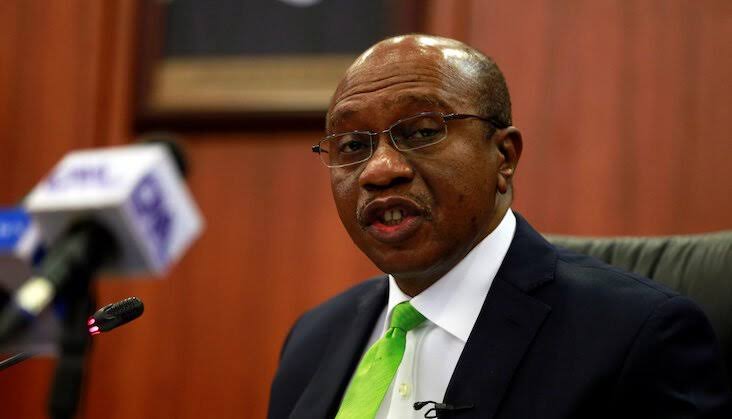
    The CBN Governor, Godwin Emefiele announced this after the apex bank’s Monetary Policy Committee (MPC) meeting in Abuja on Tuesday.

    The CBN also raised the Monetary Policy Rate (MPR), which measures interest rate, to 17.5 percent.

    According to him, kidnapping and ransom-taking have reduced since the three banknotes were redesigned.

    He also said the time given for the swap of the old naira notes with new ones were enough for Nigerians to go to commercial banks and get new notes.

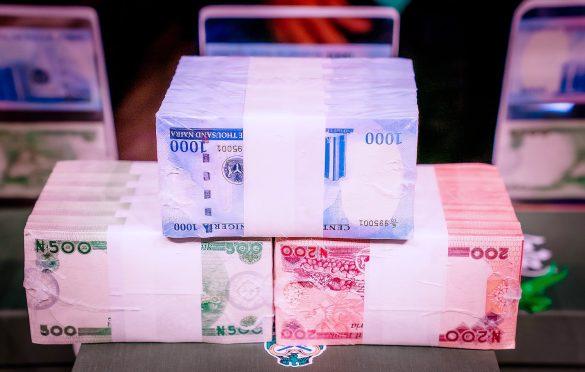
    The CBN on October 26, 2022 had announced its plan to redesign the three banknotes. President Muhammadu Buhari subsequently unveiled the redesigned N200, N500 and N1,000 notes on November 23, 2022, while the apex bank fixed January 31 deadline for the validity of the old notes.

    There have been concerns from many Nigerians over the slow spread of the three new naira notes as the January 31 2023 deadline approaches but the apex bank has insisted that the date stands.

    The CBN also recently directed commercial banks to halt over-the-counter payment of the new notes and load their Automated Teller Machines (ATMs) with the redesigned naira notes to boost circulation.

    The apex bank also launched a cash swap programme nationwide to enable those in the unbanked areas to exchange their old notes for new notes before the deadline.

    However, the House of Representatives, the Senate and the Nigeria Governors’ Forum have asked the CBN to extend the date to enable more Nigerians get the new notes.

    (Channels TV)

  • CBN to sanction banks over new naira notes scarcity

    CBN to sanction banks over new naira notes scarcity

    As public anger over the scarcity of new naira notes persists, the Central Bank of Nigeria (CBN), on Thursday stormed various banks’ Automated Teller Machines (ATMs) to ascertain their level of compliance with dispensing the redesigned naira notes.

    This was even as the CBN said it has waived conditions for Deposit Money Banks (DMBs) across the country to pick up the new notes to ensure that every Nigerian gets the new currency.

    However, the shock of the CBN staff, old and dirty notes were simultaneously coming out of the ATMs of most banks visited in the sting operation.

    Only a few ATM booths had enough of the new naira notes, a development the apex bank said was totally unacceptable.

    Speaking after the visit, a CBN Director and Managing Director of NIRSAL Micro-Finance Bank, Abdullahi Kure, said the monitoring of banks would continue, insisting that those found culpable of hoarding and diverting the new notes will be appropriately sanctioned.

    He said: “We’re taking stock to know those getting new notes and what they are disbursing or why they’re not disbursing. We’re monitoring to know whether the banks are hoarding, diverting or not even picking the new money.

    “Appropriate penalties will be meted out where infractions are determined”, he said.

    On the possibility of extending the deadline, Kure said: “At this point, I can’t say yes or no”.

    He added that there has been massive deployment of CBN Directors across the country to deepen sensitisation on new naira notes and cash restriction.

    He further revealed that the apex bank was consulting with religious leaders and traditional rulers to secure their buy-in and ultimately make the initiatives a success.

    The ATMs visited included GTCo, Access Bank and Keystone Bank, all within the Wuse area of Abuja.

    At the Access Bank in Wuse, the Operations Manager, Ugo Chinenye, denied hoarding the new notes, stating that the bank loads the ATMs according to the volume of the new notes it receives from the apex.

    At the palace of His Royal Majesty Adamu Baba Yunusa, Chairman Council of Traditional Rulers in the Federal Capital Territory (FCT) appealed for a possible extension of the January 31 deadline to give room for more awareness especially at the grassroots.

    He said: “Some people have not seen or touched the new naira. We need more time for sensitisation. In his remarks, the Director General, International Centre for Islamic Culture and Education, Dr Kabir Kabo Usman, said there was an urgent need to speed up sensitisation on the new notes as the deadline was less than two weeks away.

    “We need to act very fast to ensure people deposit all old notes at the banks and not lose their funds. We encourage the local businesses to go the banks and deposit old notes. We’re appealing to them. It’s good to have the buy-in of the followers.

    “We shall remove the skepticism in people’s minds since it’s a policy of the government that came out of great research. The message will cut across all mosques in Abuja

    “We also urge CBN to ensure the new notes are available for the people to use”, he said.

    Customers who spoke with journalists lamented the scarcity of new naira notes.

    Rufus Peterson, a Point of Sales agent said his customers have stopped accepting the old notes from him, while the bank ATMs are still dispensing them.

    “I’m in a fix. My business is suffering. My customers want new notes but my banks are disbursing old notes. This is a frustrating situation”, he lamented.

    Salau Mahmoud, success Onoja and Joy Makir, are all in the same situation with Peterson, even as they called on the CBN to end the new notes scarcity horror.

    Meanwhile, the CBN said it would continue its nationwide sensitisation and public enlightenment exercise on its naira redesign project, even as the January 31, 2023 deadline for the retirement of the old N200, N500 and N1,000 draws closer.

    The CBN, yesterday, took the campaign on the availability and admissibility of the new naira notes to Edo markets where it urged the people to replace their old notes with the new ones.

    Addressing traders during a sensitisation workshop at the popular Oba market in Benin City, the Assistant Director and Acting Branch Controller, Benin Branch of the CBN, Michael Mgbeze, urged them to accept the new notes as there is no plan to shift the January 31st deadline.

    Besides, he said the apex bank has sufficiently provided the new notes to banks, assuring that from this weekend, all ATMs would no longer dispense the old notes.

    The Governor, CBN, Godwin Emefiele, stated that during the bank’s sensitisation your a notes which held at Computer village, Lagos recently.

    Emefiele who was represented by the bank’s Director of Legal Services Department, Kofo Salam-Alada, said, “We have been calling upon the banks to approach the Central Bank of Nigeria across the country to come and pick up the new notes; we have even waived some of the conditionality for accessing currency notes to accommodate the banks.

    “In Aba, Abia State, CBN Director of Corporate Communications, Osita Nwanisobi speaking at the Ariaria International Market, Aba, Abia State said all commercial banks have been directed not to issue the new notes across the counter, but must load and only issue the new Naira notes through the ATM so that they will circulate to everybody before the January 31, deadline.

    In Birnin Kebbi, CBN took the cashless economy policy to markets in Kebbi State warning traders that January 31st,2023 deadline for end of old naira notes of N200,N500 and N1,000 was sacrosanct.

    Kebbi State branch Comptroller, Mr. Mannir Dantsoho Abdullahi, Deputy Director CBN headquarters, Mr Abubakar Bello Abdullahi,a Director from CBN headquarters,Ismail A.M,National Orientation Agency (NOA)State Coordinator,Mr. Joseph Machika were in Birnin Kebbi Central Market, where they interacted with traders leader’s, market men and women.

    While addressing the traders,Kebbi State Comptroller of CBN, Mr. Mannir Dantsoho Abdullahi , told the market men and women that there was no going back on the deadline stipulated for withdrawal of old notes and Nigerians should not be deceived that there would be an extensions.

    (Sun)

  • Despite issues, Nigeria ends 2022 as Africa’s largest oil producer

    Despite issues, Nigeria ends 2022 as Africa’s largest oil producer

    The Organisation of Petroleum Exporting Countries (OPEC) has revealed that Nigeria ended 2022 as Africa’s largest oil producer.

    According to OPEC, Nigeria in the month of December recorded a four percent increase in oil production to 1.235 million barrels per day, from 1.186 mb/d in November 2022.

    While on Year-on-Year, YoY performance, the nation’s oil output also increased to 1.235 mb/d in December 2022, from 1.197 mb/d in the corresponding period of 2021.

    OPEC disclosed this in its January 2023 Monthly Oil Market Report, MOMR obtained by Ripples Nigeria from its website.

    In 2022, Nigeria’s oil production fell heavily amid reports of increased oil theft. In fact, NNPC reported that it lost 95 percent of oil production to thieves at Bonny Terminal, Rivers State.

    While this happened other oil producers in Africa and other parts of the world reported large windfall from oil sales.

    However, OPEC in its report noted that Nigeria succeeded in beating Angola, its close rival that produced 1.088 mb/d in December 2022, to become the leading African producer while Equatorial Guinea came last with 54,000 bp/d.

    “Nigeria did not meet its 1.8 mb/d OPEC quota during the period even though the nation has the capacity to produce an additional 300,000 – 400,000 bpd of condensate,” OPEC stated.

    (Ripples)

  • Cash Withdrawal Limit: Banks Suspend Naira Credit, Prepaid Cards transaction

    Cash Withdrawal Limit: Banks Suspend Naira Credit, Prepaid Cards transaction

    Banks have informed customers through text messages that these channels can no longer be used to access cash for the time being.

    In compliance with the Central Bank of Nigeria’s (CBN) currency redesign and cash withdrawal policy that limited withdrawals across all channels to N500,000 weekly, banks have suspended further cash disbursement via customers’ Naira Credit and prepaid cards.

    The reporter learnt that as a result, the banks have informed customers through text messages that these channels can no longer be used to access cash for the time being.

    For instance, Stanbic IBTC in a message to one of its customers stated: “Following the naira redesign policy limiting local cash withdrawals across all channels to N500,000 weekly, please be informed that cash withdrawal on your naira credit and prepaid card will not be available for now.”

    Following its currency redesign project, the CBN had announced an upward review of its cash withdrawal policy across all payment channels by individuals and corporate organisations.

    Under the updated regime, the bank said effective January 9, 2023, individuals and corporate entities can withdraw a maximum of N500,000 and N5 million respectively compared to N100,000 and N500,000 which was previously announced on December 6, 2022.

    The central bank, in an updated circular dated December 21, 2022, and addressed to all Deposit Money Banks (DMBs) and Other Financial Institutions, Microfinance Banks, Mobile Money Operators, and Agents, explained that the upward review was, as a result of the feedback it received from stakeholders.

    The correspondence was signed by CBN Director, Banking Supervision Department, Mr. Haruna Mustafa.

    The CBN stated that in compelling circumstances where cash withdrawal above the limit is required for legitimate purposes, such request shall be subject to a processing fee of 3 per cent and 5 per cent for individuals and corporate organisations respectively.

    The central bank, in yielding to public pressure on the review, noted that it recognises the role that cash plays in supporting underserved and rural communities and would ensure an inclusive approach as it implements the transition to a more cashless society.

    The apex bank had on December 6, introduced revised cash withdrawal limits in banks and other financial institutions following its recent currency redesign project.

    The bank had restricted the maximum cash withdrawal over the counter (OTC) by individuals and corporate organisations per week to N100,000 and N500,000 respectively.

    The CBN stated, however, that withdrawals above these thresholds will attract processing fees of 5 per cent and 10 respectively for individuals and corporate entities going forward.

    In addition, third-party cheques above N50,000 shall not be eligible for OTC payment while extant limits of N10 million on clearing cheques still remain.

    (Arise Tv)

  • Economy: Nigeria’s inflation rate hits 21.34%

    Economy: Nigeria’s inflation rate hits 21.34%

    The Consumer Price Index (CPI) which measures the rate of change in prices of goods and commodities increased by 5.72 per cent to 21.34 per cent year on year in December compared to 15.63 per cent in December 2021, the National Bureau of Statistics (NBS) stated yesterday.

    Month-on-month inflation also rose to 1.71 per cent in the review period compared to 1.39 per cent in November.

    According to the CPI figures for December, month-on-month inflation may have been caused by a sharp increase in demand usually experienced during the festive season, as well as an increase in the cost of production including increase in energy, transportation costs, and exchange rate depreciation among others.

    Food inflation rose to 23.75 per cent year-on-year which was 6.38 per cent higher compared to 17.37 per cent recorded in December 2021.

    On a month-on-month, the food inflation stood at 1.89 per cent, which was 0.49 per cent higher than the 1.40 per cent in November.

    The rise in food inflation was attributed to increases in prices of bread and cereals, oil and fat, potatoes, yam, and other tubers, fish, and food products.

    The core index, which excludes the prices of volatile agricultural produce stood at 18.49 per cent year on year in December, up by 4.62 per cent when compared to the 13.87 per cent recorded in 2021.

    Month-on-month, core inflation stood at 1.33 per cent in December compared to 1.67 per cent in the preceding month.

    Core inflation resulted from increases in prices of gas, liquid fuel, passenger transport by air, vehicle spare parts, fuels and lubricants for personal transport equipment, and solid fuel among others.

    On year-on-year, urban inflation increased to 22.01 per cent, compared to 16.17 per cent in 2021 while the index rose to 1.80 per cent month on month in December from 1.50 per cent in November.

    Rural inflation stood at 20.72 per cent year-on-year, higher than 15.11 per cent in December 2021 while month-on-month, the index rose to 1.63 per cent from 1.30 per cent.

    At the states level, all items inflation on yearly basis was highest in Bauchi (23.79 per cent), Kogi (23.35 per cent), Anambra (23.13 per cent), while Taraba (18.98 per cent), Osun (19.09 per cent) and Kwara (19.18 per cent) recorded the slowest rise in the headline index.

    Month-on-month basis, however, inflation was highest in Oyo (3.48 per cent), Abuja (3.05 per cent), Sokoto (2.58per cent), while Ebonyi (0.11 per cent), Ekiti (0.68 per cent) and Nasarawa (0.70 per cent) recorded the slowest rise.

    Also, year-on-year, food inflation was highest in Kwara (27.90 per cent), Imo (26.94 per cent) and Ebonyi (26.28 per cent), while Sokoto (20.90 per cent), Taraba (21.59 per cent) and Cross River (21.71 per cent) recorded the slowest rise in the index.

    On a month-on-month basis, however, food inflation was highest in Sokoto (3.38 per cent), Oyo (3.10 per cent) and Kaduna (2.97 per cent), while Nasarawa (0.06 per cent), Osun (0.70 per cent) and Kogi (0.76 per cent) recorded the slowest rise.

    (This Day)

  • CBN launches new electronic card for domestic transactions

    CBN launches new electronic card for domestic transactions

    Nigerians will from today receive a new electronic card for local transactions that will be charged in Nigeria. The procurement cost and operational charges are still unknown.

    A card payment scheme is simply a payment that processes payments using debit and credit cards.

    On a global scale, Visa and Mastercard are two of the largest card payment schemes.

    Domestically, debit cards issued by Deposit Money Banks (DMBs) are acceptable payment platforms and the popular ones serving the Nigerian market are; Visa, Mastercard, and Verve.

    The Central Bank of Nigeria (CBN), in conjunction with the Nigeria Inter-Bank Settlement System Plc (NIBSS) and the Bankers’ Committee mooted the idea at a press briefing in October last year.

    At the conference, Premier Oiwoh, Managing Director of NIBSS, explained that the domestic card scheme would reduce the operating costs of cards in the country for both the issuers and users.

    “The card would be optimised for local content solely for the Nigerian market and support micropayment and credit, e-government, identity management, transportation, health and agriculture regarding payment”, Owoh added.

    CBN’s Director, Corporate Communications Department Mr Osita Nwanisobi, also corroborated Oiwoh’s position, explaining that Nigeria’s payment ecosystem has grown appreciably and can buoy a domestic card scheme.

    “Considering the strength and breadth of its banking sector and the rapid growth and transformation of its payments system over the last decade, Nigeria is ideally positioned to successfully launch a national card scheme”, he said.

    The new card, expected to unify payments across the banking landscape, is coming at a time Nigerians are fighting commercial banks over alleged dubious, duplicitous and peppery charges on for using debit and credit cards. The new card scheme empties into CBN’s plans of running a cashless economy by weaning Nigerians off cash addiction. It also seeks to deepen financial inclusion, enhance data sovereignty and track spending.

    (Sun)

  • New naira: CBN under pressure to extend Jan 31 deadline

    New naira: CBN under pressure to extend Jan 31 deadline

    The Central Bank of Nigeria may be under pressure to extend the deadline for old naira notes to cease being legal tender as bankers and customers push for the extension.

    The old notes are expected to be out of circulation by January 31 yet there is scarcity of the new notes as banks keep dispensing old notes to their customers.

    The reporter gathered that different stakeholders had been mounting pressure on the apex bank to extend the deadline in order to allow the new notes to circulate well and ensure the mop up of the old notes.

    It was learnt that prominent among the stakeholders were managing directors of banks and their management teams, but a source close to the chief executive of a Tier-1 lender told one of our correspondents on Friday that the bank managing directors could not make the call for the deadline extension openly as the decision on the redesign of the naira had their approval.

    The source stated, “It is tue that the bank MDs are not comfortable with the fact that the new notes are not circulating the way they had anticipated, but they can’t publicly ask for an extension of the deadline as they were part of the decision to redesign the currency and withdraw the old notes from circulation.

    “However, because of the failure of the CBN to supply enough new notes and the pressure this is putting on their banks, the managing directors are lobbying the apex bank to consider the extension of the deadline through the backdoor via the auspices of the Bankers’ Committee. It is a sensitive issue.”

    A senior CBN official on Friday confided in Saturday PUNCH that the apex bank might yield to the pressure for extension of the deadline.

    According to him, a new date may be announced before or during the CBN Monetary Policy Committee meeting coming up on Wednesday, January 25, 2023.

    He stated, “It is clear that the CBN has not supplied sufficient new currency notes to the banks. Even many of us in the CBN have not seen the new notes. The absence of the CBN governor has also clouded the issue and that is why no statement has been made regarding the extension of the deadline.

    “From the look of things, most certainly, a new deadline may be announced before the end of the month or during the MPC meeting coming up between January 24 and 25.”

    A bank manager in the Ikeja area of Lagos, who spoke on condition of anonymity because she was not authorised to talk to the media, stated, “We have been mandated to load all our machines with the redesigned naira notes, but we still don’t have much of the notes in circulation to load in all the machines across the country. What we have agreed is that at least one machine must be loaded in all locations with the new naira notes, because CBN officials have started moving around banks to confirm the level of compliance.

    “Two of the CBN officials visited one of our branches today (Thursday) and asked questions if the bank ATMs were dispensing new notes; they also joined the custodians in the ATM room in loading the machines and confirmed that the new notes were being dispensed to customers; they went ahead to ask why some machines were still dispensing old notes and the response given was that the new notes supplied were not enough.

    “They requested the evidence of cash supplied from our bullion team and ensured that the same was loaded in the ATMs as we have been mandated not to pay any single note across the counter.”

    NUBIFIE seeks extension

    Similarly, the National President, Nigeria Union of Banks, Insurance and Financial Institutions Employees, Anthony Abakpa, stressed the need for the CBN to extend the deadline.

    He said, “We would have loved for an extension on the deadline that the CBN has issued for those who are underprivileged and those who live in rural areas where there are no banks and they have to travel a distance before they can carry out banking transactions even on the PoS. We will also love it if they can extend it for every individual to be able to deposit their old notes.

    “We advise that there should be a little extension like a month so that everybody can deposit the old notes.”

    He noted that to a large extent, most of the Automated Teller Machines in Lagos had started dispensing new notes.

    However, when one of our correspondents informed him that ATMs in Abuja were dispensing old notes, Abakpa described the situation as abnormal and said NUBIFIE should be notified about such banks so that necessary action could be taken.

    Customers lament scarcity

    Findings by the reporter showed that Deposit Money Banks had not received sufficient new naira notes to satisfy their customers.

    Customers at the GTBank, Sauka branch in the Federal Capital Territory expressed dissatisfaction with the continued circulation of the old notes despite directives by the CBN to load the new notes in ATMs.

    Our correspondents observed that customers, who as early as 9am on Friday, were in a queue but could only obtain the new notes, while many customers trooped into the banking halls to deposit old notes.

    A customer, Mohammed AbdulKadiri, who spoke to the reporter said he was expecting to withdraw the new notes but got dirty old notes when he visited the ATM gallery.

    He said, “The current situation is disheartening, it has never been like this. Normally, when you want to produce new notes, on the day of launching, all the banks will have the new notes to give out. By now, I thought we would have more of the new notes in circulation, but unfortunately, I withdrew old notes today.

    “Honestly, I still don’t know why they changed the notes. I feel more for traders in the markets because what this means is that by January 31, people will still be spending the old notes.”

    When one of our correspondents sought an explanation, an official of the bank branch directed that all enquiries should be directed to the corporate communications team based in Lagos.

    Another customer, who did not want her name in print, said it was frustrating as a merchant to deposit the old notes and still withdraw the old notes.

    She said, “I am tired of this new policy. I no longer keep large amounts of the old notes, but when I make withdrawals, I still get the old notes. It is frustrating. I hope that they will make the new notes surplus next week or at least extend the deadline.”

    The reporter visited ATM galleries of Access Bank, United Bank for Africa and Wema Bank located at the Federal Secretariat, Abuja.

    One of our correspondents observed that the ATMs were still dispensing the old naira notes in N500 and N1,000 denominations.

    At the GTB banking hall, cashiers were seen paying customers with the old naira notes.

    At the Access Bank ATM gallery, a customer who did not give his name lamented the scarcity of the new notes.

    However, he questioned the security personnel, asking why the ATM was still dispensing old notes despite the directive of the CBN for the banks to flood the machines with new notes.

    Similarly, the UBA ATM machine at the Federal Secretariat dispensed the old notes.

    A customer, who gave his name simply as Godswill, said, “If the government wants to approve the new naira, let it do that once and for all so that everyone can conveniently start getting it from the ATM.”

    However, the situation was slightly different in Lagos and some parts of Ogun State on Friday as some ATMs dispensed new notes, while others dispensed old notes and a mixture of both.

    Senate proposes deadline

    The Senate had urged the CBN to extend the withdrawal date of the old notes to June 30, 2023.

    The Senate resolution was sequel to a point of order raised by Senator Mohammed Ndume during plenary.

    Raising orders 41 and 51 of Senate Standing Rule, Ndume said the call for extension of the date should be considered as a matter of urgent national importance in order to forestall imminent hardship on Nigerians.

    CBN warns customers

    However, the apex bank is standing firm on the deadline for now.

    When contacted earlier by one of our correspondents, the Director of Corporate Communications, CBN, Mr Osita Nwanisobi, said the release of the new notes to banks was ongoing, adding that the process was still at the initial phase.

    The CBN, through its verified Twitter page @Cenbank, urged bank customers to return old notes to the banks before the deadline.

    The Twitter post read, “A reminder to the general public that the old series of N200, N500 and N1000 notes cease to be legal tender by January 31, 2023.

    “You are once again advised to return them to your bank before the deadline!”

    In December, the CBN said it had withdrawn more than N1tn out of the N3.23tn from circulation since the launch of new naira notes in a bid to move cash back into the banking system.

    NACCIMA wants N5,000

    The Director-General of the Nigerian Association of Chambers of Commerce, Industry, Mines and Agriculture, Olusola Obadimu, advised the Central Bank to extend the deadline if it could not meet up with the standard required to phase out the old notes.

    He noted that a new N5,000 note would have served the same objective, adding that phasing out the old notes might affect the economy if it was not seamless.

    He said, “The CBN set the deadline, so they just have to meet it. If they cannot, I am sure that they will find a way around it, probably to seek an extension of the deadline.

    “However, I think it would have been better if they had issued a N5,000 note due to the rising inflation rather than repainting the old notes. It would have achieved the same objective because all the people who stocked up the old notes would have brought them out in exchange for a new N5,000 note.

    “They would have also needed to print less because it is a higher denomination note, so the money they would have needed to spend would have been lower. Another thing is you can’t force people to go cashless, especially when the necessary infrastructure is not readily available. People are sovereign and they have a choice on how they want to run their lives. Going cashless is an option and not going cashless is another option.

    “The process of phasing out the old notes may have an impact on the economy if it is not done seamlessly. Remember, there was a time the N100 note was changed but it had no effect because of the way it was done. I think there is no need to panic yet since we still have about 18 more days to the deadline but the CBN must up their game on this matter.”

    ‘Don’t extend deadline’

    A financial analyst and Managing Director, Cowry Asset Management, Johnson Chukwu, said banks were not overwhelmed with the new currency demand if the CBN had given them enough new currencies to disburse, adding that the apex bank had the number of banking customers.

    He stated, “I don’t think the banks are overwhelmed with the demand if the CBN has given them enough new currency notes, the limits for withdrawal is only N500,000 per week per individual and N5m per organisation per week.

    “So, the CBN has the number of bank customers; The basic thing I would have expected them to have done is to look at the history of the banking customers and see the people who are cash oriented and those who come to withdraw money. Let’s assume you have 12 million bank customers or there about, and you take it that six million will come and withdraw cash and you assume that 50 per cent are individual customers and not corporate; calculate the figures and have an estimate on how cash will be demanded.

    “If the CBN has actually released enough new currency notes to the banks, there is no reason why the banks should not be able to meet their customers’ demands. If there is no queue at any bank where people want to withdraw the new notes, it simply means that people are served with the currencies given to the commercial banks by the CBN. If the banks don’t have, they will give them the old currency. So I think clearly it’s all about what’s available.”

    Chukwu added that the volume of transactions done with cash had significantly dropped, adding that cash was no longer a significant standard of payment in the country.

    “So, in as much as there may be some discomfort and challenges at the very rural areas, I don’t think it will cause any major hiccups in business transactions, because I don’t know anyone that is buying anything for N2m that will carry cash around unlike what we used to have in the past. Most Nigerians have moved to other means of payments that are more efficient. The shortage (of new notes) will not affect economic activities,” he said.

    Unlike others, he noted that the deadline should not be extended.

    He said, “No, I don’t think that the CBN should extend the deadline because, if you look at some of the motivations for that timeline, an extension will defeat some of those primary objectives. This is a new currency design and it will reduce the volume of cash that people can withdraw, so I don’t see the possibility of an extension.”

    Speaking on how the apex bank should tackle the inadequate supply to commercial banks, he said, “I think it’s a design, not an accident; it’s clearly a design by the CBN to ensure that the volume of cash in circulation is checked.”

    Senior lawyers differ

    Meanwhile, some senior lawyers have expressed divergent views on the possible extension of the deadline for the old notes to cease from being legal tender.

    While Babatunde Ogala, SAN, noted that the CBN might have to extend the deadline, Kemi Pinheiro, SAN, urged Nigerians to embrace the cashless culture as too much cash in circulation could be used for vote-buying.

    Ogala said, “Today (Friday), it is becoming inevitable with the scarcity of the new currency that there may be a need for an extension of time for the old notes to cease to be legal tender, but in a situation where the banks’ Automated Teller Machines are still dispensing the old notes, how can you now achieve the mop up?

    “The banks are only taking in the old notes and circulating them back to the public. What this tells us is that we are not ready yet. The CBN probably needs some more time to achieve this task, because I don’t see that happening within the time frame. It is obvious that we still do not have the new notes. We understand that we want to go as cashless as possible, but there is no country where we do not have at least some cash in circulation.”

    On his part, Pinheiro said while the move by the CBN to implement the cashless policy was a welcome development, the process had been subverted by illegality and lawlessness.

    He also said the January 31 deadline should be sufficient time.

    “I think Nigerians will adopt the cashless arrangement. There has been legislation in place for more than 10 years for this cashless policy and it is not being implemented. Insisting on implementing it now – you know we’re not just told about it; we were told three months ago – 90 days should be sufficient time.

    “People took bundles of naira with wrappers of banks that have ceased to exist to the bank; they were keeping money at home. No modern society operates that way. You want to buy a car and you carry N3m in cash to the place; where is the money coming from? If we adopt the cashless policy, it will allow the flow of legal funds, and that is why people are kicking against it. People want to buy votes, but this process will make it difficult for them.

    “The CBN is not as foolish as many think, so I think that at the end of the day, it is a policy that is long overdue.

    “As for the availability (of new notes), I think the government is trying to mop up funds so that they don’t spend it recklessly. How do you go to a party and say give me your account and let me transfer money; the money is simply not there for you to spray.”

    “What is unfortunate is that we thrive in illegality. You go to a bank and they tell you we do not have new notes, meanwhile some people are hawking it. Despite legislation against such practices, lawlessness is the middle name of our society.

    A Professor of Economics at the University of Uyo, Edet Akpakpan, said, “I can’t understand why they insist that it has to close on a certain date. We need to find out why because, as things stand, there will be problems. Since I got some new notes about two weeks ago, I have not been able to see any till now.

    “I think it will be dangerous for the CBN to insist on withdrawing the old notes on a particular date. They should extend it. And if they are not extending it, what efforts are they making to make it available? The idea of changing the notes is good, but they should implement it properly so that citizens are not hurt in the process.”

    On his part, the Chief Executive Officer, Centre for the Promotion of Private Enterprise, Dr Muda Yusuf, said it was increasingly becoming clear that the deadline set by the CBN was not realistic and the National Assembly had advised the apex bank on its postponement till around June.

    “The House of Representatives spoke in a similar manner that this thing requires a lot more consultation to ensure that necessary flexibility is introduced to the implementation. That it doesn’t disrupt economic activities, especially among the rural dwellers, the informal sector and the larger economy generally.

    “So, with what we have seen, obviously, there are capacity problems on the side of the CBN to implement this. It is evident that they don’t have enough, because if the banks in Lagos up till now are still dispensing old naira notes, that means there is a production capacity problem because the Nigeria Minting and Printing Company is in Lagos, so the challenges of logistics are out of it.

    “So, if Lagos is still experiencing this, what will happen to other states around the country and all the local government areas? Many of them are in remote locations that don’t have banks and ATMs. And there is a lot of cash in those locations because many of these rural people are the ones who are really in agribusiness and trading in commodities like yam, tomatoes and potatoes.”

    (Punch)
  • Budget deficit hits N47tn under Buhari

    Budget deficit hits N47tn under Buhari

    The President, Major General Muhammadu Buhari (retd.) during the presentation of the 2023 budget at the National Assembly.

    The total budget deficit under the President, Major General Muhammadu Buhari (retd.), is set to hit N47.43tn, according to an analysis of the Federal Government’s data from the Budget Office of the Federation.

    According to investopedia, a budget deficit happens when expenses exceed revenue.

    The budget data analysed by The PUNCH cover the actual budget deficits and projections for 2015, 2016, 2017, 2018, 2019, 2020, 2021, 2022, and 2023 fiscal years.

    According to data, deficit financing has risen by 370.54 per cent from N2.41tn in 2016 to N11.34tn in 2023.

    In Q3 and Q4 of 2015, total deficit financing amounted to N841.48bn, it rose to N2.41tn in 2016, N3.81tn in 2017, N3.65tn in 2018, N4.18tn in 2019, N6.59tn in 2020, N6.44tn in 2021.

    While the total deficit for 2022 has not been released, the budget office expects deficit to hit N8.17tn (of which N6.37tn had been spent as of November 30, 2022). The office also anticipates a high deficit financing of N8.17tn for the 2023 fiscal year.

    Between Q3, Q4 of 2015, 2016, 2017, 2018, 2019, 2020, the first three quarters of 2021, and the first four months of 2022, the Federal Government spent N23.66tn on personnel costs, pensions, overhead costs, presidential amnesty programme, other service-wide votes, and special interventions.

    It also spent N14.13tn on servicing domestic and foreign debts, as well as N10.47tn on capital expenditure.

    Explaining the government budget deficit, an economic expert, Professor Akpan Ekpo, said, “This shows that expenditure has eclipsed the revenue, because they have to borrow, which is why there is a deficit.

    “They can’t raise enough domestic resources to finance spending. That gap is a deficit. Talking about GDP, by the rules, it should not be more than a certain percentage of GDP, but it has exceeded that.”

    According to the former Coordinating Minister for the Economy and Minister of Finance, Dr Ngozi Okonjo-Iweala, there is a need to keep the budget deficit under three per cent of GDP because of the Fiscal Responsibility Act, 2007, and in accordance with the international norm.

    The country’s budget deficit to the GDP ratio had risen from 1.69 per cent in 2015 to 2.37 per cent in 2016. It increased to 2.85 per cent in 2018, 2.92 per cent of GDP in 2019. The Federal Government expects the deficit to GDP ratio to be 5.03 per cent of the 2023 budget.

    The Minister of Finance, Budget and National Planning, Mrs Zainab Ahmed, had disclosed that the government was struggling to raise revenue for its expenditure.

    In a document titled ‘Public Consultation on the Draft 2023 – 2025 MTFF/FSP,’ she said, “Revenue generation remains the major fiscal constraint of the federation. The systemic resource mobilisation problem has been compounded by recent economic recessions.”

    While defending the 2022 budget, she stated, “If we just depend on the revenues that we get, even though our revenues have increased, the operational expenditure of the government, including salaries and other overheads, is barely covered or swallowed up by the revenue.

    “So, we need to borrow to be able to build these projects that will ensure that we’re able to develop on a sustainable basis. Nigeria’s borrowing has been of great concern and has elicited a lot of discussions. But if you look at the total size of the borrowing, it is still within healthy and sustainable limits.”

    It was recently reported that the Federal Government borrowed N6.31tn from the CBN through Ways and Means Advances in 10 months of 2022. This pushed total borrowing from the CBN from N17.46tn in December 2021 to N23.77tn in October 2022.

    World Bank had raised concerns over the financing of budget deficit through the CBN’s Ways and Means.

    In its December 2022 update, the global bank said “Moreover, financing of the fiscal deficit through Ways and Means continues to fuel inflation by increasing liquidity in the money market.

    “The CBN’s inflation target of six–nine percent, which has not been achieved since 2016, remains unlikely to be met in the near term.”

    With deficit financing at estimated at 5.2 percent of GDP for 2022, the bank disclosed that the Federal Government remains in breach of the legally stipulated level set in the Fiscal Responsibility Act (2007).

    It further said that Nigeria’s GDP growth rate would continue to be outpaced by other emerging economies, with inflation growing, and fiscal deficits increasing.

    The report stated that the government could sell or concession the Tafawa Balewa Square in Lagos as well as all the National Integrated Power Projects in Olorunsogo, Calabar II, Benin (located at Ihorbor), Omotosho II, and Geregu II plants, and some other government assets to fund its budgets.

    $15.62bn Eurobond repayments

    Meanwhile, Buhari may pass on $16.62bn Eurobond loan repayments to the next government, according to government data.

    These repayments will be made almost every year until about 2038, according to the public presentation of the approved 2023 budget by the Minister of Finance, Budget and National Planning.

    The document showed that repayment of $500m is expected in 2023 and $1.12bn in 2025.

    The other payments include $1.5bn in 2027 and $1.25bn each year from 2028 to 2030.

    There is also a $1bn repayment by 2031 and $1.5bn each between 2032 and 2033.

    It also noted that $4.75bn would be paid from 2038 onward.

    In 2021, It was reported that commercial loans obtained by Nigeria through Eurobonds rose from $1.50bn as of December 31, 2015, to $10.87bn as of December 31, 2020, indicating a $9.37bn or 625 per cent increase in five years.

    The debt stock remained at $1.5bn from 2015 to 2016 but rose to $6bn by 2017, indicating a $4.5bn or 300 per cent rise within a year.

    It further rose to $10.87bn in 2018, signifying an increase by $4.87bn or 81 per cent. It remained at this figure till the end of 2020.

    However, checks by The reporter showed $15.62bn as of September 2022, according to data from the Debt Management Office.

    The reporter observed that the Eurobond debt rose by 941.33 per cent from $1.5bn as of June 2015 to the current figure released by the DMO.

    Also, the repayment amount will rise by 850 per cent from $500m by 2023 to $4.75bn by 2038 upwards.

    It was reported in October last year said that the amount spent by Nigeria on servicing Eurobonds and Diaspora bonds rose by 85.67 per cent between the first and the second quarter of 2022.

    An analysis of data on actual external debt service payments from the DMO showed that Nigeria spent a total of $246.16m on servicing its foreign bonds in the first quarter of 2022.

    By the second quarter of the same year, the total debt service cost on these loans rose to $457.01m.

    Hence, the debt service rose by 86 per cent between the two periods.

    An eurobond is “a debt instrument that’s denominated in a currency other than the home currency of the country or market in which it is issued,” according to Investopedia.

    A Eurobond is a bond issued offshore by governments denominated in a currency other than that of the issuer’s country. Eurobonds are usually long-term debt instruments and are typically denominated in US Dollars.

    The yield on bonds has risen lately, driven by the increase in interest rates by the United States Federal Reserves. The US Fed commenced rate hikes in response to record-high inflation rate experienced in the world’s largest economy.

    In March last year, Nigeria acquired $1.25bn Eurobond from the international capital market, making the country the first African country to access the market in 2022.

    This happened a few days after the minister of Finance, Ahmed, had told Reuters that there was no plan to enter the Eurobond market in 2022.

    The DMO said the proceeds of the Eurobond would be used to finance critical capital projects in the budget to bridge the deficit in infrastructure and strengthen Nigeria’s economic recovery.

    According to the finance minister, the proceeds from the $4bn acquired from the Eurobond market the previous year would be used to fund fuel subsidy.

    However, the finance minister, on July 4, 2022, said the government had abandoned plans to raise about $950m selling overseas bonds, owing to unfavourable market conditions during the time frame approved for the fundraising.

    A member of the CBN Monetary Policy Committee, Robert Asogwa, while expressing his worry over the rising debt said,“particularly worrisome about the debt structure is the increasing accumulation of Eurobonds in the external debt component while minimising concessionary loans. The unexplained government preference for Eurobonds at high-interest costs, with the associated exchange rate risk, may likely hurt Nigeria sooner than anticipated.

    Another member of the MPC, Professor Festus Adenikinju, a member of the MPC, said it was important to curb the appetite of the government for debt.

    He said, “I am worried that Nigeria is not able to benefit maximally from the current upsides in the global oil market. We were not only unable to ramp up our production levels to meet the OPEC quota, no accretion to foreign reserves is also taking place, and government deficit and public debts are going north at a time we should be writing down our debt profiles and even building up a buffer for the inevitable raining days ahead.”

    W’Bank speaks

    Meanwhile, the World Bank has said that high borrowing costs, lower energy prices, slow growth in oil production and subdued oil-sector activity weaken Nigeria’s fiscal position.

    This was according to the latest Global Economic Prospects report by the World Bank released on Tuesday.

    The bank noted that a number of factors, such as low oil output, insecurity, petrol subsidies, forex scarcity, among others, hamper growth in the country.

    The report read, “Policy uncertainty, sustained high inflation, and rising incidence of violence are anticipated to temper growth. Growth in agriculture is expected to soften because of the damage from last year’s floods.

    “The fiscal position is expected to remain weak because of high borrowing costs, lower energy prices, a sluggish growth of oil production, and a subdued activity in the non-oil sectors.”

    The bank also said that debt sustainability and investor sentiment deteriorated further in many other countries, leading to rising borrowing costs and credit rating downgrades like in the case of Ghana and Nigeria.

    It added that increased insecurity has worsened fragility and is expected to reduce access to food for many more people across the region, further weighing on economic recoveries.

    (Punch)

  • UK shut Next company owned by Obi over account issue

    UK shut Next company owned by Obi over account issue

    For failing to submit its annual accounts, authorities in the United Kingdom, have struck off Next International (UK) Limited, a company largely owned by the presidential candidate of the Labour Party, Peter Obi.

    An online platform, Premium Times, reported that the company was removed from the record in September 2021, following a first and second gazette notice of “compulsory” strike off of the entity.

    In the UK, a compulsory strike-off is imposed on a company by creditors or by the Companies House for non-submission of annual accounts or failure to notify Companies House about a change of official registered office address.

    Once a company is struck off, its details will be removed from the Companies House register and the company ceases to exist.

    Next International (UK) Limited failed to submit its annual accounts for the year 2020, hence, the company was struck off and dissolved in 2021.

    Before a company is struck off, however, the UK requires the Companies House’s Registrar to send at least two formal letters to the company warning that a failure to file its annual accounts will lead to its removal from the register.

    According to UK Liquidators, a financial consulting firm, if Companies House receives no reply to its letters, it will then publish a first ‘strike off notice’ in the Gazette, which is the official journal of public record.

    The first official notice to strike off Next International was issued on 22nd June 2021, then a second notice was given on 31st August 2021. A final gazette to dissolve the company was issued on 7th September 2021.

    Before its final dissolution, records show that for four consecutive years (2017, 2018, 2019 and 2020) the UK Companies House had to always issue a “first gazette notice for compulsory strike-off” before Next International filed its annual account. Then immediately the company submitted its annual accounts, a gazette will be issued to discontinue the compulsory strike-off action.

    A private limited company, Next International was incorporated on 16th May, 1996. Mr Obi was listed as a director while his wife, Margaret, served as secretary. Next International (Nigeria) Limited (with 999 ordinary shares) and Mr Obi (with one ordinary share) were listed as shareholders.

    Records show that the company was registered as business “agents involved in the sale of a variety of goods” in England and Wales.

    The firm reported taking a mortgage from Lloyds TSB Bank Plc for a property on 53 Clyde Road, Croydon.

    On May 16, 2008, 14 months after assuming duties as governor of Anambra State, Obi resigned as the director of Next International.

    He took office on March 17, 2006 but continued to serve as a director of the company in violation of Nigerian law.

    In Nigeria, a person is statutorily required to withdraw from engaging in or directing a private business, except if it is farming, upon becoming a public officer, Section Six (6) of the Code of Conduct Bureau and Tribunal Act provides.

    The former governor admitted to Premium Times in 2021 that he did not declare these companies and the funds and properties they held in his asset declaration filings with the Code of Conduct Bureau, the Nigerian government agency that deals with the issues of corruption, conflict of interest, and abuse of office by public servants.

    At the time, Mr Obi said he was unaware that the law expected him to declare assets or companies he jointly owns with his family members or anyone else.

    (Punch)

  • Withdrawal limit: Customers kick as CBN begins implementation

    Withdrawal limit: Customers kick as CBN begins implementation

    Over 20 Deposit Money Banks on Monday began the implementation of the Central Bank of Nigeria’s new cash withdrawal limit policy across the country with bank customers expressing anger over the new rule.

    The Governor of the CBN, Godwin Emefiele, had on December 21, 2022, bowed to pressure and revised the bank’s earlier cash withdrawal limits.

    The CBN reviewed upwards the maximum weekly limit for cash withdrawal across all channels by individuals and corporate organisations to N500,000 and N5m respectively.

    The CBN attributed the development to the feedback it got from stakeholders.

    For transactions above the withdrawal limits, financial institutions are required to get details of the customers and upload the same on the CBN portal created for the purpose.

    In the earlier circular it issued on December 6, 2022, the CBN had said that with effect from January 9, 2023, the maximum over-the-counter cash withdrawal limit by individuals and corporate organisations per week, would be N100,000 and N500,000 respectively, adding that withdrawals above these limits would attract processing fees of five per cent and 10 per cent respectively.

    It further stated that the maximum cash withdrawal per week via Automated Teller Machines from January 9, would be N100,000 subject to a maximum of N20,000 cash withdrawal per day.

    The apex bank also directed banks to load only N200 and lower denominations into their ATMs.

    Following the previous directive, many stakeholders kicked against it. The Association of Mobile Money and Bank Agents of Nigeria said that point-of-sale operators would protest as the policy was targeted at killing their source of livelihood.

    However, the reviewed cash limits, which took effect on Monday faced severe opposition from bank customers who accused the central bank of not being sensitive to the plight of cash-based businesses.

    Abuja banks

    Meanwhile, banks located at Garki, Area Two, observed the CBN withdrawal policy via their ATM stands.

    Findings by our correspondent showed that Zenith Bank, Keystone Bank, Ecobank, and Access Bank enforced the policy.

    One of our correspondents, however, observed that customers using their debit cards at the same bank’s ATMs were able to withdraw higher amounts.

    When our correspondent visited Access Bank, customers were seen making deposits of the old notes while the new notes were dispensed sparingly via the ATM.

    At Ecobank, an official who spoke on the condition of anonymity, said, “You can only withdraw N100, 000 per day over the counter in line with the CBN policy. If you want more, you would have to go through the necessary process.

    “However, I advise that you use other methods to transfer if you need more money. The main purpose is to ensure that a proper audit can be done and nobody takes our money out of the country.

    Reacting, the National Publicity Secretary of The Association of Mobile Money and Bank Agents in Nigeria, Olusegun Elegbede, said the implementation of the policy was being observed, adding that the effect would be seen by end of the week.

    He said, “Well, it is still early to draw any form of conclusion around it. We may not likely not be able to appreciate the effects until later this week.”

    The reporter visited Ecobank, Zenith Bank and First Bank located at Jabi area in the Federal Capital Territory.

    At the Ecobank Jabi, an employee told one of our correspondents that the bank had started the implementation of the new withdrawal limit.

    The Ecobank worker, who spoke on condition of anonymity because he was not authorised to speak on the matter, “The policy has been implemented. For this location, I haven’t seen anyone that has withdrawn more than the limit. I know some customers are still not aware or they have not just taken notice.”

    Furthermore, findings showed that several Point of Sale operators were not aware of the new policy.

    Reacting, the President, National Union of Banks, Insurance and Financial Institution Employees, Abakpa Anthony said, “We cannot really comment on that for now as the normal transaction is still ongoing.

    New notes

    Findings showed on Monday that several ATM did not dispense the new notes.

    At the Ecobank on Ogunnusi road, Berger Bus stop, our correspondent reported that three ATM galleries at the bank were dispensing old notes as of the time The reporters visited the bank around 3pm.

    Similarly, all the two Union Bank’s ATMs just a few metres away from Ogunnusi road were dispensing old notes as of the time The reporters visited the bank.

  • Lack of investment in Downstream Oil Sector responsible for endless fuel scarcity nationwide, says Pinnacle Oil CEO, Peter Mbah

    Lack of investment in Downstream Oil Sector responsible for endless fuel scarcity nationwide, says Pinnacle Oil CEO, Peter Mbah

    Founder and Chief Executive Officer (CEO) of Pinnacle Oil and Gas Limited, Mr Peter Mbah, has declared that inadequate and lack of investments in the downstream of the oil and gas sector as being responsible for incessant petroleum products’ scarcity being experienced across the country.

    Of recent, there have been recurring bouts of petroleum products scarcity, especially the Premium Motor Spirit (PMS), also known as Petrol, across the country, leading to series of controversies and buck-passing between the regulatory agencies and petroleum marketers.

    Commenting on the issue while speaking with newsmen at the weekend after paying a thank you visit to President Muhammadu Buhari at the State House, Abuja, the Pinnacle Oil boss attributed the cause of the crisis to a deficit of investment in the downstream sub-sector, a problem, which he said his firm, Pinnacle Oil and Gas, has started solving with the inauguration of the largest storage terminal in West Africa in Lagos last year.

    Asked about the possibility of fuel scarcity easing off soon in the country, Mbah said more investments in the downstream oil and gas sector will in a matter of time end the fuel scarcity problem.

    He said: “There has been a deficit of the sort of investments Pinnacle has done in the last decades, but what we’re doing right now is to address that stagnation of investments in the downstream oil and gas industry.

    “As you know, this is an investment size of about $1 billion. So we are expecting to see more of such investments because what the Pinnacle has done is to create some efficiency in the supply and distribution value-chain of the downstream sector.

    “So we are indeed expecting that more investment in the downstream sub-sector would completely eliminate the sort of scarcity you are witnessing today”.

    On why he came in the company of the Chairman of Pinnacle Oil and Gas, who is the Emir of Bichi Kingdom in Kano State, Alhaji Nasiru Ado-Bayero, to see the President, Mbah said it was to appreciate President Buhari for inaugurating the company’s huge facilities at Lekki, Lagos State, in October, 2022.

    According to him, the facilities’ activities had lowered costs and improved the distribution of petroleum products to many areas in the country while also easing traffic in the Apapa area of Lagos and had provided valuable job opportunities for many Nigerians.

    His words: “We, Pinnacle Oil and Gas Limited, have come here today to express our profound gratitude and our heartfelt appreciation to Mr. President.

    “You will recall that on the 22nd day of October, 2022, Mr. President inaugurated our storage terminal, adjudged to be the largest storage terminal in West Africa, with offshore intake facilities, also adjudged to be the deepest intake facility in the entire Africa, sitting at a water depth of 23 meters.

    “So we do have SPM and CBM. Those are the offshore facilities we have. Those facilities have the capability to in-take the largest vessels you can imagine and discharge over 100 million liters of clean petroleum products within 24 hours. This is typically what takes the industry 30 to 32 days to discharge.

    “So we have largely come here today to express our gratitude to Mr. President for the honour he gave us in inaugurating this largest facility, which has actually changed the face of the industry, because it has eased, as you know, this facility is located at the Lekki Free Zone, just by the Dangote Refinery.

    “So what it has done, it has eased the congestion and the gridlock we have at the Apapa area in Lagos. It has also reduced the costs of supply and delivery of petroleum products in different parts of the country. It has also provided jobs for teeming unemployed Nigerians.

    “So this is why we thought it necessary to come and say thank you to Mr. President”, Mbah further explained.

    (Arise News)

  • Cash withdrawal limit takes off today, January 9

    Cash withdrawal limit takes off today, January 9

    Four days after the Central Bank of Nigeria (CBN) directed commercial banks to suspend over-the-counter dispensing of the new naira notes and use their Automated Teller Machines (ATMs) to ensure wider circulation, compliance level has been abysmally low as customers continue to get the old currency slated to be junked on January 31.

    Meanwhile, the policy on restriction on daily cash withdrawal takes off today, Monday, January 9.

    Under this arrangement, the maximum weekly limit for cash withdrawals across all channels by individuals and corporate organisations is now N500,000 and N5 million, respectively. Thus, anyone or organisation that has a compelling need to withdraw above the approved limits to transact legitimate businesses will pay a processing fee of 3percent and 5percent for individuals and corporate organisations, respectively.

    Aside that, the financial institution shall obtain the following information from the customer, at the minimum, and upload same on the CBN portal created for the purpose: Valid means of identification of the payee (National ID, International Passport, or Driver’s License); Bank Verification Number (BVN) of the payee; Tax Identification Number (TIN) of both the payee and the payer; Approval in writing by the MD/CEO of the financial institution authorising the withdrawal.

    More so, third party cheques above N100,000 shall not be eligible for payment over the counter, while the extant limit of N10 million on clearing cheques still subsist.

    The earlier limit for over-the-counter weekly cash withdrawal for individuals was N100,000 and N500,000 for corporate entities.

    The apex bank warned banks and other financial institutions to live above board as anyone caught aiding and abetting the circumvention of the policy will be severely sanctioned.

    Anxious customers who thronged various ATMs in Abuja, Lagos and other parts of the country at the weekend were shocked to see old and in some instances, dirty naira notes gushing out of the machines.

    In Kubwa, Wuse and other parts of Abuja, customers on various ATM queues at the weekend said they did not get the new notes and many went home sad.

    John Akomas, a Point of Sales operator lamented. “I was at three ATM machines in Abuja on Sunday to see if I could get the new notes, but to no avail.

    “In Kubwa, all the banks along Gado Nasko Road dispensed old notes. I know because many of us PoS operators do exchange information through our WhatsApp groups. When a colleague tells us where he got his new notes from, we go there because customers in town are really pressuring us to pay them with the new notes. Nobody wants to have the old notes because they expire in three weeks time. The pressure is too much on us”, he lamented.

    Mirabel Moses, a flea-clothes dealer also said her customers keep paying with old notes which is a huge challenge for her because she hardly has the time to go to the bank to make deposits.

    “I pray this new notes problem is quickly sorted. I don’t want to have old notes with me”, she said.

    However, a Tier 2 bank official in Abuja who did not want to be named because he was not authorised to speak on the matter said: “We get tremendous pressure from customers. We keep trying to explain the situation to them on a daily basis. Many come shouting at the staff as if we hoarded the money but it’s not sufficient. That’s the brutal reality. We are expecting more supplies from the CBN. Hopefully, things will be a lot better this week. We also advise customers to use the alternative electronic banking channels. That’s the whole essence of these initiatives of the CBN. It empties into the cashless policy blueprint”, he said.

    Meanwhile amid complaints of inadequate supply of the new Naira notes, the Central Bank of Nigeria (CBN) at the weekend, insisted that banks have enough new notes to circulate across the country.

    This is coming after reports filtered in that the apex bank had ordered DMBs to immediately stop the payment of the new naira notes to customers over-the-counter withdrawals.

    The report noted that the CBN instead, directed that the banks should rather load their Automated Teller Machines (ATMs) with only new notes to ensure that the currency circulates across the country ahead of the January 31, 2023 deadline when the old notes will no longer be legal tender.

    According to the report, a source in one of the Tier-1 banks who acknowledged the directive from the CBN stated that her bank on Thursday issued a memo in that respect to all the branch managers to enforce the CBN order.

    The memo, which was titled, ‘Urgent update on currency redesign’ and signed by the Group Head, Retail Operation, stated, “The CBN has mandated that we immediately stop the Over-the-Counter payment of the new N200, N500 & N,1000 currency. Instead, all new notes should be loaded into the ATMs for customer withdrawals. This is effective immediately please.”

    The report also noted that the source, who is a manager in one of the bank’s branches in Lagos, however, complained that the new notes were in short supply, hence the branch decided to load a mixture of the old and new N1,000 and N500 notes in the ATMs for customers to withdraw.

    Daily Sun had earlier reported that twenty five days after the release of the newly redesigned N200, N500 and N1,000 notes and with 22 days left before the old notes cease to be legal tender in the country, Automated Teller Machines (ATMs) in Lagos are yet to dispense the new notes.

    This also led to calls to extend the deadline to allow the circulation of the new notes.

    However, the CBN clarified that it did not ban the banks from paying customers the new notes over the counter, pointing out that the directive to the banks to dispense new notes via ATMs was to complement over-the-counter transactions and increase the circulation of the redesigned notes.

    The Director of Corporate Communication, CBN, Osita Nwanisobi, said adequate plans have been made to heighten the circulation of the new notes while adding that the speculations that the banks did not have enough new notes for circulation were false.

    Nwasinobi explained that the directive didn’t categorically ban over-the-counter transactions but was issued as a persuasion to dispense via ATMs to increase circulation.

    With higher pressure on electronic banking channels as the cashless policy deepens, customers have called for fortified and expanded platforms and infrastructure of financial institutions as failed transactions spike.

    When Daily Sun visited various banks, scores of miffed customers besieged their customer care desks to lodge and sort out failed transactions; where initiating accounts are debited but receivers are not credited.

    Frustrated customers have been lampooning banks on various social media platforms for serially failing to guarantee successful transactions, especially during the Christmas celebrations.

    This amplified calls on banks and other service providers in the electronic banking ecosystem to up their game if the cashless policy is to succeed.

    In another development, the Nigerian Security Printing and Minting (NSPM) Plc, at the weekend, reiterated that the recently-released new naira notes were of same quality with the current ones in circulation, warning skit makers and the public to desist from subjecting them to crude experiments just to prove otherwise.

    The Managing Director of NSPM PLC, Ahmed Halilu gave the warning in a statement he personally signed, noting that the establishment has been meeting the currency needs of the Central Bank of Nigeria (CBN) since 2014 due to its improved capacity.

    “Indeed, Nigeria has achieved zero importation of currency, developed local capacity and, to an extent, conserved foreign exchange within this period.

    “We want to inform all Nigerians that the new naira notes are of the same substrates and passed through the same printing processes and finishing procedures. It is, therefore, basically the same as the other notes in circulation. It also leaves traces of intaglio inks when rubbed on plain white surfaces.

    “It is, however, important to note that new banknotes are generally light when issued, then become heavier in circulation on getting in contact with dirt and moisture.

    “In addition, the second stage of currency printing (Intaglio) requires a heavy deposit of special inks with fairly large particles to give a tactile feeling of the portraits as well as other raised prints by way of design. One of the properties of intaglio inks is non-solubility in water and ease of transfer (light stain) on plain white materials owing to the size of the particles. This is generally a security feature of all banknotes that easily differentiates them from forged or counterfeit notes.

    “The naira is our legal tender and national symbol. We, therefore, urge Nigerians and other users of the naira banknotes not to subject our banknotes to experiment in order to prove a point”, Halilu stated.

    He added that the best international practices have been deployed in the production of the new naira notes, adding, “we shall continue to ensure that it meets international standards”.

    (Sun)