Category: Business/Economy

  • NBS Puts Nigeria’s Inflation At 26.72% In September

    NBS Puts Nigeria’s Inflation At 26.72% In September

    The Nigerian Bureau of Statistics on Monday, announced the rise of the nation’s annual inflation to 26.72% in September from 25.8% in August.

    Inflation in Africa’s biggest economy has risen to double-digits since 2016, eroding incomes and savings, and prompting the central bank to hike interest rates to their highest level in nearly two decades.

    On a year-on-year basis, the inflation rate was 5.94% points higher compared to the rate recorded in September 2022, which was 20.77%, indicating an increase when compared to the same month in the preceding year.

    Furthermore, on a month-on-month basis, the headline inflation rate in September 2023 was 2.10%, which was 1.08% lower than the rate recorded in August 2023 (3.18%).

    “Food and non-alcoholic beverages were the biggest contributors to the rise in inflation,” the bureau said.

    According to the report, the food inflation rate in September quickened to 30.64 per cent on a year-on-year basis, which was 7.30 per cent points higher compared to the rate recorded in September 2022 (23.34 per cent).

    Food prices have been on the rise across Nigeria in recent years. The situation deteriorated due to the impact of government policies such as the removal of subsidies on petrol, among others.

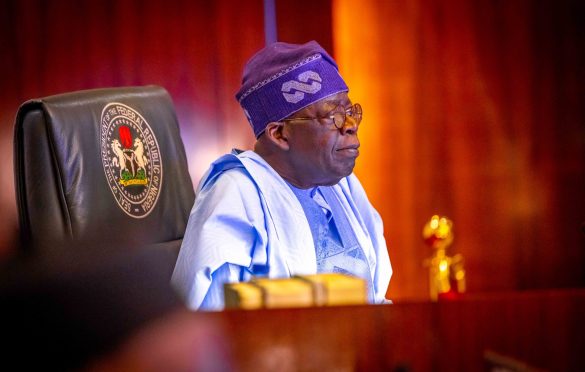
    President Bola Tinubu on 29 May during his inauguration, announced the removal of subsidy on petrol. This development has caused hardship for many Nigerians with its attendant increase in the prices of goods and services.

    Over the past four months, the naira has depreciated by over 50 per cent at both the authorised and unauthorised market segments, after the Central Bank of Nigeria (CBN) announced in June that it had collapsed all forex windows into the Investors and exporters (I&E) window.

    The move, according to the apex bank, is part of the Nigerian government’s efforts to improve liquidity and stability in the market and attract foreign investors into the Nigerian economy.

    Although the policy was widely applauded as well-intentioned and necessary, it has put additional pressure on the local currency and manufacturers, with ripple effects on domestic prices.

    Arise News/Premium Times

  • FT says Tinubu’s economic policies not living up to expectations; suggests Emefiele’s sack a political reprisal

    FT says Tinubu’s economic policies not living up to expectations; suggests Emefiele’s sack a political reprisal

    London-based Financial Times publication says there are signs of President Bola Tinubu’s economic reforms not going as planned.

    In an editorial, the publication noted that although Tinubu started well by removing fuel subsidy and moving towards a market-driven exchange, events in the past four months show that more work has to be done.

    “In removing a costly fuel subsidy and in shifting towards a market-driven exchange rate, which has sharply weakened a previously overvalued currency, he has gone some way towards persuading investors he is serious about reform. But four months into his presidency, there are signs of things going awry,” it said.

    The report noted that the removal of Godwin Emefiele, the former Governor of the Central Bank of Nigeria (CBN), raised eyebrows due to its unconventional nature, giving the impression of political reprisal.

    “The removal of Godwin Emefiele, the previous governor, was overdue. But its manner, initially via a charge of firearms possession, was odd and smacked of political revenge. More substantively, the new exchange rate regime has yet to be properly explained,” the report said.

    “On how the new CBN management can stabilize the financial system, the report said the new CBN leadership will most likely increase the interest rates to curb inflation.

    “Markets consider Cardoso, a former Citibank Nigeria chair, to be a sound appointment. (The same cannot be said of all of Tinubu’s picks.) The incoming governor will probably need to raise rates at the next policy meeting to establish his inflation-busting credentials. Tinubu must restore institutional independence by leaving the bank to get on with its job. In other areas, the president needs to be more active – and more articulate,” the report said.

    It said in other areas, Tinubu needs to be more active and more articulate.

    “He should spell out his policies to a skeptical public. He should also refrain from announcing plans — including the restoration of democracy in Niger — without any real idea of how to implement them. Execution is key. Only four months into his presidency, what started out with a bang risks becoming a whimper. Tinubu needs to regain the momentum,” it said.

    Daily Trust

  • Food Insecurity Ravaging Nigerians (A Country at the Verge of Starvation)

    Food Insecurity Ravaging Nigerians (A Country at the Verge of Starvation)

    By Ikenna Igwe

    Nigeria is Africa’s biggest economy and its largest population with over 200 million people. One of the world’s largest youth population is at risk of running out of food and facing a possible economic collapse.

    Recent reports from the Food and Agriculture Organization (FAO), a UN specialized organization on food, estimates that approximately 25 million Nigerians are experiencing a hunger epidemic. This is a projected increase from the estimated 17 million people currently at the risk of food insecurity. Food access has been affected by the persistent violence in the Northeast states of Borno, Adamawa and Yobe and armed banditry in states such as Katsina, Sokoto and Niger. Also a detailed report from the National Emergency Management Agency (NEMA) stated that widespread flooding in the 2022 raining season resulted to the destruction of 676,000 acres of farmland, with the accompanying diminished harvest and increased food insecurity for families across the country.

    Major Causes of Food Insecurity

    -Armed violence and banditry: Top of the list would have to be the relentless wave of attacks against farmers in Nigeria by armed groups. This has hindered critical food supplies and has threatened to push the country deeper into a devastating hunger crisis.

    Report from “Save the Children” stated that the increasing attack against farmers across parts of the country is leading to displacement, market disruption and loss of livelihood. According to the “Nigerian Security Tracker”, armed groups have killed more than 128 farmers and kidnapped 37 others across Nigeria between January and June 2023. In addition, an estimated 2 million children under five across the northern Nigerian states of Borno, Adamawa and Yobe are likely to be pushed into acute malnutrition in 2023 with about 700 children on the brink of death.

    As many farmers are fleeing their farmlands and leaving acres of arable land to lay waste because of these attacks, the whole country’s economic framework is not just threatened but at risk of total collapse because a country which can’t feed majority of its population is doomed to fail. On a scale of preference base, the issue of food security should be on the frontline of all government policies.

    -Climate change: As weather fluctuations are causing harsh weather patterns, droughts, extreme temperature and flood, agricultural productivity and food production are being affected not only in Nigeria but also globally.

    Data from the Nigerian Meteorological Agency (NiMet) shows that the duration and intensity of rainfall has changed from normal across some states over the years with devastating impact on agricultural practices. Last year, Nigeria witnessed one of its worst flood as hundreds of villages and urban centers were submerged in water which displaced over 2.4 million people.

    According to NiMet official statistics, over 600 Nigerians died in the disaster while expansive acres of farmland were destroyed with ripple effect on the country’s food availability, affordability and safety.

    Optimistic Approach to Combating Our Current Plight

    In response to the food insecurity plus soaring inflation rates and the removal of the fuel subsidy, on the 13th of July 2023, the Federal Government declared a state of emergency on the food insecurity in the country. It unveiled a comprehensive intervention plan to create available, affordable and safe food for the nation. Some of the intervention plans stated were:

    * Immediate release of fertilizer and grains to farmers and households. 

    * Increased security measures for farmers and farms. 

    * Activation of 500,000 acres of land for farming and river basins for continuous farming.

    * Improvement of transportation and storage facilities for agricultural products.

    However there are concerns that have been expressed in various quarters about the willingness of the government to deliver on these commitments and promises in a timely and organized manner. In a statement, Fisayo Kayode, a senior manager at Sahel Consulting Agriculture and Nutrition Ltd, believes that the declaration is not anything novel because Nigeria has been in a food crisis for a long time.

    Food security she said, is not only focused on affordability, it also includes accessibility and food safety. She noted that over 40% of food produced in Nigeria get wasted due to poor logistics and infrastructure for proper aggregation, storage and processing. Adding that distributing fertilizers and seeds as captured in President Tinubu’s plan for farmers every planting season will not solve the problem. 

    At the final analysis, we implore every Nigerian to try as much in their power to grow their own food especially those in the rural areas with more access to fertile lands as we hope that the implementation of the proposed plans to address the food insecurity by the government are properly executed after we have experienced repeated failure by past governments. 

  • BudgIT report shows lowest-performing states on fiscal transparency

    BudgIT report shows lowest-performing states on fiscal transparency

    A report by BudgIT, a civic non-governmental organisation, has shown that Sokoto, Benue, Ogun, and Enugu states were the lowest-performing states on fiscal transparency in the second quarter of 2023.

    Fiscal transparency refers to the publication of information on how governments raise, spend, and manage public resources.

    The organisation ranked the 36 states on nine parameters expected to be available on the states’ website.

    These parameters are Medium-Term Expenditure Framework (MTEF), Proposed and Approved Budget, Citizens’ Budget, Budget Implementation Reports (BIR), Audit Report, Accountant General’s Report/Financial Statement, eProcurement Portal and the State website with Fiscal Repository.

    In 2020, N43.41 billion ($120.6 million) was disbursed to 24 states under the performance-based grant component of the World Bank-Assisted States Fiscal Transparency, Accountability and Sustainability Programme-for-Results.

    The SFTAS programme aimed to strengthen the participating states’ fiscal transparency, accountability, and sustainability. After two years, the Federal Government said that the Central Bank had disbursed N471.9 billion from the $1.5 billion it got for the programme.

    According to BudgIT ranking, Sokoto state, which scored 33rd on the table in the first quarter of 2023, moved to be the least-performing state in the second quarter. The state had not published MTEF, BIR, proposed budget, or citizens budget, nor did it have a functional e-procurement portal. Also, the state had a comprehensive but not timely approved budget, while the website had no documents available.

    For Benue State, the e-procurement portal was not fully comprehensive but accessible. There’s no available information on its MTEF, proposed budget, or citizens’ budget, nor does it have a functional website.

    Also, Ogun State fell significantly from 13th in Q1 to 34th in Q2. The state’s MTEF document and citizens’ budget were no longer available. The BIR and the approved budget were not fully comprehensive. Also, Ogun had no published information on its proposed budget, while the state’s website, which is its fiscal data repository, was down as of the period under review.

    Similarly, Enugu State’s performance dropped from 14th to 33rd in the ranking as analysis showed that the state’s lack of accessibility to the MTEF, proposed budget and citizen’s budget was due to website unavailability.

    However, the states with the highest ranking are Jigawa, Ondo, Osun and Oyo in the second quarter under review.

    Meanwhile, in the first quarter of 2023, Kano, Borno and Benue scored the lowest in transparency and accountability. The ICIR review on both quarters showed that Benue State had maintained a poor performance in six months. In Q1, the state scored 28 points, while 35 points in Q2.

    The Acting Head of Open Government and Institutional Partnership, BudgIT,  Iyanu Bolarinwa, told The ICIR that the report was published to know measures put in place by the states to ensure fiscal transparency and accountability following the conclusion of the SFTAS programme.

    He said, “All of these indices we have pointed out in the table are to ensure that the information is available on time, and it gives us the opportunity always to put the state government on their toes and get them more transparent and accountable.”

    ICIR

  • Economy: Dollar now Nigeria’s underground currency – Peter Obi

    Economy: Dollar now Nigeria’s underground currency – Peter Obi

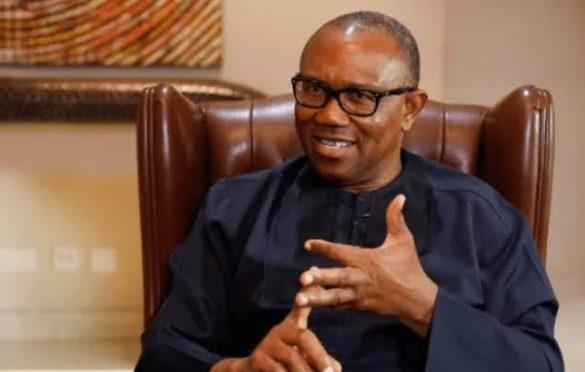
    The presidential candidate of the Labour Party, LP, in the 2023 general elections, Peter Obi, has lamented the ‘dollarisation’ of the Nigerian economy.

    Speaking during an interview with Arise TV on Monday on the state of the country, Peter Obi stated that the Naira should have been devalued.

    He added that the use of the dollar in the country has led to unproductivity.

    Obi said: “Dollar has become the underground currency of our economy; it shouldn’t be. We have a currency called the naira.

    “All the things people use dollars to do that are not productive should be removed.

    “I can assure you that when you remove it, it can strengthen the currency. Today, even when you want to do party primaries, people share dollars. That is not our currency.

    “There should be a stiff penalty in dealing with the issue. If people earn dollars legitimately, let them spend it the way they want.

    “However, it has now become a means of corruption and criminality in our system.”

    Peter Obi further stated that the country should work more on exports to strengthen the currency.

    Vanguard

  • BUA Cement Crashes Price To 3,500 Per Bag From Monday

    Nigeria’s leading cement manufacturer, BUA Cement Plc, has announced price reduction of cement to N3,500 per bag effective Monday, October 2, 2023.

    The company made the announcement in a post on its Facebook page on Sunday evening.

    The statement read: “We refer to our previous pronouncements regarding our intent to reduce cement prices upon the completion of our new lines at the end of the year, in order to spur development in the building materials and infrastructure sectors.

    “As per the commitment made to reduce prices and following a periodic review of our operations for efficiency, the management of BUA Cement Plc wishes to announce and inform our esteemed customers, stakeholders, and the public that effective October 2, 2023, we have decided to bring the price reduction forward. As a result, BUA Cement would now be sold at an ex-factory* price of 3,500 Naira per bag so that Nigerians can begin to enjoy the benefits of the price reduction before the completion of our plants.

    “Upon completion of the ongoing construction of our new plants, which would increase our production volumes to 17million metric tonnes per annum, BUA Cement PLC intends to review these prices further in line with our earlier pronouncements by the first quarter of 2024.”

    The company also said all pending, undelivered orders which had been paid for at the old prices will be reviewed downwards to N3500/bag in line with the new pricing from October 2, 2023.

    “Our licensed dealers are also enjoined to ensure that end-users benefit from this reduction in ex-factory prices as we will monitor field sales to ensure compliance.”

  • Following confirmation by Senate as CBN Governor, Cardoso to refocus, ensure autonomy of CBN

    Following confirmation by Senate as CBN Governor, Cardoso to refocus, ensure autonomy of CBN

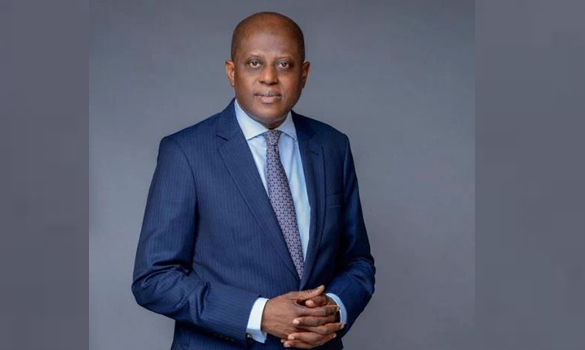
    Nigeria’s Senate has given its approval to Dr. Olayemi Cardoso’s nomination to serve as Governor of the Central Bank of Nigeria (CBN).

    The Senate has also given its approval for the appointment of the four Deputy Governors of the CBN, namely Emem Usoro, Muhammad Dattijo, Philip Ikeazor, and Bala Bello.

    This comes after the Upper Chambers of the National Assembly conducted a thorough screening in which Cardoso emphasised the importance of reestablishing the autonomy and trustworthiness of the central bank by refocusing its primary mission and fostering a culture that prioritises adherence to regulations.

    He additionally promised that during his tenure as the head of the bank, it will implement clear and open financial policies regarding data and emphasised that his leadership will not permit the mistakes made by previous bank administrations.

    After the official approval of Cardoso and the new Deputy Governors by the Senate, the Central Bank of Nigeria is anticipated to convene its monetary policy committee meeting.

    Cardoso had taken over the position from the interim CBN governor, Folashodun Shonubi, last Friday, temporarily holding the role until confirmed by the Senate.

    Arise News

  • FOREX: Naira Plummets Further to 990/$1 on Parallel Market

    FOREX: Naira Plummets Further to 990/$1 on Parallel Market

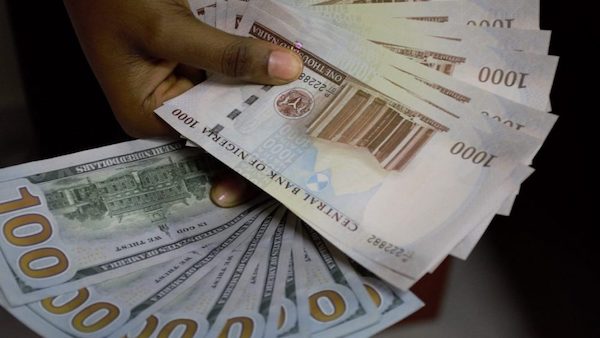
    The naira came under intense pressure on Wednesday, leading to a significant depreciation as it fell to N990 to a dollar at the parallel market segment of the foreign exchange market, compared to the N950 to a dollar it traded the previous day.

    On the other hand, on the official Investors and Exporters’ (I&E) FX Window, the nation currency appreciated marginally to N771/$1, compared to N777/$1 from the previous day.

    The weakening of the naira to a record low took place on a day the Chairman, Revenue Mobilisation Allocation and Fiscal Commission (RMAFC), Mohammed Bello Shehu, on Wednesday, disclosed that about N5.24 trillion accrued into the federation account between January and June 2023.

    However, with the parallel market at N990/$1 and the official I&E window closing at N771, the gap between the official and parallel market has widened to N219.

    THISDAY spoke with some currency dealers in Lagos State, who revealed that the demand for the greenback seen yesterday was unprecedented, just as they attributed the development to speculative demand.

    Mr. Ibrahim Salisu, while speaking in an interview with THISDAY, said: “Today started off normal but around 11:30 am till evening, we don’t know what may be responsible but dollar became scarce. I’m unable to find even $2000 as we speak.”

    Another parallel market operator who spoke with THISDAY in Lagos, who pleaded to remain anonymous, also confirmed the speculative demand observed on Wednesday.

    On the I&E window on Wednesday, the total turnover was $64.36 million compared to the daily volume of $71.01 million exchanged the previous day, as the supply of the greenback continued to wane.

    Also, the highest spot rate of the day was pegged at N799.9/$1 while its lowest spot was exchanged at N475/$1.

    Meanwhile, Shehu, yesterday disclosed that about N5.24 trillion accrued into the federation account between January and June 2023.

    He said out of the gross revenue inflows, the Nigerian National Petroleum Company (NNPCL) JV Petroleum Profit Tax (PPT) amounted to N627.30 billion, which was captured and recorded by the Federation Account Allocation Committee (FIRS), but utilised by the NNPCL for other FGN obligations.

    Shehu, explained that the figures were captured in the monthly report to the Federation Account Allocation Committee (FAAC) by the Central Bank of Nigeria (CBN) under the CBN Federation Account Component Statement.

    He, however, noted that the NNPCL did not remit any amount into the federation account during the period either as profit revenue or other revenues as contained in the Petroleum Industry Act (PIA) 2021, as its revenue performance could not be assessed because neither its revenue target was disclosed nor its revenue remittance to the federation account was provided.

    A source however told THISDAY on Wednesday night that NNPCL’s none remittance to federation account is essentially due to subsidy payment. “It had to net off the subsidy on importation of pms, since it was compelled to sell  at far below cost price.”

    Nonetheless, the Nigerian Upstream Petroleum Regulatory Commission (NUPRC) remitted N823.51 billion while the FIRS recorded a gross collection of N3.65 trillion but remitted N3.02 trillion, retaining the difference as the cost of collection during the review period.

    Shehu, in a statement made available to journalists, further disclosed that the Nigeria Customs Service (NCS) remitted N764.63 billion.

    Also, the sum of N1.49 trillion was realised as Value Added Tax (VAT) while N83.02 billion accounted for revenues from Electronic Money Transfer Levy (EMTL) out of which N3.32 billion was paid to FIRS as cost of collection.

    The FIRS also received N82.03 billion and N3.32 billion as cost of collection on PPT/CIT and EMTL collections respectively in the period.

    The report revealed that both FIRS and NCS together received N59.59 billion as cost of collection within the period under review while the NUPRC received N33.96 billion.

    Similarly, N16.68 billion was realised from the solid minerals sector.

    The RMAFC boss also revealed that N1.38 trillion was shared to the three tiers of government in accordance with the approved VAT sharing formula during the period while N1.11 billion was paid in consultation fees on VAT.

    On the statutory allocations to the three tiers of government, Shehu said N3.06 trillion was shared among the tiers of government within the review period.

    He said N48.10 billion was paid to the Nigerian Midstream and Downstream Petroleum Regulatory Authority (NMDPRA), adding that, “this money was collected by NUPRC as penalty on gas flared.”

    He clarified that revenues on gas flare penalty used to be part of the federation account’s revenues before the PIA, 2021 which provided that such revenues should be paid 100 per cent to the NMDPRA.

    Shehu, however, described the 32.27 per cent statutory deductions of the total gross inflow into the federation account as superfluous adding that it constituted a drain on the treasury.

    According to him, the sum of N1.69 trillion was deducted at source by the office of the Accountant General of the Federation as approved statutory deductions.

    He said there was a further deduction of the sum of N70 billion by the FIRS under the name of FIRS Priority Projects in the second quarter.

    He argued that the Nigerian economy at the moment required some pragmatic measures to enhance distributable revenues to the three tiers of government for the overall development and growth of the country.

    The RMAFC, among other recommendations on the operations and management of the federation account, advised that payment of the cost of collection to revenue-generating agencies should receive a cost of collection that is commensurate to the revenue generated against its revenue target in the Appropriation Act.

    Among other things, the commission stressed the need for the government to review the payment of 100 per cent (less cost of collection) revenue realised from gas flared penalty to the NMDPRA, adding that the gas flare penalty was hitherto a Federation Account revenue component taken over by the PIA, 2021.

    Other recommendations included the need to holistically review all legislations with respect to statutory deductions to allow for an increase in the amount to be shared among the three tiers of government; greater emphasis on the solid minerals sector to improve revenue generation therefrom and further achieve economic diversification;

    It said no further deduction should be made by the FIRS under the ‘priority projects’ to avoid a repeat of the situation under NNPC where a large chunk of funds was deducted as first line charge under the NNPC priority projects; and that all accruals due on 13 per cent Derivation should be deducted as at when due to avoid refunds in the future.

    Shehu said, “This is to guarantee accountability, probity, and transparency in the management of the Federation Accounts and disbursements to the 3-tiers of government.”

    The commission also recommended that all NNPCL JV PPT should be paid to the federation account through FIRS, adding that such taxes should not be retained by the company in the name of financing FGN priority projects.

    It said NNPCL should be made to remit promptly all revenues due to the federation account as and when due in compliance with the provisions of the PIA, 2021.

    The chairman, however, reiterated the commitment of the commission to ensuring the elimination of opacity in the management of the country’s commonwealth and promoting prudence, transparency and accountability in line with the new administration’s Renewed Hope Agenda which promises a new era for economic growth and development.

    Arise News
  • Adedeji, New FIRS chairman targets 18% tax-to-GDP ratio

    Adedeji, New FIRS chairman targets 18% tax-to-GDP ratio

    The acting Executive Chairman of the Federal Inland Revenue Service (FIRS), Zacch Adedeji, on Monday, pledged to surpass Africa’s average tax-to-GDP ratio of 16.5 per cent and achieve an impressive 18 per cent within three years.

    Mr Adedeji disclosed this while assuming office on Monday.

    Last Thursday, President Bola Tinubu approved the appointment of Zacch Adedeji as the new Acting Executive Chairman of the Federal Inland Revenue Service (FIRS).

    The President also directed the erstwhile FIRS Chairman, Muhammad Nami, to proceed on three months of pre-retirement leave, as provisioned by Public Service Rule (PSR) 120243, with immediate effect, leading to his eventual retirement from service on 8 December 2023.

    Mr Adedeji was appointed in an acting capacity for 90 days before his subsequent confirmation as the substantive Executive Chairman of the Federal Inland Revenue Service for a term of four (4) years in the first instance.

    Assuming office on Monday, Mr Adedeji said, “Our aspiration is audacious to surpass Africa’s average tax-to-GDP ratio of 16.5 per cent and achieve an impressive 18 per cent within three years.

    “By doing so, we aim to reduce our nation’s reliance on borrowing and ensure financial sustainability,” Mr Adedeji said.

    He explained that the FIRS will commit to innovation, technology, and fresh ideas in its activities.

    “As we chart our course ahead, FIRS is committed to placing innovation, technology, and fresh ideas at the forefront of our operations. This strategic focus will empower us to enhance efficiency, fortify against revenue leaks, and bolster coordination and accountability within our organization.

    “Quality data will be the cornerstone of our operations, enabling us to measure our progress, make informed decisions, and maintain the highest standards of accountability. We recognise that data-driven strategies are essential to our success,” Mr Adedeji was quoted by BusinessDay as saying.

    “Our overarching goal is to nurture voluntary tax compliance by establishing a modern, dependable tax system that garners the trust and admiration of all stakeholders. Through this, we hope to create an environment where taxpayers willingly fulfil their civic duties,” he said.

    On tax defaulters, Mr Adedeji said the service will be enforcing an extensive enforcement system that prevents citizens from defaulting while ensuring integrity and fairness.

    “For those who deviate from their tax obligations, be rest assured, we will enforce our responsibilities judiciously. The principles of integrity, confidentiality, professionalism, and fairness are non-negotiable in our service to the nation.

    “Upholding these values will guide our actions and interactions as we work tirelessly to fulfil our mission. I pledge to maintain an open-door policy, actively engaging with stakeholders to collaboratively construct a tax administration that we can all take pride in.

    “Together, we will build an institution that serves as a beacon of excellence,” he said.

    In his handover speech, Mr Nami announced that the FIRS is currently contributing over 70 per cent of all revenues the Federation Account Allocation Committee (FAAC) disbursed monthly.

    He explained that the FIRS is on track to set yet another record in 2023 as it collected over N8.5 trillion (cash) between 1 January to 14 September 2023, and has assessed, reconciled and recovered over N4 trillion outstanding tax liabilities and sequestered funds from NNPC on behalf of the Federation.

    He said the total sum of over N12 trillion is exclusive of amounts invested by taxpayers under the Road Infrastructure Tax Credit Scheme and tax implications of waivers by the government from January 2023 to date.

    “Certainly, the projections by the current government of tax to GDP of 18 per cent in another four years is not only realisable but can be surpassed,” he said.

    Premium Times

  • Forex scarce as Naira depreciates to N930/N950/US$

    Forex scarce as Naira depreciates to N930/N950/US$

    THERE are indications that exchange rate crises that trailed the foreign exchange market reforms in June 2023 may linger further as supply gap led to further depreciation of Naira in the parallel market yesterday to N930/ $1, down from N925 mid last week.

    However, the exchange rate improved week-on-week in the Investors and Exporters (I&E) window to N758.1 from N775.6.

    The prevailing exchange rates indicates a rising parallel market premium which is the gap between the parallel market rate and that of the I&E window.

    The gap, as at last week Wednesday, was N153.41 per dollar, but has risen to N171.9 per dollar by yesterday, a development which has created a huge incentive for round-tripping and arbitraging in the foreign exchange market ecosystem.

    Moreover, market observers have also noted that the Bureau de Changes, BDCs, have not helped the market as envisaged a month ago when the segment was re-admitted into the Central Bank Of Nigeria, CBN, official trading window for the purpose of opening the market to more independent forex supply and better access for individual retail end users.

    The BDCs have, instead, lamented that the renewed depreciation of the local currency was mainly due to the scarcity of the foreign currencies.

    A BDC operator told Vanguard that the scarcity is so much that ‘‘even some Nigerians are unable to withdraw forex from their domiciliary accounts in banks”.

    He said the lifting of the ban by the CBN on sales of forex to BDC operators has failed to help resolve the scarcity as the banks are not selling to the BDCs.

    Data from FMDQ showed that the market opened at N761.24 to the dollar, recording a high of N807.15 and a low of N738.

    A total of $42.26 million was traded in foreign exchange at the I&E window.

    On Tuesday, CBN said a review of the change in the forex regime showed that banks are in a position to profit from its potential to significantly increase the naira value of banks’ foreign currency (FCY) assets and liabilities.

    The apex bank directed deposit money banks, DMBs, to stop utilising gains from the revaluation of the naira to pay dividends or finance operations.

    Commenting on the renewed depreciation of the naira even with the lifting of ban on sale of forex to BDCs, Prof Uche Uwaleke, President. Association of Capital Market Academics of Nigeria, ACMAN said: “Recall that the ban was placed in the first place due to the abuses associated with the selling of Forex to BDCs due to their large and unmanageable number.

    ‘‘If the CBN has established a need to resume such sales, then it should first trim the over 5000 BDCs to a controllable number of less than 1000 through a regulatory-induced merger and acquisition.

    ‘‘It is only then that the CBN can be in a position to effectively supervise the BDCs else the CBN ends up going round in circles.”

    Also commenting, David Adonri, analyst and Executive Vice Chairman at Highcap Securities Limited, said: “Since BDCs are authorized retail dealers licensed by CBN, sale of forex to them is in order. ‘‘However, CBN should endeavor to sell to all its authorized buyers at the prevailing open market price in order to avoid rent seeking abuses. This U-turn may not address scarcity but provide a level playing field for participants in the foreign exchange market.”

    Another financial expert, Victor Chiazor, Head of Research and Investment at FSL Securities Limited, said: “The CBN’s decision to lift the ban on sale of Forex to BDCs would have aided liquidity in the FX market if the CBN actually had enough FX in its vaults.

    ‘‘But I doubt there will be any change to the current pressure on the Naira. The case today is that our FX reserves which is at around $33 billion while the net liquid position is far lower, which means that in real terms the CBN does not have the required FX liquidity to meet the current FX demand, not also forgetting the existing backlog of FX payments owed to businesses.”

    Vanguard

  • Enugu’s Economy: Mbah Woos Investors With Opportunities At Lagos Chamber of Commerce Expo

    Enugu’s Economy: Mbah Woos Investors With Opportunities At Lagos Chamber of Commerce Expo

    Governor Peter Mbah of Enugu State has assured the local and international investment community of abundant investment opportunities in the state, stressing that the state was making fast progress in de-risking investment and making its ease of doing business more attractive.

    Highlighting the state’s abundant investment opportunities in agriculture and agro-industry, logistics and aviation, tourism, real estate, mineral resources, and information and communication technology (ICT), among others, Governor Mbah said his administration was minded on a paradigm shift from “the traditional model of relaying on allocations from the Federation Account” as the state’s future and new growth plan rested on leveraging its extensive human and material resources.

    Mbah made these known on Tuesday at the ongoing 2023 Lagos Chamber of Commerce and Industry (LCCI) 2023 International Conference and Expo, which also had in attendance an array of members of the international community and investors.

    Recalling the discovery of coal in Enugu in 1909 and construction of railway to power the European and national economy, Mbah said his administration was building partnership with the private sector to unlock the capital market, attract investments, and retake its place in the local and global economy.

    “Enugu is now open for business. We are markedly revisiting our ‘ease of doing business’ indicators to ensure the environment is conducive for business. For example, our new land title processes will facilitate the issuance of Certificate of Occupancy in not more than three days or 72 hours.

    “Processes for the procurement of building approvals will also be revisited and markedly reduced to achieve improved efficiency.

    “We are automating all our major government processes to ensure transparency in all aspects of engagement with government and facilitate self-service by the public with little or no need for physical engagement with public servants.

    “We are also willing to de-risk business investment in key sectors by providing access to land, providing support infrastructure, handling engagement with host communities, among others”, the governor stated.

    In the area of agriculture and agro-industry, Governor Mbah said the state was currently “positioning to take advantage of our proven strong factor productivity in the areas of some key segments of agriculture by opening up another 300,000 hectres of farmland for cultivation of focus crops and animal production”.

    These focus crops and animal production opportunities include cassava, soyabean, oil palm production, cashew, which he said had a projected $7bn global market size by 2025, and Nsukka pepper, which he said had become “a veritable export commodity as well as an industrial raw material for various spice brand”.

    He said investment opportunities in poultry, piggery, and fishery were large, while Enugu’s geographical position as the gateway to the North made it attractive for agro-processing investments.

    Dr. Mbah noted that survey showed that about 40 per cent of the air cargo imported via Lagos was actually destined for the South East and South South, thus making investments in logistics and aviation quite lucrative.

    “In the area of logistics and aviation, we are investing extensively in our logistics and aviation sector to make transit through and to Enugu efficient and seamless.

    “To achieve this, we are prioritising development of a cargo terminal for the Enugu International Airport to facilitate the direct receipt of cargo in Enugu as opposed to the current practice of shipping into Lagos airport and then undertaking the ardouos and expensive overland journey to the South East by truck. The terminal will also facilitate the export of agro-produce direct from Enugu”.

    He also listed the planned development of light rail in collaboration with other South East governments and development of modern logistics centres at key cross-roads like Obollo Afor and Ninth Mile Corner as other investment opportunities.

    The Governor also emphasised opportunities in tourism where he said the state was in the process of refurbishing and reactivating Presidential Hotel, Enugu and completing the International Conference Centre; real estate where the state would be developing a New Town, which would offer 60,000 household living spaces.

    Governor Mbah equally explained that the administration was working with the Federal Government to attract investors for the production of natural gas and crude oil as well as abundant solid minerals such as ironstone, zinc, lead, limestone, kaolin.

    He further listed investment opportunities in ICT, which he said remained a priority to the government.

    Recall that the Enugu State Government on Monday announced the inaugural Enugu State Investment and Economic Growth Stakeholders Roundtable scheduled for September 1 where the Governor is to unveil a $2.1billion project pipeline to local and international investors.

    Meanwhile, the organisers, the LCCI, commended Mbah’s successful efforts at restoring security in Enugu State as well as ending the illegal Monday sit-at-home.

  • FG Not In A Position To Borrow Presently, To Target Increased Production- Finance Minister

    FG Not In A Position To Borrow Presently, To Target Increased Production- Finance Minister

    Minister of Finance and Coordinating Minister of the Economy, Wale Edun, has stated that the Federal Government is not in the position to borrow money at this time, adding the emphasis was on how to create a macroeconomic environment where both local and foreign investors will invest and increase production.

    In a meeting with President Bola Ahmed Tinubu and the ministers that constitute the Federal Executive Council (FEC) on Monday, Edun said that the aim of the reforms that were being put in place is to focus on equity to attract investments in the country.

    The finance minister said, “Clearly, the federal government is not in a position to borrow at this time. Rather, the emphasis has to be on creating a stable, macroeconomic environment.

    “Stable inflation, stable exchange rate, an environment within which people can come and invest and thereby increase production and further grow the economy.

    “Improve and create jobs and reduce poverty. So, the aim of all reforms at this time is to focus on what we call equity to focus on investment to attract investment by Nigerians.

    “Investment by foreign direct investors and even investment by portfolio investors that want to invest in the financial aspects of the Nigerian economy, such as the stock market, such as the bond market.

    “So that is the plan. That is the expectation and it is that there will not be a reliance on borrowing. Rather, as revenues increase, as the benefit of removing fuel subsidy and the subsidy on the exchange rate, those mean more money for the government at all levels.

    “Because, of course, through oil revenue, the federation earns dollars and if those dollars are feeding through, at let’s say, N700/N750 or so to one dollar as opposed to N460 where it was before; clearly, that is repairing the finances of government are federal state and local government levels”, he said.

    Edun, while presenting the “Roadmap for the Economy” during the meeting, noted that the Council agreed that the economy was not where it ought to be.

    According to him, the FEC examined eight priority areas and identified targets to deliver in the next three years or thereabout, adding that the president has directed the Ministers to roll out policy and programmes to turn the economy around.

    He said: “First the President congratulated everybody and emphasised the high expectations of Nigerians and he encouraged us to be bold and courageous and innovative and to act with urgency in delivering a better life to all Nigerians.

    “Essentially, we went through an exercise of looking at where things stood, regarding the economy, the growth rate, the exchange rate, inflation, unemployment and so on.

    “The overriding conclusion is that we’re not where we should be and we also examined the President’s eight-point agenda, that is the eight priority areas for moving the Nigerian economy forward and for delivering to Nigerians and those are basically food security; ending poverty, economic growth and job creation, access to capital, particularly consumer credit, inclusivity in all its dimensions, particularly as regards youths and women, improving security, improving the playing field on which people and particularly companies operate, rule of law, and of course, fighting corruption.

    “It is around the matrix that the plans and the targets of what will be delivered in the next three years or so were identified, discussed and imputes were given by various ministers and we’ll now go away with the marching order to refine further the targets in particular and within weeks to start rolling out policies and programmes to turn around the economy and make things better for all Nigerians. That really is the substance of what the discussion was all about”.

    Commenting on the economy and what was inherited by the present administration, Edun said the Tinubu administration inherited a bad economy with an unacceptable high rate of unemployment, with inflation standing at 24 percent.

    His words: “Per capita has fallen steadily, inflation is at 24 percent, unemployment is high, you know they are rebasing the way in which it’s calculated. Either way, it is high and youth unemployment is even unacceptably high, these are the key metrics that we have met.”

    Asked to be specific on the kind of economy the Tinubu administration inherited, the Minister said, “We met a bad economy and the promise of Mr. President is to make it better”.

    Arise News