Category: Business/Economy

  • Naira falls to N1089/$ on official I&E window

    Naira falls to N1089/$ on official I&E window

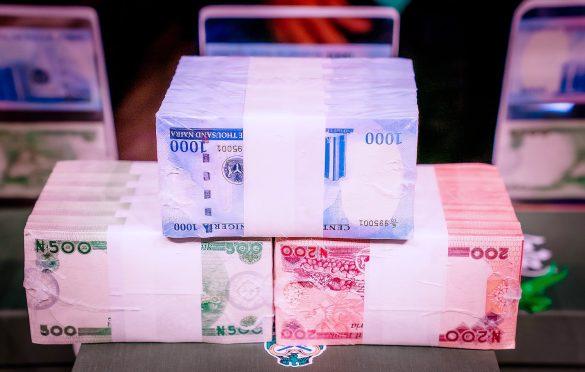
    The naira fell to N1089.51/$ on the official Investor and Exporter window on Tuesday.

    The currency fell by 27.19 per cent from the N856.57/$ it closed on Monday, according to data from the FMDQ Securities Exchange.

    On Tuesday, the naira opened trading at N922.22/$, rose to a high of N1251/$ and low of N720/$ before closing at N1089.51/$.

    Total forex turnover on the day was $97.45m.

    This is the fourth time the naira will close below N1,000 on the official window.

    On December 8, 2023, the naira fell to an all-time low of N1,099.05/$, on December 28, 2023, it closed trading at N1043.09/$, on January 3, 2024, the national currency closed at N1035.12/$.

    Tuesday’s N1089.51/$ is the second lowest the naira has closed on the official FX window since the Central Bank of Nigeria removed the rate cap of the currency.

    The naira’s continued decline is despite the apex bank’s effort to clear backlogs of matured foreign exchange obligations to the Deposit Money Banks. Recently, the CBN stated that it has paid $2bn as part of its backlog obligations.

    Reports estimate that the bank is owing $7bn as forward contract obligations. The CBN disclosed this when it revealed it has disbursed $61.64m to foreign airlines as part of matured foreign exchange owed to them.

    The CBN Acting Director of Corporate Communications, Hakama  Alia, said, “These payments signify the CBN’s ongoing efforts to settle all remaining valid forward transactions, to alleviate the current pressure on the country’s exchange rate.

    “It is anticipated that this initiative by the CBN should provide a considerable boost to the Naira hug against other major world currencies and further increase investor confidence in the Nigeria economy.”

    Also, this current depreciation of the naira against the dollar is in the face of the government’s renewed effort to boost liquidity in the foreign exchange market.

    At the end of 2023, the Minister of Finance and Coordinating Minister of Economy, Wale Edun disclosed that the Federal Government had received a $2.25bn foreign exchange support facility from the African Import-Export Bank.

    According to the minister, the first tranche of its $3.3bn facility from the bank is aimed at resolving FX shortages in the economy.

    Commenting on the issue, the Chief Executive Officer, Economic Associates, Dr Ayo Teriba, noted that the volatility of the naira is because of inadequate foreign exchange supply.

    He said, “Reserves are low and declining, the CBN is known to be in arrears on some of its obligations. It has started clearing its arrears and has pledged to clear all of it in due course.”

    He stated that the government has been making efforts to boost FX supply through investments, but these are yet to materialise, yet.

    He declared, “I am optimistic that if the government can walk their thought about opening to investors, we would get the forex to boost reserves and meet the demand in the FX market, and the naira would stabilise. I want to see the N1000/$ as a reflection of FX shortages. I want to hope that Nigeria will in the next few weeks take the right steps.

    “We were to take the NNPC to the market last year, but it didn’t happen. These are things we can fast-track. Nigeria has options.”

    Teriba highlighted that the recent inflow of $2.3bn as crude forwards won’t solve the country’s supply issues.

    He added, “We need to put down enough access to attract foreign exchange inflows. The naira will stabilise, inflation will come down, growth will pick up, and the living standard will improve. If we do not act, the volatility will continue, and this will be a bottomless pit. We need to build a wall of reserves so that the FX market will improve.”

    Punch

  • CBN lifts ban on cryptocurrency transactions, issues guidelines

    CBN lifts ban on cryptocurrency transactions, issues guidelines

    The Central Bank of Nigeria has changed its stance on crypto assets in the country and asked banks to disregard its earlier ban on crypto transactions.

    This is according to a circular dated December 22, 2023, with reference number FPR/DIR/PUB/CIR/002/003, and signed by the apex bank’s Director, Financial Policy and Regulation Department, Haruna Mustafa.

    The circular is titled ‘Circular to all Banks and other Financial Institutions Guidelines on Operations of Bank Accounts for Virtual Assets Service Providers (VASPS).’

    The apex bank stated that current trends globally have shown the need for crypto regulation.

    It said, “The CBN, in February 2021 issued a circular restricting banks and other financial institutions from operating accounts for cryptocurrency service providers in view of the money laundering and terrorism financing (ML/TF) risks and vulnerabilities inherent in their operations as well as the absence of regulations and consumer protection measures.

    “However, current trends globally have shown that there is a need to regulate the activities of virtual assets service providers (VASPs) which include cryptocurrencies and crypto assets. Following this development, the Financial Action Task Force (FATF) in 2018 also updated its Recommendation 15 to require VASPS to be regulated to prevent misuse of virtual assets for ML/TF/PF.

    “Furthermore, Section 30 of the Money Laundering (Prevention and Prohibition) Act, 2022 recognises VASPs as part of the definition of a financial institution.

    “In addition, the Securities and Exchange Commission in May 2022 issued Rules on Issuance, Offering and Custody of Digital Assets and VASPs to provide a regulatory framework for their operations in Nigeria.

    “In view of the foregoing, the CBN hereby issues this guideline to provide guidance to financial institutions under its regulatory purview in respect of their banking relationship with VASPs in Nigeria. “

    The apex bank noted that this new guideline supersedes its old ones referenced FPR/DIR/GEN/CIR/06/010 of January 12, 2017, and BSD/DIR/PUB/LAB/014/001 of February 5, 2021 on the subject.

    It also affirmed that banks and other financial institutions are still prohibited from holding, trading and/or transacting in virtual currencies on their own account.

    It added all banks and other financial institutions are required to immediately comply with its new guideline.

    In its circular with reference number BSD/DIR/PUB/LAB/014/001, dated February 5, 2021, the apex bank reminded banks that dealing in crypto currencies or facilitating payments for cryptocurrency exchanges was prohibited.

    At the time, it asked banks to identify persons or entities transacting in or operating crypto currency exchanges within their systems and ensure that their accounts were closed.

    Punch

  • FG, states, LGAs share N1.08trn as revenue allocation for November

    FG, states, LGAs share N1.08trn as revenue allocation for November

    The three tiers of government on Friday shared a total sum of N1.088.783 trillion as revenue allocation for November.

    The Federation Account Allocation Committee (FAAC) disclosed this in a communiqué issued at the end of its meeting in Abuja.

    According to the committee, the distributable revenue comprised statutory revenue of N376.306 billion, Value Added Tax (VAT) revenue of N335.656 billion, Electronic Money Transfer Levy (EMTL) revenue of N11.952 billion, and Exchange Difference revenue of N364.869 billion.

    It added that total revenue of N1.620 trillion was available in November.

    The communiqué read: “Total deductions for the cost of collection was N60.960 billion, total transfers, interventions, and refunds was N470.592 billion.

    “Gross statutory revenue of N882.560 billion was received for November. This was higher than the N660.090 billion received in October by N222.470 billion.

    “The gross revenue available from VAT in November was N360.455 billion. This was higher than the N347.343 billion available in October by N13.112 billion.

    “From the N1.088.783 trillion total distributable revenue, the Federal Government received N402.867 trillion, the state governments got N351.697 billion and the LGAs collected N258.810 billion.

    “A total sum of N75.410 billion (13 percent of mineral revenue) was shared to the benefiting states as derivation revenue.

    “From the N376.306 billion distributable statutory revenue, the federal government got N174.908 billion, the state governments received N88.716 billion and the LGAs collected N68.396 billion.

    “The sum of N44.286 billion (13 percent of mineral revenue) was shared to the benefiting states as derivation revenue.

    “The federal government collected N50.348 billion, the state governments got N167. 828 billion and the LGAs received N117.480 billion from the N335.656 billion distributable VAT revenue.

    “From the N11.952 billion EMTL, the federal government received N1.793 billion, the state governments took N5.976 billion and the LGAs got N4.183 billion.”

    FAAC revealed that the balance in the Excess Crude Account was $473.754 million.

  • FIRS Grants Waivers on Penalties, Interests for Outstanding Tax Liabilities

    FIRS Grants Waivers on Penalties, Interests for Outstanding Tax Liabilities

    Federal Inland Revenue Service (FIRS) has granted taxpayers and businesses full waiver on accumulated penalties and interests for outstanding tax liabilities.

    Chairman of the revenue service, Zacch Adedeji, made the decision known in a notice he signed.

    The agency imposes penalties and interests for failure by companies to fulfil their tax obligation as and when due as stipulated in extant tax laws.

    According to a statement by his special adviser on media, Dare Adekanmbi,

    Adedeji said the forgiveness of piled up penalties and interests was “in recognition of the challenges that many taxpayers have faced in settling their outstanding tax liabilities.”

    According to him, the concession also syncs with the commitment of President Bola Tinubu to support businesses to flourish.

    He explained that full payment of outstanding original tax liabilities without interest on or before the 31st of December this year must be done by companies wishing to benefit from the peculiar concession.

    “Taxpayers are advised that the waiver of interest is subject to the full settlement of outstanding principal on or before 31 December 2023.

    “Please note that the full penalty and interest shall be reinstated after the expiration of this one-off concession window where the outstanding undisputed liability remains fully or partially unpaid.

    “FIRS appreciates all taxpayers who have been diligent in complying with their tax obligations as and when due, while seeking their continued support and cooperation for a more responsive and robust tax system,” Adedeji said.

    Leadership

  • Economists Caution CBN Gov on Repeating Mistakes of 2005 Recapitalisation 

    Economists Caution CBN Gov on Repeating Mistakes of 2005 Recapitalisation 

    With plans by the Central Bank of Nigeria (CBN) to introduce a new capital base for deposit money banks in Nigeria, economists have cautioned the apex bank from making some mistakes made during the last recapitalisation of commercial banks in the country.

    The Founder of Centre for Promotion of Private Enterprise, Muda Yusuf; and Prof Segun Ajibola of Babcock University, Ogun State, both spoke on Channels Television’s Sunrise Daily programme on Monday.

    The economists agreed that recapitalisation of banks has become inevitable but it must be done in such a way that the mergers and acquisitions that would hit banks won’t lead to massive job cuts.

    “What we had in 2005 was very unfortunate. Banks should not be stampeded,” Yusuf said, urging the CBN to give banks enough time for systemic migration.

    He suggested a year or two for the process and not for the apex bank to insist on a short deadline like what was done during the era of ex-President Olusegun Obasanjo.

    On his part, Ajibola called for strategic consultations between stakeholders for the process to be fluid and successful, saying that the CBN should not force banks into unholy alliances.

    Last Friday, CBN chief, Yemi Cardoso said Nigerian banks do not have sufficient capital relative to the finance system needs in servicing a $1trn economy.

    “As a first step, the Central Bank will be directing banks to increase their capital,” he announced at the 60th anniversary of the Chartered Institute of Bankers of Nigeria (CIBN) in Lagos State.

    The last time the CBN increased capital base for banks was in 2005 when current Anambra State Governor, Charles Soludo, was the apex bank chief. Capital base was raised from N2bn to N25bn, with more than 80 banks collapsing into about 30 in an unprecedented season of mergers and acquisitions that came with attendant job losses.

    Channels TV

  • CBN to introduce new Forex laws, guidelines to tackle naira depreciation — Cardoso

    CBN to introduce new Forex laws, guidelines to tackle naira depreciation — Cardoso

    Governor of Central Bank of Nigeria, CBN, Mr Yemi Cardoso said yesterday that the apex bank will soon introduce a new set of foreign exchange laws and guidelines to address naira depreciation and achieve exchange rate stability.

    The CBN, according to him, will also conduct a new recapitalisation exercise for the banking industry, by directing banks to increase their minimum capital base to a level sufficient to support the vision of a $1trillion economy.

    Cardoso disclosed this in Lagos in a keynote speech at the 2023 Annual Bankers Dinner of the Chartered Institute of Bankers of Nigeria, CIBN.

    Cardoso also disclosed that the CBN will introduce a new licensing framework for fintechs and payment banks, warning that operators found engaging in activities outside their licenses will be sanctioned.

    Citing the need to curtail the challenge of rising inflation, Cardoso said the apex bank will further tighten money supply for the next two quarters. He added that to further reduce excess cash in the banking system the management of the CBN has approved and will soon conduct another round of liquidity mop up via issuance of Open Market Operations, OMO, treasury bills.

    “Our monetary policies will aim to achieve price stability, foster sustainable economic growth, stabilize the exchange rate of the naira, and reduce interest rates to facilitate borrowing and investments in the real sector. In order to ensure the proper functioning of domestic and foreign currency markets, clear, transparent, and harmonized rules governing market operations are  essential.

    “New foreign exchange guidelines and legislation will be developed, and extensive consultations will be conducted with banks and FX market operators before implementing any new requirements.

    “Considering the policy imperatives and the projected economic growth, it is crucial for us to evaluate the  adequacy of our banking industry to serve the envisioned larger economy. It is not just about the stability of the financial system in the present moment, as we have already established that the current assessment shows stability.

    “However, we need to ask ourselves: Will Nigerian banks have sufficient capital relative to the financial system’s needs in servicing a $1.0 trillion economy in the near future? In my opinion, the answer is “No!” unless we take action.

    “Therefore, we must make difficult decisions regarding capital adequacy. As a first step, we will be directing banks to increase their capital.”

    On new licensing framework for fintechs, Cardoso said: “Technology will continue to play a critical role in delivering financial services and enhancing financial inclusion.

    “However, recent developments in the payment services landscape have raised concerns regarding the use of technology and the existing licensing and regulatory framework. We have observed that some licensees are operating outside the approved activities, breaching the boundaries set for them.

    “Any intentional or unintended noncompliance will be subject to sanctions, as operators have the responsibility to ensure that they are licensed for the activities they undertake.

    “Concurrently, as we conduct a comprehensive review of the licensing framework for payment services, we will engage in extensive consultations to develop a new regulatory and compliance framework that is suitable for the technology-driven payment services sector.”

    Vanguard

  • Odengene Air Shuttle Acquires New Leonardo AW-139 To Boost Offshore Operations

    Leonardo AW-139
    Leonardo AW-139

    Odengene Air Shuttle (OAS) Helicopters; an offshore and allied aviation services company, has announced acquisition of a new equipment, 2023 model Leonardo AW-139.

    OAS, one of the leading indigenous helicopter companies with many years of experience, known for efficiency, safety and a multi-services provider in the sub-sector in a statement issued on Friday, said that the helicopter is already in the country and will be deployed for offshore services and dedicated to one of the major E and P companies in Nigeria.

    “It is also necessary to share with you the short story behind its acquisition and timely delivery to Nigeria. At agreement, OAS consented to provide the aircraft within six months of contract signing. But due to financial and technical capacity we and our technical partners have mustered and deployed in the industry over the years, this aircraft through the manufacturers, Leonardo, was procured and delivered in Nigeria within three months (90 days). A feat not common nowadays with Saudi Arabia multiple aircraft back-orders running in upper tens.

    “We are aware of the oil and gas industry scope and desire to expand their operations in Nigeria at this critical business moment in our country, and we think it might be necessary to inform you that we have the capacity to provide you, on short notice, this type of oil and gas worldwide most reliable workhorse, straight 7-ton, helicopter – AW-139,” the company said.

    The AgustaWestland AW139, now known as the Leonardo AW139, is a 15-seat medium-sized twin-engined helicopter developed and produced by the Anglo-Italian helicopter manufacturer, AgustaWestland (now part of Leonardo). It is marketed at several different roles, including VIP/corporate transport, military use, offshore transport, fire fighting, law enforcement, search and rescue, emergency medical service, disaster relief, and maritime patrol.

  • CBN says old naira notes still legal tender

    CBN says old naira notes still legal tender

    The Central Bank of Nigeria (CBN) has warned against the rejection of any bank notes it has issued in line with the provision of the CBN Act 2007.

    This comes amidst fears that the old banknotes may cease to be legal tender by December 2023.

    On March 3, the Supreme court had ordered that old N200, N500 and N1000 notes remain valid till December 31, 2023.

    This was after 16 states of the Federation instituted a suit to challenge the legality or otherwise of the introduction of the policy.

    In a statement issued on Wednesday and signed by its Director, Corporate Communication, Isah Abdulmunin, the apex bank said it has not ordered the withdrawal of the old notes.

    The bank said, “There have also been reports of anxiety among some members of the public over the legality or otherwise of old Naira banknotes.

    “For the avoidance of doubt, while reiterating that there are sufficient banknotes across the country for all normal economic activity, we wish to state unambiguously that every banknote issued by the Central Bank of Nigeria (CBN) remains legal tender and should not be rejected by anyone, as stipulated in Section 20(5) of the CBN Act, 2007.

    “Accordingly, branches of the CBN across the country have been directed to continue to issue different denominations of old and redesigned banknotes in adequate quantities to Deposit Money Banks for onward circulation to bank customers.

    “We wish to restate that all denominations of banknotes issued by the Central Bank of Nigeria (CBN) remain legal tender.

    “In line with Section 20(5) of the CBN Act, 2007, no one should refuse to accept the Naira as a means of payment. Consequently, members of the public are advised to accept all CBN-issued banknotes currently in circulation and guard against panic withdrawals.”

    Daily Trust

  • Nigeria’s Apex Bank Begins Clearance of $10bn Forex Backlogs of Foreign Airlines, Others

    Nigeria’s Apex Bank Begins Clearance of $10bn Forex Backlogs of Foreign Airlines, Others

    The Central Bank of Nigeria (CBN), has started clearing over $10 billion foreign exchange backlogs of commercial banks and foreign airline operators.

    This is as the apex bank also assured the public that it has enough volume of banknotes to go around even in the approaching festive period, calling off allegations of cash in the banking sector.

    The CBN claimed in reaction to reports of alleged scarcity of cash at banks, automated teller machines (ATMs), Points of Sale and Bureaux de Change (BDCs) in some major cities across the country.

    The central bank in a statement said the seeming cash scarcity in some locations is due largely to high volume withdrawals from the CBN branches by Deposit Money Banks (DMBs) and panic withdrawals by customers from the ATMs.

    There had been reported cases of panic withdrawals in parts of Nigeria over fears that the banknote could be scarce as was experienced in 2022 end of the year festivities, especially as the bank is yet to comment on continued use of the redesigned higher-denominations of the old currency notes.

    The court had extended the use of the old banknotes till December 2023 to allow a better circulation of the new notes. The CBN is here to make its position known on the issue.

    “While we note the concerns of Nigerians on the availability of cash for financial transactions, we wish to assure the public that there is sufficient stock of currency notes for economic activities in the country. The branches of the CBN across the country are also working to ensure the seamless

    circulation of cash in their respective states of operation.

    “Members of the public are, therefore, advised to guard against panic withdrawals as there is sufficient stock to facilitate economic activities. Nigerians are also advised to embrace alternative modes of payment, which would reduce pressure on using physical cash,” CBN spokesman Isa AbdulMumin said in the statement.

    With an estimated backlog of over $10 billion, CBN said, it has started clearing outstanding foreign currency forwards owed to banks, with banking sources saying there was an initial payment of $1 billion.

    A statement titled ‘Settlement of Matured FX forwards by CBN,’ by Citibank, the bank informed its customers that the CBN has cleared all outstanding matured forex.

    The statement read, “Dear Valued Client, We have been directed to inform you that the CBN has delivered all outstanding matured forward forex. We thank you for your patience & cooperation, and value you for your business and partnership.

    “Please speak with your Relationship Manager or your Trade Service Professional for clarification and additional details,” Citi bank stated.

    However, airlines have started seeing their backlogs being cleared.

    Our correspondent gathered that Stanbic IBTC also alluded to the clearing of the forex backlogs.

    “Yesterday, (Wednesday), the apex bank began clearing the backlog of outstanding Retail SMIS obligations. The total amount cleared is yet to be ascertained.”

    “We have started receiving our trapped funds but it’s in tranches,” the source who is a staff of one of the airlines and who craved anonymity said.

    Confirming the development, director, Corporate Communications of the CBN, Dr Isa Abdulmumin told Reuters on Thursday that ‘the CBN has started paying the foreign exchange backlogs to banks. So far, 14 banks have been paid.’

    Reuters, quoting four banking sources, said, the banks were paid varying amounts totalling about $1 billion and that the payments would continue in the next few weeks. The CBN spokesperson had however not mentioned the amount or the name of the banks that were paid.

    While a few of the lenders were paid the entire amount owed, others got as much as 80 per cent of the backlog, the sources said.

    Nigeria has nearly $7 billion in forex forwards that have matured, which corporates bought from local banks. Banks then repaid foreign credit lines with their own funds when the central bank did not pay out.

    The central bank’s payments follow Finance Minister Wale Edun’s announcement that Nigeria was expecting $10 billion of inflows to improve foreign exchange market liquidity. It will come as a relief to local lenders, who have been struggling to meet demands from customers due to chronic dollar shortages in the country.

    Investment Research Associate at Comercio Partners, Ifeanyi Ubah, in an emailed note, said the settlement which started with international banks such as Citibank had commenced on Monday.

    The investment firm noted that “while it remains uncertain whether the CBN will completely resolve all its matured foreign exchange forwards, the research team anticipates a positive market response until conflicting news emerges. Therefore, asset managers and traders should make prudent decisions regarding their portfolios.

    “We anticipate a surge in market confidence, particularly in Nigeria’s securities like the Eurobond. This positive development might trigger an increase in investor interest in these assets, potentially resulting in a rally around the Eurobond.

    “The news is expected to bolster confidence in the Naira, potentially leading to an appreciation of its value. While the official market saw bids as low as 700/$, settling at 789.75/$ with a turnover of $105 million, there’s an optimistic outlook for the black market, indicating a potentially significant gain for the Naira from its current position at 1160/$.”

    LEADERSHIP reports that the development comes barely 24 hours after the chairman of Air Peace alleged that the Central Bank of Nigeria owes his firm $24 million, six months after lodgment amid the foreign exchange crisis.

    Also, last week, the Minister of Finance, Wale Edun, disclosed last week that the country would soon receive an inflow of $10 billion in foreign currency to mitigate the forex crisis.

    Leadership

  • FG Approves N2.1Trn Supplementary Budget

    FG Approves N2.1Trn Supplementary Budget

    Minister of Budget and Economic Planning, Atiku Bagudu

    The federal government has approved a supplementary budget totaling N2.1 trillion.

    The Minister of Budget and Economic Planning, Atiku Bagudu, disclosed this to State House correspondents on Monday after the Federal Executive Council meeting presided over by President Bola Tinubu at the Presidential Villa.

    Bagudu explained, “We submitted a supplementary budget, and the council considered a request for an appropriation of 2 trillion, 176 billion, 791 million, and 286 thousand as a supplementary budget.”

    According to him, the supplementary budget is intended to address pressing issues, including allocating 605 billion for defense and security to maintain previous progress.

    Additionally, he said 300 billion was earmarked for bridge repairs, construction, and rehabilitation, while 200 billion was designated as a seed fund for agriculture.

    He added that a further 210 billion was provided for wage awards in ongoing negotiations, covering the period from September to December 2023.

    Furthermore, Bagudu stated that 400 billion was reserved for cash transfer payments, highlighting that the federal government had secured $800 billion from the World Bank for a two-month period, as approved by the President for inclusion in the budget.

    The Minister noted that an amount of 100 billion was approved to support the Federal Capital Territory (FCT), for urgent and immediate capital projects while 18 billion was allocated to the Independent National Electoral Commission (INEC) to facilitate the conduct of elections in Bayelsa and Imo states.

    He said an additional 5.5 billion was designated for funding the launch of student loans, and 800 billion was allocated for the establishment of a new ministry.

    Bagudu revealed that the council granted approval to increase the domestic borrowing ceiling.

    He emphasized that they have submitted the Medium-Term Expenditure Framework (MTEF) to the National Assembly, and the government is maintaining the January to December budget cycle.

    He also stressed that the budgeting process is benefiting from the experience and collaboration between the National Assembly and the executive branch.

    While the six-month wage award to labour remains unchanged, he said any necessary adjustments will be included in the supplementary budget for the current year.

    Leadership

  • FX: Rise in Inflation predicted following Forex crisis

    FX: Rise in Inflation predicted following Forex crisis

    Inflation rate is projected to increase by 83 basis points (bps) year-on-year (y/y) to 27.54 in October.

    The figure would represent a 1.9 per cent rise when compared to 26.72 per cent recorded in September.

    According to Cordros Capital Research, there are indications that food prices will temper in October due to the impact of the harvest season.

    However, they noted that the downside risks that could limit food supplies remain intact.

    “We attribute the higher prices in September to the troika impact of lingering currency pressures, PMS subsidy removal, and higher gas and diesel prices.

    “At the same time, we see no respite yet for the non-food inflation. The non-food basket (+56bps to 22.1 per cent y/y) remains under pressure. We see no respite yet for the non-food inflation. Overall, we see 1.9 per cent m/m headline inflation in October,” it added.

    Meanwhile, the naira depreciated by 5.4 per cent to N808.27/dollar at the Nigerian Autonomous Foreign Exchange Market (NAFEM), with total turnover at the market (as of 19 October 2023) decreasing by 50.6 per cent Week to Date (WTD) to $348.91 million, as trades were consummated within the N700 – N1,000/$ band.

    In the forwards market, the naira rates recorded depreciation across the 1-month (-2.1 per cent to N805.92/dollar), 3-month (-2 per cent to N824.2/dollar), 6-month (-1.7 per cent to N852.67/dollar) and 1-year (-2.2 per cent to N919.65/dollar) contracts.

    Cordros Capital said that given the CBN’s unbanning of importers of all the 43 items previously restricted from the NAFEM in 2015, FX supply is still minimal at the official market faster than anticipated.

    The expert noted that importers have returned to the parallel market to fulfill their FX obligations. In addition, the incentives for holding the naira continue to be limited by the day, coupled with the panic-buying arising from the expectations of further currency pressures amidst limited FX supplies.

    “Consequently, barring any significant FX inflows or convincing action by the policymakers to turn the tide, we expect the exchange rate pressures to linger in the short term,” it added.

    FMDQ Foreign Exchange (FX) Spot and Derivatives turnover for the week ended October 20, 2023, was $430.08 million, a decrease of 37.1 per cent ($253.89 million) from $683.97 million reported for the week ended October 13, 2023. According to the exchange, the week-on-week (w/w) decrease in the total turnover was driven by the 39.06 per cent ($266.72 million) decrease in FX Sport turnover, despite 1,221.9 per cent ($12.83 million) increase in FX Derivatives turnover.

    It stated that the w/w increase in FX Derivatives turnover was solely driven by the 1,221.9 per cent ($12.83 million) increase in FX forwards turnover, while there was no activity in both Exchange-Traded FX Futures and Cleared Naira-Settled Non-Deliverable Forwards (NDFs) markets.

    In the FX spot market, the total value of transactions for the week ended October 20, 2023, was $416.2 million, representing a decrease of 39.06 per cent ($266.72 million) from the value of transactions executed in the week ended October 13, 2023 ($682.92 million).

    There were no trades executed in the Exchange-Traded FX Futures and Cleared Naira-Settled Non-Deliverable Forwards markets for the week ended October 20, 2023

    For the week ended October 20, 2023, the average Nigerian Autonomous Foreign Exchange Fixing (NAFEX) rate was $/₦784.32, compared to $/₦772.92 recorded in the week ended October 13, 2023, representing a depreciation of the Naira against the dollar by 1.45 per cent ($/₦11.4).

    On the equities sector of the Nigerian Exchange Limited (NGX), heavy transactions in the shares of United Bank for Africa Plc, Fidelity Bank Plc and Access Holdings Plc lifted the volume of shares traded as a total turnover of 1.5 billion shares worth N24.3 billion was recorded in 29,298 deals by investors on the floor of the exchange, in contrast to a total of 1.4 billion units, valued at N24 billion that changed hands in 29,683 deals on October 13, 2023.

    Sectoral performance showed a mixed picture with losses in the insurance (-1 per cent), consumer goods (-0.5 per cent), and Industrial Goods (-0.1 per cent) indices and a gain in the banking (+3.5 per cent) index while the oil and gas index closed flat.

    The financial services industry (measured by volume) led the activity chart with 1 billion shares valued at N12.7 billion traded in 13,667 deals; thus contributing 69.9 to the total equity turnover. The ICT Industry followed with 94.9 million units worth N1.4 billion in 1,982 deals.

    The third place was the conglomerate’s industry, with a turnover of 80.6 million shares worth N526.4 million in 1,459 deals.

    Specifically, trading in the top three equities namely United Bank for Africa, Fidelity Bank and Access Holdings (measured by volume) accounted for 447.1 million shares worth N6.5 billion in 4,913 deals, contributing 29.9 per cent to the total equity turnover volume.

    On the price movement chart, the market closed the week on a downward note, following selloffs in Stanbic (-13.1 per cent) and Geregu (-7.2 per cent), causing the All-Share Index and market capitalisation to depreciate by 0.42 per cent to close the week at 66,915.41 and N36.764 trillion respectively.

    Similarly, all other indices finished lower except NGX CG, NGX Premium, NGX Banking, NGX AFR Bank Value, NGX AFR Div. Yield, NGX MERI Value and NGX Sovereign Bond which appreciated by 0.47 per cent, 0.54.per cent, 3.52 per cent, 1.82 per cent, 3.24 per cent, 2.99 per cent and 3.08 per cent respectively while the NGX ASeM index closed flat.

    Consequently, the month-to-date (MTD) and year-to-date (YTD) returns moderated to +0.8 per cent and +30.6 per cent, respectively.

    Reacting to market performance last week, the Chief Research Officer of Investdata Consulting Limited, Ambrose Omordion, said with the recent moves by the Central Bank of Nigeria (CBN), which gives the 43 previously banned items access to FX at the official window, there is need for investors to consider investment in real estate backed stocks like Julius Berger, UPDC Reits and other companies that the demand is inelastic in nature or price.

    According to him, the sector has been among the worst-performing asset classes over the past five years.

    “Post Covid-19, stock market, commodities and others had done well, while real estate-backed stocks and REIT have under-performed.

    However, he pointed out that the sector is a major spotlight with policies being churned out to boost performance in the sector, especially the lifting of the ban on the items.

    “The ongoing geopolitical tension will continue to drive global and domestic market volatility, so investors and traders anywhere in the world should factor this uncertainty into their trading and investment plans.”

    We expect the direction of market performance to be shaped by the ongoing Q3 earnings season as investors cherry-pick sound stocks.

    “Overall, we reiterate the need for taking positions in only fundamentally justified stocks as the weak macro environment remains a significant headwind for corporate earnings,” he said.

    Vetiva Dealing and Brokerage said: “We saw a slight pull-back in the banking sector, however, demand remains strong in UBA, with an intra-day high of ₦19.15. Going into the new week, we expect more mixed sessions, as investors tilt more towards fundamentally sound stocks, as we expect Q3 numbers to filter into the market.”

    Further breakdown of last week’s transactions showed that a total of 7,100 units of Exchange Traded Products (ETPs), valued at N1.124 million were traded in 66 deals compared with a total of 13,290 units valued at N3.526 million transacted last week in 108 deals during the preceding week.

    Also, 187,866 units of bonds, valued at N196.534 million were traded in 28 deals compared with a total of 52,703 units valued at N54.7 million transacted last week in 32 deals. 28 equities appreciated during the week lower than 38 equities in the previous week.

    Guardian
  • Naira declines further despite CBN’s policy reversal, as MAN warns against lifting of forex ban on 43 items

    Naira declines further despite CBN’s policy reversal, as MAN warns against lifting of forex ban on 43 items

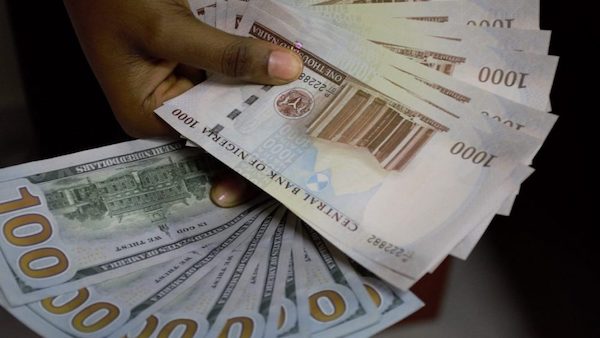
    Naira closed at N848.12 to the dollar on Tuesday, October 17, at the official window days after the Central Bank of Nigeria (CBN) reversed its policy on 43 items to save the country’s currency from further decline.

    The CBN had, on Thursday, October 12, announced, among other policy issues, the lifting of foreign exchange (FX) restrictions hitherto placed on the importation of the 43 items by the former CBN governor, Godwin Emefiele, on June 23, 2015.

    The new order allows importers of the items to purchase foreign cash through official channels in the Nigerian Foreign Exchange Market (NFEM).

    It will also help promote price discovery, transparency, and credibility in the FX rates, CBN said, directing all and sundry to reference the prevailing FX rates from platforms such as the CBN website, Financial Markets Dealers Quotations (FMDQ), and other recognised trading platforms.

    A check by The ICIR on FX transactions at the FMDQ showed that the naira slid significantly against the dollar, depreciating by 11.71 per cent to N848.12/$1 from N759.20/$1 as of Thursday, October 12, when the CBN lifted the ban on the 43 items.

    According to the apex bank, it initially placed the ban to reduce FX demand on products that could locally be produced and conserve foreign reserves, among other reasons.

    However, the acute shortage of FX supply had remained amidst growing demand, causing the naira to fall to a record low against the dollar and widening the gap between the official rate and the parallel (black) market rate.

    More worries are that the CBN’s periodic interventions in the exchange market have yet to yield the desired result to improve price stability in the FX market due to the weak size of the country’s external reserves.

    The foreign exchange reserves had depleted significantly by $4.2 billion to $33.23 billion as of October 16, 2023, from $29.03 billion on June 23, 2015, when CBN placed the ban, a check by The ICIR on CBN’s website has shown.

    Analysts had pointed out that the CBN’s recently released financial statements showed a significant percentage of foreign reserves were encumbered, even as J.P. Morgan Asset Management’s analysis of the accounts indicated that Nigeria’s net foreign reserves were significantly lower than previously estimated.

    A leading global financial services firm, J.P. Morgan, had faulted the figures in the CBN’s financial statements and posited that the lousy aspect of the record lies in the decline in the country’s net FX reserves.

    Although CBN had assured that removing these restrictions would eliminate the need for importers of the 43 items to go to the parallel market, reducing the pressure on the naira, experts are worried about the continuous weakening of the naira.

    What should the authorities do to halt the naira crisis? 

    Besides removing the distortions in the FX market, analysts believe the CBN needs to boost the market.

    “While we appreciate the need to eliminate the distortions in the market, we reiterate our view that the only viable solution to the current FX crisis is to boost the country’s foreign exchange revenues,” analysts at CSL Stockbrokers Limited said.

    According to the CSL analysts, the first step is for the government to reduce crude oil theft and enhance oil production.

    “The swift start-up of the Dangote refinery, especially the export side of the business, remains a game changer in our view as it will be a major source of foreign exchange into the country.

    “We believe that more has to be done to promote the country’s exports, with the agriculture sector receiving priority in order to increase the production of many cash crops for exports,” they said.

    They urged the government to have a blueprint to explore the country’s enormous untapped natural resources to increase foreign exchange earnings.

    “We believe steps like these will attract foreign portfolio investments, which could help stabilise the market in the interim,” the CSL analysts added.

    Meanwhile, a development economist, Kazeem Bello, had told The ICIR that except the government assists in bailing out the CBN by finding foreign exchange inflows into the market, the naira would inevitably continue to take a plunge.

    Lifting of forex ban on 43 items will collapse industries, MAN warns FG 

    Manufactures Association of Nigeria (MAN) has advised the Federal Government to immediately reverse the lifting of foreign exchange ban on 43 restricted items by the Central Bank of Nigeria (CBN) to avert looming job crisis, insecurity and economic contraction.

    Vice Chairman of Basic Metal, Iron and Steel Products sector of MAN, Lekan Adewoye, gave the warning yesterday on a live programme. He maintained that the new policy would collapse several industries in no time.

    The industrialist said: “The news came as a surprise to manufacturers, who are still struggling to stay in business. CBN did not ban the importation of these items in 2015, the apex bank only put a restriction on the importation of these items.

    “For items that can be produced in Nigeria, such manufacturers ought to be encouraged. This directive will further kill the manufacturing industry that is already struggling to survive.

    “The problem is about policy somersaults. Some of our members, who have outrightly invested in backward integration, will now start to regret this move because everyone, who can assess forex will claim to be an importer, forcing sincere manufacturers to close shop, thus increasing the number of jobless persons.

    “Nigerian manufacturers don’t really have any competitive advantage over those in other developing countries, at best, what you have is competitive parity, because something has to be an advantage if your competitors don’t have it. And the little incentive that the government has provided, is now being removed by the directive of the Central Bank of Nigeria.”

    ICIR/Guardian