Category: Business/Economy

  • Banks To Charge Customers 0.5% Cybersecurity Levy Following CBN’s Directive 

    Banks To Charge Customers 0.5% Cybersecurity Levy Following CBN’s Directive 

    The Central Bank of Nigeria (CBN) has directed deposit money banks in the country to start charging 0.5% cybersecurity levy on transactions.

    This was contained in a circular dated May 6, 2024 by the apex bank to all commercial, merchant, non-interest and payment service banks as well as mobile money operators and payment service providers.

    “Following the enactment of the Cybercrime (Prohibition, Prevention, etc) (amendment) Act 2024 and pursuant to the provision of Section 44 (2) (a) of the Act, ‘a levy of 0.5% (0.005) equivalent to a half percent of all electronic transactions value by the business specified in the Second Schedule of the Act’, is to be remitted to the National Cybersecurity Fund (NCF), which shall be administered by the Office of the National Security Adviser (ONSA),” the circular partly read.

    The apex bank said that the implementation of the levy would start two weeks from the date of the circular.

    “The levy shall be applied at the point of electronic transfer origination, then deducted and remitted by the financial institution. The deducted amount shall be reflected in the customer’s account with the narration, ‘Cybersecurity Levy’.

    “Deductions shall commence within two weeks from the date of this circular for all financial institutions and the monthly remittance of the levies collected in bulk to the NCF account domiciled at the CBN by the fifth business day of every subsequent month,” the circular added.

    Exempted from the levy include loan disbursements and repayments, salary payments, intra-account transfers within the same bank or between different banks for the same customer, intra-bank transfers between customers of the same bank.

    Also exempted from the levy were inter-branch transfers within a bank, cheque clearing and settlements, ⁠Letters of Credits, ⁠Banks’ recapitalisation-related funding only bulk funds movement from collection accounts, savings and deposits including transactions involving long-term investments, among others.

    The apex bank recently stopped fintechs firms like Opay and Palmpay from onboarding new customers and directed banks to deduct 0.375 per cent stamp duty charge on all mortgaged-backed loans and bonds.

    Channels TV

  • SEC to ban naira from crypto trading platforms to tackle dollar speculation

    SEC to ban naira from crypto trading platforms to tackle dollar speculation

    The Federal Government, through the Securities and Exchange Commission, is set to delist the naira from all peer-to-peer crypto platforms as the government steps up efforts to tackle exchange rate manipulators and dollar racketeers.

    The development came against the backdrop of the recent moves by the Federal Government to regulate Nigeria’s crypto market estimated at $57bn.

    The newly-appointed Director-General of the Commission, Emomotimi Agama, disclosed the government’s latest plan during a meeting with members of the Nigerian blockchain industry on Monday.

    The meeting was organised by the Blockchain Industry Coordinating Committee of Nigeria.

    Agama confirmed that the government was currently drafting a new set of regulations to govern the crypto sector.

    Operators in the crypto space have allegedly used the P2P platforms to manipulate the naira and the exchange rate.

    “That is one of the things that must be done to save this space; the delisting of the naira from the P2P platforms to avoid the level of manipulation that is currently happening. I want your cooperation in dealing with this as we roll out regulations in the coming days,” the SEC DG told the members of the local crypto community.

    Agama’s announcement came barely a week after the Central Bank of Nigeria instructed payment service banks to caution their customers against engaging in crypto transactions.

    The PUNCH understands that some local exchanges in the country, such as OKX, Bitbarter and some platforms under the membership of Stakeholders in the Blockchain Technology Association of Nigeria had already stopped naira services in solidarity with the government.

    In March, SiBAN sought collaboration with the Federal Government for proper regulation after developing the Virtual Assets Service Providers Code of Conduct in 2022.

    However, the SEC DG urged members of the crypto community in Nigeria to “name and shame” the players involved in the manipulation of the naira.

    He maintained that some bad players in the industry were manipulating the national currency, an act that the government was determined to deal with.

    Agama said, “We ask with all sense of sincerity that those involved in sharp practices cease. We encourage you to reach out to us by naming and shaming those involved.

    “This nation has a future, and this future is dependent on this community. For us at the SEC, our interest is to provide an enabling environment for fintech to thrive, and by so doing; we expect the fintech community to reciprocate by doing the right thing.

    “Patriotism can never be wished away. Whatever we do that would bring dishonor to our country, we must try to avoid it. What is very critical and has brought about this meeting are the concerns regarding crypto P2P traders and their effect on the naira.”

    He maintained that the SEC under his watch was poised for an innovative digital asset regulatory regime that would sustain Nigeria as Africa’s digital asset powerhouse with diverse solutions like real-world asset tokenization.

    This, according to him, will drive wealth and catalyse the country’s capital market.

    He said, “We must explore innovative solutions to this problem and strike the right balance between encouraging innovation and safeguarding our national economic interests. This we will do in a friendly and firm manner to enable us to achieve the desired result.

    “On that note, I want to emphasise that we are working on different fronts to sustain decent practices within our market. However, we are here to meet ourselves to know those playing within the sector decently and are open to hearing your suggestions on how we can effectively manage all obscure cryptocurrency trading activities within our jurisdiction, P2P inclusive, irrespective of the challenge we all know that P2P trading poses.”

    Nigeria’s volume of crypto transactions grew by nine per cent year-over-year to $56.7bn between July 2022 and June 2023, according to the 2023 Geography of Cryptocurrency Report by Chainalysis, a United States-based international blockchain analysis firm.

    In his remarks, the Chairman of the Fintech Association of Nigeria, Dr. Babatunde Obrimah, commended the SEC DG for the bold steps and the proposed partnership with the ecosystem.

    He pledged the association’s commitment to working with the DG to sanitise the virtual ecosystem.

    On its part, BICCoN requested the setting up of a working group to tackle the various challenges facing the crypto space and move the market forward.

    The co-founder of a local exchange, Bitbarter.io, Chukwuemeka Ezike, told The PUNCH that operators within the ecosystem were willing to support and work with the government to ensure that some of the issues relating to the naira’s value were resolved.

    While acknowledging that huge investments have been put into building their platforms, he said it would be imperative to work out possible resolutions to enhance the sector’s growth.

    On Saturday, the Chairman of BICCoN, Lucky Uwakwe, had said that the group would be seeking to reach a middle ground with the regulator.

    Ukakwe said the meeting “is for us to try and bring the industry to be compliant and remove bad actors who abuse technology, especially the concern raised by the government. This has to do with those who use the technology to manipulate the naira.

    “We also hope that innovation is encouraged to enable the industry to gain more foreign inflow that will aid the current administration’s drive for foreign investment into the nation, as seen in other countries such as China and the UAE, and not to stifle the industry.”

    Last week, the CBN stopped major fintech firms from onboarding new customers in an ongoing audit of their Know-Your-Customer process.

    The ‘Know Your Customer’ compliance level of fintechs has also been a source of worry for regulators. This involves verifying a customer’s identity and understanding their financial activity to prevent financial crimes, such as money laundering, terrorist financing, and fraud.

    According to the Nigeria Inter-Bank Settlement System’s fraud watch report, fraud losses increased by 496.96 per cent over the past five years, and financial institution customers lost N59.33bn between 2019 and 2023.

    Following the regulatory action, major fintech firms, including Opay and PalmPay, sent emails to their customers on Friday, warning them against trading in cryptocurrency or any virtual currency on their apps. They also threatened to block any accounts found engaging in such activities.

    Already, the Economic and Financial Crimes Commission has obtained a court order to freeze at least 1,146 bank accounts owned by various individuals and companies allegedly involved in illegal foreign exchange transactions.

    The 85-page court order (document), which listed the bank account details of the suspects, was obtained by The PUNCH on Monday.

    Justice Emeka Nwite, in a ruling on the ex-parte motion, moved by counsel for the anti-graft agency, Ekele Iheanacho, also granted the commission’s application to conclude the investigation within 90 days.

    Part of the court document read, “That the applicant’s (EFCC) application is hereby granted as prayed.

    “That an order of this honourable court is hereby made freezing the bank accounts stated in the schedule below, which accounts are owned by various individuals who are currently being investigated in a case involving the offences of unauthorised dealing in foreign exchange, money laundering, and terrorism financing, to the extent that the investigation will be for a period of 90 (ninety) days.”

    The President of the Bank Customers Association of Nigeria, Uju Ogubunka, backed the CBN’s move to suspend new account openings on the affected platforms.

    He told The PUNCH that the strict regulations that govern deposit money banks must apply to fintechs and microfinance banks to ensure the integrity of the financial institutions.

    He said, “Anything that can disrupt the system should not be permitted. If the platforms are being used for things that are against the regulations, I think the CBN decision is OK. I don’t see anything wrong with that. It behoves the companies now to get their KYC right.

    In 2021, the CBN restricted banks and other financial institutions from operating accounts for cryptocurrency service providers.

    However, in December 2023, the financial regulator lifted the ban.

    But fresh concerns emerged in February over the activities of the largest cryptocurrency exchange in the world, Binance, on its peer-to-peer platform, especially on issues relating to its price cap on USDT trading.

    Authorities said those activities contributed to the depreciation of the naira.

    On March 8, Binance stopped its naira services after two of its executives were detained by the Nigerian authorities

    A presidential spokesman, Bayo Onanuga, said Binance could destroy the Nigerian economy by arbitrarily fixing the foreign exchange, rate if not stopped.

    While confirming that the government has taken strict action against the website, Onanuga said, “If we don’t clamp down on Binance, Binance will destroy the economy of this country. They just fix the rate.”

    “We have saboteurs. Look at what Binance is doing to our economy. That is why the government moved against Binance. Some people sit down using cyberspace to dictate even our exchange rate, hijacking the role of the CBN.

    “They just sit down and fix anything they like. It’s sabotage, and we are trying to prevent that from happening henceforth.”

    Punch

  • Naira gains little as EFCC fights speculators

    Naira gains little as EFCC fights speculators

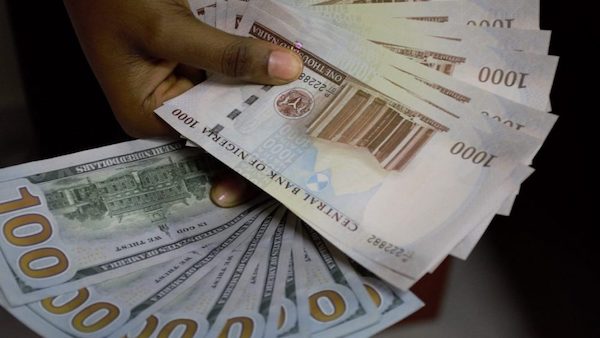
    The naira regained strength against the haven currency over the weekend, breaking below the N1,300 resistance level at the parallel market, to settle at N1,270-1,275 against the dollar as the U.S. Federal Reserve Bank meets on interest rates.

    The new rate represents a 10% increase compared to the N1,400 to a dollar it traded at the close of business activity on Friday.

    The naira’s quick gain at the close of April comes after a surge in demand for dollars in the parallel market driven by banks and end-users, combined with slow forex disbursement to Bureau De Change (BDC) operators by the Central Bank of Nigeria (CBN).

    These factors caused the naira, last week, to fall by 23% against the dollar, recording the worst weekly naira performance since February.

    Currency dealers had earlier attributed the moderation in the naira’s bullish momentum to the CBN’s sluggish pace of disbursement.

    They observed that some BDCs received dollar disbursements in small amounts, while other BDCs did not get dollars for almost two weeks following naira payments to the Nigerian apex bank.

    EFCC intensified clampdown on currency speculators

    The fortune of the naira took a new turn as the Economic and Financial Crimes Commission (EFCC) launched an additional offensive against currency traders and online platforms that manipulated the value of the naira.

    According to the federal government agency, 34 alleged currency speculators were taken into custody by its agents affiliated with the Taskforce on Currency Mutilation, Dollarization of the Economy, and Forex Malpractice on suspicion of engaging in foreign exchange fraud.

    Additionally, the EFCC has been granted the authority to block 1,146 accounts linked to an ongoing investigation for “offenses of dealing in unauthorized foreign exchange, money laundering, and terrorism financing,” thanks to an order from the Federal High Court.

    The Nigerian Senate, through its Committee on Finance, demanded that all relevant parties take coordinated measures to safeguard and maintain stability. The lawmakers emphasized that coordinated efforts are urgently needed to address the instability and ongoing depreciation of the naira.

    Dollar shows stability amid U.S. Fed interest rate decision

    The dollar index was marginally within its five-month high as the dollar posted significant gains for April, as most predictions of an early rate drop by the Fed had been priced in by markets.

    At the time of writing, the Dollar Index, which compares the value of the US dollar to a basket of six major currencies, decreased from 105.8 to 105.77 index points.

    Bullish wagers came to a head on Friday when the Fed’s favorite inflation indicator, the PCE price index, showed higher-than-expected March readings.

    The Fed meeting is now the main event of this week. The central bank will likely maintain stable rates and possibly present a cautious perspective, considering the recent volatility in U.S. inflation.

    Market estimates for the timing of the first interest rate cut have been pushed back to December due to elevated inflation, robust activity, and positive job figures.

    We believe there is still room for a September rate reduction. However, the Federal Reserve will continue to exercise caution and indicate that interest rates will rise if inflation remains high.

    The idea that higher-for-longer rates are likely to be detrimental to the naira has led most market analysts to believe that the CBN would maintain rates high to maintain investor interest in the currency.

    Why Naira depreciated by 23% in 4 days — Currency dealers, analysts

    A surge in demand for dollars in the parallel market driven by banks and end-users combined with slow forex disbursement to BDCs by the Central Bank of Nigeria, CBN, caused the Naira, last week, to fall by 23 per cent against the dollar, thus recording the worst weekly performance of the Naira since February.

    Though the CBN came to the rescue of the Naira on Friday by intervening in the official Nigeria Foreign Exchange Market, NAFEM, hence the appreciation of the Naira in the parallel market on Friday, currency dealers and analysts were uncertain about the fortunes of the Naira this week, citing pace and speed of CBN intervention as a determining factor.

    After two months of steady appreciation to N1,140 on Friday, April 19, from N1,1,820 per dollar on Wednesday, March 21, the Naira, last week, depreciated for four consecutive days by N285 (25%) to N1,405 per dollar on Thursday, April 25th.

    Following the same trend in the official market, the Naira depreciated by N169.24 (9.9%) to N1,339.23 per dollar on Friday last week, April 26th, from N1,169.99 per dollar on Friday, April 19.

    Financial Vanguard investigations revealed that the steady reversal in the fortunes of the Naira was triggered by a combination of factors, including sharp practices encouraged by the lower exchange rate in the parallel market.

    Since the CBN resumed dollar sales to Bureaux De Change, BDCs, the parallel market exchange rate had been below the official market exchange rate. For example, on Friday, April 19, the parallel market rate at N1,120 per dollar was N64.5 lower than the official rate of N1,234.49 per dollar on that day.

    To exploit this gap, banks besieged the parallel market, buying dollars at the cheaper rate and reselling to their customers at the higher official exchange rate.

    Following the steps of the banks, some forex end-users also bought dollars in the parallel market, deposited them in their domiciliary account and sell to the banks at a higher official rate.

    This practice according to currency dealers triggered huge demand for dollars in the parallel market and hence the 25 per cent depreciation of the Naira in four days last week.

    Currency dealers also cited the slow pace of dollar disbursement to BDCs by the CBN. They noted that dollar disbursement to BDCs comes in trickles, with some BDCs not getting dollars for more than two weeks after naira payment to the apex bank.

    Confirming this to Vanguard, President, Association of Bureaux De Change Operators of Nigeria, Dr. Aminu Gwadabe, said: “The depreciation of the dollar was caused by two factors. The first was that people were buying from the open (parallel) market, depositing the dollars in their domiciliary accounts and sell in the interbank market and this is because the open (parallel) market rate is always lower than the interbank market rate.

    “The second factor is that we have seen the resurgence of Person-to-Person, P2P, where hedging, margin trading are taking place.

    “After nipping in the bud of Binance, other platforms sprang up. And you know transactions in those platforms are purely speculative. The likes of Binance can only be profitable at the expense of naira depreciation because it is a market that you buy low and sell higher.”

    Investigation also revealed the situation was aggravated by the absence of CBN intervention in the official market for some weeks while inflow from Foreign Portfolios, and FPIs also dwindled.

    Explaining this development, Nnamdi Nwizu, Co-Founder of Comercio Partners, a Lagos-based investment bank, said: “Until yesterday (Friday) when they intervened, CBN had not intervened in the interbank market for weeks, and inflows were drying up.

    “Also forex demand that waited for Naira to strengthen (appreciate) seems to be filtering through now, both local and FPI’s.”

    On the outlook for the Naira in the coming weeks, Nnamdi said: “A lot depends on if the CBN continues to intervene in the market to ensure that they don’t lose control of the market. And also if we start to see renewed FPI flows.”

    In a bid to arrest the depreciation of the Naira, CBN intervened in the official market on Friday. It also increased the speed of dollar disbursement to the BDCs, while also stepping up enforcement activities with its monitoring task force which visited some BDCs and parallel market locations in Abuja and Kano on Friday.

    As a result, the Naira appreciated in the parallel market on Friday to N1300 per dollar from N1,405 per dollar on Thursday.

    Confirming this development, Umoru Ahmed, a currency dealer based in Lagos Island said: “The naira was traded at N1,500 this morning which I bought. There is no inflow of dollars like before and not all the BDCs have access to dollars especially if they registered late.

    “The rate later crashed today to N1,300 per dollar for selling and N1,250 for buying.

    “This is because the CBN’s task force stormed the market today arresting many black market traders which led to many operators reducing their price to sell off their dollars as they don’t know what the market will be like tomorrow.”

    Similarly, Isa Yahaya, a currency dealer in Ikeja said: “In Ikeja today, we bought at N1,320 and sold at N1,350. But the market opened today at N1,450 per dollar of which I bought a dollar for N1,550.

    “But we received a hint that the CBN’s task force was arresting many black market traders. This led to the appreciation of the naira because we just wanted to quickly sell what we had and wait till tomorrow to see what the market holds.

    “The increase in the rate is due to demand pressure. The number of people demanding for dollars is higher than those selling.

    “So it is difficult to meet the demand as we do not have access to buying from BDCs talk of from the CBN.”

    Also confirming this development and expressing optimism that the naira will further appreciate this week, Gwadehe said: “There is a turn of events now. Naira is appreciating as we speak, the rate has come down to N1,250 – N1,270

    “Now the rate is going down due to a combination of factors. The CBN has intervened today at the NAFEM market. Dollar sales and disbursement to BDCs have been coordinated and streamlined for efficiency and liquidity.

    “The securities agencies have swooped on those illegal behaviours, arrests were made today in Abuja and Kano. So all these factors are playing a bigger role because all the behaviours that have no economic value have been checkmated and streamlined. So I believe appreciation of the Naira cannot but continue.”

    Speaking further, Gwadabe called for an executive order to deposit their holding into a non-exports domiciliary with silent sources requirement of an amount below # 50k for 3 months.

    He also called for the creation of investment bonds for Nigerians in the Diaspora without tax charges.

    Nairametrics/Vanguard
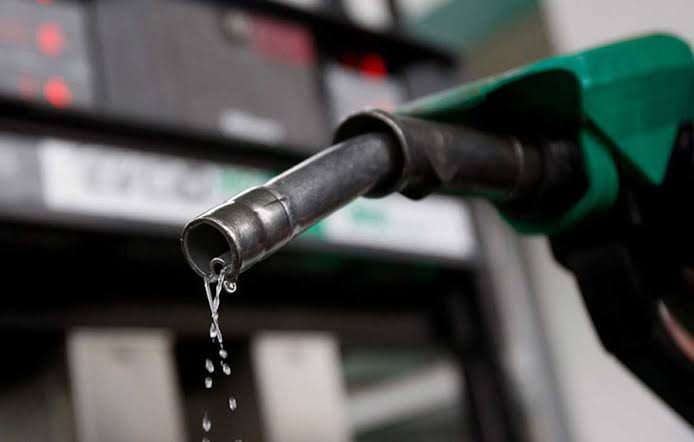
  • Petrol scarcity spreads to more states as NNPCL claims ‘There is sufficient stock’

    Petrol scarcity spreads to more states as NNPCL claims ‘There is sufficient stock’

    The shortage of petrol has continued spread to states.

    States reported to have experienced acute scarcity are Oyo, Osun, Ondo, Edo, Anambra, Enugu, Lagos, Abia, Benue, Plateau, Kaduna, Katsina, Niger and Jigawa.

    The scarcity first hit the Federal Capital Territory (FCT) last week. But an improvement was noticed by The Nation across Abuja yesterday.

    Most Nigerian National Petroleum Company Limited (NNPCL) franchise stations, especially in Lagos, had their gates closed to motorists due to a lack of stock.

    However, some marketers that opened for business in the nation’s commercial capital had queues.

    Scores of jerry can–carrying residents were also seen struggling for access.

    Unlike independent marketers who cashed in on the situation to slightly hike their pump prices, the majors did not.

    But, as vehicle owners and other petrol users lamented the situation, the NNPC Ltd and Independent Petroleum Marketers Association of Nigeria (IPMAN) blamed the scarcity on the logistics challenge.

    They, however, gave an assurance that normalcy would return this week as product lifting started by marketers.

    NNPCL Chief Communications Officer, Olufemi Soneye, said the company had no issues with stock availability.

    He explained that each time a supply disruption happens(like the one caused by logistics hiccups), it normally takes a maximum of five days for normalcy to return.

    “It (logistics challenge) has been resolved. The thing is once there’s a day or two in disruption it takes about three to five days for normalcy to return. We have products and there is no cause for worry,” Soneye said.

    IPMAN National President, Abubakar Maigandi, explained to The Nation that the logistics problem involved the discharge of petrol from a mother vessel to the depots.

    “You know that the product is imported and it takes a while to discharge from the mother vessel to the Daughter vessel and to the depot.

    “That is where the problem emanated from and that has been rectified,” Maigandi said.

    He added: “The queues will not last. It should be cleared by this week. We met with the NNPCL and they explained the logistics issues they had.

    “But they have started supplies to their various depots and we are already receiving the products from some depots.

    “We expect that in the course of the week, the situation will further improve and there will be more supplies at the stations if things continue the way it is at the moment.”

    Although some of his association members upped pump prices, the IPMAN president, said: “NNPCL did not mention any price increase to us. If there will be a price increase, they would have communicated to us, but we asked them and they confirmed there is no plan for such.”

    Executive Secretary of the Major Energies Marketers Association of Nigeria (MEMAN), Clement Isong, also said his members received petrol products throughout the weekend.

    Also confirming that the logistic problem had been resolved, Isong said there should be no need for panic if the queues at filling stations lengthened today.

    He said: “In a couple of days, the backlog will be cleared. What you are seeing is panic buying. Tomorrow (today), the lines may get longer at the filling stations as motorists try to fill up their tanks. But I advise that there is no need to worry because NNPCL has enough stock.

    “Normally, when you have situations like this (supply disruption) there will be backlogs to clear but we have been trucking and people need to calm down because there are supplies.

    ‘’I can tell you that Mobil and TotalEnergies worked throughout yesterday (Saturday); ConOil and MRS are all trucking right now.

    ‘So, the situation is not as bad as it appears. It will clear out in the course of the week.”

    When The Nation contacted the Nigerian Midstream and Downstream Petroleum Regulatory Authority (NMDPRA) for independent petroleum market data, a Senior Officer at its Corporate Service Unit, Seiyefa Osanebi, replied: “I can’t provide that right now.”

    Across the metropolis yesterday, petrol queues at filling stations like Mobil located along the Lagos-Ibadan expressway, North West at Maryland and Gbagada, NIPCO  along Ijede Road, Ikorodu, and TotalEnergies at the NNPC bus stop in Ejigbo, stretched to about 500 metres from the pumps.

    Some motorists and other residents, who lamented the situation, said they had to resort to buying from black market operators.

    One Musa Lawal said he waited for over two hours at the Mobil filling station along the Lagos – Ibadan Expressway before deciding to look for an alternative.

    Another motorist, who gave his name simply as Lekan Balogun, returned without getting petrol to buy after waiting at NNPCL filling station in Ladipo, Mushin for over an hour.

    The situation was the same in Oyo, Osun, Ondo, Edo, Anambra, Enugu, Abia, Benue, Plateau, Kaduna, Katsina, Niger, and Jigawa states where petrol sold at above N760  at the stations that opened for business.

    In Akure, Ondo State, it sold for N685 and N730 per litre while in Ibadan, Oyo State, it was N730/N750.

    Chairman of IPMAN, Ore depot, Shina Amoo, accused the NNPCL of not selling petrol to IPMAN members.

    “The cause of the scarcity is what I have said earlier. The product is not available. We also do not have money to struggle with major marketers.”

    It was gathered that many of the independent marketers in Ibadan preferred to sell at odd hours at N750 per litre.

    The scarcity in Osun made Governor Ademola Adeleke to warn marketers against hoarding the product.

    Chairman of the Petroleum Monitoring Taskforce, Kazeem Akinleye, announced the warning.

    Akinleye said: “Most filling stations are hoarding petrol products, thereby worsening the fuel supply situation in the state.

    “The surveillance activities were conducted in major towns and the state capital in the last three days and it revealed deliberate hoarding of fuel to create artificial scarcity.”

    In Jos, the Plateau State capital, many car owners, who could not afford to buy the product at between N685 and N800 at official outlets parked their vehicles at home.

    But desperate motorists and other users who lacked the patience to wait endlessly at the stations turned to ‘black markets’ where they paid as much as N1,000 per litre.

    A motorist, Dominic Jude, said: “I had to park my car due to non-availability of fuel today (yesterday). The other day (Saturday), black market operators were selling at N800 per litre but today (yesterday) they sell for N1,000.’’

    In the Enugu metropolis, majority of the filling stations did not sell but the few that did dispensed at between N725 and N760 per litre.

    Only major marketers like Total, Enyo, Masters Energy, Rainoil, and Northwest dispensed the product to desperate motorists and domestic users at between N667 and N695 per litre. NNPC stations which maintained the price of N600 per litre, had long vehicular queues.

    “Many of the filling stations opened for business. But I  noticed a slight increase in the price of fuel.

    “For instance, I bought a litre at N705 at a filling station along Chinda Road in Obio-Akpo Local Government Area,” said a resident who gave his name simply as Christian.

    In Benin, Edo State, the few independent marketers that still had some stock sold a litre at N700.

    In Dutse, the Jigawa State capital, they sold at N920, and in Minna, Niger State at between N700 to N800.

    At black markets in Wushishi and Kontagora areas, a litre was as high as 790 to N1,000.

    The situation was worse in Kaduna where residents had to cough out between N1,200 and N1,300 for a litre at the black market.

    A former employee of the NNPCL and an All Progressives Congress (APC) chieftain, Kailani Muhammad, said the scarcity was caused by petroleum products marketers.

    Muhammad said: “Those behind this manufactured fuel scarcity should be fished out and sanctioned accordingly to serve as a deterrent to others. This country belongs to all of us. We must collectively work hard to salvage it together.”

    At some of the filling stations in Awka, Anambra State, the product sold at between N720 and N730 while at Umuahia and Aba in Abia State, it went for N700 and N740.

    At black markets in Katsina, the product also sold at N1,300 a litre.

    Nation

  • FG to get another $2.2bn World Bank loan – Wale Edun

    FG to get another $2.2bn World Bank loan – Wale Edun

    The federal government is expecting a fresh $2.2 billion single-digit interest loan from the World Bank and another budget support facility from the African Development Bank (AfDB).

    The Minister of Finance, Wale Edun, disclosed this during a press briefing at the end of Nigeria’s activities at the World Bank/IMF Spring Meetings in Washington DC in the United States.

    While speaking on the sources of international funding to the Nigerian economy, Edun listed diaspora remittances, foreign portfolio investments and facilities from the World Bank and other international development partners.

    He said, “We have qualified for the processing just this week to the Board of Directors of the World Bank of a total package of $2.25bn of what you can call ‘the closest you can get to a free lunch’; virtually a grant. It’s for about 10 to 20 years moratorium and about one per cent interest.

    “In addition, there is a similar budgetary support – low-interest funding – from the African Development Bank (AfDB) and, clearly, there are also ongoing discussions with foreign direct investors across many sectors.”

    Edun also tapped issuing dollar-denominated securities specifically targeted at Nigerians in the diaspora and those with foreign-denominated savings in Nigeria as another measure to attract forex inflows into the country.

    He said the federal government hoped to issue the bonds later this year.

    He highlighted the efforts of the fiscal side of the economy in complementing the recent monetary policy reforms by the Central Bank of Nigeria (CBN).

    He said that issuing government securities at an interest rate closer to the CBN’s Monetary Policy Rate (MPR) was an indication of the collaboration between both sides of the economy in tackling inflation in the country and attracting forex inflows.

    He listed the agricultural sector as one area the Bola Tinubu administration was looking to spur growth in the medium-term, noting that efforts in that area included the distribution of fertilisers and seeds to reduce food prices and enhance food security.

    Other programmes, according to the minister, are increasing power generation to about 6,000 megawatts within six months, provision of infrastructure, especially housing, with the goal of making low-interest mortgages available to Nigerians, revamping of the social investment programme and proposed economic stabilisation plan.

    Daily Trust

  • CBN gov Cardoso says CBN not using foreign reserves to defend Naira

    CBN gov Cardoso says CBN not using foreign reserves to defend Naira

    The  Governor of the Central Bank of Nigeria (CBN) Mr. Olayemi Cardoso,  said yesterday that the apex bank is not defending the Naira with the nation’s foreign reserves.

    He was speaking against the backdrop of the recent decline in Nigeria’s foreign reserves corresponding with massive appreciation of the Naira in the foreign exchange market (forex), fueling speculations that the apex bank pumped forex into the market to dwarf demand pressure and shore up the value of the local currency.

    Speaking at the on-going Spring Meetings of the IMF the World Bank, Cardoso said that his team at the apex bank is determined to nurse a foreign exchange market ruled by the principle of willing buyers-willing seller.

    He also said that Ways and Means (federal government borrowings from CBN) is no longer an issue, particularly after the fiscal authorities securitised the outstanding.

    His words, “Defending the Naira, from every indication is an elephant in some rooms. I will make this as clear as possible. It is not our intention to defend the Naira. Much as I have read in the recent few days some opinions about what has happened in terms of our reserves being drawn down, the CBN Defending the Naira, if you take your mind to our philosophy and policy, you will see it will be counter intuitive. We want the Naira to perform independently as long as we have a vibrant forex market.

    “Initially we needed to keep the BDCs going. So it is important for people to get forex for school fees, travels and the like.

    “The shift you see in our reserve is not to defend the Naira but for things like settling obligations that fell due. Mind you, that is the reason for keeping foreign reserves, in the first place.”

    Cardoso also said that his team is cooperating with the fiscal authorities and that, “Ways and Means is no longer an issue.

    He said, “Let me be upfront in saying that the monetary policy is only one side. It is very clear to us that we need to have a very good handshake with the fiscal authorities.

    “For instance, food inflation is not within the purview of the CBN. Ways and Means is now less an issue.”

    The CBN boss said he decided to go the orthodox central banking route in order to build confidence in the Nigerian currency.

    He also said that he had no choice than to raise monetary policy rate, recording 600 basis points hike within a short period of time.

    He promised to communicate more with Nigerians and other stakeholders in order to moderate their expectations.

    “We want Nigerians to be realistic in their expectations. We have used the MPC to explain why we took the measures that we have taken.

    “We will strengthen the communication framework using different platforms to communicate.”

    The governor expressed satisfaction that he took hard decisions but added that they are yielding desired outcomes.

    He said within two months of his administration, the Naira was adjudged the worst performing currency, but within six months it moved to the best performing currency, globally.

    “Ultimately the objective is to ensure that we moderate inflation’’, he stated.

    Key take-away lessons for him, he said, was that he could not over-emphasise the importance of trust, stating, “Irrespective of boldness to do certain things, if the trust is not there, you will sub-optimise.

    “It is a bit of a surprise that one had expected a greater understanding of a lot of the issues, expectations of the people on the CBN is often misplaced.”

    Vanguard

  • NNPCL to boost Nigeria’s Gas Supply, Stabilise Naira

    NNPCL to boost Nigeria’s Gas Supply, Stabilise Naira

    The Group Chief Executive Officer of the Nigerian National Petroleum Company Limited (NNPCL), Mele Kyari, has committed to increasing the supply of Nigeria’s gas to both local and international markets with the aim of revitalising the country’s revenue.

    Kyari said that by improving gas production, the NNPCL would play its part in stabilising the naira.

    The GCEO NNPCL told journalists after he visited President Bola Ahmed Tinubu at his Lagos residence, where he is observing the Eid Al-Fitr holidays.

    “It is also a perfect opportunity to reassure Mr. President that his focus on delivering gas into our markets, both domestic and international, and bringing back prosperity to the country is right on course,” he said.

    Kyari stated that the NNPCL would utilise the prices of its commodities on the global market to strengthen the value of the naira further.

    “This is a task that will be delivered, and very many tangible things will unfold in the coming weeks.

    “It’s very clear that the majority of our exports that can earn foreign currency is petroleum. There has been a significant improvement in the markets in terms of pricing, and we are also able to establish some level of stability in our projects.

    “The combination of this is making additional resources available to our country. And of course, more than anything, there are clear monetary and fiscal policies that the President and this government have put in place that is working and that is bringing about all the changes that you see in the currency market,” Mele Kyari added.

    Recall that the Naira has maintained a steady appreciation, gaining 4.55 percent of its value against the dollar on increased dollar supply after the Central Bank of Nigeria (CBN) cleared all foreign exchange (FX) backlog in March 2024.

    VON

  • Food Insecurity, Food Inflation and a Dwindling Manufacturing Sector in Nigeria: A National Threat to Sustainable Development

    Food Insecurity, Food Inflation and a Dwindling Manufacturing Sector in Nigeria: A National Threat to Sustainable Development

    By Ikenna Igwe

    The issue of food inflation and food insecurity have continued making the news headline in today’s Nigeria. To be fair, the issue of food insecurity is not something that is alien to Nigerians but with the current administration of President Tinubu, things seem to be going south.

    According to the National Bureau of Statistics (NBS) reports, food inflation rates stand at 33.93% on a year on year basis, that is 10.18% higher compared to the rate recorded one year prior. According to the bureau, the rise of food inflation on a year on year basis was caused by an increase in the price of common household food items like beans and cereals, milk, eggs, yam and other tubers. The headline inflation rates increased in January 2024 when compared to the same ones in the preceding year.

    Furthermore the report shows that on a month on month basis, the inflation rate in January 2024 was 2.64% which was 0.35 higher than the rate recorded in December of 2023 (2.29%). Still on the report, the food inflation rate in January 2024 quickened to 35.41% on a year on year basis, which was 11.10% higher compared to the rate recorded in January 2023 (24.32%).

    This whole state of affairs became more complex after the announcements of the removal of fuel subsidy. These brought about an upward trend in the price of basic commodities as well as other products which have played a major role in weakening the naira and in the reduction of the purchasing power of many citizens.

    Forex scarcity orchestrated by exponential demand for Dollar by Nigerians, as well as unremitted Forex backlog by the Central Bank of Nigeria have further mounted pressure on the naira.

    As the inflation rate clocked a 28 year high when it rose to 29.90% in January, so many sectors of the economy were deeply affected and one of those sectors was the manufacturing industry.

    The Manufacturing Association of Nigeria (MAN) has released a disturbing trend within the industry revealing that about 765 manufacturing companies have shut down while 335 experienced distress in 2023. This development is attributed to various economic difficulties including exchange rate volatility, rising inflation and a general worsening of the investment climate. These advertises have taken a toll on the manufacturing industries, significantly impacting its performance and sustainability. 

    Downturn in Capital Utilization

    The manufacturing industry, as reported by MAN stated on their report: “Capital utilization in the sector have declined to 56%, interest rate is effectively above 30%, foreign exchange to import raw material has dried up and production machinery inventory of unsold finished products have increased to N350 billion and the real growth has dropped to 2.4%. Expatriates in Nigeria currently pay more than $2,000 for CERPAC. The sector cannot afford another disincentive to increased investment and portfolio expansion”.

    A country that has a shrinking manufacturing industry, Forex scarcity to import, rising inflation, growing population and a worsening food crisis and poverty, is. Country urgent need of a reform. 

    Bold Step in the Right Direction

    Senator Abubakar Kyari, the Minister of Agriculture and Food Security on the 11th March, 2024 released a statement in which he said that the Federal Government had secured a €995 million deal between the Brazilian government and the German Deutsch bank group to finance a green imperative program in Nigeria.

    The program aims to create Mechanization Hubs in each of the 774 local government areas in Nigeria as part of its implementation plan. This comes as the administration of President Tinubu remains committed to ensuring food sufficiency and protecting local industry for sustainable economic growth. Part of the memorandum of understanding between the Federal Government and the John Deer group, a subsidiary of Tata Equipment clearly states: “The manufacturers have signed to deliver 10,000 units of tractors and implement in tranches of 2,000 units per annum for the next five years”.

    This is a welcomed development given the fact that the Nigerian agricultural sector recorded just a miniature 0.50% of the total foreign capital import of 2023. Amidst soaring food inflation and complaints of food shortage being experienced across the country, the need to quadruple investment and efforts as regards to agricultural output can’t be overemphasized.

    As we are preparing for the second quarter of the year, we are optimistic that more investments, programs, interventions and empowerments will be pushed into the agricultural sector and the manufacturing sector in order to have a sustainable economy. 

  • Senate c’ttee Chairman says Bank recapitalisation comes with peculiar risks

    Senate c’ttee Chairman says Bank recapitalisation comes with peculiar risks

    The chairman of the Senate Committee on Capital Market, Senator Osita Izunaso, has said the recent bank capitalisation comes with unique risks, especially when banks opt for the private placement route.

    The Central Bank of Nigeria had on Thursday announced new guidelines on its recapitalisation policy for banks, directing commercial banks with international authorisation to increase their capital base to N500 billion, and national banks, N200 billion.

    Izunazo, in a statement yesterday, noted that the CBN should intensify efforts to ensure that laundered funds are not used to recapitalise the banks and that only fit and proper persons end up as significant shareholders.

    “This risk is minimised when banks go through the stock market, which offers a screening layer, in addition to that carried out by the CBN,” he stated.

    The lawmaker commended the CBN for the recapitalisation programme, and assured of the support of his committee in ensuring its successful implementation.

    He said the adoption of tiered minimum capital requirements in respect of international, national and regional authorisation was commendable, unlike the uniform capital base of N25 billion, which applied in the 2005 banking recapitalisation exercise.

    Daily Trust

  • CBN Raises Interest Rate To 24.75%

    CBN Raises Interest Rate To 24.75%

    The Monetary Policy Committee (MPC) of the Central Bank of Nigeria (CBN) has hiked the benchmark interest rate by 200 basis points to 24.75 percent.

    This is according to a Tuesday communique by the CBN governor Yemi Cardoso after the second MPC meeting of his tenure in Abuja.

    The new interest rate is a jump from the 22.75 percent announced by the MPC about a month ago and the second rate hike by the current committee.

    Cardoso announced the retention of the Cash Reserve Ratio (CRR) of deposit money banks at 45 percent. However, the MPC adjusted the CRR of merchant banks from 10 percent to 14 percent.

    The committee also retained the liquidity ratio at 30 percent.

    “The considerations of the committee at this meeting focused on the current inflationary pressures and the need to anchor inflation expectations as well as ensure sustained exchange stability,” the CBN chief said.

    He said the moves are part of efforts to combat the country’s rising inflationary rate which was pegged at 31.70 percent in February.

    Cardoso noted that MPC members believe the headline inflation in the country is triggered mostly by a hike in the cost of food.

    “The committee therefore was of the view that addressing food insecurity is key to containing the current inflationary pressures,” he said while commending the Federal Government’s efforts at curbing food insecurity including the distribution of palliatives.

    Tuesday’s MPC decision came amid the Nigerian authorities’ clampdown on cryptocurrency platform Binance.

    Some Binance executives were detained in the country but one of them recently escaped from custody.

    But while providing an update about Nigeria’s clampdown on the crypto platform, he said the CBN’s collaboration with other government agencies is yielding results.

    “We consider ourselves as having the wherewithal to collaborate with other agencies of government and that is a very important function for us. About a month ago, we actually did have collaboration with law enforcement agencies, EFCC, the SEC, and other regulatory bodies as well, and what came out of that, is a work in progress, but very positive as far as I can say,” he said.

    “The NSA, we’ve been sharing information together. However, in this particular case, the responsibility for regulating cryptocurrency is not our role, it isn’t ours; it is strictly that of the Security and Exchange Commission, not our responsibility.”

    Pacesetter/Channels TV

  • CBN To Sell Forex To Bureau De Change Operators At N1,251/$1

    CBN To Sell Forex To Bureau De Change Operators At N1,251/$1

    As the naira gradually appreciates against the dollar after months of unprecendented uncertainties, the Central Bank of Nigeria (CBN), on Monday, announced the sales of $10,000 to each of the eligible Bureau De Change (BDC) operators in the country at the rate of N1,251/$1.

    In a circular to the President of the Association of Bureau De Change Operators of Nigeria on Monday, the apex bank said the BDCs are to sell to eligible end users at a spread of not more than 1.5% above the purchase price.

    The circular was signed by the bank’s Director of Trade and Exchange Department, Hassan Mahmud.

    The CBN warned that “any BDC that breaches the above terms shall be sanction appropriately, including outright suspension from further participation in the sale”.

    Nigeria is battling rising inflation, food inflation, forex crisis, economic hardship and high cost of living occasioned by the removal of petrol subsidy, attracting protests in parts of the country as the purchasing power of the naira and disposable income of common Nigerians shrink in the face of the forex crisis and inflation.

    The Nigerian naira has seen a dip in the last nine months since the President Bola Tinubu administration collapsed the foreign exchange window. Prices of commodities have skyrocketed to as high as double as the naira experienced an all-time low, falling from about N700/$1 last May to about N2,000/$1 last month, before its gradual appreciation in March.

    The authorities have since turned their focus to cryptocurrency websites like Binance, accusing them of speculation, clamping down on them through telecommunication companies.

    As a way to control the value of the wobbling naira, the apex bank had on March 1, 2024 revoked the licenses of 4,173 BDCs over compliance failures. The bank had in February raised minimum capital requirements for BDC operators in Nigeria to N2bn for Tier 1 license holders and N500m for Tier 2 license holders.

    The CBN under the watch of new bank chief Olayemi Cardoso who assumed office last September, is expected to announce new fiscal and monetary policies to shape the country’s economy during the apex bank’s 294th meeting of the Monetary Policy Committee on Tuesday, March 26, 2024.

    The MPC had in February raised the country’s interest rate from 18.75% to 22.75% to stem galloping inflation which stands at 31.7% as of February.

    Channels TV

  • Naira gains after clearing of $7bn FX backlog, appreciates to N1,382/$

    Naira gains after clearing of $7bn FX backlog, appreciates to N1,382/$

    The local currency continued on a recovery note on Thursday with naira appreciating significantly against the dollar, a development believed to be on the strength of recent interventions by the Central Bank of Nigeria (CBN).

    From N1,536.83 in the previous day, the naira appreciated to N1,382.35/$ at the Nigerian Autonomous Foreign Exchange Market (NAFEM), the first time in a long while that the local currency would record such a massive gain.

    This was coming 24 hours after the Central Bank of Nigeria (CBN) announced it had cleared $7bn valid foreign exchange claims while increasing the country’s forex reserves.

    CBN’s Acting Director of Corporate Communications, Hakama Sidi-Ali, announced this in a statement on Wednesday.

    The statement partly reads, “The Central Bank of Nigeria has announced that all valid foreign exchange backlogs have now been settled, fulfilling a key pledge of the CBN Governor, Mr Olayemi Cardoso, to process an inherited backlog of $7bn in claims.

    “Clearance of the foreign exchange transactions backlog is part of the overall strategy detailed in last month’s Monetary Policy Committee meeting to stabilise the exchange rate and thereby curb imported inflation, spurring confidence in the banking system and the economy.

    Apart from the massive gain recorded at the official market, the local currency also stabilised yesterday at the parallel market exchanging at N1,500 to a dollar, according to checks by our correspondents in Lagos, Abuja and Kano.

    In Lagos, the dollar was traded at N1,500 to N1,520 yesterday with the operators confirming relative stability in the market.

    A BDC operator, Haruna Agege, in a chat with our correspondent yesterday said the local currency is expected to appreciate against the dollars in days to come.

    “So if you have dollars at home, it is advisable to bring it out,” he said.

    In Abuja, a cross section of Bureau de Change operators in Wuse who spoke to Daily Trust stated that the dollar has been falling against the Naira since the beginning of the week.

    Gidado Muktar, a BDC operator said, “We have been seeing a lot of changes since Monday when the week started. I can tell you that when we started the week, the dollar was N1,700 to a dollar. By Tuesday it dropped to N1,600 and as we speak today Thursday it is fluctuating between N1,480 to N1,500/$,” he said

    Mukhtar added that he is happy that the Naira is appreciating which vindicates his colleagues that were accused of speculation.

    In Kano, Alhaji Yusuf Kura, a BDC operator said operators buy dollar at the rate of N1490 and sell to prospective customers at the rate N1500. Previously it traded at N1,520, he said.

    Despite CBN claiming it has cleared all verified backlogs, there is controversy over the foreign airlines’ trapped funds as the foreign airlines claimed their funds are still trapped with commercial banks.

    It would be recalled that in January when the CBN announced it had cleared all foreign airlines’ trapped funds, the carriers said the bulk of the trapped funds from ticket sales on the billing settlement platform (BSP) of the International Air Transport Association (IATA) is yet to be cleared.

    A foreign airline representative who spoke on the condition of anonymity said, “Payments are being made as I write. Only IATA can confirm the value. This is because these monies are tickets sold via BSP. IATA manages the BSP. The bulk of the funds held are in the BSP. BSP sales make up about 70% of airline sales.”

    President of the Association of Foreign Airline Representatives in Nigeria (AFARN), Dr. Kingsley Nwokoma said foreign airlines’ trapped funds remain uncleared.

    President of the National Association of Nigerian Travel Agencies (NANTA), Mrs. Susan Akporiaye in a chat with Daily Trust said as it currently stands the Federal Government is not owing foreign airlines and asked the operators to sort out their issues with their commercial banks.

    “The Federal Government is not owing the airlines. If the airlines still have some issues, it is the money with the commercial banks, not with the government and the CBN has also helped them as well by releasing the circular that the banks should sell to the airlines and we had report that the airlines have been getting their money although there is no update on whether the entire $700m has been cleared or not.

    Daily Trust/Pacesetter