Category: Business/Economy

  • BREAKING: On Tinubu’s directive, Shettima summons Lokpobiri, Kyari over fuel price hike; details of meeting emerge

    BREAKING: On Tinubu’s directive, Shettima summons Lokpobiri, Kyari over fuel price hike; details of meeting emerge

    Vice President Kashim Shettima has called an urgent meeting with the Minister of State for Petroleum, Heineken Lokpobiri, and the Chief Executive Officer of the Nigerian National Petroleum Company Limited (NNPCL), Mele Kyari, to address the ongoing fuel scarcity across the country.

    The meeting, held on behalf of President Bola Tinubu, who is currently on an official visit to China, also included the National Security Adviser, Nuhu Ribadu.

    Following the discussions, Lokpobiri spoke to reporters at the State House, assuring the public that the fuel crisis would soon be resolved.

    He stated that the NNPC has sufficient fuel supplies to meet national demand.

    Lokpobiri also urged Nigerians to remain calm, adding that increased availability of petroleum products would foster competition and drive down prices.

    He further emphasised that the government was not responsible for recent hikes in fuel costs.

    “We were summoned by the Vice President who was directed by Mr. President to summon this meeting and we have been with him to brief him about what is going on across the country.

    “The Vice President summoned us and we’ve been with him to brief him about what is going on across the country. And what is important is for us to convey to Nigerians that the President is empathetic about what is going on in the country. He is concerned about the hardship of Nigerians, and that was why he directed the Vice President to call this meeting, for us to reflect on what is going on in the country.

    “What is important is that products are available in the country, and we believe that between now and the weekend, there will be availability of products across the length and breadth of the country.

    “The price could be high in some other areas, much higher in some other locations, and in some locations, much more than you know other areas.

    “But we believe that by the time there is availability of products across the country, the price itself will stabilise.

    “But what is important is that the government is not fixing prices. This sector is deregulated. And we believe that with the availability of products, the price will find its level. And this is important for Nigeria to know.

    “The summary is that the President is empathetic about what’s going on. That’s why he directed this meeting. There is enough product in the country to be able to meet the demands of Nigerians. There should be no panic buying. And we also believe that Nigerians need to know that the government is not fixing prices. That is what I want to convey to Nigerians.”

    The Executive Director of NMDPRA, Kalu Okuoha, while briefing also said, “All regulatory efforts are now geared towards stabilizing supply, with a resultant impact that it will be positive also on the stability of price.

    “To that objective, the regulator is ensuring that there are increased operating hours from all loading depots; vessels are being cleared promptly and extended hours where safety can permit for truck-outs as well. More important also is the reinforcement of the support being given to local refiners because with increased production from them, we, indeed, like the minister, has said, there will be a higher supply, which will stabilize the price. That’s the effort that the regulator is making.”

    Leadership/Vanguard

  • NNPCL repays 60% of $1.036 billion loan taken to buy stake in Dangote Refinery

    NNPCL repays 60% of $1.036 billion loan taken to buy stake in Dangote Refinery

    The Nigerian National Petroleum Company Limited (NNPCL) has successfully repaid 60% of a $1.036 billion loan that it took in September 2021 to finance the acquisition of a 20% stake in the Dangote Petroleum Refinery and Petrochemicals Free Zone Enterprise (DPRP FZE). 

    As of December 31, 2023, NNPC has repaid $625 million of the principal amount, leaving an outstanding balance of $424 million on the principal loan amount. 

    The source of this loan and the details of the repayment are documented in the NNPCL’s financial statement for the year ended December 31, 2023, under the section titled “Financing of investment in Dangote Refinery.” 

    Only 7.25% stake acquired 

    The loan was secured through a forward sale agreement with Lekki Refinery Funding Limited, with an interest rate of 3-month LIBOR plus 6.125%. 

    A part of the financial statement read: “In September 2021, NNPC entered into a forward sale agreement with Lekki Refinery Funding Limited to supply 35,000 bbl. of crude oil per day for the settlement of the $1.036 billion (N426.2 billion) funding received for the financing of investment in Dangote Refinery. 

    “The interest rate for the facility is 3-month LIBOR plus 6.125%. As of 31st December 2023, NNPC limited has paid $625 million principal, while $424 million (N324 billion) is still outstanding.” 

    Initially, this investment was managed by NNPC Greenfield Limited, a special-purpose vehicle wholly owned by NNPC. 

     However, following the restructuring of NNPC under the Petroleum Industry Act (PIA), the management of this investment was transferred to NNPC Downstream Investment Service (NDIS). 

    The restructuring also led to a significant change in the payment structure. The balance of the cost of equity investments, amounting to $1.76 billion, was agreed to be paid in cash instead of the originally proposed crude oil discount of $2.5 per barrel on the official selling price of crude oil.  

    As of December 31, 2023, NNPC Limited holds a 7.25% interest in DPRP FZE. 

    What you should know 

    The Dangote Refinery is a massive oil project located in the Lekki Free Zone, Lagos, Nigeria, boasting a capacity of 650,000 barrels per day (BPD). Owned by the Dangote Group, it aims to become Africa’s largest oil refinery and the world’s biggest single-train facility.  

    Earlier this year, Nairametrics reported that the 2022 audited financial statement of NNPC contained information which showed that it had acquired a 20% stake in the Dangote refinery for $2.76 billion through a $1.036 billion funding from Lekki Refinery Funding Limited of which $1 billion was paid to Dangote Refinery and $36 million was for transaction costs.  

    Aliko Dangote mentioned to newsmen that NNPC no longer holds a 20% stake in the refinery.   

    He explained that this change occurred because NNPCL failed to pay the balance of their share, which was due in June.  

    In a statement, Femi Soneye, the Chief Corporate Communications Officer of NNPC, addressed the company’s recent decision regarding its investment in the Dangote Refinery.   

    Soneye said that the decision to reduce their investment was carefully considered and communicated several months ago to Aliko Dangote.

    Nairametrics
  • BDC operators attribute weak naira recovery to CBN’s inconsistent dollar supply

    BDC operators attribute weak naira recovery to CBN’s inconsistent dollar supply

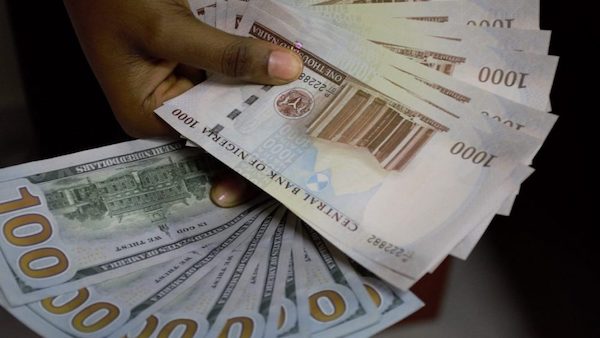
    Currency traders have attributed the persistent weakening of the naira and the volatility of the foreign exchange market to the lack of consistency in dollar allocation to the Bureau De Change (BDC) operators by the Central Bank of Nigeria (CBN).

    The BDC operators, who admitted to the positive impact of the dollar sales by the CBN, however, noted that lack of continuity or frequency of the exercise gives rise to loss of confidence in the forex market by the customers thereby putting pressure on the parallel market.

    They had advocated for the intervention by the CBN in the retail end of the market to be at least once or twice a week.

    The CBN on July 18, 2024, approved the sales of $20,000 to Bureau De Change (BDC) operators at the rate of N1450/dollar as part of efforts to address forex scarcity, especially at the retail end of the market and strengthen the naira.

    The allocation of forex to BDC operators was coming at a time when the demand pressure was high with the exchange rate hitting above N1600/$1.

    In approving the sales of dollars to BDCs, the CBN noted that it had observed the continued distortions in the retail end of the market, which is feeding into the parallel market and further widening the exchange rate premium.

    This measure is expected to meet the demand for invisible transactions, curb the widening exchange rate premium observed in the parallel market and ensure a more stable exchange rate.

    CBN intervention  

    This is the fifth attempt by the CBN to sell forex to the BDC operators after a prolonged period of suspension by the apex bank in 2021 following allegations of illegal forex trading by these currency traders.

    The ban was, however, lifted earlier in the year following the revocation of licenses of over 4173 BDCs in February.

    The first attempt was in February 2023, with the CBN selling $20,000 to each BDC at the rate of N1,301/dollar, while the second attempt saw the apex bank reducing the allocation by 50% and sold forex at a rate of N1,251/dollar.

    The dollar sales to the CBN licensed currency traders is one of the intervention measures by the apex bank aimed at boosting liquidity and stabilizing the forex market.

    Others include periodic sales of dollars to authorized forex dealers and the recent reintroduction of the Retail Dutch Auction System, which saw the apex bank sell $876.26 million to end-users through the banks.

    With the periodic sales of dollars to the BDC operators, the CBN appears to have yielded to pressure from the Association of Bureau De Change Operators in Nigeria (ABCON) who had advocated for participation in the foreign exchange market to help improve liquidity, especially in the retail end of the market.

    They stated that their exclusion from the foreign exchange market and the lack of forex supply was causing the depreciation of the naira, insisting that without them the various exchange rate policies would not work.

    Despite the CBN’s intervention in the forex market, the exchange rate is still high and volatile with the dollar trading at N1590 at the parallel market.

    The BDC operators complained about the frequency of the dollar sales by the CBN, hinting that it is not enough the sustain the desired impact.

    The President of ABCON, Aminu Gwadebe, in a chat with Nairametrics, acknowledged the immediate positive impact of the dollar sales with the appreciation of the naira.

    He, however, noted that the lack of consistency in the exercise has led to the persistent volatility of the forex market with demand pressure and the weakening of the naira.

    Gwadebe said, ‘’The problem is the streamlining, only once, is it on the 18th of July or so? Like you said about 3 weeks, till now not any sales again.’’

    When asked if the CBN had redeemed the allocations to the BDCs as against the past when there were complaints of delays by the apex bank.

    He said, ‘’That is true you know that after then, they resumed sales sometime in January, then around March, April, they withdrew completely and then in the middle of last month around 18th of July they came up with an announcement to sell $20,000. Before then the rates were hovering around N1650 or thereabout, so when they came out there was impact because the rate also came down to below N1600 to about N1580 thereabout.

    ‘’So you know the thing is continuity, once people know that it is not what is coming frequently, before you know it people will now lose confidence again because our customers cannot wait without any information as to when they will get forex after which they will get their ticket and then travel. So that really will push the pressure back to the parallel market, so that’s the problem.’’

    On how often they want the apex bank to be selling dollars to them.

    The ABCON President said, ‘’Every week, you know there was a time we were collecting three times a week, we want it sometimes twice a week, but even if it is once a week with frequency and volume and in line with cut-off time, so that will make everybody go to the market at the same time and the liquidity will come to the market at the same time. But if I know the window is open for one month for me to buy and with no cut-off time and then I am not sure when it will come again, people will not be encouraged to really come into the market.’’

    Gwadebe added, ‘’There are some of us looking at it, you know the payment centres are centralized, so some people honestly you know are not encouraged because you will go today they will say come tomorrow, you will go tomorrow they will say come next tomorrow, so also the operational difficulty sometimes, even though they are trying to also improve on that to the extent you see some people they will pay in their money it will take them 3 to 4 days without even getting their payment (dollar sales), so those are some of the challenges.’’

    The CBN had earlier in the year resumed the sales of forex to BDC operators after a prolonged period of suspension.

    This was followed by the revocation of operational licenses of over 4,173 BDCs in February 2024 over their failure to comply with some regulatory guidelines.

    The first dollar sales by the CBN was in February 2024 with the apex bank selling $20,000 to each BDC at the rate of N1,301/$. This was followed by a second attempt with the CBN selling $10,000 to BDCs at the rate of N1,251/$1.

    The strategic intervention by the CBN especially at the retail end of the forex market is expected to provide more liquidity and enhance the efficiency of the market.

    Nairametrics

  • FG to introduce new tax laws to regulate crypto by Sept – FIRS

    FG to introduce new tax laws to regulate crypto by Sept – FIRS

    The Executive Chairman of the Federal Inland Revenue Service (FIRS), Dr. Zacch Adedeji, announced that the Federal Government is set to introduce new tax laws by September, which will include regulations for the cryptocurrency industry.

    Speaking on Saturday at the FIRS 2024 Stakeholders Engagement with the Senate and House of Representatives Committees on Finance in Lagos, Dr. Adedeji highlighted the absence of current legal frameworks governing cryptocurrency in Nigeria, calling for the urgent need for regulation.

    Nigeria’s cryptocurrency industry is estimated to be worth up to $400 million and one of the largest in Africa around 33% of the country’s population holds one form of cryptocurrency.

    According to a report by Chainalysis, Nigeria’s cryptocurrency transaction volume experienced a 9% year-over-year growth, reaching $56.7 billion between July 2022 and June 2023.

    He also noted that the forthcoming tax laws aim to overhaul the nation’s revenue administration, harmonize and simplify existing tax laws, and enhance services to support President Bola Tinubu’s economic plan.

    He said, “For example, the stamp duty tax law of 1939 when there was no internet or connectivity, nor Local Government. Part of the reason President Bola Tinubu set up the Tax and Fiscal Reform Committee is to check these lapses and take care of the concerns by September.” 

    “While we cannot avoid cryptocurrency as there is no law in Nigeria presently regulating it, there is a need for a law that regulates this line of transaction. This is what is applicable in other countries of the world. When there are innovations of system, you must plan to regulate it in such a way that it is not injurious to economy development of Nigeria,” 

    Dr. Adedeji expressed gratitude to the National Assembly for its unwavering support to the Federal Inland Revenue Service (FIRS) over the years, which has enabled the agency to meet its targets and facilitate wealth distribution.

    Dr. Adedeji further highlighted that the FIRS is on track to achieve the N19.4 trillion target set by the National Assembly at the beginning of the year.

    Nairametrics


  • CBN disqualifies 6 banks, auctions $876m to 26 banks in Retail Dutch Auction System

    CBN disqualifies 6 banks, auctions $876m to 26 banks in Retail Dutch Auction System

    The Central Bank of Nigeria has auctioned a total sum of $876.26m to 26 qualified banks, who participated in the latest Retail Dutch Auction System undertaken by the apex bank.

    The auction process conducted on Tuesday, August 6, 2024, aimed to enhance FX liquidity in the market, alleviate demand pressure, and support price discovery in alignment with the apex bank’s objectives.

    The CBN said this in a statement posted on its website on Wednesday. It was signed by the Director, Financial Markets Department, Omolara Omofunde Duke.

    Explaining the auction process, the director said a total bid valued at $1.18bn was received from 32 authorized dealers banks while bids valued at $313.69m from six banks were disqualified.

    Of the disqualified bids. four banks submitted their bids after the cut-off time of 3:00 pm, while two banks did not provide bids in the template submitted.

    The statement read, “A total bid valued at US$1.18bn was received from 32 Authorized Dealers Banks, of which, bids valued at US$876.26m from 26 banks qualified, while bids valued at US$313.69m from six banks were disqualified.”

    Last week, the CBN unveiled plans to implement a Retail Dutch Auction System to address the mounting unmet foreign exchange demand from end users.

    It said the aim was to alleviate the growing pressure in the FX market and stabilize the naira’s exchange rate.

    The naira has traded within the range of N1,450 and N1,600 in recent months.

    However, the bank approved a cut-off rate of N1495/$ for the Retail Dutch Auction.

    Punch

  • CBN approves, injects N700 billion bailout in Unity Bank-Providus Bank merger

    CBN approves, injects N700 billion bailout in Unity Bank-Providus Bank merger

    Nigeria’s Central Bank approved a financial package worth N700 billion to support the proposed merger between Unity Bank Plc and Providus Bank Limited, according to a document seen by Nairametrics.

    According to the apex bank, the bailout is aimed at strengthening the stability of Nigeria’s financial system, as confirmed in an official letter from the CBN, which detailed the terms and structure of the financial accommodation.

    The letter, addressed to the Managing Director of Unity Bank, outlines a 20-year term loan designed to ensure the operational stability of the merged entity.

    This represents the first financial bailout of a commercial bank under Yemi Cardoso as Central Bank Governor. It is also coming on the heels of the liquidation of Heritage Bank which many had thought was a sign that the apex will not be bailing out banks.

    Amount: N700 billion

    Structure: 20-year term loan

    Interest Rate: MPR (Monetary Policy Rate) minus 11%, with a minimum rate of 6%

    Repayment Terms:: Payments will be semi-annual. A principal moratorium of five years, meaning no principal payments are required for the first five years.Starting from the sixth year, the new entity will repay the loan in 15 equal installments until maturity.

    According to other terms of the transaction seen by Nairametrics, it contained terms that require that Unity Bank’s settle existing obligations of N303.7 billion from the bailout funds.

    This includes a N92.00 billion exposure from First Bank of Nigeria related to clearing obligations,

    Another N51.70 billion financial accommodation from the CBN N25.00 billion under the Anchor Borrowers Programme.

    Others include N135.00 billion obligation to NIRSAL (Nigeria Incentive-Based Risk Sharing System for Agricultural Lending).

    These obligations will be deducted from the N700 billion financial accommodation.

    The remaining balance of N396.30 billion from the financial accommodation will be invested in a 20-year Federal Government of Nigeria (FGN) bond.

    This investment will qualify as a Tier 2 capital instrument, contributing to the shareholders’ funds of the new entity.

    The letter also states that Unity Bank’s current CRR shortfall of N117.90 billion will be waived ensuring that Providus Bank’s CRR balance post-merger will serve as the opening balance for the new entity.

    CBN Bailout

    The apex bank had in an official statement stated that it granted approval for financial accommodation to support the proposed merger between Unity Bank Plc and Providus Bank Limited.

    It read: “The Central Bank of Nigeria (CBN) has granted approval for a pivotal financial accommodation to support the proposed merger between Unity Bank Plc and Providus Bank Limited. This strategic move is designed to bolster the stability of Nigeria’s financial system and avert potential systemic risks.”

    In the statement, the CBN noted that the merger is contingent upon this financial support, which is essential for the financial health and operational stability of the post-merger organization.

    However, the apex bank failed to disclose the amount of financial support approved for the merger. Nairametrics finding has now confirmed that about N700 billion was extended as bailout.

    Cardoso’s First Bailout 

    This bailout represents the first under the tenure of CBN Governor Olayemi Cardoso, a move that surprised most analyst who spoke to Nairametrics.

    Unlike his predecessor, Godwin Emefiele, who pledged not to allow banks to fail, Cardoso had initially signaled that bailouts might become a thing of the past.

    However, he chose to intervene in the Unity Bank and Providus Bank merger, while refraining from bailing out Heritage Bank, which was recently liquidated.

    Unlike Heritage Bank, Unity Bank Plc is a publicly listed entity and is quoted on the NGX Banking Index.

    It is unclear if the bank will continue to be listed on the Exchange or if it wil delist based on the proposed merger with Providus Bank.

    Unity Bank, a publicly listed entity, reported negative shareholders’ funds of N175 billion in its last filing for Q3 2023 on the Nigerian Exchange (NGX).

    The bank has not yet released its audited accounts for 2023 but forecasted a profit of N5.8 billion for Q3 2024.

    Nairametrics

  • Naira trades N1, 601/$1 at official window

    Naira trades N1, 601/$1 at official window

    The naira continued its recovery against the American dollar on Tuesday.

    Data from the Nigerian Autonomous Foreign Exchange Market (NAFEM) showed that the domestic currency gained N6 to trade at N1,601/$1, down from N1,607/$1 it traded on Monday.

    The intra-day high and low recorded during the day were N1,623/$1 and N1,560/$1 respectively, representing a very lean spread of N63\$1.

    The naira shed N2 against the dollar at the parallel section of the forex market to trade N1,607/$1 as against previous N1,605/$1.

    The naira however gained N10 against the British Pound to trade N2,090\£1 as against the previous N2,100\£1.

    The Canadian dollar continues to close flat against the naira to trade N1,200| CA$1.

    The naira gained N10 against the Euro to trade ₦1,740/€1 as against the previous ₦1,750/€1.

    Ripples

  • Tinubu Taking Nigeria Out Of Economic Doldrums [ANALYSIS] 

    Tinubu Taking Nigeria Out Of Economic Doldrums [ANALYSIS] 

    The nationwide protest that kicked off on Aug. 1 across Nigeria, to draw the attention of President Bola Tinubu to the economic challenges confronting Nigerians, soon snowballed into a conflagration.

    Scores of innocent Nigerians were mowed, and others had their businesses wantonly looted.

    Yet again, government offices were destroyed, equipment carted away, and quite a number of offices were torched.

    The protesters were riled by the general high cost of living, which was triggered by the removal of fuel subsidy in May 2023 by President Tinubu.

    The protesters were unperturbed by the fact that Nigeria is not the only country in the world where citizens are experiencing high inflation, high cost of essential commodities, particularly food items.

    Indeed, no country is immune to the economic turbulence currently ravaging the global economy, which is under pressure from multiple, complex and interconnected crises.

    Mr Gabriel Idahosa, the President, Lagos Chamber of Commerce and Industry, acknowledged that the global economy continued to experience persistently high inflation, aggressive global monetary policy tightening, supply chain disruptions, and growing uncertainties amidst geopolitical tensions.

    Idahosa said, in his review of the second quarter  of 2024, that the level of uncertainties had continued to threaten business and economic planning across the globe.

    But on the local scene, he said Nigeria’s economy grew by 2.98 per cent  (year-on-year) in real terms in the first quarter of 2024, the fourteenth consecutive growth recorded.

    He said this was driven by both oil and non-oil sectors, which grew by 5.70 per cent and 2.80 per cent, respectively.

    He said the growth in the first quarter was primarily driven by the non-oil sector, which recorded a growth of 2.80 per cent and contributed 93.62 per cent to the Gross Domestic Product (GDP).

    President Bola Tinubu insists that since he mounted the saddle 14 months ago his government has made significant strides in rebuilding the foundation of the economy to carry Nigerians into a future of plenty and abundance.

    The real deal for the Tinubu administration is overcoming the twin evil of fuel subsidy and multiple exchange rates system.

    The President said he took the decision because fuel subsidy and multiple exchange rates had impeded the economic development and progress of the nation.

    “These decisions I made were necessary if we must reverse the decades of economic mismanagement that didn’t serve us well,” said the President.
    Within a short space of time, the country’s external reserves have increased to $36.89 billion.

    The International Monetary Fund and the National Bureau of Statistics estimate the country’s GDP growth rate at 3.1 per cent, while Fitch and Standard and Poor rate the economic a stable B.

    The United Nations Conference on Trade and Development also says the country’s balance of trade stands at a surplus N6.52 trillion.

    On the fiscal side, aggregate government revenues have more than doubled, hitting over N9.1 trillion in the first half of 2024.

    The President said his government had in the last 14 months reduced revenue spent on debt servicing to 68 per cent as against 97 per cent previously.

    “We have also cleared legitimate outstanding foreign exchange obligations of about five billion dollars without any adverse impact on our programmes.

    “This has given us more financial freedom and the room to spend more money on you, our citizens, to fund essential social services like education and healthcare.

    “It has also led to our state, and local governments receiving the highest allocations ever in our country’s history from the Federation Account,” he said.

    The Tinubu administration deployed its new found financial war-chest in strategic sectors of the economy.

    For instance, the President inaugurated the Student Loan scheme on July 17, voting N45.6 billion for payment to students and their respective institutions.

    The Tinubu administration also floated a N200 billion Consumer Credit Corporation to make life easier for millions of households.

    The scheme was designed to help Nigerians acquire essential products without immediate cash payments, which the President hopes will consequently reduce corruption and eliminate cash and opaque transactions.

    The President promptly ordered the release of an additional N50 billion each for Nigerian Education Loan Fund – the student loan, and Credit Corporation from the proceeds of crime recovered by the Economic and Financial Crimes Commission.

    He also released N570 billion to the 36 states to expand livelihood support to their citizens, and extended nano grants to 600,000 nano-businesses.

    An additional 400,000 nano-businesses are expected to benefit from the programme.

    On food security, the Tinubu administration is providing incentives to farmers to increase food production at affordable prices.

    He directed that tariffs and other import duties should be removed on rice, wheat, maize and sorghum.

    “I have been meeting with our Governors and key Ministers to accelerate food production. We have distributed fertilisers.

    “Our target is to cultivate more than 10 million hectares of land to grow what we eat.

    “The Federal Government will provide all the necessary incentives for this initiative, whilst the states provide the land, which will put millions of our people to work and further increase food production.

    “In the past few months, we have also ordered mechanised farming equipment such as tractors and planters, worth billions of Naira from the United States, Belarus, and Brazil,” he said.

    The Tinubu government has also embarked on major infrastructure projects across the country, some of which are inherited projects critical to the country’s economic prosperity, including roads, bridges, railways, power, and oil and gas developments.

    He said he was committed to completing those projects, rather than abandoning them as was the case in the past.

    “Notably, the Lagos-Calabar Coastal Highway and Sokoto-Badagry Highway projects will open up 16 connecting states, creating thousands of jobs and boosting economic output through trade, tourism and cultural integration,” said Tinubu.

    To power the transportation economy and bring costs down, President Tinubu inaugurated a Compressed Natural Gas Initiative (CNG) initiative.

    This, he said, would save over N2 trillion a month, the amount of money used to import PMS and AGO, and free up our resources for more investment in healthcare and education.

    To assuage the yearnings of workers and quell their agitations over the harsh economic environment, the President approved N70,000 national minimum wage.

    The new minimum wage represents an increase of about 133 per cent from the previous N30,000, with an assurance that it would be reviewed after three years, instead of five years.

    Alhaji Mohammed Idris, Minister of Information and National Orientation, said the new minimum wage would be complemented with massive investment in transportation.

    Idris said he envisaged reduction in transport costs by the time the CNG initiative of the Federal Government took its full course.

    “Already, some of these buses have been imported. Some of the  conversion kits are already available. The conversion centres are already beginning to get active,” he said.

    He said the CNG scheme would lead to a reduction of over 60 per cent in the cost of transportation.

    Idris was emphatic that the government was working hard to reduce the hardship being experienced by Nigerians, particularly in making food items available at affordable prices.

    He said 20 trucks of rice had been given to the state governors for onward distribution to the poor in their states.

    “The rice distributed is being sold at about 50 per cent of its cost. This rice has been taken to various centres across all the states of the federation, and is being sold at N40,000,” he said.

    The minister considers this as an interim measure because there is so much investment going into the agricultural sector including irrigation, hence he expects that prices of food items will come down with time.

    In spite of the efforts of the Tinubu administration, some Nigerians expect more, prompting agitations that resulted into the nationwide protest.

    But Mr Bismarck Rewane, the Chief Executive Officer of Financial Derivatives, says there is time lag between policy and impact and, as such, there is the need to wait for the outcome of the economic reforms of the President Tinubu administration.

    Rewane, during a presentation to business leaders at the Lagos Business School Breakfast Club in May, said policy changes must be followed by institutional reforms to deliver tangible gains that would trickle down to the populace.

    One year in office translates to 25 per cent of the life of an administration in its first term in Nigeria.

    As Rewane put it, the review of the one-year performance is a sober introspection on the measures of macroeconomic policy and the welfare of the people.

    Therefore, he, like many others, believe that 14 months of this administration’s leadership, as well as policy changes and institutional reforms taking place, will soon deliver tangible gains that will trickle down to the populace. (NAN)
  • IMF Downgrades Nigeria’s 2024 Economic Growth Forecast To 3.1%

    IMF Downgrades Nigeria’s 2024 Economic Growth Forecast To 3.1%

    The International Monetary Fund (IMF) has cut its forecast for Nigeria’s economic growth in 2024 to 3.1%.

    The downgrade is contained in a newly released report ‘in the July 2024 World Economic Outlook’ published Tuesday.

    The IMF cited a weaker growth recorded in the first quarter of the year, Q1’24 as reason for the new forecast.

    The downgrade represents 0.2 percentage points below the earlier forecast of 3.3 per cent.

    The downgrade followed weaker-than-expected Gross Domestic Product, GDP, and growth recorded by the country in Q1’23.

    The IMF however retained its 3.0 per cent forecast for Nigeria’s economic growth in 2025.

    It would be recalled that d ata from the National Bureau of Statistics (NBS), showed that Nigeria’s Gross Domestic Product (GDP), growth dropped, quarter-on-quarter, QoQ to 2.98 per cent in Q1’24 from 3.46 per cent in the fourth quarter of 2023, Q3’23.

    As a result of the lower forecast for Nigeria’s economic growth, the IMF also downgraded its forecast for Sub-Saharan economic growth in 2024 to 3.7 per cent from the April WEO forecast of 3.8 per cent. It however raised its economic growth forecast for the region in 2025 to 4.1 per cent from 4.0.

    “The forecast for growth in sub-Saharan Africa is revised downward, mainly as a result of a 0.2 percentage point downward revision to the growth outlook in Nigeria amid weaker than expected activity in the first quarter of this year,” the IMF said.

    For the global economy, the IMF retained its growth forecasts of 3.2 per cent in 2024 and 3.3 per cent in 2025.

    The IMF said: “The Global Economy in a Sticky Spot Global growth is projected to be in line with the April 2024 World Economic Outlook (WEO) forecast, at 3.2 per cent in 2024 and 3.3 per cent in 2025.

    “However, varied momentum in activity at the turn of the year has somewhat narrowed the output divergence across economies as cyclical factors wane and activity becomes better aligned with its potential.

    “Services price inflation is holding up progress on disinflation, which is complicating monetary policy normalization. Upside risks to inflation have thus increased, raising the prospect of higher-for-even-longer interest rates, in the context of escalating trade tensions and increased policy uncertainty.

    “To manage these risks and preserve growth, the policy mix should be sequenced carefully to achieve price stability and replenish diminished buffers.”

    The development comes on the heels of Nigeria’s inflation figure reaching a new high, hitting 34.19 % for June 2024, according to the latest data from the NBS.

    This is an increase of 0.24% compared to the inflation figure for May 2024 released by the NBS.

    “In June 2024, the headline inflation rate increased to 34.19% relative to the May 2024 headline inflation rate which was 33.95%. Looking at the movement, the June 2024 headline inflation rate showed an increase of 0.24% points when compared to the May 2024 headline inflation rate,” the NBS said in its Consumer Price Index (CPI) – which measures the average change over time in the prices of goods and services consumed by people for day-to-day living – released on Monday.

    “On a year-on-year basis, the headline inflation rate was 11.40% points higher compared to the rate recorded in June 2023, which was 22.79%.”

    According to the NBS, the headline inflation rate, year-on-year basis, jumped in June 2024 when compared to the same month in the last year.

    It said on a month-on-month basis, the headline inflation rate in June 2024 was 2.31%, 0.17% higher than the rate recorded in May 2024 (2.14%).

    “This means that in the month of June 2024, the rate of increase in the average price level is higher than the rate of increase in the average price level in May 2024,” the agency said.

    As expected, there was a rise in food inflation for June 2024 in comparison with the figure recorded in May 2024.

    “On a month-on-month basis, the Food inflation rate in June 2024 was 2.55% which shows a 0.26% increase compared to the rate recorded in May 2024 (2.28%),” the CPI report read.

    According to the NBS, this hike was triggered by a rise in the average prices of food items such as groundnut oil, palm oil, etc (oil & fats class), water yam, cocoyam, cassava, etc (potatoes, yam & other tubers class), tobacco, catfish fresh, croaker, mudfish fresh, snail, etc, (fish class).

    The Federal Government had in the wake of the galloping prices of essential commodities, reeled out a raft of measures to address the challenge.  It recently suspended duties, tariffs, and taxes on the importation of maize, husked brown rice, wheat, and cowpeas through the country’s land and sea borders, for 150 days.

    It also approved the procurement of 2,000 tractors, and 1,200 trailers and set up a committee to help in proffering solutions to the food crisis rocking the nation.

    Experts have blamed insecurity, lack of equipment, and other issues as major challenges affecting food production in Nigeria.

    Channels TV

  • Inflation in Nigeria at 34.19%, as food inflation soars too

    Inflation in Nigeria at 34.19%, as food inflation soars too

    Nigeria’s inflation figure has reached a new high, hitting 34.19 % for June 2024, according to the latest data from the National Bureau of State Statistics (NBS).

    This is an increase of 0.24% points when compared to the inflation figure for May 2024 released by the NBS.

    “In June 2024, the headline inflation rate increased to 34.19% relative to the May 2024 headline inflation rate which was 33.95%. Looking at the movement, the June 2024 headline inflation rate showed an increase of 0.24% points when compared to the May 2024 headline inflation rate,” the NBS said in its Consumer Price Index (CPI) – which measures the average change over time in the prices of goods and services consumed by people for day-to-day living – released on Monday.

    “On a year-on-year basis, the headline inflation rate was 11.40% points higher compared to the rate recorded in June 2023, which was 22.79%.”

    According to the NBS, the headline inflation rate, year-on-year basis, jumped in June 2024 when compared to the same month in the last year.

    It said on a month-on-month basis, the headline inflation rate in June 2024 was 2.31%, 0.17% higher than the rate recorded in May 2024 (2.14%).

    “This means that in the month of June 2024, the rate of increase in the average price level is higher than the rate of increase in the average price level in May 2024,” the agency said.

    As expected, there was a rise in food inflation for June 2024 in comparison with the figure recorded in May 2024.

    “On a month-on-month basis, the Food inflation rate in June 2024 was 2.55% which shows a 0.26% increase compared to the rate recorded in May 2024 (2.28%),” the CPI report read.

    According to the NBS, this hike was triggered by a rise in the average prices of food items such as groundnut oil, palm oil, etc (oil & fats class), water yam, cocoyam, cassava, etc (potatoes, yam & other tubers class), tobacco, catfish fresh, croaker, mudfish fresh, snail, etc, (fish class).

    The Federal Government had in the wake of the galloping prices of essential commodities reeled out a raft of measures to address the challenge.  It recently suspended duties, tariffs, and taxes on the importation of maize, husked brown rice, wheat, and cowpeas through the country’s land and sea borders, for 150 days.

    It also approved the procurement of 2,000 tractors, and 1,200 trailers and set up a committee to help in proffering solutions to the food crisis rocking the nation.

    Experts have blamed insecurity, lack of equipment, and other issues as major challenges affecting food production in Nigeria.

    Channels TV

  • Tax collection increased to N3.94 trillion in Q1, 2024 – FIRS 

    Tax collection increased to N3.94 trillion in Q1, 2024 – FIRS 

    The Federal Inland Revenue Service (FIRS) says tax collection in the first quarter of the year increased by 56% to N3.94 trillion when compared to the N2.52 trillion it collected in the same period of last year.

    According to the News Agency of Nigeria (NAN), the Special Adviser to the FIRS Chairman, Femi Olarinde made this statement during a parley.

    Olarinde credited these successes to the leadership of Dr. Adedeji. He observed that the rise in the number of taxpayers resulted from the emergence of more businesses, companies, and industries in the country.

    He also highlighted that the new FIRS leadership has simplified tax processes and payments nationwide, making them more convenient and reducing the costs of compliance and administration.

    Olarinde reported that the FIRS generated N12.3 trillion in revenue in 2023, surpassing the government’s target of N11.5 trillion by 7%.

    He noted that for 2024, the government has set a target of N19.4 trillion for the FIRS. While he acknowledged this as a formidable challenge, he affirmed that it is achievable.

    He stated, “As of the first quarter of this year, ending March 31, we have already collected 81 per cent of what is expected for the quarter, despite the first quarter being an off-peak period for tax payment.

    “Specifically, in the first quarter of 2024, FIRS collected N3.94 trillion, which is N1.42 trillion or 56 per cent higher than the N2.52 trillion generated in the first quarter of the previous year.”

    “June is normally the peak period for tax collection, and collation of figures for the second quarter is ongoing,”

    Tax complaints resolution

    He further stated that the FIRS resolved 3,148 complaints in the first quarter of the year, reducing the number of complaints by 18%. He emphasized that the key strategic drivers of the revenue service are focused on people, technology, and processes.

    Also, he noted that the rationale behind the FIRS restructuring was to enhance effectiveness and cohesion, while integrating all its services into a streamlined process.

    Olarinde also highlighted the launch of the National Single Window initiative, designed to stimulate economic growth and provide businesses with seamless access to the global market.

    He explained that the initiative facilitates efficient and streamlined operations at the nation’s ports while harmonizing and boosting government revenue.

    Additionally, Olarinde noted that the initiative is expected to improve tax compliance among international shipping companies transporting crude oil from Nigeria.

    What you should know

    In the first quarter of 2024, Company Income Tax (CIT) collected by the FIRS declined by 12.87% when compared to Q4, 2023. On the other hand, Value Added Tax (VAT) collection rose by 19.21% in the first quarter of 2024 to N1.43 trillion.

    Nairametrics
  • Nation’s Treasury Bills records largest balance in history, debt surges to N10.4 trillion

    Nation’s Treasury Bills records largest balance in history, debt surges to N10.4 trillion

    Nigeria has a total Treasury Bills (T-Bills) debt of N10.4 trillion, a 60% rise in just three months, according to data from the Debt Management Office (DMO).

    This is the largest T-Bills debt balance on record based on an analysis by Nairalytics, the research arm of Nairametrics, dating back to at least 2010 per central bank records. 

    The DMO, via the central bank, has issued several Treasury Bills auctions in the first half of 2024 as it relies on a combination of monetary and fiscal policy to fight inflation while also providing a source of funding to meet the government’s short-term expenditure. 

    Treasury Bills have grown to be a major source of short-term expenditure for the government, especially under the All Progressives Congress (APC), growing from a balance of N2.8 trillion under the Peoples Democratic Party (PDP) government of Goodluck Jonathan to N10.4 trillion currently.  

    It was N5.8 trillion at the end of the second quarter of 2023, largely accumulated under the Muhammadu Buhari administration. 

    What the data is saying 

    According to the DMO, Nigeria’s Treasury Bills balance stood at N6.5 trillion as of December 2023, making up 11% of Nigeria’s domestic debt balance. However, as of March 2024, the figure has spiked by 60% to N10.4 trillion, which is 16% of the total domestic debt portfolio.  

    According to Nairalytics research, the central bank offered N2.1 trillion in Treasury Bills in the first quarter of 2024. However, it attracted a subscription of N21.7 trillion as investors hungry for yields bided for the one-year bills.  

    The central bank allotted N5.64 trillion from the total amount on offer. Yields rose to as high as 21.1% in the first quarter of the year as investors rebalanced their portfolios, cycling cash away from equities to fixed-income securities.  

    Treasury Bills auctions also stepped up in the second quarter of 2024 with another N1.64 trillion expected to be sold. However, the entire amount is maturing bills expected to be rolled over, meaning they will not be repaid but deferred to be paid at a later date.  

    Tinubunomics’ rising debt profile 

    The Bola Tinubu administration has relied mostly on the domestic debt market, especially treasury bills, to fund short-term obligations, a huge departure from the Buhari administration, which relied mostly on the Central Bank’s Ways and Means Advances.  

    The government has faced a significant shortfall in its fiscal revenues, meaning it has to rely on public debts to meet government expenditure obligations. Meanwhile, the central bank under Yemi Cardoso has deployed monetary policy tools such as high interest rates to attract buyers of the Treasury Bills. 

    The strategy seems to be working, as fixed-income savvy investors continue to oversubscribe T-Bills in nearly all the auctions tracked by Nairametrics. However, critics continue to point to the rising cost of servicing Nigeria’s domestic debt especially Treasury Bills with true yields closer to 30% per annum. 

    Public Debt Profile on the rise 

    Meanwhile, Nigeria’s total domestic debt profile rose to N65.6 trillion in Q1 2024, up 11% from the N59.1 trillion recorded as of December 2023. The external debt profile dipped from $42.9 billion to $42.1 billion within the same period, largely driven by a reduction in Nigeria’s debt to the IMF. 

    In total, the public debt profile in naira terms is N114.7 trillion, assuming the exchange rate of N1,309 as of March 31, 2024. In dollar terms, Nigeria’s public debt as of March 2024 is $92.2 billion.  

    Data from the National Bureau of Statistics (NBS) also indicate Nigeria’s GDP is N237.5 trillion based on the immediate last four quarters ending at Q1 2024. This suggests Nigeria’s debt to GDP is now 48.2%, which further means that the country has exceeded its self-imposed debt-to-GDP limit of 40%. 

    However, the DMO has explained that the surge in total debt in naira terms was largely due to currency devaluation. 

    What you should know  

    Nigeria’s rising debt has triggered concerns about the likelihood of higher interest payments, which may consume a significant part of the country’s dwindling revenue. 

    PricewaterhouseCoopers (PwC) earlier warned that the continuous increase in debt issuance by the federal government without a corresponding increase in revenue will worsen the country’s debt profile in the long run. 

    Nairametrics